1. Preoperative consultation
The patient visited NOSELAB seeking correction for an uneven, wide, and crooked nose. From the front view, the nose appeared wide, with considerable nostril show and a wide nasal floor.
2. Surgical plan
The plan was to refine the shape of the nasal bones and correct alignment using lateral osteotomy, while elevating the nasal tip using autologous rib cartilage. A nasal floor reduction was also planned to address the wide nasal base.
3. Immediately after surgery (Day 0)Immediate postoperative photos show swelling and may differ from the final result.
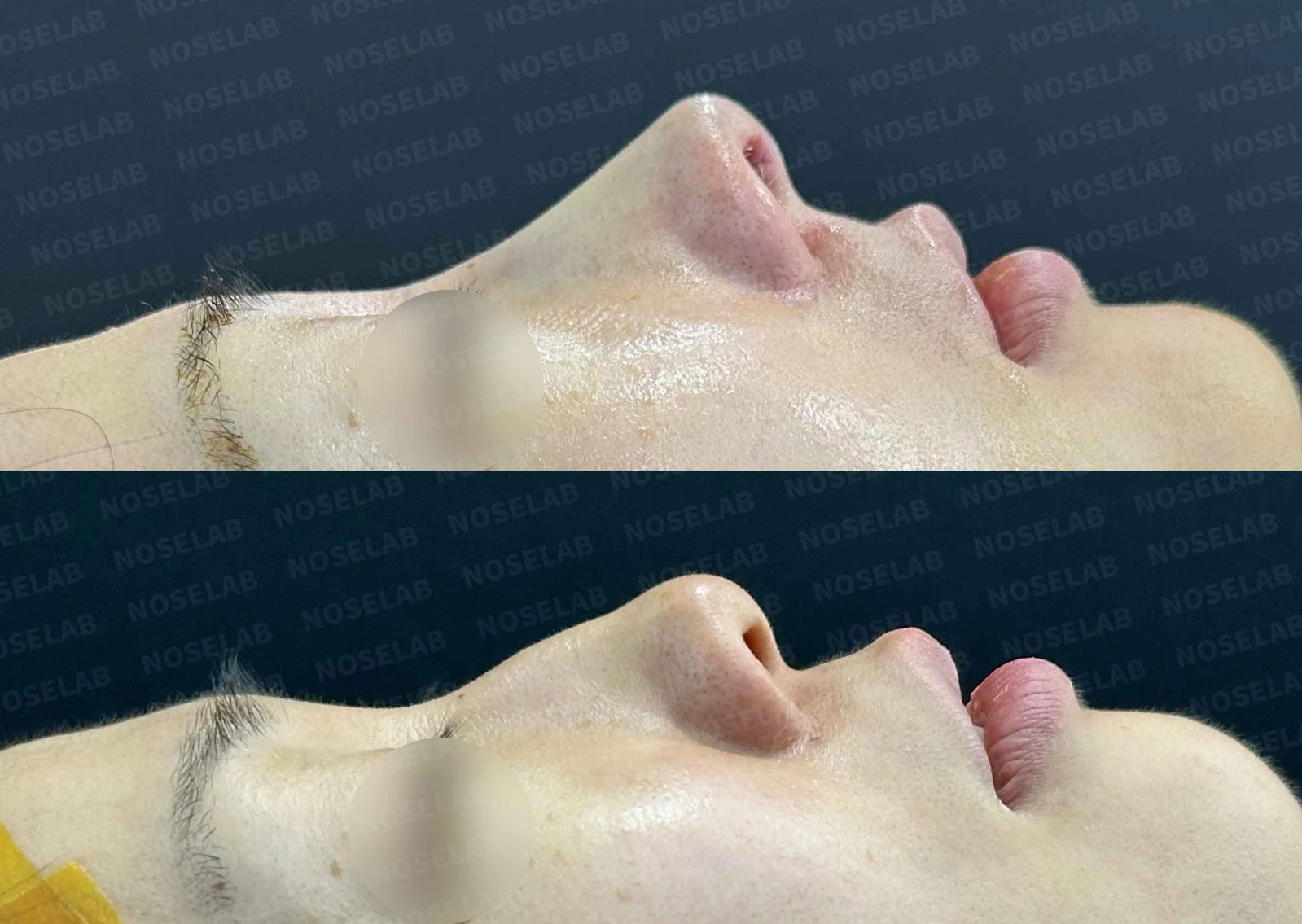
Before surgery / Day 0 immediately after surgery Photos taken immediately after surgery show swelling and may differ from the final result.
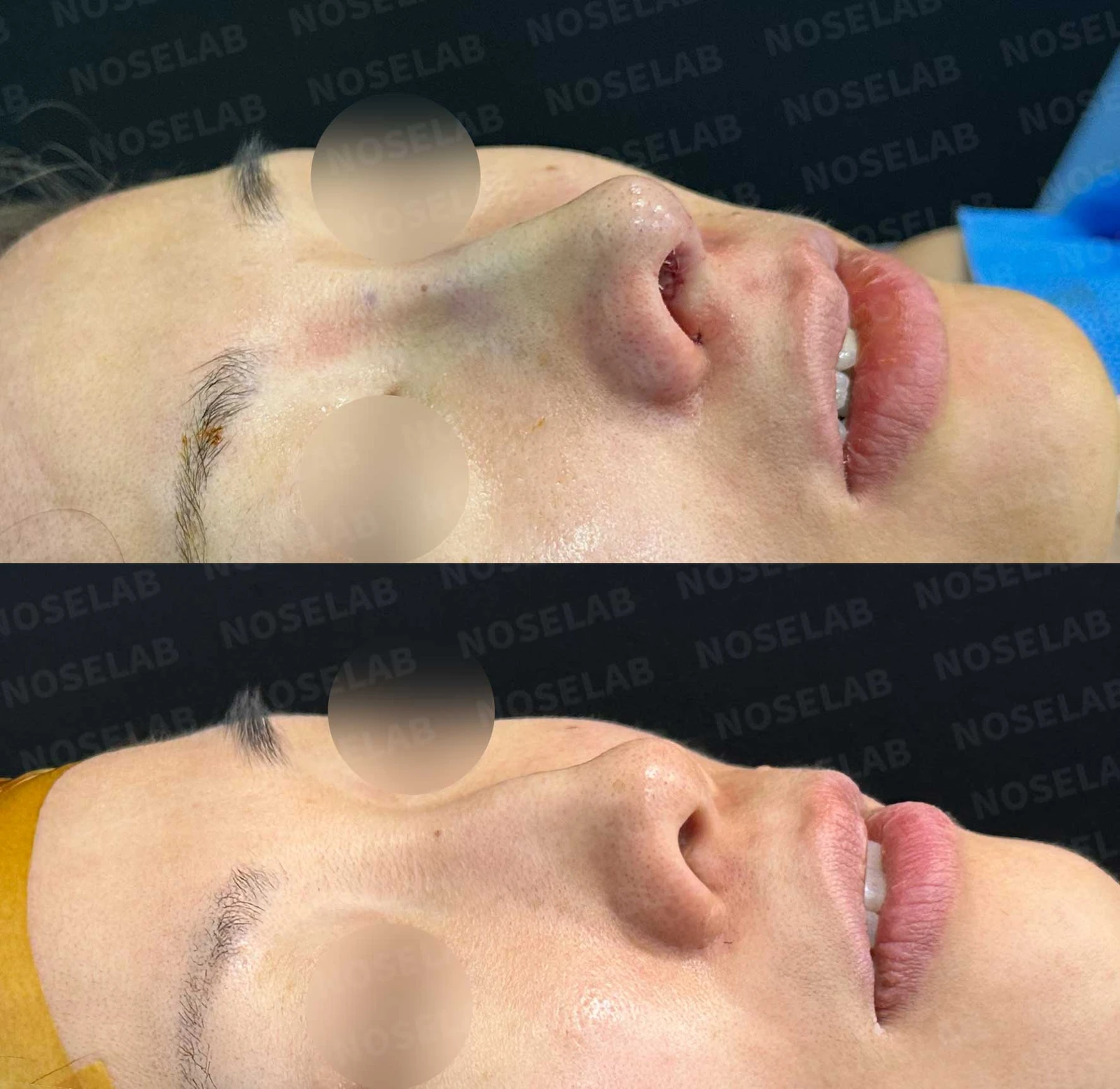
Before surgery / Day 0 immediately after surgery Photos taken immediately after surgery show swelling and may differ from the final result.
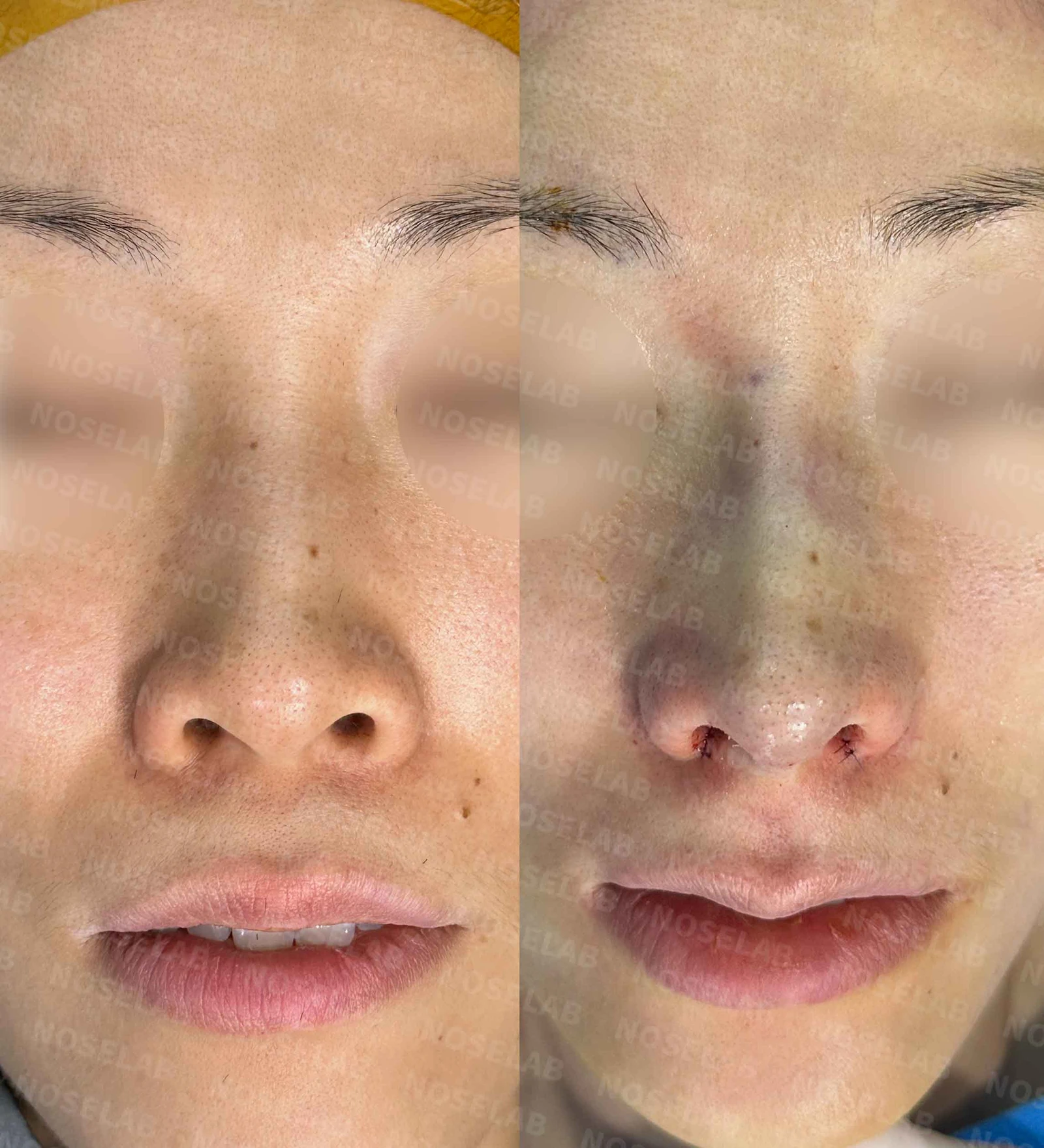
Before surgery / Day 0 immediately after surgery Photos taken immediately after surgery show swelling and may differ from the final result.
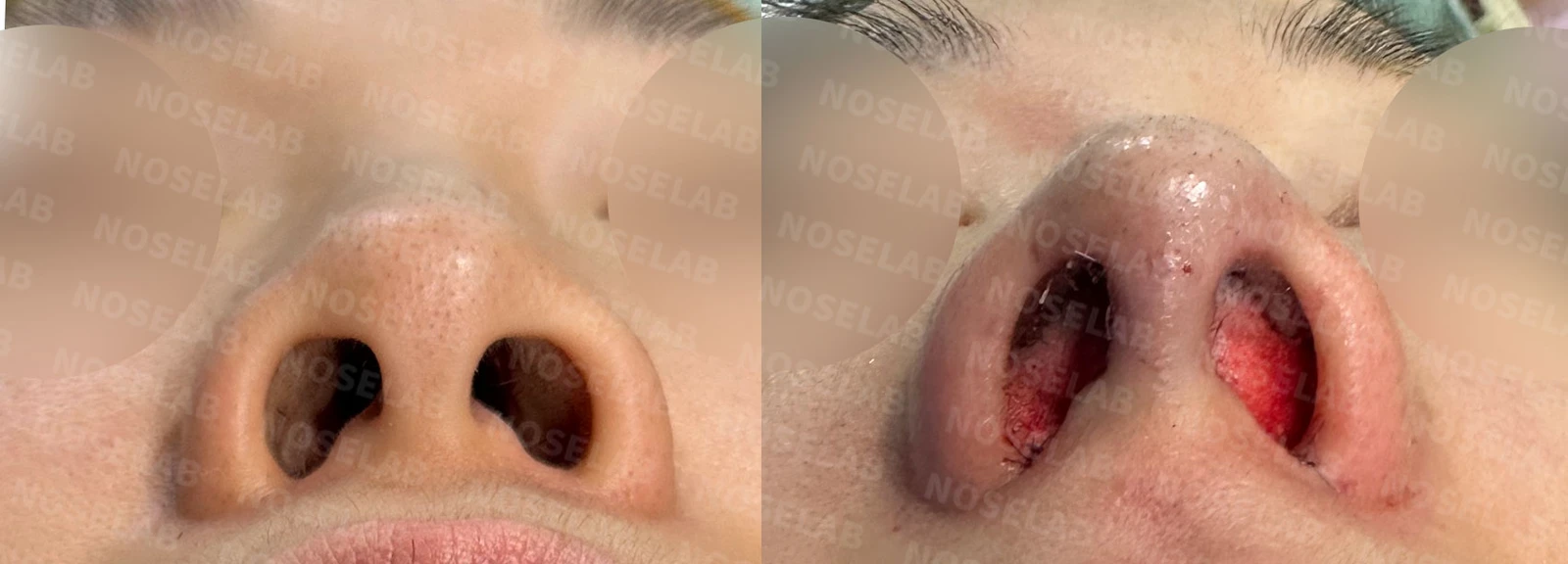
Before surgery / Day 0 immediately after surgery Photos taken immediately after surgery show swelling and may differ from the final result.
4. Conclusion
This correction addresses uneven and crooked nasal bones. The nasal bones can be corrected by delicately rasping them down, while the wide and crooked areas can be realigned using lateral osteotomy. In cases where significant bone reduction is required, a silicone implant may also be placed over the nasal bridge.
Dr. Peter C. Kang

Limitations and risks
When autologous rib cartilage is used, scarring and pain may remain at the donor site on the chest, and pneumothorax (pleural injury) can occur rarely. Over time, the grafted cartilage may warp or undergo partial resorption.
Common potential risks include infection, bleeding, asymmetry, scarring, skin necrosis, and insufficient improvement; results vary depending on individual skin condition and previous surgical history.