1. Preoperative design
The patient visited for correction of this type of dorsal hump. The patient congenitally had a high nasal bridge and a large nose, and the nasal tip was deviated to the right, bulbous, and drooping.
2. Surgical plan
Because the patient preferred not to use implants, I chose a method of very precisely filing the nasal bone to remove the dorsal hump, and planned to fill the transition between the nasal dorsum and nasal tip with cartilage.
3. Immediately after surgery (Day 0)Immediate postoperative photos show swelling and may differ from the final result.
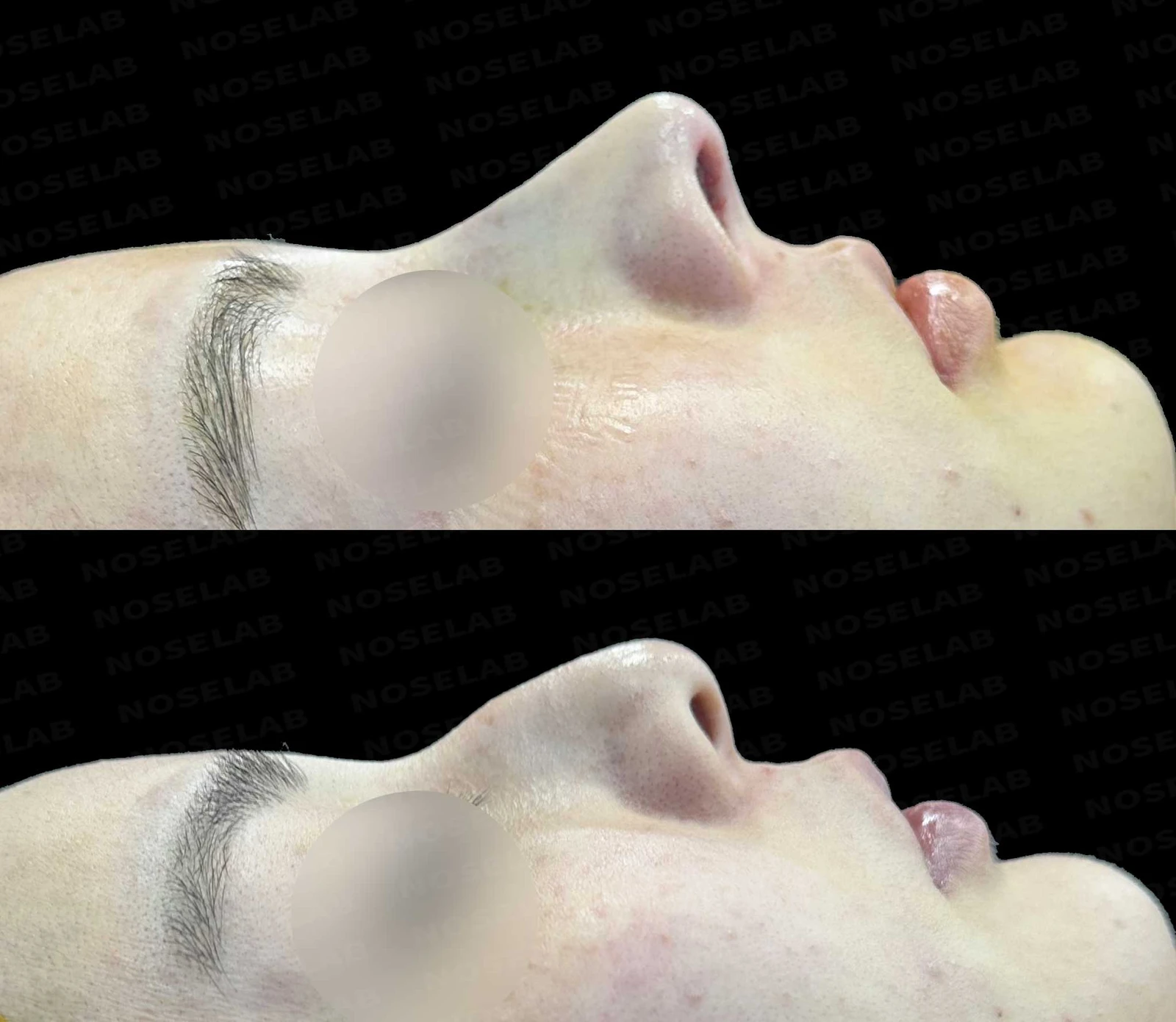
Before surgery / Day 0 immediately after surgery Photos taken immediately after surgery show swelling and may differ from the final result.
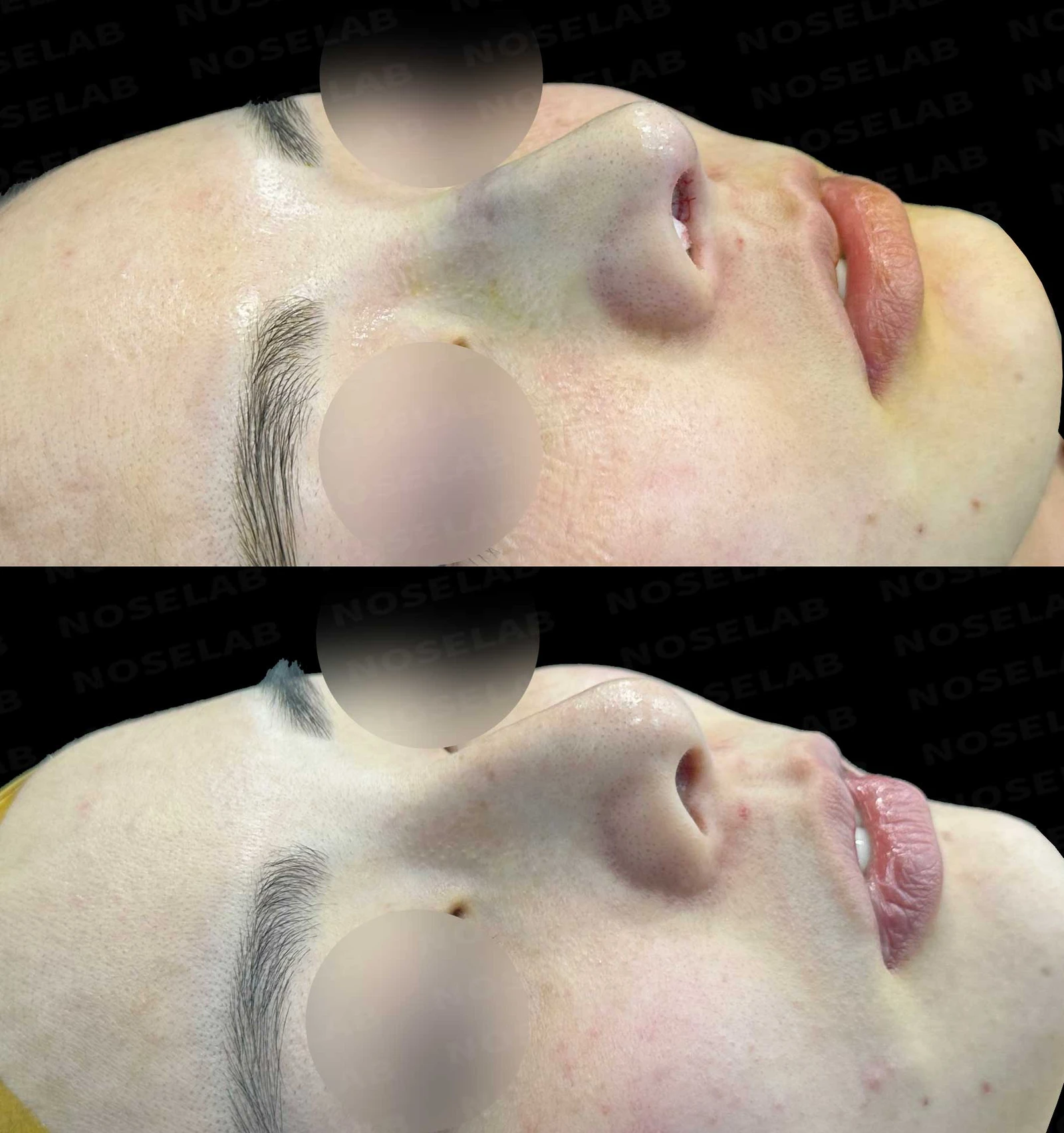
Before surgery / Day 0 immediately after surgery Photos taken immediately after surgery show swelling and may differ from the final result.
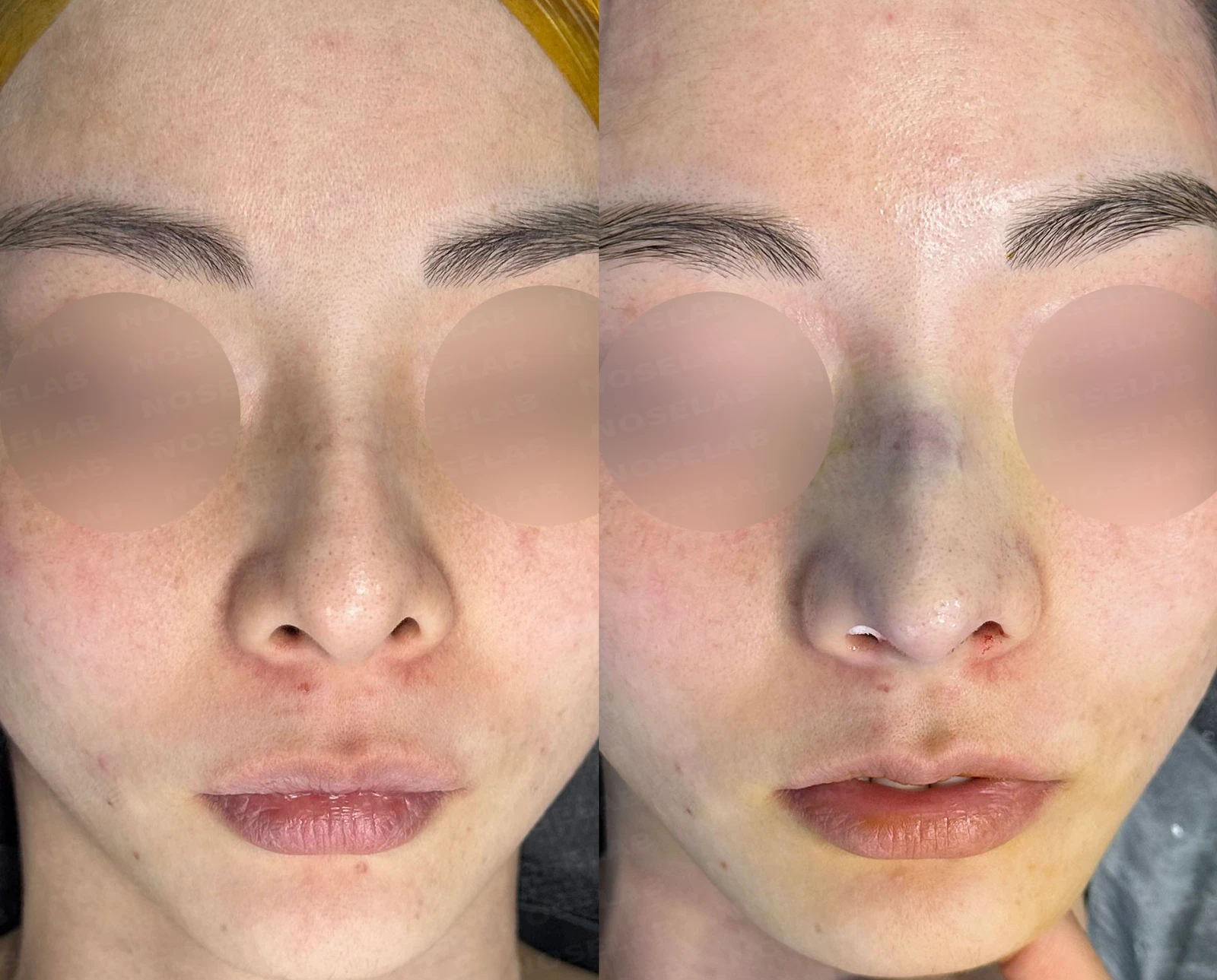
Before surgery / Day 0 immediately after surgery Photos taken immediately after surgery show swelling and may differ from the final result.
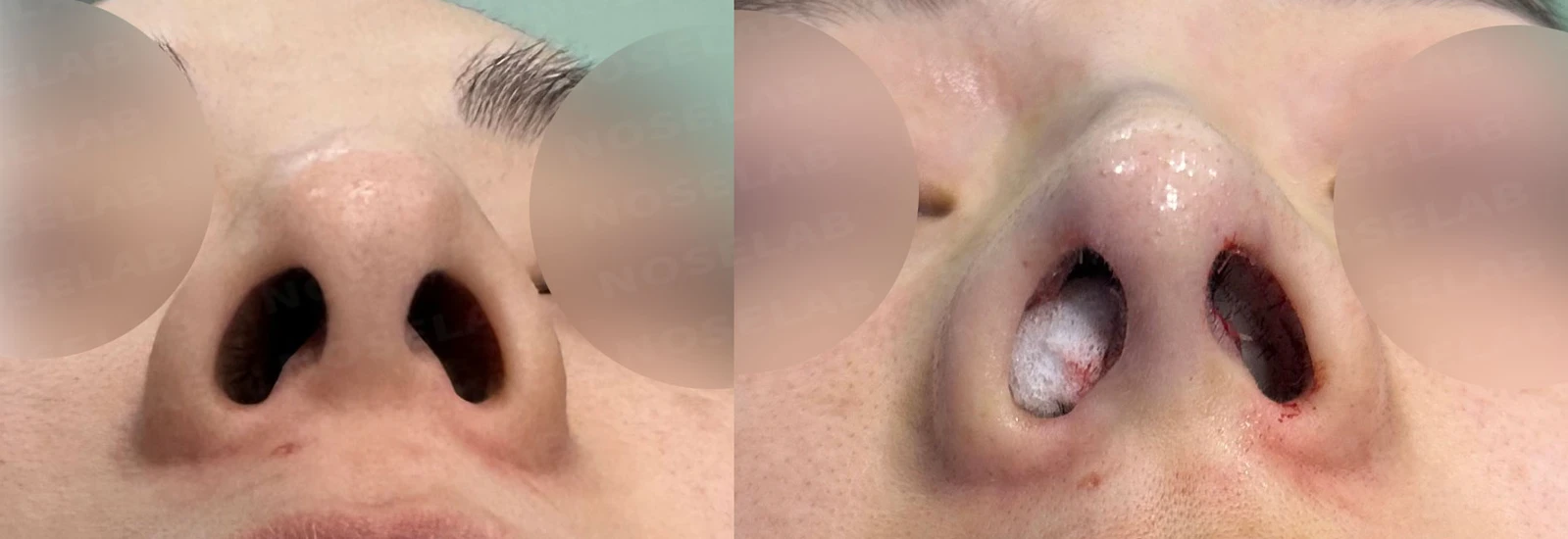
Before surgery / Day 0 immediately after surgery Photos taken immediately after surgery show swelling and may differ from the final result.
4. Conclusion
This is the surgical approach for cases with a congenitally large dorsal hump. Because the nasal bone itself is inherently large, surgery must be performed to rasp and reduce the overall bone. Once bone is shaved down, it cannot be put back, so it must be rasped with great precision. In addition, because this is a no-implant surgery, the transition area between the nasal tip and nasal dorsum must be connected naturally using cartilage or dermis.
Dr. Peter C. Kang
Limitations and risks
Common potential risks include infection, bleeding, asymmetry, scarring, skin necrosis, and insufficient improvement; results vary depending on individual skin condition and previous surgical history.