Preoperative design
The patient visited the clinic to correct a blunt, crooked nose of this type. The skin was thick, the implant was deviated to the right, and a significant amount of scar tissue on the right side of the nasal tip made the deviation appear more pronounced. The columella had become quite thick, and the right nostril was noticeably narrowed.
2. Surgical plan
The plan is to sufficiently remove scar tissue from the nasal tip to improve the blunt appearance, center the silicone implant to correct the crooked appearance, and perform a lateral osteotomy to address the nasal bone asymmetry. To improve the columellar scar, cartilage and dermis grafting are planned beneath the columella.
3. Immediately after surgery (Day 0)Immediate postoperative photos show swelling and may differ from the final result.
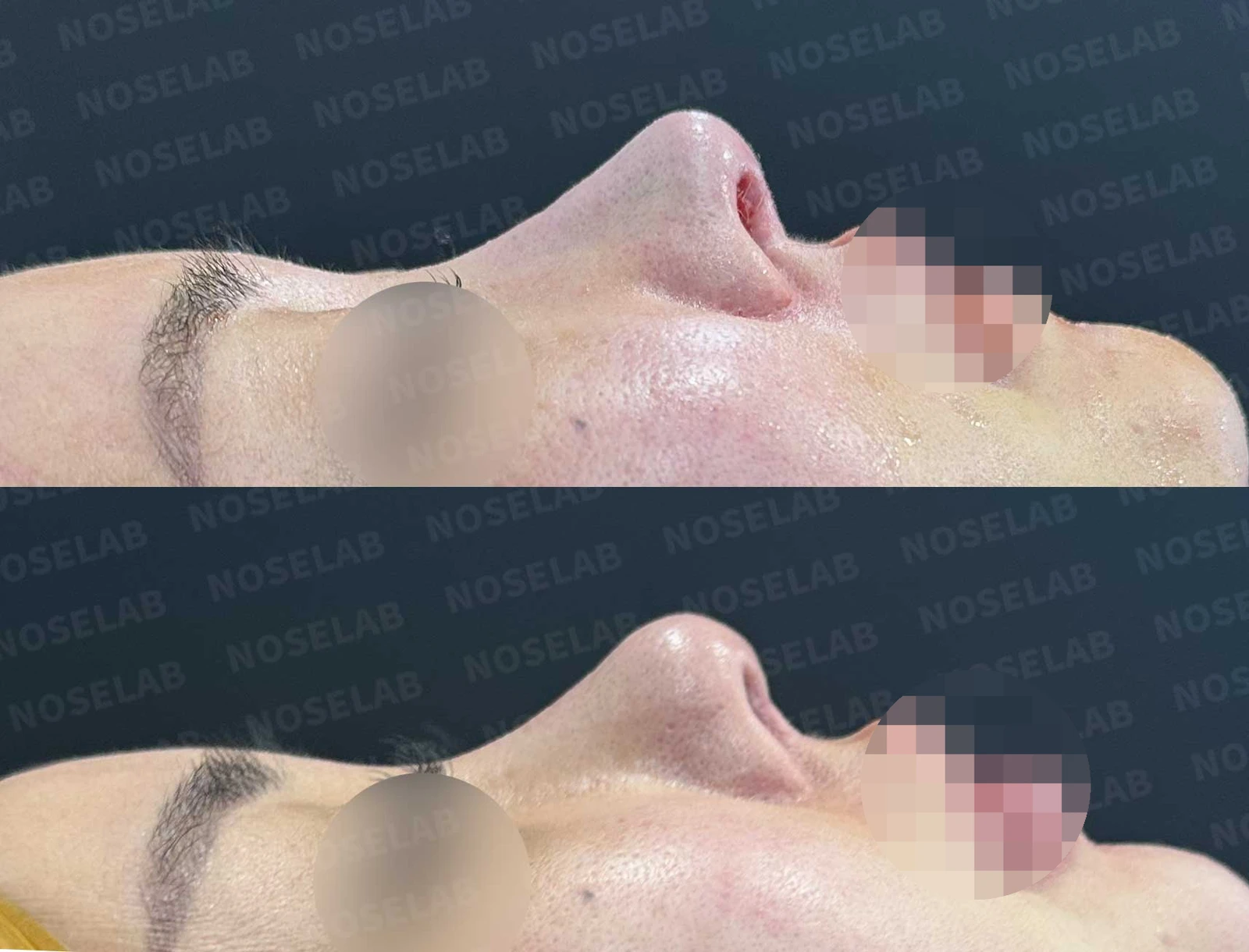
Before surgery / Day 0 immediately after surgery Photos taken immediately after surgery show swelling and may differ from the final result.
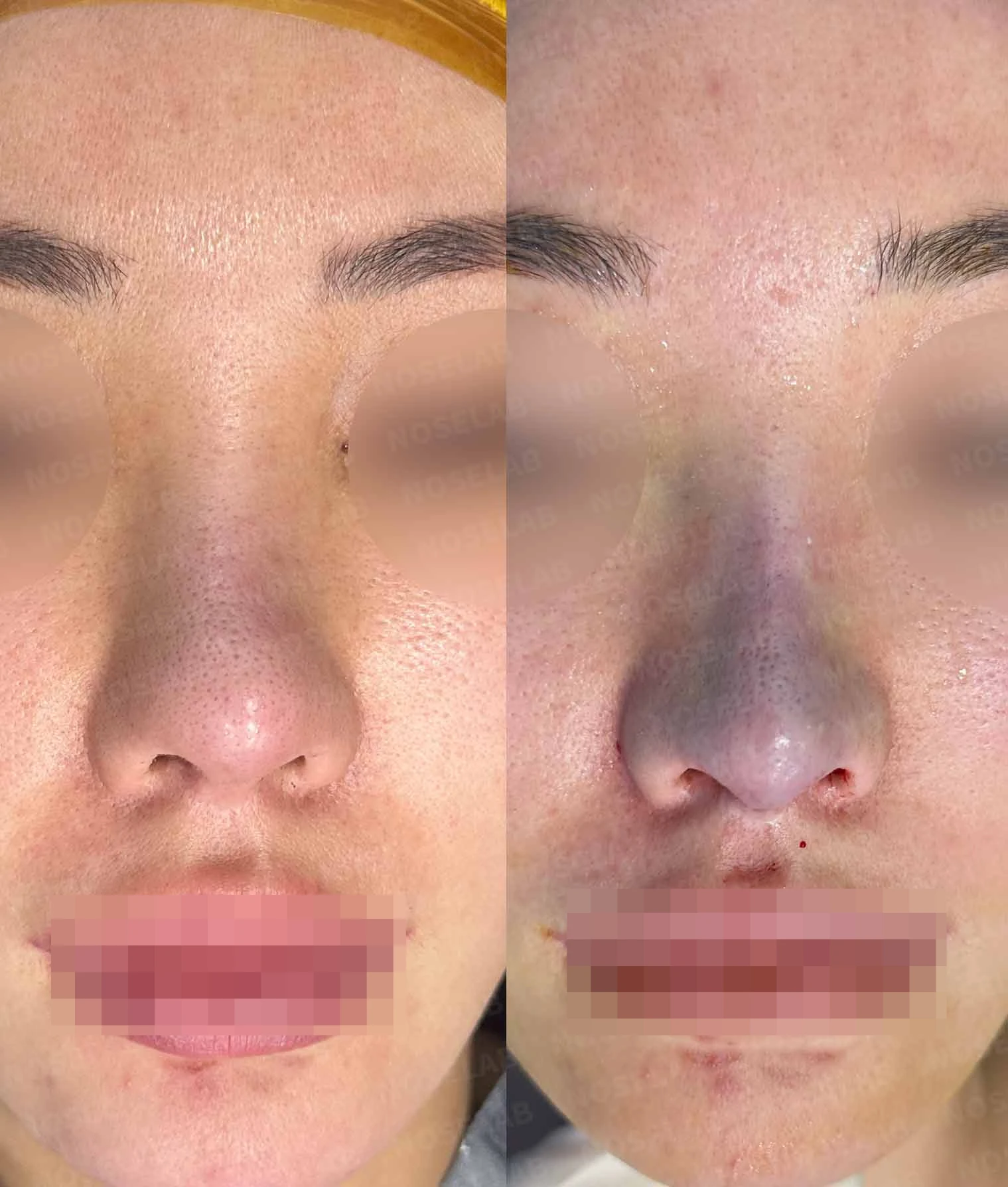
Before surgery / Day 0 immediately after surgery Photos taken immediately after surgery show swelling and may differ from the final result.
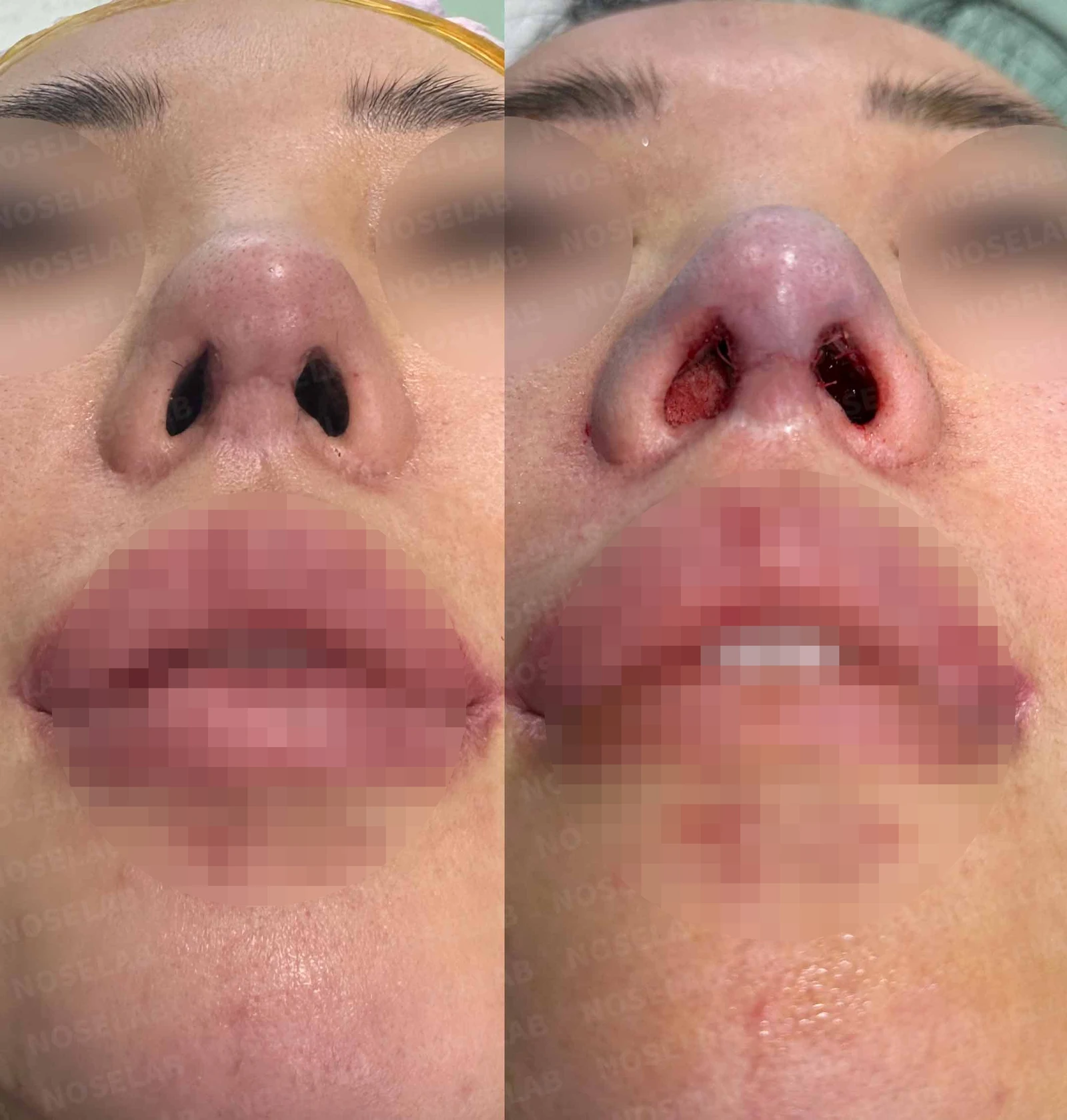
Before surgery / Day 0 immediately after surgery Photos taken immediately after surgery show swelling and may differ from the final result.
4. Conclusion
Correcting a bulbous nose involves: 1. Partial removal of subcutaneous soft tissue, 2. Cartilage repositioning, and 3. Heightening the nasal tip to provide dimension. In this type of case, where excessive scar tissue had formed in the nasal tip, I thoroughly removed the scar tissue, reconstructed and repositioned the damaged lower lateral cartilage of the nasal tip, and elevated the nasal tip using autologous rib cartilage.
Dr. Peter C. Kang
Limitations and risks
When autologous rib cartilage is used, scarring and pain may remain at the donor site on the chest, and pneumothorax (pleural injury) can occur rarely. Over time, the grafted cartilage may warp or undergo partial resorption.
Common potential risks include infection, bleeding, asymmetry, scarring, skin necrosis, and insufficient improvement; results vary depending on individual skin condition and previous surgical history.