Preoperative design
The patient visited the clinic for correction of this type of crooked nose. The nasal tip appeared blunt and spread out, was slightly drooping, and signs of a protruding mouth were observed. There was also nostril asymmetry.
2. Surgical plan
On the CT scans taken during the visit, the nasal bridge implant was shifted to the right, and asymmetry of the nasal bones was observed, so a lateral osteotomy was planned. To correct the spread-out, drooping feel of the nasal tip, septal extension using donor rib cartilage was planned. Correcting the nostril asymmetry was expected to resolve naturally once the septal cartilage deviated to the left was corrected.
3. Day 0 photos immediately after surgery Photos taken immediately after surgery show swelling and may differ from the final result.
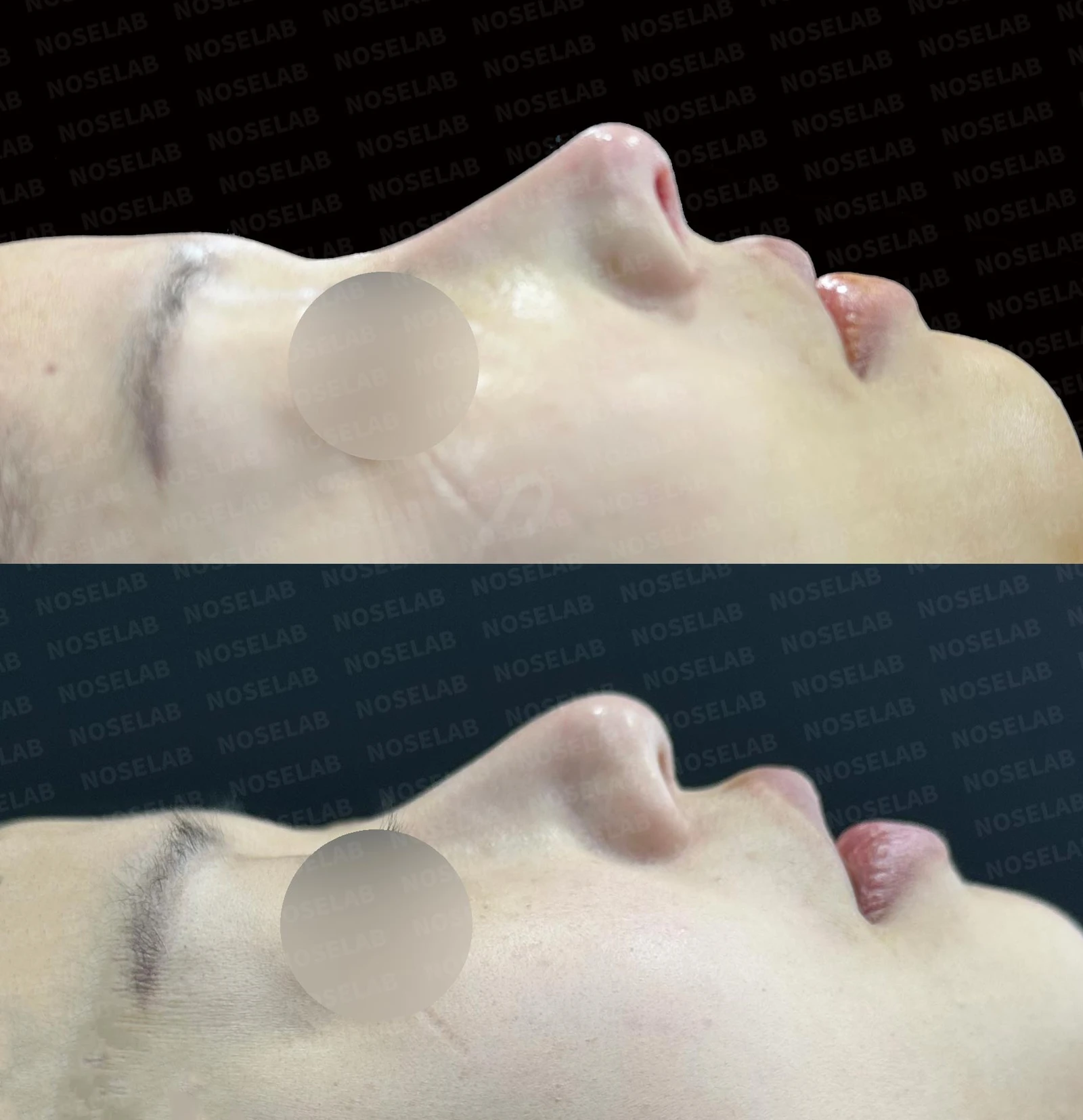
Before surgery / Day 0 immediately after surgery Photos taken immediately after surgery show swelling and may differ from the final result.
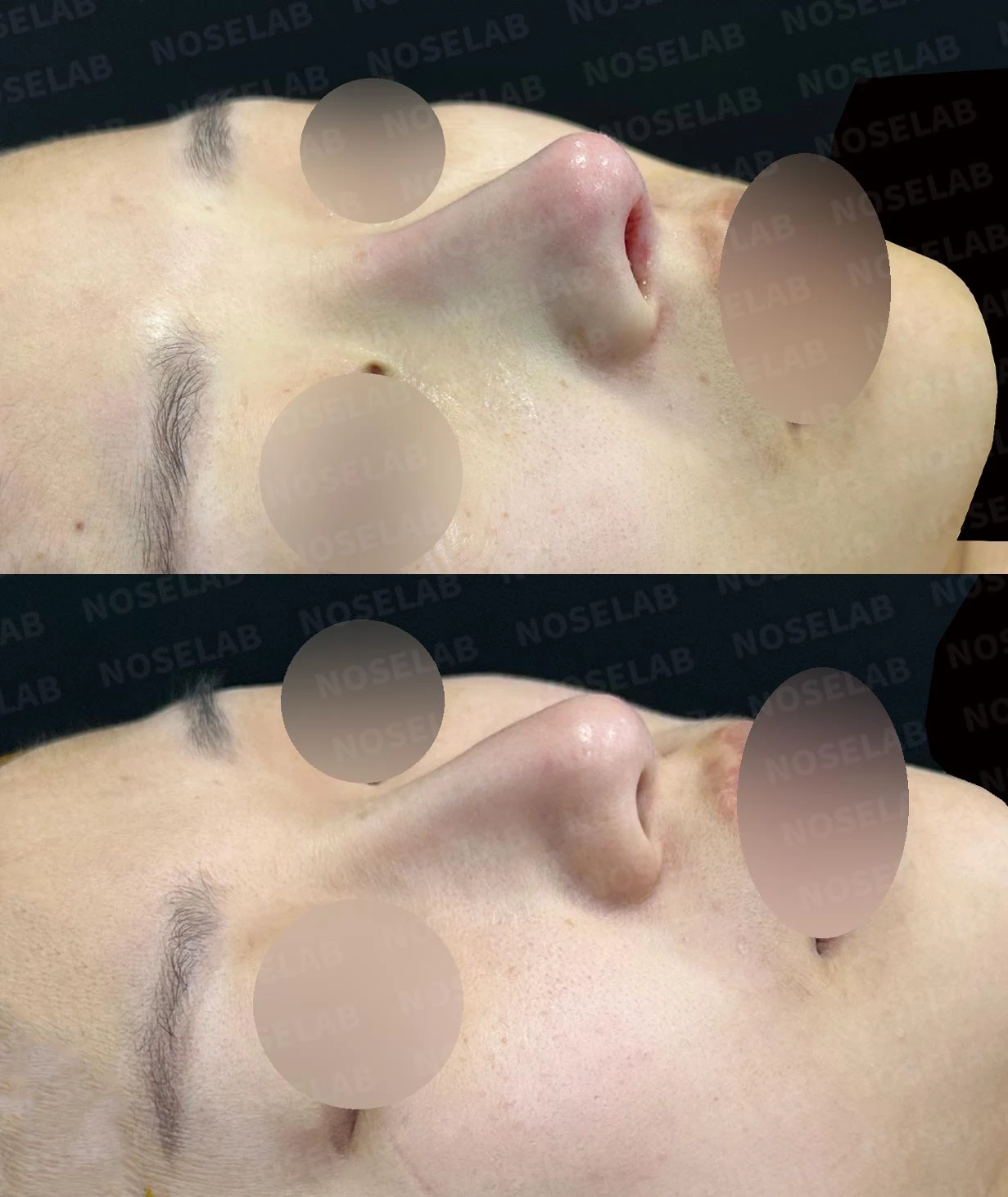
Before surgery / Day 0 immediately after surgery Photos taken immediately after surgery show swelling and may differ from the final result.
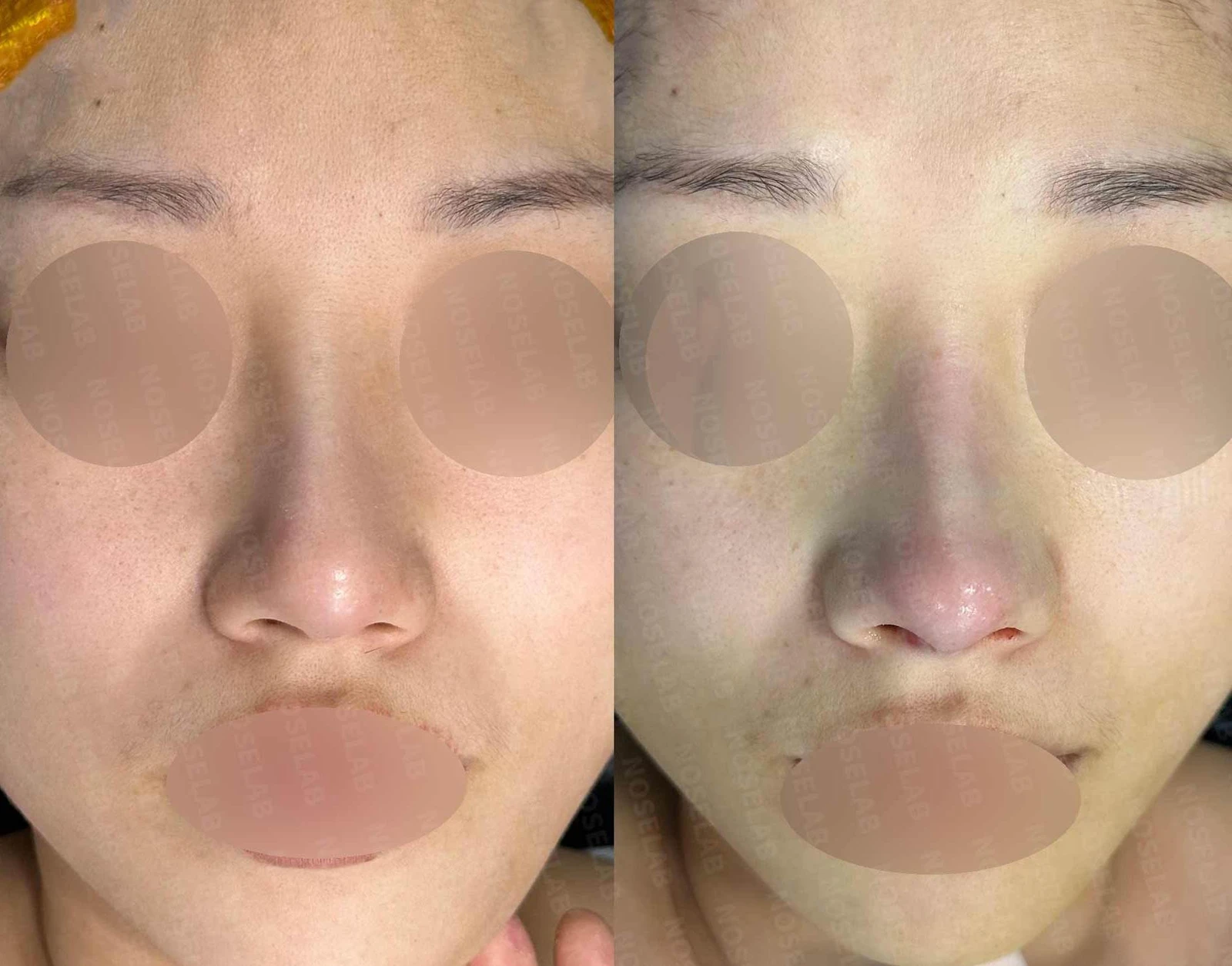
Before surgery / Day 0 immediately after surgery Photos taken immediately after surgery show swelling and may differ from the final result.
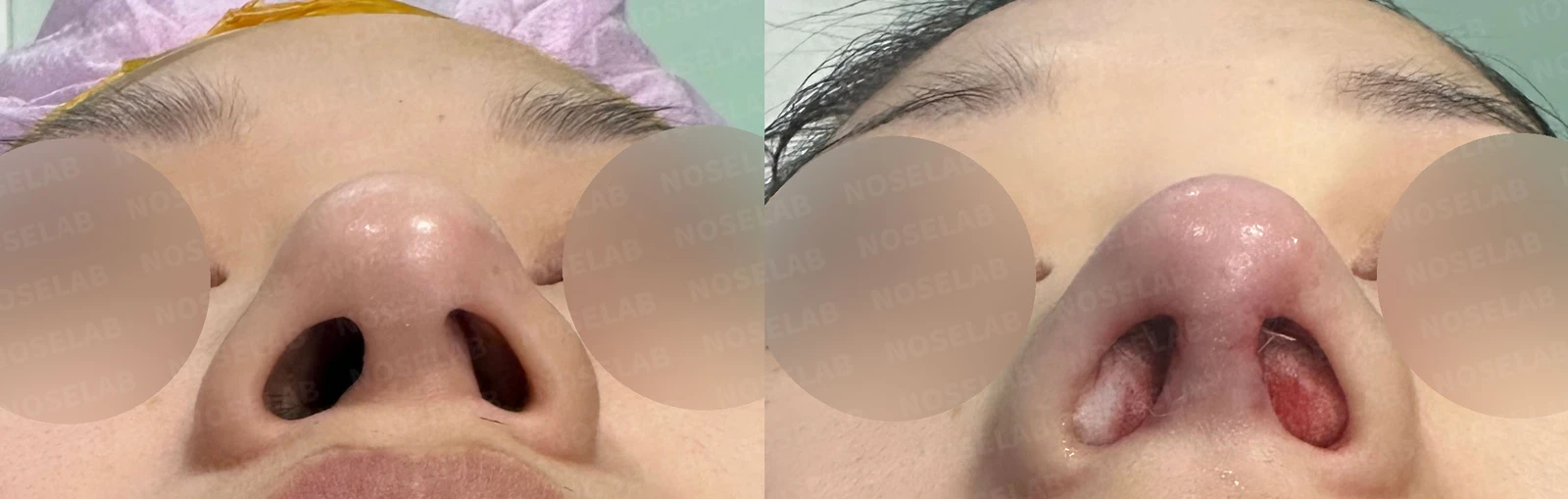
Before surgery / Day 0 immediately after surgery Photos taken immediately after surgery show swelling and may differ from the final result.
4. Conclusion
This was a corrective surgery for a crooked nose where the silicone implant had shifted to one side. A silicone implant requires at least 2 weeks to settle into place. This means that if an impact is applied to the silicone within 2 weeks, it can become displaced. Therefore, in surgeries involving a silicone implant, there is a risk that the silicone may shift or become crooked. However, this can be adequately prevented by creating a pocket for the silicone that is neither too small nor too large, and by closely monitoring progress before the silicone fully stabilizes.
Dr. Peter C. Kang
Limitations and risks
When using donor rib cartilage, long-term follow-up is necessary because the grafted cartilage may resorb or warp.
When the septum is corrected at the same time, nasal obstruction may persist or recur, and in rare cases, septal perforation or changes in smell may occur.
Common potential risks include infection, bleeding, asymmetry, scarring, skin necrosis, and insufficient improvement; results vary depending on individual skin condition and previous surgical history.