1. Preoperative design
This patient underwent rhinoplasty 12 years ago. 1 year after surgery, inflammation developed, necessitating implant removal. Since then, the patient had been living with nostrils that appeared asymmetric and excessively visible, and visited to correct these concerns.
2. Surgical plan
In patients who have had implants removed for therapeutic reasons following post-rhinoplasty inflammation, the following tip deformities are commonly observed: the nasal tip twists and turns upward, and nostril asymmetry becomes prominent from the front view—a deformity referred to as contracture. In surgery, it is very common to find that the normal cartilage that should be present in the nasal tip has dissolved, leaving only fragments, or was damaged during prior surgeries and displaced from its proper position. In other words, this is the primary cause of nostril asymmetry. Therefore, in this case as well, nasal tip reconstruction using autologous rib cartilage was planned according to the extent of cartilage damage. In addition, lateral osteotomy was planned to correct the crooked appearance, along with nostril rim extension to correct nostril asymmetry.
3. Immediately after surgery (Day 0)Immediate postoperative photos show swelling and may differ from the final result.
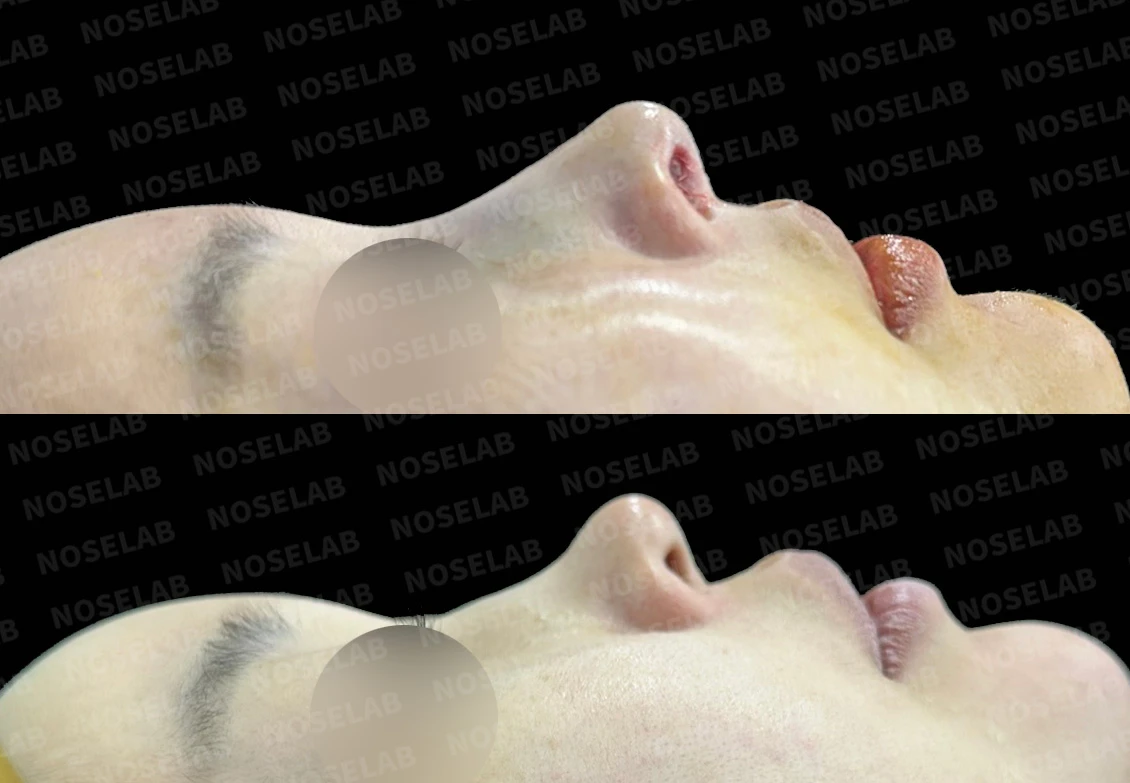
Before surgery / Day 0 immediately after surgery Photos taken immediately after surgery show swelling and may differ from the final result.
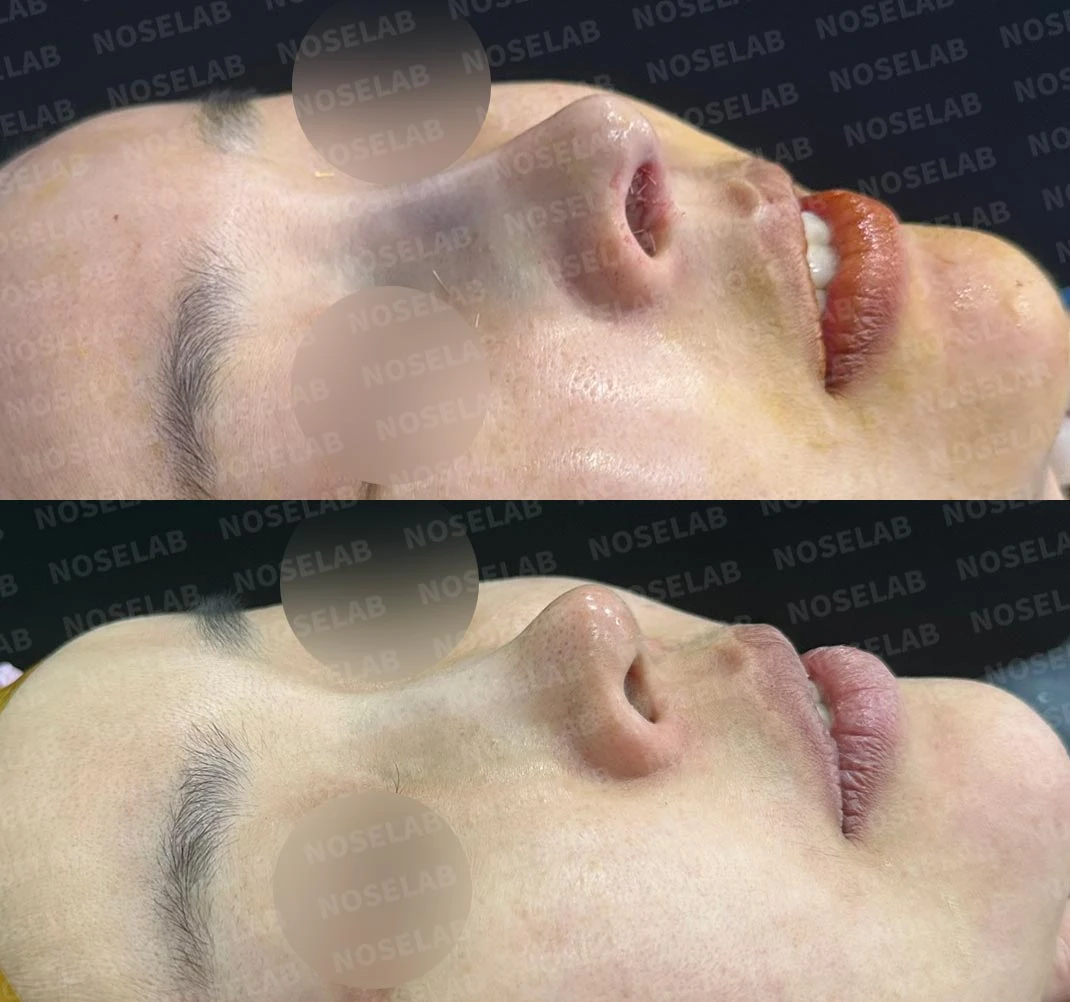
Before surgery / Day 0 immediately after surgery Photos taken immediately after surgery show swelling and may differ from the final result.
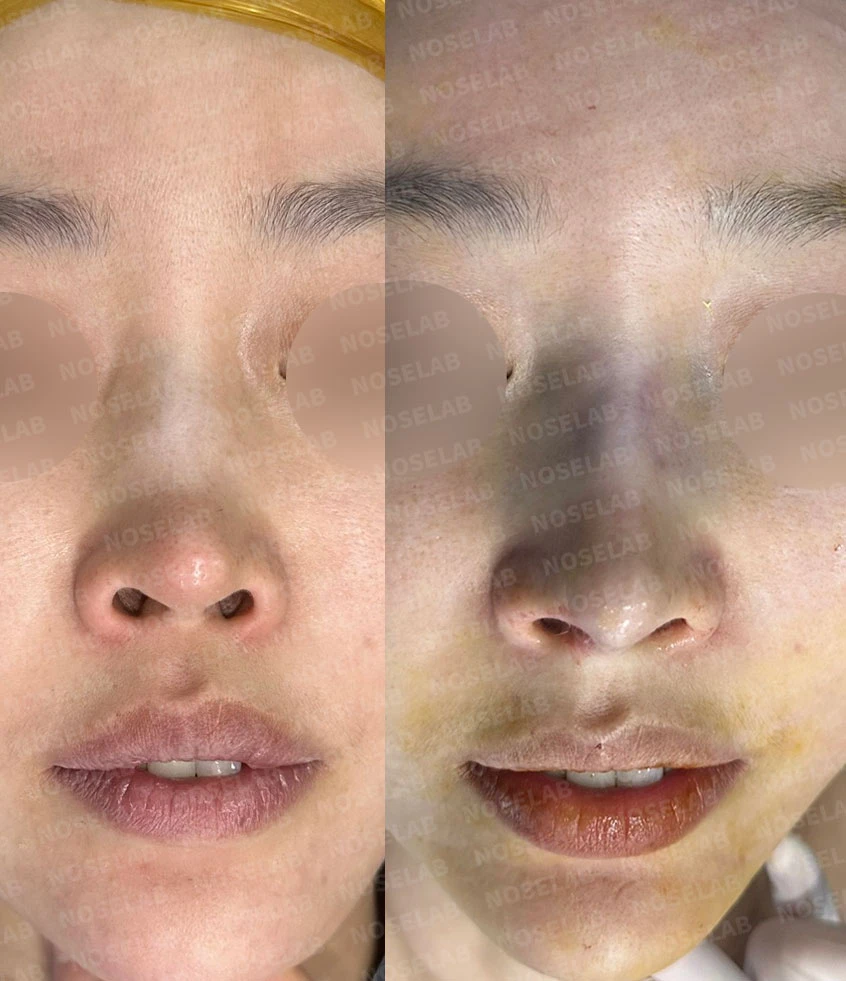
Before surgery / Day 0 immediately after surgery Photos taken immediately after surgery show swelling and may differ from the final result.
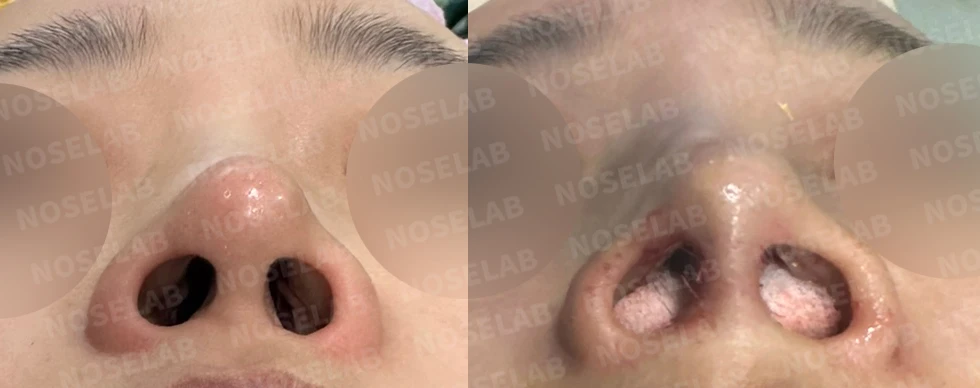
Before surgery / Day 0 immediately after surgery Photos taken immediately after surgery show swelling and may differ from the final result.
4. Conclusion
This is a revision rhinoplasty related to inflammation. In procedures that use implants, there is always a potential risk of an inflammatory or foreign body reaction. A foreign body reaction can occur depending on the patient's immune status, and if this reaction progresses periodically or chronically, inflammation can develop. However, if appropriate treatment is provided promptly when a foreign body reaction occurs, complications such as contracture deformities can be prevented. In cases like this, where surgery is performed to correct tip deformities following inflammation, damage to the tip cartilage from the inflammatory process is commonly encountered, making reconstruction of the damaged cartilage essential.
Dr. Peter C. Kang
Limitations and risks
When autologous rib cartilage is used, scarring and pain may remain at the donor site on the chest, and pneumothorax (pleural injury) can occur rarely. Over time, the grafted cartilage may warp or undergo partial resorption.
When revising after implant removal, contracture may progress again after removal, the nasal height and length may decrease, and staged surgery may be necessary depending on the skin condition.
Common potential risks include infection, bleeding, asymmetry, scarring, skin necrosis, and insufficient improvement; results vary depending on individual skin condition and previous surgical history.