English日本語简体中文
Skip to main content
Dr. Peter C. Kang's Rhinoplasty Stories
PrologueBlogMy thoughtsNasal obstructionSurgical journalSurgical photos
About the surgeon

Weak tip support cases: differences between residual cartilage and structural reconstruction

This is page 2 of the case archive for Weak tip support cases: differences between remaining cartilage and reconstruction. Explore surgical notes and before-and-after photos for cases 19–36 of 41.

View before-and-after cases ↓Comprehensive rhinoplasty guide

Searching for surgical cases matching your criteria.
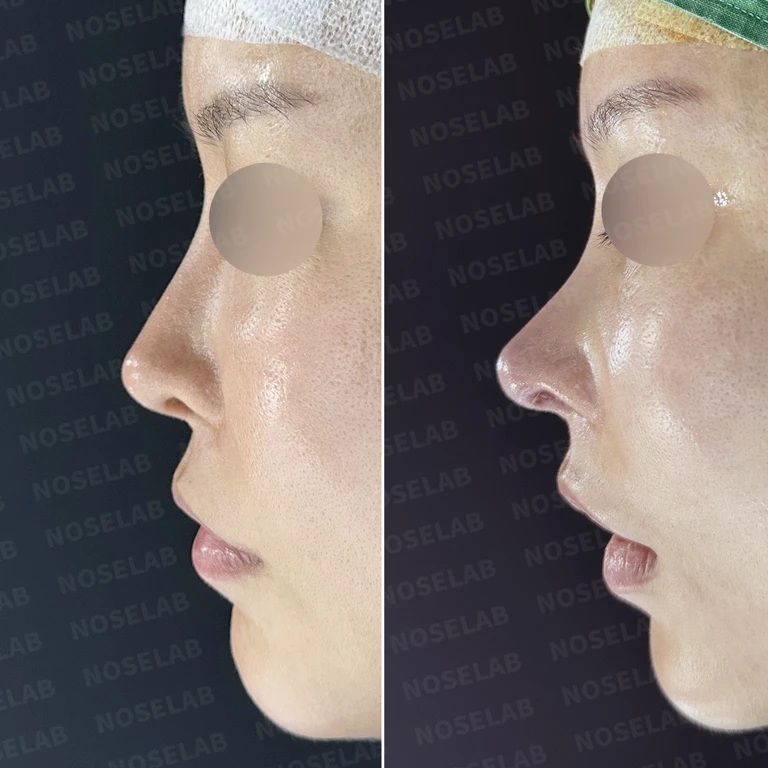
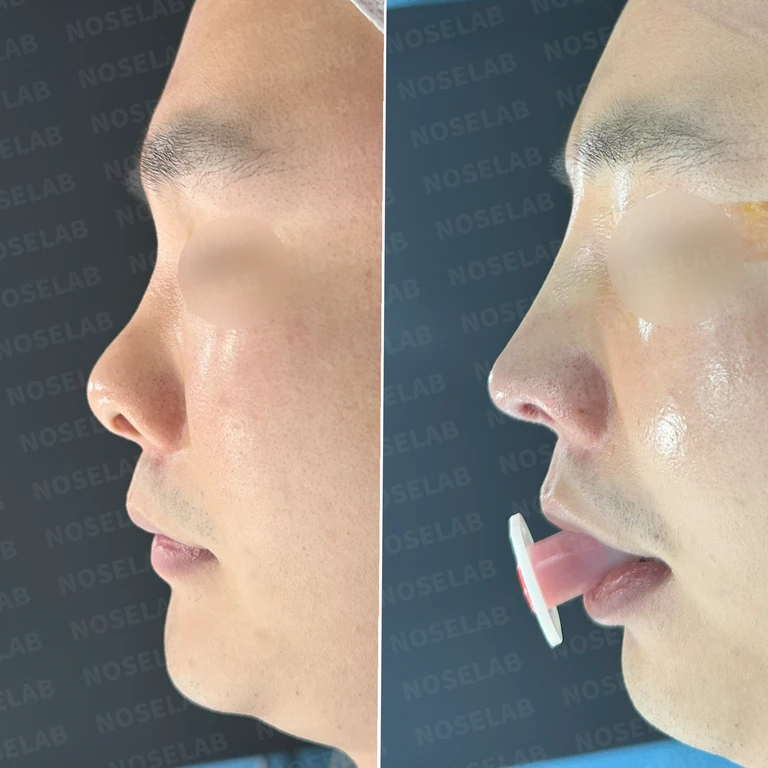
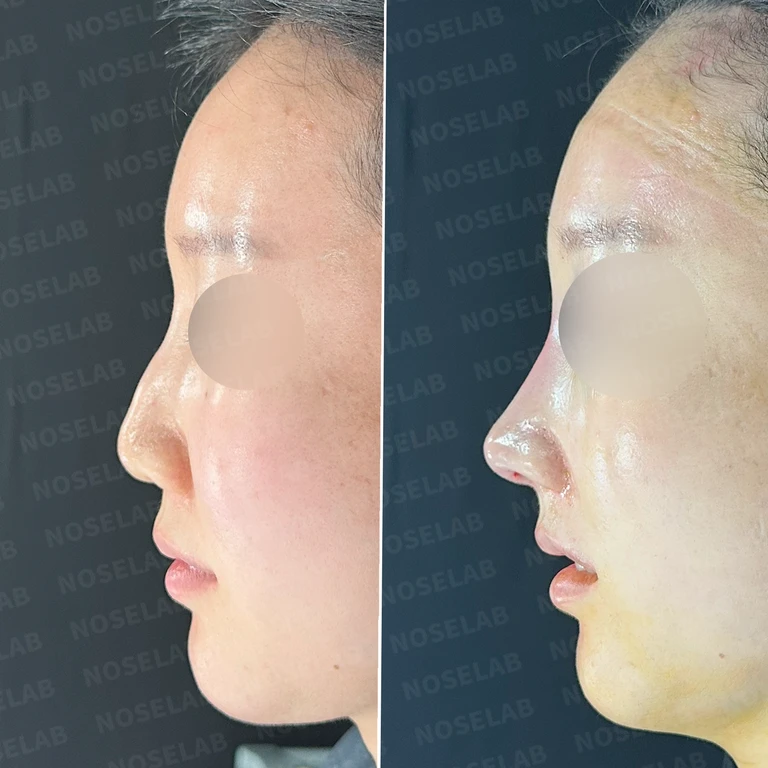
When tip skin is lacking after alar and philtrum reduction, how to determine the elevation limit — Before-and-after comparison
Before-and-after comparison

When tip skin is lacking after alar and philtrum reduction, how to determine the elevation limit

In a patient with limited skin elasticity and mucosal adhesion following multiple nasal surgeries along with alar and philtrum reductions, we performed septal reconstruction with autologous rib cartilage, nasolabial angle correction, columellar extension, and nasal synechia adhesiolysis.

Preoperative condition
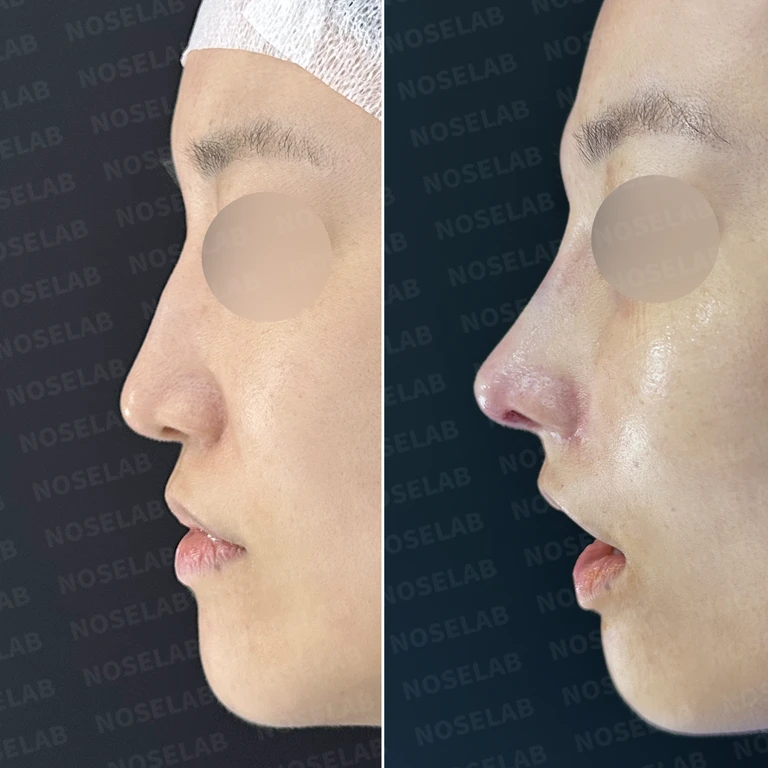
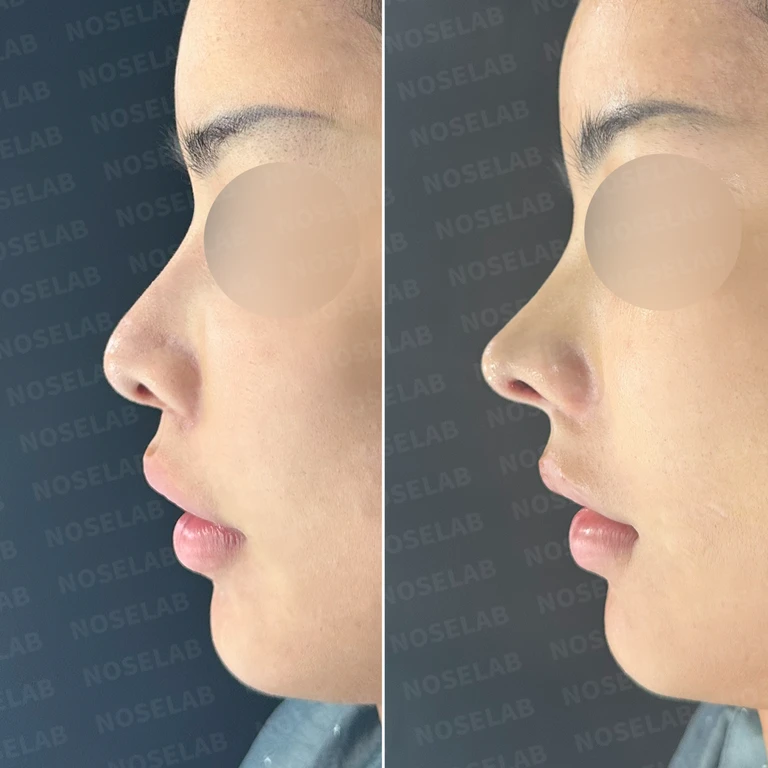
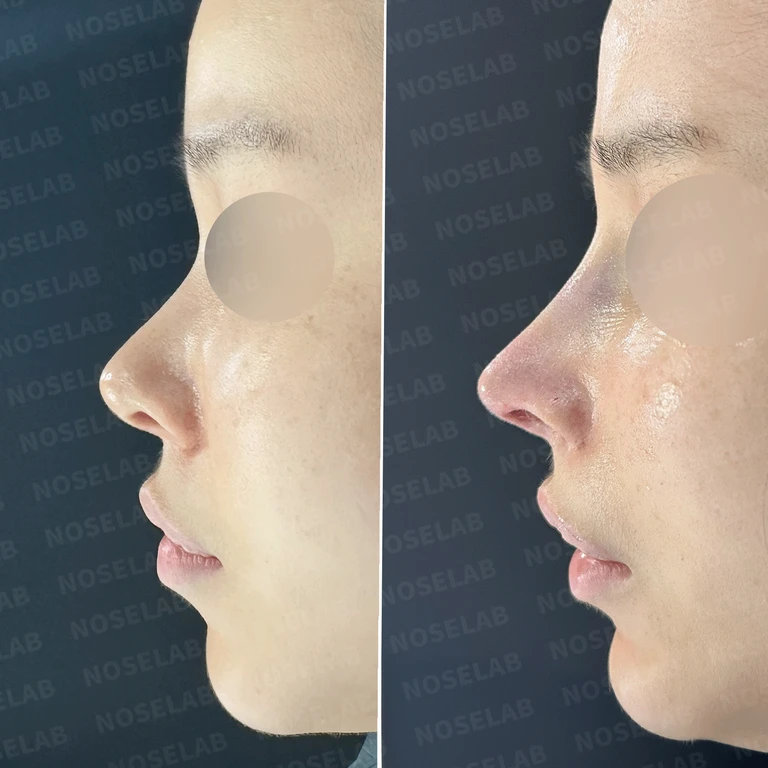
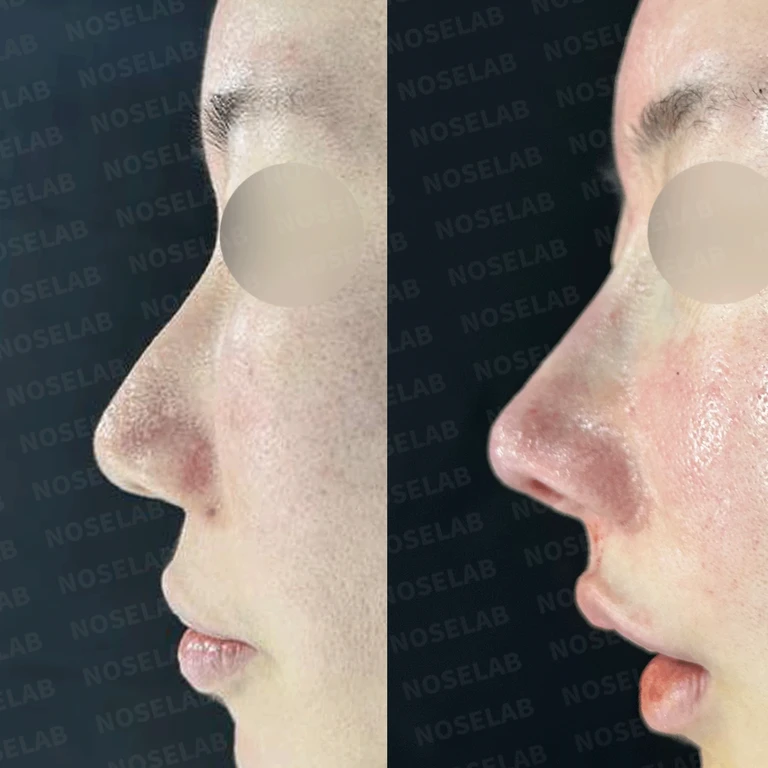
Why artificial dermis on the nasal bridge can remain as a dorsal hump and how it is reconstructed after removal — Before-and-after comparison
Before-and-after comparison

Why artificial dermis on the nasal bridge can remain as a dorsal hump and how it is reconstructed after removal

In a case where residual artificial dermis from a previous procedure formed a dorsal hump and weakened the septal support, the artificial dermis was dissected and removed, lateral osteotomy and dorsal hump reduction were performed, the nasal tip was reconstructed using autologous rib cartilage, and the silicone implant was replaced.

Preoperative condition

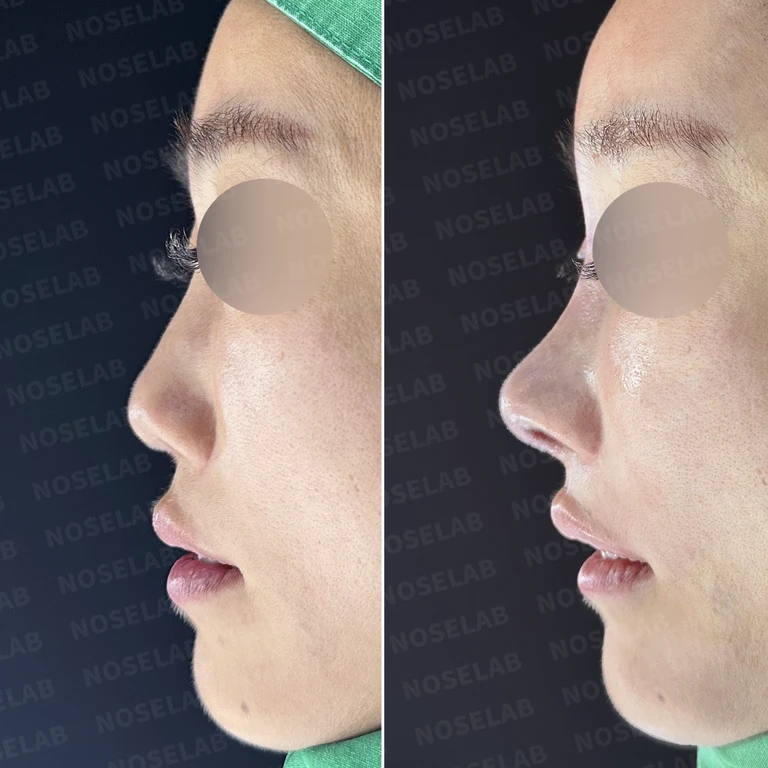
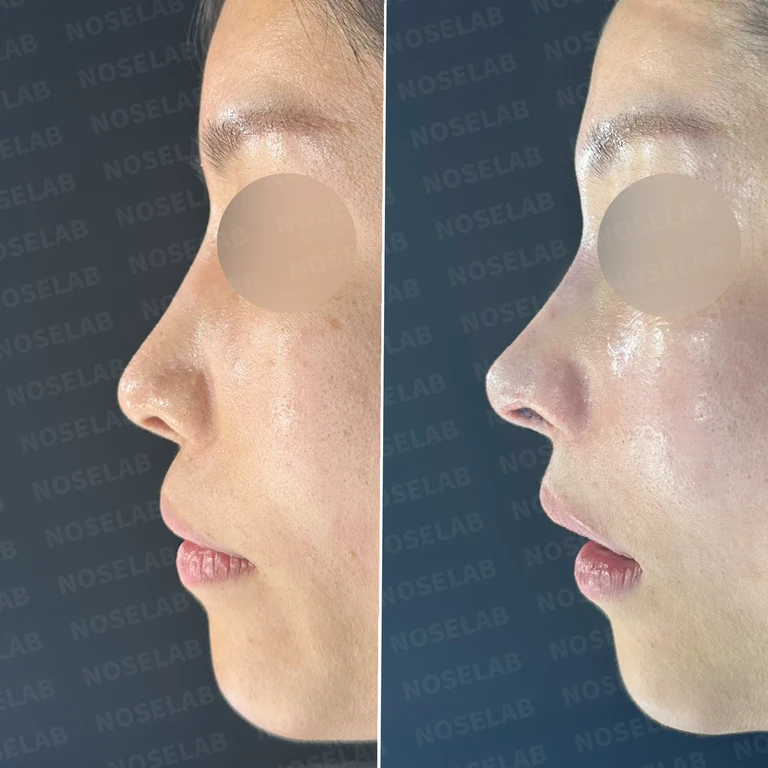
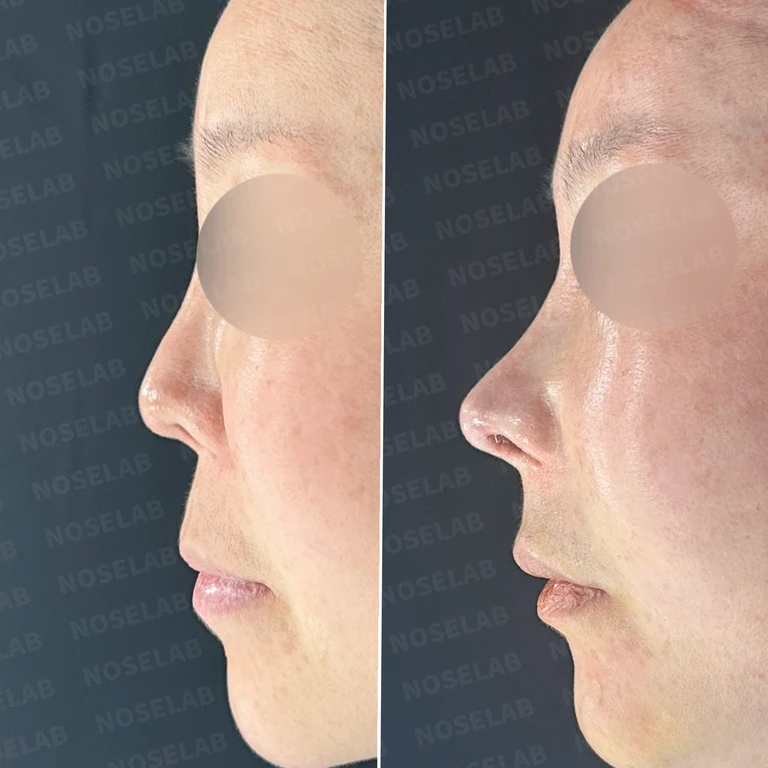
A nose with almost no septal cartilage left: why the nasal tip cannot be elevated — Before-and-after comparison
Before-and-after comparison

A nose with almost no septal cartilage left: why the nasal tip cannot be elevated

A case where the septal support was largely lost from previous surgeries, resulting in nostril asymmetry. The central support was reconstructed with autologous rib cartilage, and the nasal tip was elevated with dermis and cartilage grafts.

Preoperative condition
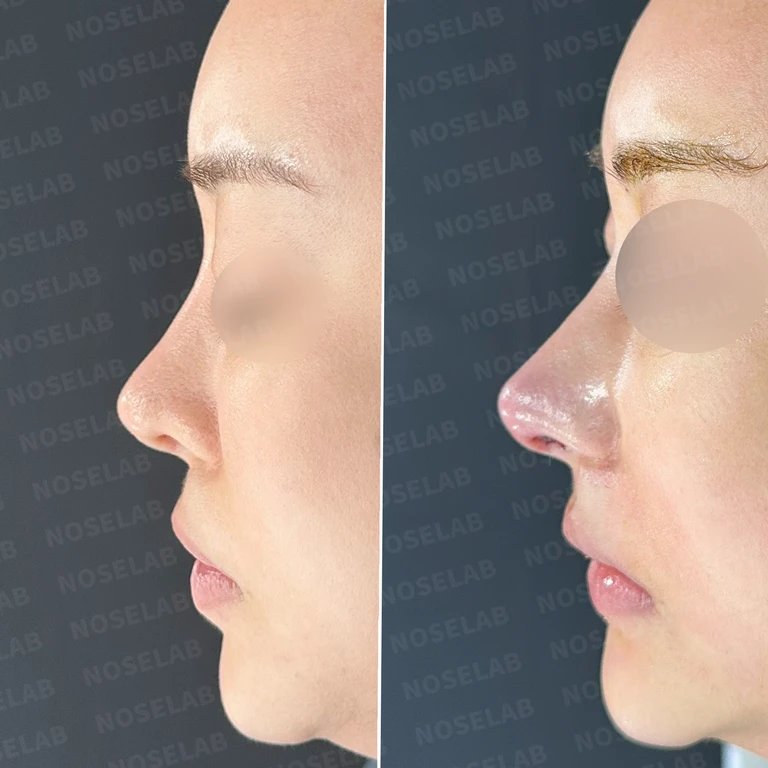
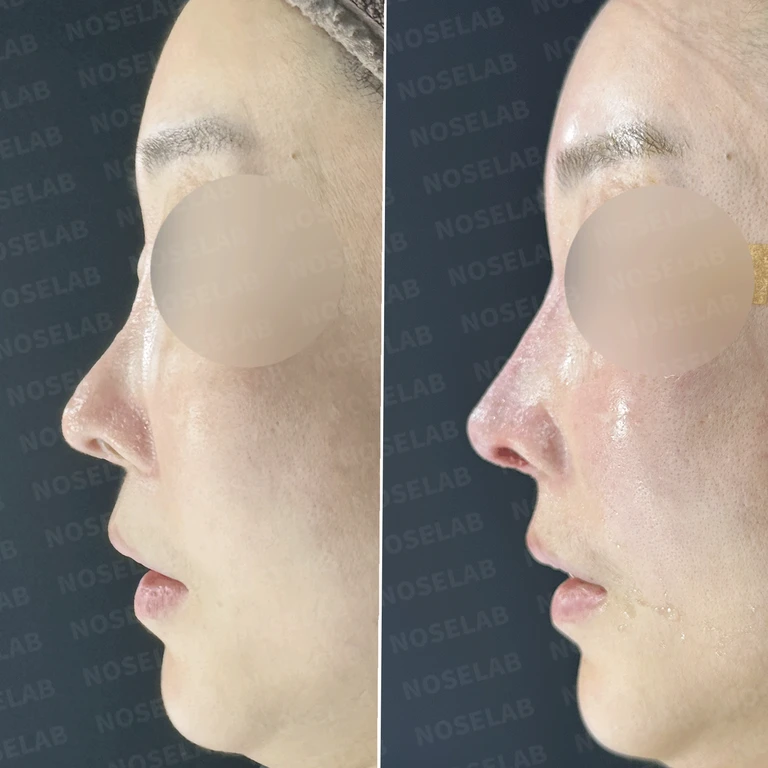
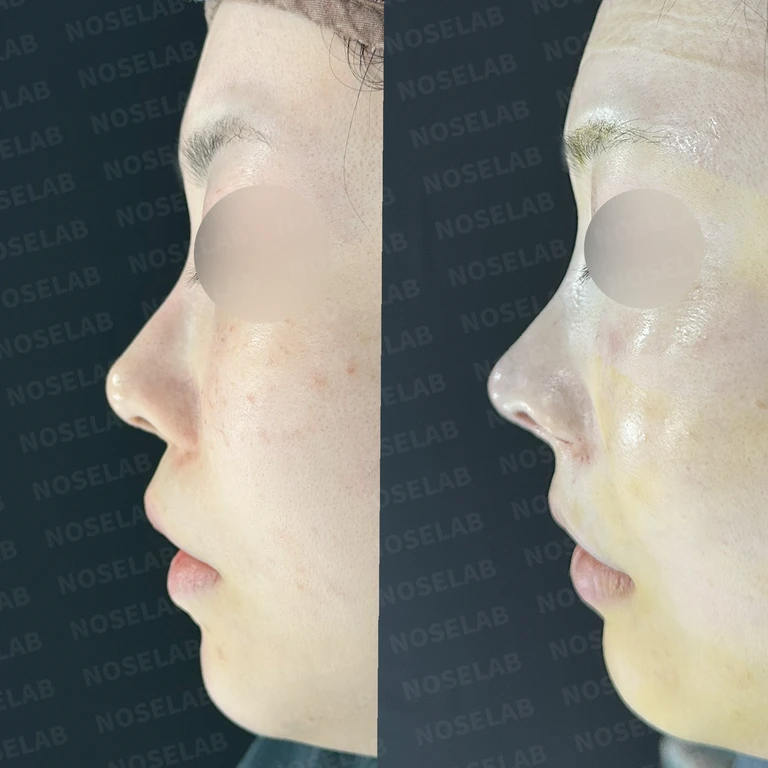
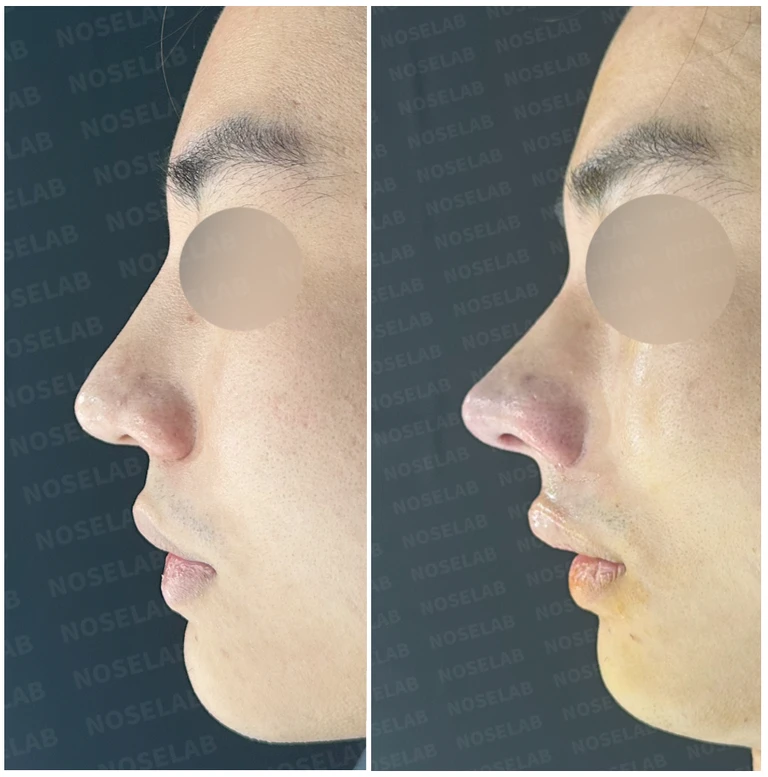
Why the nasal tip droops and spreads when smiling after rhinoplasty: foreign material removal and tip correction methods — Before-and-after comparison
Before-and-after comparison

Why the nasal tip droops and spreads when smiling after rhinoplasty: foreign material removal and tip correction methods

A case of nasal tip drooping, a pinched look, and tip spreading after nasal filler injection and silicone rhinoplasty 7 years ago. Foreign materials and the silicone implant were removed, and the nasolabial angle was corrected while reinforcing tip support.

Preoperative condition
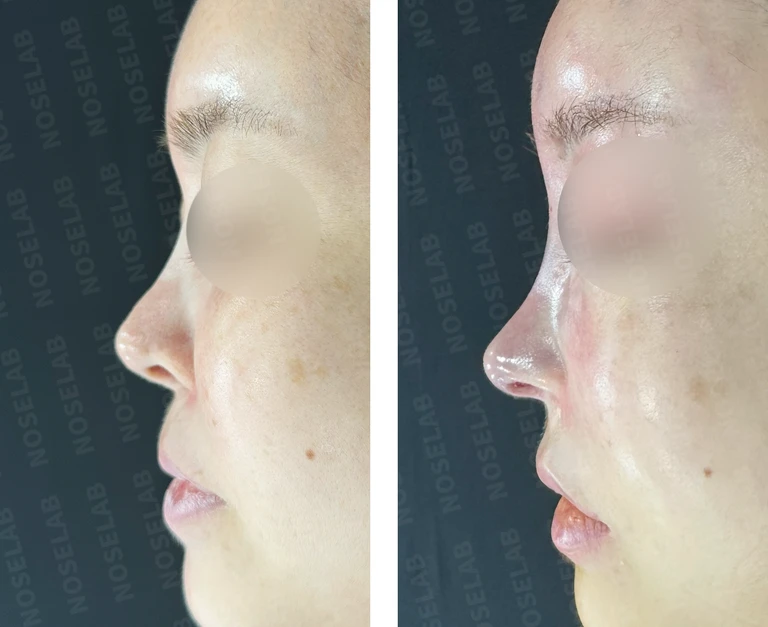
Foreign materials from illegal procedures in the nasal bridge: how to perform removal and total septal reconstruction — Before-and-after comparison
Before-and-after comparison

Foreign materials from illegal procedures in the nasal bridge: how to perform removal and total septal reconstruction

We removed foreign materials from illegal injections in the nasal bridge, completely reconstructed the cartilage-depleted septum using autologous rib cartilage, and performed dermal grafting on the thinned skin.

Preoperative condition
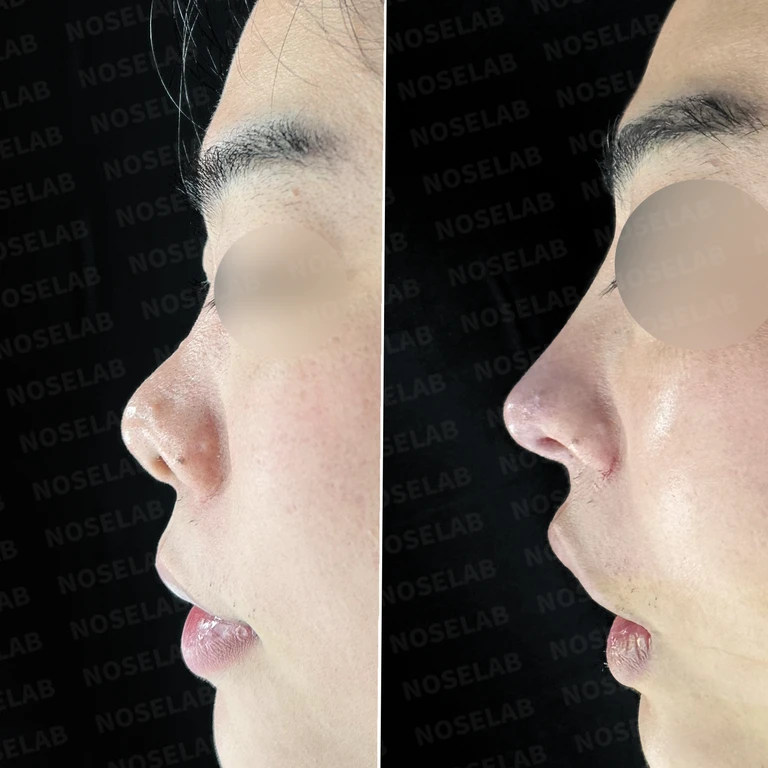
Why saddle nose and nasal valve stenosis occur after repeated revision rhinoplasty, and how total reconstruction is performed — Before-and-after comparison
Before-and-after comparison

Why saddle nose and nasal valve stenosis occur after repeated revision rhinoplasty, and how total reconstruction is performed

This is a case where the nasal bones, septum, and keystone area were damaged after repeated surgeries, causing nasal obstruction due to nasal valve stenosis. Autologous rib cartilage was used to reconstruct the nasal support structure and nasal valve, while correcting bridge depression and asymmetry.

Preoperative condition

Why a nose with excessive septal cartilage harvest becomes upturned and blocked, and how to reconstruct it — Before-and-after comparison
Before-and-after comparison

Why a nose with excessive septal cartilage harvest becomes upturned and blocked, and how to reconstruct it

A case where a septum weakened and deviated to the left from a previous surgery was reconstructed with autologous rib cartilage. Addressing both nasal obstruction and an upturned nose, the nasal tip was elongated, and the depressed nasal dorsum and nasolabial angle were corrected.

Preoperative condition

Changes that occur when supporting the nasal tip with ear cartilage alone and reconstruction methods using rib cartilage — Before-and-after comparison
Before-and-after comparison

Changes that occur when supporting the nasal tip with ear cartilage alone and reconstruction methods using rib cartilage

To resolve persistent nasal obstruction, a crooked nose, and a retracted columella following a prior surgery, complete reconstruction using autologous rib cartilage and septoplasty were performed.

Preoperative condition · Postoperative record

Changes that occur when inflammation persists after rhinoplasty and reconstruction methods — Before-and-after comparison
Before-and-after comparison

Changes that occur when inflammation persists after rhinoplasty and reconstruction methods

To resolve chronic inflammation, an upturned nose, and redness of the nasal bridge that persisted after previous surgeries, artificial materials were removed, and structural reconstruction using autologous rib cartilage was performed along with nasal valve surgery.

Preoperative condition

Problems caused by excessive harvest of septal cartilage and methods for reconstruction — Before-and-after comparison
Before-and-after comparison

Problems caused by excessive harvest of septal cartilage and methods for reconstruction

In a patient whose septal cartilage had been excessively harvested during previous surgeries, leading to a shortened nasal tip and nostril asymmetry, the septum was solidly reconstructed using autologous rib cartilage to restore nasal length.

Preoperative condition

Why nostril asymmetry and a drooping tip develop: reconstruction combining different cartilages — Before-and-after comparison
Before-and-after comparison

Why nostril asymmetry and a drooping tip develop: reconstruction combining different cartilages

To correct congenital nostril asymmetry and a drooping nasal tip, residual filler and foreign material were removed, and septal extension was performed using both donor rib cartilage and septal cartilage.

Postoperative record

Why the columella retracts and the nasal tip becomes bulbous years after rhinoplasty, and how to reconstruct it — Before-and-after comparison
Before-and-after comparison

Why the columella retracts and the nasal tip becomes bulbous years after rhinoplasty, and how to reconstruct it

Columellar retraction and bulbous tip deformity after previous dorsal hump reduction and osteotomy were corrected through septal extension with autologous rib cartilage, columellar cartilage grafting, and lateral osteotomies.

Preoperative condition

Why a nose becomes short and upturned with a retracted columella, and how autologous rib cartilage reconstruction works — Before-and-after comparison
Before-and-after comparison

Why a nose becomes short and upturned with a retracted columella, and how autologous rib cartilage reconstruction works

A case where an upturned nose and a retracted columella caused by cartilage loss from previous surgeries were naturally restored using autologous rib cartilage for lower lateral cartilage reconstruction and septal extension.

Preoperative condition

Nasal bone fractures: When cosmetic surgery can be combined and how to stage the procedure — Before-and-after comparison
Before-and-after comparison

Nasal bone fractures: When cosmetic surgery can be combined and how to stage the procedure

To correct a traumatic nasal bone fracture and a deviated nasal tip, closed reduction and autologous rib cartilage septal extension were performed without an implant, with plans to adjust the nasal bridge height after an observation period.

Postoperative record

Why bulbous and flared tips persist after revision rhinoplasty: How reconstruction is performed using autologous rib cartilage — Before-and-after comparison
Before-and-after comparison

Why bulbous and flared tips persist after revision rhinoplasty: How reconstruction is performed using autologous rib cartilage

To restore septal support weakened by prior surgery and address a bulbous, flared nasal tip, we performed septal reconstruction and septal extension using autologous rib cartilage.

Preoperative condition

Why nostrils become visible and nasal bridge volume is lost after multiple surgeries — Before-and-after comparison
Before-and-after comparison

Why nostrils become visible and nasal bridge volume is lost after multiple surgeries

A case of nasal reconstruction using recycled autologous rib cartilage combined with donor rib cartilage and skin grafts to correct an upturned nasal deformity and asymmetry caused by repeated surgeries.

Preoperative condition

Reconstruction methods for an upturned nose and damaged support structures — Before-and-after comparison
Before-and-after comparison

Reconstruction methods for an upturned nose and damaged support structures

An upturned nose accompanied by loss of the septum and damage to the lower lateral cartilages from excessive cartilage harvesting was restored through septal reconstruction with autologous rib cartilage and alar cartilage reconstruction using the previous ear cartilage.

Postoperative record

Upturned nose and nasal obstruction: how to reconstruct structural support with rib cartilage — Before-and-after comparison
Before-and-after comparison

Upturned nose and nasal obstruction: how to reconstruct structural support with rib cartilage

For an upturned nose and severe nasal obstruction caused by septal cartilage loss following silicone implant removal, we performed total septal reconstruction using rib cartilage, nostril lowering, and internal nasal valve reconstruction.

Preoperative condition · Postoperative record

No search results found

Please try searching with different keywords.

Scroll to keep reading

Previous case2 / 3Next case
Original article

Read more records

Planning a visit to Seoul?Prepare your consultation with the NOSELAB team.

International patient guideWhatsApp ↗
Dr. Peter C. Kang's Rhinoplasty Stories
Rhinoplasty guideCases by topicDr. Peter C. KangNaver Blog ↗
View original photo
Enlarged photo
WhatsAppChat with NOSELAB↗