Hello. Today, I would like to share the case of a patient who resolved long-standing discomfort persisting since their primary surgery 10 years ago and achieved a balanced nasal contour.
The patient's history and concerns
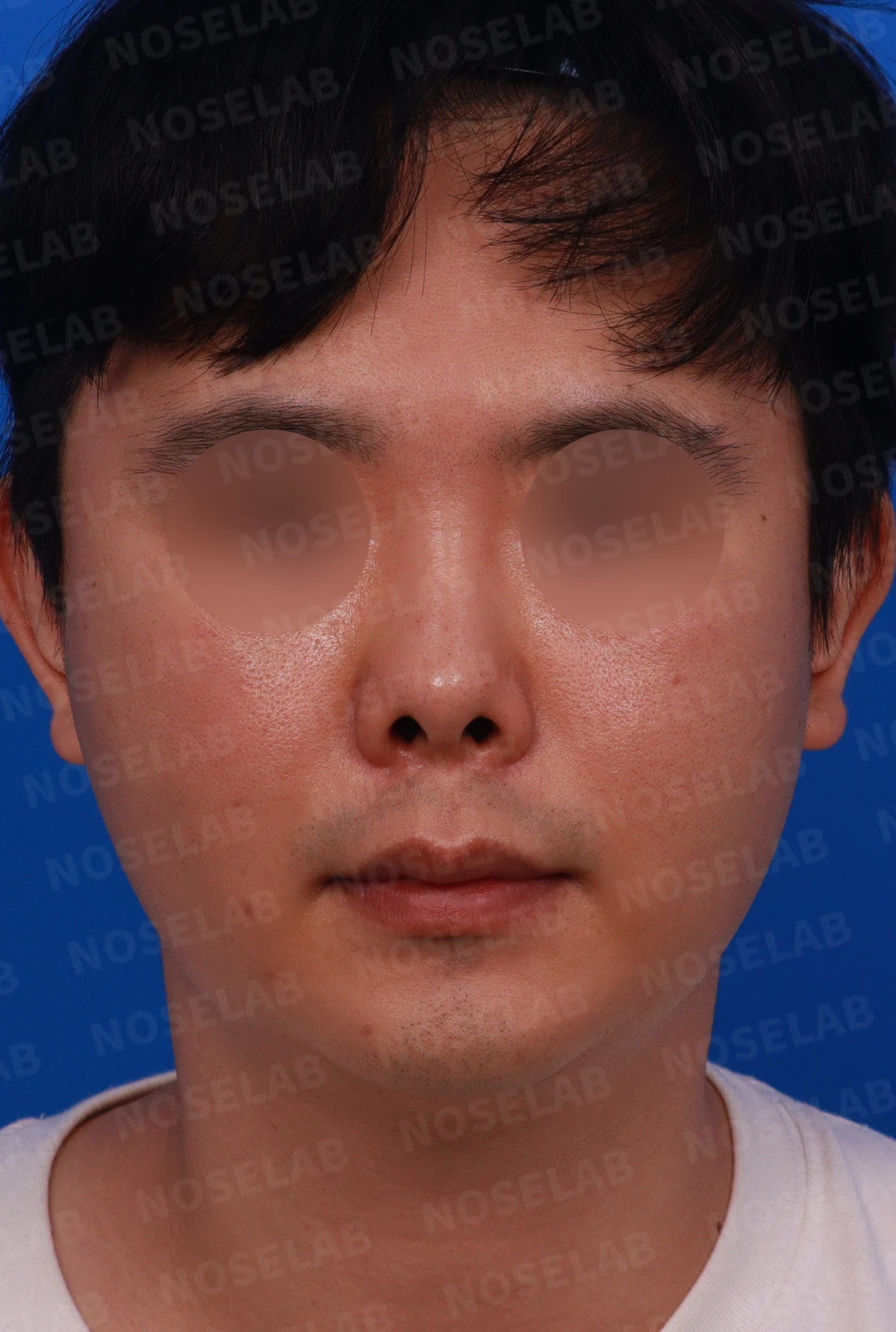
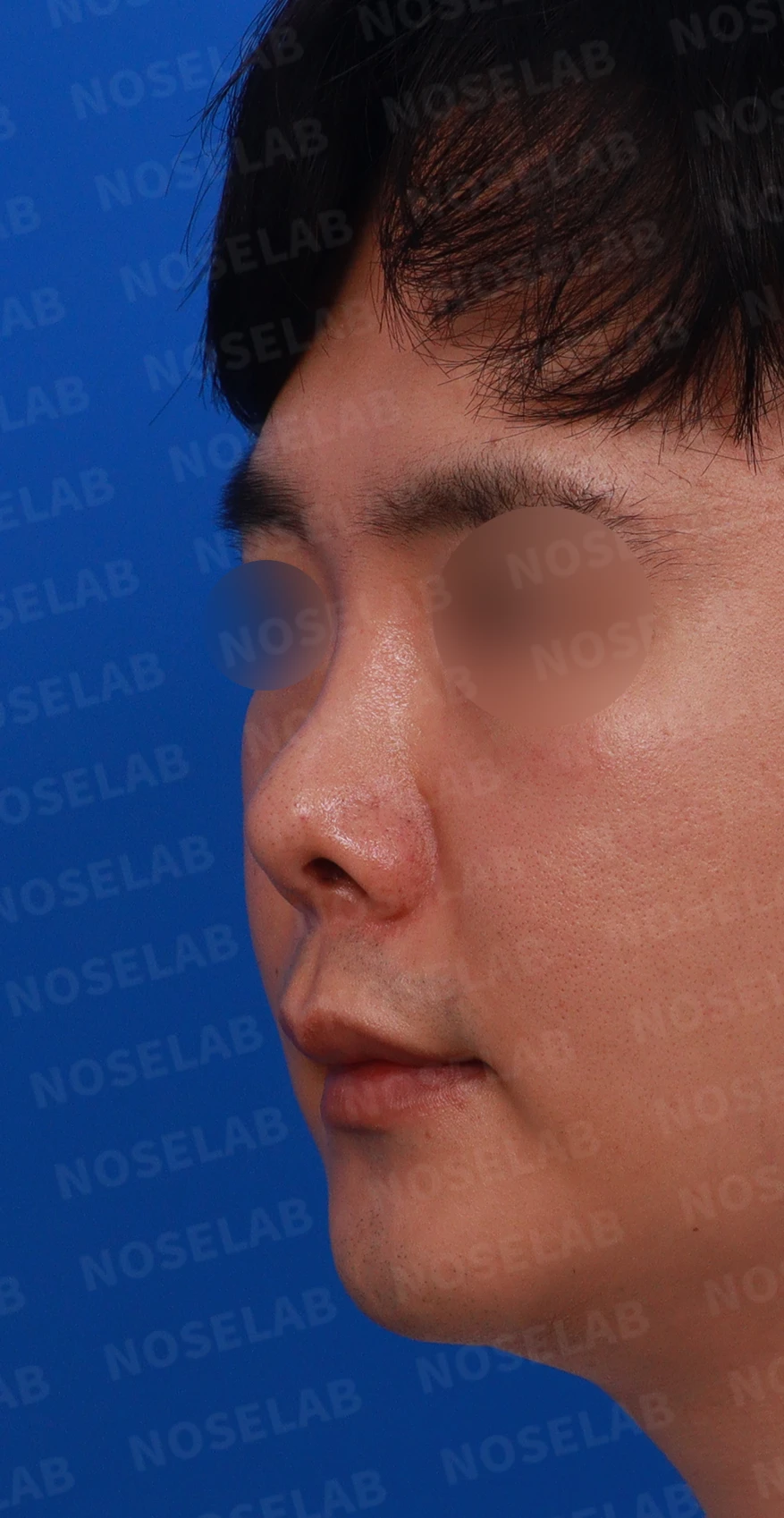
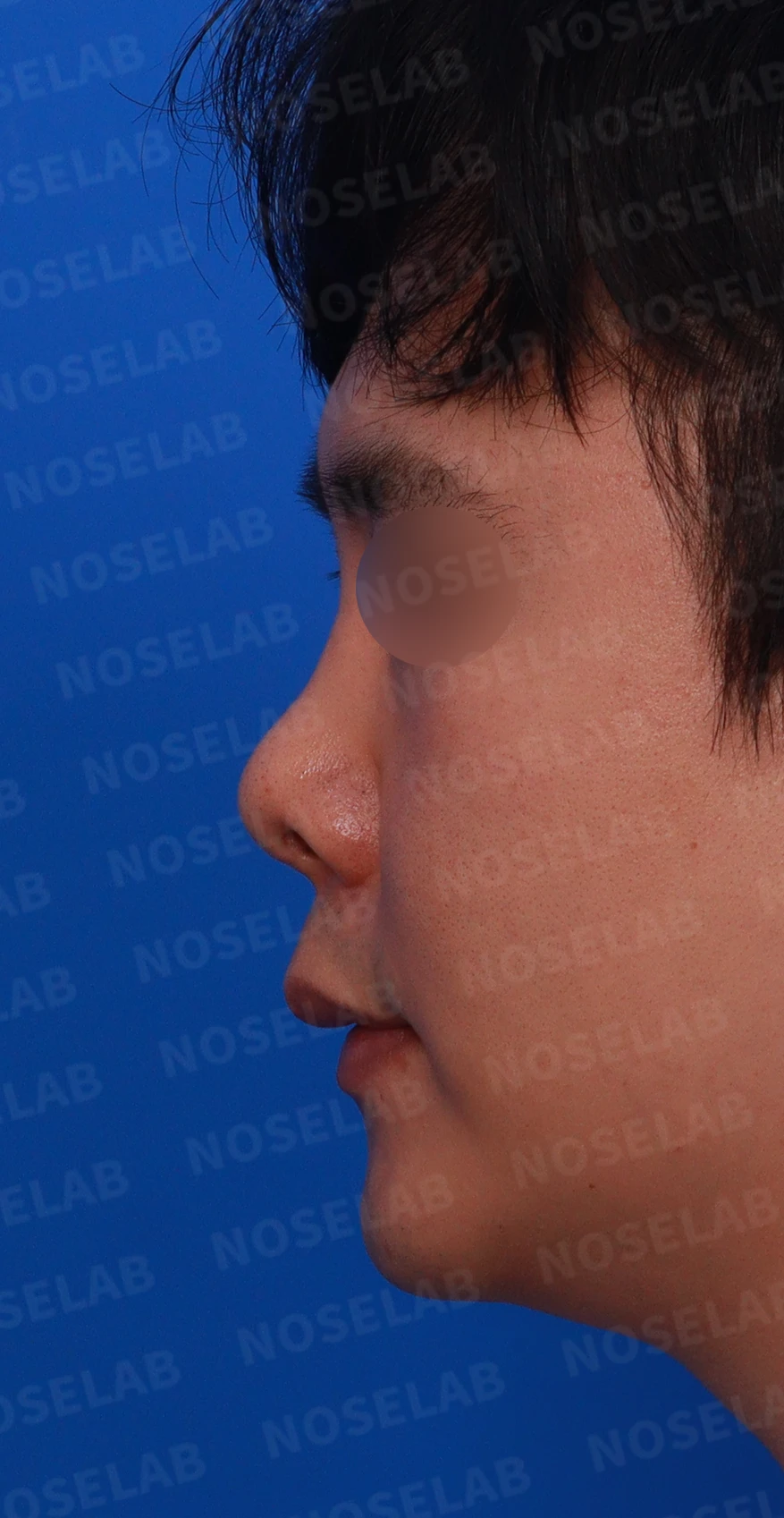
Design consultation: front, left oblique, and profile views.
Past surgical history
- 10 years ago: Rhinoplasty using silicone implant + septal cartilage + ear cartilage
- 5 years ago: Rhinitis surgery at a local ENT clinic
Primary concerns
- Nasal obstruction more severe on the left than on the right
- Upturned nose with excessive nostril show
- Unnatural profile line
- Uneven nasal bridge rather than a straight line
Desired improvements
- Improvement of upturned nose
- A straight nasal bridge line
- An appropriate increase in height
Condition analysis
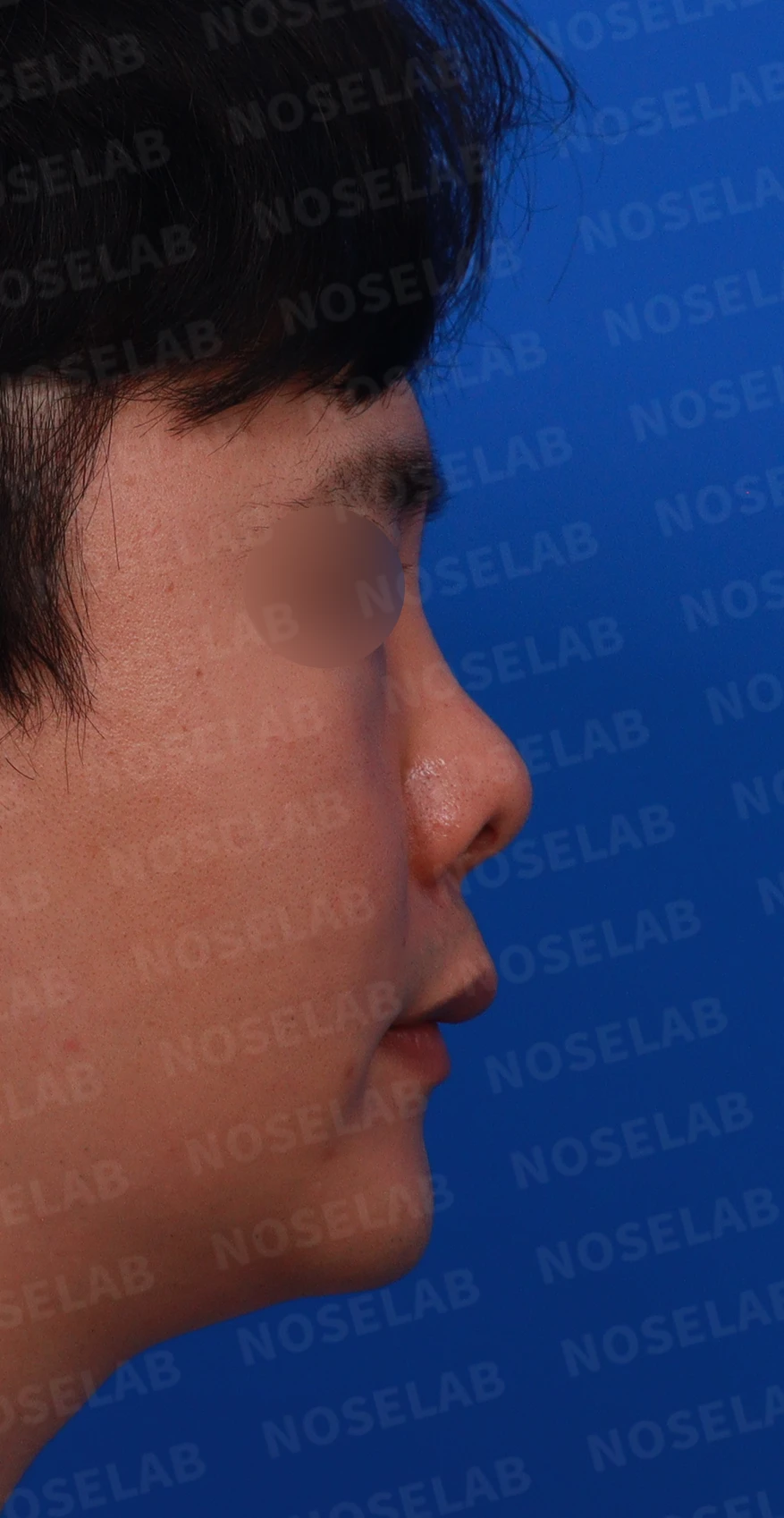
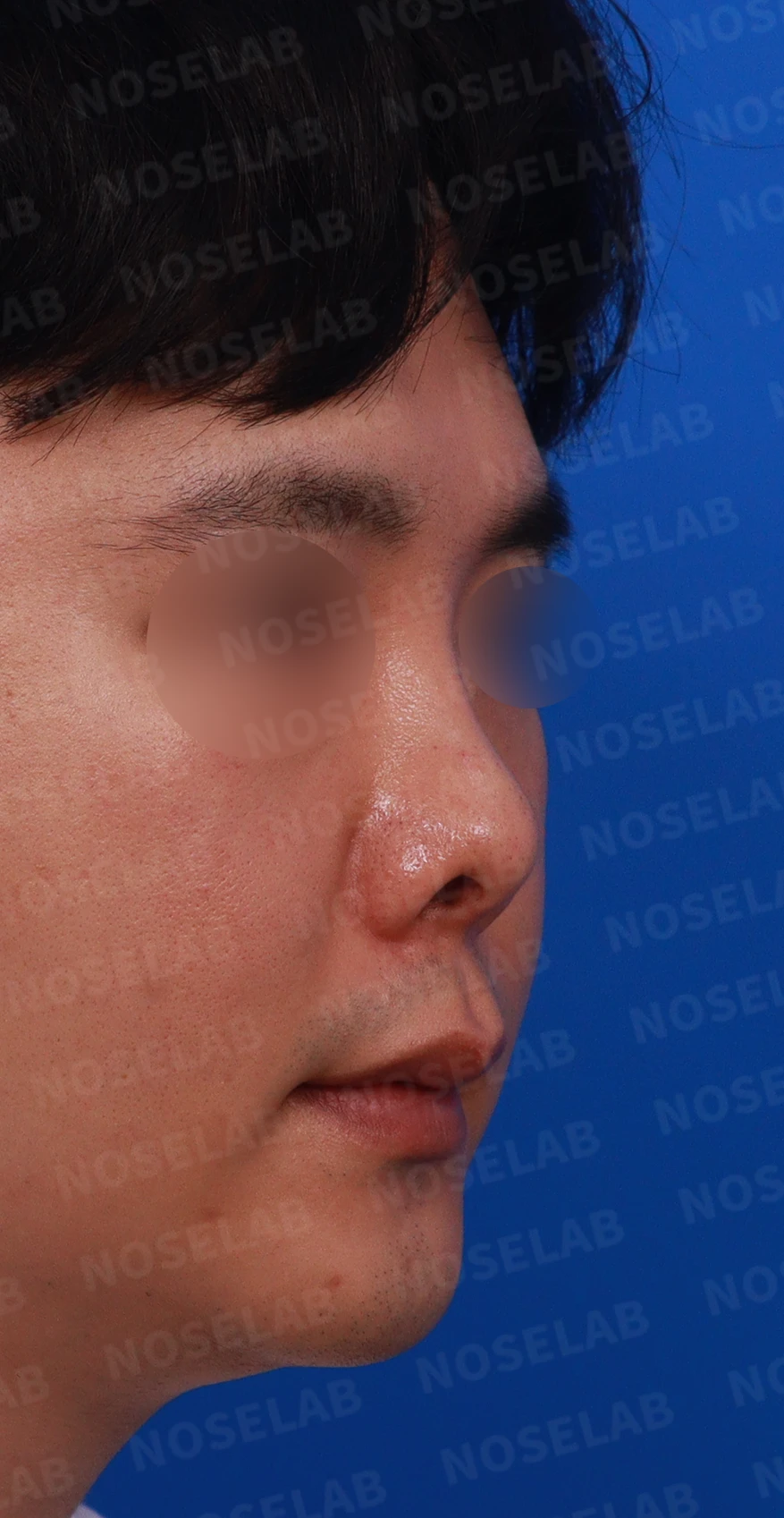
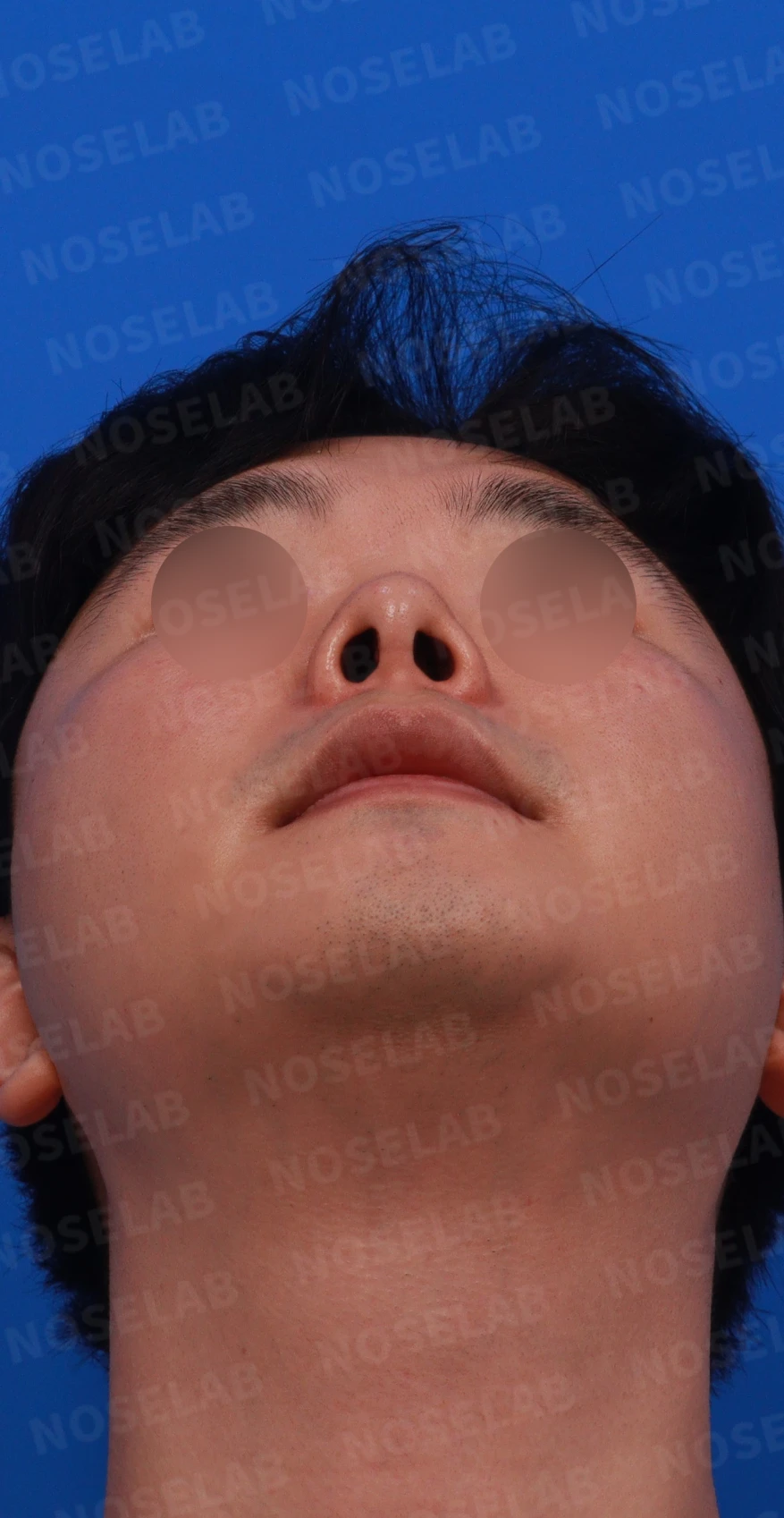
Design consultation: right profile, oblique, and nostril views.
When I first evaluated the patient, the findings were as follows:
1. Structural issues
- An inherently small, short nasal shape
- Septal cartilage severely deviated to the left
- Excessive nostril show from the front view
2. Cosmetic issues
- Unnatural profile
- Depression in the mid-dorsum
- Unnatural curve with height concentrated only at the radix
- Overall disproportionate facial balance
Clinical findings and solution process
Primary findings: Excessive harvesting of septal cartilage during the previous surgery was the root cause of the issues:
- Markedly weakened septal cartilage
- Septum buckled and crumpled to the left
- Loss of structural support
Surgical plan and execution
1. Septal reconstruction
- Septal cartilage reconstruction using autologous rib cartilage
- Restoration of structural stability
- Improvement of nasal obstruction symptoms
2. Nasal tip elongation
- Elongating the short, small nasal tip skin as far as safely possible
- Effectively improving the upturned appearance
- Establishing a natural tip angle
3. Correction of the nasal bridge line
- Filling the depressed area
- Correcting the uneven curve into a neat, straight line
- Achieving a balanced profile
4. Correction of nasolabial angle
- Meticulously refining the columellar shape
- Formation of a natural nasolabial angle
- Improving overall harmony and balance
Results and improvements
Preoperative video / Immediate postoperative video
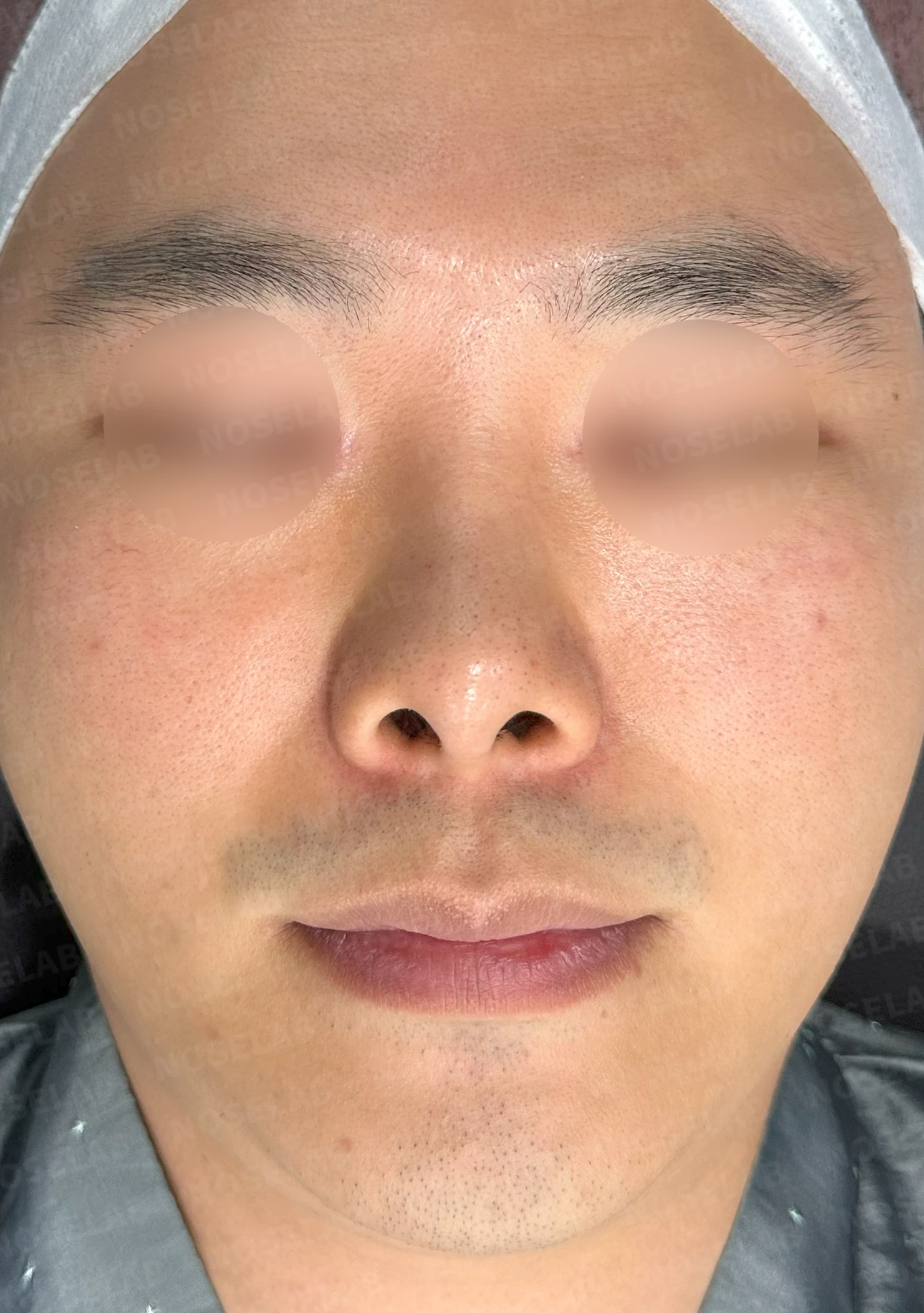
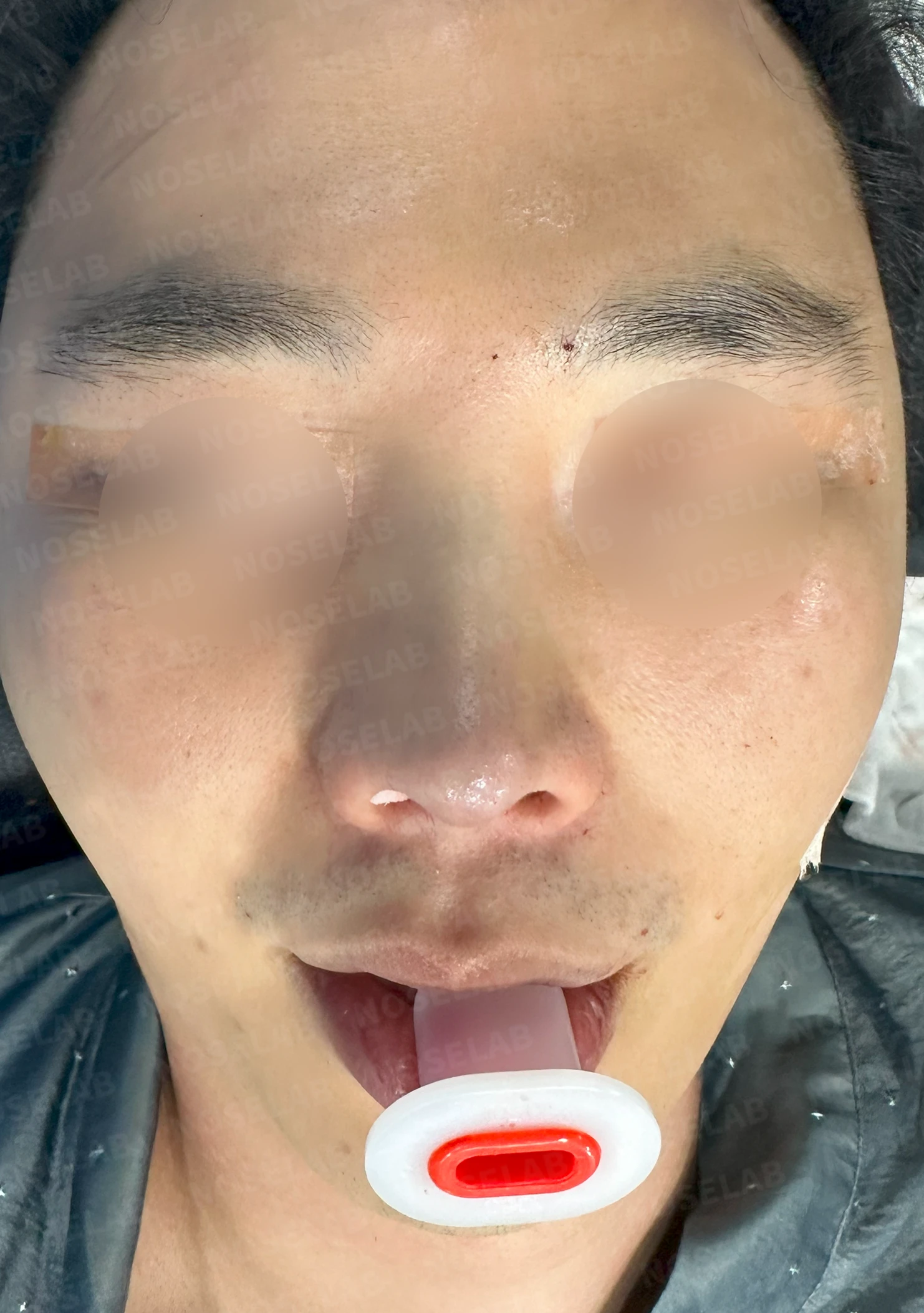
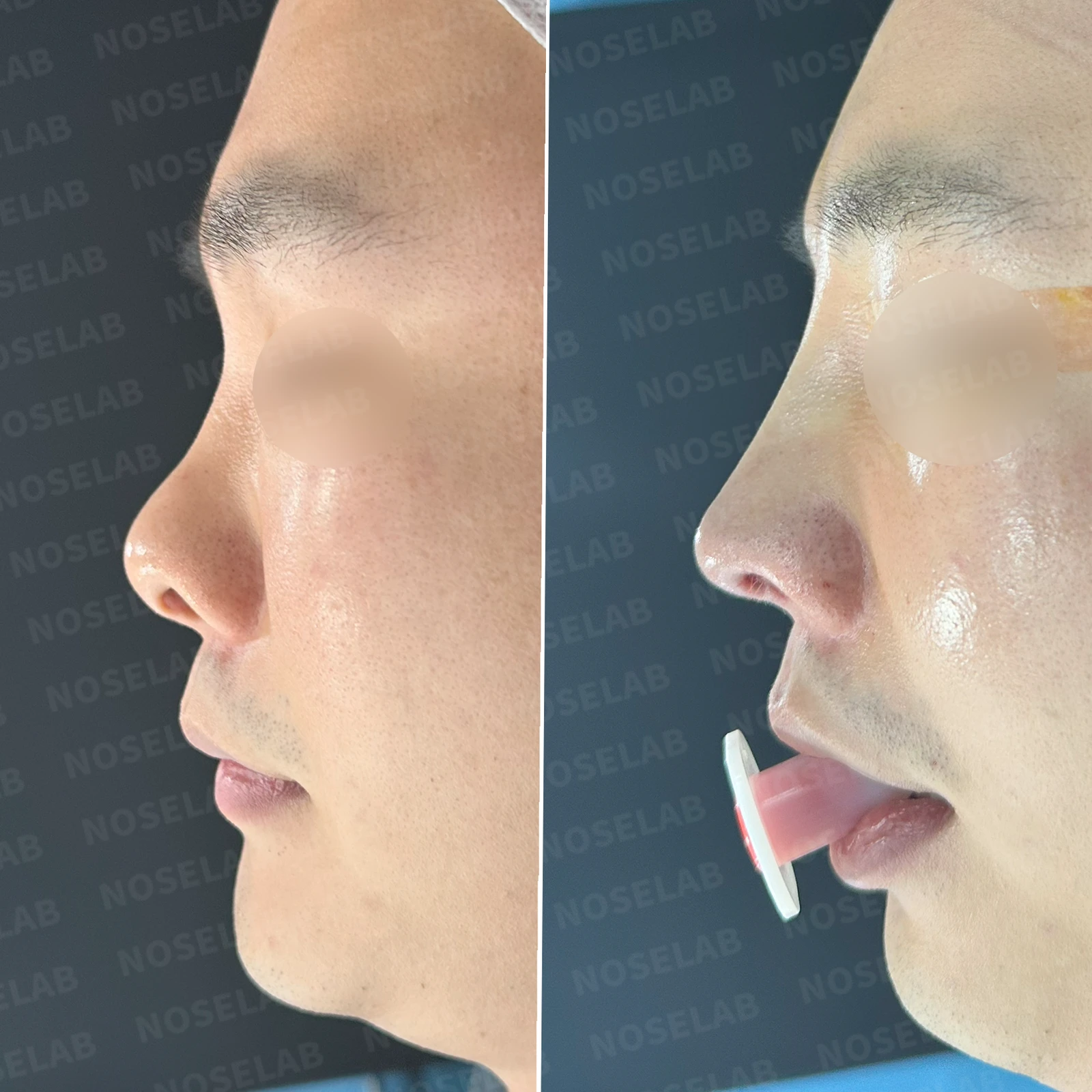
Before surgery / Day 0 immediately after surgery Photos taken immediately after surgery show swelling and may differ from the final result.
Functional improvement
- Resolution of nasal obstruction symptoms through septal reconstruction
- Restored symmetry between both nasal cavities
- Comfortable breathing
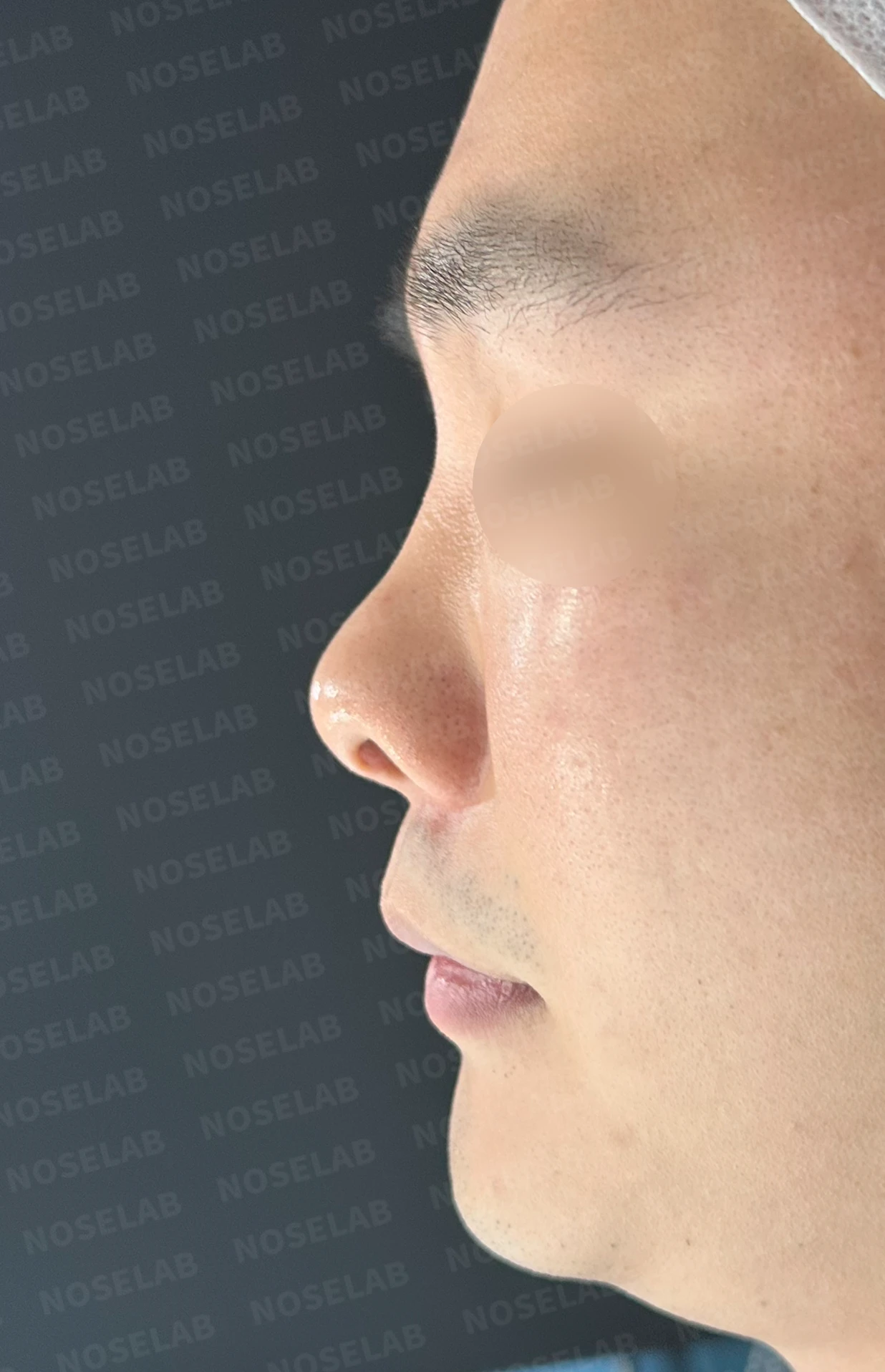
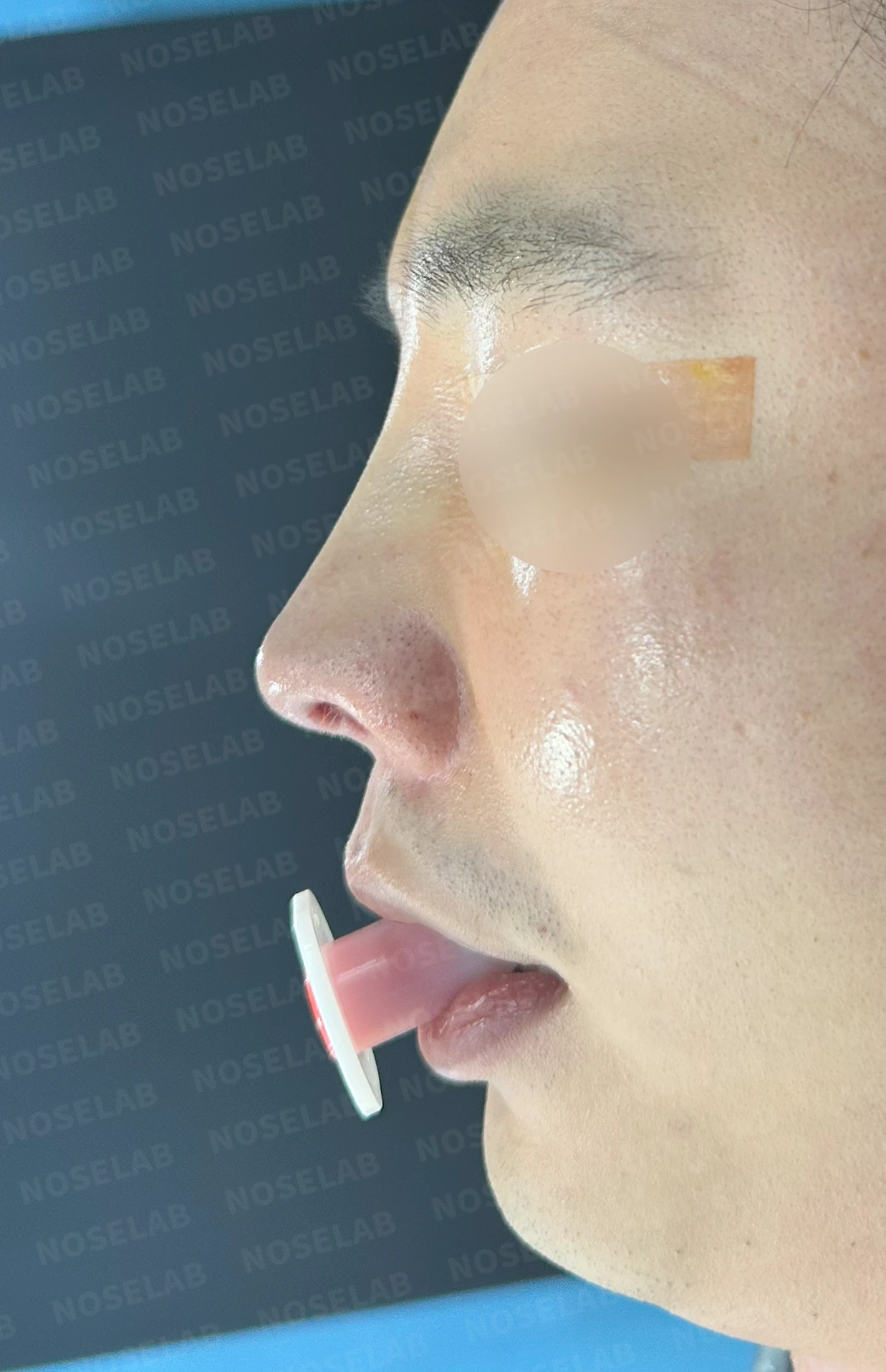
Before surgery / Day 0 immediately after surgery Photos taken immediately after surgery show swelling and may differ from the final result.
Cosmetic improvement
- Minimized nostril show from the front view
- A straight, refined nasal bridge line
- A natural nasal tip angle
- Overall balanced facial proportions
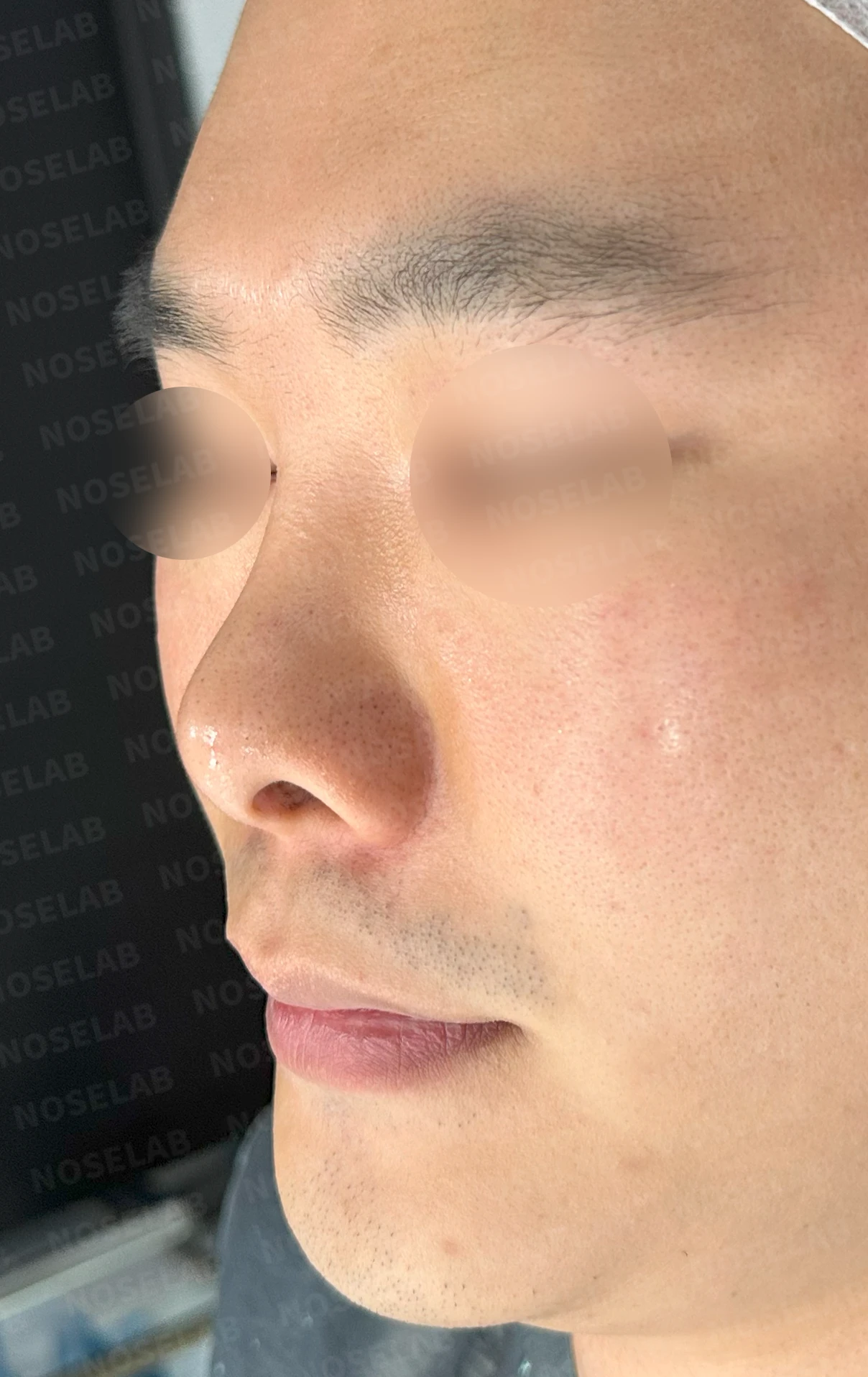
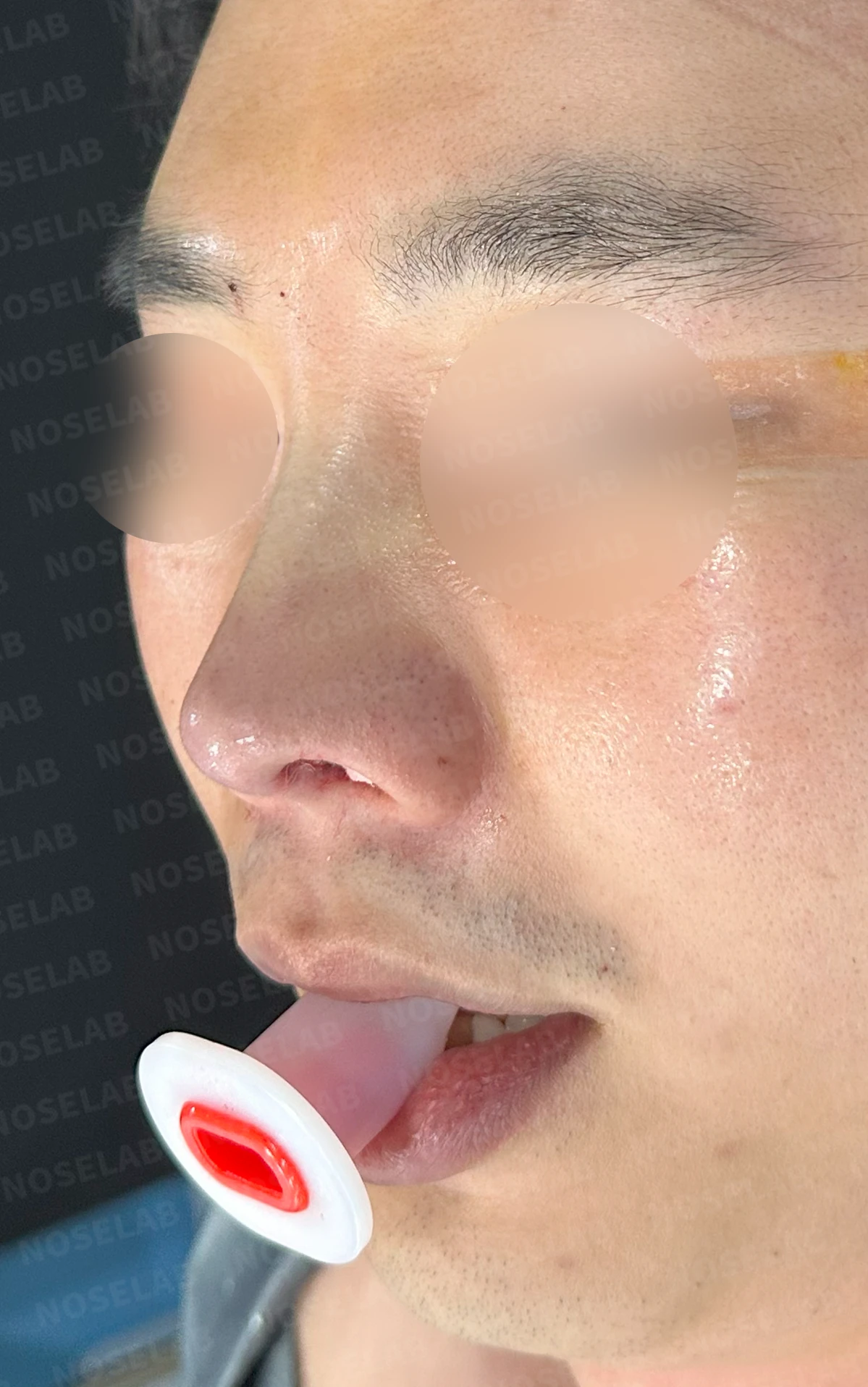
Before surgery / Day 0 immediately after surgery Photos taken immediately after surgery show swelling and may differ from the final result.
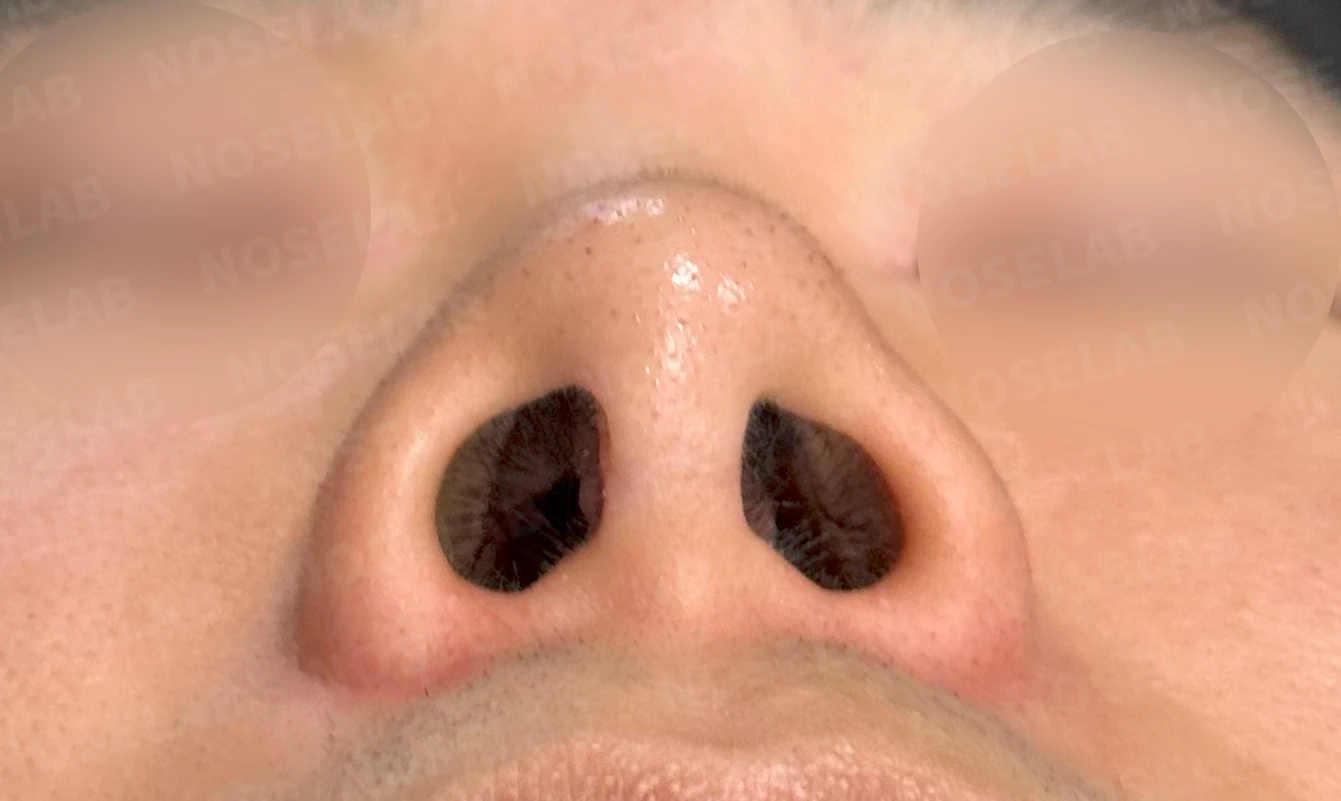
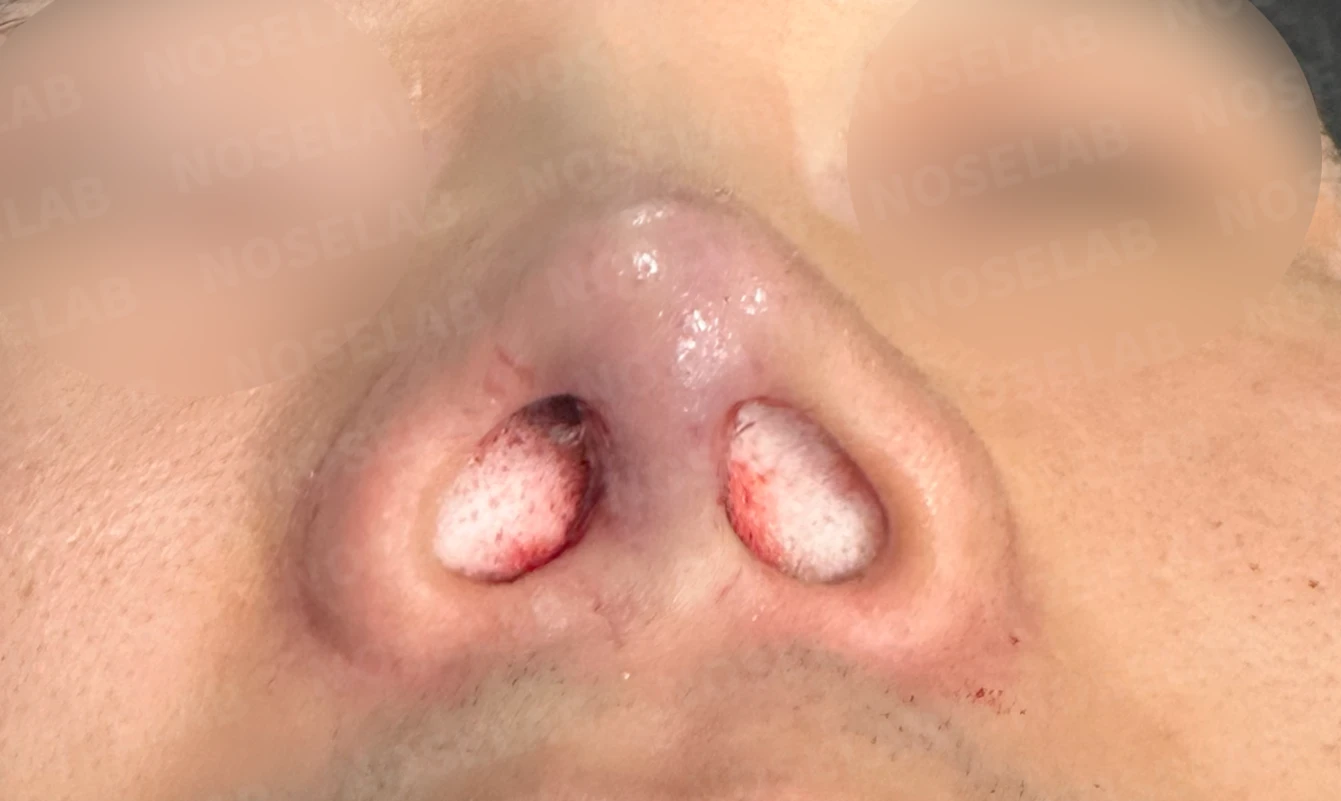
Before surgery / Day 0 immediately after surgery Photos taken immediately after surgery show swelling and may differ from the final result.
As shown in this case, excessive cartilage harvesting can lead to long-term complications.
If you are considering revision rhinoplasty:
1. Accurate analysis of the cause comes first
- Evaluation of internal structures using CT imaging
- Review of past surgical records
- Precise diagnosis of the current condition
2. Selection of safe graft materials
- Utilizing the advantages of autologous tissue (rib cartilage)
- Securing structural stability
- Planning for long-term stability
3. Setting realistic goals
- Accounting for skin envelope limitations
- Maximizing improvement within a safe range
- Balancing functional and aesthetic outcomes
Closing remarks
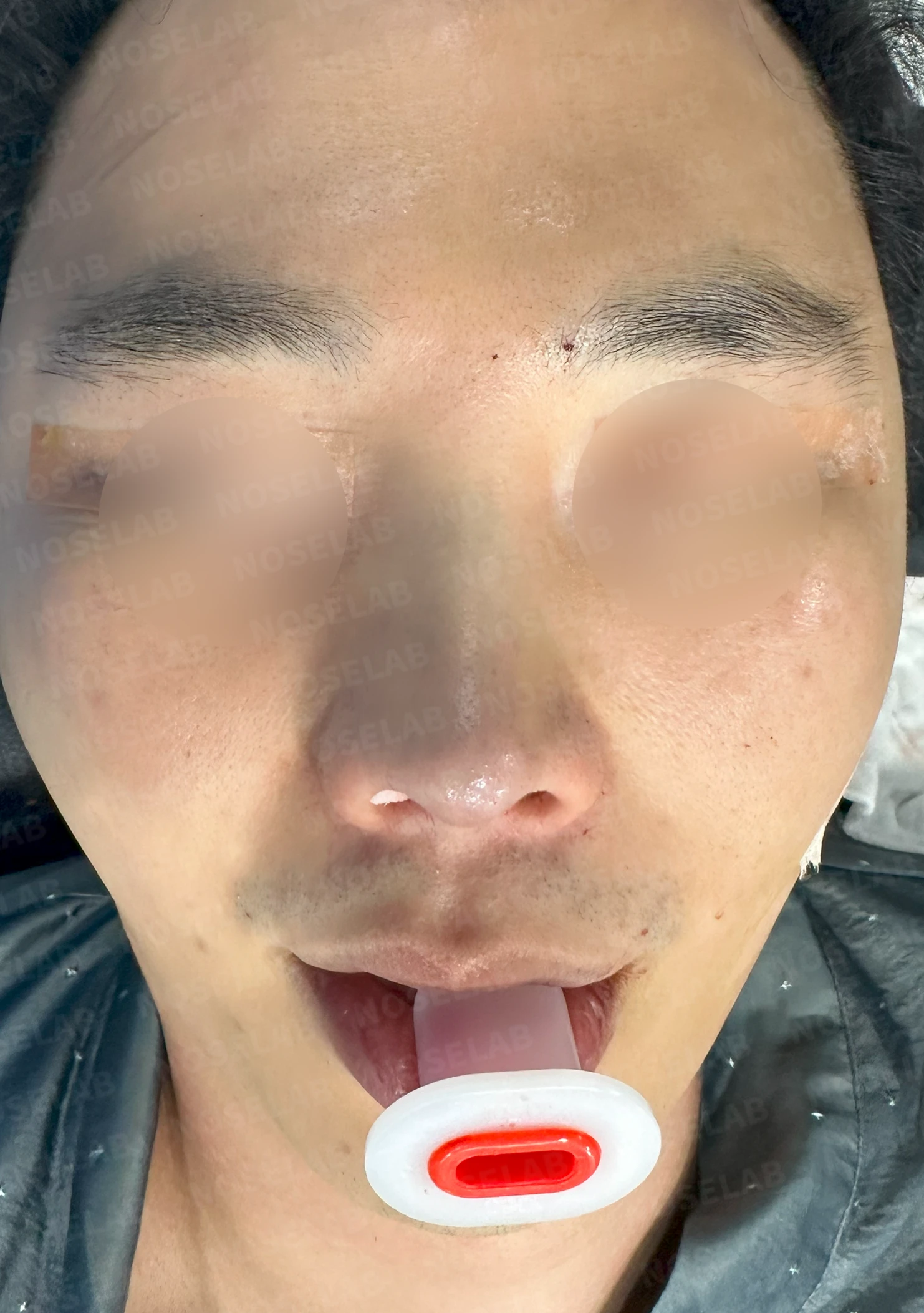
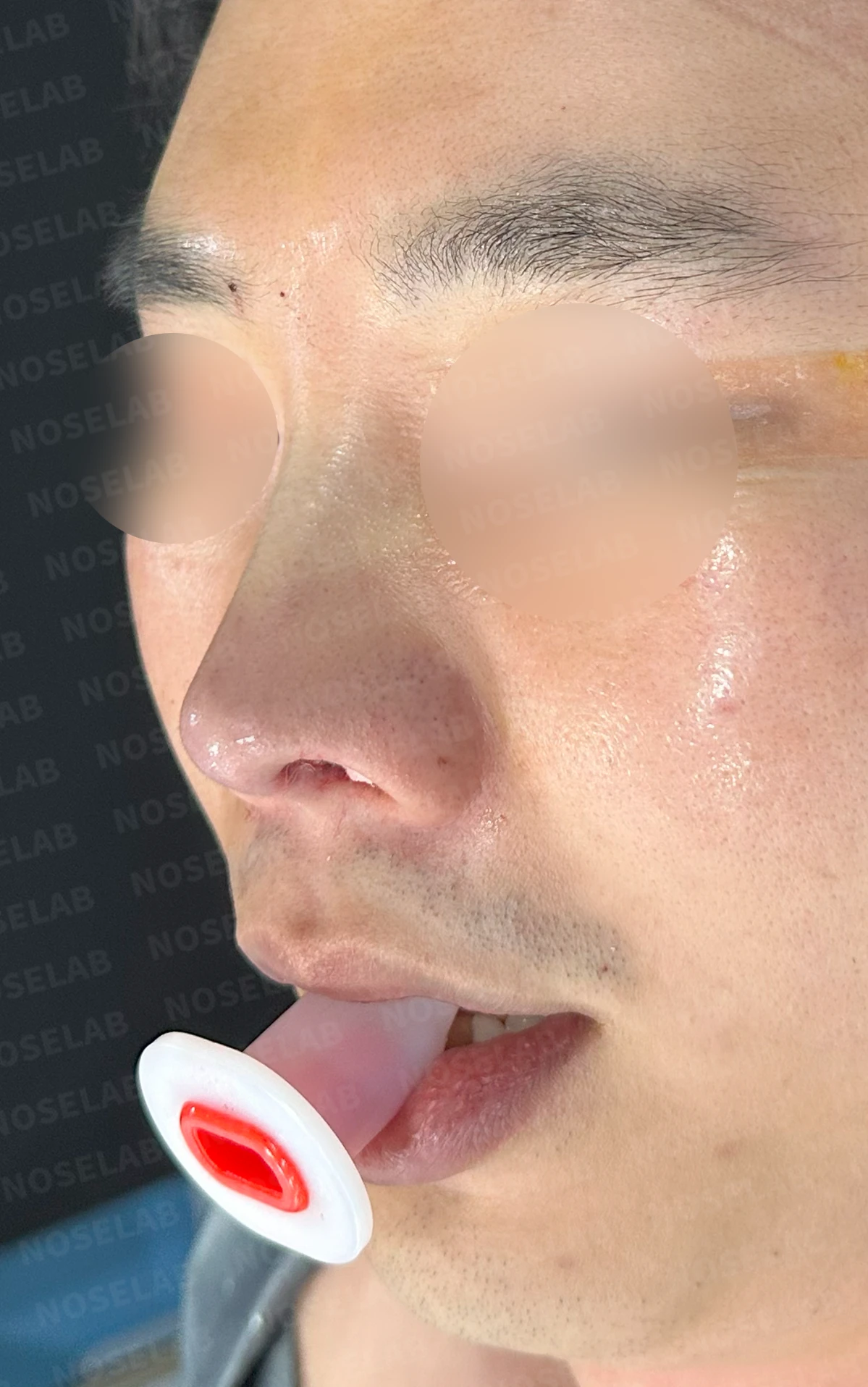
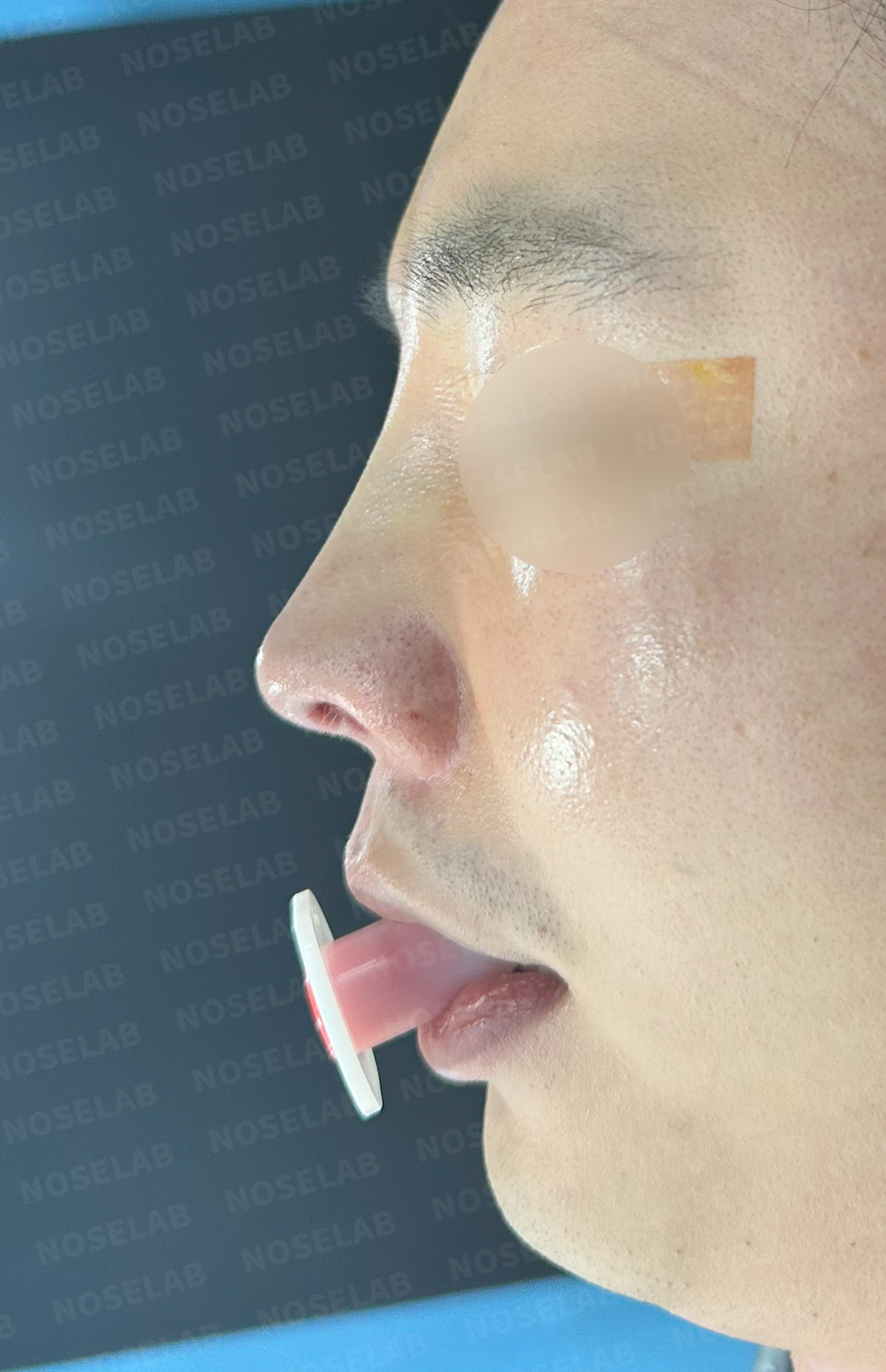
Immediately after surgery (day 0): front, profile, and oblique views. Immediate postoperative photos show swelling and may differ from the final result.
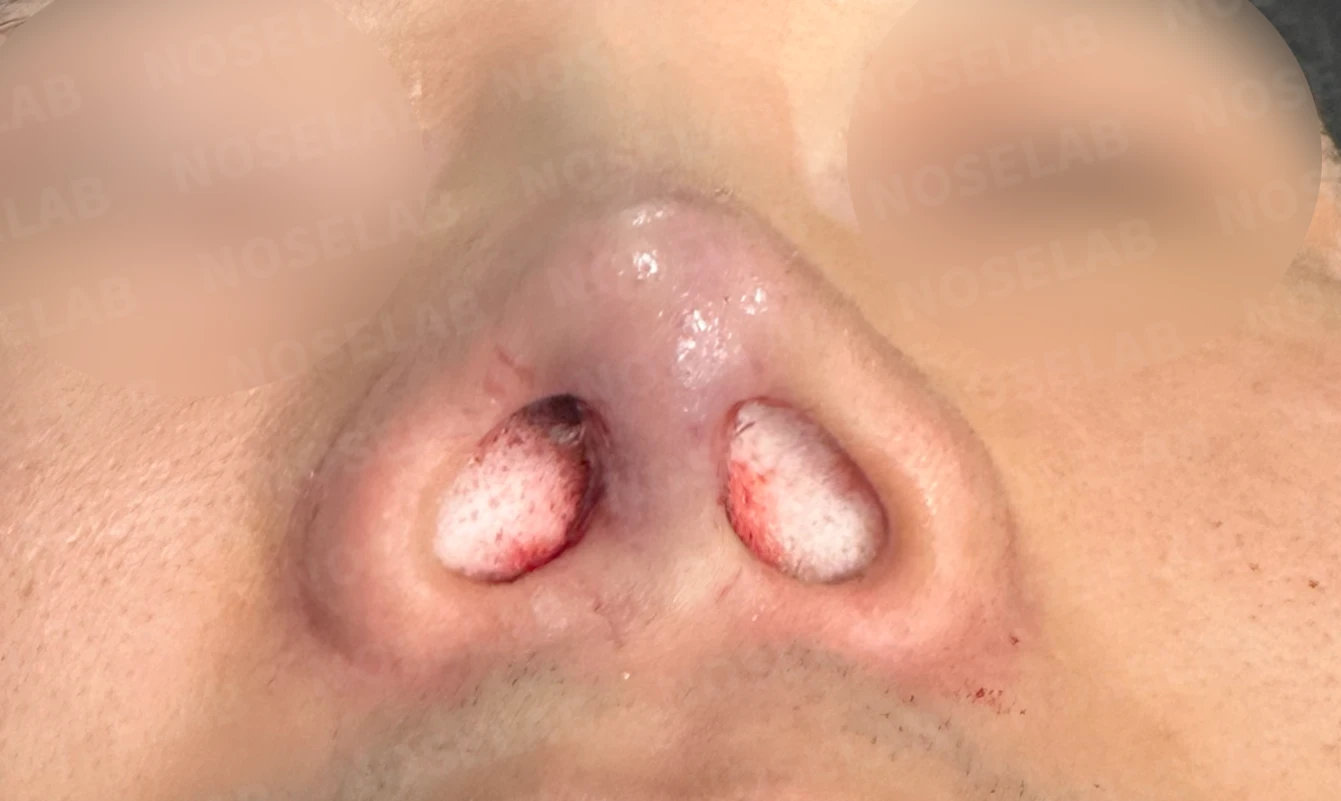
Nostril view on day 0 immediately after surgery. Photos taken immediately after surgery show swelling and may differ from the final result.
Seeing the patient finally achieve a satisfying result after enduring discomfort for a long period of 10 years was deeply rewarding for us as well. Revision rhinoplasty requires a more cautious approach than a primary surgery, but with an accurate diagnosis and a proper plan, meaningful improvement is certainly possible.
If you are contemplating revision rhinoplasty, take adequate time to consult thoroughly with a specialist to find the approach best suited to your needs.
--------------
This post is based on actual clinical cases, and surgical results may vary by individual.
#closedrhinoplasty #rhinoplasty #revisionrhinoplasty #autologousribcartilage #upturnednose #shortnose #nasalobstruction

Precautions and potential complications
Limitations and risks
When autologous rib cartilage is used, scarring and pain may remain at the donor site on the chest, and pneumothorax (pleural injury) can occur rarely. Over time, the grafted cartilage may warp or undergo partial resorption.
When the septum is corrected at the same time, nasal obstruction may persist or recur, and in rare cases, septal perforation or changes in smell may occur.
Common potential risks include infection, bleeding, asymmetry, scarring, skin necrosis, and insufficient improvement; results vary depending on individual skin condition and previous surgical history.