Hello, I am Dr. Peter C. Kang.
Today, I would like to introduce a unique case where we addressed both a nasal bone fracture and a previously overly high nasal bridge.
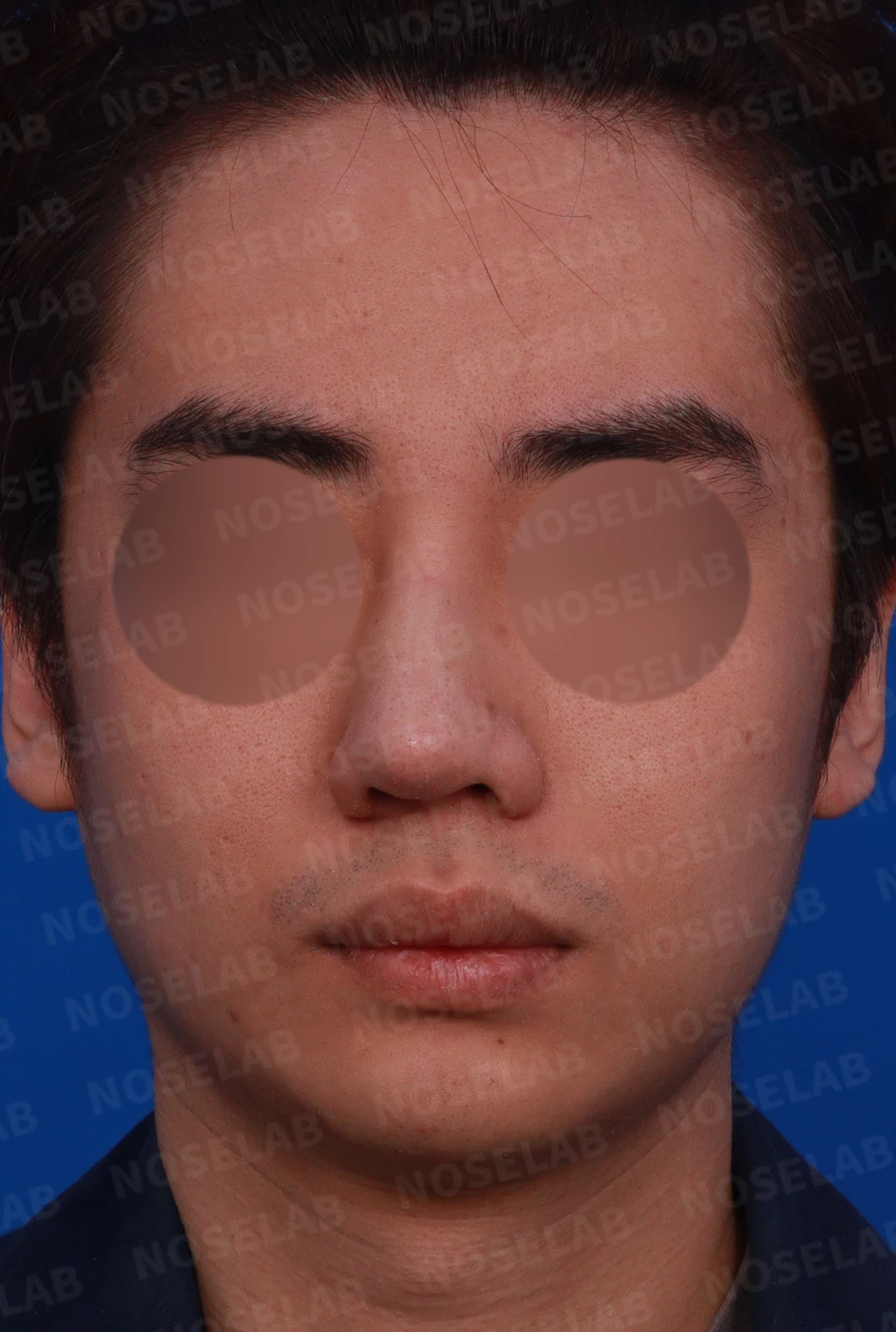
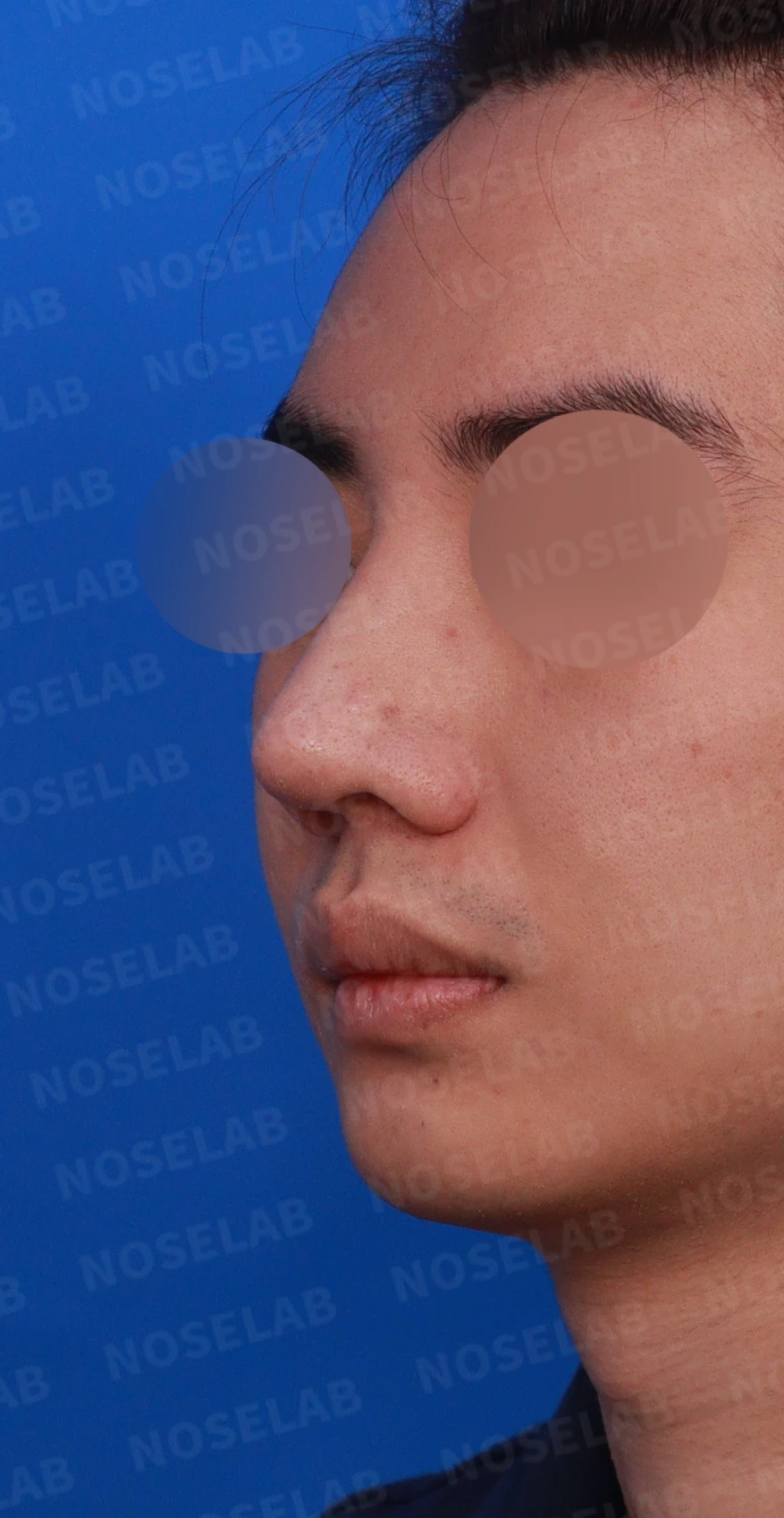
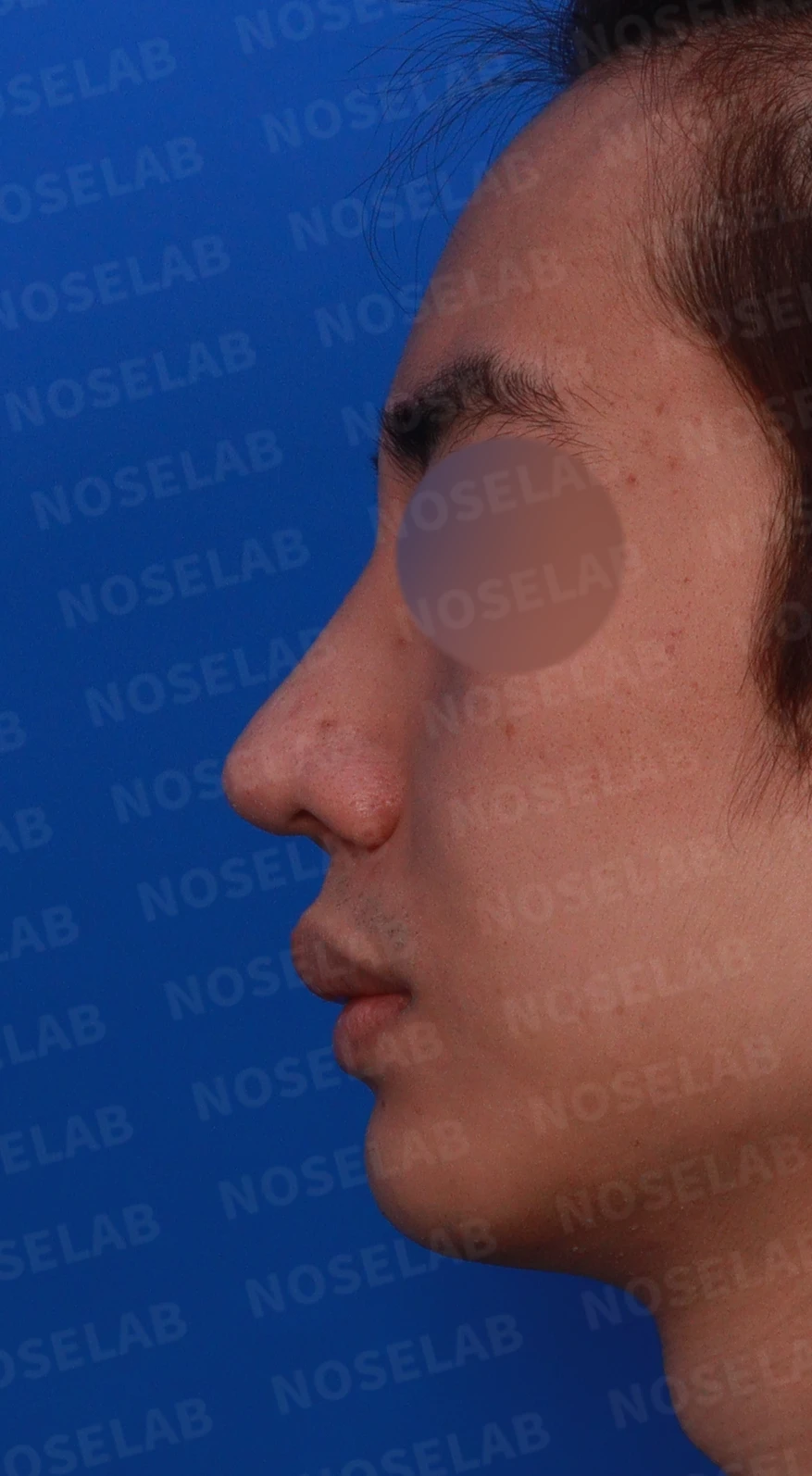
Front, left profile, and oblique views during design consultation
📍 Surgical history
6 years ago: Nose filler procedure, subsequently dissolved
4 years ago: Rhinoplasty with autologous rib cartilage and silicone implant
1 week ago: Sustained a nasal bone fracture
🔎 Initial consultation findings
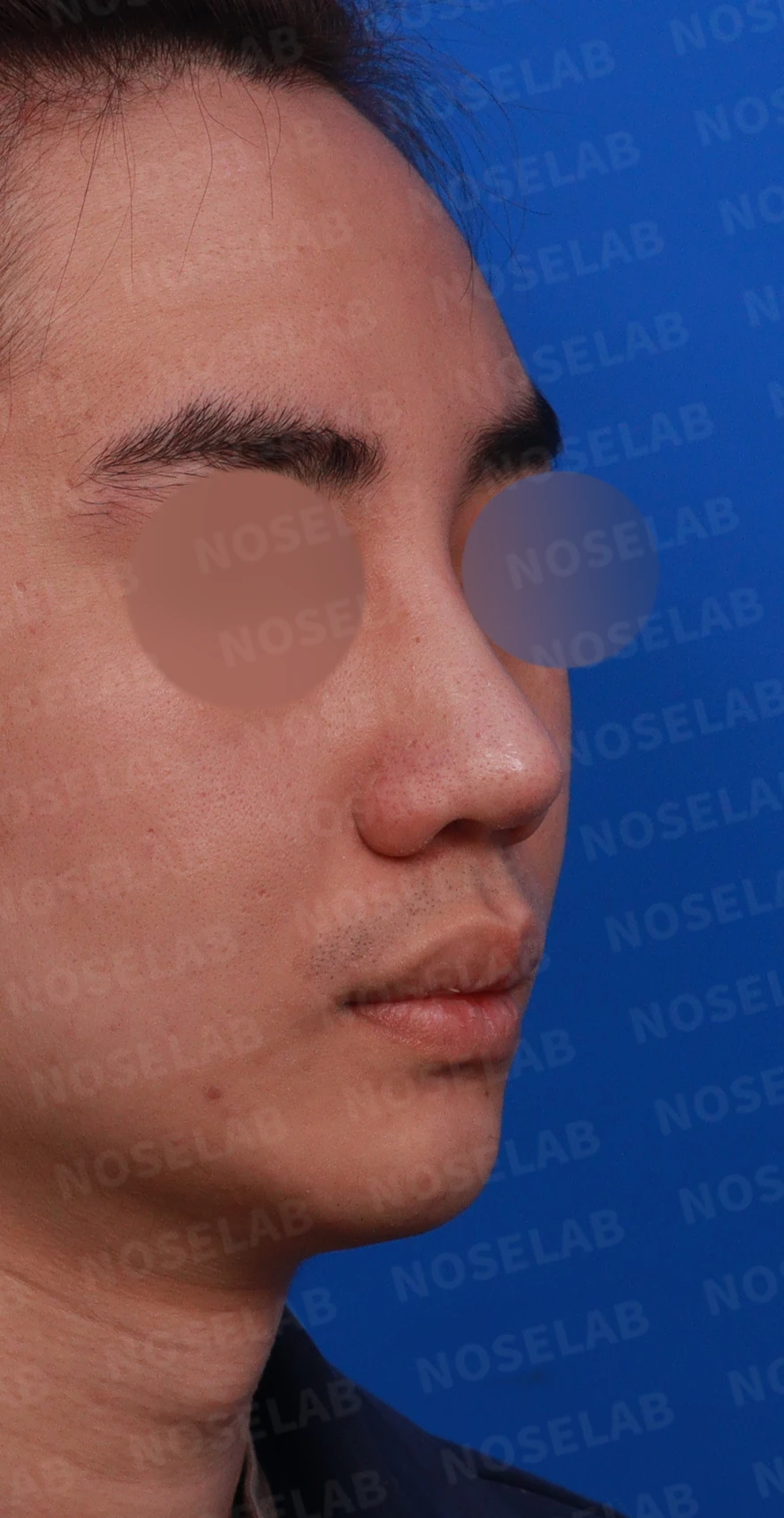
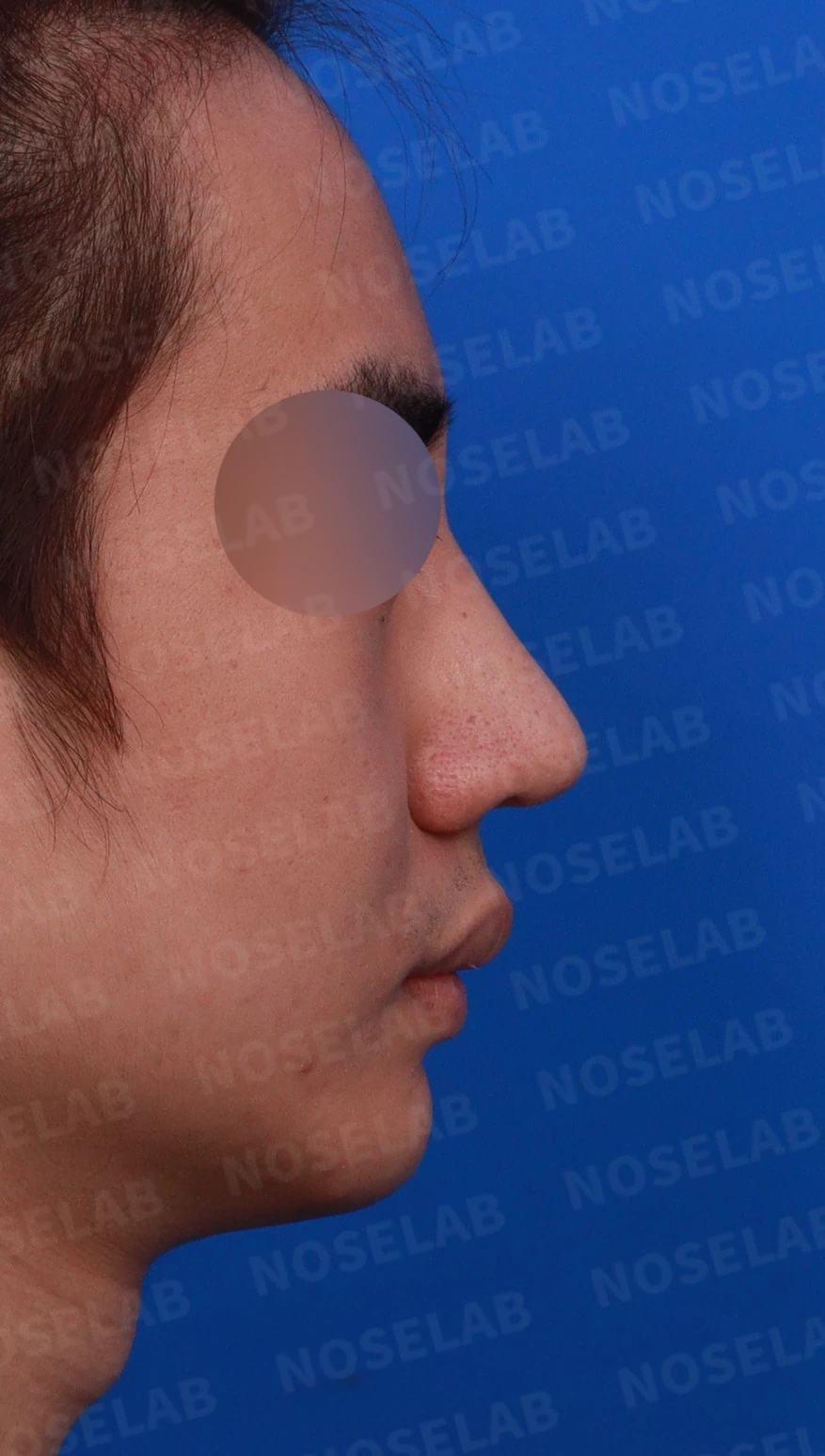
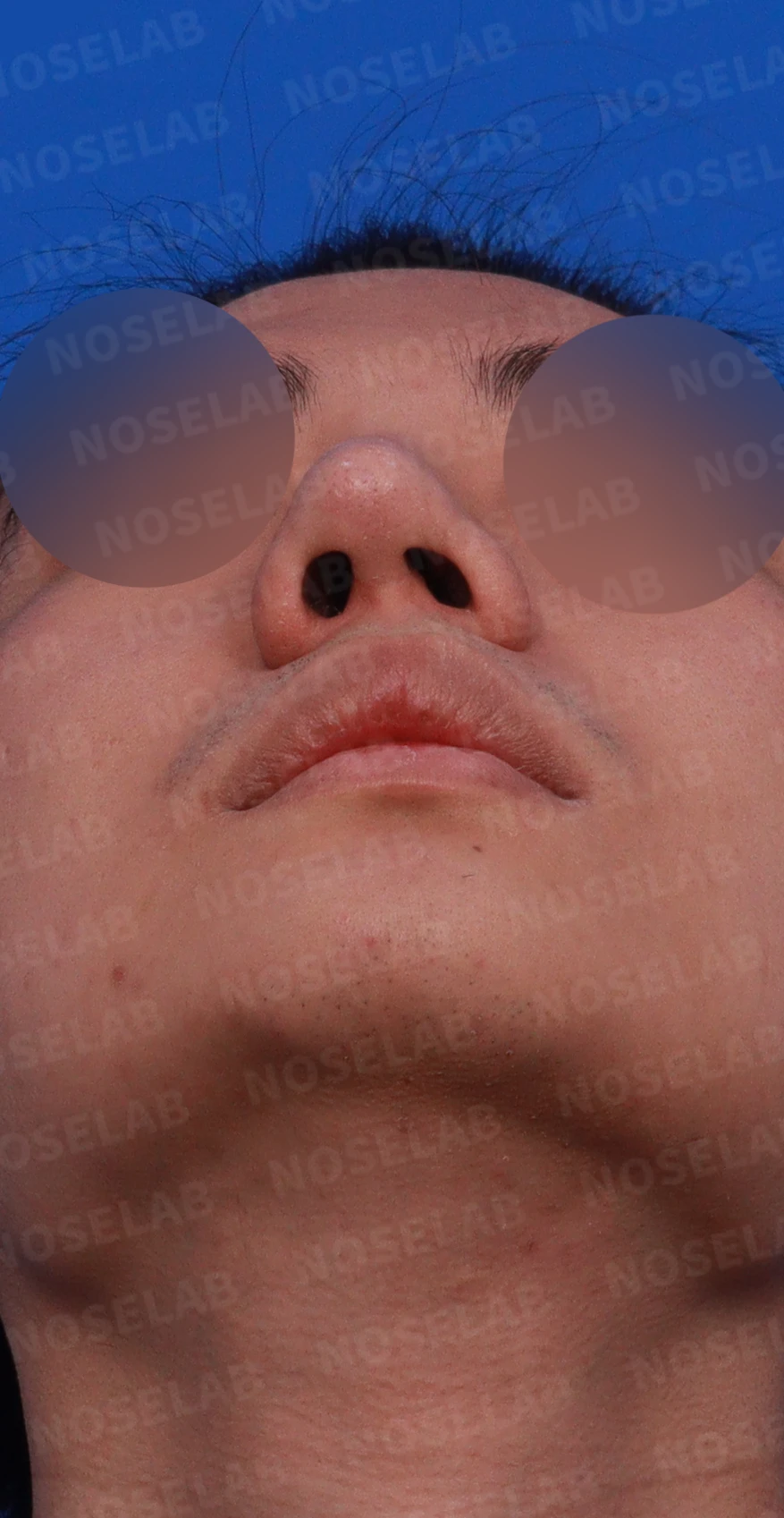
Design consultation: right oblique, profile, and basal (nostril) views
Front view
Nasal bone severely deviated to the right
Nasal tip shifted toward the right
Flared nasal shape
2. Profile view
Overly high nasal bridge
Drooping nasal tip
Retracted columella
3. Nostrils
Columella deviated to the right
Nostril asymmetry
✨ Patient's requests
Reduction of the nasal bone fracture
Lowering the excessively high nasal bridge
Cosmetic improvement
ℹ️ Feasibility of combining nasal bone fracture repair with cosmetic surgery
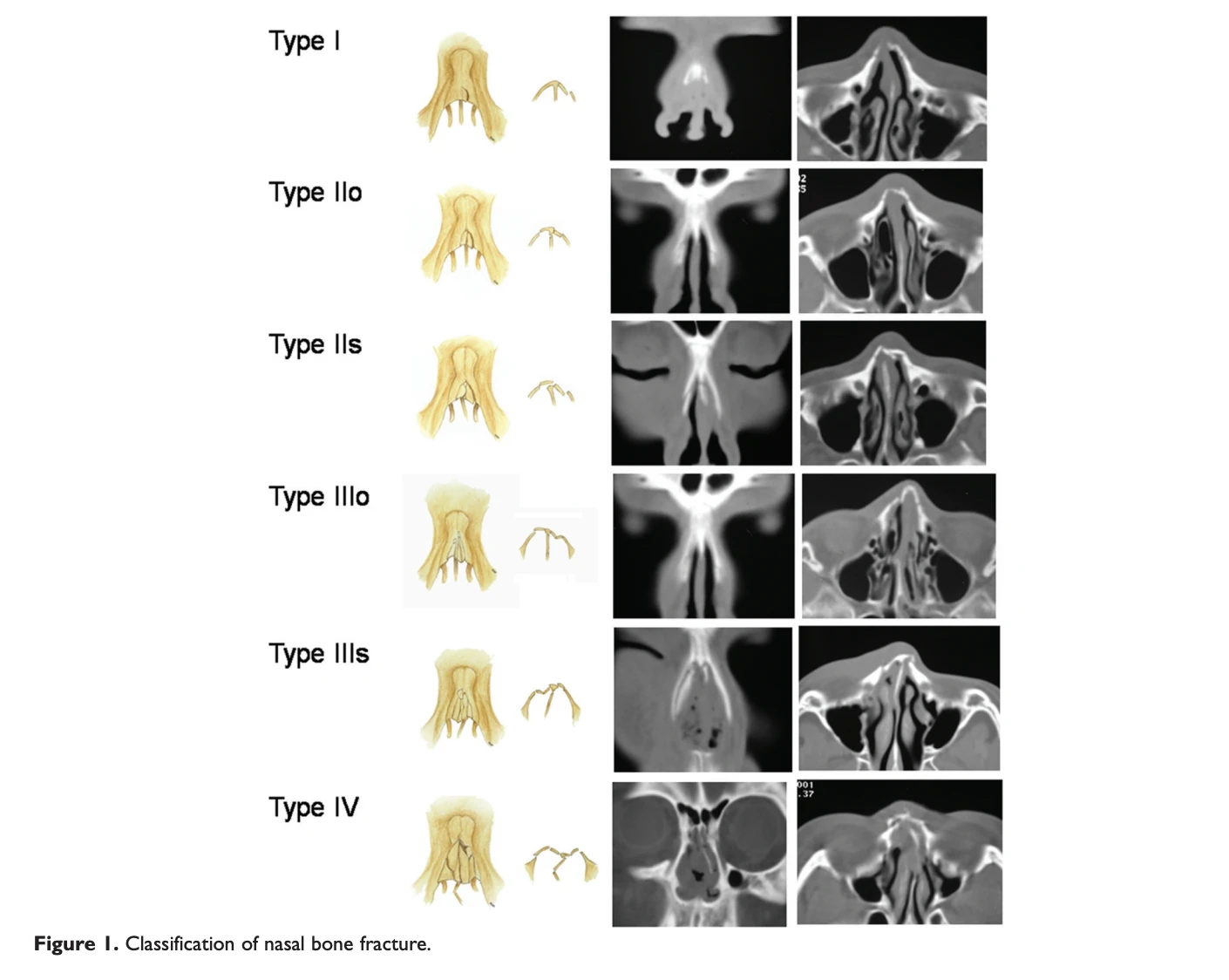
Figure 1. Classification of nasal bone fracture." from Kim JH, Lee JW, Park CH. Cosmetic Rhinoseptoplasty in Acute Nasal Bone Fracture. Otolaryngology Head and Neck Surgery. 2013;149(2). DOI:10.1177/0194599813487493
https://pubmed.ncbi.nlm.nih.gov/23812981/
Whether nasal bone fracture treatment can be combined with cosmetic surgery depends on the fracture pattern:
Type I, IIo, IIs: Simple fractures where cosmetic surgery can be performed concurrently
Type IIIo and IIIs: Comminuted oblique/sagittal fractures that require a selective, careful approach
Type IV: Multiple comminuted fractures involving the ethmoid bone, where concurrent cosmetic surgery is difficult
This presentation was classified around Type IIIo, so a 2-stage approach was selected:
Reconstruction of tip support using autologous rib cartilage alongside nasal bone reduction
Planned nasal bridge augmentation with autologous rib cartilage after confirming fracture healing at 3 months
💉 Surgical procedure details
Nasal bone fracture assessment
Assessed as approximately Type IIIo
Multiple fracture lines identified on CT (including traces from previous osteotomy)
Formulation of a closed reduction surgical plan
2. First surgery
Closed reduction performed
Septal extension using autologous rib cartilage
Correction of nasal tip deviation
Implant-free approach to support stability
3. Plan for the second surgery
Confirmation of stable fracture healing after 3 months
Nasal bridge correction using autologous rib cartilage
Final contour refinement
✅ Surgical results
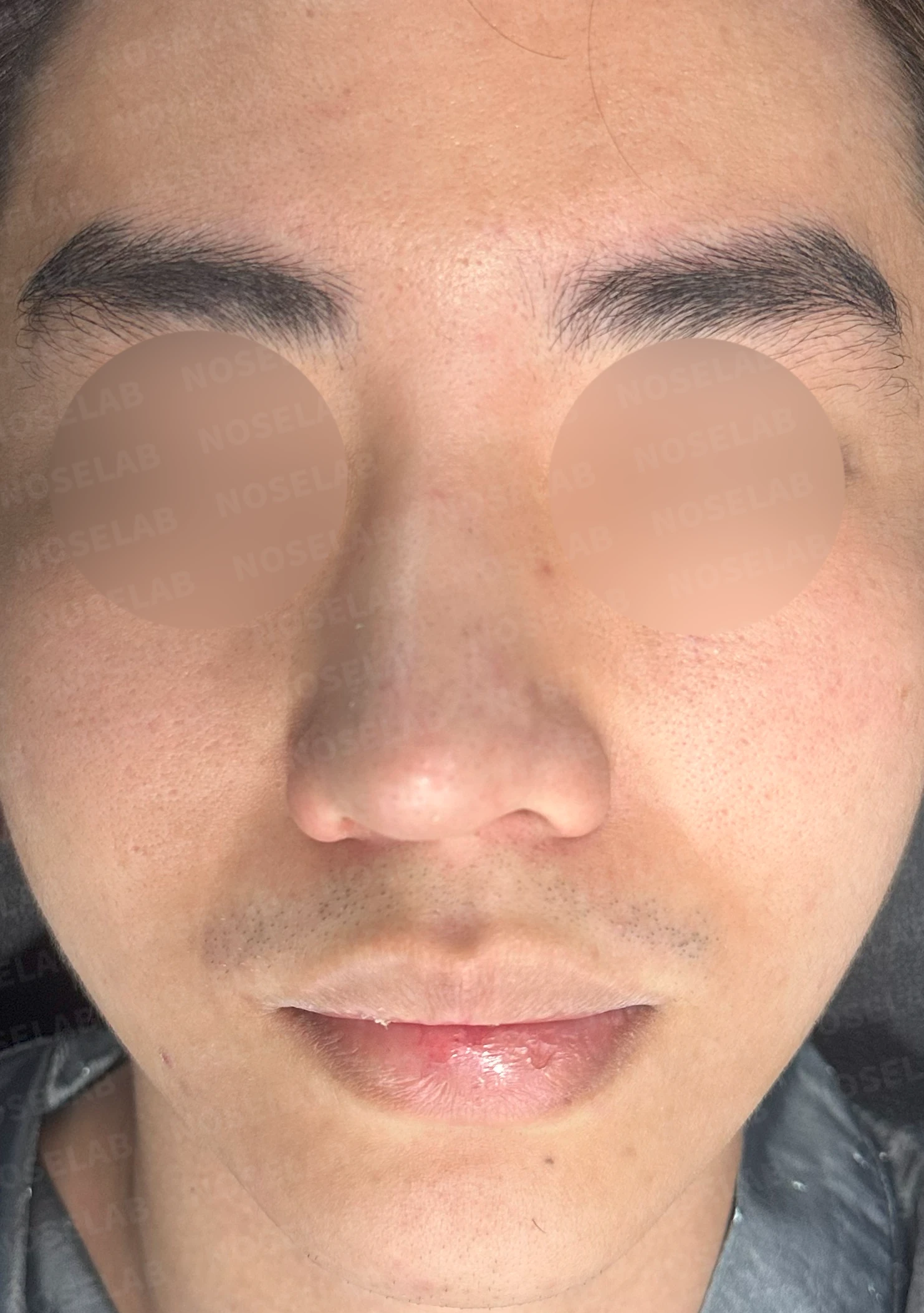
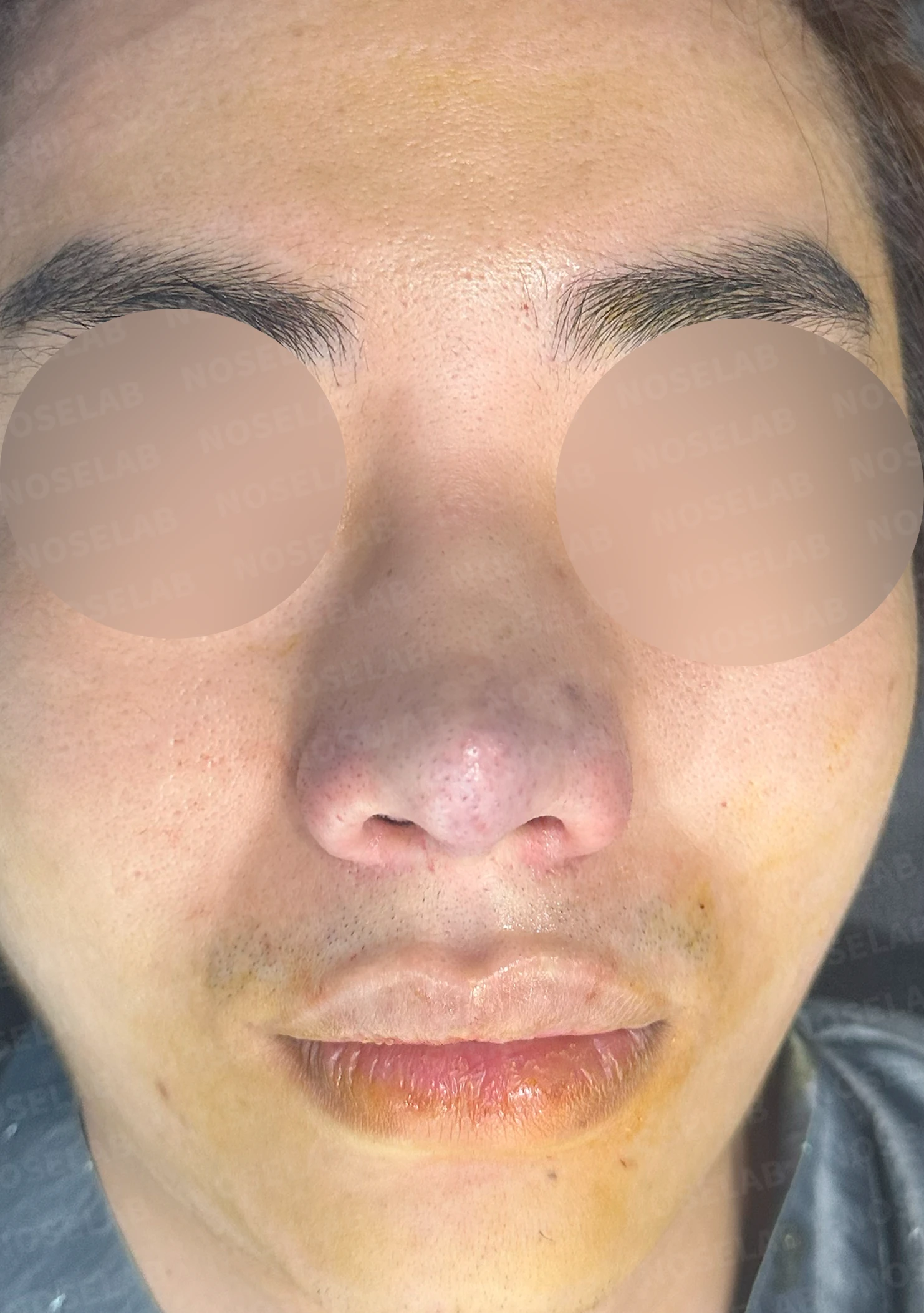
Before surgery / Day 0 immediately after surgery Photos taken immediately after surgery show swelling and may differ from the final result.
Front view
Improved nasal bone alignment
Realigned nasal tip position
Balanced overall contour
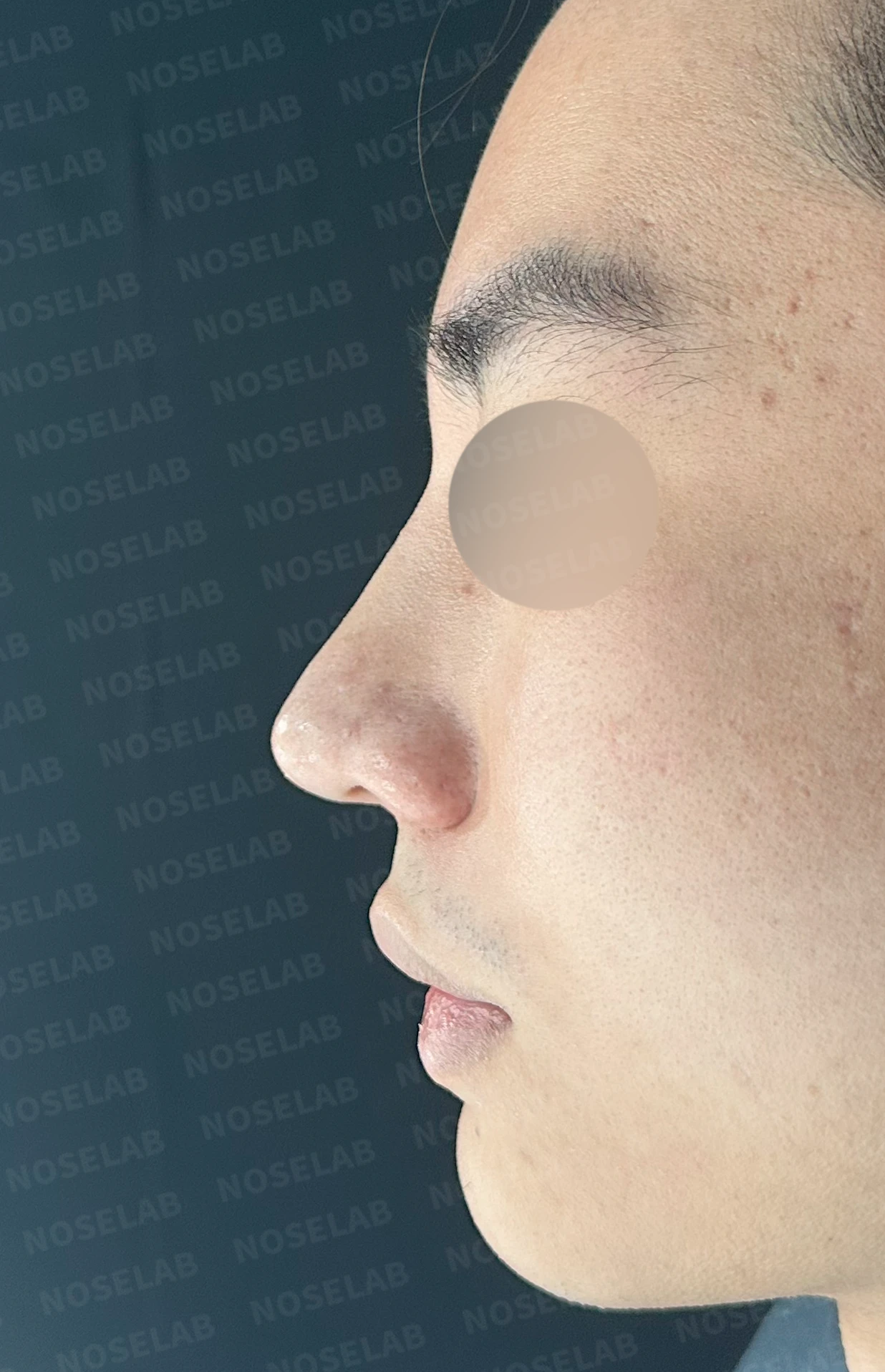
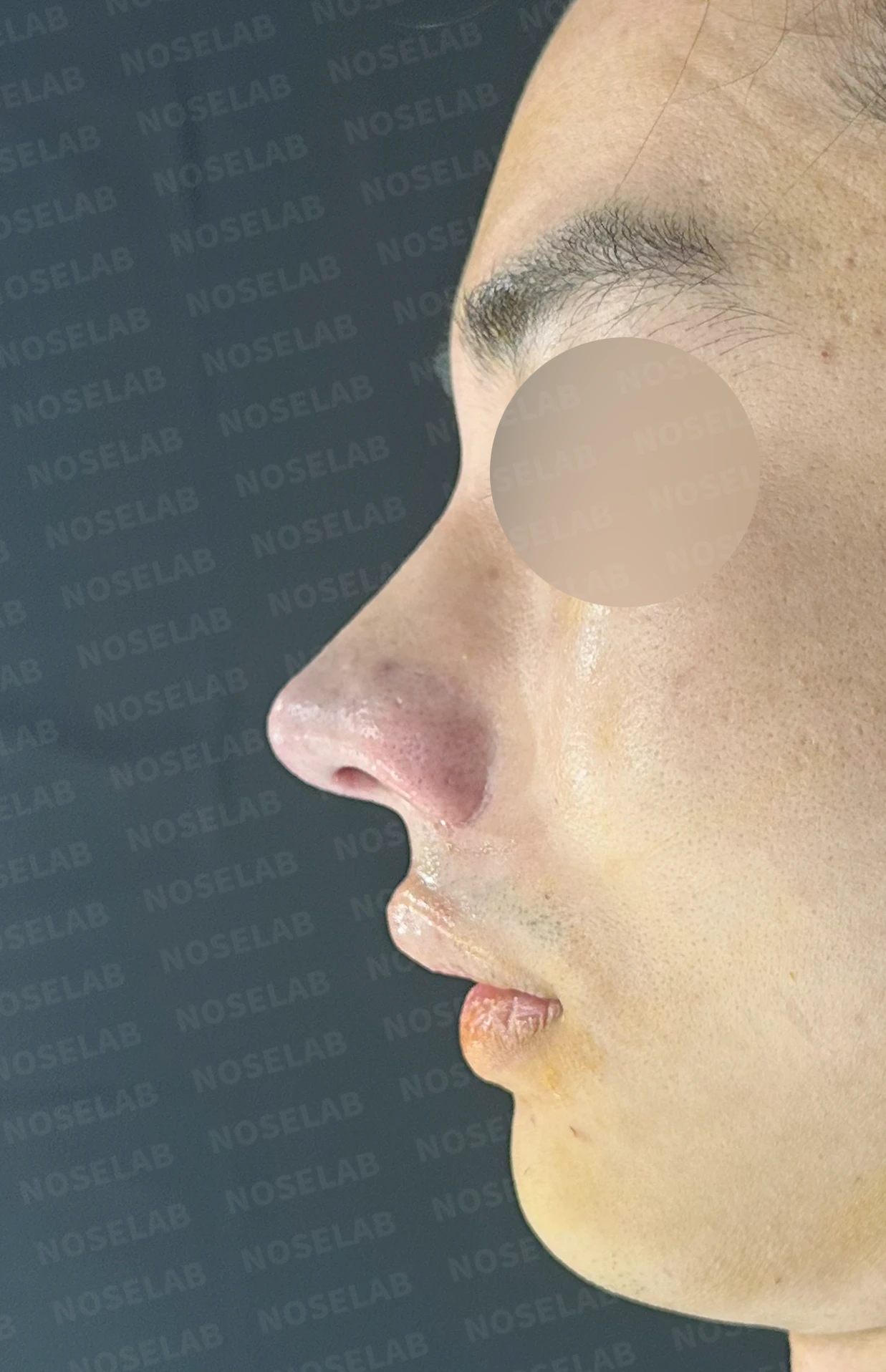
Before surgery / Day 0 immediately after surgery Photos taken immediately after surgery show swelling and may differ from the final result.
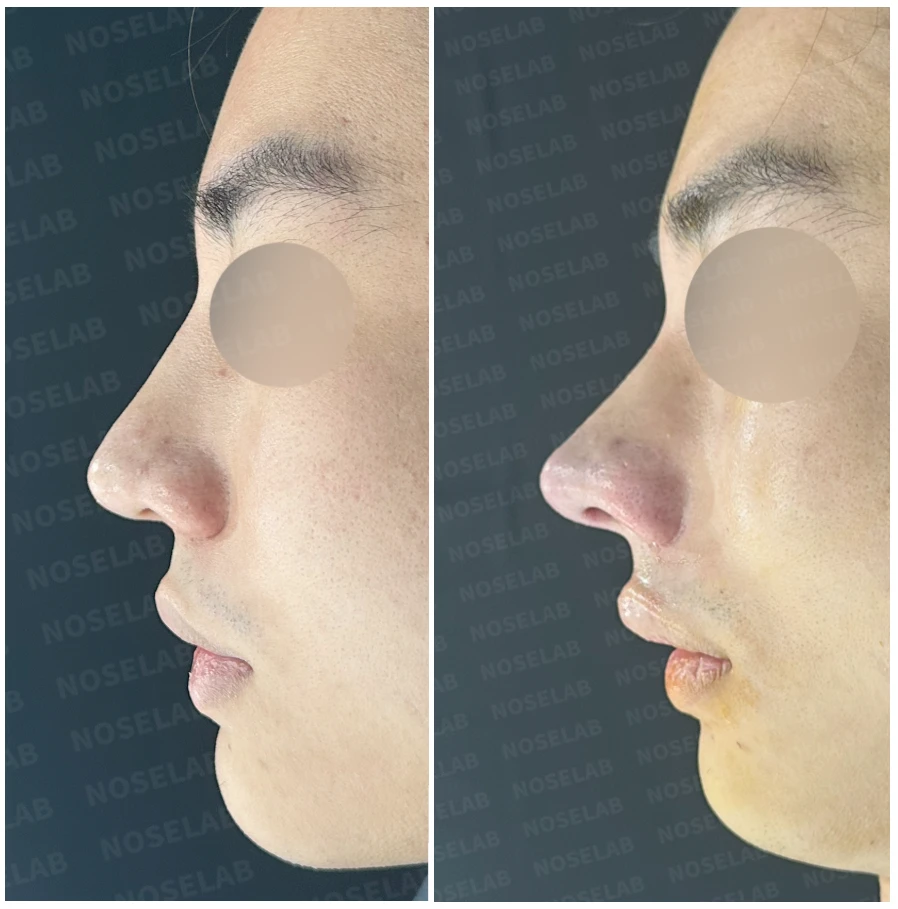
2. Profile view
Prioritized nasal tip and columellar contours
Securing a stable structure
Adjustment of nasal bridge height planned through a second surgery
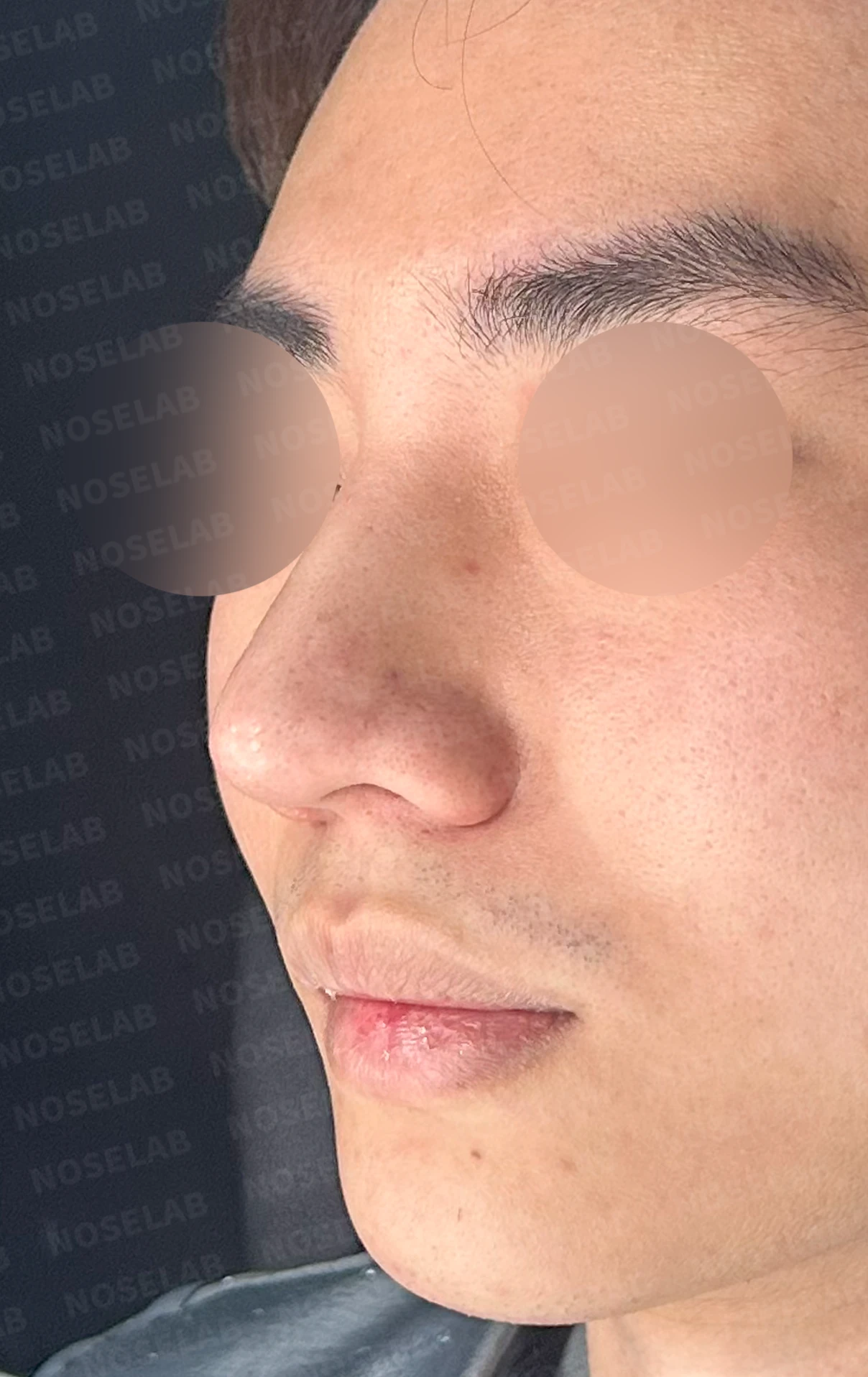
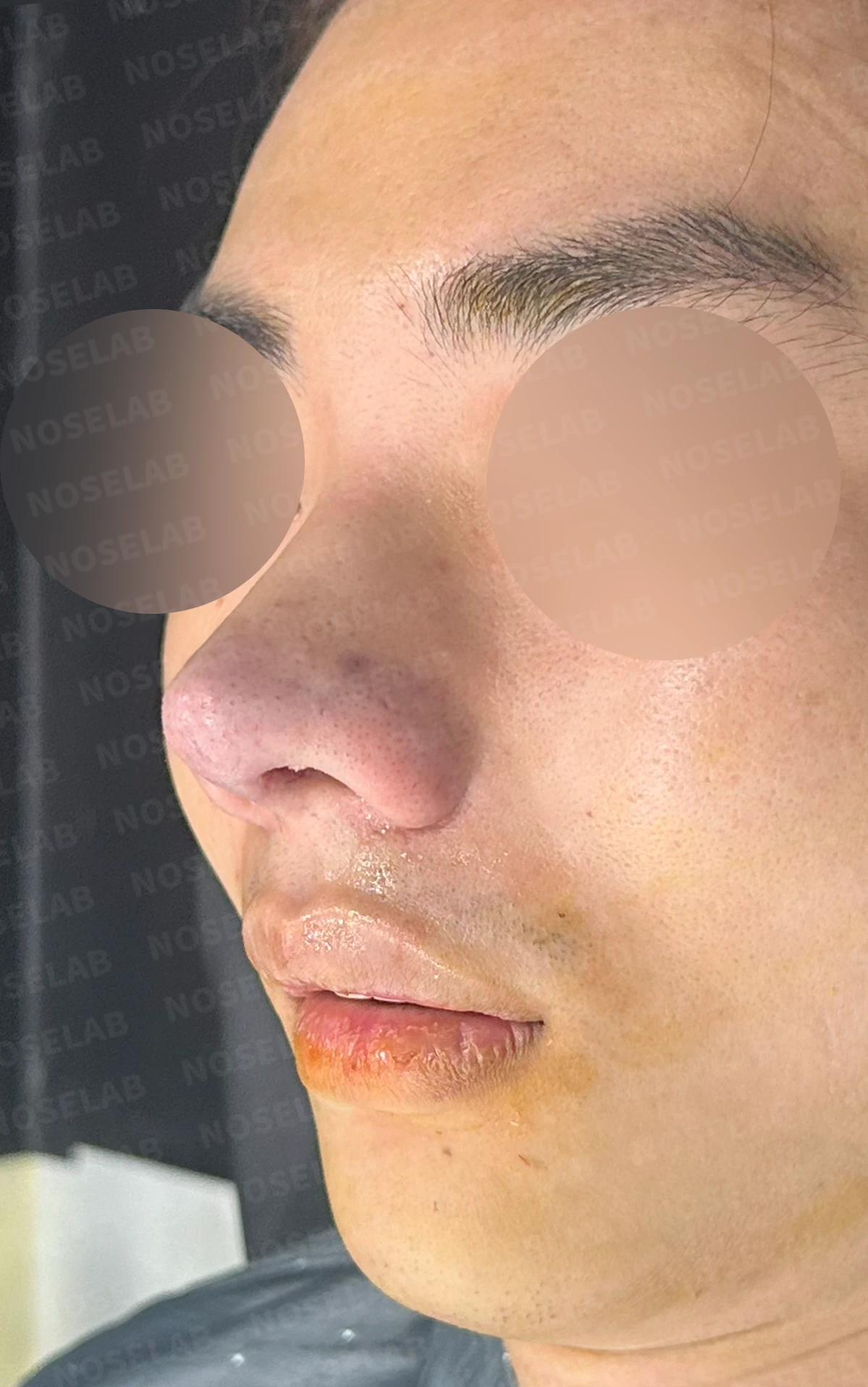
Before surgery / Day 0 immediately after surgery Photos taken immediately after surgery show swelling and may differ from the final result.
3. Nostrils
Correction of columellar tilt
Balanced nostrils
Stable nasal tip support
👨⚕️ Specialist's assessment
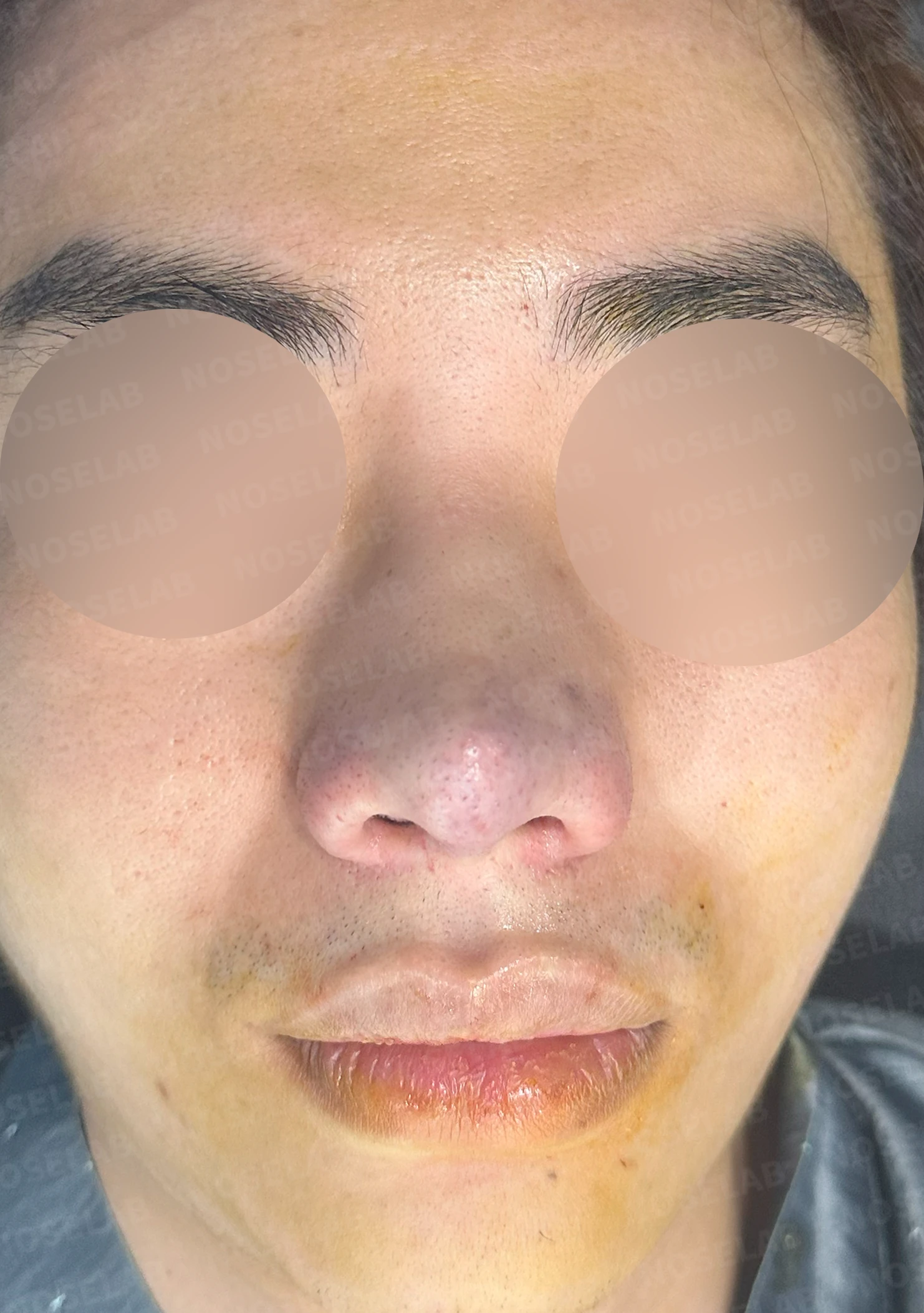
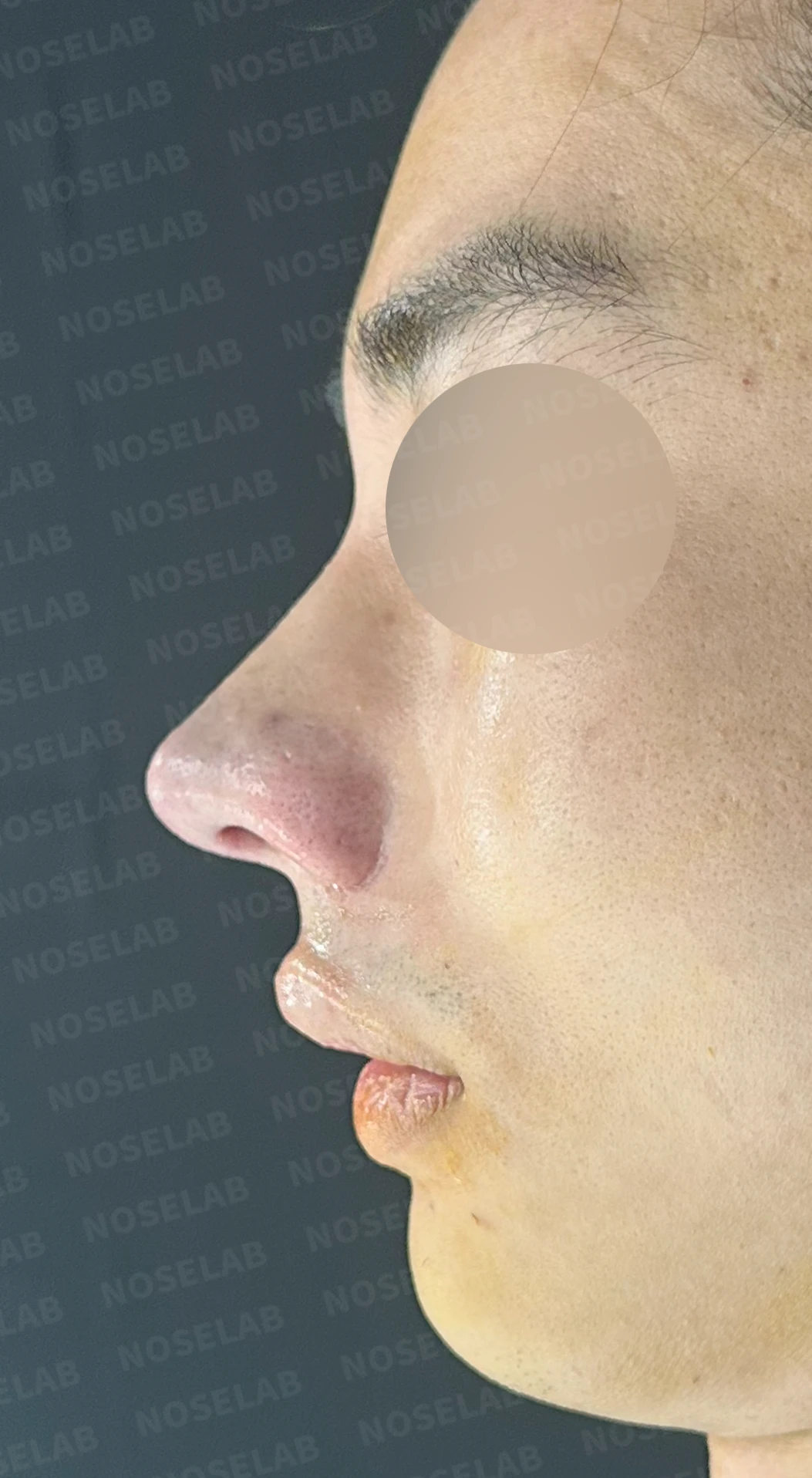
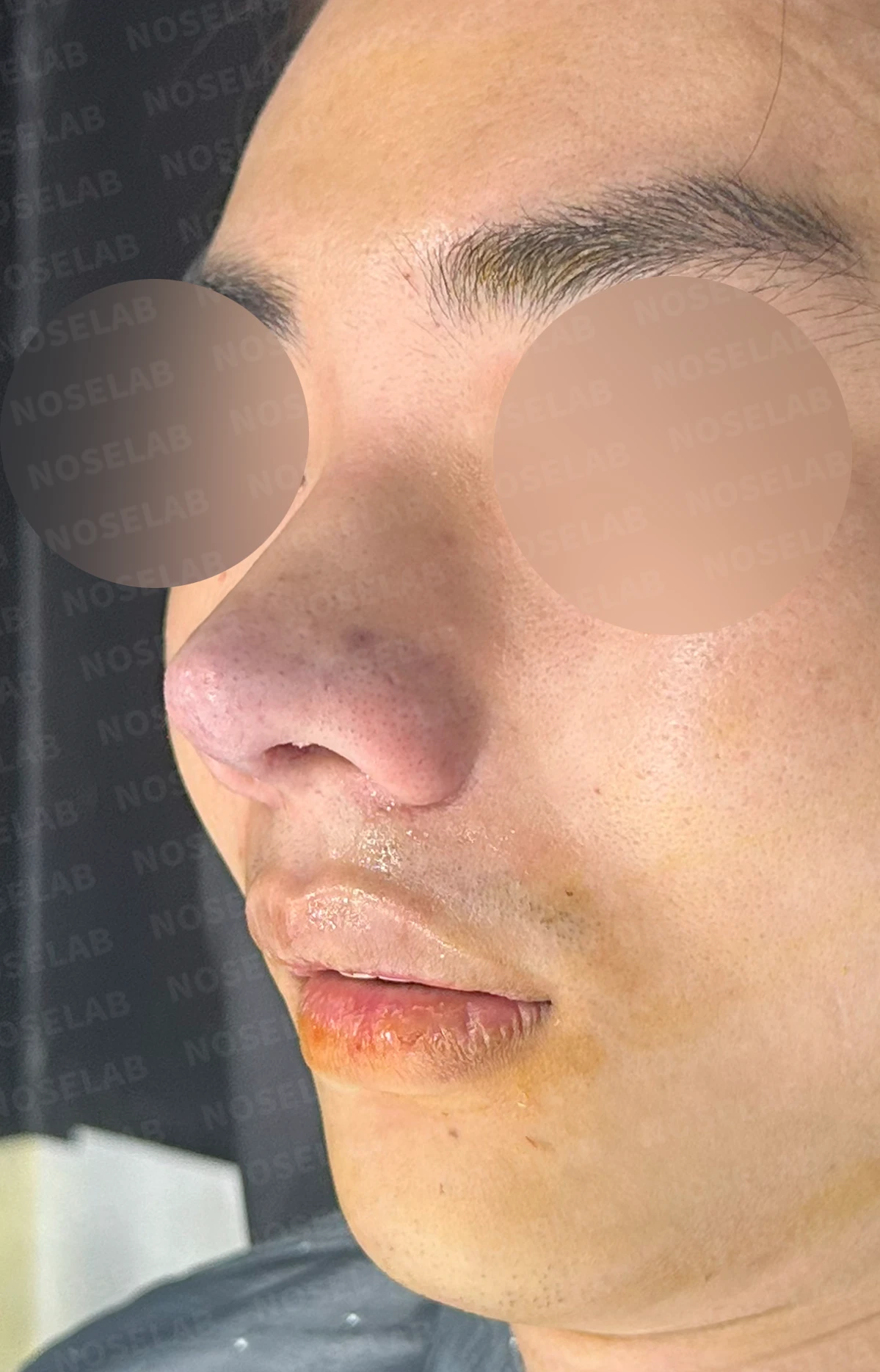
Front, profile, and oblique views immediately after surgery on day 0 Photos taken immediately after surgery show swelling and may differ from the final result.
This was a notable case where both a nasal bone fracture and aesthetic refinements had to be addressed concurrently. The feasibility of performing cosmetic surgery alongside nasal fracture repair depends on the fracture pattern; because this case was assessed as approximately Type IIIo, a careful and deliberate approach was necessary.
An interesting finding during surgery was that some of the fracture lines visible on CT were actually remnants of previous osteotomies. Through closed reduction, the fracture was stabilized, and the tip deviation was corrected using septal extension with autologous rib cartilage.
Adjusting the nasal bridge height was planned as a second surgery for stability after the fracture healed, which was chosen with patient safety and the intended result in mind. The alignment of the nasal bones and the position of the nasal tip improved significantly with only the first surgery, and completing the final shape is expected through the second surgery after 3 months.
This was Dr. Peter C. Kang. Thank you.
Thank you.
#closedrhinoplasty #nasalfracture #reduction #autologousribcartilage #customrhinoplasty

Limitations and risks
When autologous rib cartilage is used, scarring and pain may remain at the donor site on the chest, and pneumothorax (pleural injury) can occur rarely. Over time, the grafted cartilage may warp or undergo partial resorption.
When the septum is corrected at the same time, nasal obstruction may persist or recur, and in rare cases, septal perforation or changes in smell may occur.
Common potential risks include infection, bleeding, asymmetry, scarring, skin necrosis, and insufficient improvement; results vary depending on individual skin condition and previous surgical history.