English日本語简体中文
Skip to main content
Dr. Peter C. Kang's Rhinoplasty Stories
PrologueBlogMy thoughtsNasal obstructionSurgical journalSurgical photos
About the surgeon

Crooked nose cases: analyzing midline alignment of bridge and tip separately

This is page 6 of case reports on crooked (deviated) nose, assessing the midline of the nasal bridge and nasal tip separately. View surgical records and before-and-after photos for cases 91 to 108 of 272.

View before-and-after cases ↓Comprehensive rhinoplasty guide

Searching for surgical cases matching your criteria.
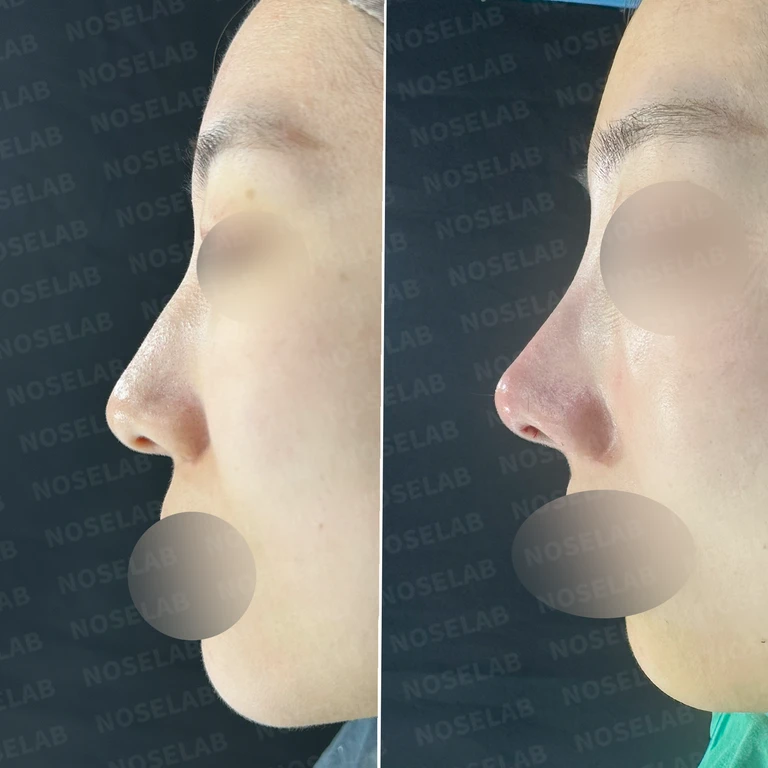
Why nostril asymmetry and an upturned tip remain after alar reduction and how to correct them — Before-and-after comparison
Before-and-after comparison

Why nostril asymmetry and an upturned tip remain after alar reduction and how to correct them

A revision rhinoplasty case where nostril asymmetry, an upturned nasal tip, and an implant step-off visible after alar reduction were corrected through structural reconstruction with autologous rib cartilage, silicone implant replacement, and nasolabial angle correction.

Preoperative condition · Postoperative record
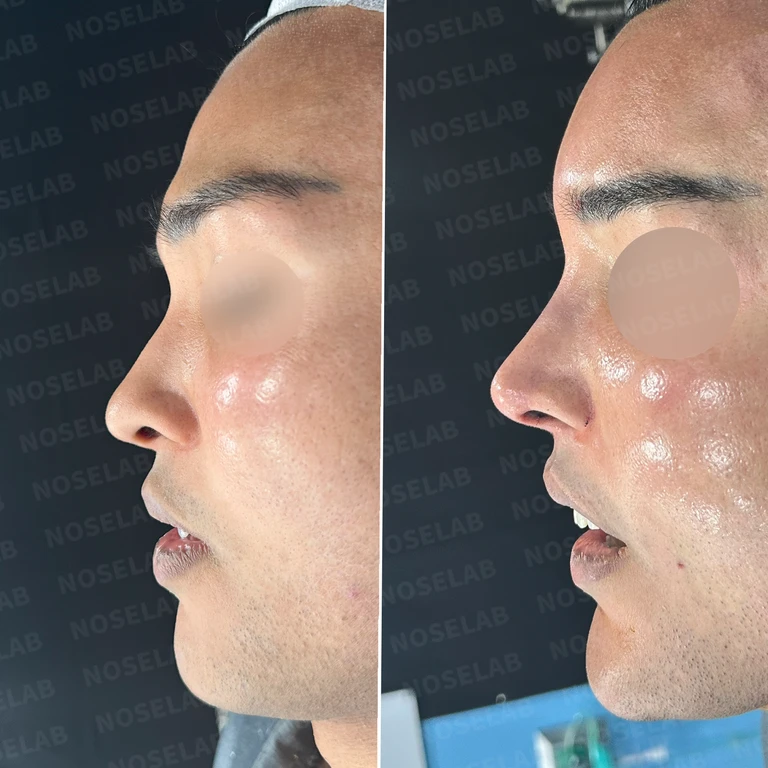
Why a nose becomes short and upturned with a retracted columella, and how autologous rib cartilage reconstruction works — Before-and-after comparison
Before-and-after comparison

Why a nose becomes short and upturned with a retracted columella, and how autologous rib cartilage reconstruction works

A case where an upturned nose and a retracted columella caused by cartilage loss from previous surgeries were naturally restored using autologous rib cartilage for lower lateral cartilage reconstruction and septal extension.

Preoperative condition · Postoperative record
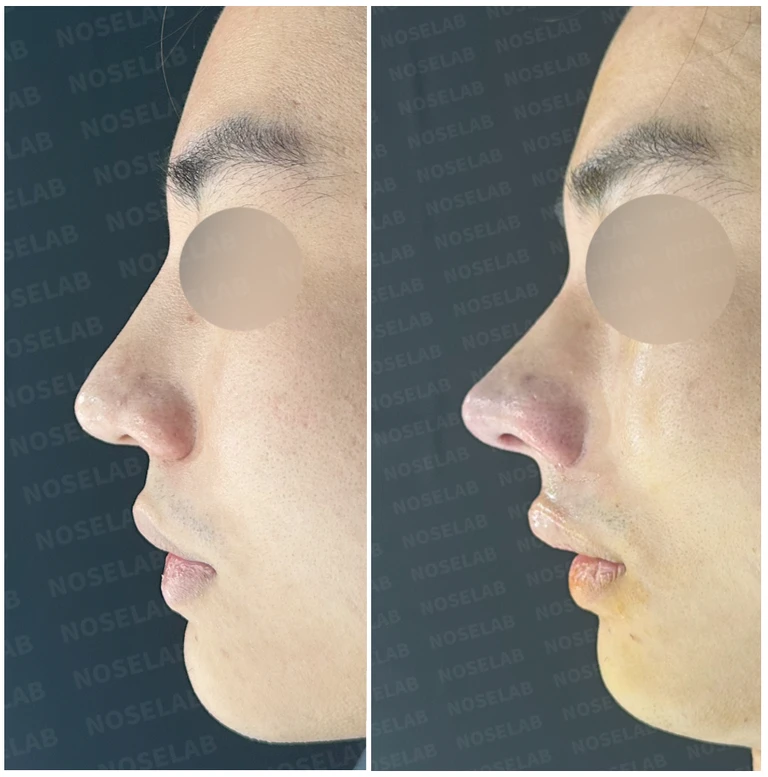
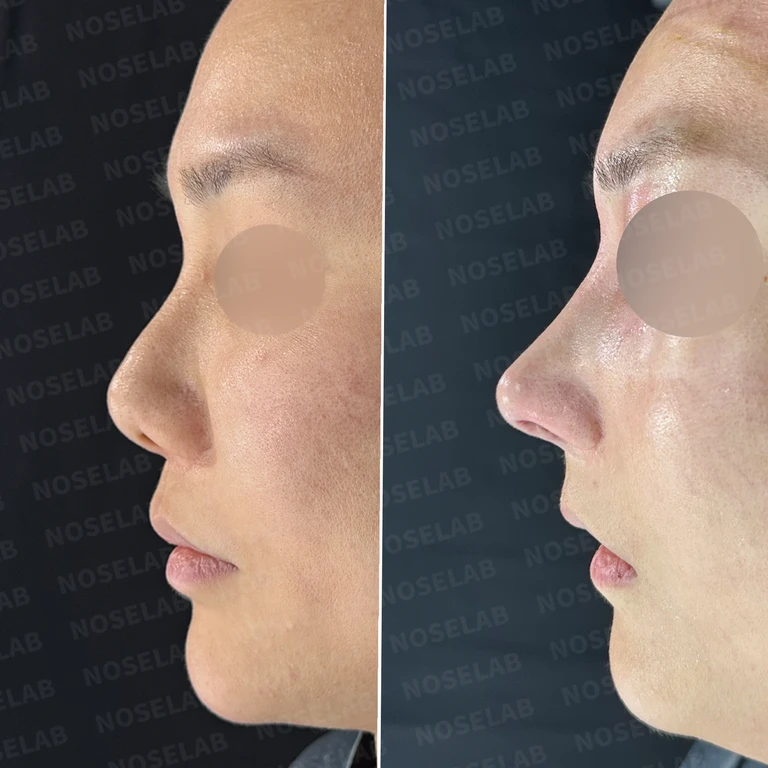
Nasal bone fractures: When cosmetic surgery can be combined and how to stage the procedure — Before-and-after comparison
Before-and-after comparison

Nasal bone fractures: When cosmetic surgery can be combined and how to stage the procedure

To correct a traumatic nasal bone fracture and a deviated nasal tip, closed reduction and autologous rib cartilage septal extension were performed without an implant, with plans to adjust the nasal bridge height after an observation period.

Preoperative condition · Postoperative record
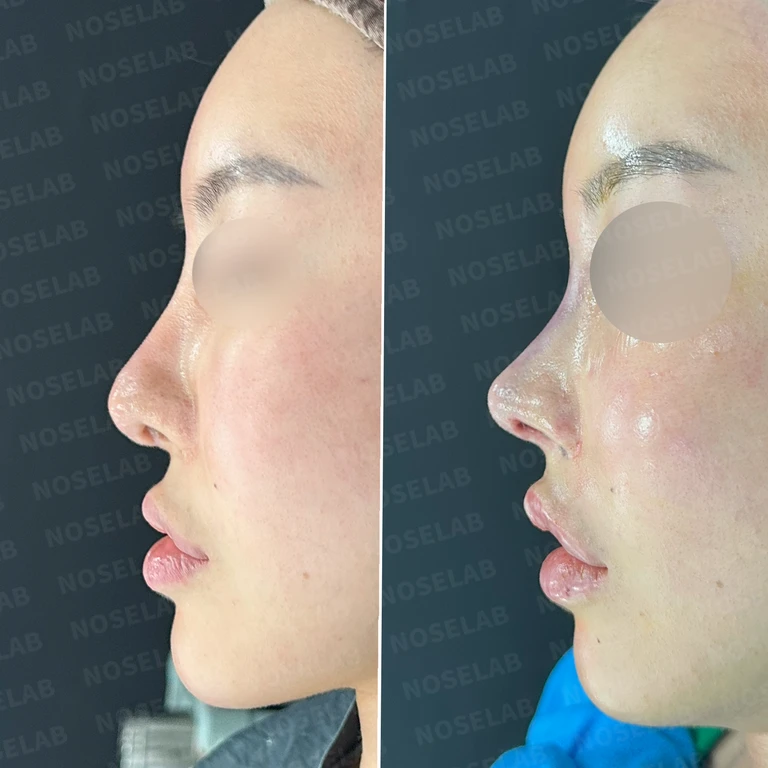
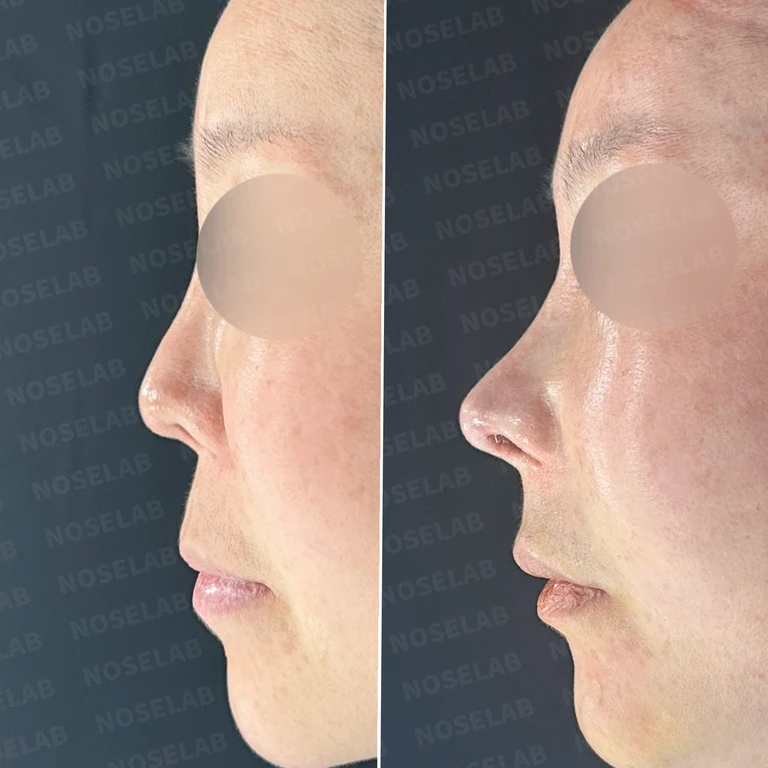
Why contracture and a crooked nose occur after repeated revision rhinoplasty, and how they are corrected — Before-and-after comparison
Before-and-after comparison

Why contracture and a crooked nose occur after repeated revision rhinoplasty, and how they are corrected

A case of improving an upturned tip, crooked nose, and nostril asymmetry that developed after four prior nasal surgeries and filler injections, using foreign material removal, septal extension with autologous rib cartilage, and silicone implant supplementation.

Preoperative condition · Postoperative record
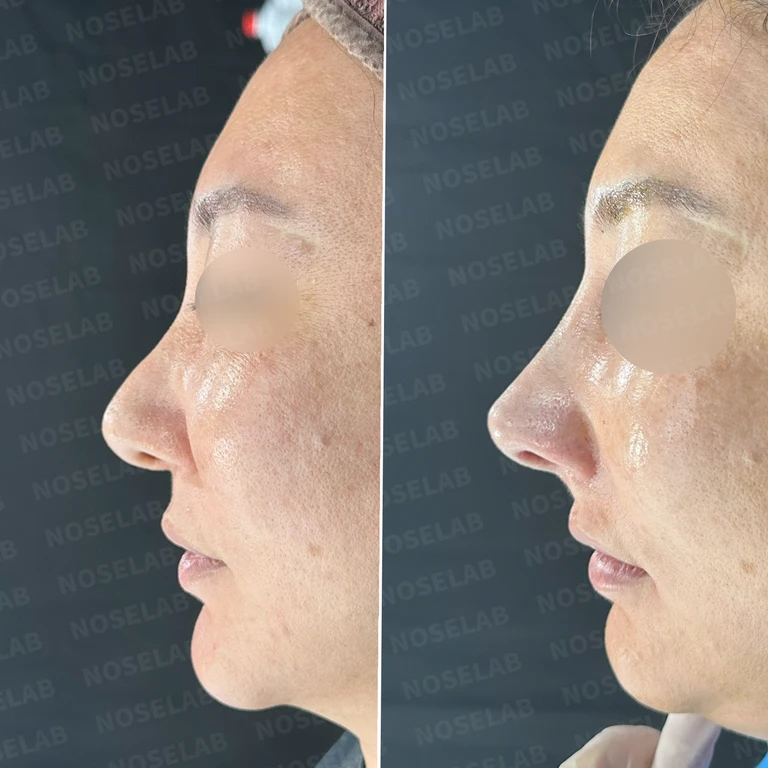
Why a nose can look crooked again after dorsal hump correction and how osteotomy revision corrects it — Before-and-after comparison
Before-and-after comparison

Why a nose can look crooked again after dorsal hump correction and how osteotomy revision corrects it

A case where a crooked nasal bone and drooping bulbous tip remaining after previous dorsal hump correction were straightened through lateral osteotomy, septal extension using autologous rib cartilage, hump rasping, and rhinitis surgery.

Preoperative condition · Postoperative record
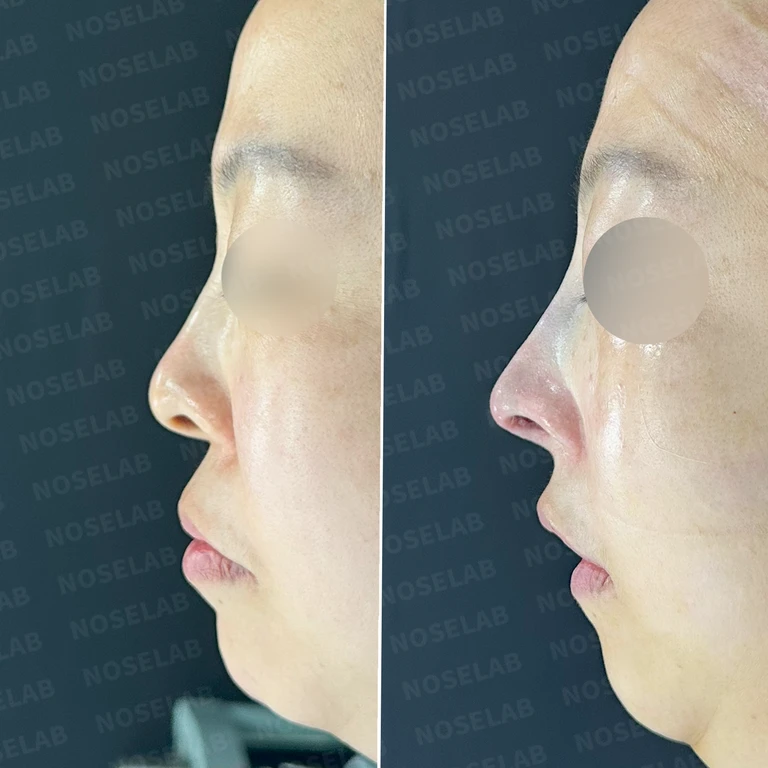
Why nostrils show excessively in an upturned nose, and how to correct nasal tip position — Before-and-after comparison
Before-and-after comparison

Why nostrils show excessively in an upturned nose, and how to correct nasal tip position

A clinical case improving excessive nostril show, a wide nasal bridge, and an upturned nose deformity through lower lateral cartilage repositioning, nasal tip repositioning, dorsal hump rasping, and inferior turbinate resection.

Preoperative condition · Postoperative record
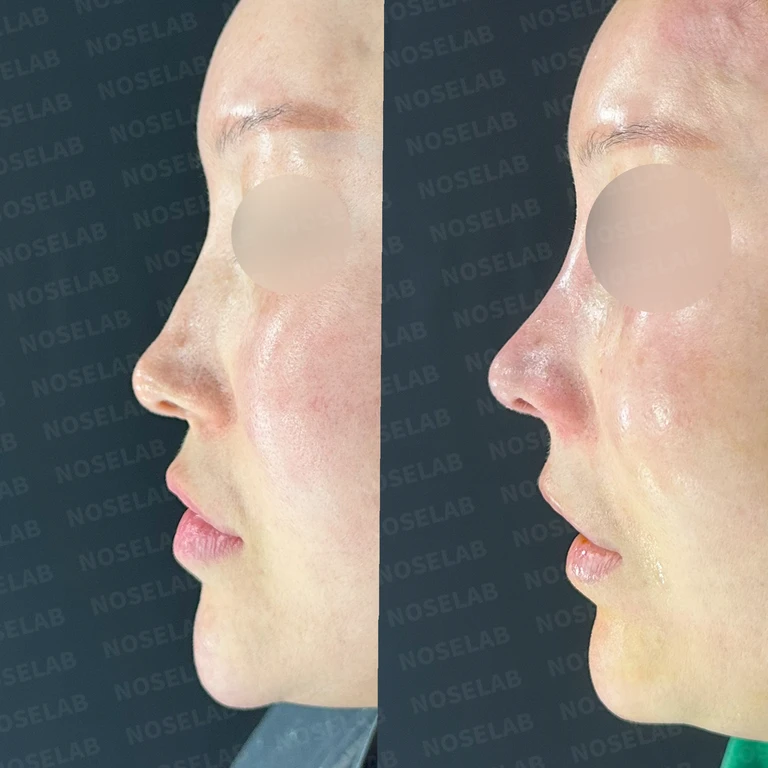
Why long-standing contracted noses and crooked noses occur together, and how reconstruction is performed — Before-and-after comparison
Before-and-after comparison

Why long-standing contracted noses and crooked noses occur together, and how reconstruction is performed

A case correcting a contracted nose, crooked nose, and pinched nostrils that developed after repeated surgeries, using silicone implant and scar tissue removal, nasal tip reconstruction with autologous rib cartilage, alar reconstruction with ear cartilage, and dermal grafting.

Preoperative condition · Postoperative record
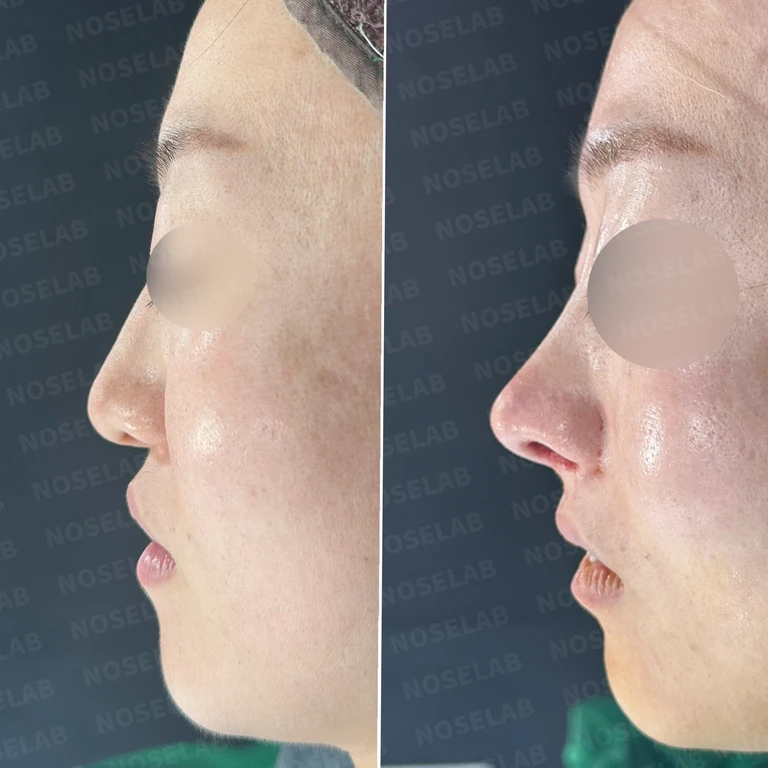
Why the nose looks bulbous and long after alar reduction, and how to correct it — Before-and-after comparison
Before-and-after comparison

Why the nose looks bulbous and long after alar reduction, and how to correct it

A case where a bulbous nasal tip, drooping arrow nose, and weakened septum—occurring after alar reduction and implant surgery 12 years prior—were corrected through septal reconstruction with autologous rib cartilage, nasal shortening, and septoplasty.

Preoperative condition · Postoperative record
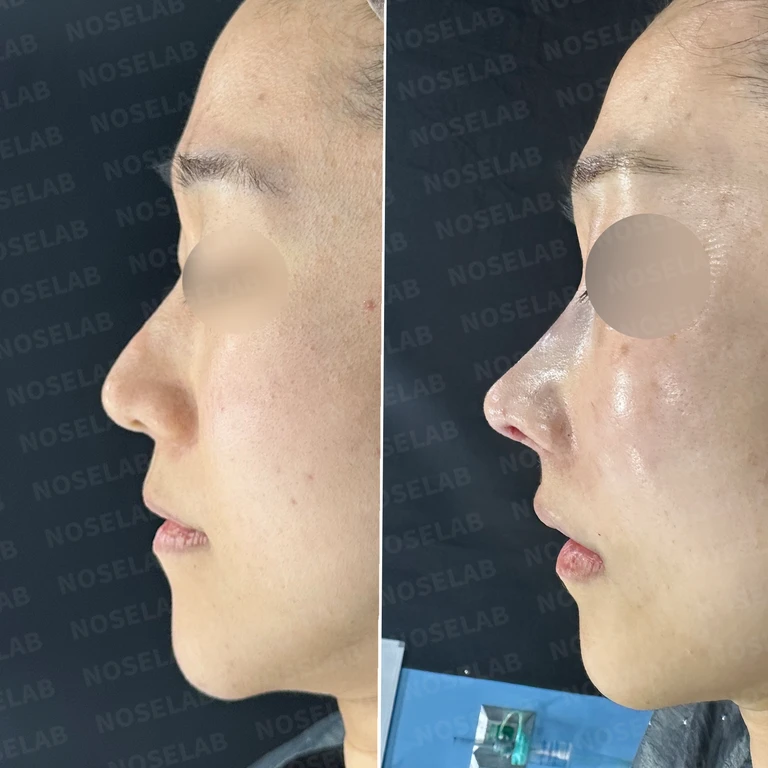
How to reconstruct a nose with weakened septal cartilage without implants — Before-and-after comparison
Before-and-after comparison

How to reconstruct a nose with weakened septal cartilage without implants

A case where a septum weakened by excessive harvest was reinforced with autologous rib cartilage, and the nasal structure was reconstructed without artificial implants using lateral osteotomy along with diced cartilage and dermis grafts.

Postoperative record

Nasal bridge depression and nostril asymmetry after multiple rhinoplasties: causes and reconstruction methods — Before-and-after comparison
Before-and-after comparison

Nasal bridge depression and nostril asymmetry after multiple rhinoplasties: causes and reconstruction methods

A case where nasal bridge depression caused by skin necrosis and severe septal damage were improved with septal reconstruction using autologous rib cartilage, cartilage and acellular dermal matrix grafts, and submucosal resection of the inferior turbinate.

Preoperative condition · Postoperative record
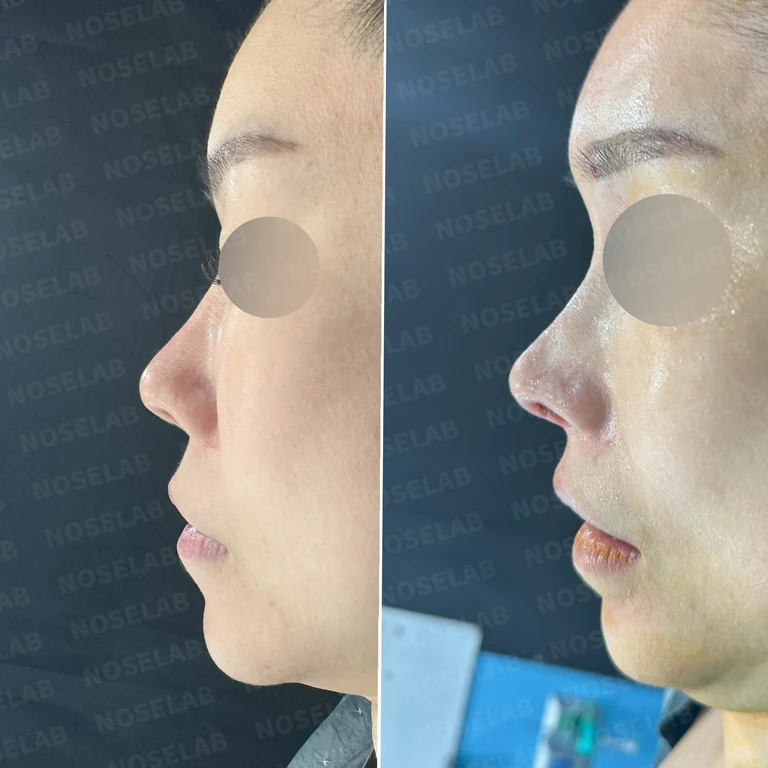
Why replacing a cartilage nasal tip with an L-shaped silicone implant causes problems — Before-and-after comparison
Before-and-after comparison

Why replacing a cartilage nasal tip with an L-shaped silicone implant causes problems

A case where a previously replaced L-shaped silicone implant was removed, the nasal tip was reconstructed with autologous rib cartilage, and the nasal bridge was replaced with an I-shaped implant to correct an upturned nose and a tilted columella.

Preoperative condition · Postoperative record
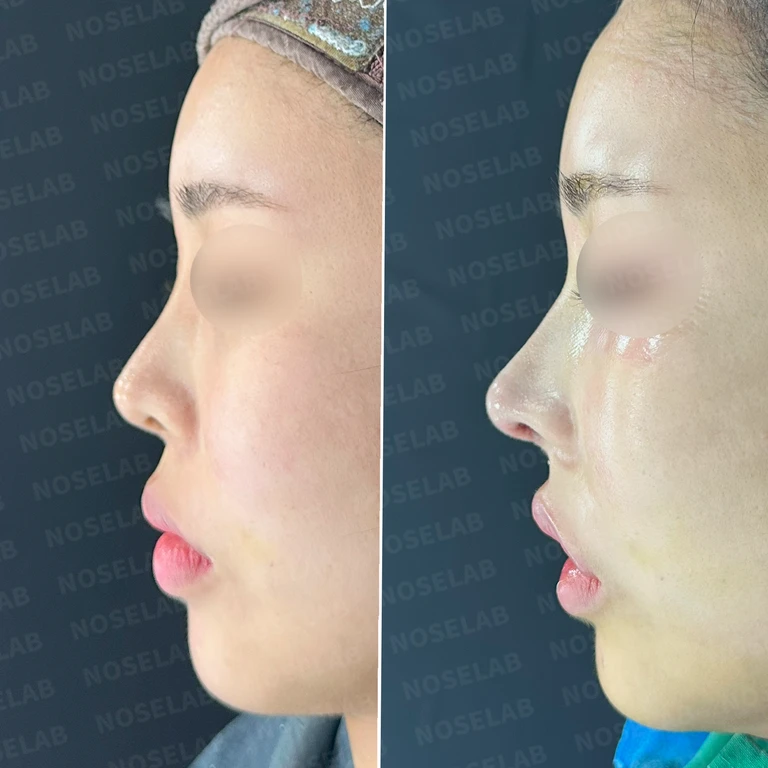
Why the nose deviates and the nasal tip turns bulbous after two-jaw surgery, and how to create a dorsal hump line with autologous rib cartilage — Before-and-after comparison
Before-and-after comparison

Why the nose deviates and the nasal tip turns bulbous after two-jaw surgery, and how to create a dorsal hump line with autologous rib cartilage

A case where a septum damaged after two-jaw surgery was reconstructed with autologous rib cartilage, combined with lateral osteotomy and columella lowering, improving a crooked nose and bulbous tip.

Preoperative condition · Postoperative record
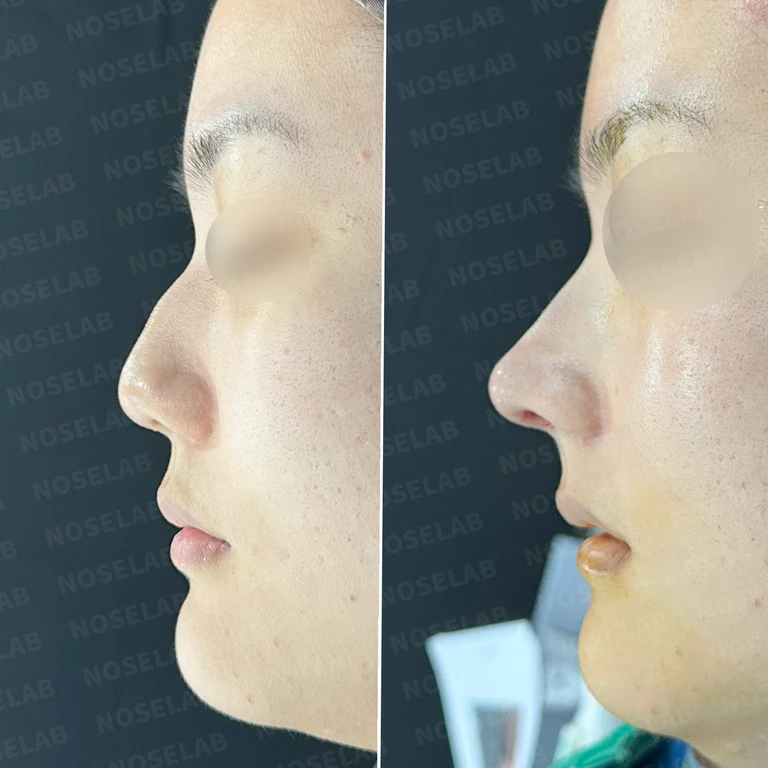
Chronic foreign body reaction causing a blunt, widened nasal bridge: causes and reconstruction methods — Before-and-after comparison
Before-and-after comparison

Chronic foreign body reaction causing a blunt, widened nasal bridge: causes and reconstruction methods

This is a revision rhinoplasty case in which a septum damaged from prior double jaw surgery and a chronic foreign body reaction in the nasal bridge were identified, followed by irrigation, capsule removal, and septal reconstruction using autologous rib cartilage.

Preoperative condition

Why a bulbous nose, wide nasal base, and drooping tip occur together and how to create a slimmer nasal line — Before-and-after comparison
Before-and-after comparison

Why a bulbous nose, wide nasal base, and drooping tip occur together and how to create a slimmer nasal line

A case in which nasal tip plasty with autologous rib cartilage, lateral osteotomy, nasal floor reduction, and nasolabial angle correction were performed together to correct a blunt bulbous nose, wide nasal base, and crooked nasal bridge.

Preoperative condition · Postoperative record
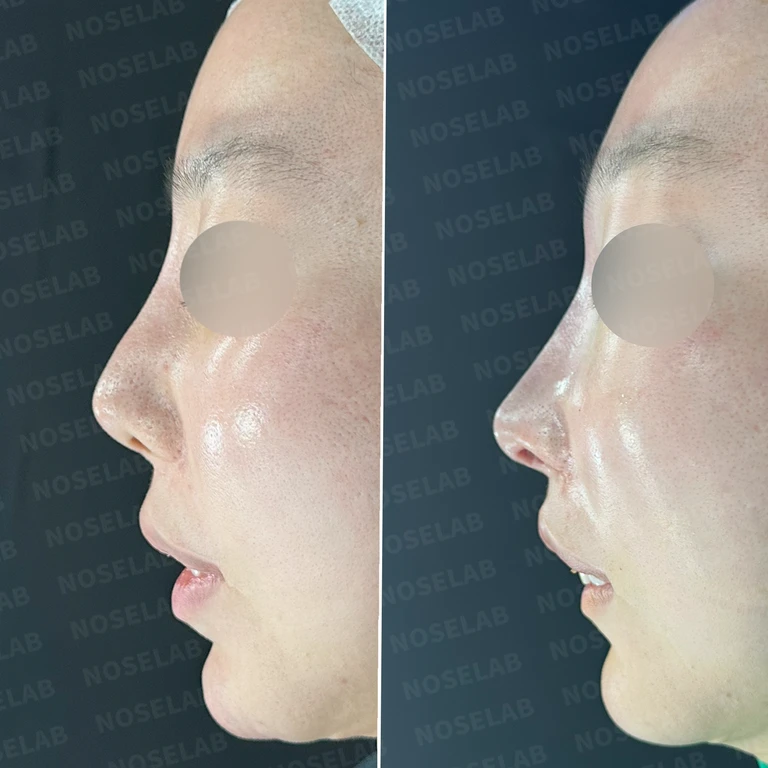
Why the nose looks spread after nose filler without dissolving it, and how to create a slim line — Before-and-after comparison
Before-and-after comparison

Why the nose looks spread after nose filler without dissolving it, and how to create a slim line

For a nasal bridge that became wide and crooked after filler injections, accompanied by a dorsal hump and bulbous tip, a combined procedure was performed consisting of lateral osteotomy, tip elevation using autologous rib cartilage, hump rasping, nasal sill reduction, and rhinitis surgery.

Preoperative condition · Postoperative record
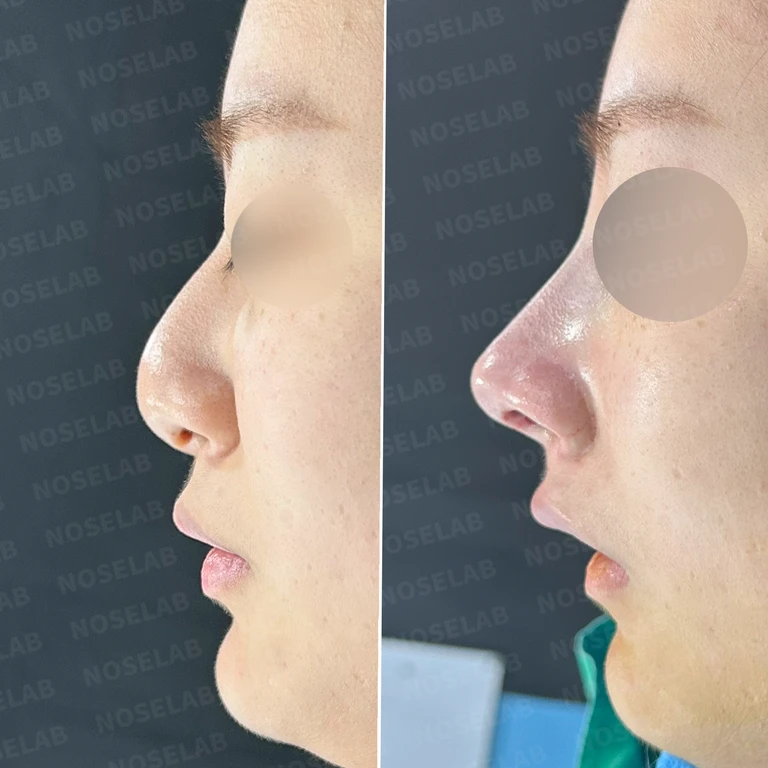
Why the nasal bridge sinks and widens after implant removal, and how to reconstruct it — Before-and-after comparison
Before-and-after comparison

Why the nasal bridge sinks and widens after implant removal, and how to reconstruct it

Depression and widening of the nasal bridge, along with a crooked nose and bulbous tip that developed after implant removal, were refined through structural nasal reconstruction using autologous rib cartilage, nasal bridge augmentation with a silicone implant, tip refinement, and correction of the nasolabial angle.

Preoperative condition · Postoperative record
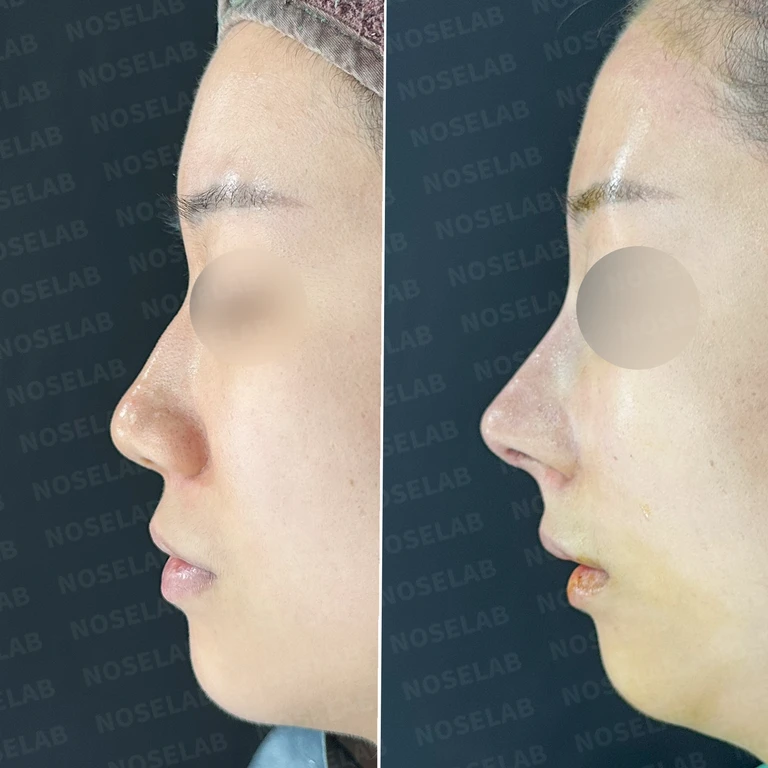
Why the nasal dorsum appears depressed and the tip looks bulbous after dorsal hump reduction, and how to correct it without implants — Before-and-after comparison
Before-and-after comparison

Why the nasal dorsum appears depressed and the tip looks bulbous after dorsal hump reduction, and how to correct it without implants

To improve a bulbous nasal tip, residual hump sensation, and asymmetry without silicone implants, autologous rib cartilage was used to elevate the nasal bridge and dorsal line, combined with cartilage repositioning, cartilage binding, and nasolabial angle correction.

Preoperative condition

Why a wide nose often comes with nasal obstruction: Correction using osteotomy and autologous rib cartilage — Before-and-after comparison
Before-and-after comparison

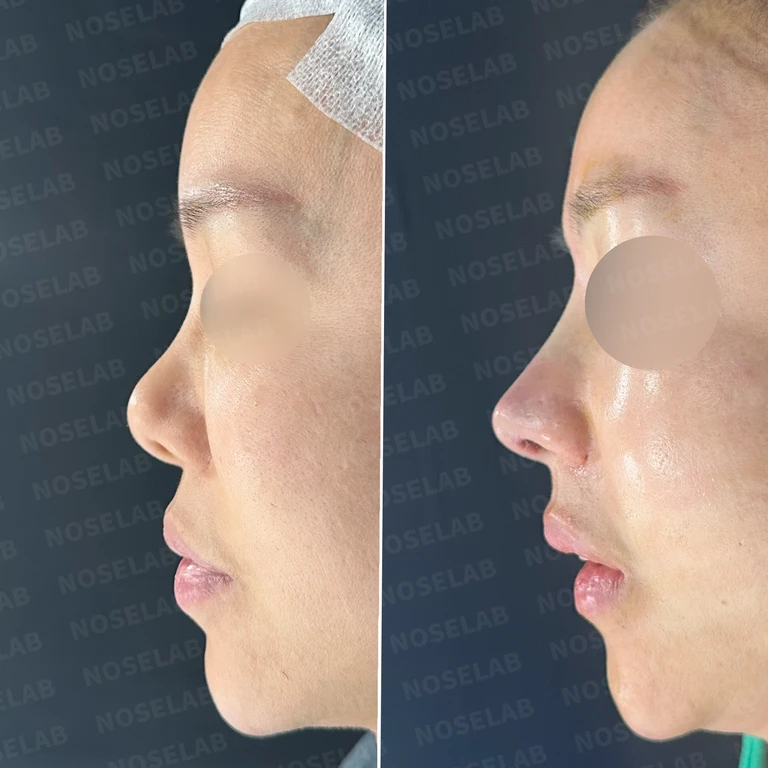
Why a wide nose often comes with nasal obstruction: Correction using osteotomy and autologous rib cartilage

For a wide nose, bulbous tip, crooked nose, and deviated septum, lateral osteotomy, autologous rib cartilage septal extension, bridge augmentation, septal and inferior turbinate surgery, and autologous fat grafting were performed.

Preoperative condition · Postoperative record
No search results found

Please try searching with different keywords.

Scroll to keep reading

Previous case6 / 16Next case
Original article

Read more records

Planning a visit to Seoul?Prepare your consultation with the NOSELAB team.

International patient guideWhatsApp ↗
Dr. Peter C. Kang's Rhinoplasty Stories
Rhinoplasty guideCases by topicDr. Peter C. KangNaver Blog ↗
View original photo
Enlarged photo
WhatsAppChat with NOSELAB↗