English日本語简体中文
Skip to main content
Dr. Peter C. Kang's Rhinoplasty Stories
PrologueBlogMy thoughtsNasal obstructionSurgical journalSurgical photos
About the surgeon

Crooked nose cases: analyzing midline alignment of bridge and tip separately

This is page 5 of case reports on crooked (deviated) nose, assessing the midline of the nasal bridge and nasal tip separately. View surgical records and before-and-after photos for cases 73 to 90 of 272.

View before-and-after cases ↓Comprehensive rhinoplasty guide

Searching for surgical cases matching your criteria.
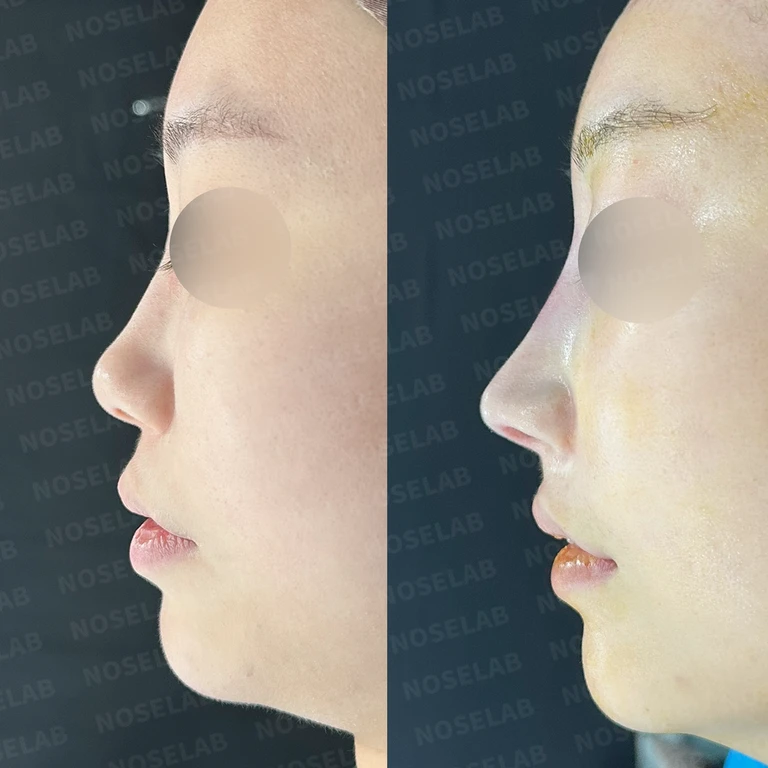
Why a custom-fit implant is used for a nose with facial asymmetry, and methods for dorsal hump correction — Before-and-after comparison
Before-and-after comparison

Why a custom-fit implant is used for a nose with facial asymmetry, and methods for dorsal hump correction

Considering congenital facial asymmetry and prominent brow bones, the dorsal hump was corrected with a 3D-printed custom implant, combined with nasal tip plasty using autologous rib cartilage and rhinitis surgery to achieve improvement.

Preoperative condition · Postoperative record
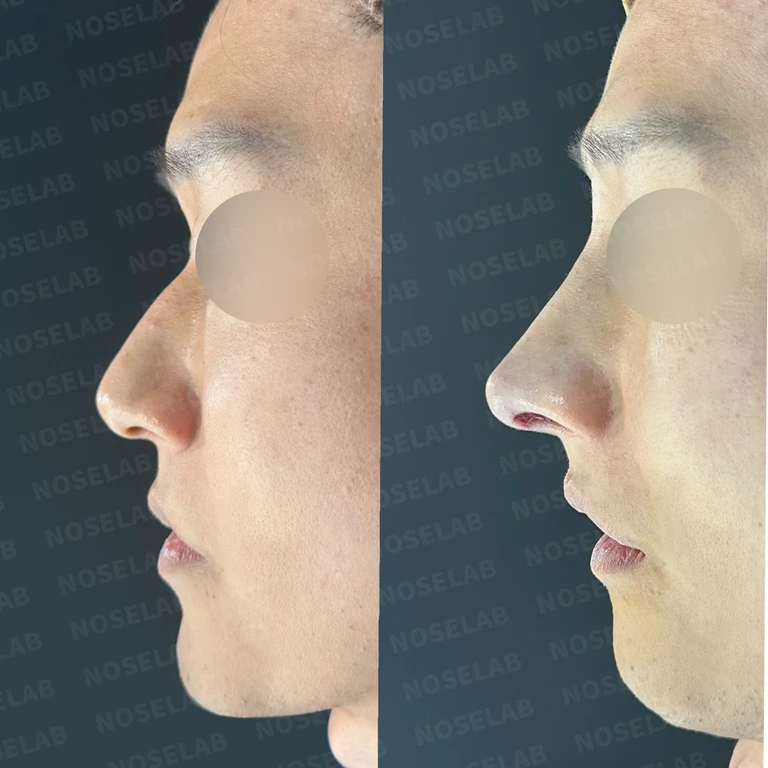
Causes of nasal tip show-through and correction methods to lower the tip defining point — Before-and-after comparison
Before-and-after comparison

Causes of nasal tip show-through and correction methods to lower the tip defining point

To correct persistent nasal tip show-through and an upturned nose that remained even after an ear dermis graft, past filler residue was completely removed, the tip defining point was naturally lowered, and nasal tip plasty using autologous rib cartilage was performed.

Preoperative condition · Postoperative record
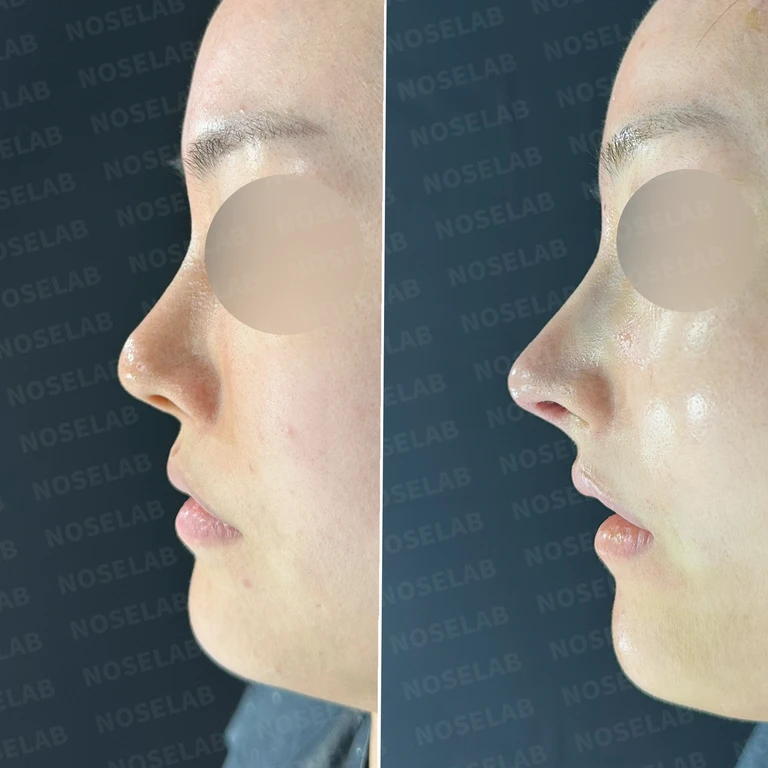
Why a crooked nose and a drooping tip occur together: How septal reconstruction and rhinitis surgery are performed — Before-and-after comparison
Before-and-after comparison

Why a crooked nose and a drooping tip occur together: How septal reconstruction and rhinitis surgery are performed

Following previous rhinoplasty, poor septal support led to a crooked nose, a drooping tip, and excessive nostril show. These concerns were addressed through septal reconstruction, lateral osteotomy, and tip support correction.

Preoperative condition · Postoperative record
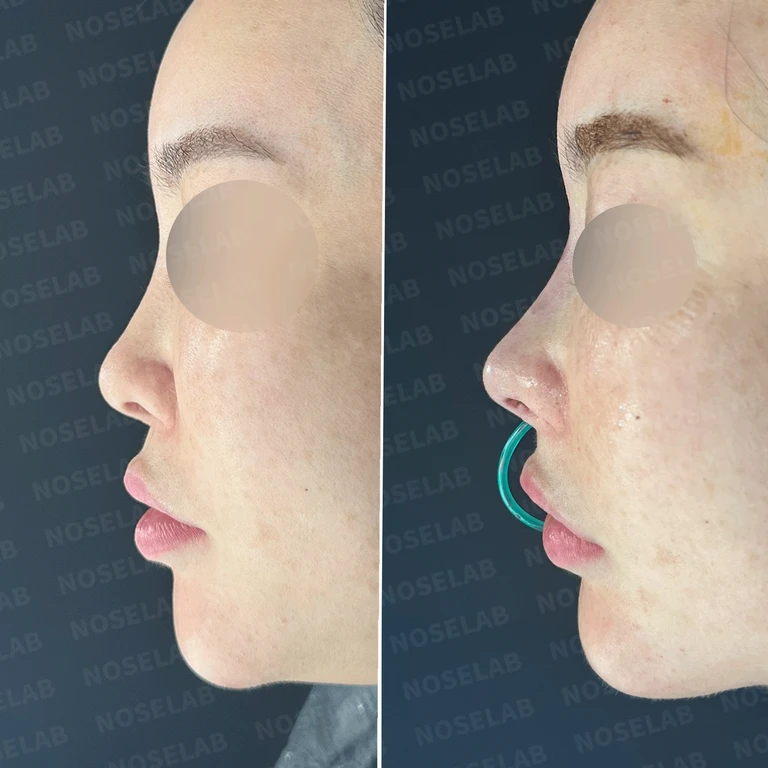
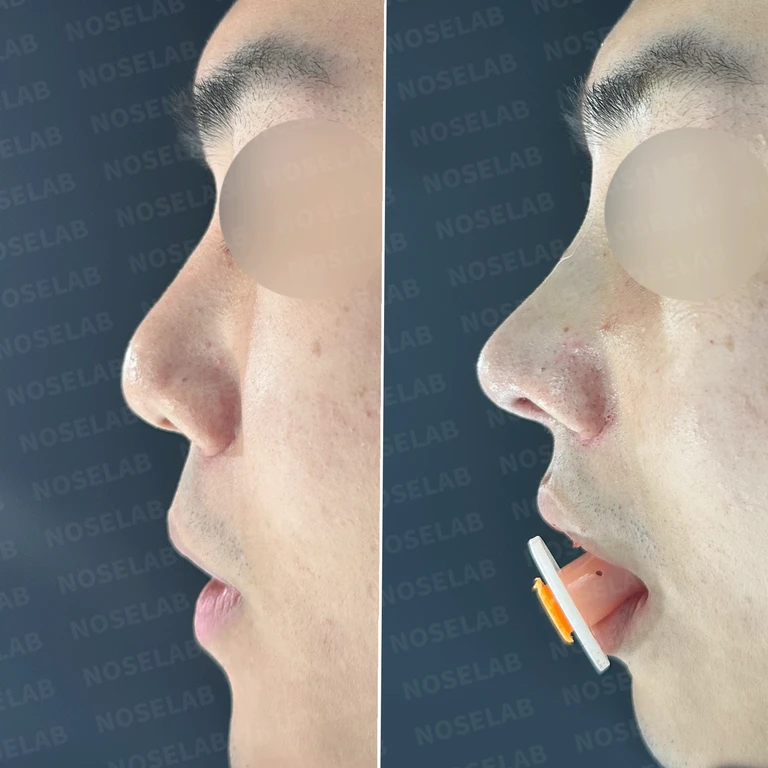
Why foreign material from illicit injections remains after removal and how to correct an upturned nasal tip — Before-and-after comparison
Before-and-after comparison

Why foreign material from illicit injections remains after removal and how to correct an upturned nasal tip

Due to residual foreign material from past illicit injections, an upturned nose and excessive nostril show persisted; the remaining foreign material was completely removed, and tip rhinoplasty using autologous rib cartilage was performed alongside radix adjustment.

Preoperative condition

Why a paranasal implant migrates into the nasal cavity causing breathing obstruction, and how to reconstruct it — Before-and-after comparison
Before-and-after comparison

Why a paranasal implant migrates into the nasal cavity causing breathing obstruction, and how to reconstruct it

We removed an old paranasal implant that had migrated into the nasal cavity and obstructed breathing, and completely reconstructed the damaged septum and lower lateral cartilages using autologous rib cartilage, improving both breathing function and nasal appearance.

Preoperative condition · Postoperative record
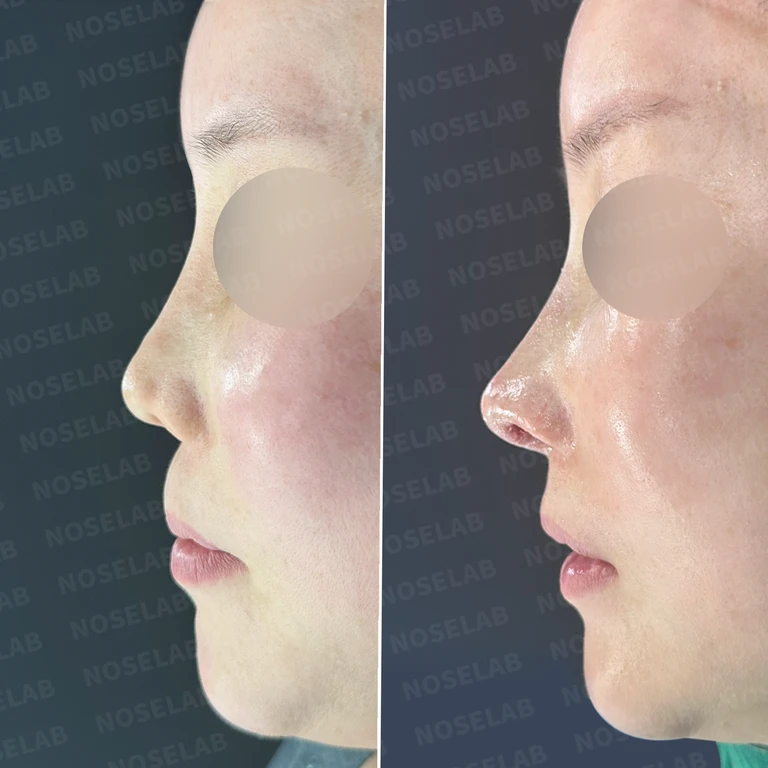
Problems caused by excessive harvest of septal cartilage and methods for reconstruction — Before-and-after comparison
Before-and-after comparison

Problems caused by excessive harvest of septal cartilage and methods for reconstruction

In a patient whose septal cartilage had been excessively harvested during previous surgeries, leading to a shortened nasal tip and nostril asymmetry, the septum was solidly reconstructed using autologous rib cartilage to restore nasal length.

Preoperative condition · Postoperative record
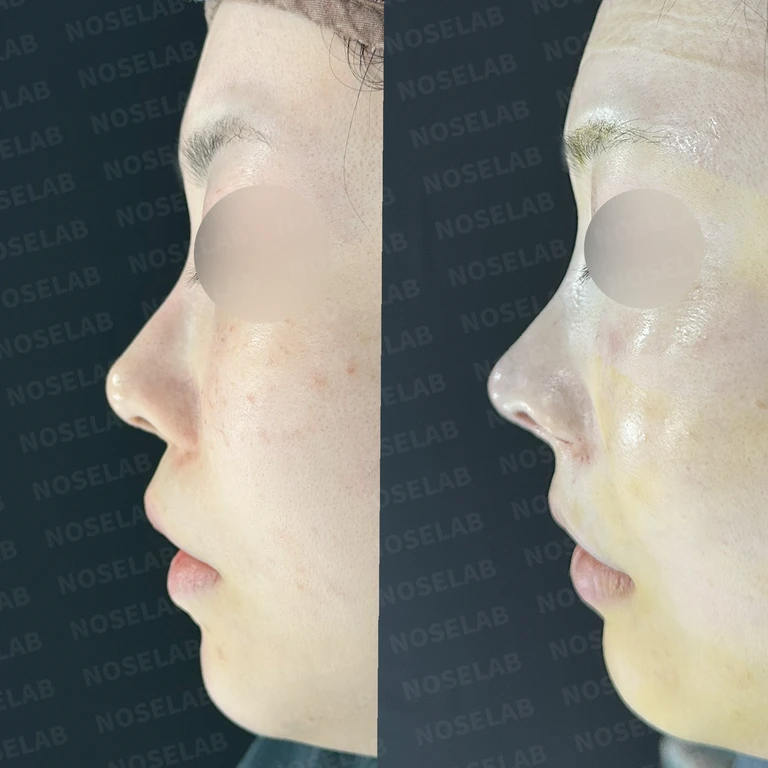
Why an arrow nose appears only when smiling and how to correct tip cartilage — Before-and-after comparison
Before-and-after comparison

Why an arrow nose appears only when smiling and how to correct tip cartilage

To improve a dorsal hump, crooked nose, and drooping arrow nose when smiling, autologous rib cartilage was used to reposition the nasal tip, combined with lateral osteotomy, septoplasty, and rhinitis surgery.

Preoperative condition · Postoperative record
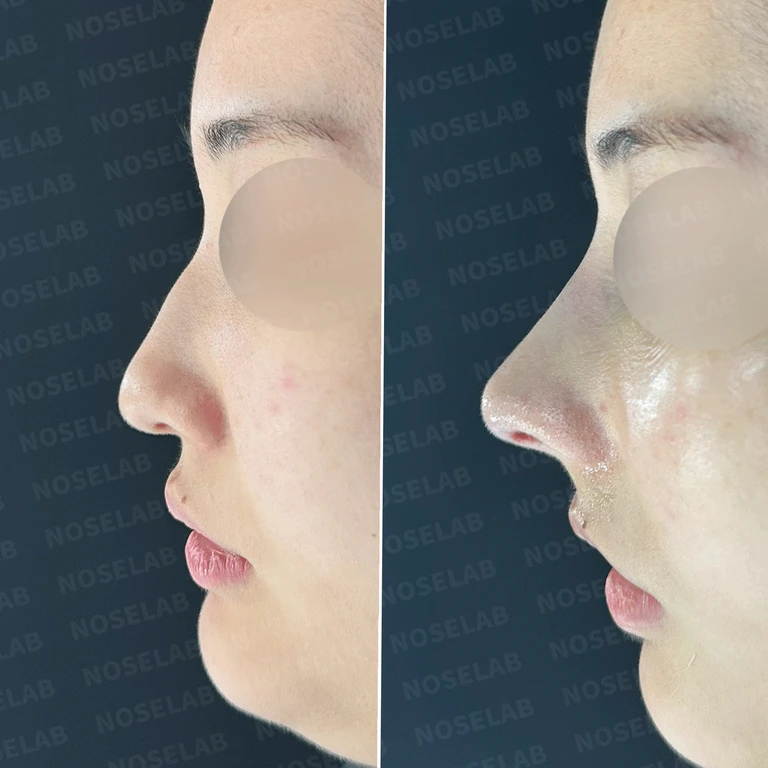
Why donor dermis absorbs after multiple revision surgeries and how to reconstruct the septum — Before-and-after comparison
Before-and-after comparison

Why donor dermis absorbs after multiple revision surgeries and how to reconstruct the septum

For a patient who experienced partial absorption of donor dermis on the nasal bridge and septal damage after multiple revision surgeries, the donor dermis was removed, the septum was reconstructed with autologous rib cartilage, and the skin was reinforced with retroauricular dermis.

Preoperative condition · Postoperative record
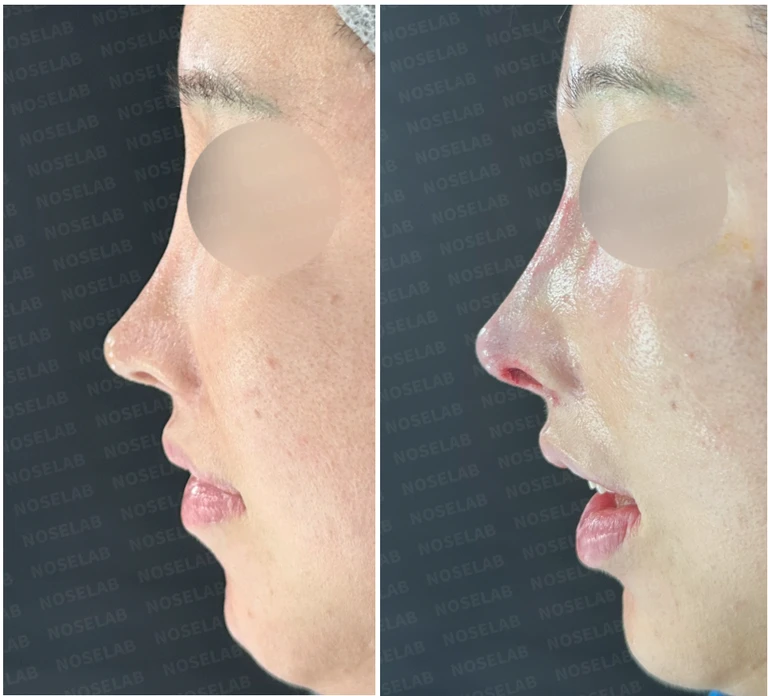
Why the nasal bridge looks artificial and the nose becomes upturned, and how to reconstruct it — Before-and-after comparison
Before-and-after comparison

Why the nasal bridge looks artificial and the nose becomes upturned, and how to reconstruct it

After surgery with a silicone implant and donor rib cartilage, a chalk-like nasal bridge and excessive nostril show occurred. A natural line was reconstructed through septal extension using autologous rib cartilage and alar rim lowering.

Preoperative condition

How to refine only the nasal tip and transition area without an implant — Before-and-after comparison
Before-and-after comparison

How to refine only the nasal tip and transition area without an implant

To maintain the existing bridge line and address a crooked nose and dorsal hump without major changes, we performed implant-free rhinoplasty using autologous cartilage, lateral osteotomy, and rhinitis surgery.

Preoperative condition · Postoperative record
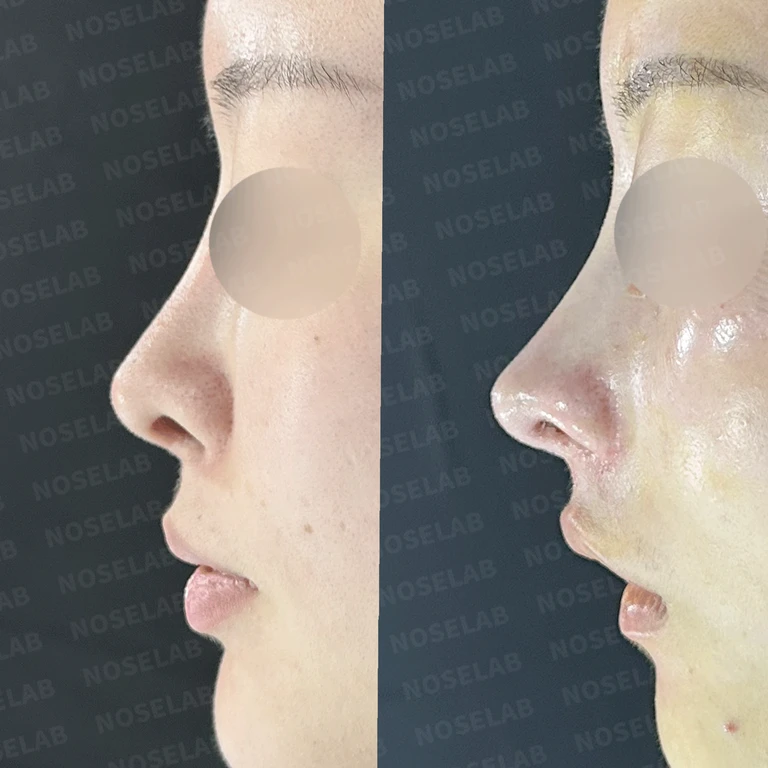
Why septal cartilage damage causes a drooping tip and a retracted columella — Before-and-after comparison
Before-and-after comparison

Why septal cartilage damage causes a drooping tip and a retracted columella

For a drooping tip and retracted columella caused by septal cartilage damage following previous surgery with autologous rib cartilage and a silicone implant, the septum was reconstructed using autologous rib cartilage, the columella was restored, and the nasolabial angle was corrected.

Preoperative condition · Postoperative record
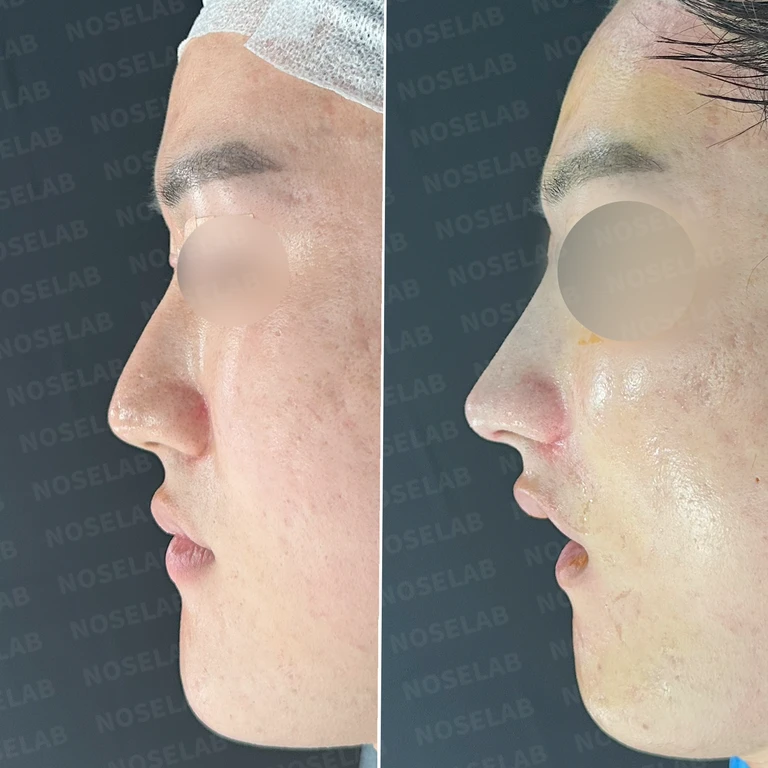
Why nasal tip cartilage shows through the skin and turns upward: reinforcement and reconstruction methods — Before-and-after comparison
Before-and-after comparison

Why nasal tip cartilage shows through the skin and turns upward: reinforcement and reconstruction methods

For a patient presenting with visible nasal tip cartilage and an upturned nose following previous surgery with a silicone implant and ear cartilage, we performed silicone implant removal, septal extension using autologous rib cartilage, fat grafting, and skin reinforcement with donor dermis.

Preoperative condition · Postoperative record
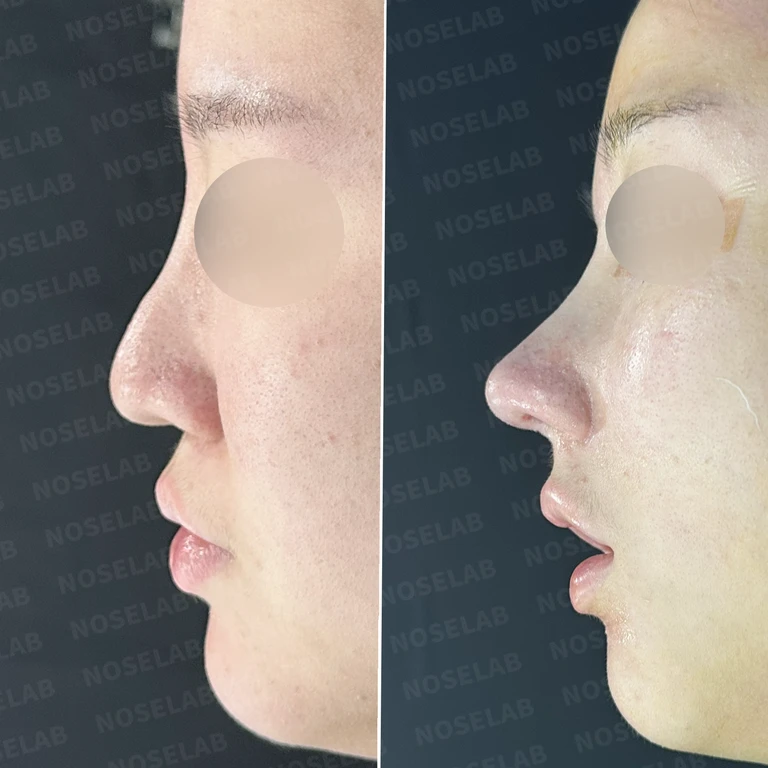
Why post-nasal drip and a drooping tip occur together, and how septal extension and functional surgery address them — Before-and-after comparison
Before-and-after comparison

Why post-nasal drip and a drooping tip occur together, and how septal extension and functional surgery address them

Post-nasal drip, a drooping tip, and a narrow columella were comprehensively improved through septal and inferior turbinate surgery, autologous cartilage septal extension, and alar reduction.

Preoperative condition · Postoperative record
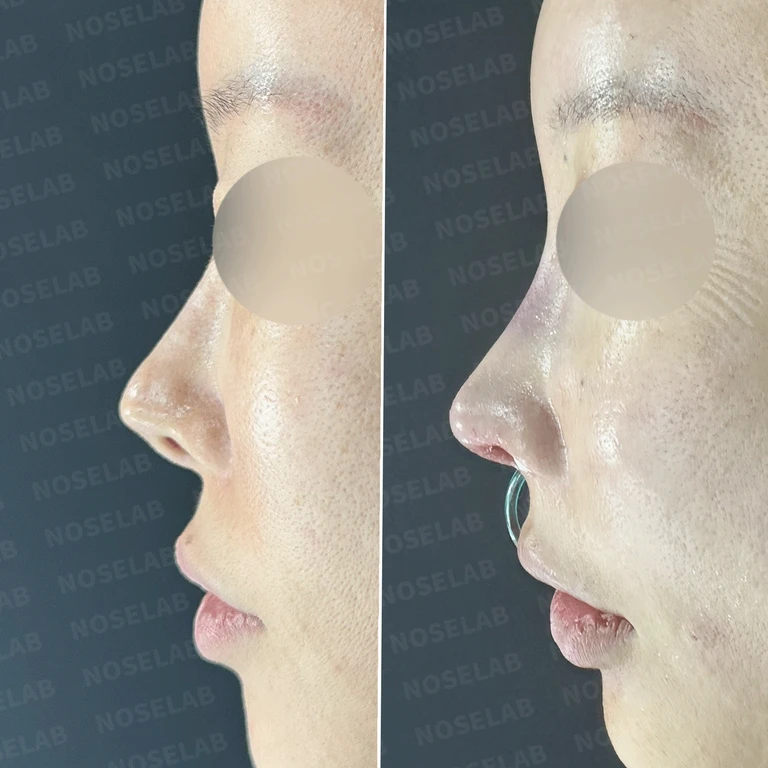
Why rib cartilage calcification must be evaluated in advance and correction methods for crooked and short noses — Before-and-after comparison
Before-and-after comparison

Why rib cartilage calcification must be evaluated in advance and correction methods for crooked and short noses

After evaluating calcification in the autologous rib cartilage, the 8th rib cartilage was harvested to correct a crooked nose, short nose, and nostril show, while an inferior turbinate reduction was performed concurrently to improve breathing function.

Preoperative condition · Postoperative record
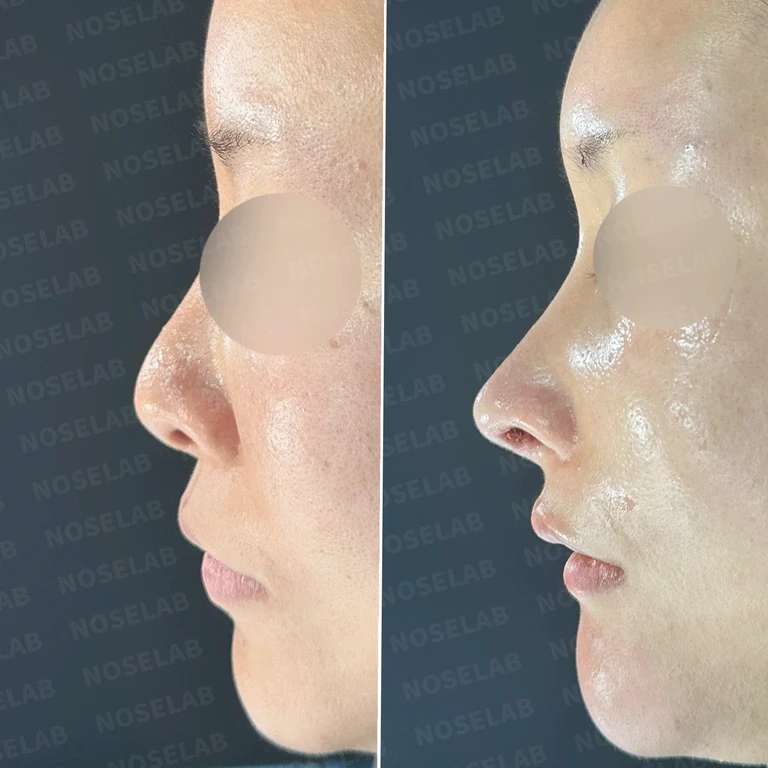
Why the nose looks crooked and the columella tilts to one side, and how to correct it — Before-and-after comparison
Before-and-after comparison

Why the nose looks crooked and the columella tilts to one side, and how to correct it

A mobile silicone implant, a tilted columella, and a crooked nasal bridge were corrected through the removal of the existing implant and foreign material, lateral osteotomy, and septal reinforcement using autologous rib cartilage.

Preoperative condition · Postoperative record
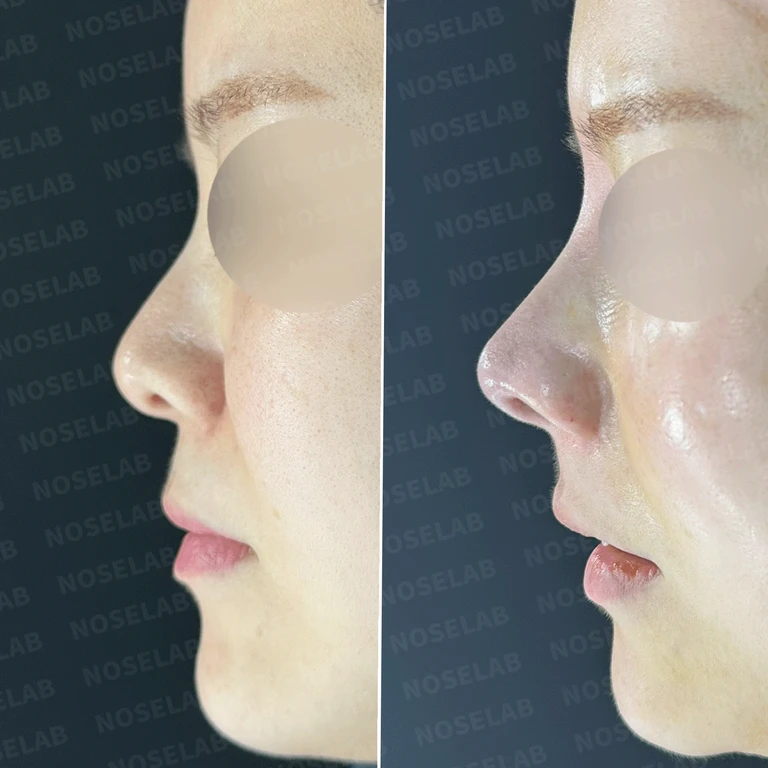
Why a dorsal hump can reappear and nostrils become visible after hump reduction — Before-and-after comparison
Before-and-after comparison

Why a dorsal hump can reappear and nostrils become visible after hump reduction

Correction of a residual dorsal hump and excessive nostril show 17 years after hump surgery using residual filler removal, lateral osteotomy, and autologous rib cartilage septal extension.

Preoperative condition · Postoperative record
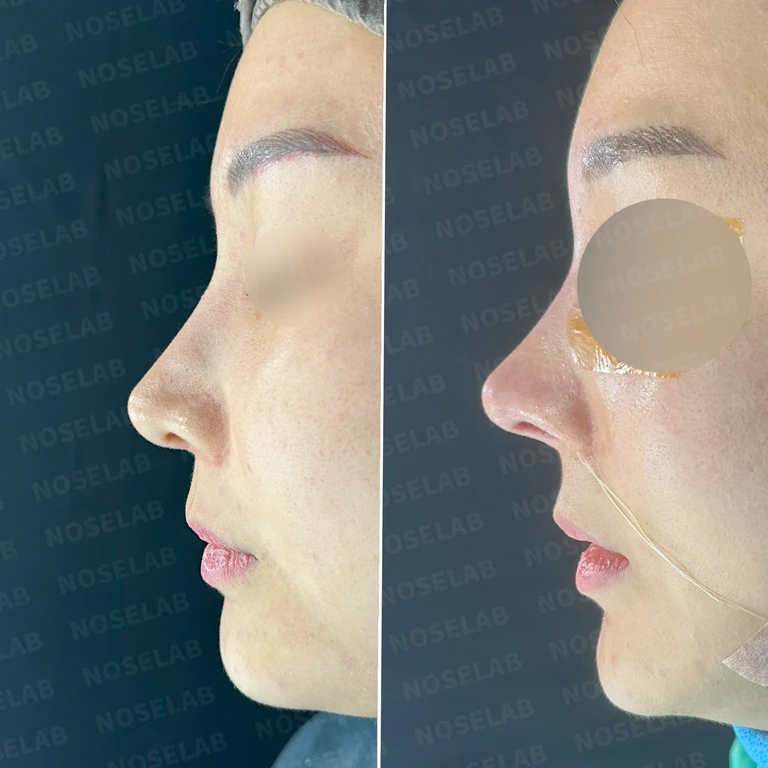
Why the columella retracts and the nasal tip becomes bulbous years after rhinoplasty, and how to reconstruct it — Before-and-after comparison
Before-and-after comparison

Why the columella retracts and the nasal tip becomes bulbous years after rhinoplasty, and how to reconstruct it

Columellar retraction and bulbous tip deformity after previous dorsal hump reduction and osteotomy were corrected through septal extension with autologous rib cartilage, columellar cartilage grafting, and lateral osteotomies.

Preoperative condition · Postoperative record
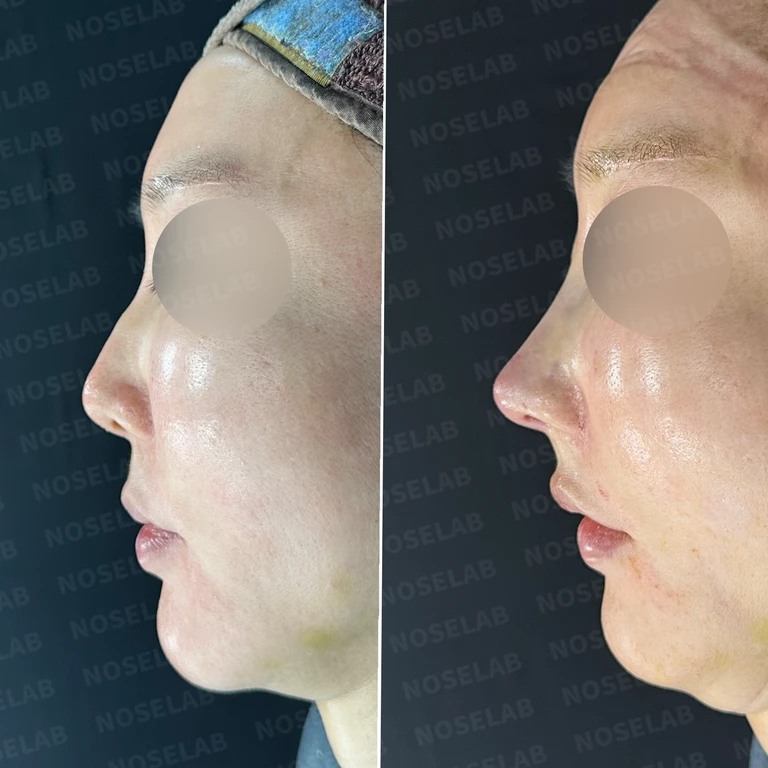
Nose with remaining filler and threads: how much can rib cartilage reconstruction achieve after removal? — Before-and-after comparison
Before-and-after comparison

Nose with remaining filler and threads: how much can rib cartilage reconstruction achieve after removal?

To improve nasal bridge asymmetry and a blunt nasal shape resulting from nose filler and thread-lifting procedures, the foreign materials were removed, and tip support structures were established using donor rib cartilage and septal cartilage.

Preoperative condition · Postoperative record
No search results found

Please try searching with different keywords.

Scroll to keep reading

Previous case5 / 16Next case
Original article

Read more records

Planning a visit to Seoul?Prepare your consultation with the NOSELAB team.

International patient guideWhatsApp ↗
Dr. Peter C. Kang's Rhinoplasty Stories
Rhinoplasty guideCases by topicDr. Peter C. KangNaver Blog ↗
View original photo
Enlarged photo
WhatsAppChat with NOSELAB↗