Hello, this is Dr. Peter C. Kang, medical director.
Today, I would like to introduce a case where a retracted columella and drooping tip caused by severe septal cartilage damage were corrected.
📍 Surgical history
2 years ago: autologous rib cartilage + silicone implant
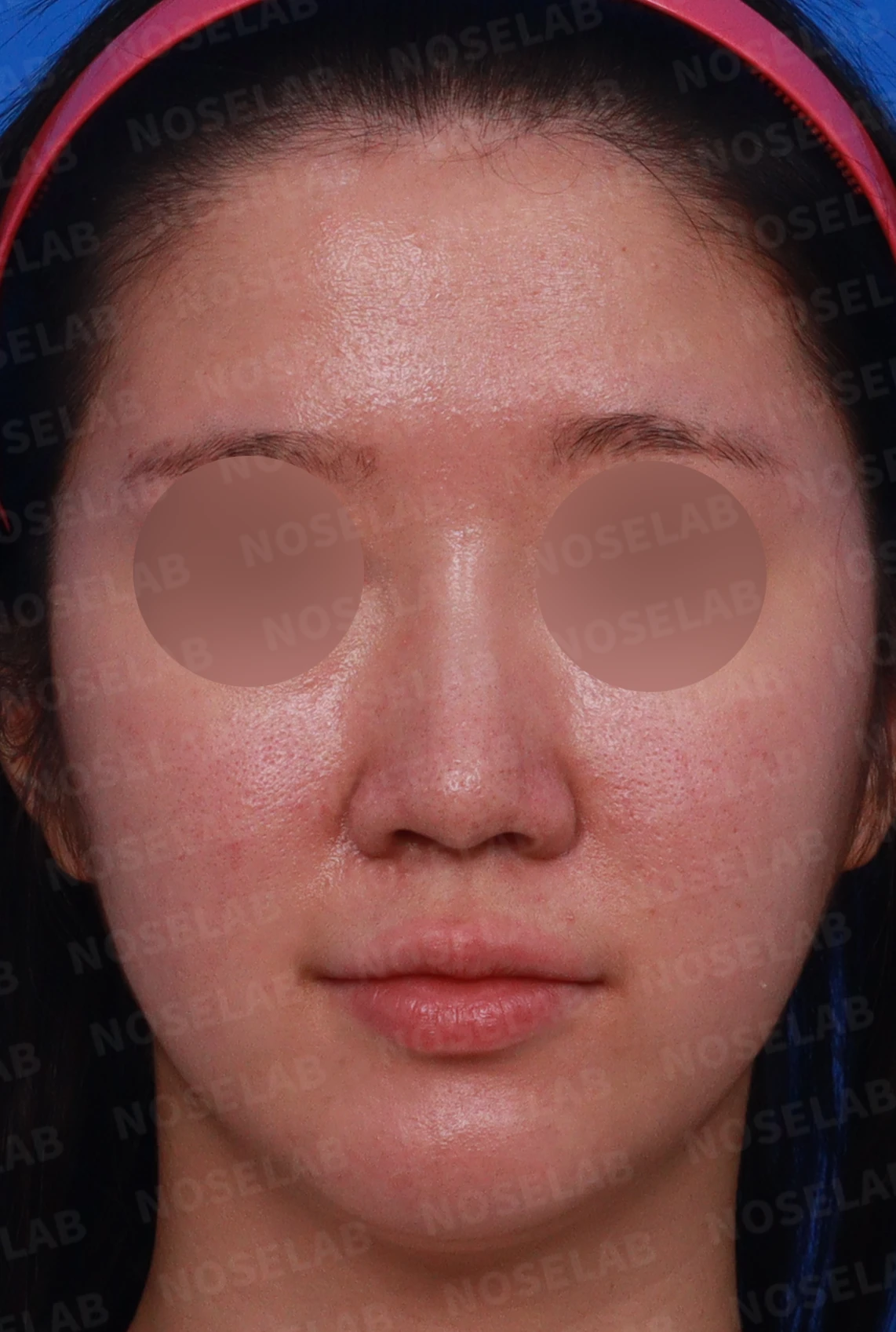
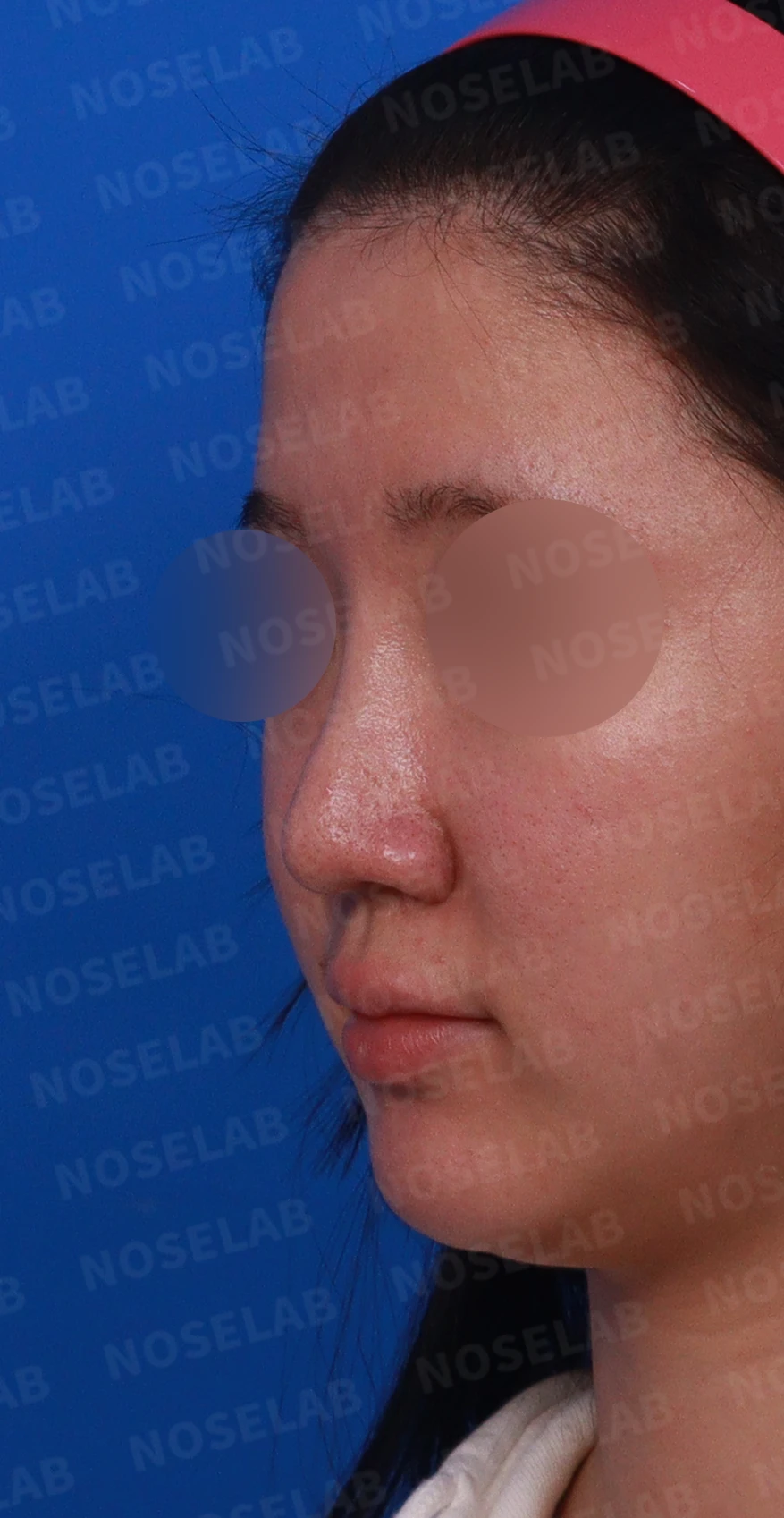
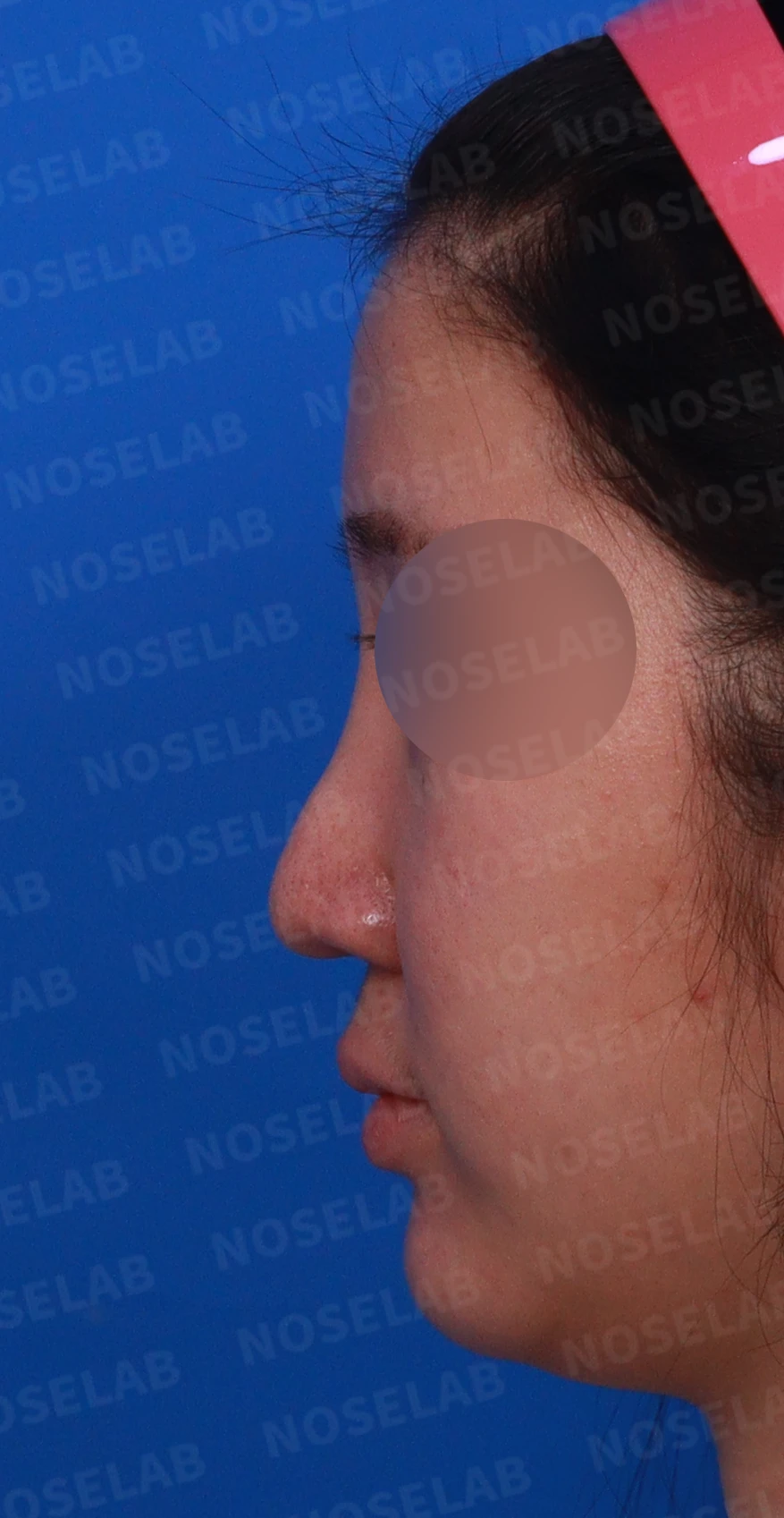
Design consultation photos: front, oblique, and left profile views
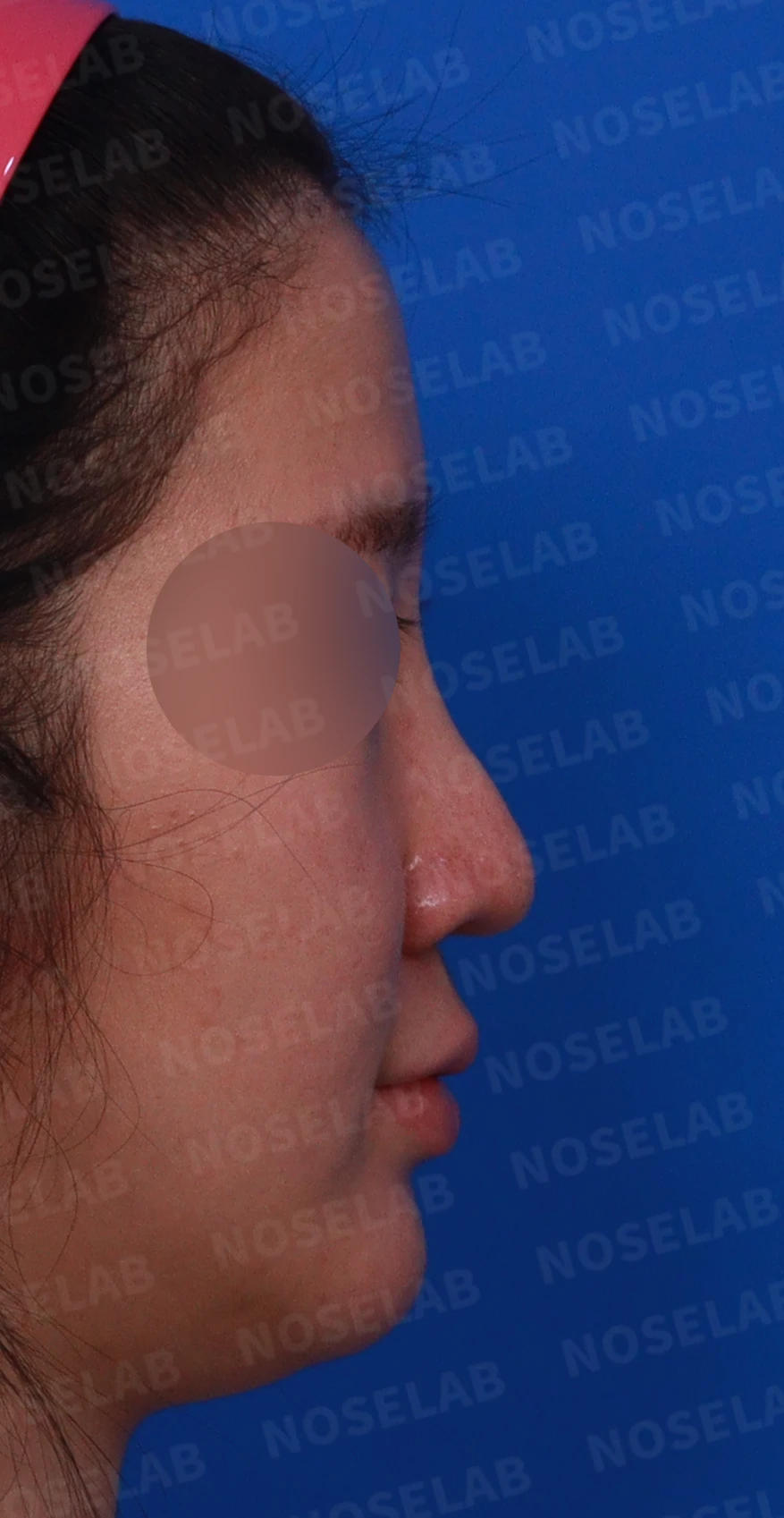
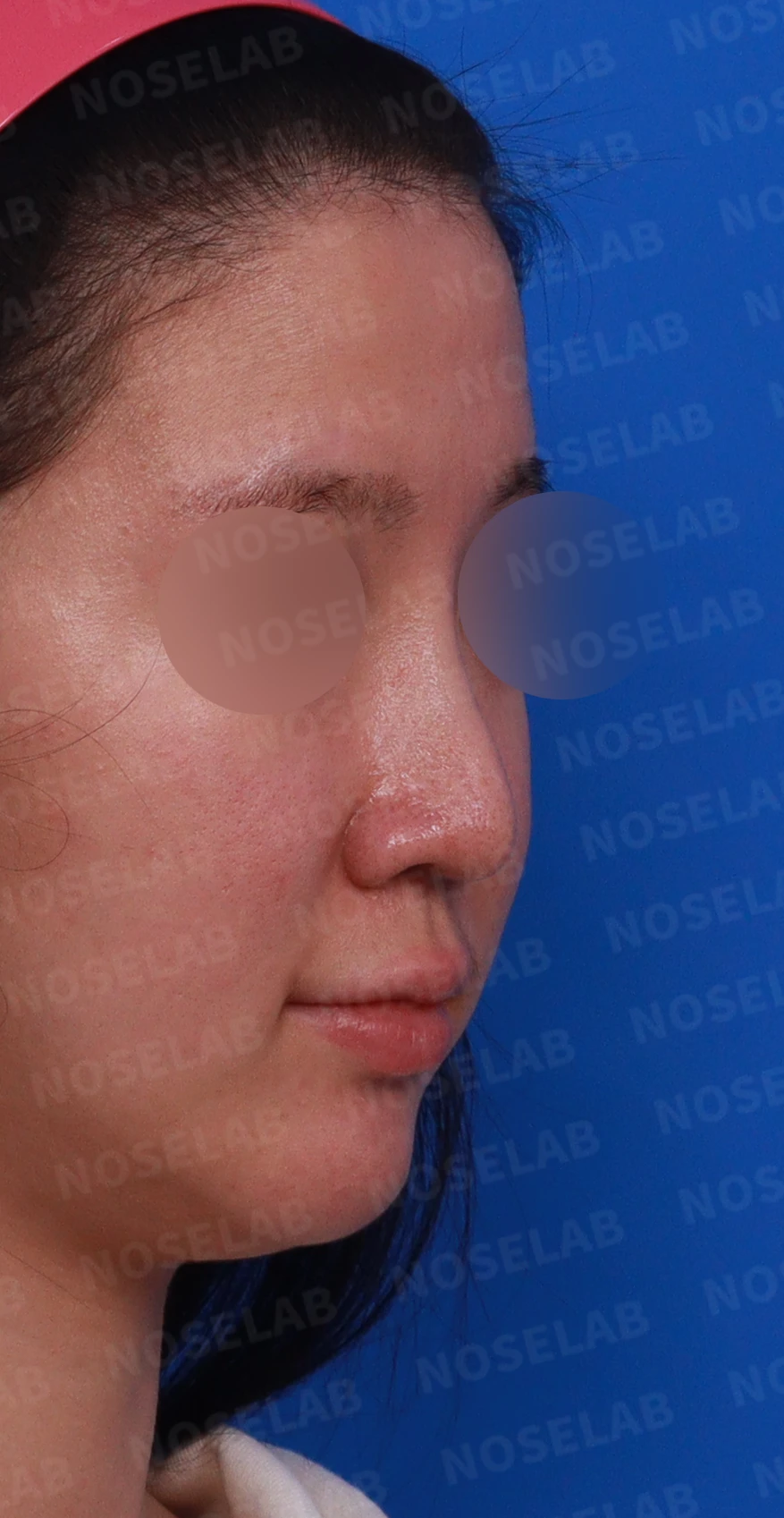
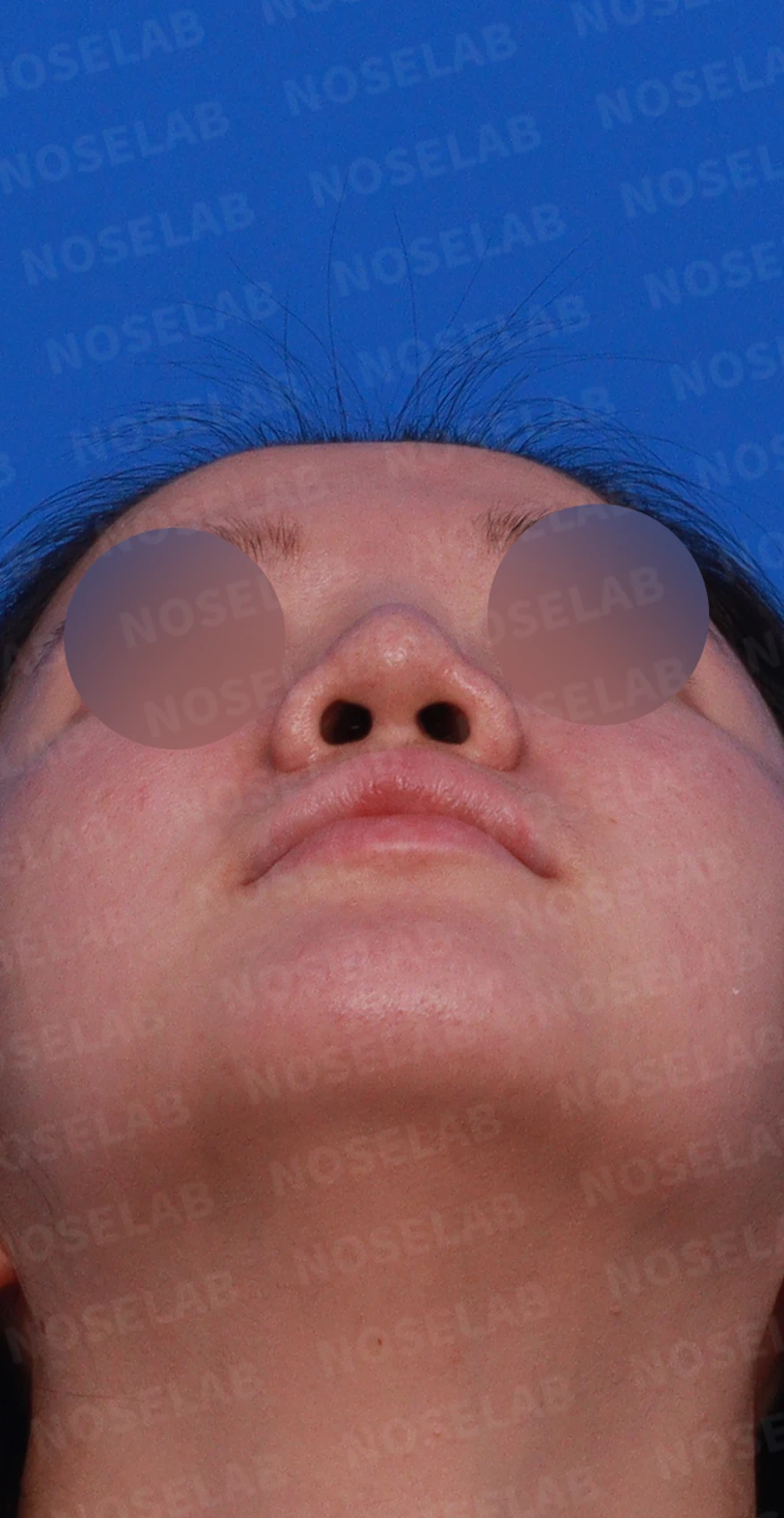
Design consultation photos: right profile, oblique, and nostril views
🔎 Initial consultation findings
Functional issues
Rhinitis symptoms
Septum deviated to the left
Sinusitis
Aesthetic concerns
Significantly drooping tip
Retracted columella
Nose appearing crooked
Irregularities on the nasal bridge
High radix
Intraoperative findings
Severe damage to the septal cartilage confirmed
Structural deformity determined to be caused by cartilage damage
✨ Patient's requests
Improvement of a drooping tip
Restoration of the retracted columella ("I want my columella to project nicely")
Lowering the radix
Improvement of a crooked-appearing nose
Smoothing of nasal bridge irregularities
💉 Surgical procedure details
Septal reconstruction
Severe damage to the septal cartilage confirmed during surgery
Septal reconstruction using autologous rib cartilage
Correction of the left-deviated septum
Structural improvement
Septal extension using autologous rib cartilage
Restoration of the retracted columella
Elevation of the drooping tip
Correction of the nasolabial angle
Morphological improvement
Refining a splayed nasal tip naturally
Lowering the radix
Smoothing of bridge irregularities
Correction of crooked nose appearance
Functional improvement
Deviated septum and rhinitis surgeries performed concurrently to improve rhinitis and sinusitis
✅ Surgical results
Functional improvement
Alleviation of rhinitis symptoms
Preventing worsening of sinusitis
Smooth breathing function
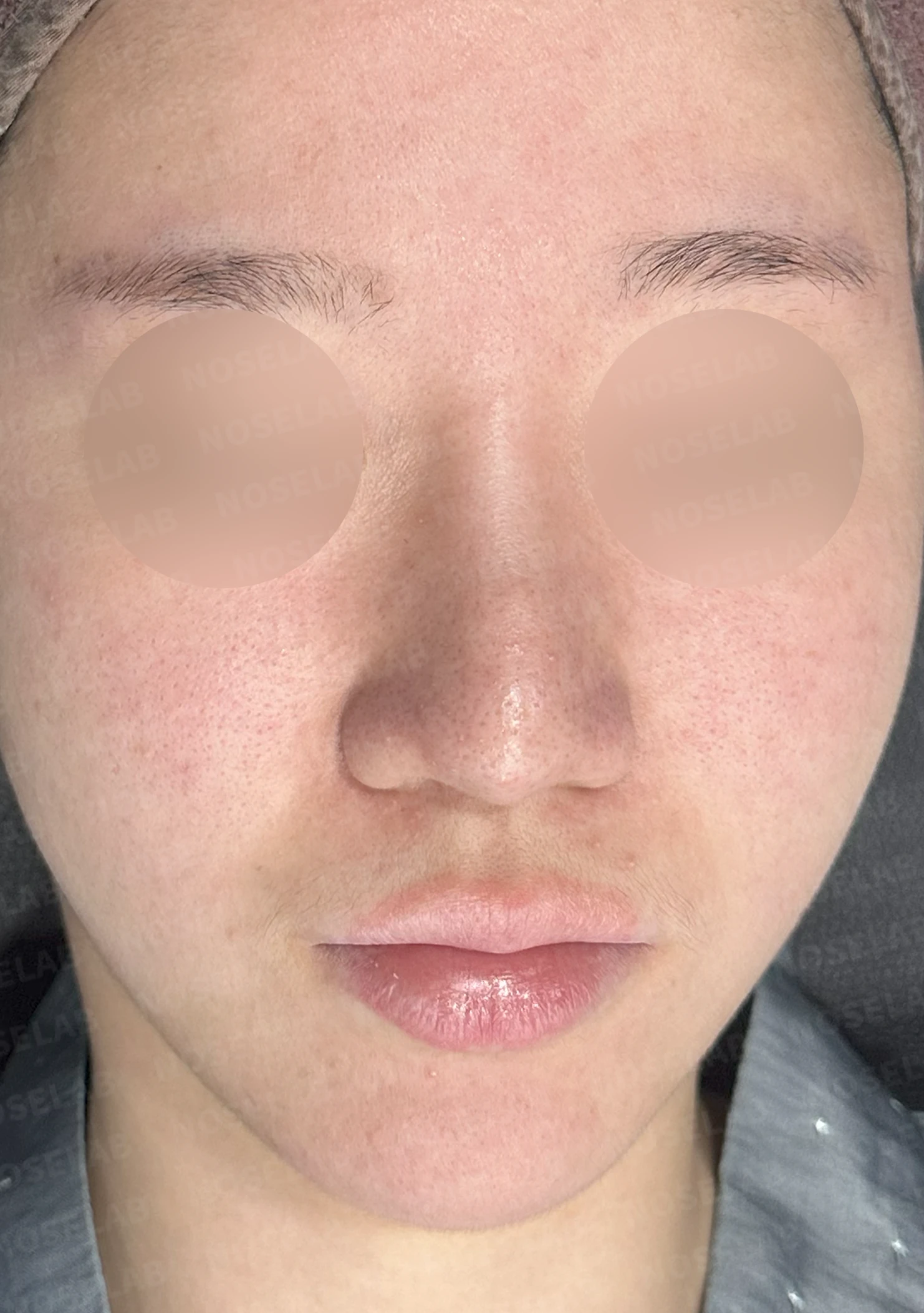
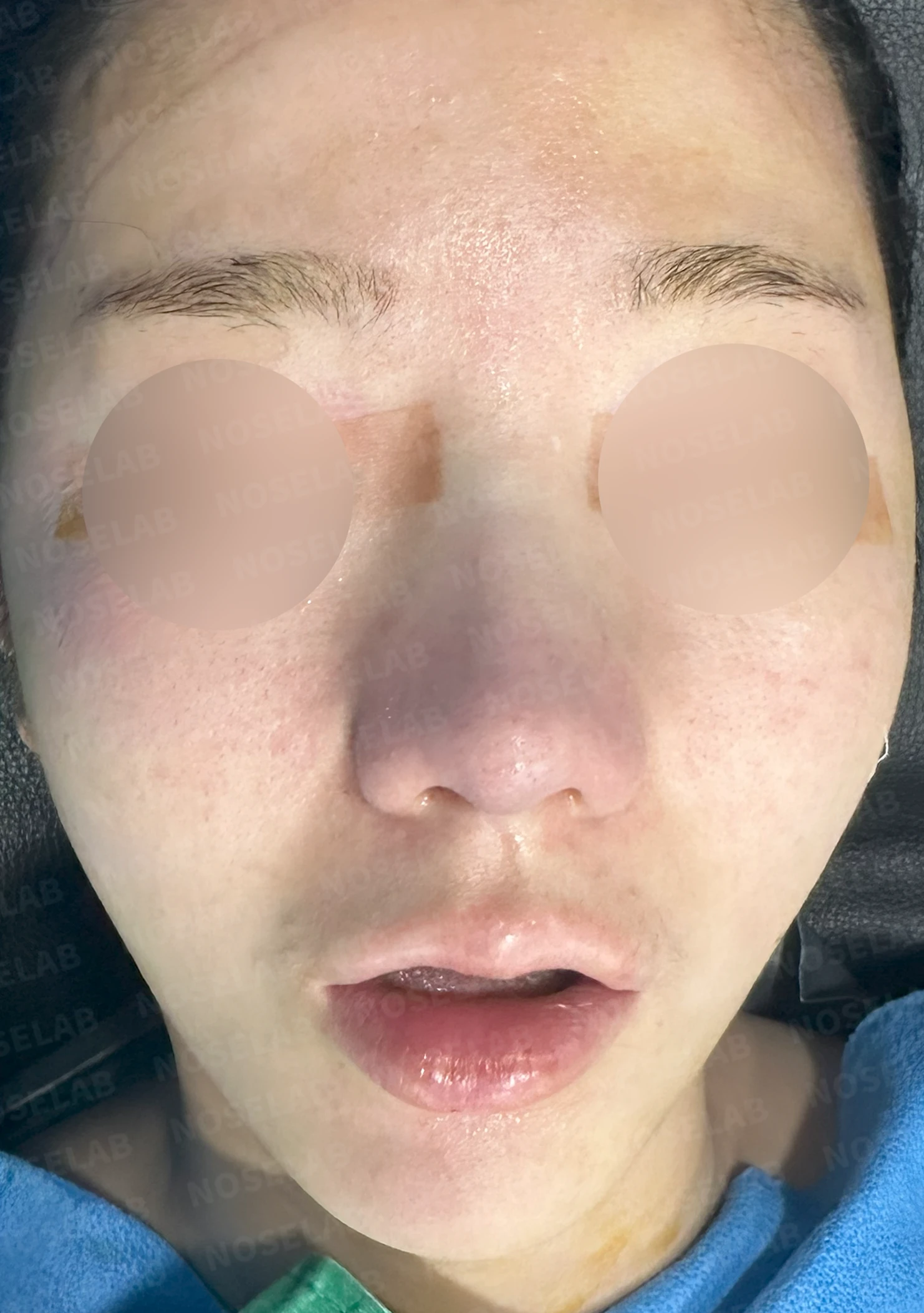
Before surgery / Day 0 immediately after surgery Photos taken immediately after surgery show swelling and may differ from the final result.
Front view
Correction of crooked nose appearance
Naturally refined nasal tip
Balanced overall proportions
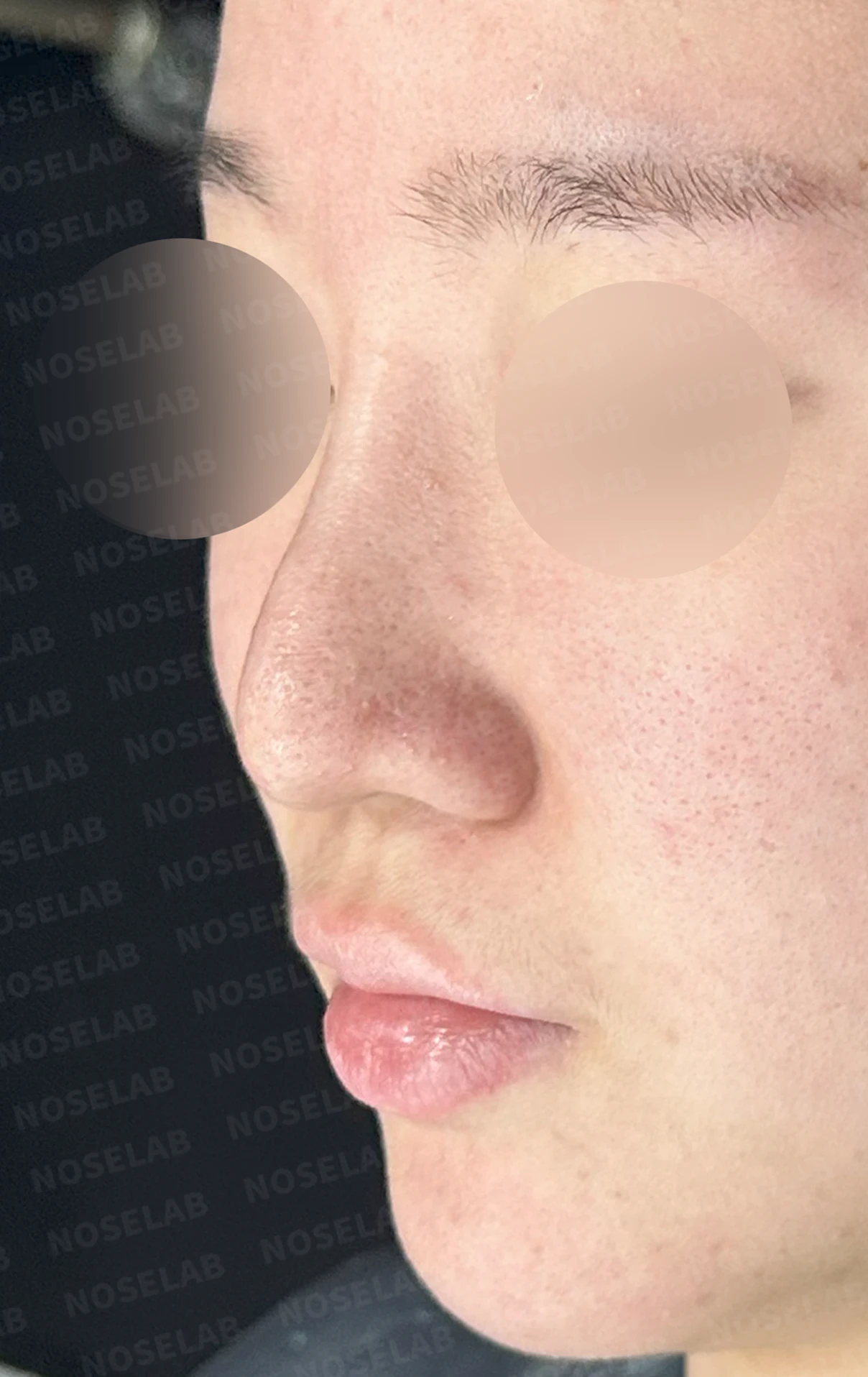
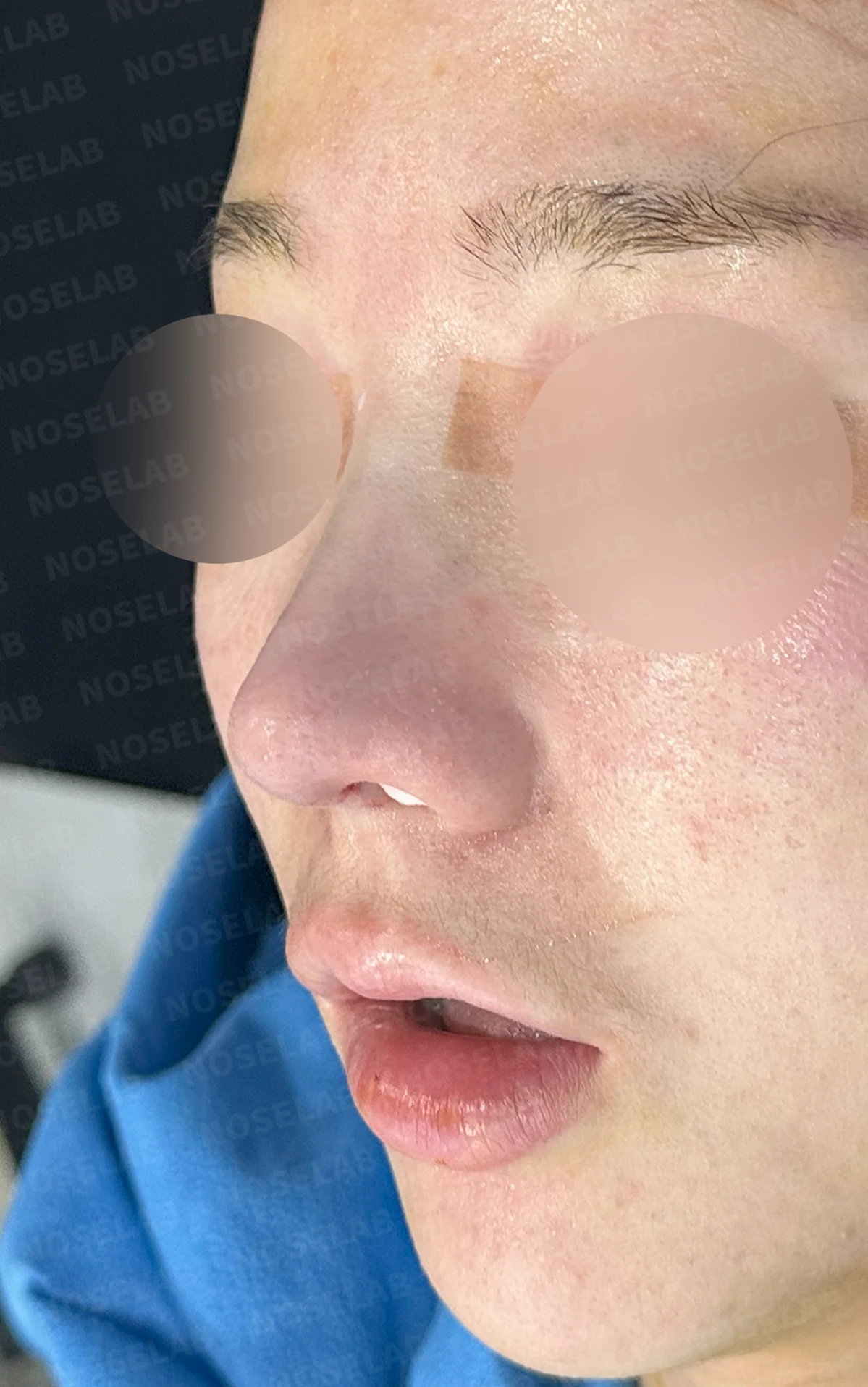
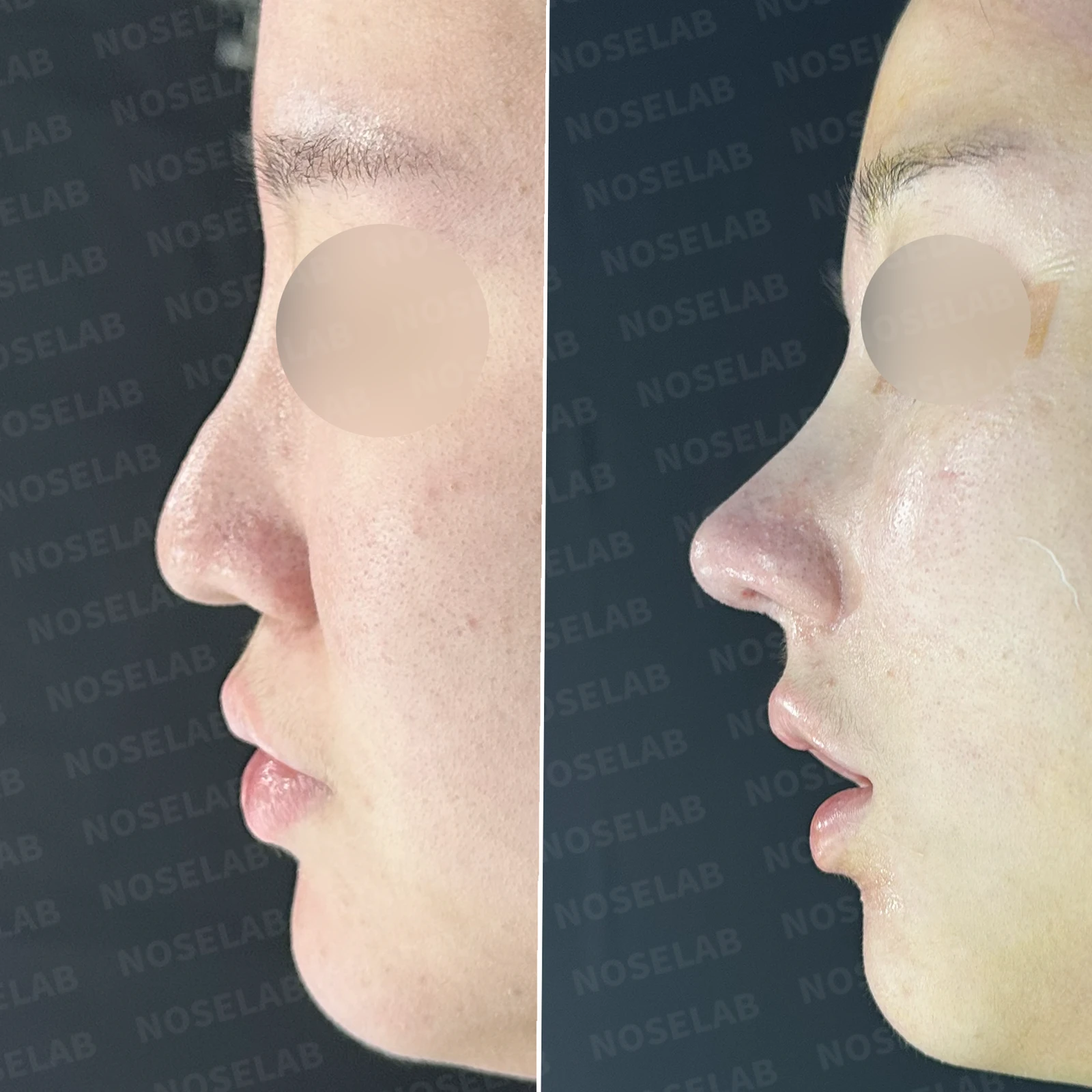
Before surgery / Day 0 immediately after surgery Photos taken immediately after surgery show swelling and may differ from the final result.
Profile view
Elevated, well-defined nasal tip
Naturally lowered columella
Refined profile line achieved by lowering the radix
Improved nasolabial angle
Improvement in protruding mouth appearance
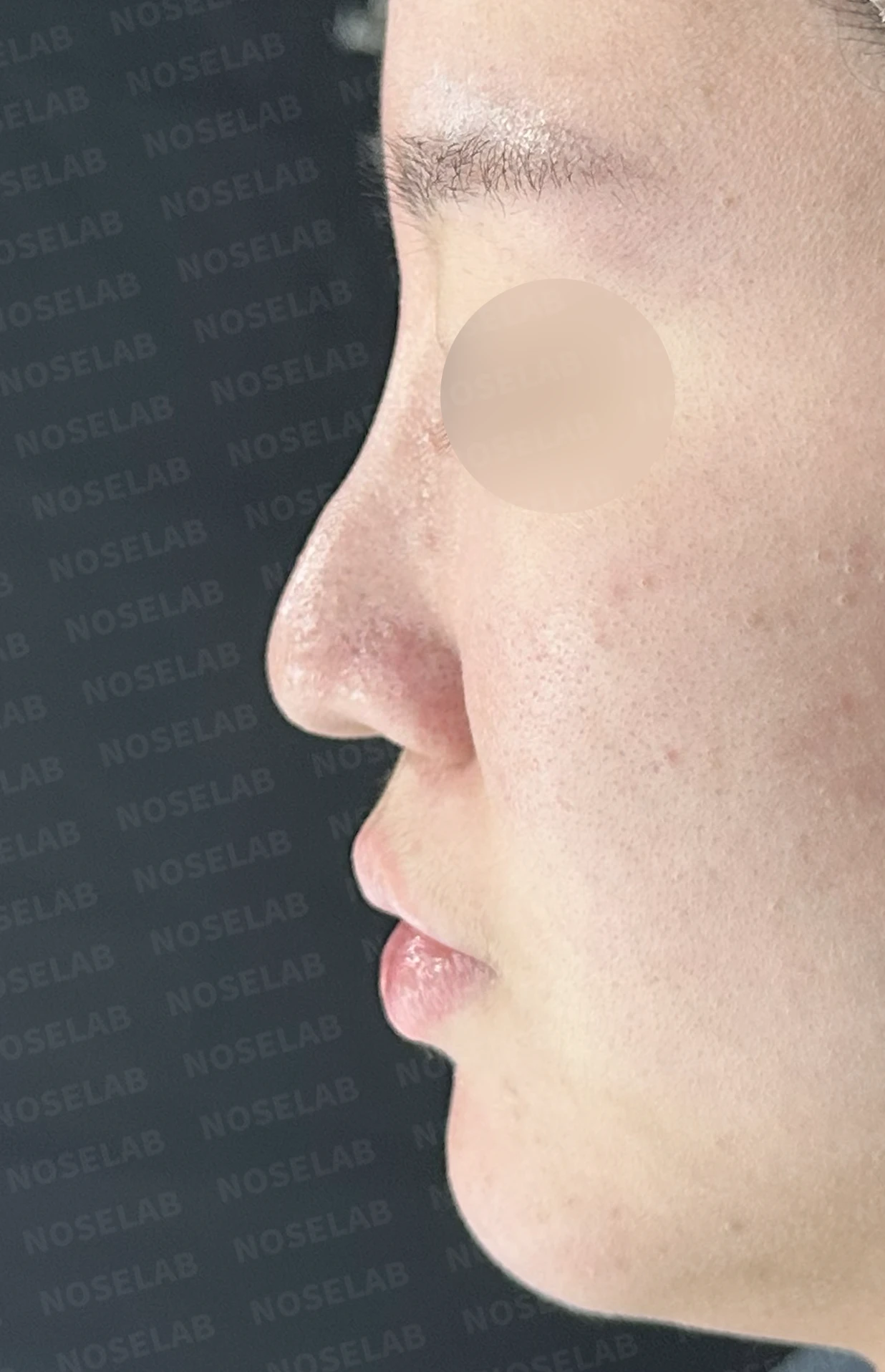
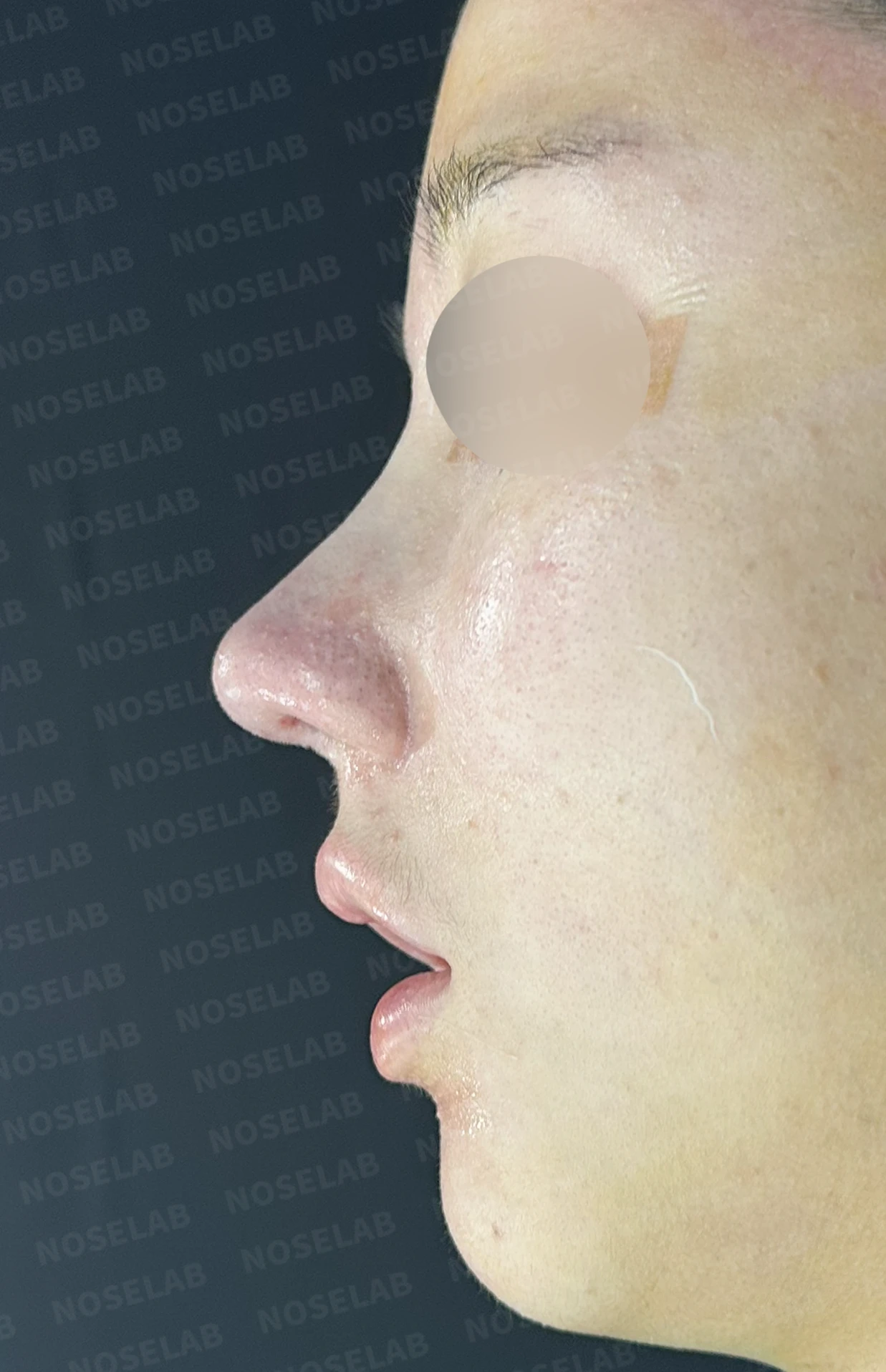
Before surgery / Day 0 immediately after surgery Photos taken immediately after surgery show swelling and may differ from the final result.
Overall changes
Improvement in the elongated appearance
Splayed nasal tip naturally brought together
Smoothed bridge surface
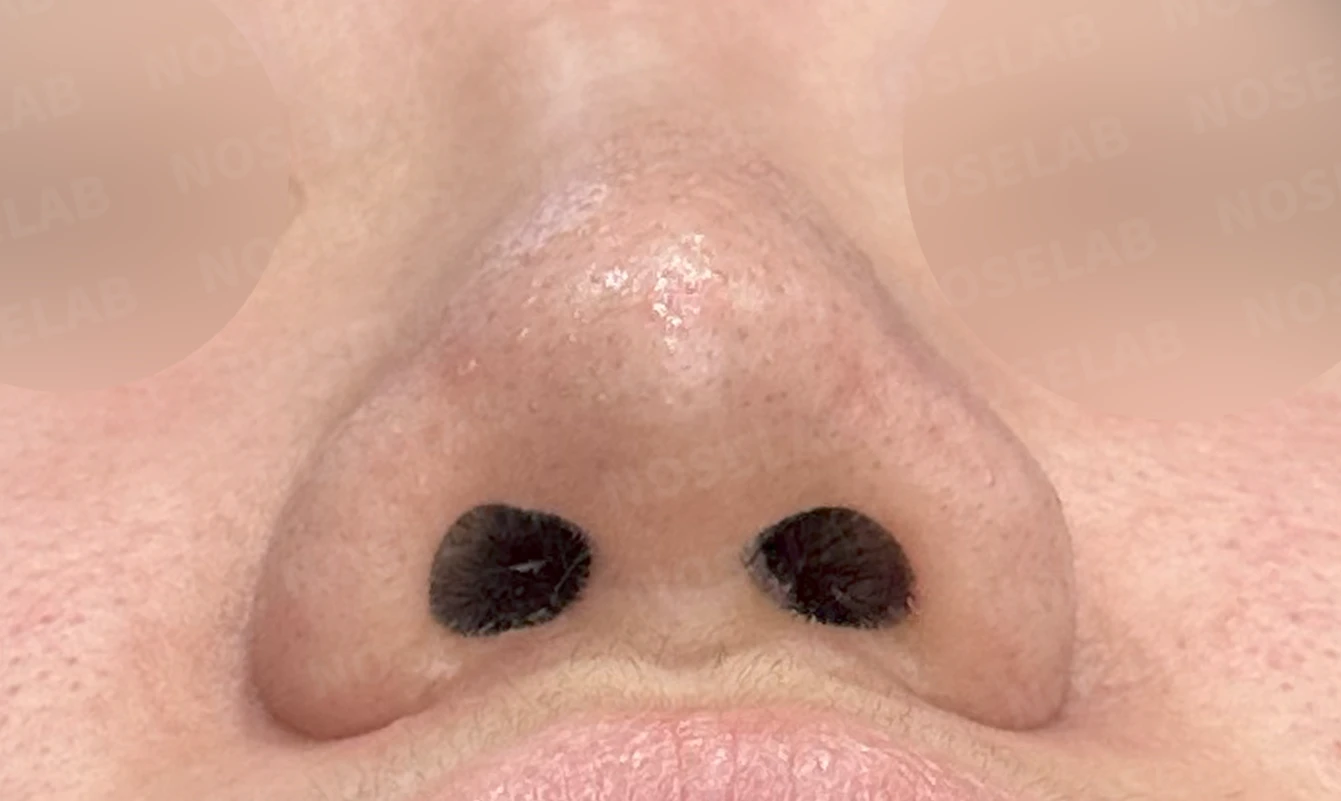
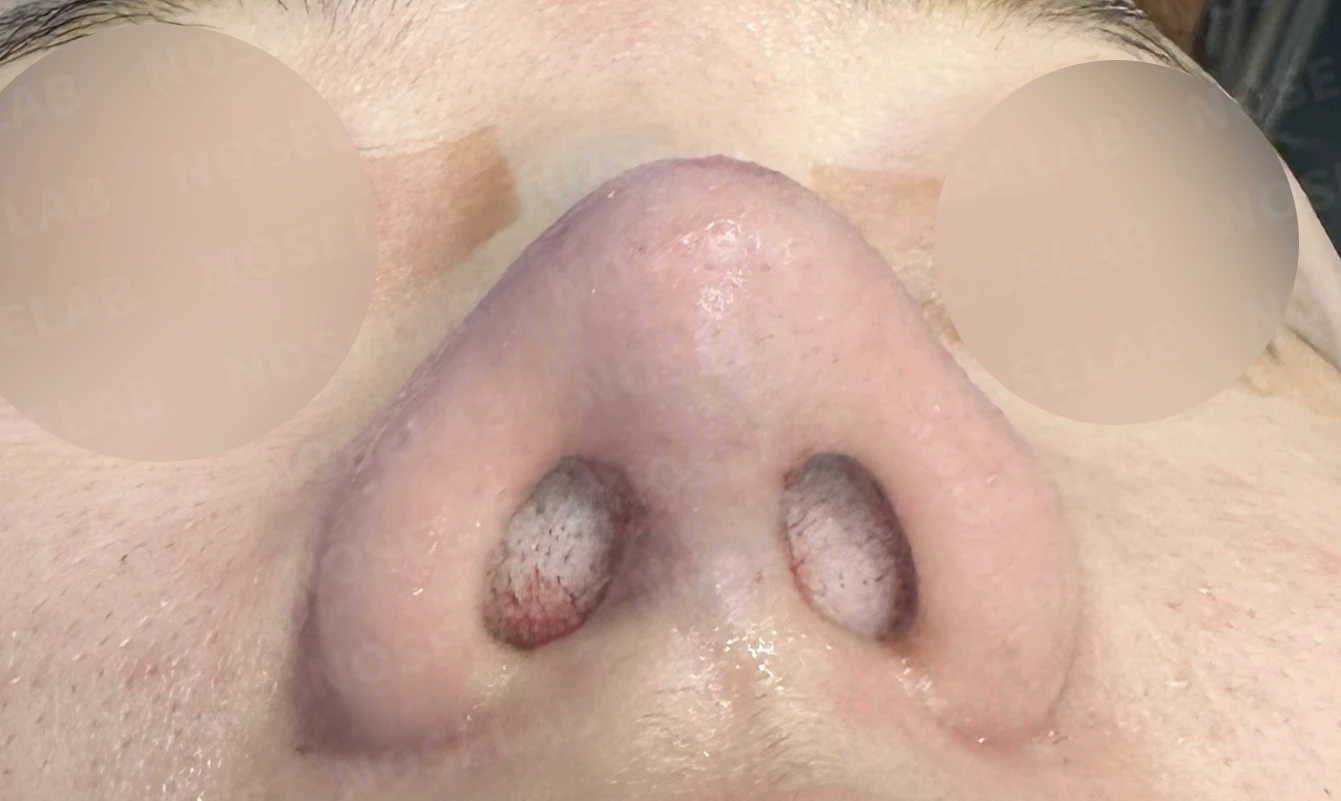
Before surgery / Day 0 immediately after surgery Photos taken immediately after surgery show swelling and may differ from the final result.
👨⚕️ Specialist's assessment
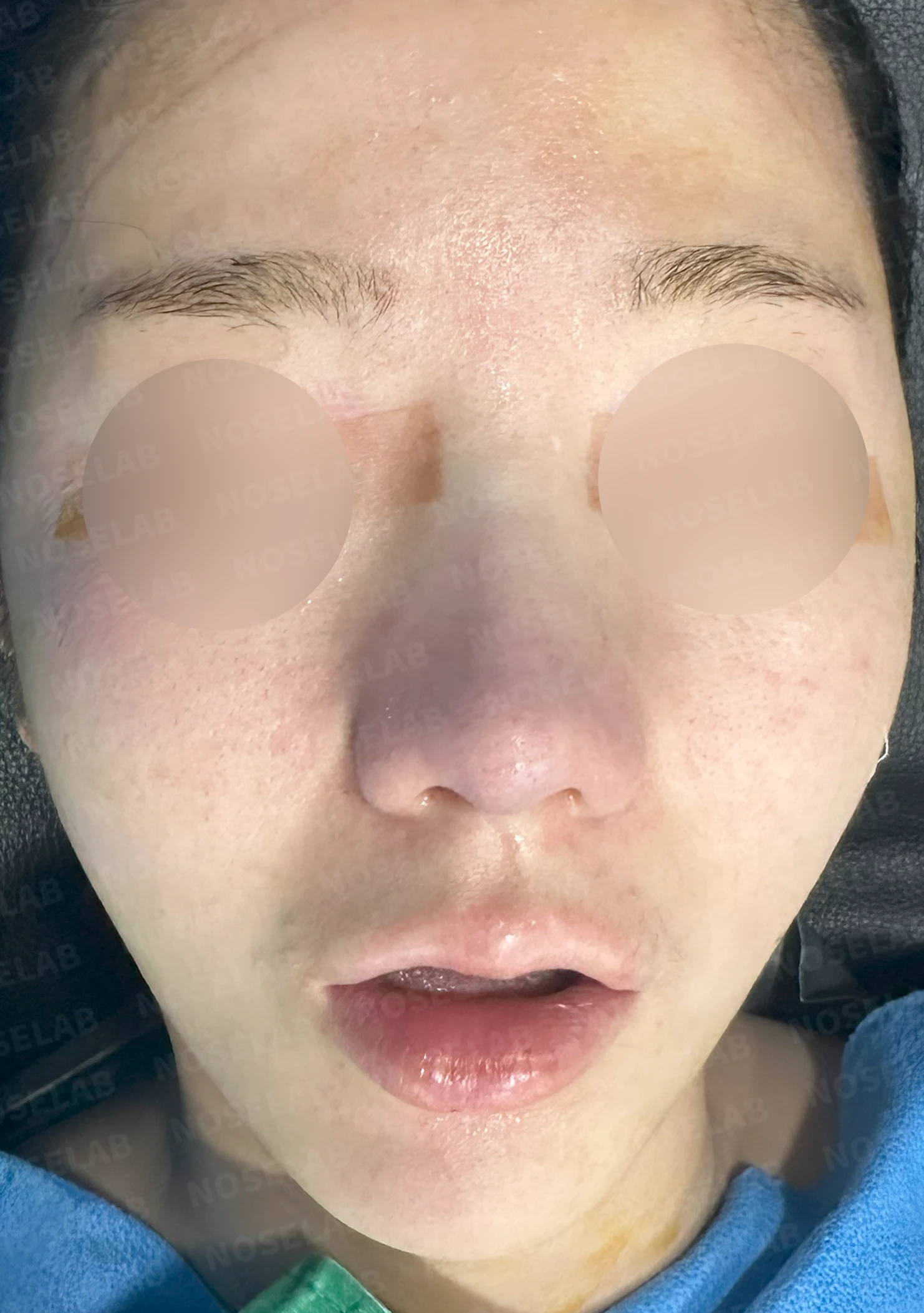
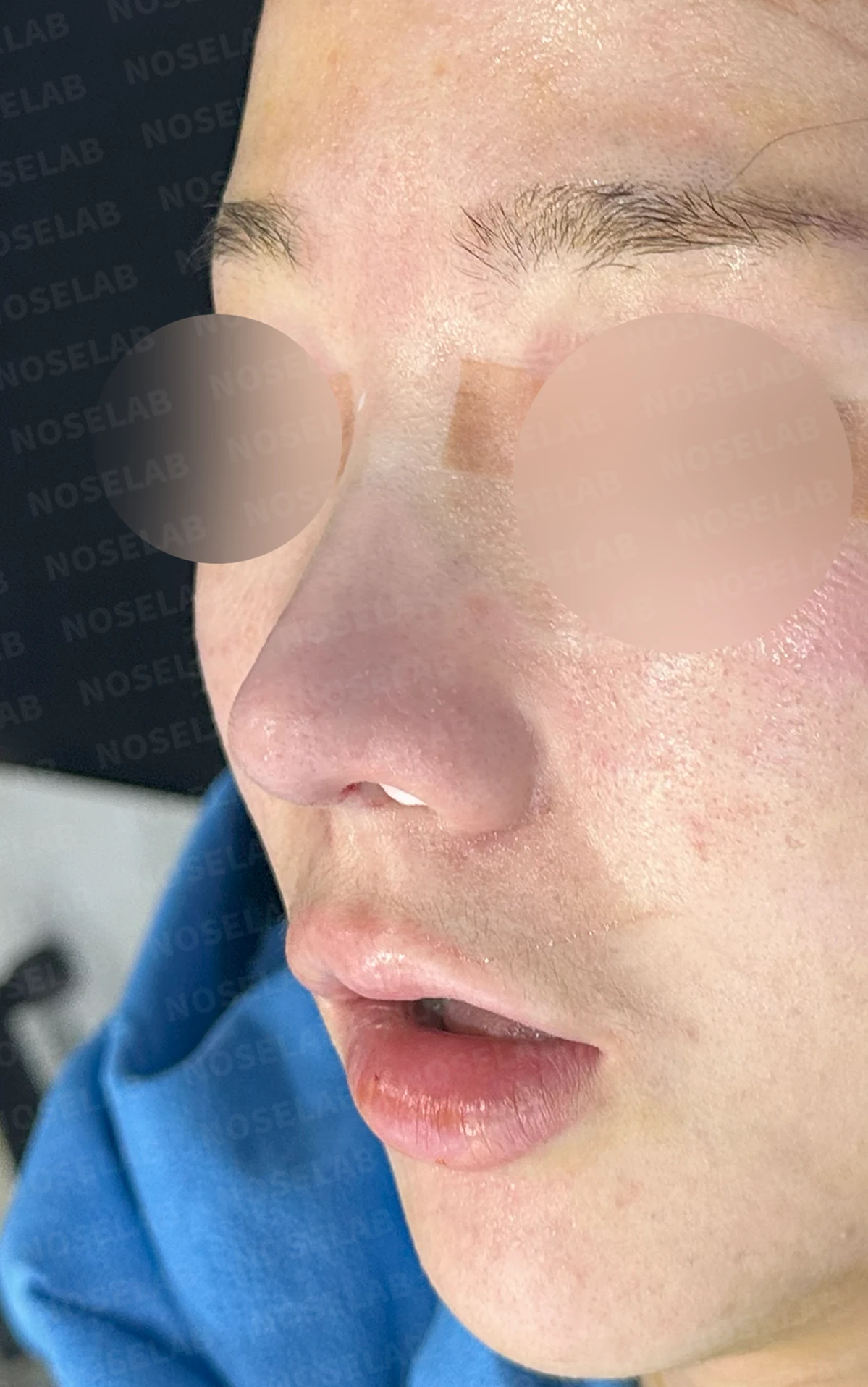
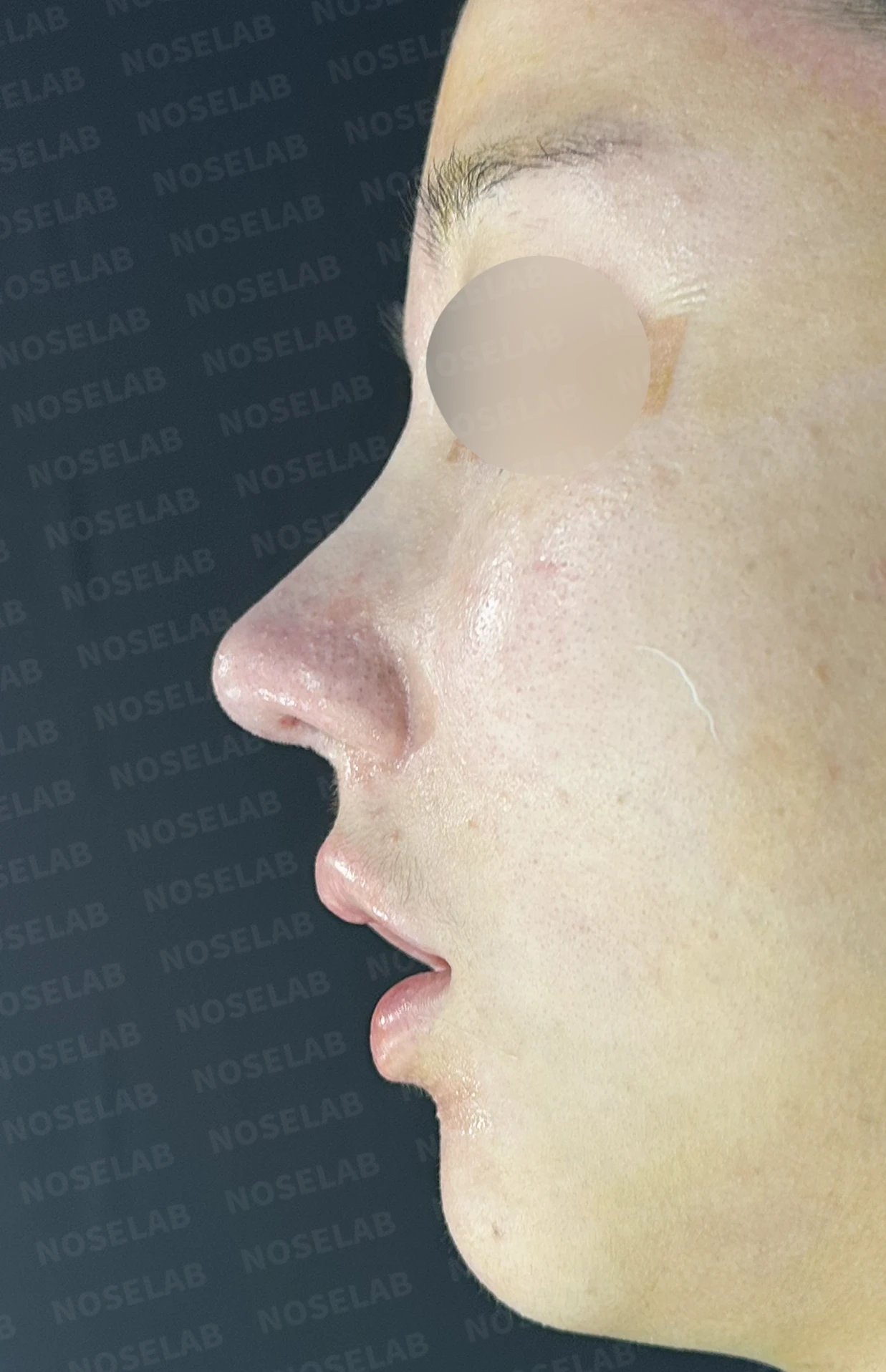
Day 0 immediately after surgery: front, profile, and oblique viewsImmediate postoperative photos show swelling and may differ from the final outcome.
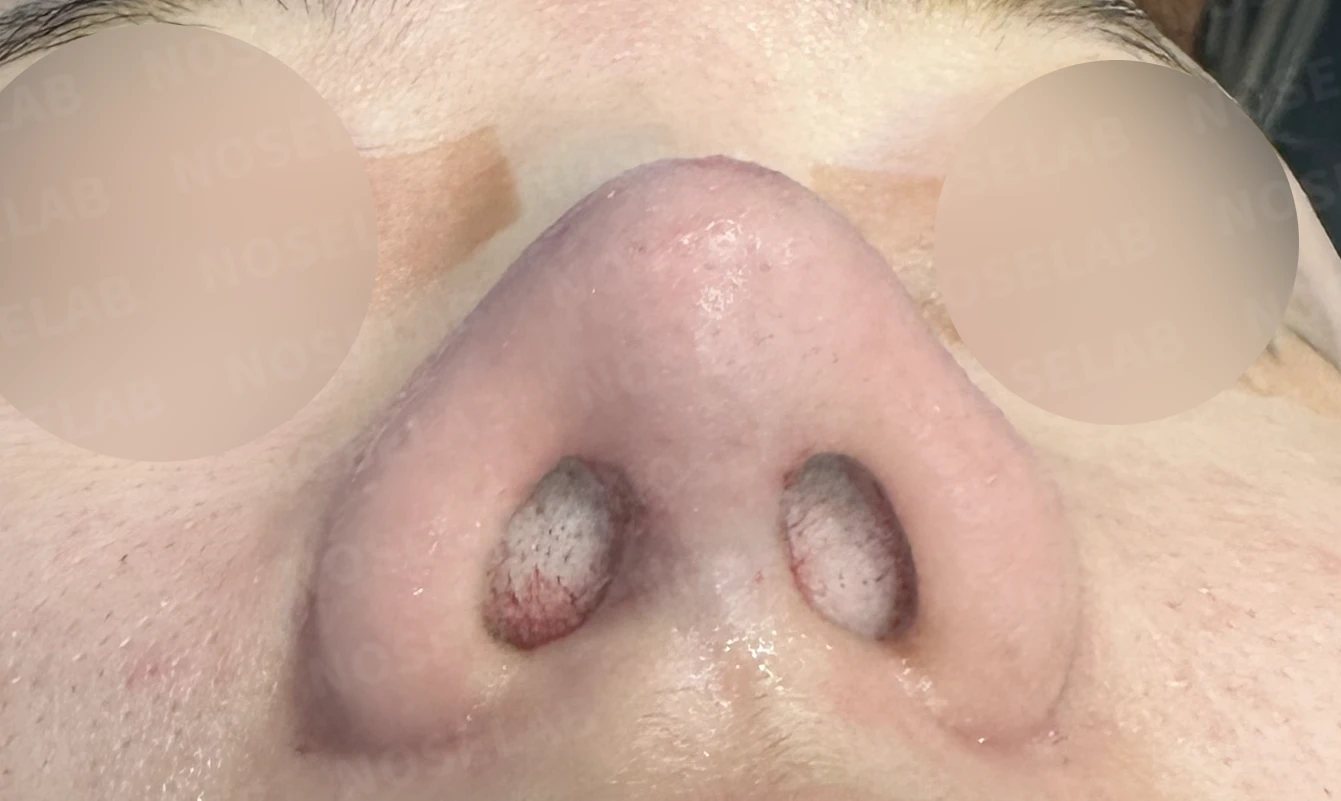
Nostril view on day 0 immediately after surgery Photos taken immediately after surgery show swelling and may differ from the final result.
This patient had rhinitis and sinusitis, with a drooping tip and a retracted columella as the main concerns. Intraoperative assessment confirmed that severe damage to the septal cartilage was the primary cause of these deformities.
Damage to the septal cartilage not only creates functional problems, but it also weakens the structural support of the nose, leading to tip drooping and columellar retraction. In this case as well, the overall supporting framework of the nose had collapsed due to the damaged septum.
To resolve this at its root, septal reconstruction was performed using autologous rib cartilage. By fully reconstructing the damaged septum, structural stability was re-established, and a septal extension was performed simultaneously to elevate the drooping tip.
The retracted columella was naturally restored upon the newly reconstructed septal foundation, achieving the patient's goal of a beautifully shaped columella. Correcting the nasolabial angle also improved the profile line and softened the appearance of a protruding mouth.
In addition, lowering the radix appropriately and smoothing the bridge irregularities established a refined profile line. The wide, splayed tip was naturally brought together, and the overly elongated look was corrected to create a balanced nasal shape.
From a functional perspective, functional nasal surgery was conducted alongside septal reconstruction to address the rhinitis and sinusitis, thereby improving breathing.
By resolving the underlying cause of septal cartilage damage, this comprehensive reconstruction simultaneously corrected the drooping tip and retracted columella while also addressing functional concerns.
This has been Dr. Peter C. Kang, medical director.
Thank you.
#closedrhinoplasty #septalreconstruction #retractedcolumella #droopingtipcorrection #autologousribcartilage #customrhinoplasty

Limitations and risks
When autologous rib cartilage is used, scarring and pain may remain at the donor site on the chest, and pneumothorax (pleural injury) can occur rarely. Over time, the grafted cartilage may warp or undergo partial resorption.
When the septum is corrected at the same time, nasal obstruction may persist or recur, and in rare cases, septal perforation or changes in smell may occur.
Common potential risks include infection, bleeding, asymmetry, scarring, skin necrosis, and insufficient improvement; results vary depending on individual skin condition and previous surgical history.