English日本語简体中文
Skip to main content
Dr. Peter C. Kang's Rhinoplasty Stories
PrologueBlogMy thoughtsNasal obstructionSurgical journalSurgical photos
About the surgeon

Thick nasal skin cases: records of height, proportions, and soft tissue

Case records of thick nasal skin do not simply describe raising the nasal tip as high as possible. In one patient whose skin was small and thick, with limited expected stretch, the plan focused on improving proportions and asymmetry rather than increasing height. In another record, the surgical plan was modified intraoperatively after considering both an already high nasal bridge and skin thickness.

Bulbous nose cases also detail adjusting some of the blunt skin thickness and adding definition to the nasal tip. This collection serves as a reference to compare skin thickness, baseline height, tissue laxity, and the patient's desired outcome. Checking whether the initial preoperative plan matched what was performed also provides insight into the clinical decision-making context unique to each case.

View before-and-after cases ↓Comprehensive rhinoplasty guide

Searching for surgical cases matching your criteria.
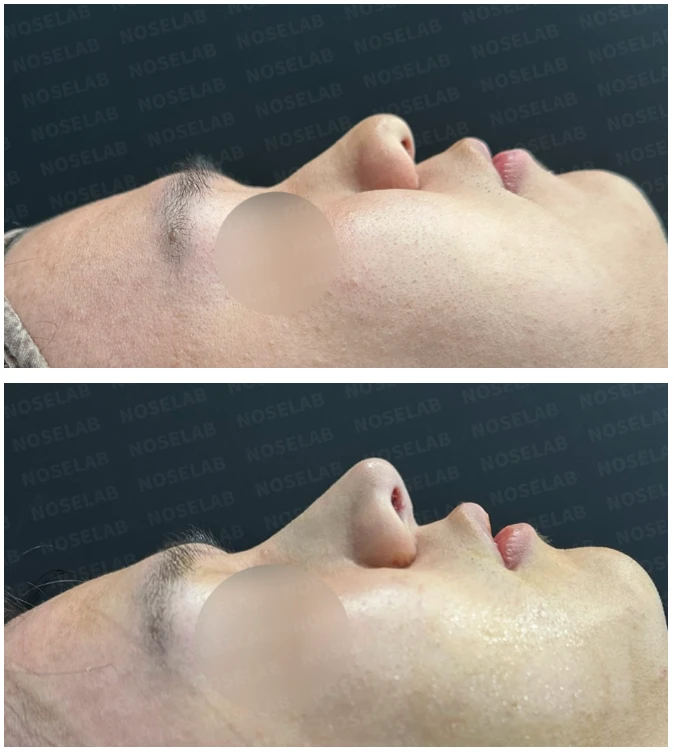
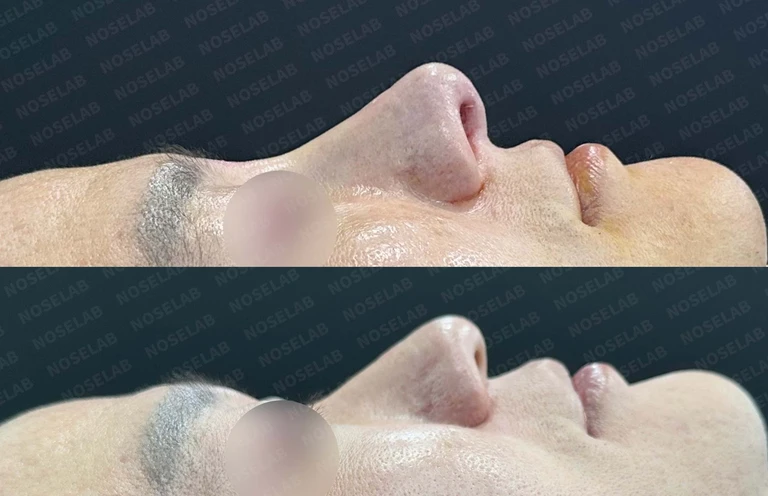
Why a bulbous nose looks blunt and wide, and how to create tip definition — Before-and-after comparison
Before-and-after comparison

Why a bulbous nose looks blunt and wide, and how to create tip definition

For a blunt, wide bulbous nose and drooping tip following nasal filler injections, we performed filler removal, created a tip support structure using autologous rib cartilage, reinforced the septum, and thinned the skin.

Preoperative condition
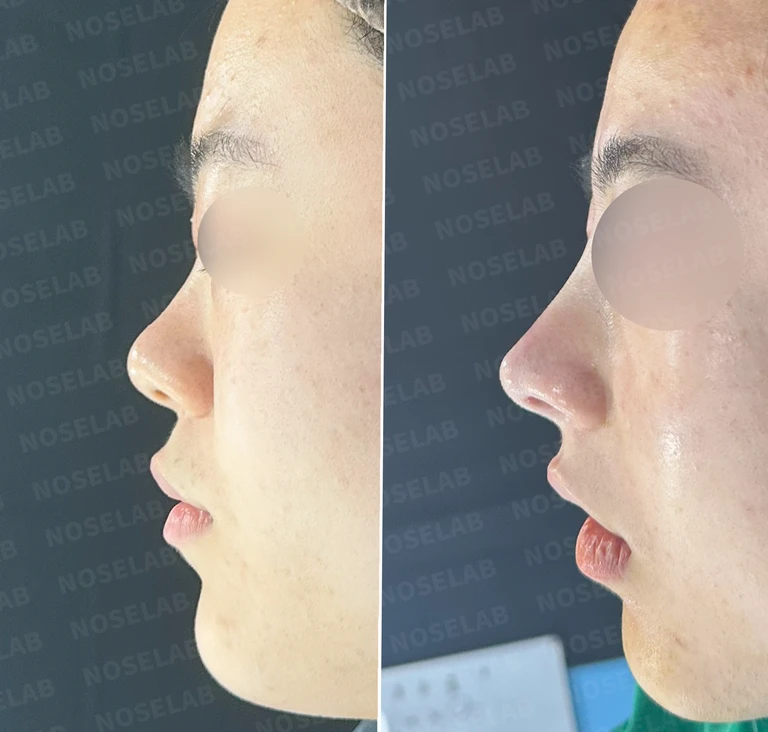
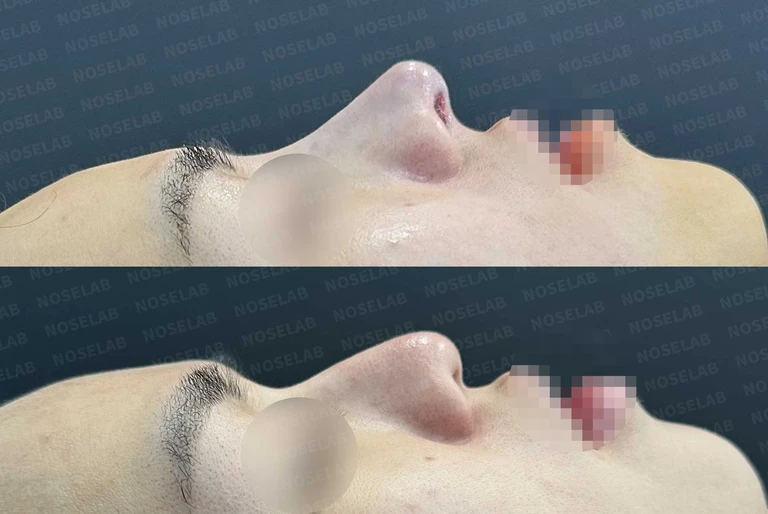
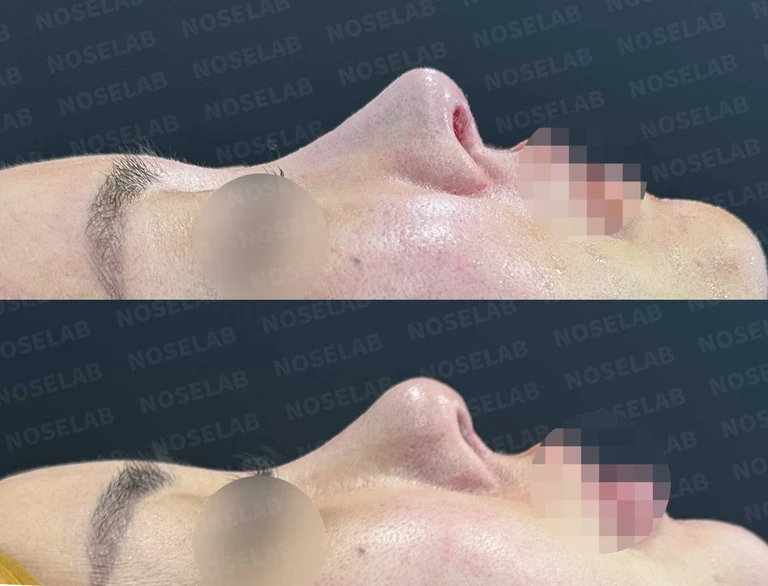
How to achieve height and a straight bridge line in a nose with thick, inelastic tip skin — Before-and-after comparison
Before-and-after comparison

How to achieve height and a straight bridge line in a nose with thick, inelastic tip skin

A case where a straight bridge line was created in a bulbous, upturned nose with thick, inelastic skin through septal extension using autologous rib cartilage and nasolabial angle correction.

Preoperative condition

A corrective approach addressing both nasal obstruction and a bulbous nose — Before-and-after comparison
Before-and-after comparison

A corrective approach addressing both nasal obstruction and a bulbous nose

To improve nasal obstruction caused by rhinitis and a deviated septum, along with a drooping bulbous nose, septoplasty, inferior turbinate reduction, autologous rib cartilage septal extension, and silicone bridge augmentation were performed using a closed approach.

Preoperative condition

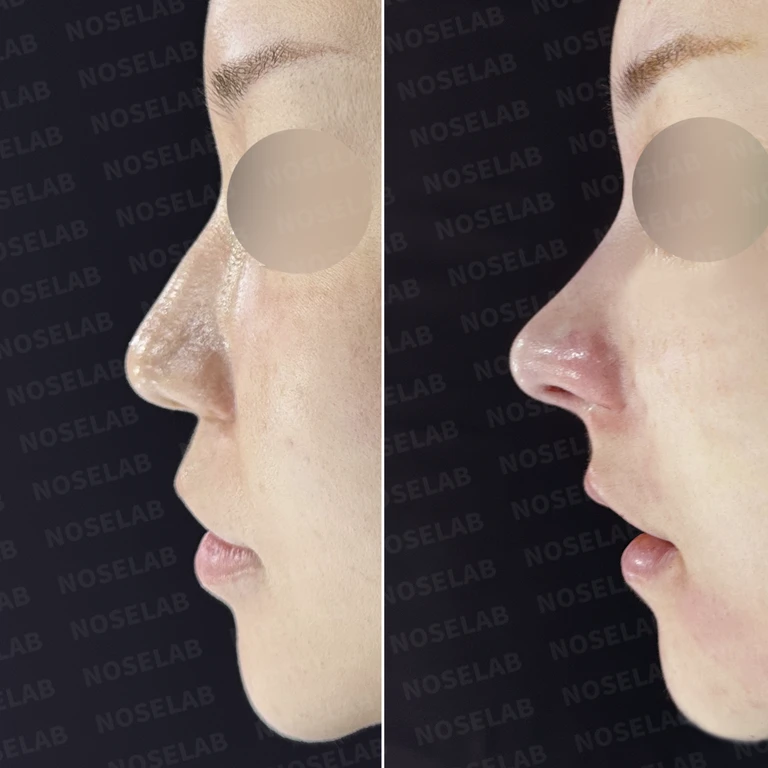
How to correct a bulbous, upturned nose — Before-and-after comparison
Before-and-after comparison

How to correct a bulbous, upturned nose

This is a case of a 21-year-old female with an upturned nose showing excessive nostril exposure and a bulbous tip. Subcutaneous tissue excision, silicone implant placement, lateral osteotomy, and septal extension grafting using septal and donor rib cartilage added definition and projection.

Preoperative condition

How to correct a bulbous, drooping long nose — Before-and-after comparison
Before-and-after comparison

How to correct a bulbous, drooping long nose

This is a case of correcting a bulbous and drooping long nose caused by thick, broad tip skin. A portion of the subcutaneous tissue beneath the nasal tip skin was removed, and the nasal tip height, the starting point at the glabella, and the drooping columella shape were adjusted.

Preoperative condition

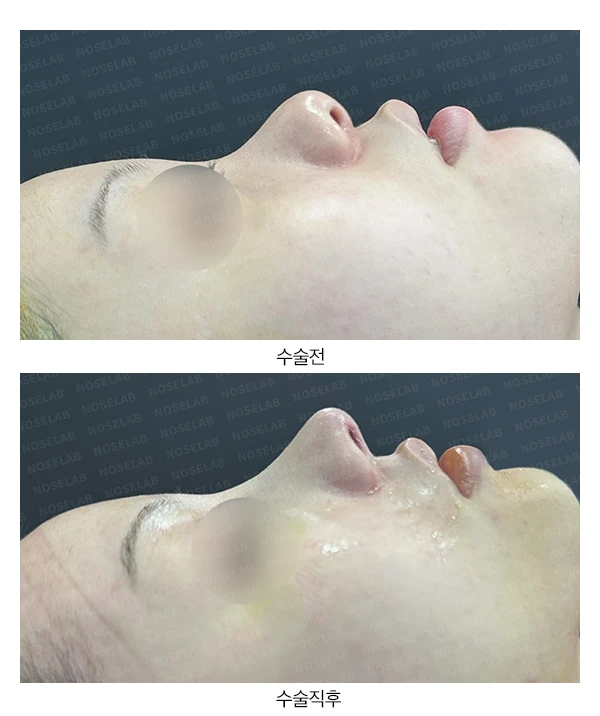
How to correct a drooping tip, dorsal hump, and crooked nose with autologous rib cartilage — Before-and-after comparison
Before-and-after comparison

How to correct a drooping tip, dorsal hump, and crooked nose with autologous rib cartilage

This is a case of a patient concerned about a dorsal hump, a drooping tip, and a crooked nasal bridge. Considering the patient's existing bridge height and thick skin, the plan was adjusted during surgery to shape the nasal bridge by filling in the deficient areas with autologous rib cartilage.

Preoperative condition

Correction of a bulbous nose, wide nasal spread, and drooping tip using autologous rib cartilage — Before-and-after comparison
Before-and-after comparison

Correction of a bulbous nose, wide nasal spread, and drooping tip using autologous rib cartilage

This is a case of a bulbous nose with thick skin, a widely spread nasal tip, and a drooping appearance. Subcutaneous soft tissue reduction, cartilage repositioning, and a nasal bridge implant were planned, and during the actual surgery, correction of the nasolabial angle improved the bulbous impression.

Preoperative condition

Revision rhinoplasty with autologous rib cartilage for bulbous tip, crooked nose, and nostril asymmetry — Before-and-after comparison
Before-and-after comparison

Revision rhinoplasty with autologous rib cartilage for bulbous tip, crooked nose, and nostril asymmetry

This is a case of a bulbous nose with thick skin, scar tissue in the nasal tip, and an implant deviated to the right. Removal of scar tissue, reconstruction and repositioning of the lower lateral (alar) cartilage, and nasal tip plasty using autologous rib cartilage were performed, with lateral osteotomy planned.

Preoperative condition

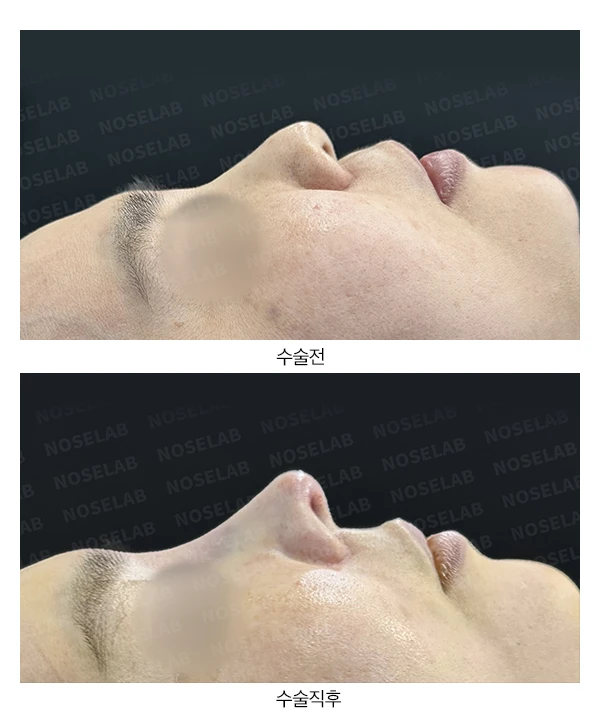
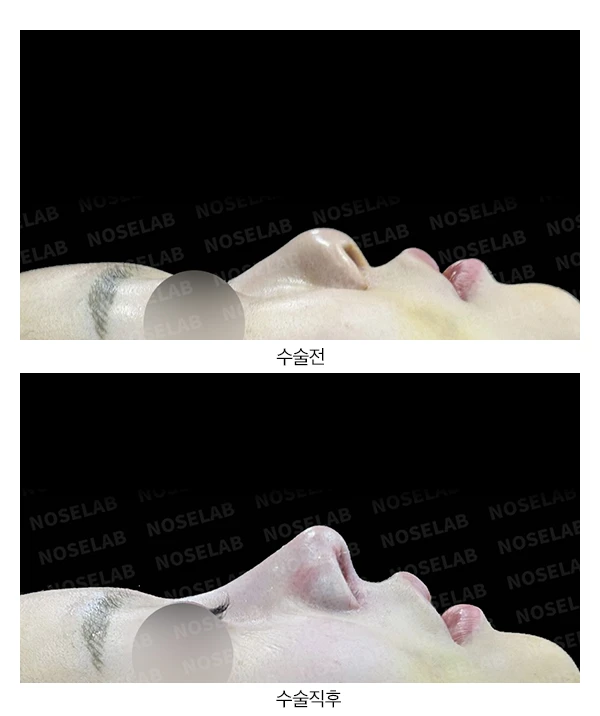
Nasal thread removal and correction of a short, upturned nose using autologous rib cartilage — Before-and-after comparison
Before-and-after comparison

Nasal thread removal and correction of a short, upturned nose using autologous rib cartilage

6 dissolvable threads inserted into the nasal bridge were removed, and autologous rib cartilage was used to reconstruct the upturned nasal tip and damaged right lower lateral cartilage, correcting the asymmetry.

Preoperative condition

No search results found

Please try searching with different keywords.

Scroll to keep reading

Common questions before reading the cases

Do cases with thick skin always document elevating the nasal tip as much as possible?

Not all records follow that approach. One case note explains that because the patient's skin envelope was small and thick with little anticipated stretch, priority was placed on improving proportions and asymmetry rather than adding height. Another bulbous nose case addressed both partial reduction of skin thickness and creating definition. This collection does not determine the approach to nasal height based on skin thickness alone.

Are there cases where the patient had both a naturally high nasal bridge and thick skin?

Yes. One record describes a patient with a naturally high nasal bridge where a silicone implant was initially considered, but after taking into account both the skin thickness and the existing height, the plan changed during surgery to fill only deficient areas using autologous rib cartilage. This case illustrates considering baseline height alongside findings confirmed during surgery, rather than focusing solely on skin characteristics.

Related topics to explore

Bulbous tip / bulbous noseShort noseOverly high nasal bridgeSkin and soft tissue reinforcement

Surgical records referenced in this guide

  • Nasal thread removal and correction of a short, upturned nose using autologous rib cartilage
  • How to correct a drooping tip, dorsal hump, and crooked nose with autologous rib cartilage
  • Why a bulbous nose looks blunt and wide, and how to create tip definition
Original article

Read more records

Planning a visit to Seoul?Prepare your consultation with the NOSELAB team.

International patient guideWhatsApp ↗
Dr. Peter C. Kang's Rhinoplasty Stories
Rhinoplasty guideCases by topicDr. Peter C. KangNaver Blog ↗
View original photo
Enlarged photo
WhatsAppChat with NOSELAB↗