1. Preoperative consultation
The patient visited our clinic seeking correction for this type of bulbous nose, wide nose, and low nasal bridge. It was a bulbous nose with a significantly spread tip and thick skin. The glabella was low, and the nasal tip appeared drooping.
2. Surgical plan
To correct the bulbous nose, I planned to partially excise subcutaneous soft tissue, reposition the lower lateral cartilages, and elevate the nasal tip height to create three-dimensional definition. Providing dimensional definition is effective for bulbous nose correction. I determined that the wide nasal spread could be improved simply by elevating the nasal tip. The low nasal bridge was planned to be raised using a silicone implant.
3. Surgical procedure
Because the skin was thick and the nostrils were significantly spread, adding three-dimensional definition was even more critical for correcting the bulbous nose. In particular, nasolabial angle correction was performed to improve the drooping tip and the protruding mouth, which contributed positively to reducing the bulbous appearance.
4. Immediately after surgery (Day 0)Immediate postoperative photos show swelling and may differ from the final result.
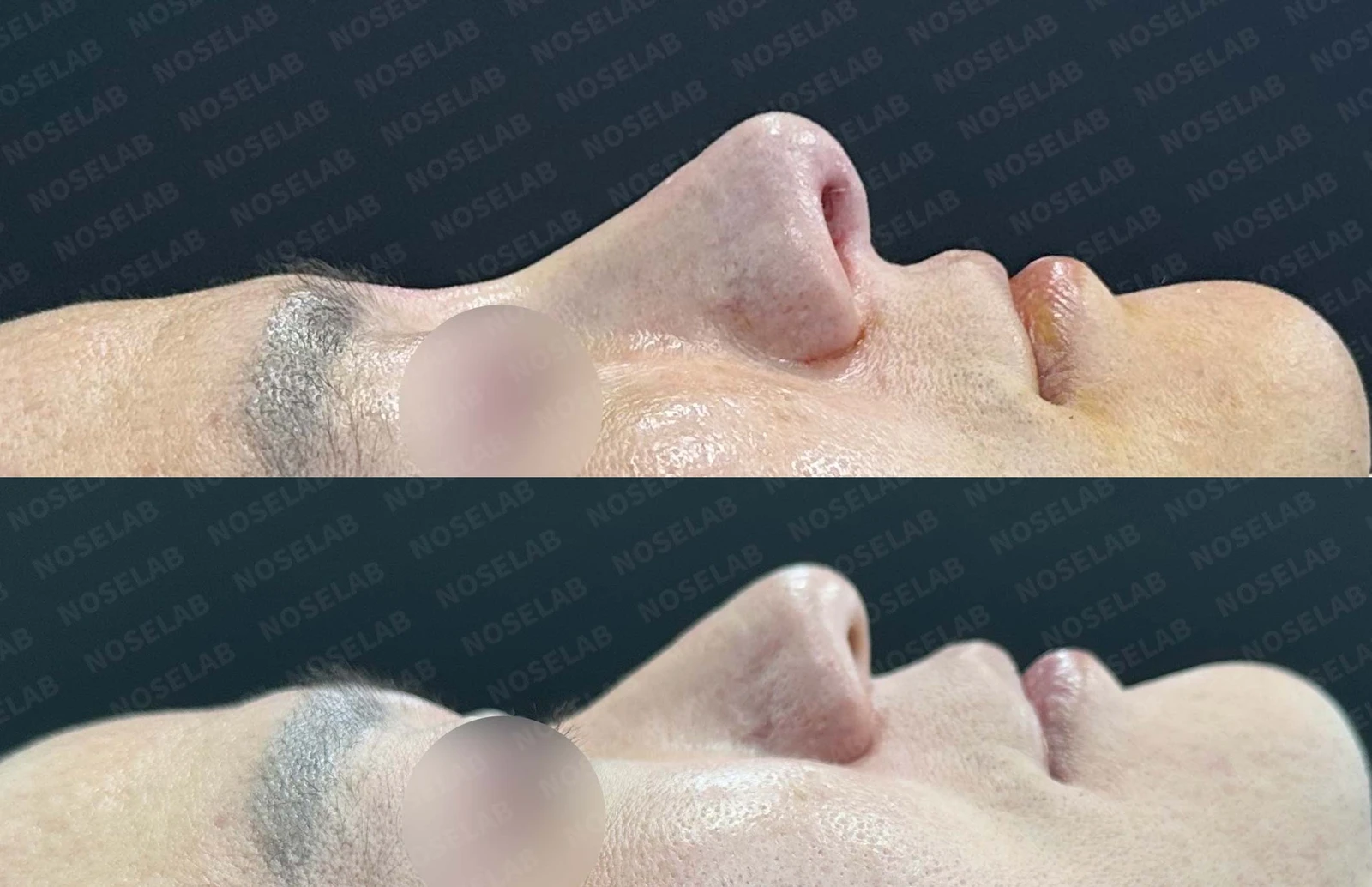
Before surgery / Day 0 immediately after surgery Photos taken immediately after surgery show swelling and may differ from the final result.
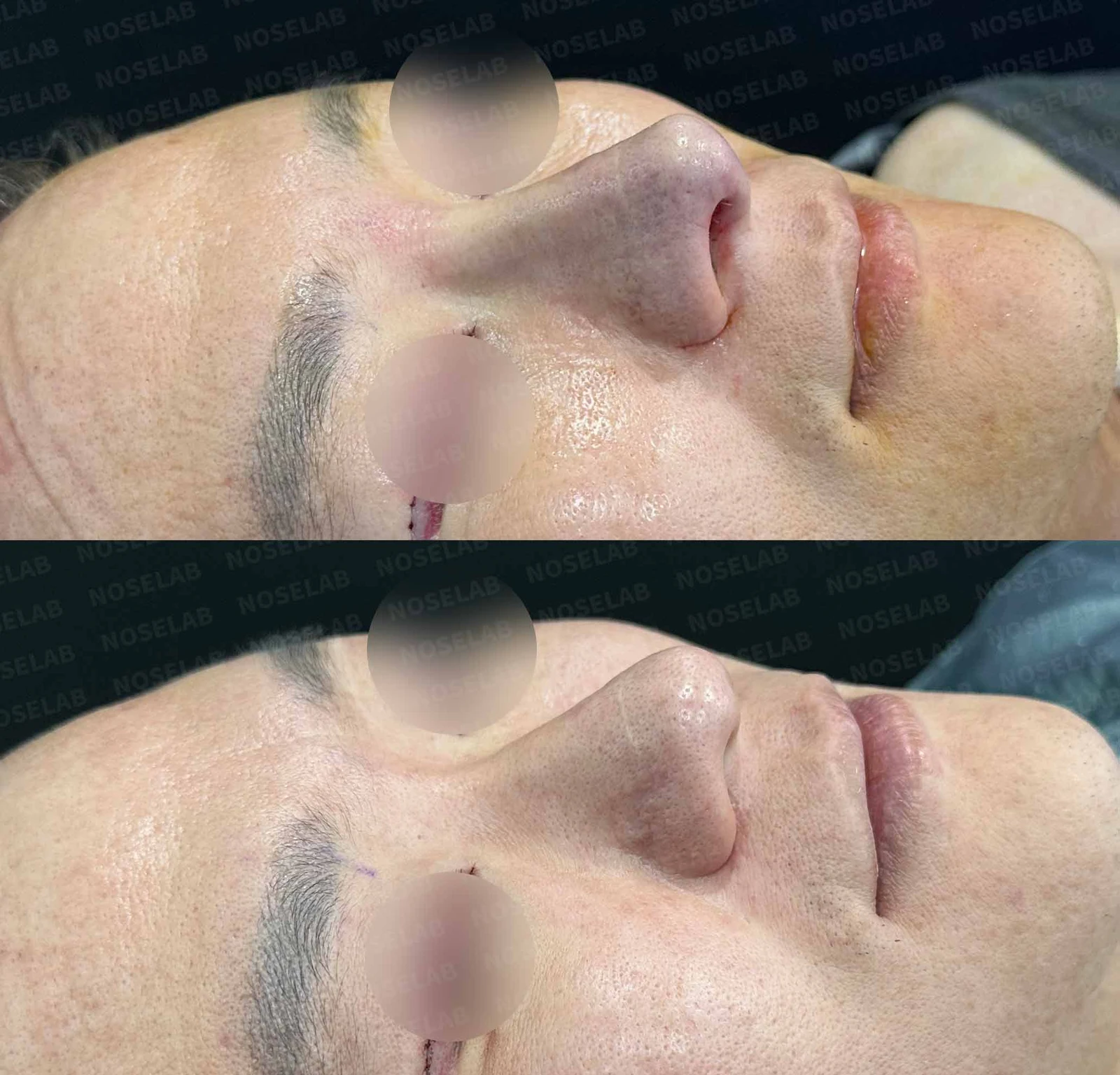
Before surgery / Day 0 immediately after surgery Photos taken immediately after surgery show swelling and may differ from the final result.
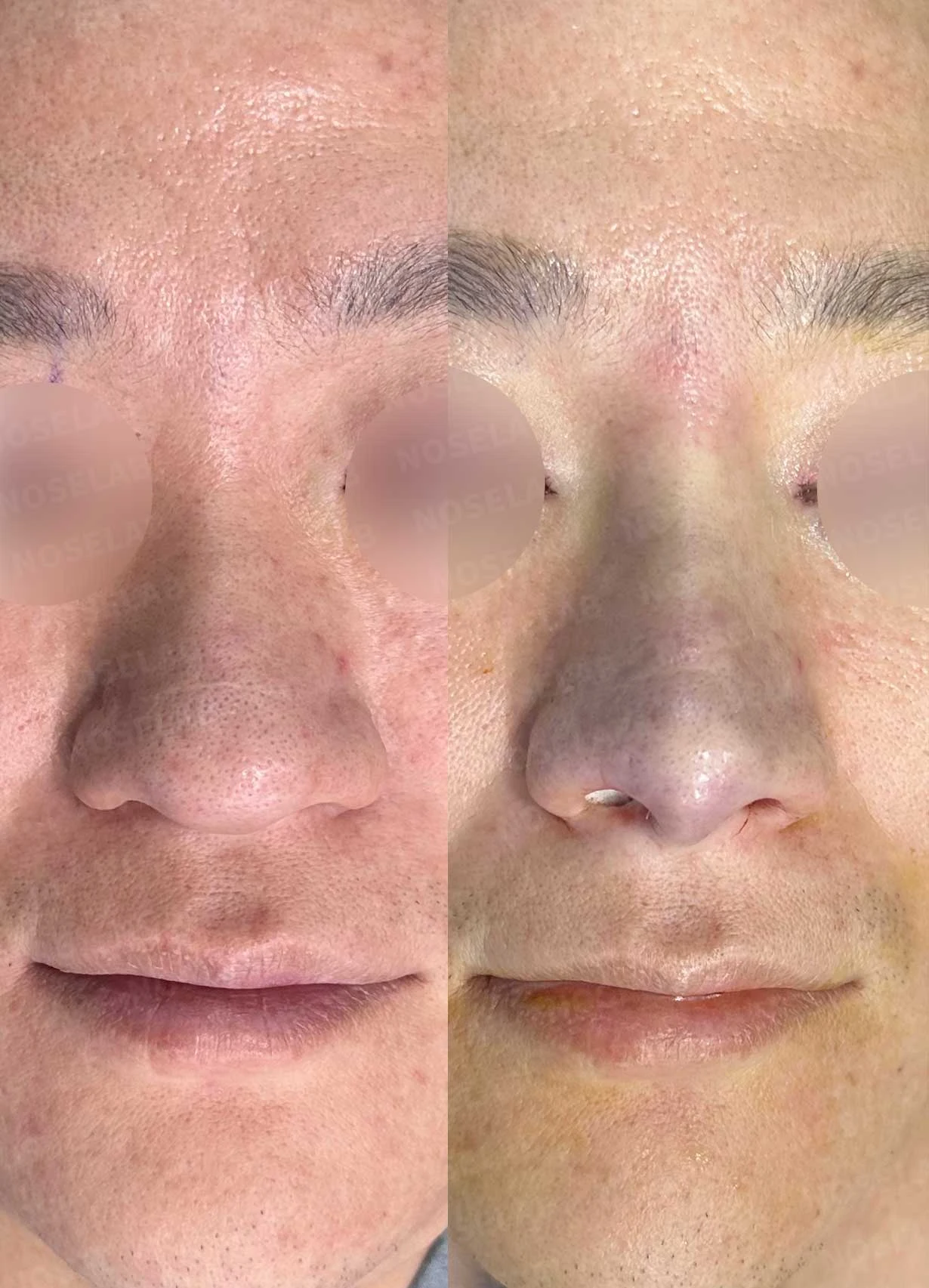
Before surgery / Day 0 immediately after surgery Photos taken immediately after surgery show swelling and may differ from the final result.
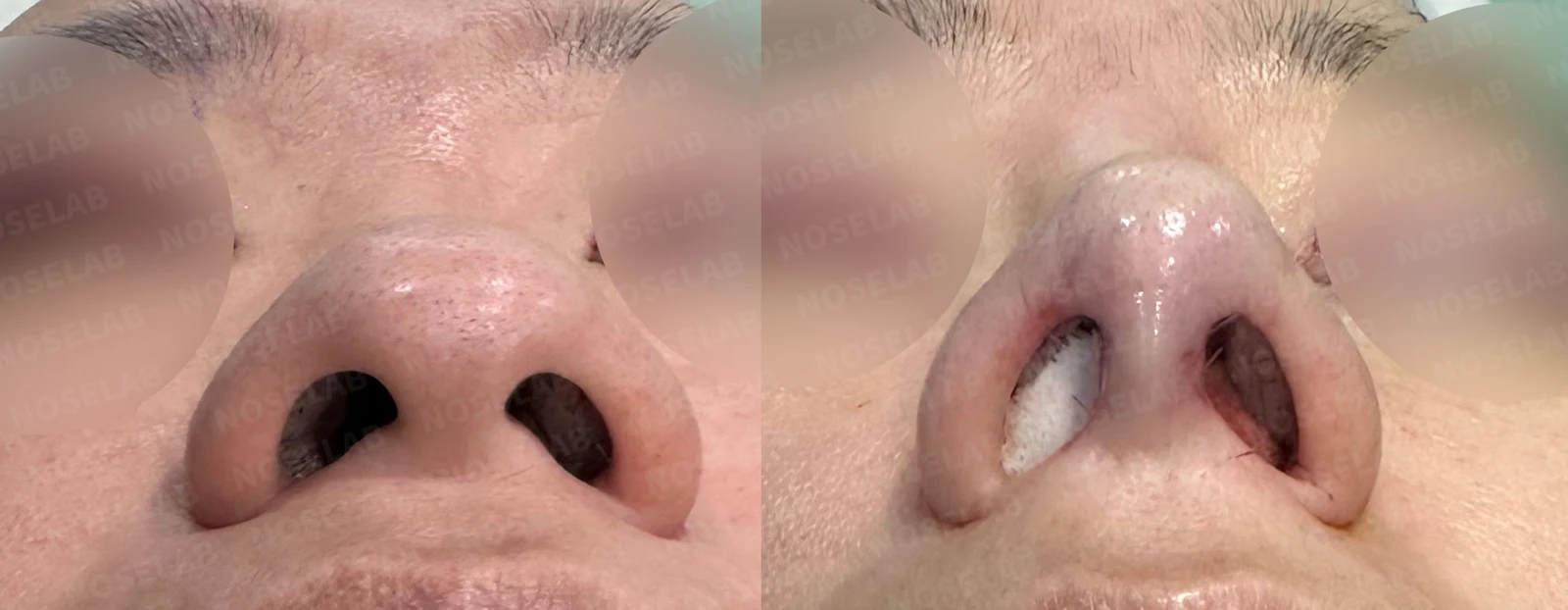
Before surgery / Day 0 immediately after surgery Photos taken immediately after surgery show swelling and may differ from the final result.
5. Conclusion
This is a typical case of correcting a bulbous nose with a severely spread nasal tip. In many cases of a bulbous nose, the surface area of the nasal skin itself is large. Most patients with a bulbous nose wish to make their large nose smaller. However, a nose cannot truly become smaller without excising the excess skin. Of course, partial removal of subcutaneous soft tissue can reduce skin thickness, which may provide a slight shrinking effect, but it does not reduce the nose as dramatically as patients might expect. Therefore, my principle for bulbous nose surgery is to elevate the low, spread-out volume into a refined height, creating three-dimensional projection so that the nose appears smaller and slimmer.
Dr. Peter C. Kang
Limitations and risks
Common potential risks include infection, bleeding, asymmetry, scarring, skin necrosis, and insufficient improvement; results vary depending on individual skin condition and previous surgical history.