Hello.
I am Dr. Peter C. Kang, medical director.

Before heading to work this morning, I casually looked out the window and noticed that the cherry blossoms were already in nearly full bloom. They say time flies faster as we get older, right? I started my day truly feeling the truth of those words. Since cherry blossoms are my favorite, I would like to share a photo I took of them from home.
Today, I will discuss cases where rhinoplasty improves the appearance of a protruding mouth.
Preoperative design consultation
<Front view>
The nose was overall bulbous.
The nasal sill was widely spread, which made the bulbous appearance seem even more pronounced.
There was nasal bone asymmetry as well as alar asymmetry, making the nose appear deviated overall.
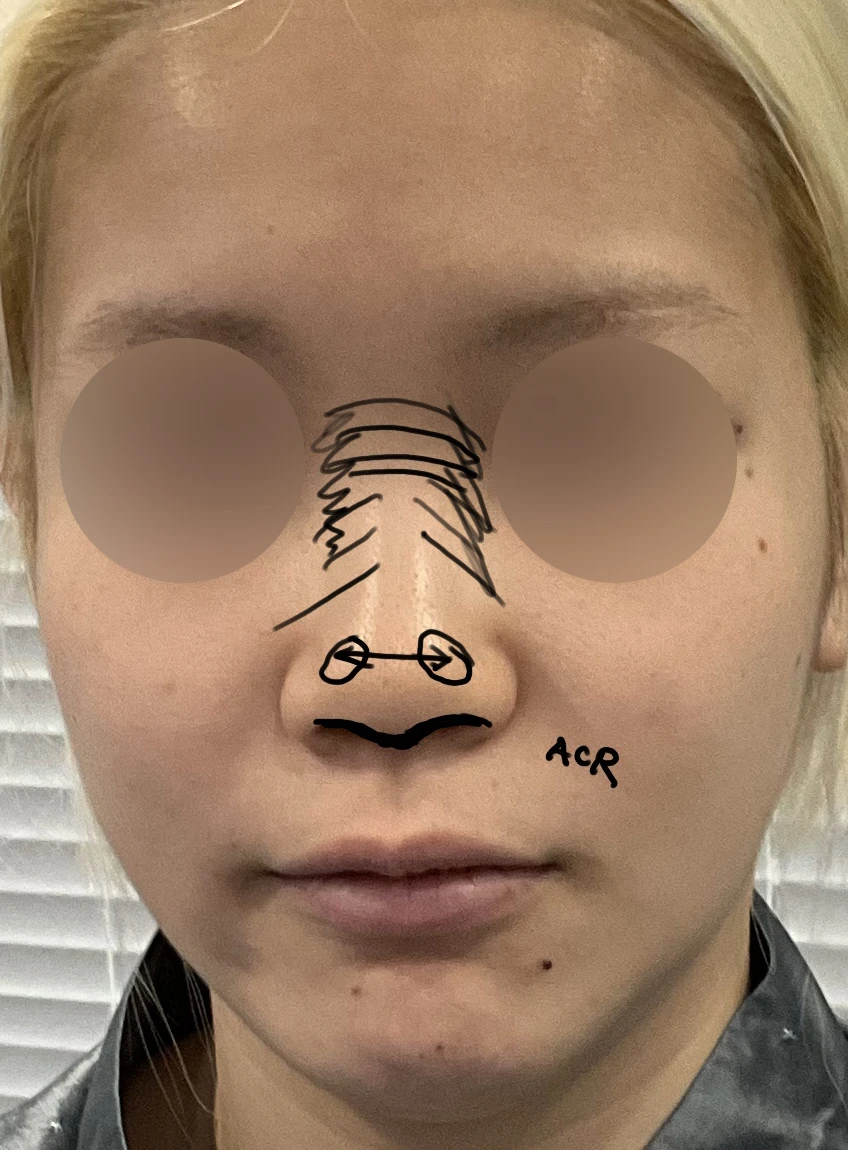
Preoperative design front view
<Profile view>
The nasal bridge between the eyebrows was low, giving an overall flat appearance.
The nasal tip was drooping, and the columella was retracted to the extent that it was barely visible between the alae.
The maxilla was significantly protruding.
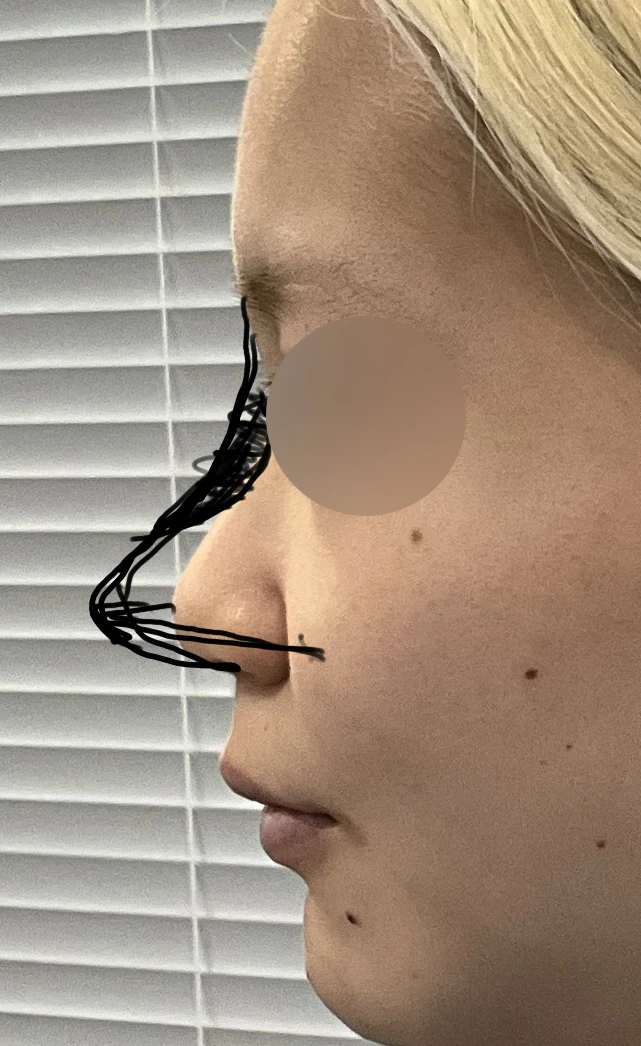
Preoperative design profile view
<Basal (nostril) view>
The nasal sill was significantly spread out, and there was a difference in size between the left and right alae.
Asymmetry in nostril shape was also observed.
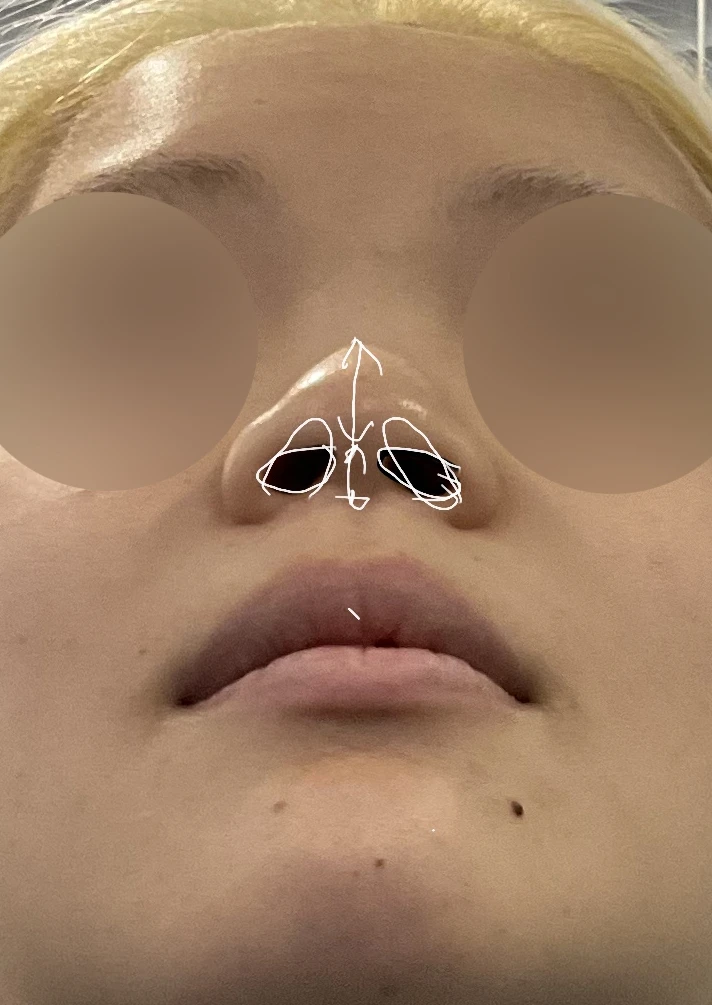
Preoperative design basal (nostril) view
Surgical plan
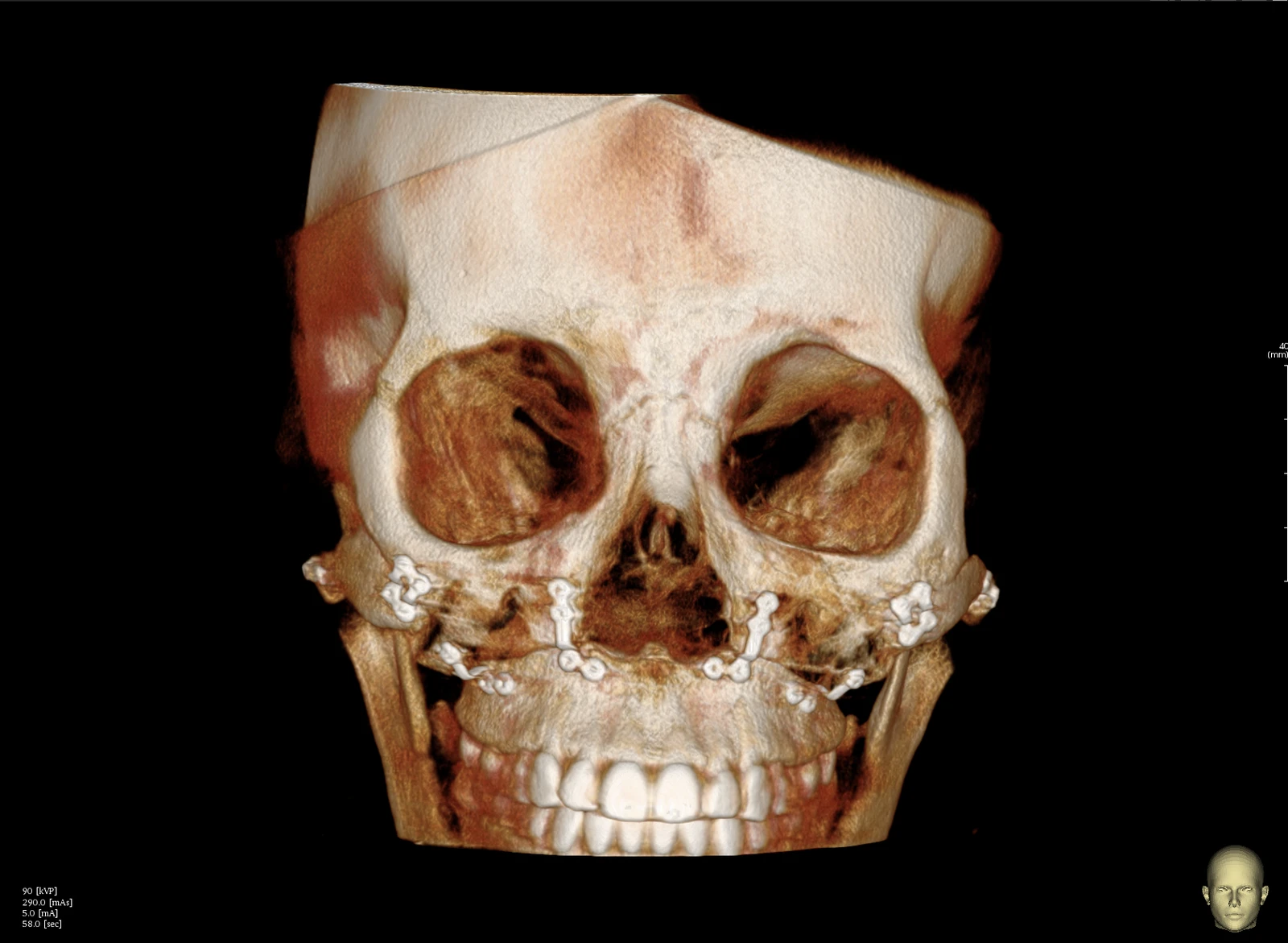
To improve the bulbous nose, the skin thickness is reduced through partial excision of subcutaneous soft tissue, the lower lateral cartilages are repositioned to refine the spread shape, and the nasal tip is elevated using autologous rib cartilage to enhance three-dimensional facial definition.
Nasal sill reduction surgery is performed to reduce the widened nasal base width.
Nasal bone osteotomy is performed to correct the deviated nose.
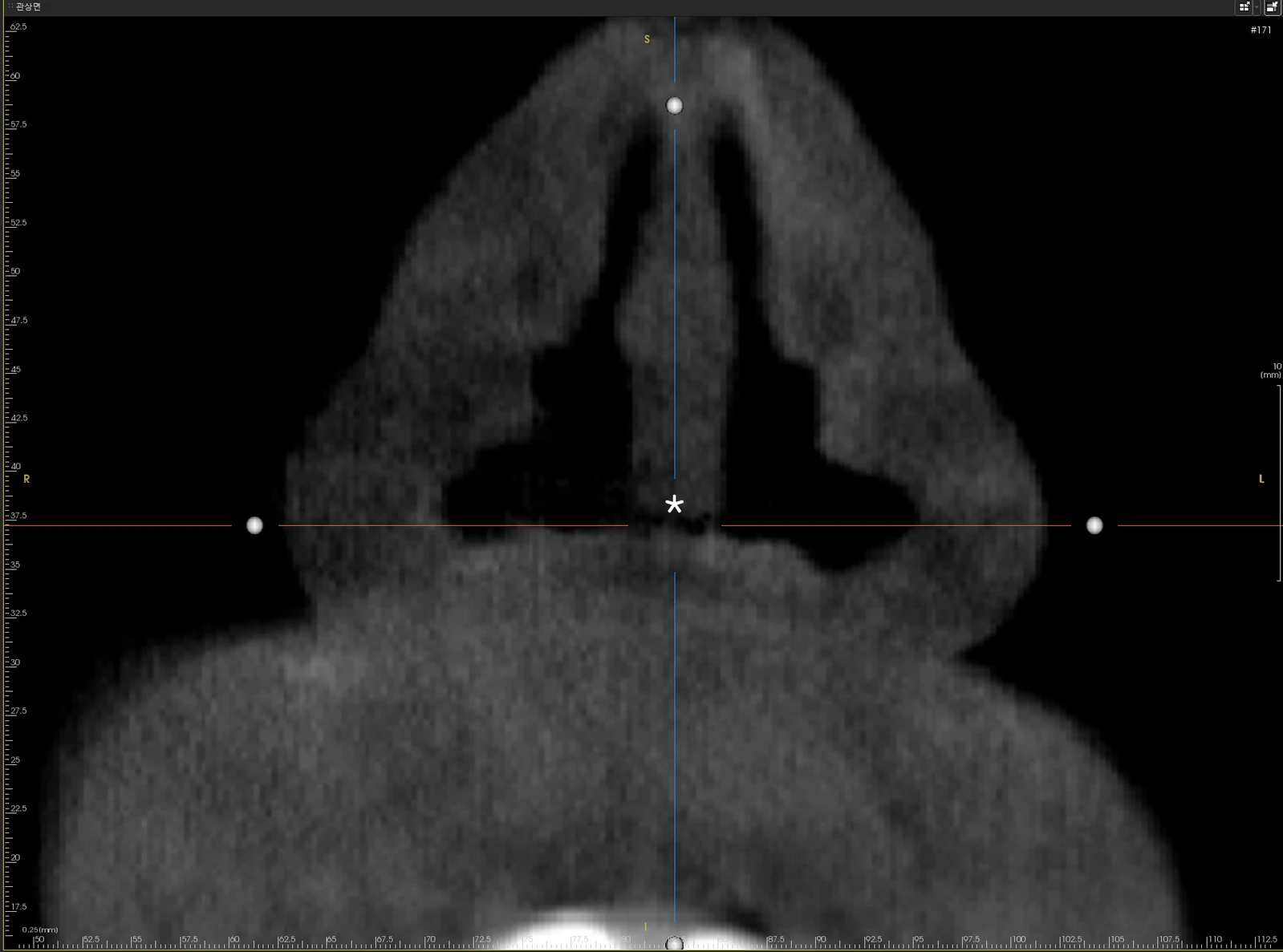
Preoperative CT findings suggested that the base of the septum was separated (*) from the maxilla following two-jaw surgery, so septal reconstruction surgery was planned.
Nasolabial angle correction was planned to improve the appearance of the protruding mouth.
These are photos taken immediately after surgery.
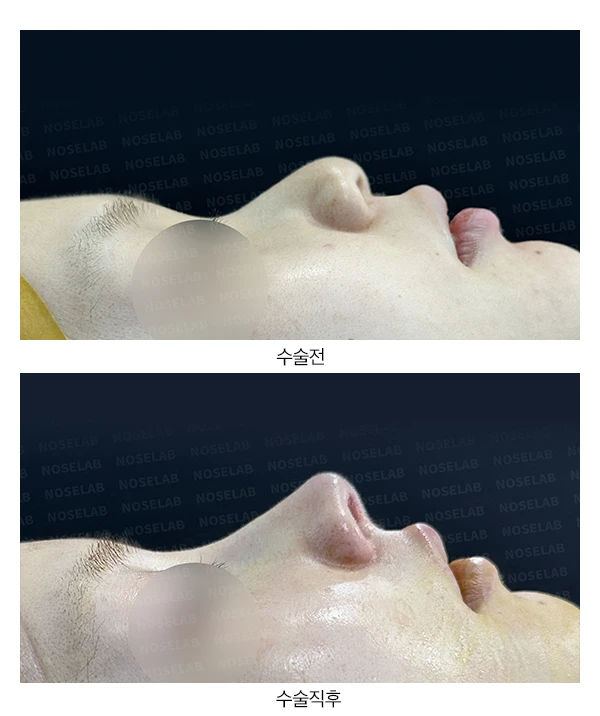
Looking at the 90-degree profile view, one can see that the previously flat line has gained defined projection. The previously drooping nasal tip has become well-projected, and with correction of the nasolabial angle, the protruding appearance of the maxilla is visibly improved.
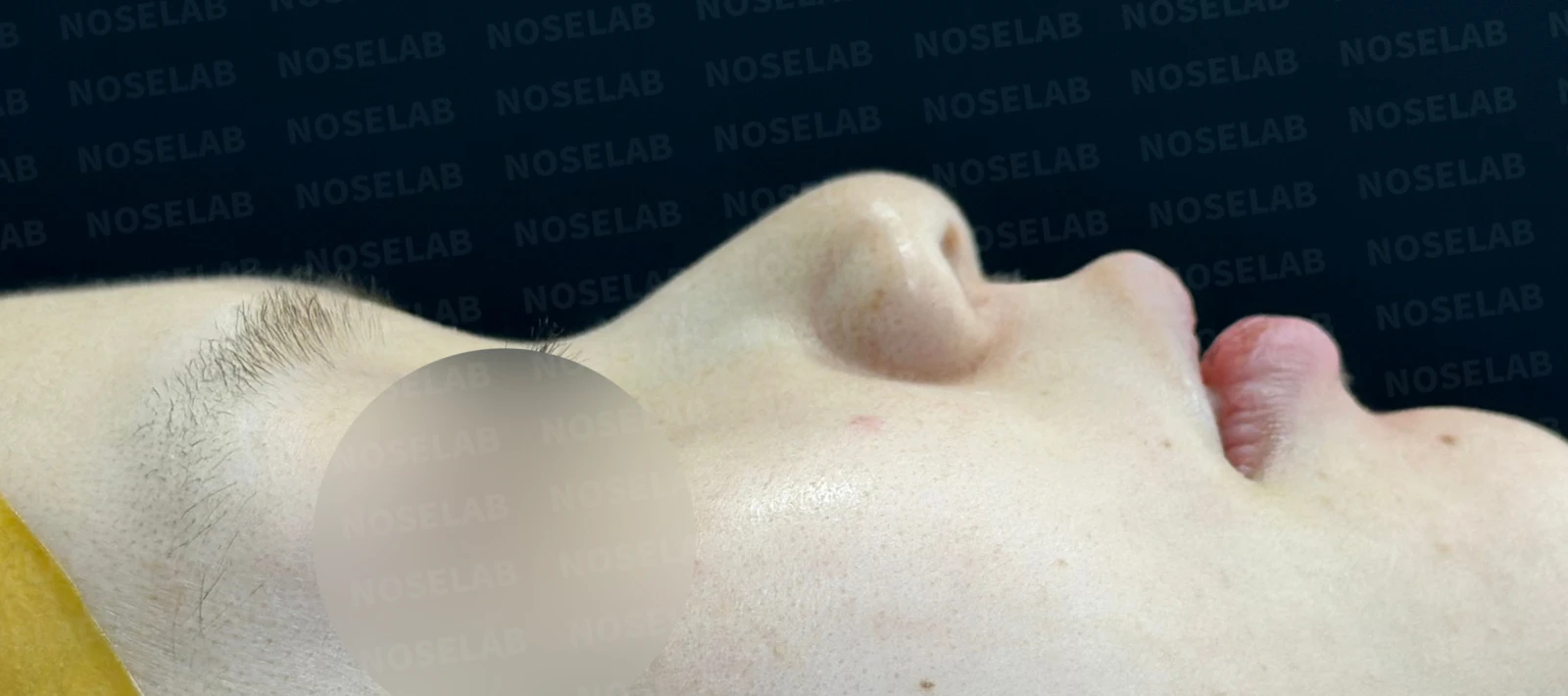
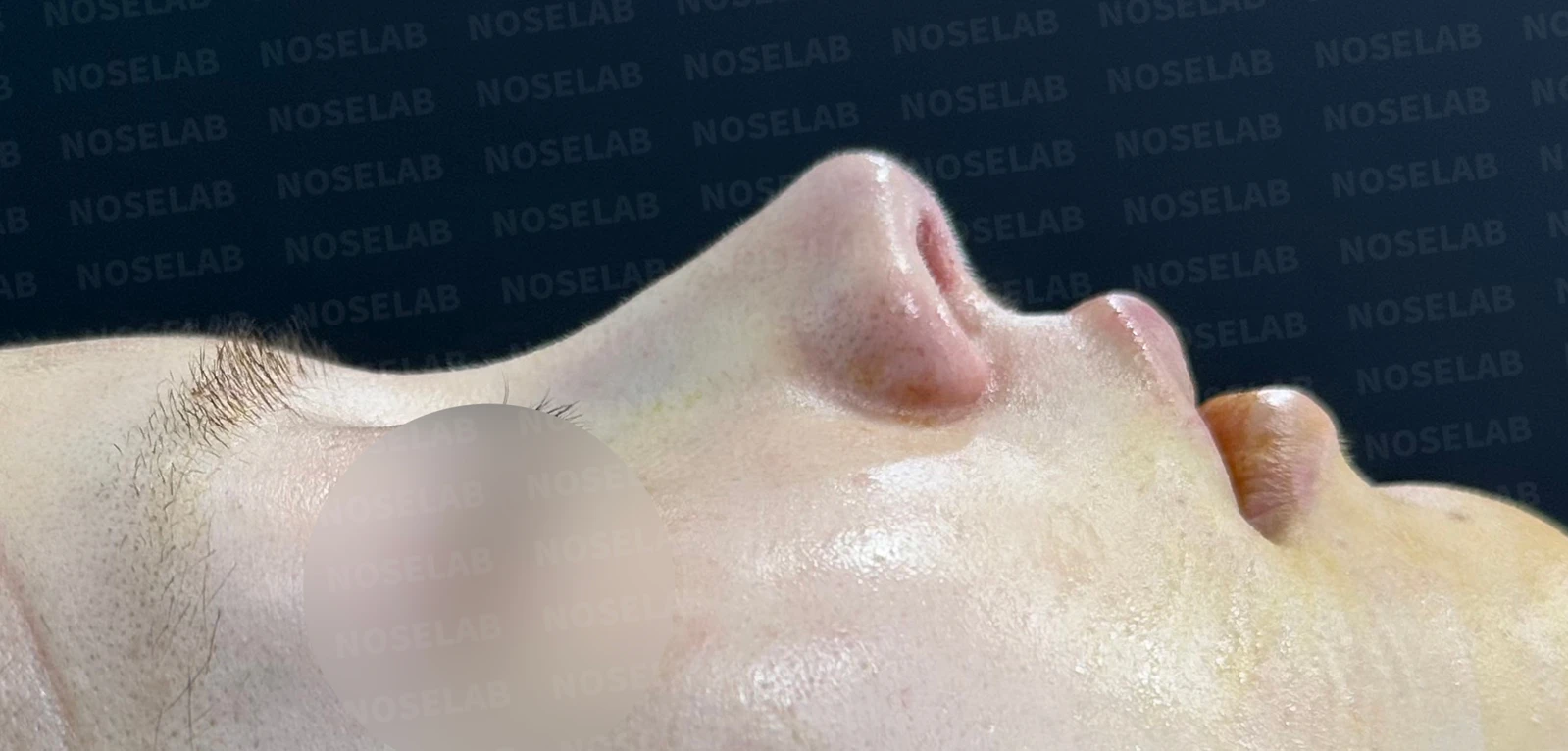
Before surgery / Day 0 immediately after surgery Photos taken immediately after surgery show swelling and may differ from the final result.
From the 45-degree oblique view, the most noticeable change is the improvement in the protruding mouth.
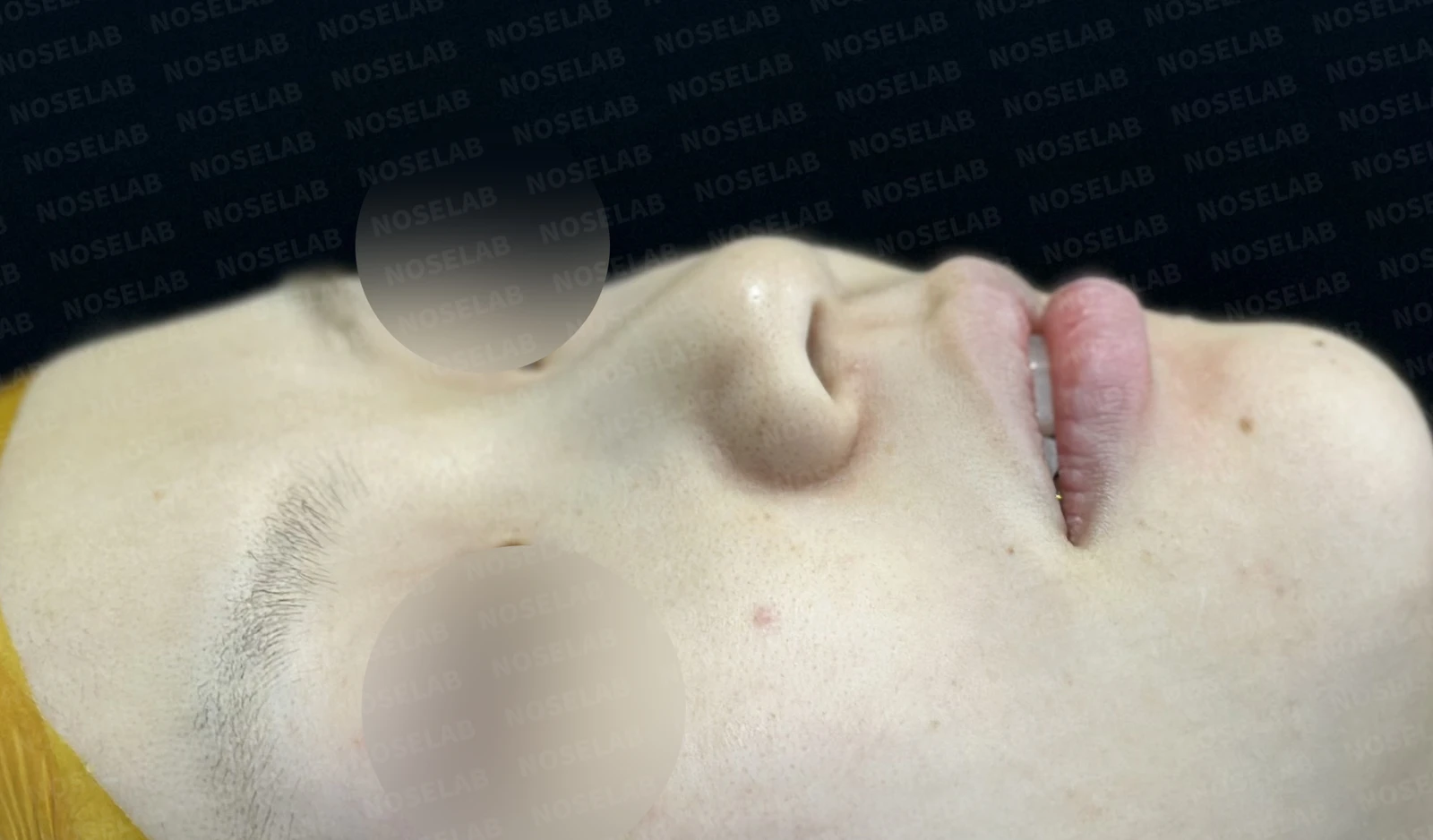
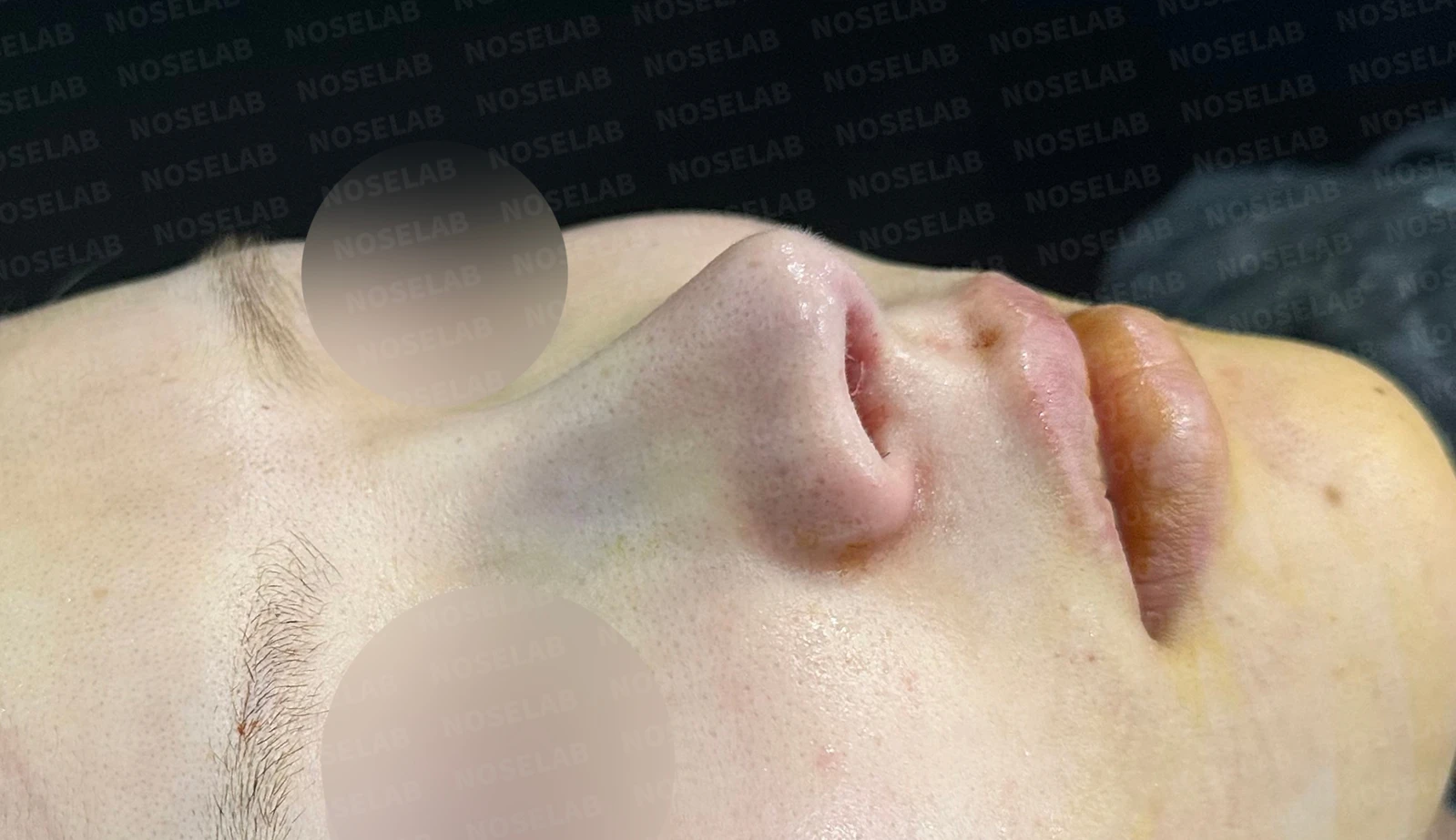
Before surgery / Day 0 immediately after surgery Photos taken immediately after surgery show swelling and may differ from the final result.
In the front view, the deviated appearance has significantly improved, and the wide nasal sill appears noticeably reduced. In particular, the alar asymmetry shows considerable correction, and the alar-columellar relationship (ACR) has become more natural.
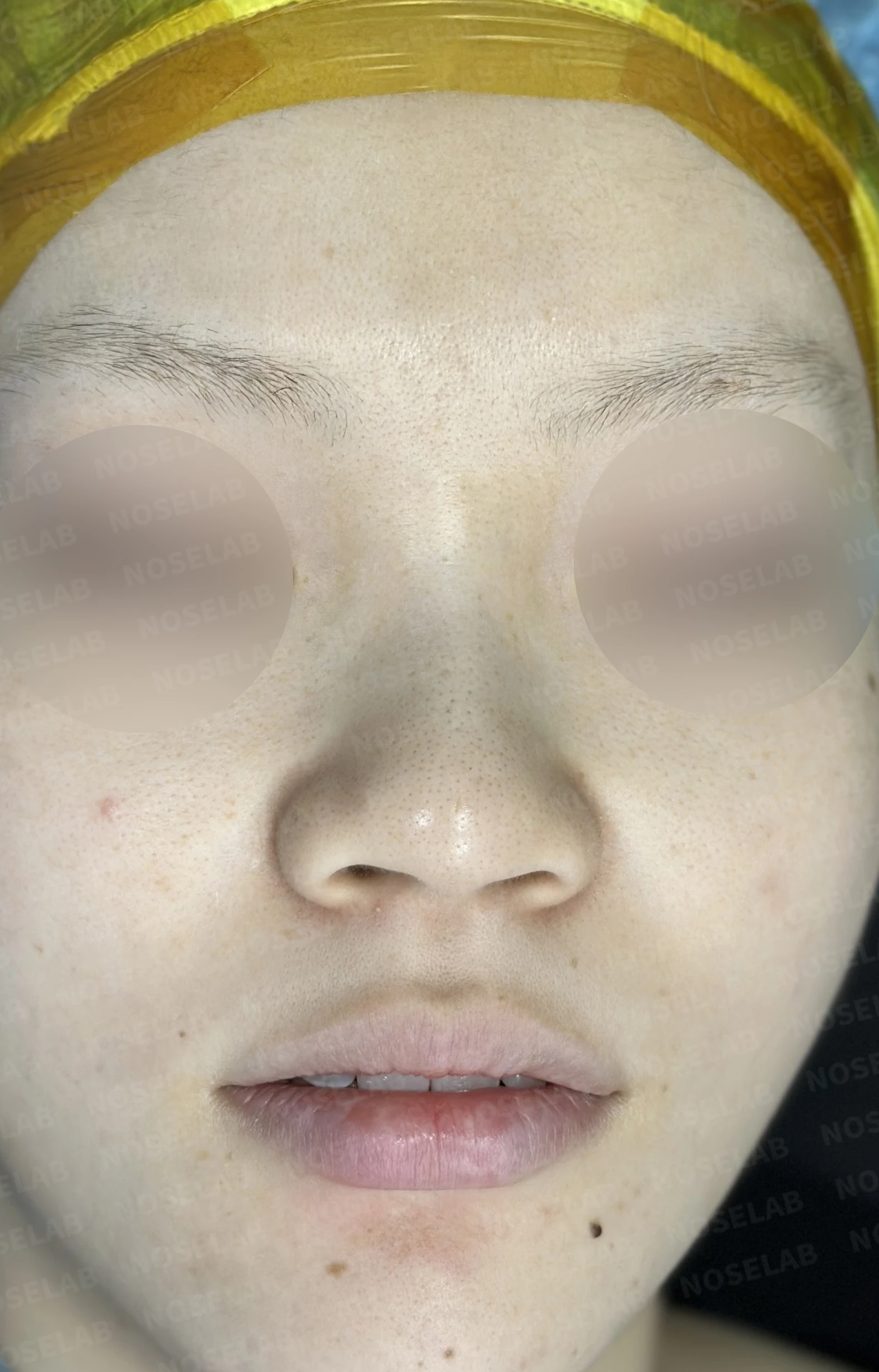
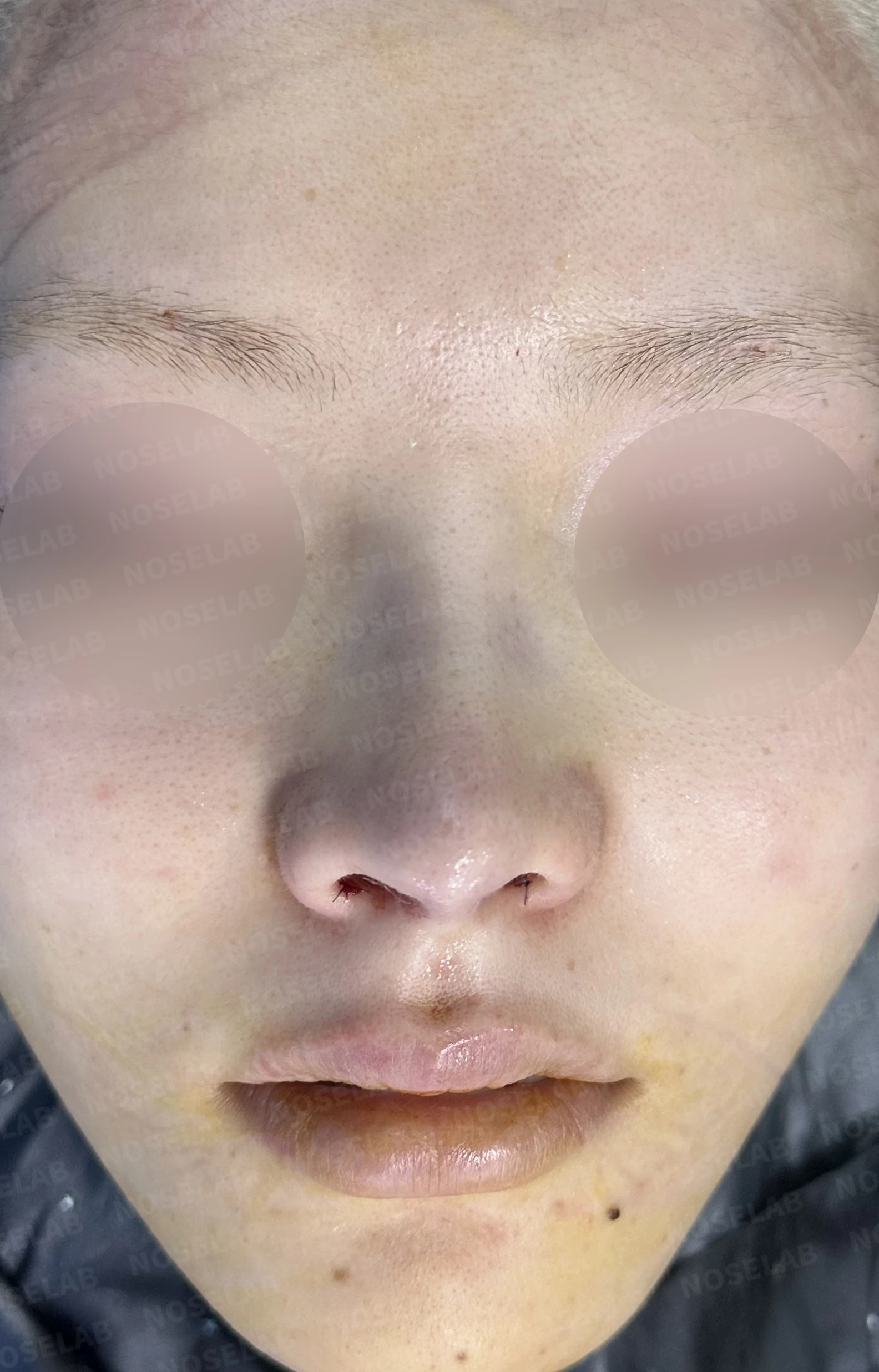
Before surgery / Day 0 immediately after surgery Photos taken immediately after surgery show swelling and may differ from the final result.
Looking at the nostril view, the right nostril, which was previously larger, and the right nasal sill, which was wider, can be seen to have achieved greater symmetry.
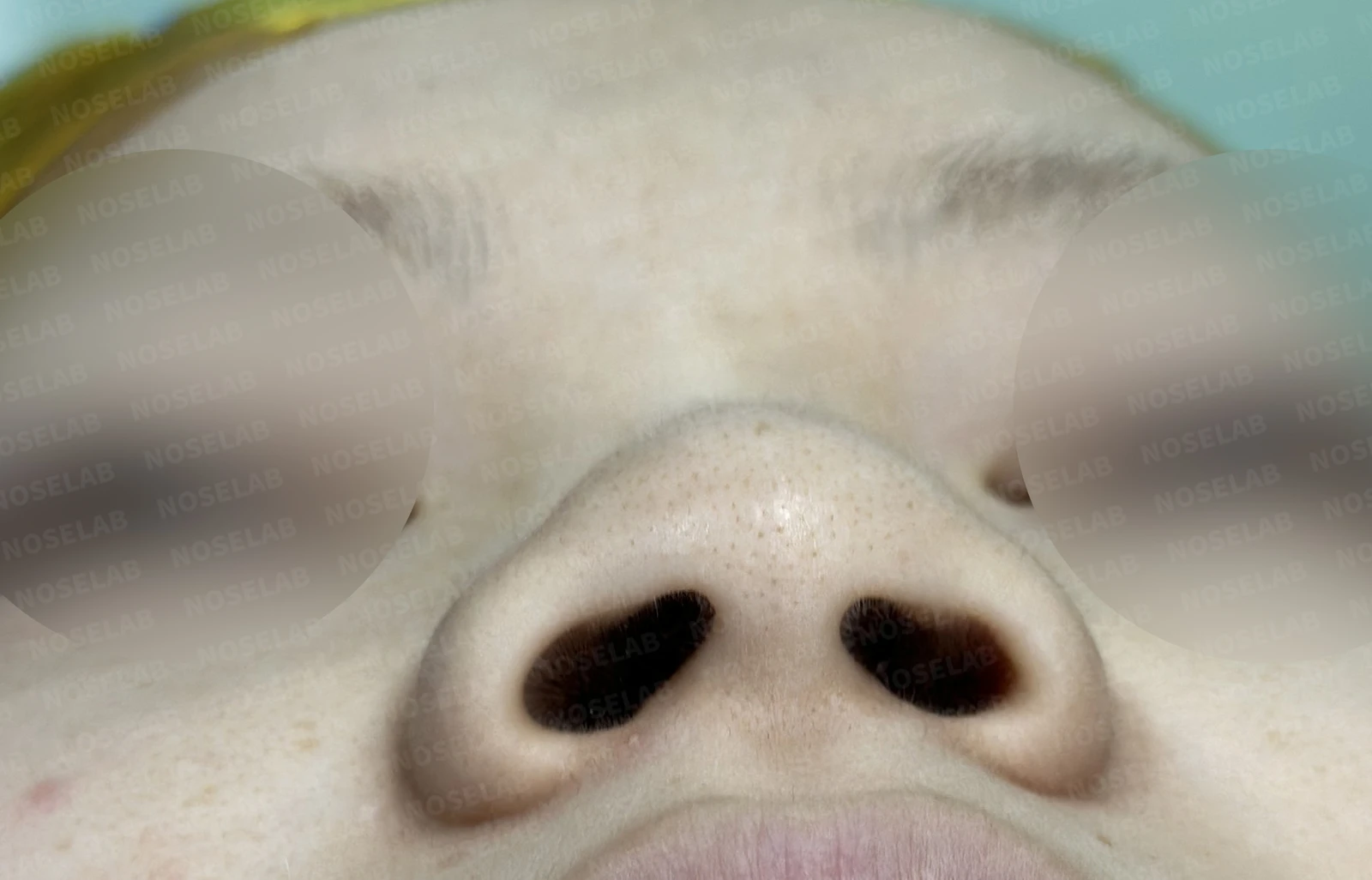
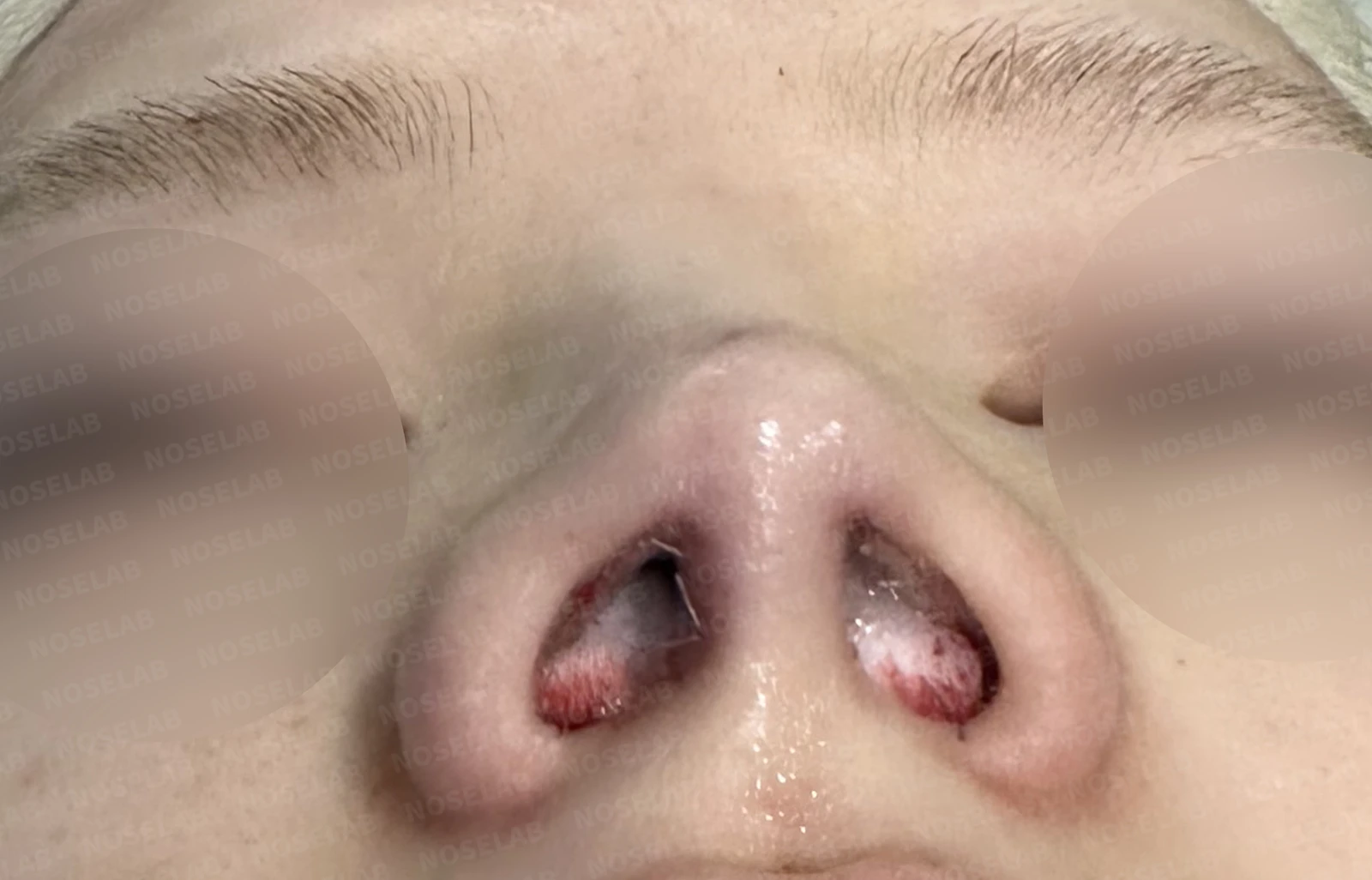
Before surgery / Day 0 immediately after surgery Photos taken immediately after surgery show swelling and may differ from the final result.
Photos immediately after surgery
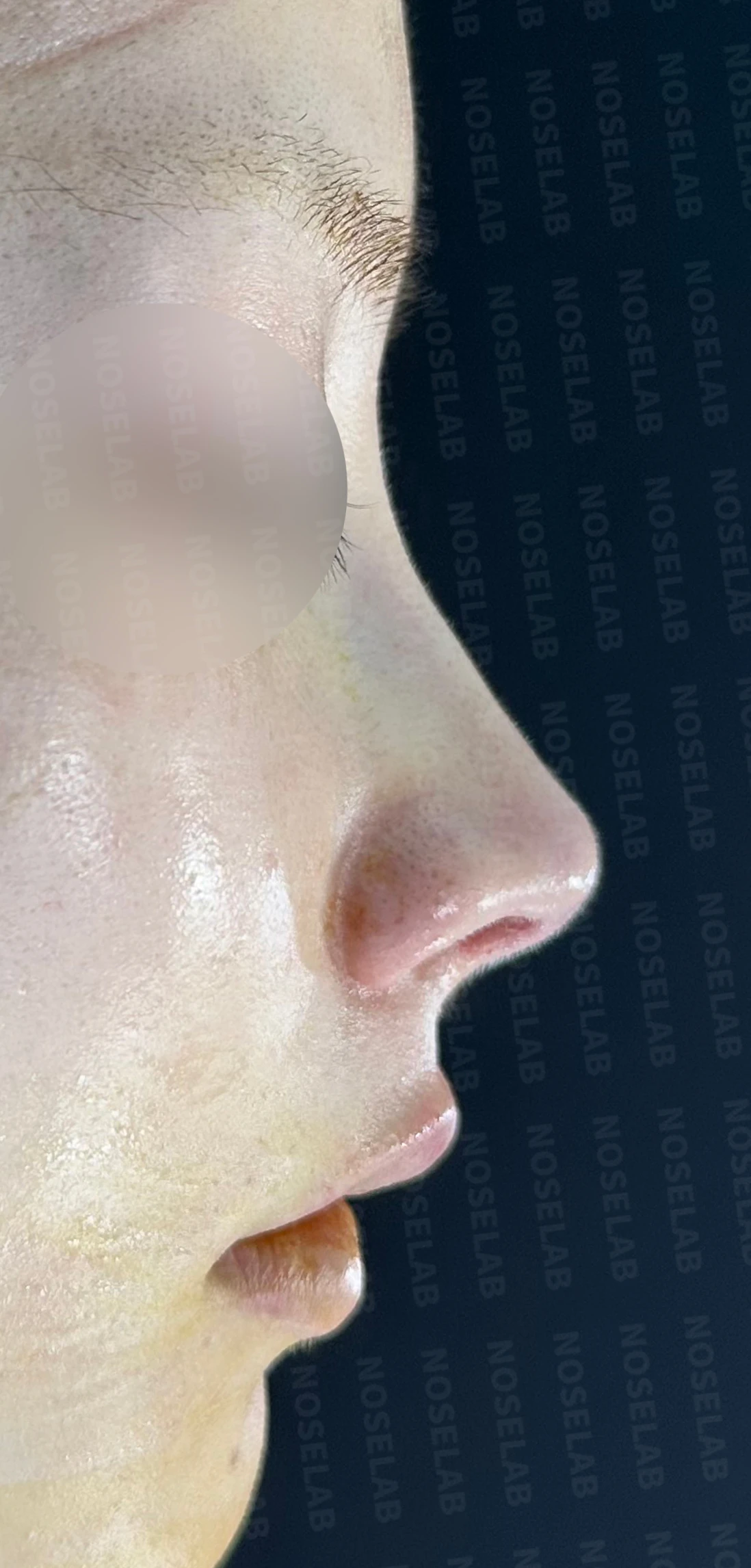
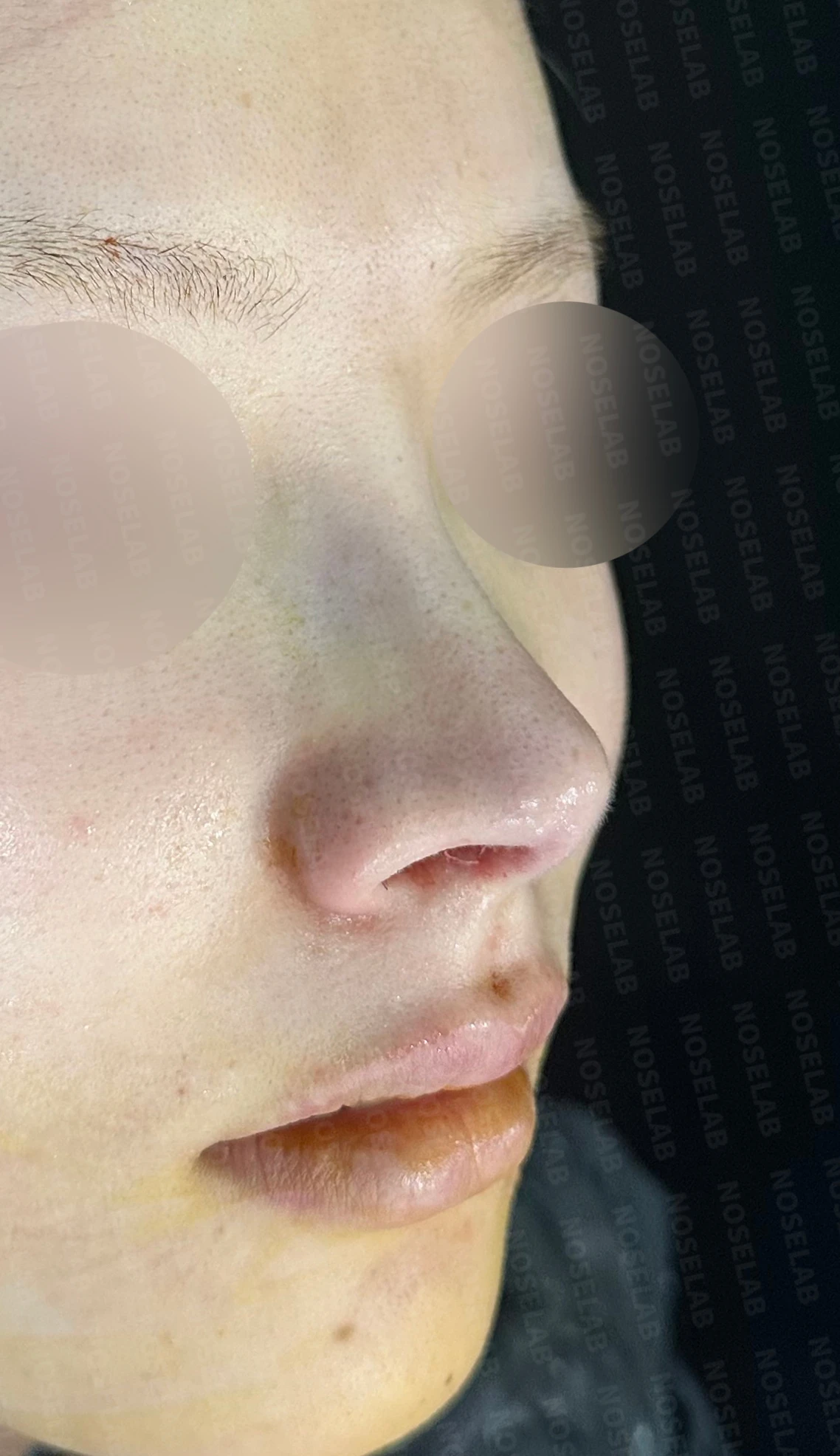
These are photos from day 0 immediately after surgery: profile, oblique (45-degree), and front views. Immediate postoperative photos show swelling and may differ from the final result.
Basal (nostril) view immediately after surgery (Day 0).Immediate postoperative photos show swelling and may differ from the final result.
My perspective on rhinoplasty and its effect on improving a protruding mouth
Most people assume that improving a protruding mouth is only possible through orthognathic bone surgery, such as two-jaw surgery or anterior segmental osteotomy (ASO). Bone surgery is indeed a fundamental solution that cuts and sets back the protruding jawbone. While its effect is definite, it is first perceived as major surgery that is not easily approached.
However, what is the highest structure on the face? Naturally, it is the nose. Where there is a high point, there is a low point, and when high and low points exist together, three-dimensional definition is created. Higher areas appear more prominent, while lower areas appear further back. Through this principle, rhinoplasty can improve the visual appearance of a protruding mouth or a prominent chin. In other words, when the nose is positioned higher relative to the mouth, the mouth appears more recessed. This effect is greater than one might expect. When the nasal tip moves away from the lips—meaning the nasolabial angle becomes wider—the mouth appears significantly set back. For this reason, there was a time when a combination procedure of rhinoplasty, paranasal augmentation (noble surgery), and chin implant surgery was referred to as "mini two-jaw surgery" and performed as a package, yielding very high patient satisfaction.
Today, I shared a case of rhinoplasty in a patient with a protruding mouth. I hope this will be helpful to those who are concerned about a protruding mouth and considering rhinoplasty.
This was Dr. Peter C. Kang. Thank you.

Limitations and risks
When autologous rib cartilage is used, scarring and pain may remain at the donor site on the chest, and pneumothorax (pleural injury) can occur rarely. Over time, the grafted cartilage may warp or undergo partial resorption.
When the septum is corrected at the same time, nasal obstruction may persist or recur, and in rare cases, septal perforation or changes in smell may occur.
Common potential risks include infection, bleeding, asymmetry, scarring, skin necrosis, and insufficient improvement; results vary depending on individual skin condition and previous surgical history.