Hello.
I am Dr. Peter C. Kang, medical director of NOSELAB.
Today, I would like to discuss correcting a bulbous, drooping long nose, which is a common scenario in rhinoplasty.
Even for those who have never had rhinoplasty, the nasal tip naturally lowers and widens with age. It seems no one can entirely resist the effects of time. The skin loses elasticity and sags, and the ligaments holding the cartilage firmly in place stretch over time. These aging processes ultimately cause the nasal tip to droop.
The patient we are discussing today also noticed that their nasal tip was gradually drooping and spreading, and wished for a natural, refined correction.
Before surgery vs. immediately after surgery
Let us compare the photos before surgery and on day 0 immediately after surgery. Immediate postoperative photos show swelling and may differ from the final result.
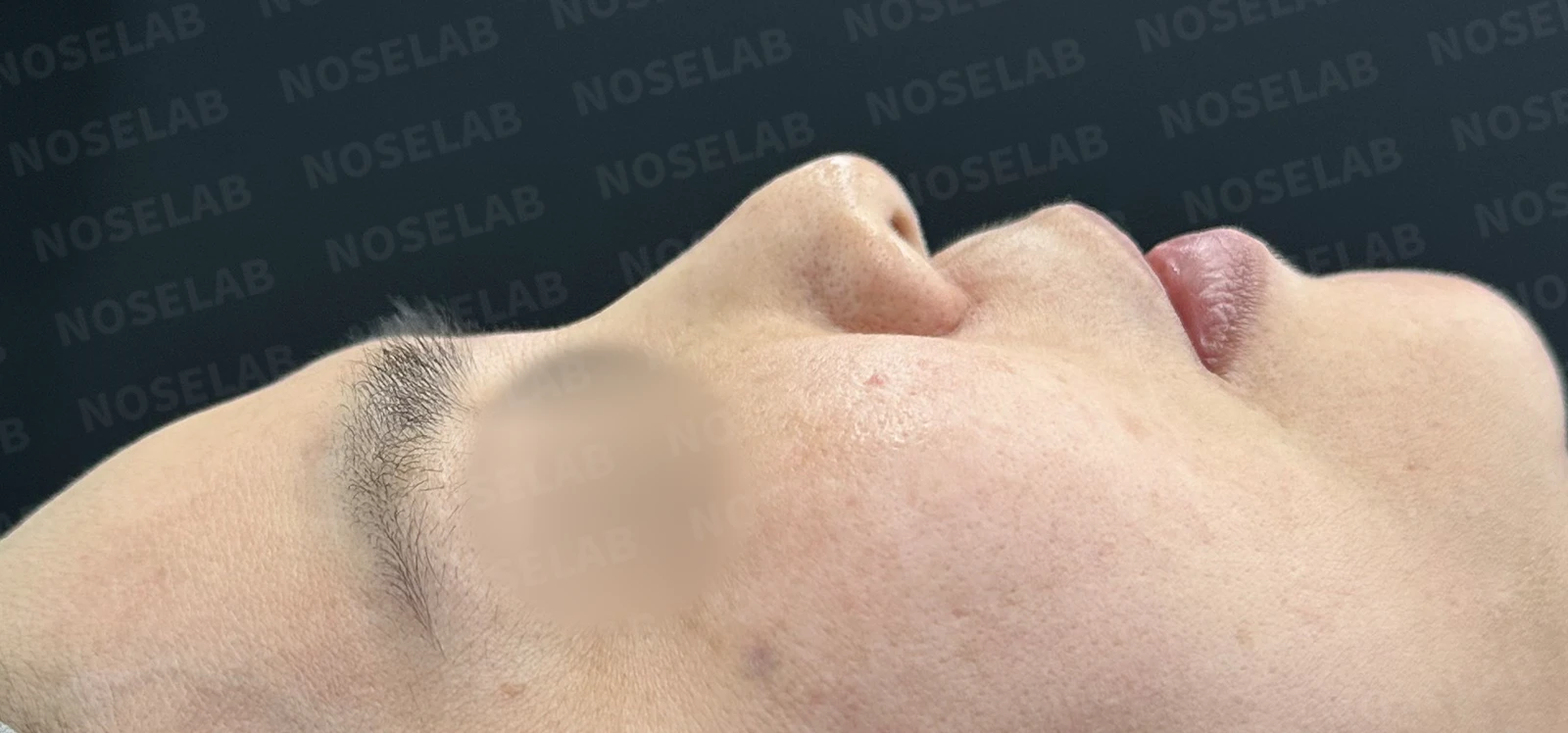
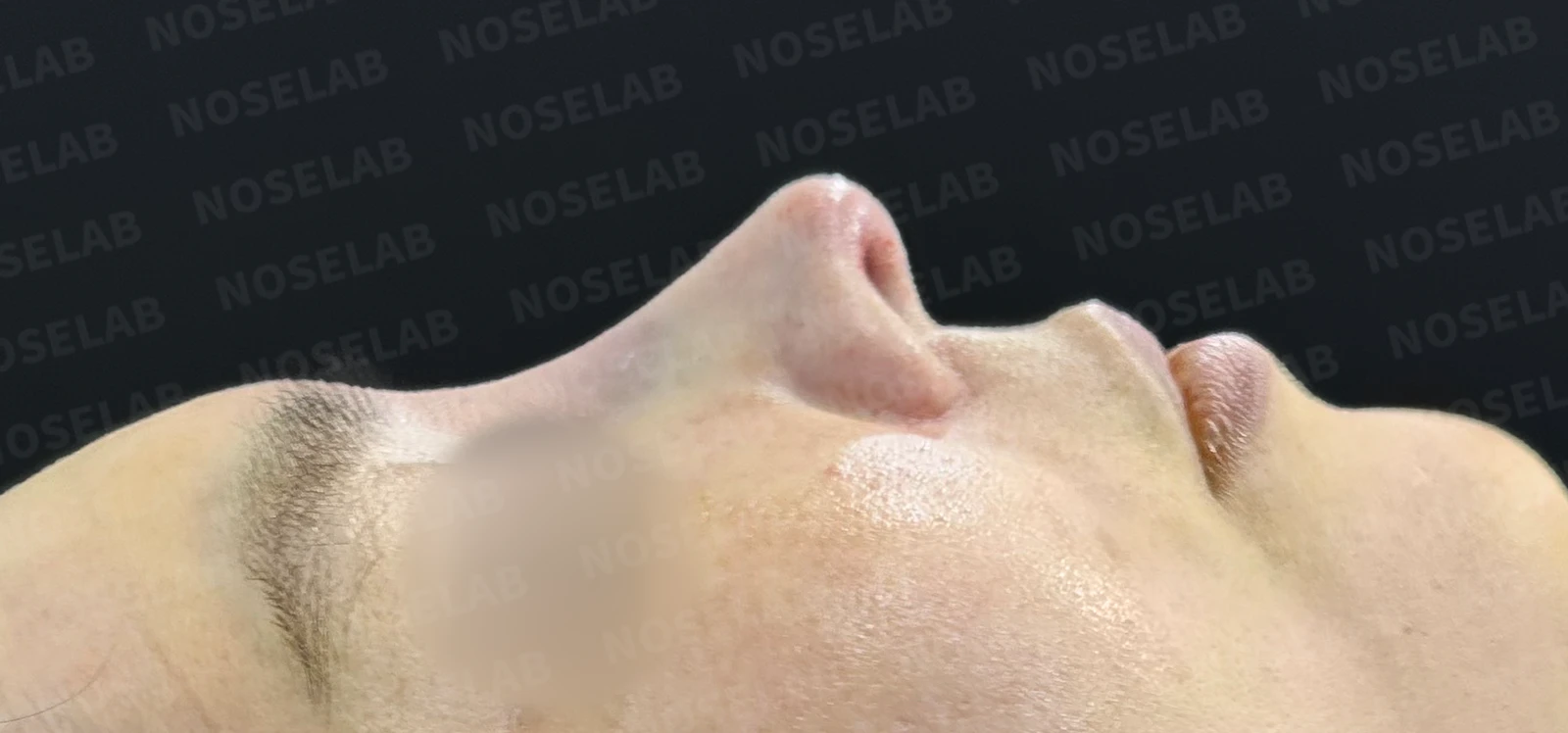
Before surgery / Day 0 immediately after surgery Photos taken immediately after surgery show swelling and may differ from the final result.
The patient had a bulbous nose with thick skin and a large surface area over the nasal tip. Therefore, to create a more slender tip appearance, we slightly increased the nasal tip height and removed a portion of the subcutaneous tissue beneath the tip skin to achieve a well-defined projection.
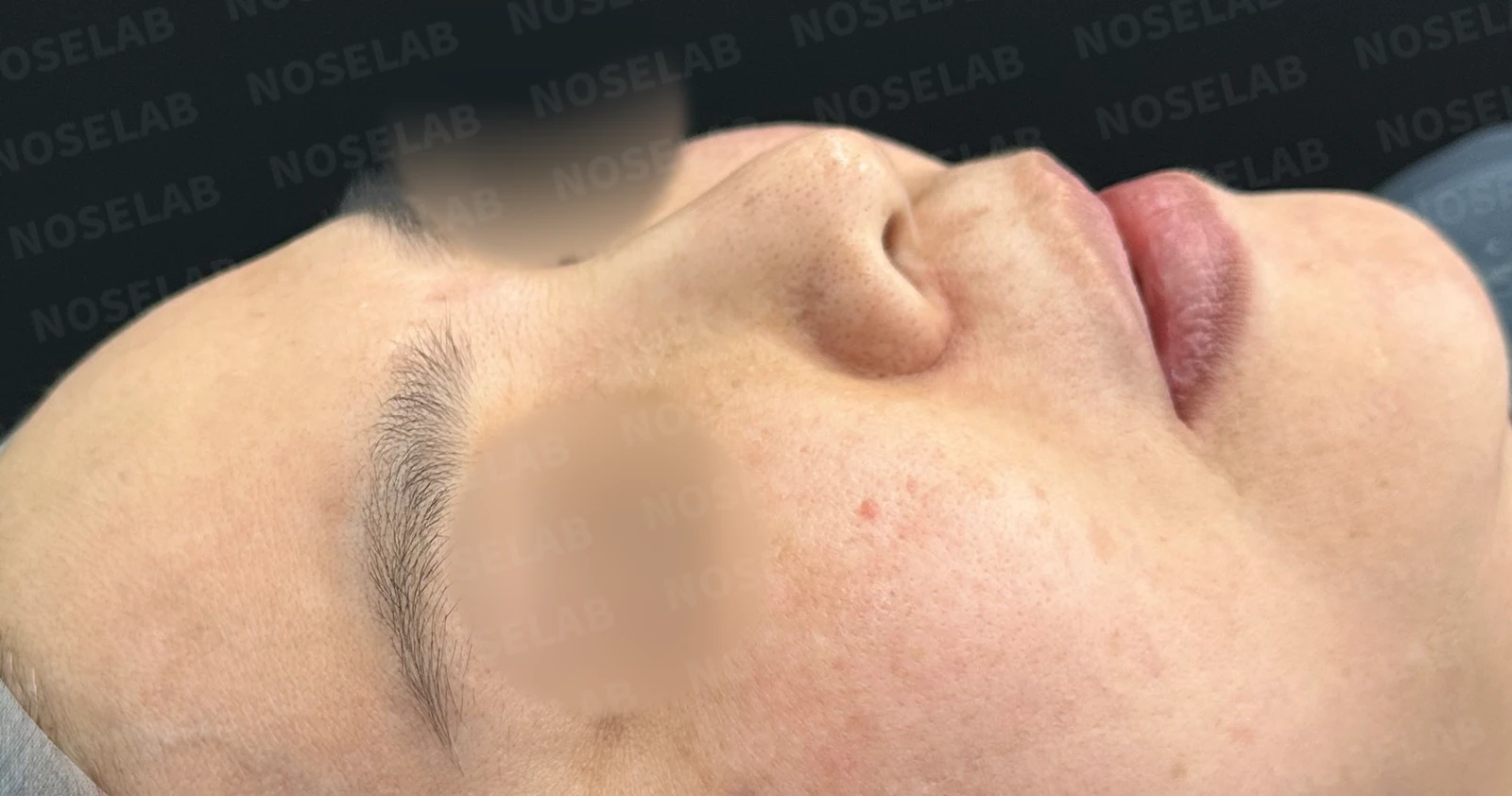
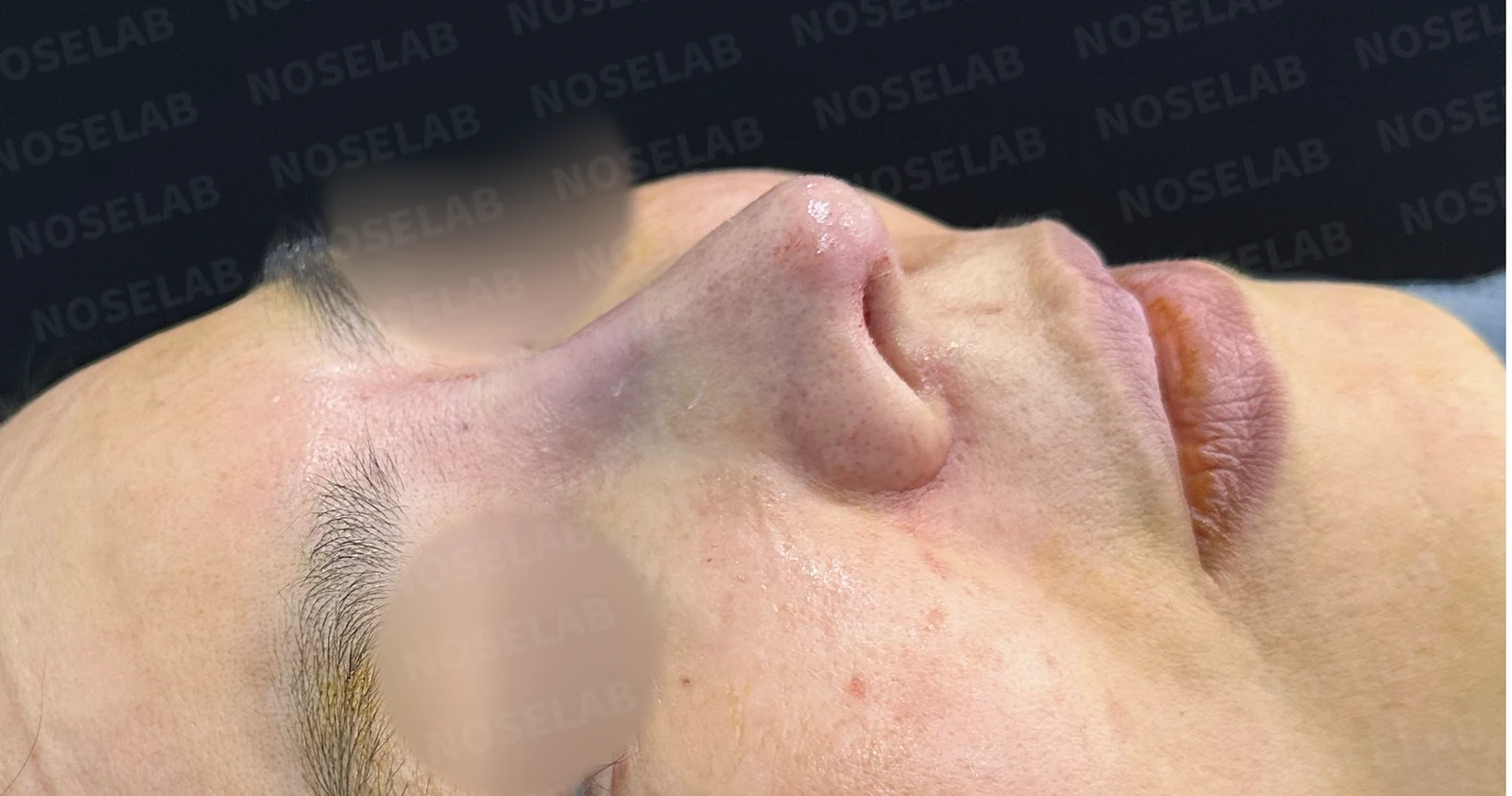
Before surgery / Day 0 immediately after surgery Photos taken immediately after surgery show swelling and may differ from the final result.
The compressed look of the nasal tip has resolved. We also lowered the starting point at the glabella, though it is not yet clearly visible due to swelling. As swelling subsides and scar tissue settles (around 1 to 3 months), it will improve significantly.
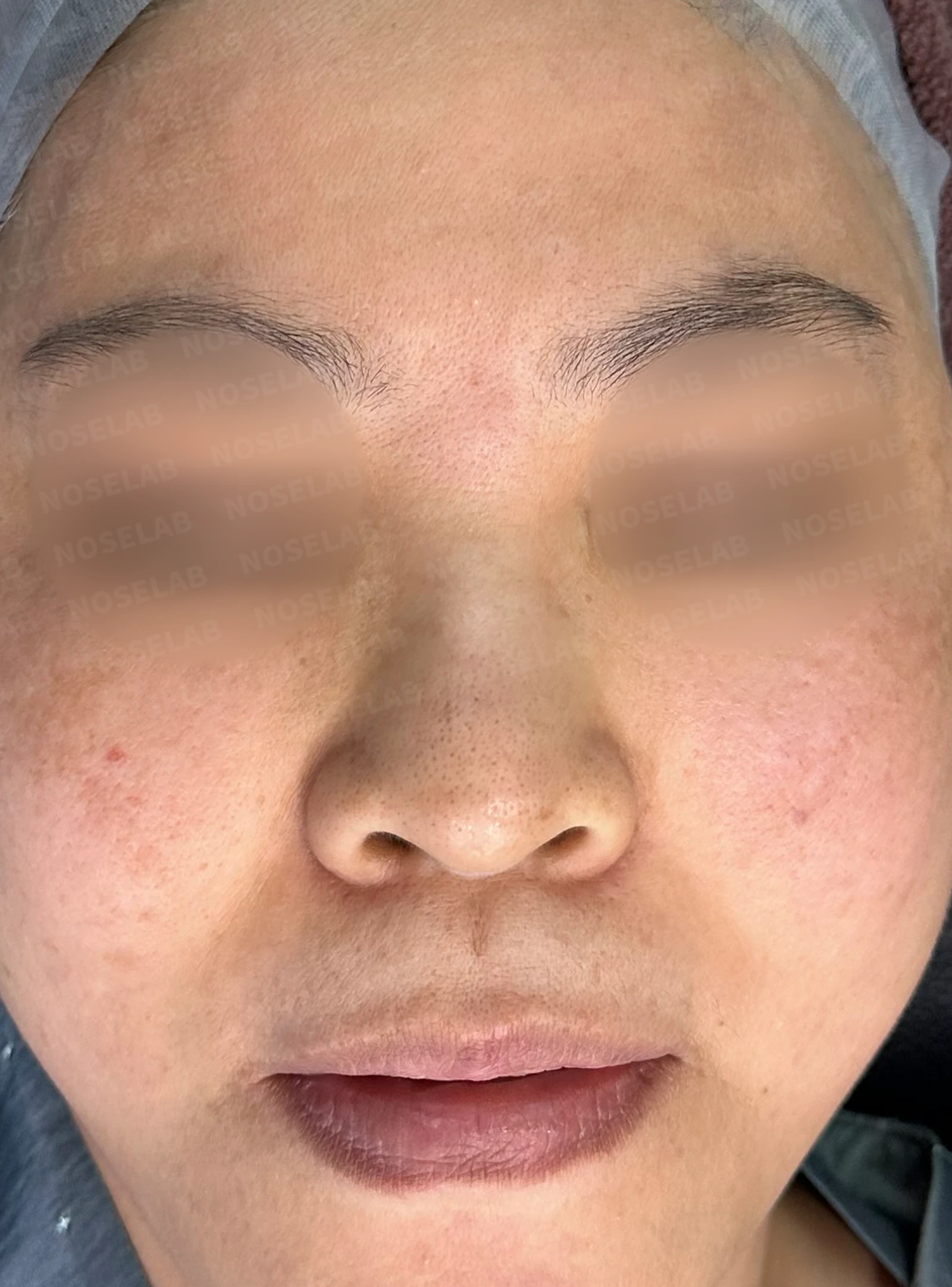
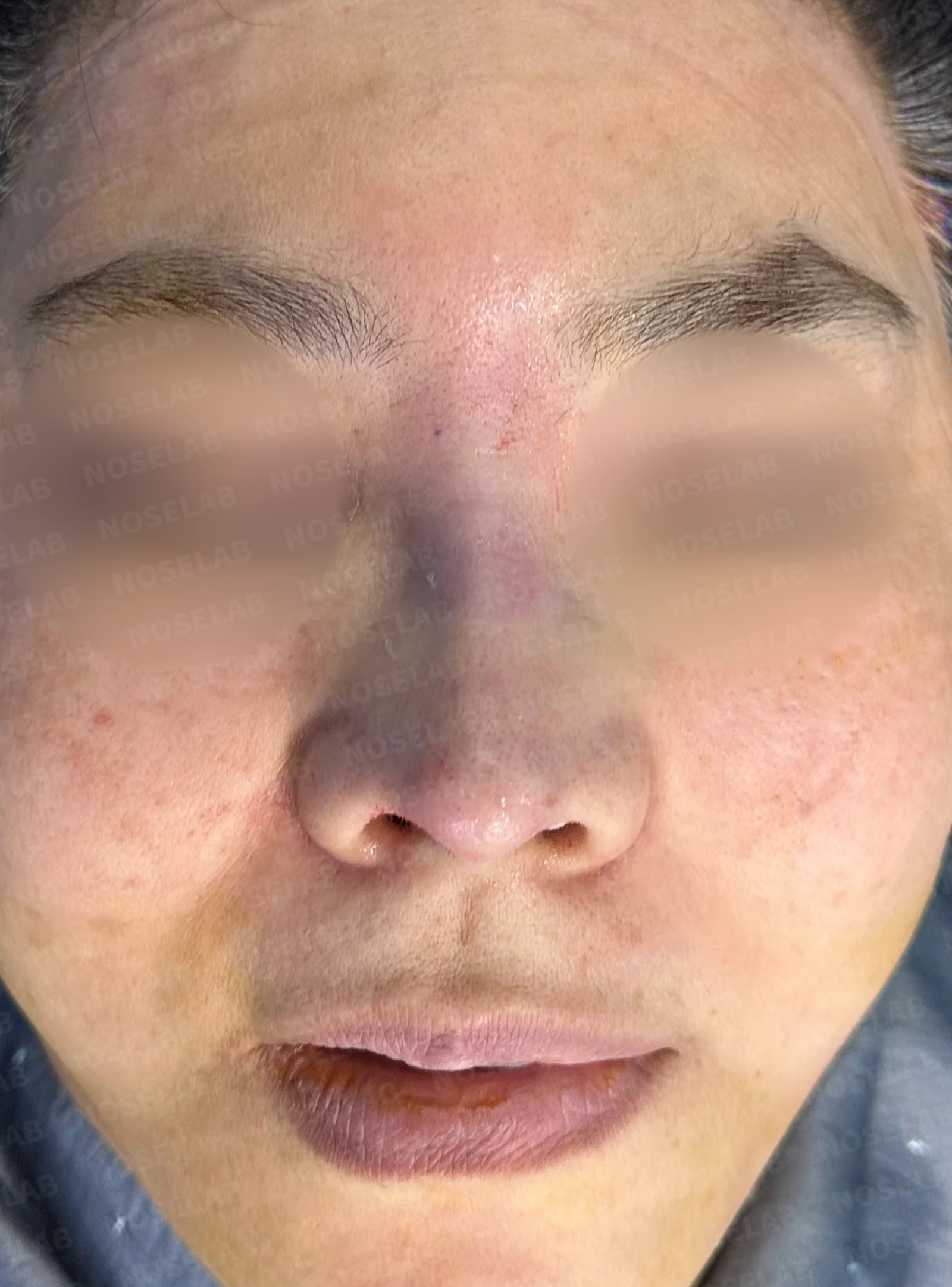
Before surgery / Day 0 immediately after surgery Photos taken immediately after surgery show swelling and may differ from the final result.
The spread appearance from the front view has improved, and the shape of the previously drooping columella has also been corrected.
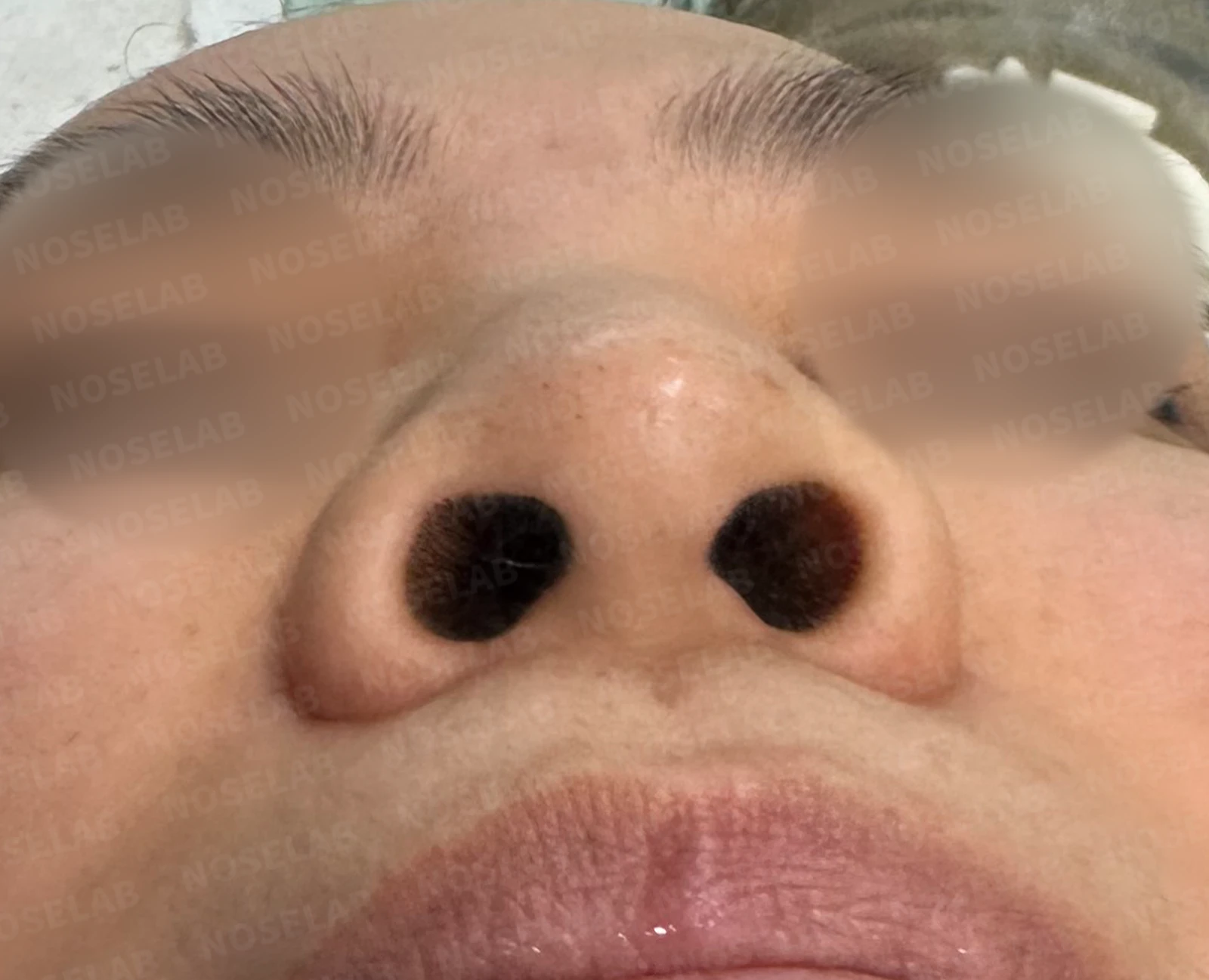
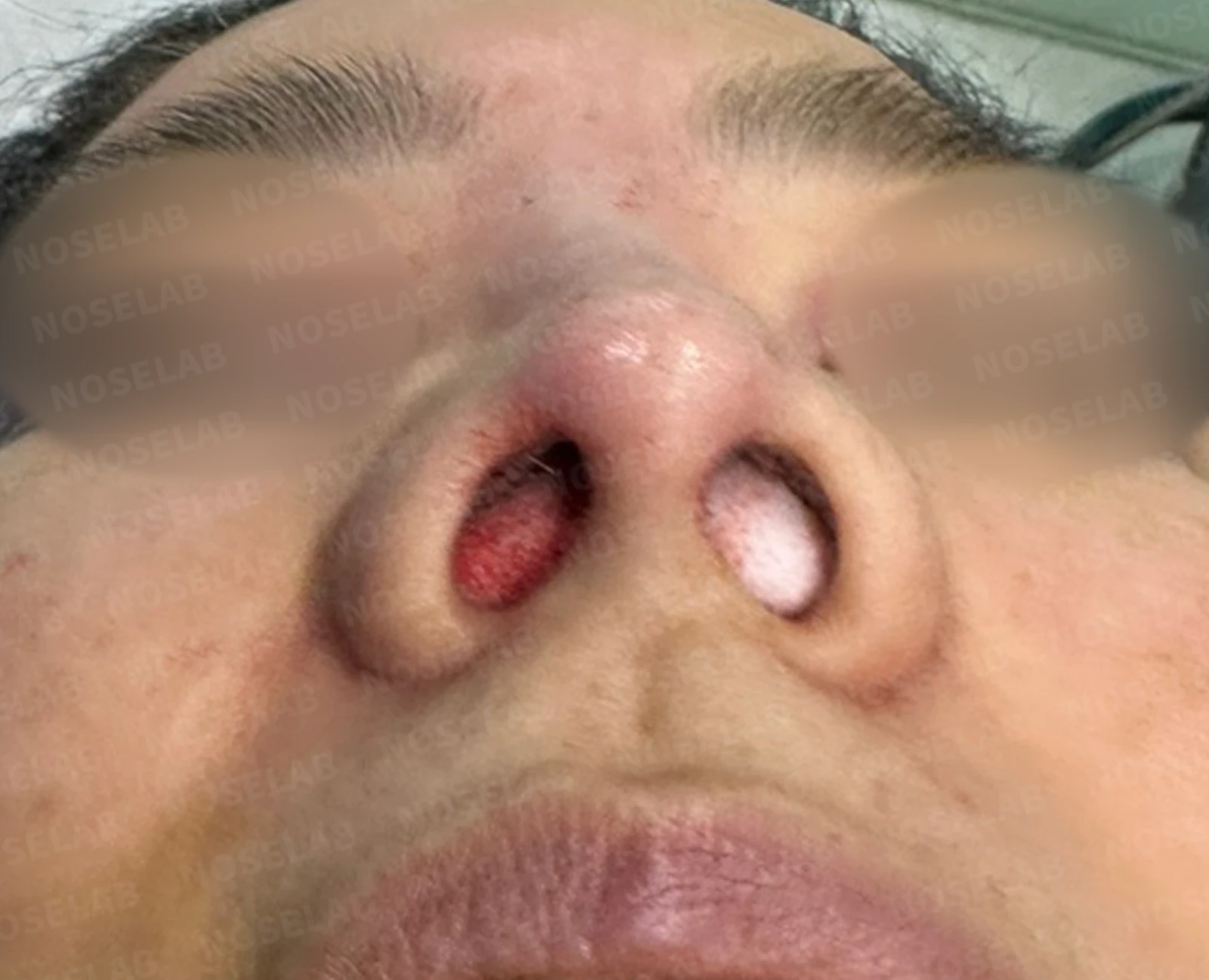
Before surgery / Day 0 immediately after surgery Photos taken immediately after surgery show swelling and may differ from the final result.
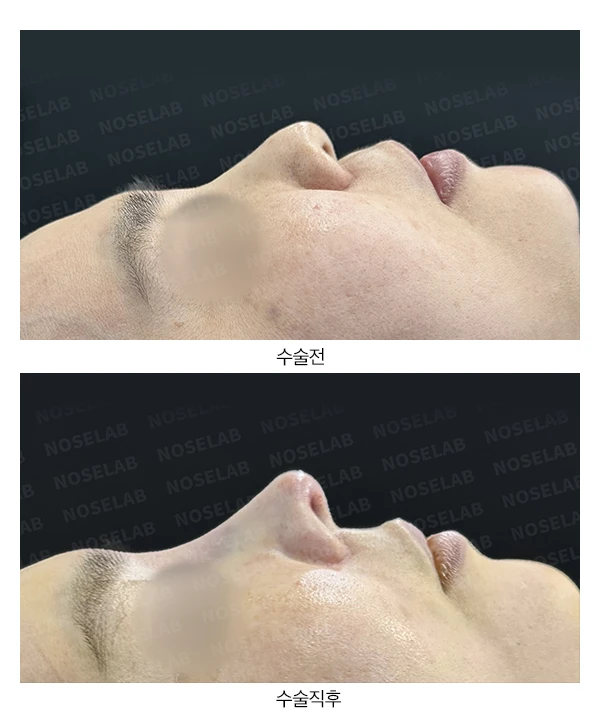
This patient had nostril asymmetry. The very round nostrils have now become natural ovals.
Photos immediately after surgery
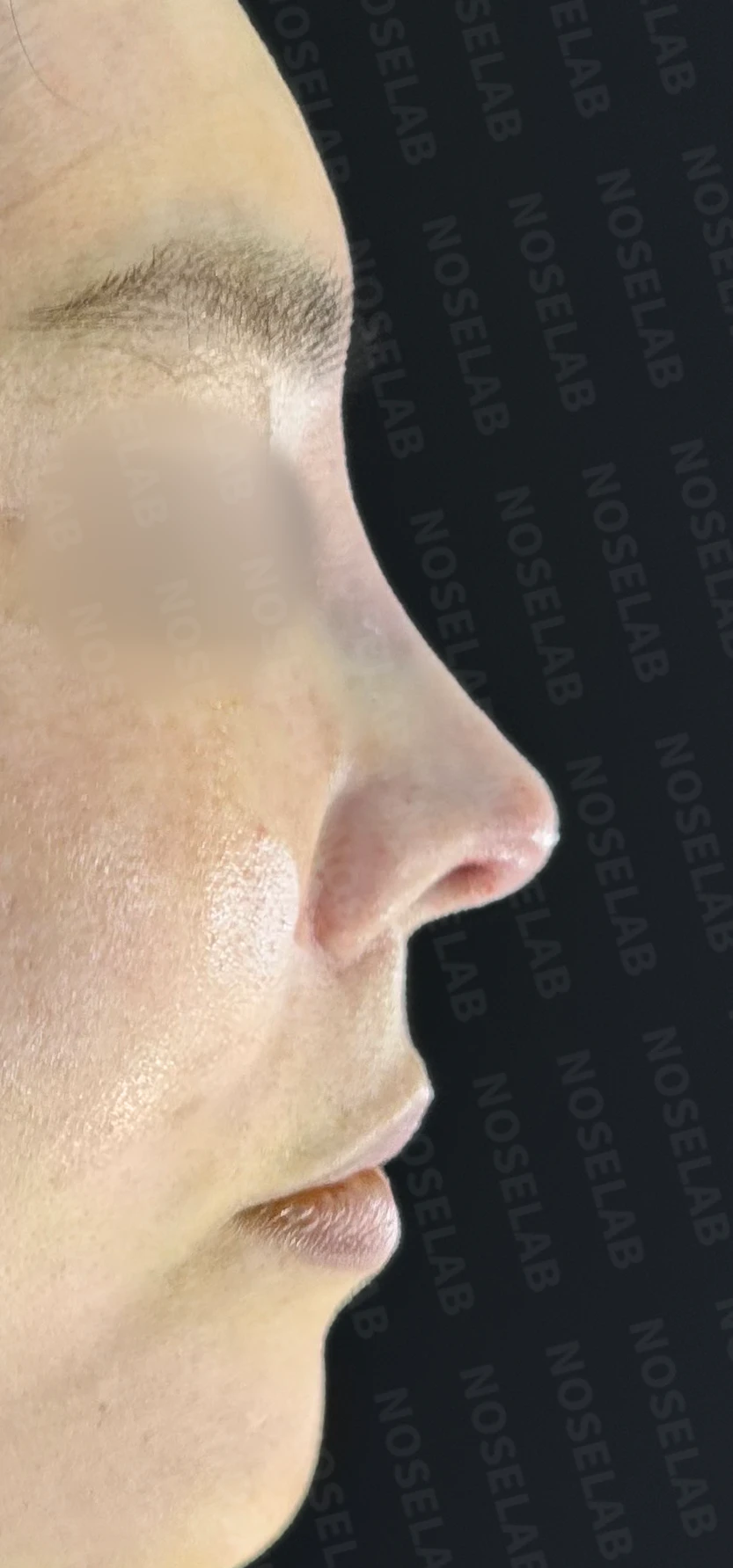
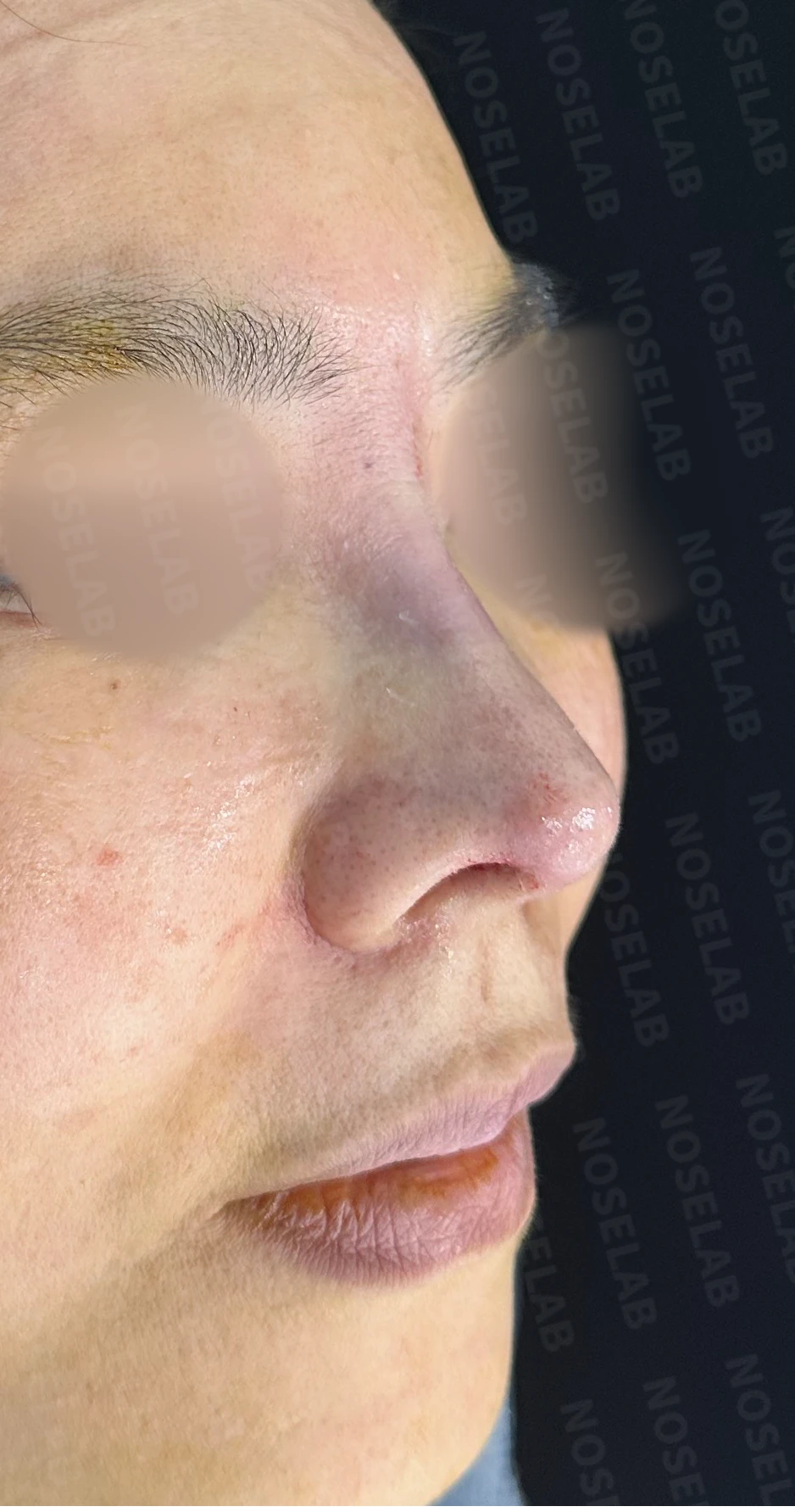
Photos immediately after surgery (Day 0): 90-degree profile, 45-degree oblique, and front view.Immediate postoperative photos show swelling and may differ from the final result.
Basal (nostril) view immediately after surgery (Day 0).Immediate postoperative photos show swelling and may differ from the final result.
Conclusion
Aging changes where the nasal tip droops and widens seem unavoidable. This is particularly noticeable in individuals who have a larger nose.
In such cases, our closed rhinoplasty—which leaves no visible external scars while delivering clear results without unnecessary complexity—can be an appropriate solution. I hope this helps those concerned about their nose becoming lower and wider with age.
This was Dr. Peter C. Kang. Thank you.

Limitations and risks
Common potential risks include infection, bleeding, asymmetry, scarring, skin necrosis, and insufficient improvement; results vary depending on individual skin condition and previous surgical history.