English日本語简体中文
Skip to main content
Dr. Peter C. Kang's Rhinoplasty Stories
PrologueBlogMy thoughtsNasal obstructionSurgical journalSurgical photos
About the surgeon

Noses that appear overly high: records of height and natural balance

Concerns about a nose appearing too high often involve descriptions of overall impression rather than numerical height. One case record reflects a consultation context where the nose did not look unattractive, but gave a strongly operated, excessively high impression. Another post notes a high radix between the eyebrows, a long nose, and deviation toward the right.

Records also include patients with naturally high bridges, so this topic is not limited solely to noses made high by implants. That particular case describes a procedure performed without an implant, working from a naturally high bridge. Compare these cases by separating prior surgical history, which part of the bridge was described as high, and the extent of change the patient desired.

View before-and-after cases ↓Comprehensive rhinoplasty guide

Searching for surgical cases matching your criteria.
Why an overly high nose looks unnatural and deviates, and how it can be reconstructed — Before-and-after comparison
Before-and-after comparison

Why an overly high nose looks unnatural and deviates, and how it can be reconstructed

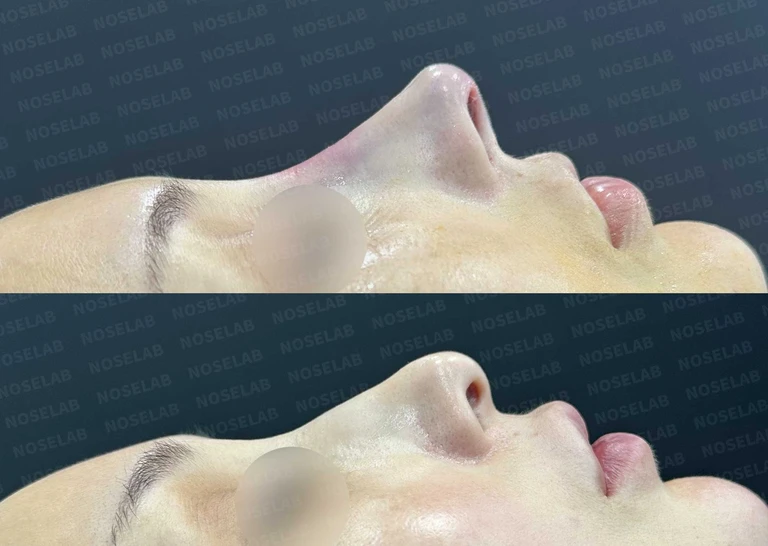
For an overly high "Pinocchio-like" deviated nose with septal damage, the silicone implant was removed, and autologous rib cartilage reconstruction, radix adjustment, and nasal sill reduction were performed.

Preoperative condition · Postoperative record
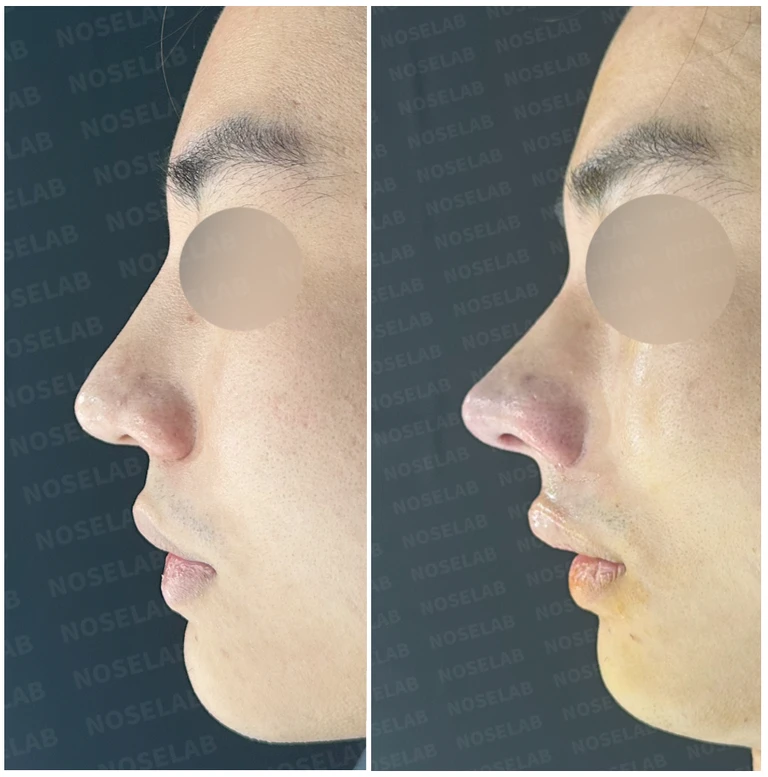
Nasal bone fractures: When cosmetic surgery can be combined and how to stage the procedure — Before-and-after comparison
Before-and-after comparison

Nasal bone fractures: When cosmetic surgery can be combined and how to stage the procedure

To correct a traumatic nasal bone fracture and a deviated nasal tip, closed reduction and autologous rib cartilage septal extension were performed without an implant, with plans to adjust the nasal bridge height after an observation period.

Preoperative condition

Why a wide nasal bridge and upturned nasal tip develop, and how rib cartilage reconstruction is performed — Before-and-after comparison
Before-and-after comparison

Why a wide nasal bridge and upturned nasal tip develop, and how rib cartilage reconstruction is performed

For a wide nasal bridge and an upturned nasal tip resulting from repeated surgeries and nasal bridge thread-lifting procedures, foreign material was removed, lateral osteotomy was performed, and septal reconstruction was carried out by recycling existing autologous rib cartilage and supplementing with donor rib cartilage.

Preoperative condition

Dorsal hump and crooked nose worsened after trauma: A correction method with minimal change — Before-and-after comparison
Before-and-after comparison

Dorsal hump and crooked nose worsened after trauma: A correction method with minimal change

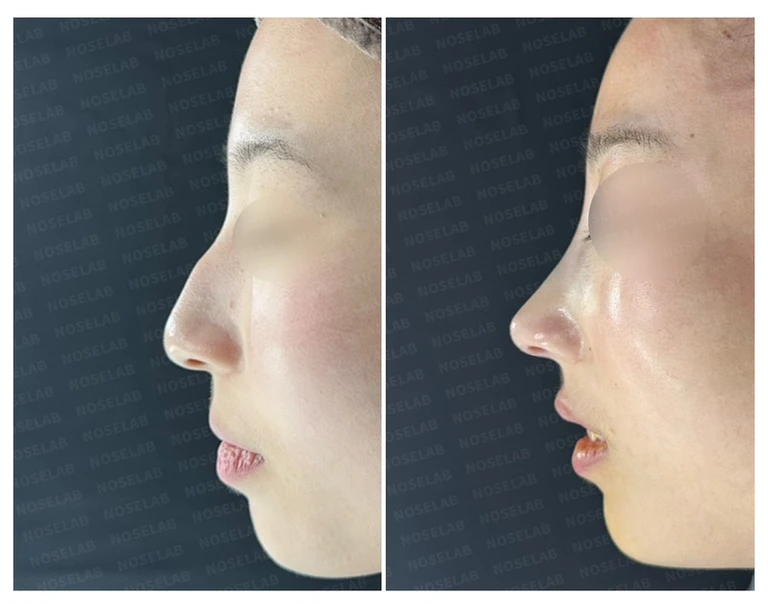
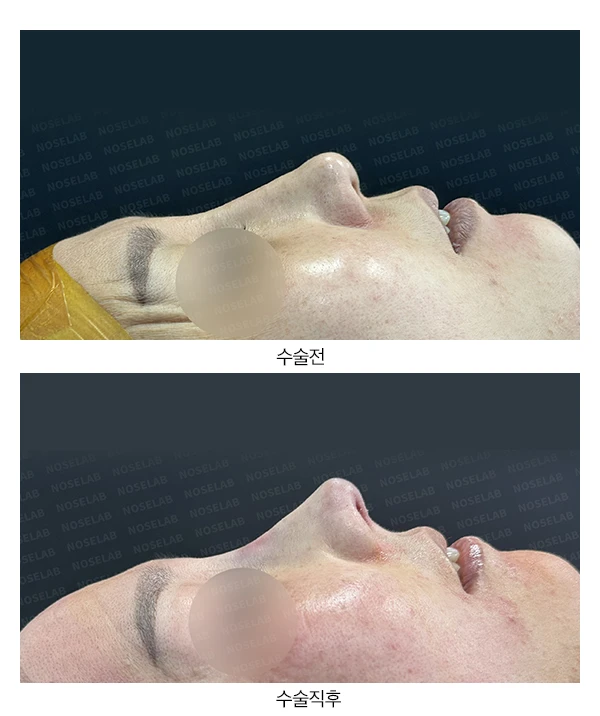
A case in which septal extension using donor rib cartilage, lateral osteotomy, and inferior turbinate rhinitis surgery were performed for a dorsal hump, crooked nose, and nasal obstruction that worsened after trauma.

Preoperative condition

Supportive structures in a contracted nose and revision rhinoplasty using autologous rib cartilage — Before-and-after comparison
Before-and-after comparison

Supportive structures in a contracted nose and revision rhinoplasty using autologous rib cartilage

For a contracted nose and a sharply upturned nasal tip that developed after multiple surgeries, septal reconstruction with autologous rib cartilage, removal of inflammatory tissue from the nasal tip, and nostril lowering were performed.

Preoperative condition

Closed correction method for a crooked nose, bulbous tip, and nostril asymmetry — Before-and-after comparison
Before-and-after comparison

Closed correction method for a crooked nose, bulbous tip, and nostril asymmetry

For a patient who presented after two prior surgeries with a crooked nose, nostril asymmetry, and a bulbous tip, we performed septal reconstruction and extension using autologous rib cartilage, lateral osteotomy, silicone implant exchange, and a dermal graft to the nasal tip.

Preoperative condition

No-implant revision rhinoplasty for an unnatural, operated-looking nose — Before-and-after comparison
Before-and-after comparison

No-implant revision rhinoplasty for an unnatural, operated-looking nose

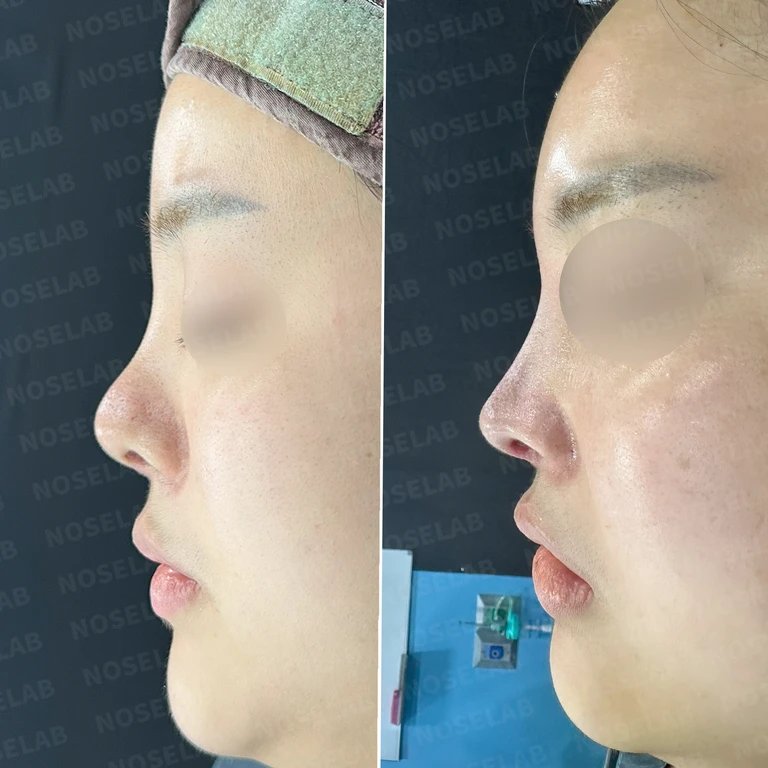
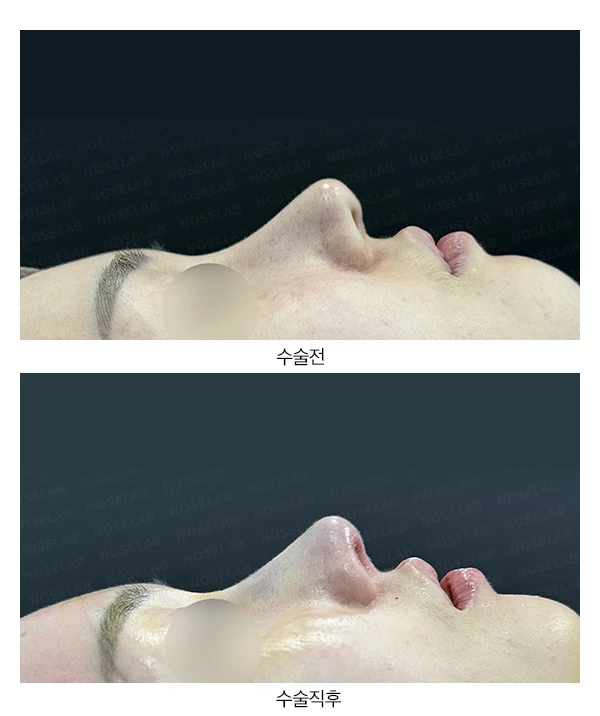
In a nose where the implant was overly conspicuous and the radix was excessively high, the silicone implant was removed to transition to a no-implant approach, creating natural contouring along the nasal tip and columella.

Preoperative condition

Is it possible to correct a philtrum reduction and remove autologous dermis? — Before-and-after comparison
Before-and-after comparison

Is it possible to correct a philtrum reduction and remove autologous dermis?

Nostril asymmetry, a crooked nose, and nasal bone defects that developed after a previous philtrum reduction and rhinoplasty were reconstructed using lateral osteotomy restoration, autologous rib cartilage, and a rotation flap.

Preoperative condition

How to correct a long nose by lowering the radix — Before-and-after comparison
Before-and-after comparison

How to correct a long nose by lowering the radix

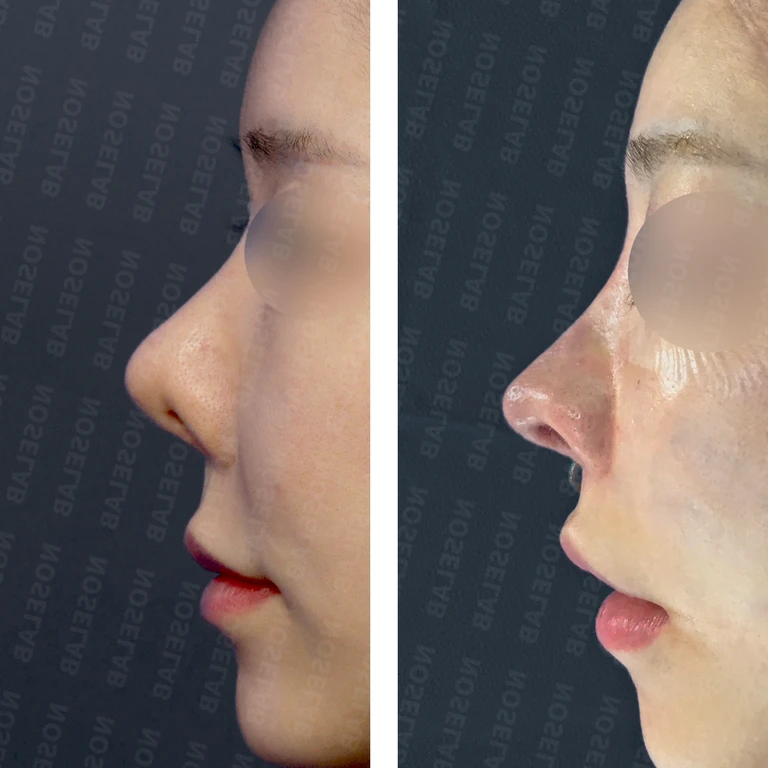
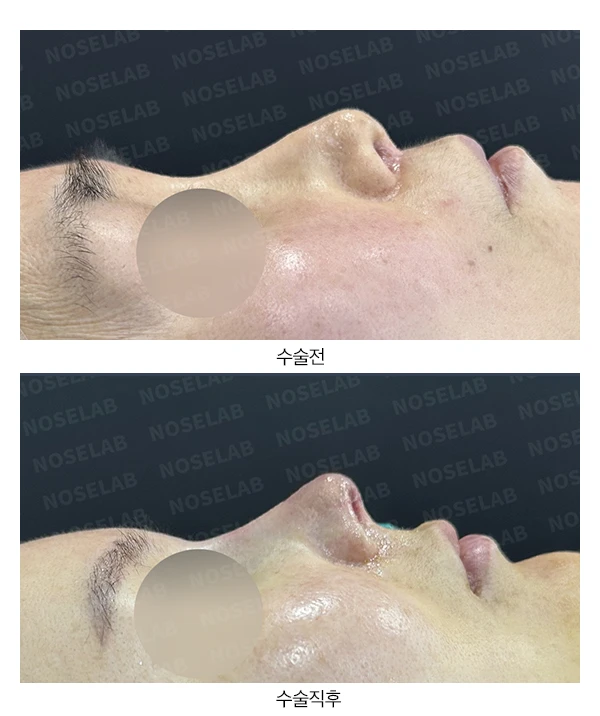
The excessively high Gore-Tex implant was removed from the glabella, the radix was lowered to the pupil line, and the septum and retracted columella were corrected using autologous rib cartilage.

Preoperative condition

Revision rhinoplasty with autologous rib cartilage and columella correction for a long nose and dorsal hump — Before-and-after comparison
Before-and-after comparison

Revision rhinoplasty with autologous rib cartilage and columella correction for a long nose and dorsal hump

This is a case of a patient concerned about a nose that still looked long due to a residual dorsal hump and a drooping tip even after a previous surgery. The nasal bone and upper lateral cartilage were refined, the nasal tip and columella were corrected, and a thin silicone implant was placed to cover irregularities.

Preoperative condition

No-implant correction method for a large, wide dorsal hump and drooping tip — Before-and-after comparison
Before-and-after comparison

No-implant correction method for a large, wide dorsal hump and drooping tip

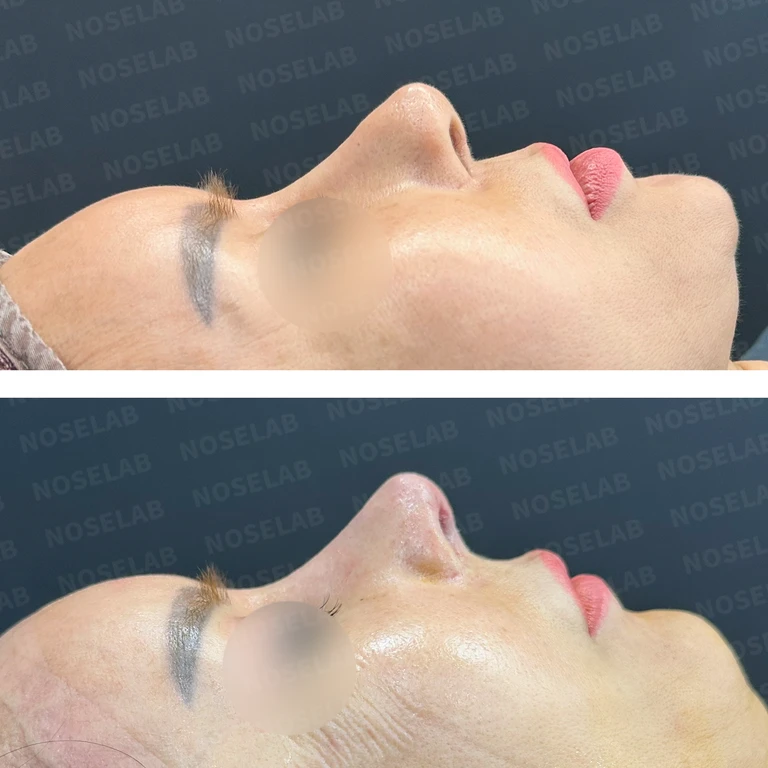
A congenitally large, high dorsal hump and drooping tip were corrected and smoothly connected without implants through precise nasal bone rasping and cartilage grafting.

Preoperative condition

No search results found

Please try searching with different keywords.

Scroll to keep reading

Common questions before reading the cases

Do all cases classified as a high nose involve lowering an implant?

No. One case record describes planning minimal change without using an implant for a patient with a naturally high bridge. In contrast, another post covers a consultation regarding a high radix and an unnatural bridge after prior surgery. Distinguishing between natural height and height following previous surgery helps prevent misunderstanding the objective of each case.

Does a desire for a natural nose simply mean lowering the height?

The case records connect natural results to the impression perceived by the patient. One record addresses an operated look that felt excessively high, while another covers a high radix between the eyebrows alongside deviation and a long nose. Therefore, rather than interpreting natural results as a specific procedure, it is more accurate to review the targeted areas and the surgical steps actually performed.

Related topics to explore

High radixLong noseNatural noseLowering the radix

Surgical records referenced in this guide

  • No-implant revision rhinoplasty for an unnatural, operated-looking nose
  • Dorsal hump and crooked nose worsened after trauma: A correction method with minimal change
  • How to correct a long nose by lowering the radix
Original article

Read more records

Planning a visit to Seoul?Prepare your consultation with the NOSELAB team.

International patient guideWhatsApp ↗
Dr. Peter C. Kang's Rhinoplasty Stories
Rhinoplasty guideCases by topicDr. Peter C. KangNaver Blog ↗
View original photo
Enlarged photo
WhatsAppChat with NOSELAB↗