Hello, I am Dr. Peter C. Kang.
Today, I would like to introduce a case in which contracted nose complications following multiple rhinoplasty surgeries were addressed.
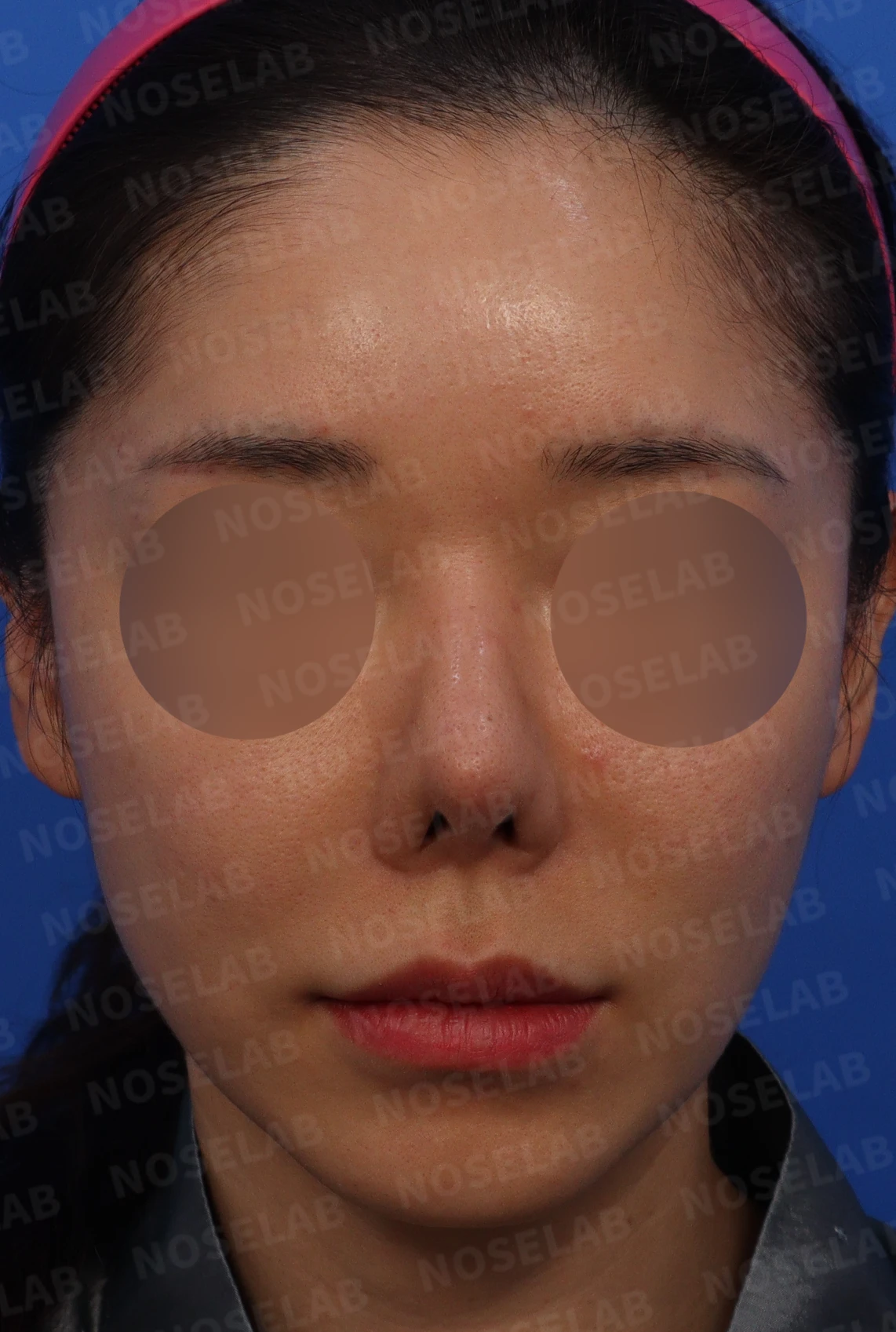
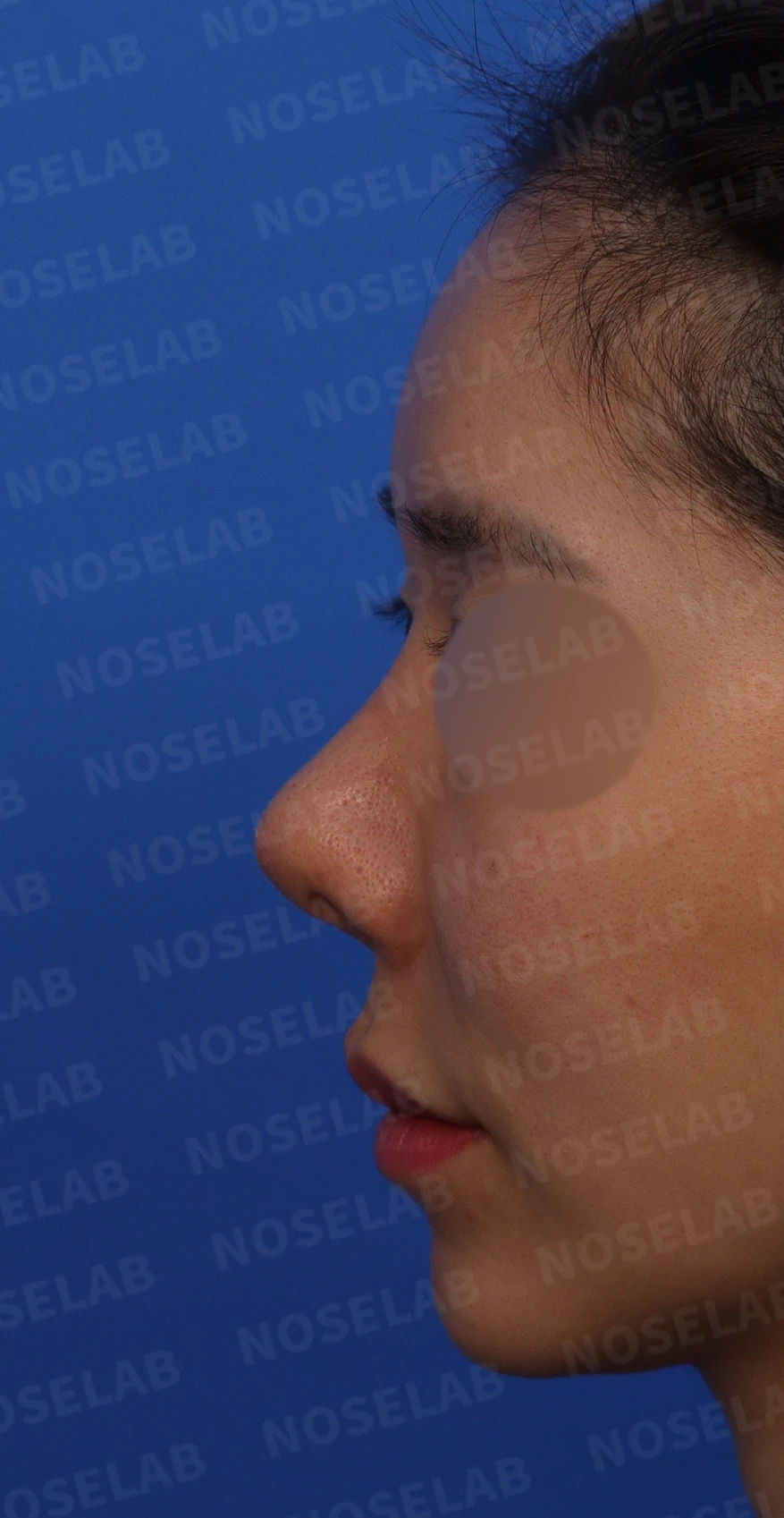
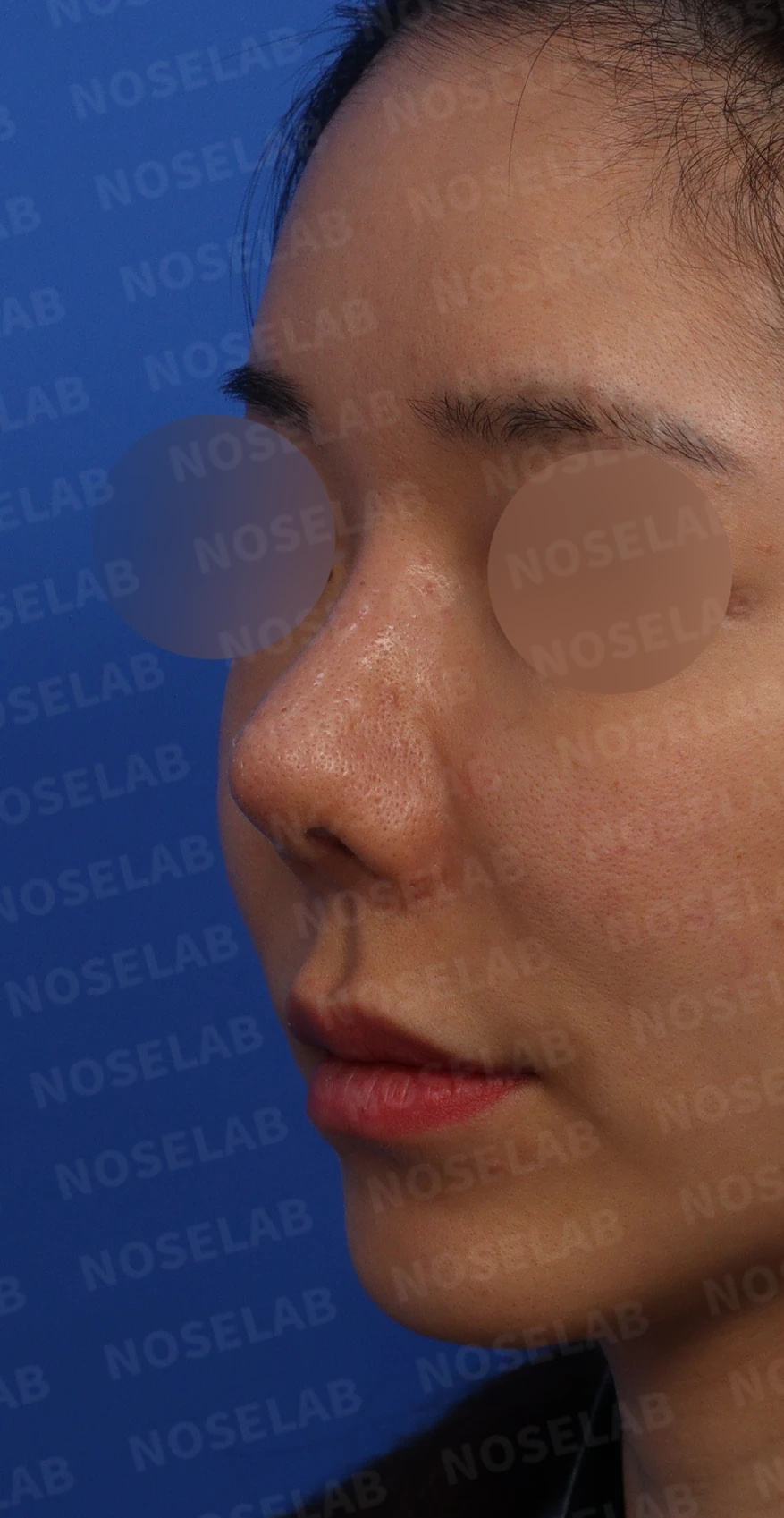
Design consultation: front, left profile, and oblique views
🔍 Patient information
Surgical history:
First surgery: silicone implant + ear cartilage + alar reduction
Second surgery: revision rhinoplasty using autologous rib cartilage
Third surgery: touch-up revision surgery
📊 Key symptoms
Nostrils that appear upturned
Excessively high bridge
Need for scar revision
Difficulty breathing
💉 Preoperative analysis
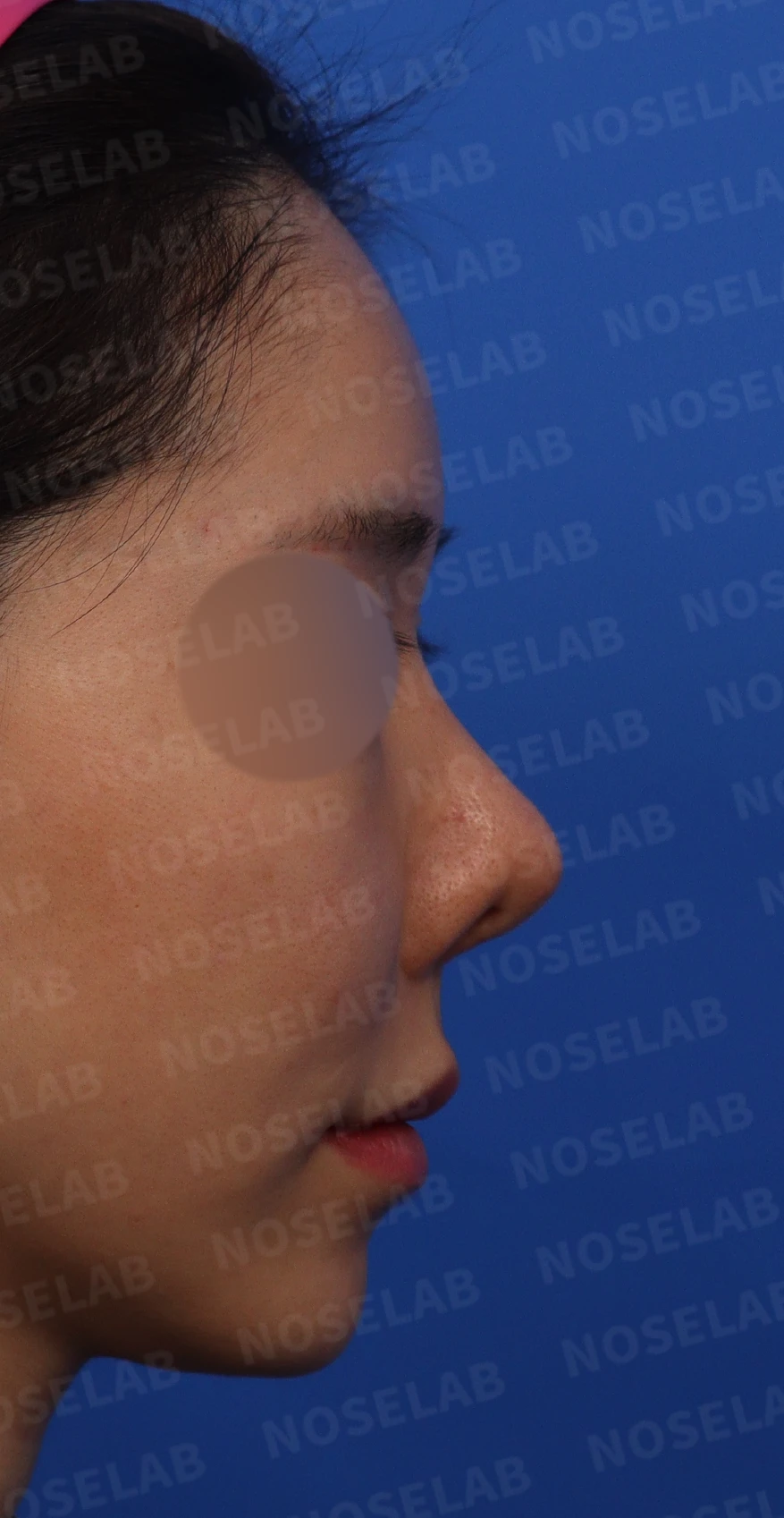
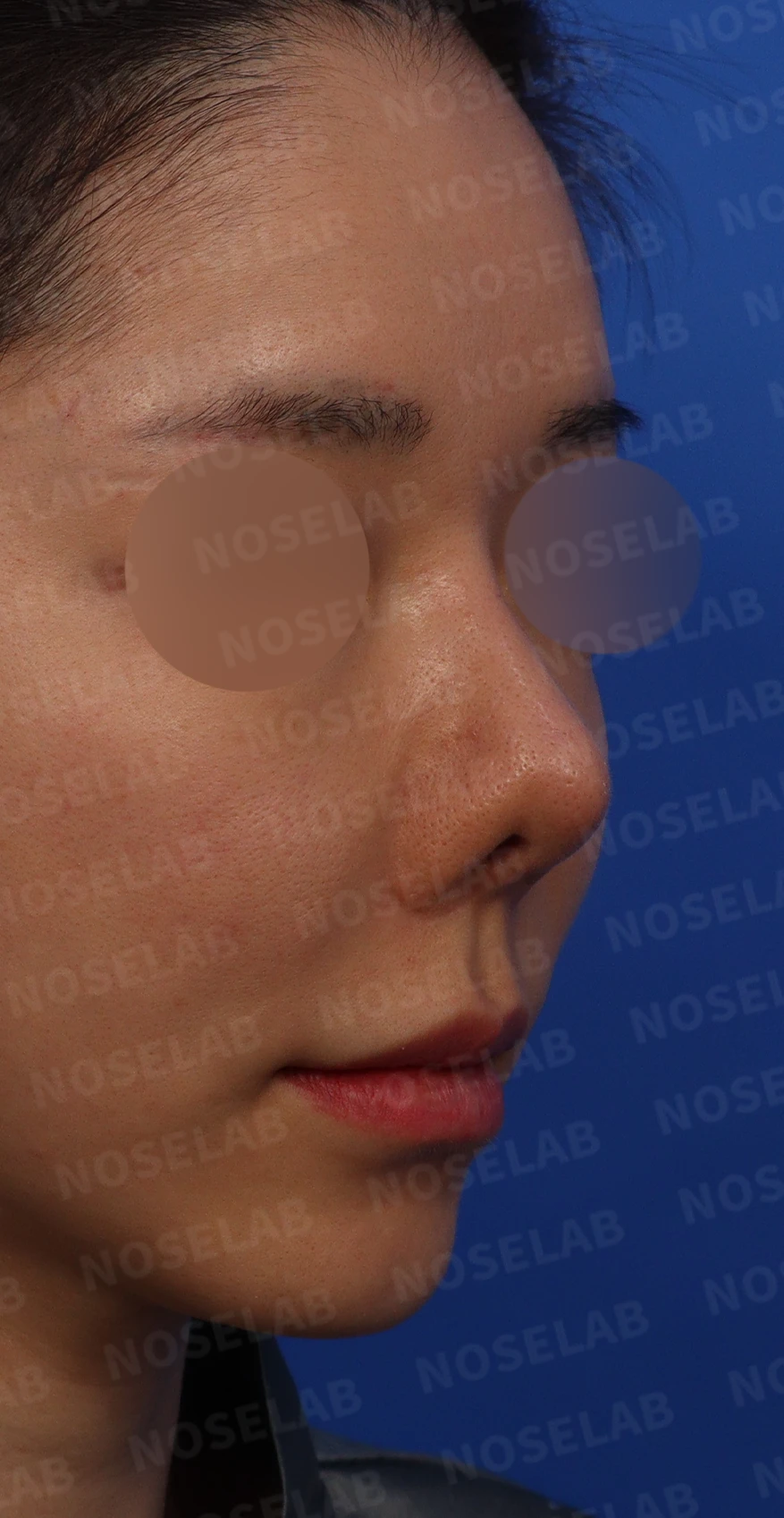
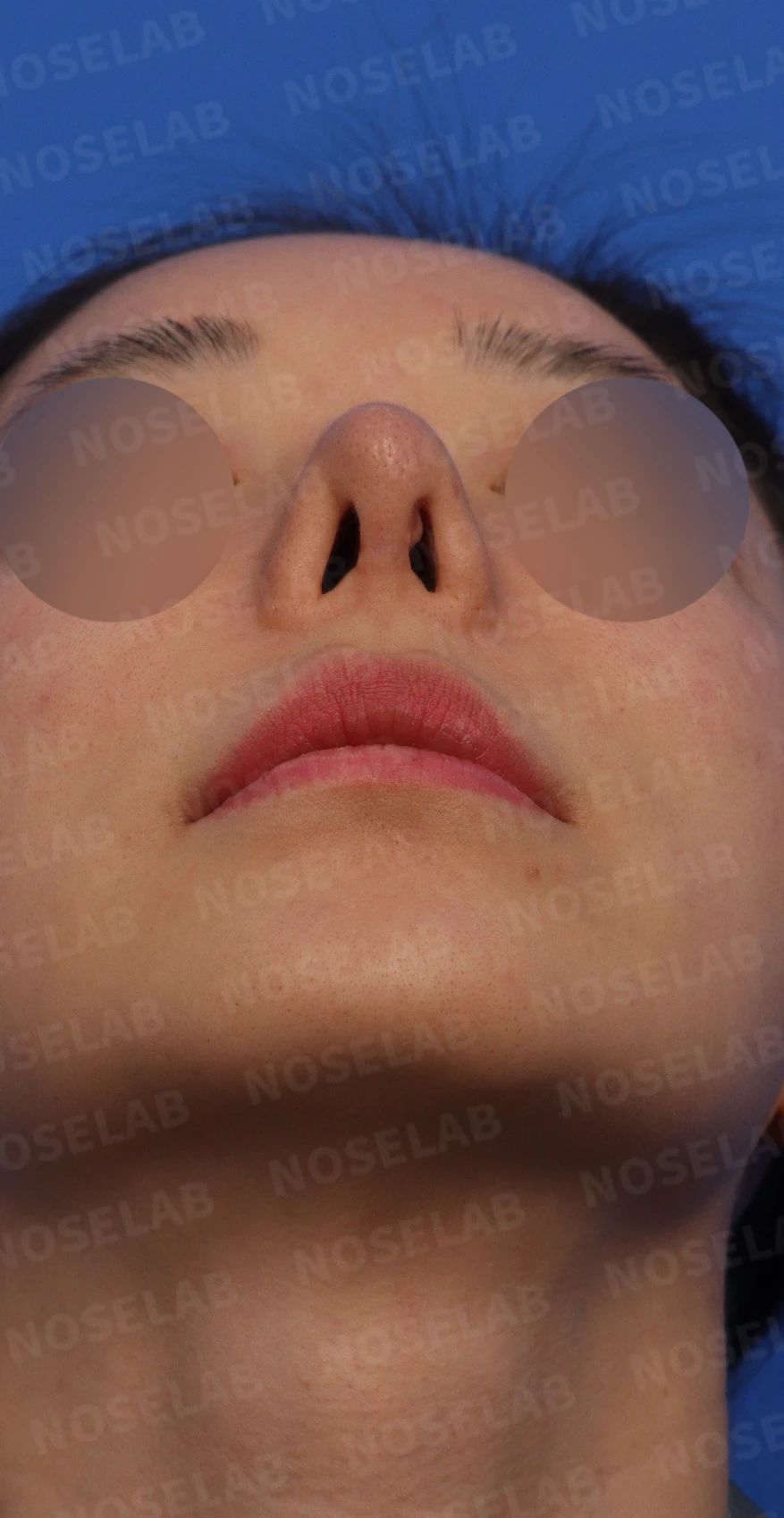
Right profile, oblique, and nostril views
Front view: Upturned nasal tip, nostril asymmetry
Profile view: Pointed and upturned nasal tip
Nostril view: Columella tilted to the left, asymmetric and excessively long nostrils, scarring on the left columella
Nasal obstruction: Deviated septum, external nasal valve stenosis
🔧 Surgical plan and details
Septal reconstruction using autologous rib cartilage: The septal cartilage damaged from prior surgeries was sturdily reconstructed using autologous rib cartilage. Through this reconstruction, the upturned nasal tip could be lowered naturally.
Removal of inflammatory granulation tissue from the nasal tip: This was the step requiring the utmost care during the surgery. Residual inflammatory tissue in the nasal tip was completely removed.
Correcting frontal asymmetry through nostril lowering: Nostril lowering was performed to correct nostril asymmetry and improve nostril shape.
Lowering the columella naturally
Reconstruction, repositioning, and suture binding of the lower lateral cartilages to correct nostril asymmetry
Lowering the nasal tip height to achieve a more natural appearance for overly long nostrils
External nasal valve reconstruction: External nasal valve stenosis is a direct cause of nasal obstruction. Surgery was performed to widen the external nasal valve and relieve nasal obstruction.
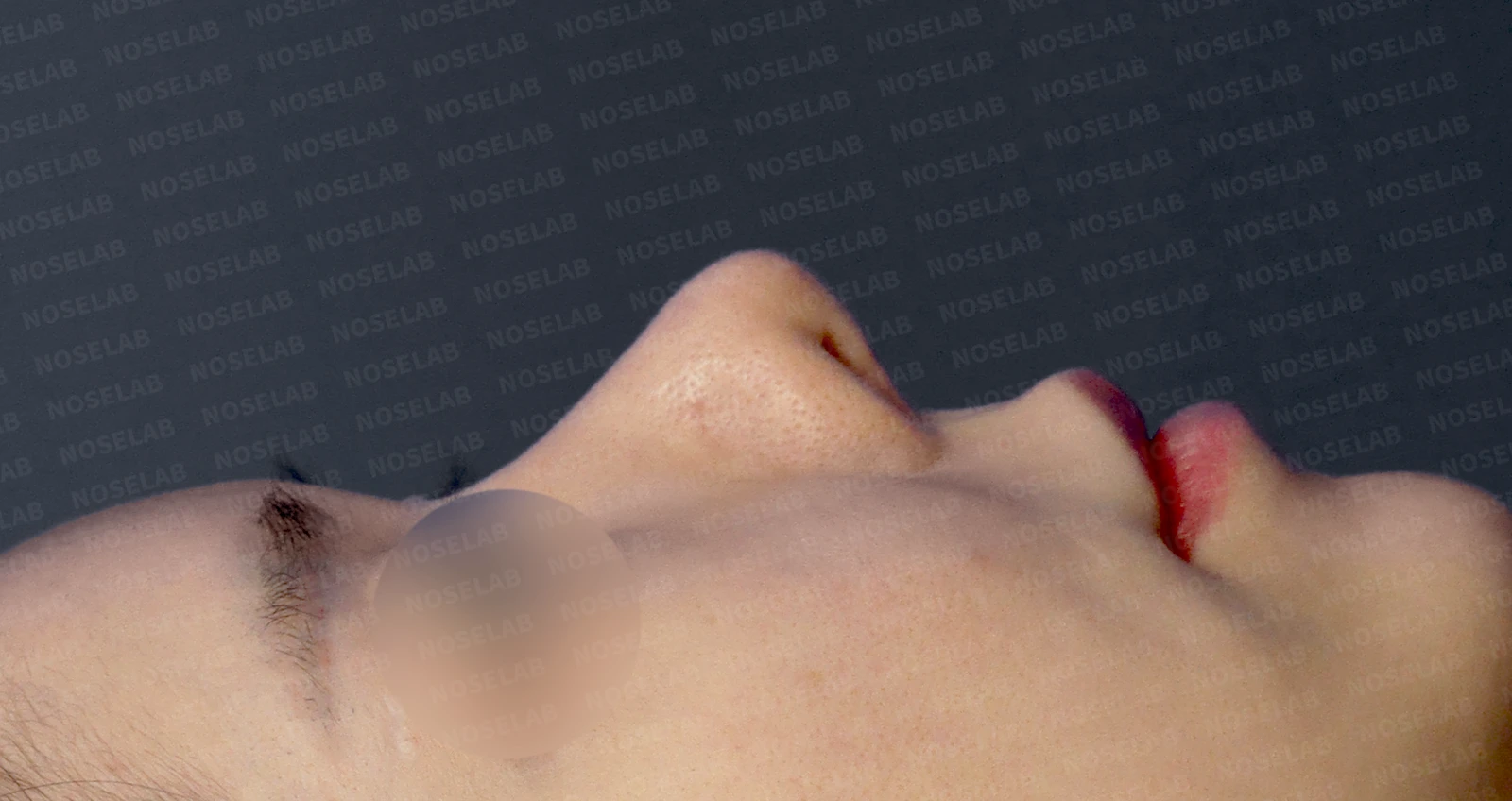
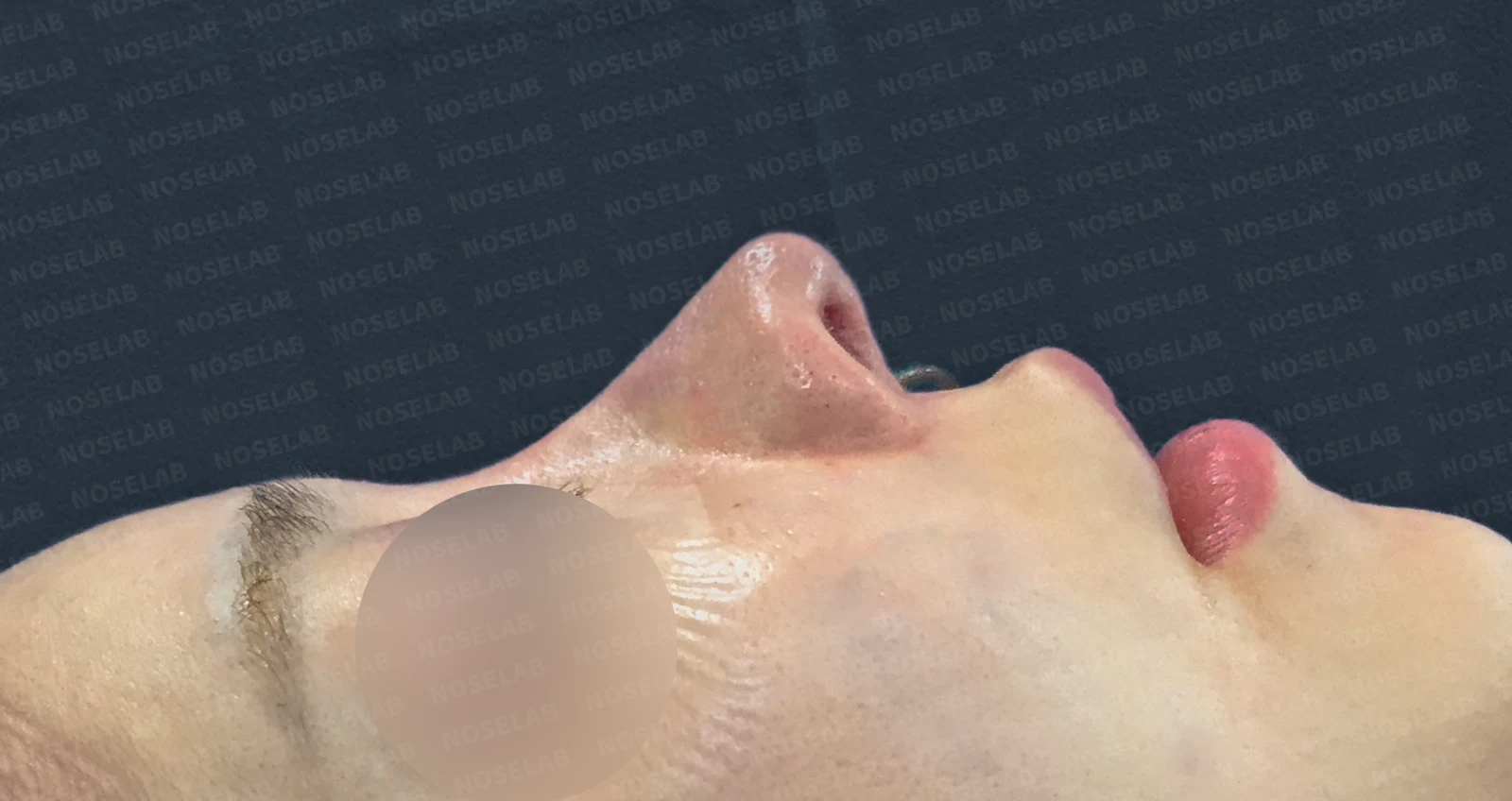
Before surgery / Day 0 immediately after surgery Photos taken immediately after surgery show swelling and may differ from the final result.
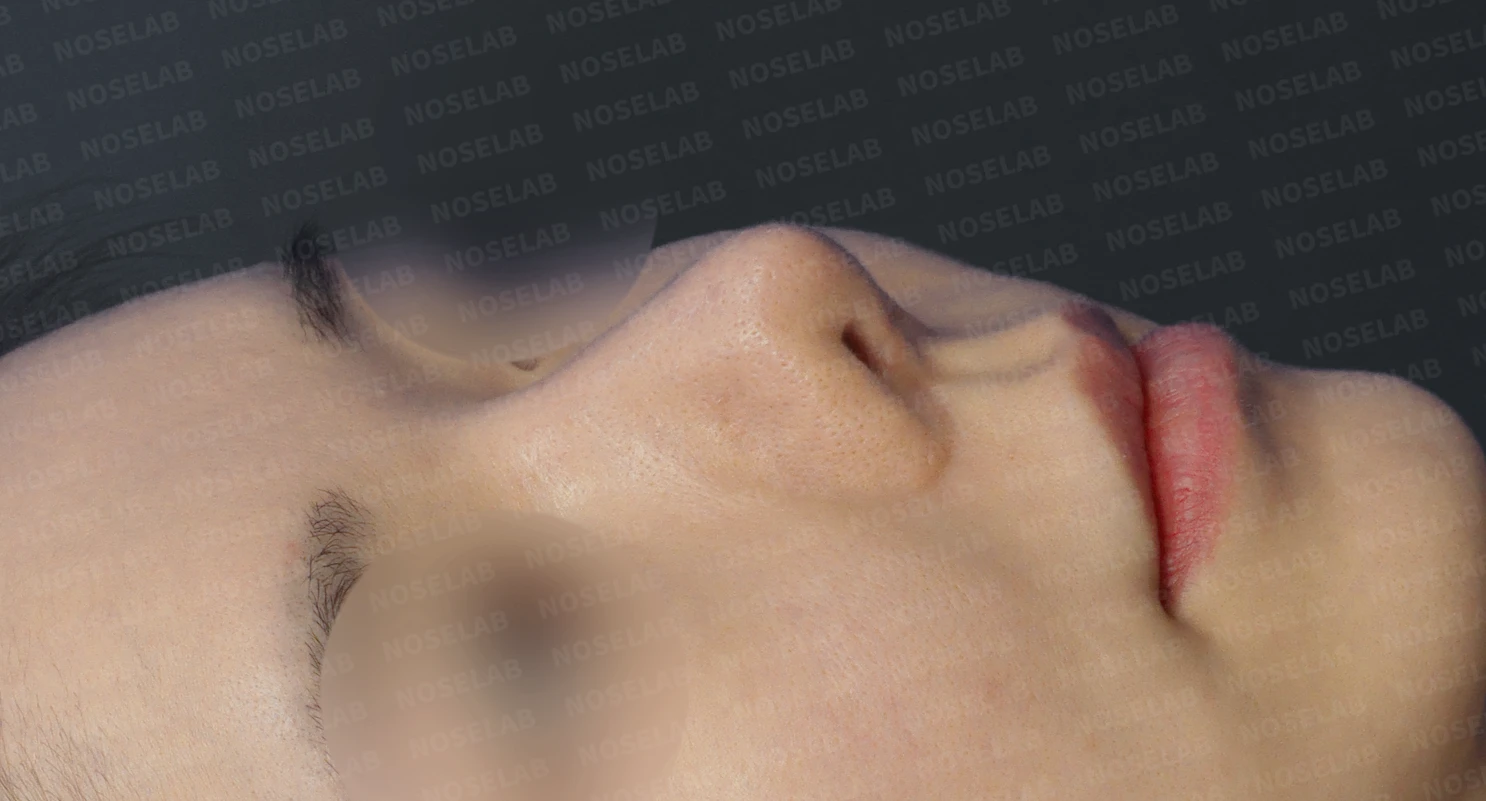
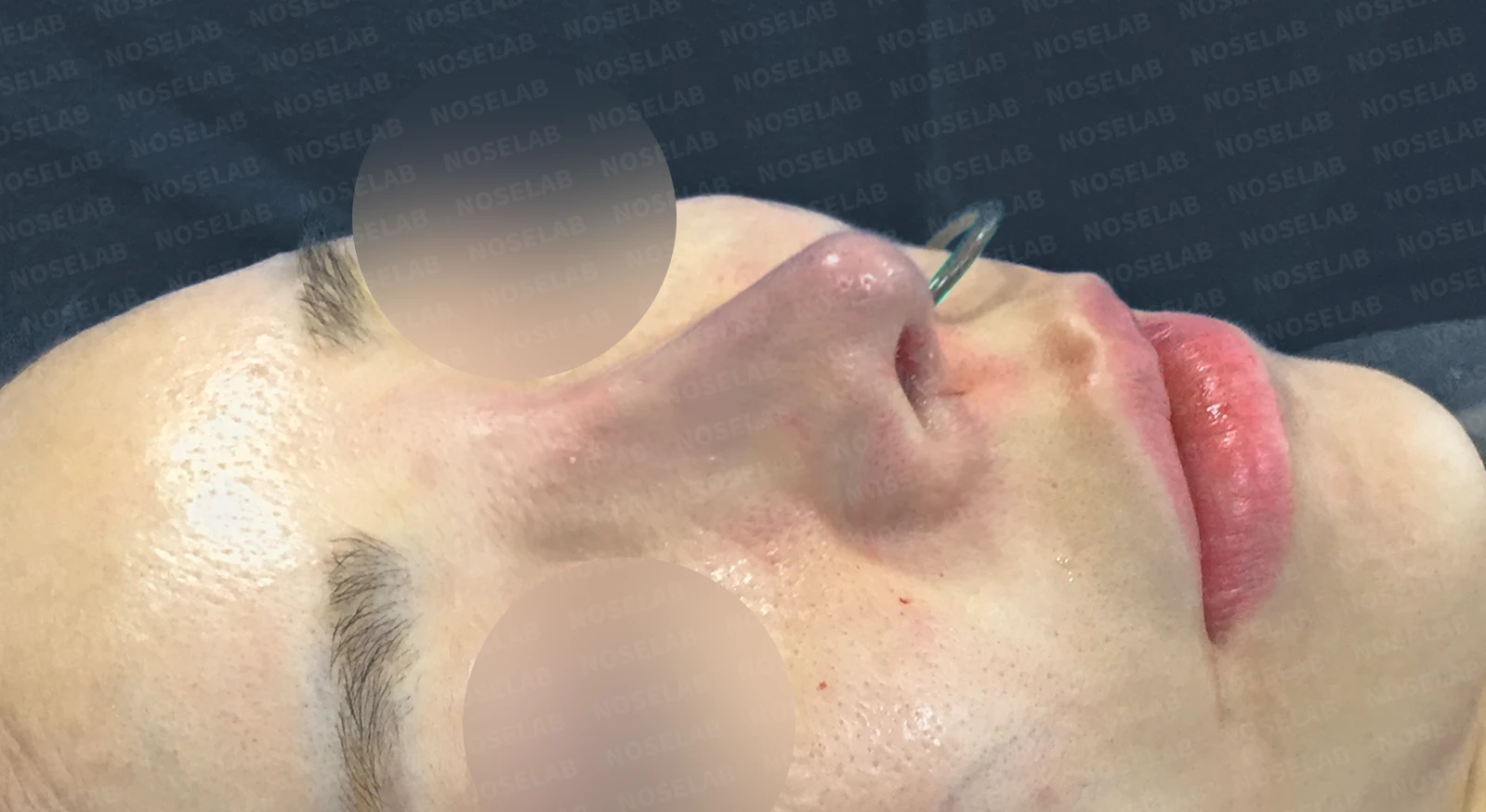
Before surgery / Day 0 immediately after surgery Photos taken immediately after surgery show swelling and may differ from the final result.
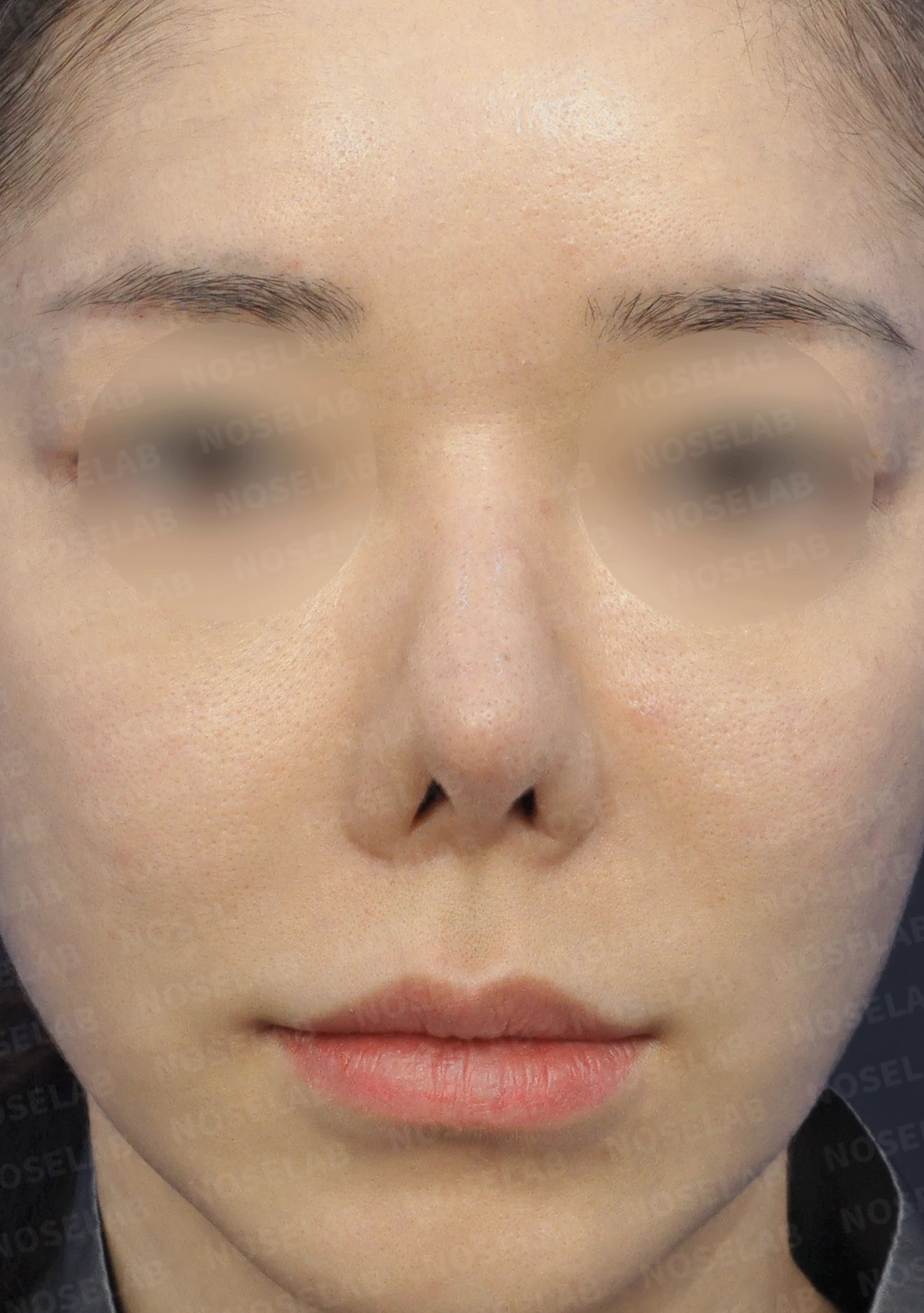
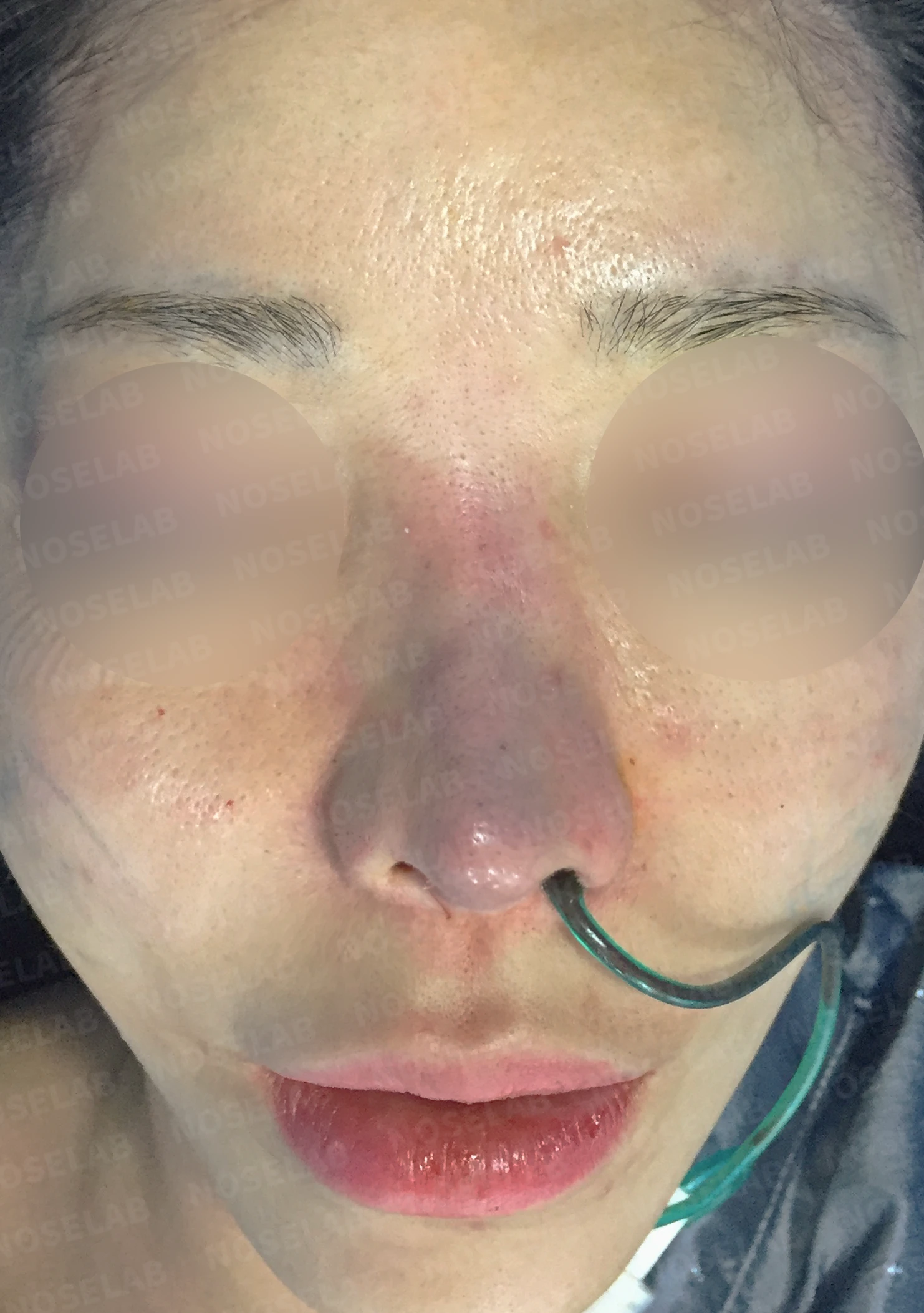
Before surgery / Day 0 immediately after surgery Photos taken immediately after surgery show swelling and may differ from the final result.
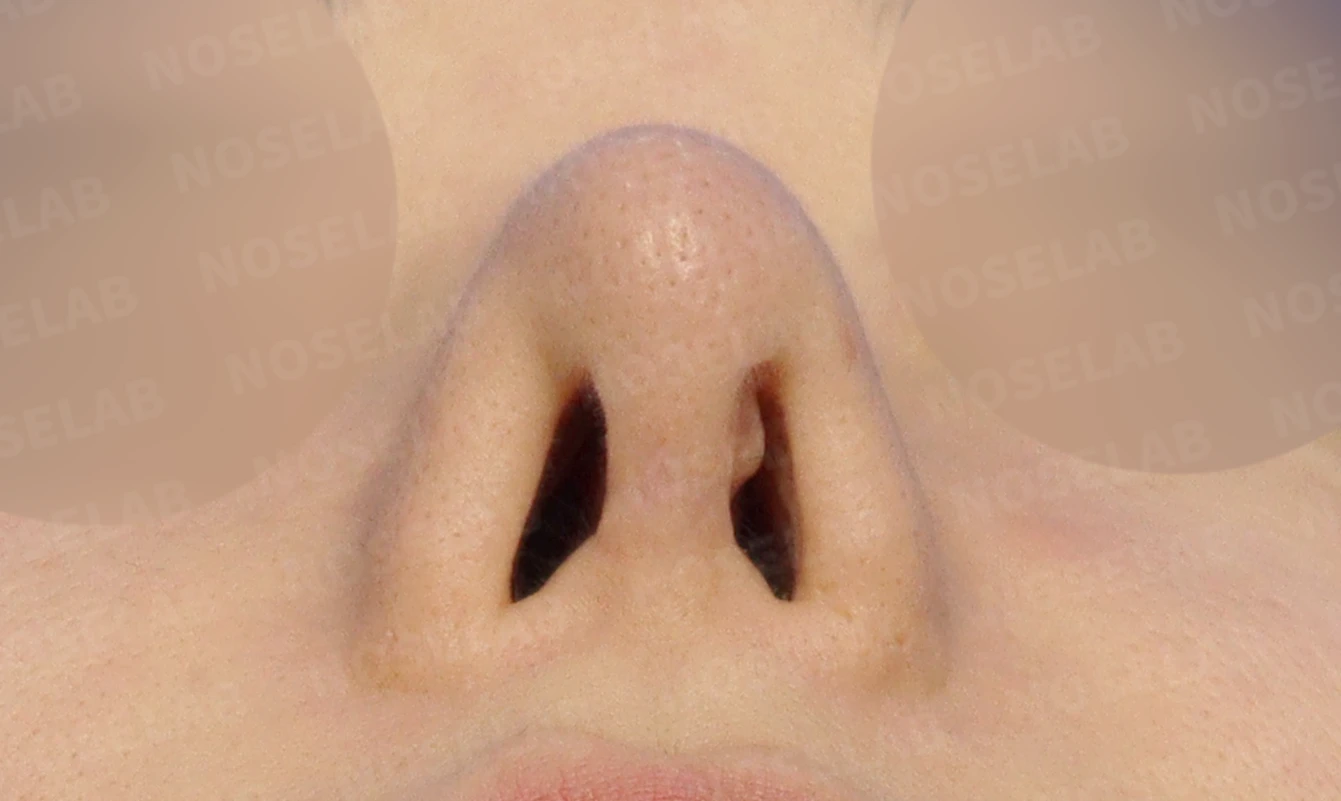
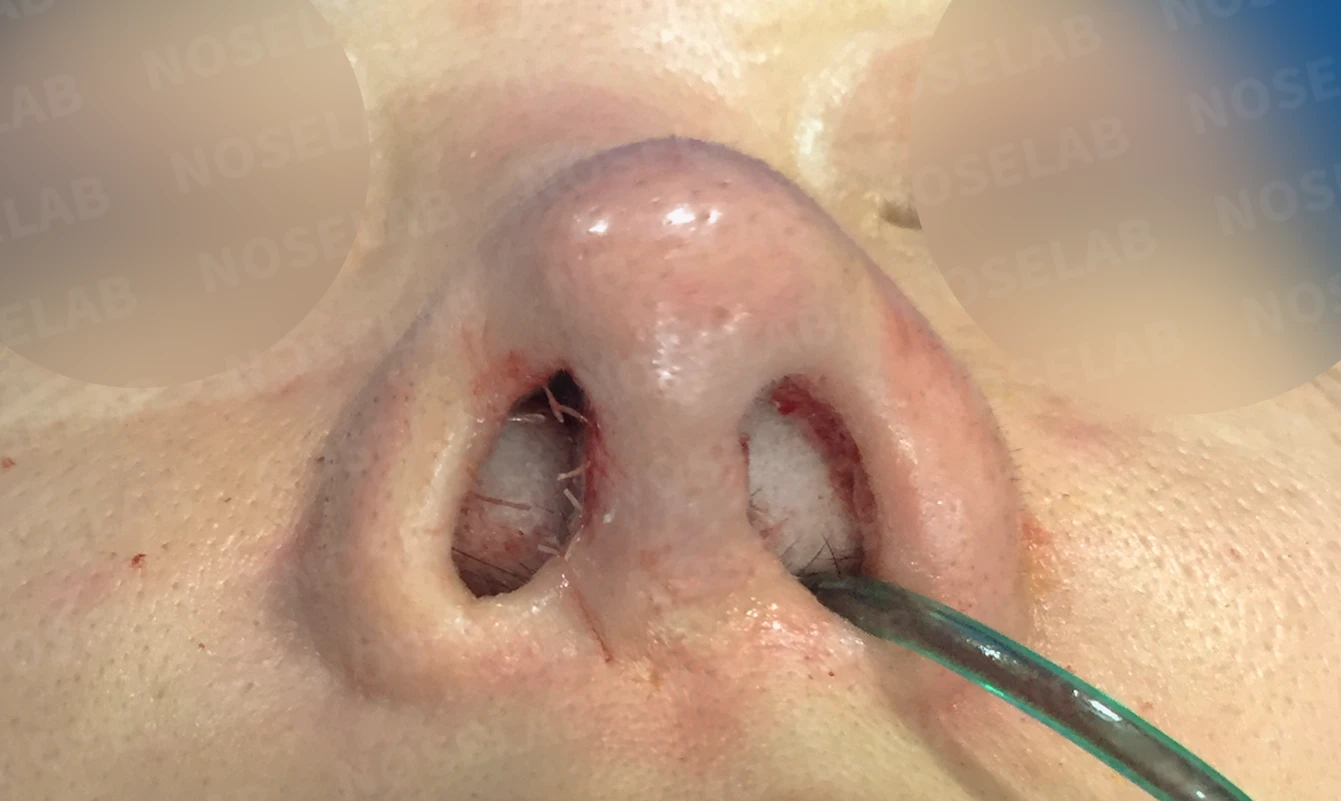
Before surgery / Day 0 immediately after surgery Photos taken immediately after surgery show swelling and may differ from the final result.
🌟 Surgical results
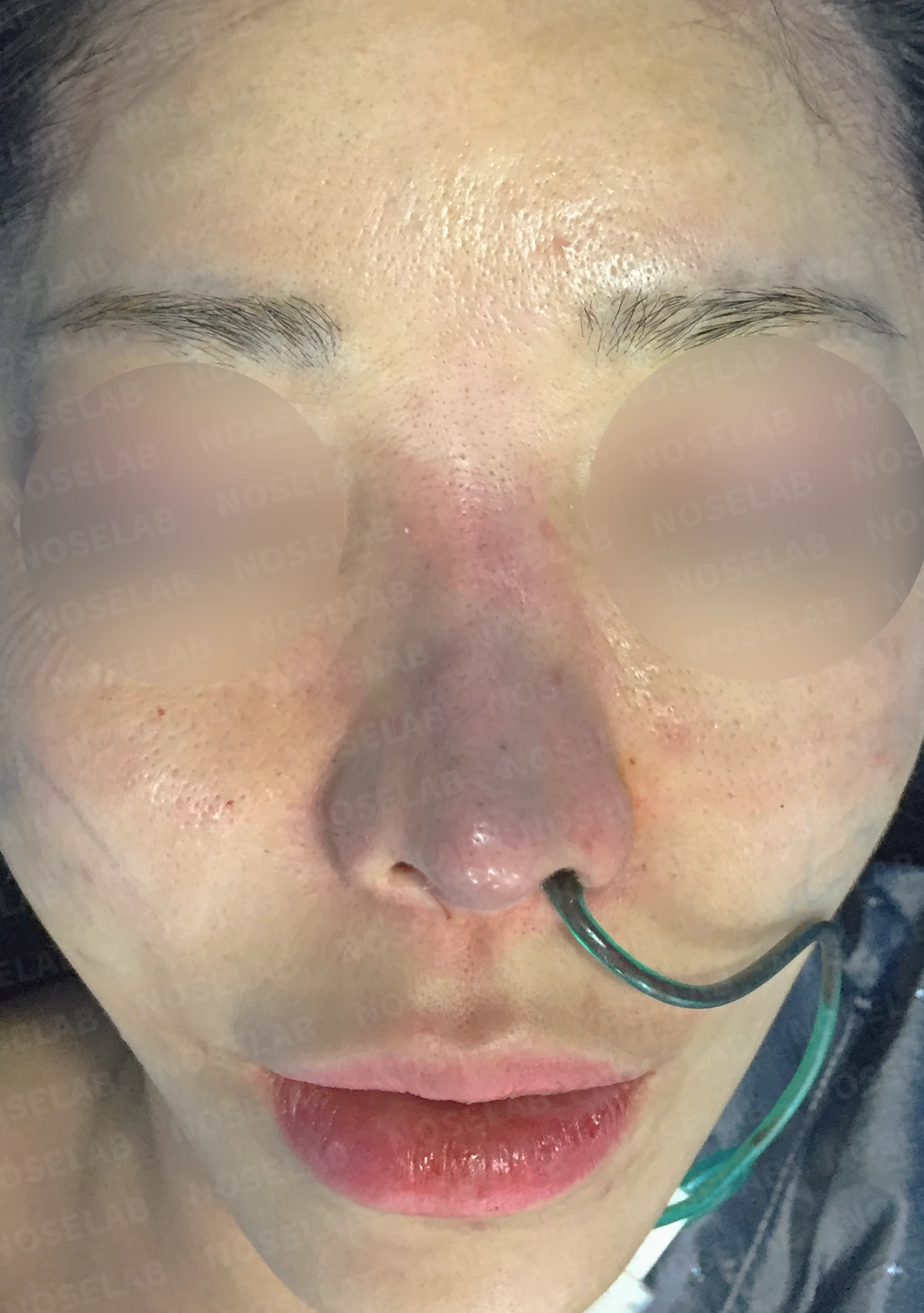
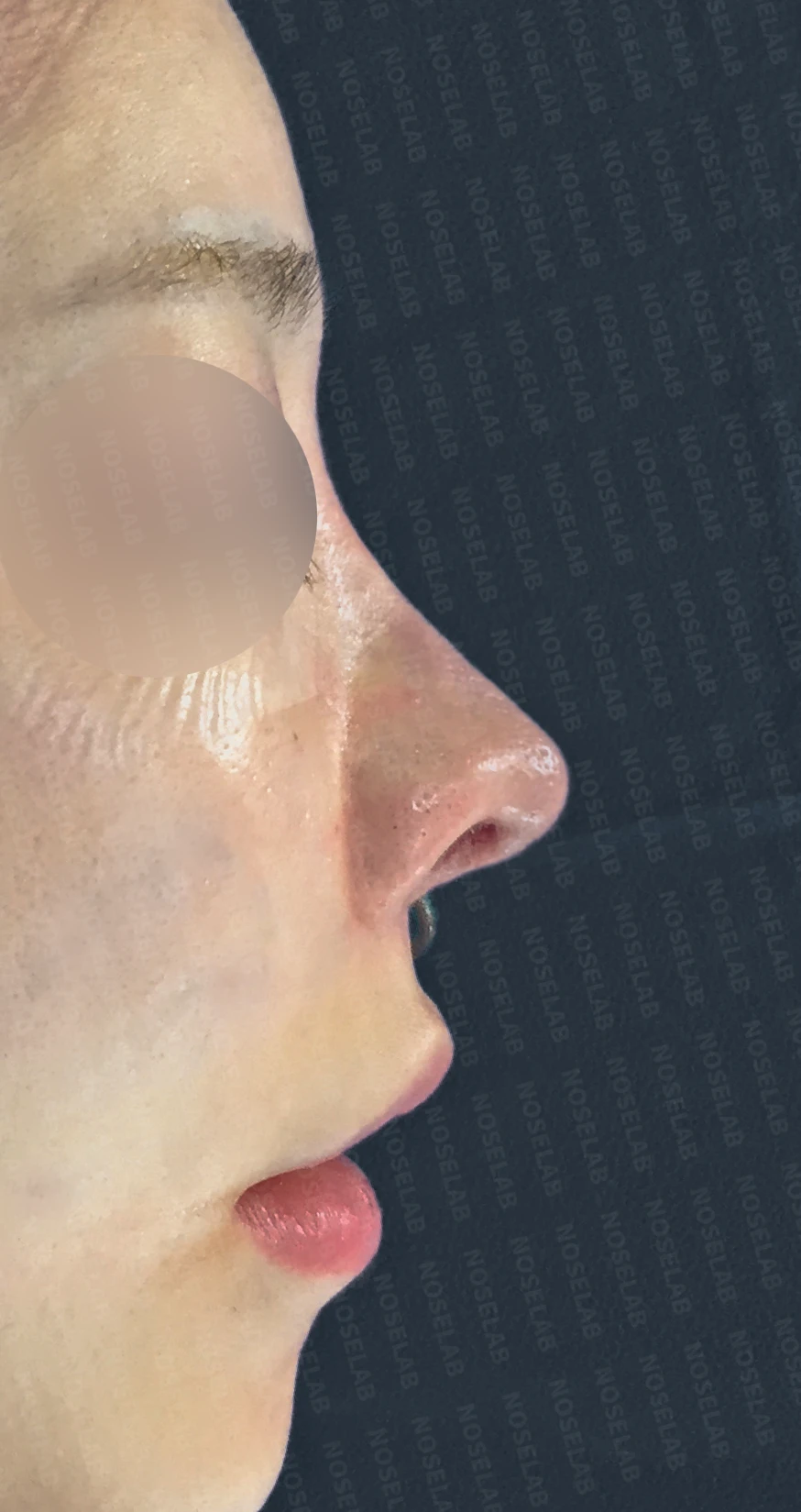
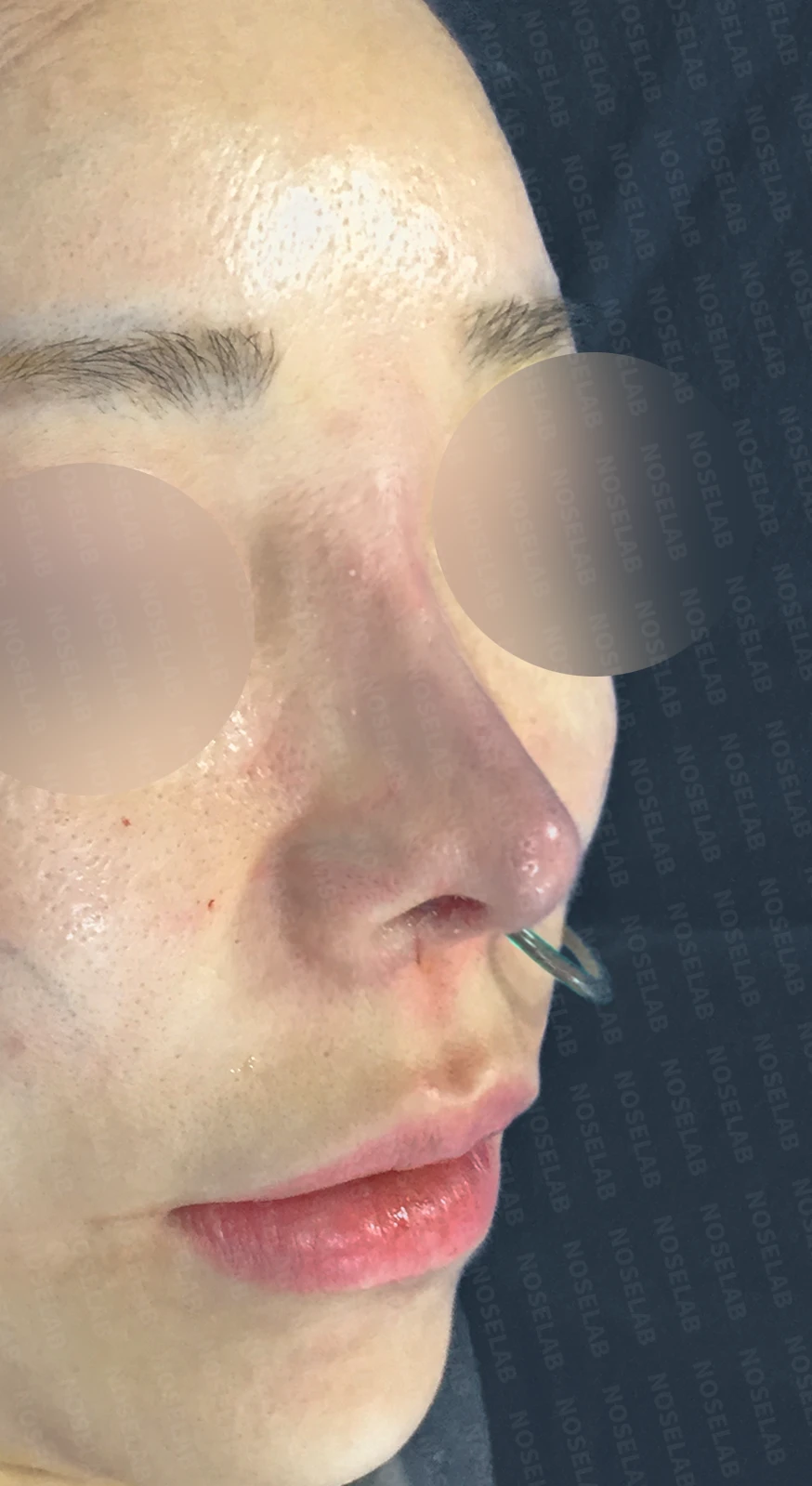
Immediately after surgery (Day 0) front, profile, and oblique viewsImmediate postoperative photos show swelling and may differ from the final result.
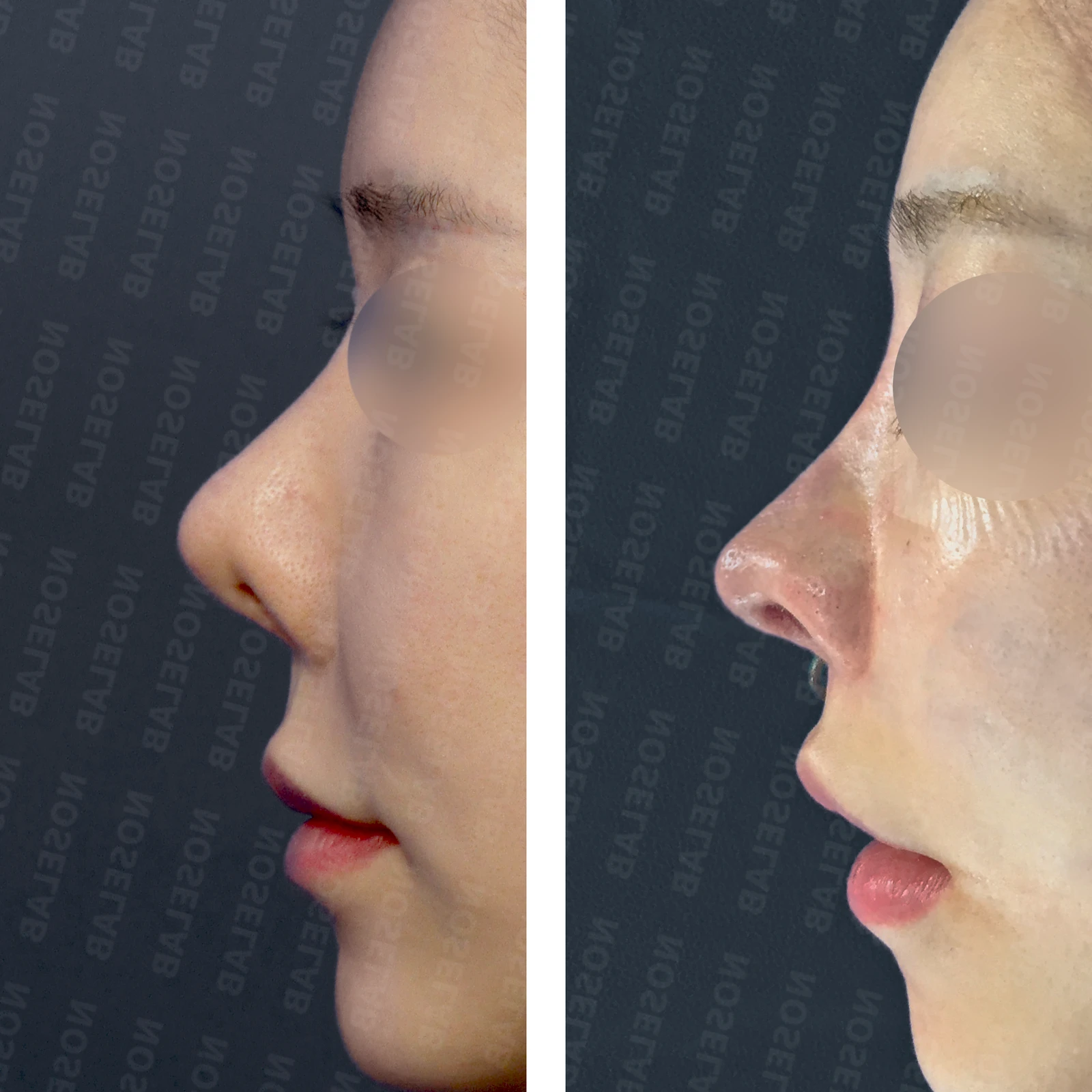
The sharp tip became much more natural, and the decreased nasolabial angle noticeably improved the upturned profile appearance. Most remarkably, the nostrils that once appeared pointed now look much more natural.
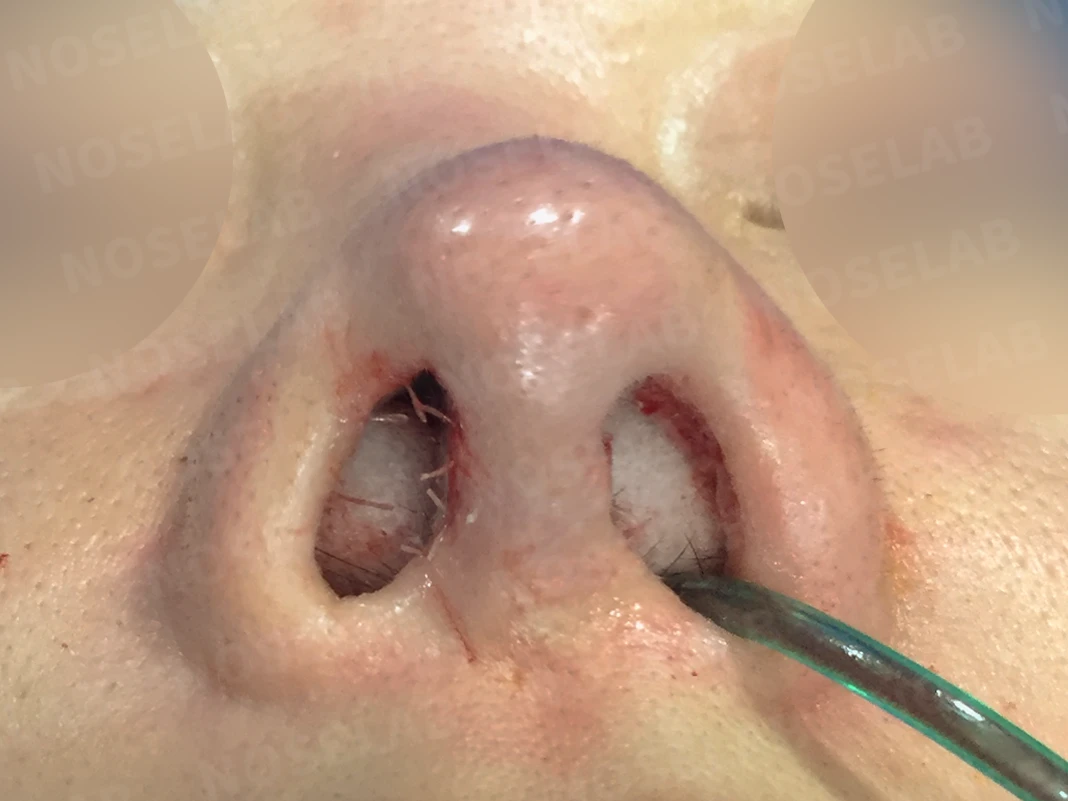
Nostril view on day 0 immediately after surgery Photos taken immediately after surgery show swelling and may differ from the final result.
💡 Summary and concluding remarks
For this type of case, proactive intravenous antibiotic therapy is planned to manage postoperative tip inflammation, alongside stem cell therapy to help prevent re-contracture. If needed after 6 months, an additional procedure to refine symmetry may be considered.
Surgery for a contracted nose caused by inflammation requires a stepwise and systematic approach. Rather than attempting to resolve every concern in a single operation, managing inflammation, reconstructing structural support, and proceeding through detailed refinements allows us to achieve the intended result.
Based on extensive experience and specialized expertise in complex revision cases, we offer the most appropriate surgical plan.
If you are considering revision rhinoplasty, please consult with an experienced specialist to establish a treatment plan that suits your specific condition.
This was Dr. Peter C. Kang. Thank you.
Thank you.
#revisionrhinoplasty #contractednosecorrection #upturnednostrilcorrection #autologousribcartilagegraft #septalreconstruction #rhinoplastycomplications #stepwiserhinoplasty #closedrhinoplasty #tiprhinoplasty #nostrilcorrection

Limitations and risks
When autologous rib cartilage is used, scarring and pain may remain at the donor site on the chest, and pneumothorax (pleural injury) can occur rarely. Over time, the grafted cartilage may warp or undergo partial resorption.
When the septum is corrected at the same time, nasal obstruction may persist or recur, and in rare cases, septal perforation or changes in smell may occur.
Common potential risks include infection, bleeding, asymmetry, scarring, skin necrosis, and insufficient improvement; results vary depending on individual skin condition and previous surgical history.