English日本語简体中文
Skip to main content
Dr. Peter C. Kang's Rhinoplasty Stories
PrologueBlogMy thoughtsNasal obstructionSurgical journalSurgical photos
About the surgeon

Revision rhinoplasty after skin necrosis or defect: records of depression and reconstruction

Articles addressing skin necrosis and defects are clinical records that cannot be interpreted solely by cosmetic changes in nasal shape. In one case, partial necrosis of the skin along the nasal bridge from a previous surgery was documented as the primary issue; in another, depression following skin necrosis on the left side of the nasal bridge was present alongside severe septal damage.

This page distinguishes a past history of tissue injury from the skin conditions observed during the current surgery. Chronological sequence is crucial, as some cases involve multiple prior surgeries, various graft materials, and skin procedures. Review the text and photographs to see where depressions remained, whether nasal tip and nostril issues were also present, and what tissue conditions were verified intraoperatively.

View before-and-after cases ↓Comprehensive rhinoplasty guide

Searching for surgical cases matching your criteria.
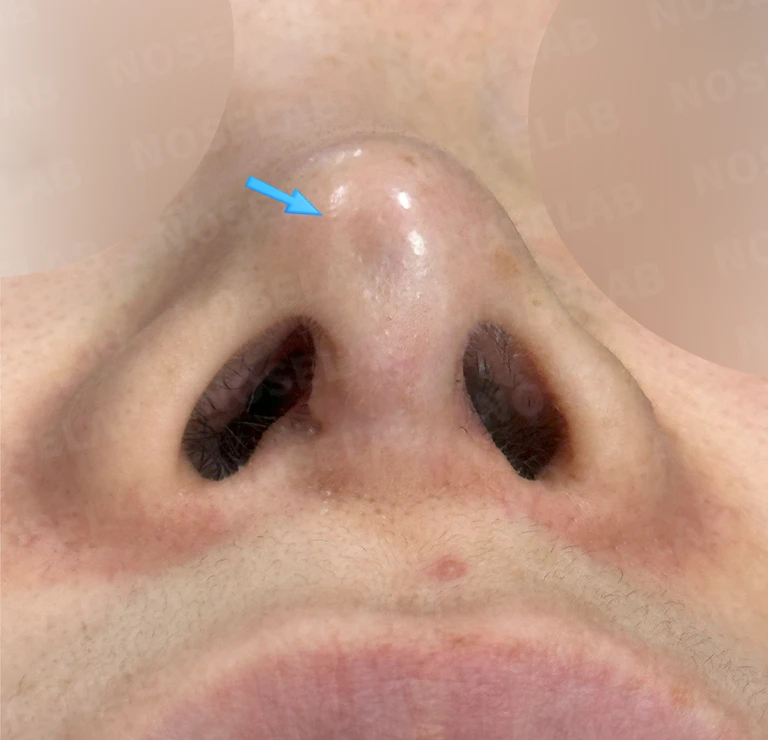
Why nasal tip skin depresses and implants show through after inflammation, and how to reconstruct it — Before-and-after comparison
Before-and-after comparison

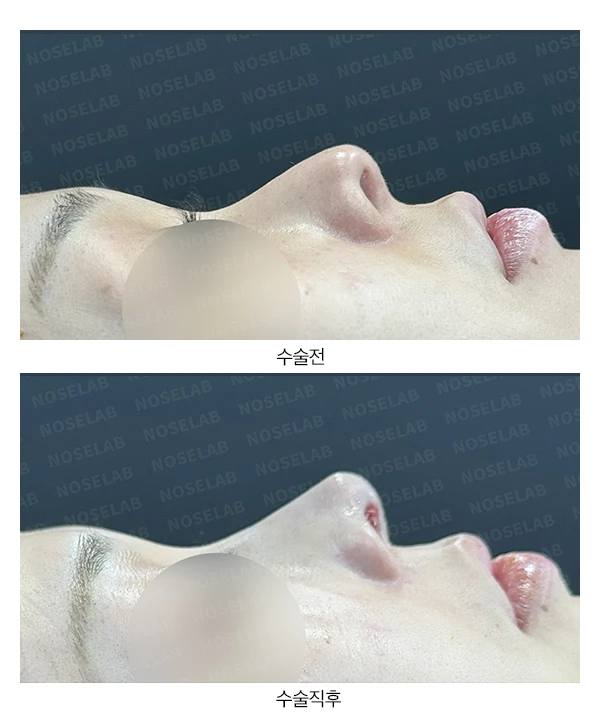
Why nasal tip skin depresses and implants show through after inflammation, and how to reconstruct it

A case where repeated surgeries and inflammation led to depressed nasal tip skin and implant show-through. The damaged skin was revised, dermal and cartilage grafts were placed, the septum was reinforced with autologous rib cartilage, and the implant was replaced.

Preoperative condition
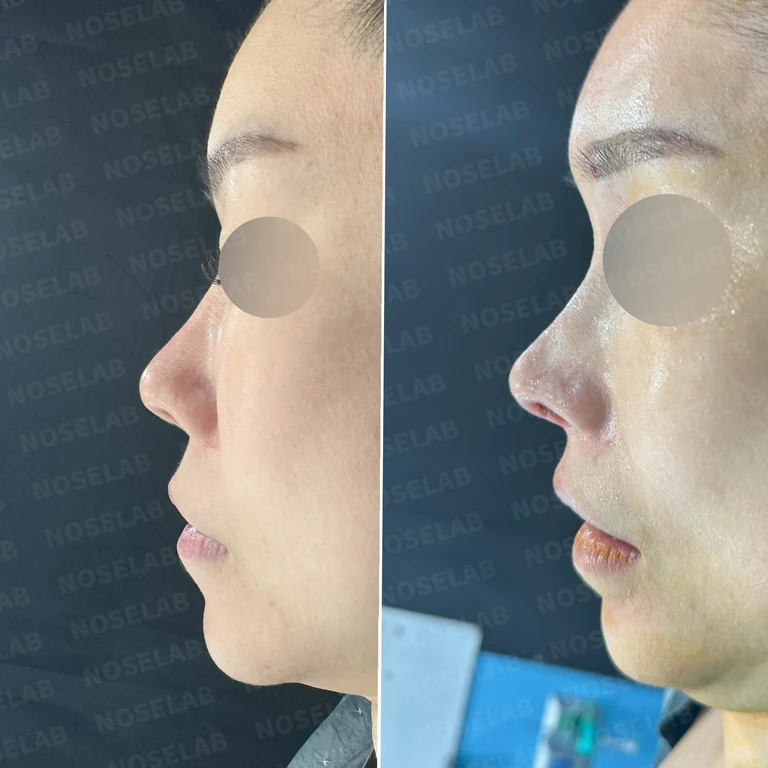
Changes following nasal bridge skin necrosis after rhinoplasty and how reconstruction is performed — Before-and-after comparison
Before-and-after comparison

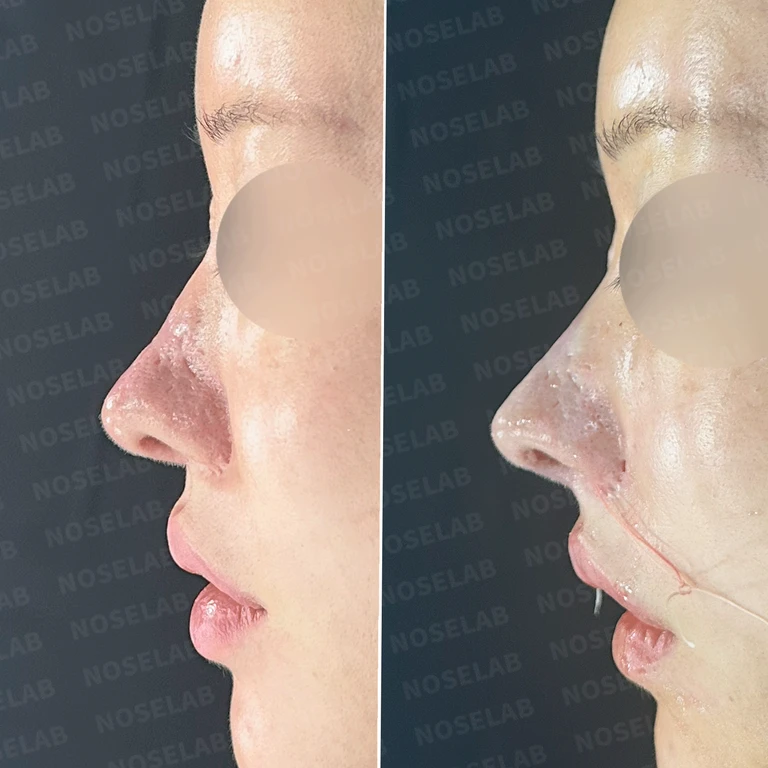
Changes following nasal bridge skin necrosis after rhinoplasty and how reconstruction is performed

In a case with signs of nasal bridge skin necrosis and alar asymmetry after multiple rhinoplasties, the nasal bridge and nostril shape were reconstructed using autologous rib cartilage grafting, alar repositioning, and growth factor application.

Preoperative condition

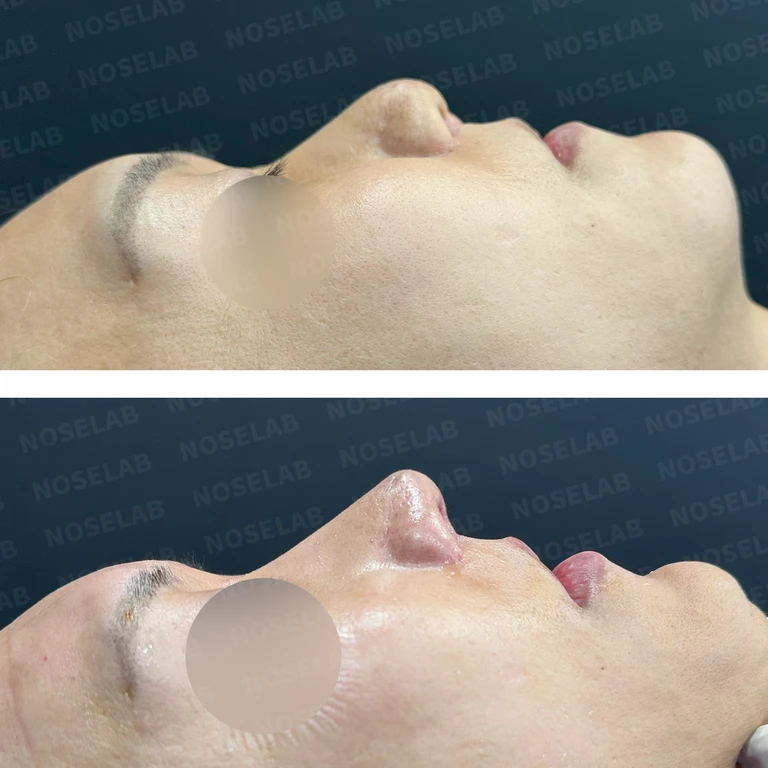
Nasal bridge depression and nostril asymmetry after multiple rhinoplasties: causes and reconstruction methods — Before-and-after comparison
Before-and-after comparison

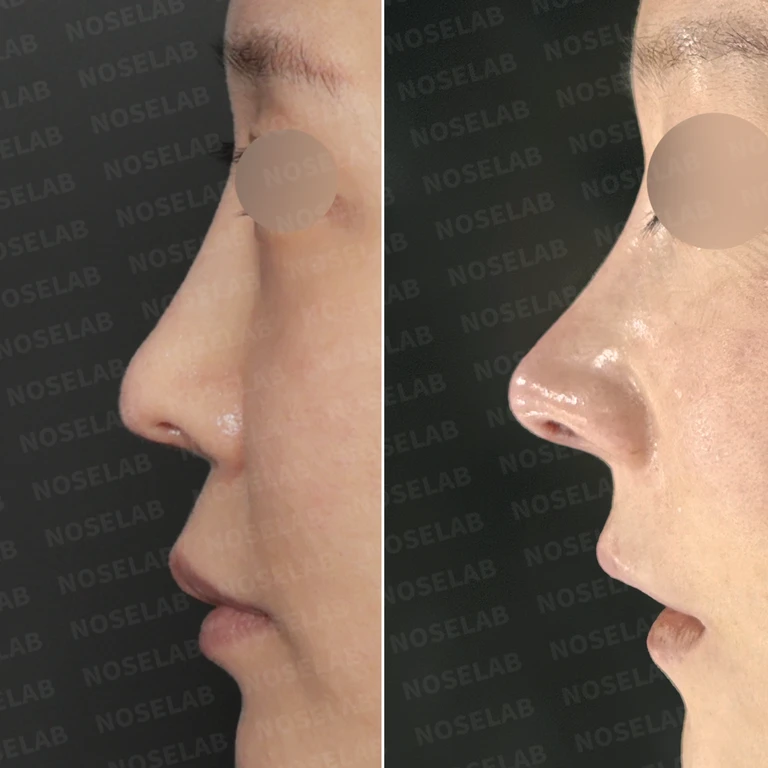
Nasal bridge depression and nostril asymmetry after multiple rhinoplasties: causes and reconstruction methods

A case where nasal bridge depression caused by skin necrosis and severe septal damage were improved with septal reconstruction using autologous rib cartilage, cartilage and acellular dermal matrix grafts, and submucosal resection of the inferior turbinate.

Previous surgeries and procedures

Reconstruction methods to evaluate damaged structures in a contracted nose — Before-and-after comparison
Before-and-after comparison

Reconstruction methods to evaluate damaged structures in a contracted nose

In a case where flap necrosis resulted in recurrent contracture, a retracted columella, and an upturned nasal tip, silicone implant removal was followed by septal reconstruction using autologous rib cartilage and mucosal graft.

Previous surgeries and procedures

Revision rhinoplasty planning considering nasal tip skin condition and necrosis risk — Before-and-after comparison
Before-and-after comparison

Revision rhinoplasty planning considering nasal tip skin condition and necrosis risk

This is a case of septal damage, an upturned nose, and nasal tip skin depression after multiple previous surgeries. Using a closed approach to preserve blood supply, we performed septal reconstruction with autologous rib cartilage along with cartilage and dermal grafts.

Previous surgeries and procedures

Structure and reconstruction methods for a contracted nose after MRSA infection — Before-and-after comparison
Before-and-after comparison

Structure and reconstruction methods for a contracted nose after MRSA infection

A contracted nose with cartilage damage caused by MRSA infection was reconstructed using a closed approach with autologous rib cartilage septal reconstruction and extension, osteotomy, and lower lateral cartilage correction.

Previous surgeries and procedures

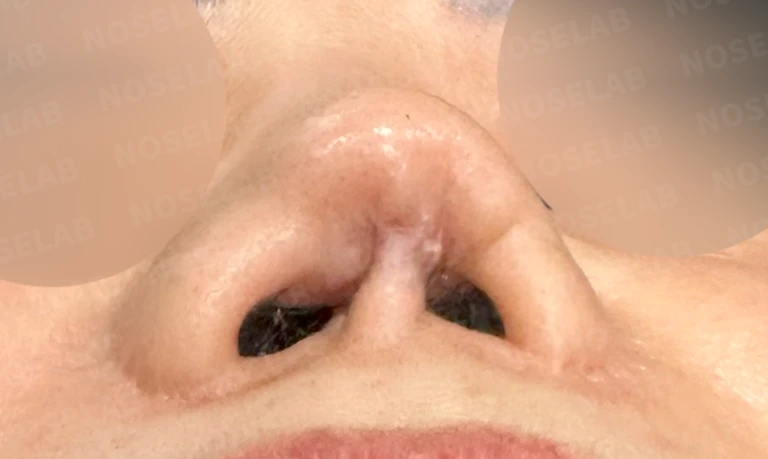
Surgical approach to reconstructing a contracted nose after severe inflammation and partial skin necrosis of the nasal tip — Before-and-after comparison
Before-and-after comparison

Surgical approach to reconstructing a contracted nose after severe inflammation and partial skin necrosis of the nasal tip

This is a case of recurrent inflammation leading to partial skin necrosis, a depressed scar, and contracture deformity of the nasal tip. After stem cell therapy, revision surgery was performed with a surgical plan including septal reconstruction, lowering the nostril rims, and dermal grafting.

Previous surgeries and procedures

No search results found

Please try searching with different keywords.

Scroll to keep reading

Common questions before reading the cases

Does the category of skin necrosis mean necrosis is actively progressing right now?

It does not imply that ongoing necrosis is present. One case details past skin necrosis from a prior procedure as medical history, addressing the resulting left nasal bridge depression and septal damage during the current revision rhinoplasty. Another record notes intraoperative observations of skin vascularity. Past tissue damage, current residual shape, and current clinical findings should each be evaluated separately.

Why are skin depression cases reviewed separately from a typical low nasal bridge?

The depressions presented here are cases where a history of skin necrosis is explicitly documented in the records. For one patient, bridge depression was recorded alongside septal damage, an upturned tip, and nostril asymmetry. Grouping these merely as a low nasal bridge overlooks past tissue damage and the reconstruction process, which is why they are presented in this distinct clinical context.

Related topics to explore

Thin nasal skinScars and adhesionsSeptal damage and defectSkin and soft tissue reinforcement

Surgical records referenced in this guide

  • Changes following nasal bridge skin necrosis after rhinoplasty and how reconstruction is performed
  • Nasal bridge depression and nostril asymmetry after multiple rhinoplasties: causes and reconstruction methods
  • Why nasal tip skin depresses and implants show through after inflammation, and how to reconstruct it
Original article

Read more records

Planning a visit to Seoul?Prepare your consultation with the NOSELAB team.

International patient guideWhatsApp ↗
Dr. Peter C. Kang's Rhinoplasty Stories
Rhinoplasty guideCases by topicDr. Peter C. KangNaver Blog ↗
View original photo
Enlarged photo
WhatsAppChat with NOSELAB↗