Hello, I am Dr. Peter C. Kang.
Today, I would like to introduce a correction case for a patient troubled by a crooked nose and an upturned nose. The patient had undergone multiple rhinoplasties in the past, and an open rhinoplasty was difficult to perform due to the risk of nasal tip necrosis.
1. Patient surgical history and concerns
Surgical history:
Double jaw surgery (1 year ago)
Nose filler (5–6 years ago, not dissolved)
Donor rib cartilage + septal cartilage + silicone implant at another plastic surgery clinic
Autologous rib cartilage + silicone implant at another plastic surgery clinic (10 months ago)
Nasal tip derotation surgery (postoperative day 5) due to the risk of nasal tip necrosis
Concerns:
Upturned nose
Crooked nose
Wide nose
Protruding mouth
Depression and hyperpigmentation of nasal tip skin
2. Preoperative analysis
Front view:
Excessive nostril show
Wide, spread-out nose
Crooked nasal bridge
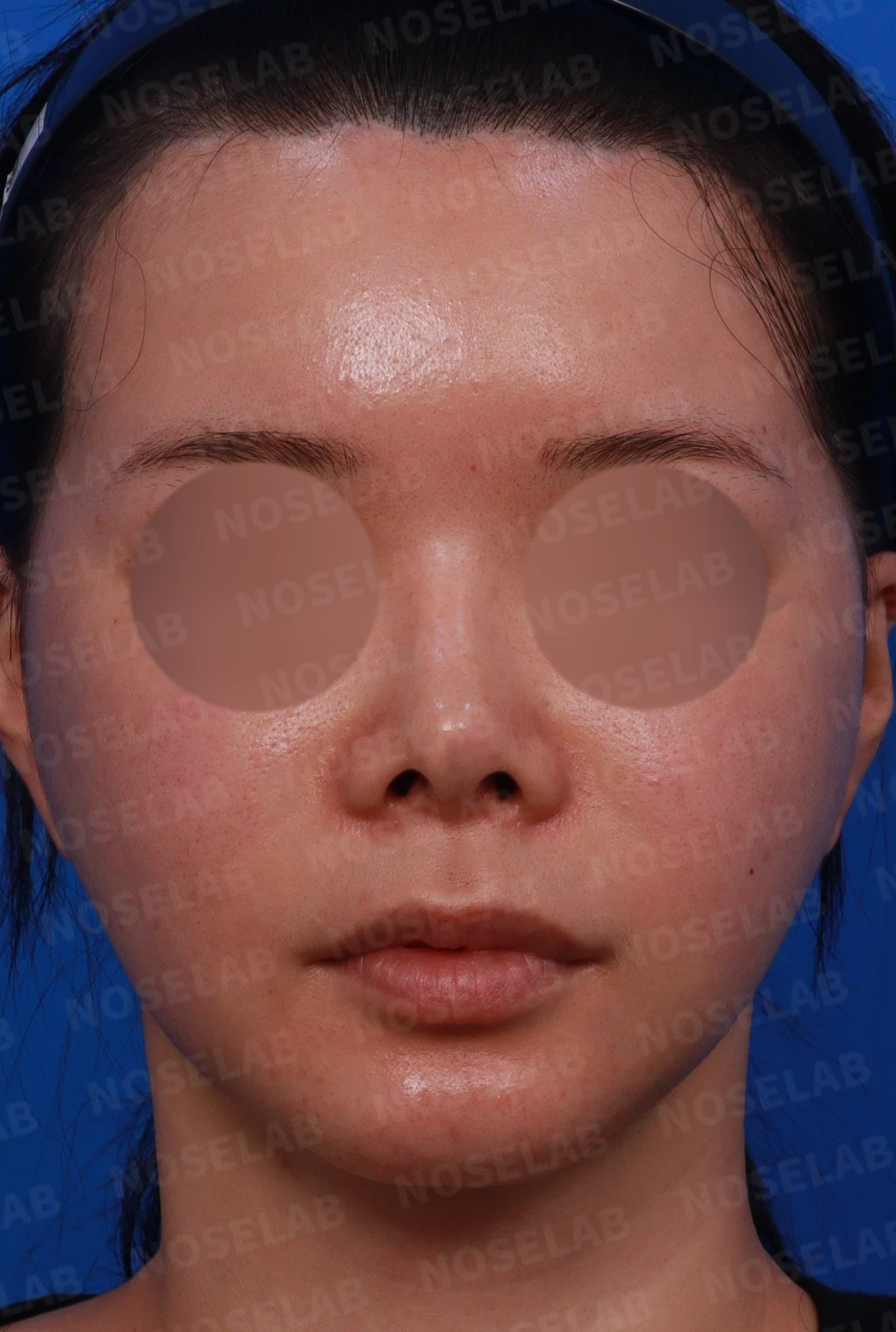
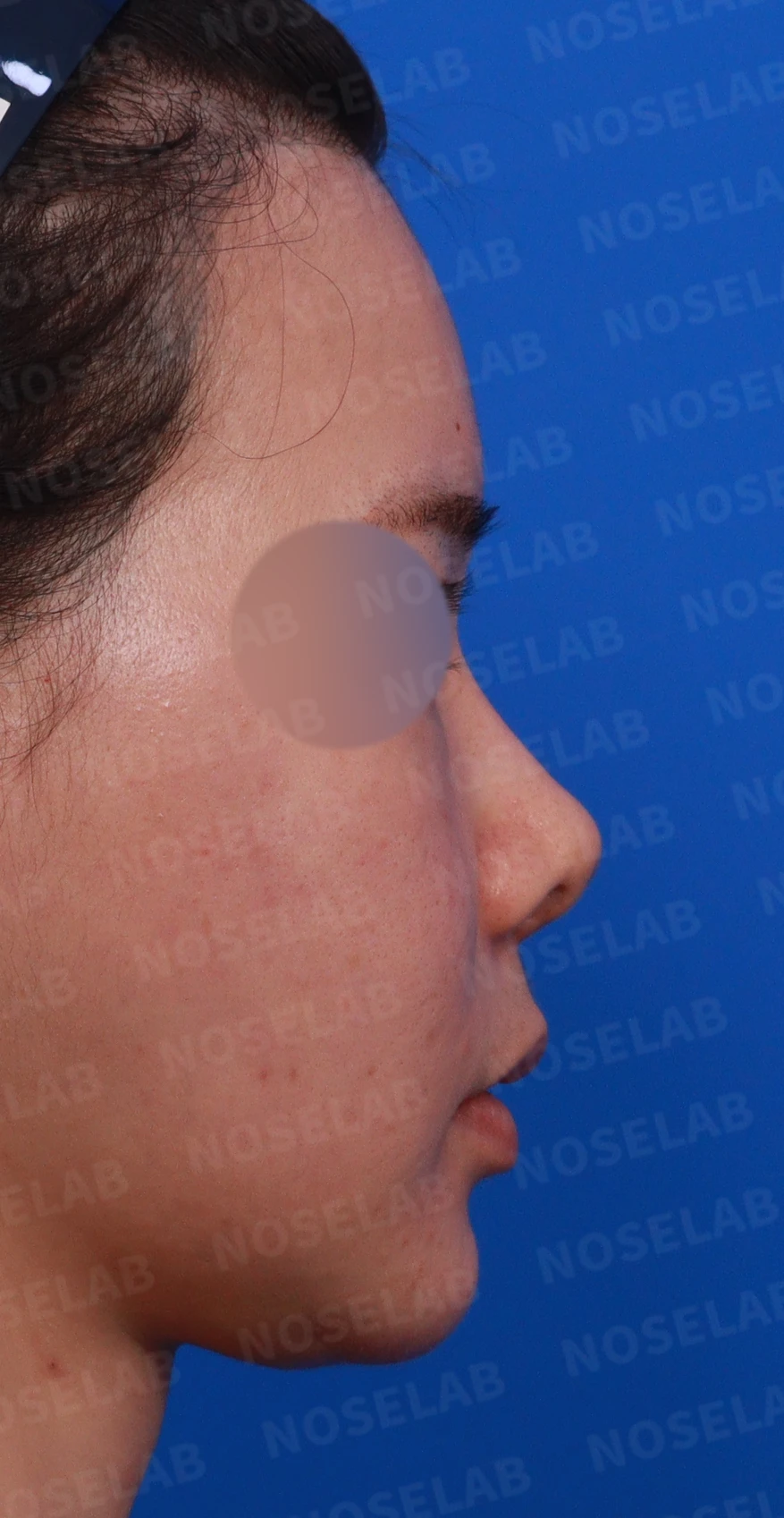
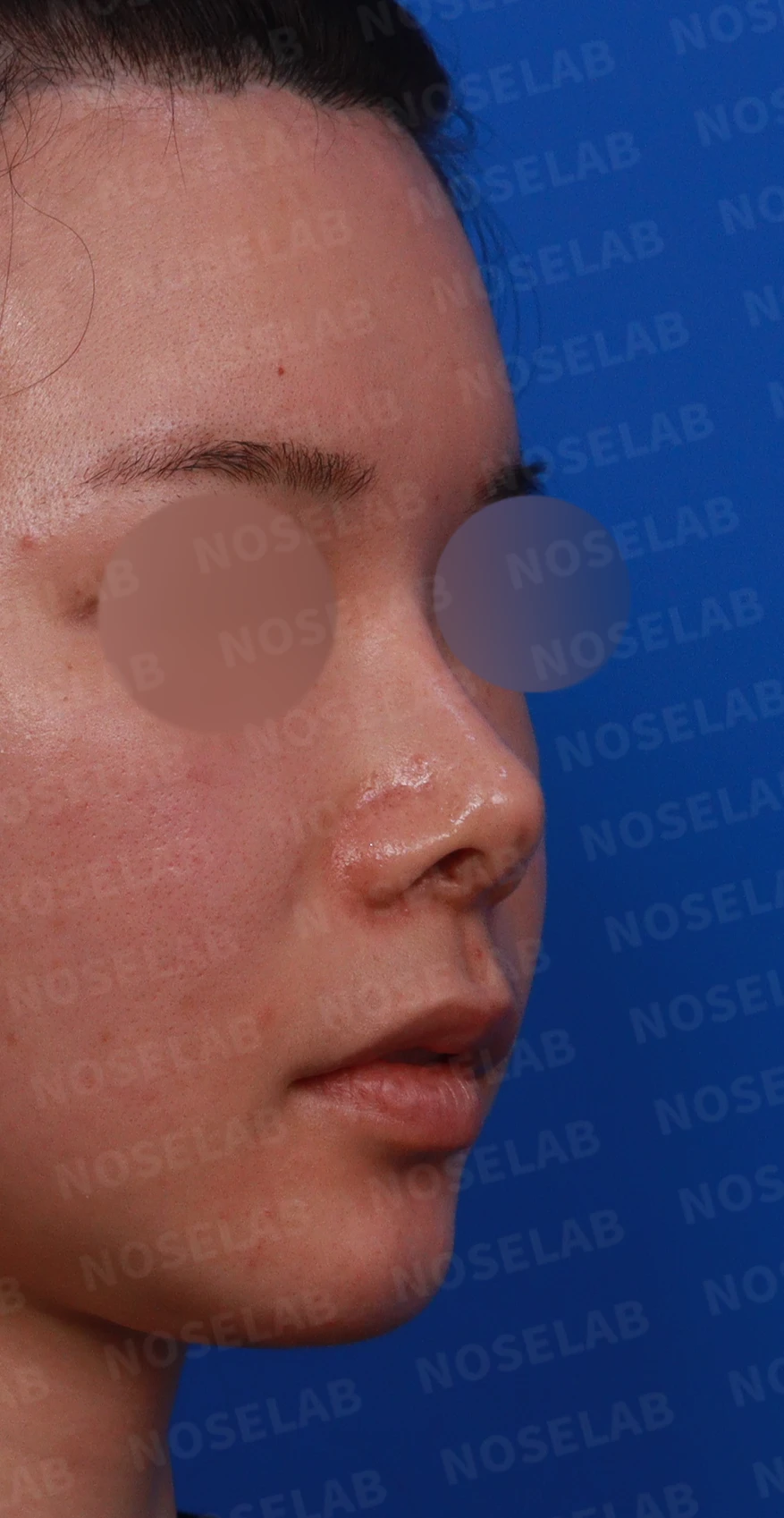
Preoperative design consultation: front, profile, and oblique views [upturned nose, wide nose, crooked nose]
Profile view:
The nasal tip is upturned
The radix appears high
Observed protruding mouth
Oblique view:
Wide appearance is clearly visible
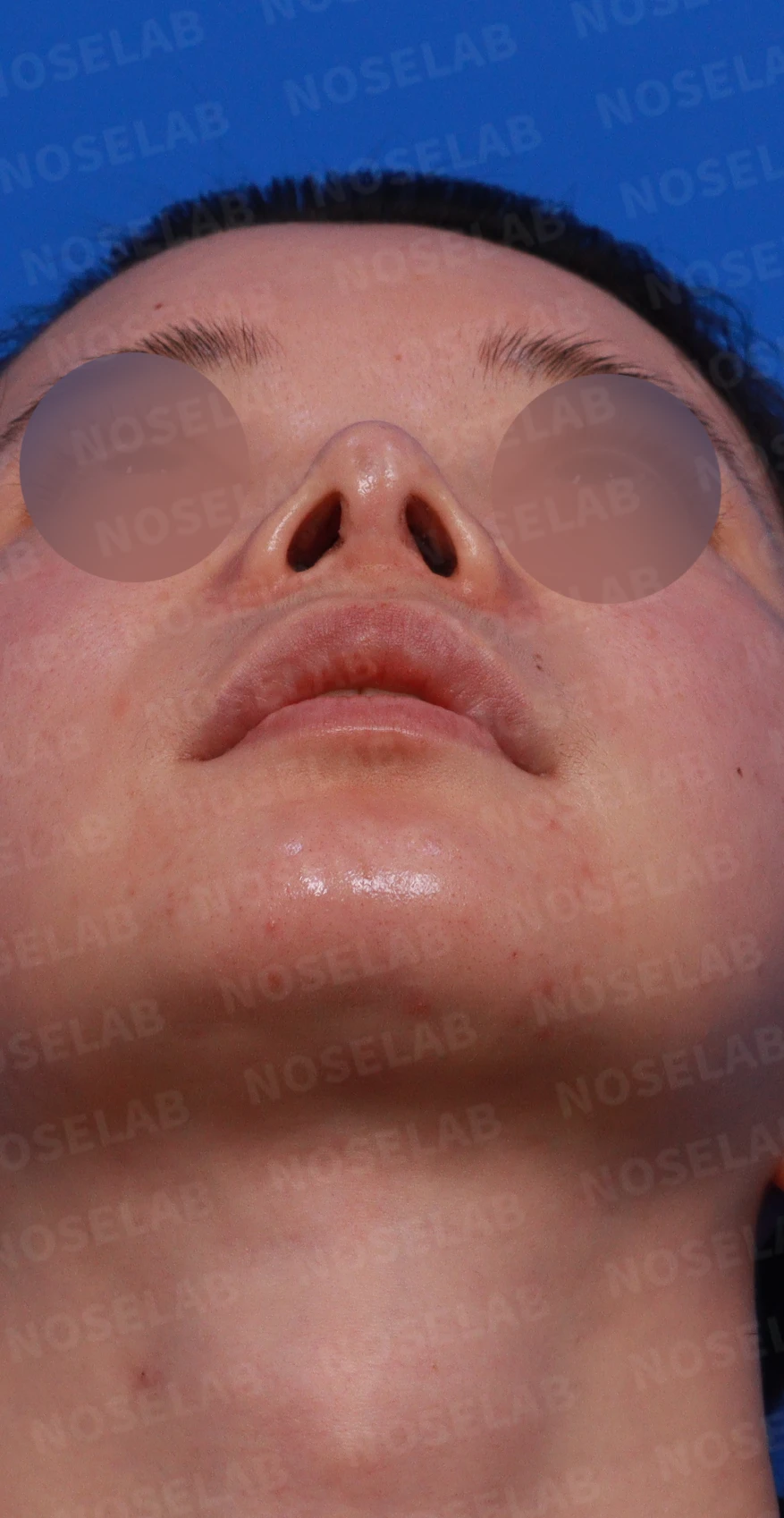
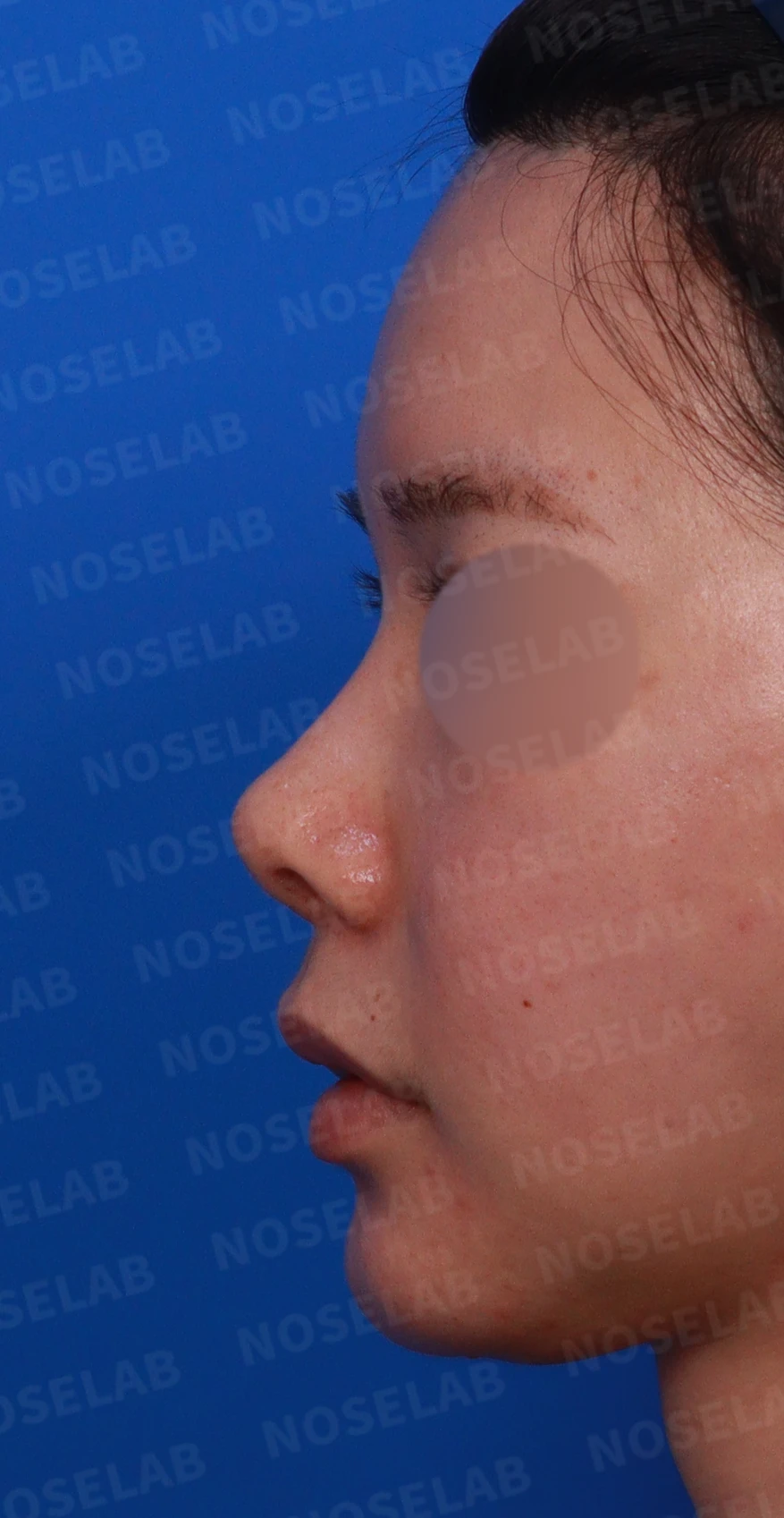
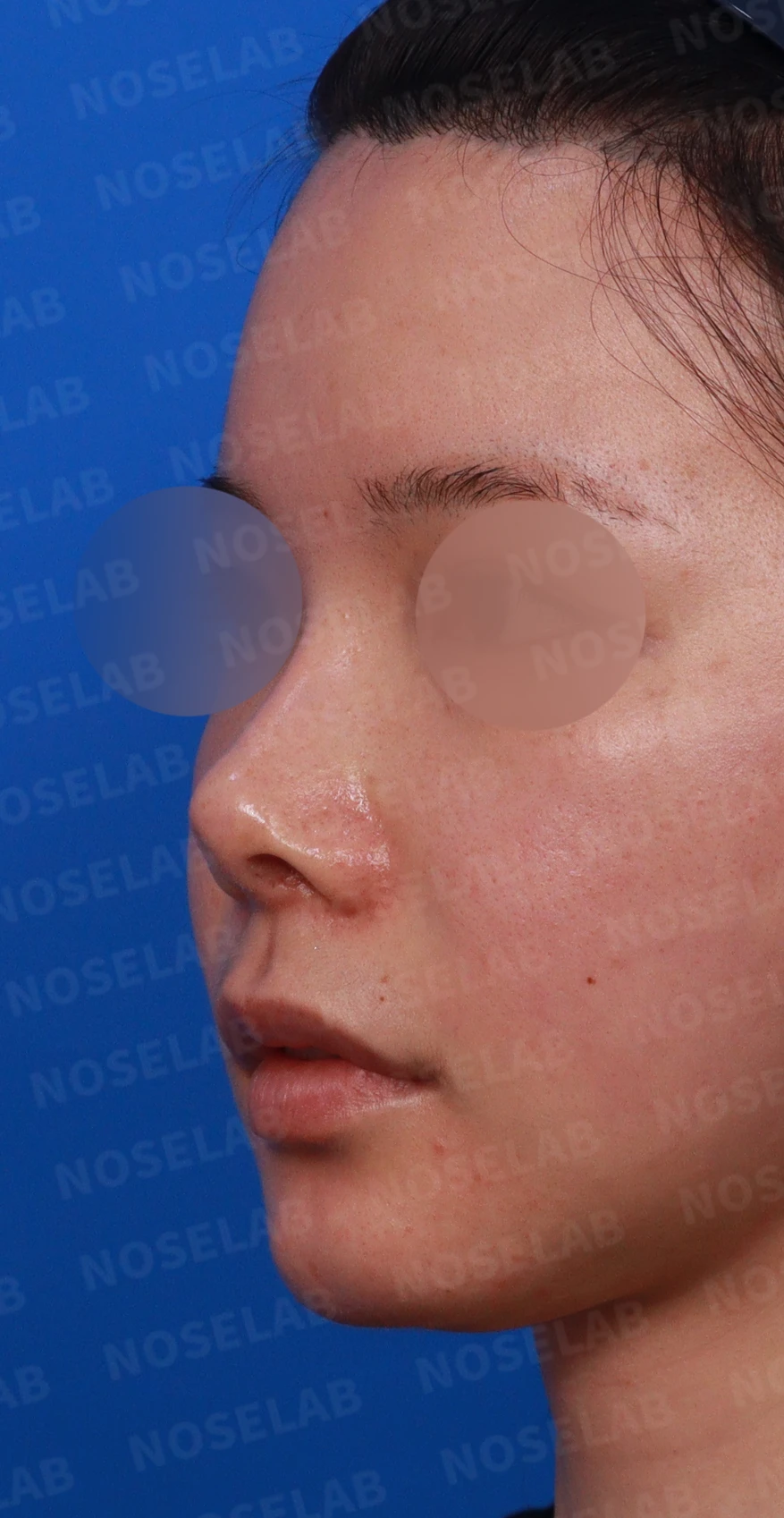
Preoperative design consultation: front, profile, and oblique views [upturned nose, wide nose, crooked nose]
Nostrils:
Skin depression and hyperpigmentation observed on the right nasal tip
Scar tissue observed on both sides of the columella
Nostril asymmetry
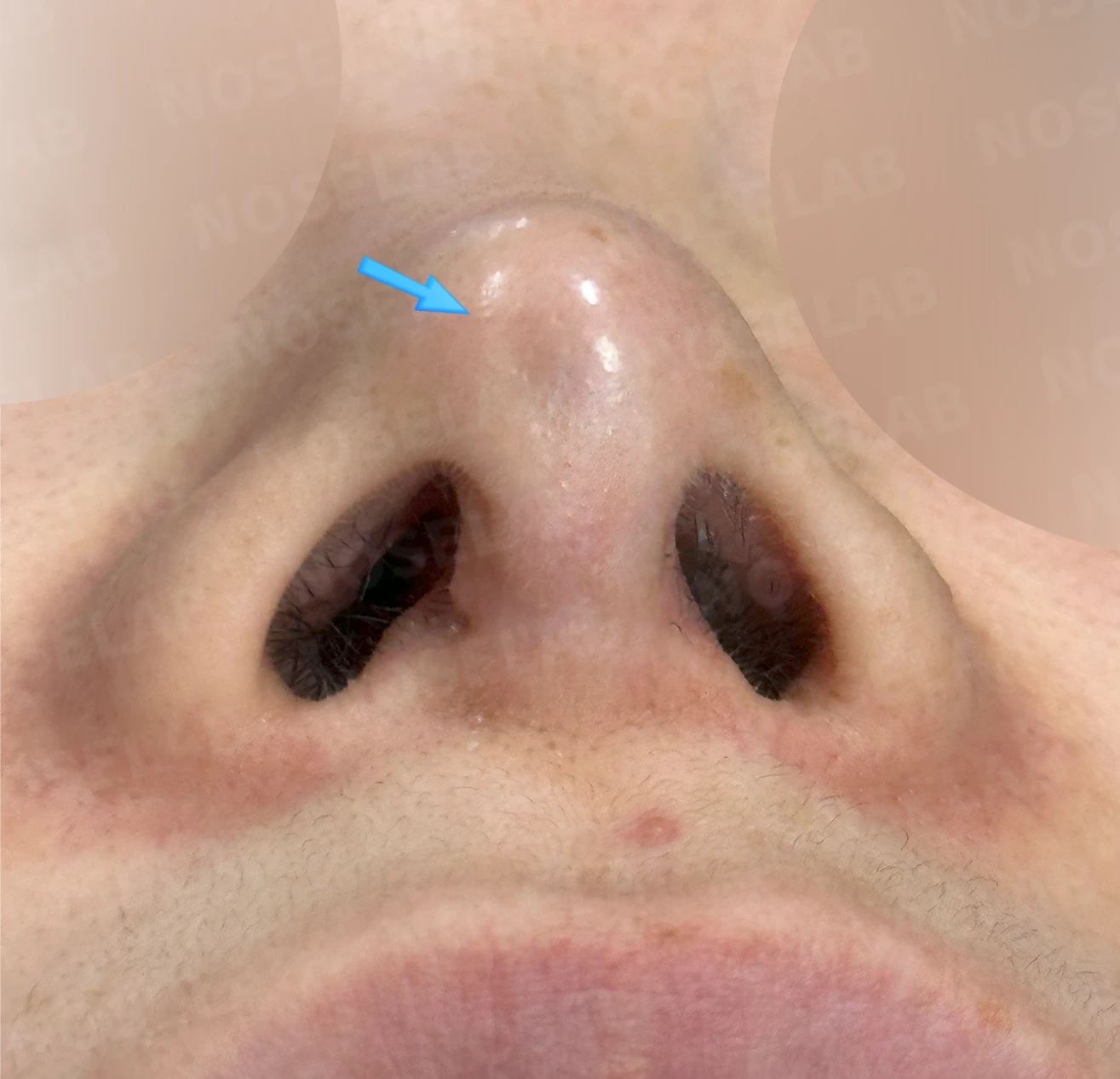
Photos showing nasal tip skin depression and hyperpigmentation
3. Surgical plan
Septal reconstruction using autologous rib cartilage
Correction of upturned tip: septal extension
Correction of crooked nose: lateral osteotomy
Improvement of wide nose
Correction of protruding mouth: nasolabial angle correction
Improvement of nostril asymmetry: septal reconstruction, lower lateral cartilage repositioning, and suture techniques
Improvement of nasal tip skin depression and hyperpigmentation: cartilage and dermal grafts
4. Surgical details
The following procedures were performed using a closed approach.
Severe damage to septal cartilage: The reason this type of nose was upturned was that the septal cartilage had sustained severe damage during prior surgeries. Septal reconstruction was performed using autologous rib cartilage.
Impaired nasal tip blood circulation: During surgery, impaired circulation was observed at the nasal tip, and briefly, blood perfusion became compromised, causing the skin to blanch. We administered vasodilators and medications to elevate blood pressure, identified and resolved the cause of the compromised blood flow, and confirmed that skin necrosis would have been a significant risk had a closed approach not been used.
The depressed and hyperpigmented nasal tip skin was confirmed to have resulted from partial skin necrosis during a previous surgery, which damaged part of the dermal layer and led to adhesions with surrounding tissue. This was corrected using cartilage and dermal grafts.
5. Comparison of before-and-after photos
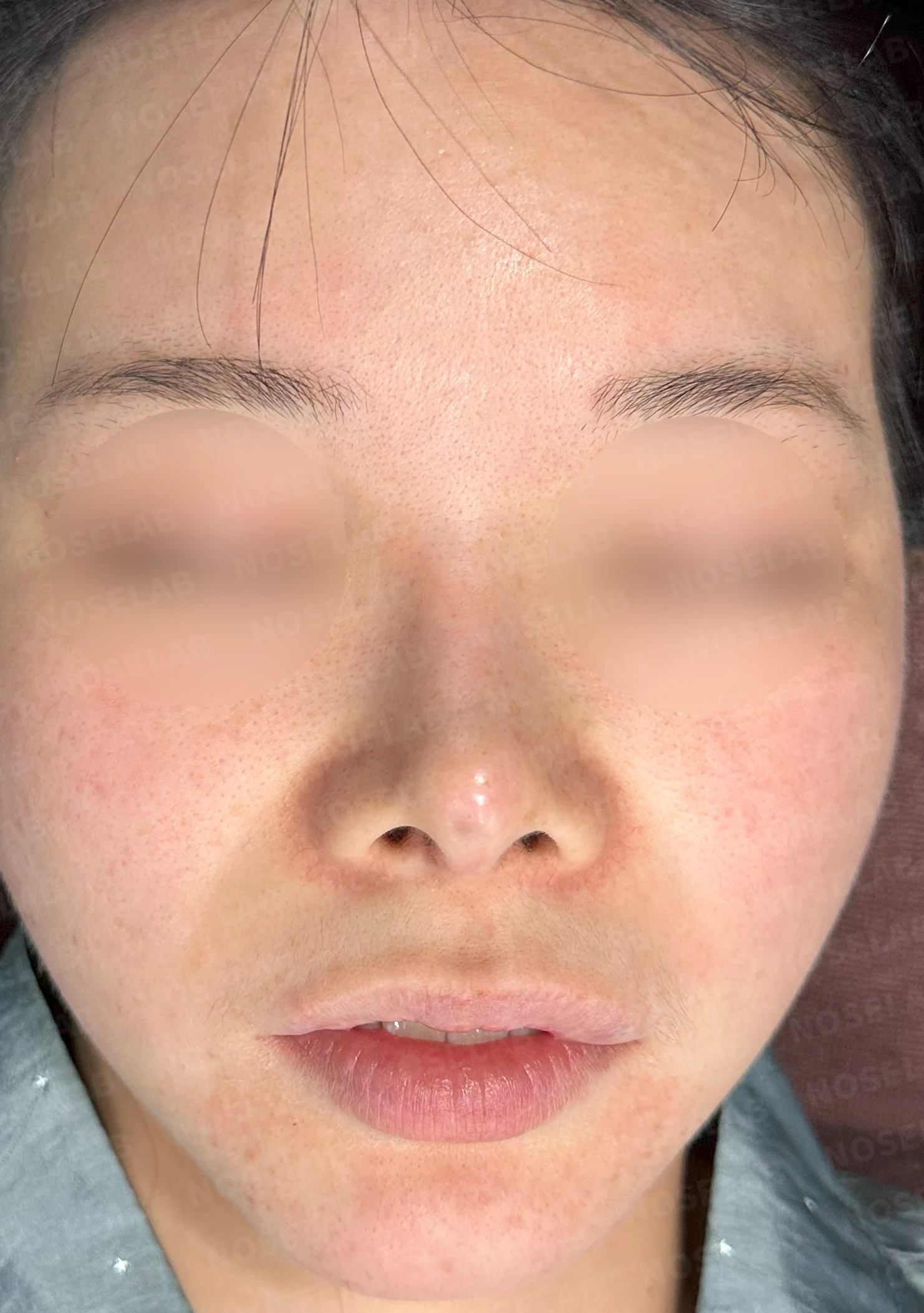
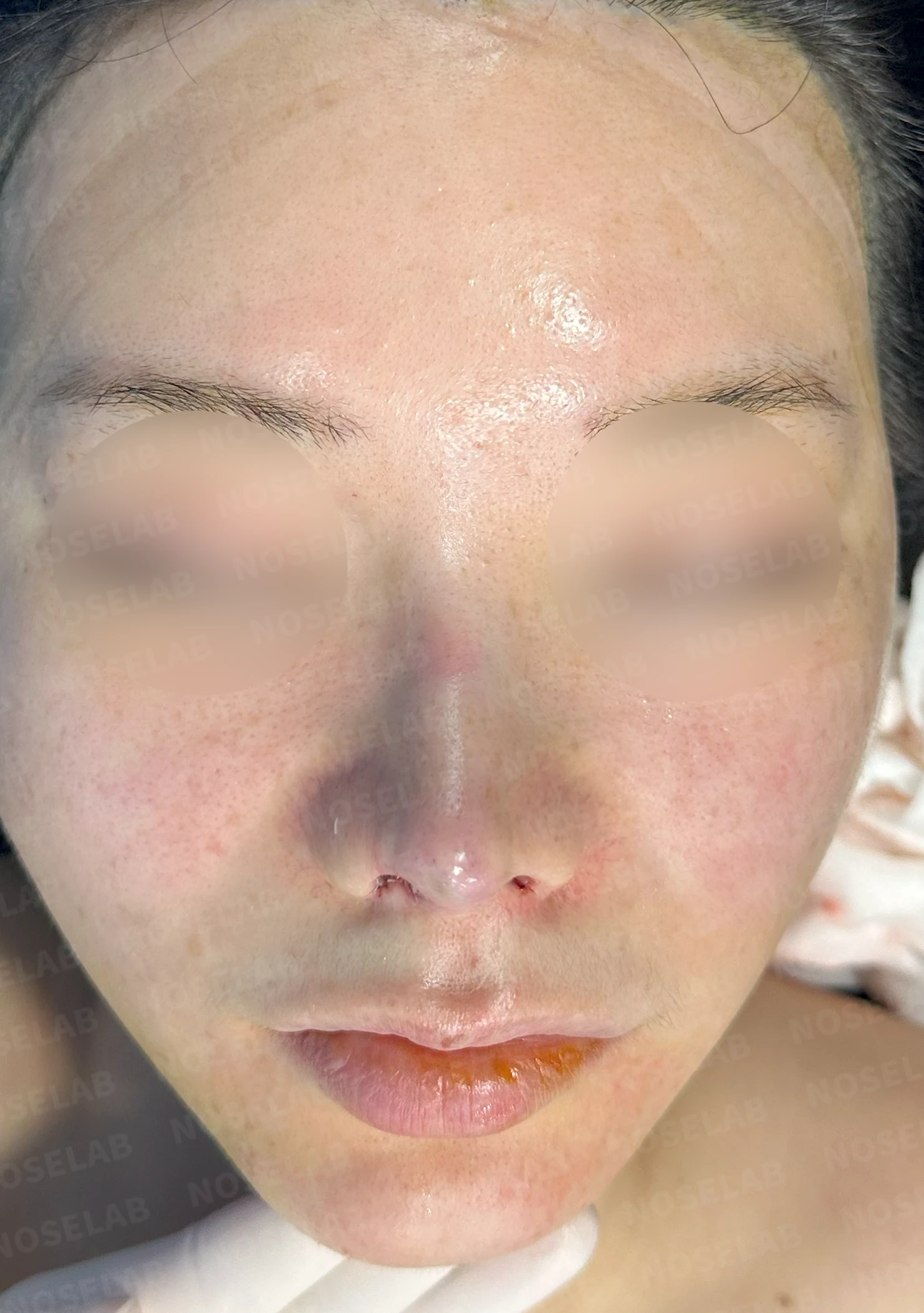
Before surgery / Day 0 immediately after surgery Photos taken immediately after surgery show swelling and may differ from the final result.
Front view:
Nostril show has significantly improved
The previously wide nasal tip looks natural
The previously deviated nasal bridge is now straight
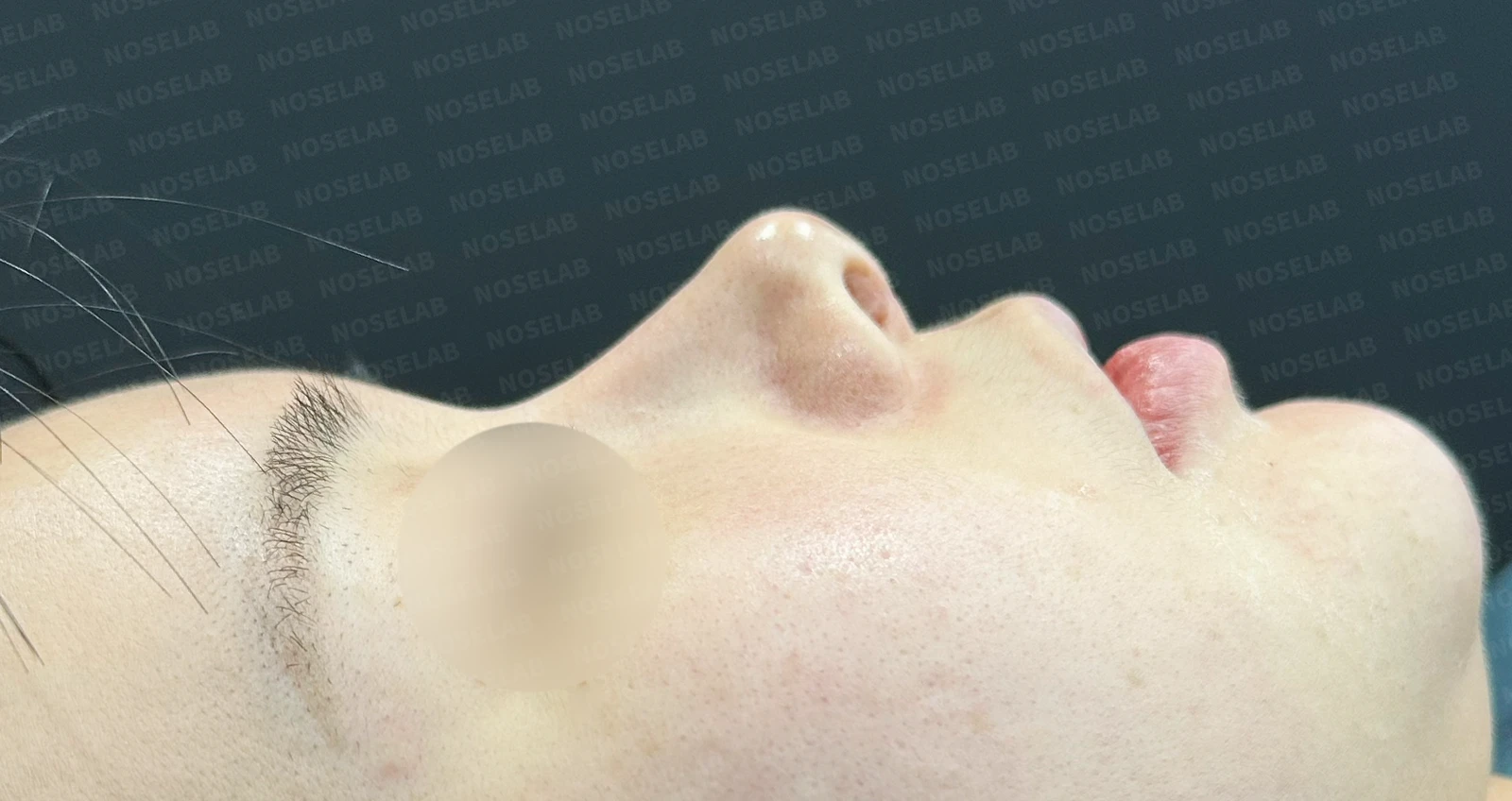
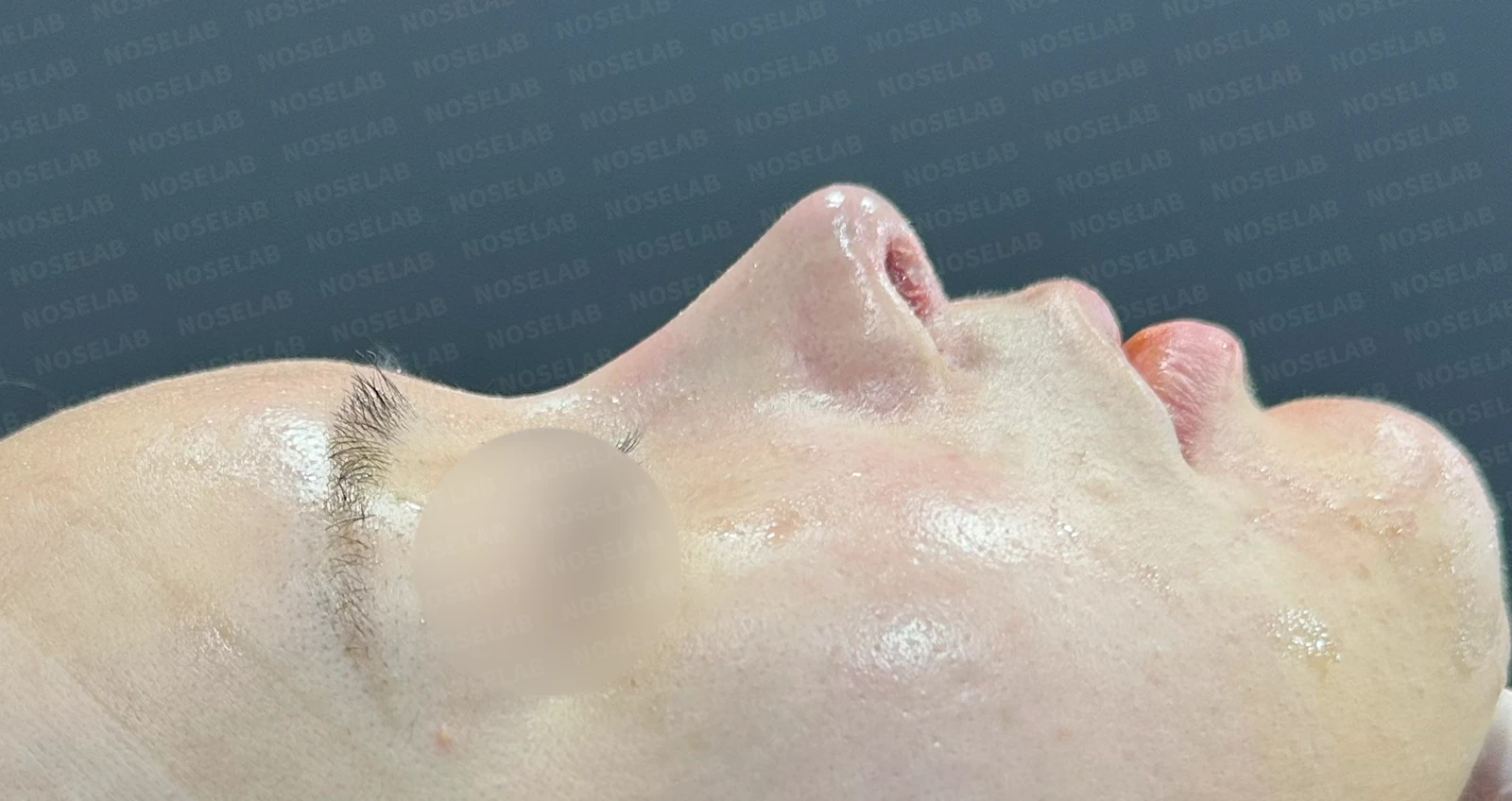
Before surgery / Day 0 immediately after surgery Photos taken immediately after surgery show swelling and may differ from the final result.
Profile view:
The upturned nasal tip has been adequately lowered
The nasal tip has become softly contoured and natural
The nasolabial angle was corrected to around 95 degrees, improving the protruding mouth appearance
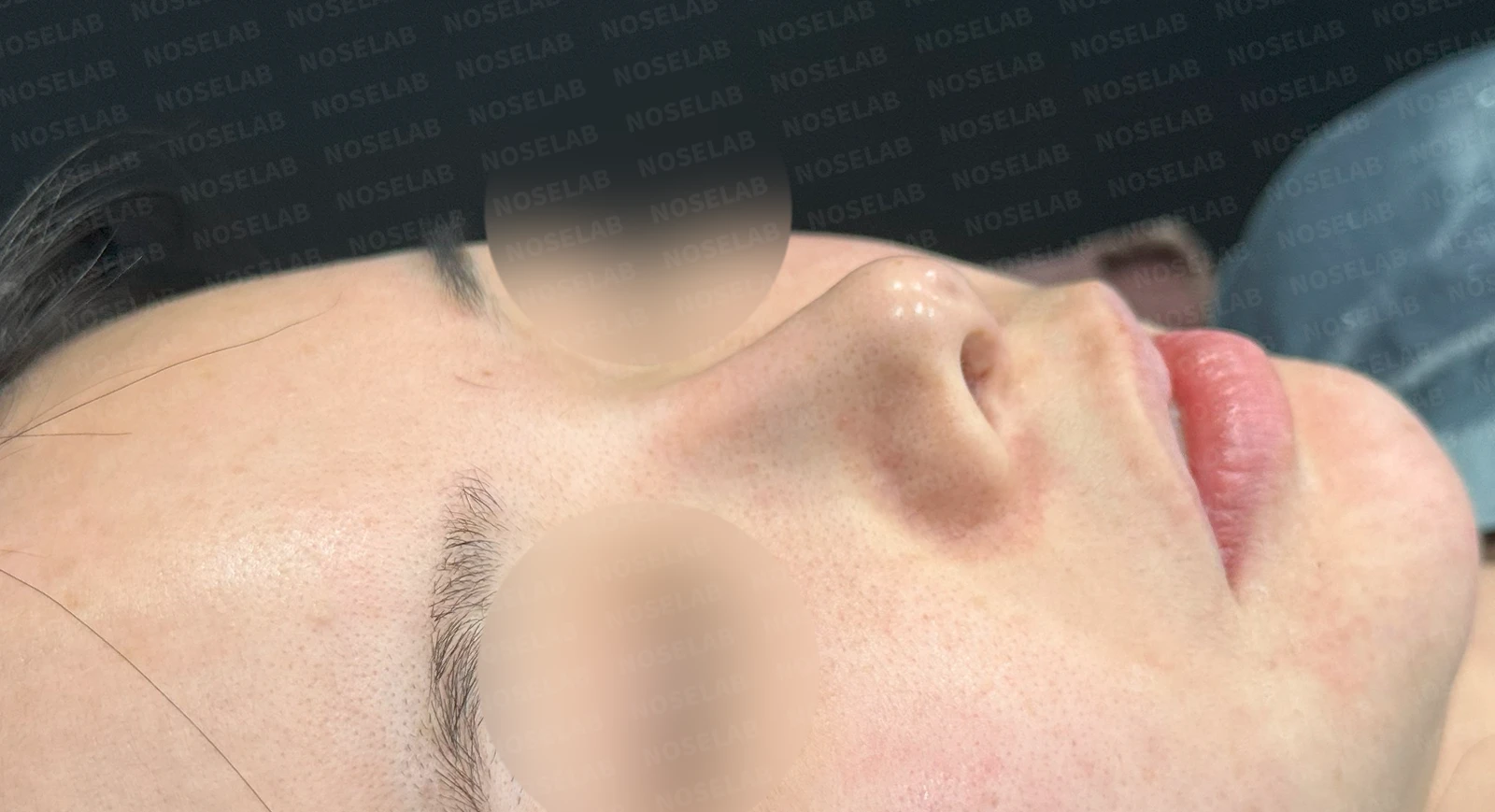
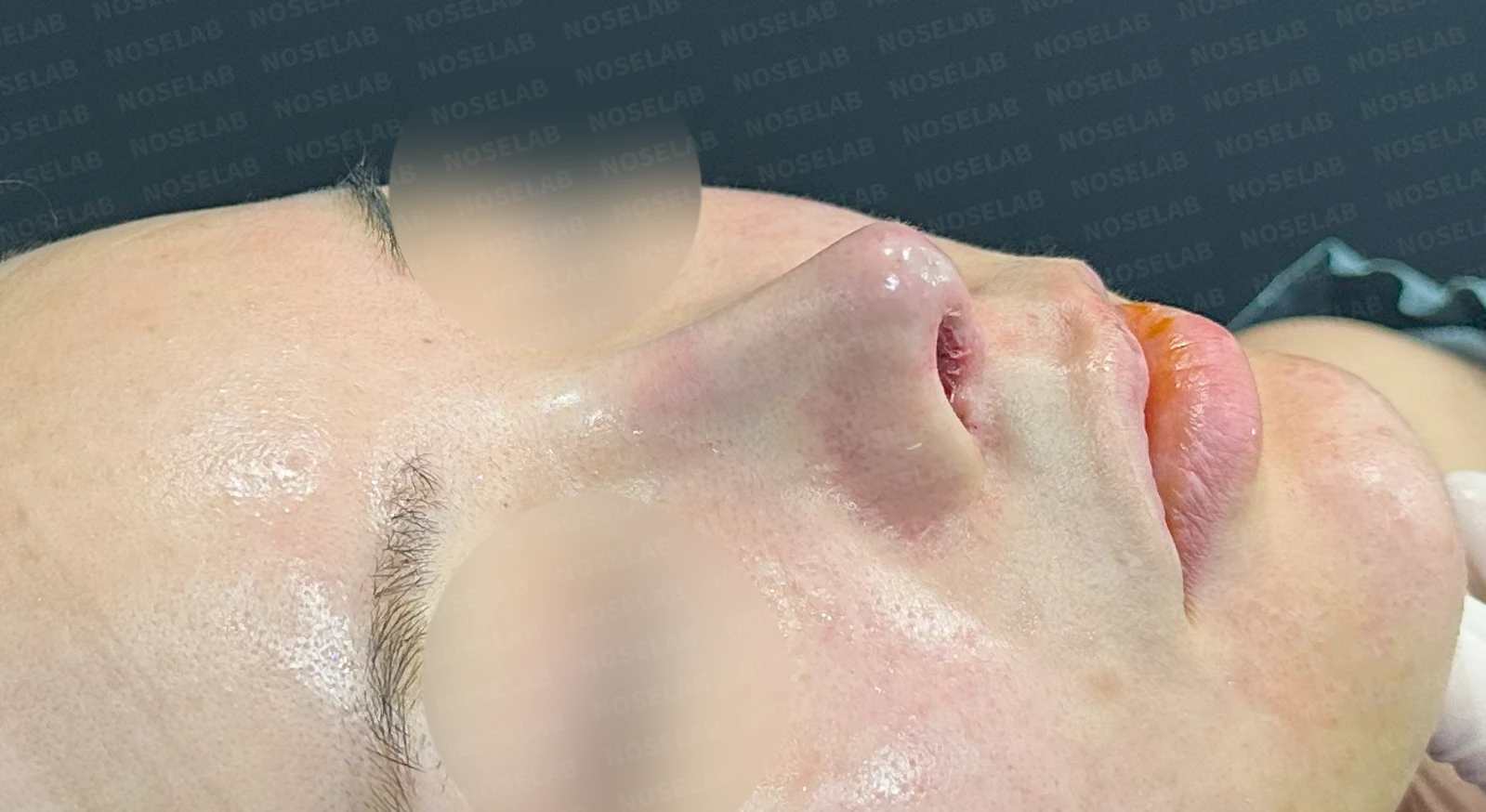
Before surgery / Day 0 immediately after surgery Photos taken immediately after surgery show swelling and may differ from the final result.
Oblique view:
The wide-appearing nose has become slimmer
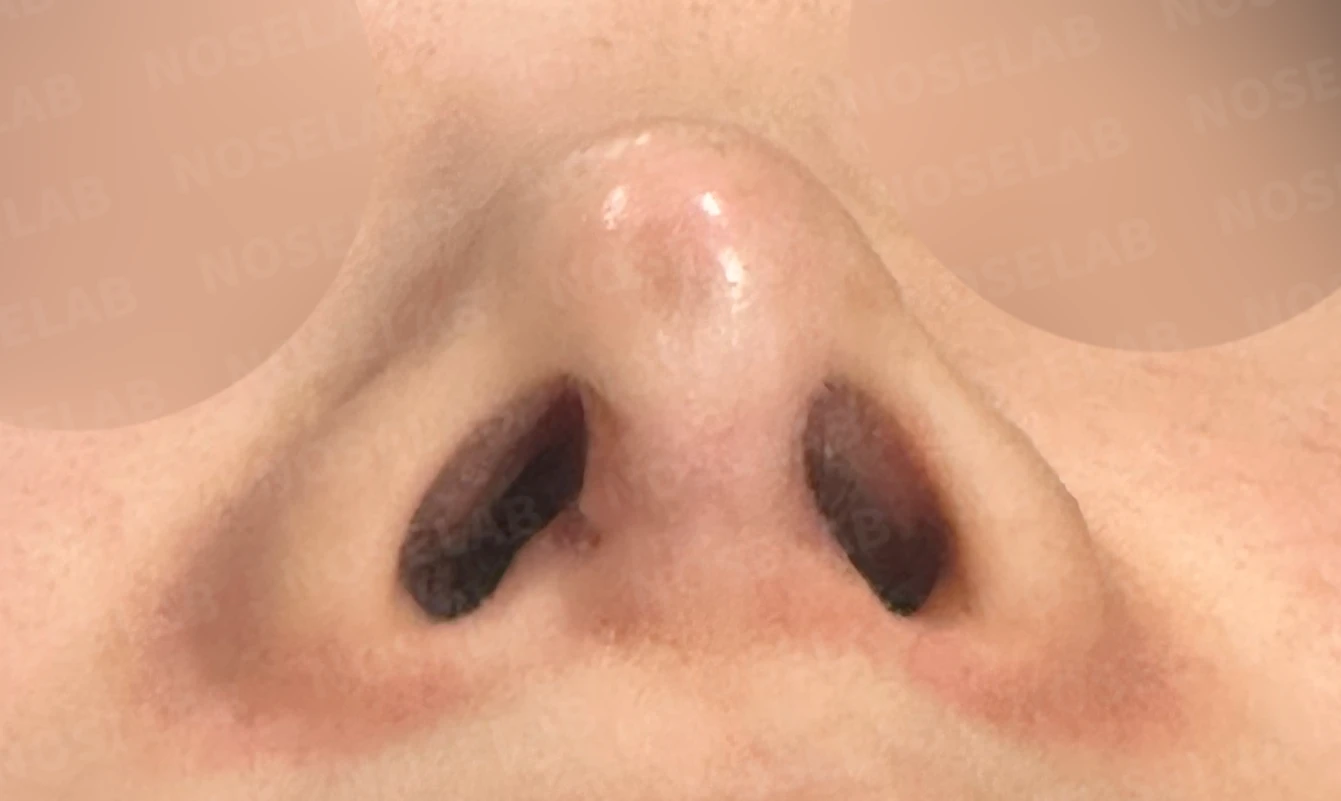
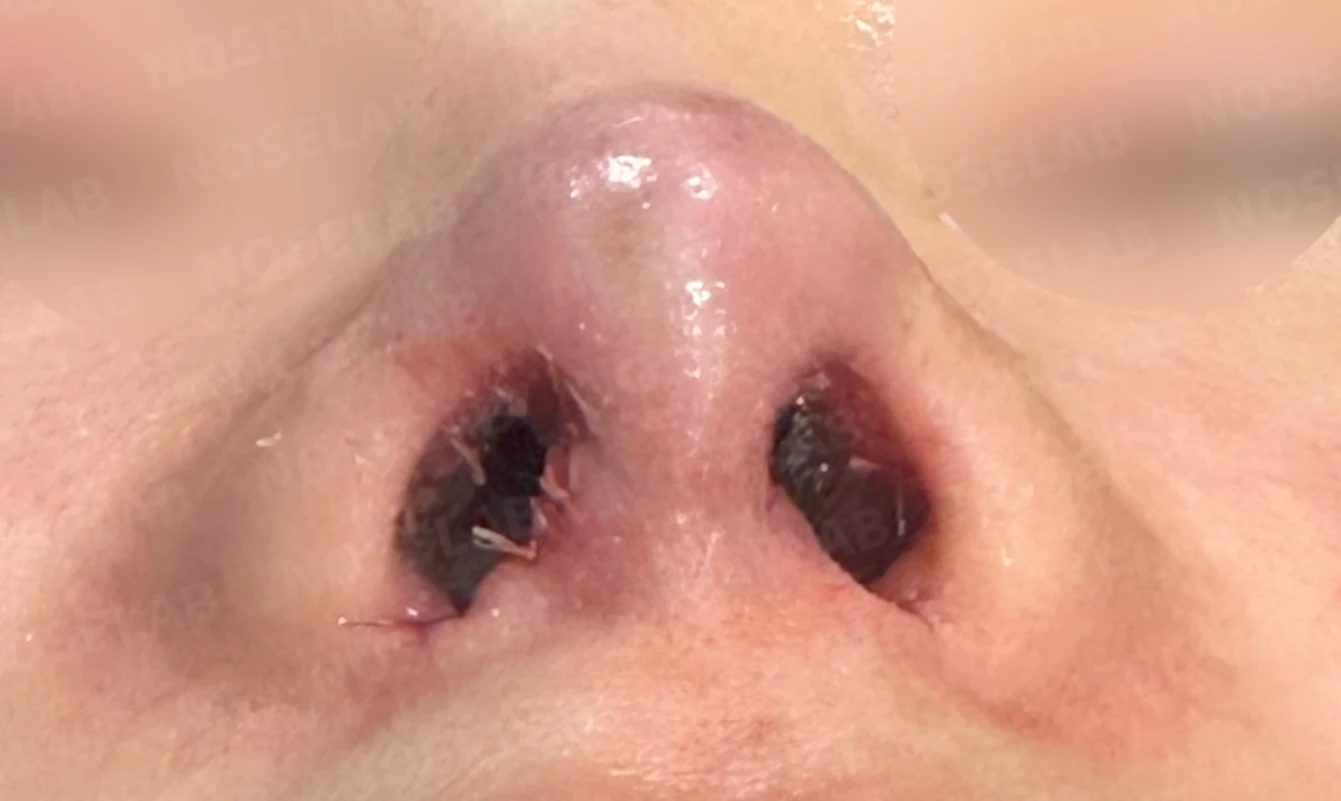
Before surgery / Day 0 immediately after surgery Photos taken immediately after surgery show swelling and may differ from the final result.
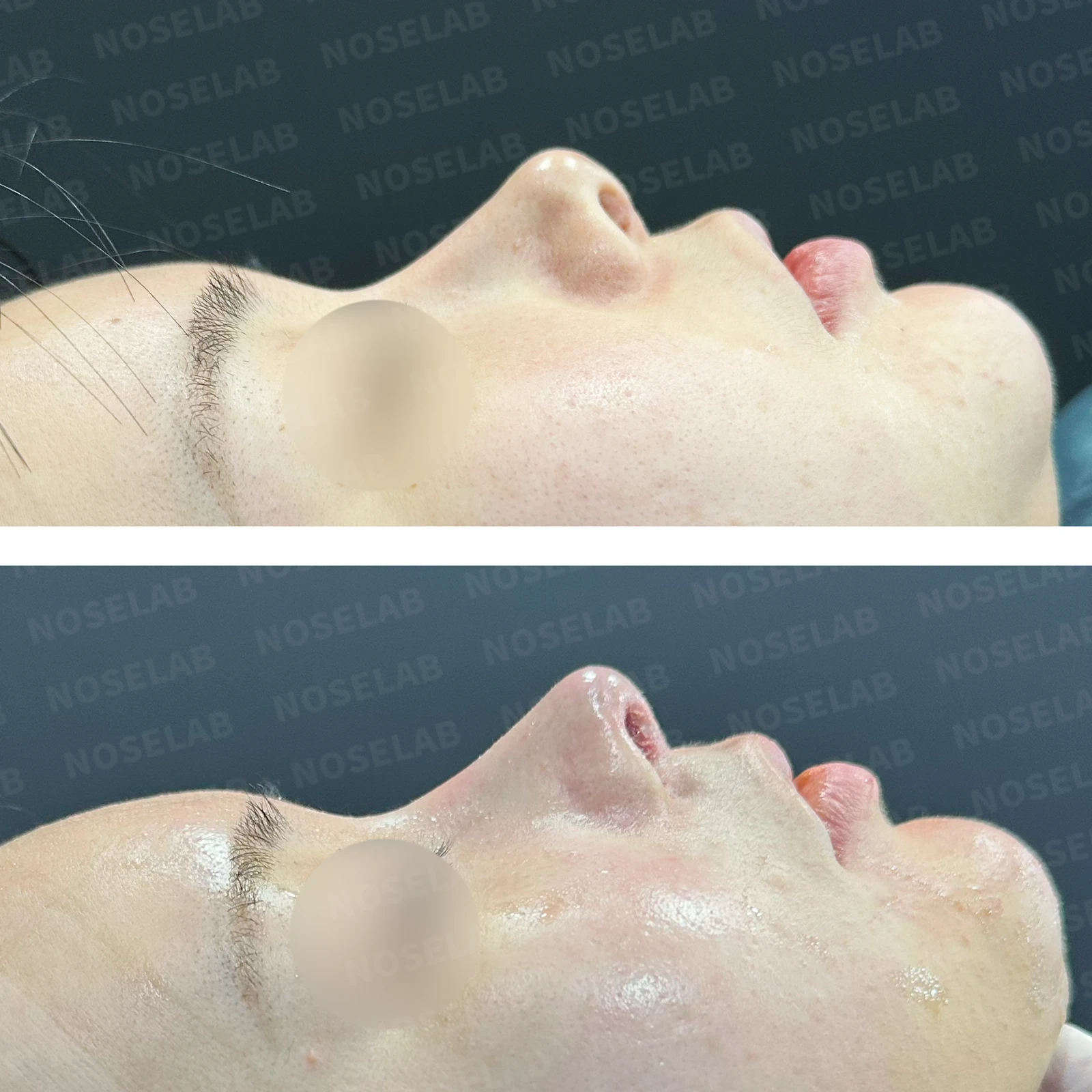
Nostrils:
The depressed skin on the nasal tip has improved
Scar tissue on both sides of the columella is concealed
Improved nostril asymmetry
6. Photos taken immediately after surgery (day 0)Immediate postoperative photos show swelling and may differ from the final result.
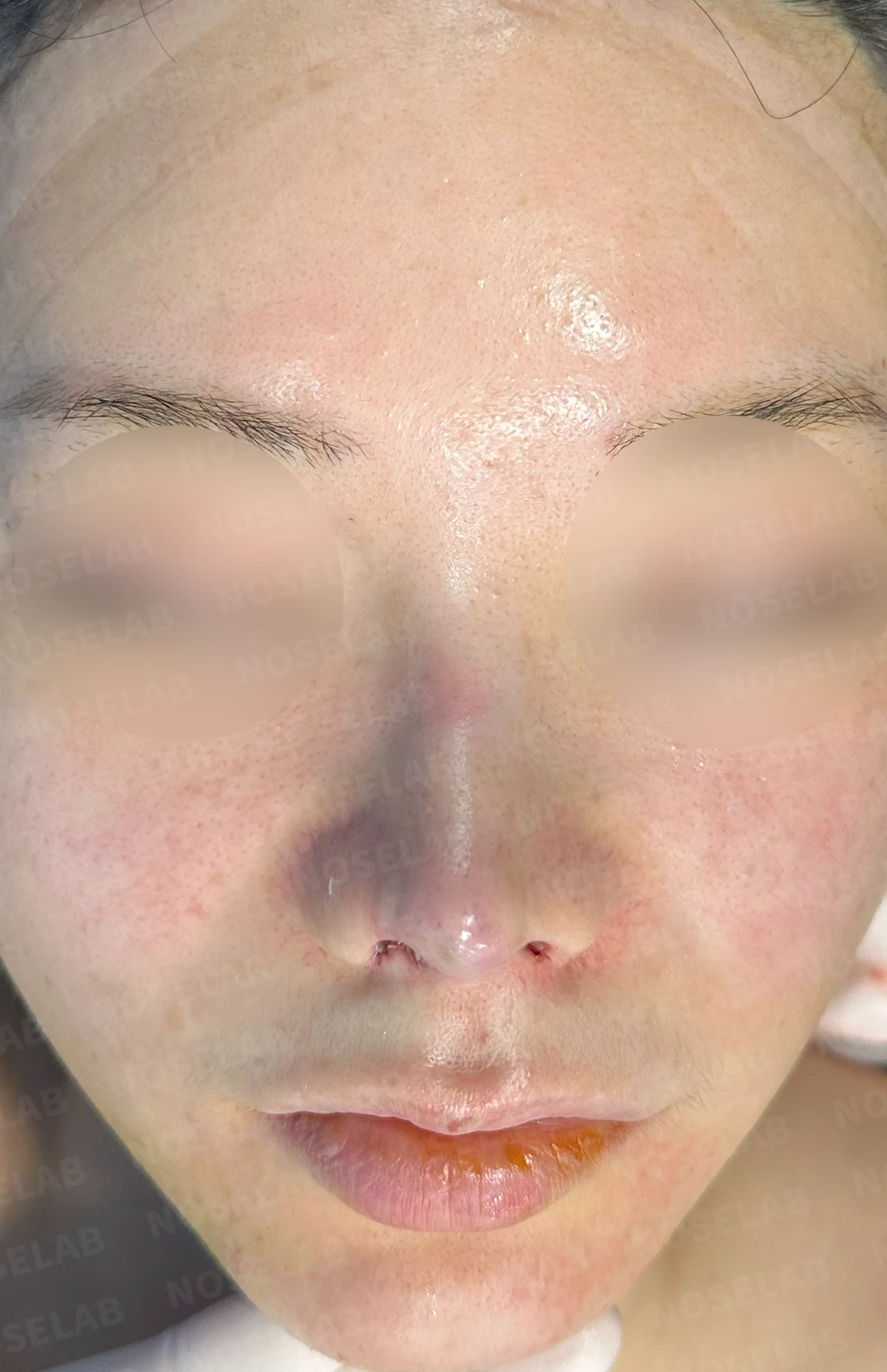
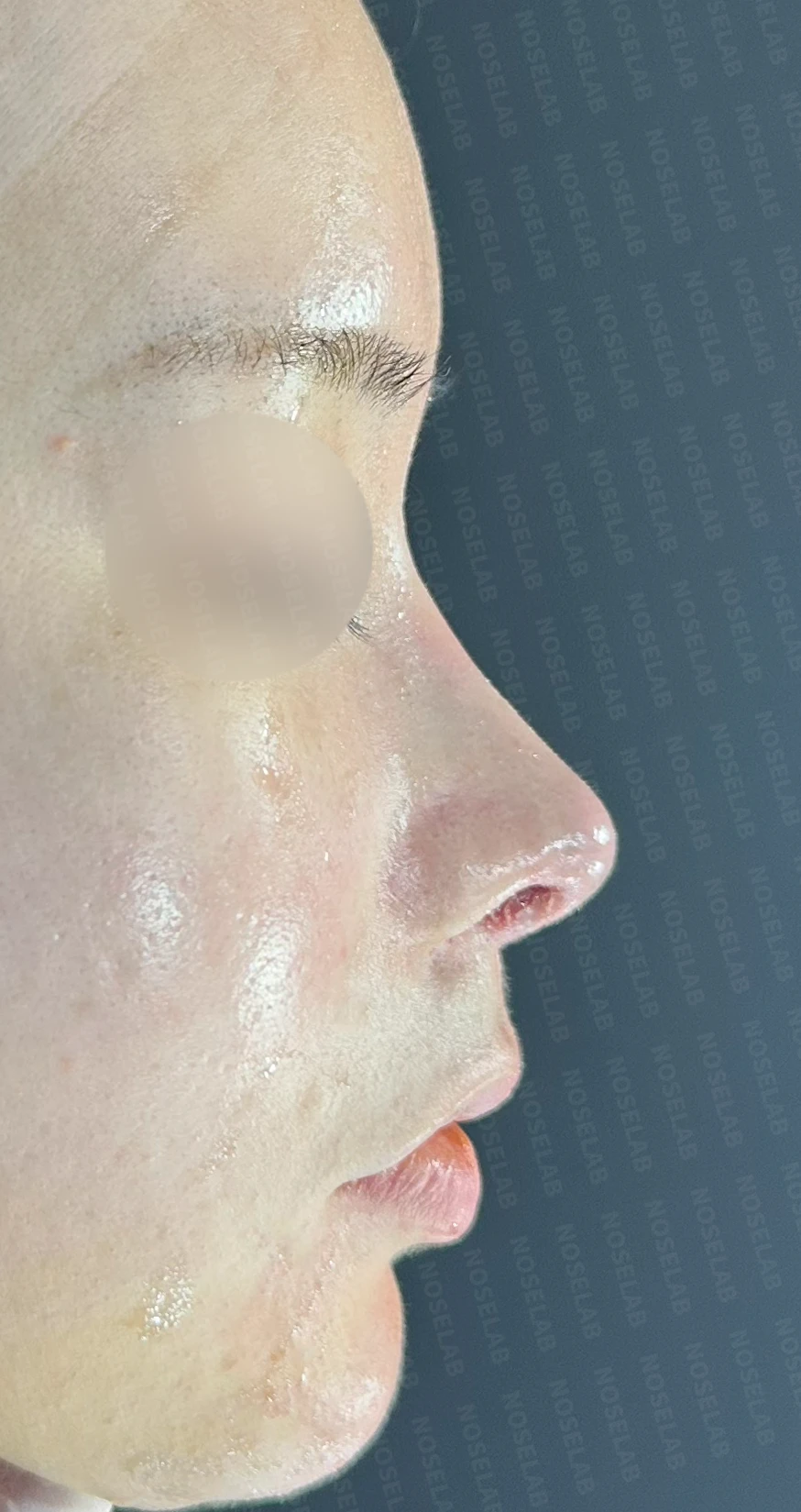
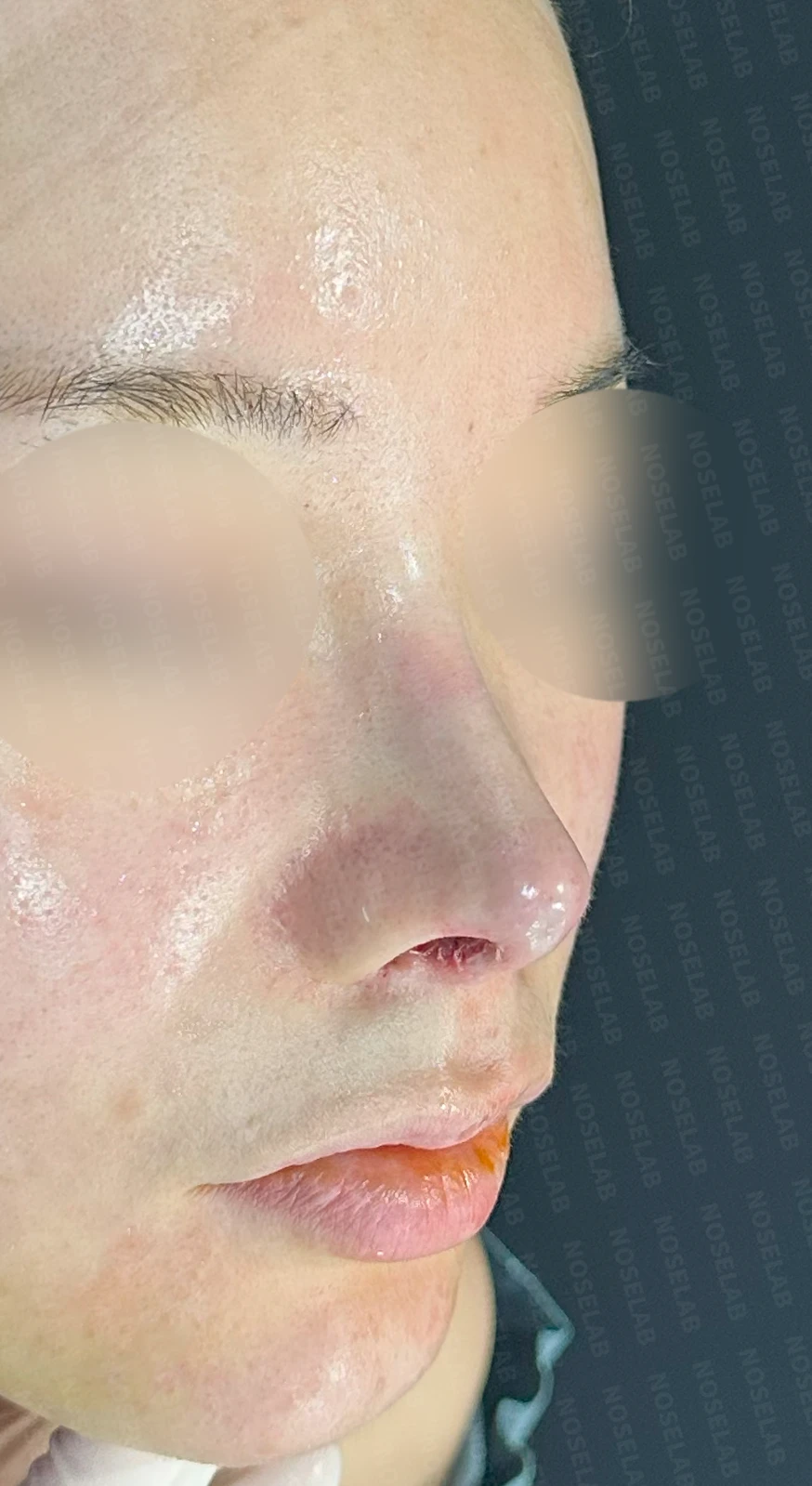
Photos on day 0 immediately after surgery: front, profile, and oblique views. Photos taken immediately after surgery show swelling and may differ from the final result.
Basal (nostril) view immediately after surgery (Day 0).Immediate postoperative photos show swelling and may differ from the final result.
7. Overall review:
This case resolved complex problems that arose after multiple rhinoplasties. In particular, it is notable that in a situation where open rhinoplasty was difficult due to the risk of nasal tip necrosis, the surgery was performed effectively using a closed approach planned with safety in mind.
Through septal reconstruction using autologous rib cartilage, structural stability was established while simultaneously addressing various aesthetic issues, including a crooked nose, an upturned nose, a wide nose, and a protruding mouth. Furthermore, by paying meticulous attention to blood circulation in the nasal tip skin, the surgery was completed safely.
8. Concluding remarks:
When there is a risk of nasal tip skin necrosis due to vascular damage from prior open surgery, using an open approach during revision rhinoplasty can be very hazardous. In such cases, a closed approach may be the most suitable option. In particular, closed rhinoplasty allows the exact same surgical maneuvers as an open approach while minimizing the risk of vascular compromise, making it a reliable alternative planned with safety in mind for these high-risk patients.
For those concerned about complex nasal issues such as a crooked, upturned, or wide nose, there is hope even when revision surgery seems challenging due to prior procedures. I encourage you to consult with a specialist to find the surgical approach best suited to your condition.
NOSELAB always prioritizes patient safety and satisfaction, striving to achieve the intended result through an individualized, tailored approach. We will be with you on your journey toward a beautiful and healthy nose.
This was Dr. Peter C. Kang. Thank you.
Thank you.
#NOSELAB #closedrhinoplasty #closedrevisionrhinoplasty #closedautologousribrhinoplasty #crookednose #widenose #upturnednose #shortnose #revisionrhinoplasty #ENTspecialistrhinoplasty #rhinoplastywithsafety #customrhinoplasty

Limitations and risks
When autologous rib cartilage is used, scarring and pain may remain at the donor site on the chest, and pneumothorax (pleural injury) can occur rarely. Over time, the grafted cartilage may warp or undergo partial resorption.
When using donor rib cartilage, long-term follow-up is necessary because the grafted cartilage may resorb or warp.
When the septum is corrected at the same time, nasal obstruction may persist or recur, and in rare cases, septal perforation or changes in smell may occur.
Common potential risks include infection, bleeding, asymmetry, scarring, skin necrosis, and insufficient improvement; results vary depending on individual skin condition and previous surgical history.