Hello, I am Dr. Peter C. Kang.
Today, I would like to introduce a very complex contracted nose reconstruction case.
This case illustrates overcoming multiple complications to achieve a successful reconstruction, well demonstrating the importance of high-difficulty rhinoplasty.
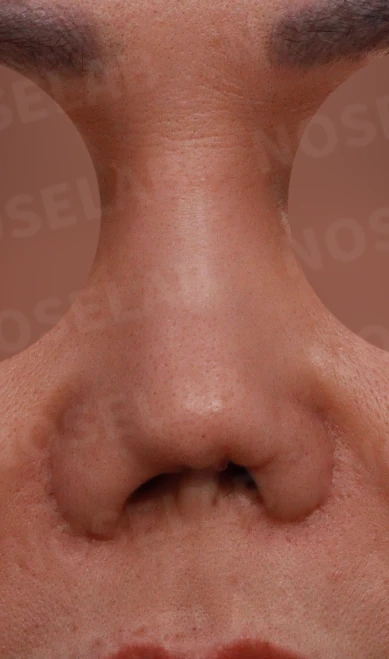
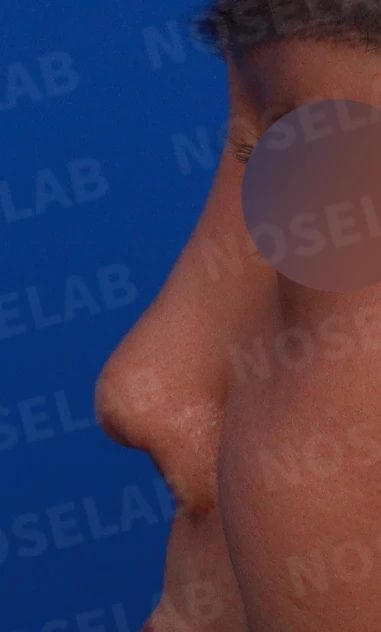
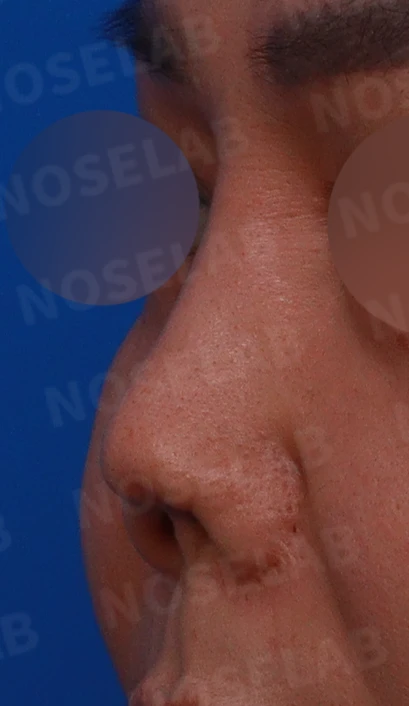
Design consultation photos: front, left profile, and oblique views.
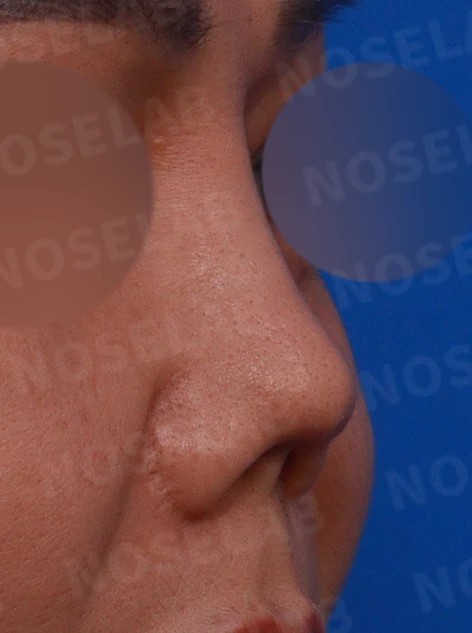
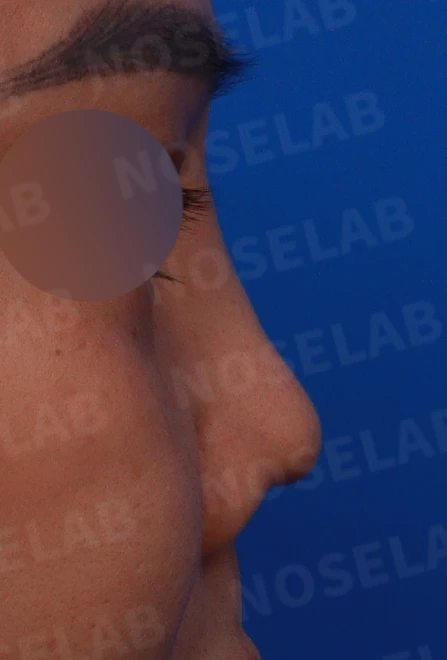
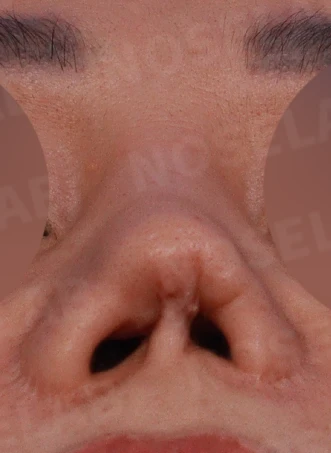
🔍 Patient condition
Onset of contracture deformity: After undergoing a facelift immediately after nasal reconstruction, bilateral facial complications (hematoma) developed. The flap grafted during the nasal surgery underwent necrosis, resulting in recurrent contracture.
Retracted columella, short and upturned nasal tip, and deviation/twisting toward the left.
Due to necrosis of the flap grafted in the previous reconstruction surgery, the left membranous septal mucosa had become thinned and contracted.
💉 Surgical plan
Stem cell injection therapy
Septal reconstruction and contracted nose reconstruction using autologous rib cartilage
Removal of the nasal bridge silicone implant and augmentation of the nasal bridge with autologous rib cartilage (including lowering the radix)
Inferior turbinate mucosal rotation flap for left membranous septal mucosal grafting
🔧 Preoperative analysis
Retracted columella
Nasal tip deviated to the left
Short and upturned nasal tip
High nasal bridge starting point
Nostril asymmetry
Columella deviated to the left
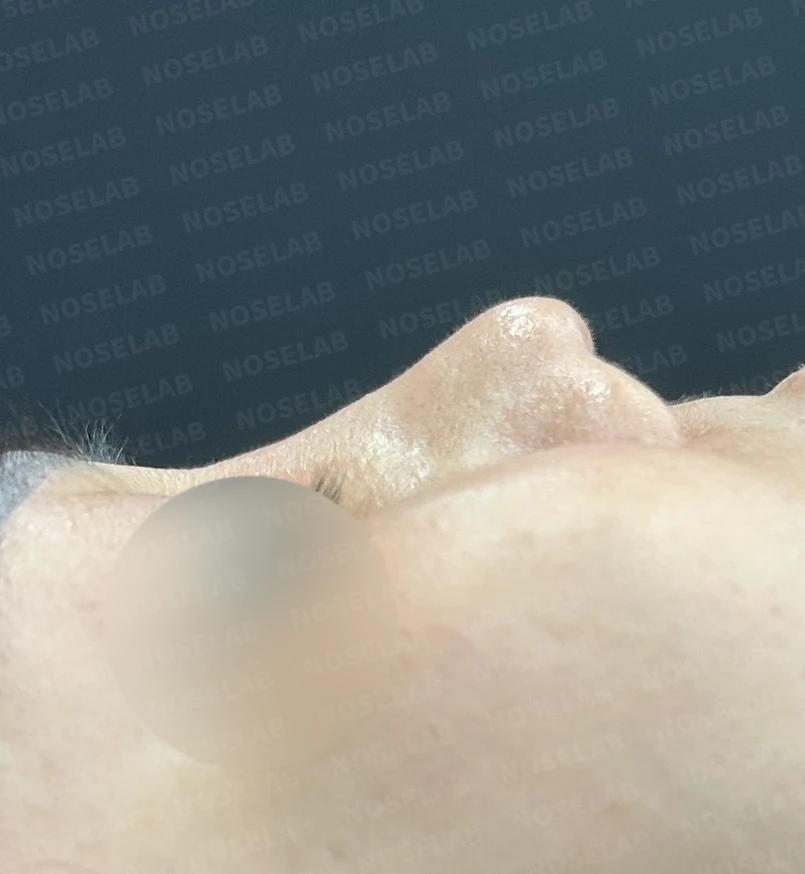
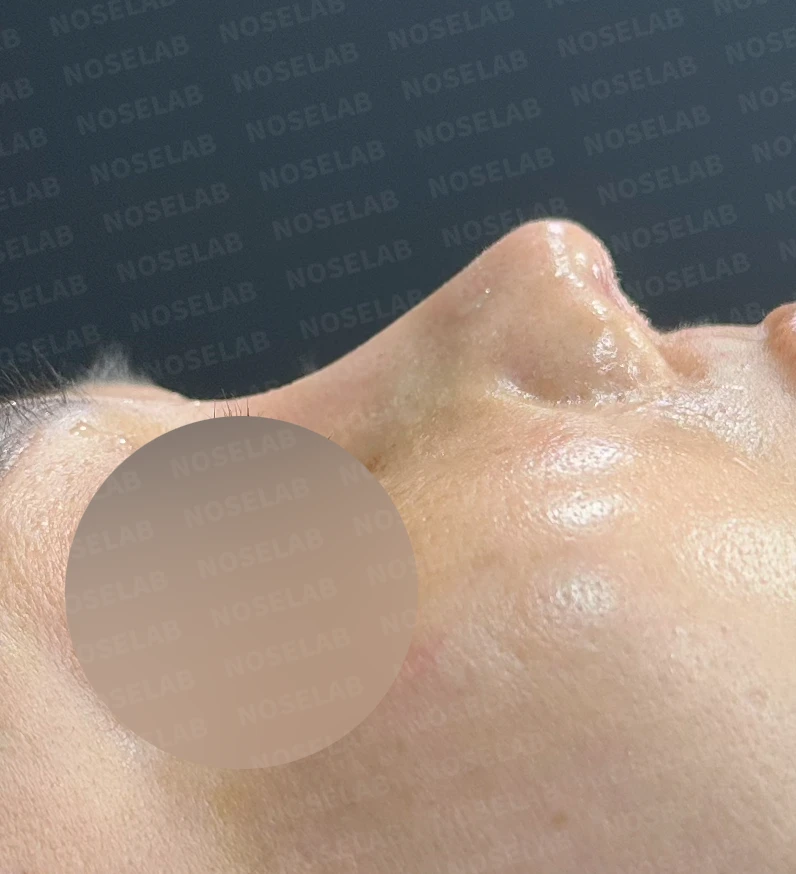
Before surgery / Day 0 immediately after surgery Photos taken immediately after surgery show swelling and may differ from the final result.
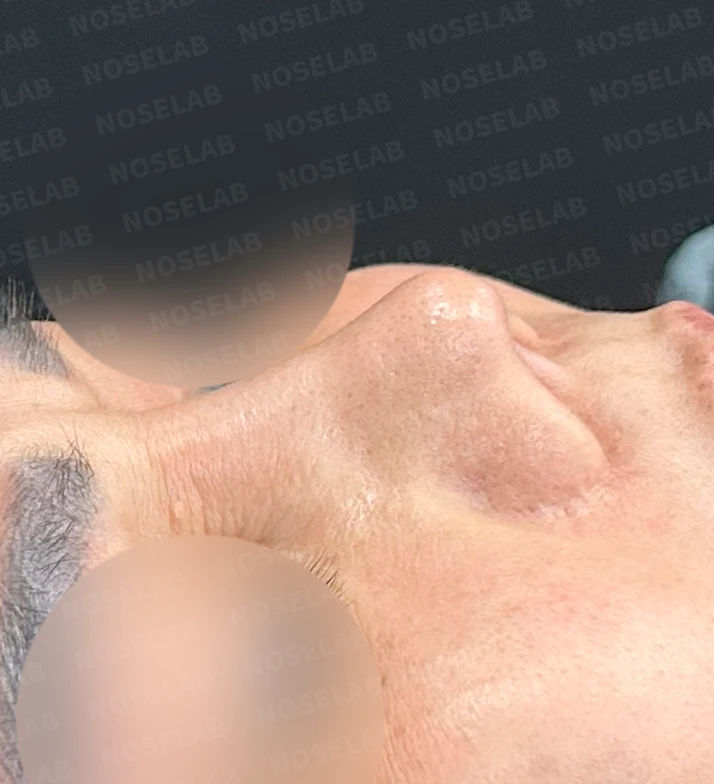
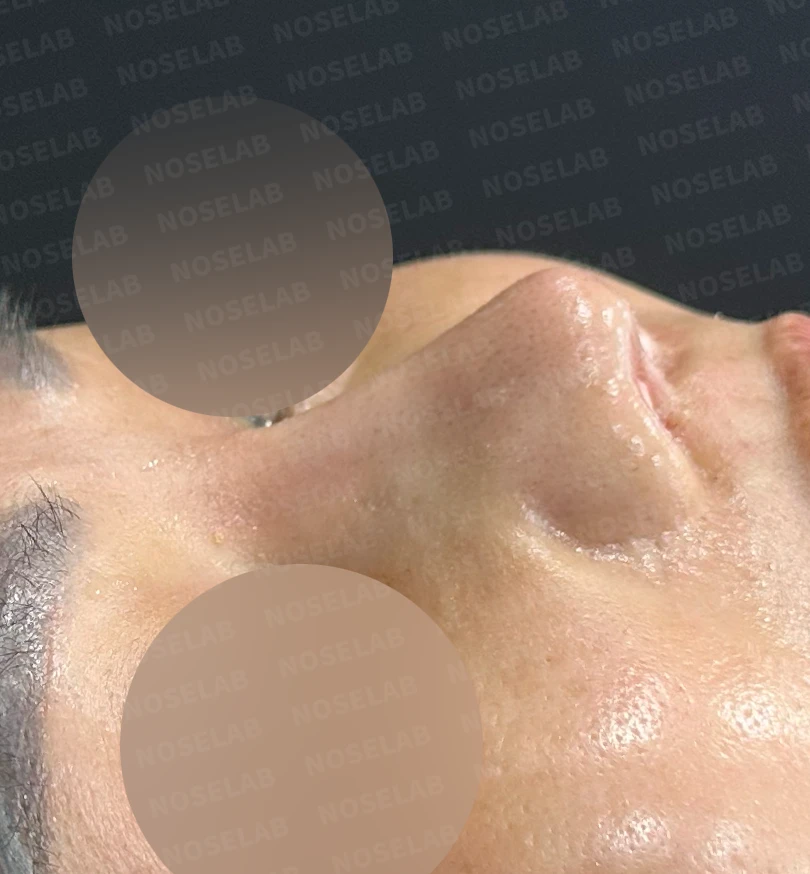
Before surgery / Day 0 immediately after surgery Photos taken immediately after surgery show swelling and may differ from the final result.
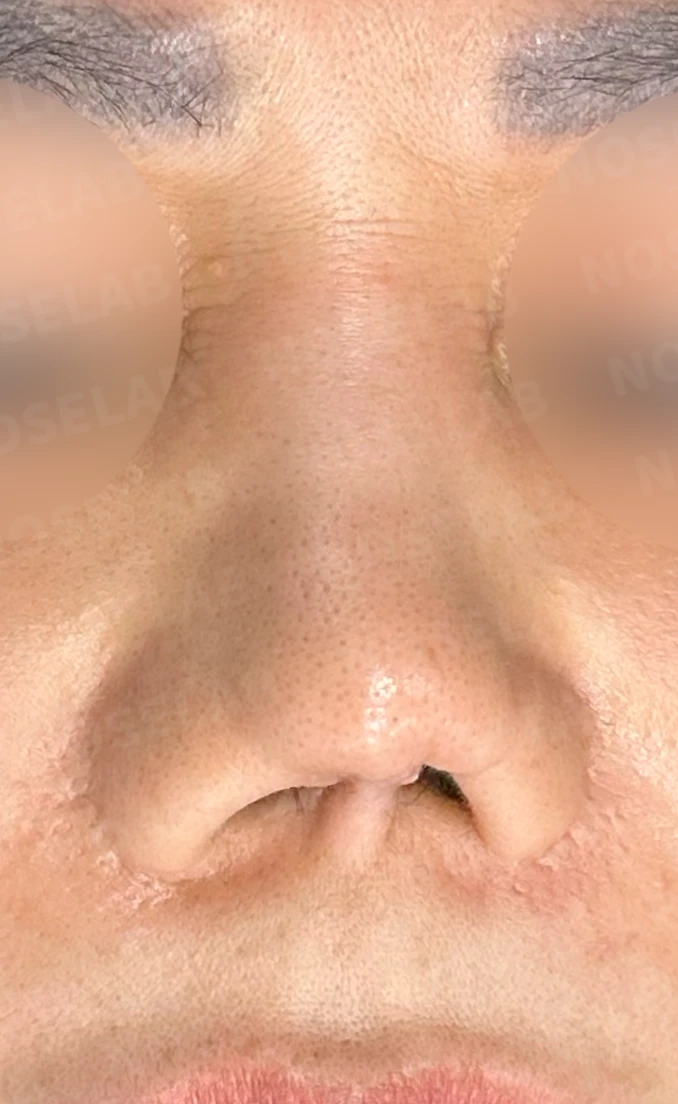
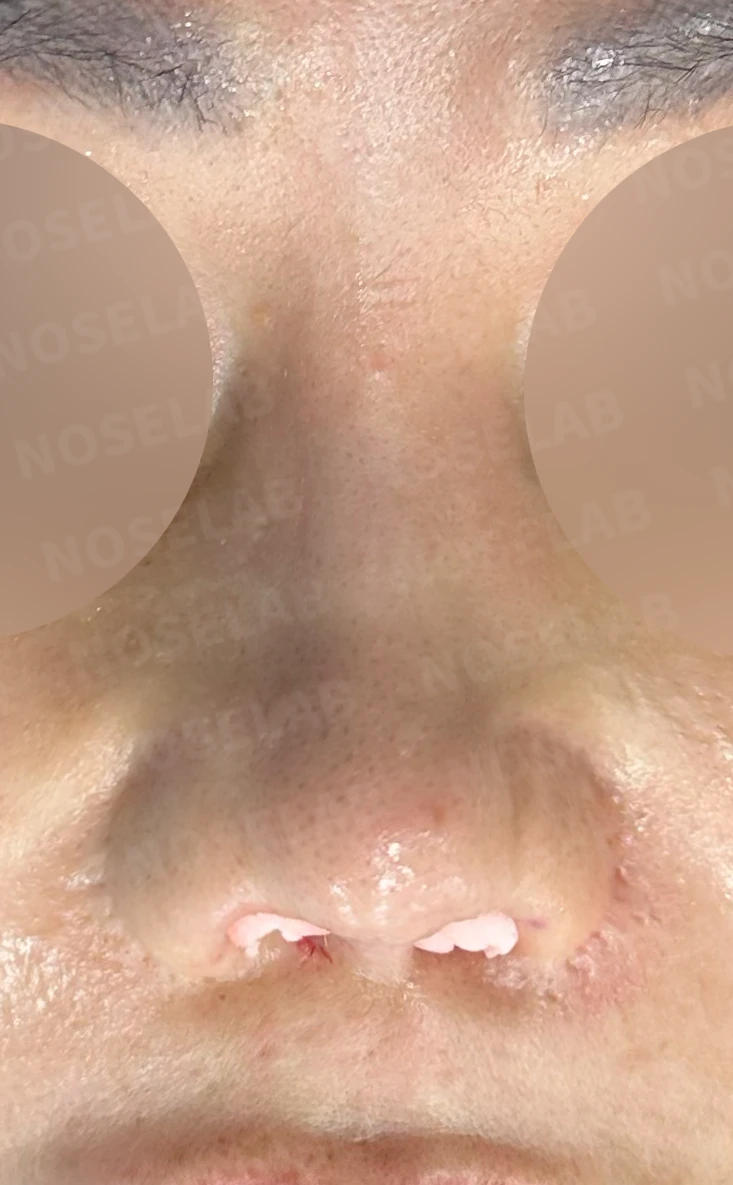
Before surgery / Day 0 immediately after surgery Photos taken immediately after surgery show swelling and may differ from the final result.
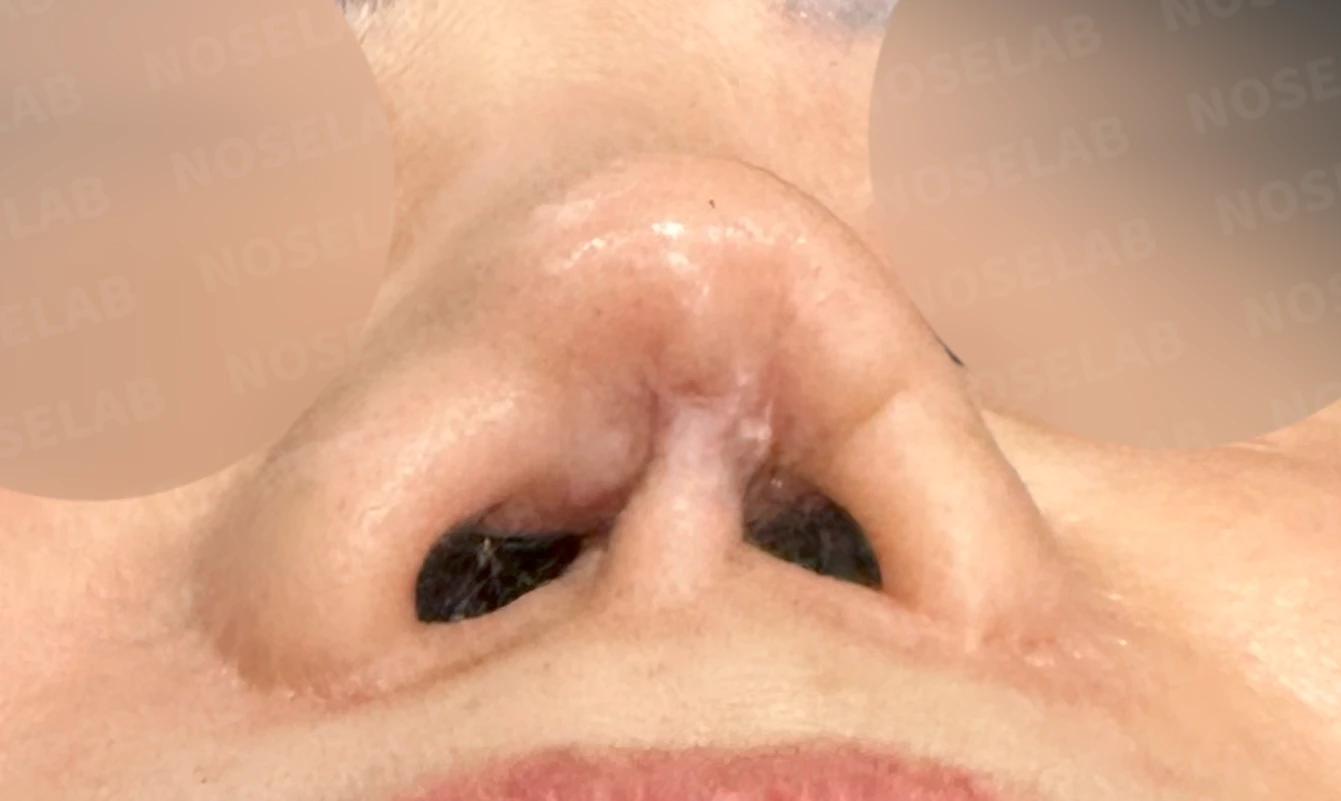
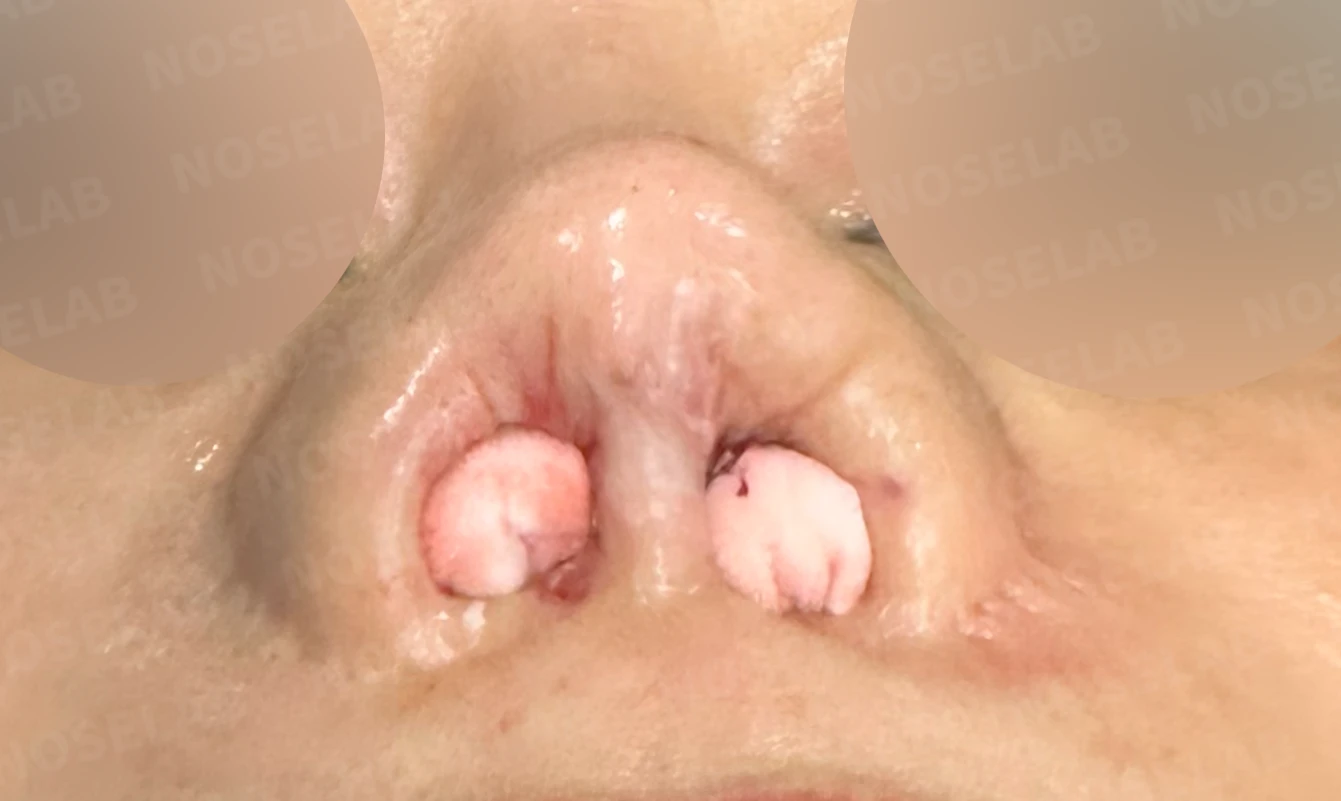
Before surgery / Day 0 immediately after surgery Photos taken immediately after surgery show swelling and may differ from the final result.
🌟 Surgical results
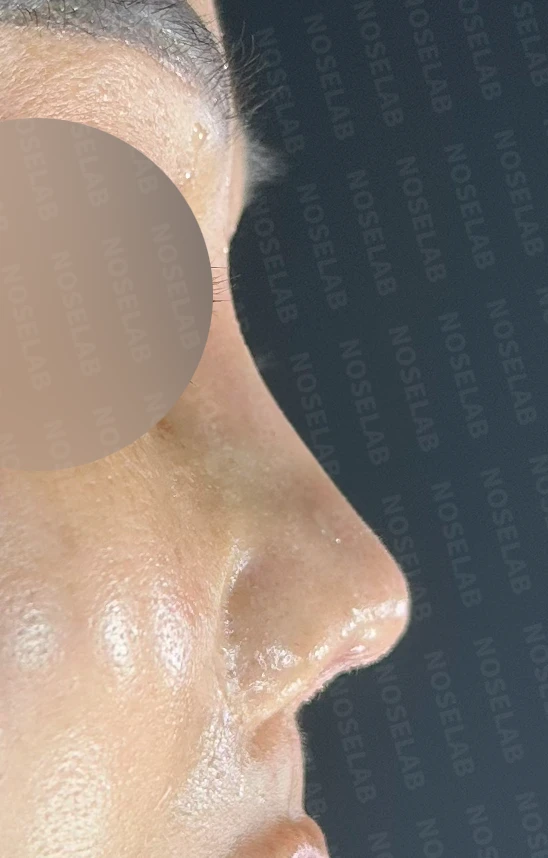
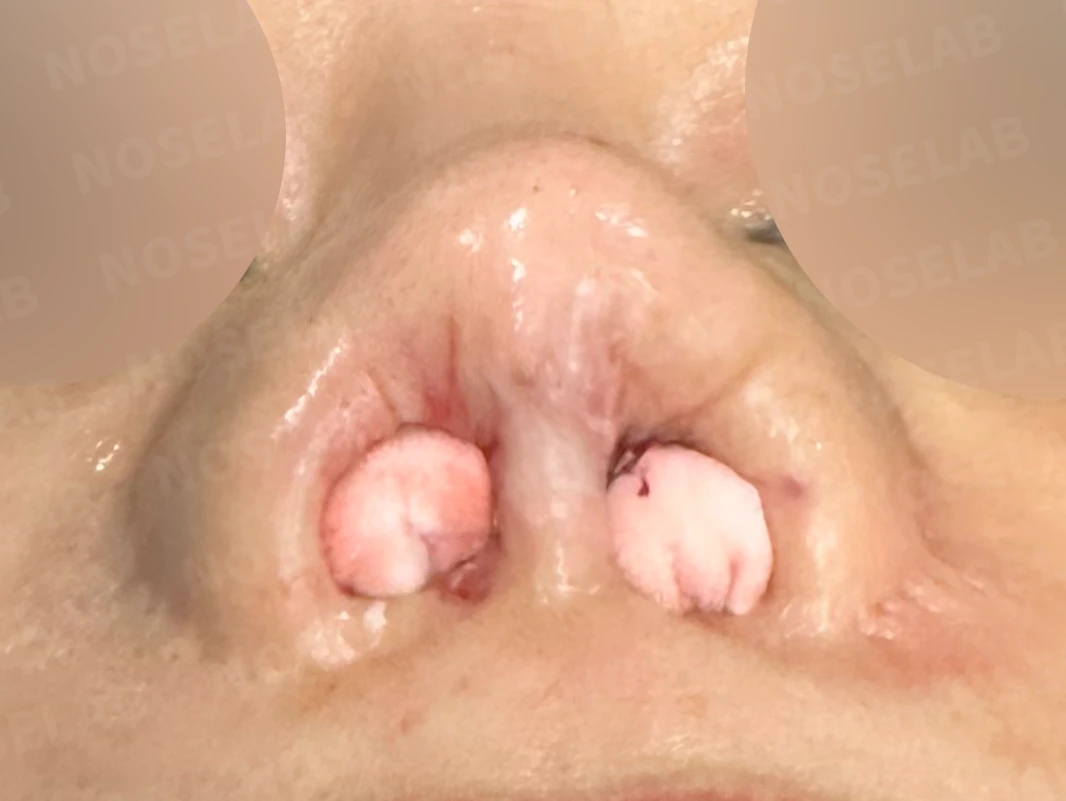
Columella significantly lowered
Correction of upturned nasal tip
Lowering of the nasal radix
Improvement of nostril asymmetry
Successful contracted nose reconstruction
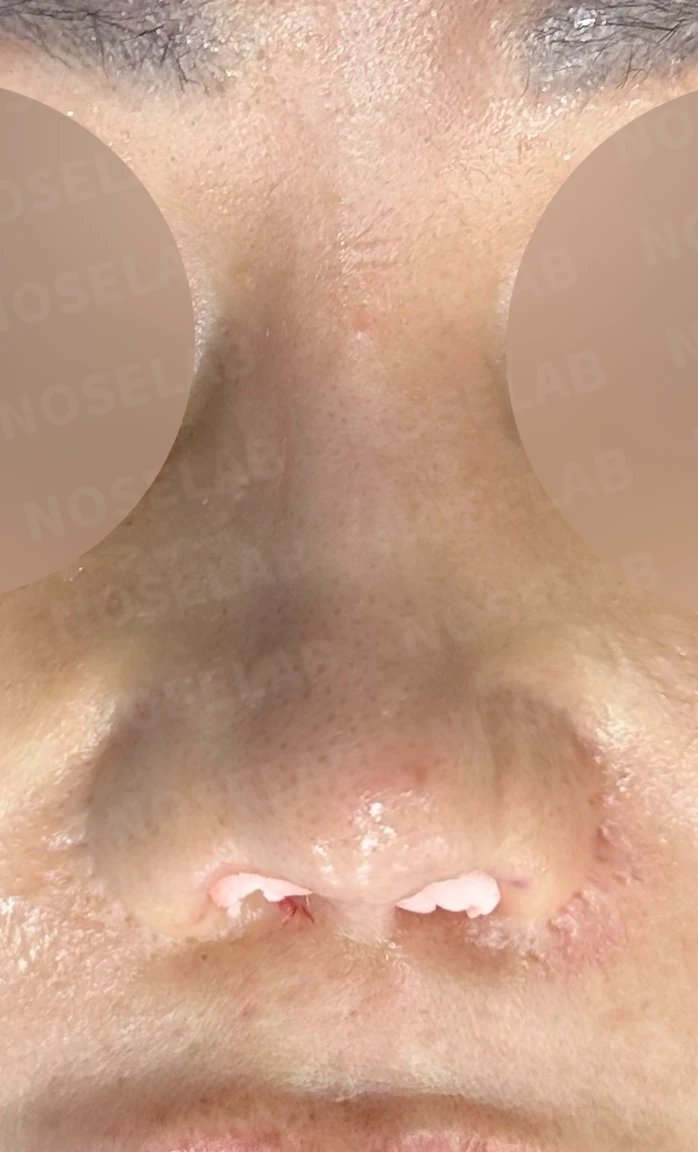
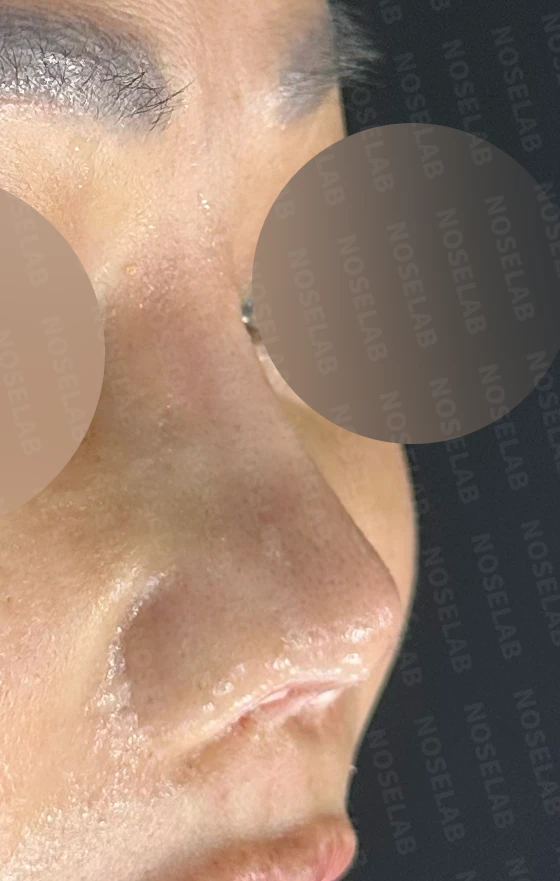
💡 Closing remarks
At last, the surgery was completed safely and successfully. Although it was a very demanding procedure, everything proceeded smoothly according to plan. Contracted nose reconstruction is a high-difficulty rhinoplasty procedure.
In patients with severe contracture, it is often necessary to first restore the normal structure as much as possible through various reconstructive procedures, such as septal reconstruction or skin grafting, before proceeding with a second stage for cosmetic surgery. In such cases, a second surgery may also be required after 6 months.
This type of case clearly shows how contracted nose reconstruction involving complex problems demands meticulous planning and advanced technique. Combining stem cell therapy and autologous tissue
reconstruction demonstrates that favorable results can be achieved even in difficult cases.
I always closely evaluate each patient's individual condition to establish the optimal treatment plan. In complex reconstruction cases, a staged approach is especially important, and formulating a treatment plan with a long-term perspective is key.
If you are considering nasal reconstruction, please be sure to consult with a specialist who possesses extensive experience. I will do my utmost to help you achieve a healthy, aesthetically pleasing nose.
This was Dr. Peter C. Kang. Thank you.
Thank you.

#contractednosereconstruction #complexrhinoplasty #autologousribcartilage #stemcelltherapy #nasalreconstruction #septalreconstruction #skingraft #comprehensiverhinoplasty #closedrhinoplasty #tiprhinoplasty #nostrilcorrection
Limitations and risks
When autologous rib cartilage is used, scarring and pain may remain at the donor site on the chest, and pneumothorax (pleural injury) can occur rarely. Over time, the grafted cartilage may warp or undergo partial resorption.
When revising after implant removal, contracture may progress again after removal, the nasal height and length may decrease, and staged surgery may be necessary depending on the skin condition.
When the septum is corrected at the same time, nasal obstruction may persist or recur, and in rare cases, septal perforation or changes in smell may occur.
Common potential risks include infection, bleeding, asymmetry, scarring, skin necrosis, and insufficient improvement; results vary depending on individual skin condition and previous surgical history.