Hello, I am Dr. Peter C. Kang.
Today, I would like to share a case where an elongated appearance of the midface was gracefully improved through rhinoplasty.
This patient had undergone multiple previous nasal procedures and sought rhinoplasty to achieve harmonious overall facial proportions.
1. Patient's surgical history
- 2016: Nasal filler
- 2020: Silicone implant + donor rib cartilage + alar reduction
- 2021: Philtrum reduction
2. Patient goals
1. Correction of crooked nose
2. Improving the appearance of drooping alae
3. Improving the elongated appearance of the midface
4. Straight bridge line
5. Improving the overly thin appearance of the nasal bridge
6. Improving the pinched appearance of the alae
7. Lowering the columella
8. Lowering the radix
9. Improving the peaked appearance of the nostrils
10. Improving nostril asymmetry
3. Preoperative design consultation
Let us analyze the patient's preoperative condition in detail:
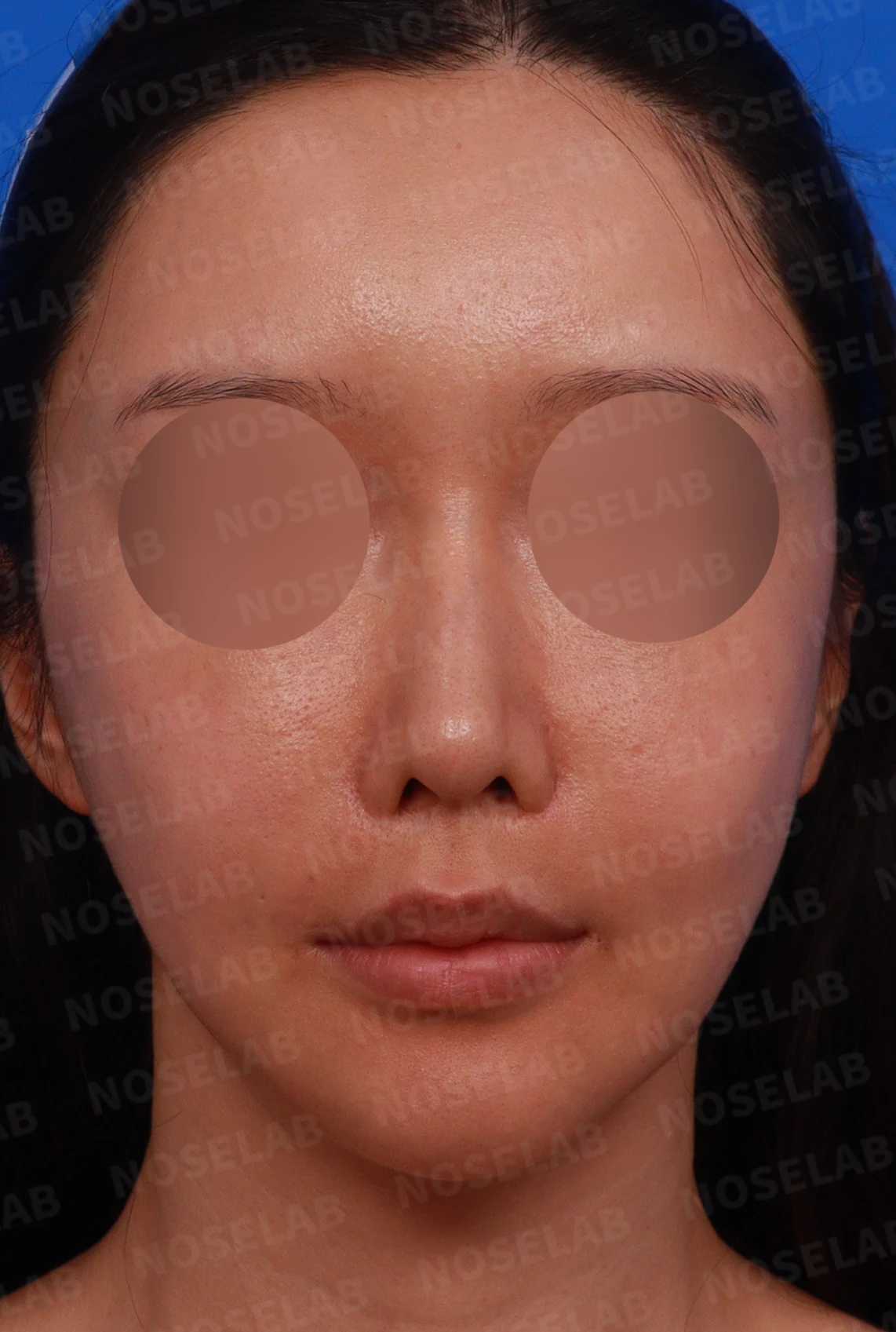
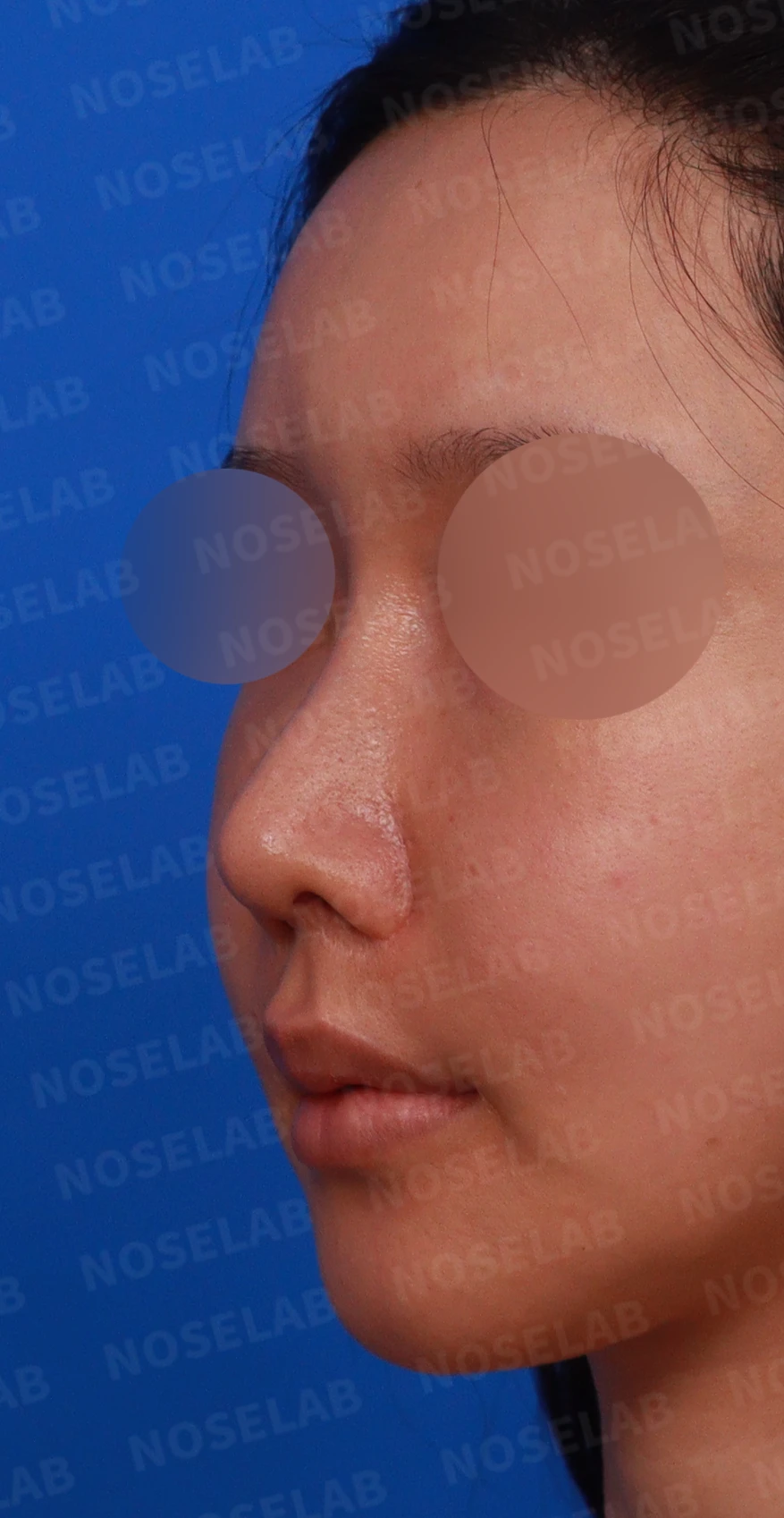
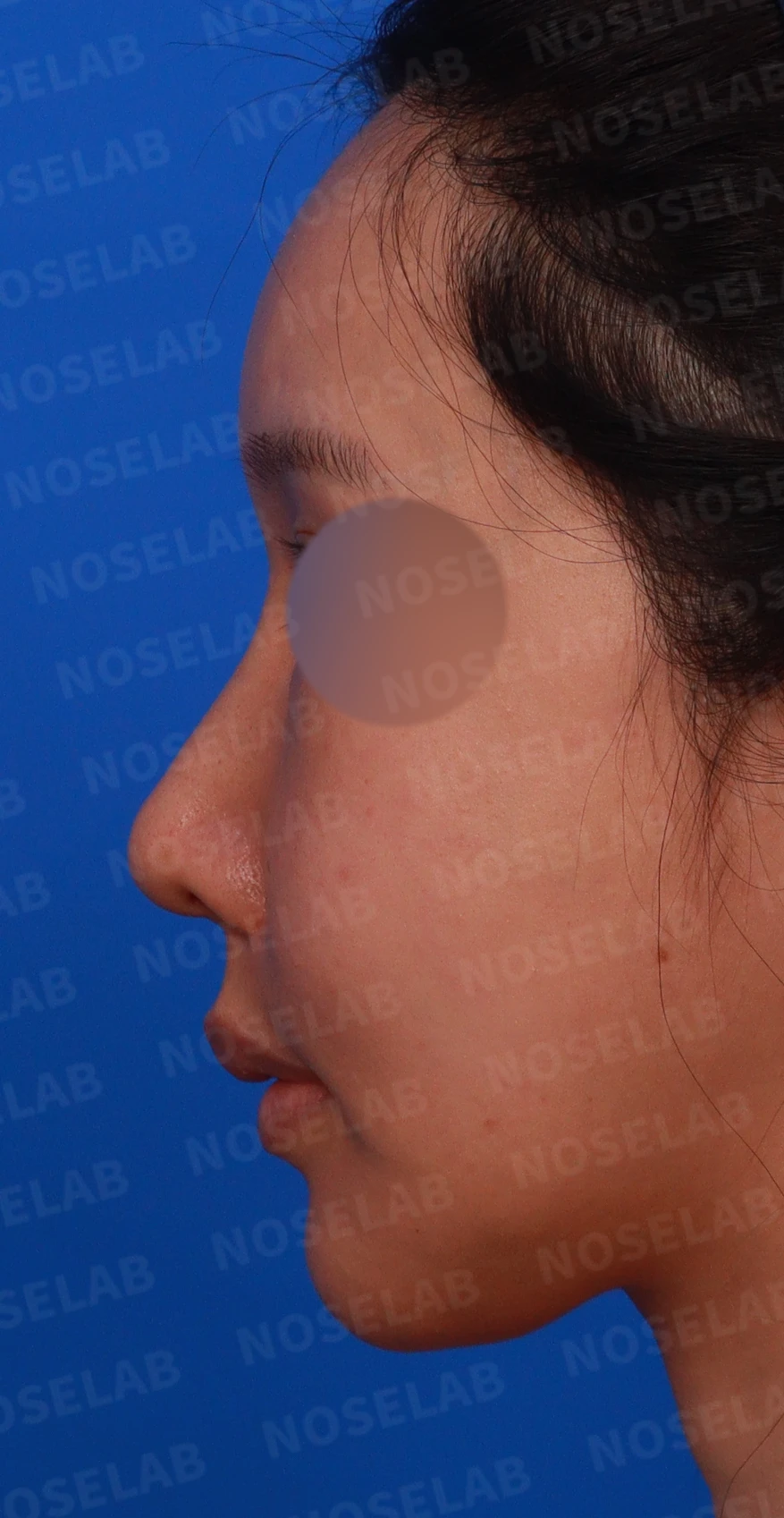
Preoperative design consultation: front, left oblique, and profile views.
Front view:
- The nasal bridge appears crooked
- Thin silicone implant visibly showing through the nasal bridge
- Pinched appearance of the alae
- Pointed, peaked nostril shape
- The columella appears retracted
Oblique view:
- The nasal tip appears slightly drooping
Profile view:
- Drooping alae
- The radix is high
- The nasal tip appears drooping
- Retracted columella with a nasolabial angle of less than 90 degrees
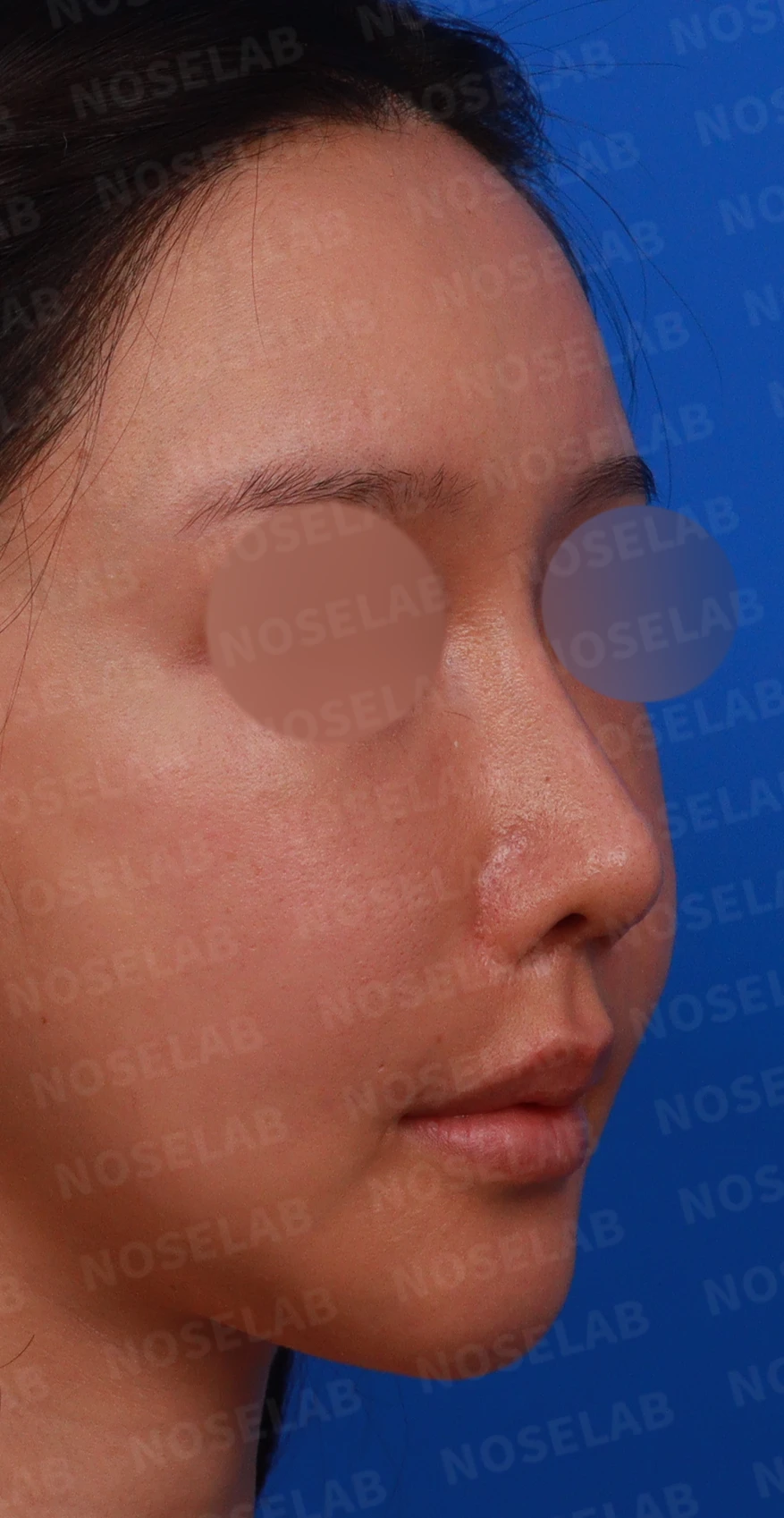
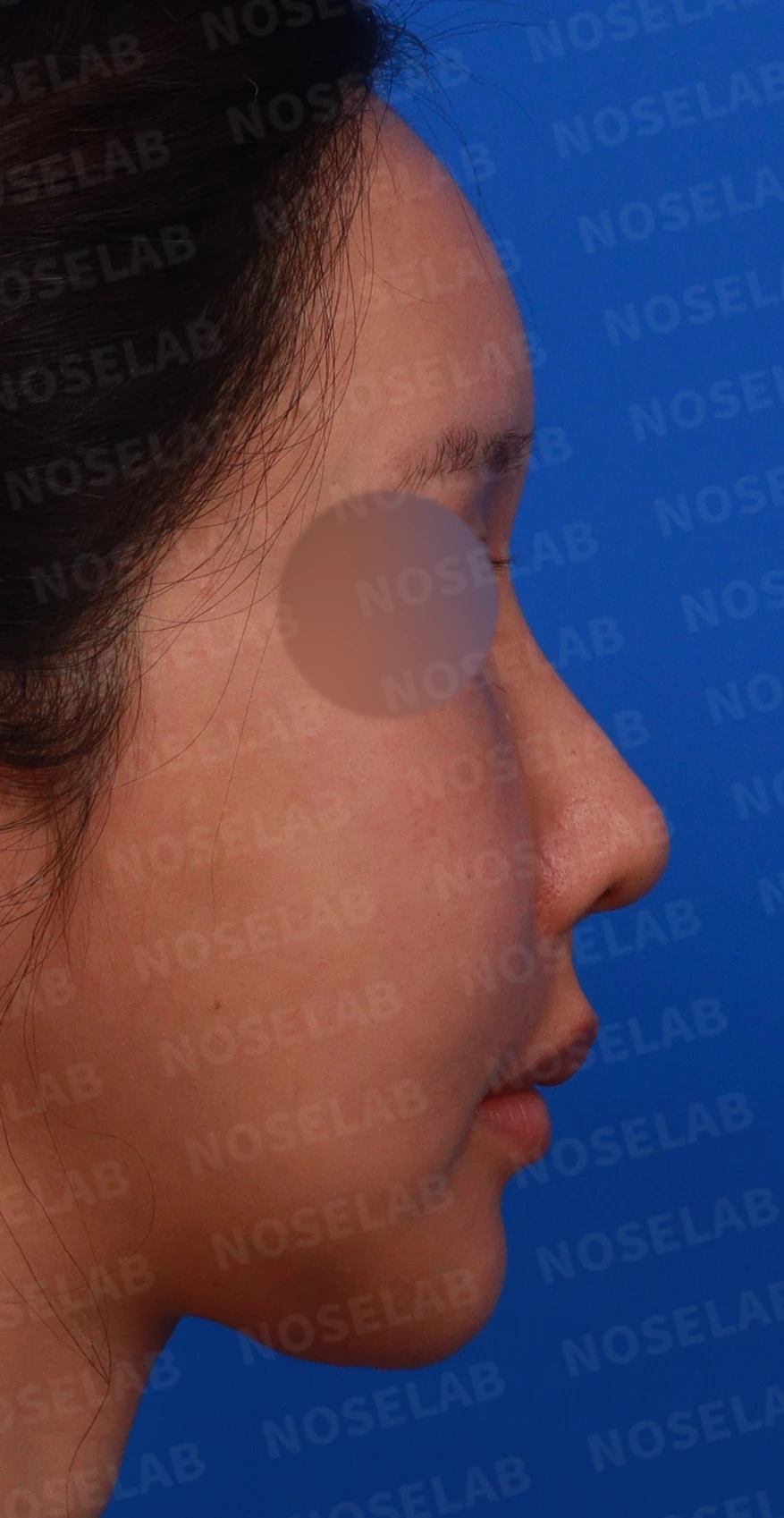
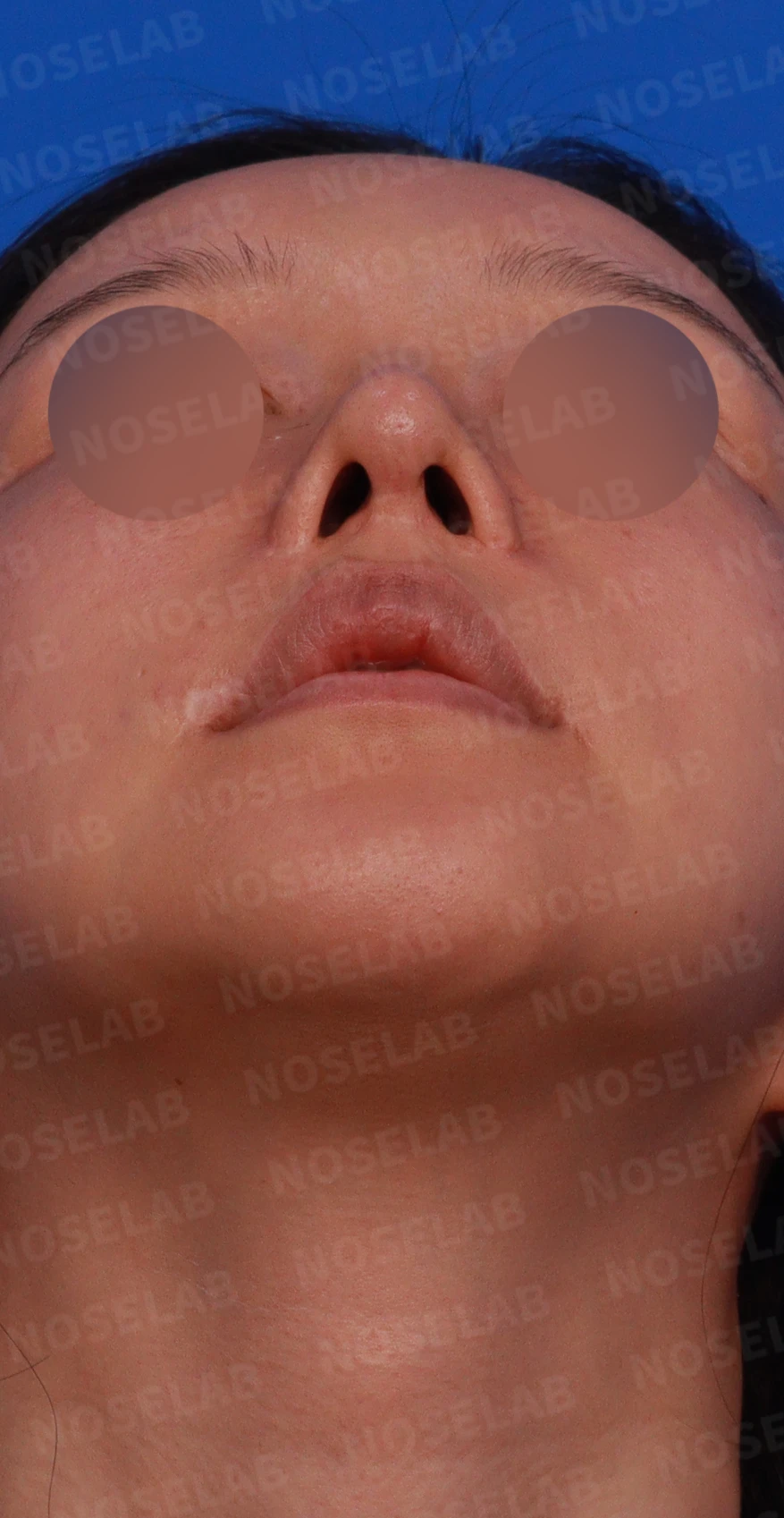
Right profile, right oblique, and basal (nostril) views from the preoperative design consultation.
Nostrils:
- Columella deviated toward the right
- Nostril asymmetry observed
4. Surgical plan
Taking into account the patient's condition and requests, the following surgical plan was established:
a) Septal cartilage reconstruction using autologous rib cartilage
b) Nasal tip correction via septal extension
c) Lowering the columella and correcting the nasolabial angle
d) Repositioning and suturing the lower lateral cartilages to improve nostril asymmetry
e) Replacing the silicone implant with a wider implant
f) Lowering the radix
g) Alar rim grafts to improve nostril shape
5. Procedure details
The following procedures were performed using a closed approach:
a) Autologous rib cartilage harvest and septal cartilage reconstruction:
- Reconstructed the septal cartilage damaged from previous surgery using autologous rib cartilage.
b) Septal extension graft:
- Elevated and supported the drooping nasal tip.
c) Lowering the columella and correcting the nasolabial angle:
- Naturally lowered the columella to adjust the nasolabial angle to approximately 95 degrees.
d) Repositioning and suturing the lower lateral cartilages:
- Improved nostril asymmetry and refined the alar contour.
e) Silicone implant replacement:
- Removed the existing silicone implant and inserted a wider silicone implant.
- Lowered the radix position during placement to correct the thin show-through of the implant.
f) Alar rim grafting:
- Improved the peaked appearance of the nostrils.
6. Comparison of before-and-after photos
Comparing photos taken immediately after surgery on day 0 shows the following improvements: Photos taken immediately after surgery show swelling and may differ from the final result.
Front view:
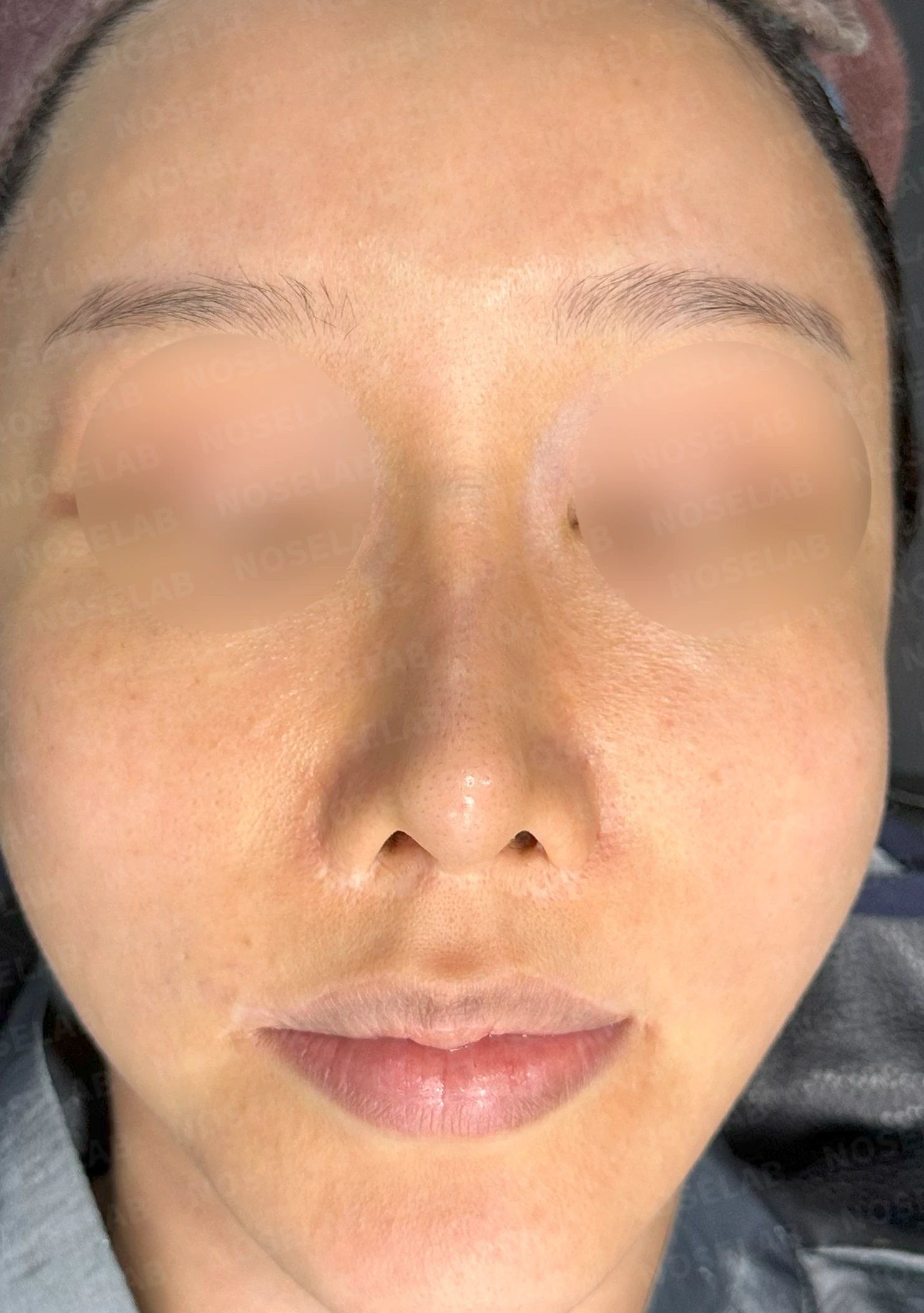
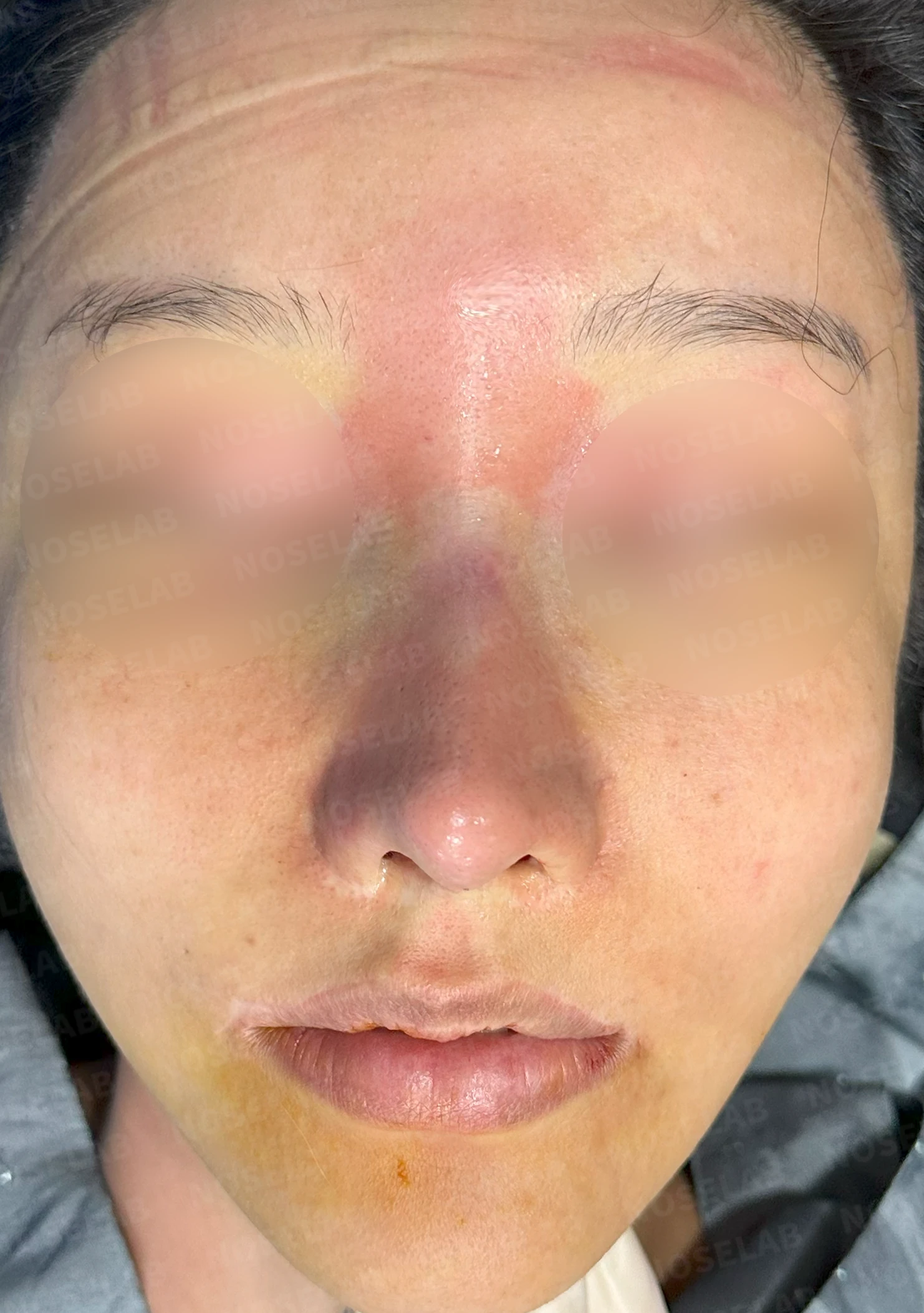
Before surgery / Day 0 immediately after surgery Photos taken immediately after surgery show swelling and may differ from the final result.
- The deviated nasal bridge was cleanly corrected.
- The thin show-through of the implant was improved.
- The radix was naturally lowered, improving the elongated appearance of the midface.
- As the nasal tip came down in a rounded contour, the previously peaked nostrils became rounded.
- The pinched appearance of the alae was corrected.
Oblique view:
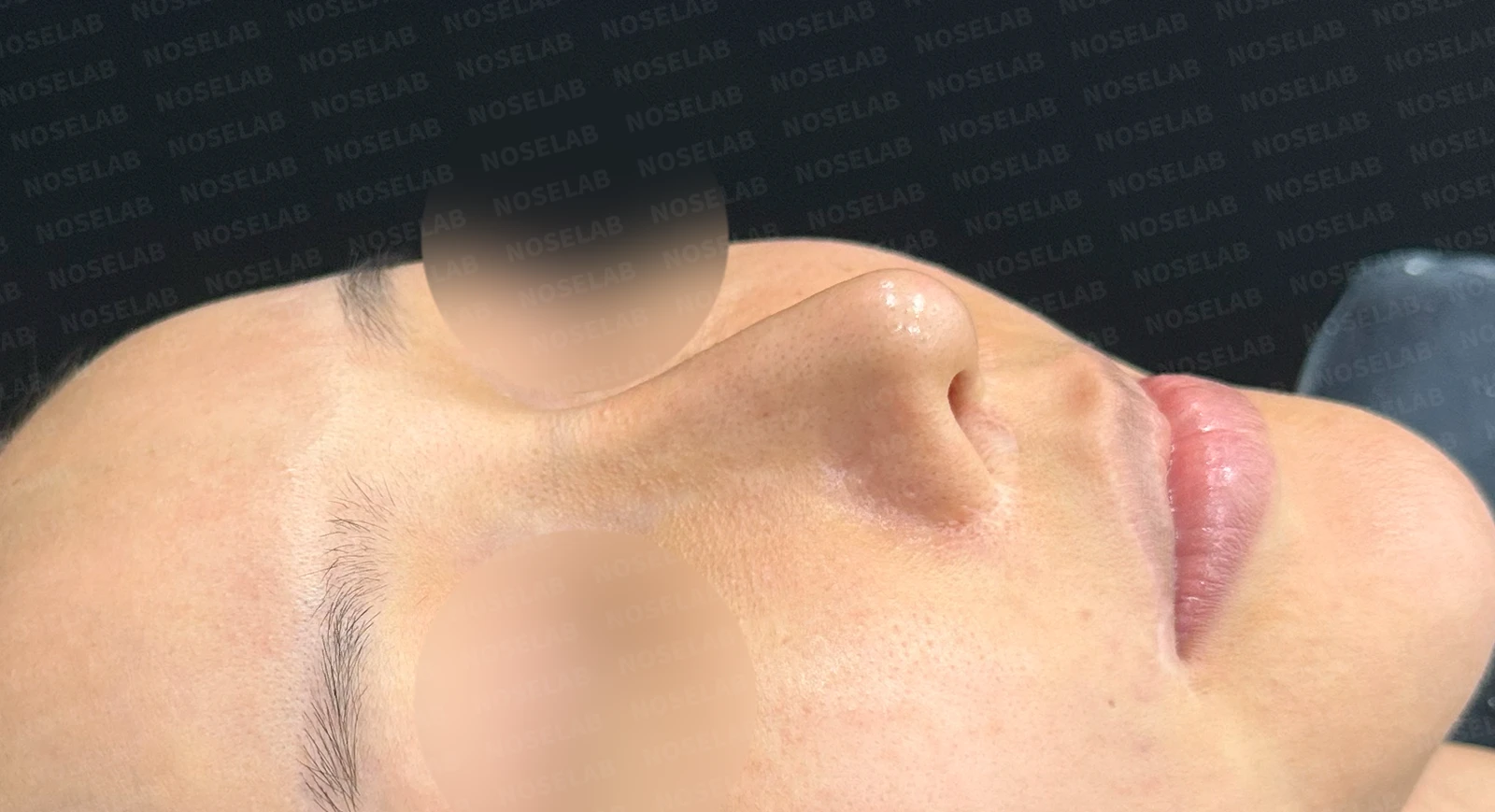
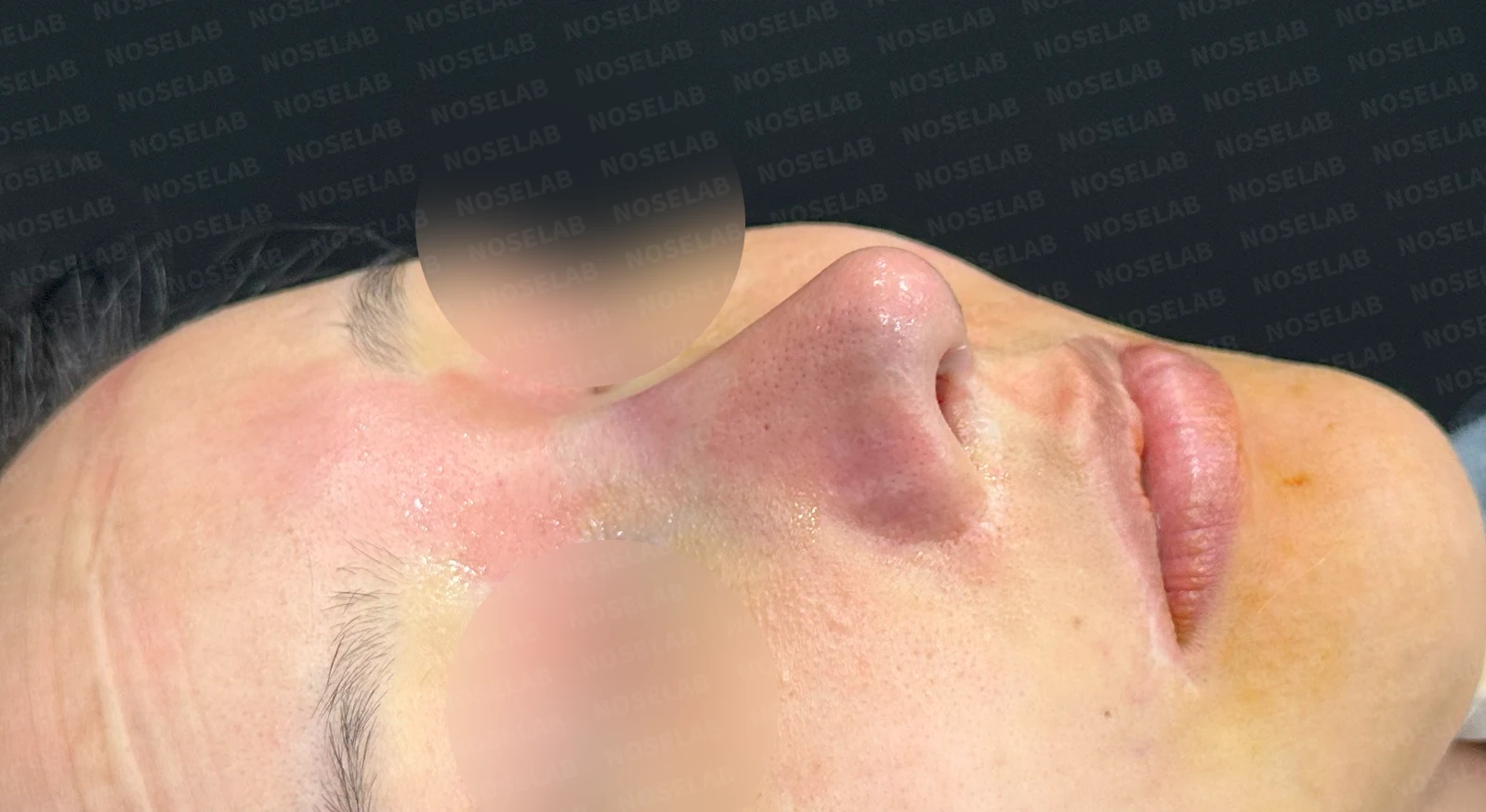
Before surgery / Day 0 immediately after surgery Photos taken immediately after surgery show swelling and may differ from the final result.
- The drooping nasal tip was corrected into a well-defined projection.
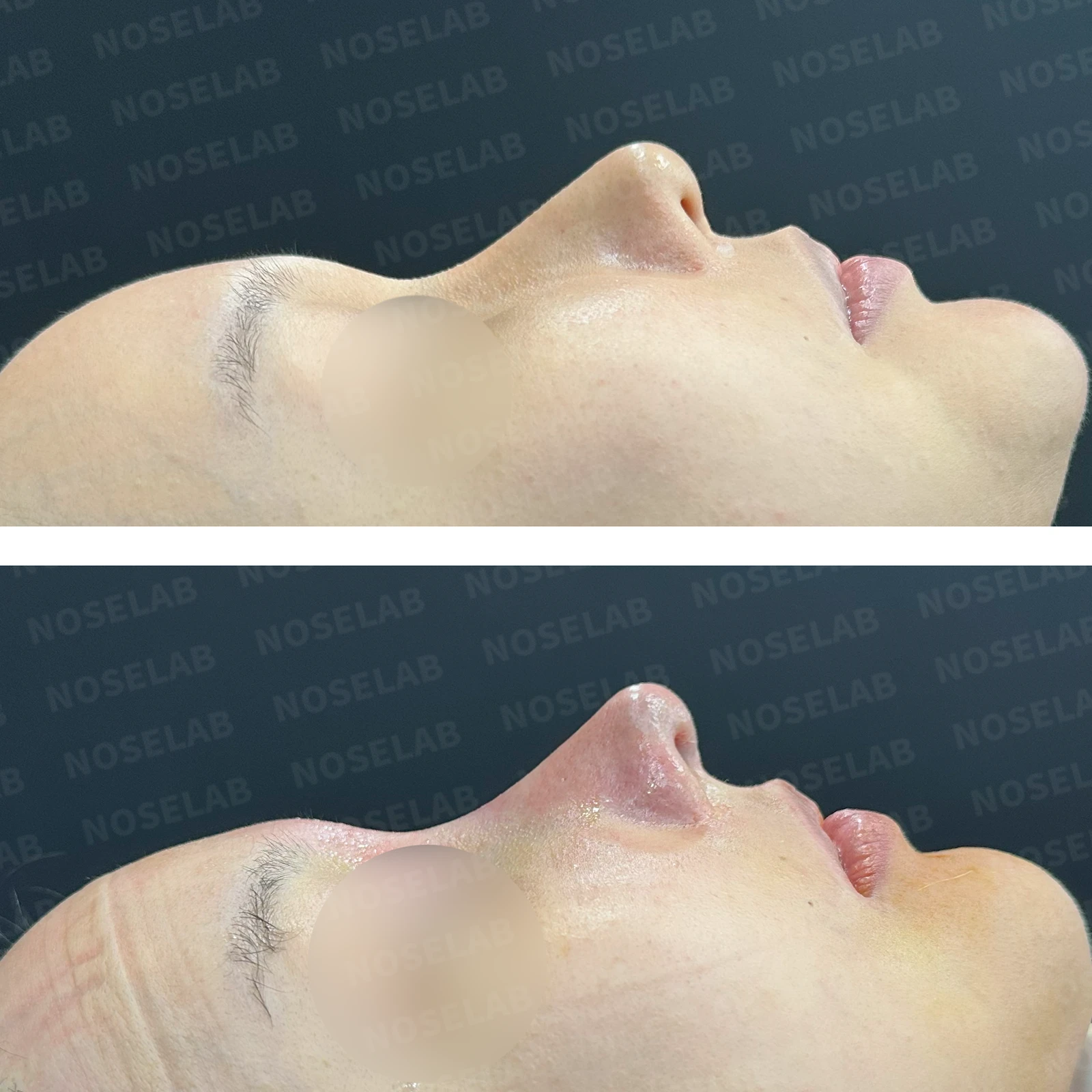
Profile view:
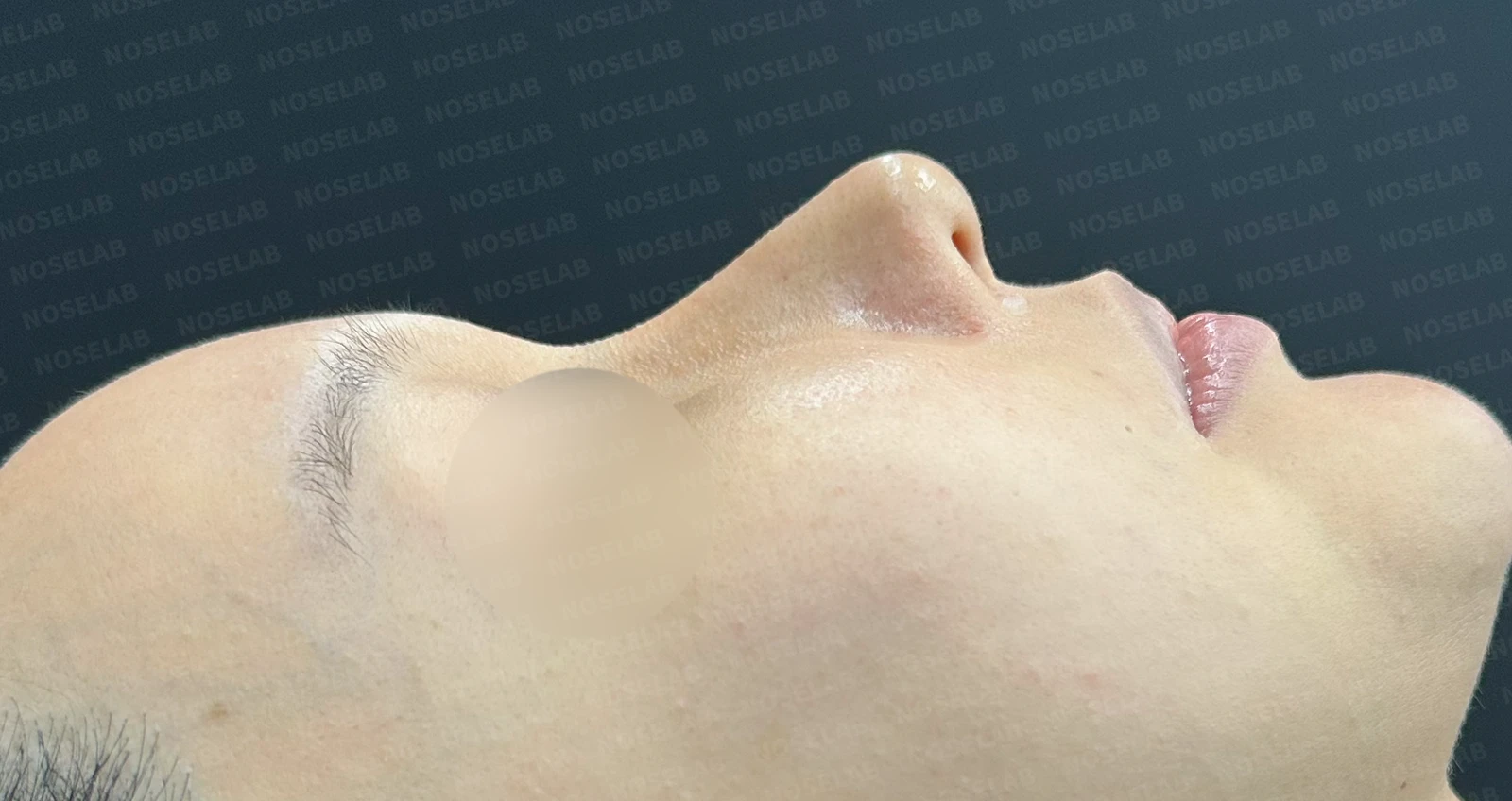
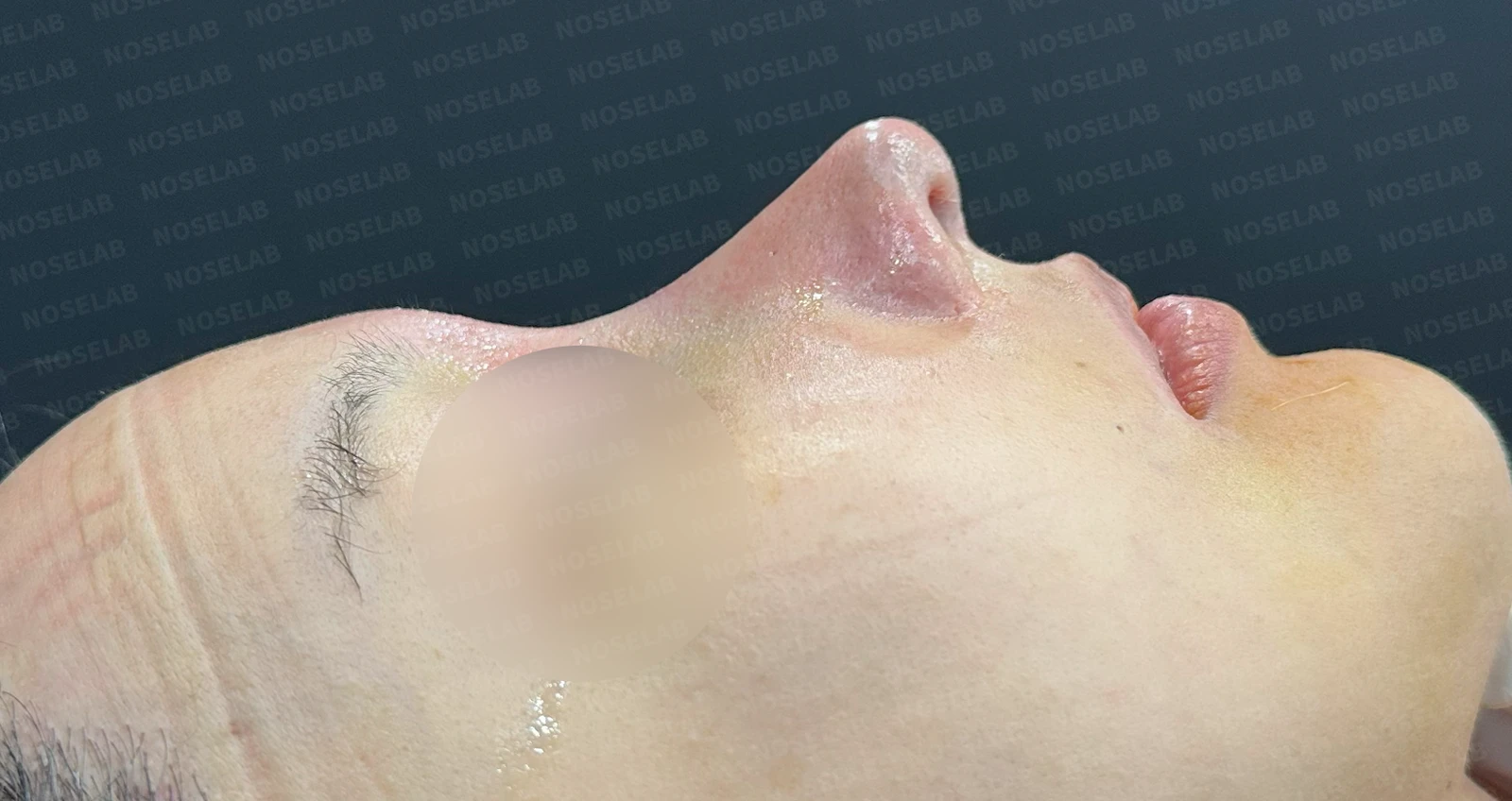
Before surgery / Day 0 immediately after surgery Photos taken immediately after surgery show swelling and may differ from the final result.
- The radix was naturally lowered.
- A straight bridge line was established.
- With the columella naturally lowered, the nasolabial angle was corrected to approximately 95 degrees.
Nostrils:
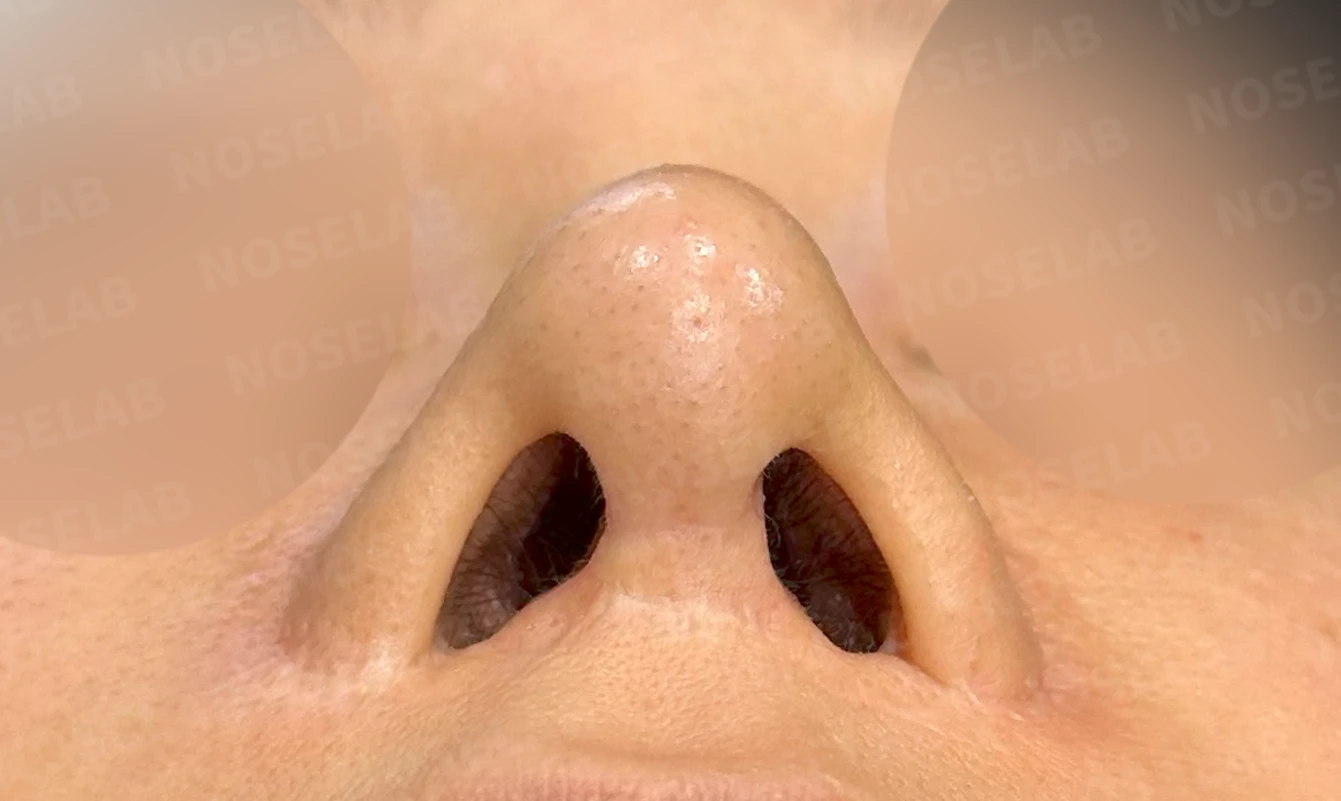
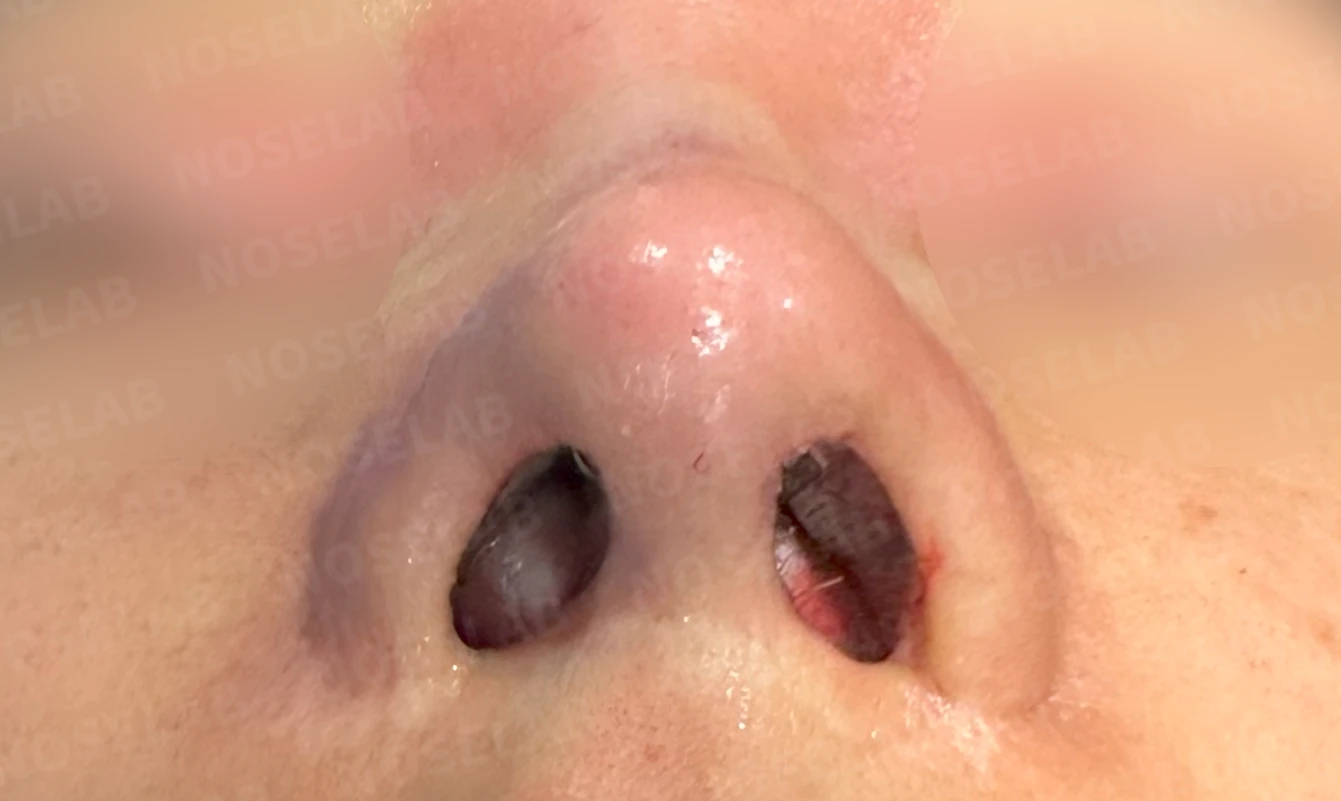
Before surgery / Day 0 immediately after surgery Photos taken immediately after surgery show swelling and may differ from the final result.
- The deviated columella was straightened.
- Nostril asymmetry was significantly improved.
7. Photos taken immediately after surgery (day 0)Immediate postoperative photos show swelling and may differ from the final result.
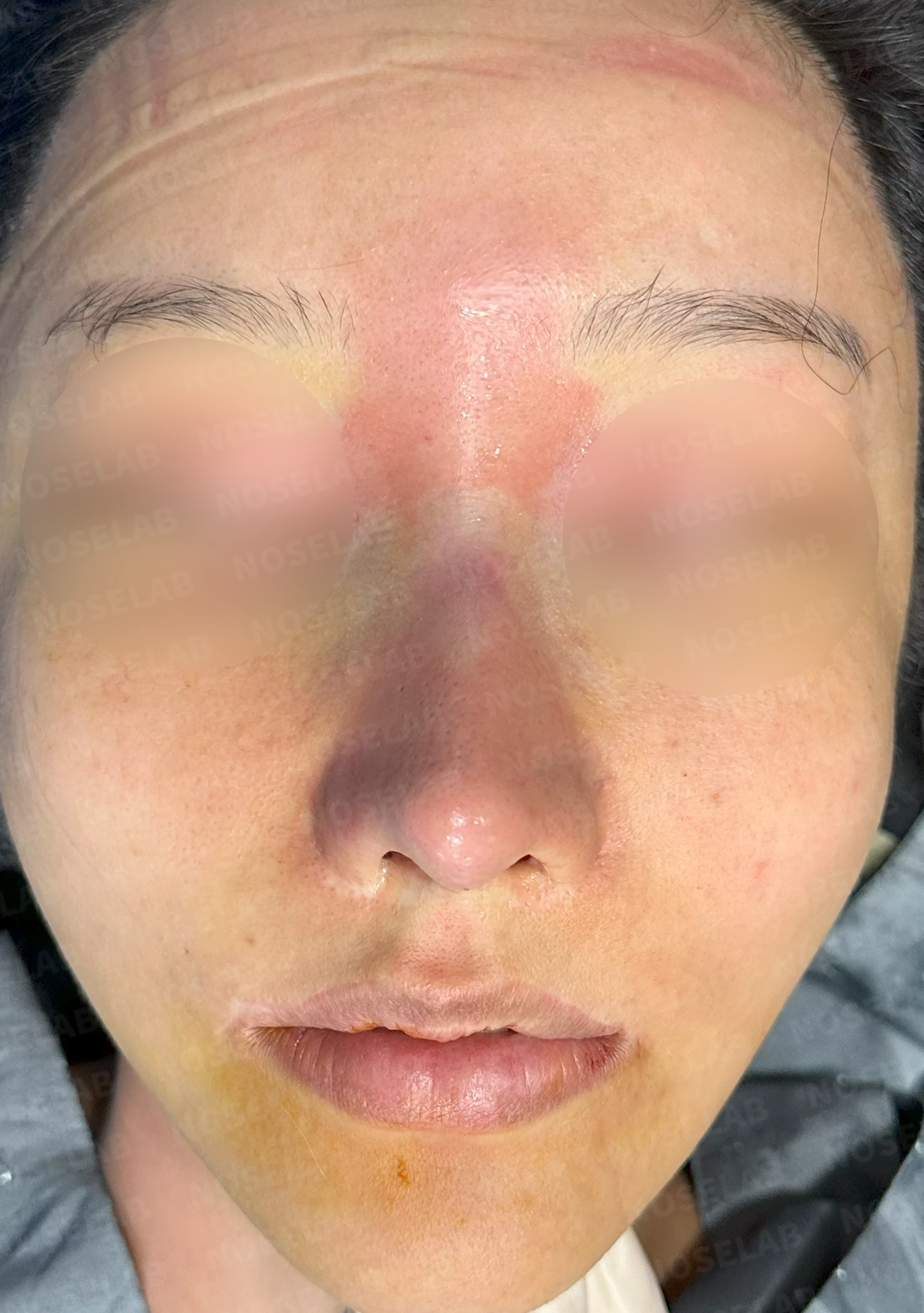
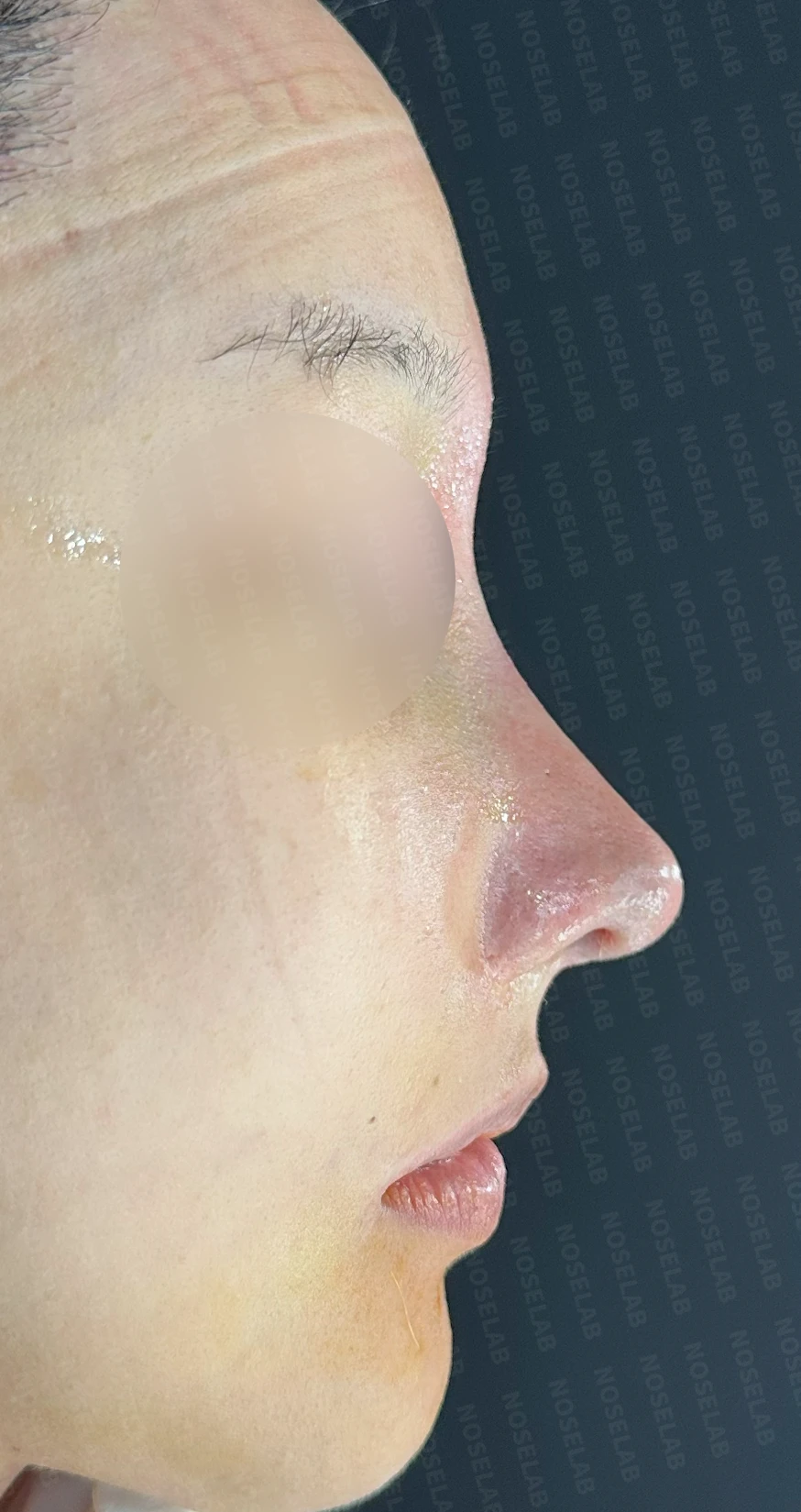
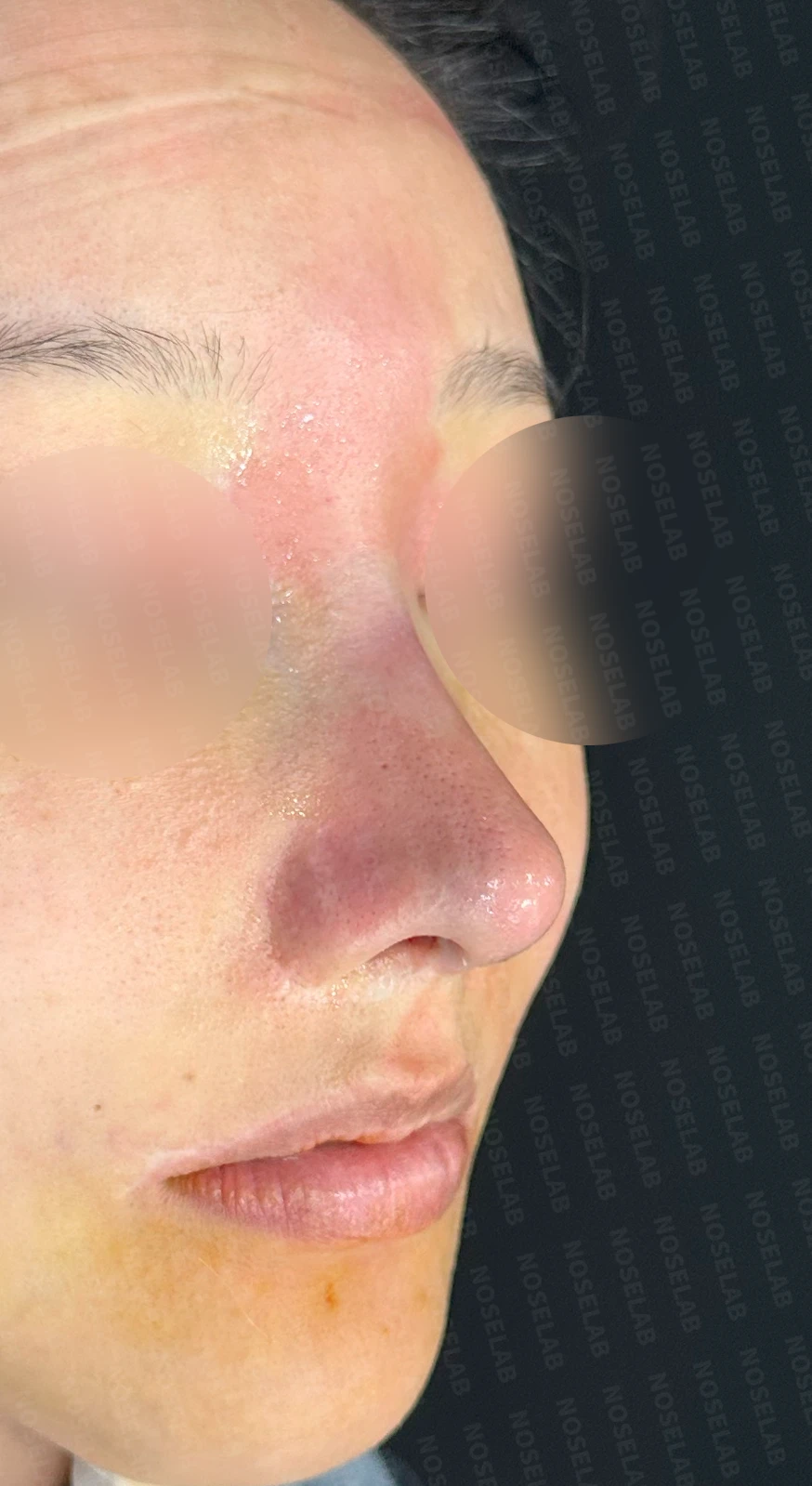
Front, profile, and oblique views taken immediately after surgery (day 0).Immediate postoperative photos show swelling and may differ from the final result.
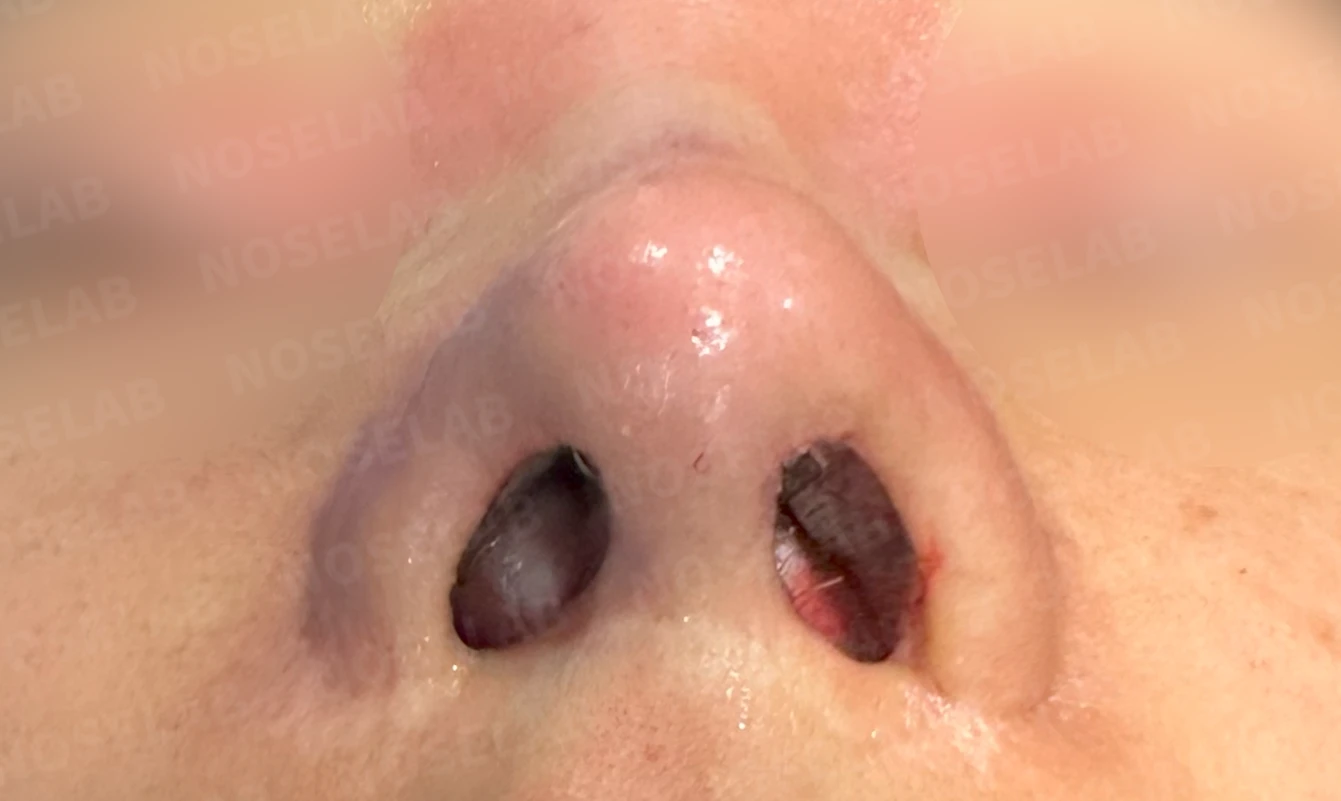
Basal (nostril) view immediately after surgery (Day 0).Immediate postoperative photos show swelling and may differ from the final result.
8. Overall assessment
This case is a good example of rhinoplasty bringing overall harmony to the face. Lowering the radix and correcting the nasolabial angle in particular improved the elongated look of the midface.
Changes in nasal length have a substantial impact on overall facial proportions and impression. In patients with an elongated midface or a long facial appearance, a high radix between the eyebrows can make the nose appear long, further emphasizing midface length. In these situations, lowering the radix to make the nose appear shorter and appropriately adjusting the nasolabial angle to make the philtrum appear shorter can be very effective.
In this patient, lowering the radix and correcting the nasolabial angle to 95 degrees reduced the perceived length of the midface and improved overall facial balance. In addition, addressing the deviated bridge, the thin implant show-through, and nostril asymmetry at the same time helped create a harmonious nasal contour.
9. Concluding remarks
Nasal length significantly influences overall facial balance and impression. For individuals with a long midface or long face, the starting position of the radix is critical. A high radix can create an impression of an elongated face, making it important to lower it appropriately.
In addition, adjusting the nasolabial angle can visually shorten the appearance of the philtrum. This helps refine facial proportions and creates a more harmonious overall impression.
Through such detailed adjustments, surgery does not merely alter the shape of the nose; it enhances overall facial harmony and balance. Those considering rhinoplasty benefit from an approach that evaluates total facial proportions and balance rather than the nose in isolation.
I always establish surgical plans carefully tailored to each patient's facial characteristics and proportions. I hope this case provides helpful insight for those seeking a more balanced and harmonious facial appearance through rhinoplasty.
I will be with you every step of the way to achieve a beautiful and healthy nose.
This was Dr. Peter C. Kang. Thank you.
Thank you.
#rhinoplasty #midfacecorrection #loweringtheradix #droopingtipcorrection #alarrefinement #loweringthecolumella #nostrilasymmetrycorrection #closedrhinoplasty #entrhinoplasty #rhinoplastysafety #naturalnose #facialproportions

Limitations and risks
When autologous rib cartilage is used, scarring and pain may remain at the donor site on the chest, and pneumothorax (pleural injury) can occur rarely. Over time, the grafted cartilage may warp or undergo partial resorption.
When using donor rib cartilage, long-term follow-up is necessary because the grafted cartilage may resorb or warp.
When revising after implant removal, contracture may progress again after removal, the nasal height and length may decrease, and staged surgery may be necessary depending on the skin condition.
When the septum is corrected at the same time, nasal obstruction may persist or recur, and in rare cases, septal perforation or changes in smell may occur.
Common potential risks include infection, bleeding, asymmetry, scarring, skin necrosis, and insufficient improvement; results vary depending on individual skin condition and previous surgical history.