Hello, I am Dr. Peter C. Kang.
Today, I would like to share a case of nostril stenosis reconstruction following multiple nasal surgeries, alar reduction, and philtrum reduction.
The patient's condition
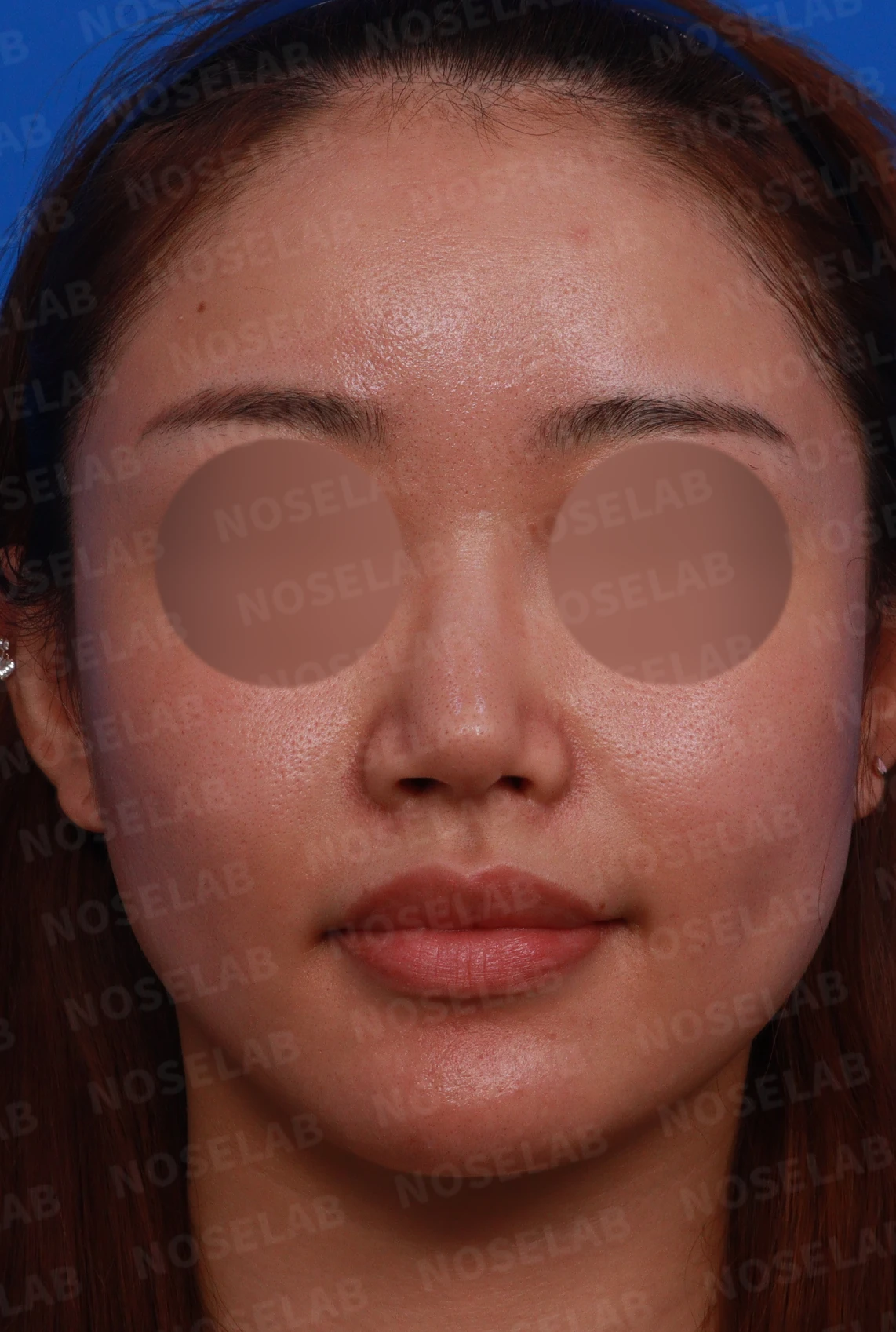
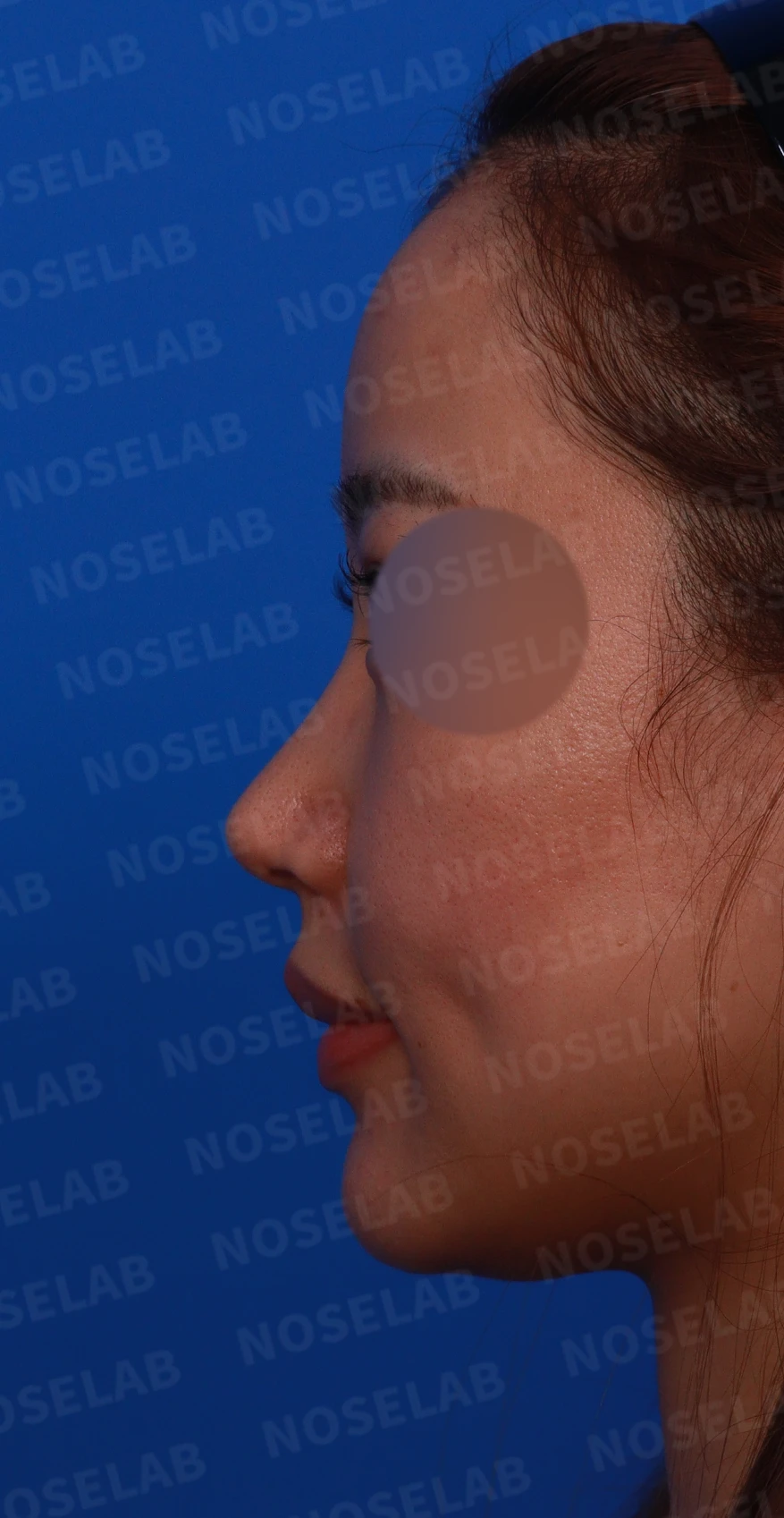
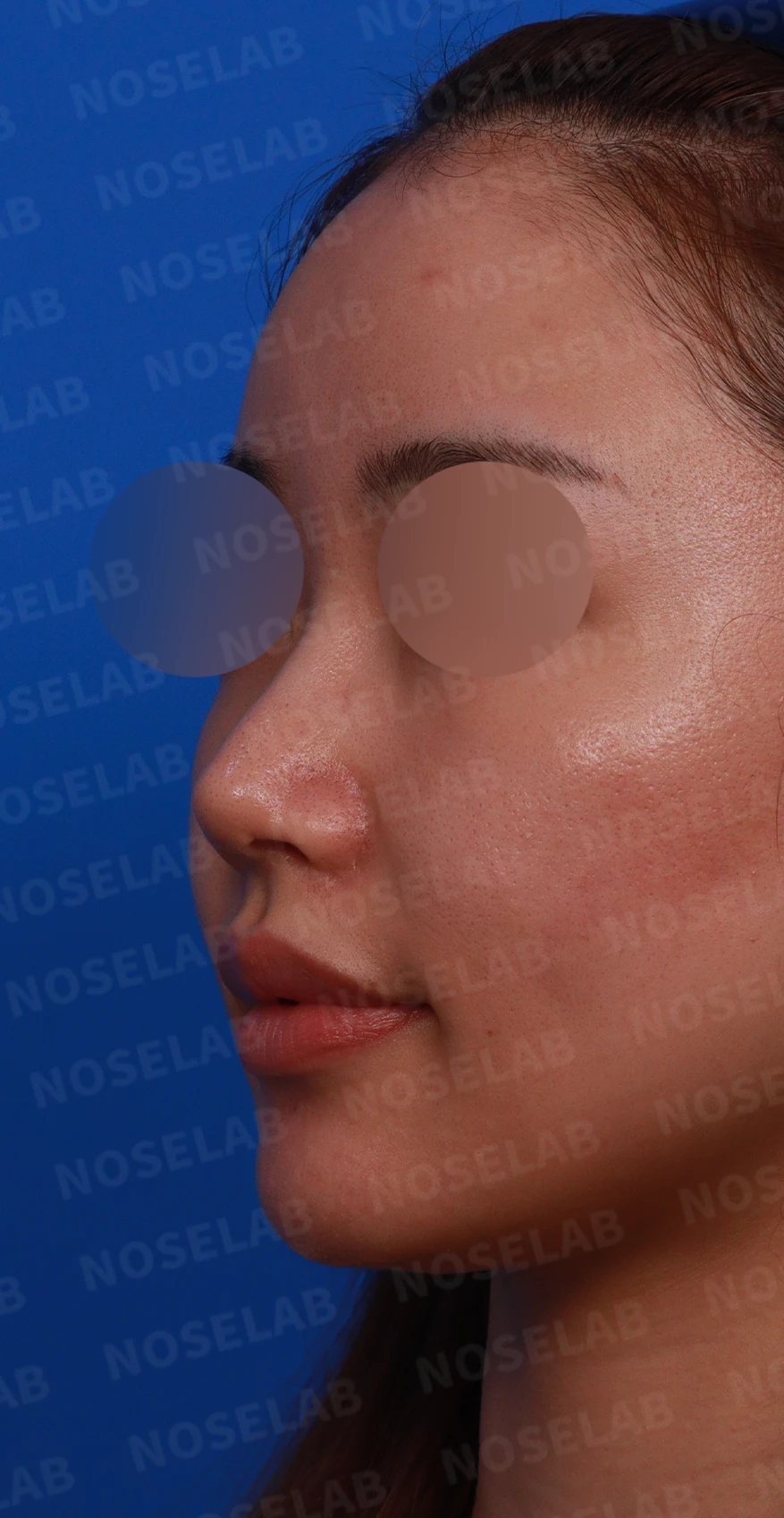
Front, left profile, and oblique views during design consultation.
1. Front view
- Blunt and broad nasal tip
- Nostril asymmetry
- Pinched nasal tip
- Deviated nasal bridge
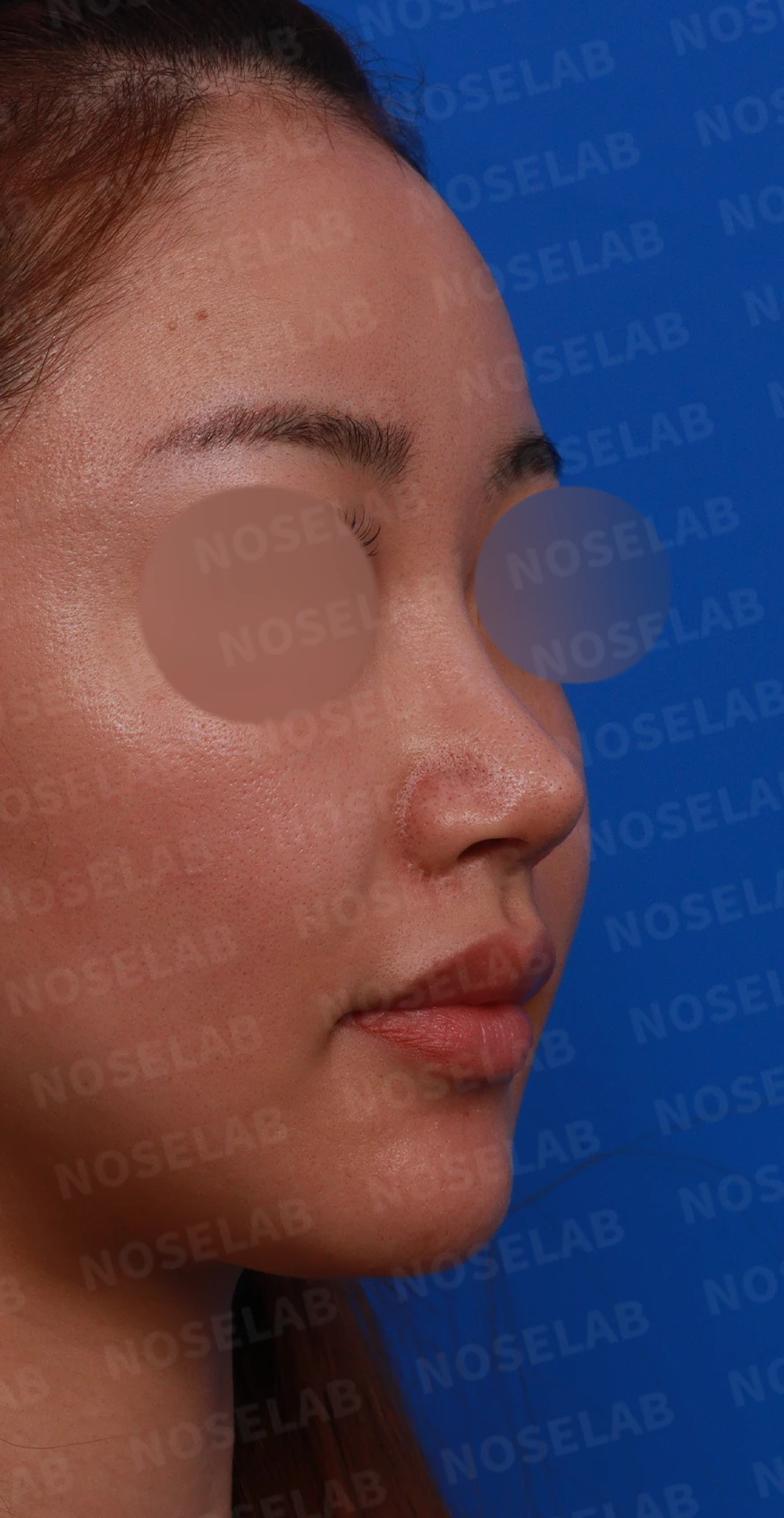
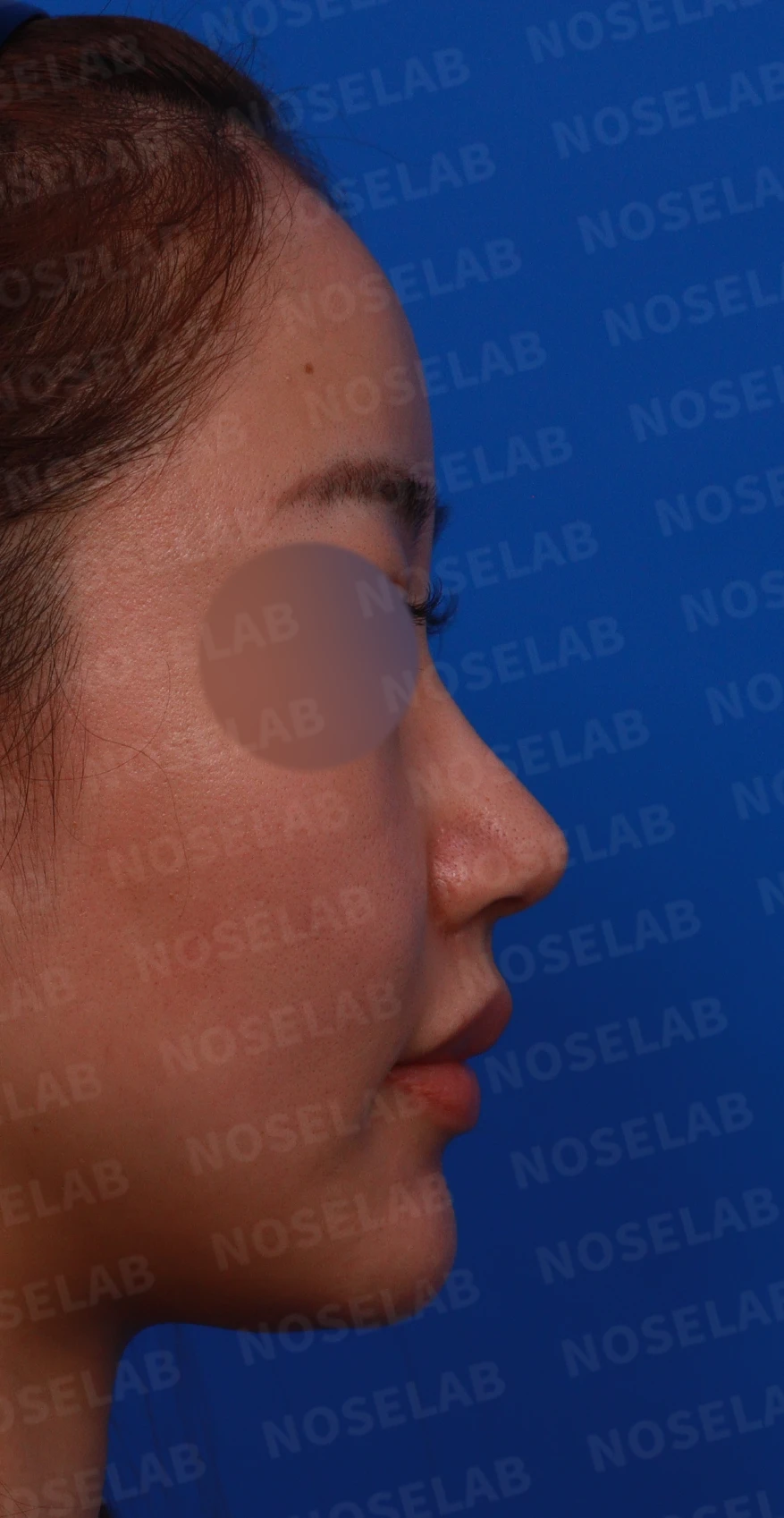
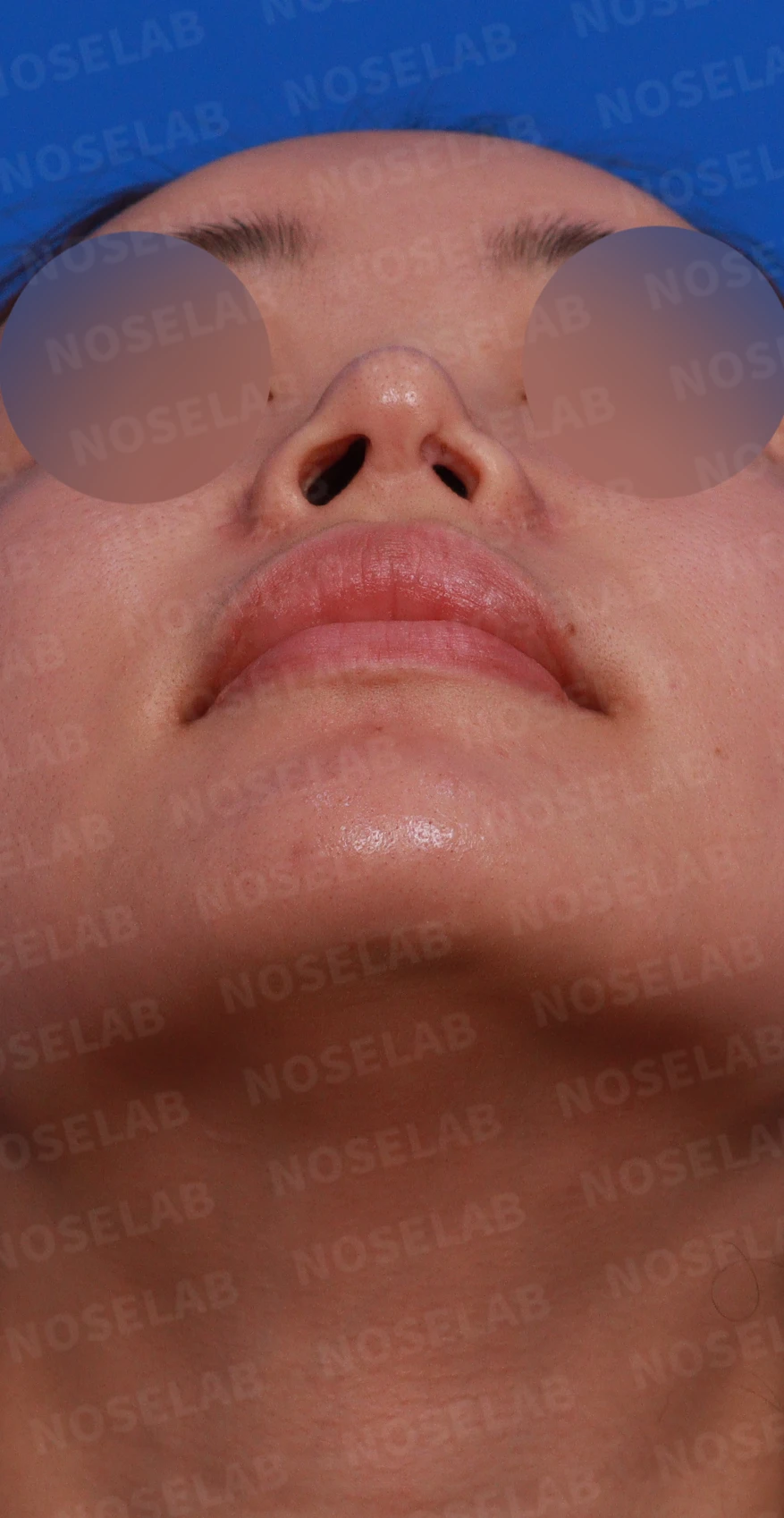
Design consultation: right oblique, profile, and basal (nostril) views.
2. Nostril view
- Nostril asymmetry
- Columella deviated toward the left
- Left nostril stenosis
- Scar tissue inside the left nostril
Surgical plan
1. Septal reconstruction and septal extension using autologous rib cartilage
2. Crooked nose correction via lateral osteotomy
3. Rotational flap for correcting nostril stenosis
4. Alar cartilage reconstruction
5. Removal of intranasal scar tissue
6. Nasolabial angle correction
Surgical procedure
1. Severe damage to the septal and alar cartilages from previous surgeries
-> Restored through septal and alar cartilage reconstruction using autologous rib cartilage
2. Abundant scar tissue in the nasal tip partially excised
3. Severe left external nasal valve (nostril) stenosis
-> Partially excised scar tissue and widened the nostril using an intranasal skin rotational flap
Surgical results
1. Frontal view improvement
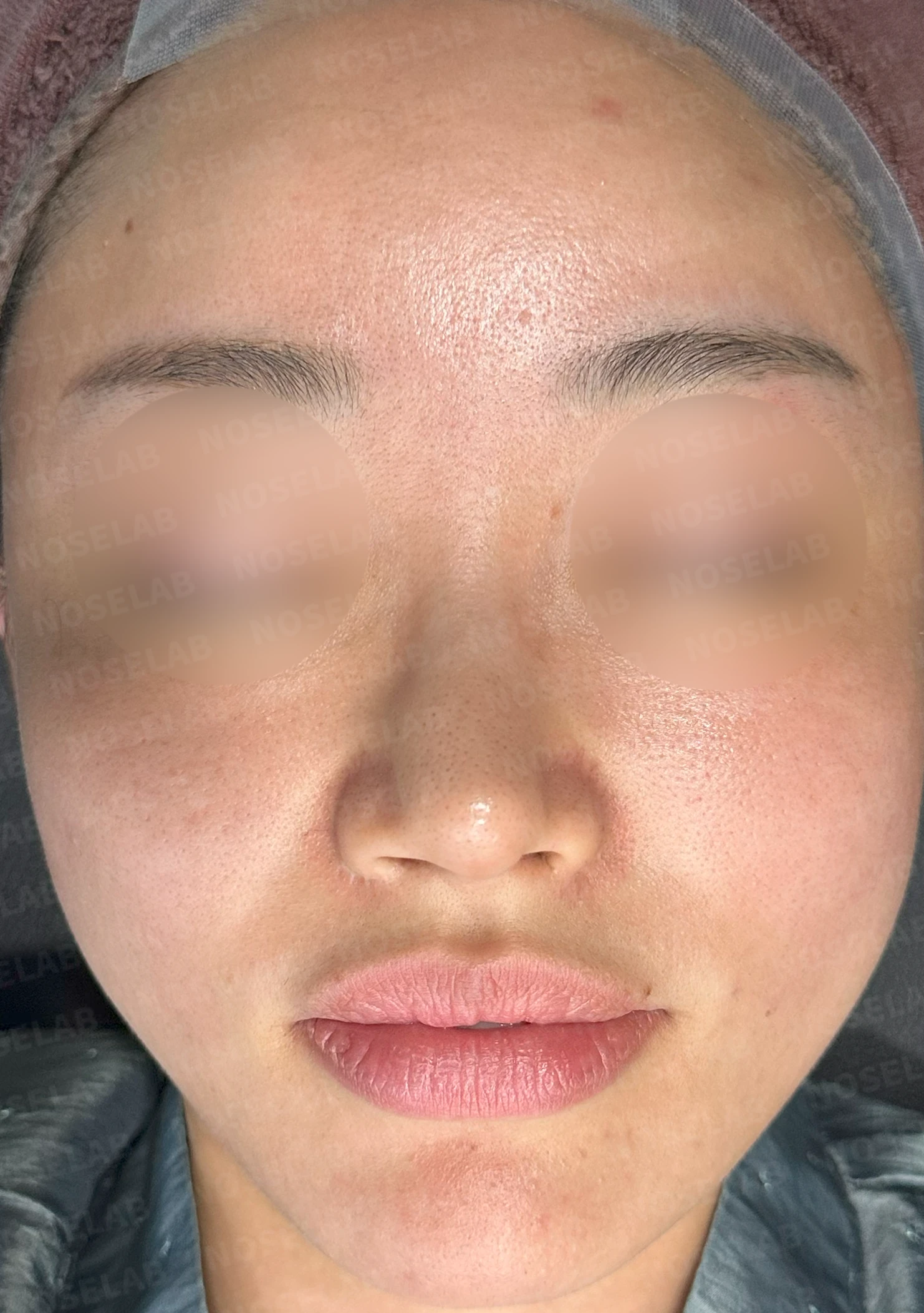
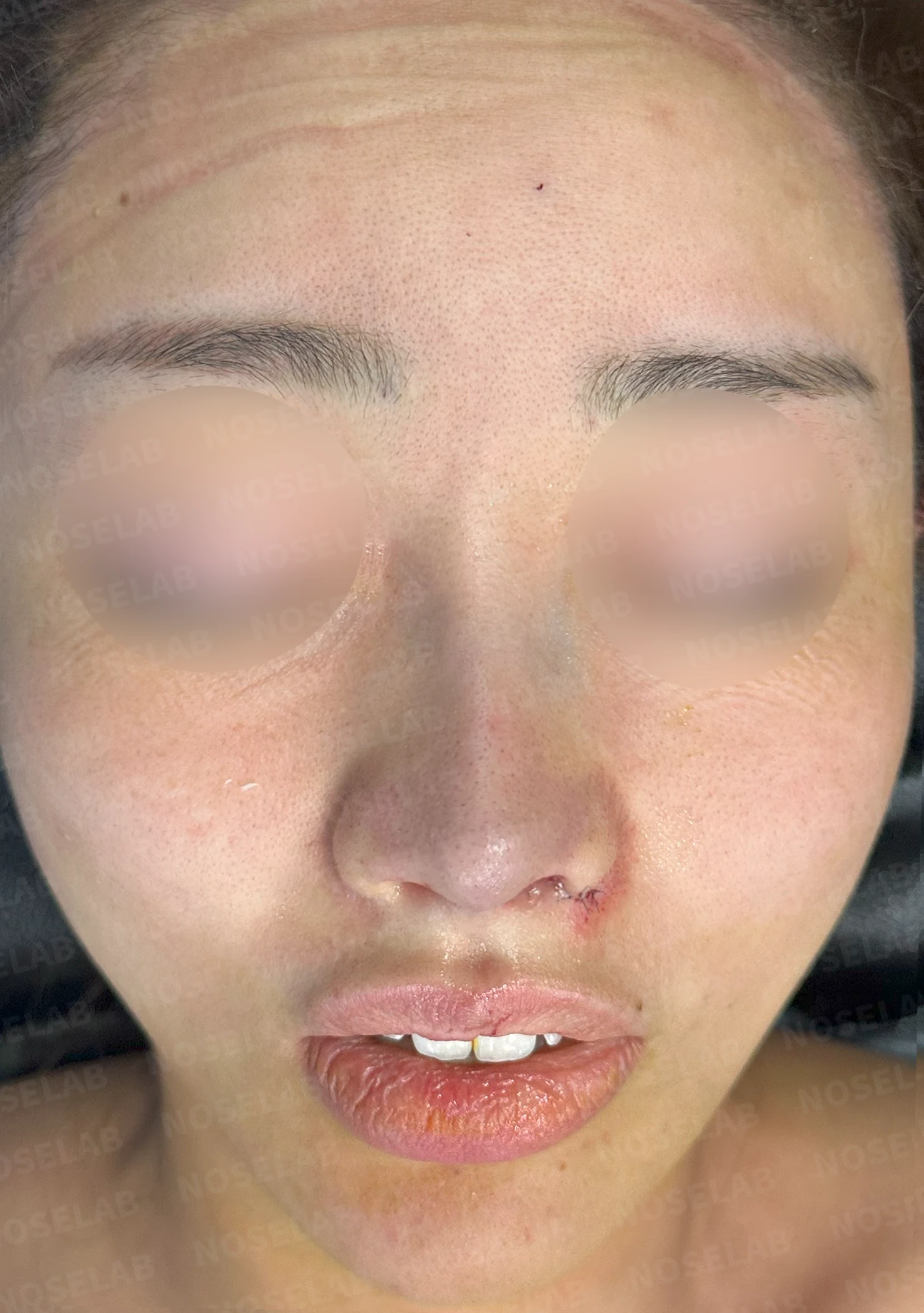
Before surgery / Day 0 immediately after surgery Photos taken immediately after surgery show swelling and may differ from the final result.
2. Profile view improvement
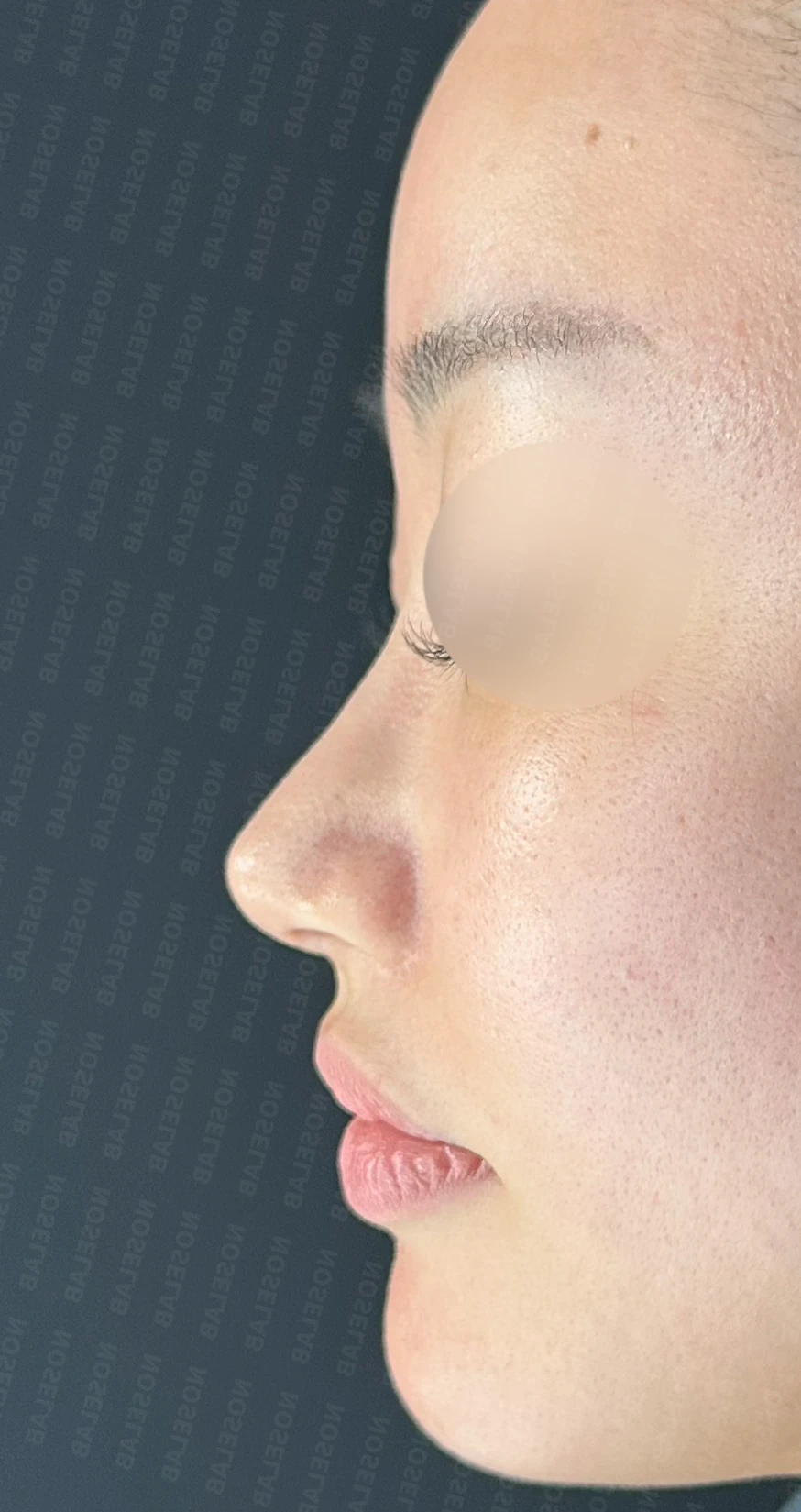
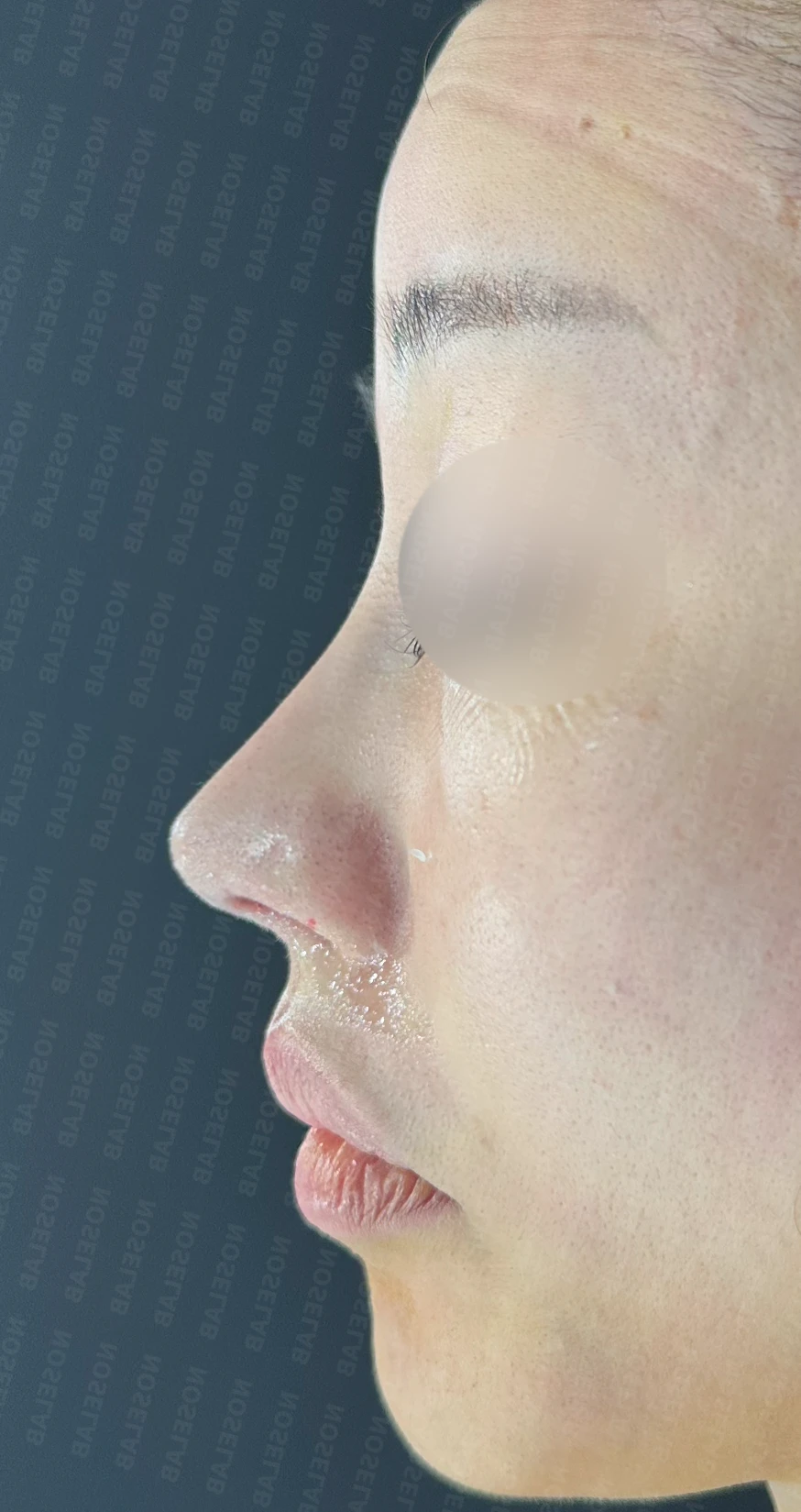
Before surgery / Day 0 immediately after surgery Photos taken immediately after surgery show swelling and may differ from the final result.
- Increased tip projection to correct the flattened look and add three-dimensional definition
- Set the radix moderately low, around the level of the pupils
- Created an overall feminine line that does not look overly long
3. Oblique view improvement
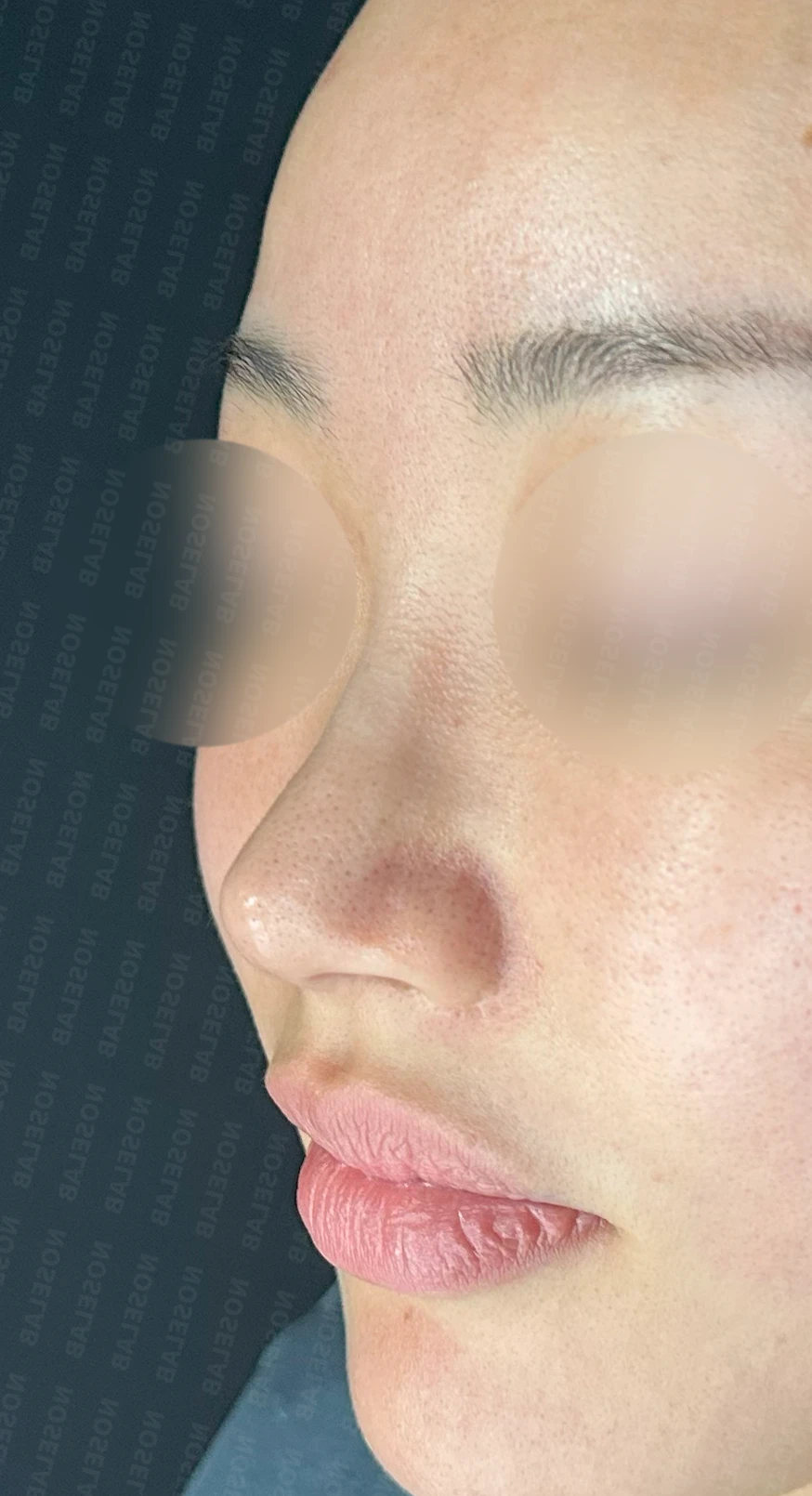
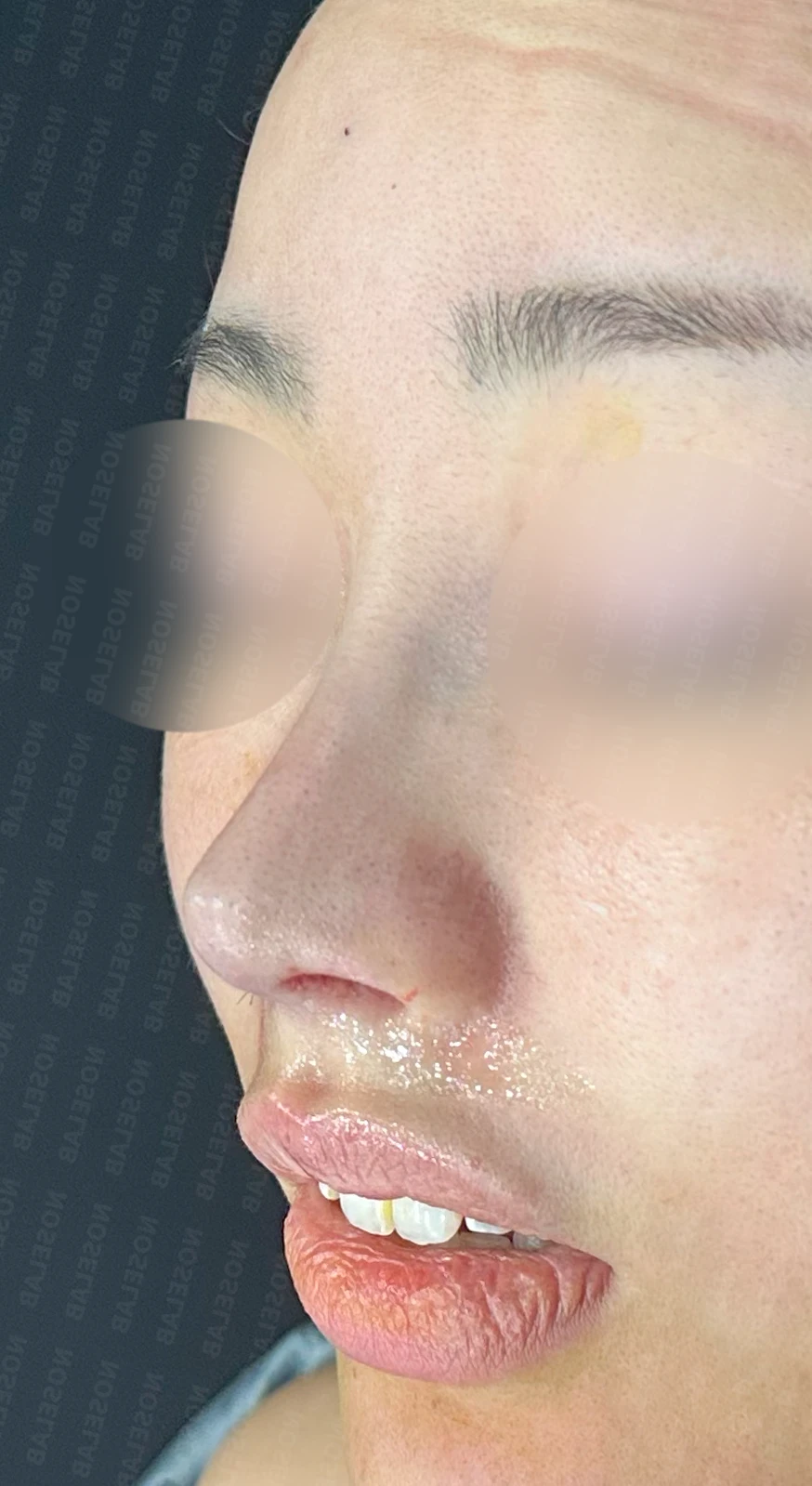
Before surgery / Day 0 immediately after surgery Photos taken immediately after surgery show swelling and may differ from the final result.
- Achieved a far more refined profile compared to before surgery
- The nasolabial angle was corrected, improving the appearance of a protruding mouth.
4. Nostril view improvement
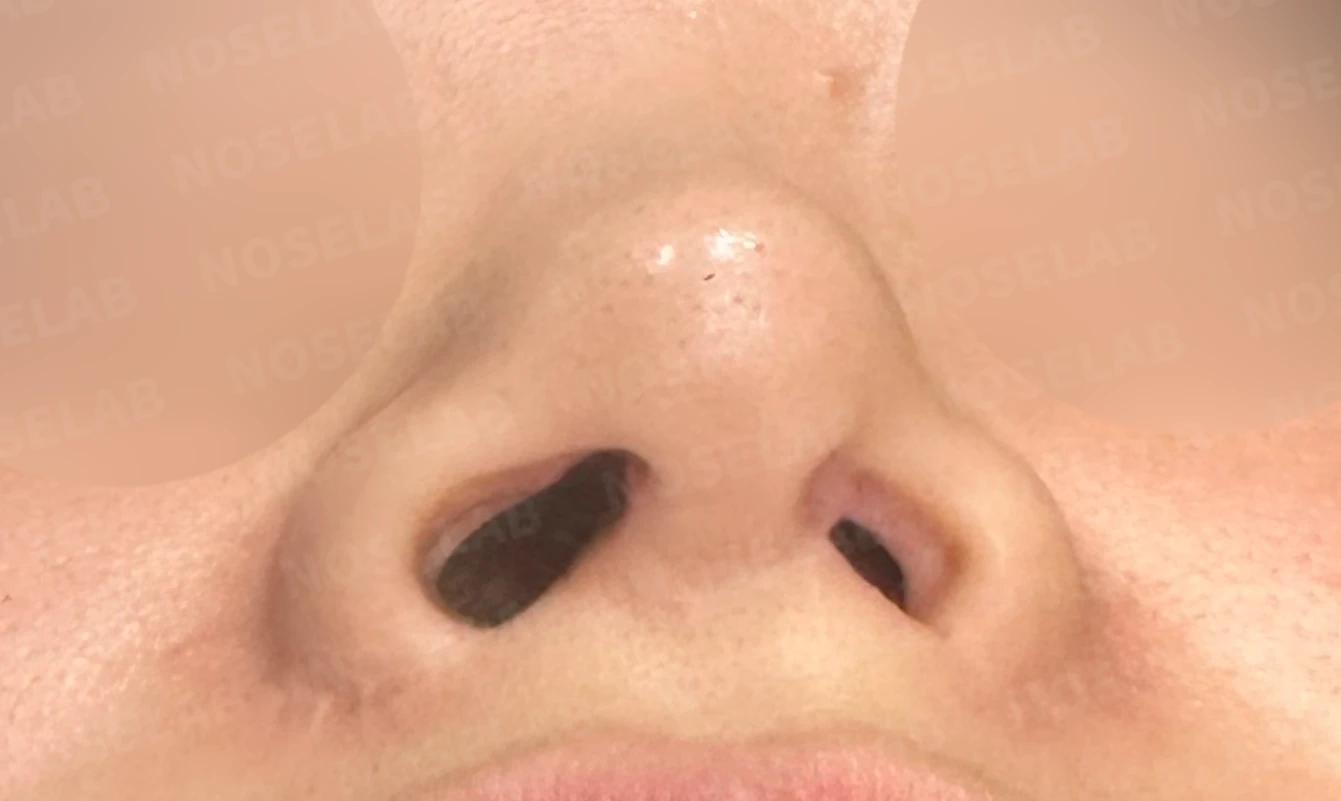
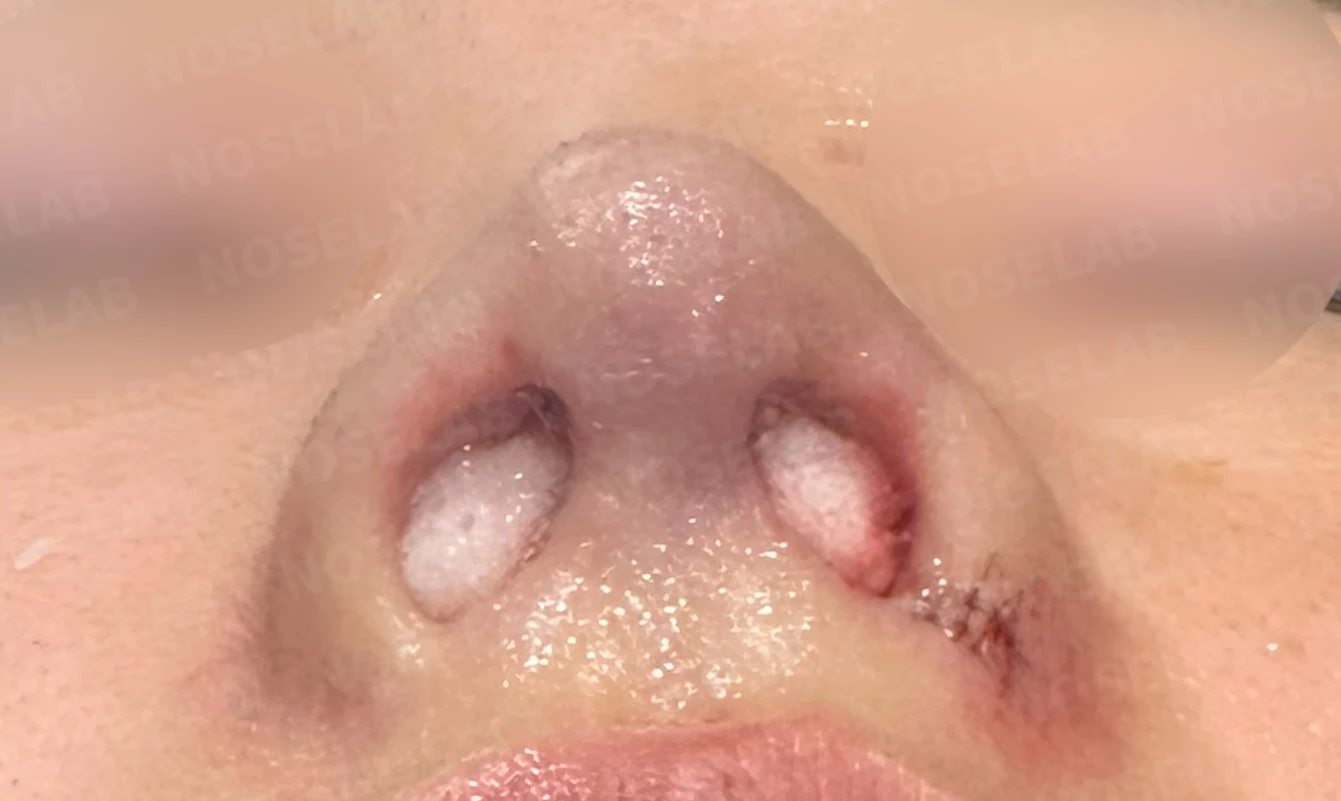
- Improved the nasal tip deviation to the left caused by left nostril stenosis
- The reduced size of the left nostril from the prior alar reduction remained an anatomical limitation
- Improved symmetry between both nostrils, and resolved nostril stenosis by cleanly removing internal scar tissue
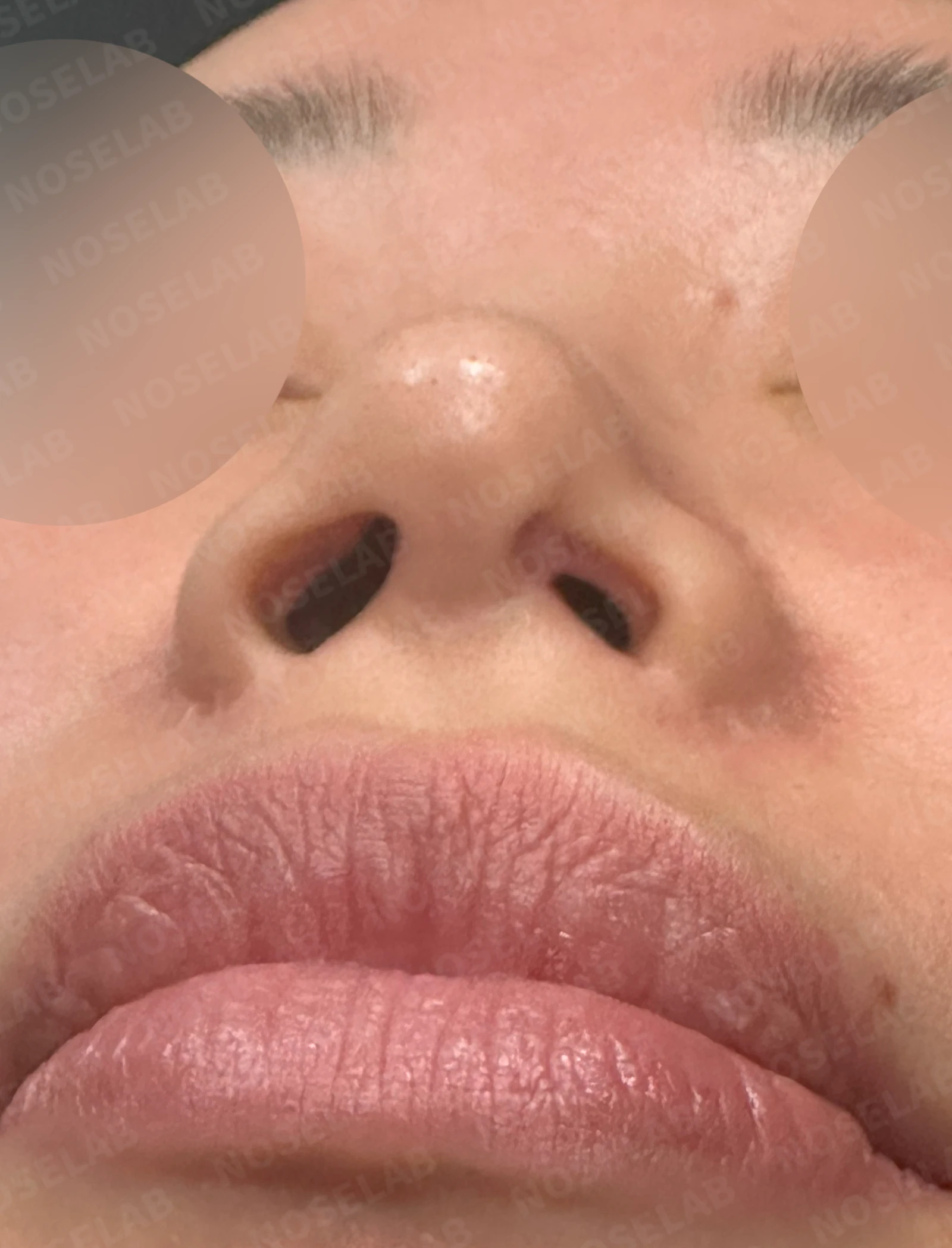
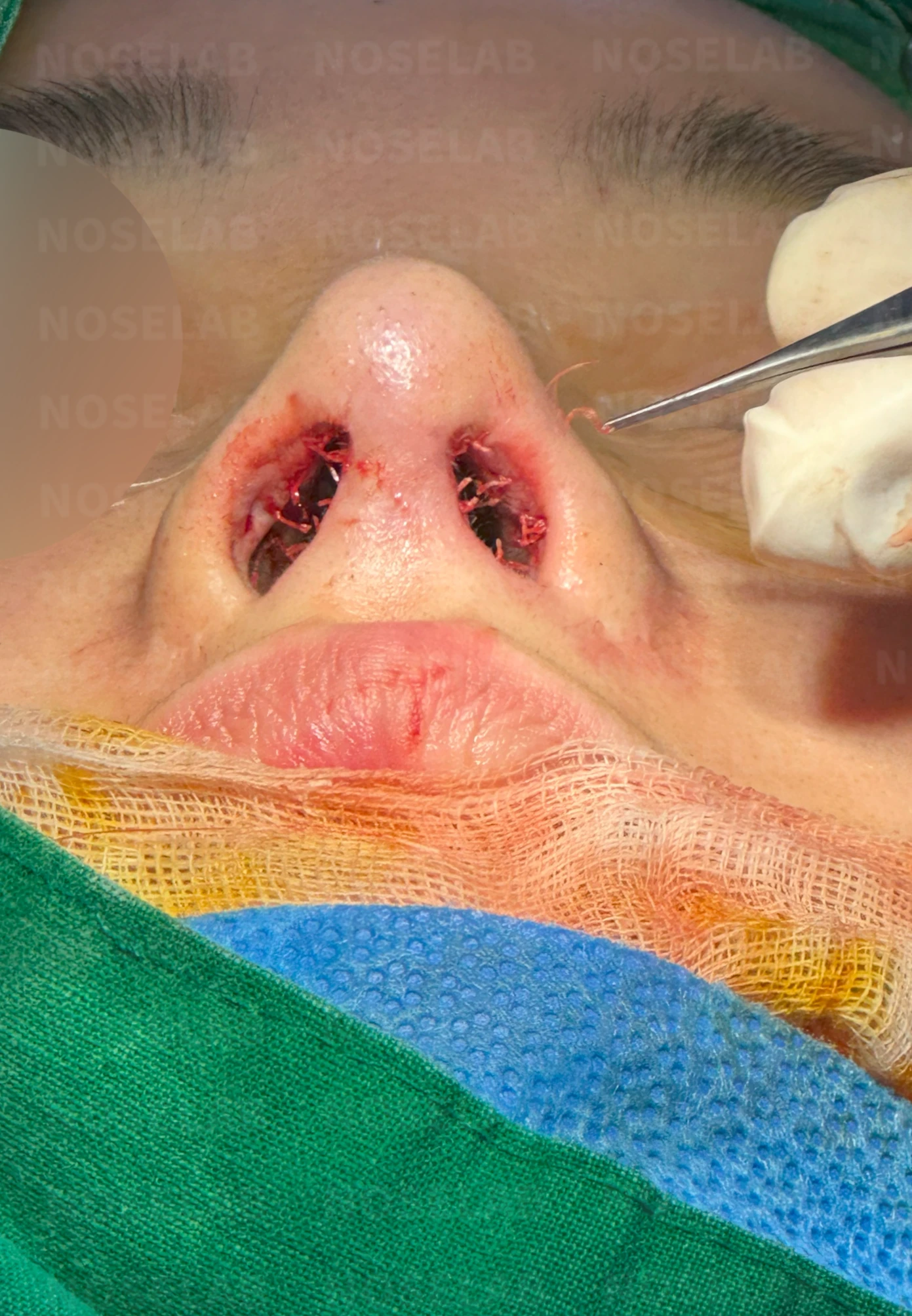
Comparing the preoperative nostril view with the stage after removing internal scar tissue and prior to alar reconstruction shows noticeable improvement; to achieve a better outcome, an additional procedure was simultaneously performed to widen the left ala laterally.
Collection of immediate postoperative photos
In the photos taken on day 0 immediately after surgery, you can observe a much more natural and refined impression compared to before surgery, with marked improvement in nostril stenosis. Immediate postoperative photos show swelling and may differ from the final result.
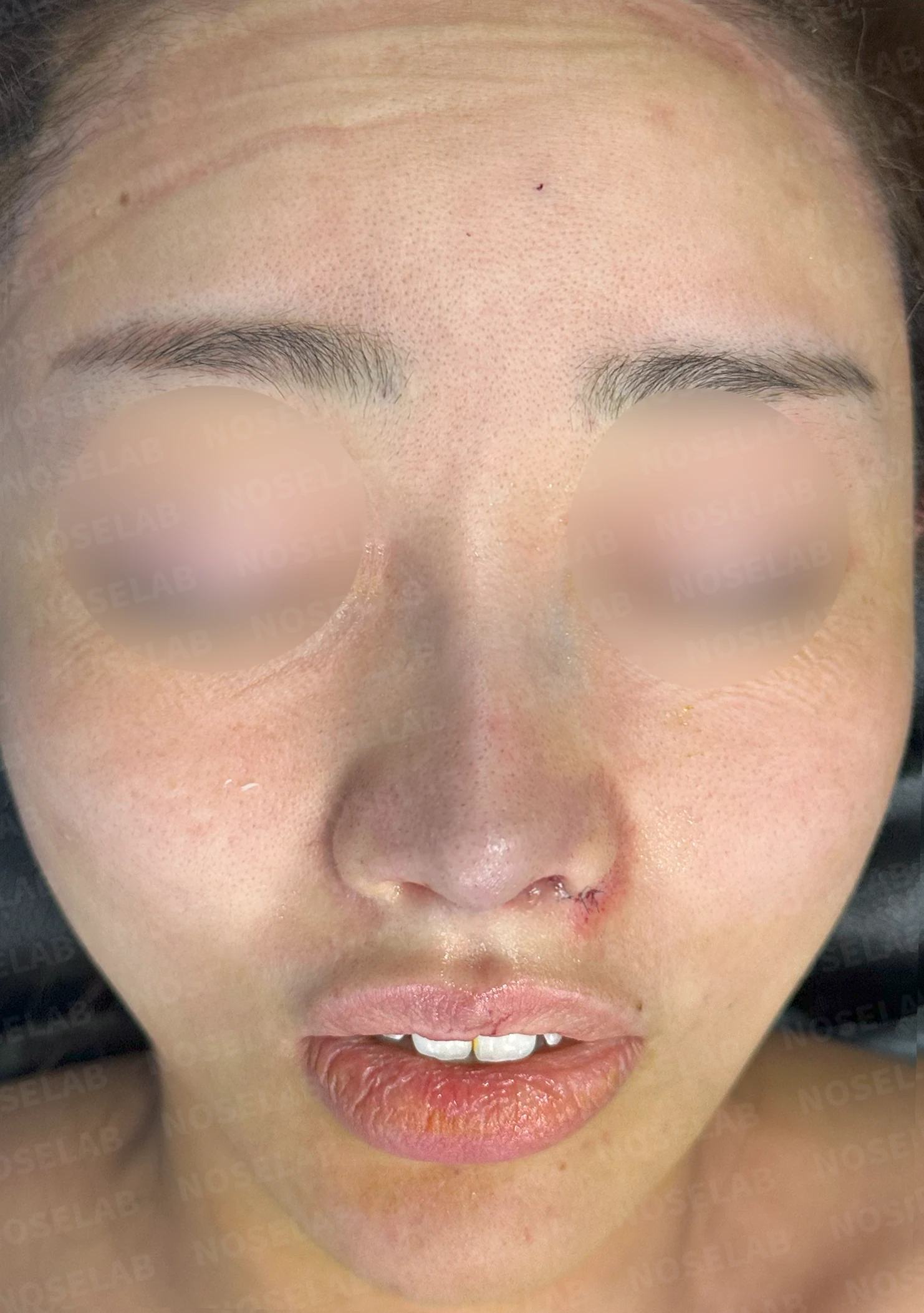
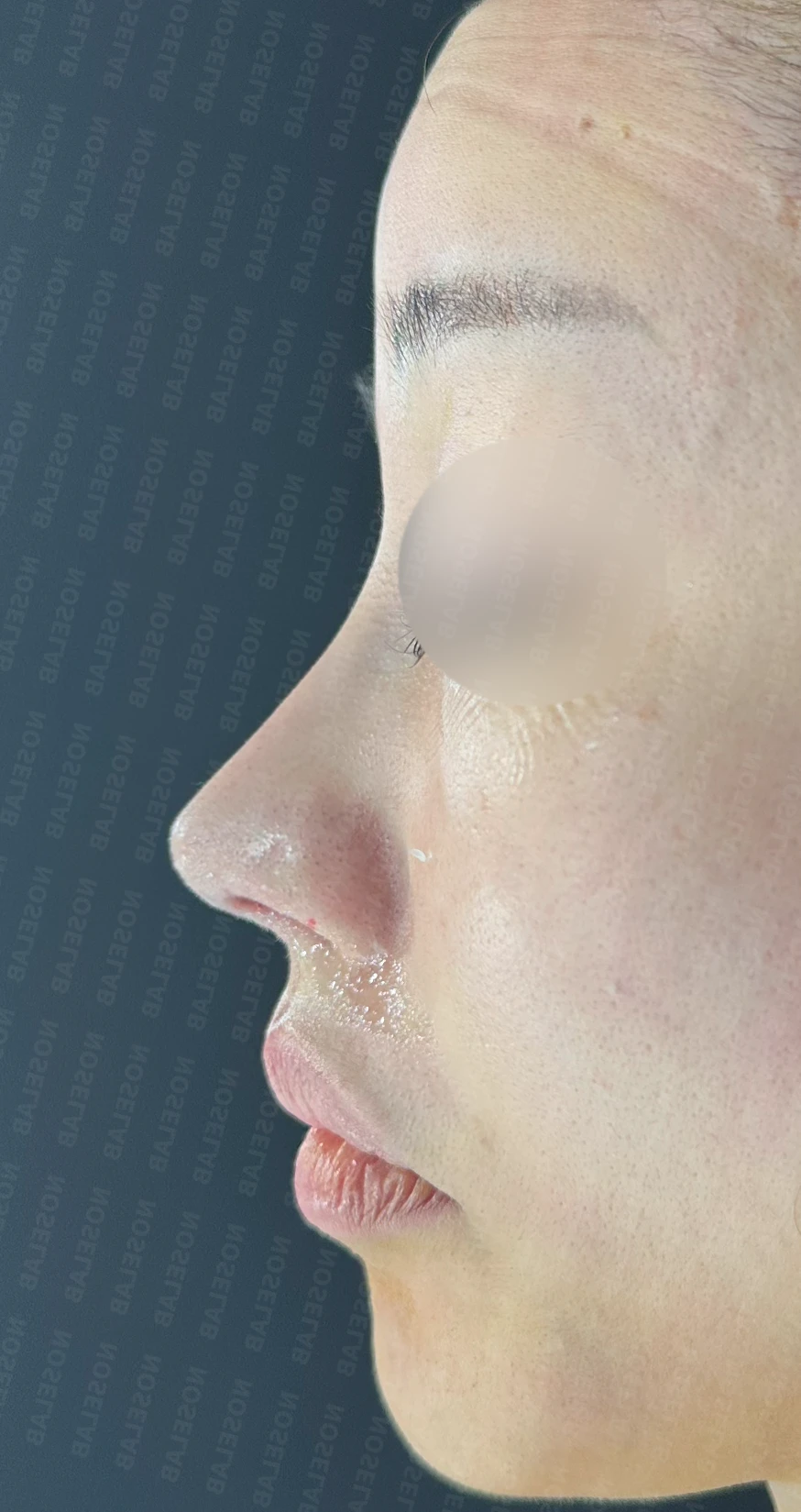
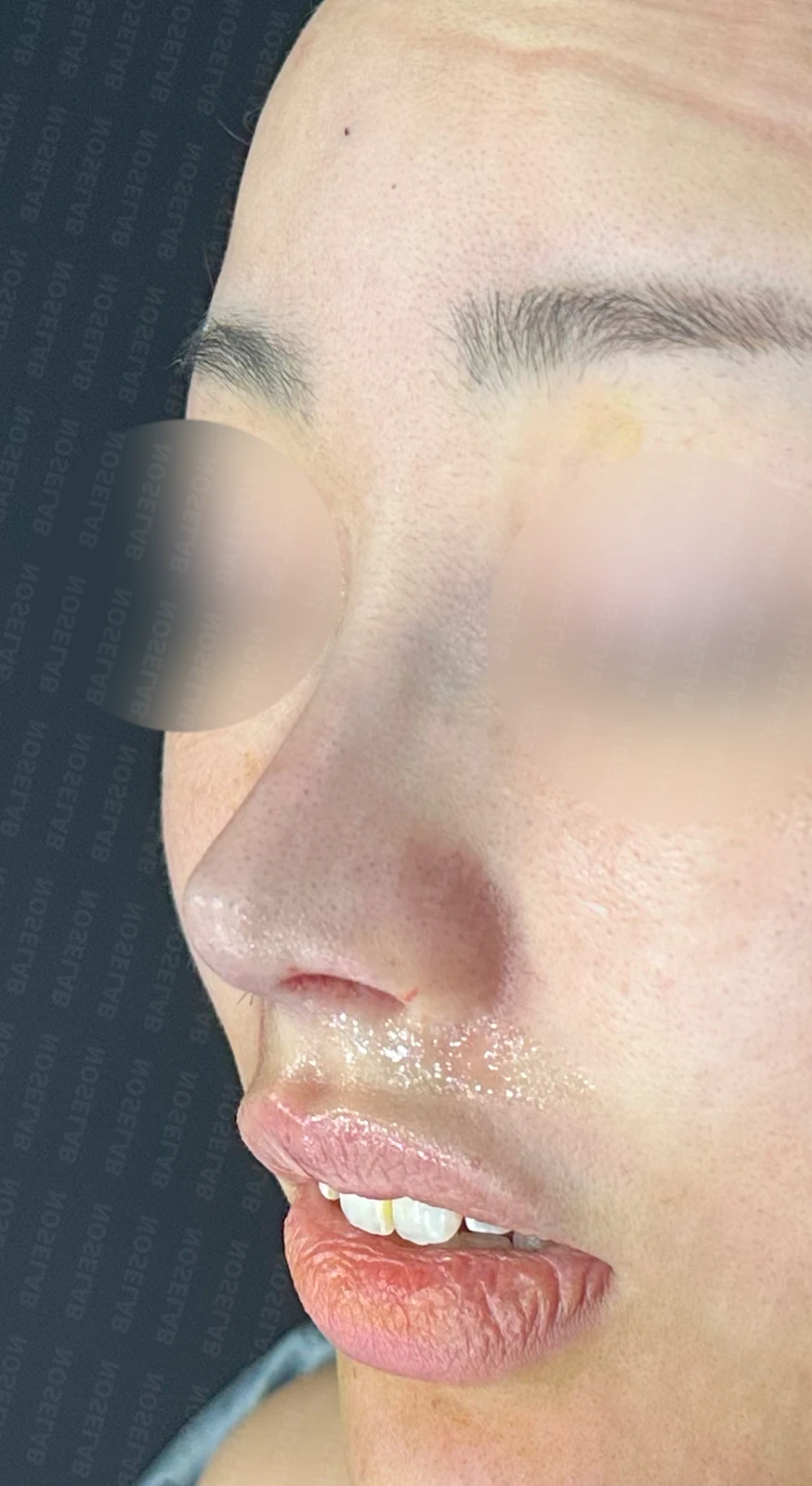
Front, profile, and oblique views taken immediately after surgery (day 0).Immediate postoperative photos show swelling and may differ from the final result.
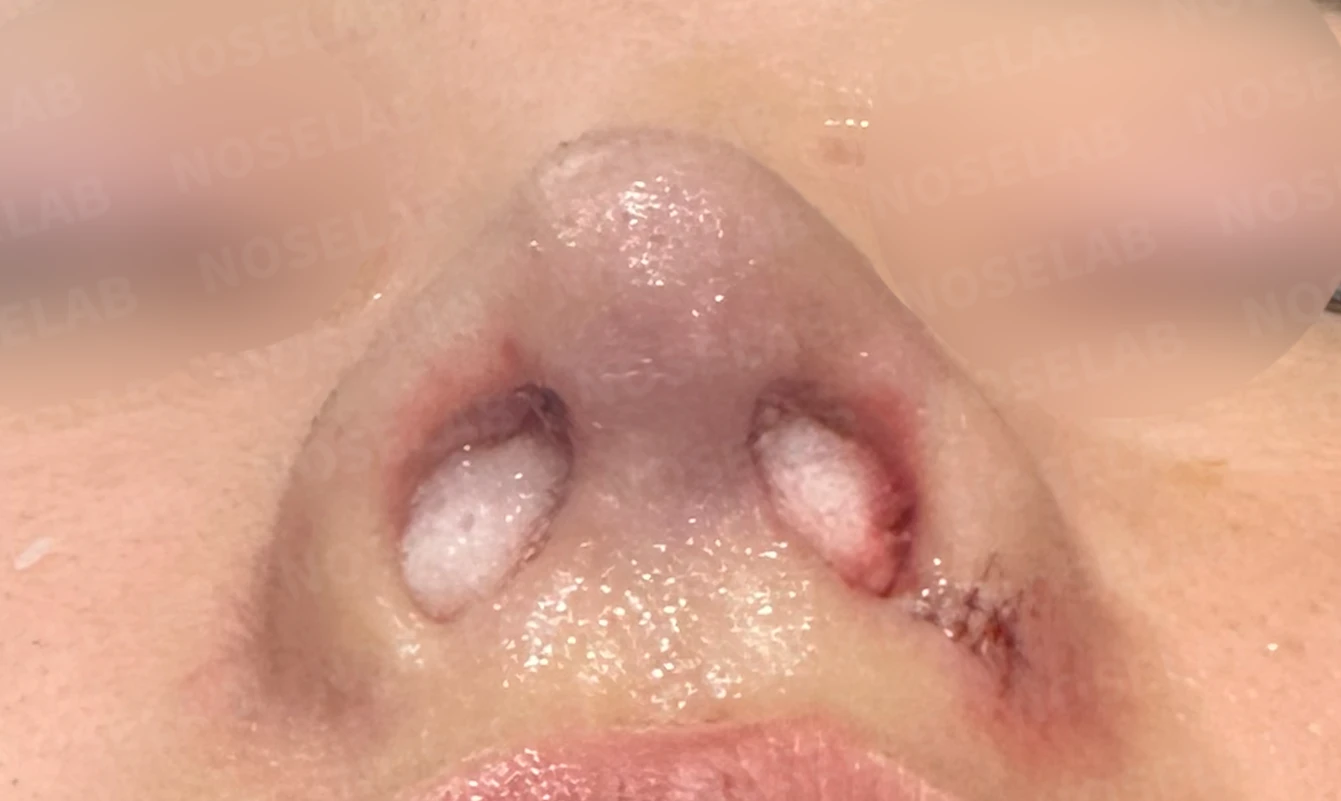
Nostril view on day 0 immediately after surgery. Photos taken immediately after surgery show swelling and may differ from the final result.
Specialist's assessment
When performing revision rhinoplasty frequently, the most regrettable situations are when previous over-resection during alar reduction limits what can be achieved. In particular, excessive excision of the alar tissues can leave nostrils overly constricted, creating both cosmetic dissatisfaction and functional nasal obstruction. Nasal obstruction due to external nasal valve (nostril) stenosis is notoriously difficult to correct. What makes this surgery particularly challenging is that improper intervention can actually worsen the stenosis, requiring a meticulous, gentle, and highly precise approach.
Above all, procedures involving the alae that can reduce nostril size—such as alar reduction or philtrum reduction—must be approached with extreme caution and kept to a minimum. Furthermore, if complications arise after alar reduction, patients should thoroughly consult an experienced specialist before deciding on further excision.
Today, I shared a case of reconstructing nostril stenosis caused by aggressive alar reduction.
I hope this proves helpful to those experiencing similar concerns.
This was Dr. Peter C. Kang. Thank you.
Thank you.
#closedrhinoplasty #closedrevisionrhinoplasty #complexclosedrevisionrhinoplasty #nostrilstenosis #alarreconstruction

Limitations and risks
When autologous rib cartilage is used, scarring and pain may remain at the donor site on the chest, and pneumothorax (pleural injury) can occur rarely. Over time, the grafted cartilage may warp or undergo partial resorption.
When the septum is corrected at the same time, nasal obstruction may persist or recur, and in rare cases, septal perforation or changes in smell may occur.
Common potential risks include infection, bleeding, asymmetry, scarring, skin necrosis, and insufficient improvement; results vary depending on individual skin condition and previous surgical history.