Hello, I am Dr. Peter C. Kang.
Today, I would like to introduce a revision rhinoplasty case correcting a contracted, upturned nose and nostril asymmetry resulting from excessive alar reduction surgery.
Patients with this presentation have struggled with severe nasal deformities after undergoing multiple rhinoplasty procedures.
Let us examine together how we overcame the challenges posed by this complex surgical history and contracture deformity.
1. Patient's surgical history
- 17 years ago: Autologous rib cartilage + silicone implant surgery
- February 2022: Revision rhinoplasty to increase height
- October 2022: Autologous rib cartilage + silicone implant + alar reduction
- After 2022: Deformity and contracture began
- December 2023: Philtrum reduction
2. Main symptoms and patient requests
- Severe bilateral nasal obstruction
- Dissatisfaction with pointed nostrils and excessive nostril show
- Desired maintenance of current height (did not wish to lower the height)
3. Design consultation
Let us examine the patient's preoperative condition in detail:
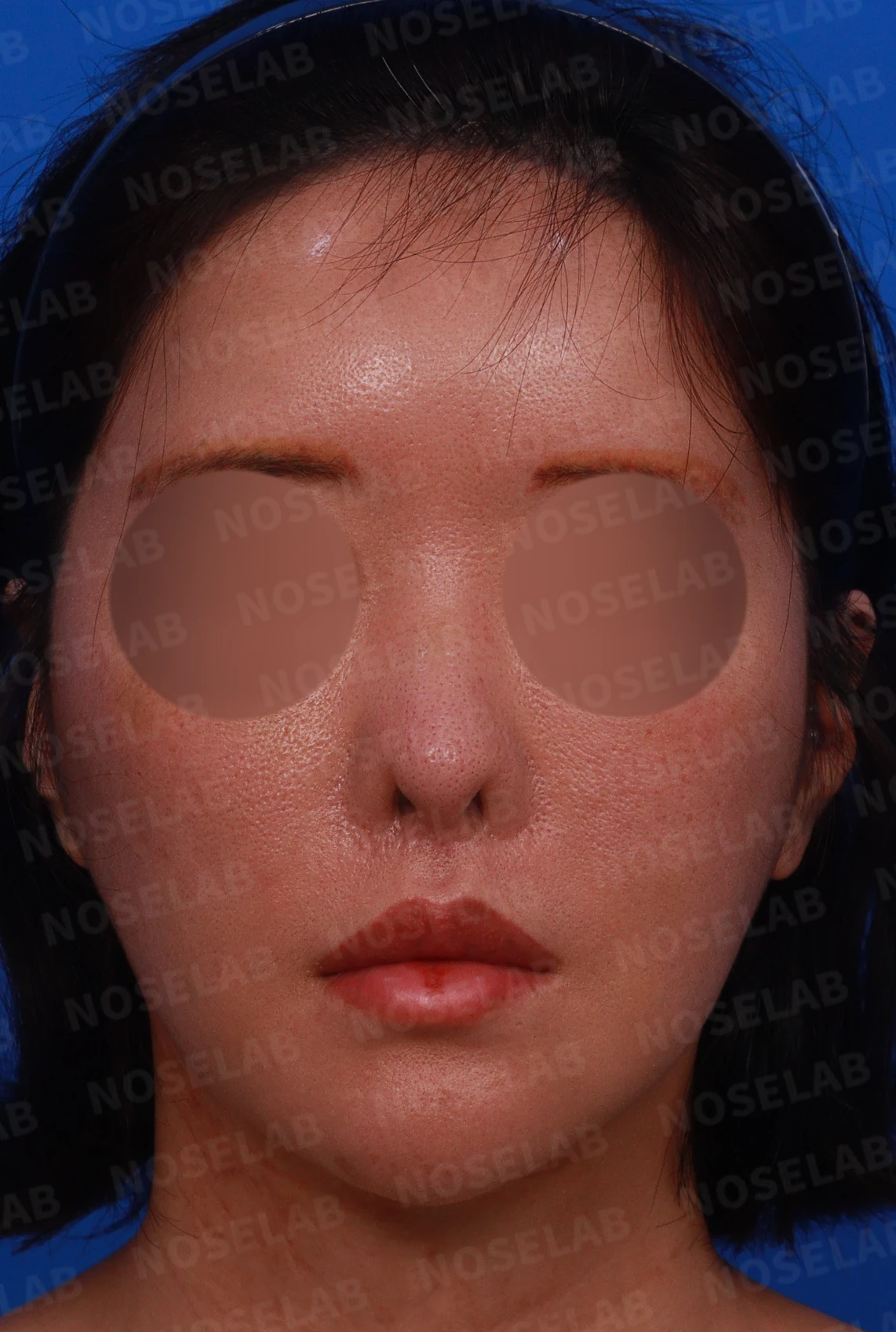
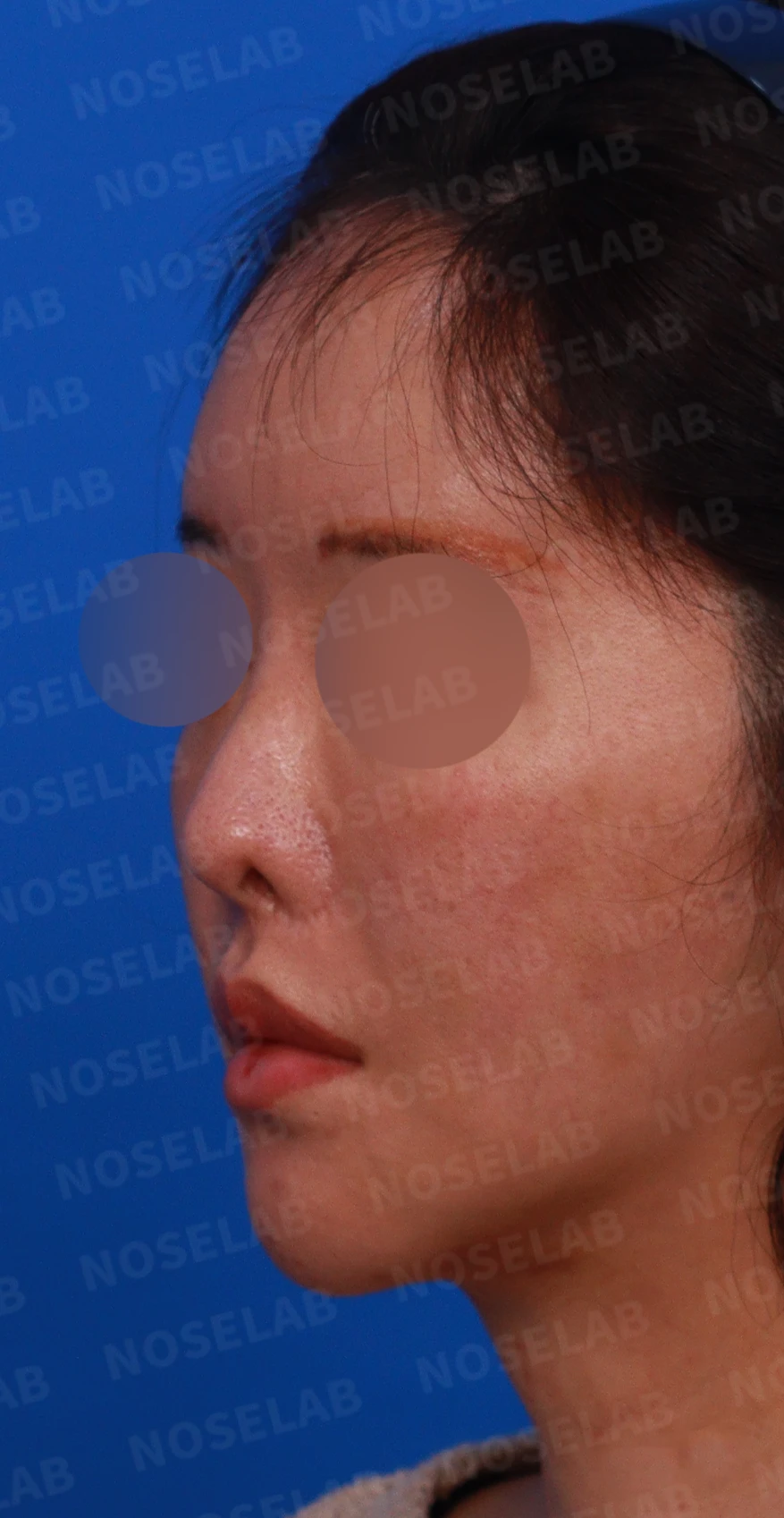
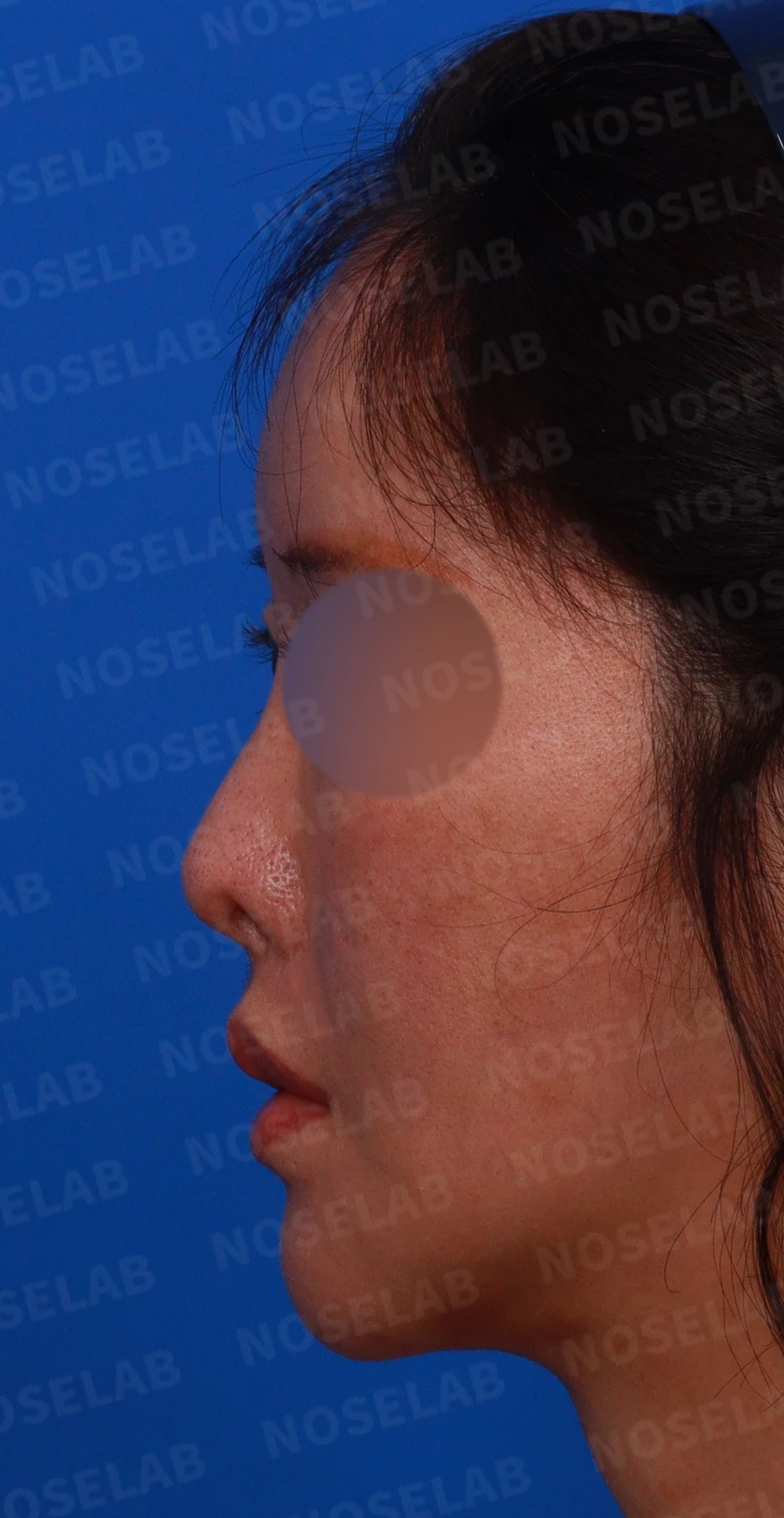
These are design consultation photos.
Front view:
- The nasal tip appears bulbous and upturned
- Nostril asymmetry is visible
- Pointed nostrils with excessive nostril show
Oblique view:
- The nasal tip appears drooping
- Significant nostril show
- Pinched appearance of the alae
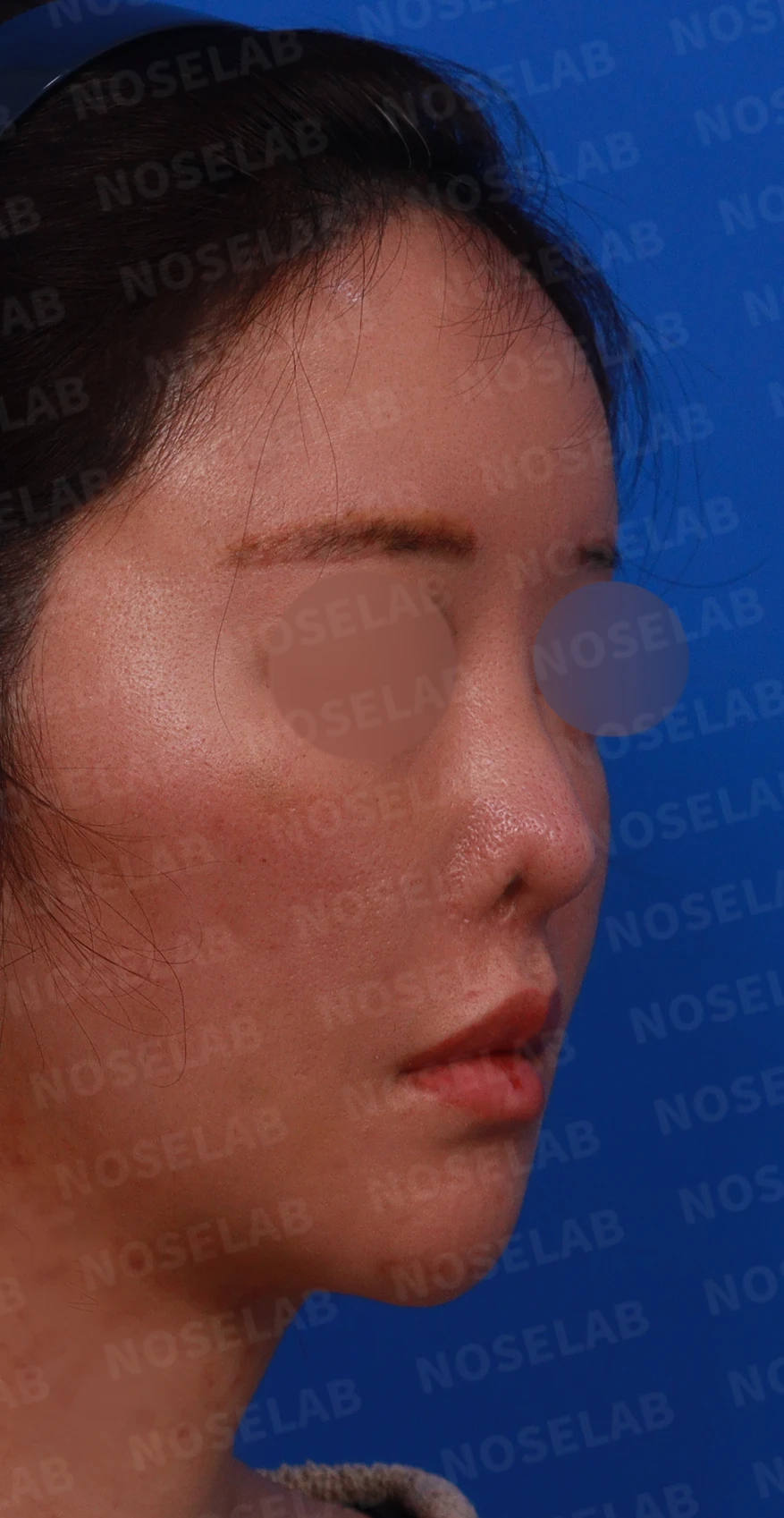
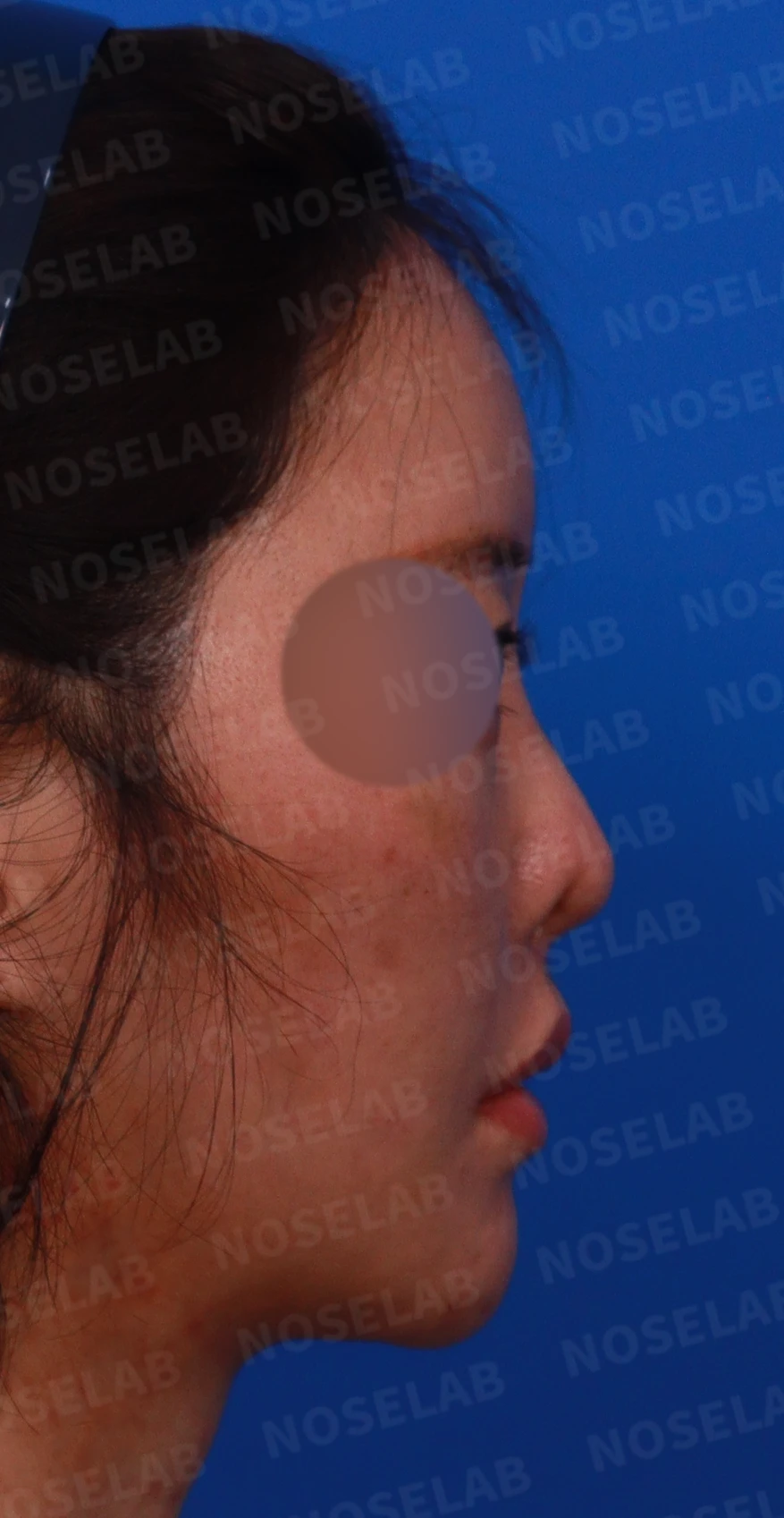
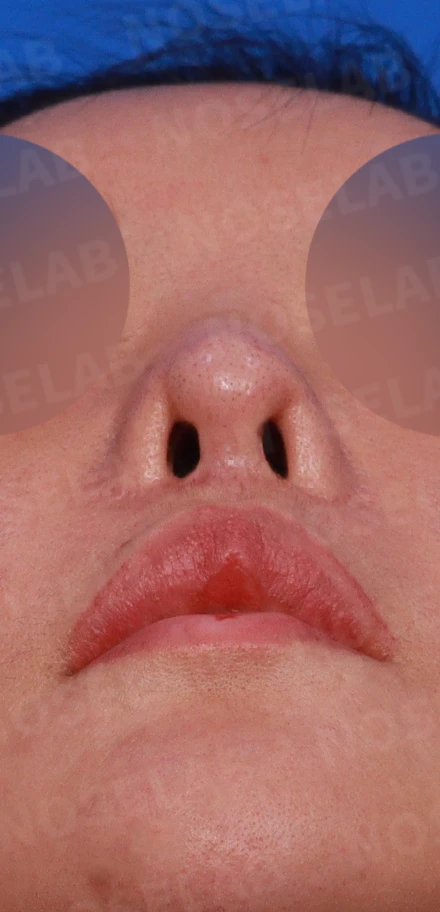
These are design consultation photos.
Profile view:
- The nasal tip is drooping
- Pinched appearance of the alae
Nostrils:
- Nostril asymmetry is present
- Pinched appearance
- Severely narrowed nostrils
4. Surgical plan
Taking into account the patient's condition and requests, the following surgical plan was established:
a) Preoperative stem cell therapy injections (3 sessions at 2-week intervals)
b) Septal reconstruction using autologous rib cartilage
c) Lowering the columella
d) Alar cartilage reconstruction
e) Composite skin-dermis graft (inside the nostrils)
5. Procedure details
The surgery proceeded according to the plan as follows:
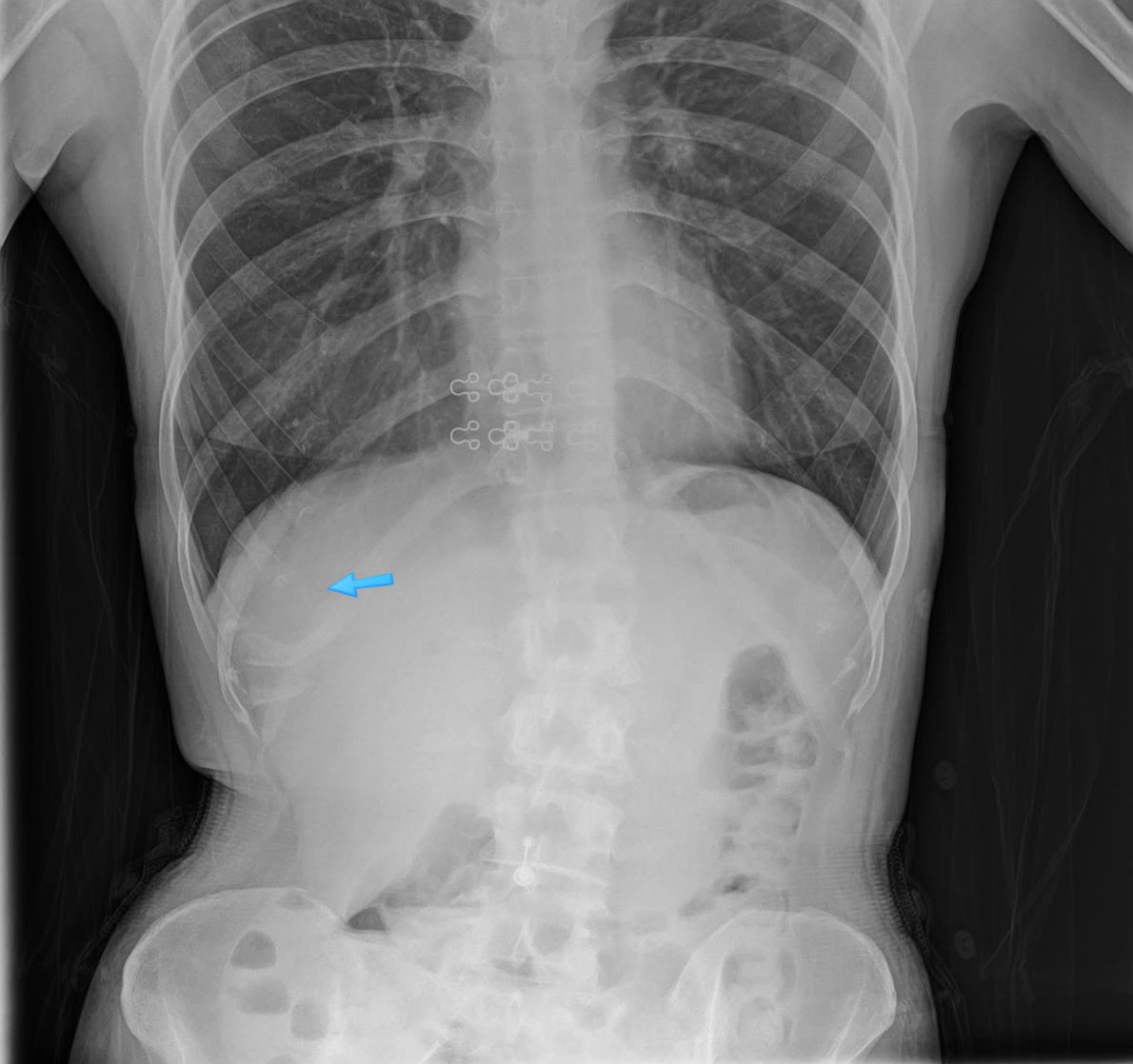
The blue arrow indicates the right rib cartilage planned for harvest.
a) Autologous rib cartilage harvest:
- Preoperative chest X-ray confirmed rib cartilage calcification
- Partial harvest from either the right 6th or 7th rib cartilage showing the least calcification
- Severe calcification encountered during surgery allowed harvesting only a small amount of cartilage
b) Nasal tip reconstruction:
- The nasal tip was reconstructed using both the previously placed autologous rib cartilage and the newly harvested cartilage
c) Septal reconstruction:
- Widened internal nasal space to improve nasal obstruction
d) Alar correction:
- Cartilage reconstruction and composite skin-dermis grafting to improve pinched areas
6. Comparison of before-and-after photos
Comparing photos taken immediately after surgery on day 0 shows the following improvements: Photos taken immediately after surgery show swelling and may differ from the final result.
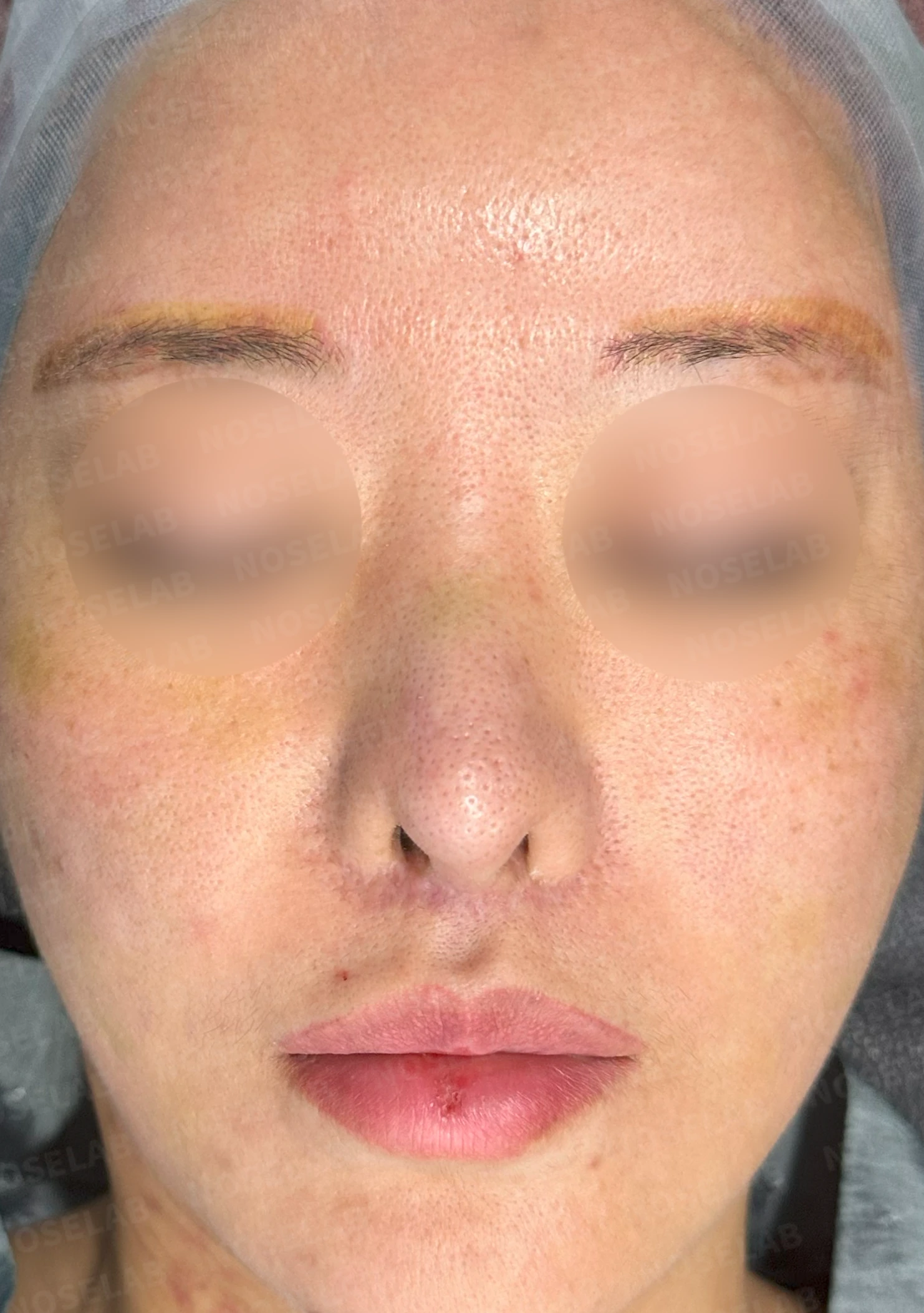
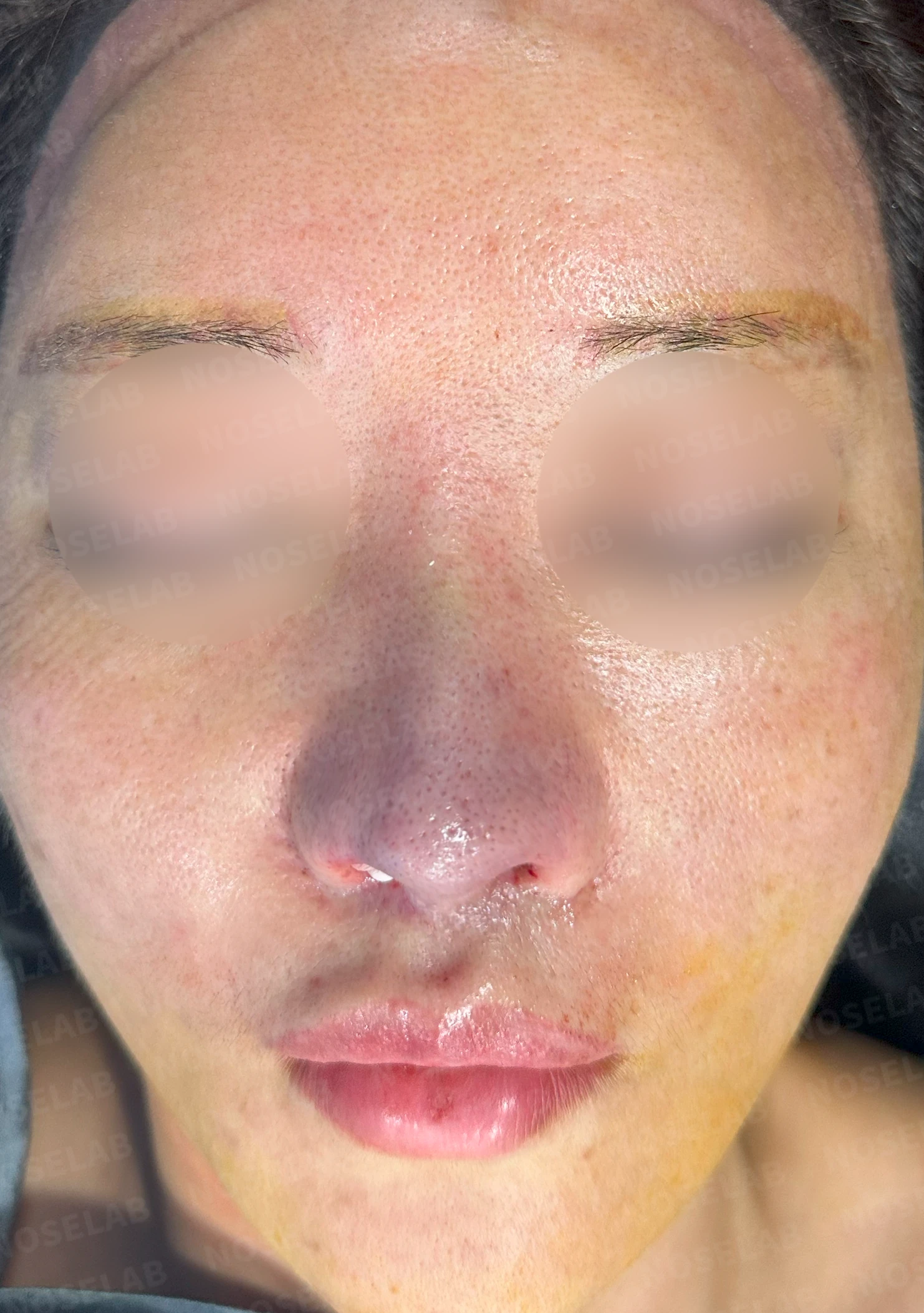
Before surgery / Day 0 immediately after surgery Photos taken immediately after surgery show swelling and may differ from the final result.
Front view:
- Pinched nostrils were naturally corrected
- The blunt, widened appearance of the bridge and tip was improved
- The short nose appearance changed to natural proportions
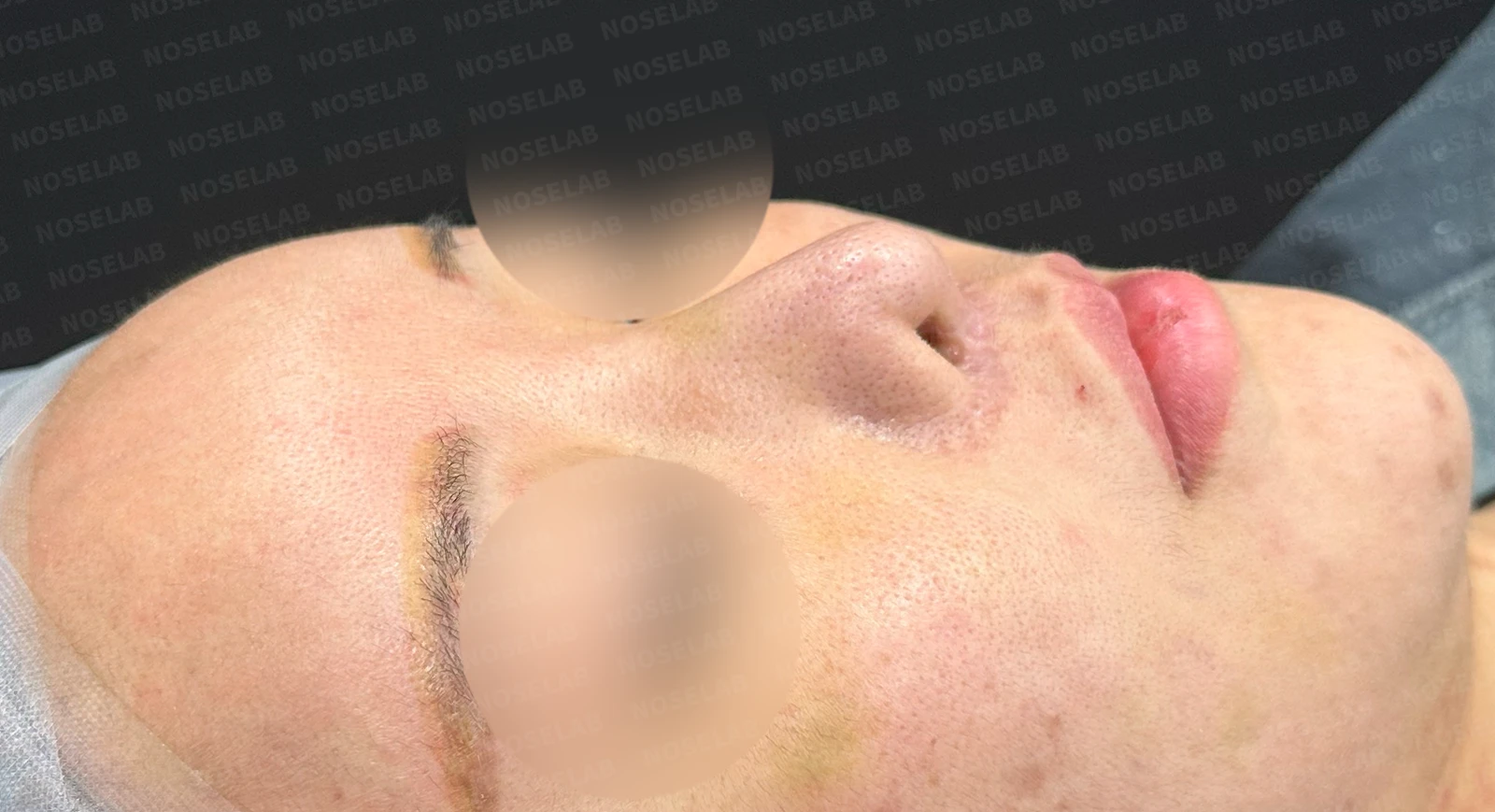
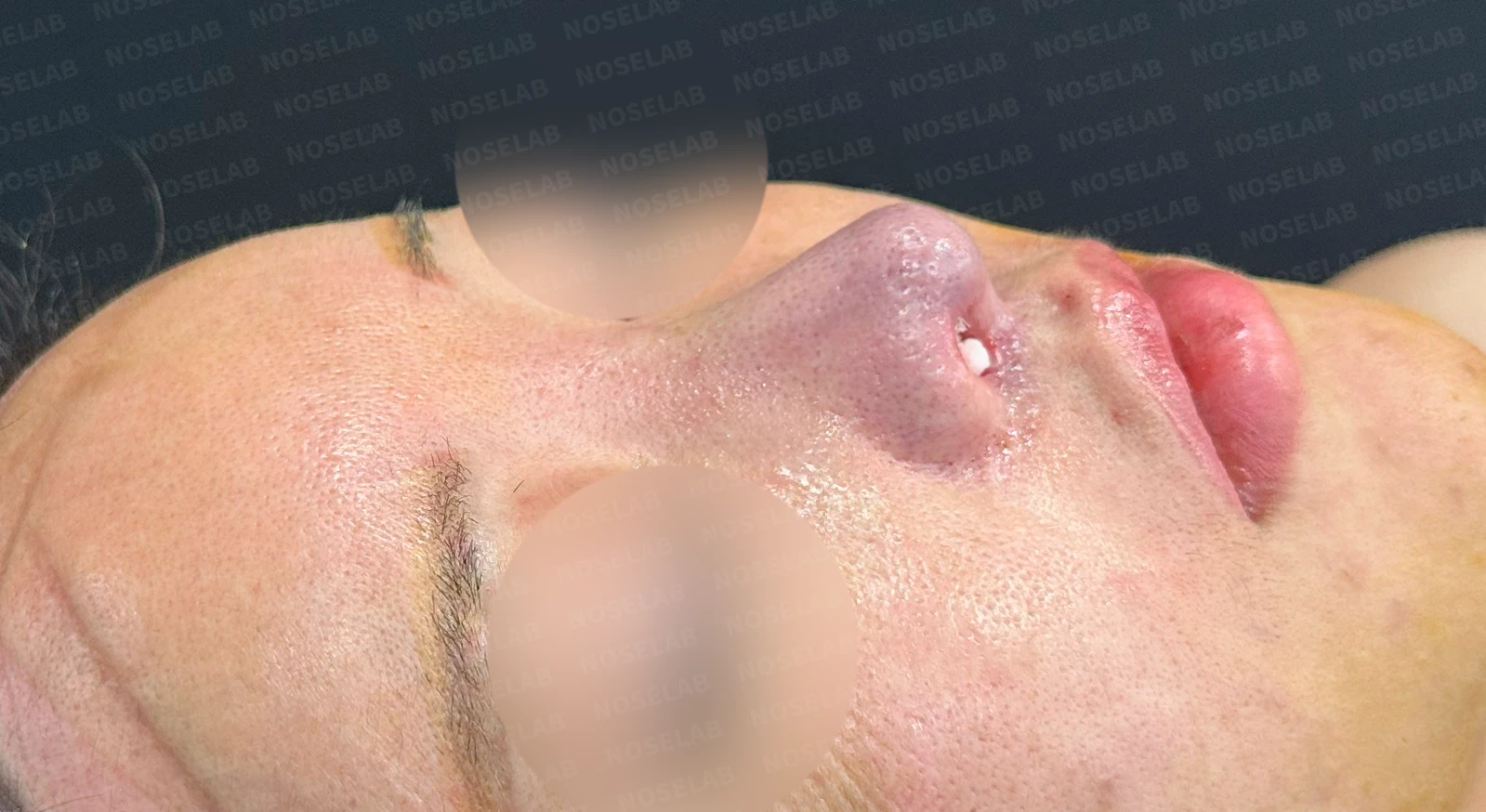
Before surgery / Day 0 immediately after surgery Photos taken immediately after surgery show swelling and may differ from the final result.
Oblique view:
- Excessive nostril show was improved
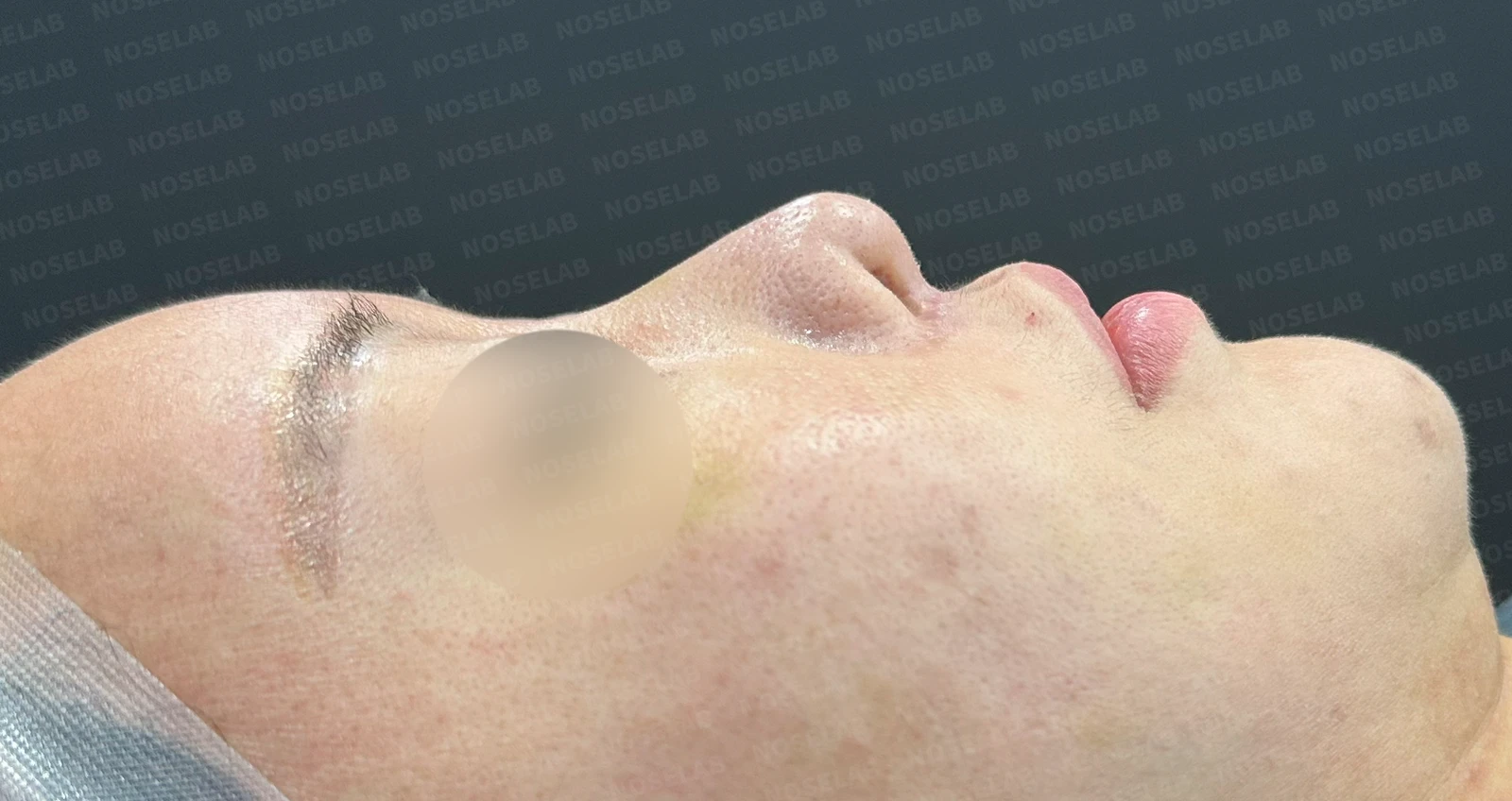
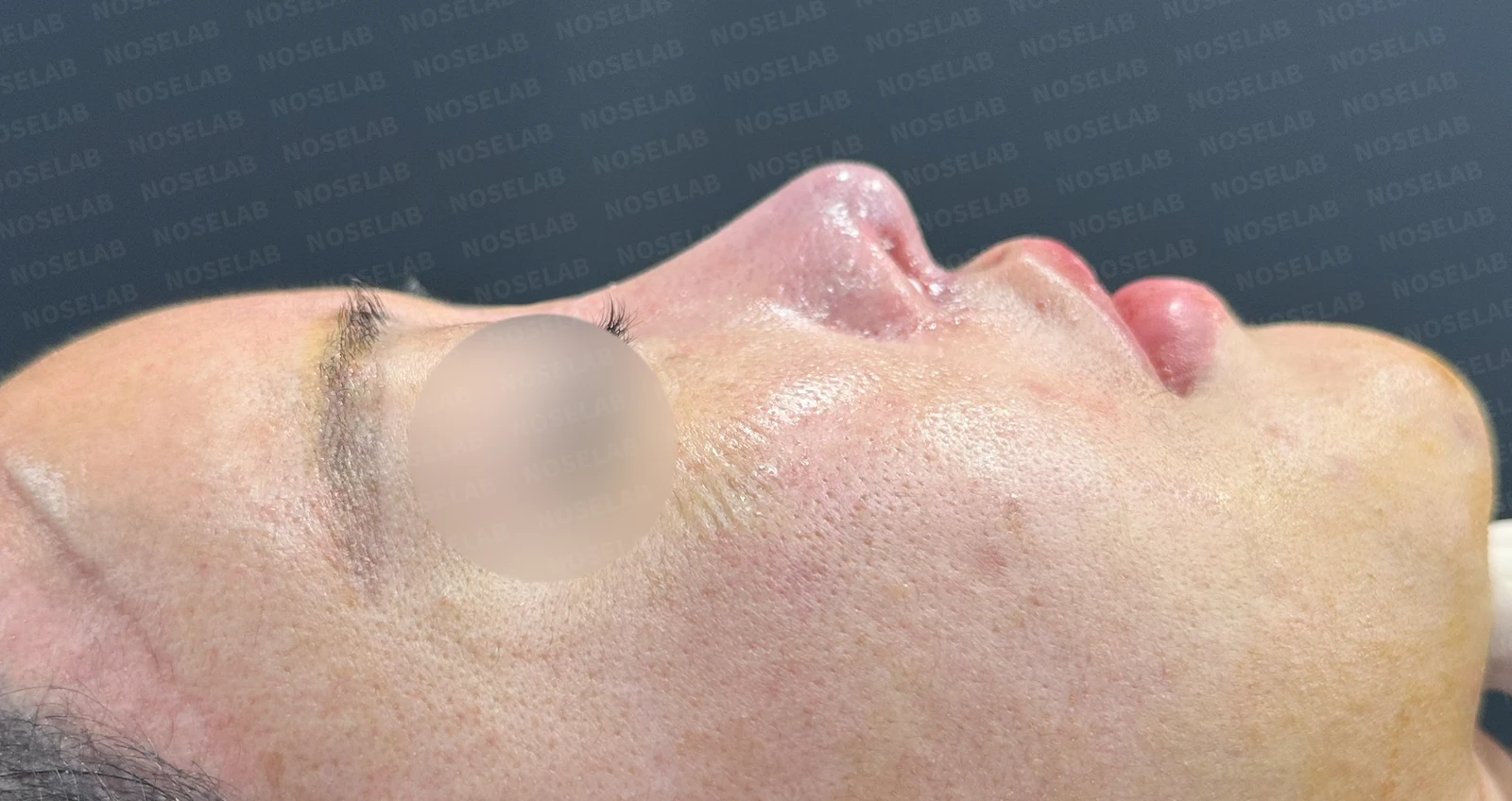
Before surgery / Day 0 immediately after surgery Photos taken immediately after surgery show swelling and may differ from the final result.
Profile view:
- Pinched and retracted alae were naturally improved
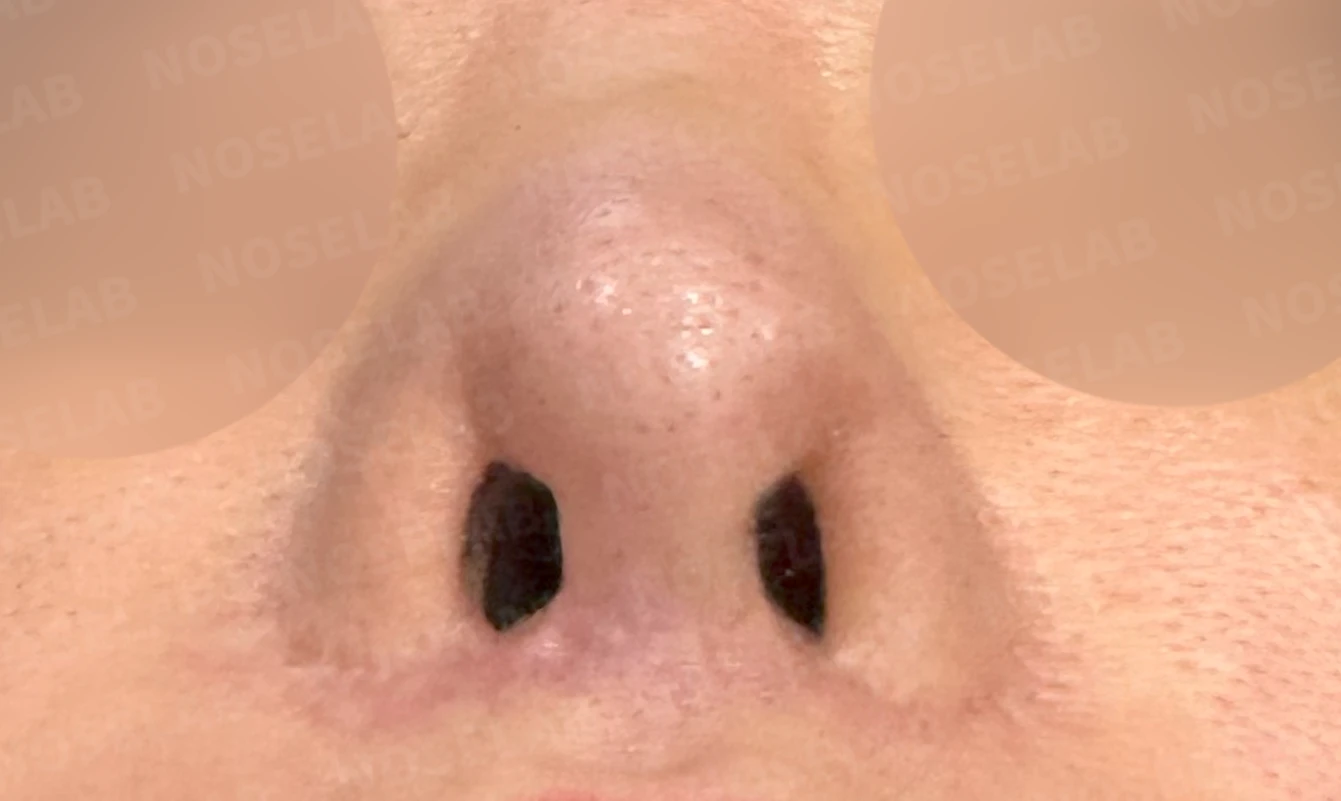
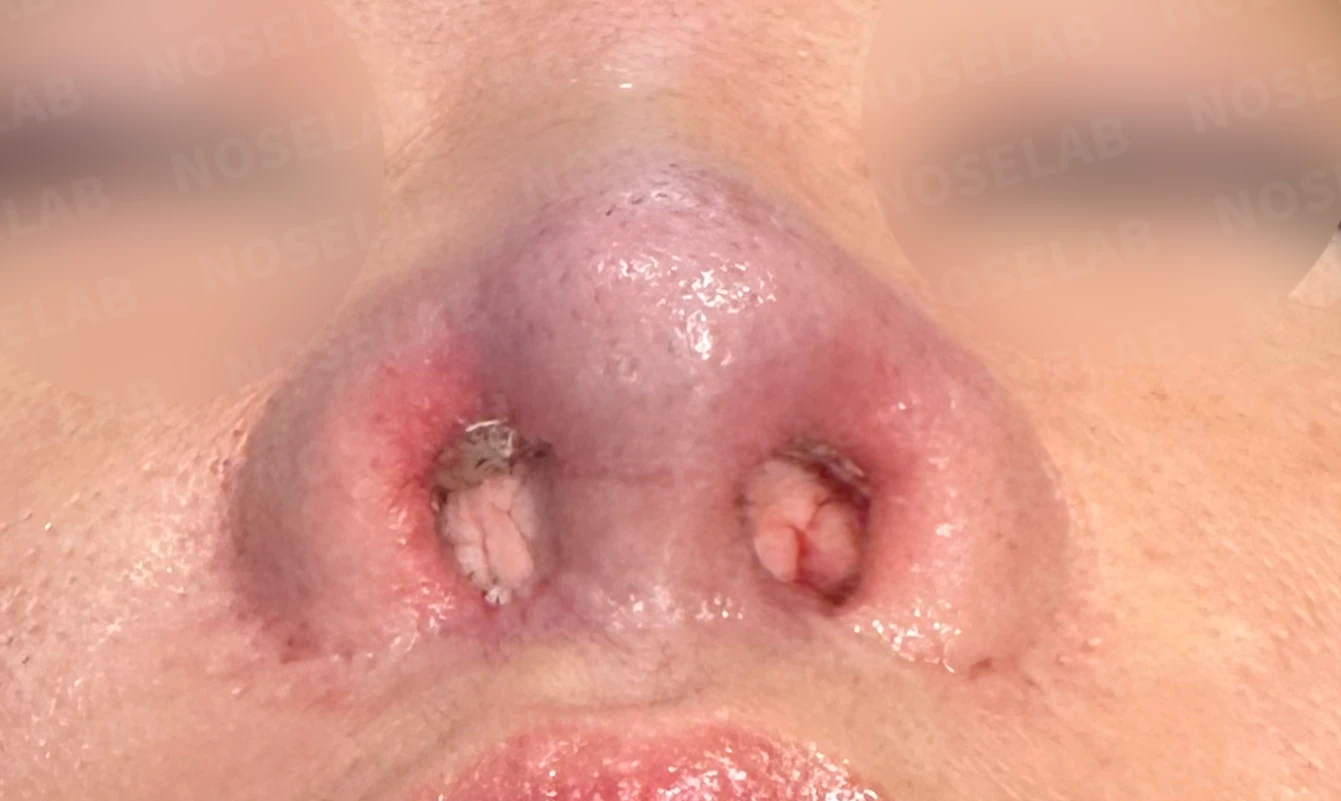
Before surgery / Day 0 immediately after surgery Photos taken immediately after surgery show swelling and may differ from the final result.
Nostrils:
- The pinched appearance was improved
- Improved nostril asymmetry
- Elongated nostrils were improved into a rounded, balanced shape
7. Overall assessment
In this case, reduced nasal skin envelope size caused by inflammatory contracture was a significant problem. However, an even greater issue was the shortage of alar skin and small nostrils resulting from excessive alar reduction and philtrum reduction.
To improve nasal obstruction, expanding nostril size is necessary; however, surgical enlargement of the nostrils is technically challenging and has low success rates, so it was not applied to this patient. Instead, we focused on altering the nostril shape and reducing tip height to broaden nostril width.
In complex cases like this, it is essential to identify the most suitable approach by carefully considering the patient's condition and requests. In this case, we sought to resolve both contracture and an upturned nose simultaneously by employing diverse techniques, including autologous rib cartilage reconstruction and composite skin-dermis grafting.
8. Concluding remarks
I hope this case is helpful to those concerned with deformities from excessive alar reduction, contracted noses, or upturned noses. These complex problems are difficult to resolve through a simple approach. A customized approach considering individual circumstances is necessary, and staged treatment may sometimes be required.
Drawing on extensive experience and clinical expertise, we address these complex cases with safety in mind and effective techniques. If you are concerned about contracture or an upturned nose following rhinoplasty, please consult with a specialist to find the solution best suited to your needs.
I will always be here to support you in achieving a healthy and aesthetically pleasing nose.
This was Dr. Peter C. Kang. Thank you.
Thank you.
#contractednoserevision #upturnednoserevision #nostrilasymmetrycorrection #pinchednosecorrection #droopingtipcorrection #shortnosecorrection #closedrhinoplasty #revisionrhinoplasty #entrhinoplasty #safelyplannedrhinoplasty #autologousribcartilagegraft #stemcelltherapy #alarreduction

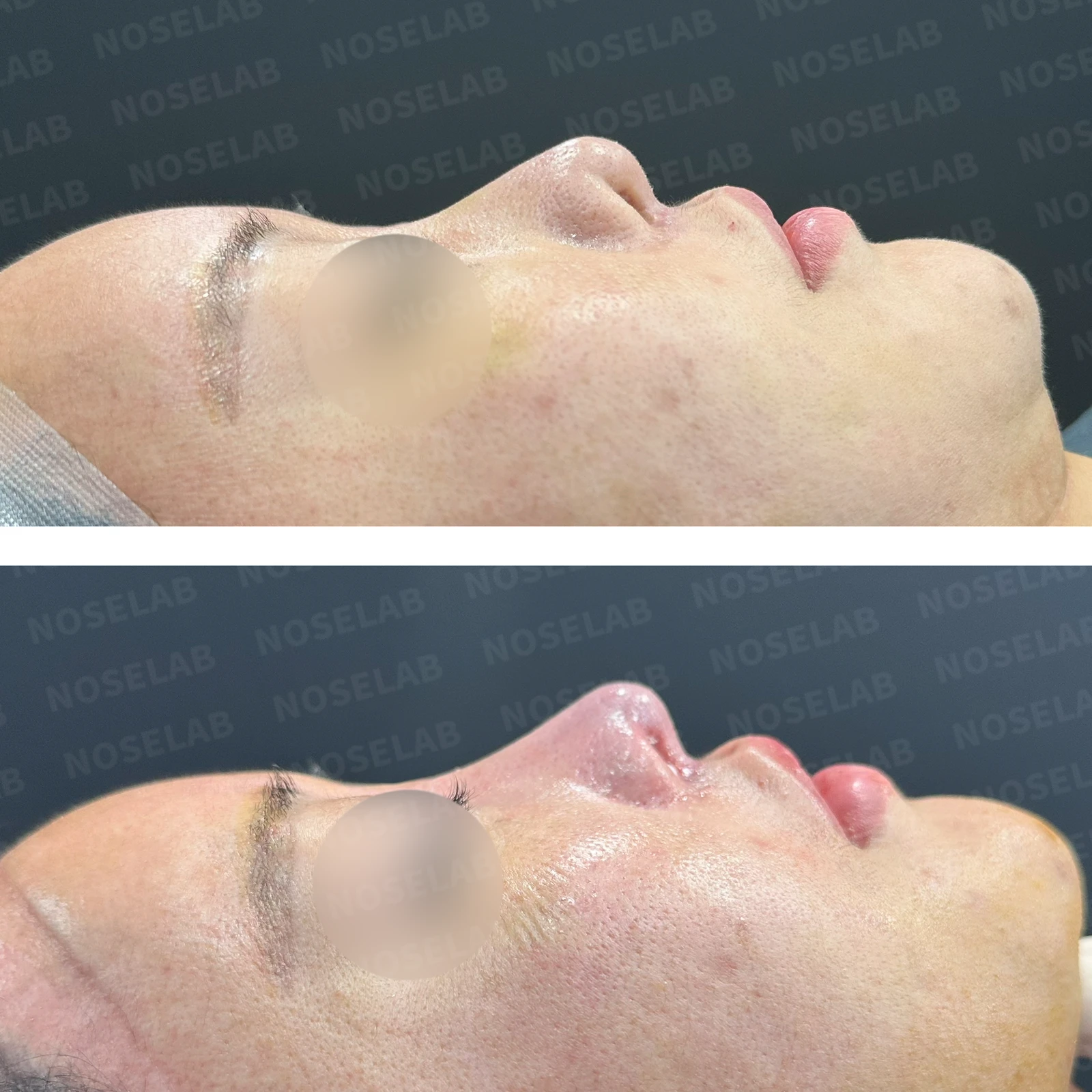
Limitations and risks
When autologous rib cartilage is used, scarring and pain may remain at the donor site on the chest, and pneumothorax (pleural injury) can occur rarely. Over time, the grafted cartilage may warp or undergo partial resorption.
When the septum is corrected at the same time, nasal obstruction may persist or recur, and in rare cases, septal perforation or changes in smell may occur.
Common potential risks include infection, bleeding, asymmetry, scarring, skin necrosis, and insufficient improvement; results vary depending on individual skin condition and previous surgical history.