Hello, I am Dr. Peter C. Kang.
Today, I would like to share the case of a patient who visited our clinic due to unsatisfactory results after receiving dissolvable filler injections.
Through this case, let us examine both the limitations of filler treatments and the advantages of structural rhinoplasty.
1. Design consultation
The patient had received dissolvable filler injections 1 year ago, but desired improvement due to excessive nostril show and an indistinct dorsal line. Let us analyze the preoperative condition in detail:
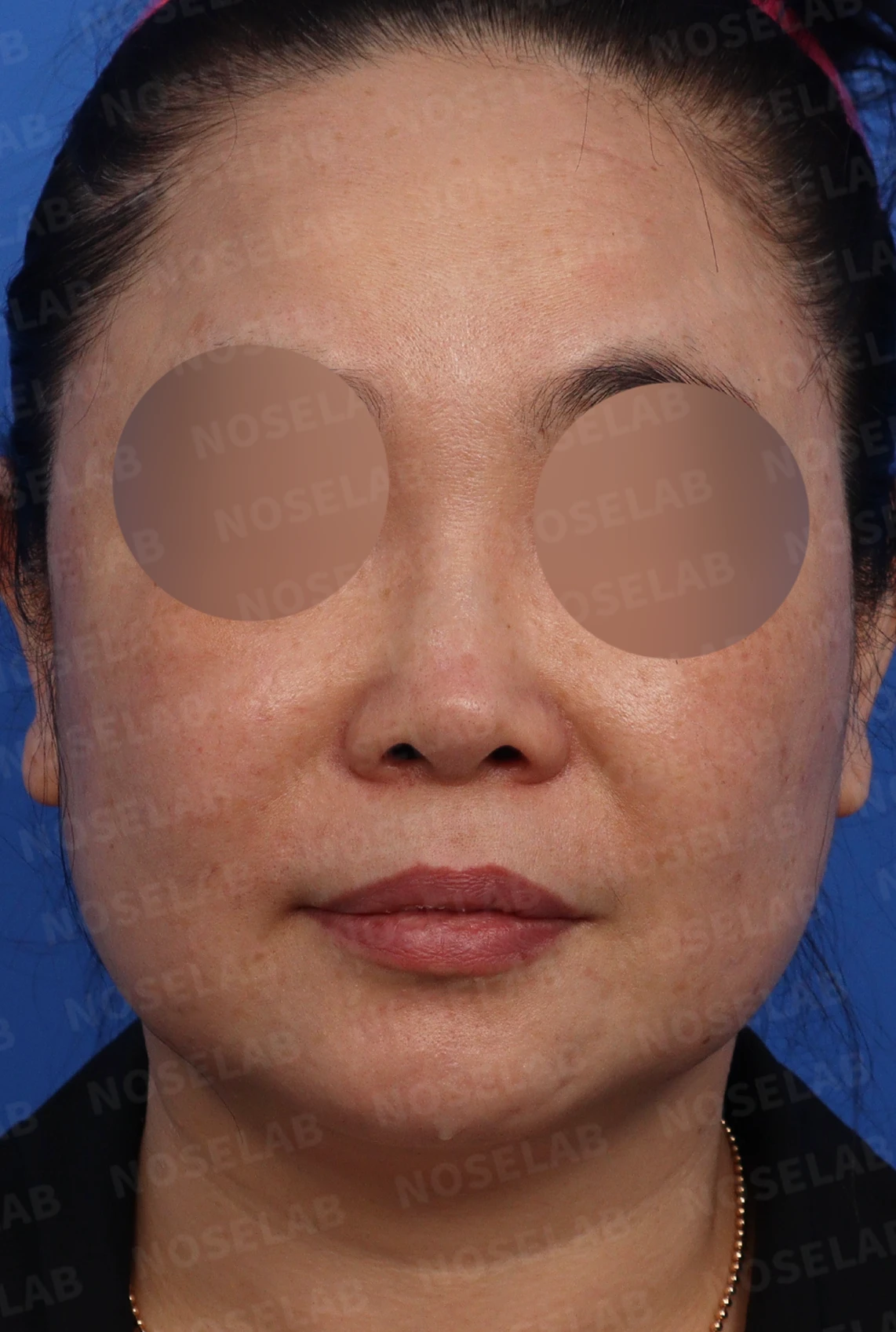
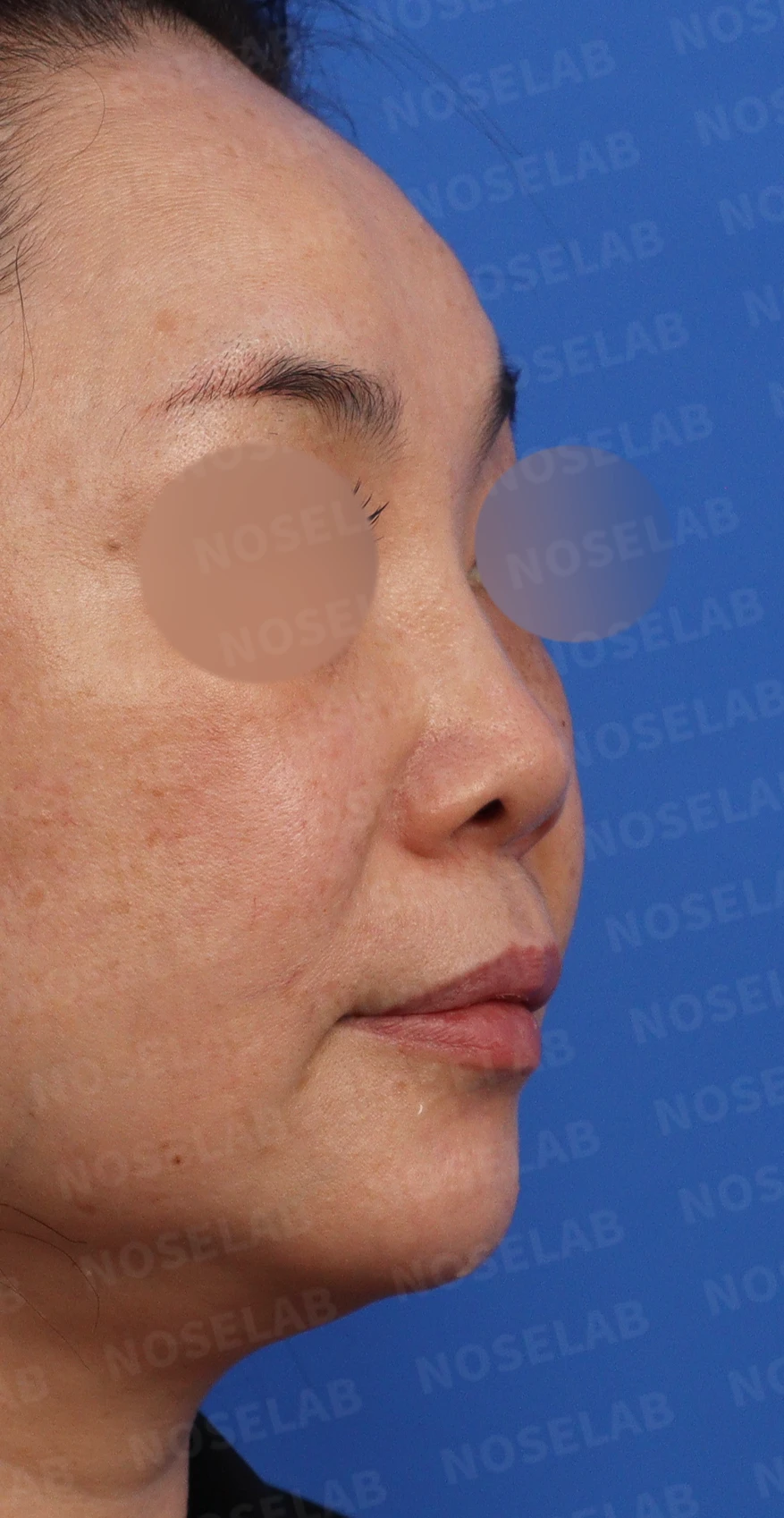
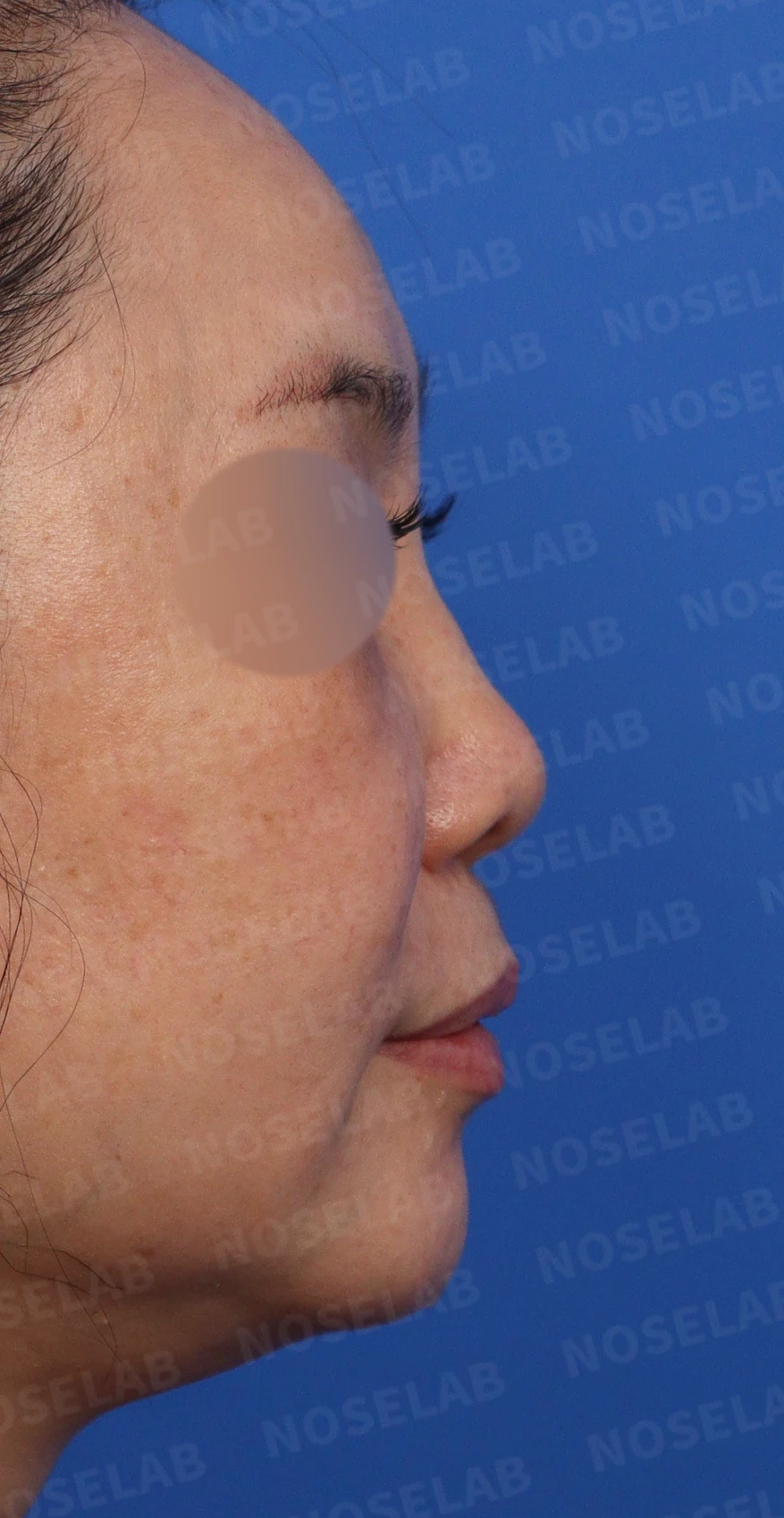
Surgical design: front, oblique, and profile views
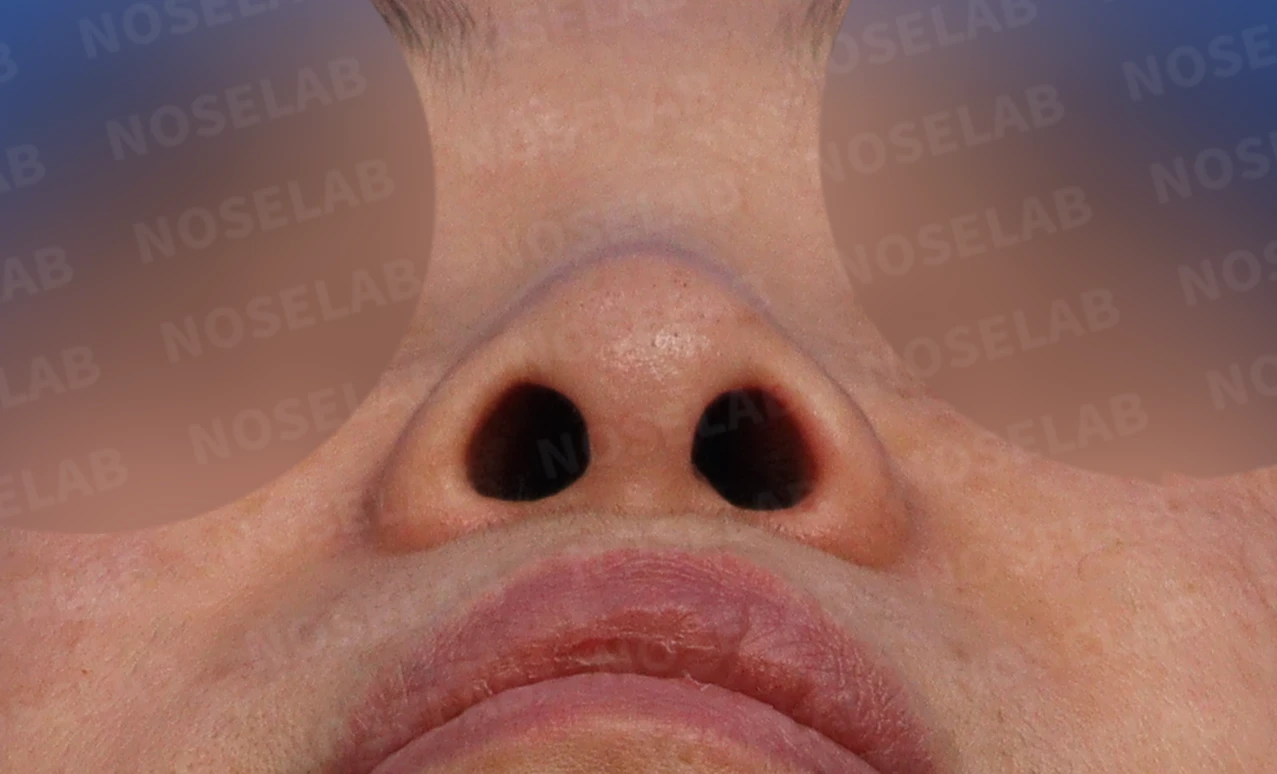
Base view (nostril) photo
Front view:
- Significant nostril show
- The nose appears small and short overall
- The nasal tip appears flared
Profile view:
- Signs of a protruding mouth are observed
- The nasal dorsum is uneven
- The nose appears short
- The upturned nasal tip creates an unnatural nasolabial angle
Oblique view:
- The nasal tip appears bulbous and upturned
- The nasal bridge line lacks definition
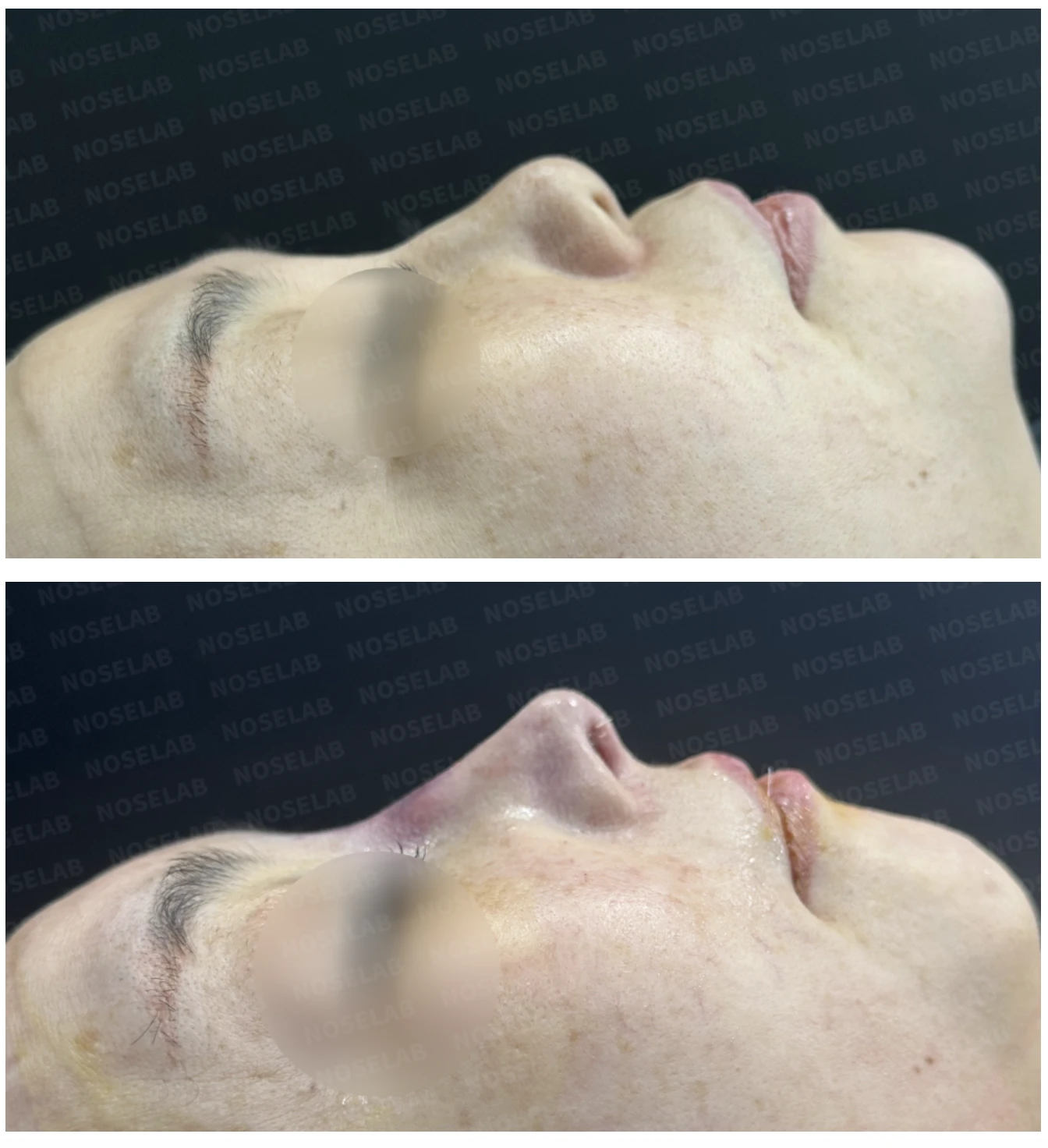
Nostrils:
- The nostrils appear round and large
- The nasal tip appears wide and spread out overall
2. Surgical plan
Taking into account the patient's condition and requests, the following surgical plan was established:
a) Septal extension graft using autologous rib cartilage
b) Dissolvable filler removal
c) Tip correction and reduction of nostril show
d) Improvement of the nasal bridge line
e) Correction of the nasolabial angle
3. Surgical procedure
The following procedures were performed using a closed approach:
a) Dissolvable filler removal:
- Hyaluronidase was injected into the bridge, but the filler did not dissolve well, so total surgical removal of the filler was performed.
- This case demonstrates that even dissolvable fillers may not always fully dissolve with reversal injections.
b) Autologous rib cartilage harvest and grafting:
- The patient's rib cartilage was harvested and used to correct the upturned nose.
c) Septal extension:
- The septum was extended and reinforced using autologous rib cartilage.
- This corrected the short, upturned nose while reinforcing support for the nasal tip.
d) Tip correction:
- The wide and blunt nasal tip was refined into a well-defined, slender contour.
- Tip projection and the nasolabial angle were appropriately adjusted to reduce nostril show.
e) Improvement of the nasal bridge line:
- The uneven nasal bridge was smoothed to create a clean, defined line.
- The radix was naturally adjusted to harmonize with the overall facial profile.
f) Nasolabial angle correction:
- The columella was lowered appropriately to correct the nasolabial angle.
- Through this, the appearance of a protruding mouth was improved.
All procedures were performed using a closed approach, completing the surgery without external scars.
4. Comparison of before-and-after photos
Comparing photos taken immediately after surgery on day 0 shows the following improvements: Photos taken immediately after surgery show swelling and may differ from the final result.
Front view:
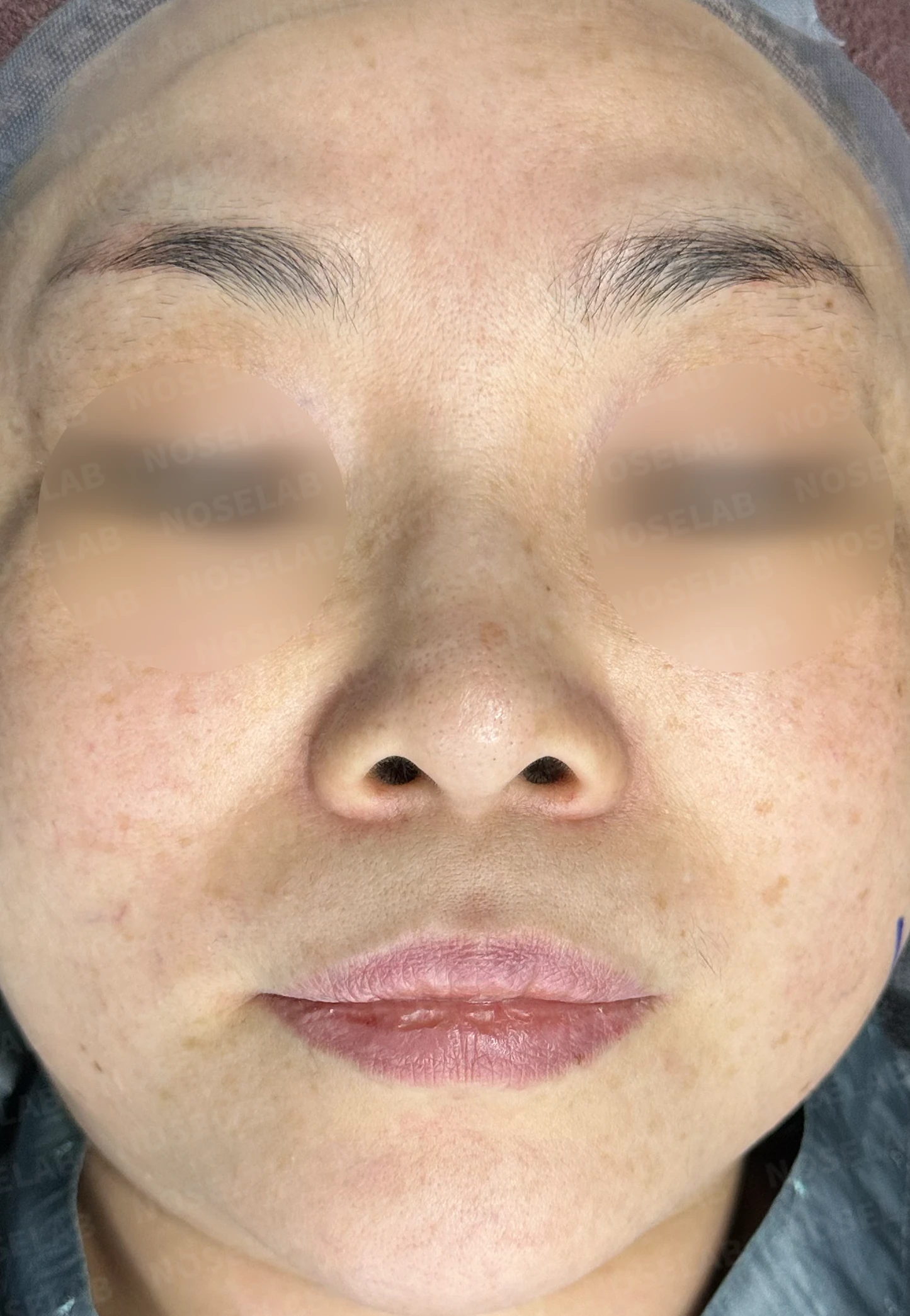
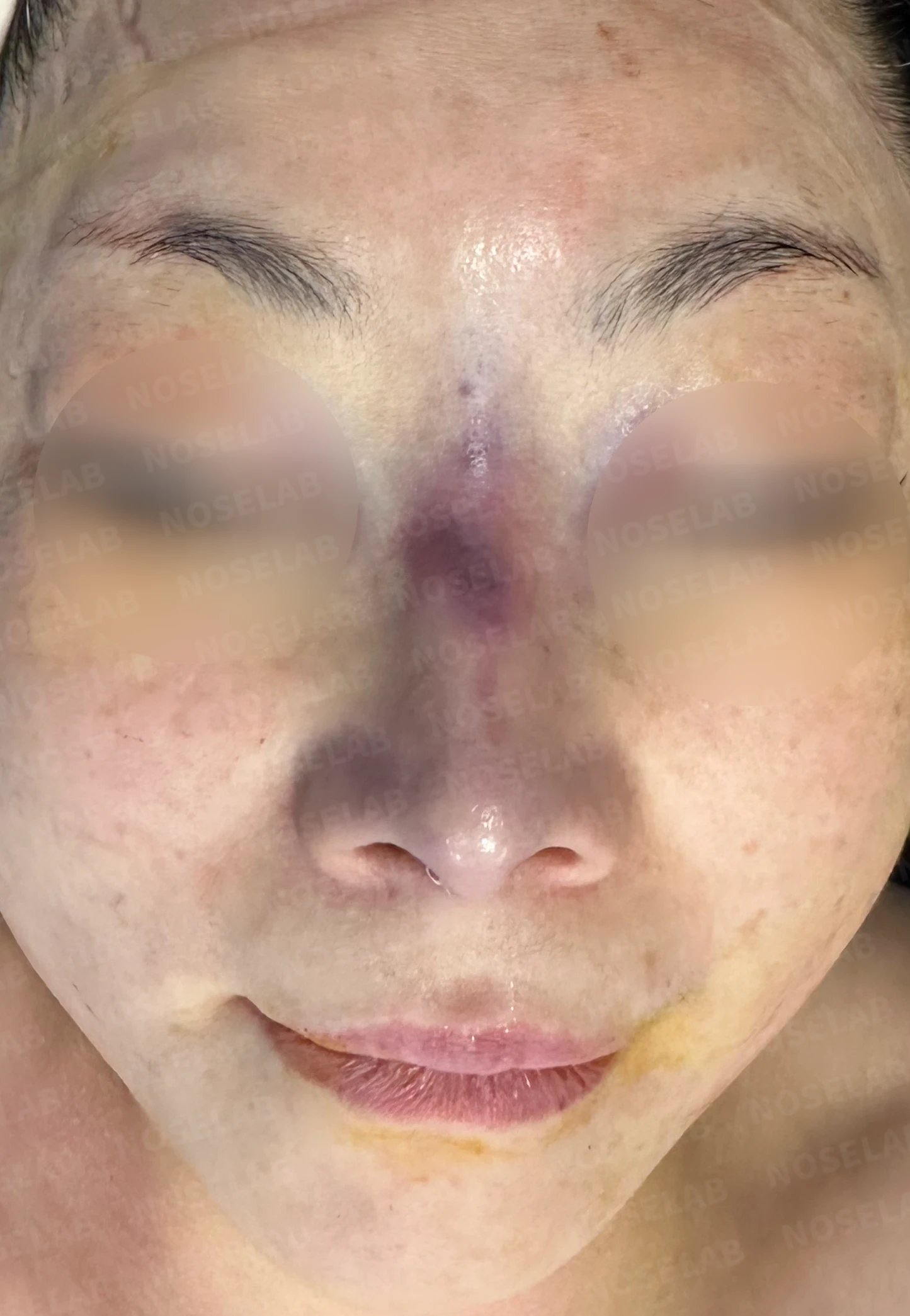
Before surgery / Day 0 immediately after surgery Photos taken immediately after surgery show swelling and may differ from the final result.
- Excessive nostril show was significantly reduced.
- The previously splayed and blunt nasal tip was refined into a slender, well-defined shape.
- The overall nasal length was appropriately extended, improving overall facial proportions.
Profile view:
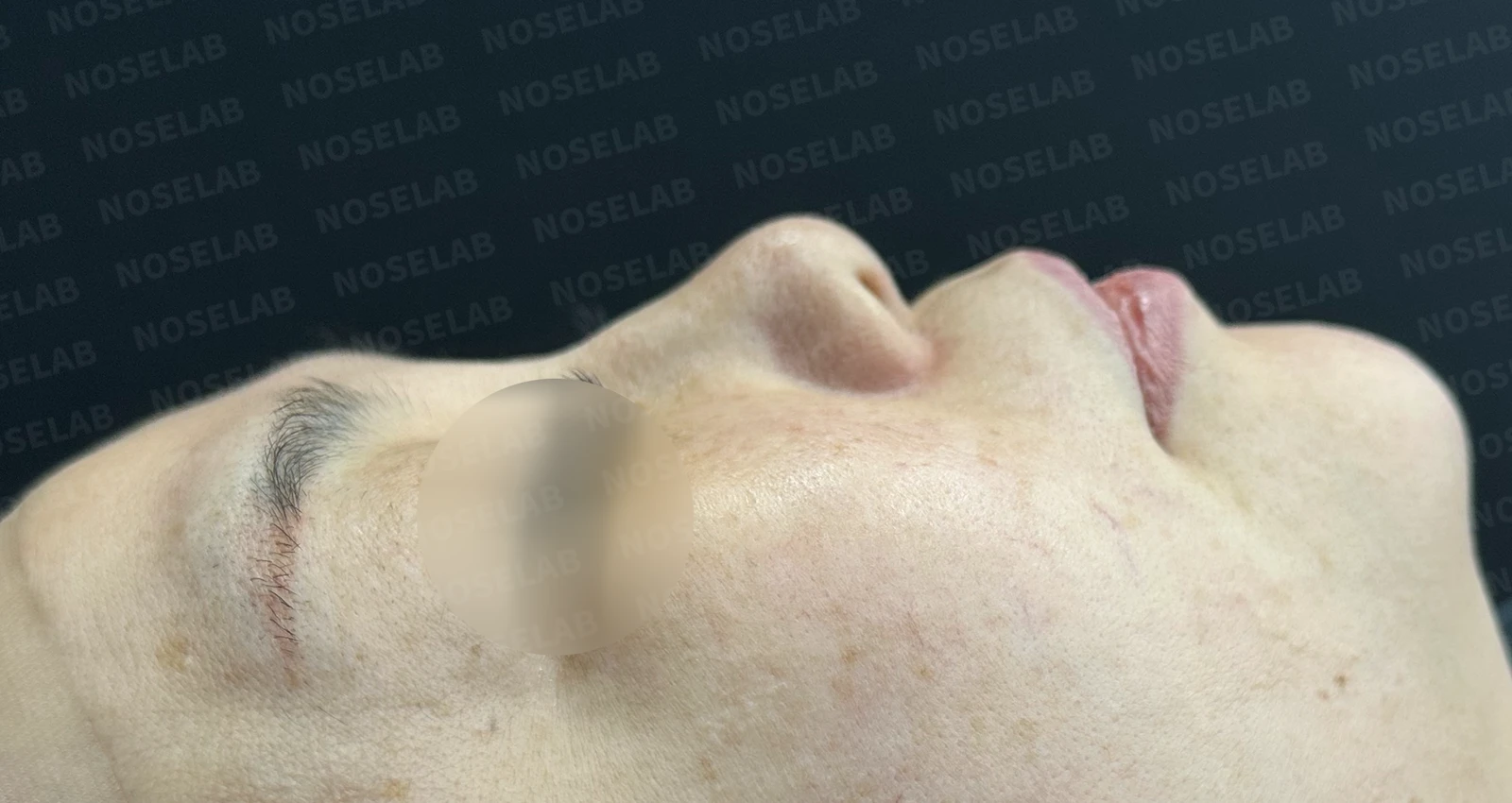
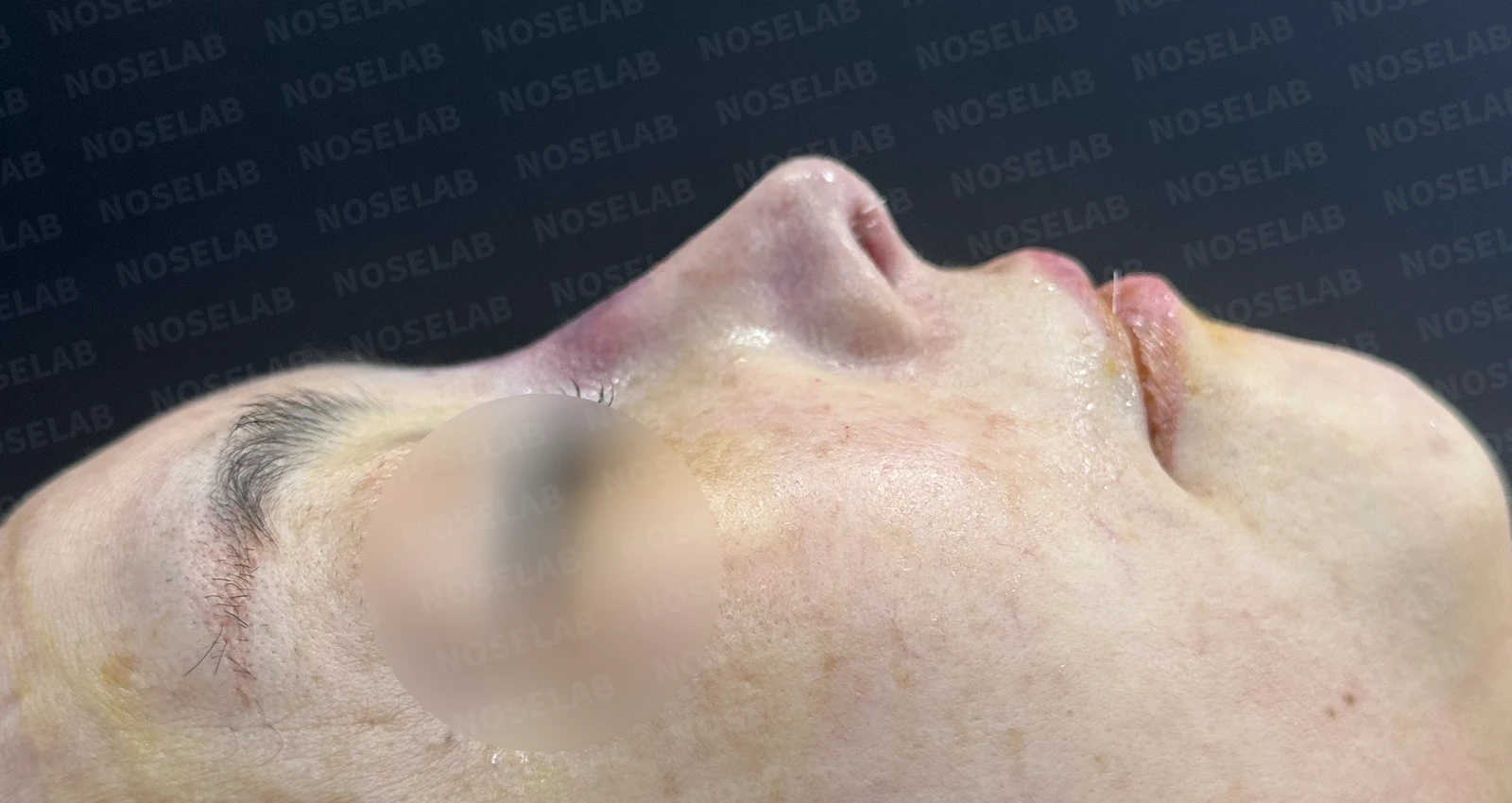
Before surgery / Day 0 immediately after surgery Photos taken immediately after surgery show swelling and may differ from the final result.
- The uneven nasal bridge is now smooth.
- The natural adjustment of the radix created a smoother overall nasal profile.
- The upturned nasal tip was lowered naturally, improving the overall contour.
- Lowering the columella slightly corrected the nasolabial angle, helping alleviate the appearance of a protruding mouth.
Oblique view:
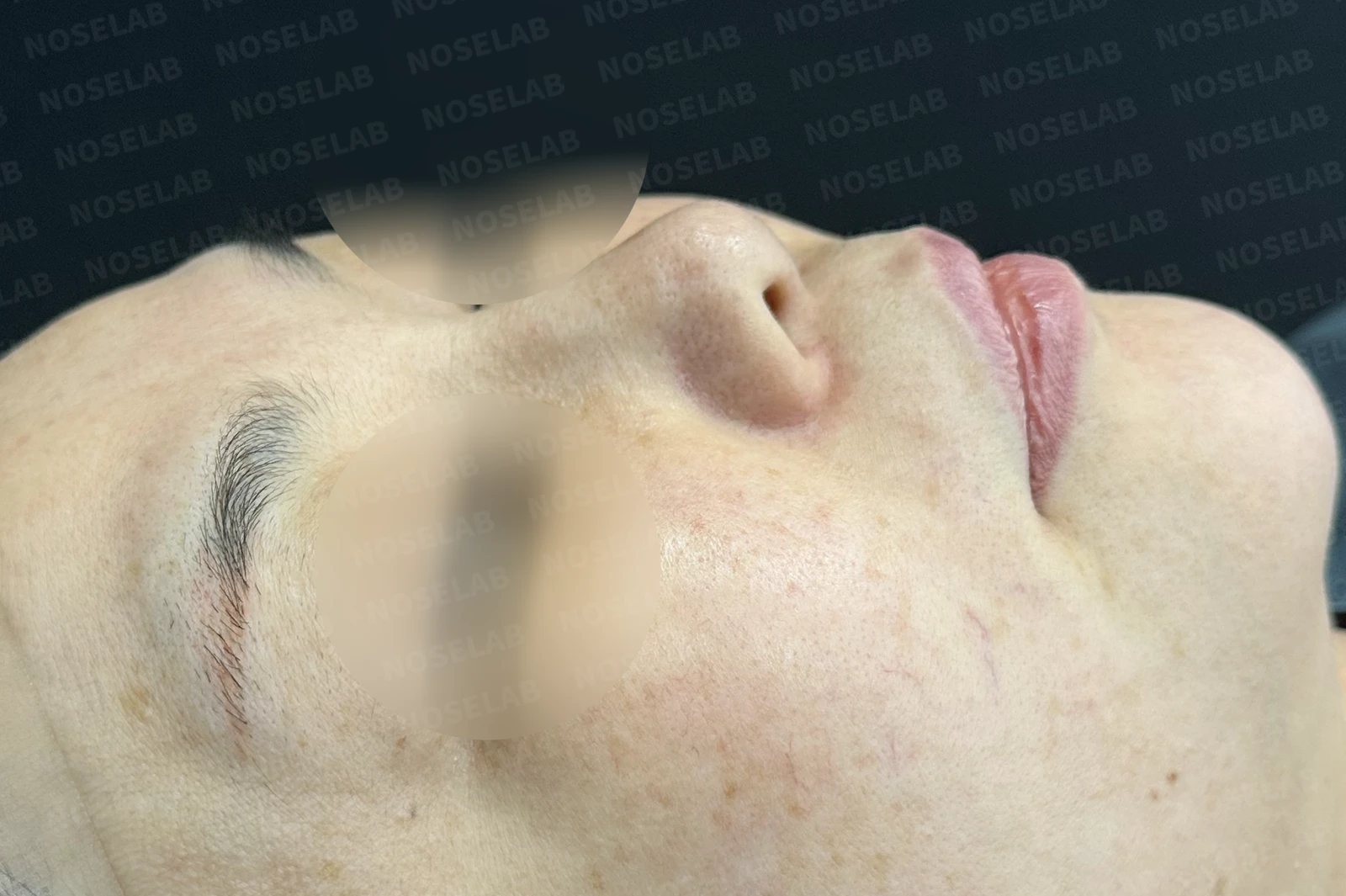
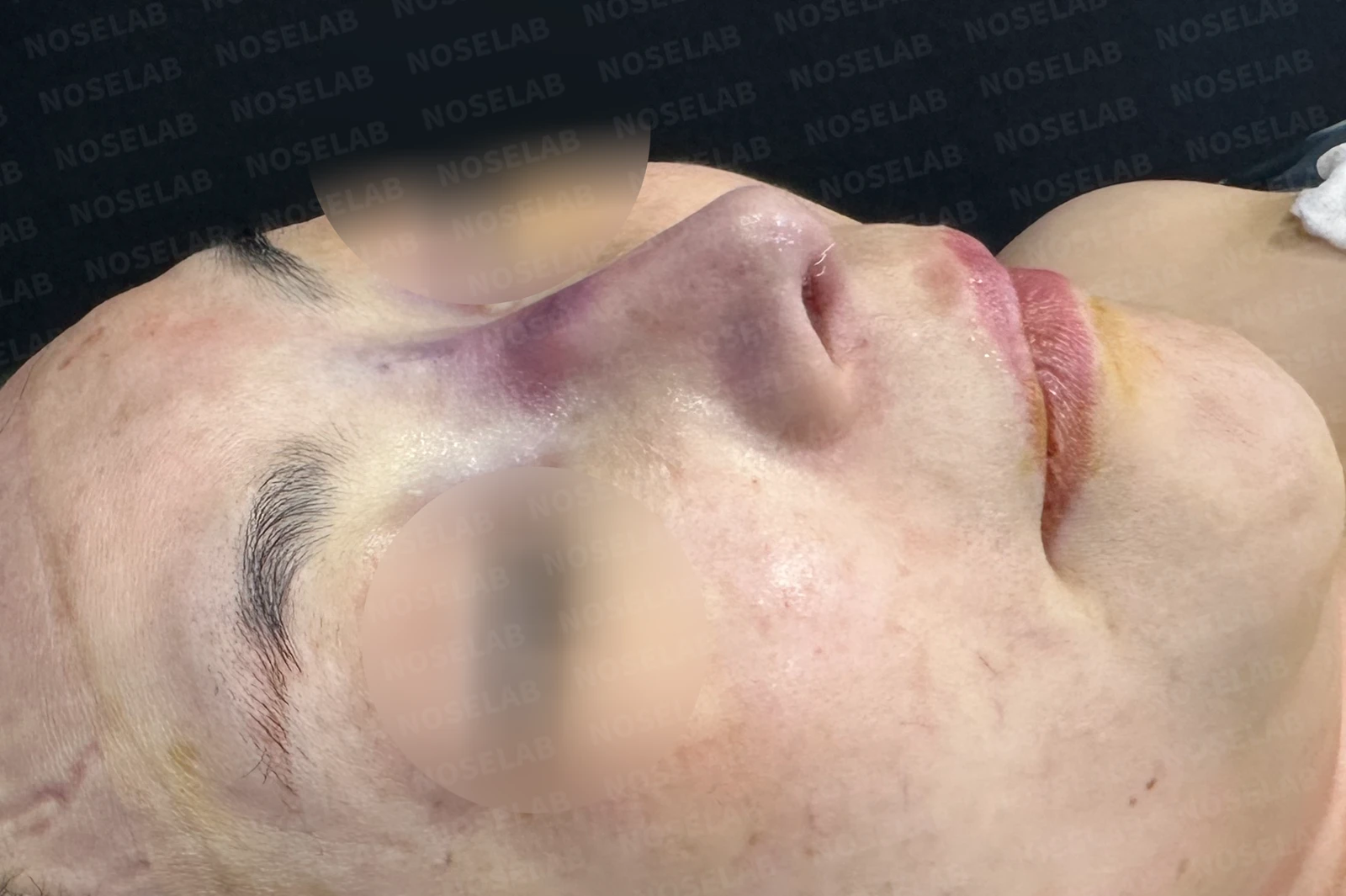
Before surgery / Day 0 immediately after surgery Photos taken immediately after surgery show swelling and may differ from the final result.
- The blunt tip was transformed into a refined, slender appearance.
- The well-defined nasal bridge line added greater three-dimensional depth.
Nostrils:
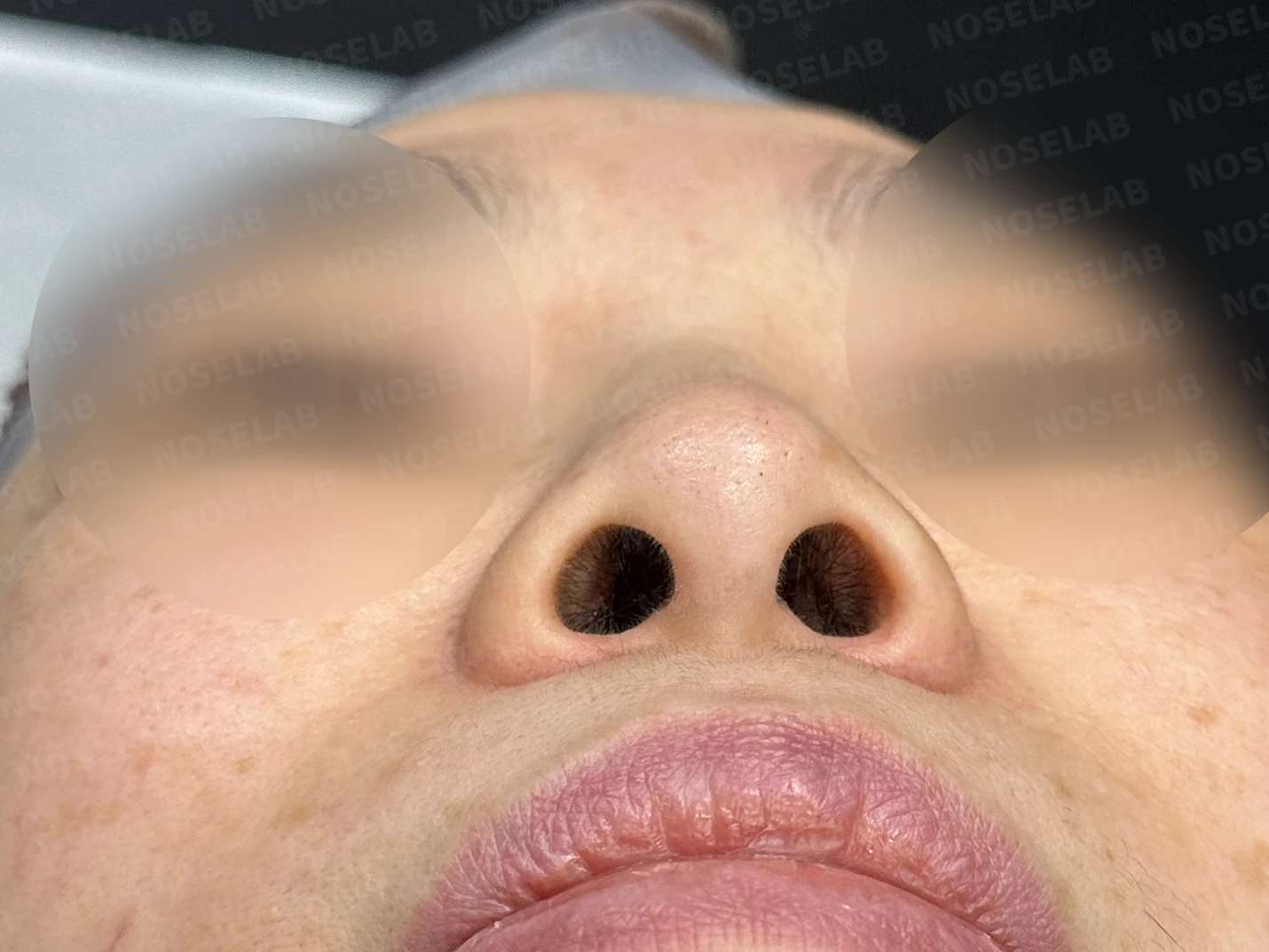
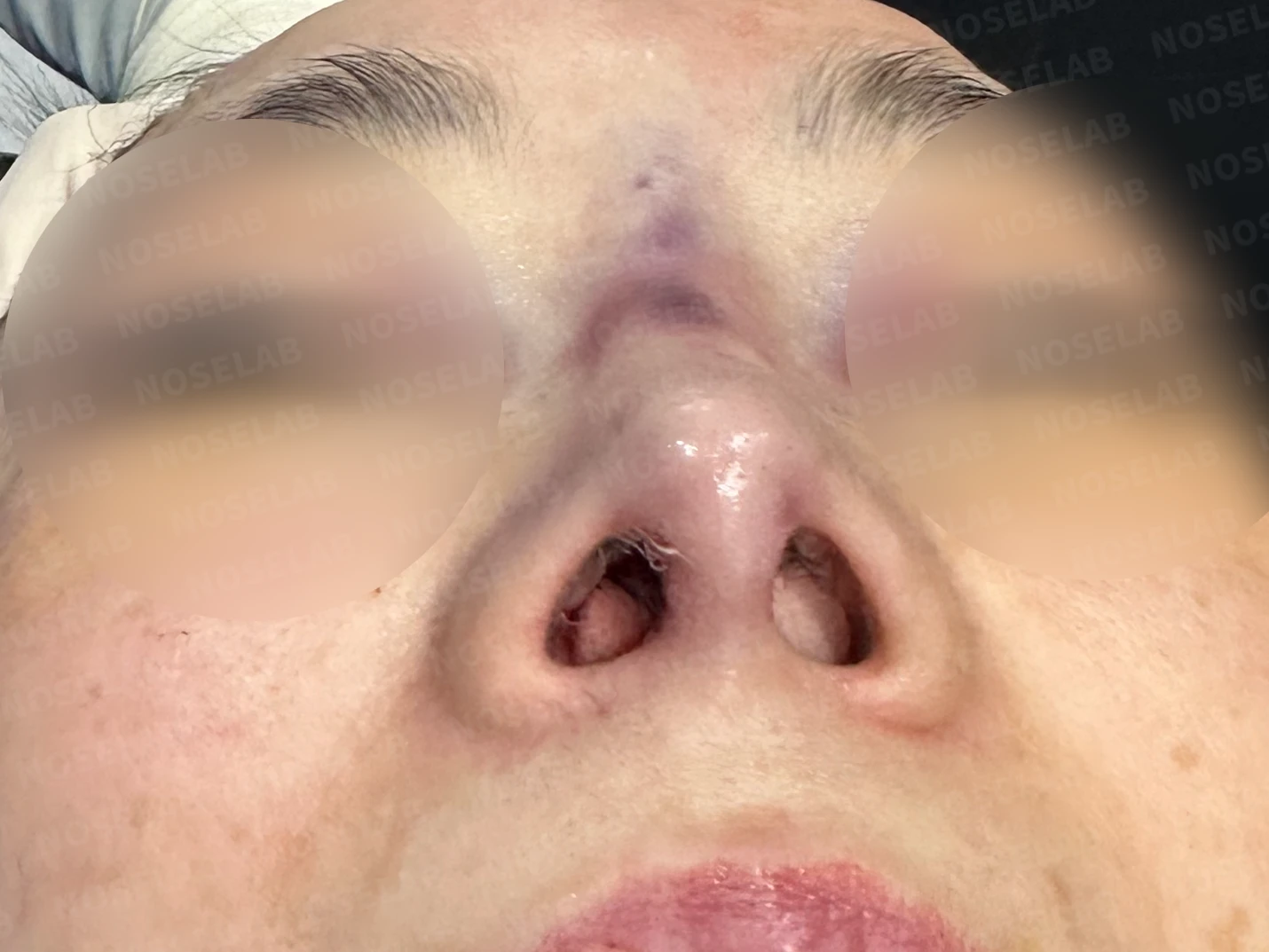
Before surgery / Day 0 immediately after surgery Photos taken immediately after surgery show swelling and may differ from the final result.
- The previously round nostrils shifted into a natural oval shape.
- The splayed nasal tip was narrowed, establishing balanced proportions.
5. Photos immediately after surgery on day 0 Photos taken immediately after surgery show swelling and may differ from the final result.
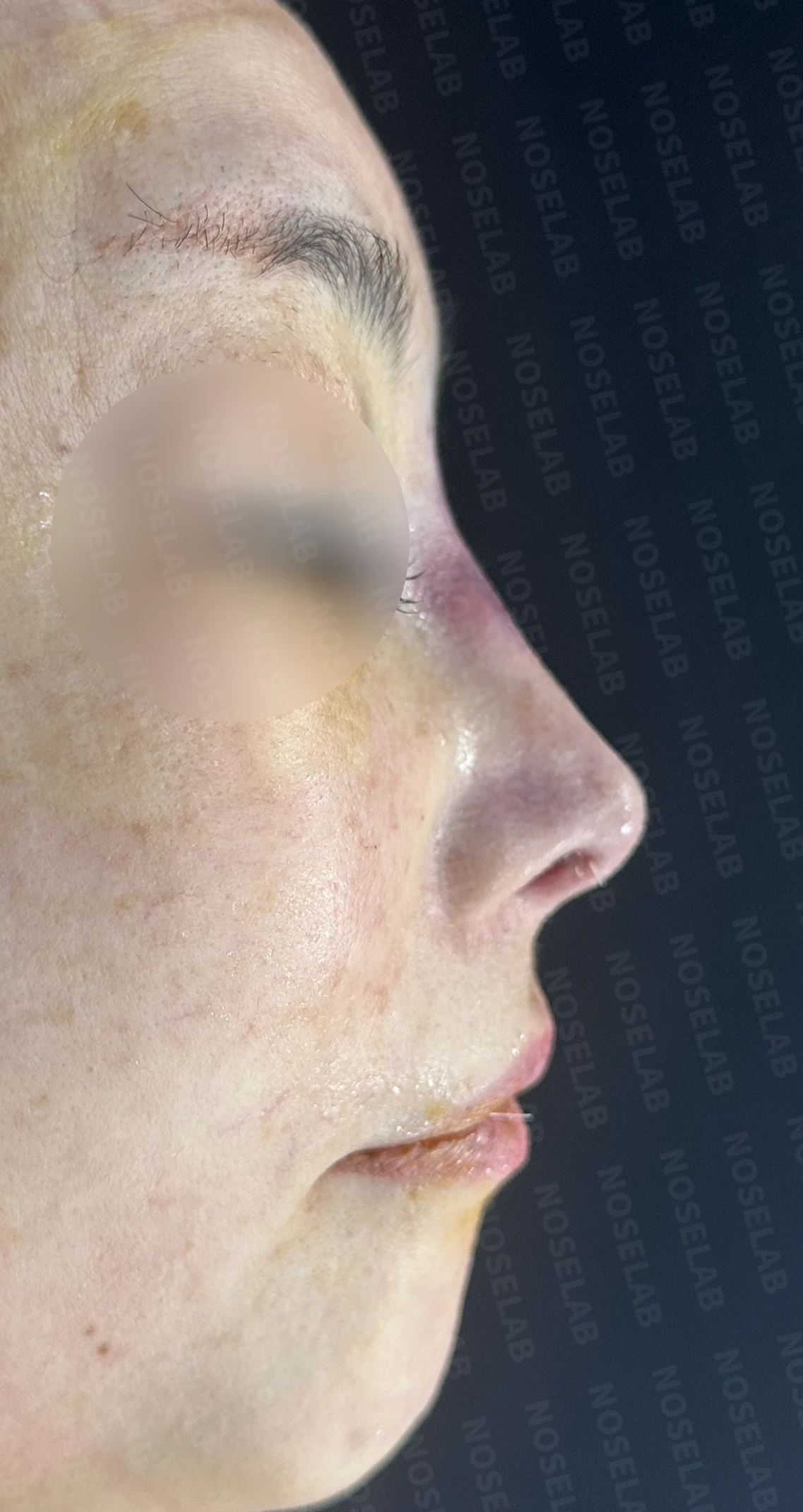
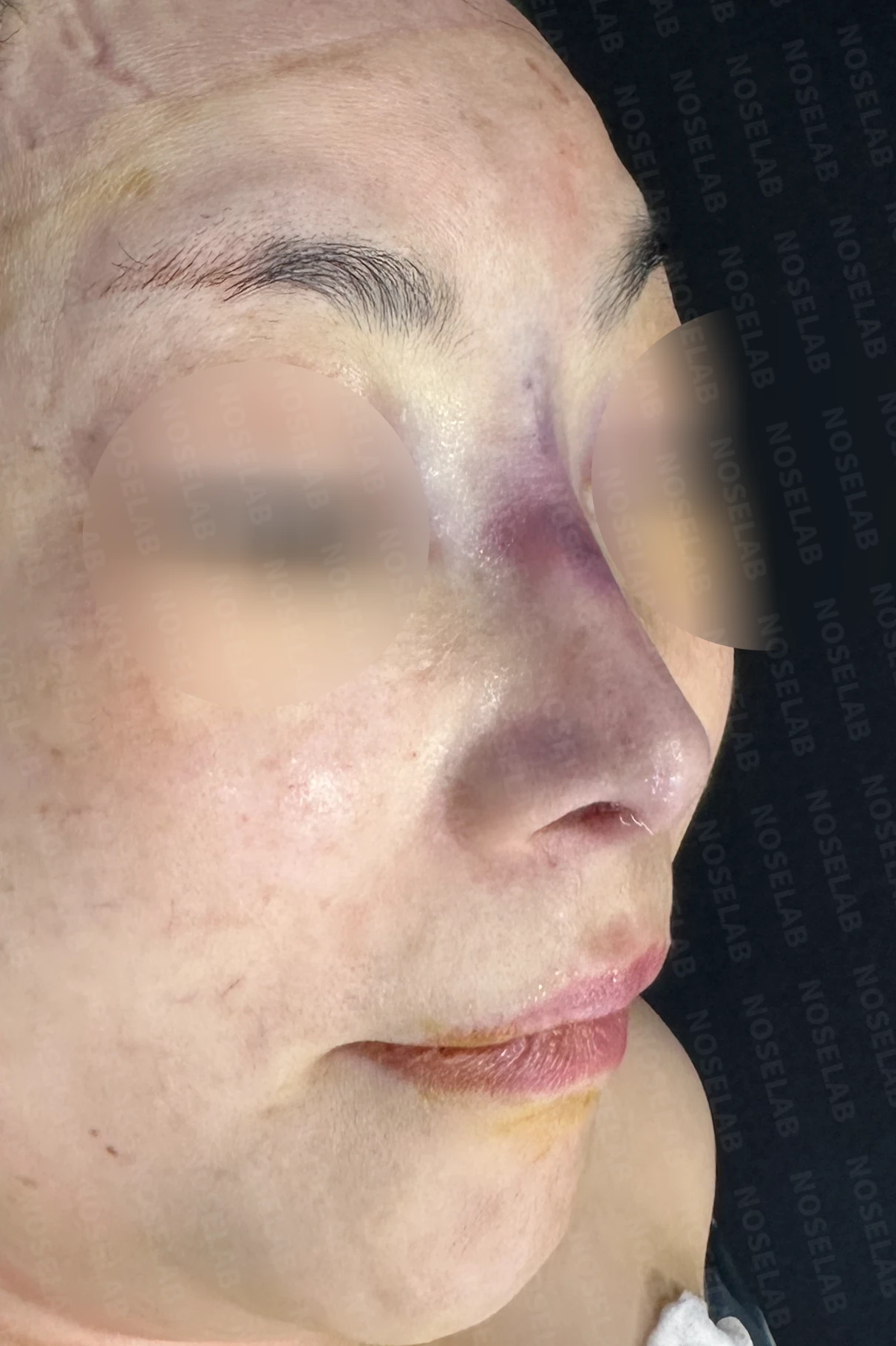
Front, profile, and oblique views immediately after surgery on day 0 Photos taken immediately after surgery show swelling and may differ from the final result.
Nostril view immediately after surgery (day 0) Immediate postoperative photos show swelling and may differ from the final result.
6. Overall evaluation
Cases like this highlight both the limits of dissolvable fillers and the strengths of structural rhinoplasty. Although fillers can provide temporary changes, they cannot achieve fundamental structural improvements. As seen in this patient, while fillers may elevate the bridge, they cannot refine or reposition the tip.
Septal extension using autologous rib cartilage addresses the underlying structural cause of a short, upturned nose. This approach corrected the short, upturned shape while concurrently resolving multiple concerns, including nostril show, tip contour, and the bridge line.
Using a closed approach shortened the postoperative recovery period and allowed surgery to be completed without external scars. This contributed significantly to patient satisfaction.
In addition, developing an appropriate surgical plan requires comprehensive consideration of each patient's facial anatomy, skin condition, and prior procedure history.
7. Conclusion
I hope this case proves helpful to those experiencing unsatisfactory outcomes after filler injections. Rather than temporary measures, fundamental structural correction offers stable, long-term satisfaction.
If you are considering rhinoplasty, I recommend consulting with an ENT specialist to determine the approach best suited to you. Based on extensive surgical experience and specialized knowledge, NOSELAB provides tailored surgical planning for each individual patient.
NOSELAB will be with you throughout your journey toward a healthy, aesthetically pleasing nose.
This was Dr. Peter C. Kang. Thank you.
Thank you.
#rhinoplasty #dissolvablefillerremoval #upturnednosecorrection #shortnosecorrection #smallnosecorrection #nostrilasymmetrycorrection #autologousribcartilagegraft #closedrhinoplasty #septalextension #entrhinoplasty #safelyplannedrhinoplasty #bridgecorrection #tiprhinoplasty

Limitations and risks
When autologous rib cartilage is used, scarring and pain may remain at the donor site on the chest, and pneumothorax (pleural injury) can occur rarely. Over time, the grafted cartilage may warp or undergo partial resorption.
When foreign materials such as injected fillers are removed and reconstructed, contracture may recur, nasal height and length may decrease, and staged surgery may be necessary depending on the skin condition.
When the septum is corrected at the same time, nasal obstruction may persist or recur, and in rare cases, septal perforation or changes in smell may occur.
Common potential risks include infection, bleeding, asymmetry, scarring, skin necrosis, and insufficient improvement; results vary depending on individual skin condition and previous surgical history.