Hello, I am Dr. Peter C. Kang.
Today, I would like to introduce a surgical case of a patient who was concerned about a short, upturned nose.
Because this type of case also involved facial asymmetry, it required a delicate approach that considered overall facial balance along with nasal correction.
1. Preoperative design consultation
Let us analyze the patient's preoperative condition in detail:
Front view:
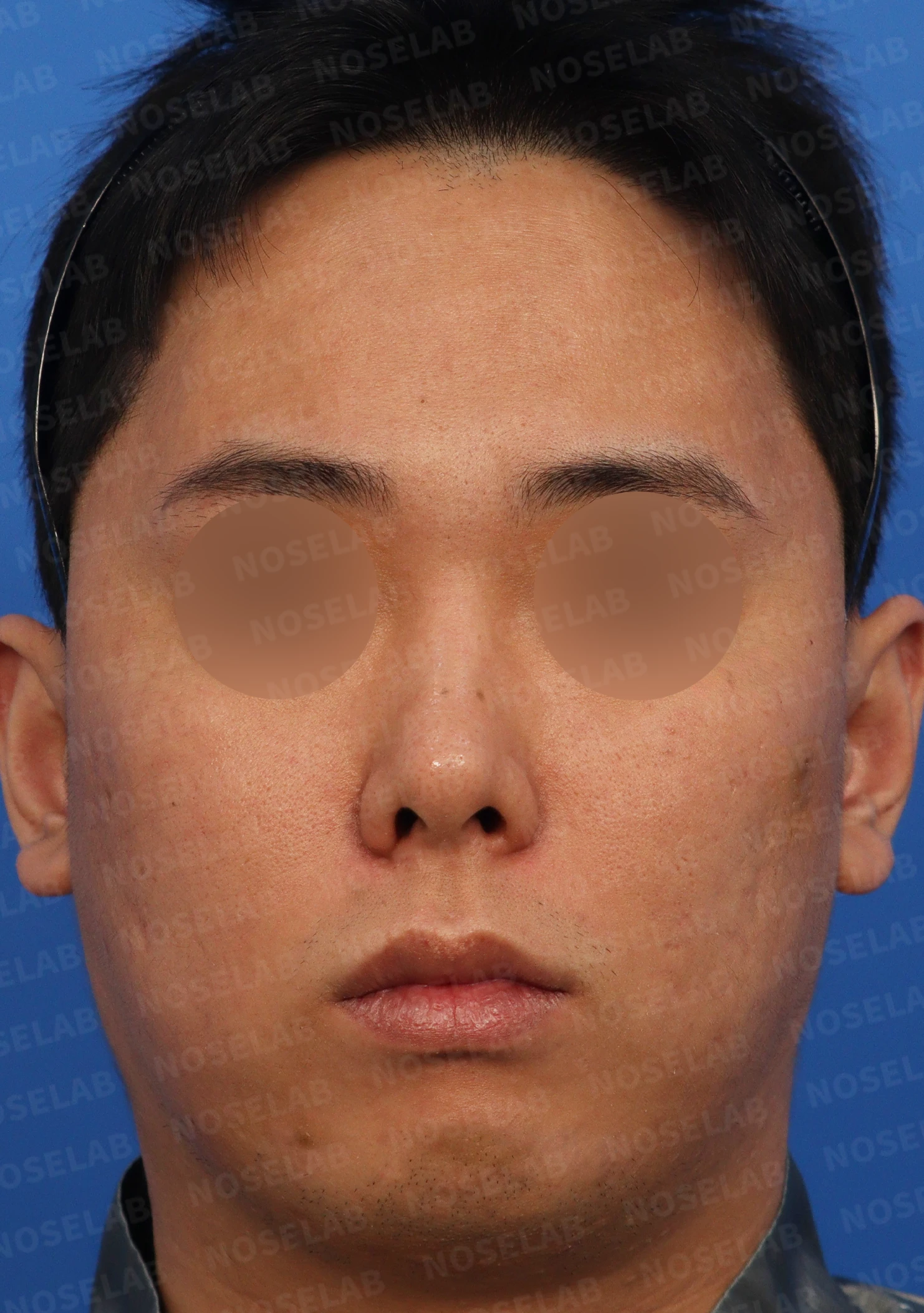
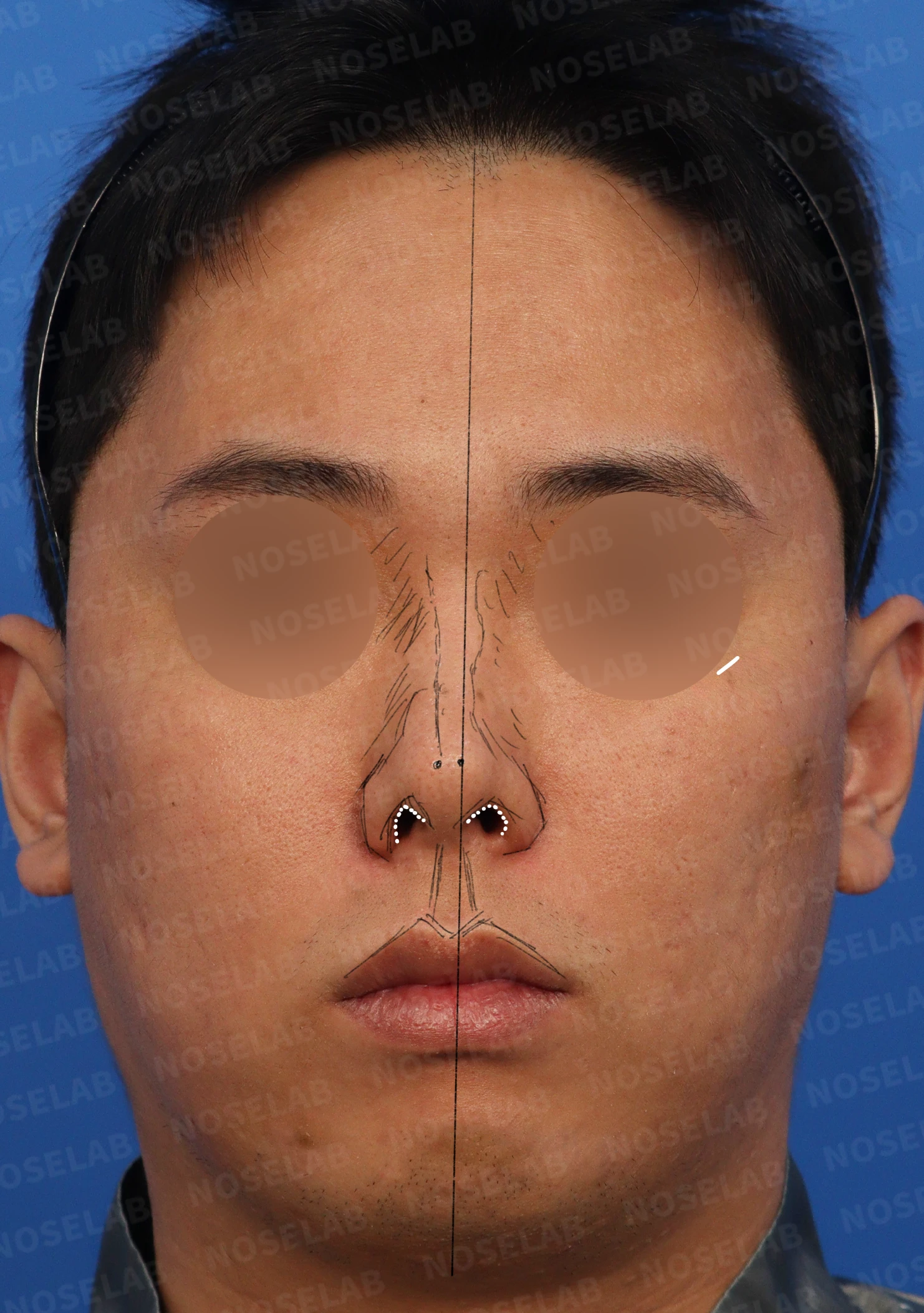
Before surgery: front view
- The nose was short and spread out overall
- Significant nostril show with noticeable nostril asymmetry
- The nose appeared flat and crooked overall due to facial asymmetry
- The center of the glabella, nasal tip, philtrum, and chin tip did not lie in a straight line
Profile view:
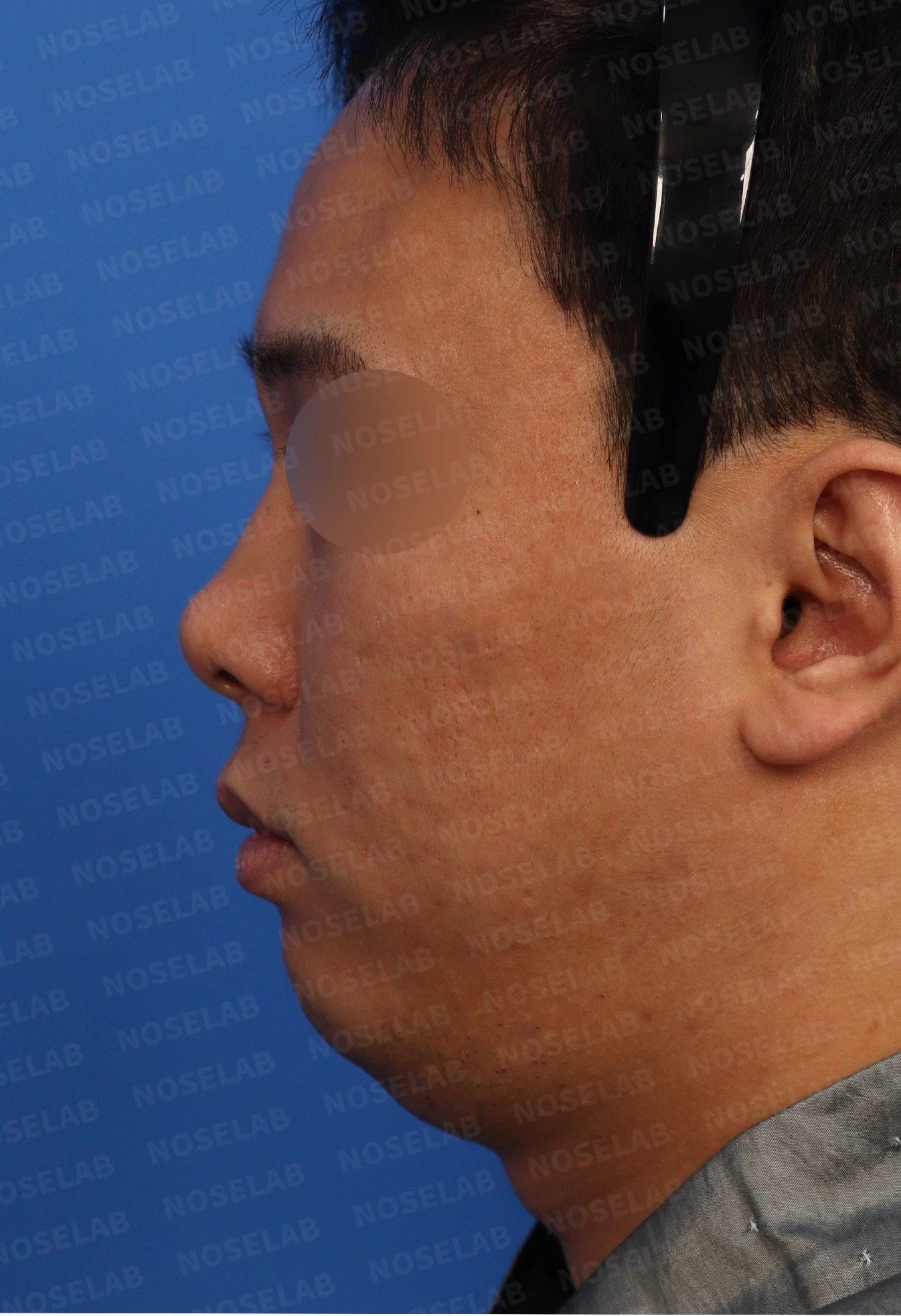
Profile view
- The nasal tip is upturned
- Large nasolabial angle with signs of a protruding mouth
- Receding chin is observed
- Low radix and a short-looking nose
Oblique view:
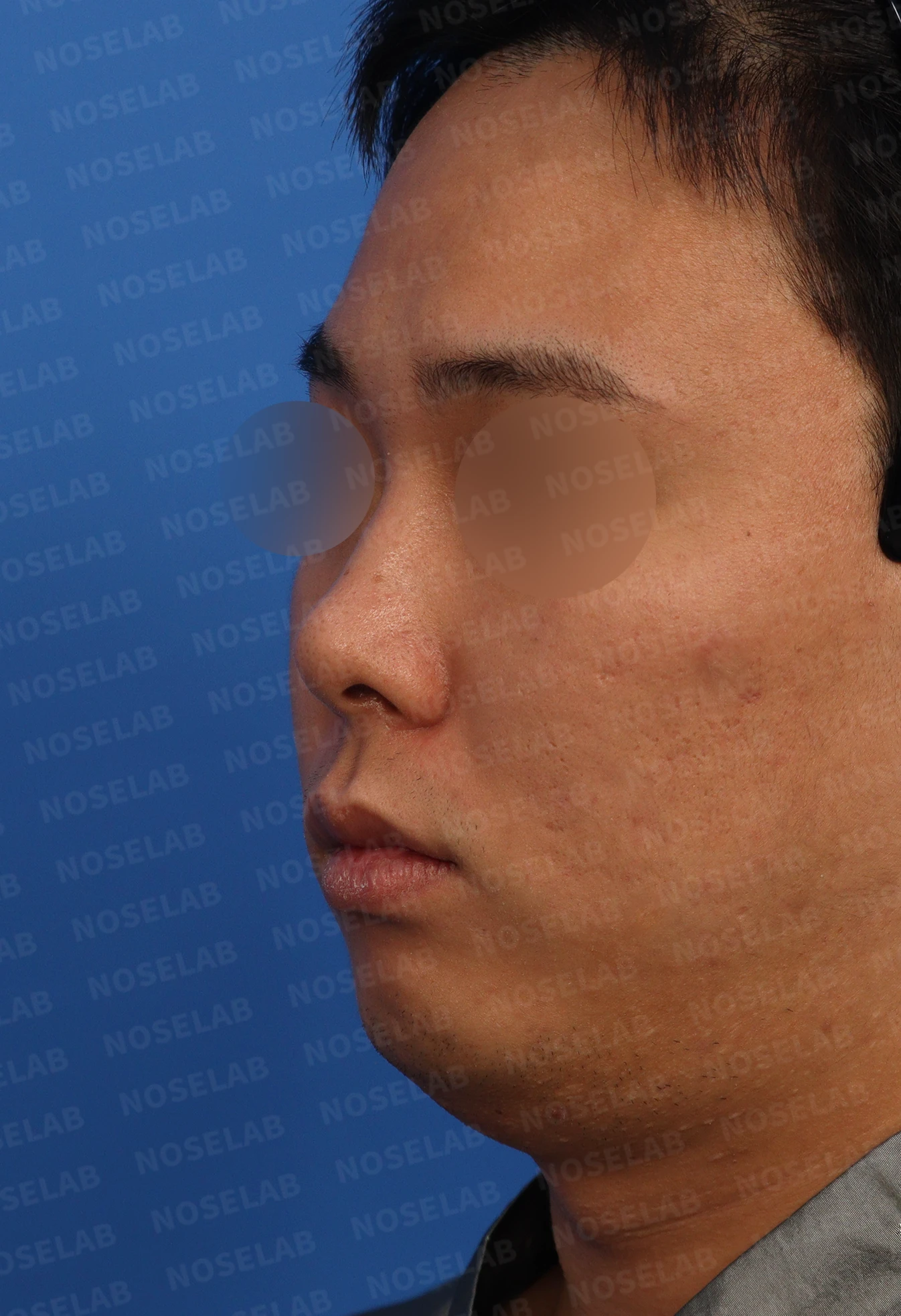
Oblique view
- Signs of a protruding mouth were even more pronounced
- The nasal tip was noticeably bulbous and upturned
Nostrils:
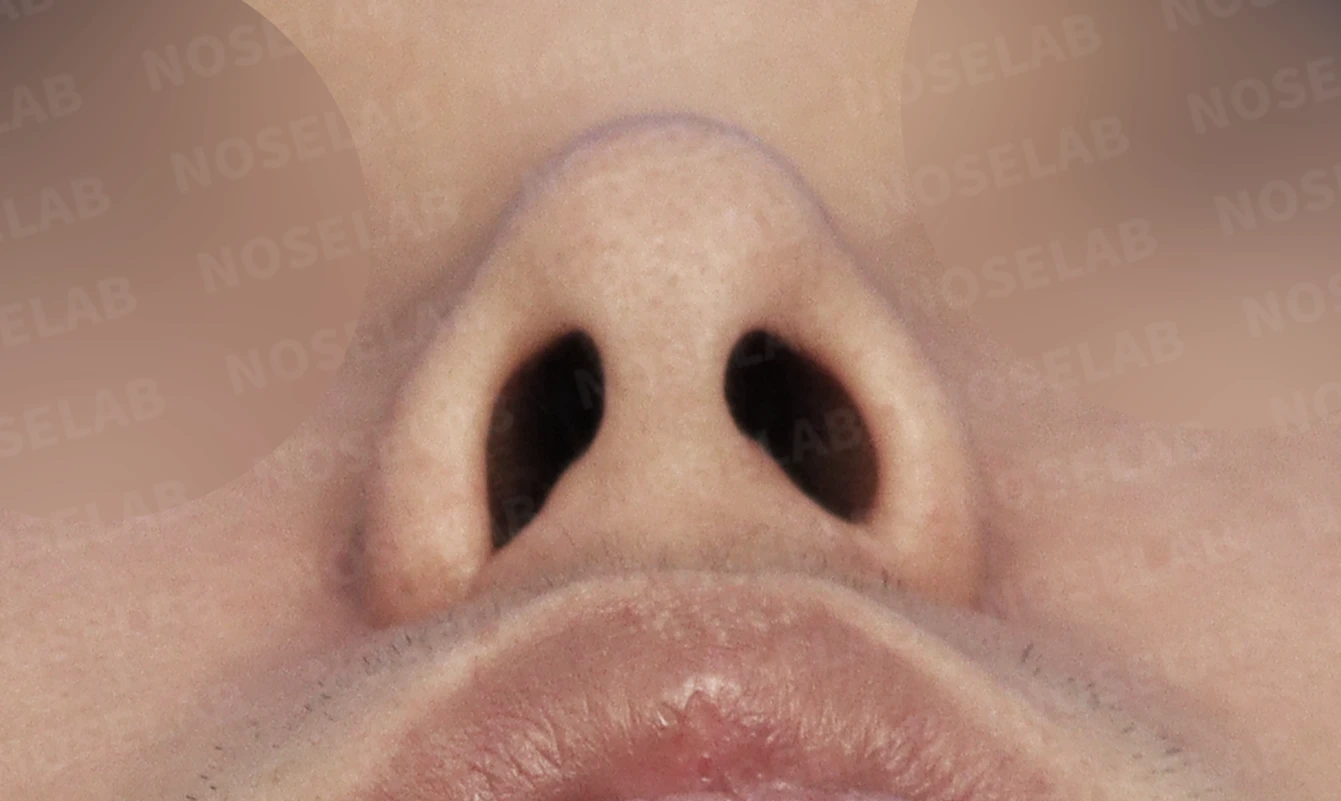
Basal (nostril) view
- The right nostril was smaller than the left
- The columella deviated toward the right
- Nostril asymmetry is evident
2. Surgical plan
Taking into account the patient's condition and requests, the following surgical plan was established:
a) Septal extension graft using autologous rib cartilage
b) Nasolabial angle correction
c) Septal reconstruction
d) Nasal tip repositioning
e) Nasal bridge implant placement
f) Columella correction
3. Surgical procedure
The following procedures were performed using a closed approach:
a) Autologous rib cartilage harvest and grafting:
- By harvesting the patient's rib cartilage, a sufficient amount of cartilage needed for the tip surgery was secured.
b) Septal extension graft:
- The septum was extended and reinforced using autologous rib cartilage.
- Through this, the short nasal tip was lengthened downward and the upturned nose was corrected.
c) Septal reconstruction:
- The septal cartilage that leaned to the right was repositioned toward the left to improve the overall symmetry of the nose.
d) Nasal tip repositioning:
- The nasal tip was shifted to the left to compensate for the facial asymmetry.
e) Nasal bridge implant placement:
- The implant was placed approximately 1 mm off the facial midline toward the left to minimize facial asymmetry.
f) Columella correction:
- The retracted columella was naturally lowered using autologous rib cartilage.
- Through this, the nasolabial angle was corrected, which also helped improve the appearance of the protruding mouth.
g) Nostril asymmetry improvement:
- Shifting the columella to the left naturally improved the nostril asymmetry and the difference in size.
4. Comparison of before-and-after photos
Comparing photos taken immediately after surgery on day 0 shows the following improvements: Photos taken immediately after surgery show swelling and may differ from the final result.
Front view:
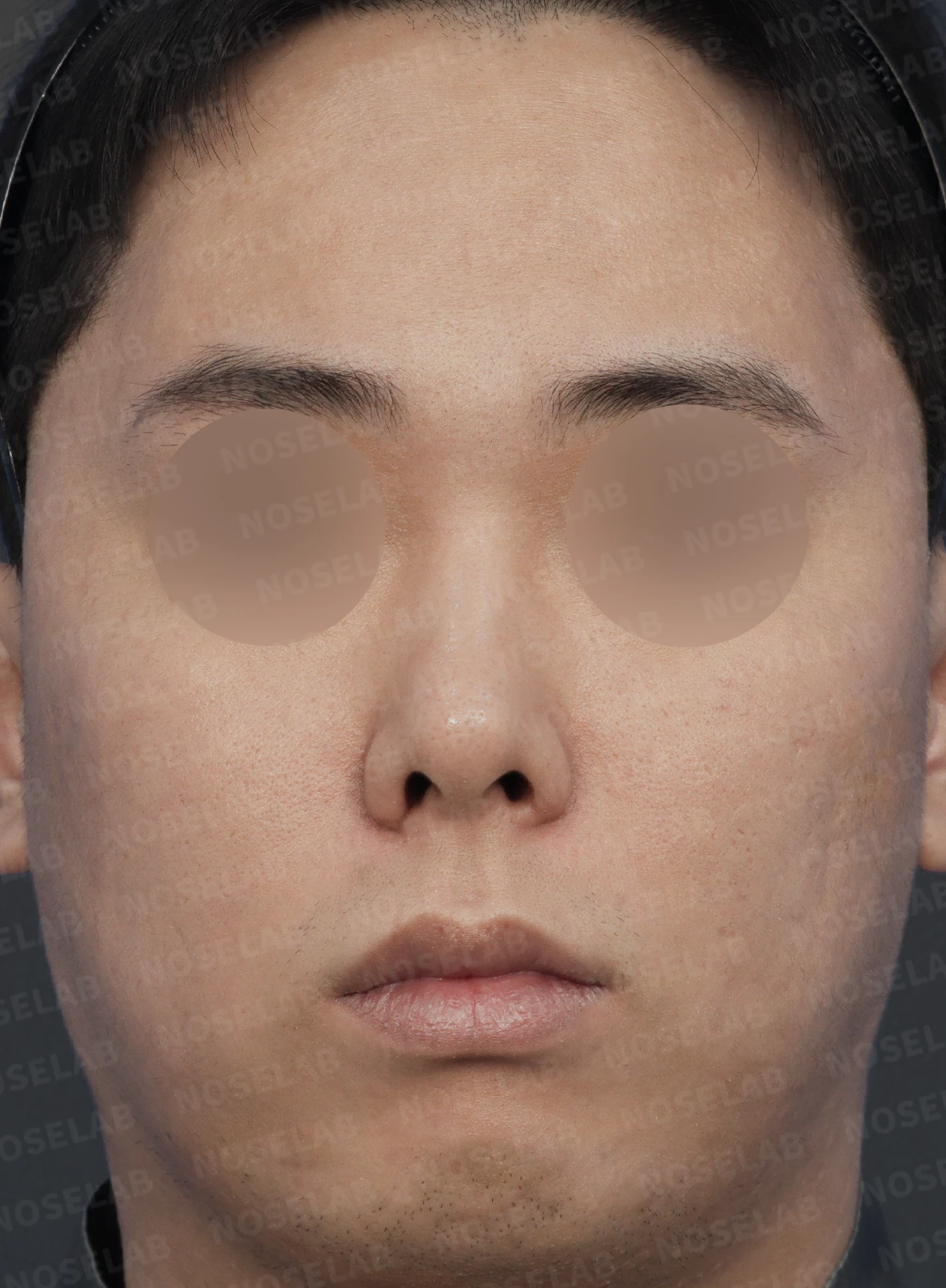
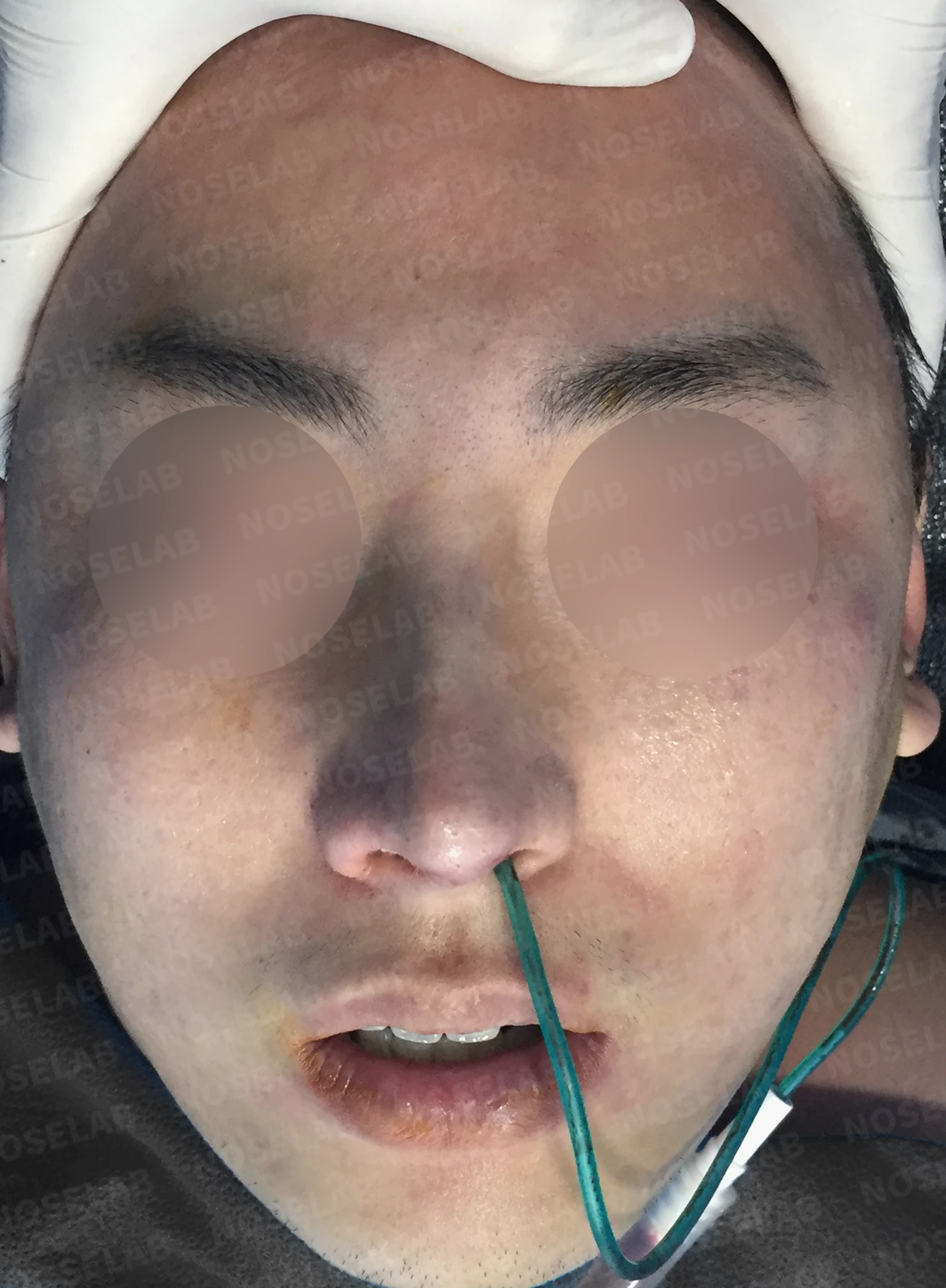
Before surgery / Day 0 immediately after surgery Photos taken immediately after surgery show swelling and may differ from the final result.
- Previously excessive nostril show was naturally reduced.
- The nose, which looked flat and wide, gained definition and became slimmer.
- The crooked-looking nose became straight overall.
- Facial asymmetry improved, leading to better overall facial balance.
Profile view:
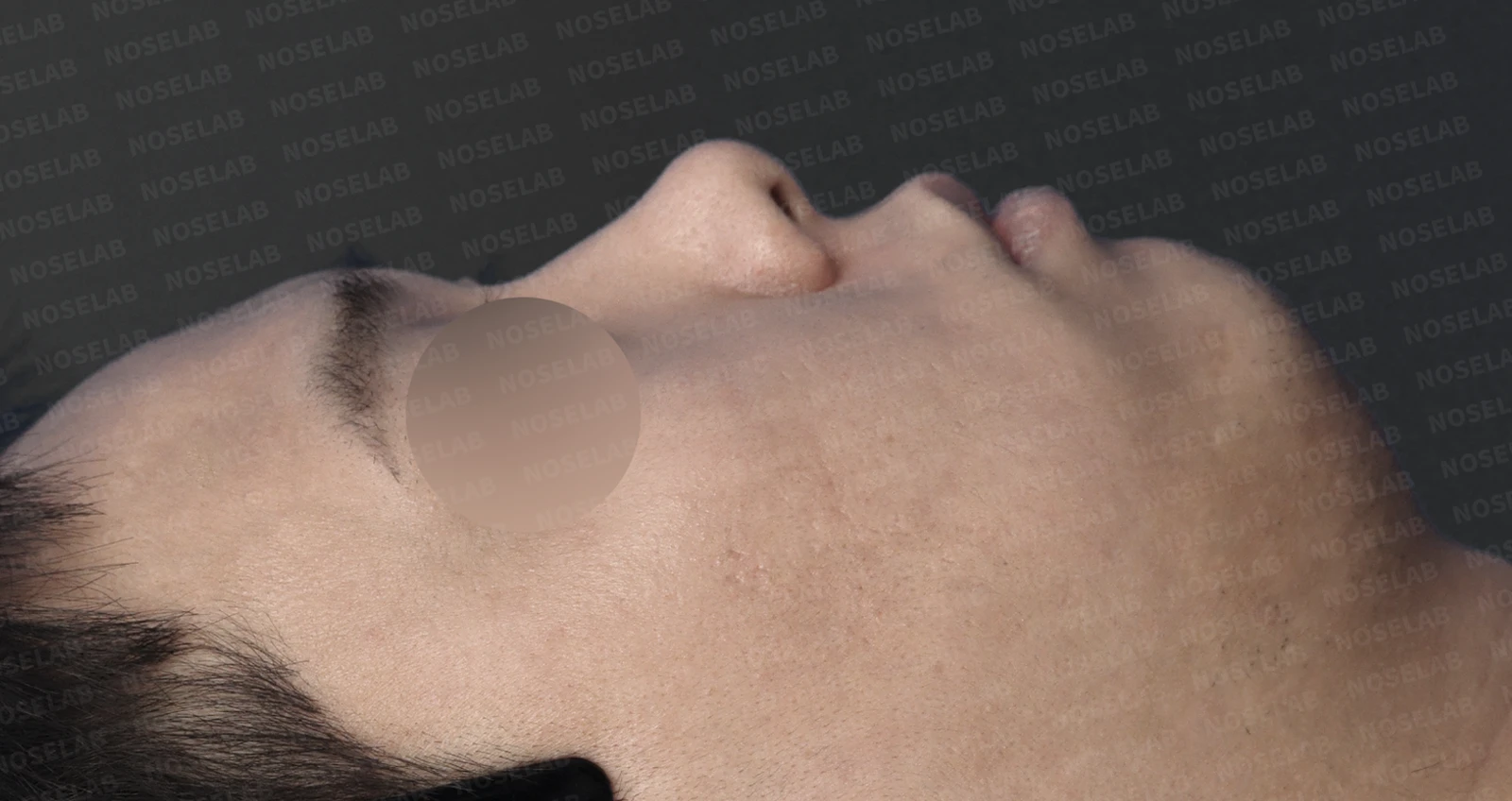
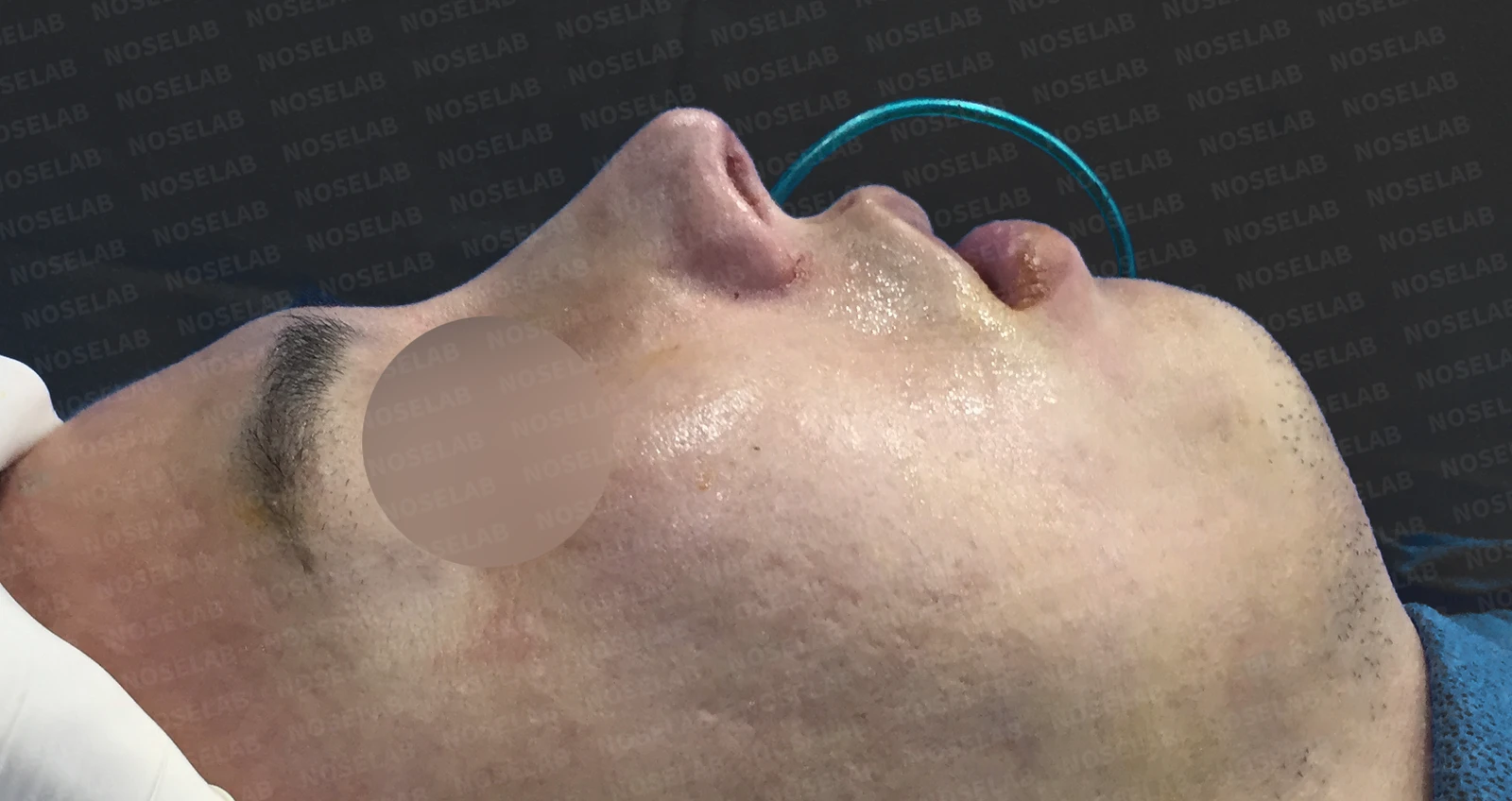
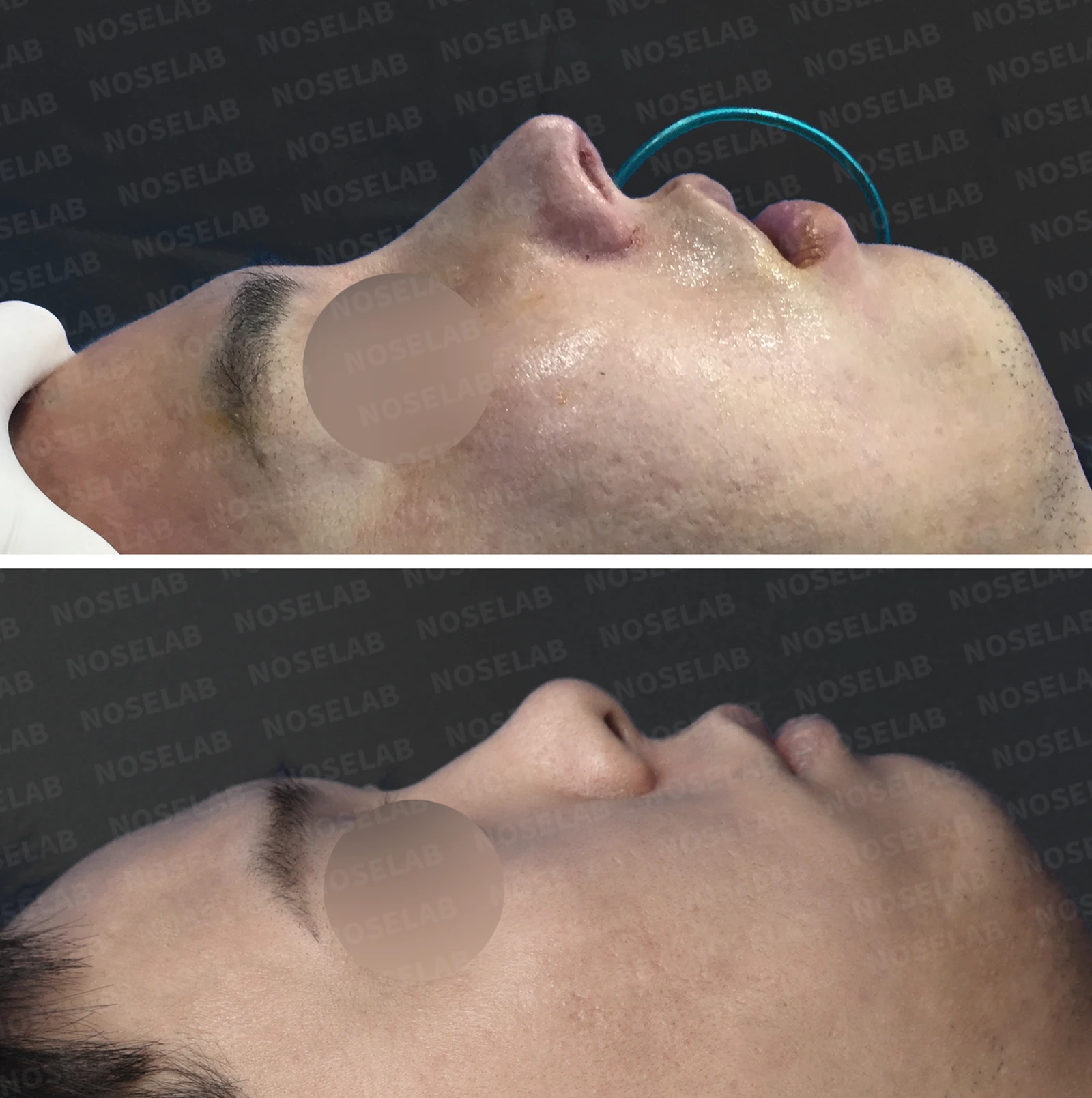
Before surgery / Day 0 immediately after surgery Photos taken immediately after surgery show swelling and may differ from the final result.
- The upturned nasal tip was naturally lowered, improving the overall shape.
- The nose that appeared short was lengthened appropriately, improving facial proportions.
- The nasolabial angle was corrected, improving the appearance of a protruding mouth.
Oblique view:
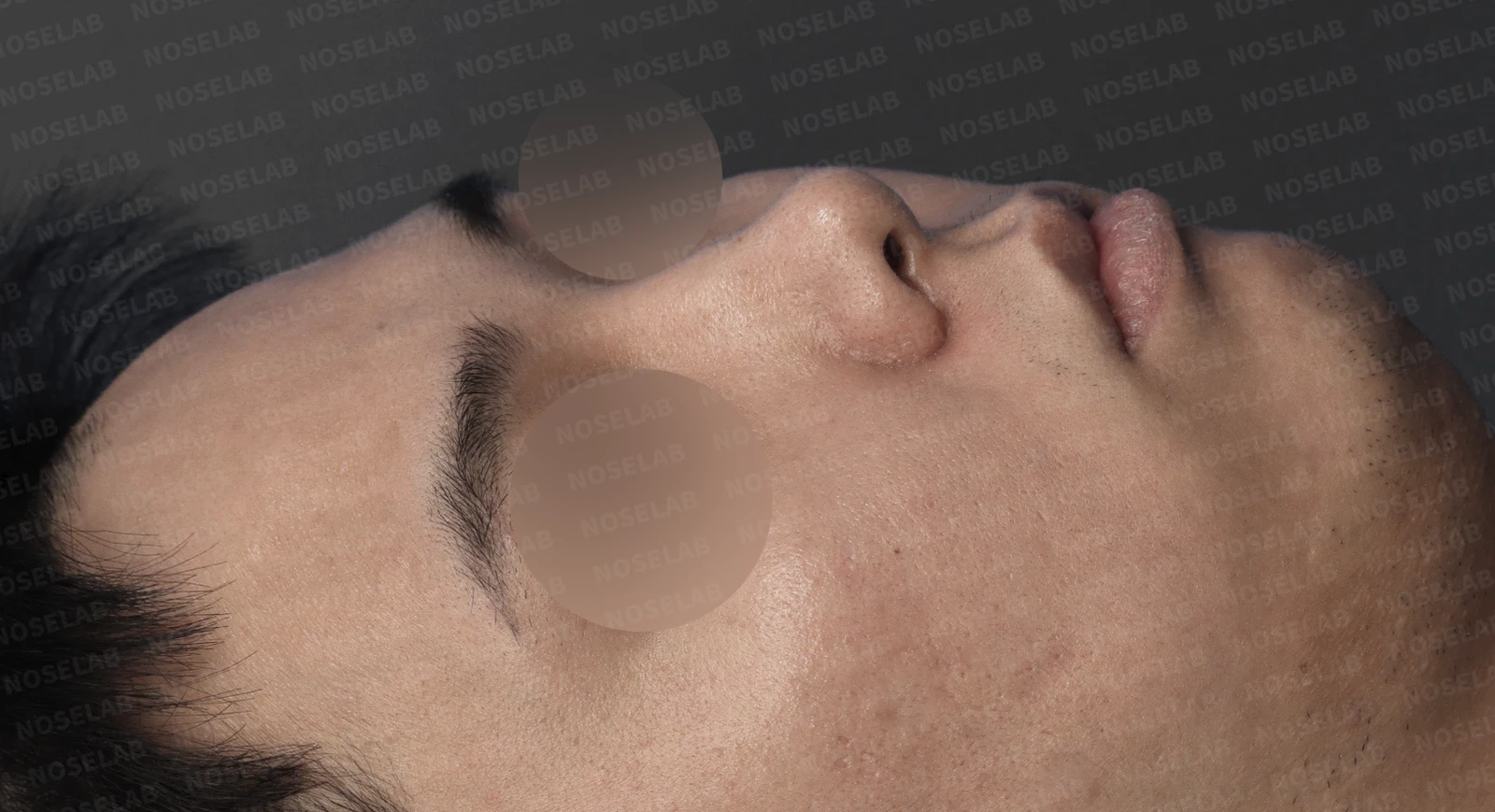
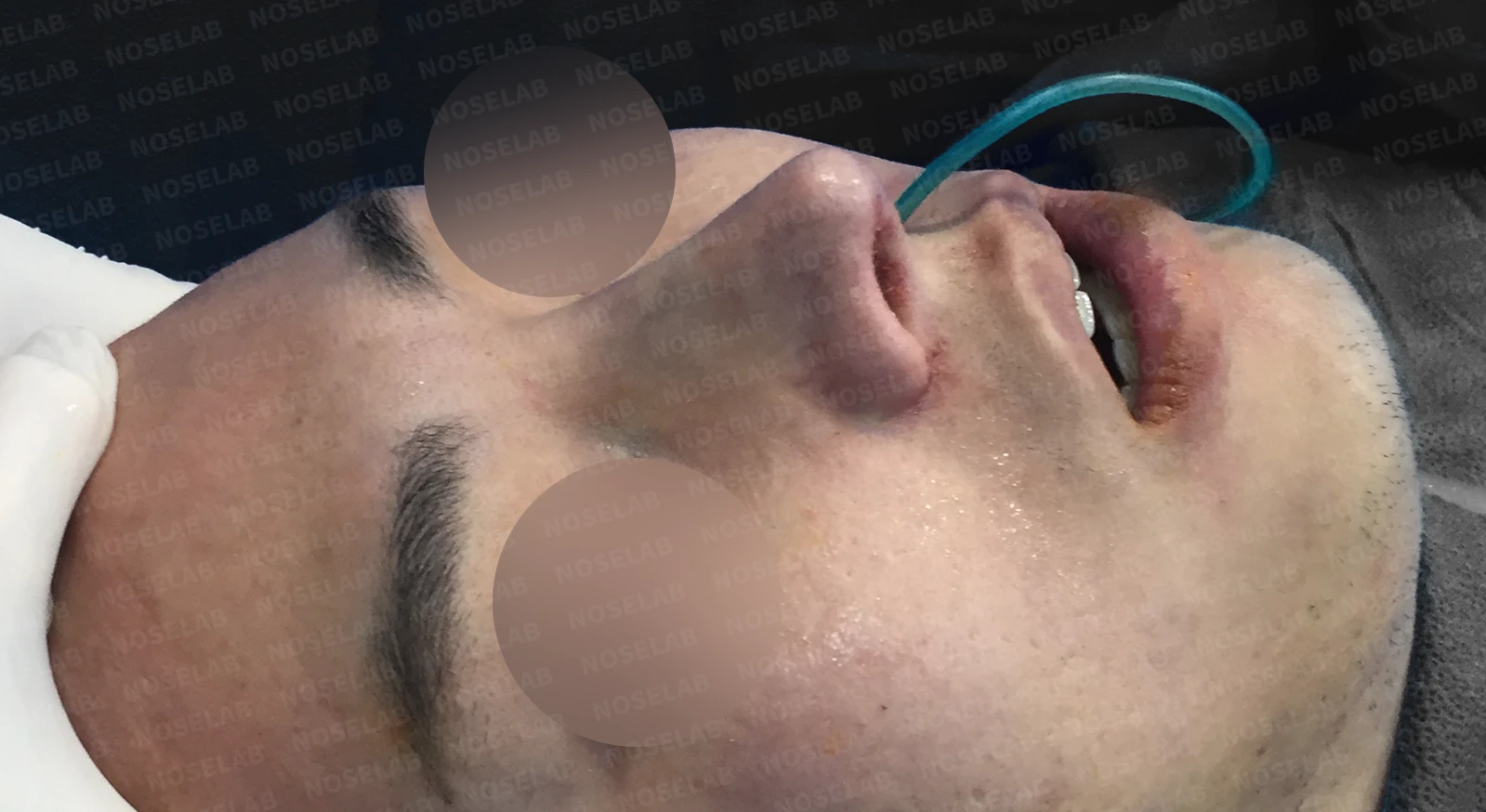
Before surgery / Day 0 immediately after surgery Photos taken immediately after surgery show swelling and may differ from the final result.
- The bulbous and upturned nasal tip was refined into a natural, sophisticated shape.
- The appearance of a protruding mouth was softened, improving overall facial balance.
Nostrils:
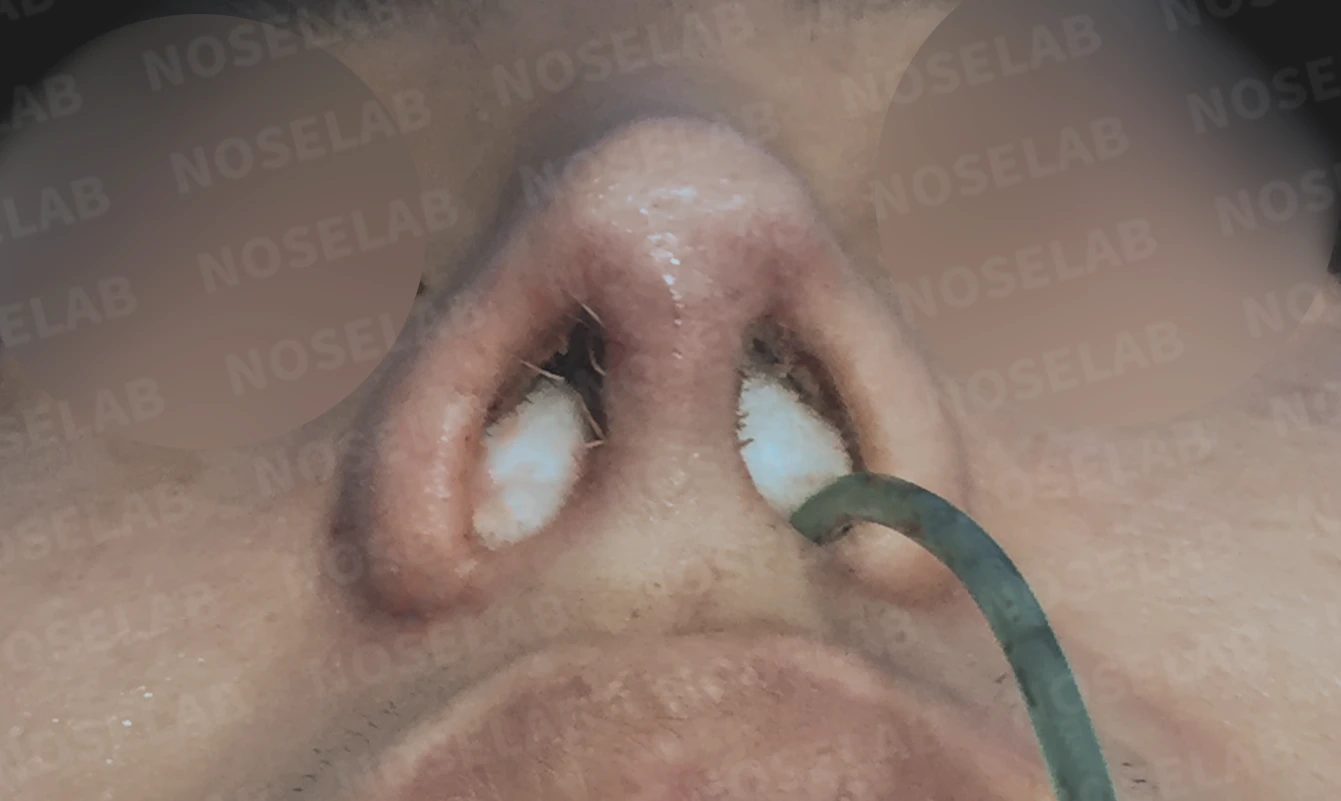
Before surgery / Day 0 immediately after surgery Photos taken immediately after surgery show swelling and may differ from the final result.
- The columella, which had deviated to the right, was centered.
- The difference in nostril size and asymmetry improved significantly.
5. Photos immediately after surgery on day 0 Photos taken immediately after surgery show swelling and may differ from the final result.
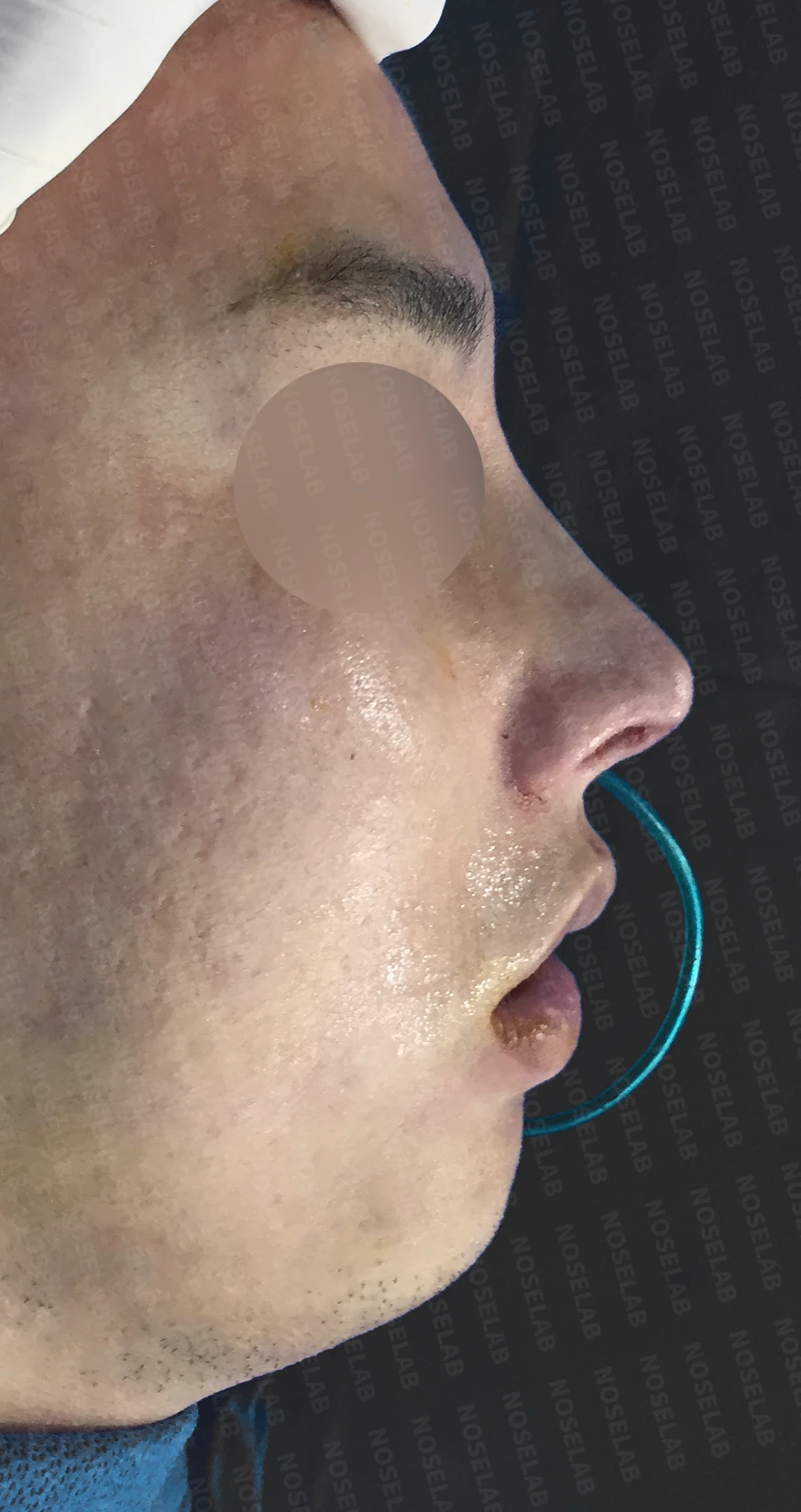
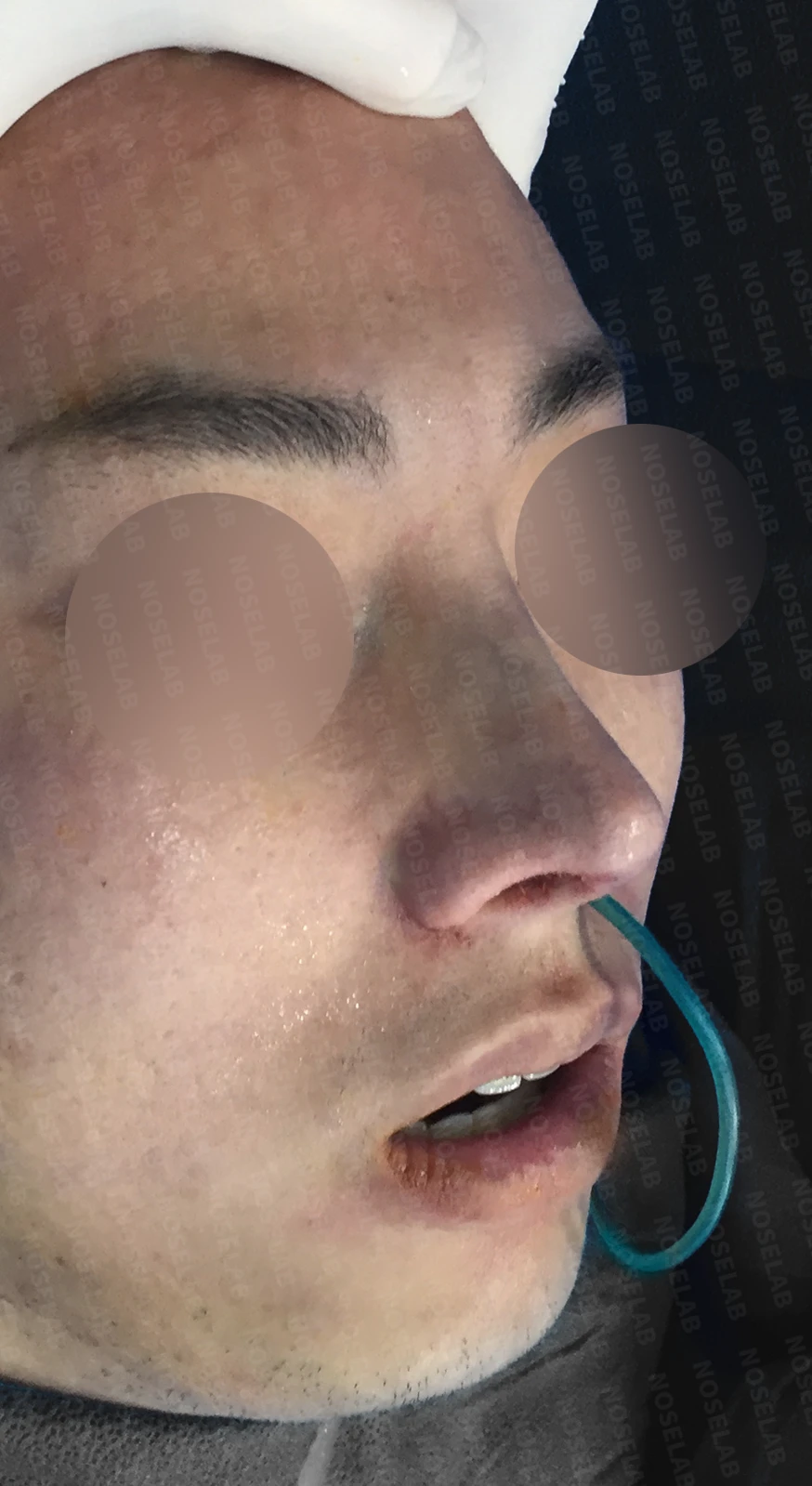
Immediately after surgery (Day 0) front, profile, and oblique viewsImmediate postoperative photos show swelling and may differ from the final result.
Basal (nostril) view immediately after surgery (Day 0)Immediate postoperative photos show swelling and may differ from the final result.
6. Overall evaluation
This was a case that addressed complex combined issues of a short nose, upturned nose, and facial asymmetry at the same time. Especially when facial asymmetry is present, a delicate approach is required that does not simply fix the nose in isolation, but considers overall facial balance.
Septal extension using autologous rib cartilage was very effective in correcting the short, upturned nose. In addition, by adjusting the position of the columella through septal reconstruction, nostril asymmetry was naturally resolved.
Finely adjusting the positions of the nasal tip and nasal bridge implant with facial asymmetry in mind was the core element of this surgery. This made it possible to improve overall facial balance beyond just nasal correction.
Using a closed approach shortened the postoperative recovery period and allowed surgery to be completed without external scars. This contributed significantly to patient satisfaction.
7. Conclusion
I hope this case offers hope to those troubled by a short, upturned nose, particularly when accompanied by facial asymmetry. When facial asymmetry is involved, correcting a crooked nose requires a very delicate approach. This is because one must consider overall facial balance rather than simply making the nose straight on its own.
If this aspect is not taken into account, the nose may end up straight while making facial asymmetry stand out even more, or the nose might actually appear more crooked. Therefore, in cases involving such complex concerns, I recommend having surgery performed by a surgeon with extensive experience and expertise.
Drawing on anatomical knowledge and extensive surgical experience as a board-certified otolaryngologist, I provide surgical plans tailored to each individual patient. Through a comprehensive approach that considers both functional and cosmetic improvement, I strive to create a beautiful and healthy nose.
I will be with you every step of the way to achieve a beautiful and healthy nose.
This was Dr. Peter C. Kang. Thank you.
Thank you.
#rhinoplasty #shortnosecorrection #upturnednosecorrection #facialasymmetry #autologousribcartilagegraft #closedrhinoplasty #septalextension #entrhinoplasty #rhinoplastywithsafetyinmind #nasalbridgecorrection #nasaltiprhinoplasty #protrudingmouthcorrection

Limitations and risks
When autologous rib cartilage is used, scarring and pain may remain at the donor site on the chest, and pneumothorax (pleural injury) can occur rarely. Over time, the grafted cartilage may warp or undergo partial resorption.
When the septum is corrected at the same time, nasal obstruction may persist or recur, and in rare cases, septal perforation or changes in smell may occur.
Common potential risks include infection, bleeding, asymmetry, scarring, skin necrosis, and insufficient improvement; results vary depending on individual skin condition and previous surgical history.