Hello.
I am Dr. Peter C. Kang, medical director.
Today, I would like to share a case of surgery on a very large nose. This involved correcting a dorsal hump, as well as a nose that appeared long and crooked from the front.
Compared to Asians, Westerners often have significantly thicker and larger nasal bones. Therefore, surgery for Western patients frequently focuses on reducing the size of a large nose. In particular, with the recent global popularity of K-pop, K-movies, and K-dramas, some Western patients wish to achieve a nasal contour similar to those seen in Asian patients.
The patient who sought surgery today also had a very large, crooked nose with a prominent dorsal hump, as well as a long nose with a drooping nasal tip.
Preoperative design consultation
Let us take a look at the photos taken during the preoperative consultation.
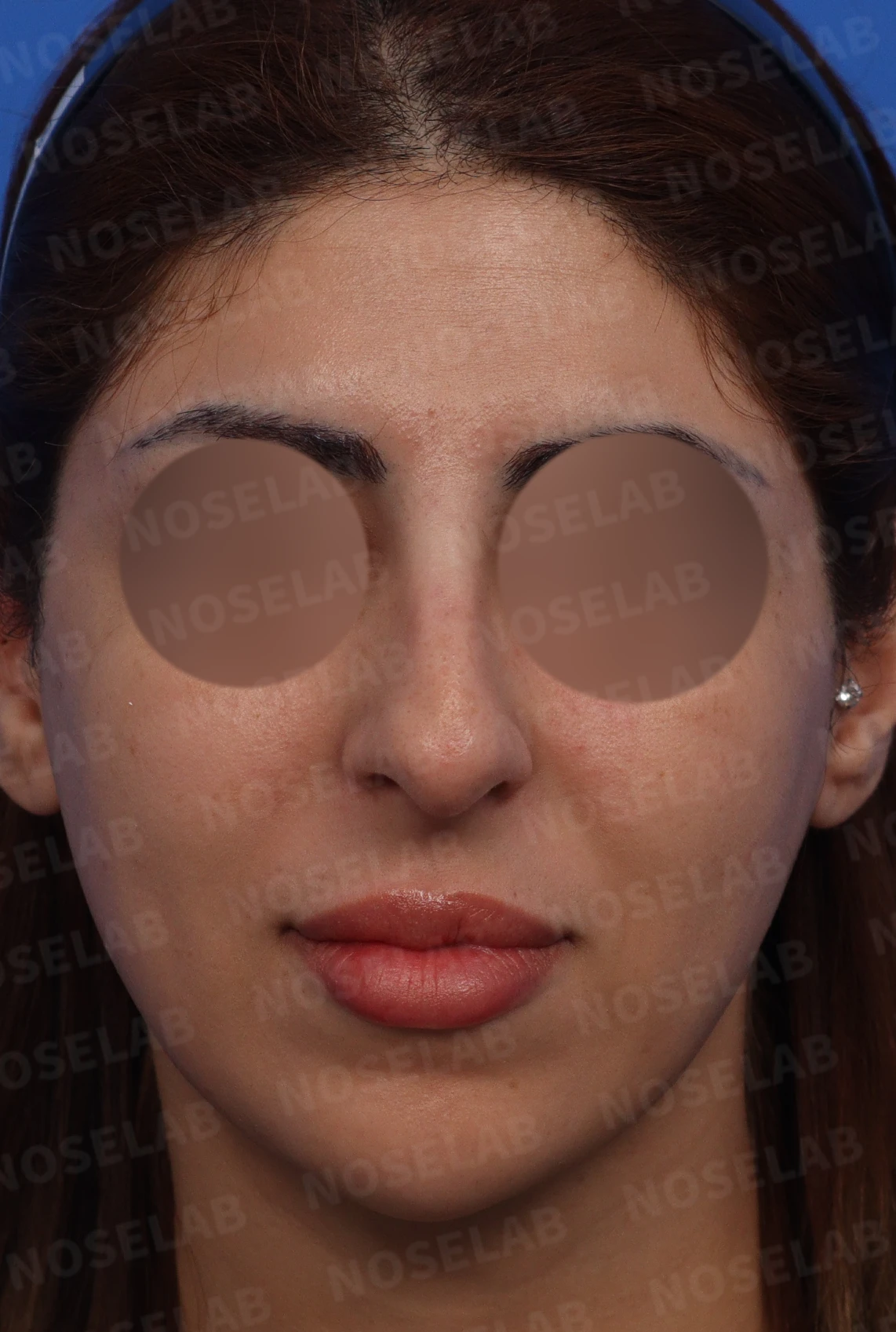
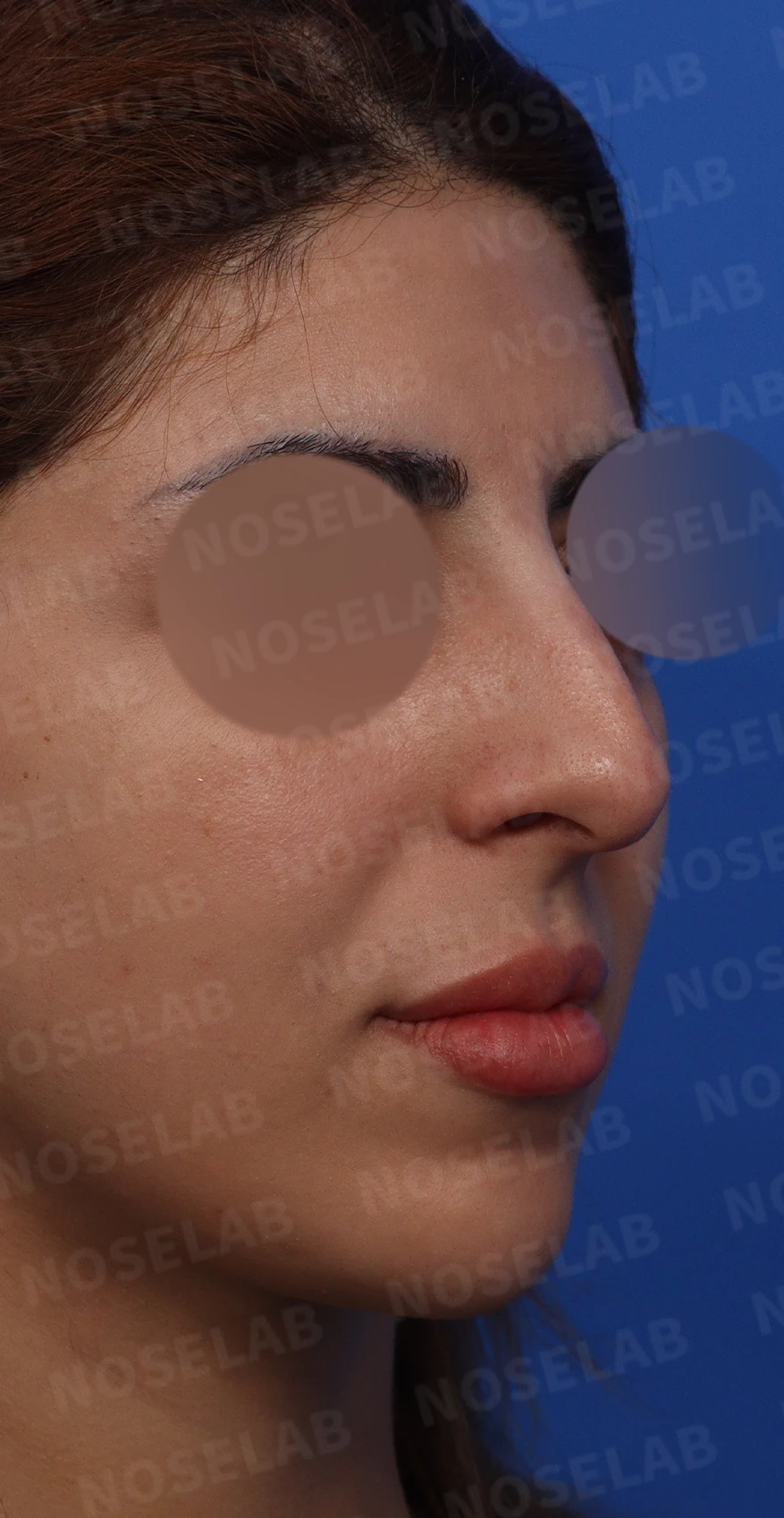
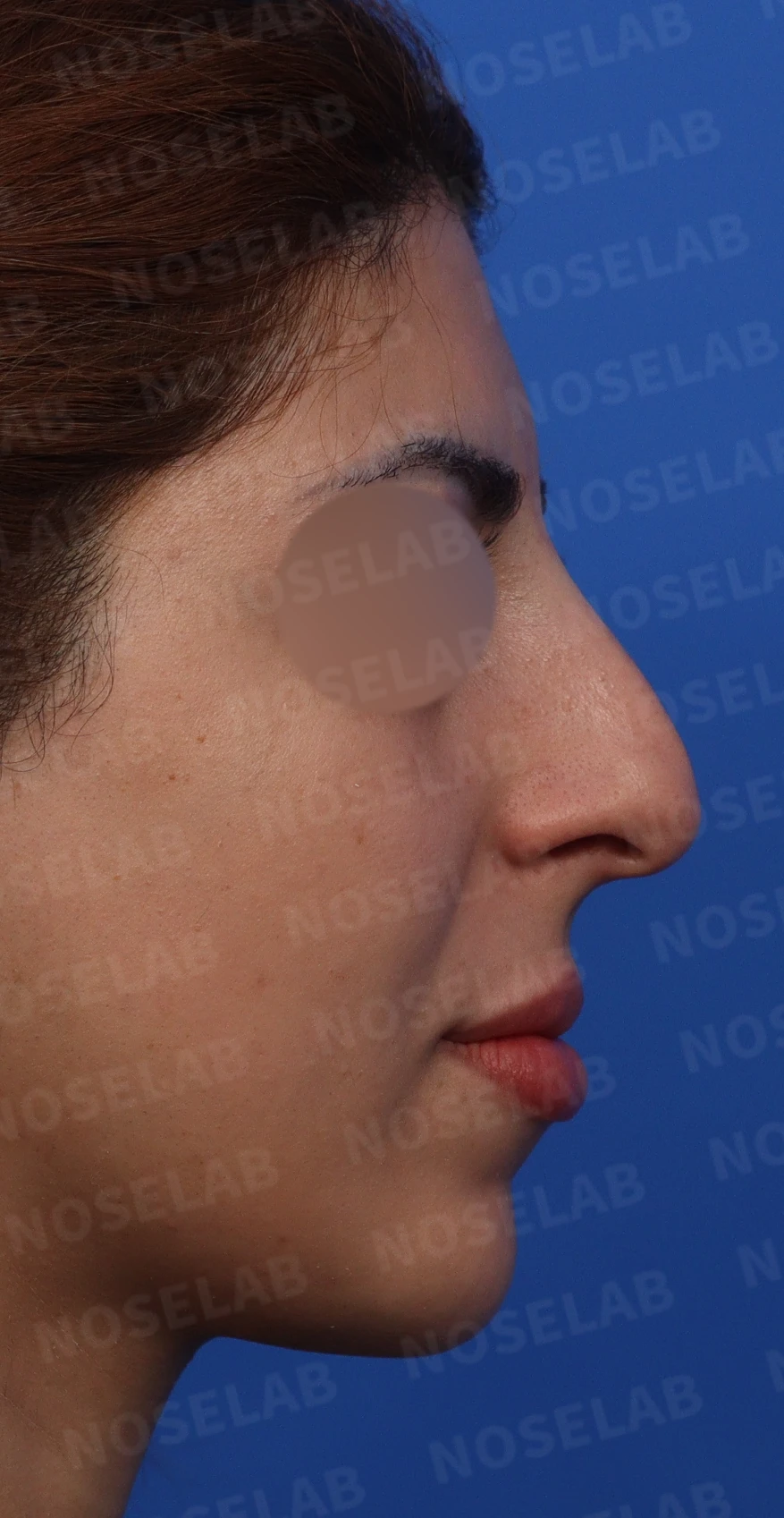
From the front, the nasal tip droops, and the bridge appears crooked and very long. In profile, the dorsal hump is prominent and the radix starts quite high, making the nose appear long.
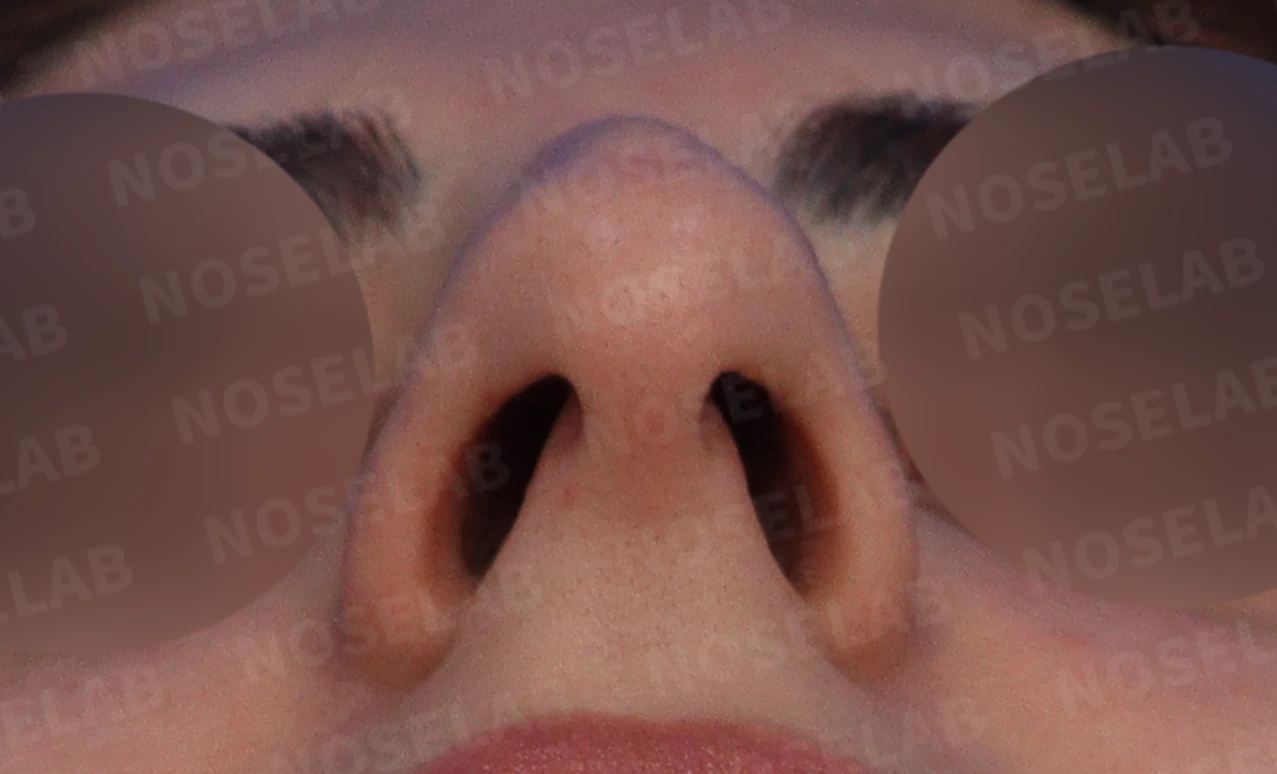
The nasal tip deviates to the left, and the septum appears tilted to the left.
Surgical plan
1. Correction of the crooked nose is planned using lateral osteotomy.
2. Correction of the dorsal hump is planned by removing the hump with an osteotome. Because the nasal bones are already prominent and large, we plan to avoid using an implant as much as possible.
3. For the nasal tip, which deviates to the left and appears drooping, we plan to reposition and secure the tip higher using cartilage suturing and cartilage repositioning.
4. The left nostril is larger than the right, presenting asymmetry, so we plan to correct it by aligning the shapes as closely as possible.
Before surgery vs. immediately after surgery
Let us compare the preoperative photos with the photos immediately after surgery (Day 0).Immediate postoperative photos show swelling and may differ from the final result.
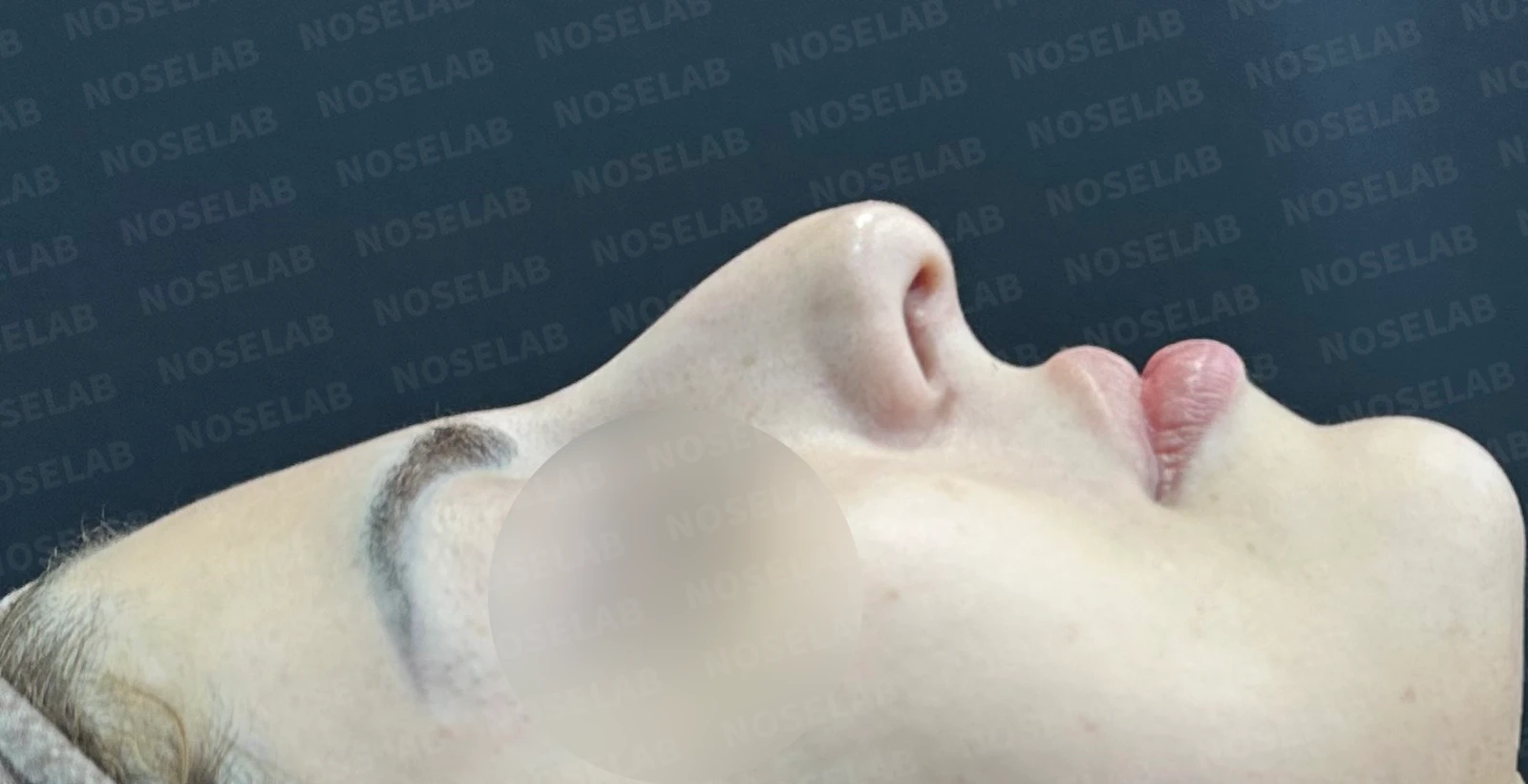
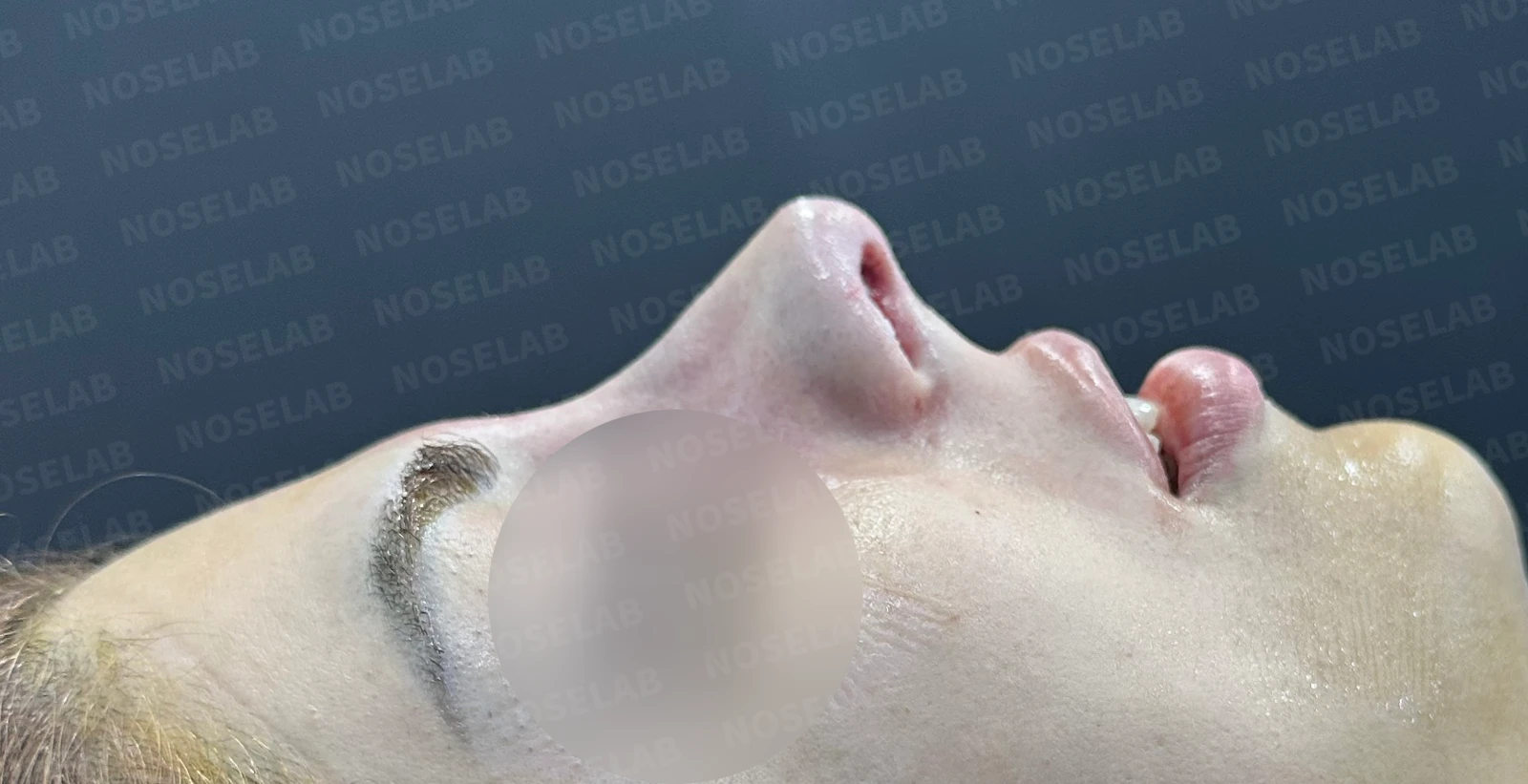
Before surgery / Day 0 immediately after surgery Photos taken immediately after surgery show swelling and may differ from the final result.
Looking at the profile photo, the drooping nasal tip shows noticeable improvement, and the dorsal hump has been smoothed down.
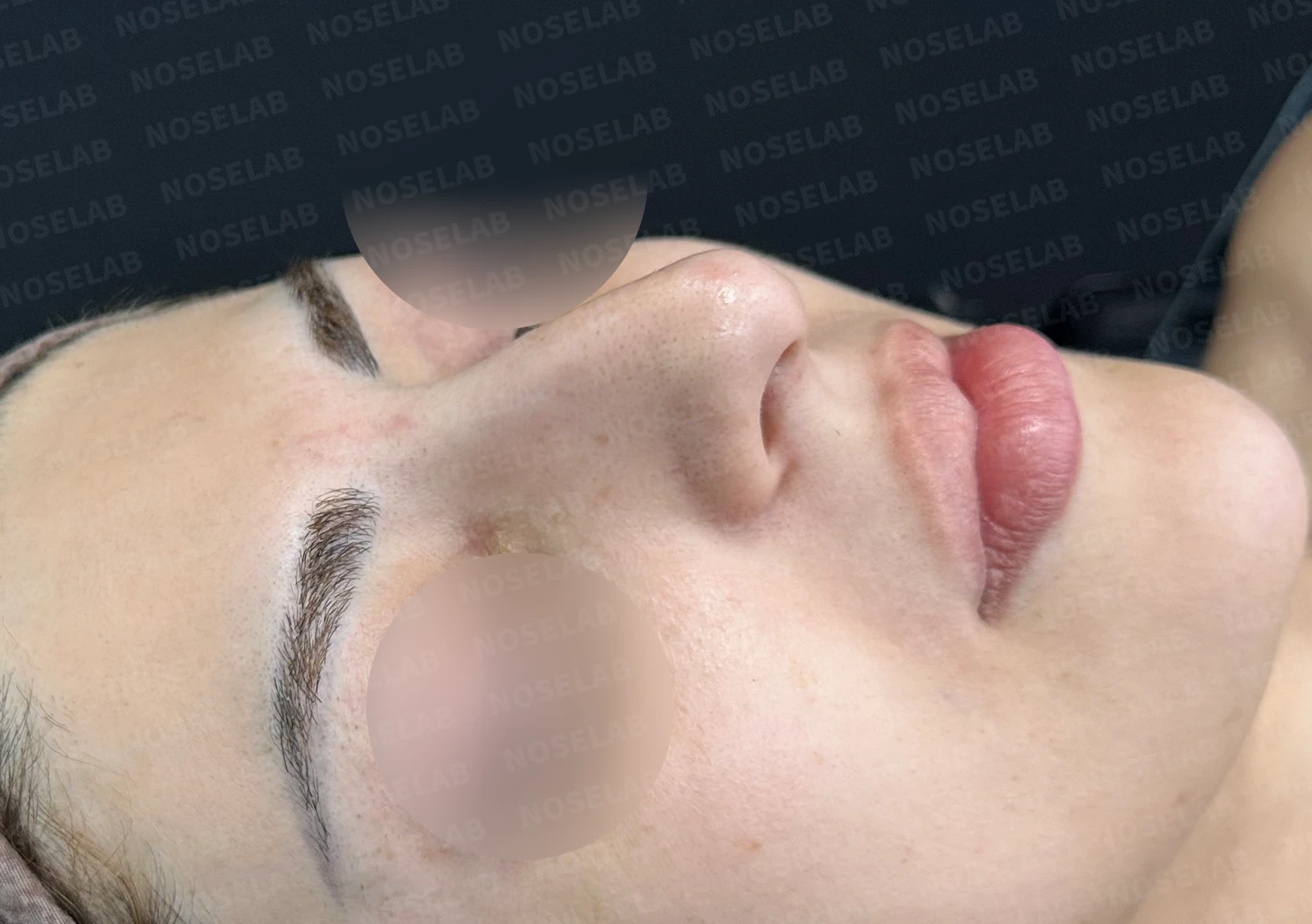
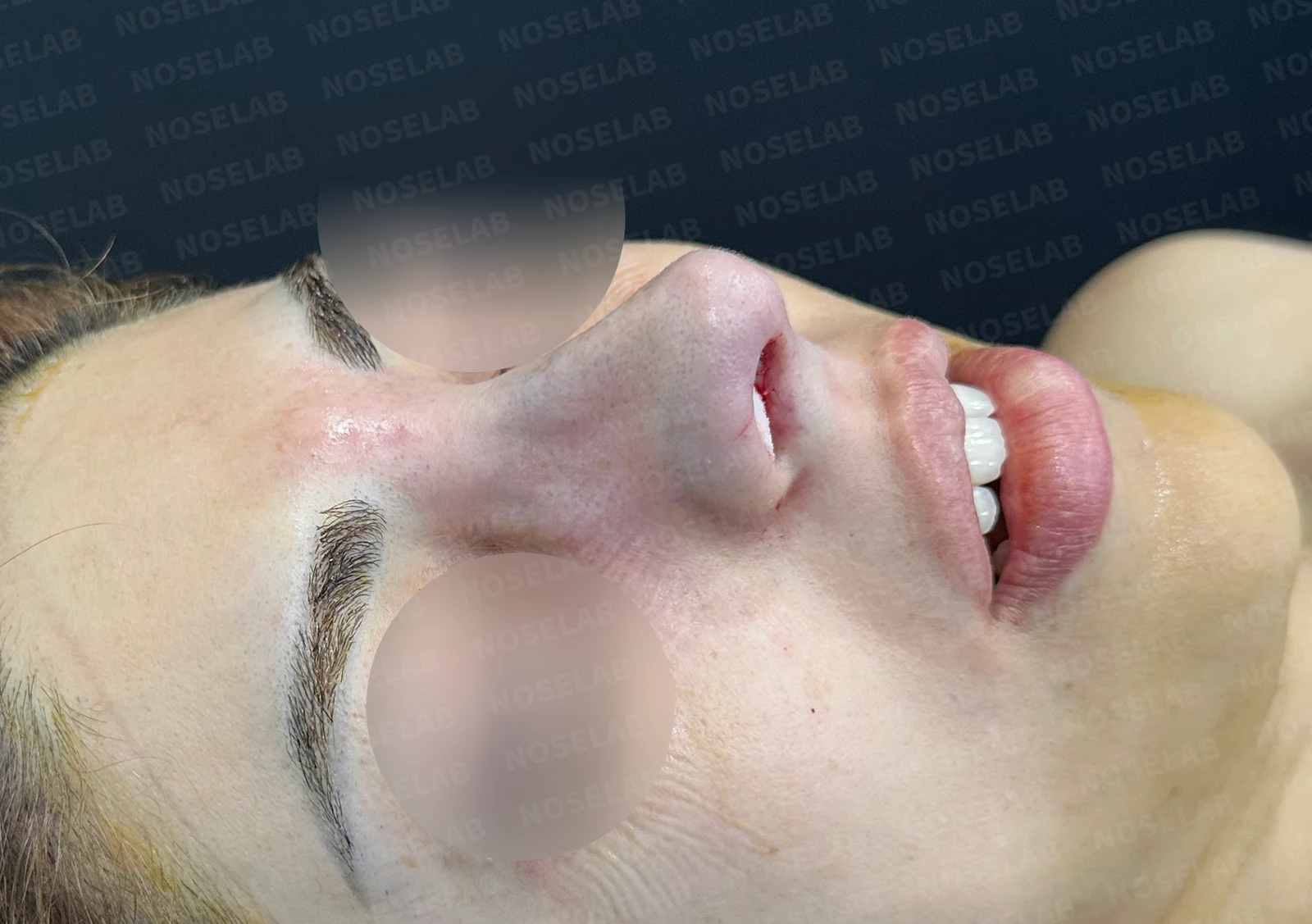
Before surgery / Day 0 immediately after surgery Photos taken immediately after surgery show swelling and may differ from the final result.
The appearance of a long nose with a drooping tip has improved significantly.
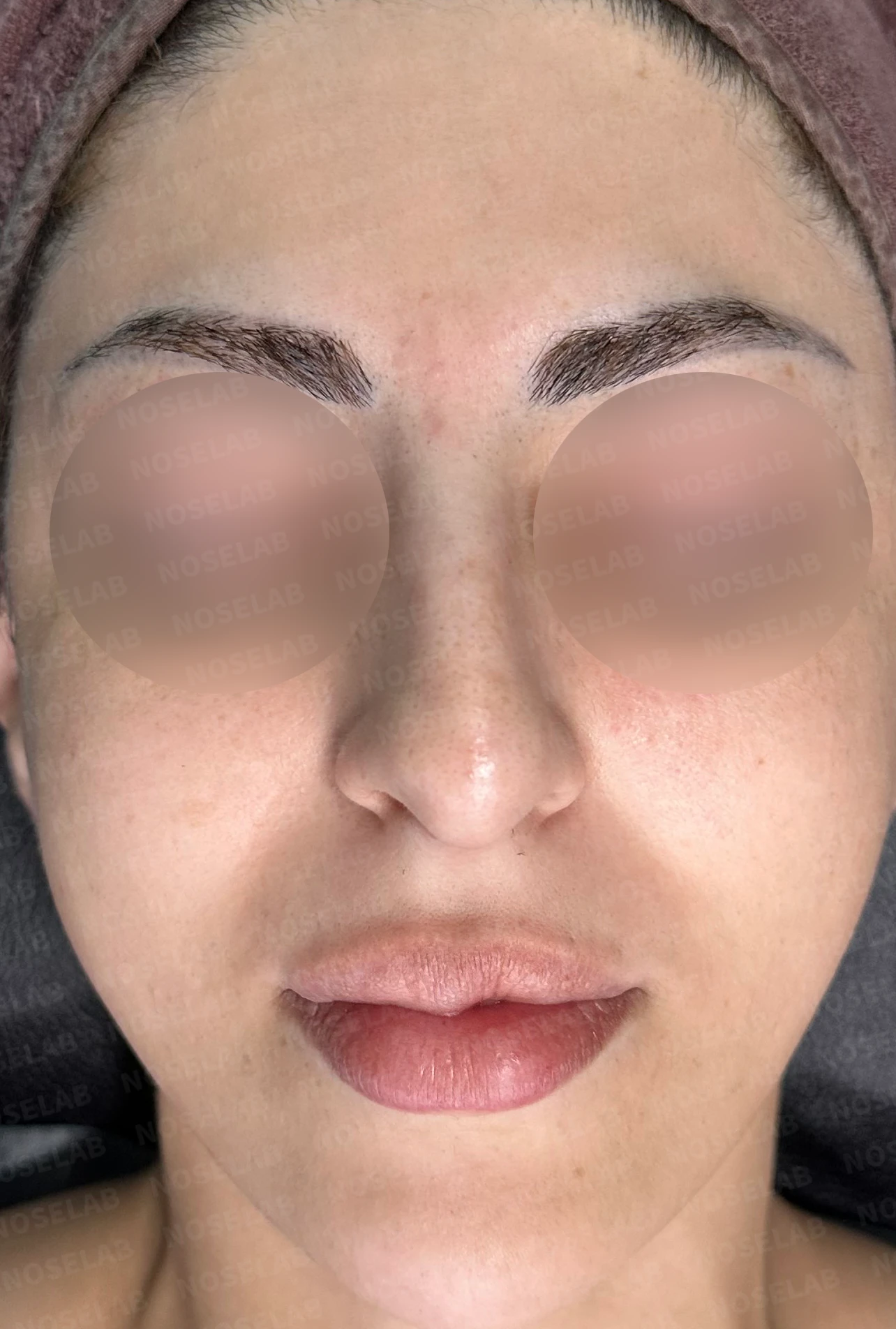
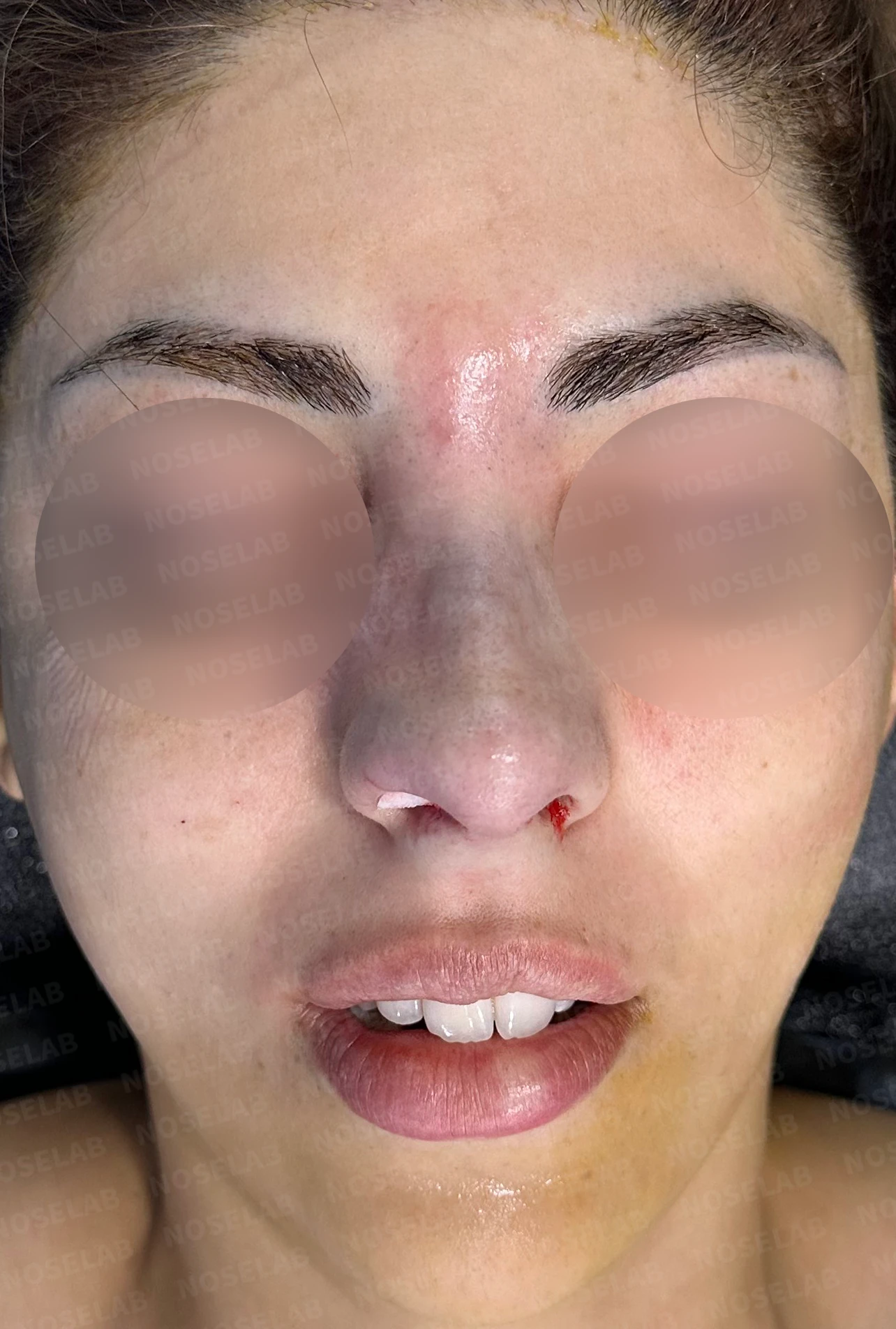
Before surgery / Day 0 immediately after surgery Photos taken immediately after surgery show swelling and may differ from the final result.
From the front, the drooping columella has been retracted, and the blunt, widened, and crooked appearance of the nasal tip has also improved considerably.
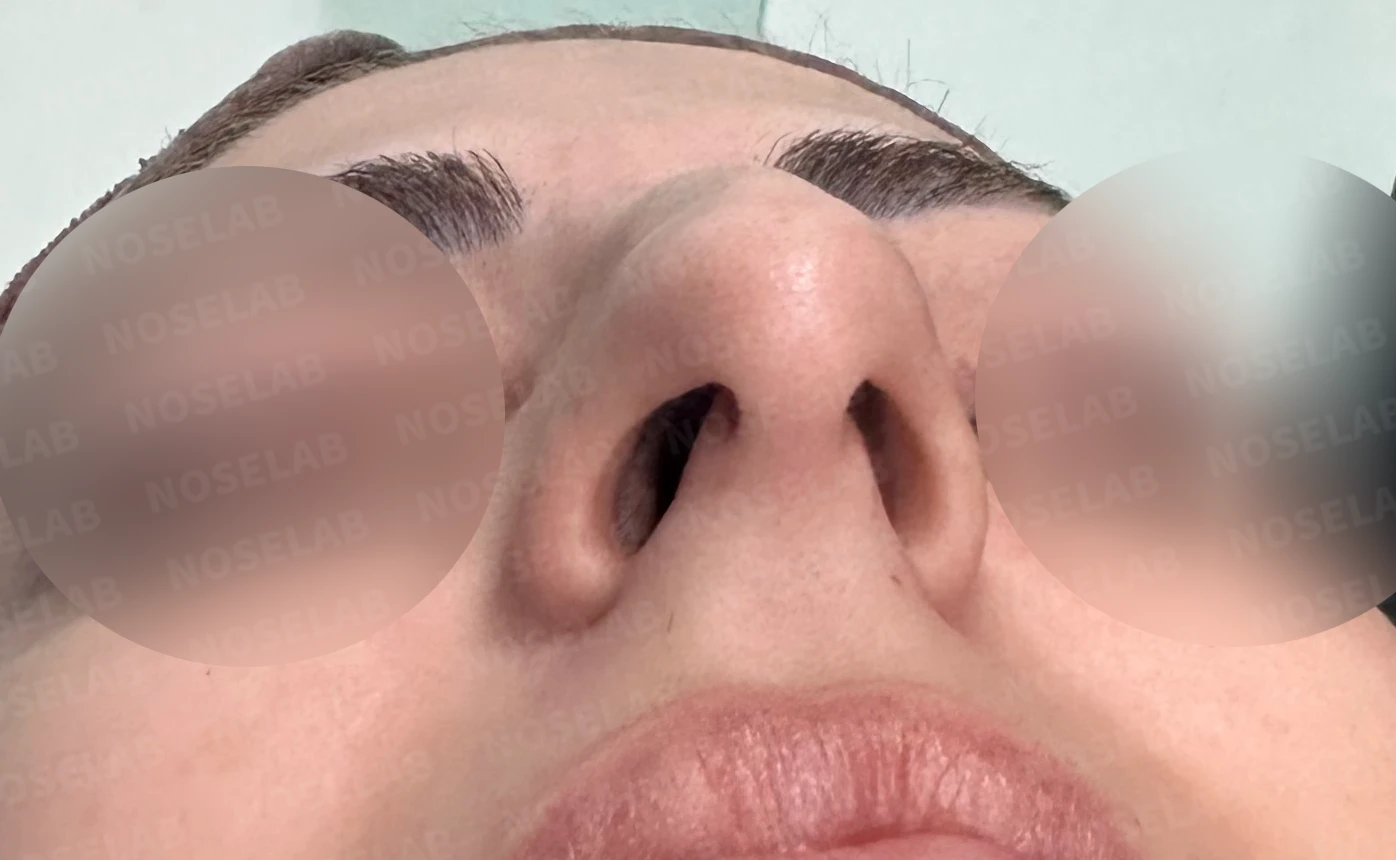
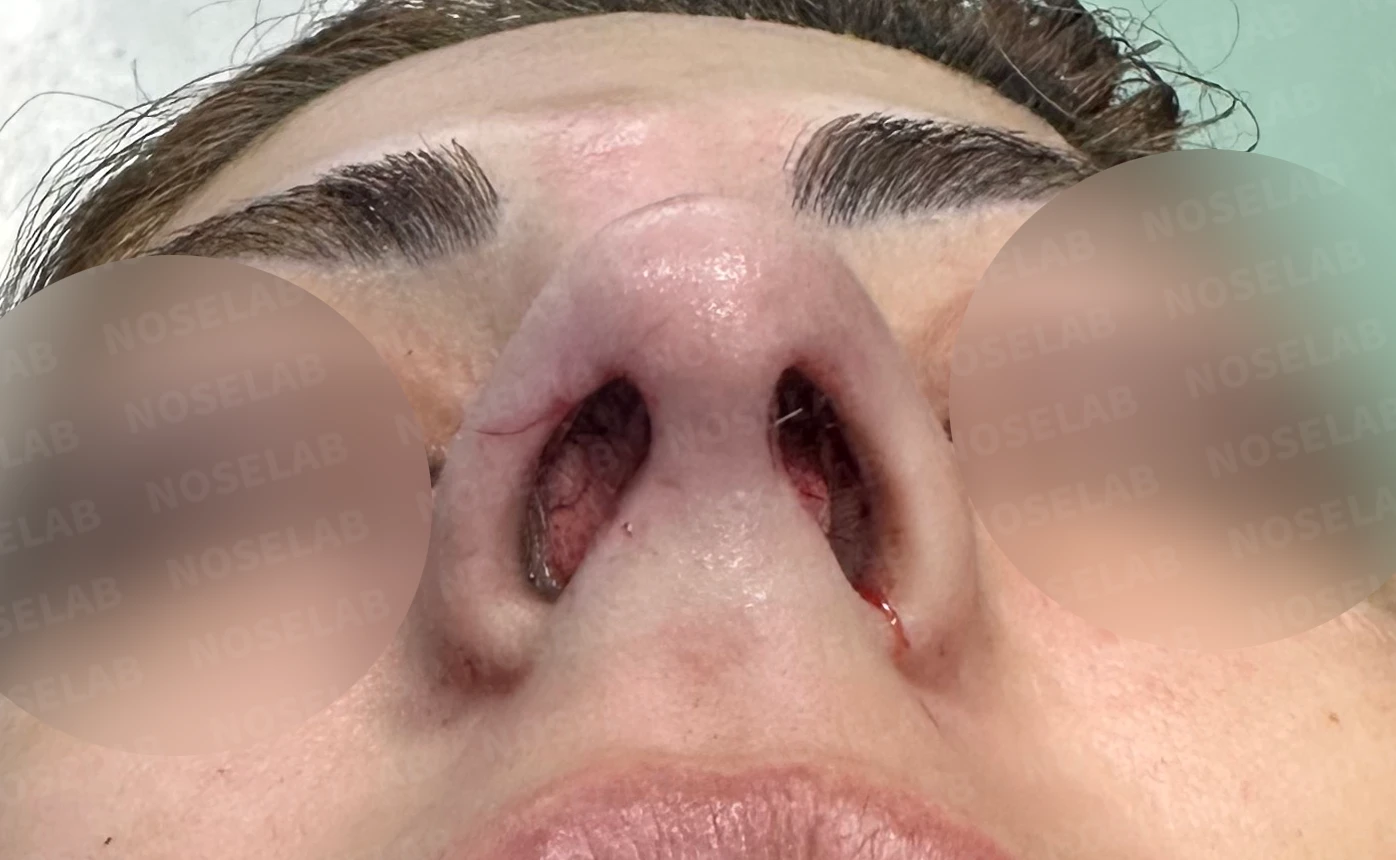
Before surgery / Day 0 immediately after surgery Photos taken immediately after surgery show swelling and may differ from the final result.
The tendency of the nasal tip to lean toward the left has been substantially relieved, and the nostril asymmetry has also improved noticeably.
Photos immediately after surgery
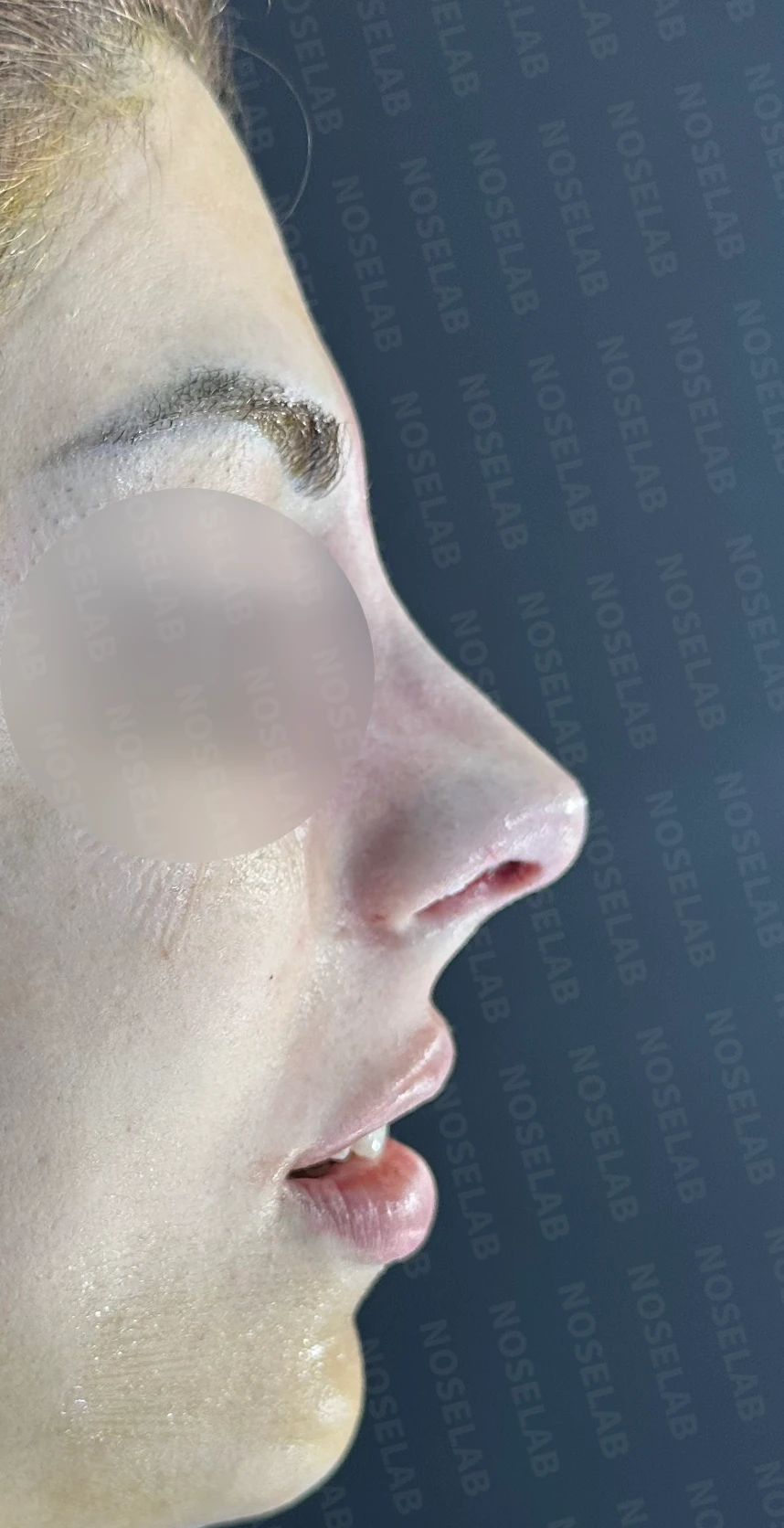
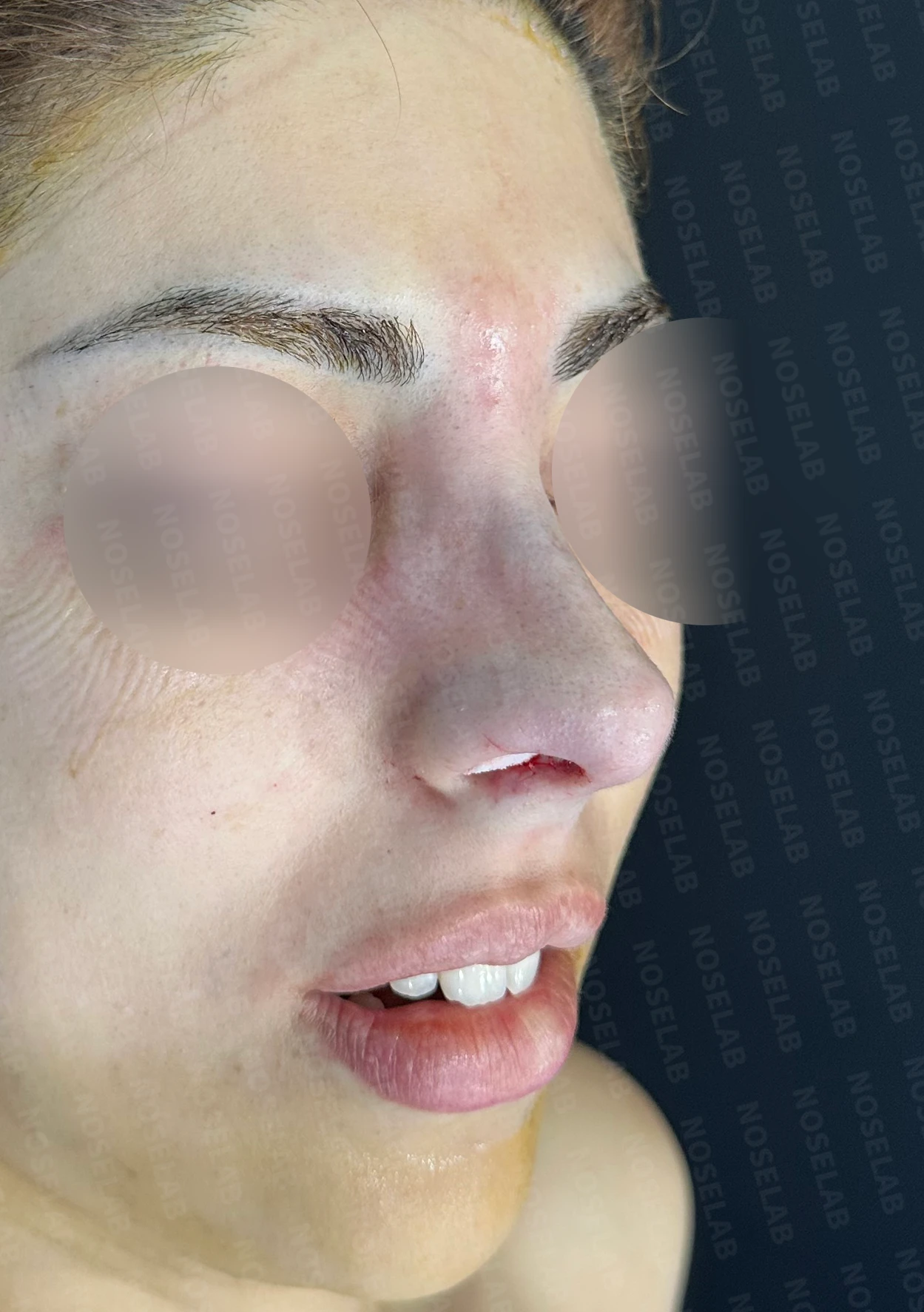
Immediately after surgery (day 0): 90-degree profile, 45-degree oblique, and front views. Photos taken immediately after surgery show swelling and may differ from the final result.
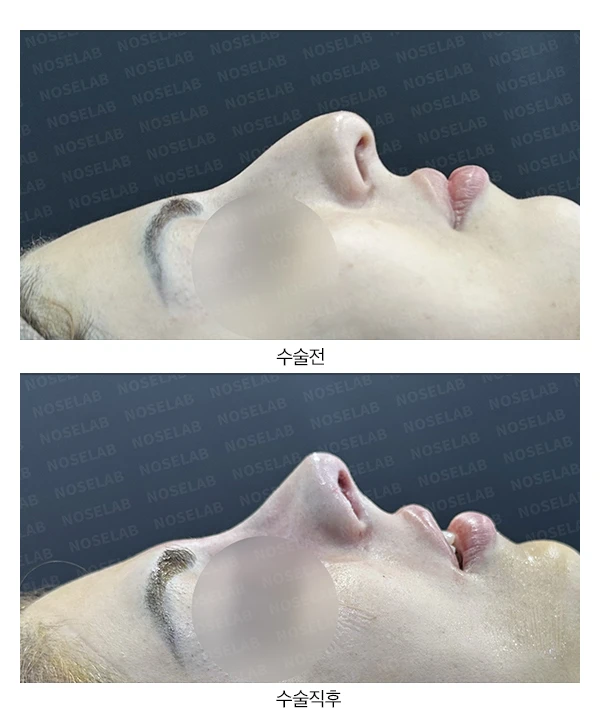
Basal (nostril) view immediately after surgery (Day 0).Immediate postoperative photos show swelling and may differ from the final result.
Conclusion
Surgery to reduce a large nose requires a very careful design because it must account for the nose's proportion relative to the entire face. If one focuses solely on refining the nose itself, it may end up looking overly conspicuous on the face. This is often observed in rhinoplasty for Western patients: the radix between the eyebrows is very high, the nasal bones are quite large, a dorsal hump is present, the nose is crooked, and the nasal tip is projected yet drooping. Today's patient presented with precisely this type of anatomy.
The most difficult consideration was whether to use an implant. While an implant can help straighten a crooked nose, it becomes unnecessary when considering facial balance and the need to correct an already long and large appearance. The proportion of the nose relative to the entire face is critical. Therefore, for this case, the surgery was completed without using any implant.
Although using an implant was initially considered during surgical planning, the plan was revised after reshaping the nasal bones, and we proceeded without an implant. While there were minor limitations regarding the deviation, we concluded that prioritizing facial harmony was a far more balanced choice, especially considering the patient's baseline facial asymmetry.
Today, I discussed surgery for a case involving a large nose, dorsal hump, crooked nose, and drooping tip all at once. I hope this provides helpful insight for those with a similar nasal shape who are considering rhinoplasty.
This was Dr. Peter C. Kang. Thank you.

Limitations and risks
When the septum is corrected at the same time, nasal obstruction may persist or recur, and in rare cases, septal perforation or changes in smell may occur.
Common potential risks include infection, bleeding, asymmetry, scarring, skin necrosis, and insufficient improvement; results vary depending on individual skin condition and previous surgical history.