Hello.
I am Dr. Peter C. Kang, medical director.
Today, I would like to share the story of a patient whose nasal tip cartilage was severely damaged by contracture.
Because we specialize primarily in revision rhinoplasty at NOSELAB, many patients visit us with severe deformities caused by contracture. The patient I am discussing today also had severe deformities in the nostrils and columellar area.
Having performed many surgeries for contracture, I often find that cases with severe septal cartilage damage tend to develop more severe contracture deformities. In this case as well, the tip cartilages were damaged to the point of being unrecognizable, and almost no septal cartilage remained. It appears that inflammation arose under those conditions, and as contracture progressed, the columella retracted and the nostrils narrowed.
Surgical findings
The intraoperative findings were worse than anticipated before surgery. Because virtually no septal cartilage remained, surgery was required to reconstruct the entire septum using autologous rib cartilage. Even after reconstructing the septum, there was a severe soft tissue defect inside the columellar pocket, so cartilage was used to fill the defect while lowering the columella. Through reconstructive surgery, a strong support framework was created where almost no structural support existed to maintain the shape of the nasal tip.
Comparison: before surgery vs. immediately after surgery
Let us compare the photos taken immediately after surgery on day 0. Photos taken immediately after surgery show swelling and may differ from the final result.
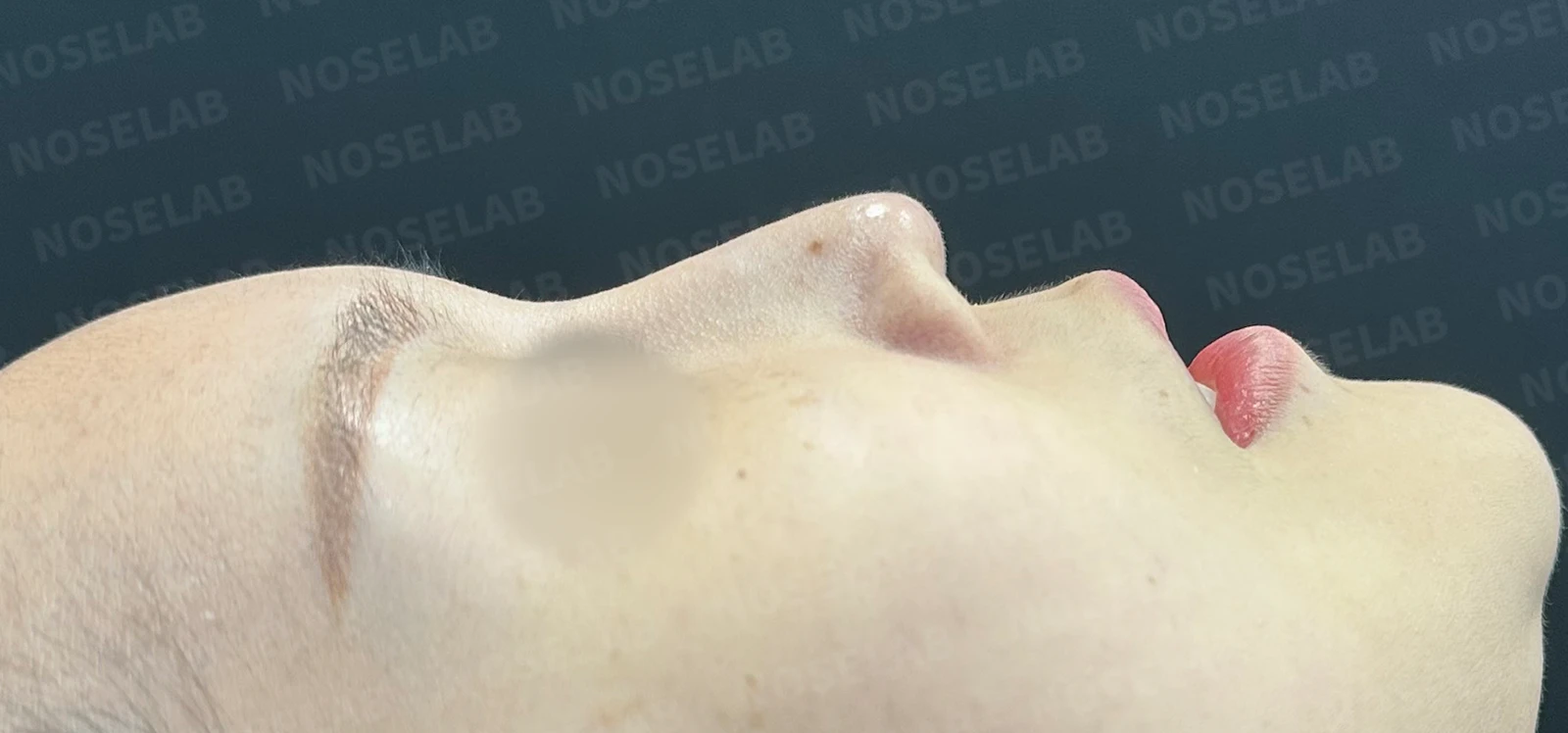
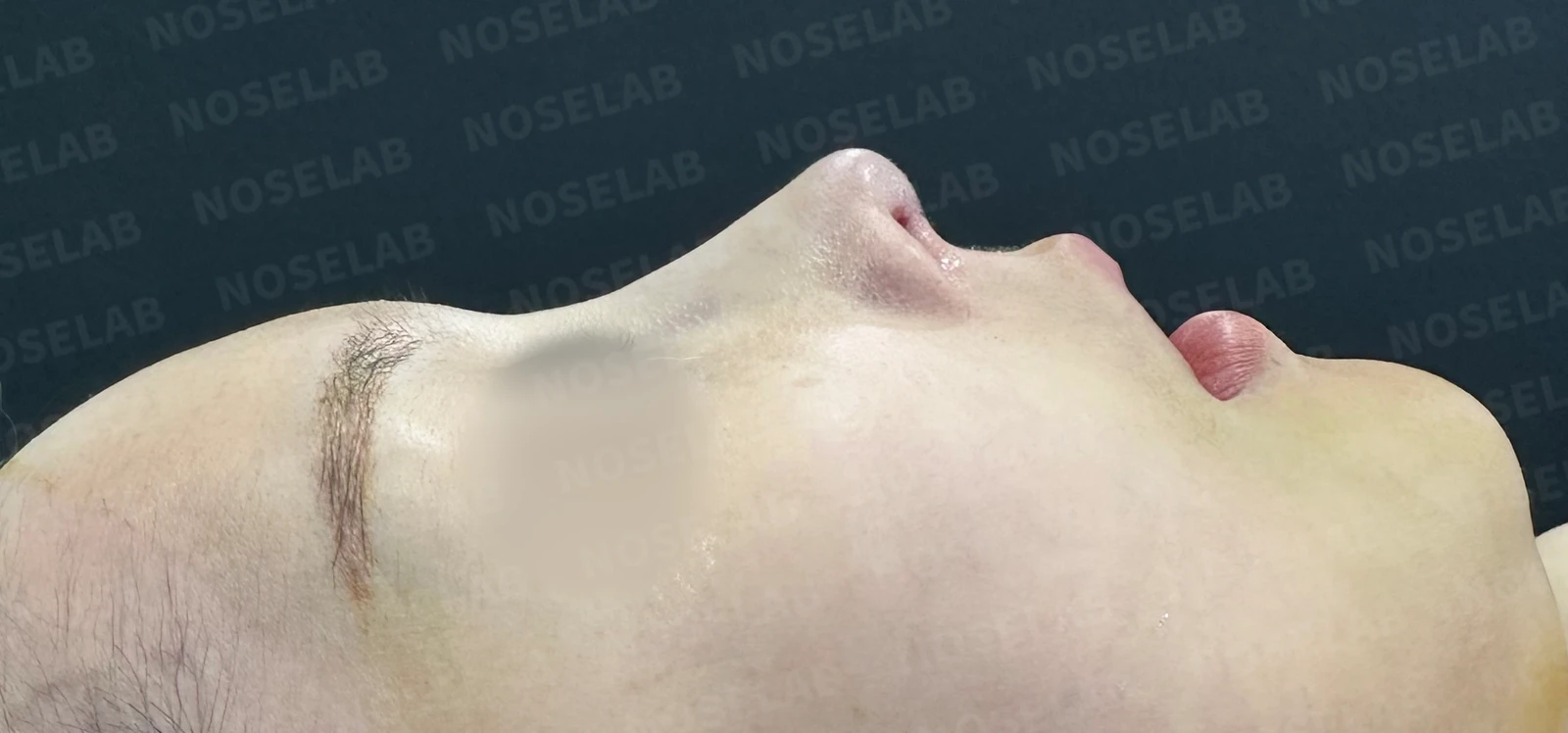
On the profile view, the columella, which should normally extend slightly below the alar margins, was not visible at all; immediately after surgery, you can see that it has been lowered considerably and the nasolabial angle has become natural. The appearance of a drooping tip has also been well corrected.
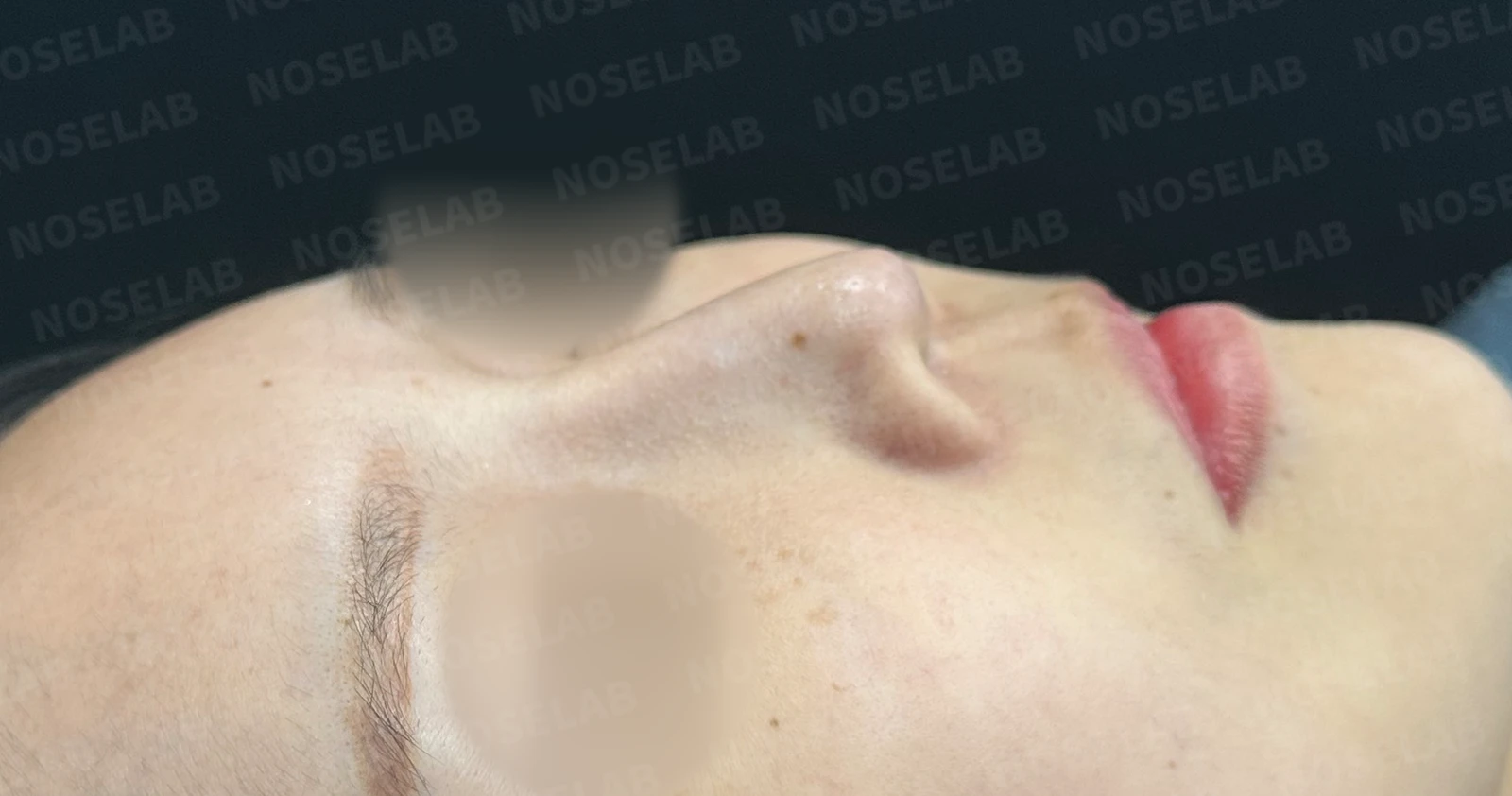
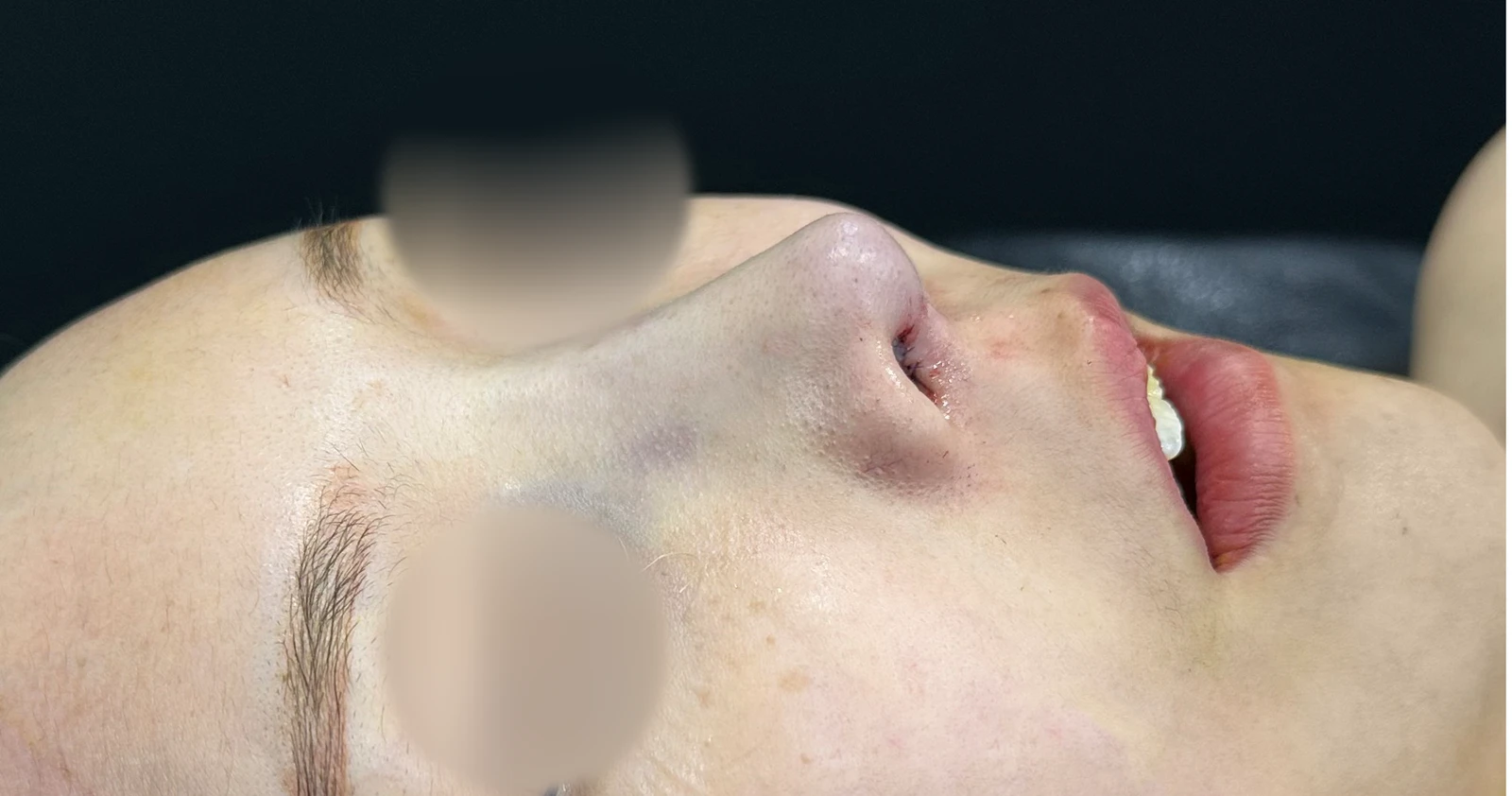
As the nasal tip was elevated, the overall three-dimensional contour was restored.
Before surgery / Day 0 immediately after surgery Photos taken immediately after surgery show swelling and may differ from the final result.
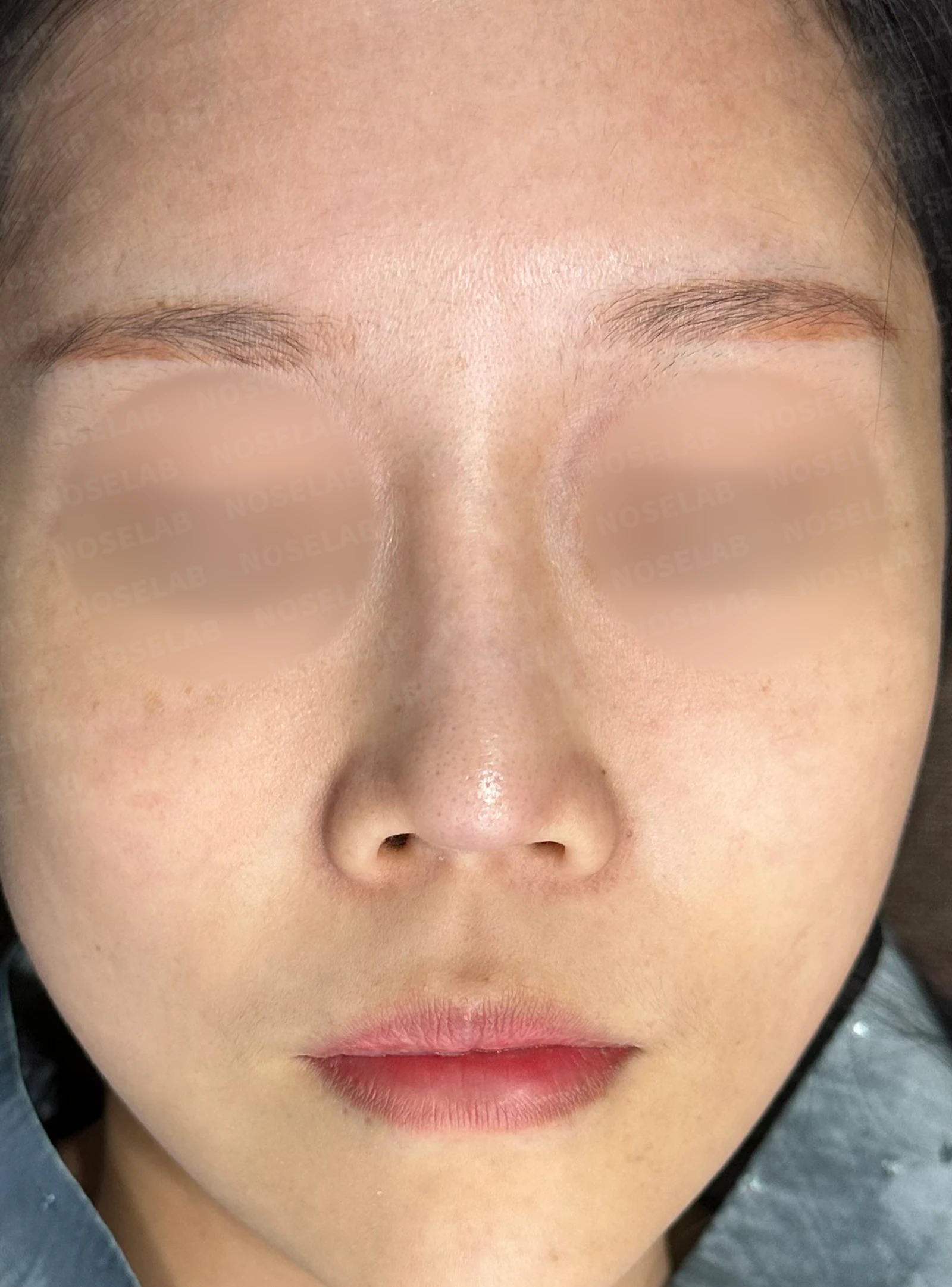
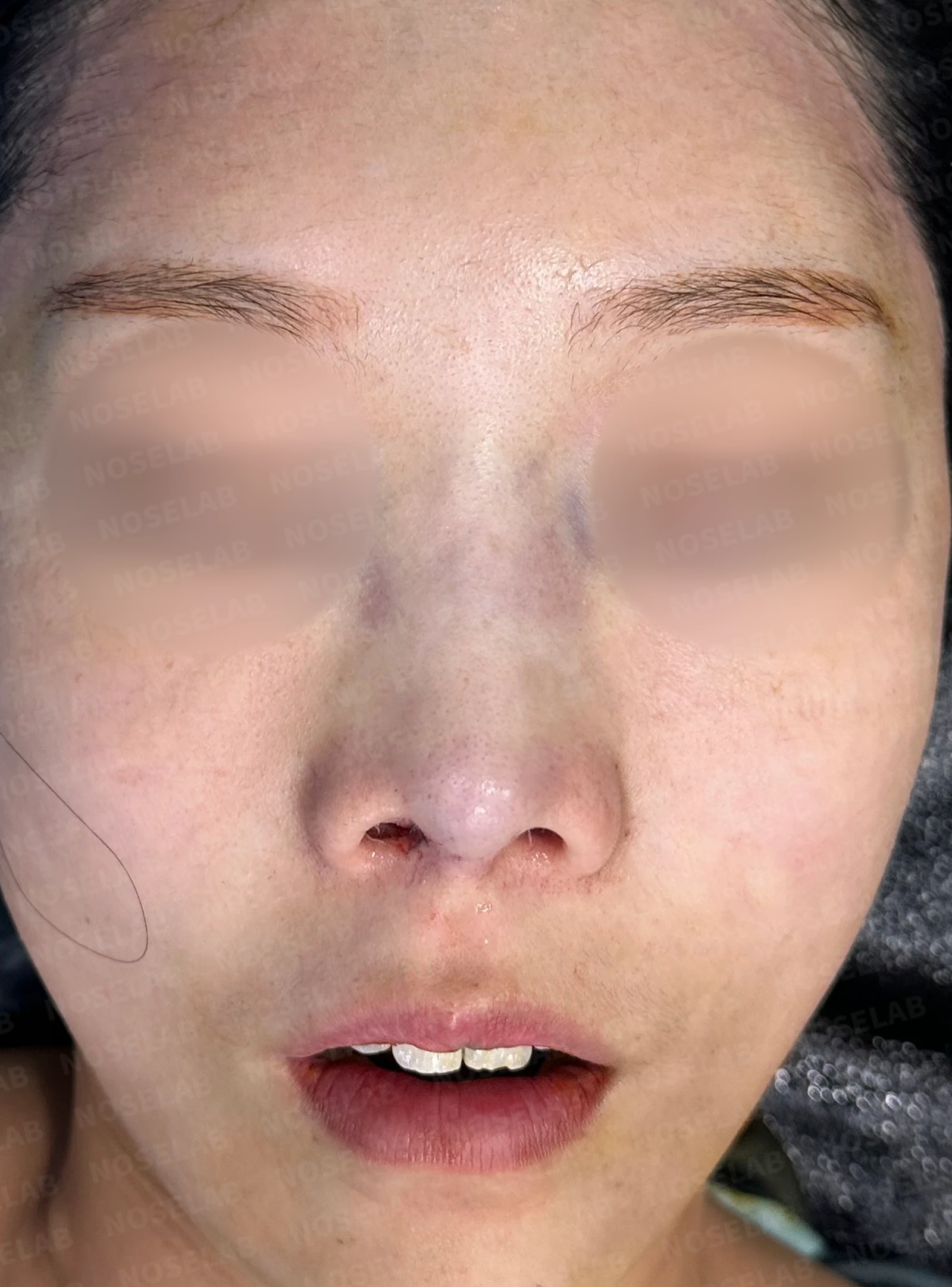
On the front view, the blunt tip and retracted columella were improved, presenting a much more natural appearance.
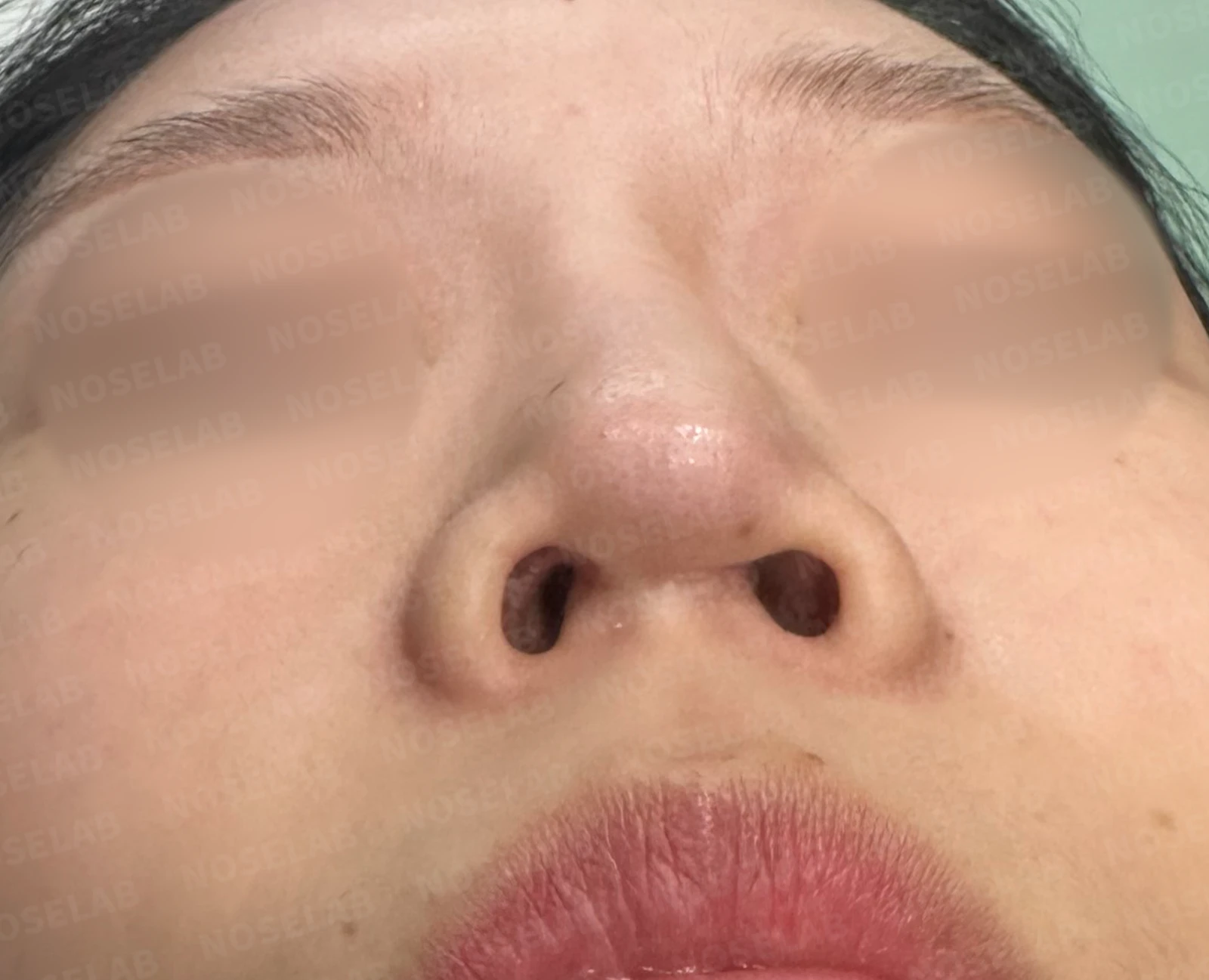
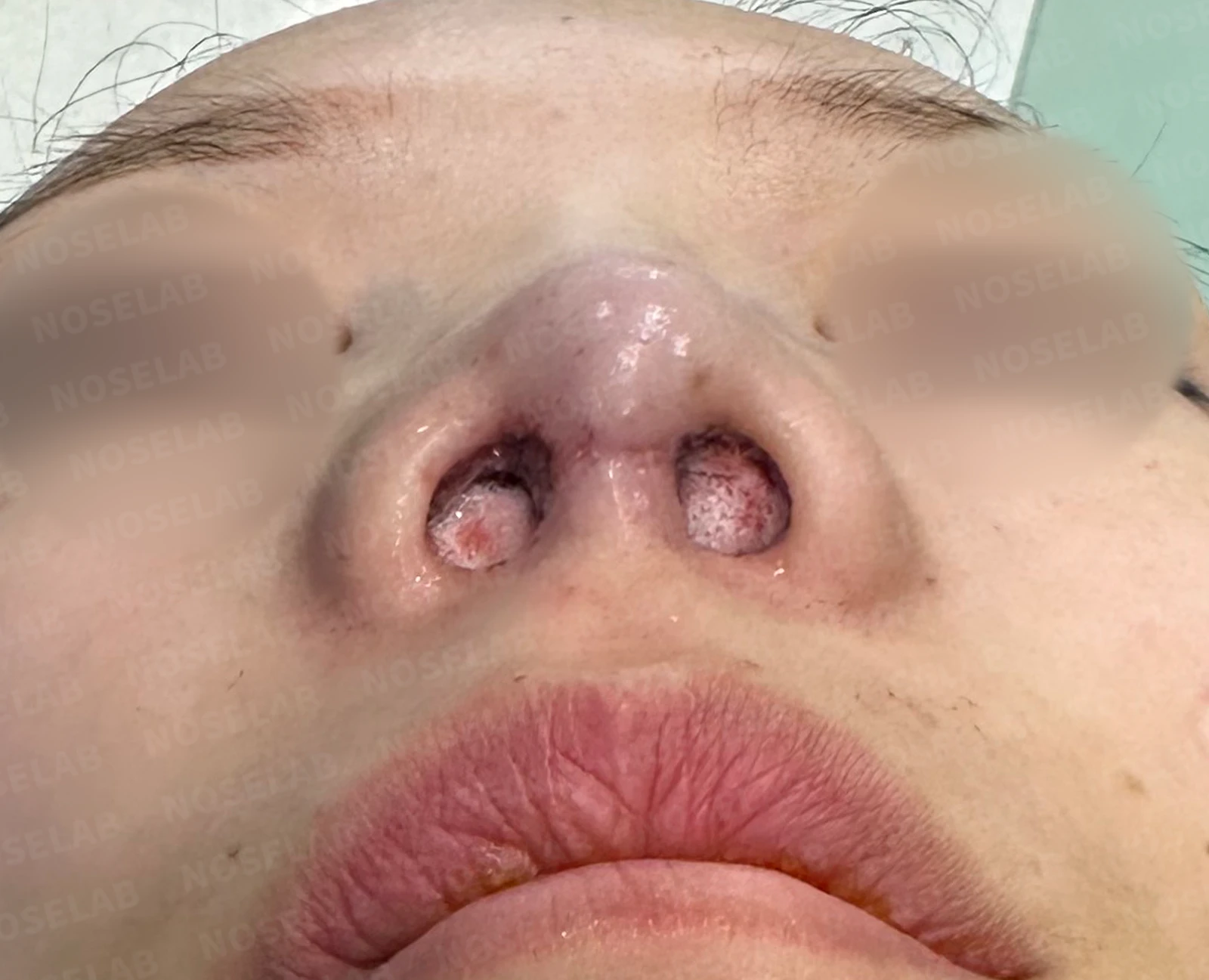
Before surgery / Day 0 immediately after surgery Photos taken immediately after surgery show swelling and may differ from the final result.
Looking at the nostril view, you can see that the nostrils, which had become significantly narrowed as the columella rolled inward and abnormally widened, improved markedly immediately after surgery.
Photos immediately after surgery
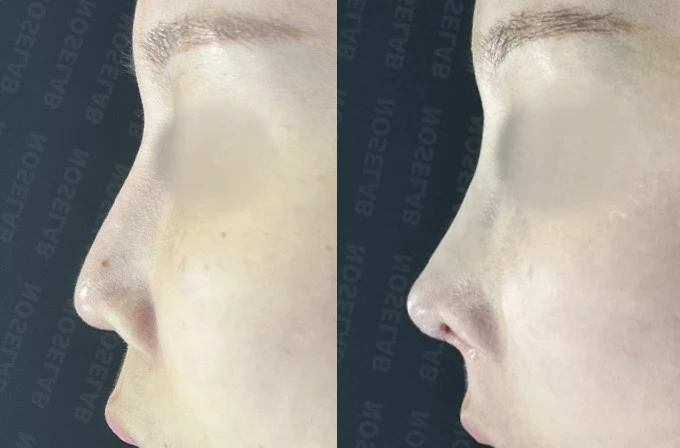
90-degree profile view
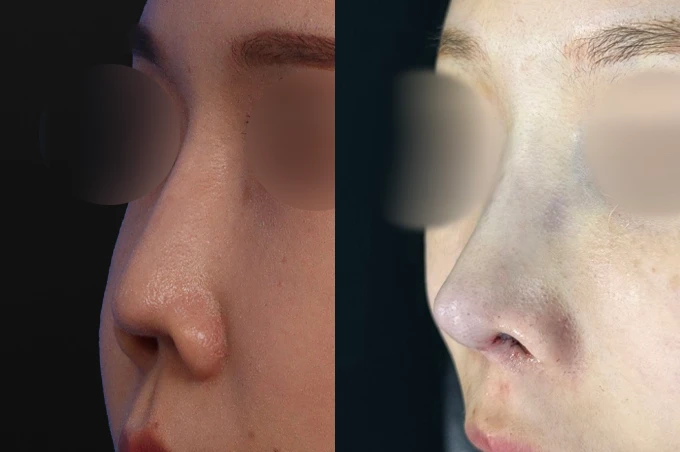
45-degree oblique view
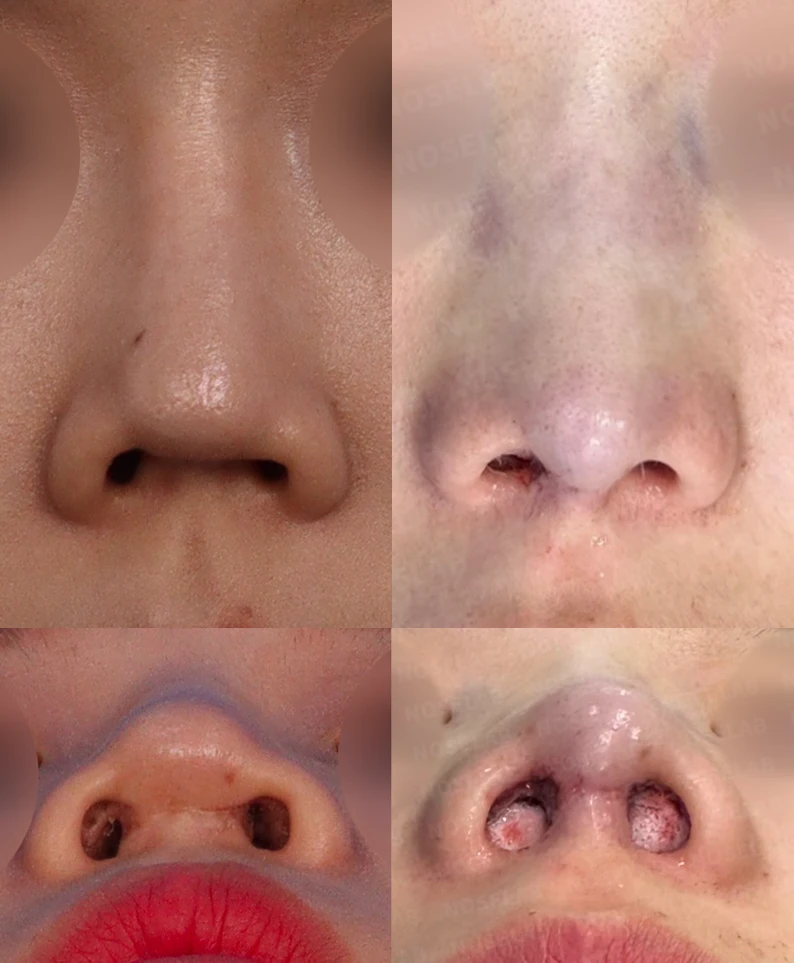
Front and nostril views
My thoughts on columellar deformities caused by contracture
Inflammation and contracture are the complications that both rhinoplasty patients and surgeons performing rhinoplasty, such as myself, worry about most and want to avoid. In particular, deformities caused by inflammation are even more devastating when they affect the columella, which is only about 1 cm in length. Because most clinics perform surgery using an open approach, scar tissue has inevitably formed on the columella and blood circulation is compromised; when contracture deformity from inflammation occurs in this state, the shape deformity is prominent and reconstruction is difficult.
Operating aggressively on a columella whose dermal layer has been damaged by contracture can lead to irreversible complications such as columellar necrosis, making this a very challenging surgery. At NOSELAB, we perform Inner Open surgery (our proprietary closed rhinoplasty technique) to approach these situations with safety in mind, which helps us achieve better results.
Preventing inflammation from occurring in the first place is most important, but when inflammation does occur, minimizing deformity through appropriate treatment and cleanly restoring the deformed structures via Inner Open surgery is the very reason our clinic exists.
Today, I discussed a rather serious complication. I hope this provides helpful information to those struggling with a damaged columella due to inflammation and contracture.
This was Dr. Peter C. Kang. Thank you.
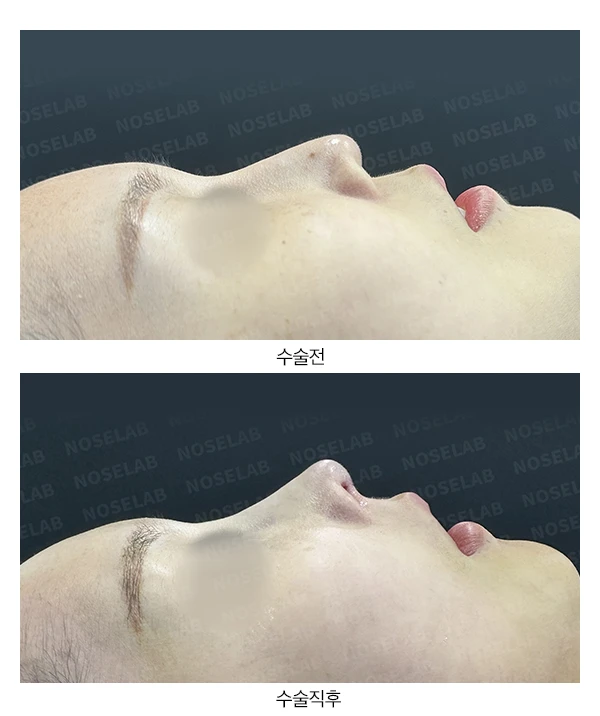

Limitations and risks
When autologous rib cartilage is used, scarring and pain may remain at the donor site on the chest, and pneumothorax (pleural injury) can occur rarely. Over time, the grafted cartilage may warp or undergo partial resorption.
When the septum is corrected at the same time, nasal obstruction may persist or recur, and in rare cases, septal perforation or changes in smell may occur.
Common potential risks include infection, bleeding, asymmetry, scarring, skin necrosis, and insufficient improvement; results vary depending on individual skin condition and previous surgical history.