Hello, I am Dr. Peter C. Kang.
Today, I would like to share the case of a patient who visited our clinic seeking help for both functional and aesthetic nasal concerns caused by a long, drooping tip, a crooked nasal bridge, and a severely collapsed septum.
🔍 Surgical history
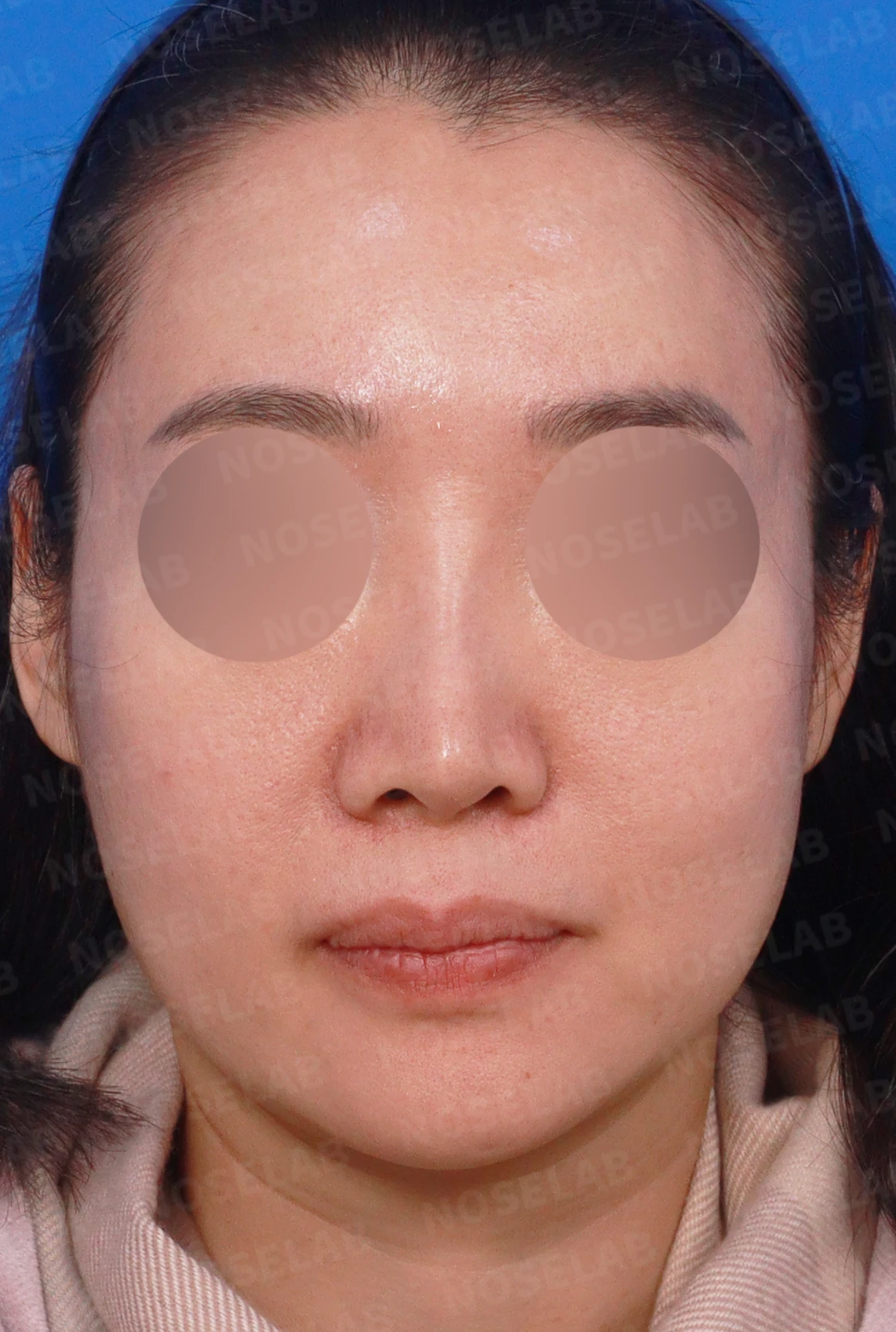
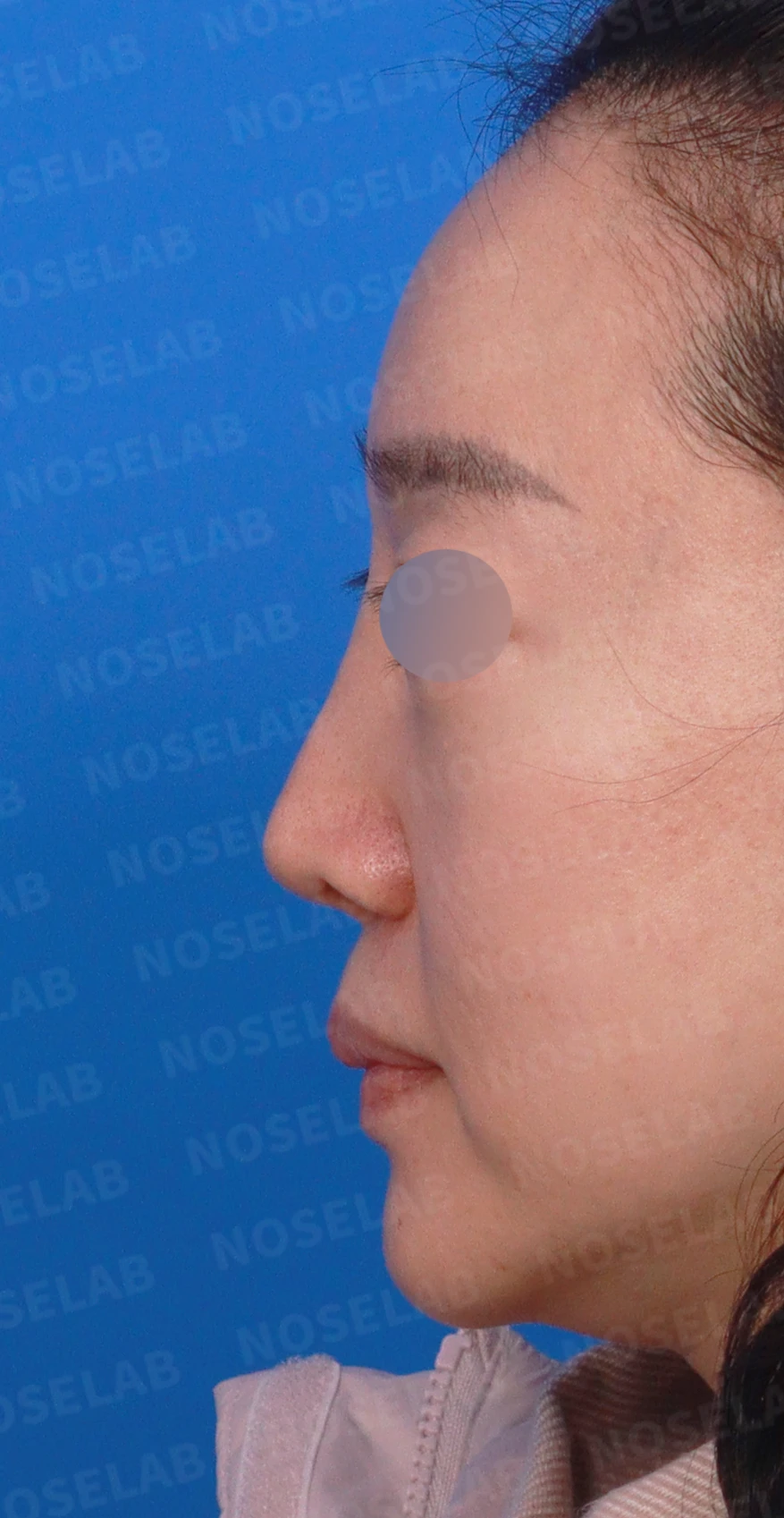
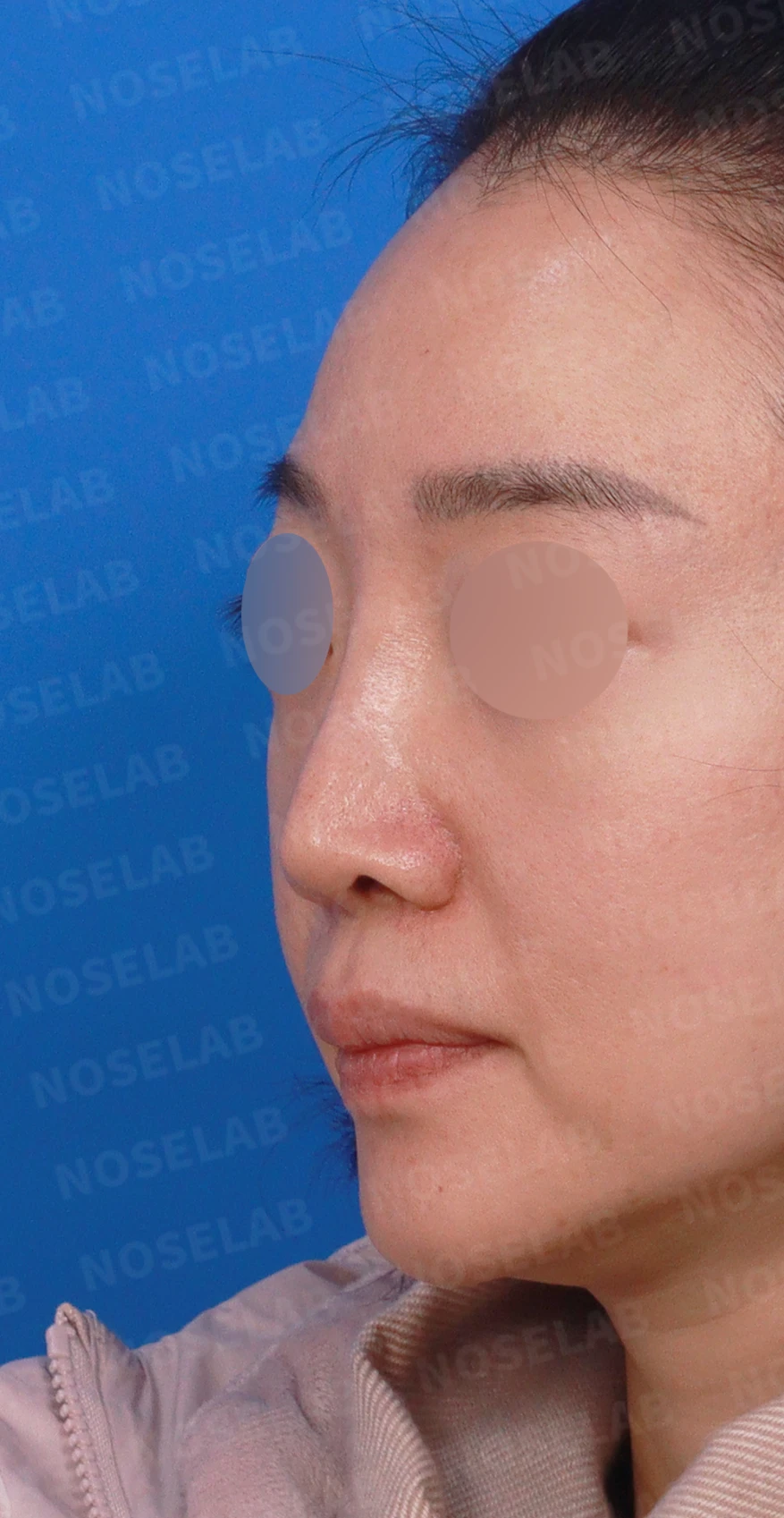
Front, left profile, and oblique views during design consultation.
21 years ago: First rhinoplasty
4 years ago: Second revision rhinoplasty
💉 Patient requests
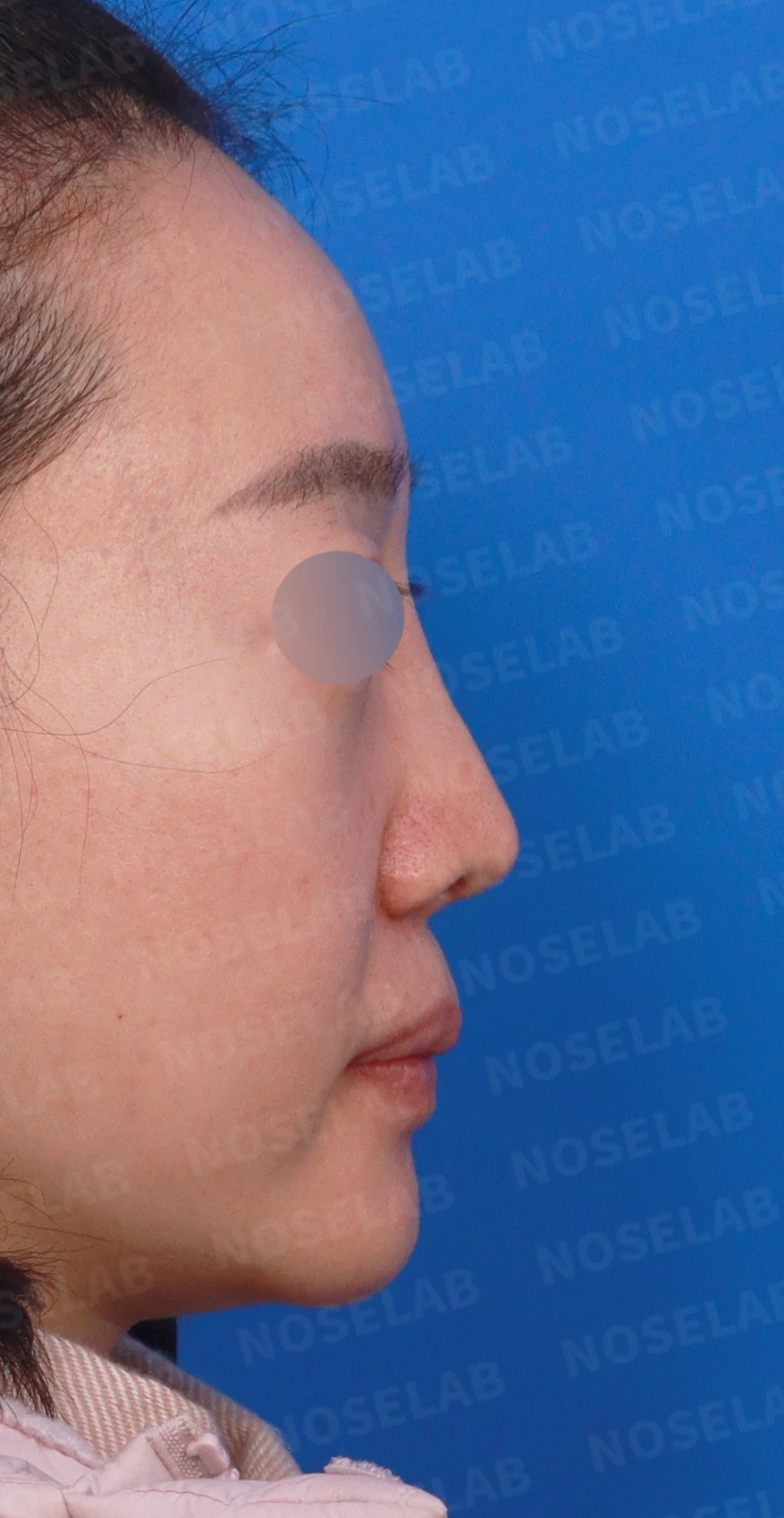
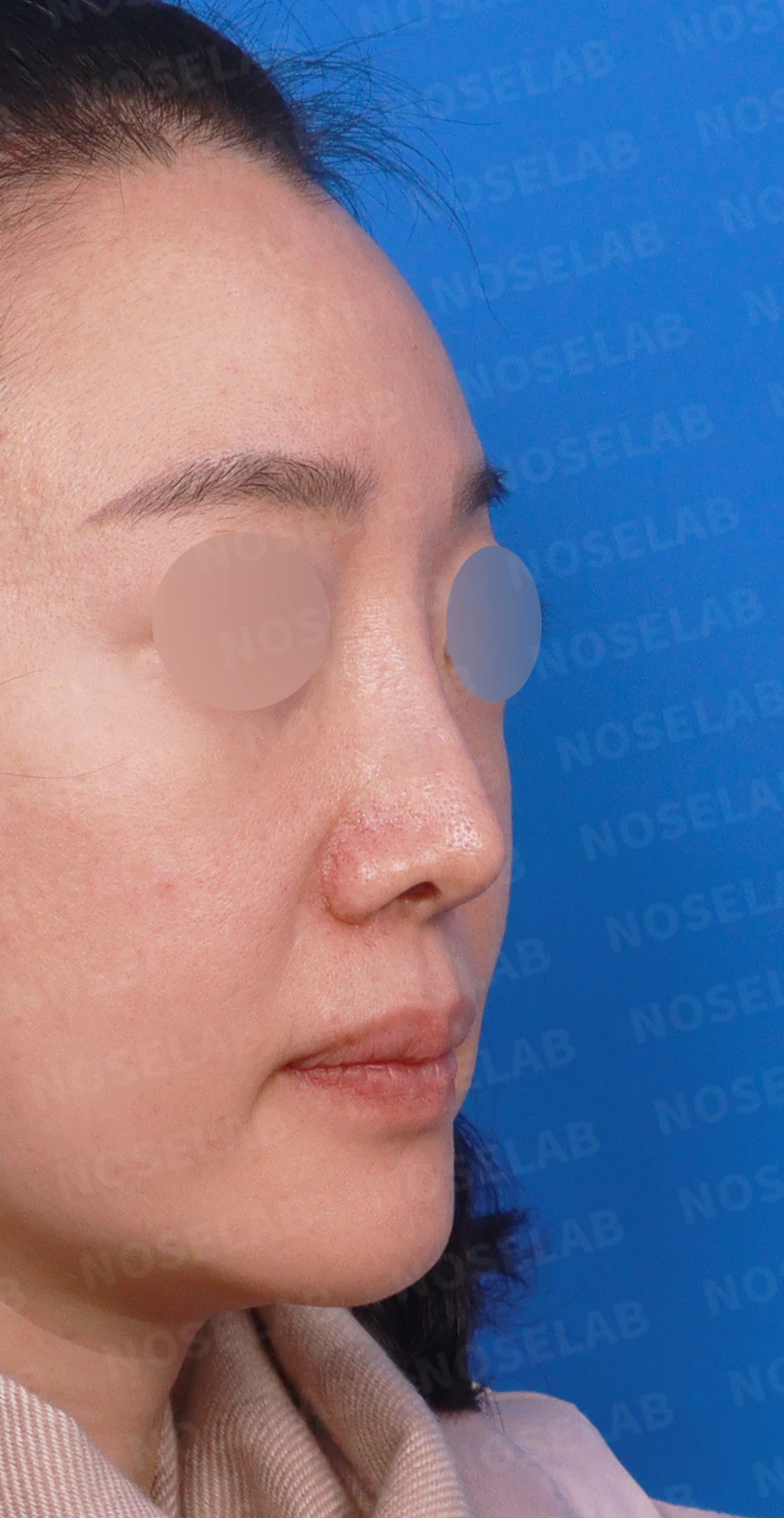
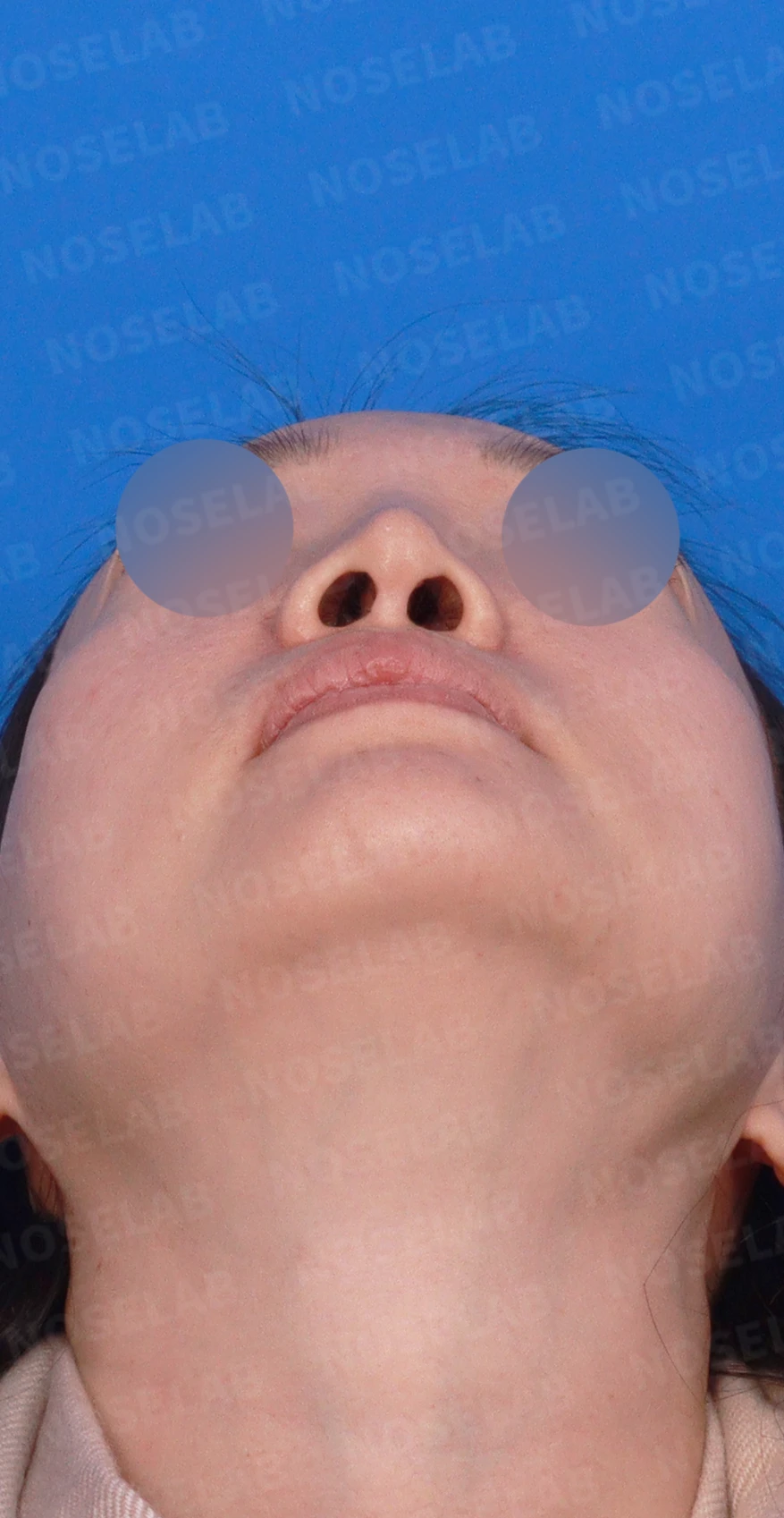
Right profile, oblique, and nostril views during design consultation.
Lowering the radix for a natural look
Improving the long-appearing nose
Correction of crooked nose
Improvement in irregular nasal bridge
A natural straight bridge line
Feminine bridge line
An overall softer image
🔧 Surgical plan and procedure
1. Septal reconstruction using autologous rib cartilage
Because the septum was completely collapsed to the right, the columella was tilted obliquely, resulting in nostril asymmetry and a drooping tip.
Straightening the septum back into position using autologous rib cartilage
Completely reconstructing the collapsed support framework
Correcting the drooping tip by reinforcing tip support
2. Right alar reconstruction
The right ala was depressed, causing significant asymmetry.
Structural reinforcement with cartilage grafting
Restoring volume to the depressed ala
Achieving bilateral symmetry
3. Mucosal defect reconstruction
A mucosal defect was identified during surgery.
Reconstruction of the mucosal defect using a perichondrium graft
Improvement of internal nasal cavity function
4. Re-carving the silicone implant
Because the existing silicone implant did not fit the shape of the nasal bone, the right nasal dorsum appeared depressed.
Removal of existing silicone implant
Precise re-carving to match the shape of the patient's nasal bone
Forming a natural dorsal line with the re-carved silicone implant
5. Nasolabial angle correction
Improvement of the nasolabial angle alongside the drooping tip
Improvement of the profile silhouette
🌟 Surgical results
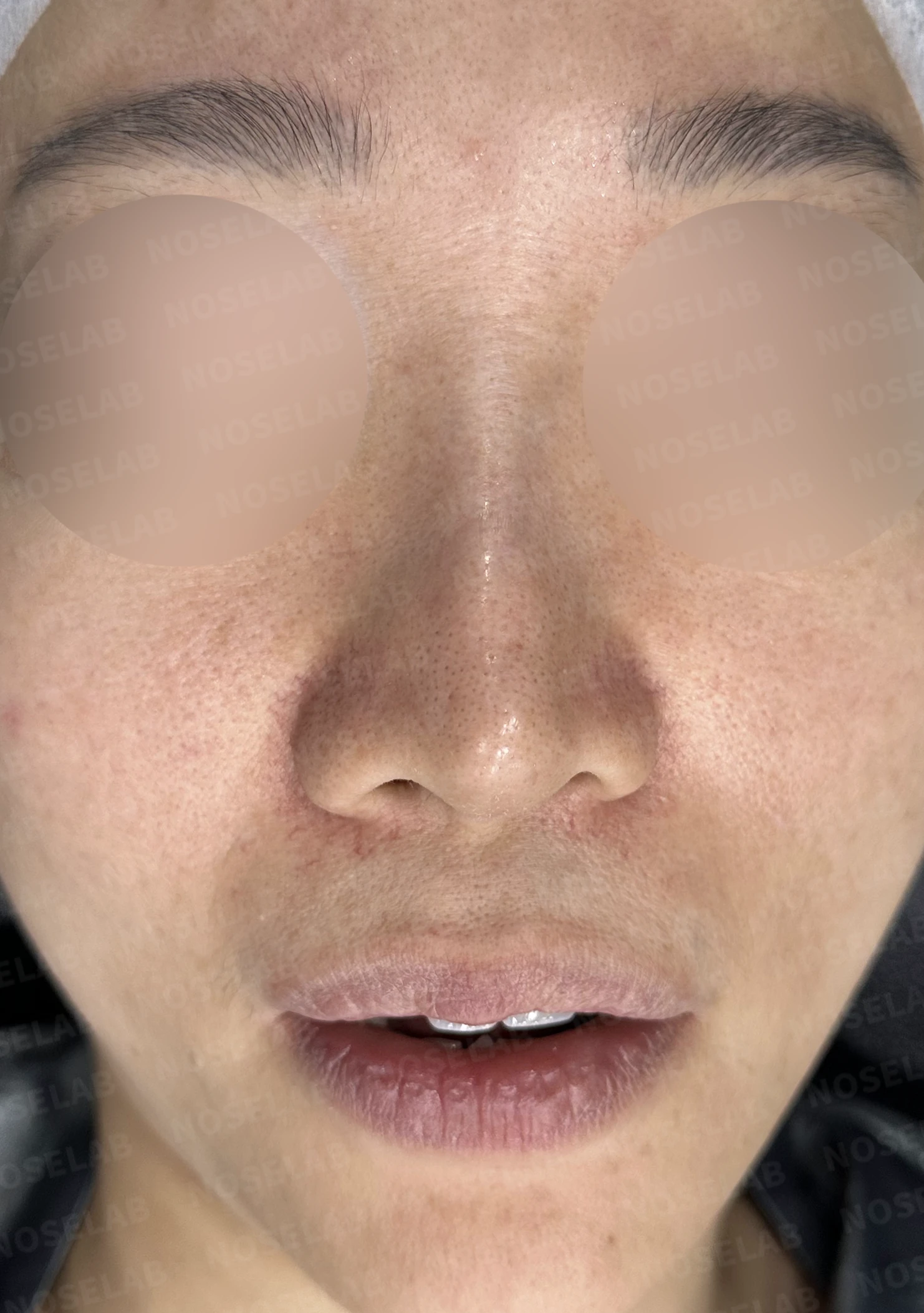
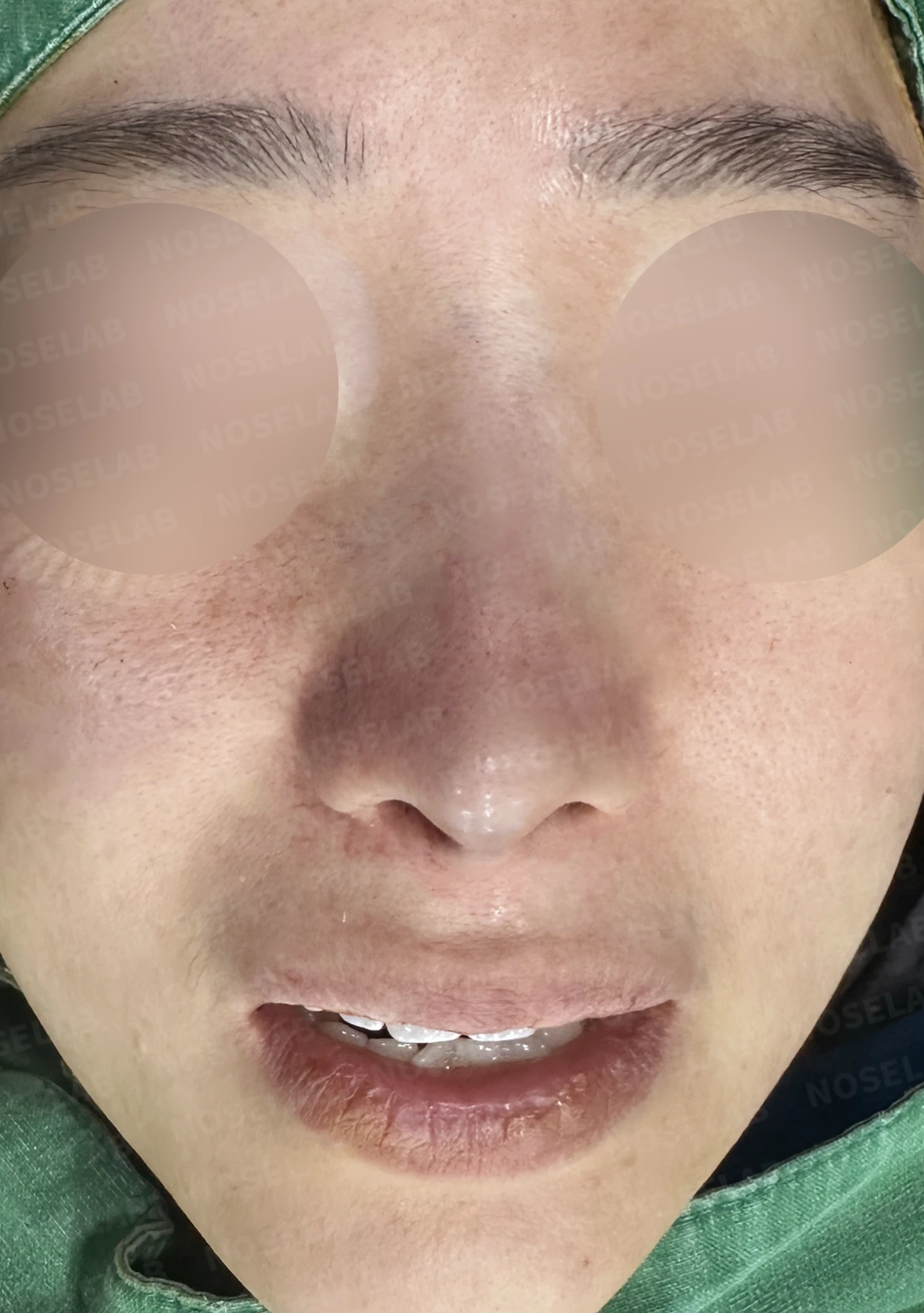
Before surgery / Day 0 immediately after surgery Photos taken immediately after surgery show swelling and may differ from the final result.
1. Frontal changes
The crooked nasal bridge was straightened
Asymmetrical nostrils achieved better balance
The tilted columella was corrected straight
An overall softer and more feminine impression
Before surgery / Day 0 immediately after surgery Photos taken immediately after surgery show swelling and may differ from the final result.
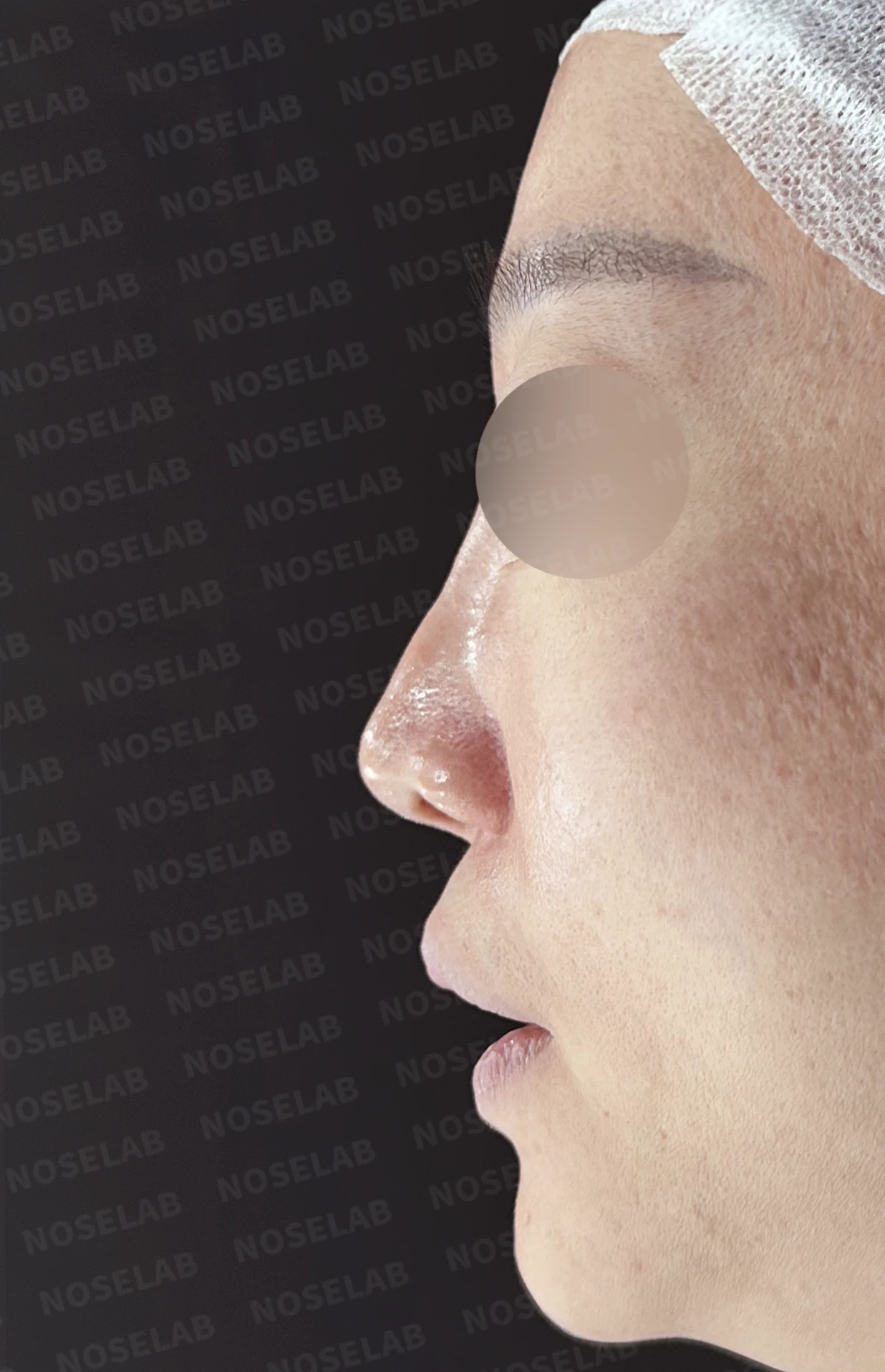
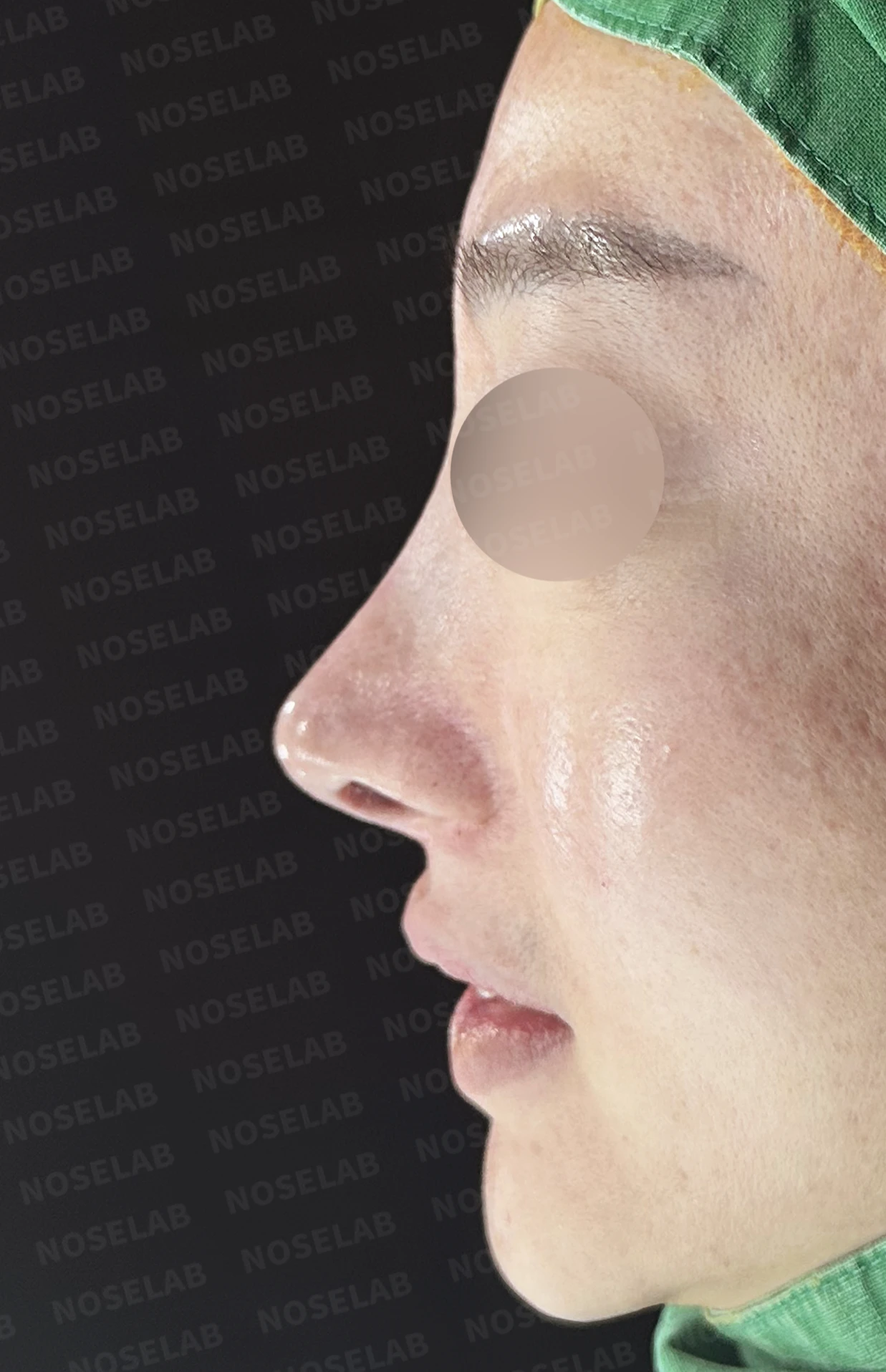
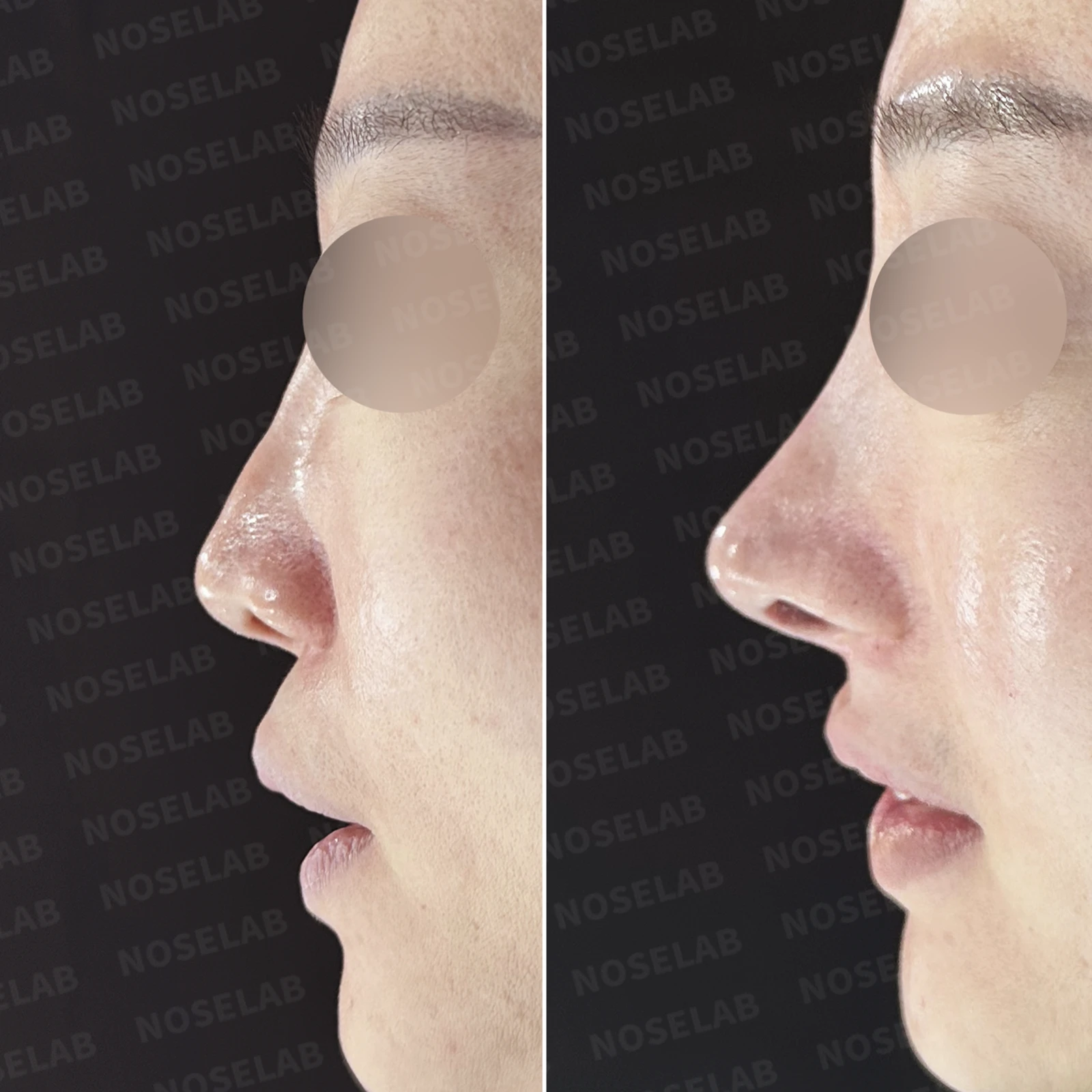
2. Profile changes
The drooping tip was naturally elevated
The long-looking nose was refined to more balanced proportions
Creation of a natural straight bridge line
A refined profile created by improving the nasolabial angle
Before surgery / Day 0 immediately after surgery Photos taken immediately after surgery show swelling and may differ from the final result.
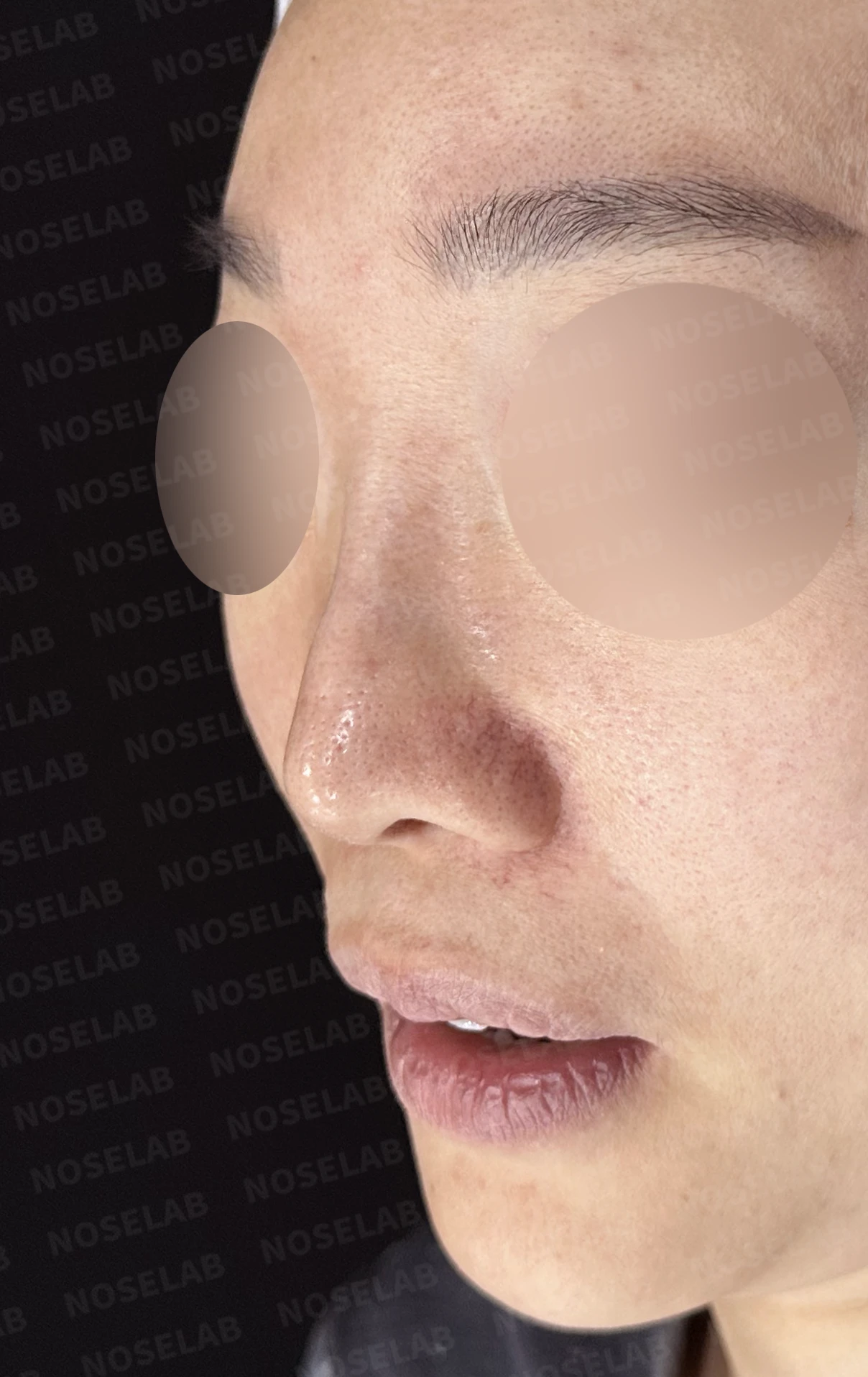
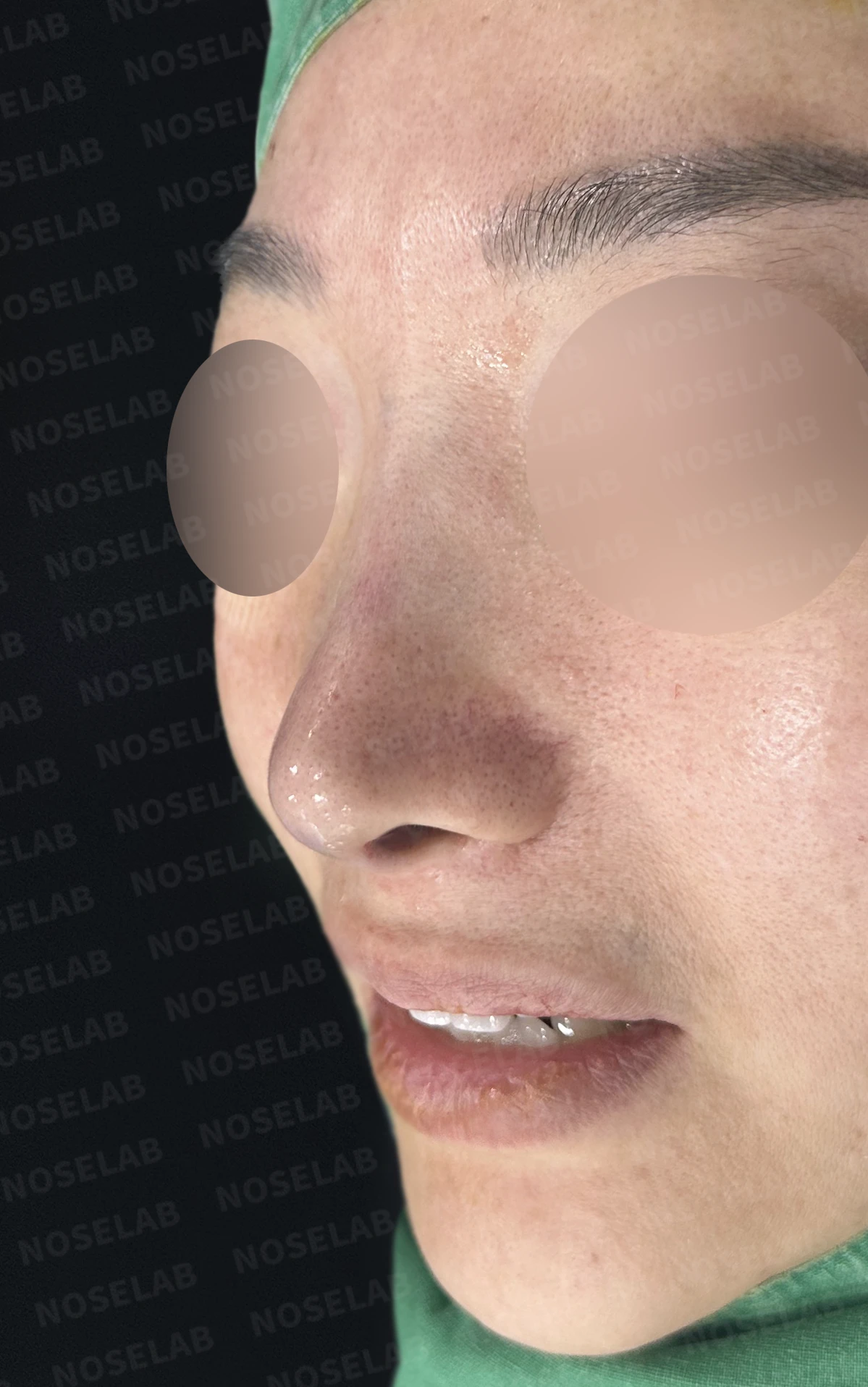
3. Nostril changes
The tilted columella was corrected straight
Nostril asymmetry was significantly improved
The drooping tip was appropriately elevated
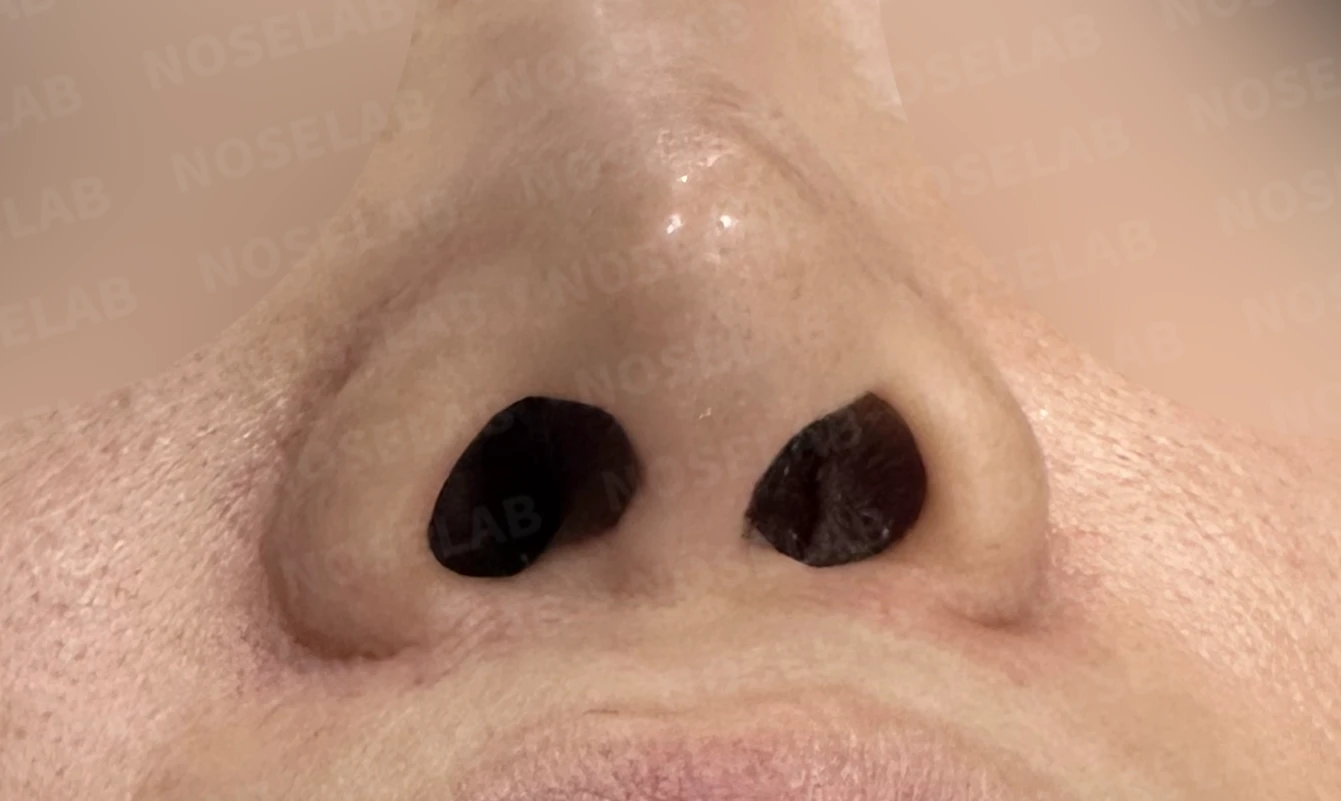
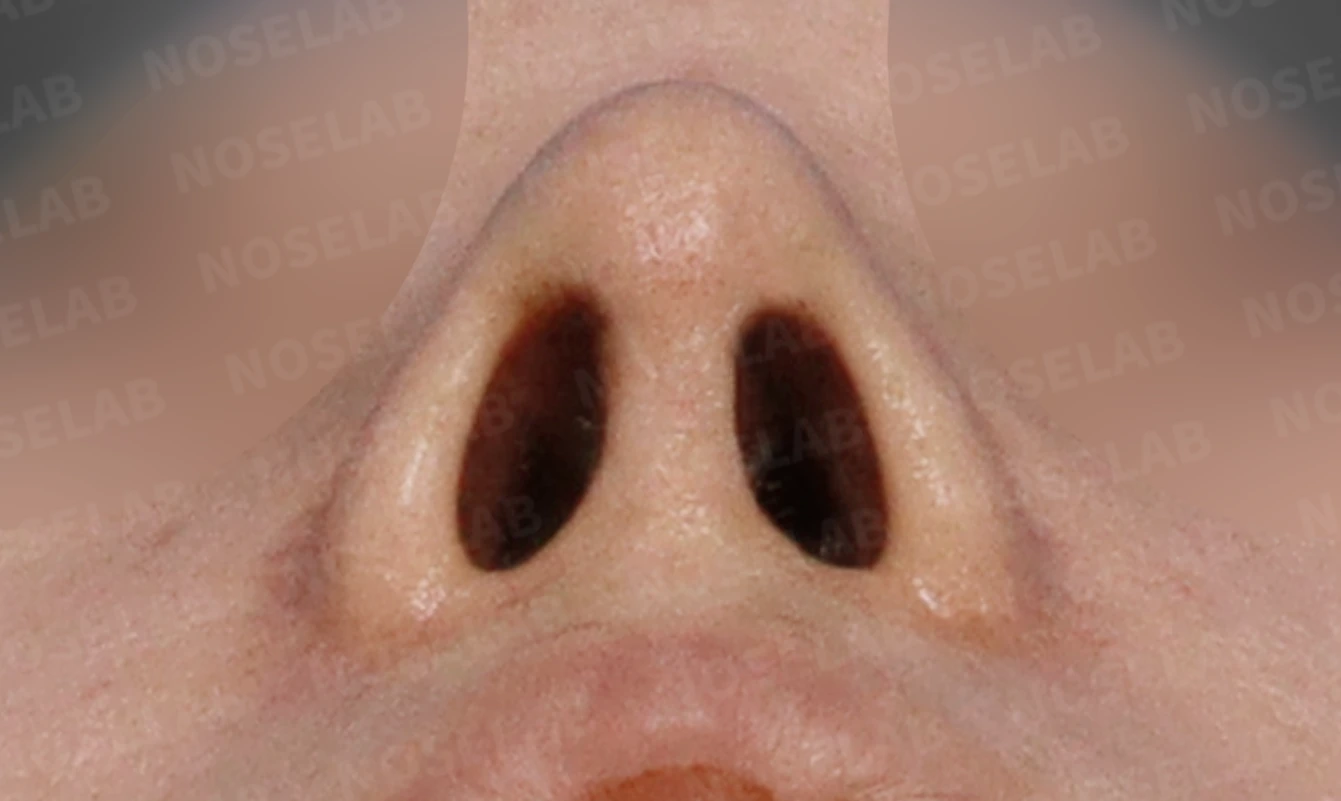
Before surgery / Day 0 immediately after surgery Photos taken immediately after surgery show swelling and may differ from the final result.
4. Endoscopic comparison (internal nasal cavity changes)
The septum, which was completely collapsed to the right, was straightened to the midline
Significant expansion of the right nasal cavity airway space - marked improvement in breathing function
Clean reconstruction of the mucosal defect area with a perichondrium graft
Internal nasal structures stably restored through septal reconstruction
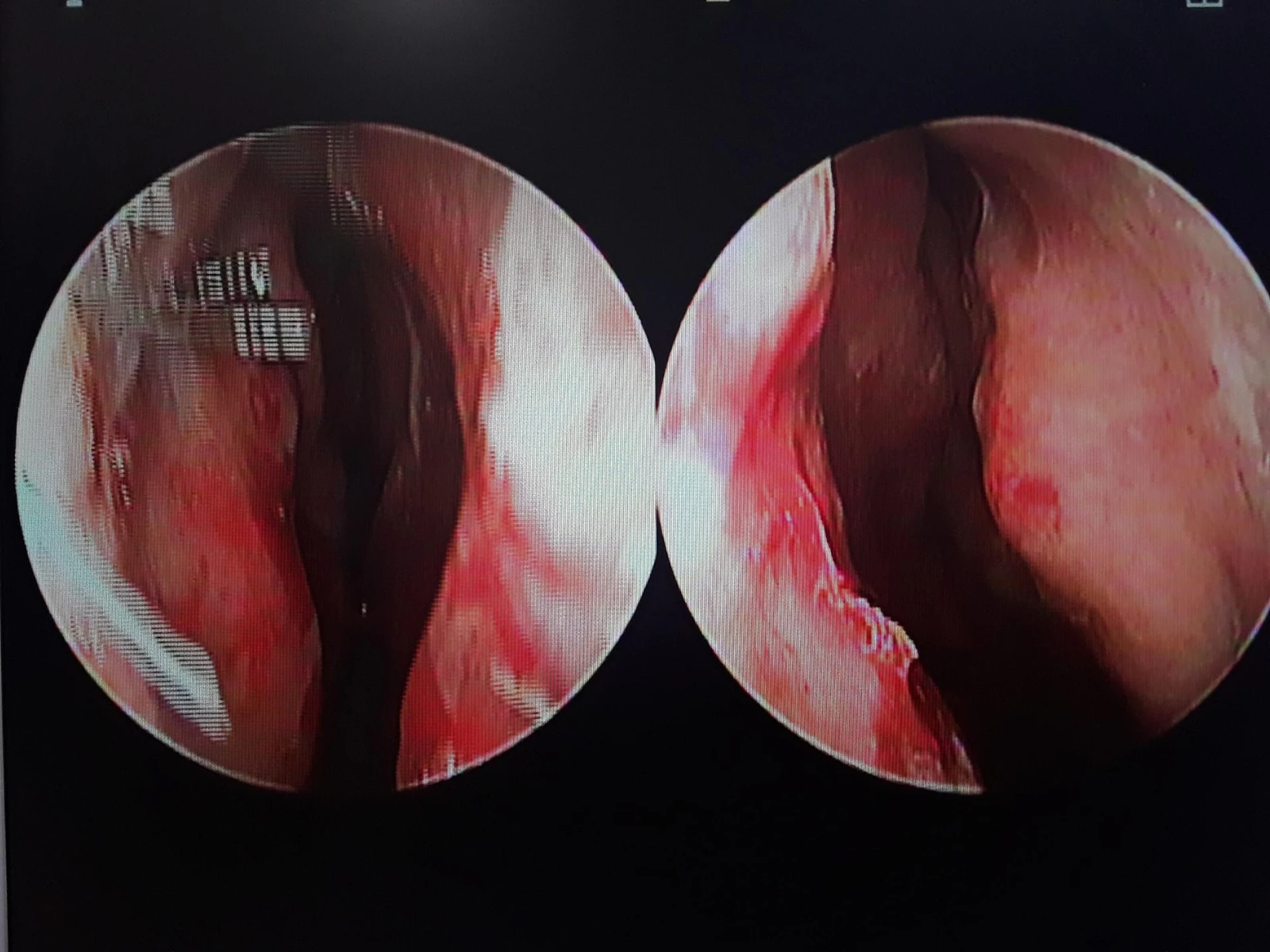
Before surgery / After surgery (photograph date not specified)
💡 Specialist opinion
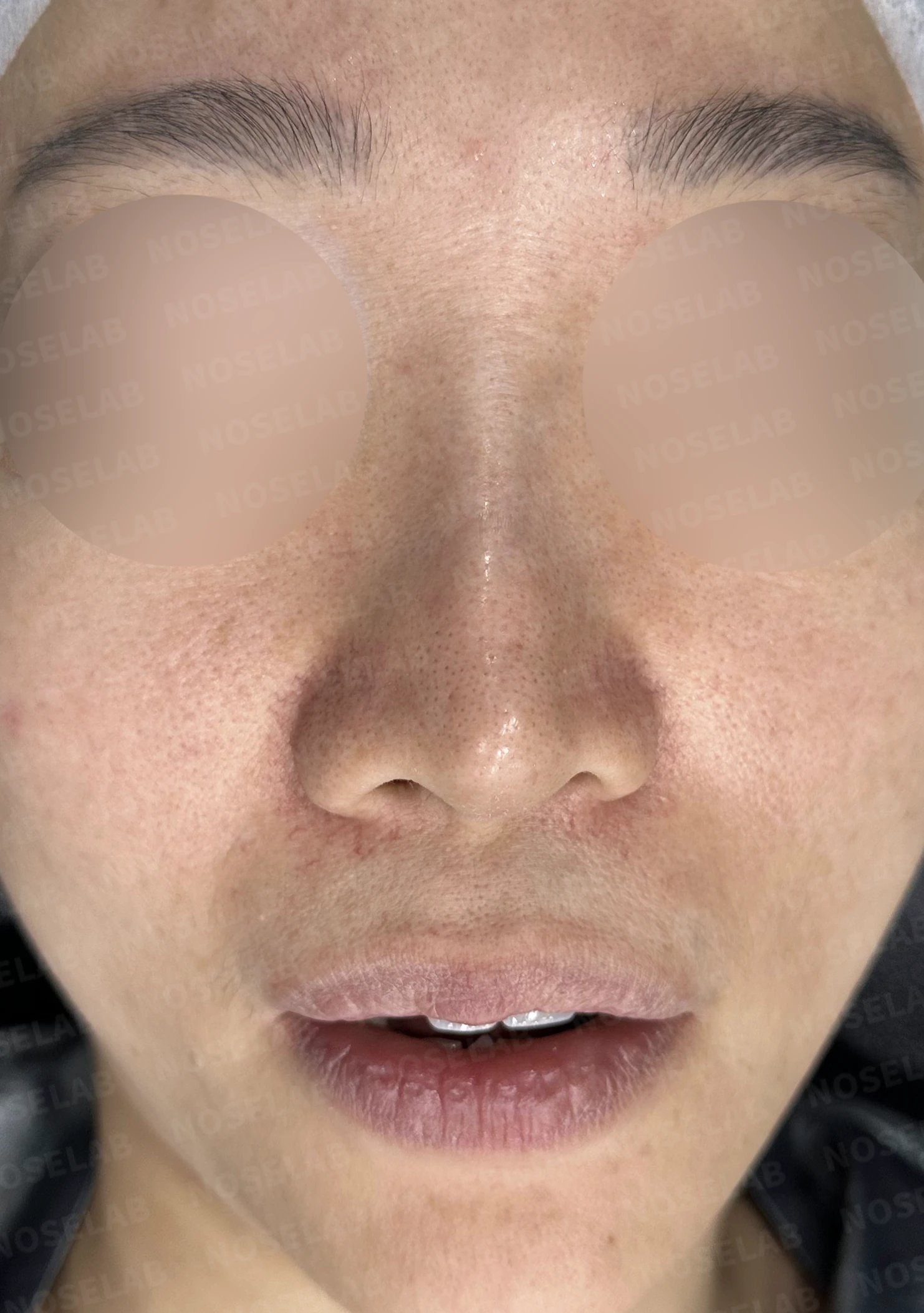
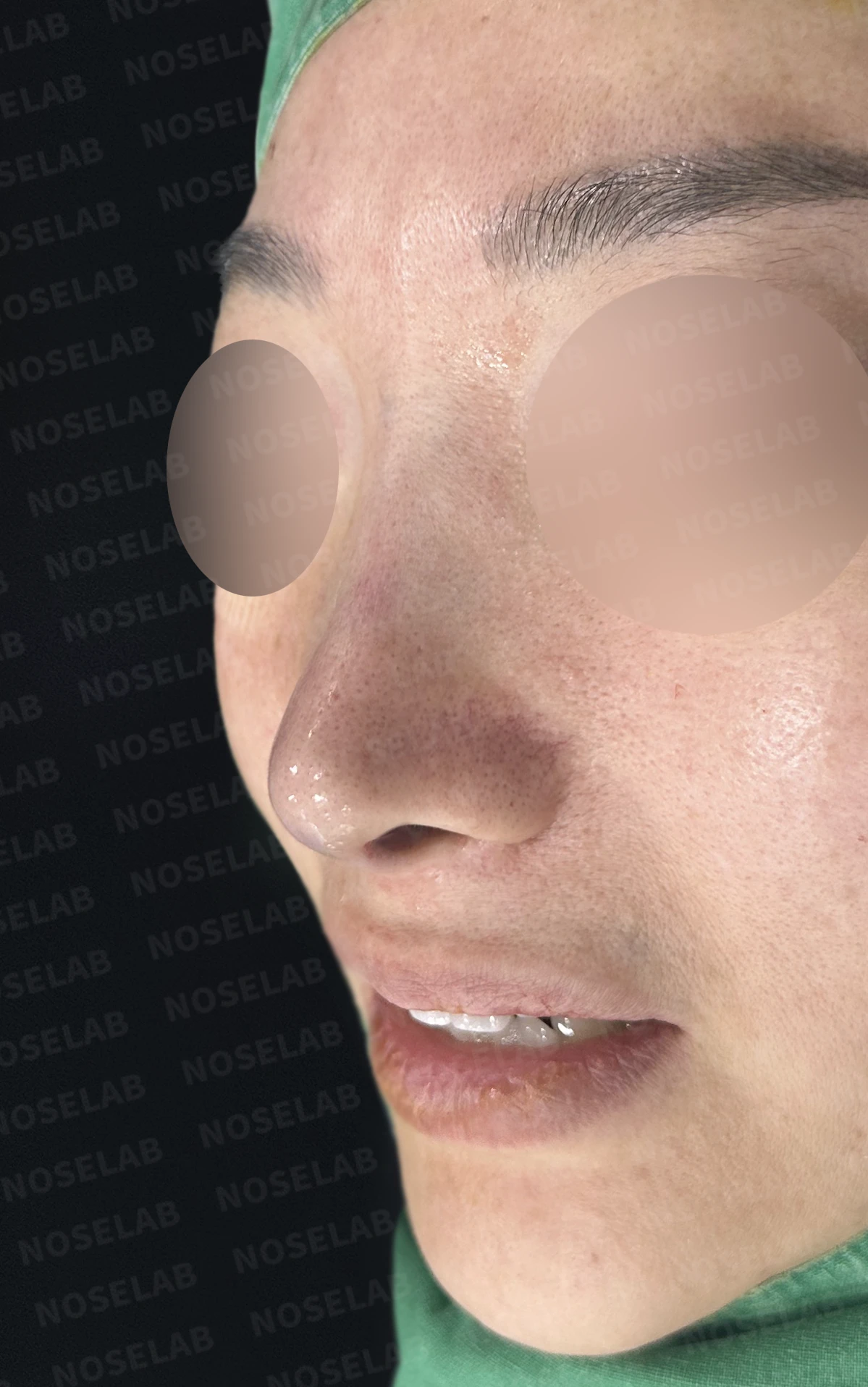
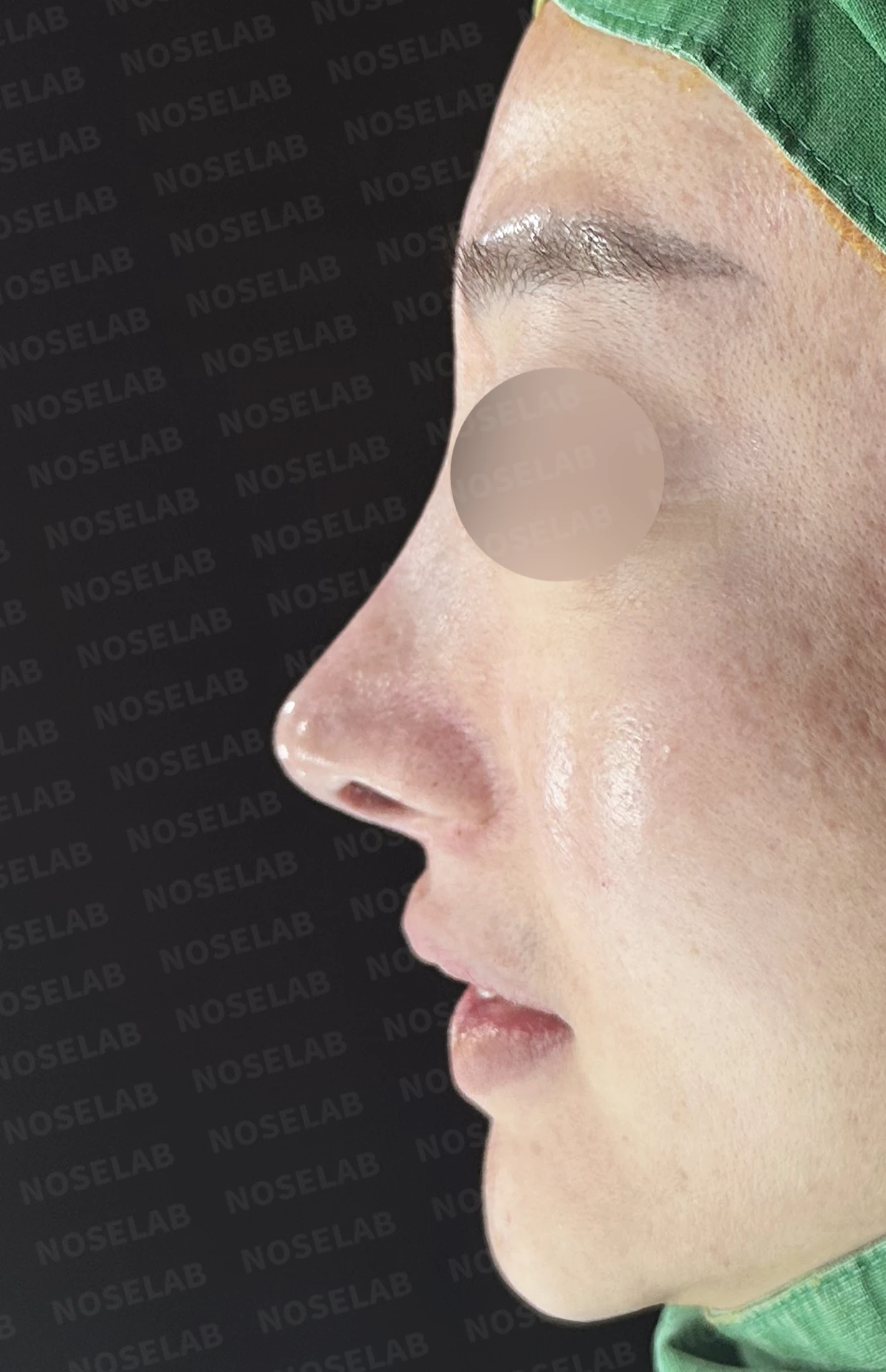
Front, oblique, and profile views on day 0 immediately after surgery. Photos taken immediately after surgery show swelling and may differ from the final result.
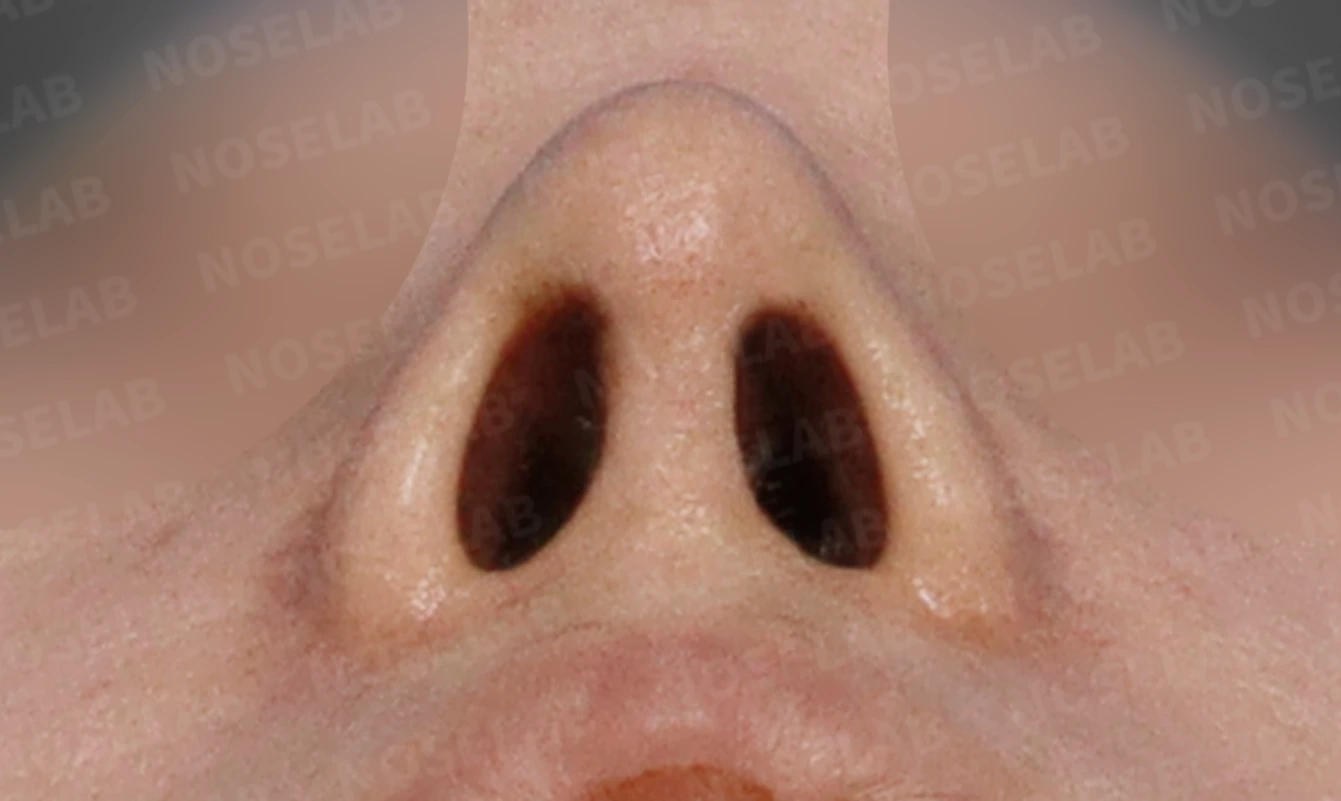
Nostril view on day 0 immediately after surgery. Photos taken immediately after surgery show swelling and may differ from the final result.
This case was not a simple aesthetic revision rhinoplasty, but a complex procedure completely reconstructing a severely collapsed septal framework.
When a septum completely collapses to one side, it leads not only to aesthetic concerns but also to functional problems such as reduced breathing capacity, aggravated rhinitis, and snoring. In this case, because the right nasal airway was nearly obstructed, a full septal reconstruction using autologous rib cartilage was essential.
In particular, comparing the before and after endoscopic photos clearly demonstrates how significantly the right nasal cavity space has expanded. This translates directly to a substantial improvement in breathing function.
Additionally, the mucosal defect resulting from previous surgeries was reconstructed with a perichondrium graft, and the silicone implant that did not fit the nasal bone was precisely re-carved, resolving the depression on the right bridge.
When revision rhinoplasty—especially septal reconstruction—is required, structural stability and functional improvement must be addressed together. True surgical success is achieved only when the nose's essential role of breathing is restored alongside aesthetic balance.
I will continue to provide customized care tailored to each patient's condition to achieve the intended results. I hope this case provides helpful insight to those with similar concerns. This has been Medical Director Dr. Peter C. Kang. Thank you.
#closedrhinoplasty #closedrevisionrhinoplasty #septalreconstruction #crookednosecorrection #autologousribcartilage #revisionrhinoplasty #deviatedseptum #nasalfunctionimprovement

Limitations and risks
When autologous rib cartilage is used, scarring and pain may remain at the donor site on the chest, and pneumothorax (pleural injury) can occur rarely. Over time, the grafted cartilage may warp or undergo partial resorption.
When revising after implant removal, contracture may progress again after removal, the nasal height and length may decrease, and staged surgery may be necessary depending on the skin condition.
When the septum is corrected at the same time, nasal obstruction may persist or recur, and in rare cases, septal perforation or changes in smell may occur.
Common potential risks include infection, bleeding, asymmetry, scarring, skin necrosis, and insufficient improvement; results vary depending on individual skin condition and previous surgical history.