Hello, I am Dr. Peter C. Kang.
Today, I will introduce a case where a patient troubled by contracture and septal damage from previous surgery was reconstructed naturally using autologous rib cartilage with safety in mind.
🔍 Surgical history
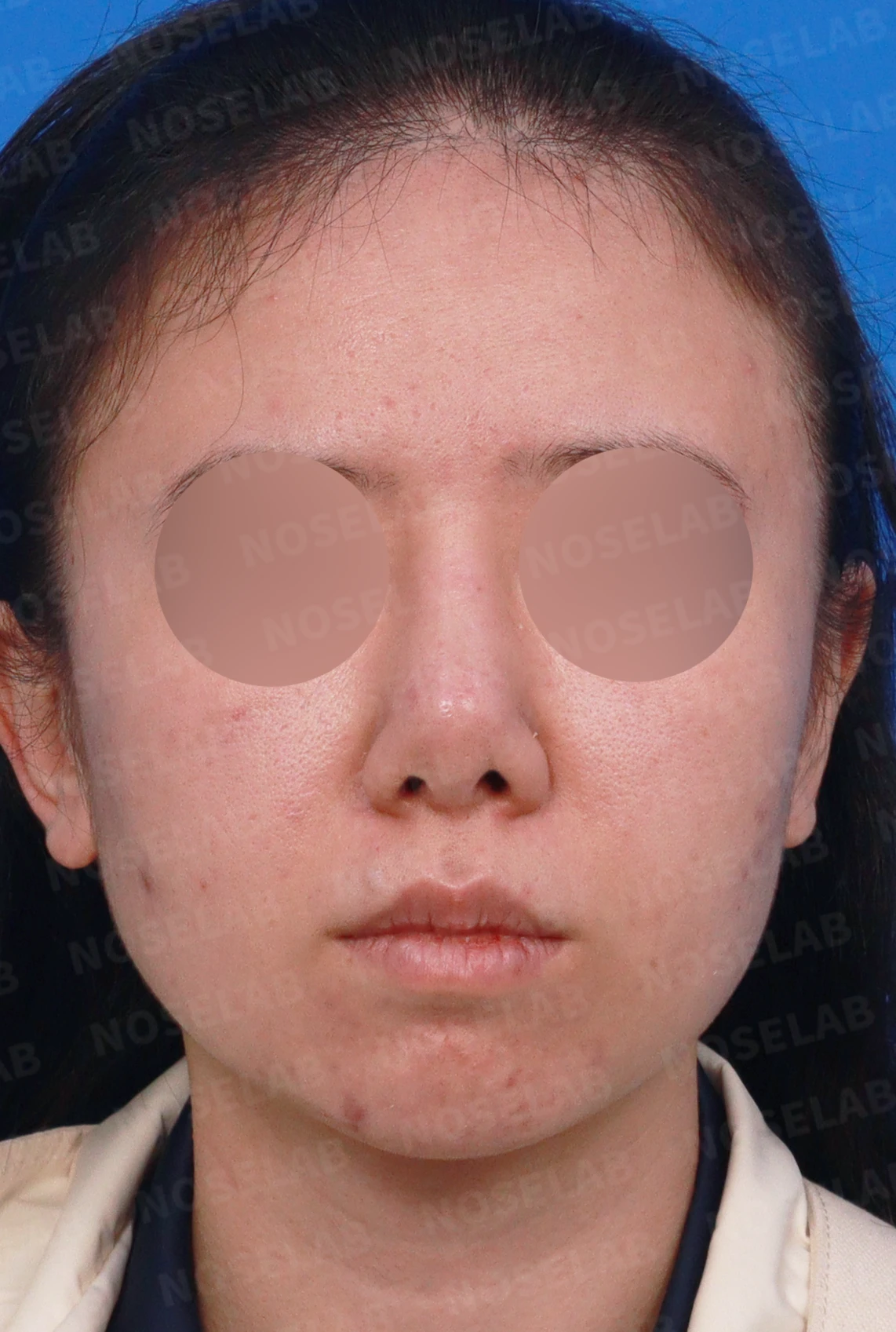
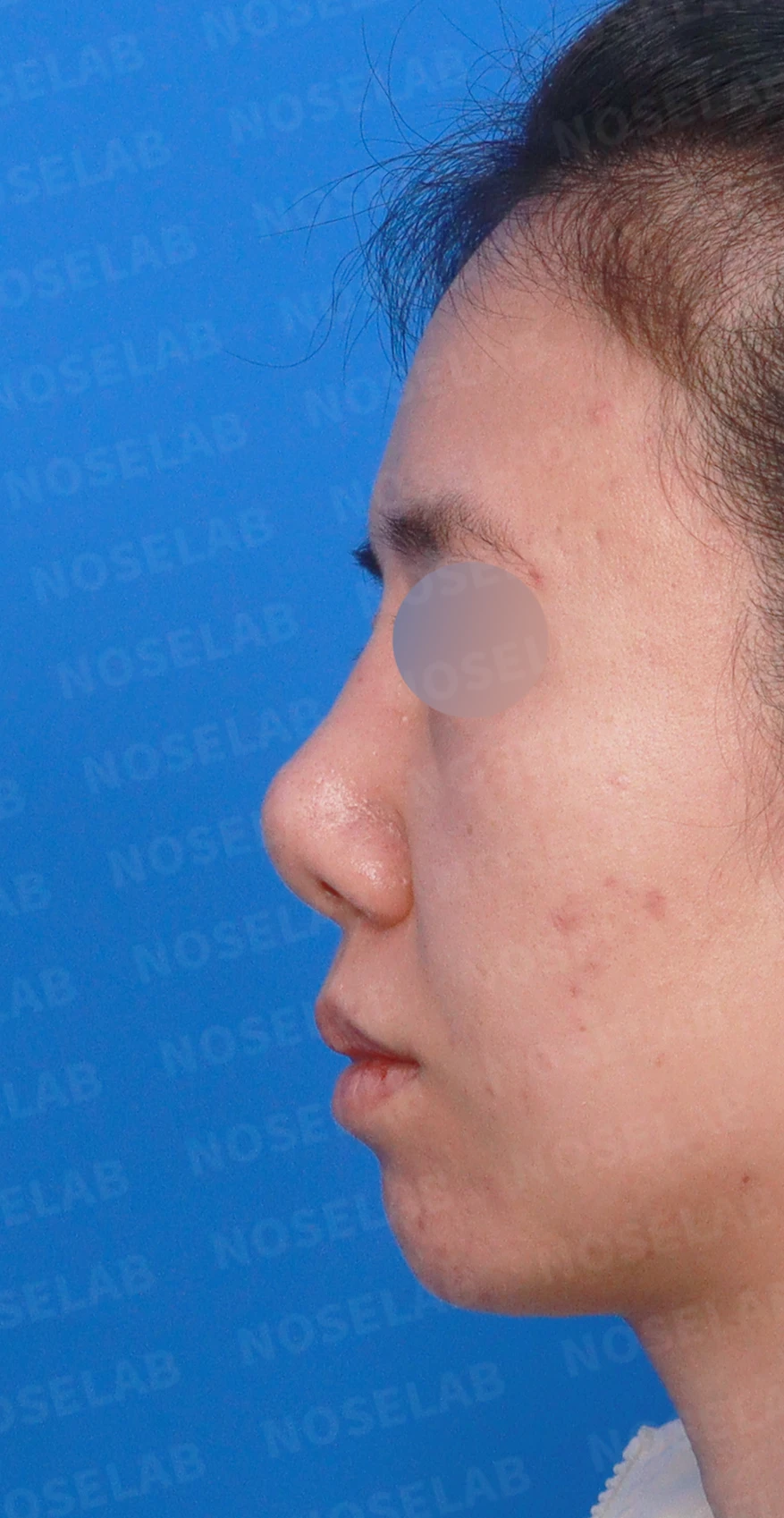
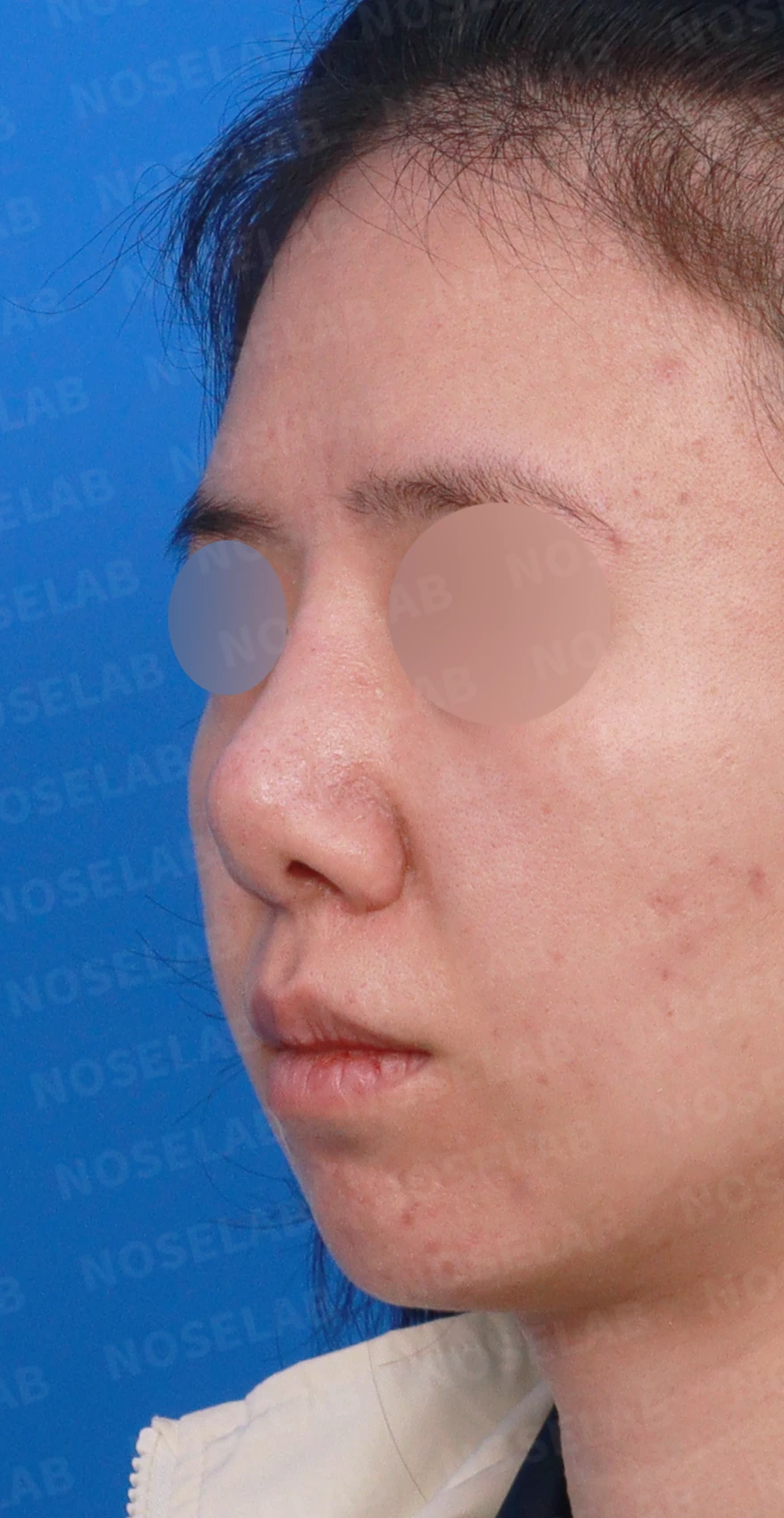
Front, left profile, and oblique views during design consultation.
Past history:
3 years ago: silicone implant + ear cartilage + septum + dorsal hump reduction + functional nasal surgery
Main concerns:
Deformity caused by contracture
Functional decline due to septal damage
Widened and asymmetric nasal bones
Retracted appearance of the left nostril
Special notes:
Contracture and rhinitis following previous surgery
💉 Patient requests
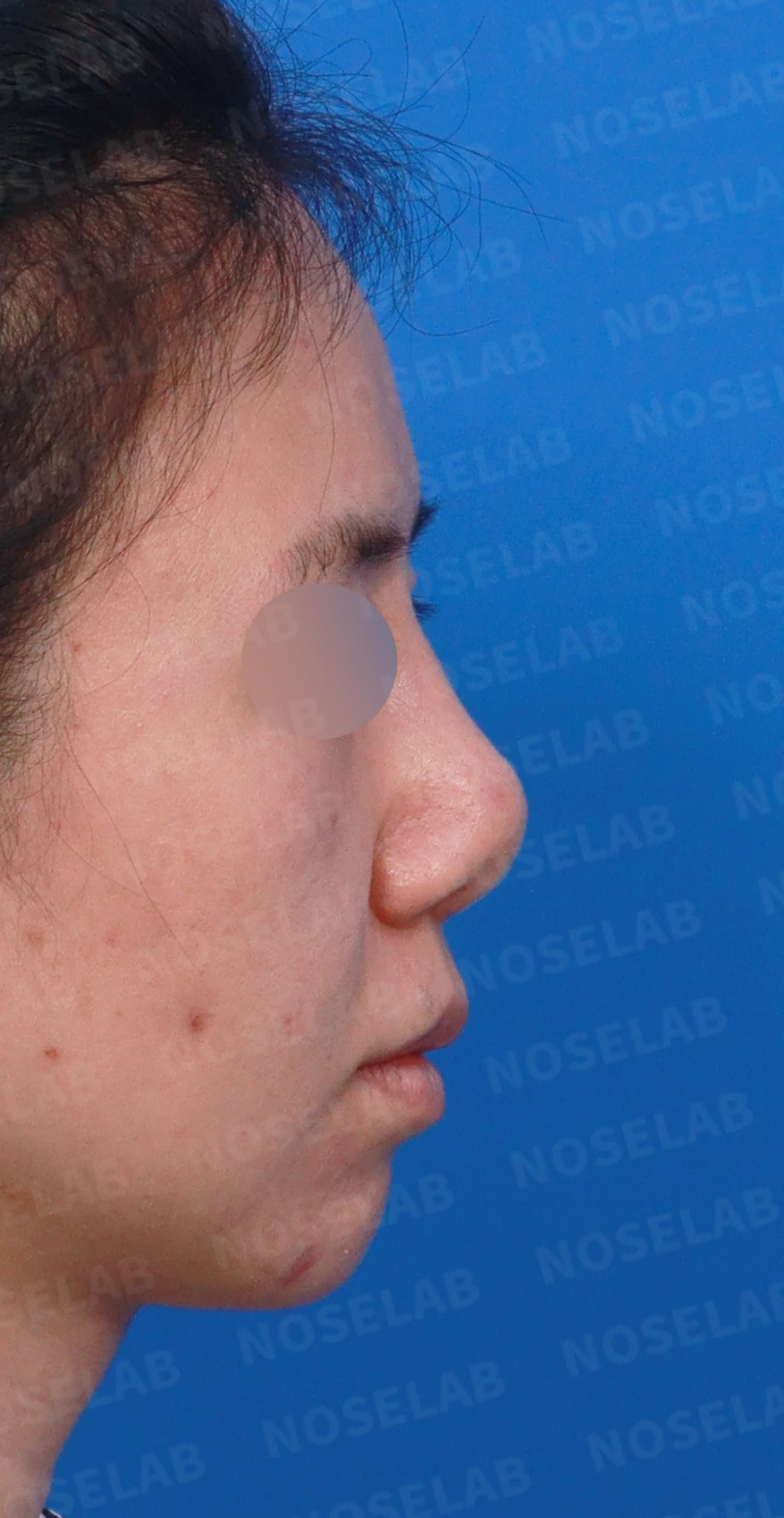
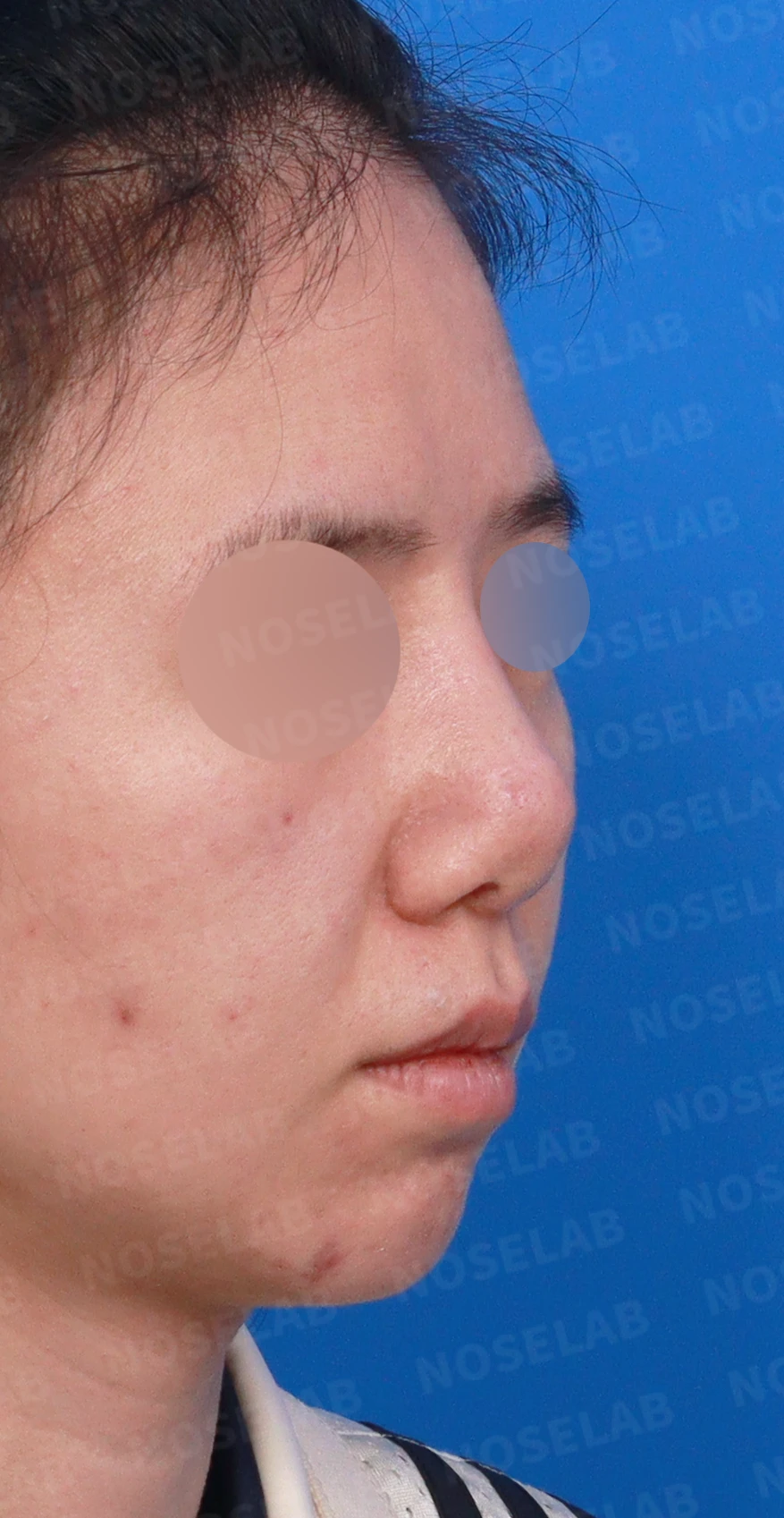
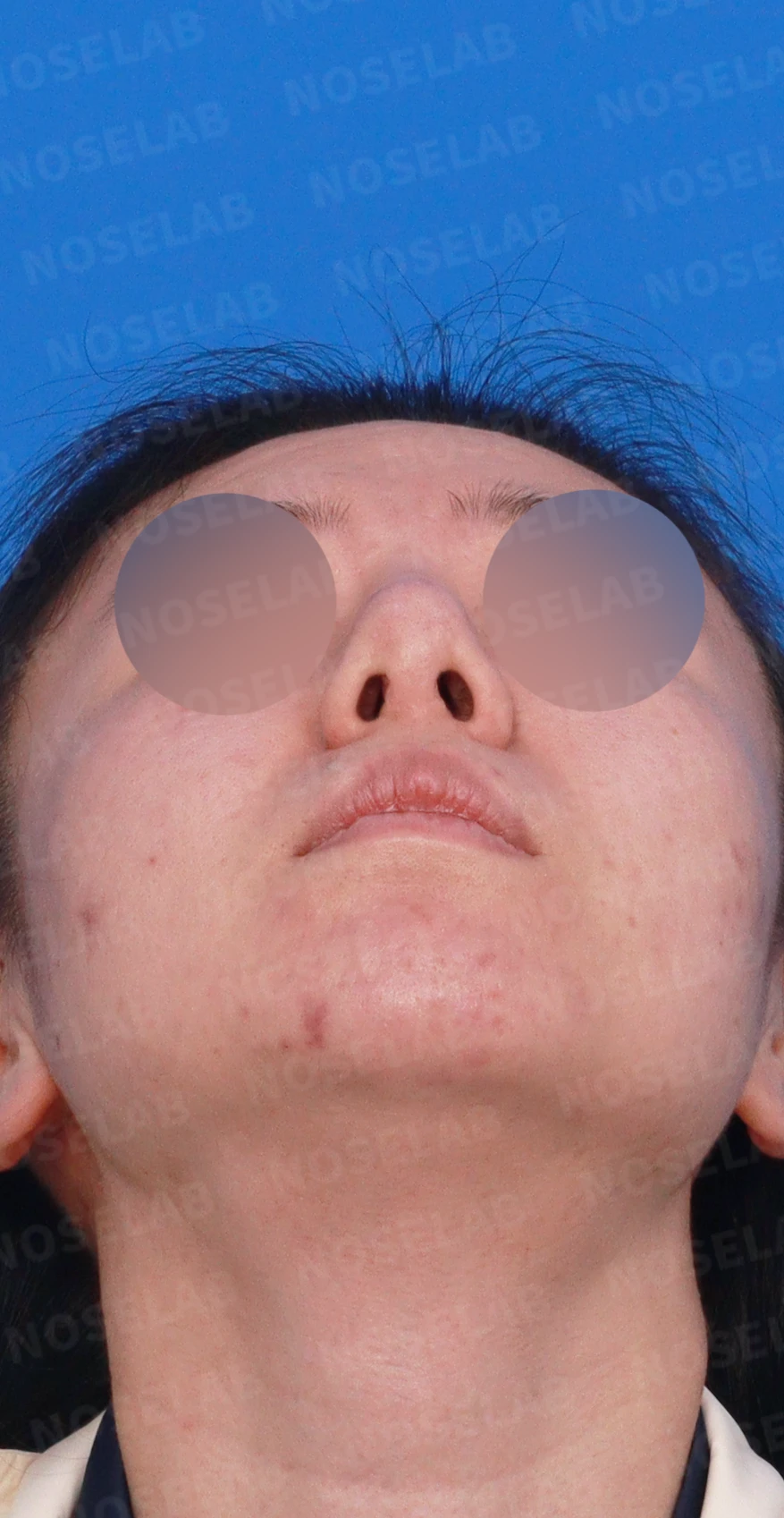
Right profile, oblique, and nostril views during design consultation.
Contracture resolution
Natural nose
Functional recovery
Improvement of nostril asymmetry
🔧 Surgical plan and procedure
1. Correction of contracted nose: implant and capsule removal
To resolve the stiffness caused by contracture, the previous implant and surrounding capsule were completely removed. Safe removal secured a clean structural foundation.
2. Functional restoration through septal reconstruction
The septum was severely damaged from the previous surgery. Septal reconstruction solidly rebuilt the central support and opened the obstructed airway, restoring breathing function.
3. Aligning nasal bones with lateral osteotomy
The widened and asymmetric nasal bones were precisely repositioned using lateral osteotomy. This established a symmetric, natural width on the front view.
4. Nasal bridge reconstruction with autologous rib cartilage
To minimize the risk of contracture, the nasal bridge was rebuilt using autologous rib cartilage. Because it is the patient's own tissue, there is no foreign body reaction, providing long-term stability.
5. Left nostril lowering
The retracted left nostril was lowered to improve symmetry. Balance on the front view was significantly enhanced.
🌟 Surgical results
Contracture resolved through removal of implant and capsule
Breathing function restored through septal reconstruction
Widened and asymmetric nasal bones realigned with lateral osteotomy
Natural nasal bridge achieved using autologous rib cartilage
Asymmetry corrected by lowering the left nostril
Overall natural and stable nasal structure achieved
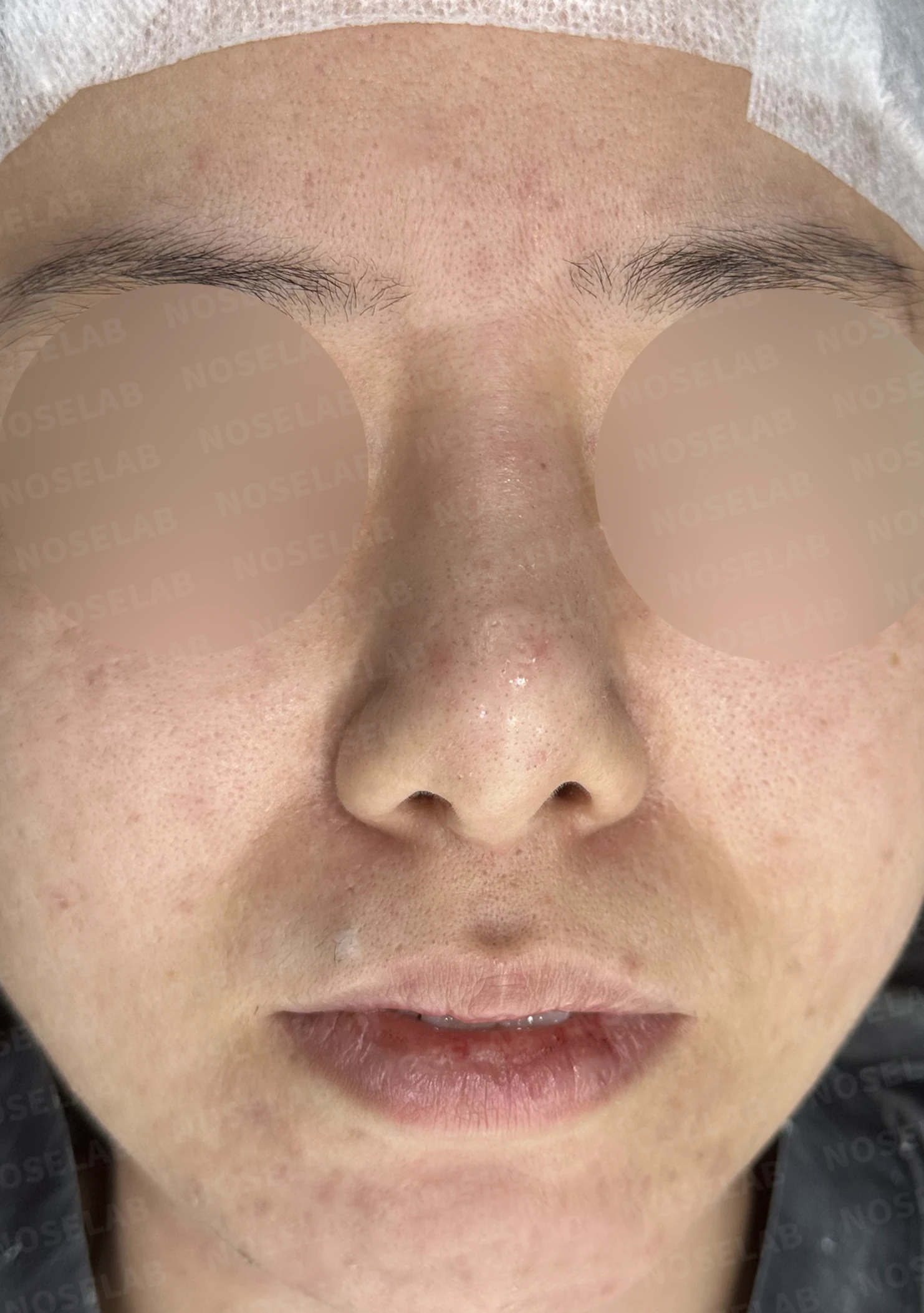
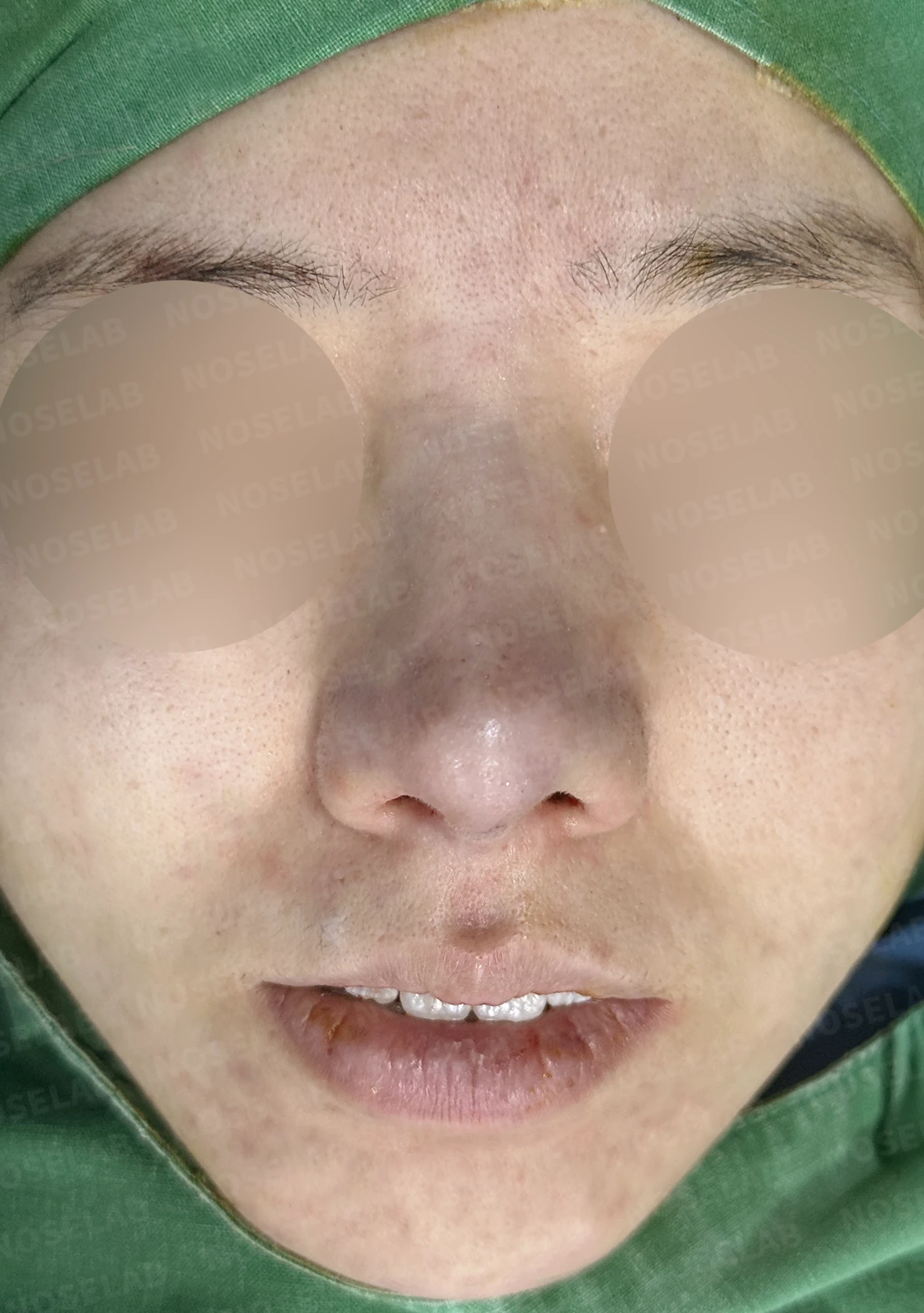
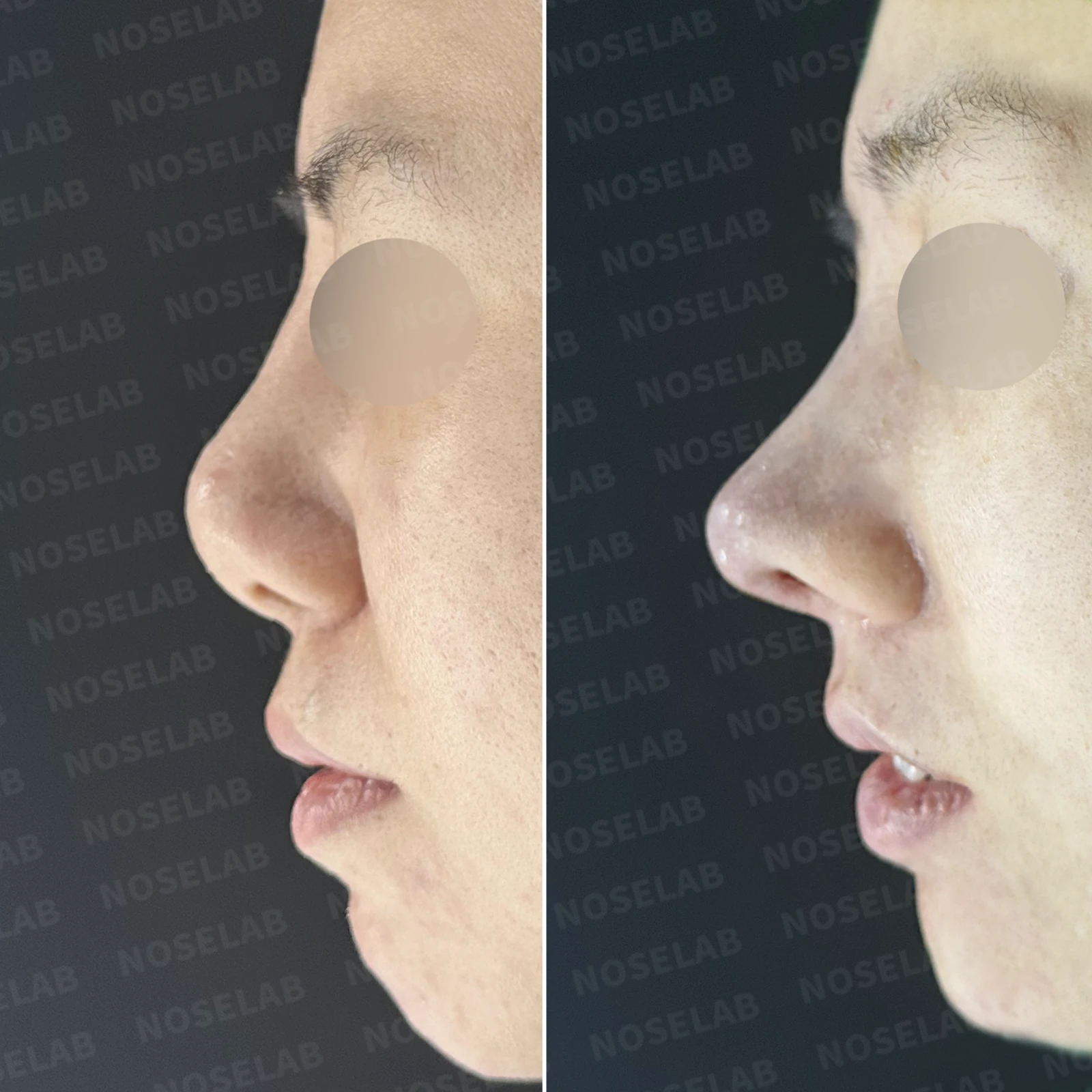
Before surgery / Day 0 immediately after surgery Photos taken immediately after surgery show swelling and may differ from the final result.
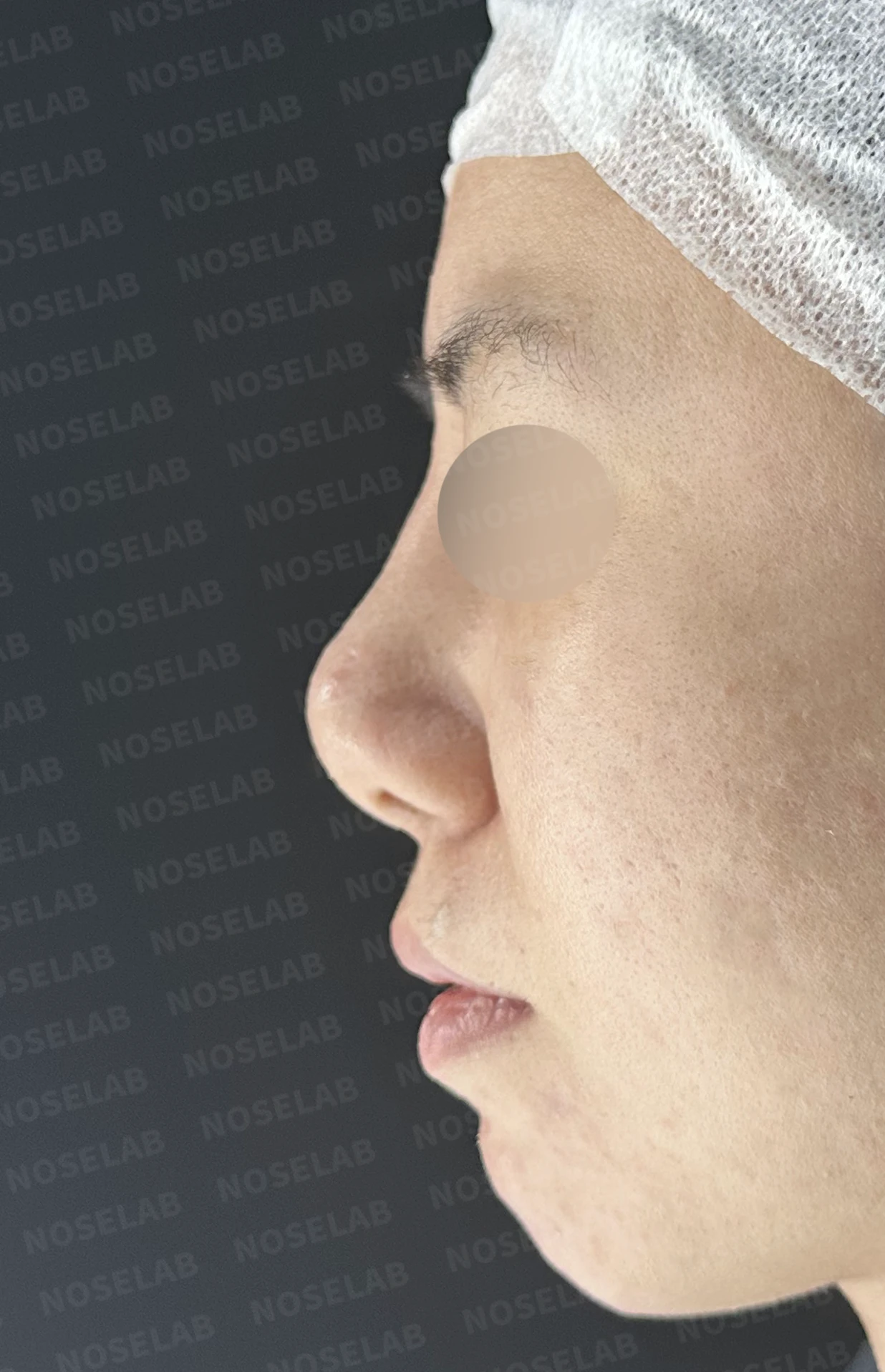
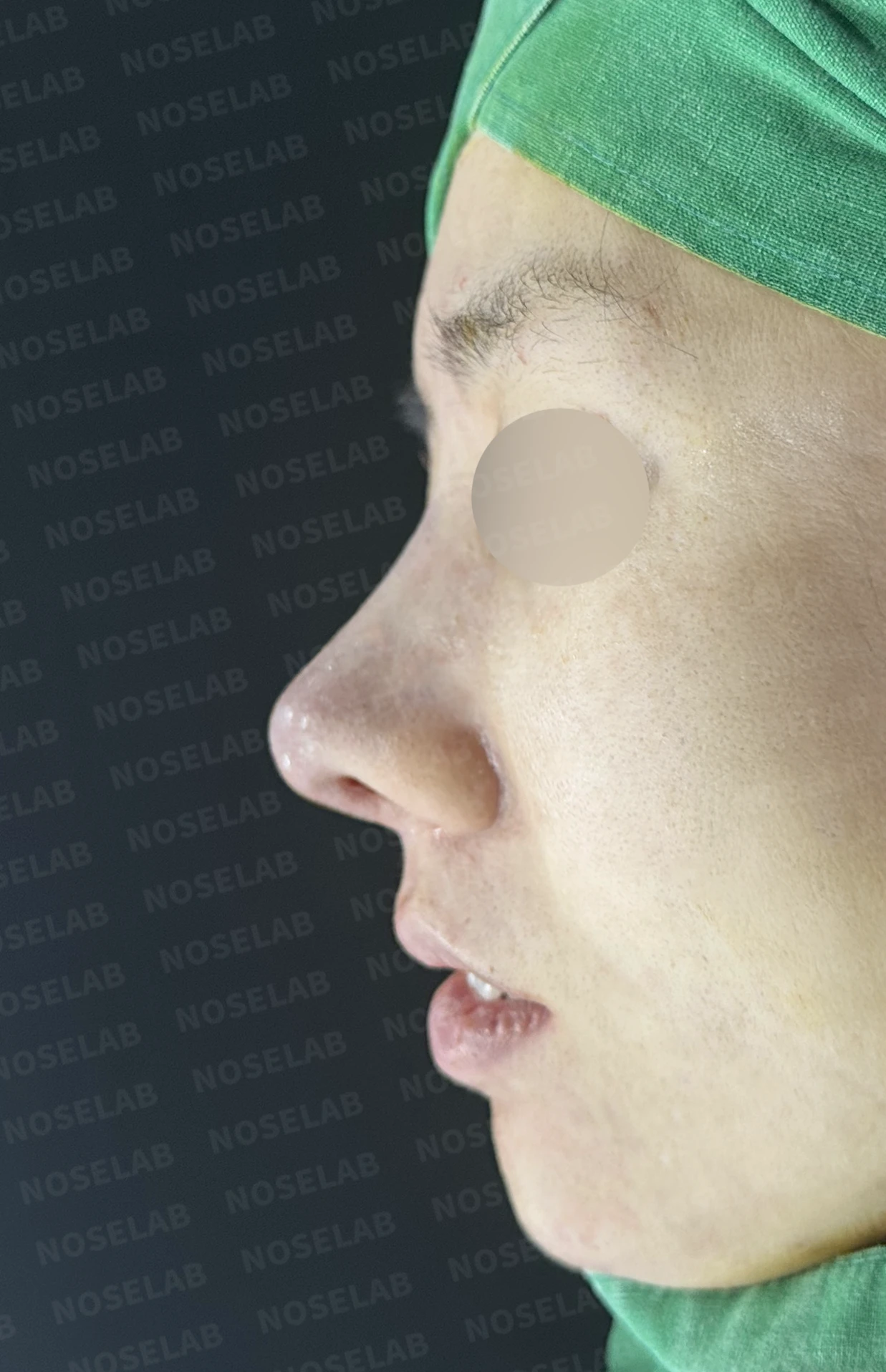
Before surgery / Day 0 immediately after surgery Photos taken immediately after surgery show swelling and may differ from the final result.
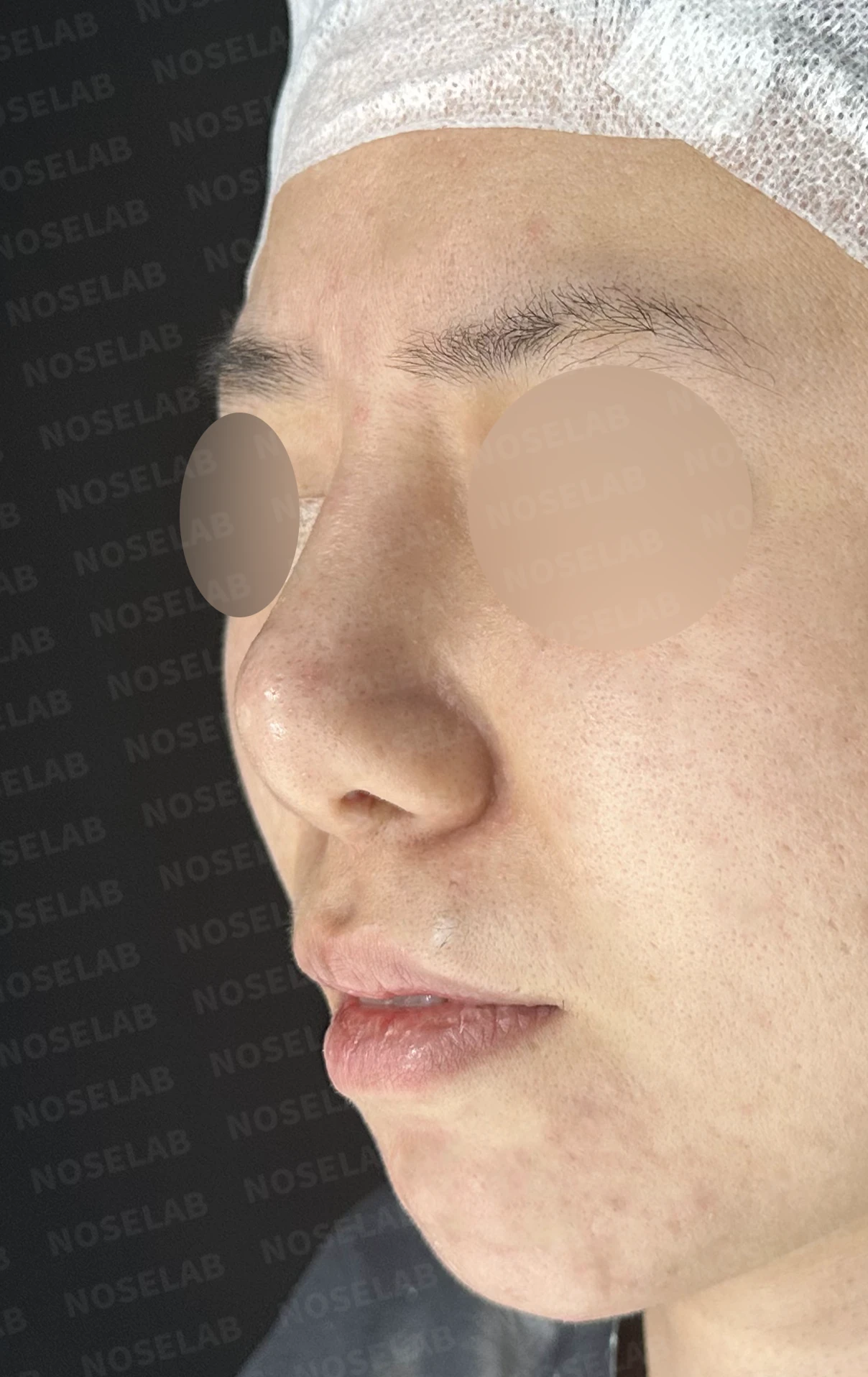
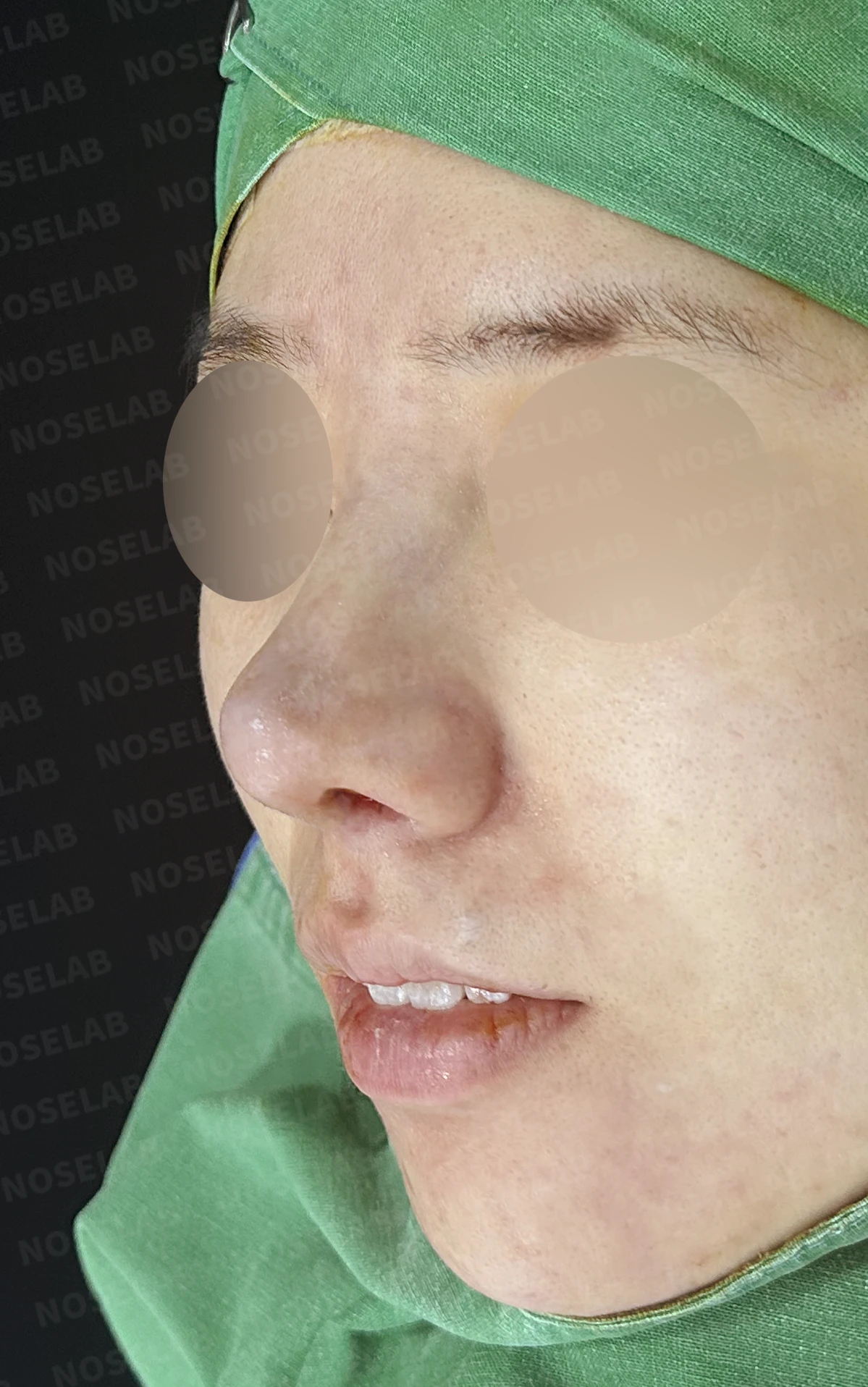
Before surgery / Day 0 immediately after surgery Photos taken immediately after surgery show swelling and may differ from the final result.
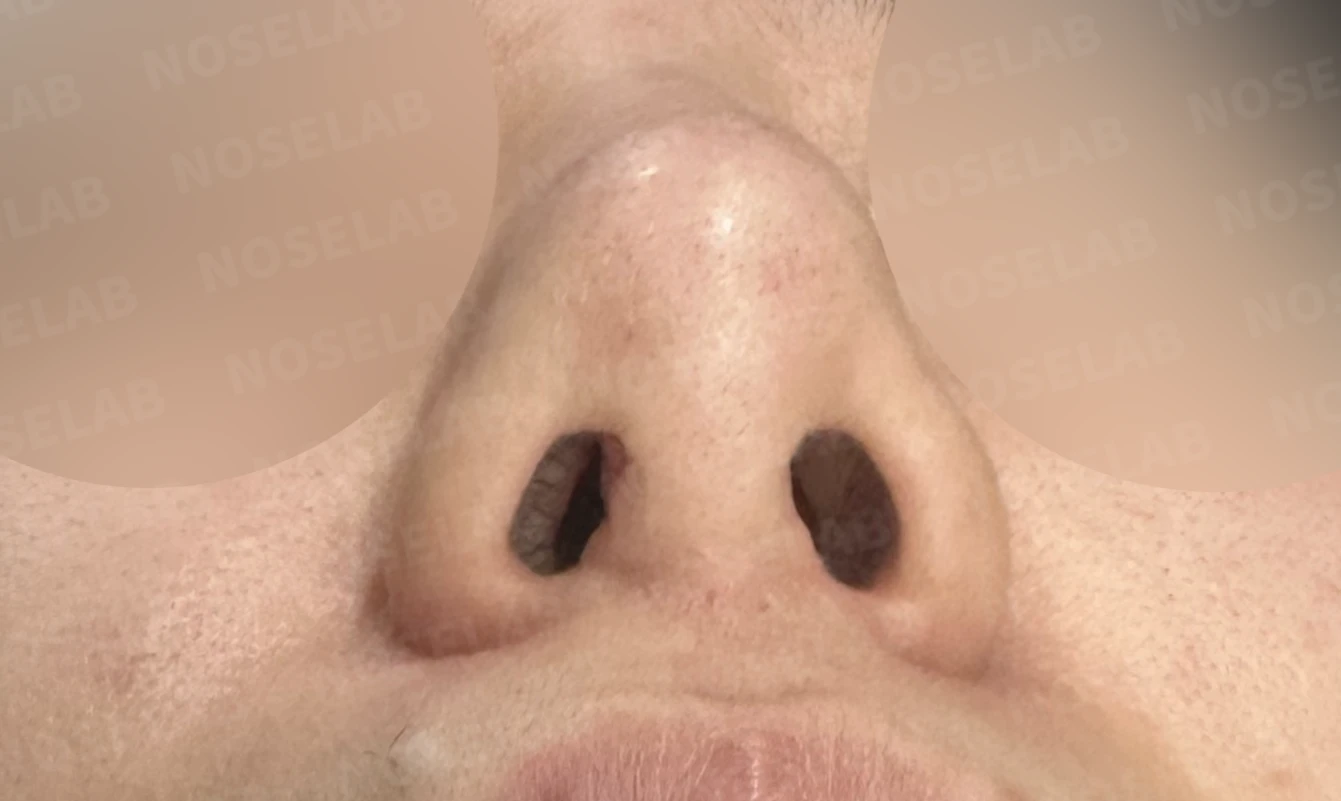
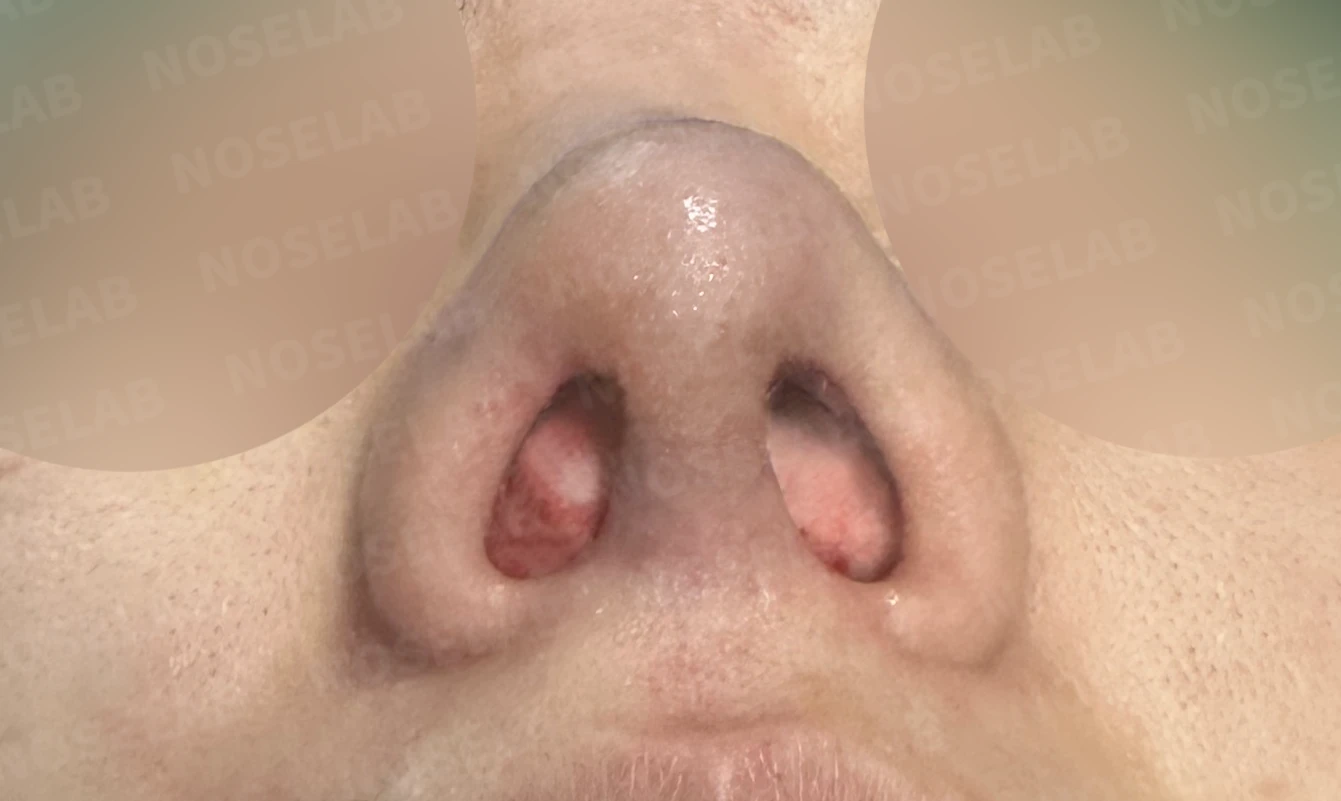
Before surgery / Day 0 immediately after surgery Photos taken immediately after surgery show swelling and may differ from the final result.
💡 Specialist opinion
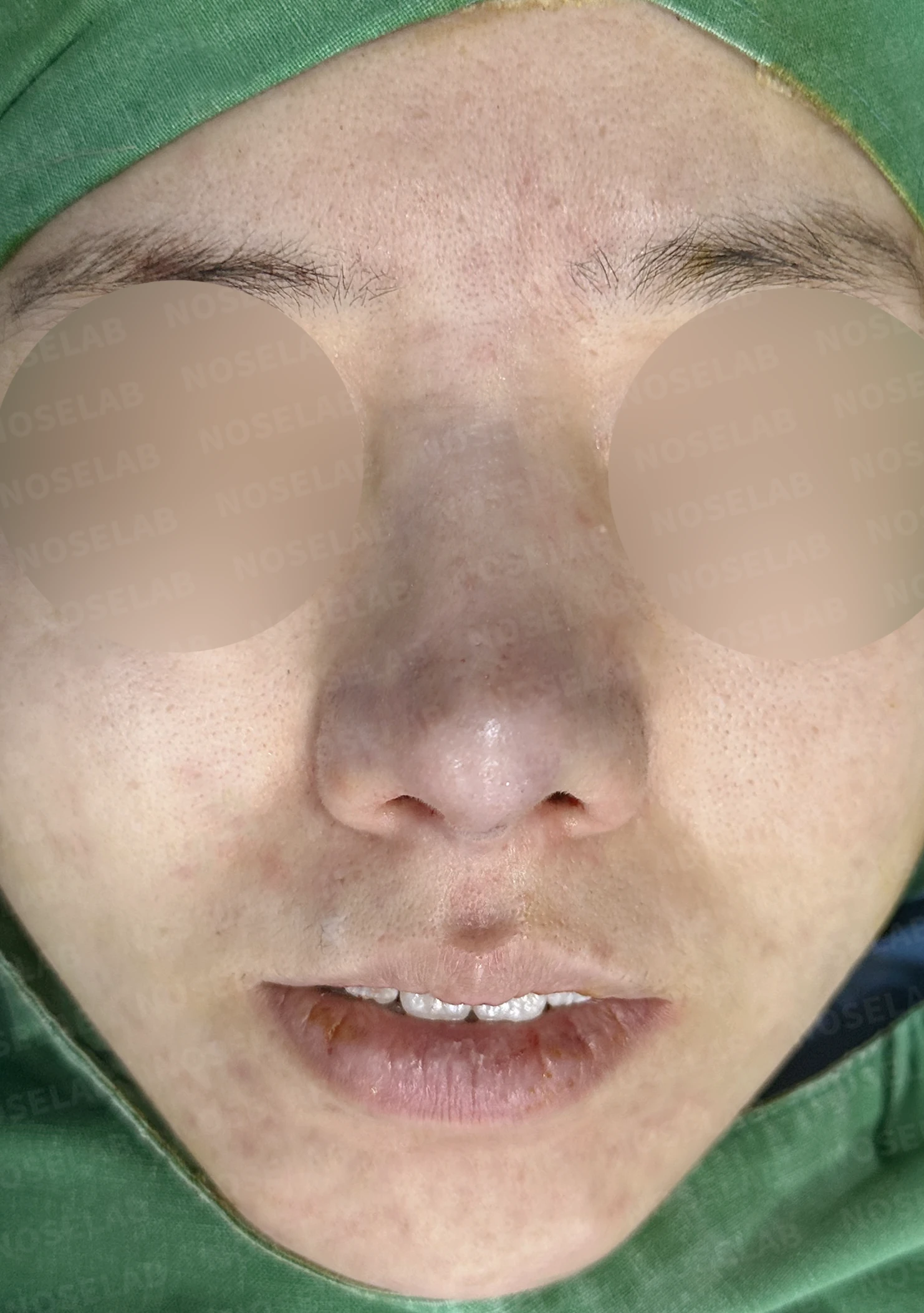
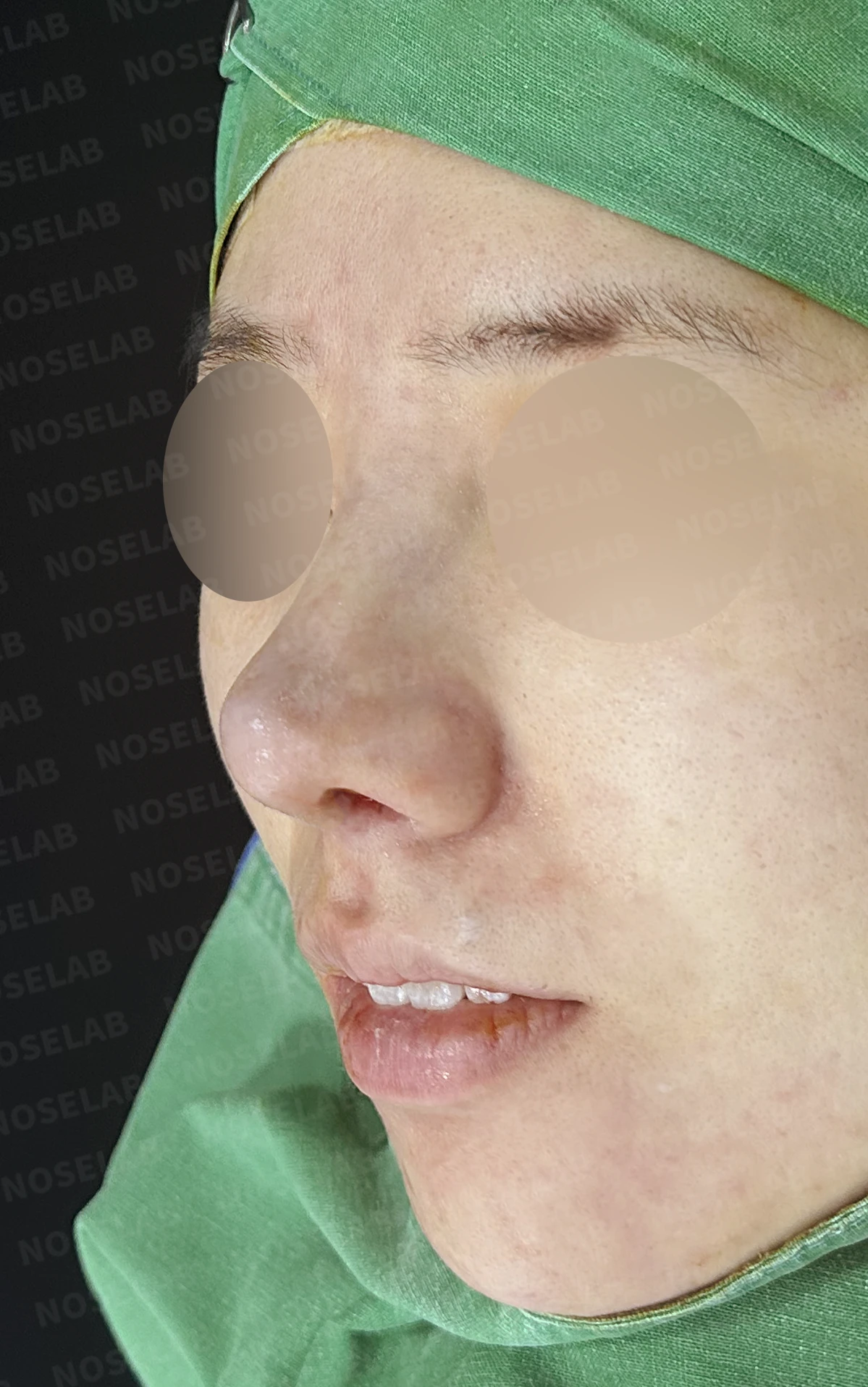
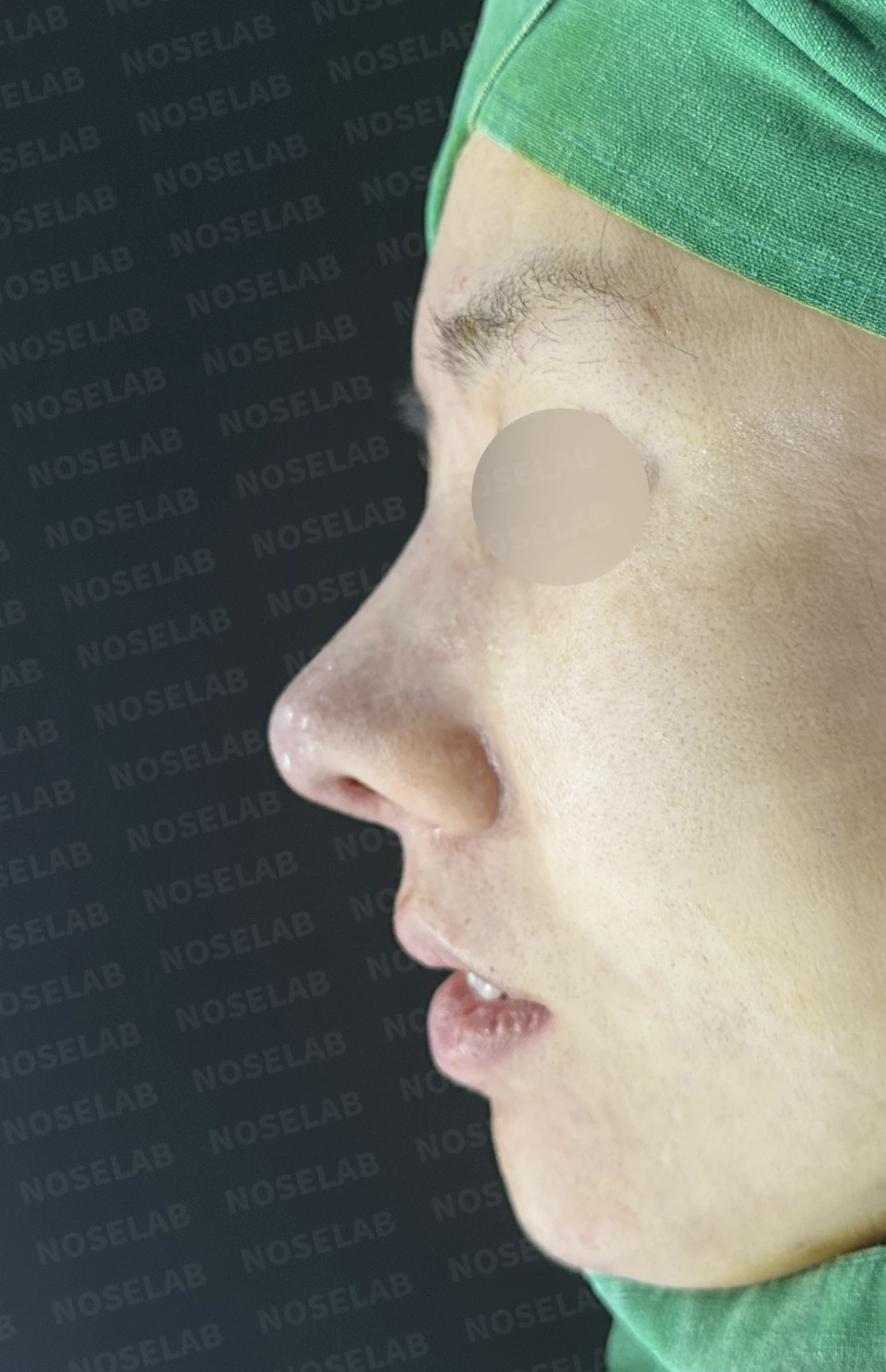
Front, oblique, and profile views on day 0 immediately after surgery. Photos taken immediately after surgery show swelling and may differ from the final result.
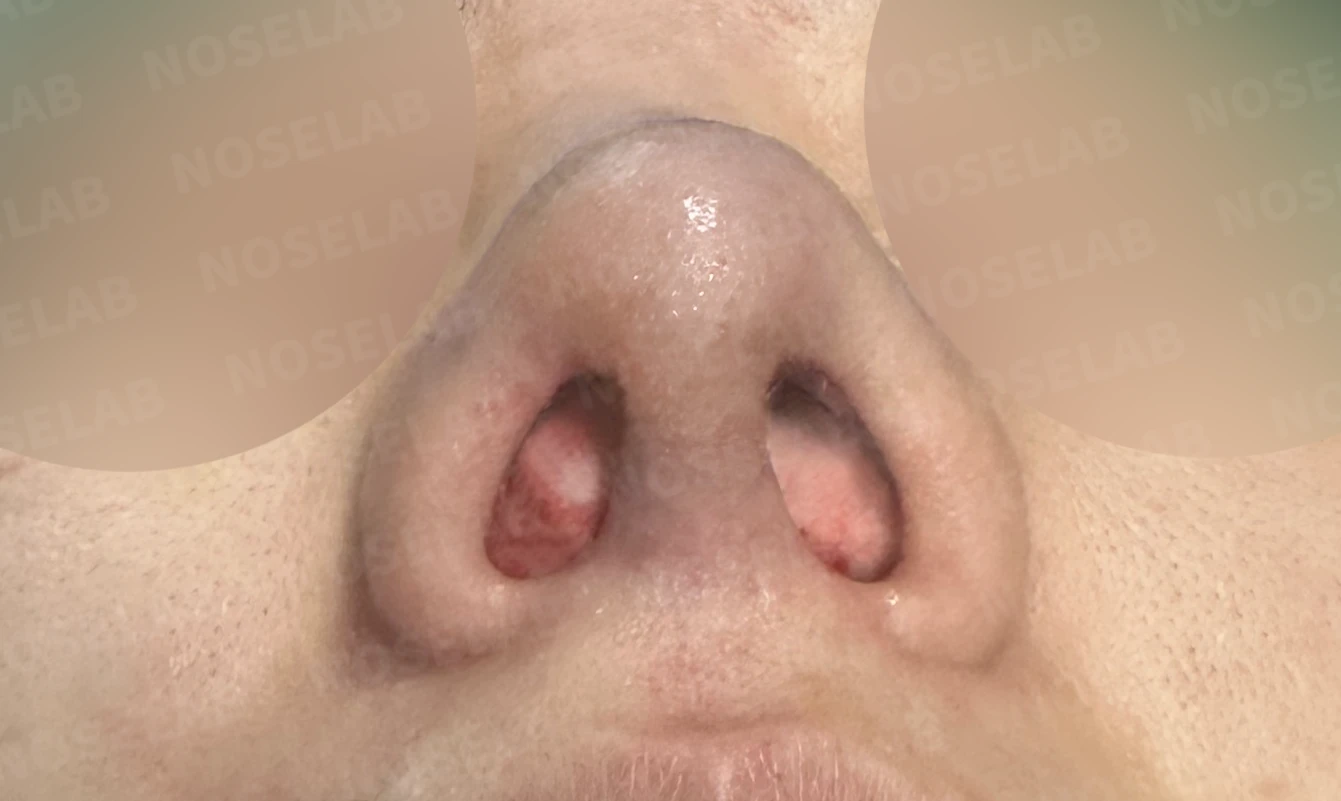
Nostril view on day 0 immediately after surgery. Photos taken immediately after surgery show swelling and may differ from the final result.
This was a complex case requiring careful reconstruction of a nose deformed by contracture along with restoration of a severely damaged septum.
Treatment of a contracted nose:
Contracture is a serious complication arising from a foreign body reaction. Not only the implant but also the entire capsule must be removed to prevent recurrence. Reconstructing with autologous rib cartilage avoids foreign body reactions and provides a reliable solution.
The importance of septal reconstruction:
When the septum is damaged, support for the nasal tip weakens and breathing becomes difficult. Solidly restoring the central framework through reconstruction recovers both function and appearance.
Advantages of autologous rib cartilage:
Autologous rib cartilage provides sufficient strength and volume. The risk of contracture is minimal, and it resists resorption, offering long-term stability. It is a reliable choice in revision rhinoplasty.
Nasal bone repositioning:
Widened and asymmetric nasal bones can be corrected with lateral osteotomy. Precise repositioning establishes natural width and symmetry.
As a clinic specializing in revision rhinoplasty, we will continue to do our best to resolve serious complications such as contracture and deliver natural results. This has been Dr. Peter C. Kang, Medical Director. Thank you.
#closedrhinoplasty #closedrevisionrhinoplasty #contractednosecorrection #autologousribcartilage #septalreconstruction #lateralosteotomy #nasalfunctionalimprovement #revisionspecialist

Limitations and risks
When autologous rib cartilage is used, scarring and pain may remain at the donor site on the chest, and pneumothorax (pleural injury) can occur rarely. Over time, the grafted cartilage may warp or undergo partial resorption.
When revising after implant removal, contracture may progress again after removal, the nasal height and length may decrease, and staged surgery may be necessary depending on the skin condition.
When the septum is corrected at the same time, nasal obstruction may persist or recur, and in rare cases, septal perforation or changes in smell may occur.
Common potential risks include infection, bleeding, asymmetry, scarring, skin necrosis, and insufficient improvement; results vary depending on individual skin condition and previous surgical history.