Hello, I am Dr. Peter C. Kang.
Today, I would like to introduce a case in which a severe contracted nose that developed 15 years after rhinoplasty was successfully corrected.
Reconstruction of a contracted nose is not simply a revision rhinoplasty; it is a highly challenging surgery that requires total reconstruction.
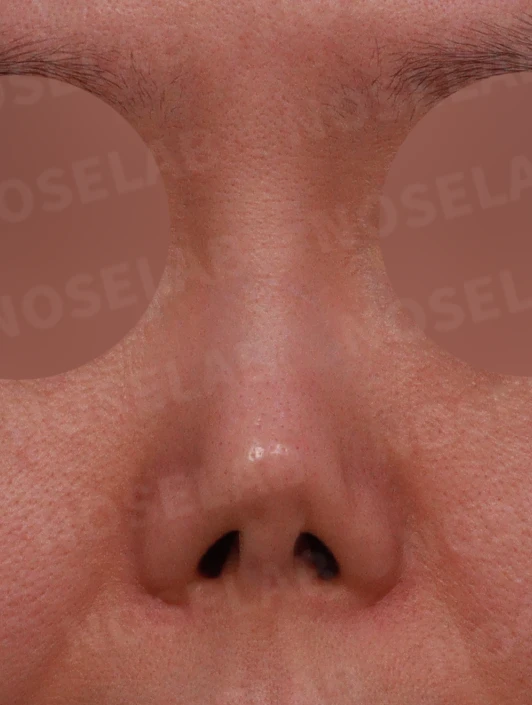
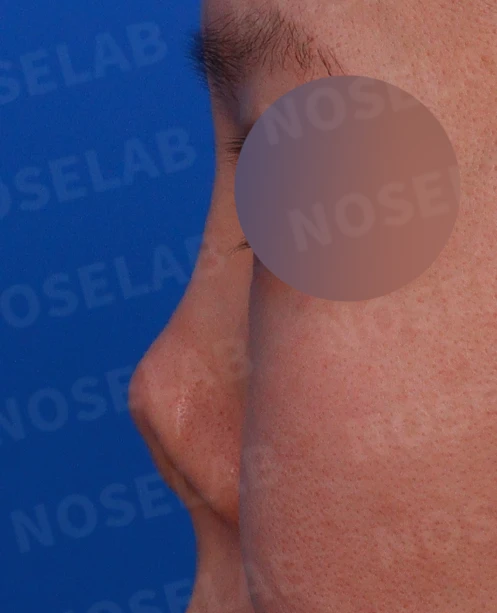
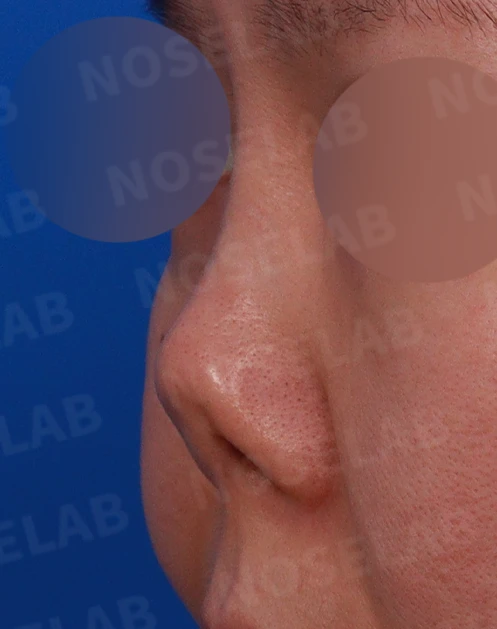
Front, left profile, and oblique views
Patient information and symptoms
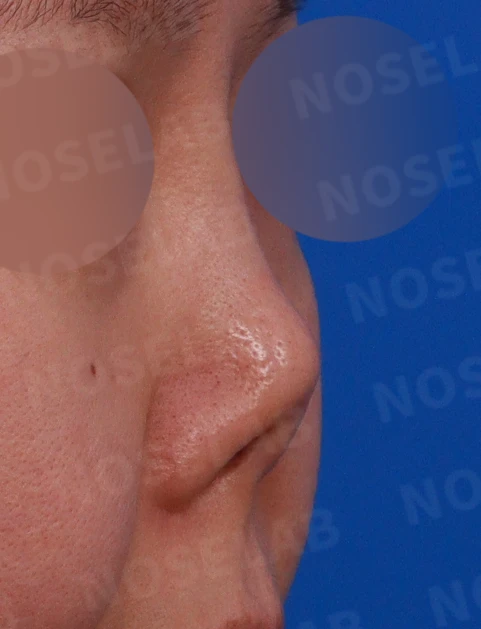
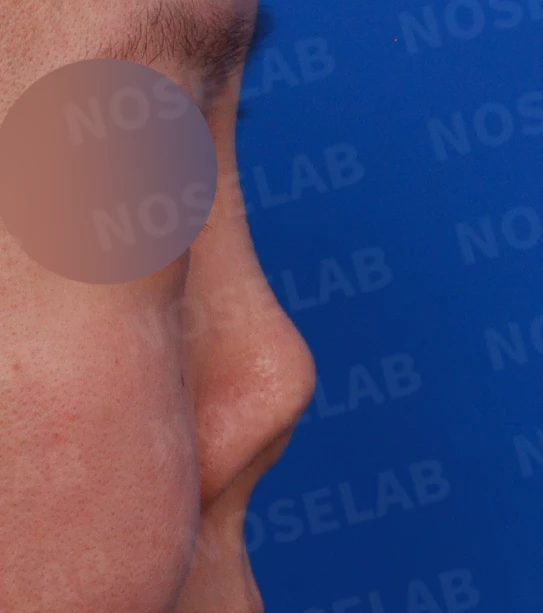
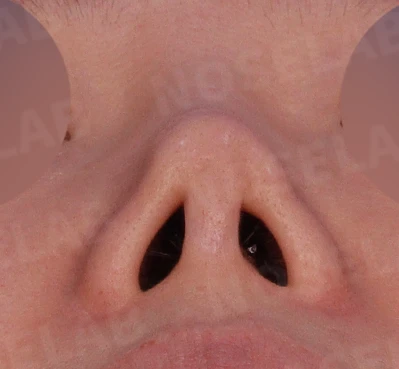
Oblique view, profile, nostril view
The patient underwent nasal surgery in 2008 using a silicone implant and septal cartilage, and had revision surgery the following year due to contracture. Currently, the patient was suffering from nasal obstruction and rhinitis symptoms.
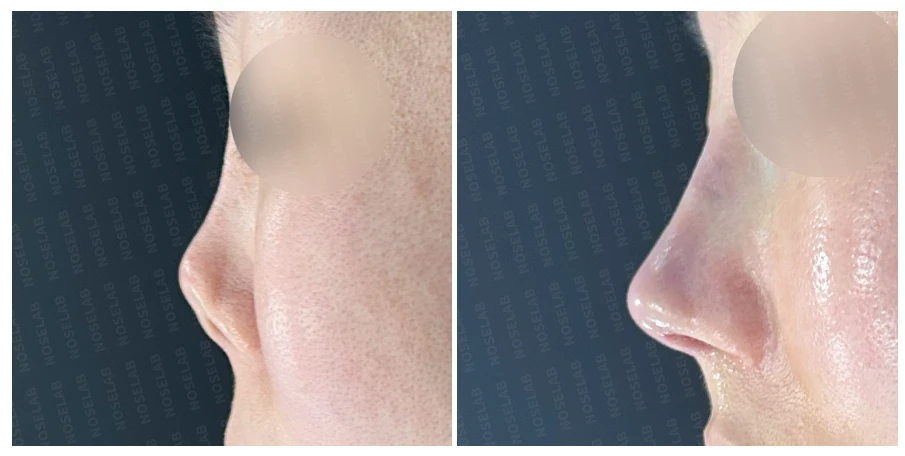
On the front view, excessive nostril show was visible and the tip skin was puckered. On the profile, the tip was severely upturned and the nasolabial angle was very wide. The radix was also set high, and the nostril view revealed asymmetry with a columella deviated to the right.
Surgical plan and procedure
The most crucial aspect of contracted nose reconstruction is the thorough reconstruction of damaged cartilage frameworks. To achieve this, a step-by-step approach was carried out as follows.
Pre-treatment
First, stem cell injection therapy was administered to improve the skin condition and prepare the skin envelope to stretch sufficiently.
Structural removal and reconstruction
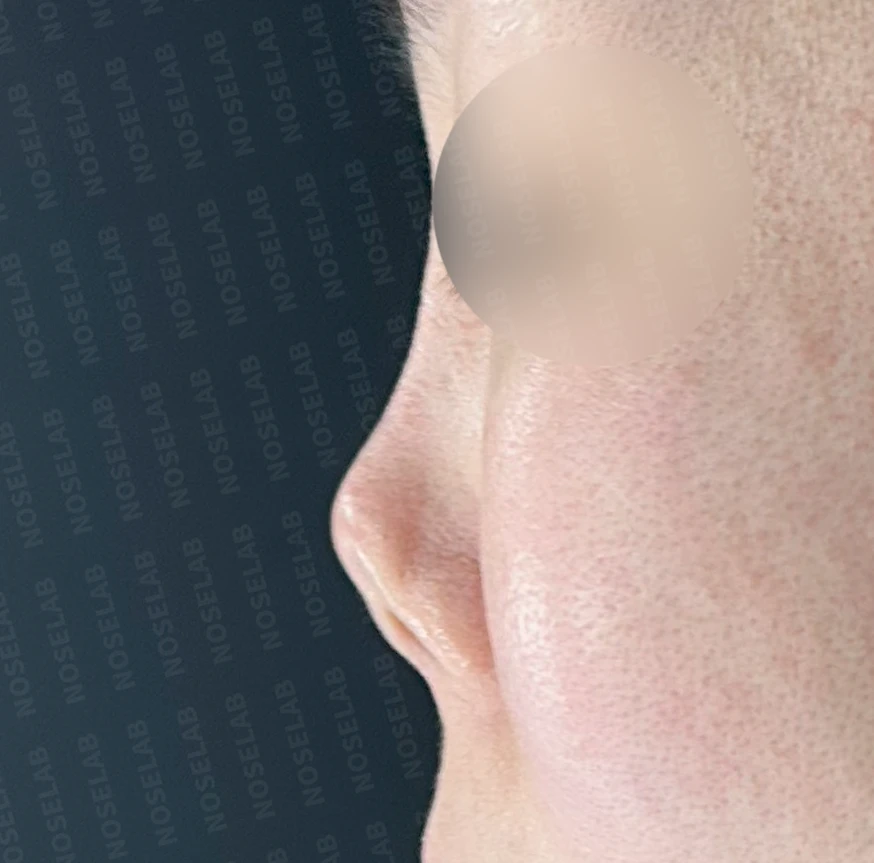
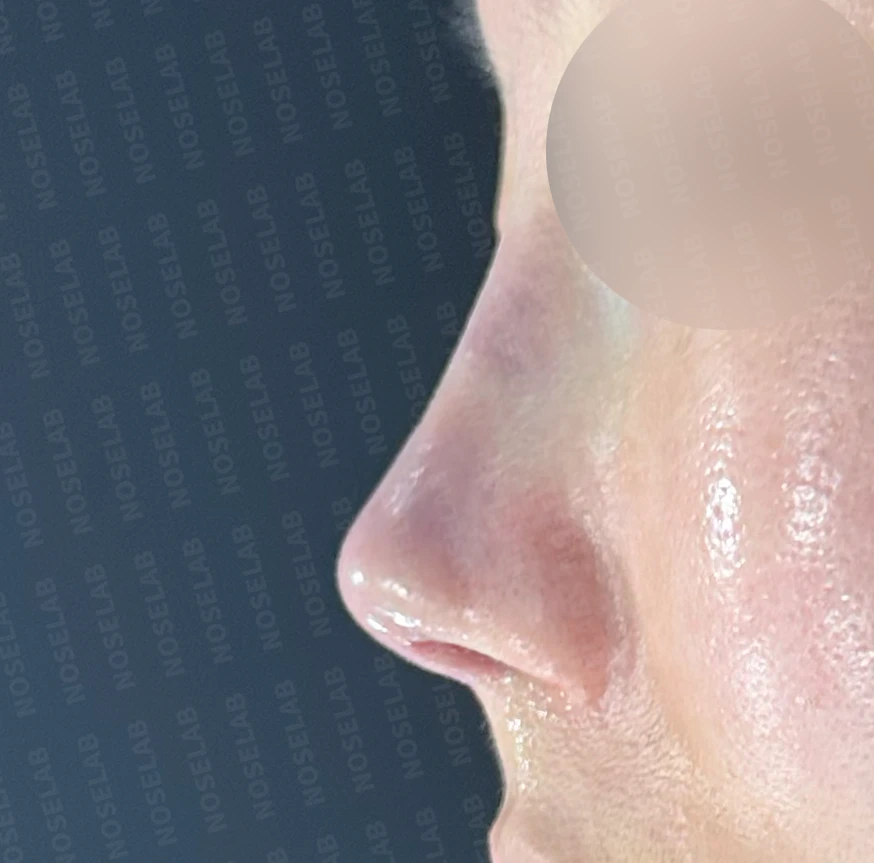
Before surgery / Day 0 immediately after surgery Photos taken immediately after surgery show swelling and may differ from the final result.
During surgery, the contracted scar tissue beneath the tip skin and the capsule surrounding the previous silicone implant were completely removed. Because almost no septal cartilage remained, complete reconstruction was performed using autologous rib cartilage, and the lower lateral cartilages—which remained only in outline—were also thoroughly reconstructed.
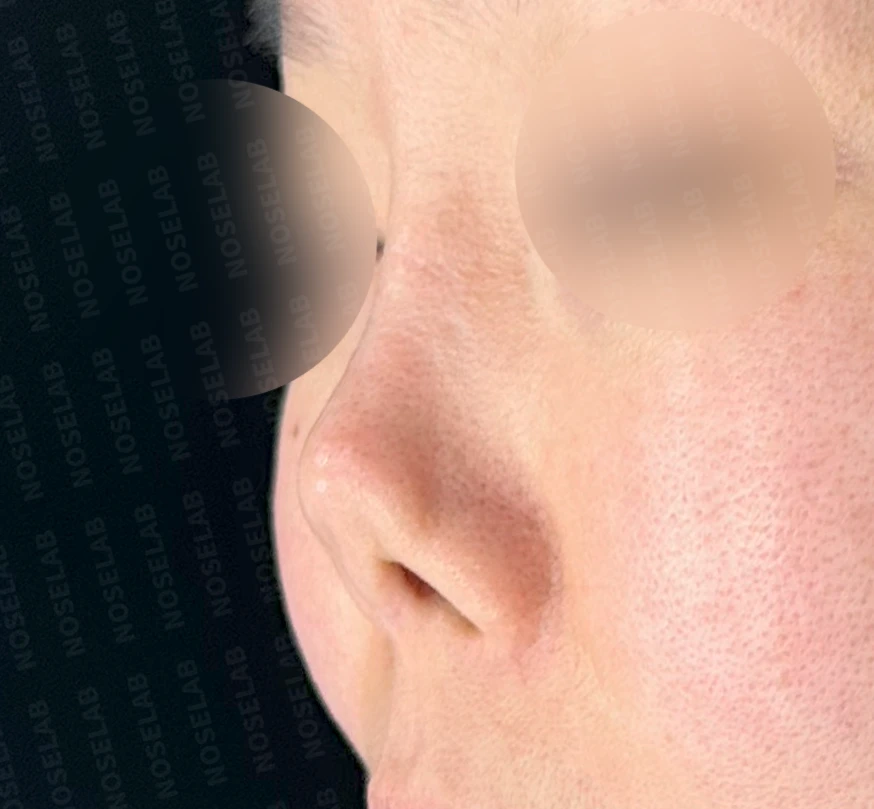
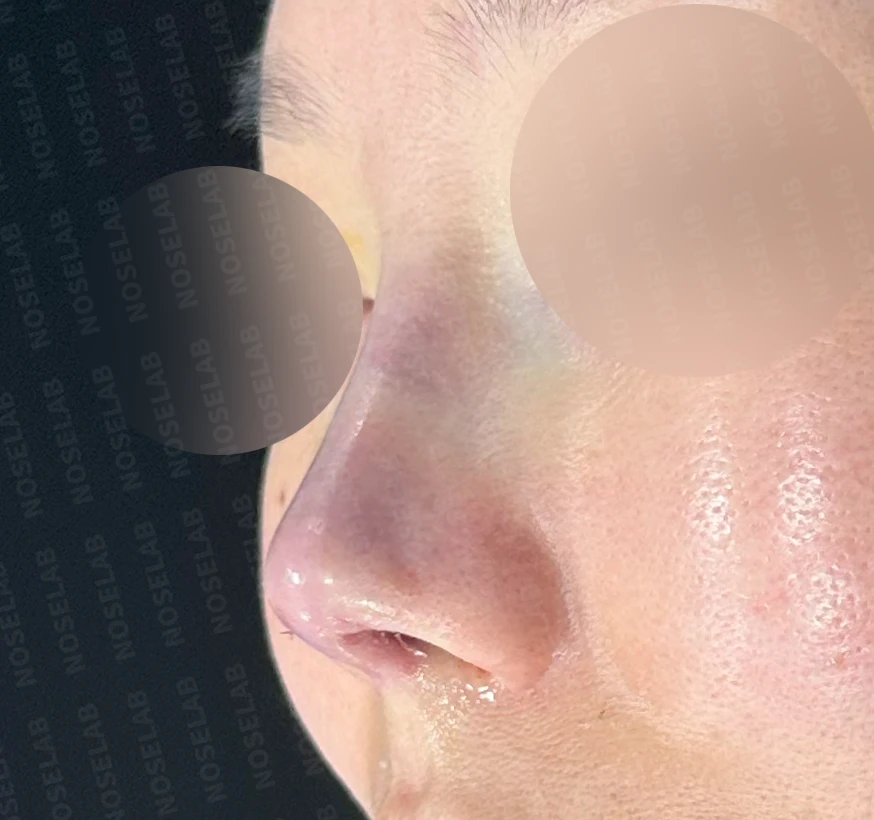
Before surgery / Day 0 immediately after surgery Photos taken immediately after surgery show swelling and may differ from the final result.
Dorsal height restoration
The nasal bridge, which had become severely flattened after removing the implant and capsule, was elevated with autologous rib cartilage in harmony with the nasal tip.
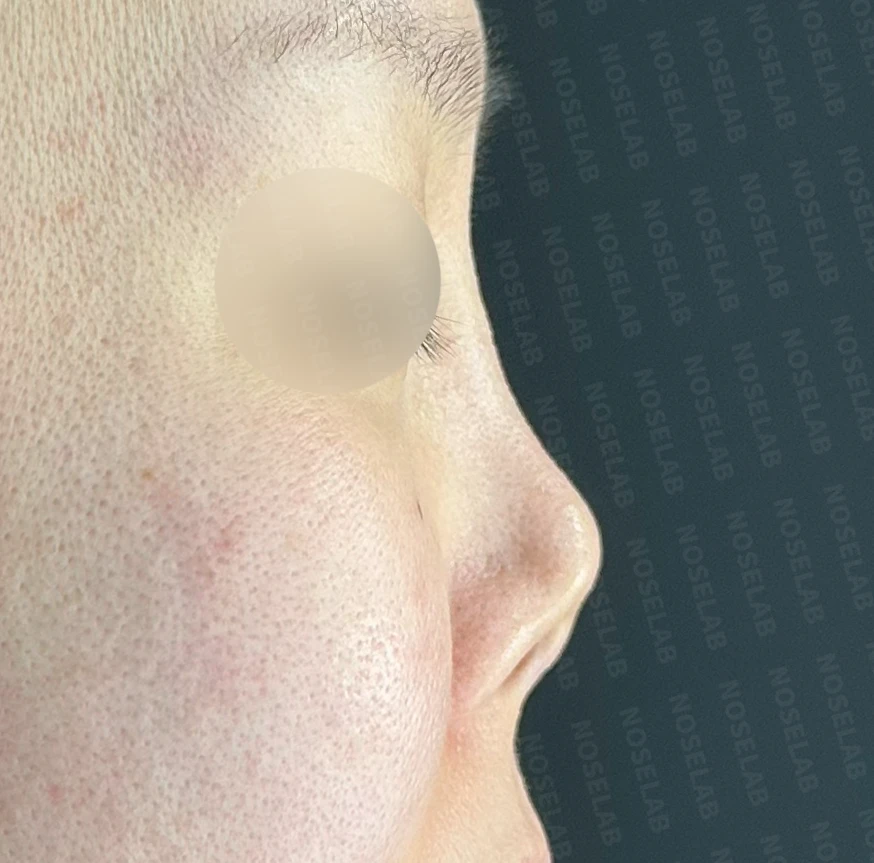
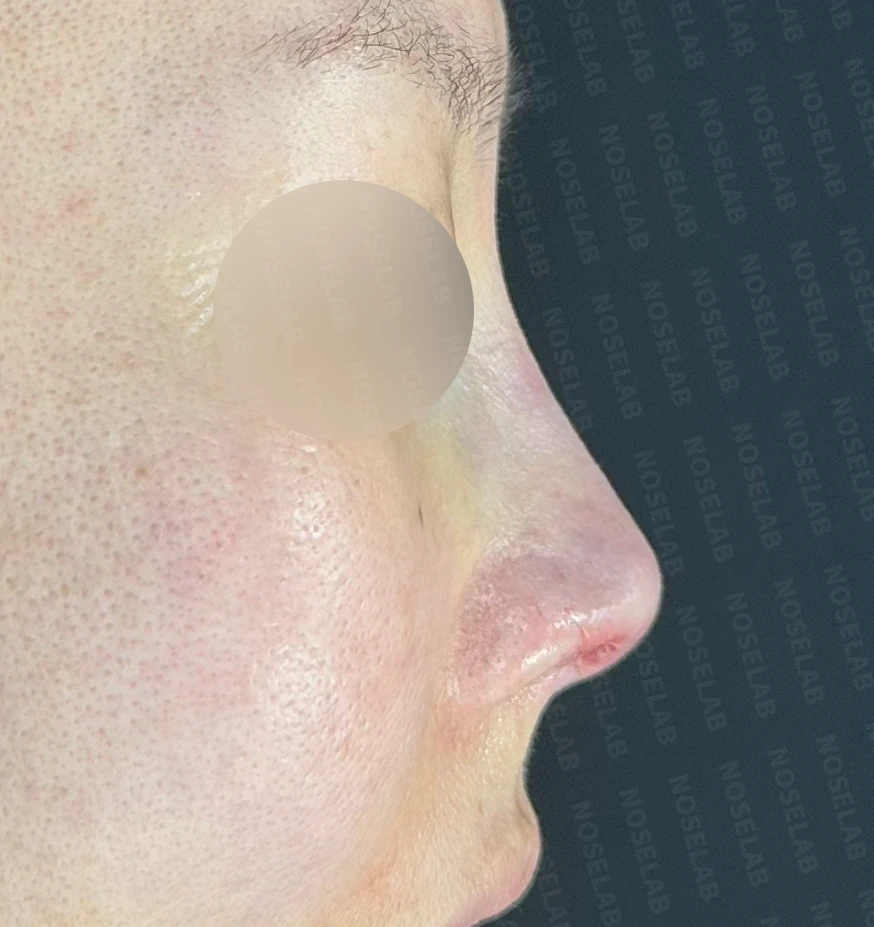
Before surgery / Day 0 immediately after surgery Photos taken immediately after surgery show swelling and may differ from the final result.
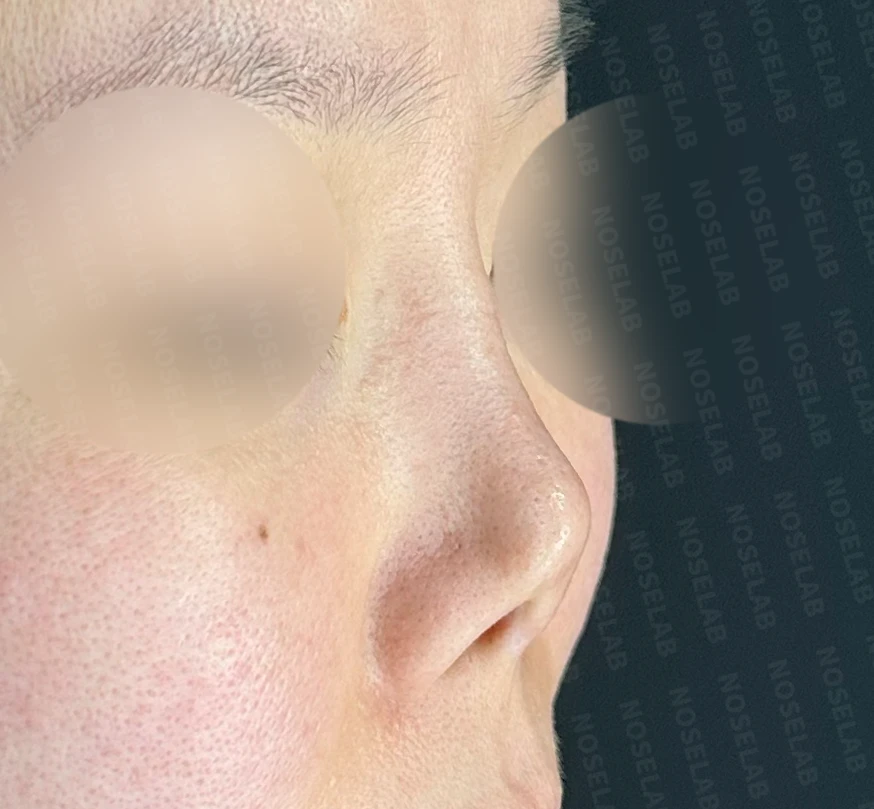
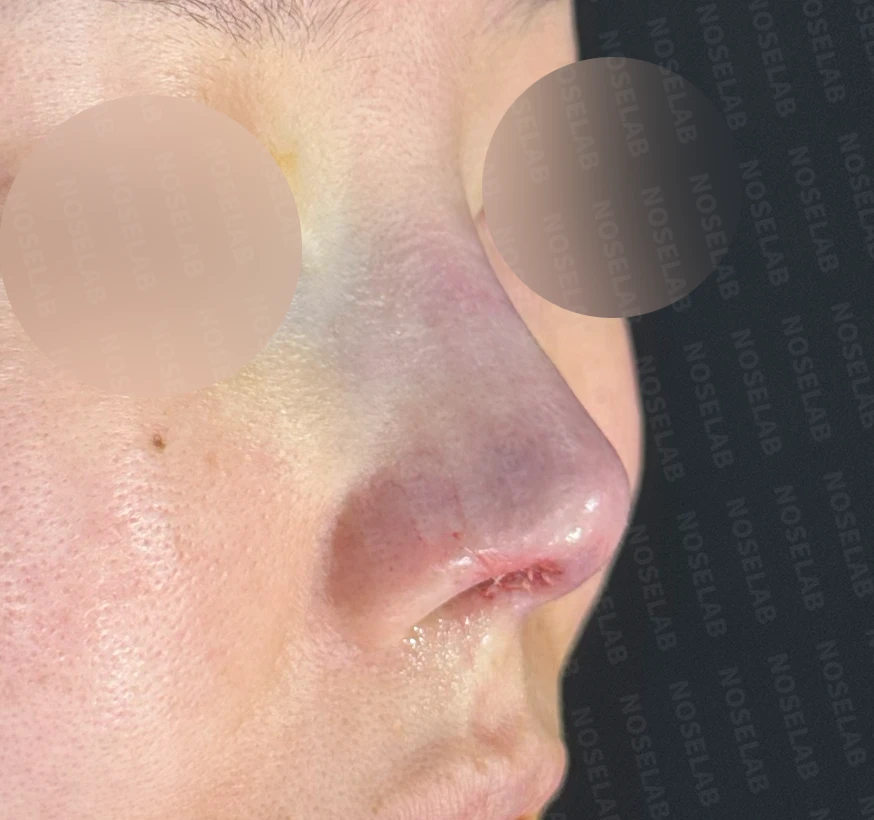
Before surgery / Day 0 immediately after surgery Photos taken immediately after surgery show swelling and may differ from the final result.
🌟 Surgical results
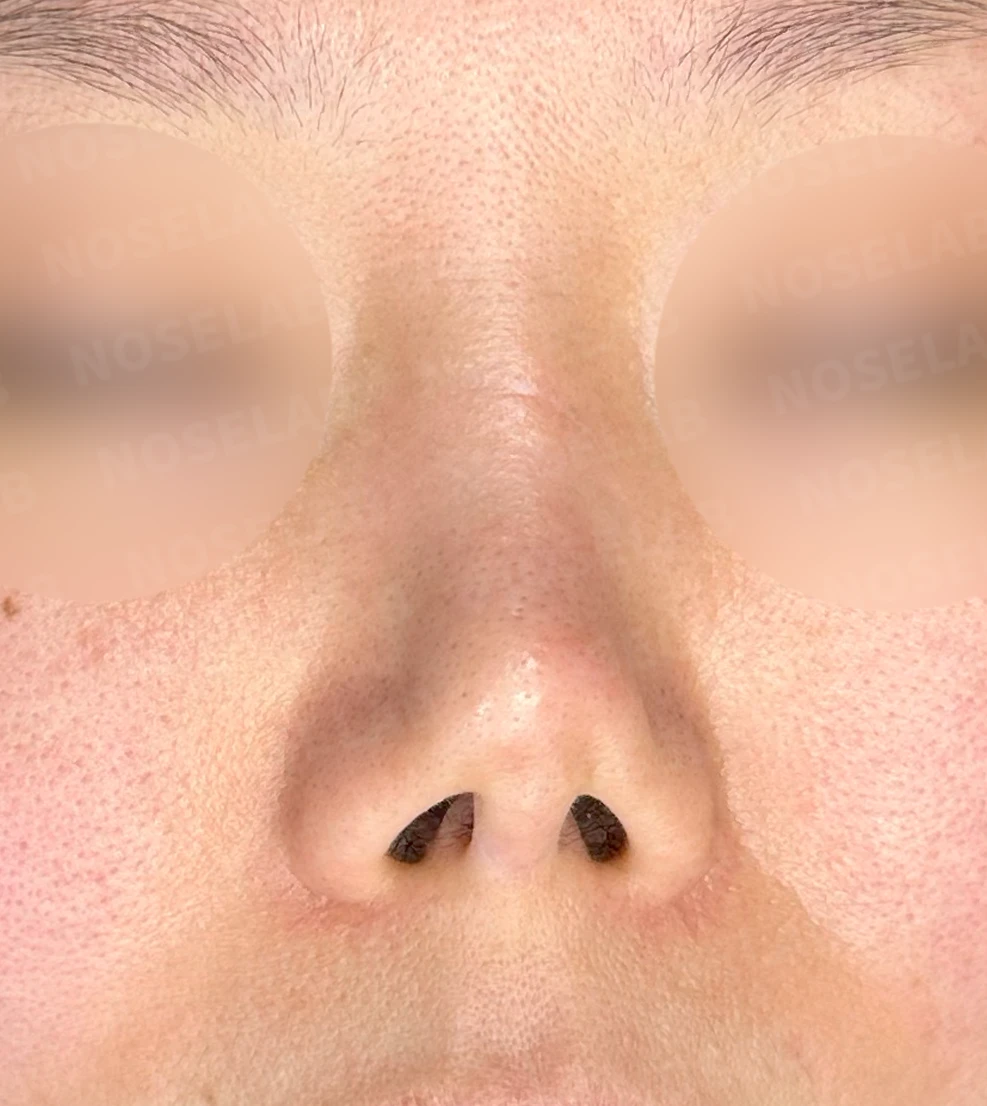
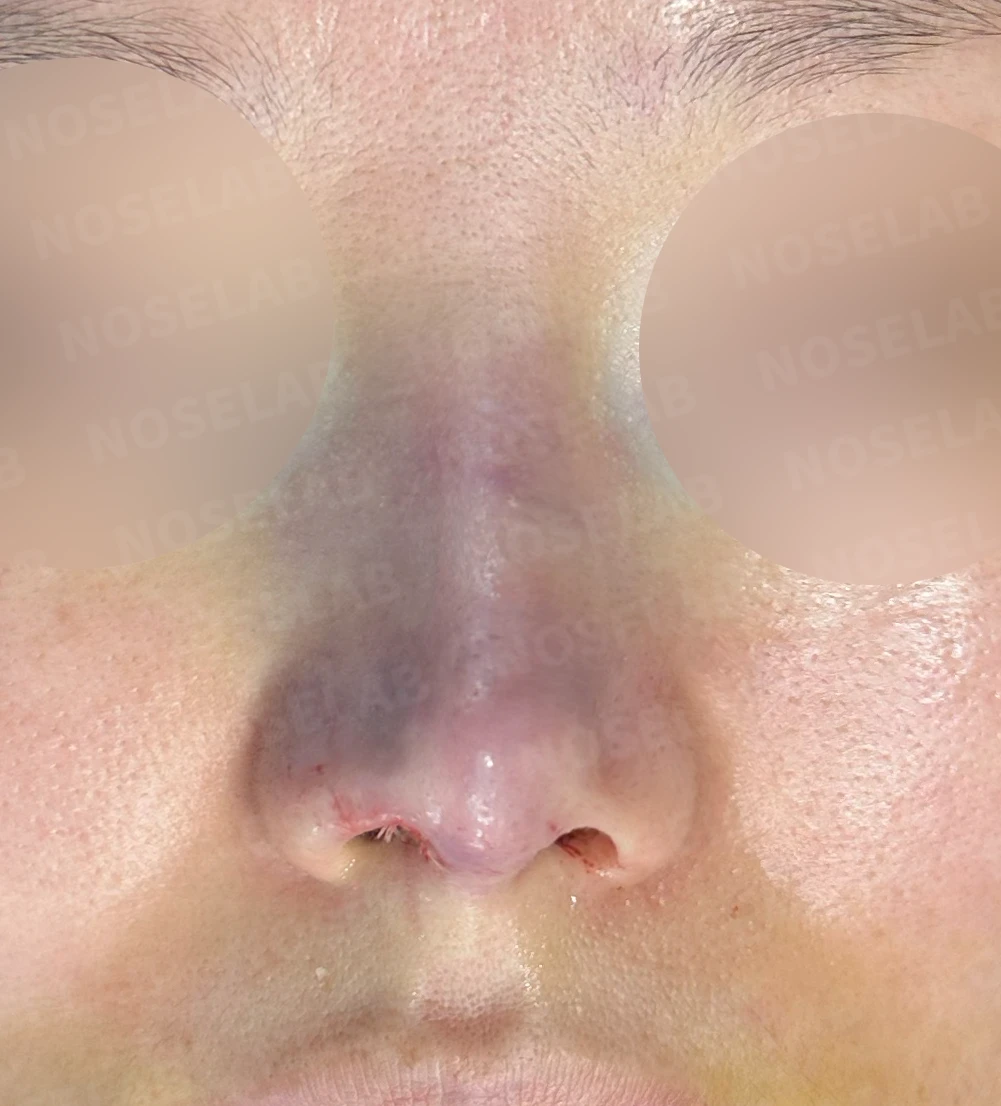
Before surgery / Day 0 immediately after surgery Photos taken immediately after surgery show swelling and may differ from the final result.
As seen in the day 0 photos immediately after surgery, the overall structure of the nose has been stably improved. In particular, the deformity caused by contracture was resolved, restoring natural nasal contours. Photos taken immediately after surgery show swelling and may differ from the final result.
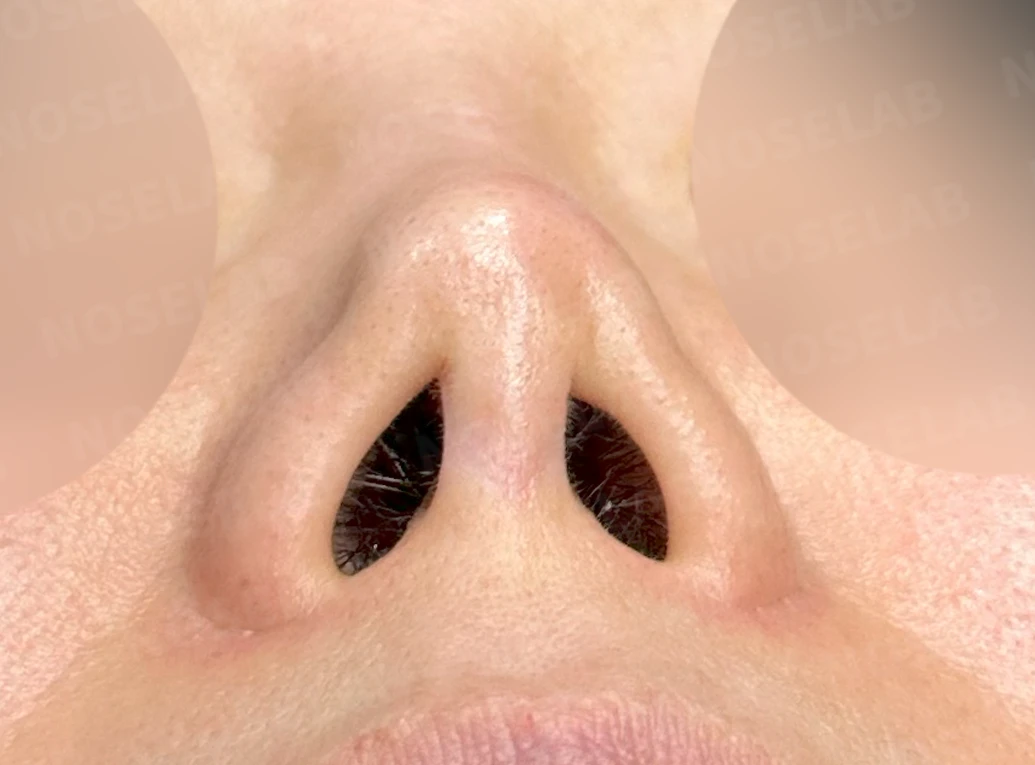
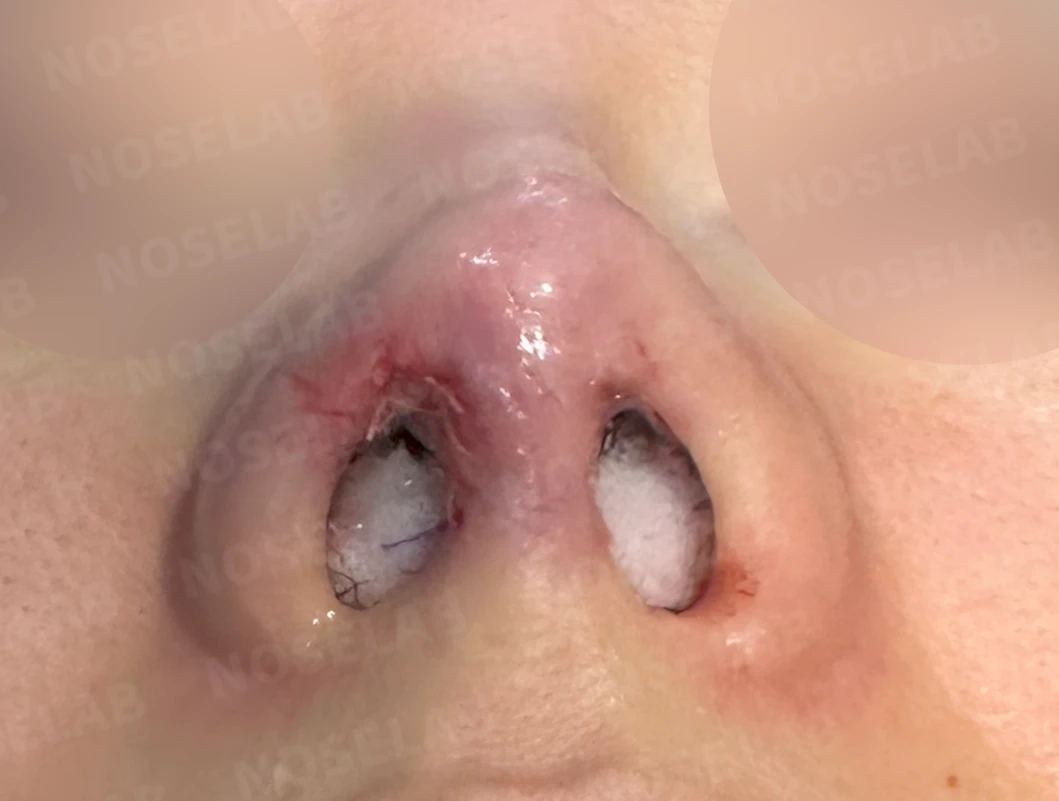
Before surgery / Day 0 immediately after surgery Photos taken immediately after surgery show swelling and may differ from the final result.
💡 Closing remarks
Immediately after surgery (day 0): front, left profile, oblique view Photos taken immediately after surgery show swelling and may differ from the final result.
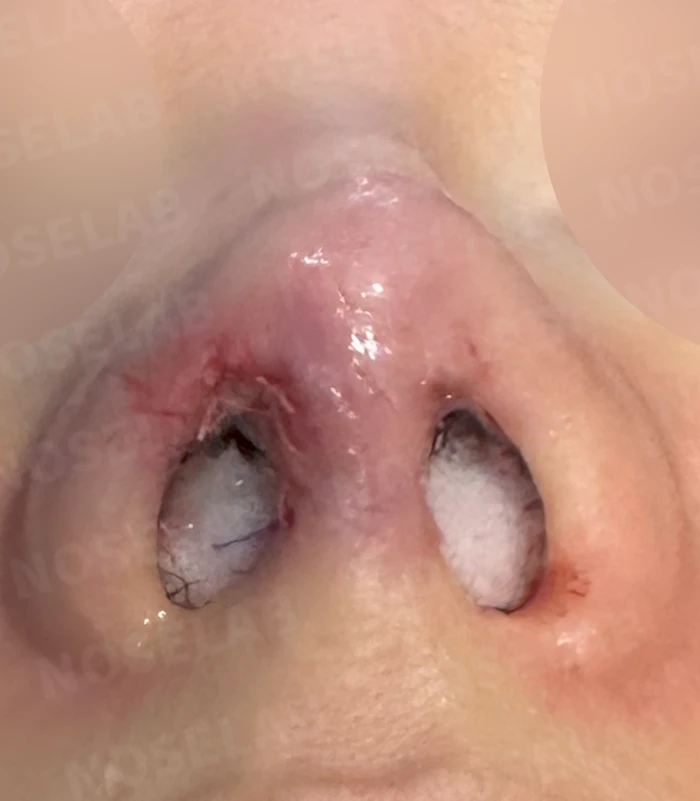
Immediately after surgery (day 0): nostril view, right profile, oblique view Photos taken immediately after surgery show swelling and may differ from the final result.
Correction of a severe contracted nose is one of the most demanding procedures in nasal surgery. At its core lies the complete reconstruction of the septal and lower lateral cartilages, which requires advanced technique to safely release and stretch the contracted skin envelope.
At NOSELAB, we have shared new beginnings with many patients suffering from contracted noses. To honor our patients' trust and confidence, we promise to continuously study and advance toward achieving better results.
I hope this case offers helpful insight to those struggling with complications of a contracted nose.
This was Dr. Peter C. Kang. Thank you.
Thank you.
#contractednosereconstruction #autologousribcartilagegraft #implantfreerhinoplasty #revisionrhinoplasty #septalreconstruction #nasalobstructionrelief #contractednosecorrection #closedrhinoplasty #customrhinoplasty

Limitations and risks
When autologous rib cartilage is used, scarring and pain may remain at the donor site on the chest, and pneumothorax (pleural injury) can occur rarely. Over time, the grafted cartilage may warp or undergo partial resorption.
When revising after implant removal, contracture may progress again after removal, the nasal height and length may decrease, and staged surgery may be necessary depending on the skin condition.
When the septum is corrected at the same time, nasal obstruction may persist or recur, and in rare cases, septal perforation or changes in smell may occur.
Common potential risks include infection, bleeding, asymmetry, scarring, skin necrosis, and insufficient improvement; results vary depending on individual skin condition and previous surgical history.