Hello, I am Dr. Peter C. Kang.
Today, I would like to introduce the case of a patient who visited our clinic after undergoing five previous nasal surgeries and suffering from severe septal damage.
🔍 Surgical history
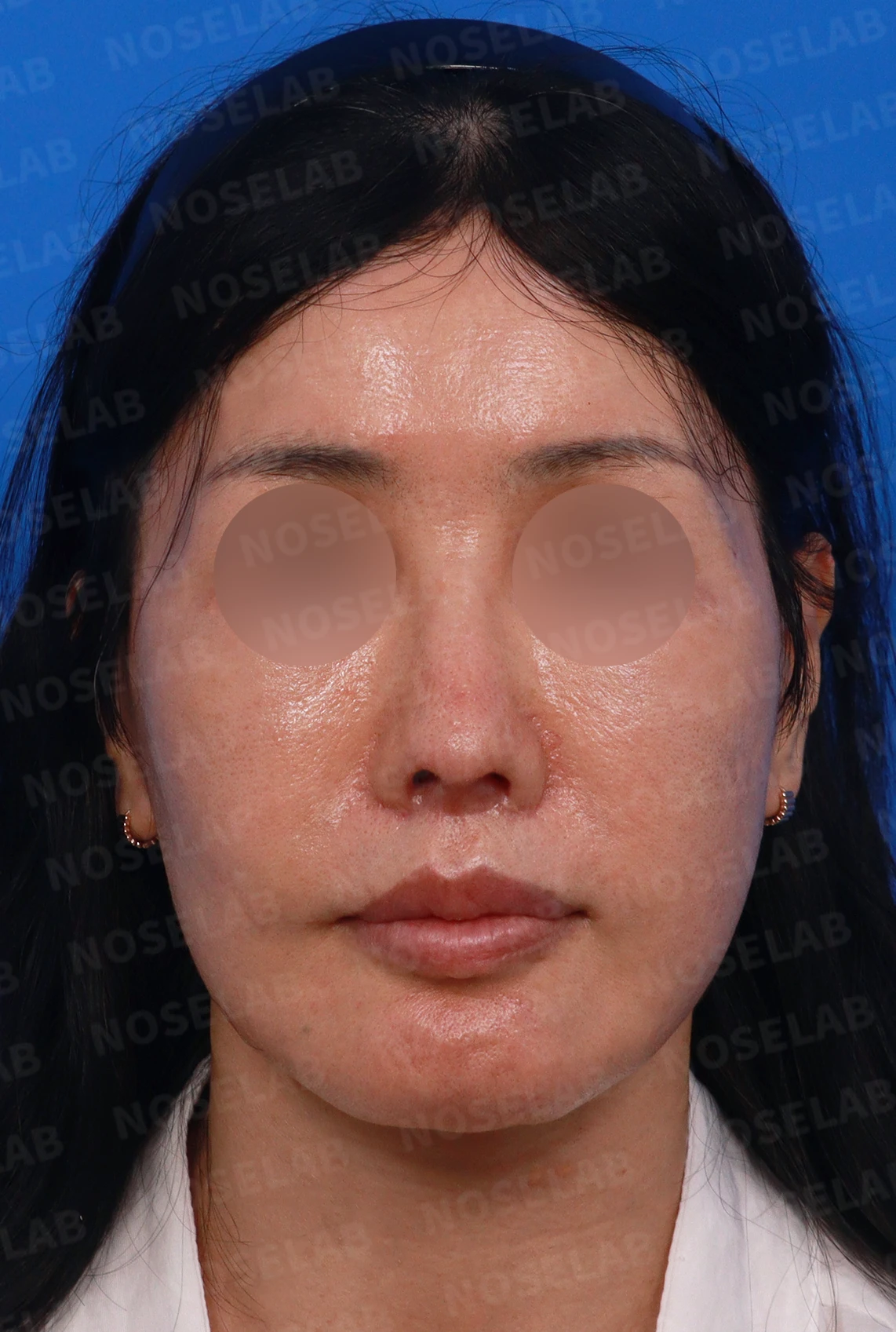
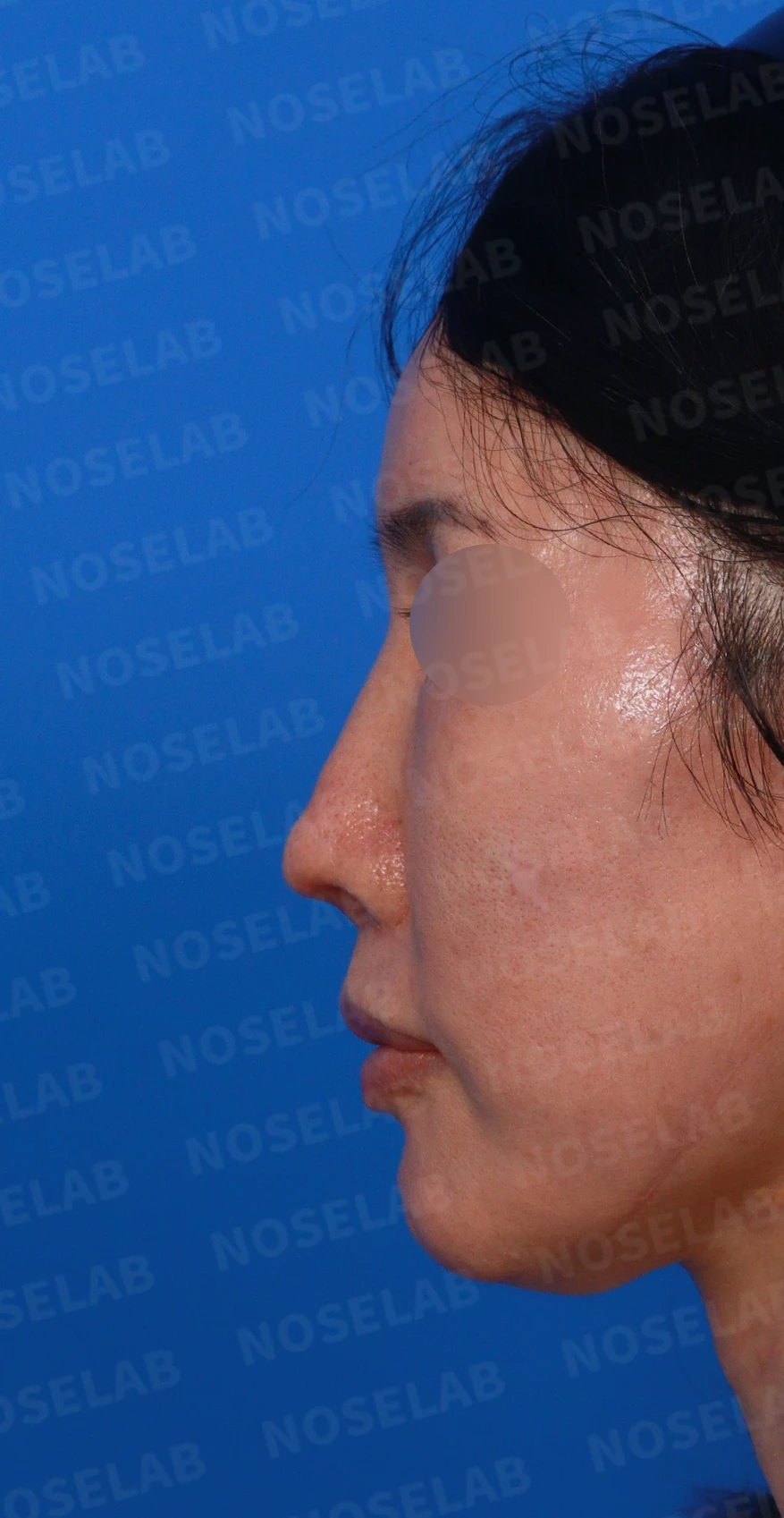
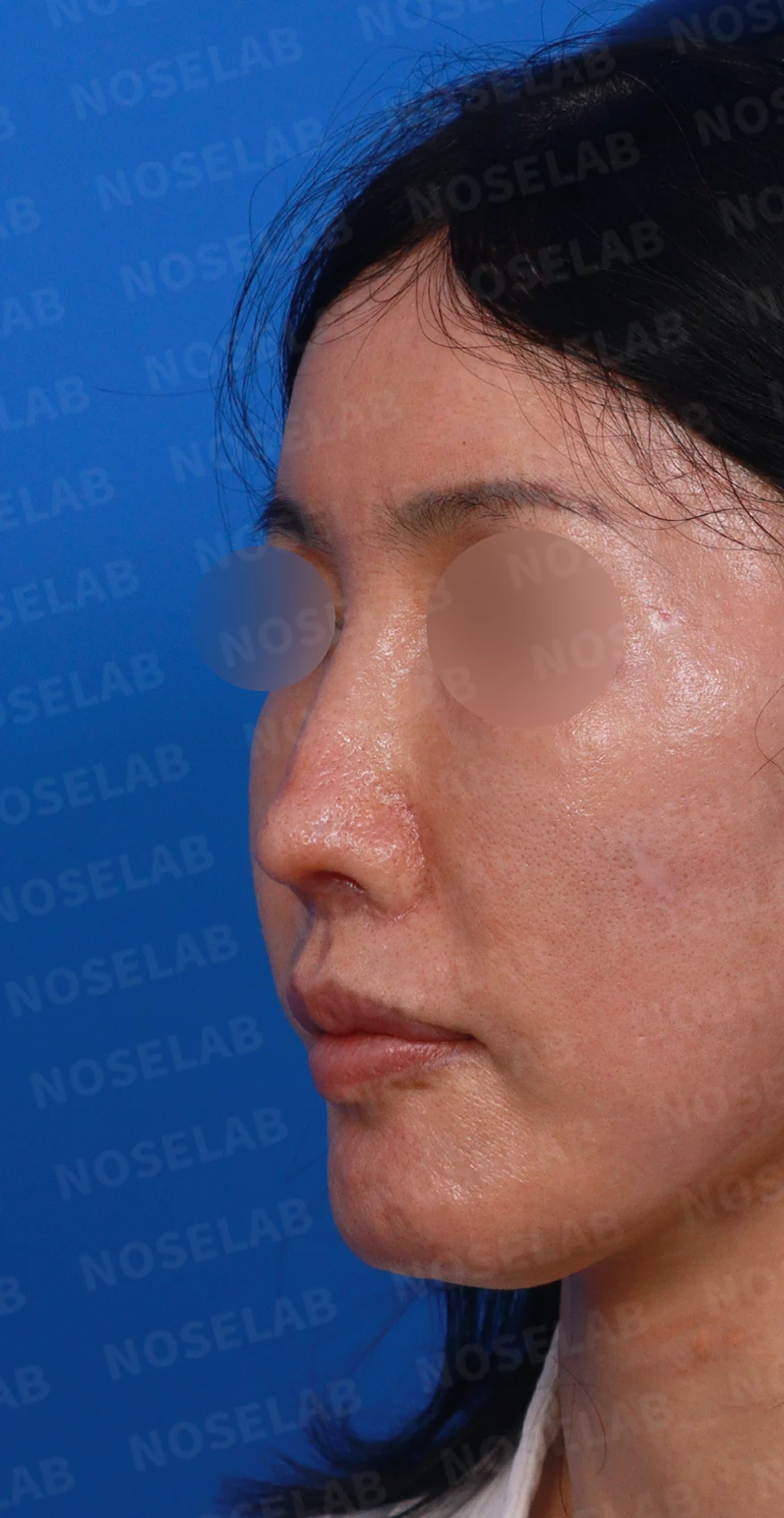
Front, left profile, and oblique views during design consultation.
30 years ago: L-shaped silicone implant
28 years ago: L-shaped silicone implant (crooked nose correction)
15 years ago: Ear cartilage + silicone implant
10 years ago: Ear cartilage + silicone implant
10 years ago: Autologous rib cartilage (deep temporal fascia + rib cartilage on the nasal bridge)
5 years ago: Columellar filler procedure
💉 Patient requests
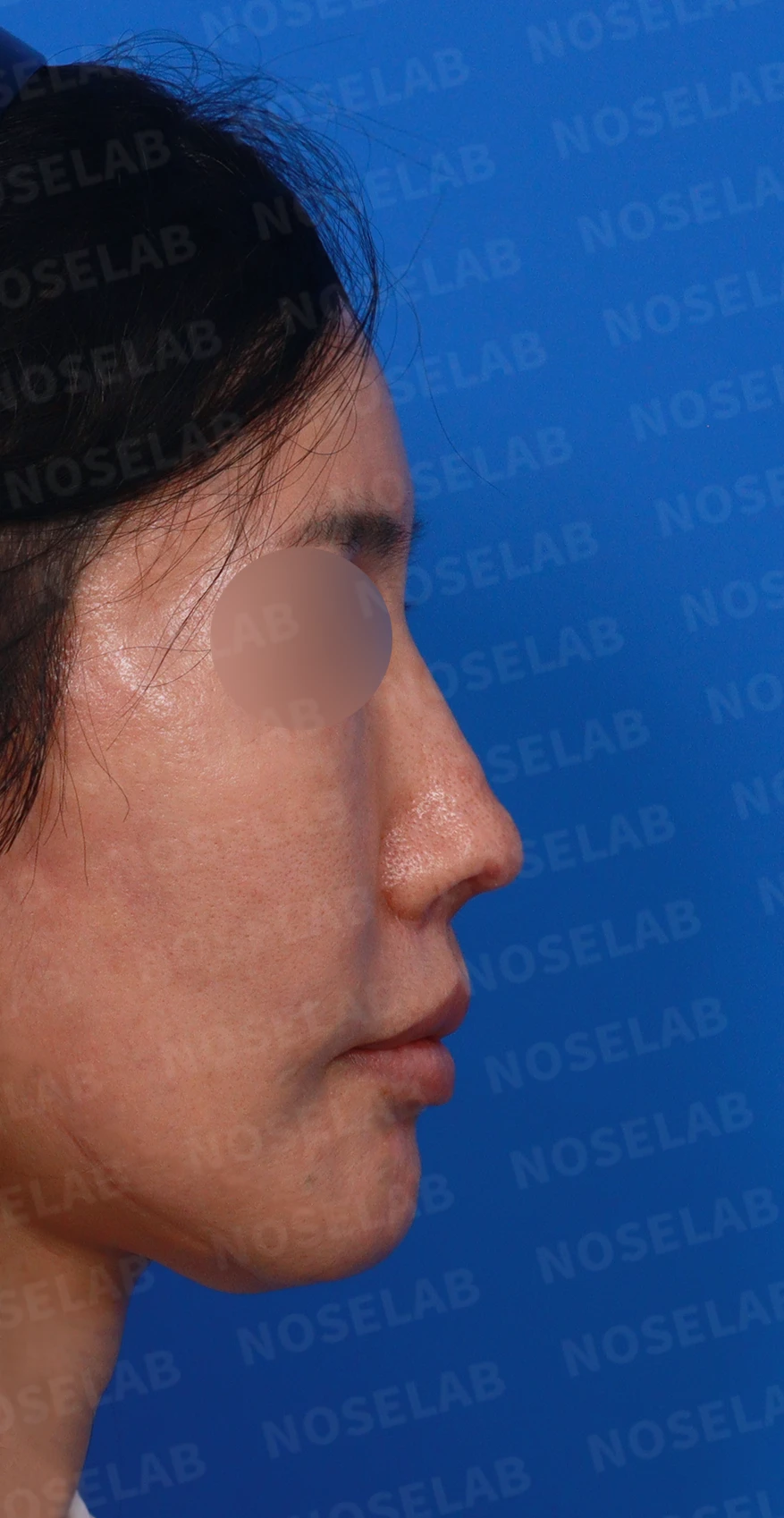
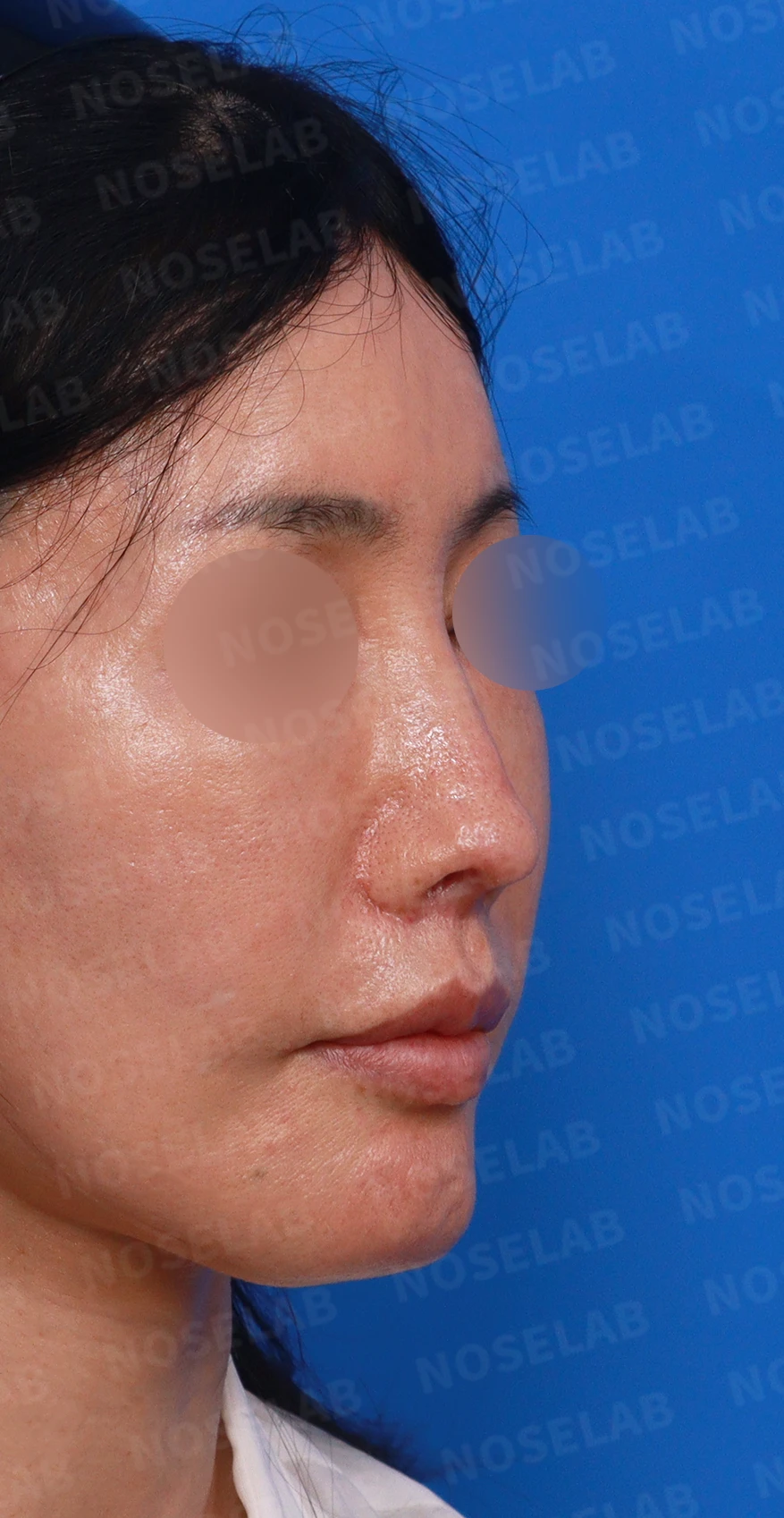
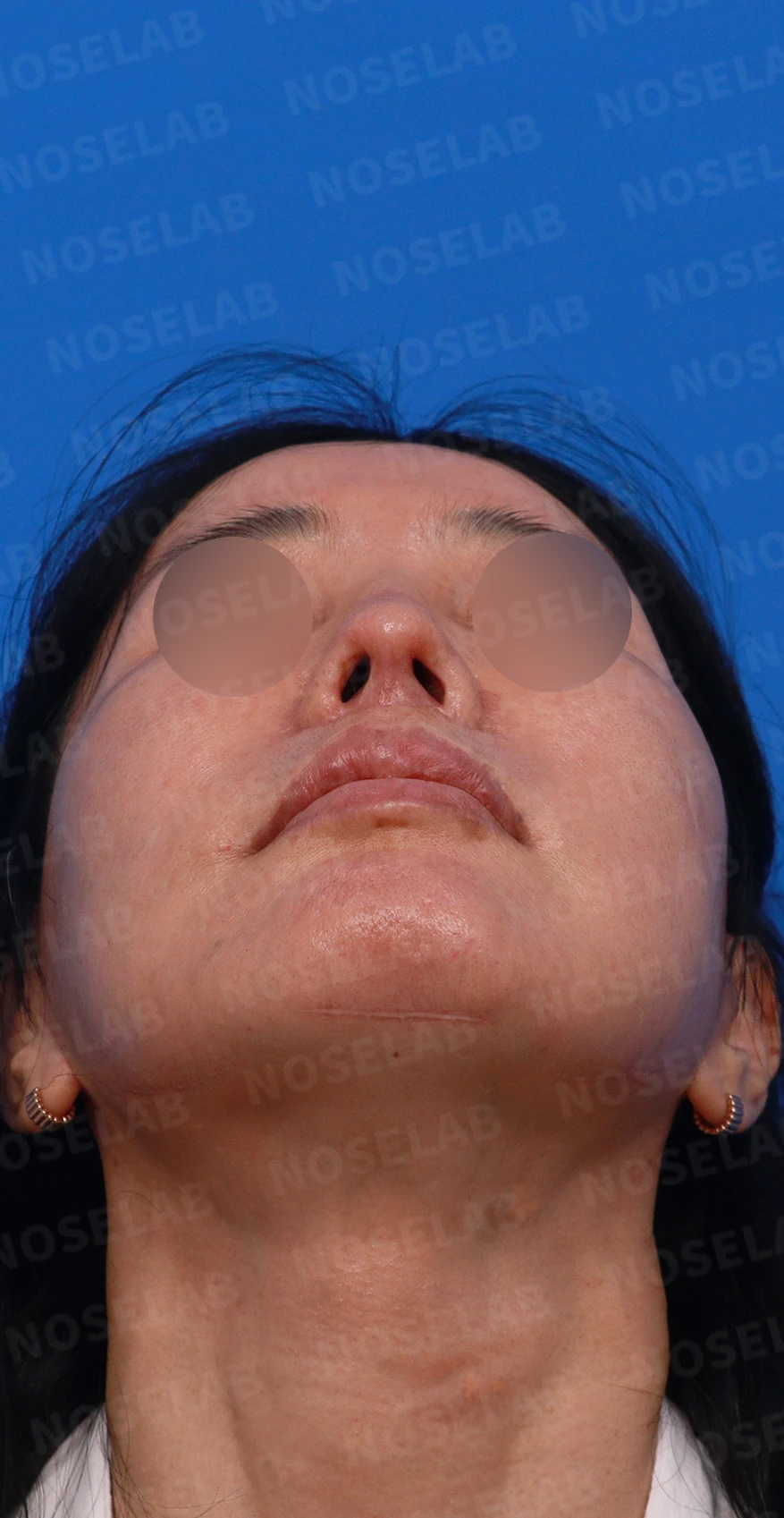
Right profile, oblique, and nostril views during design consultation.
I want the shape of my nasal tip to look natural.
I want the columellar filler removed so my columella looks natural.
I want to lower the radix.
I want a natural height that is not excessively high.
I want an overall softer impression.
🔧 Surgical plan and procedure
In this surgery, the core objectives were reconstructing the severely damaged septum and repurposing existing tissue to create a natural nasal tip.
1. Foreign material removal and tissue evaluation
Complete removal of the columellar filler injected 5 years ago
Assessment of the deep temporal fascia from the previous surgery
Detection of obliquely crooked deep temporal fascia
Detailed evaluation of the extent of septal damage
2. Septal reconstruction using autologous rib cartilage
Confirmation of severe septal damage during surgery
Immediate decision to harvest autologous rib cartilage
Reconstruction of the damaged septum using autologous rib cartilage
Securing structural stability for the central framework of the nose
Improvement of breathing function
3. Repurposing deep temporal fascia
Removal of the previously grafted, obliquely positioned deep temporal fascia
Repurposing the removed fascia to reinforce the skin over the nasal tip
Thickening and reinforcing the thin nasal tip skin
Preserving a natural feel to the touch
Minimizing tissue wastage
4. Natural nasal tip reconstruction
Focusing on creating a natural nasal tip shape
A soft tip without a pinched appearance
An appropriate height that is not excessive
Harmony with the overall face
An elegant tip contour
5. Adjusting the radix
Lowering the radix to achieve natural proportions
Improving the overall balance of nasal length
A smooth transition line from the forehead to the nose
Harmonious facial proportions
6. Nasolabial angle correction
Establishing an appropriate nasolabial angle
Natural profile line
An elegant profile silhouette
A natural columellar position
🌟 Surgical results
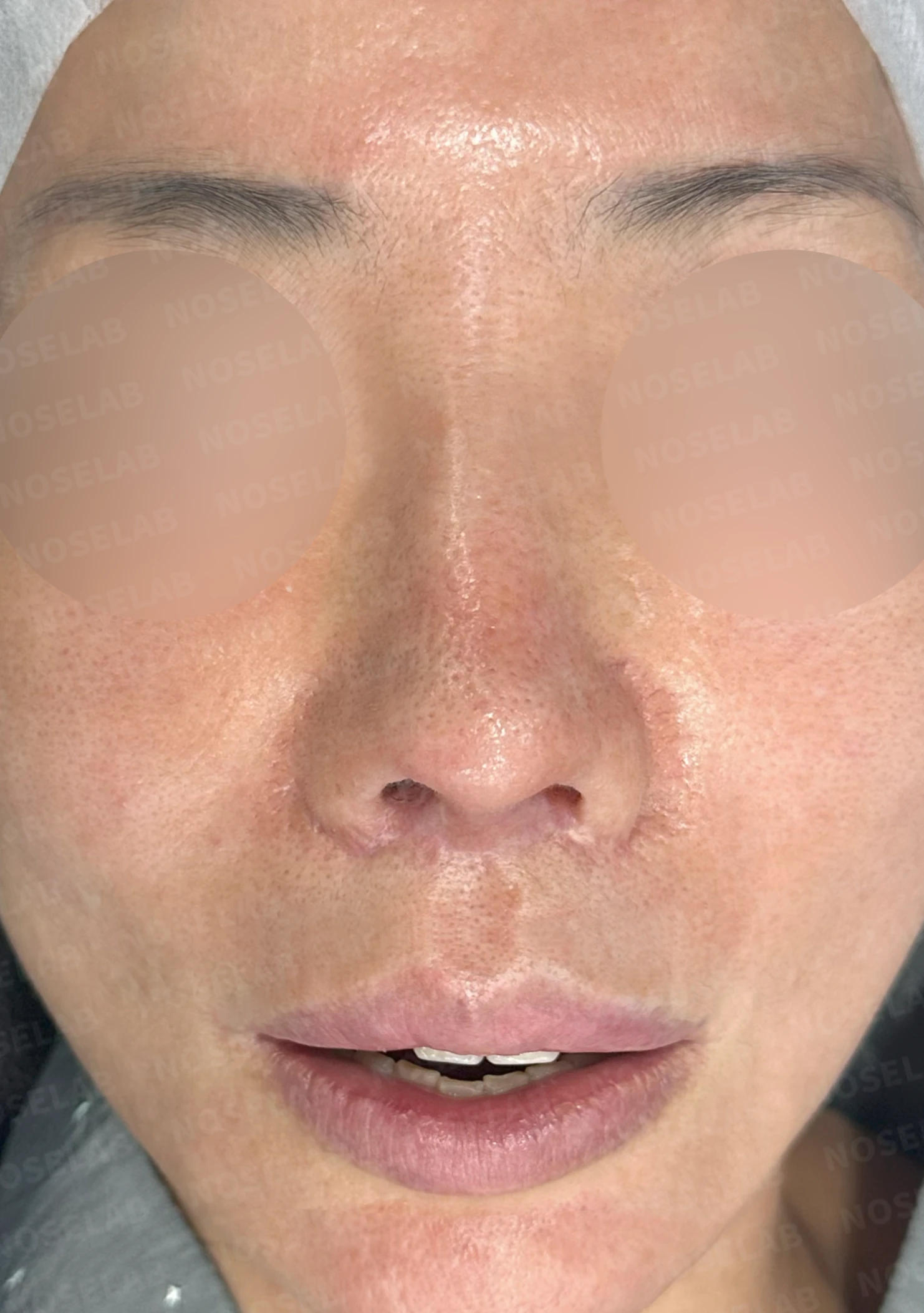
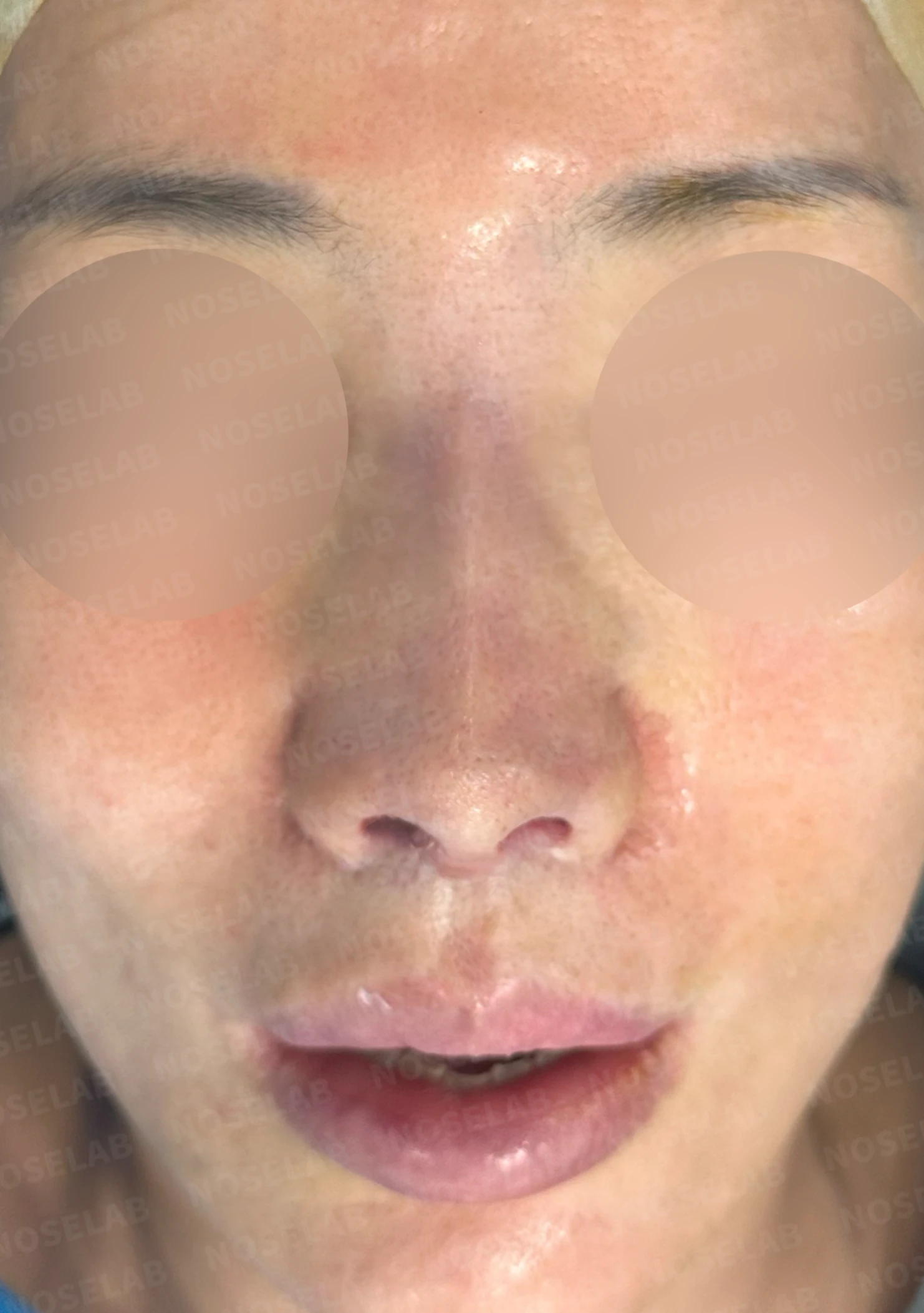
Before surgery / Day 0 immediately after surgery Photos taken immediately after surgery show swelling and may differ from the final result.
Front view changes:
The nasal tip was refined naturally
The radix was lowered for harmonious proportions
A soft tip without a pinched appearance
Enhancing overall facial balance
A natural and refined frontal profile
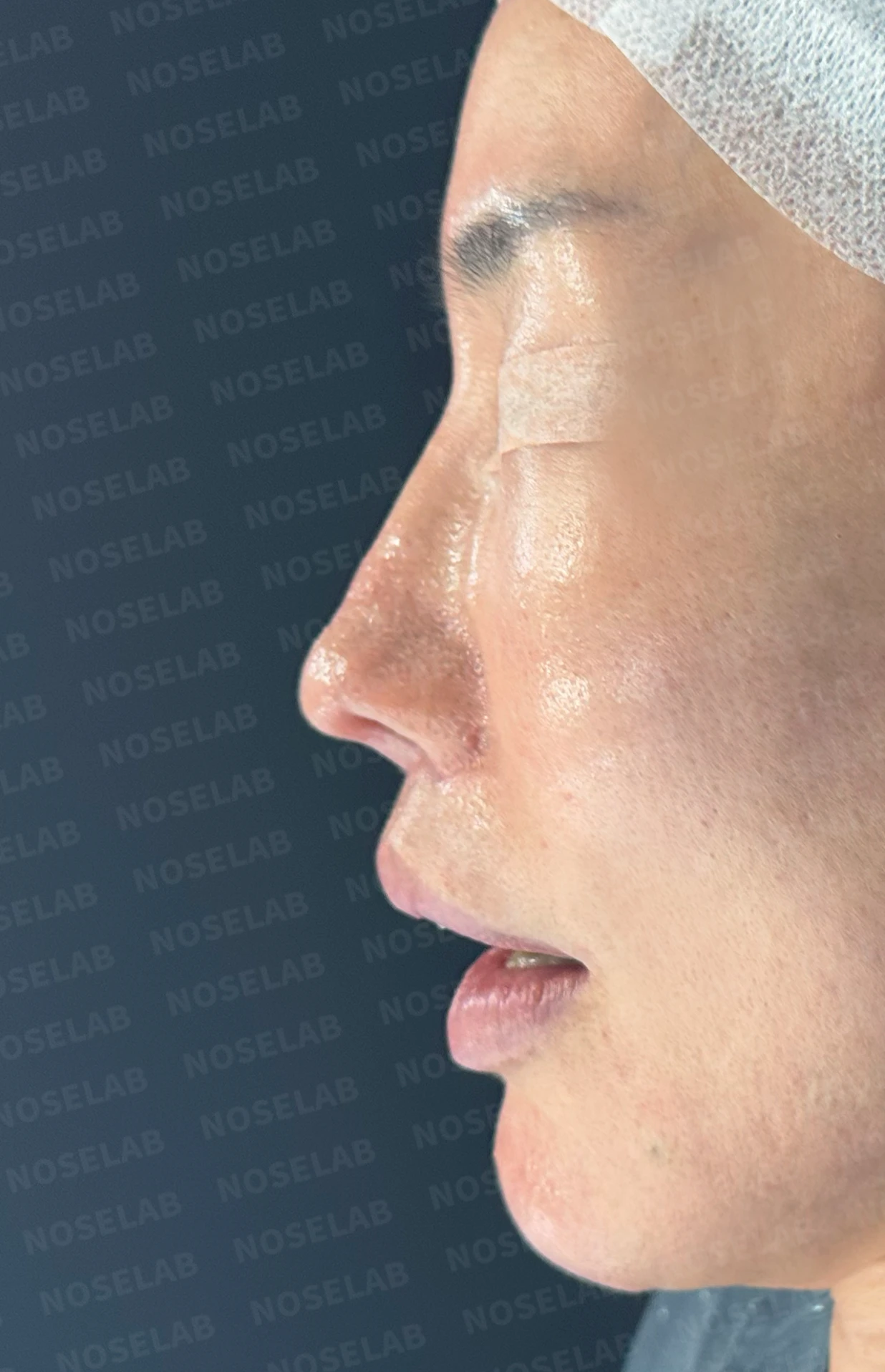
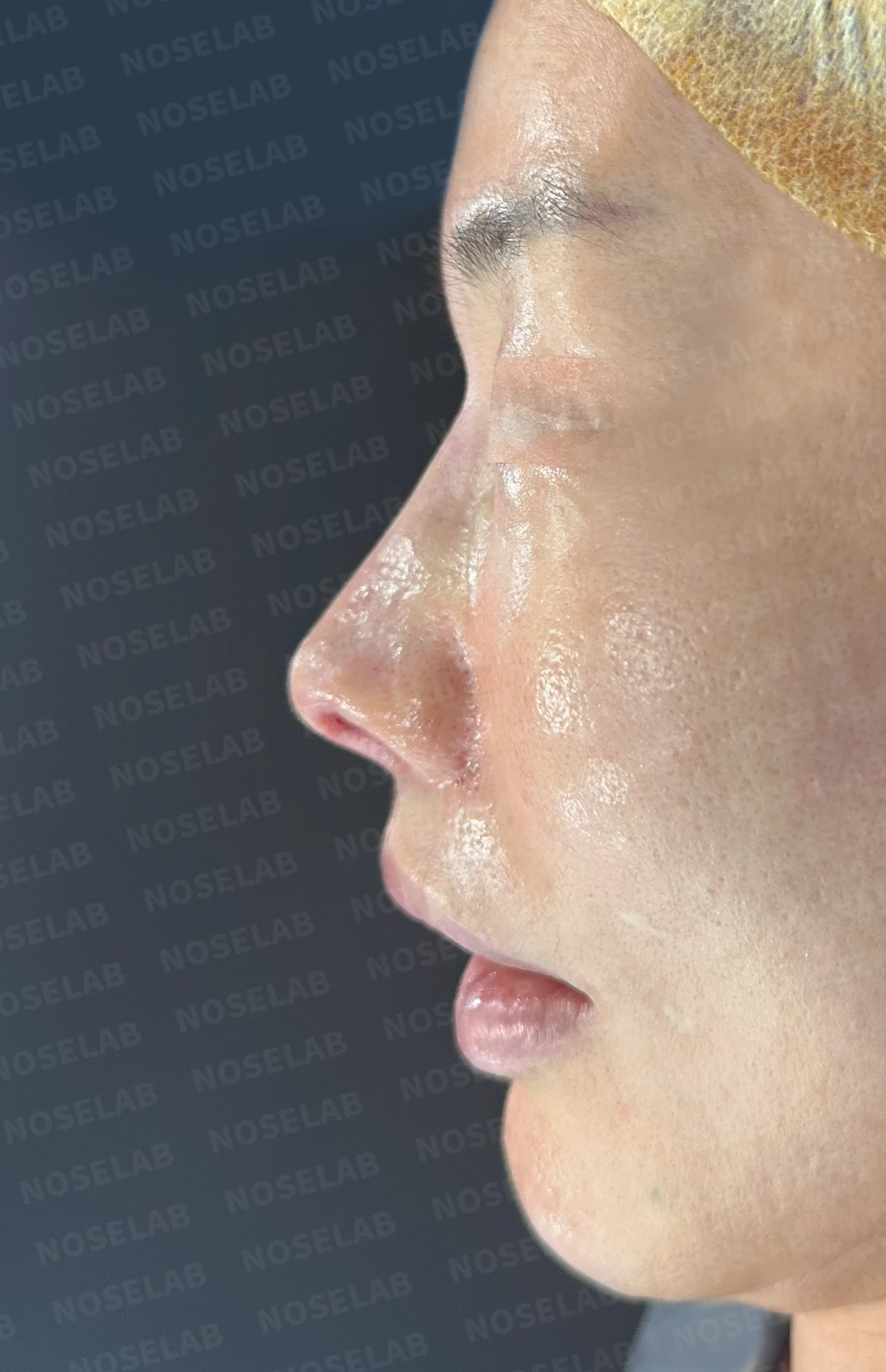
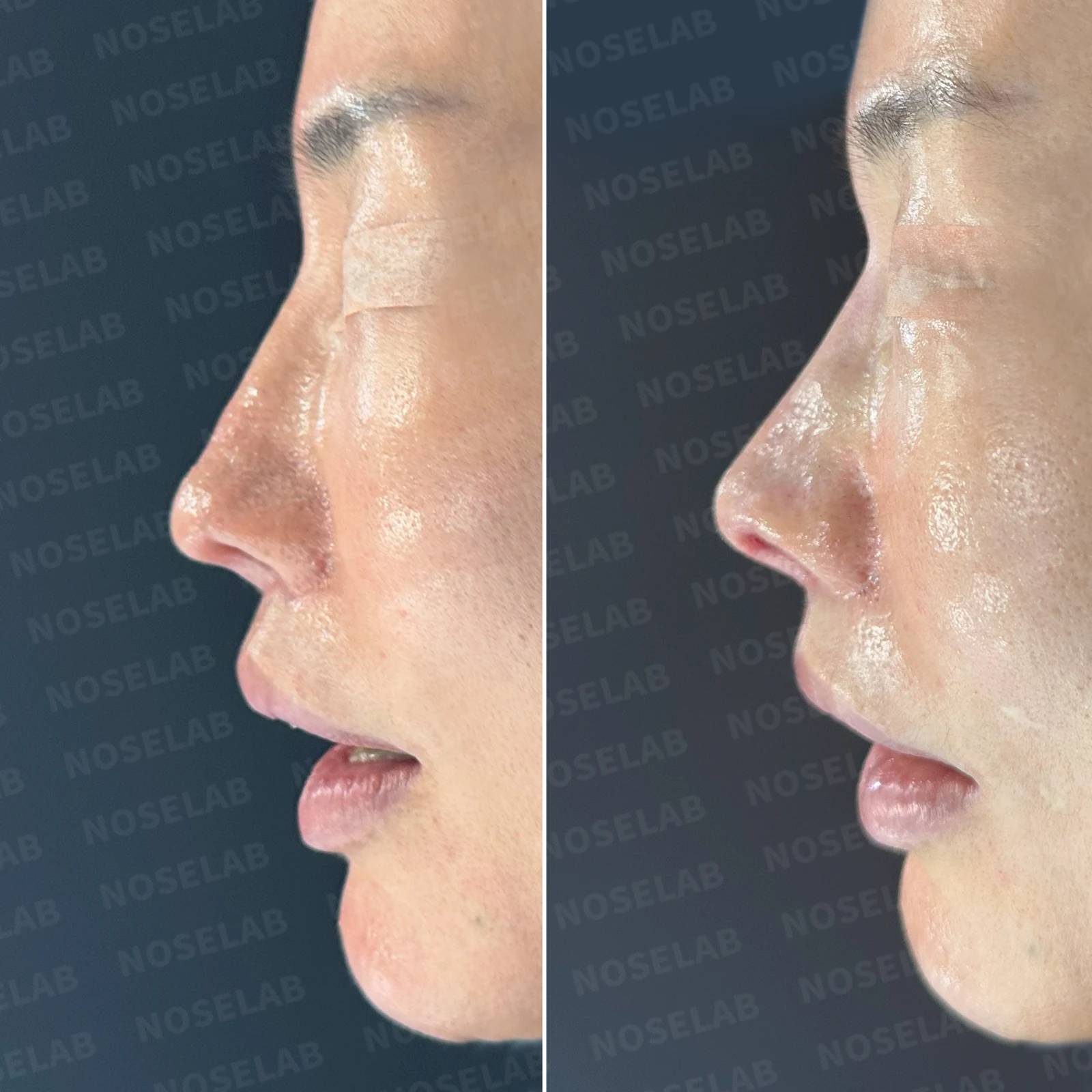
Before surgery / Day 0 immediately after surgery Photos taken immediately after surgery show swelling and may differ from the final result.
Profile changes:
Improved to a natural nasal height
An elegant profile achieved by correcting the nasolabial angle
Soft nasal tip line
A natural transition from the radix to the nasal tip
A refined and harmonious lateral silhouette
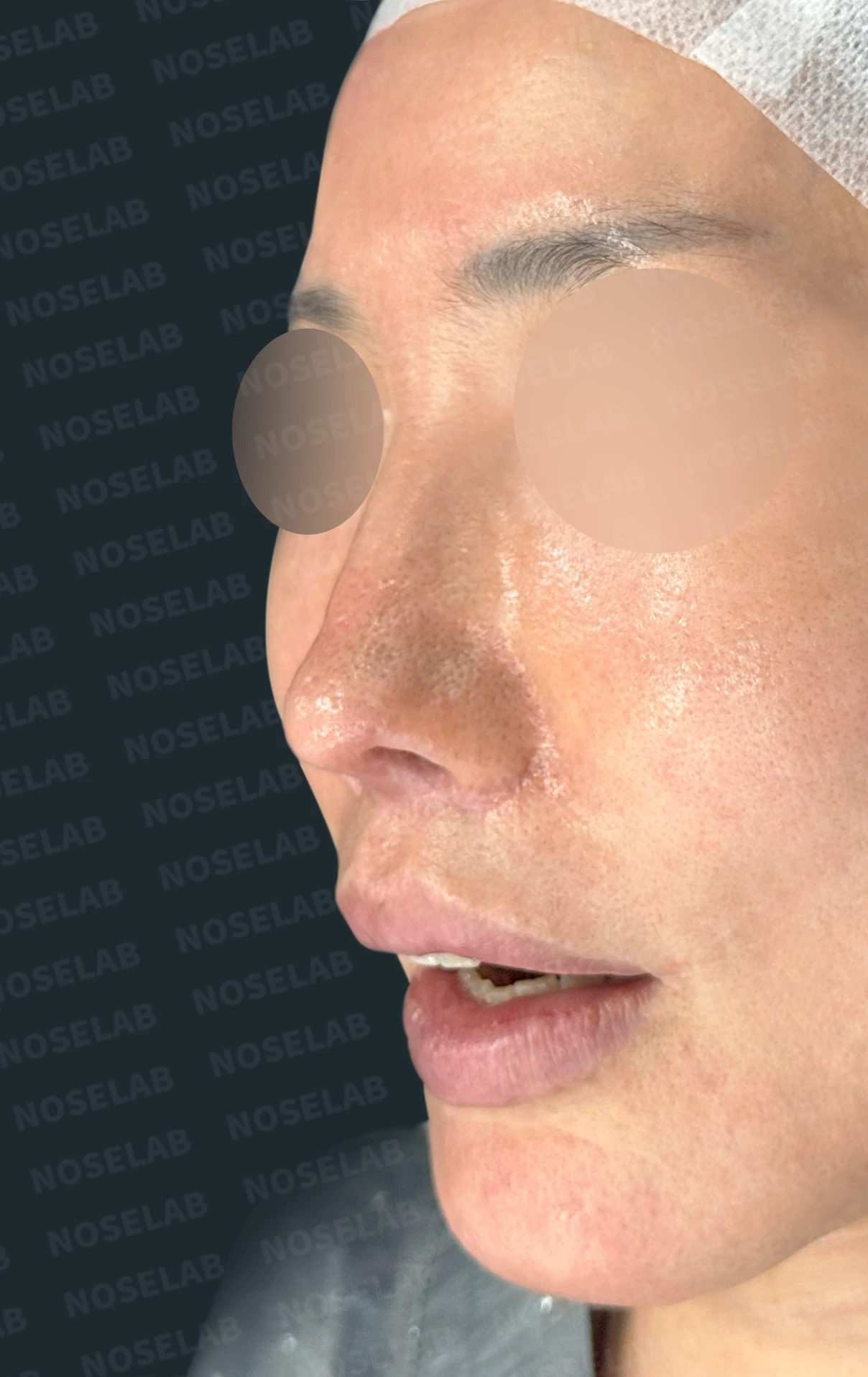
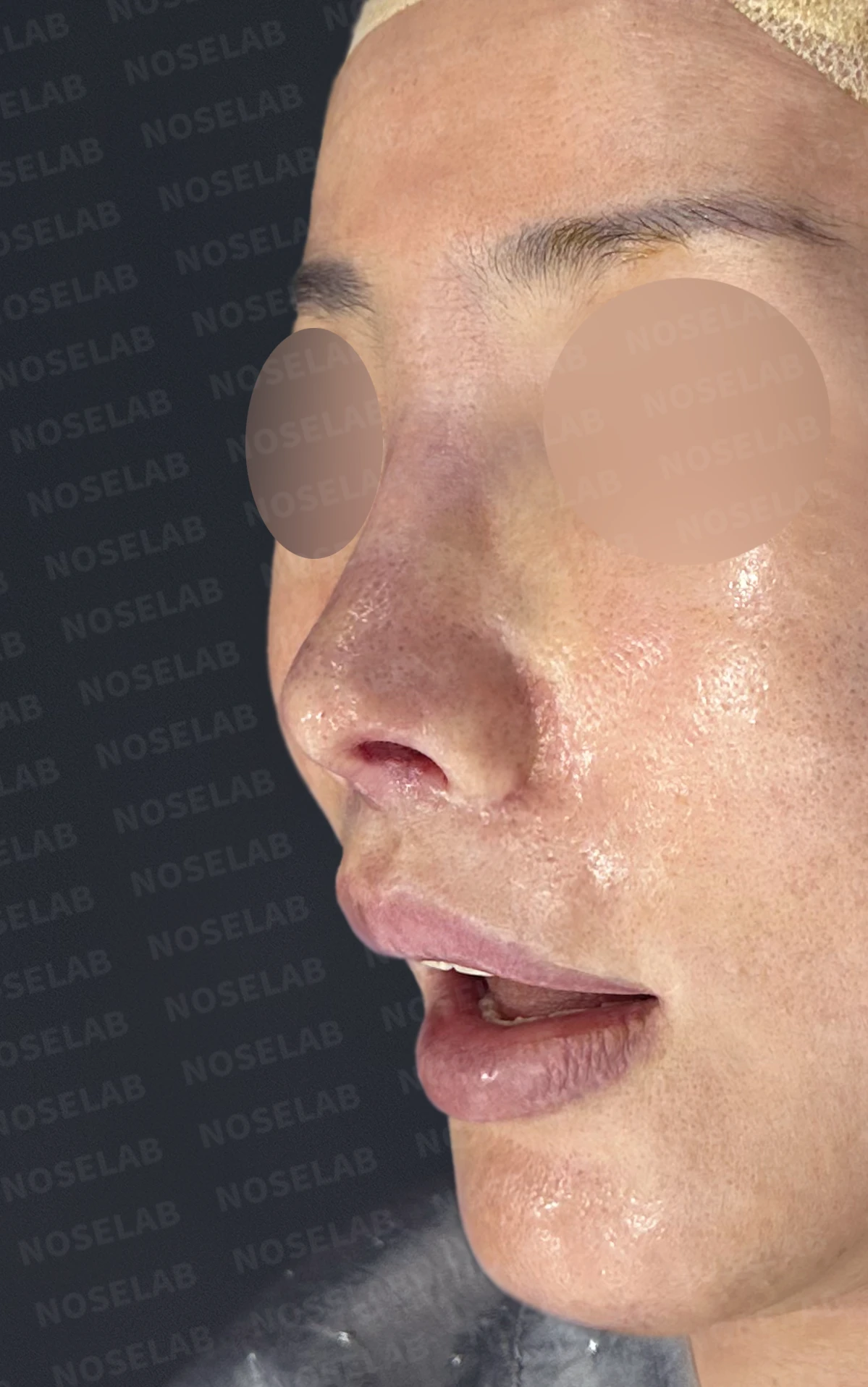
Before surgery / Day 0 immediately after surgery Photos taken immediately after surgery show swelling and may differ from the final result.
Nostril view changes:
A natural columella after removal of the columellar filler
Improvement in nasal tip shape
Achieving bilateral balance
Alignment of the columellar midline
Natural nostril shape
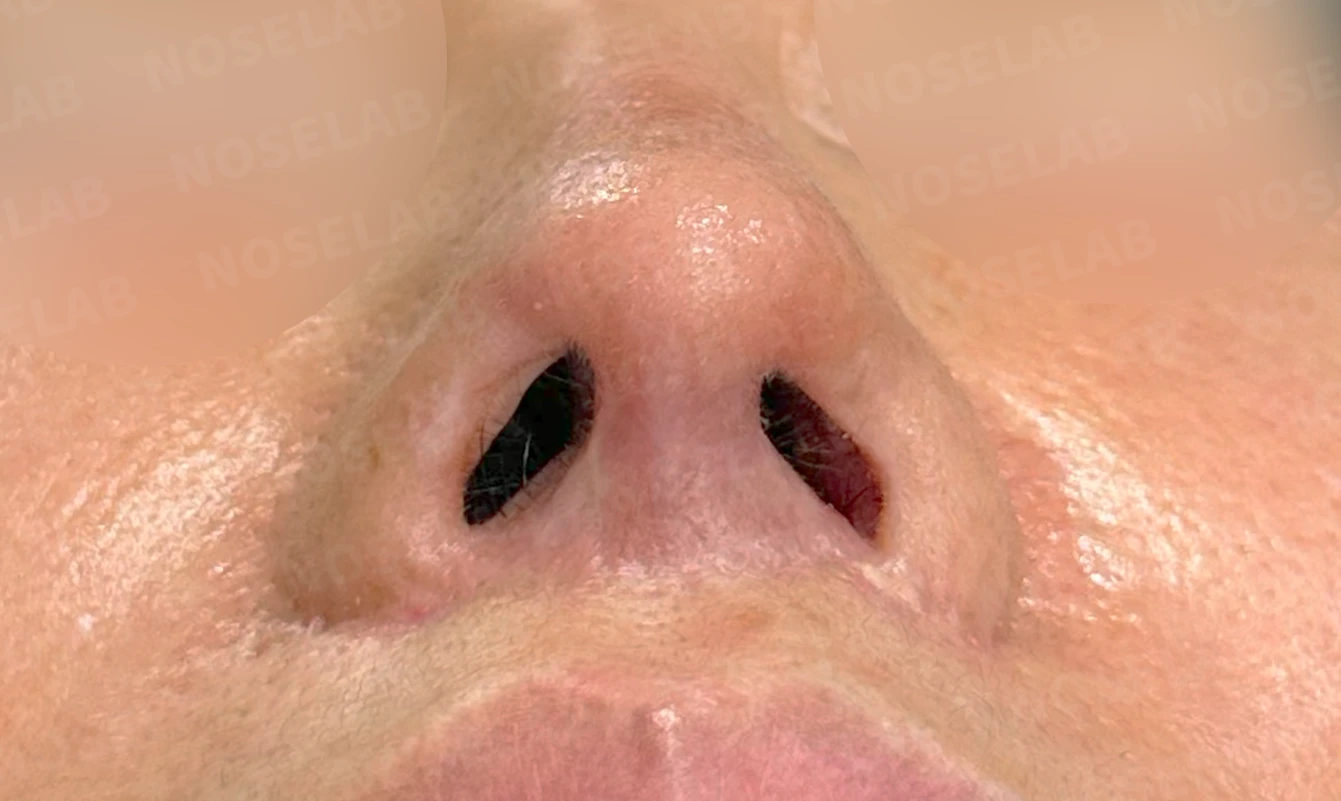
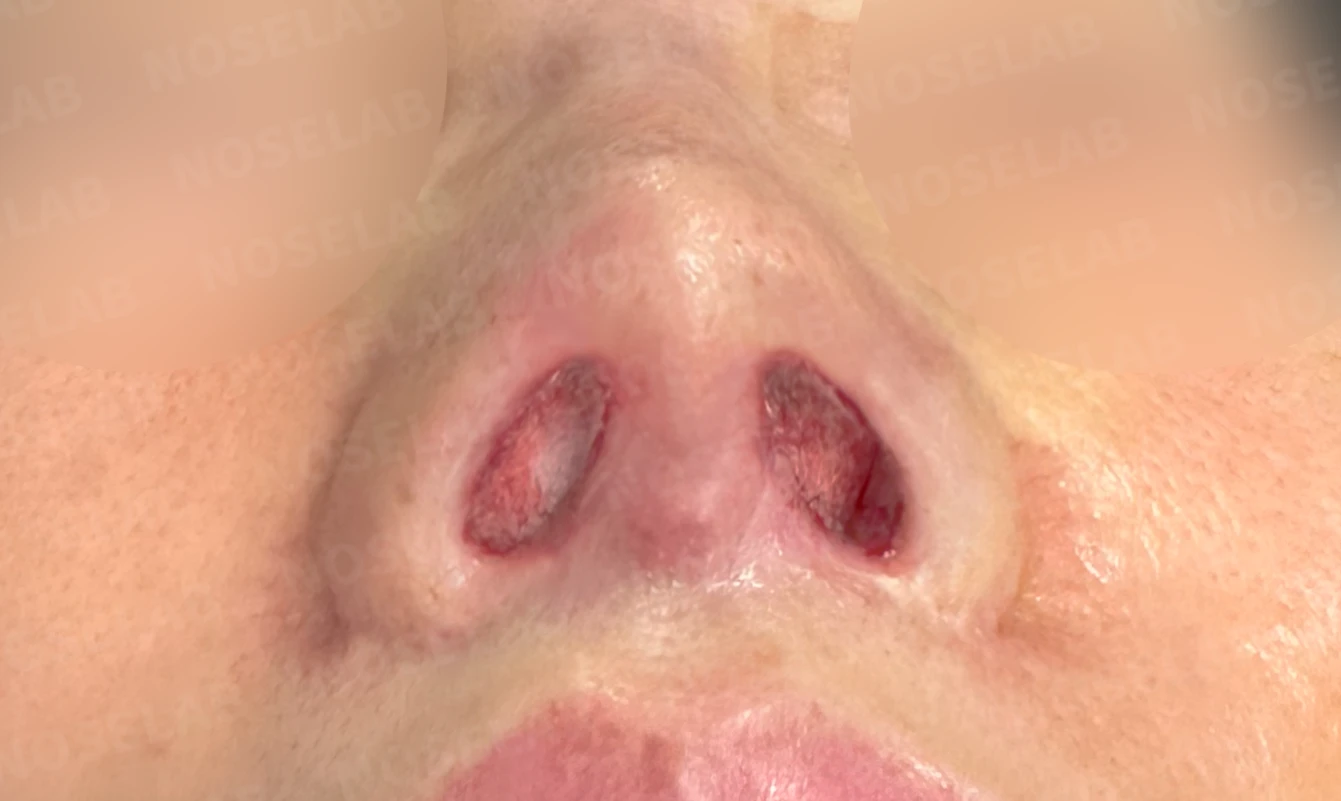
Before surgery / Day 0 immediately after surgery Photos taken immediately after surgery show swelling and may differ from the final result.
💡 Specialist opinion
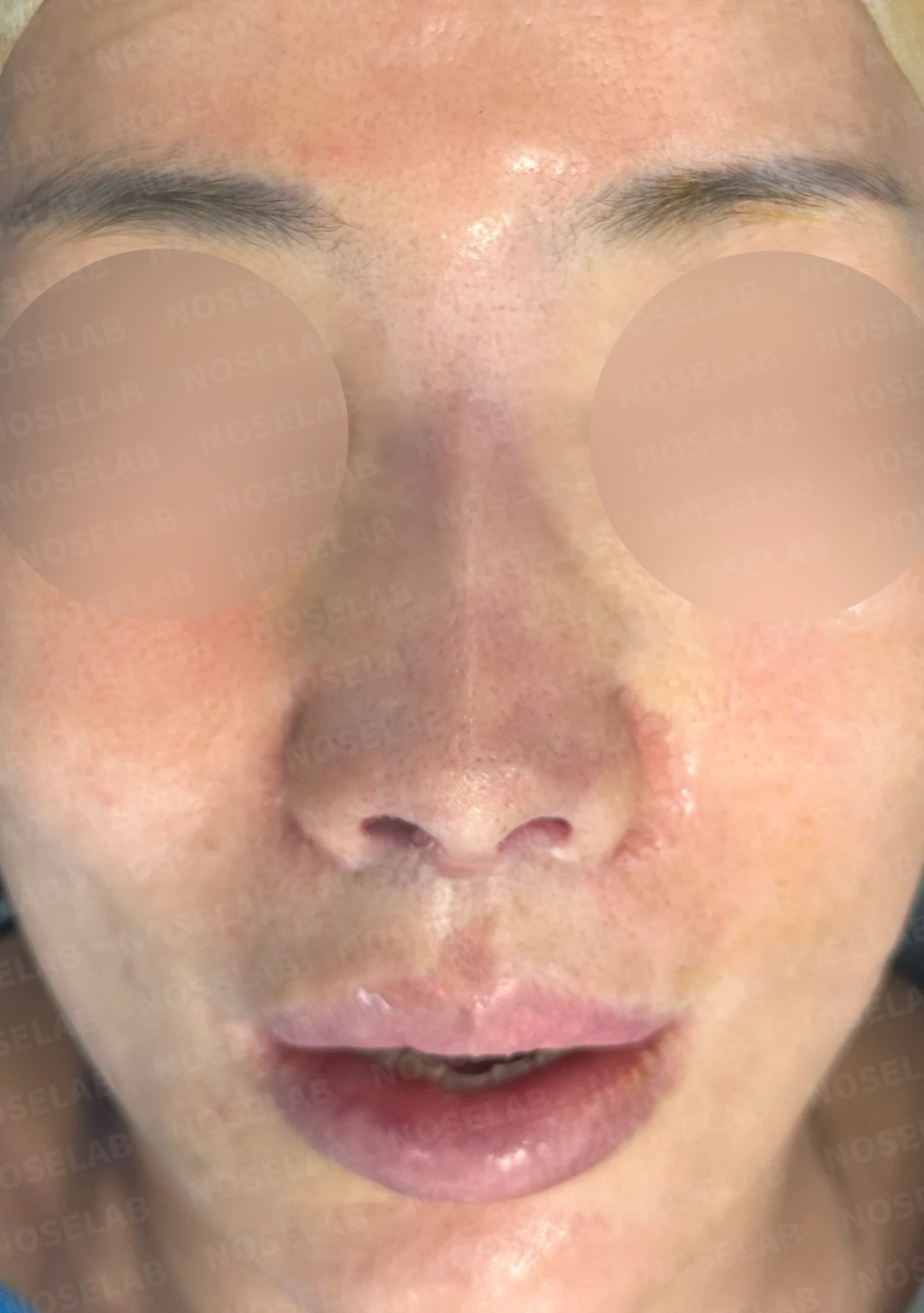
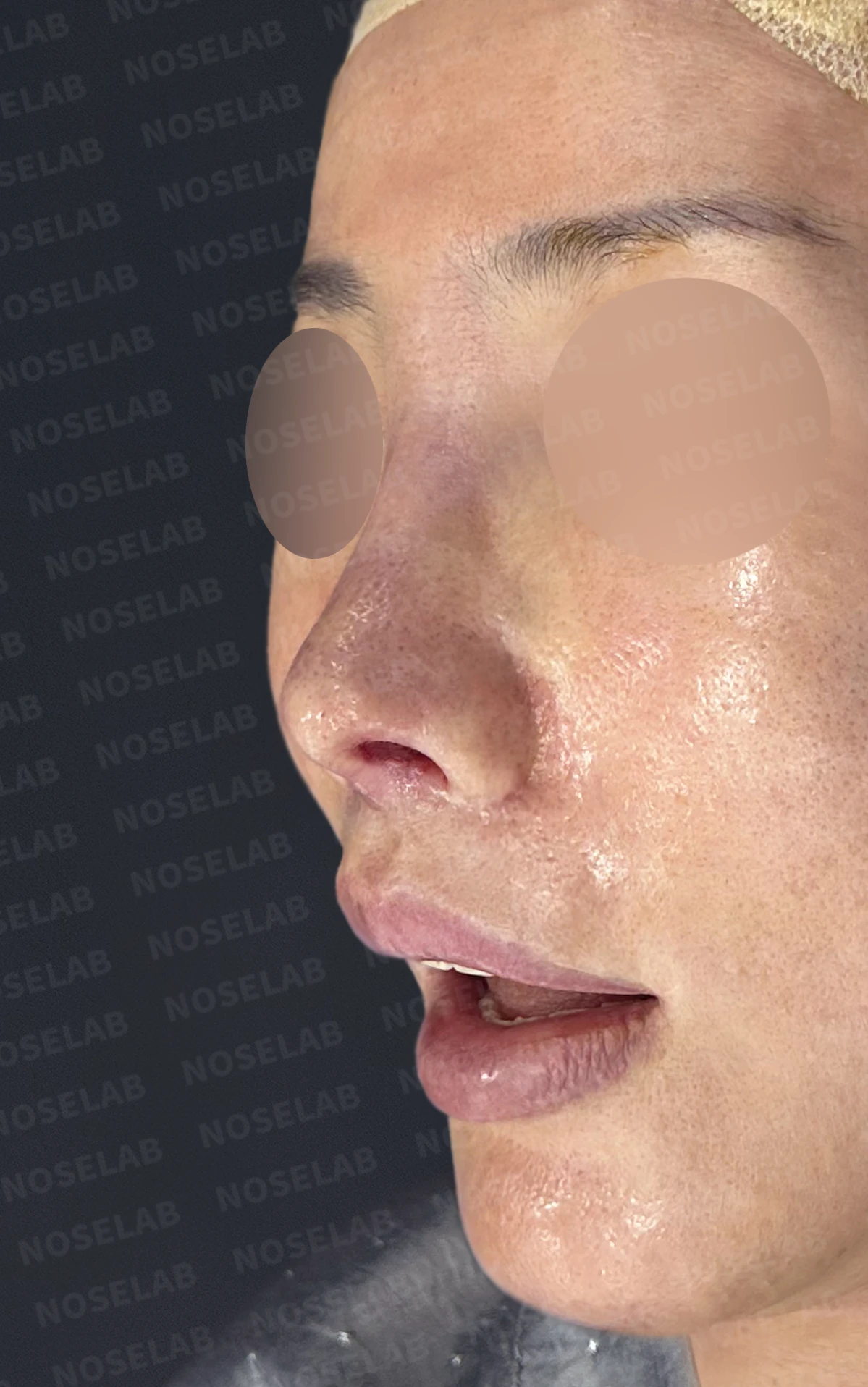
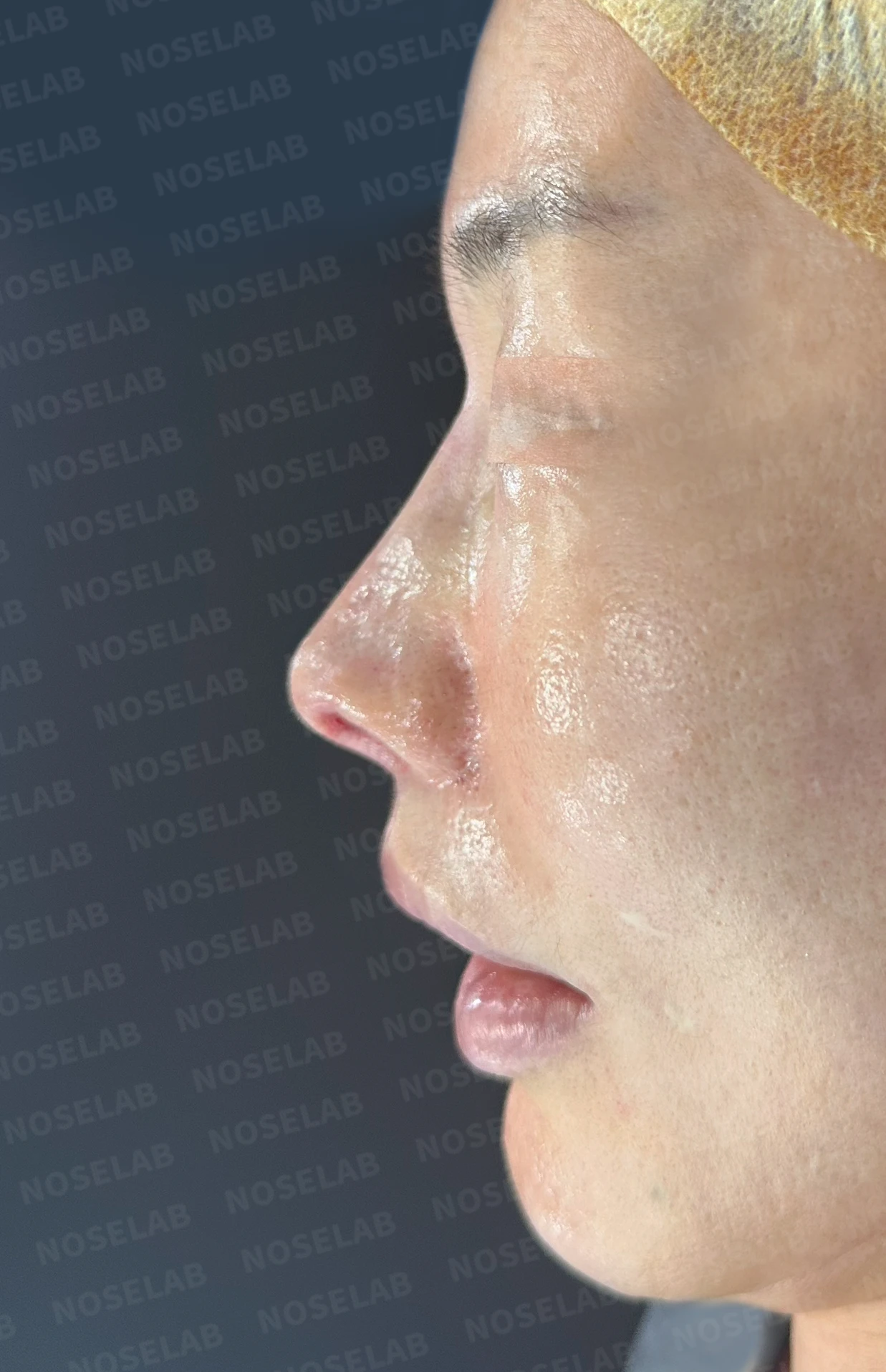
Front, oblique, and profile views on day 0 immediately after surgery. Photos taken immediately after surgery show swelling and may differ from the final result.
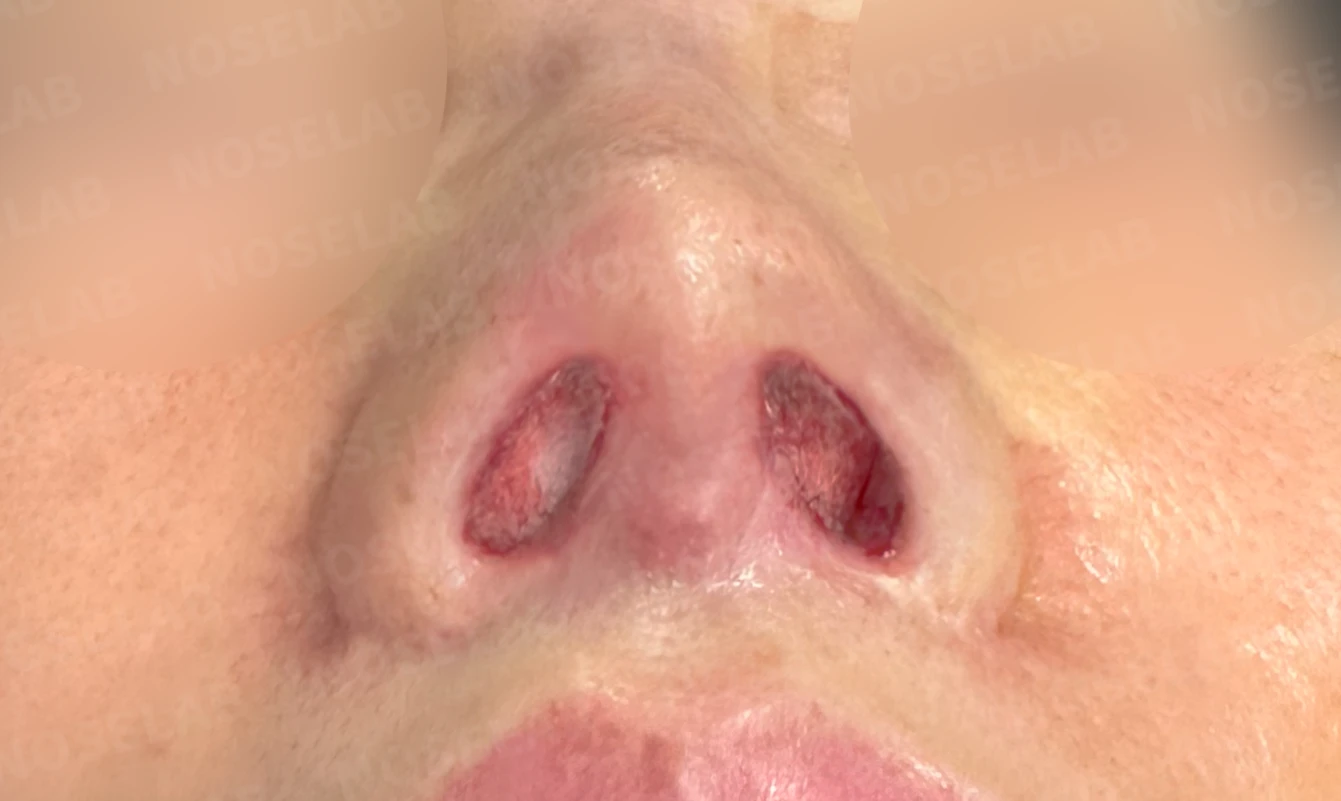
Nostril view on day 0 immediately after surgery. Photos taken immediately after surgery show swelling and may differ from the final result.
Revision rhinoplasty for a patient with a history of five surgeries requires an exceptionally careful approach. In this case in particular, the septal damage was much more severe than anticipated.
When examining the septum during surgery, it was severely damaged from the prior procedures, and I determined that a stable nasal structure could not be achieved in that condition. I promptly explained the situation to the patient and guardian, informing them of the need to reconstruct the septum using autologous rib cartilage.
Autologous rib cartilage is an ideal material for septal reconstruction. It provides sufficient strength and volume to completely reconstruct a damaged septum. Because the septum serves as the central framework and main support structure of the nose, rebuilding it solidly is critical for long-term stability.
An interesting finding was that the deep temporal fascia used in the surgery 10 years ago had been grafted in an obliquely crooked position. Rather than discarding it, I repurposed it to reinforce the nasal tip skin. Fascia is an effective material for reinforcing tissue, which becomes especially important when the skin has thinned after multiple surgeries.
The primary focus in this surgery was creating a natural nasal tip. This was what the patient desired most, and considering the history of five surgeries, I also judged that natural refinement was far more important than excessive correction.
I meticulously adjusted the framework to achieve an orderly tip without a pinched look, an elegant height without being overly prominent, and a refined line that did not look artificial. By lowering the radix, the overall balance of nasal length was improved, and the nasolabial angle was appropriately adjusted to complete an elegant lateral silhouette.
Revision rhinoplasty for patients who have undergone multiple surgeries is considerably more complex and challenging than primary surgery. One must manage compromised tissues, clear away scar tissue, and make the most of the remaining healthy tissue. Nevertheless, with an accurate diagnosis, systematic planning, and meticulous surgical technique, we were able to deliver the natural result the patient wanted.
I will continue to provide customized surgeries that reflect each patient's individuality and requests through this meticulous approach. I hope this helps those with similar concerns.
This was Dr. Peter C. Kang. Thank you.
#septalreconstruction #autologousribcartilage #temporalبهfascia #deeptemporalfascia #tipskinreinforcement #naturalnasaltip #revisionrhinoplasty #multiplerevisions #columellarfillerremoval #radix #nasolabialanglecorrection #foreignbodyremoval #softnasaltip #closedrhinoplasty #closedrevisionrhinoplasty

Limitations and risks
When autologous rib cartilage is used, scarring and pain may remain at the donor site on the chest, and pneumothorax (pleural injury) can occur rarely. Over time, the grafted cartilage may warp or undergo partial resorption.
When foreign materials such as injected fillers are removed and reconstructed, contracture may recur, nasal height and length may decrease, and staged surgery may be necessary depending on the skin condition.
When the septum is corrected at the same time, nasal obstruction may persist or recur, and in rare cases, septal perforation or changes in smell may occur.
Common potential risks include infection, bleeding, asymmetry, scarring, skin necrosis, and insufficient improvement; results vary depending on individual skin condition and previous surgical history.