Hello, I am Dr. Peter C. Kang.
Today, I would like to introduce the case of a patient who came to our clinic concerned about facial asymmetry, a crooked nose, and a depressed nasal bone. In particular, the right nasal bone was depressed, requiring reconstruction through osteotomy.
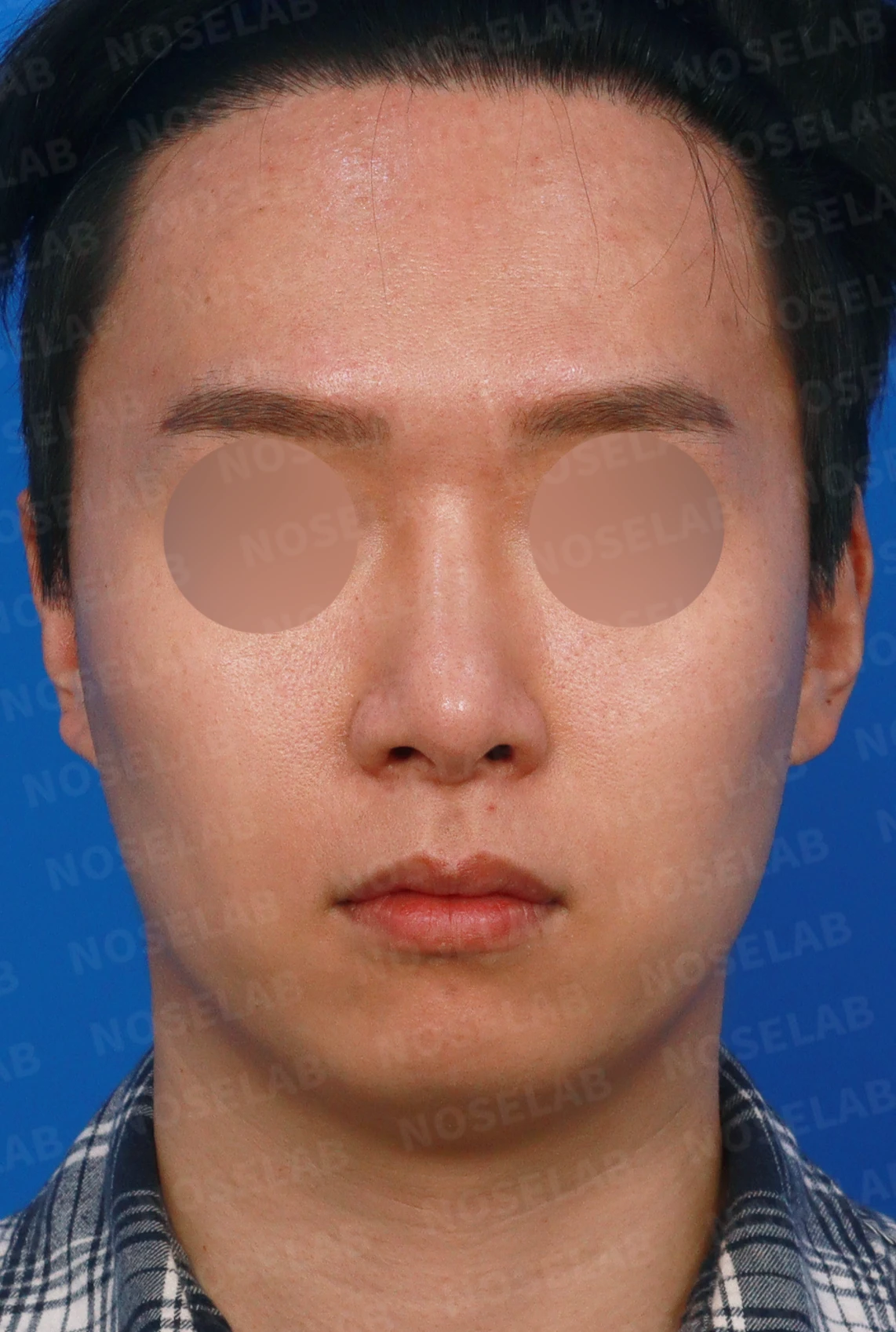
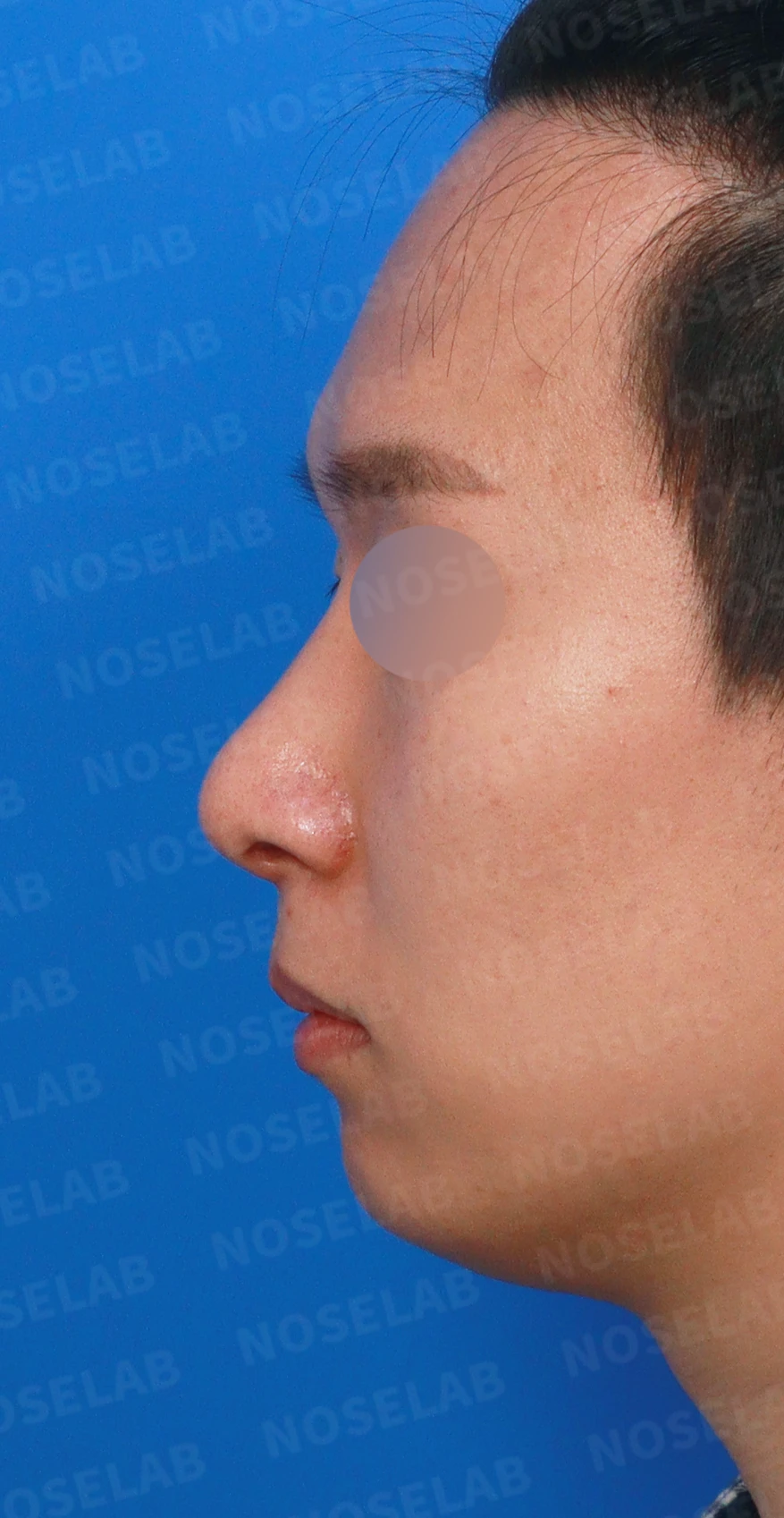
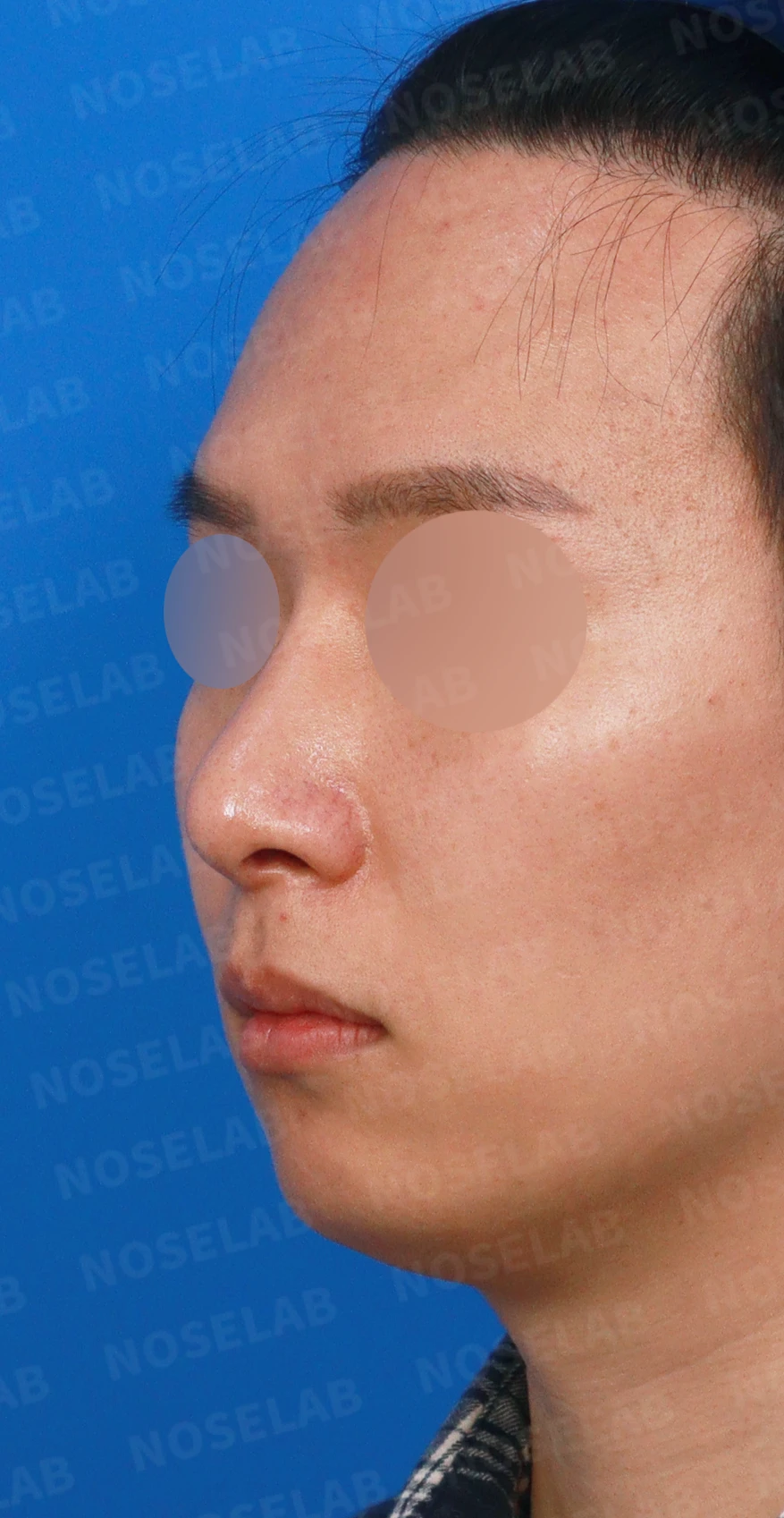
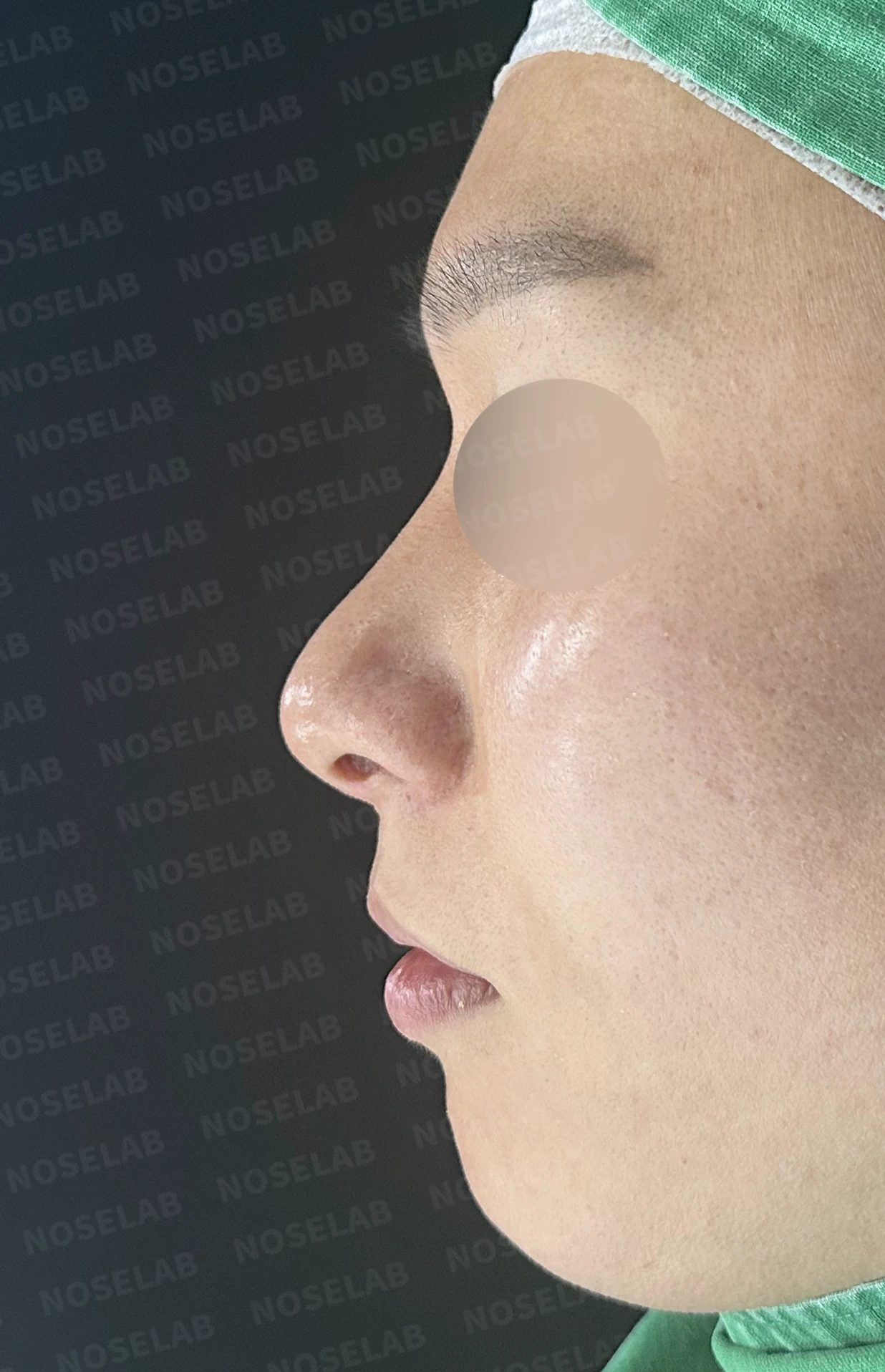
Front, left profile, and oblique views during design consultation
🔍 Surgical history
Main concerns: Facial asymmetry, crooked nose, nostril asymmetry
Key findings: Depressed right nasal bone
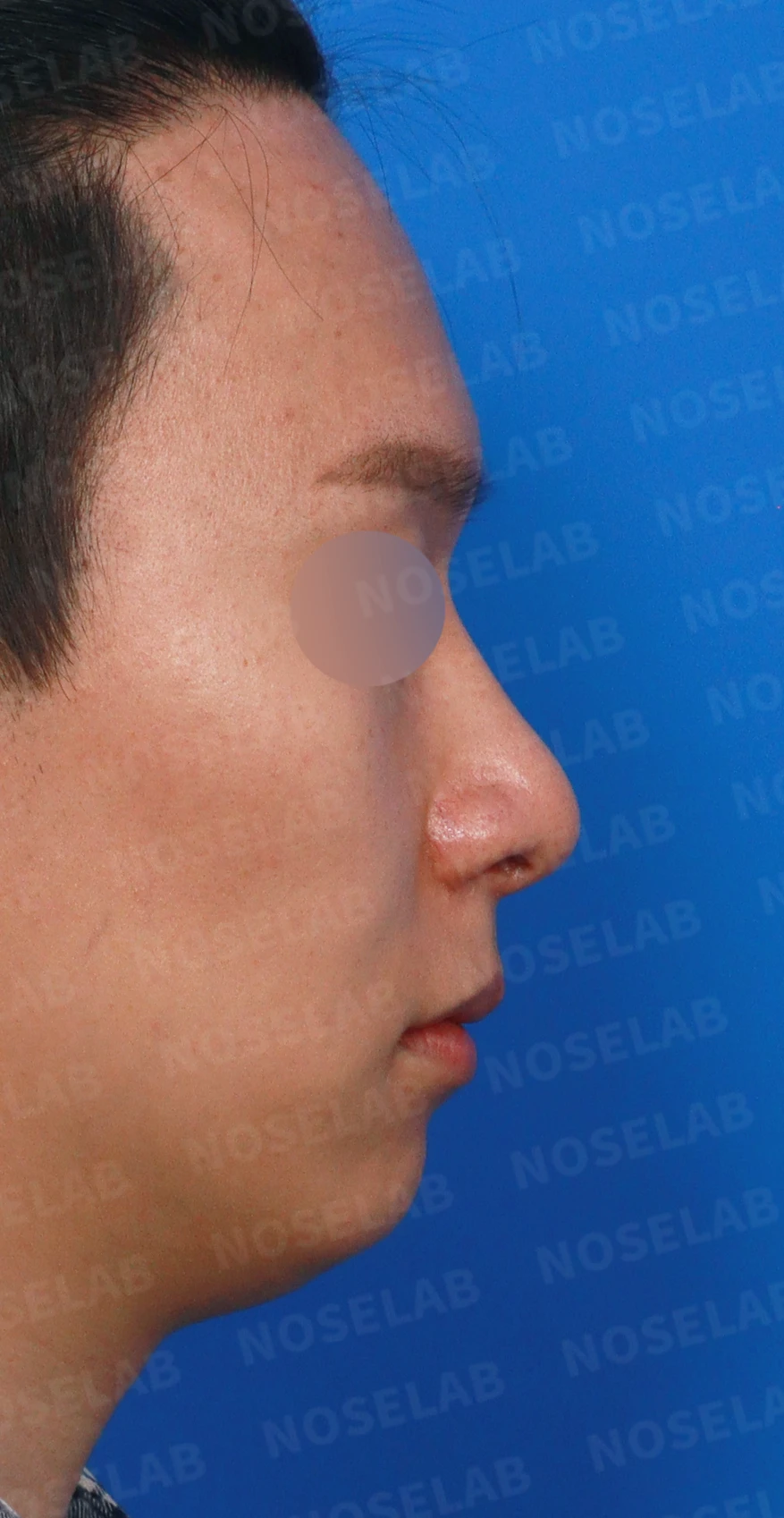
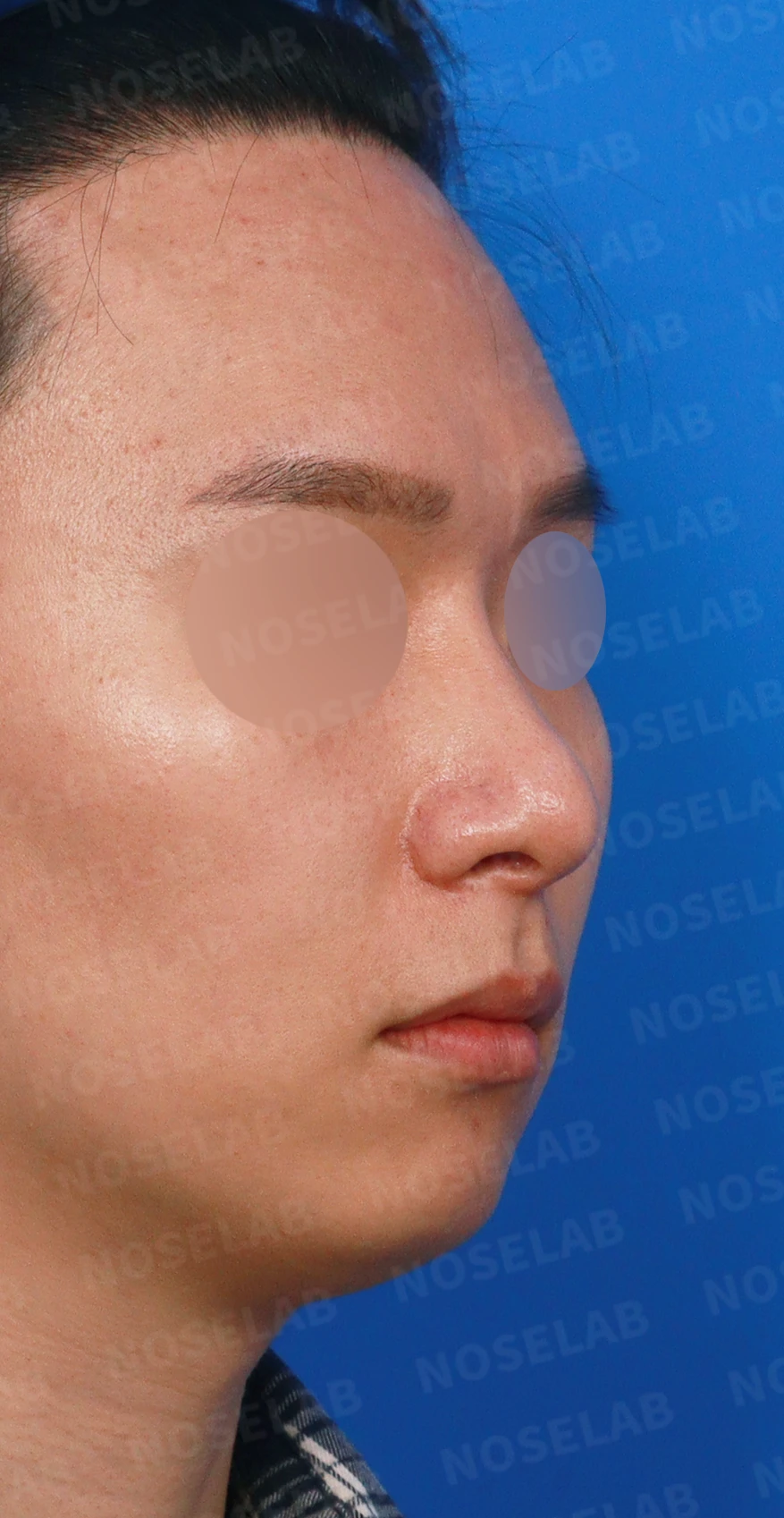
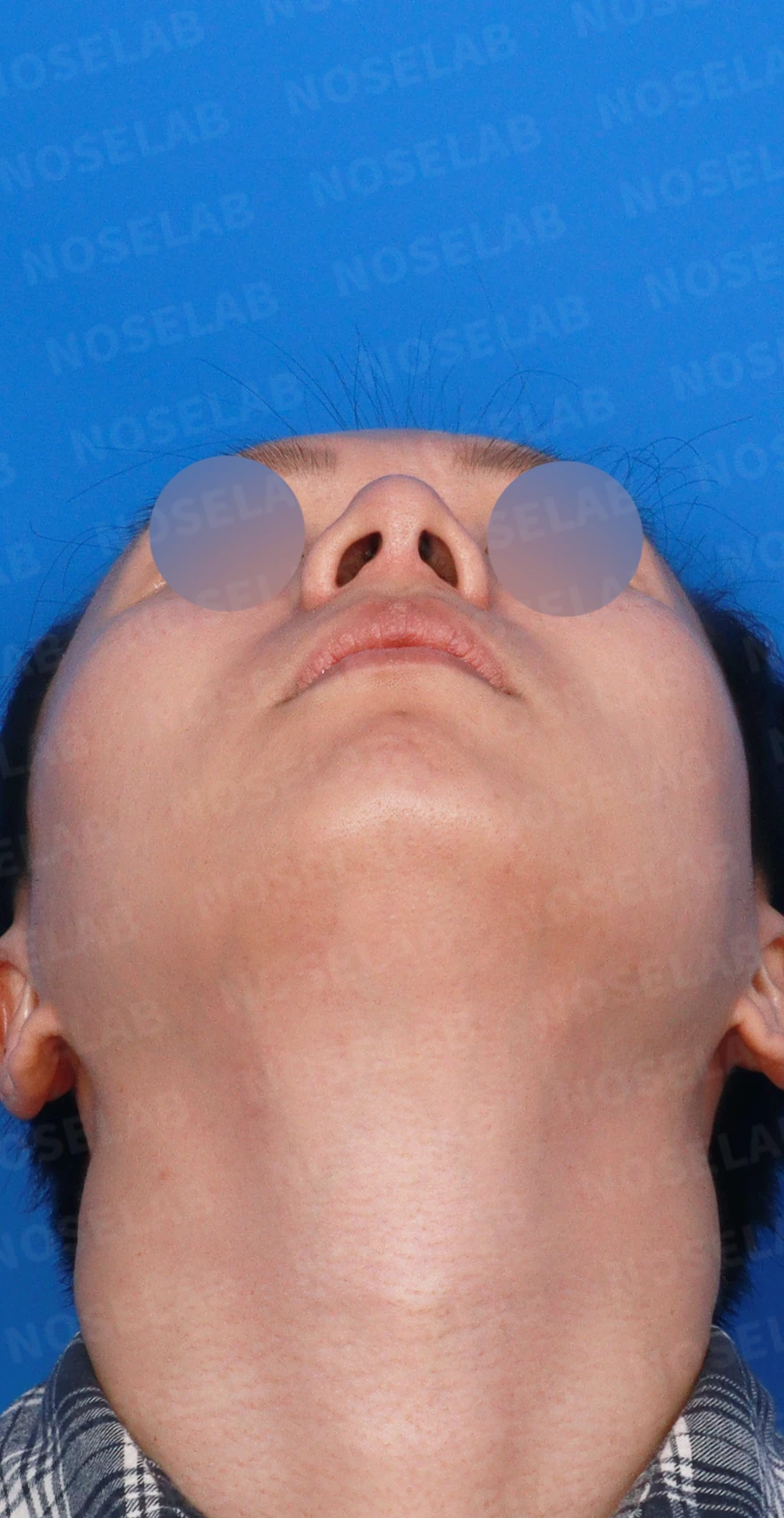
Right profile, oblique, and nostril views during design consultation
💉 Patient requests
Correction of the crooked nose and nostril asymmetry
Reconstruction of the depressed right nasal bone
Minimal change in tip height (patient request)
Natural balance
🔧 Surgical plan and procedure
1. Reconstruction of the depressed right nasal bone via osteotomy
Because the right nasal bone was depressed, facial asymmetry was severe. Through precise osteotomy, the depressed area was restored and bilateral symmetry was achieved.
2. Correction of the deviated septum
The deviated septum, which was the fundamental cause of the crooked nose, was corrected. Straightening the septum accurately aligned the midline of the nose.
3. Septal reconstruction and extension using autologous rib cartilage
The septum was reconstructed and extended using autologous rib cartilage. This created a stable support structure while making only the minimal change in tip height requested by the patient.
4. Concurrent chin augmentation
Chin augmentation was also performed to improve overall facial balance.
5. Nasolabial angle correction
The nasolabial angle was adjusted to improve the appearance of the protruding mouth, making the profile line much more refined.
Surgical outcome
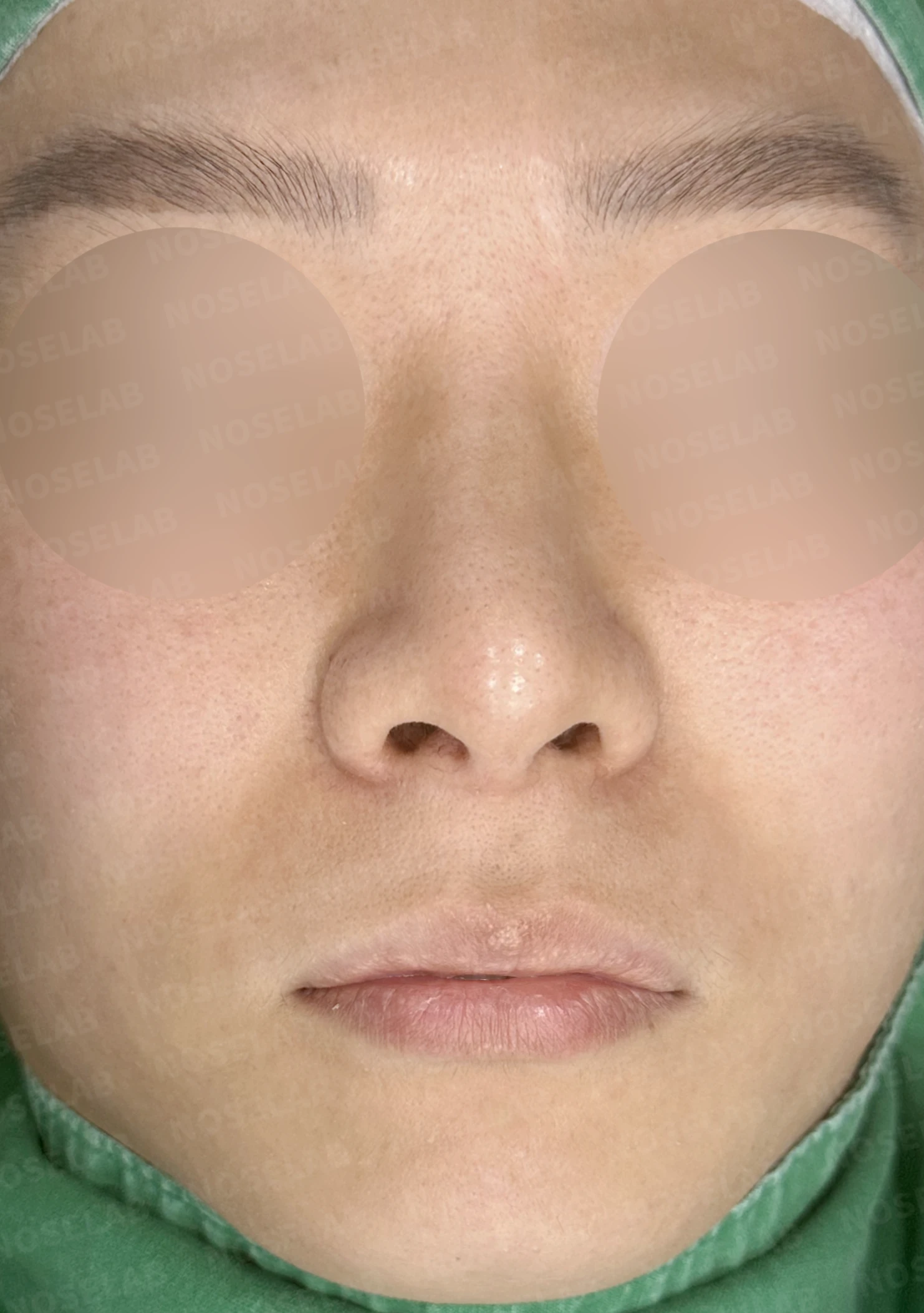
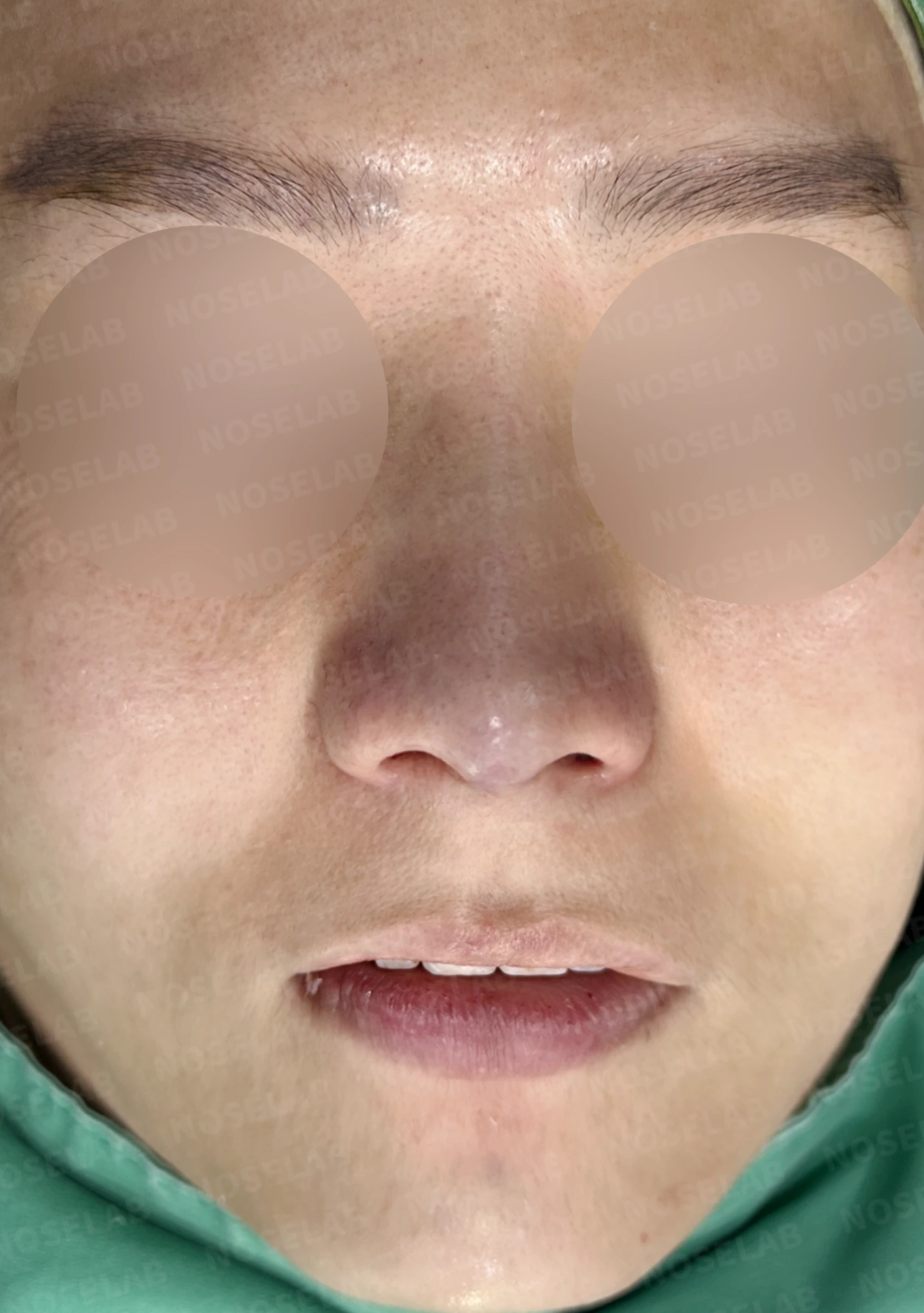
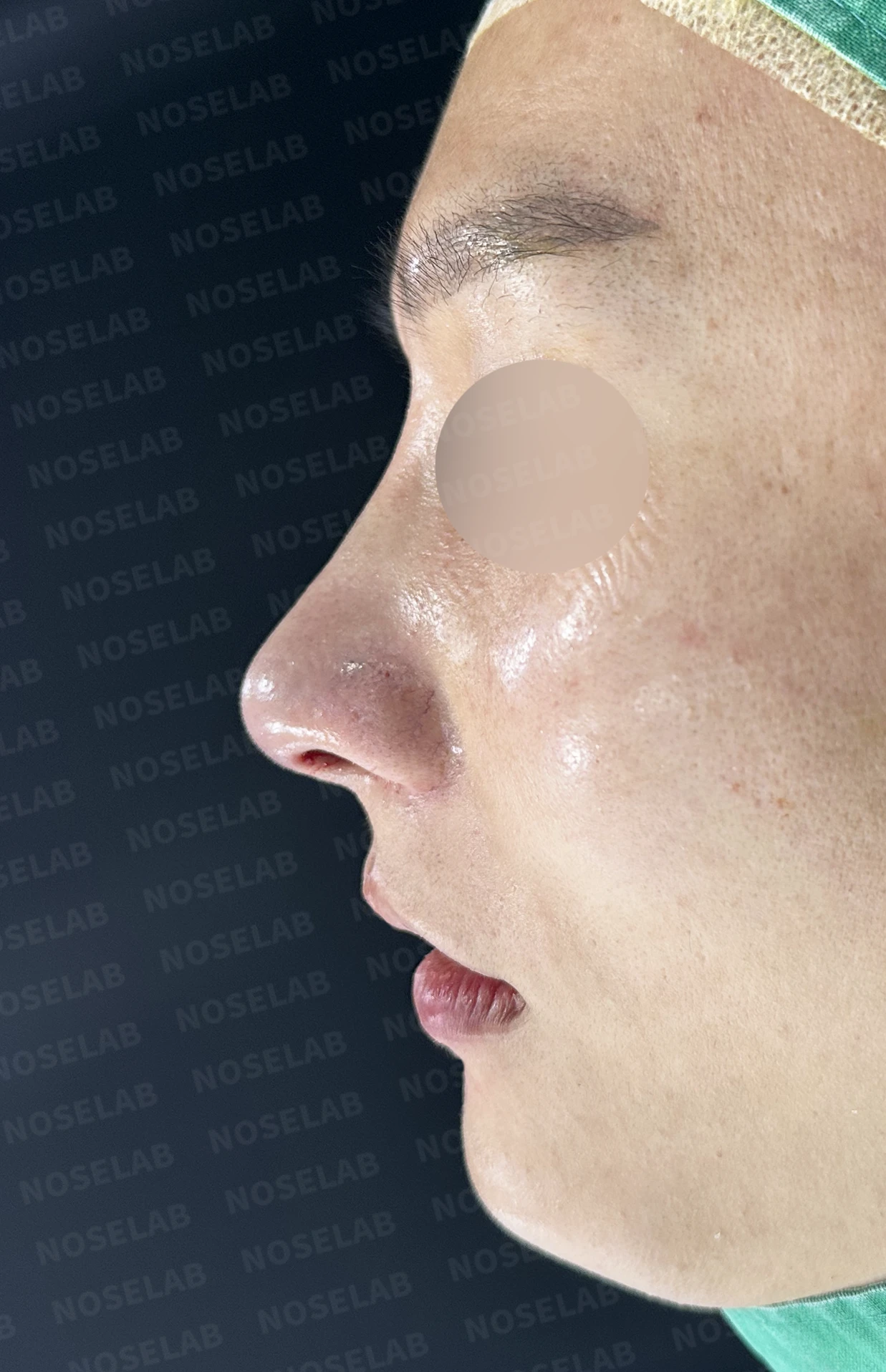
Before surgery / Day 0 immediately after surgery Photos taken immediately after surgery show swelling and may differ from the final result.
Frontal changes:
Restoration of the depressed right nasal bone improved facial symmetry
The crooked nose was straightened
Improvement of nostril asymmetry
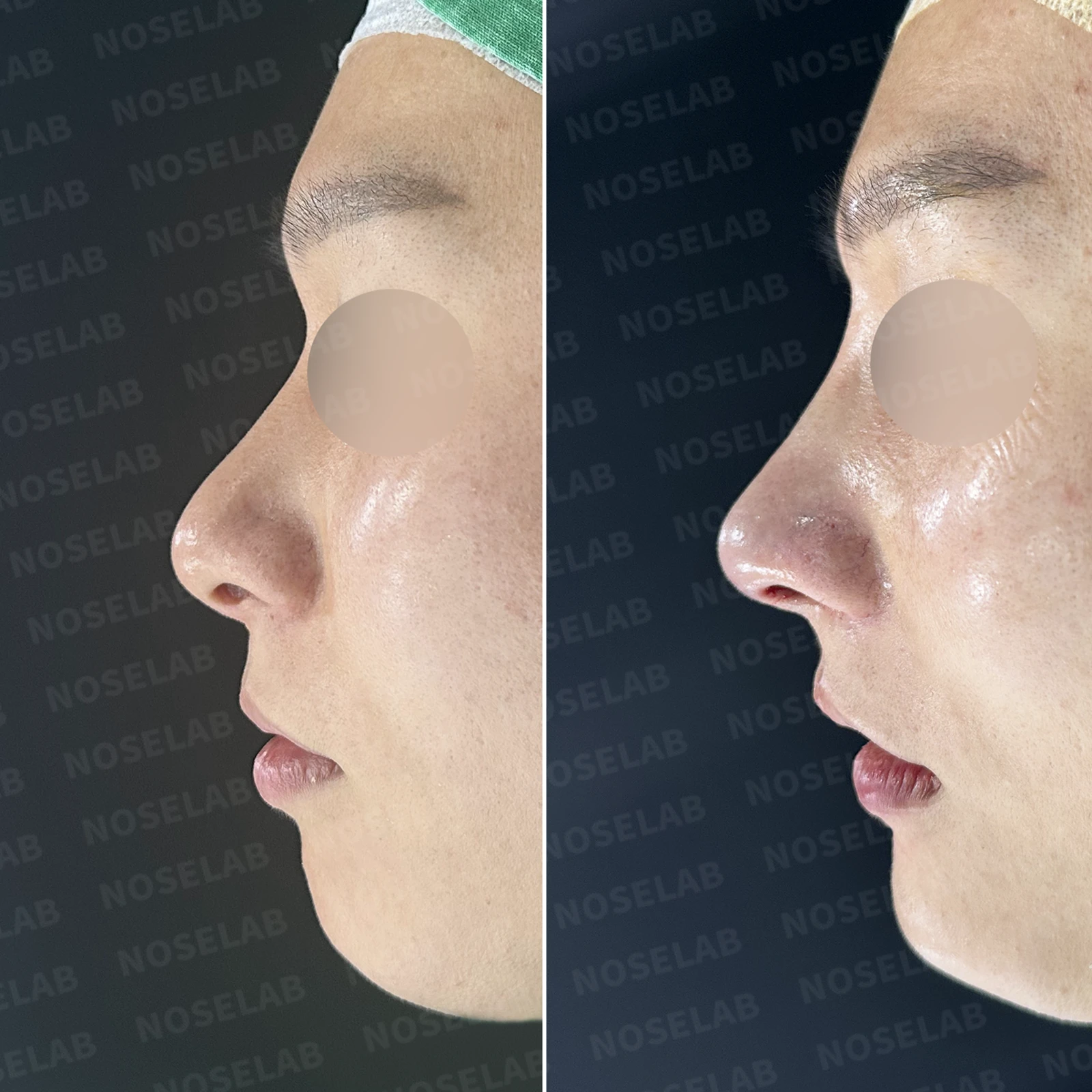
Before surgery / Day 0 immediately after surgery Photos taken immediately after surgery show swelling and may differ from the final result.
Profile changes:
Improvement of protruding mouth through nasolabial angle correction
Overall balance improved in harmony with the chin surgery
Nasal tip height was changed minimally as requested by the patient
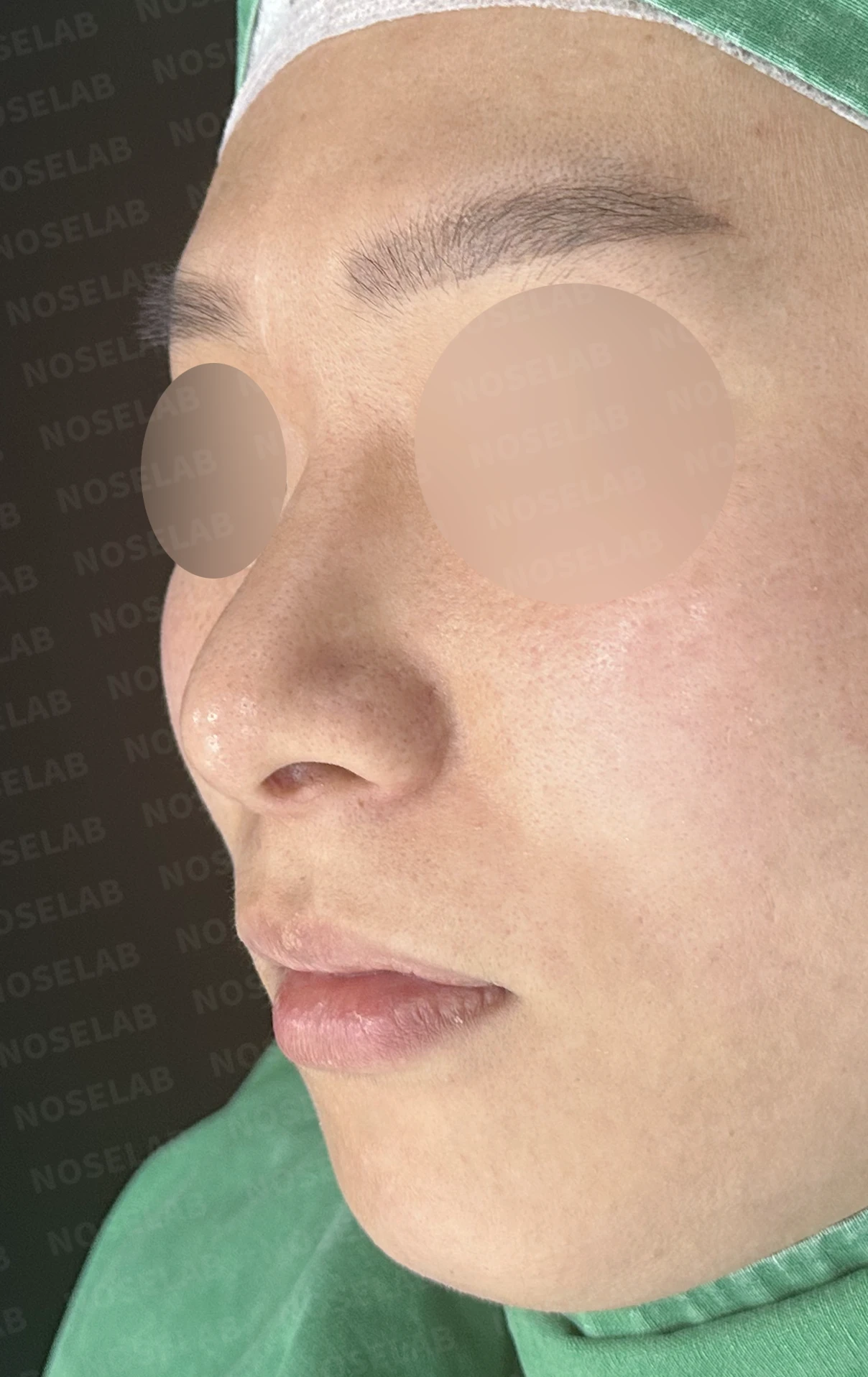
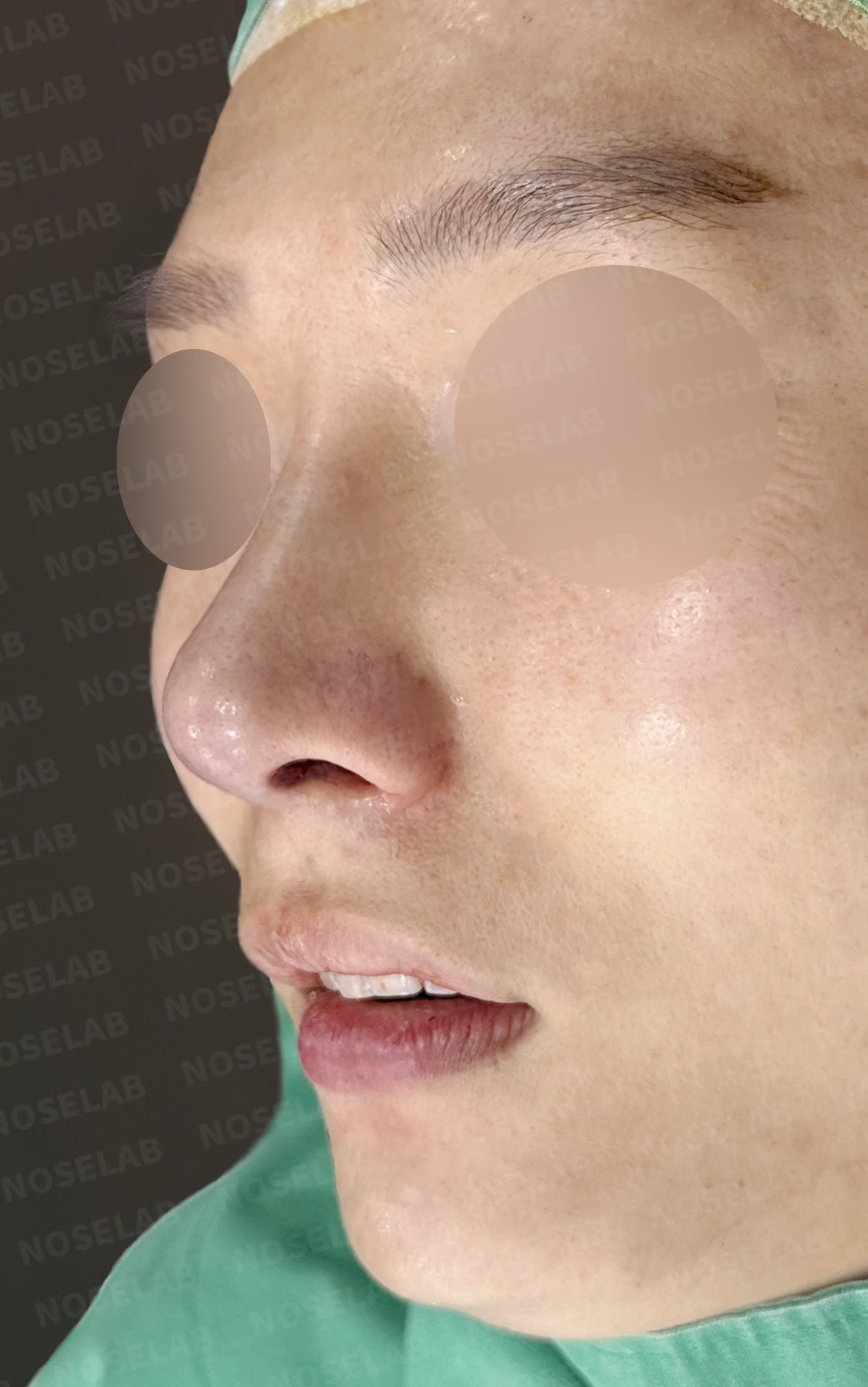
Before surgery / Day 0 immediately after surgery Photos taken immediately after surgery show swelling and may differ from the final result.
Nostril changes:
Correction of left-right asymmetry
The columella was aligned to the midline
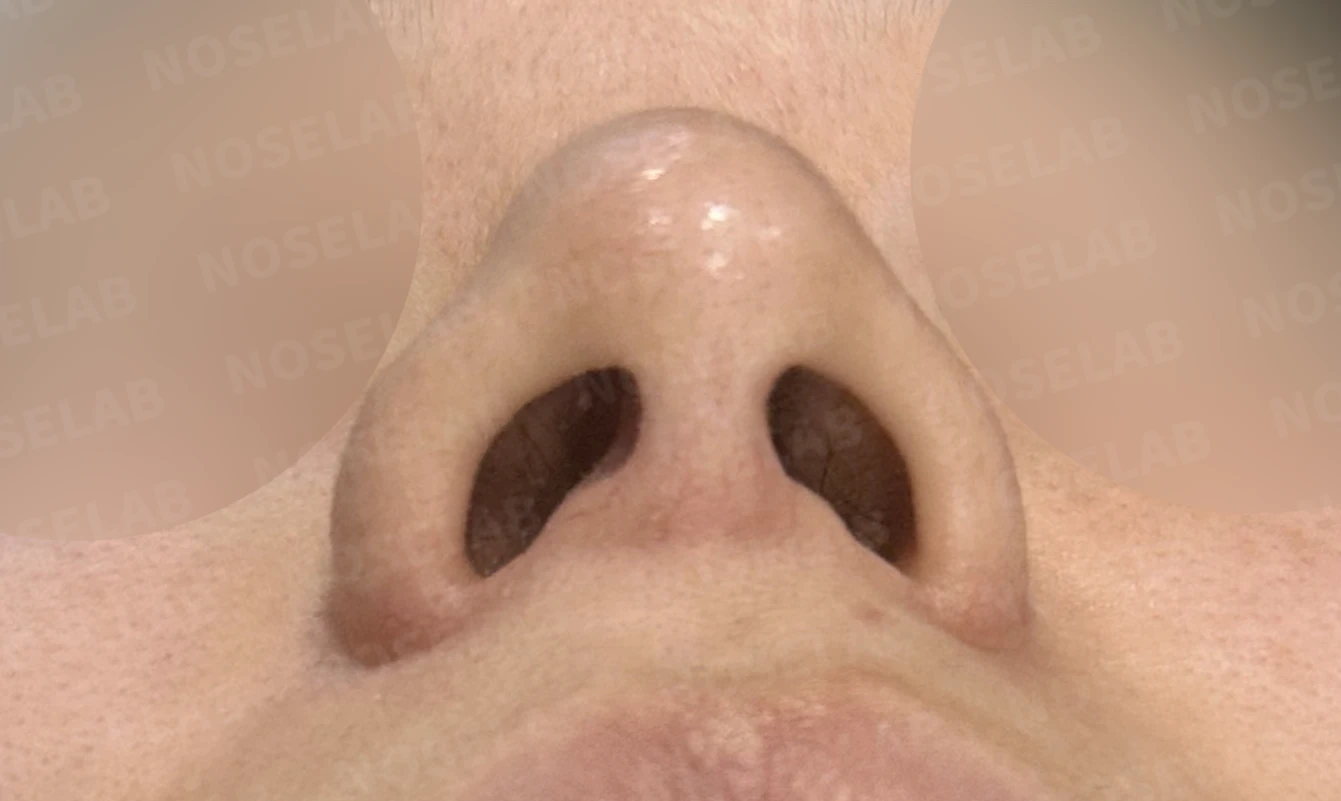
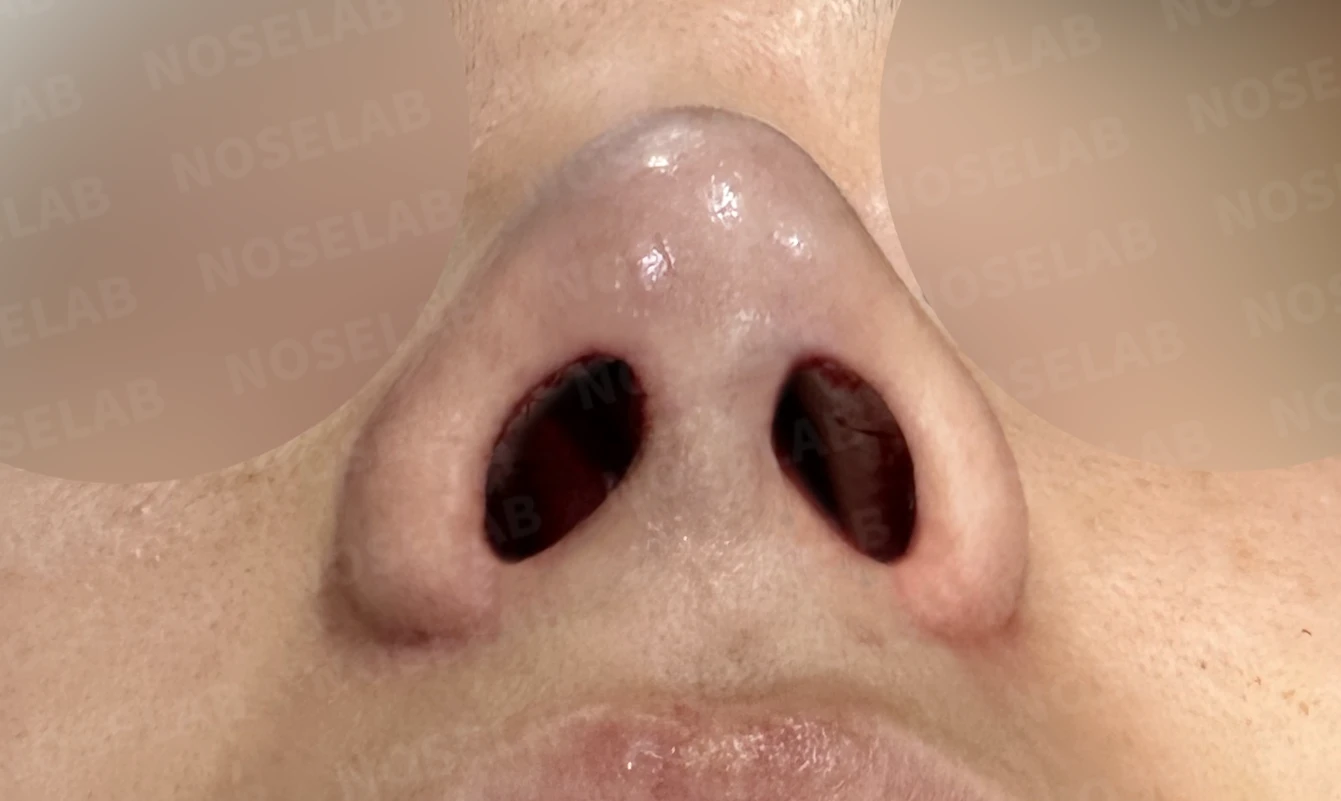
Before surgery / Day 0 immediately after surgery Photos taken immediately after surgery show swelling and may differ from the final result.
💡 Specialist opinion
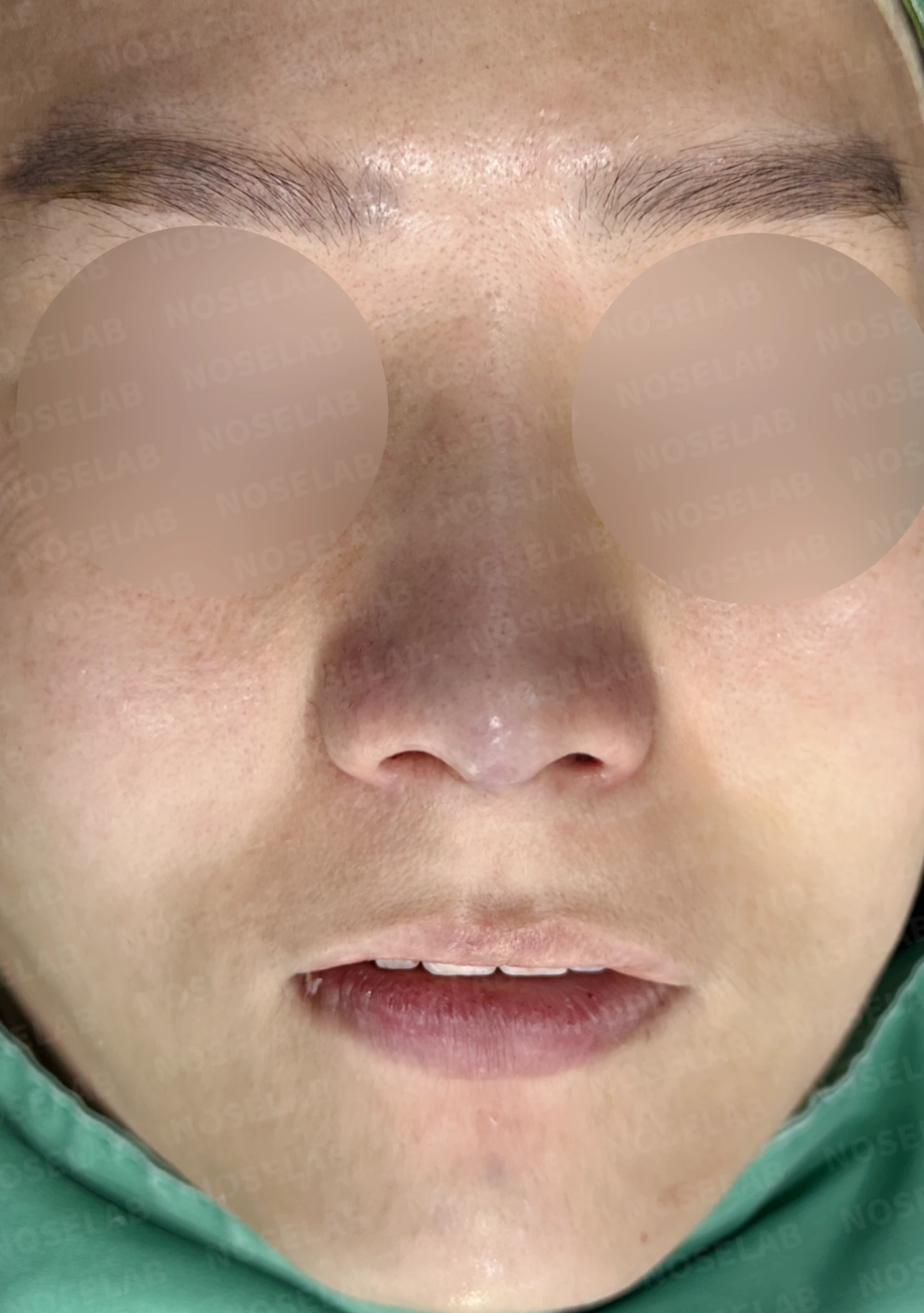
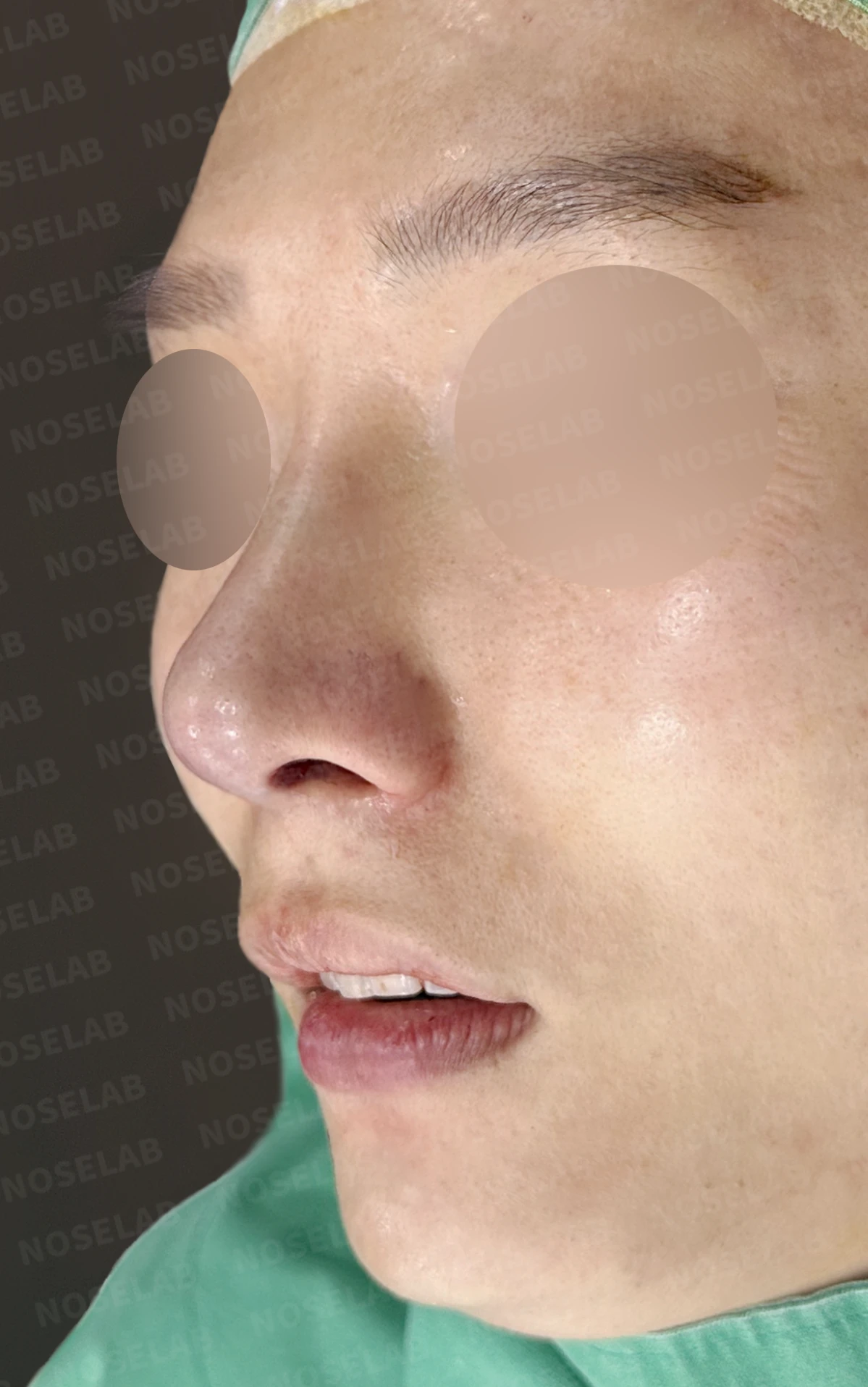
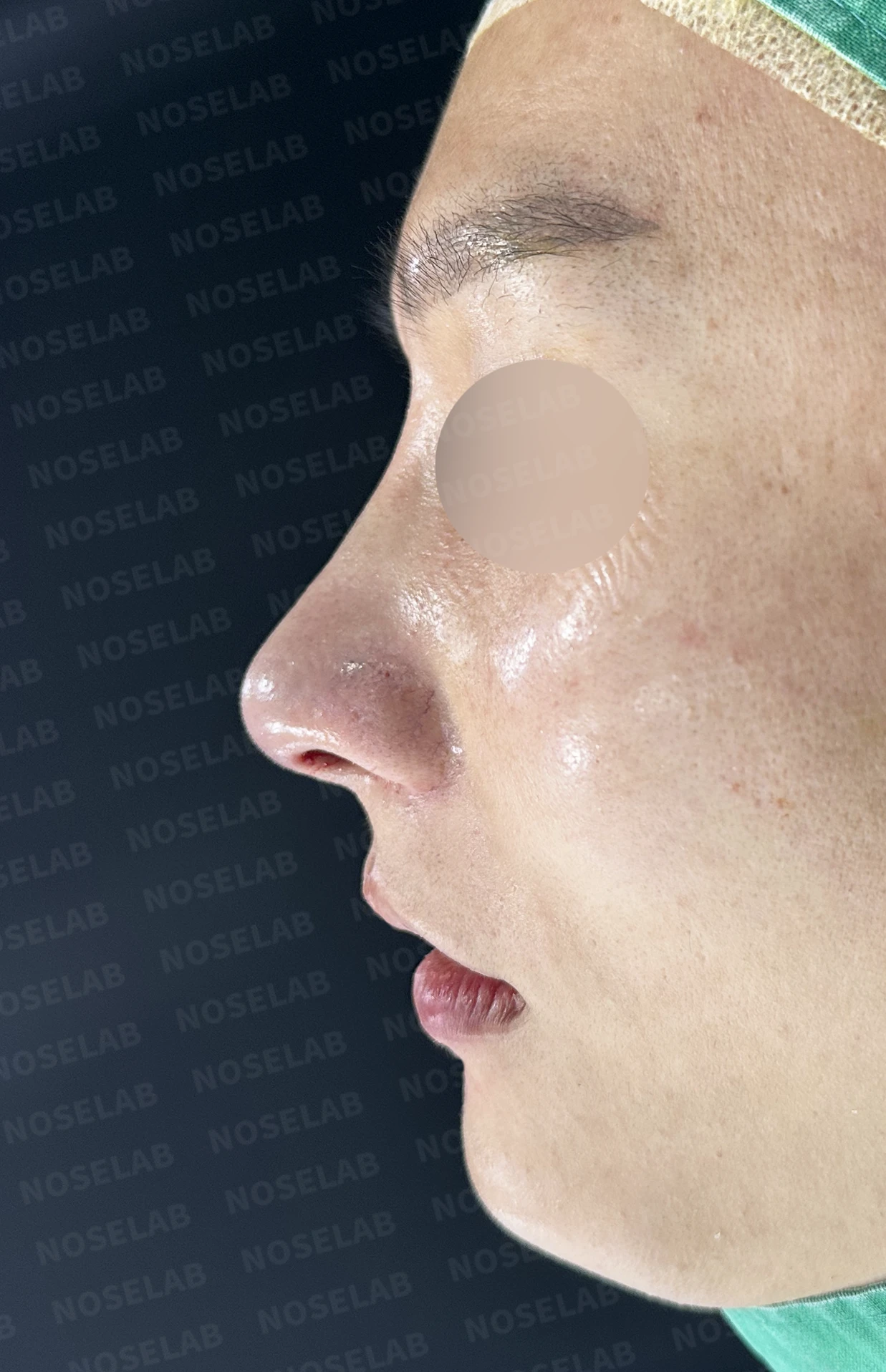
Front, oblique, and profile views on day 0 immediately after surgery Photos taken immediately after surgery show swelling and may differ from the final result.
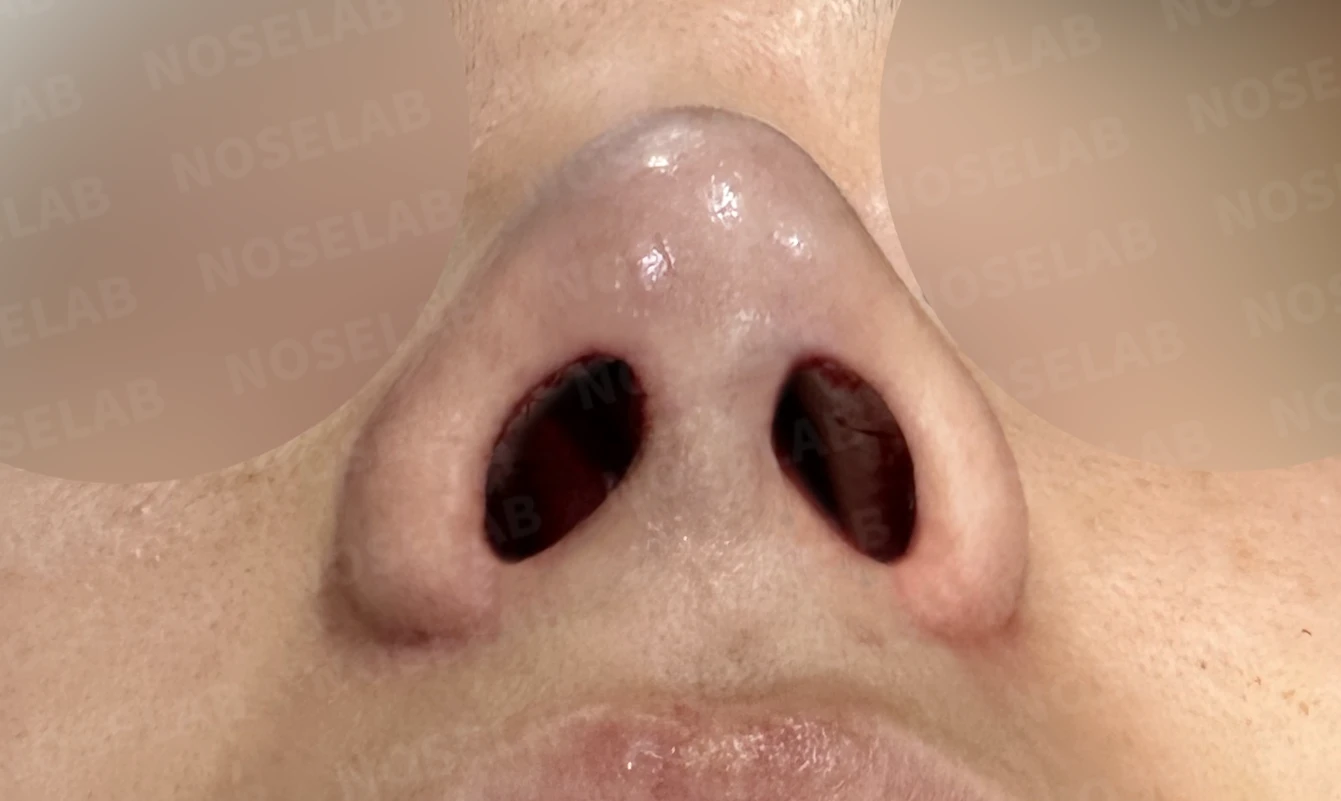
Nostril view on day 0 immediately after surgery Photos taken immediately after surgery show swelling and may differ from the final result.
For this type of case, correcting facial asymmetry was the key focus rather than a simple cosmetic rhinoplasty.
Nasal bone reconstruction through osteotomy
Restoring a depressed nasal bone is very delicate work. It is not just about pushing the bone upward; it must be returned to an accurate position while considering harmony with surrounding structures. In this case, because facial asymmetry due to the depressed right nasal bone was severe, it was accurately repositioned with osteotomy to achieve left-right balance.
The importance of correcting a deviated septum
A crooked nose is not just an external concern. It frequently occurs because the internal septum is deviated. Therefore, if only the external appearance is corrected without straightening the septum, it can become crooked again over time. In this case as well, fundamentally correcting the deviated septum supported a stable, long-term result.
A patient-customized procedure
The patient requested minimal change to tip height. Respecting this preference, tip height was adjusted only minimally even during septal reconstruction with autologous rib cartilage. Respecting the patient's individual characteristics and requirements is paramount.
I will continue to provide customized surgery that closely reflects each patient's individuality and requests through this meticulous approach.
This was Dr. Peter C. Kang. Thank you.
#closedrhinoplasty #closedrevisionrhinoplasty #crookednosecorrection #facialasymmetry #nasalbonereconstruction #osteotomy #autologousribcartilage #deviatedseptum

Limitations and risks
When autologous rib cartilage is used, scarring and pain may remain at the donor site on the chest, and pneumothorax (pleural injury) can occur rarely. Over time, the grafted cartilage may warp or undergo partial resorption.
When the septum is corrected at the same time, nasal obstruction may persist or recur, and in rare cases, septal perforation or changes in smell may occur.
Common potential risks include infection, bleeding, asymmetry, scarring, skin necrosis, and insufficient improvement; results vary depending on individual skin condition and previous surgical history.