Hello, I am Dr. Peter C. Kang.
Today, I will introduce a case where functional rhinoplasty using autologous rib cartilage was performed to address recurring rhinitis and a crooked nose.
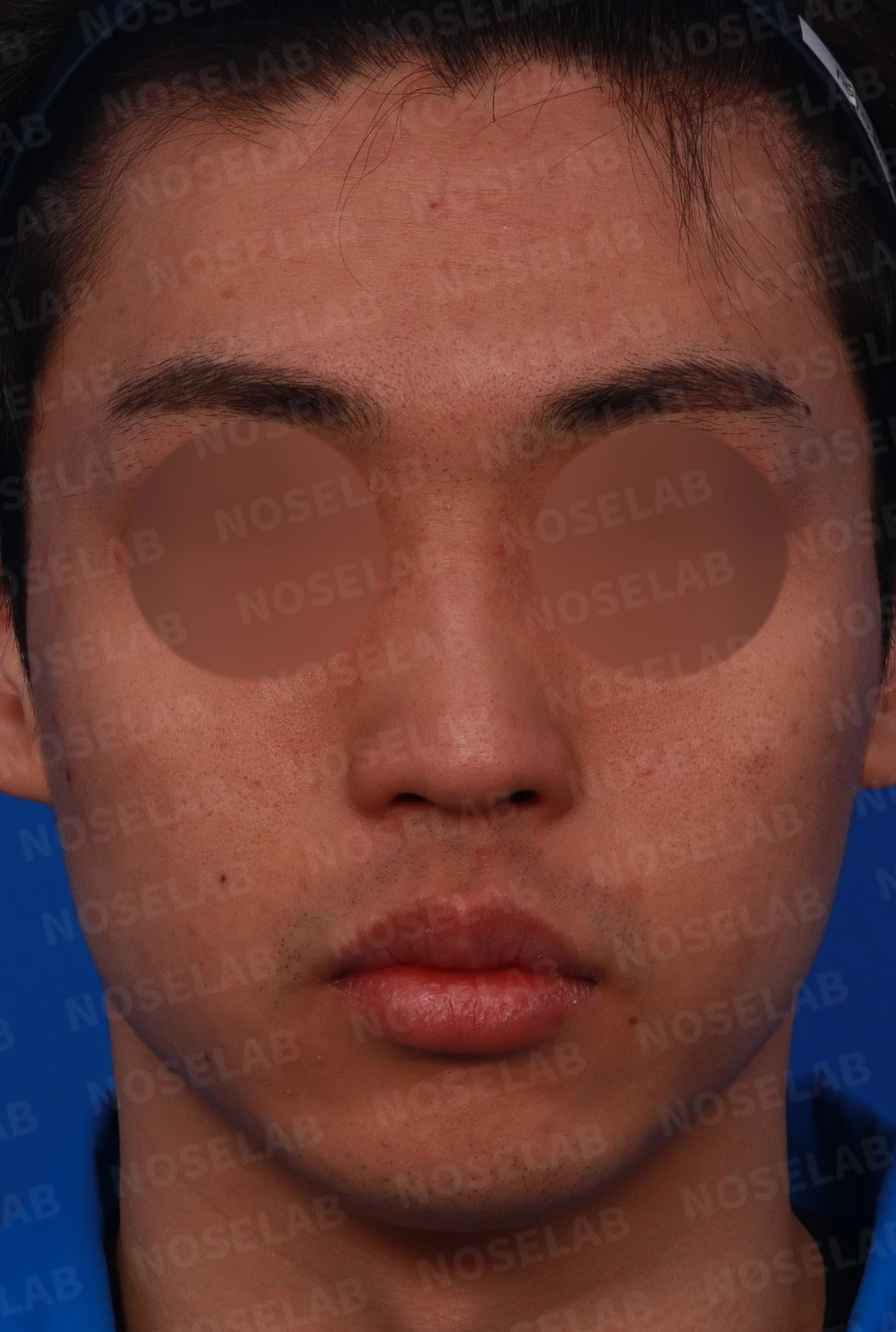
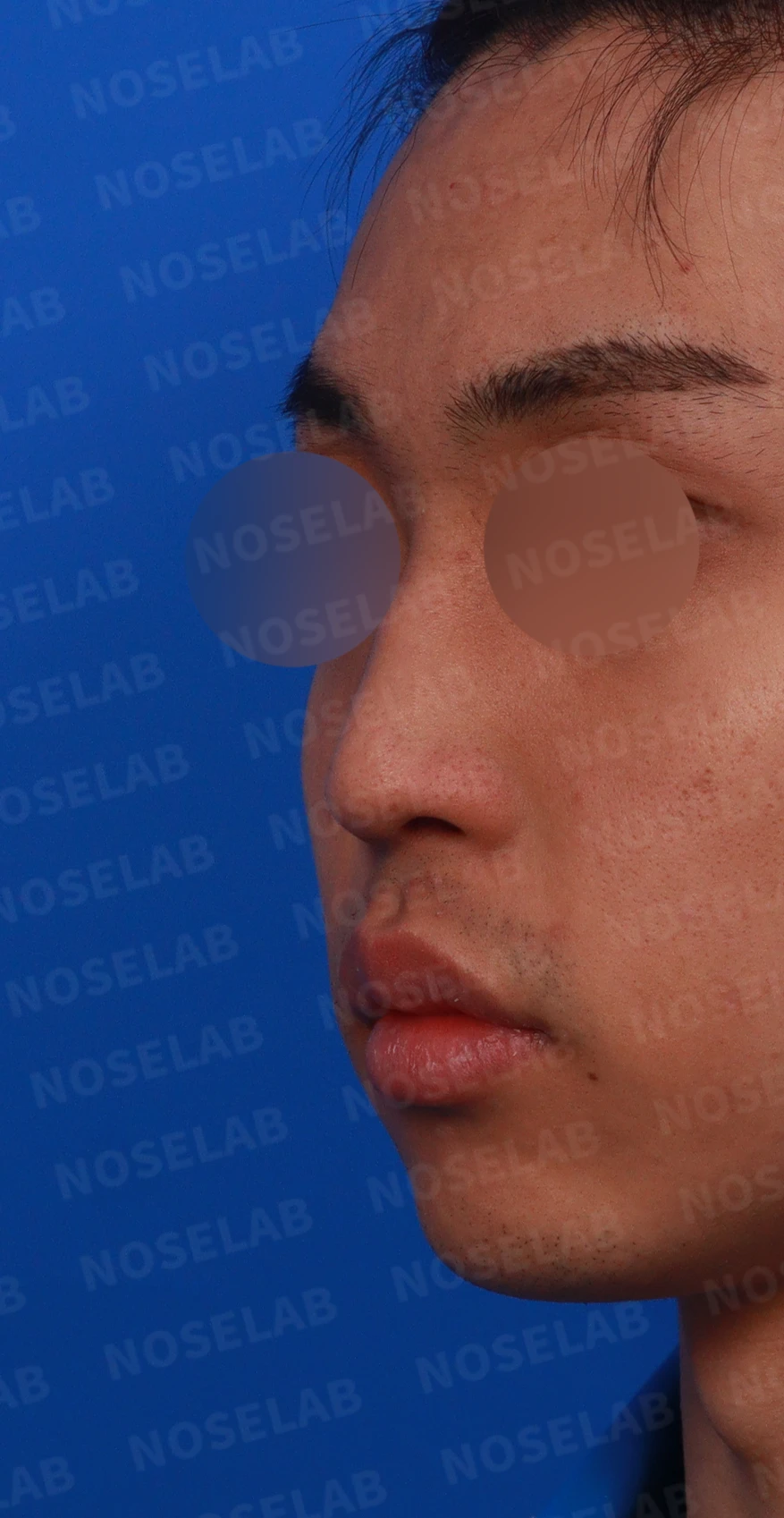
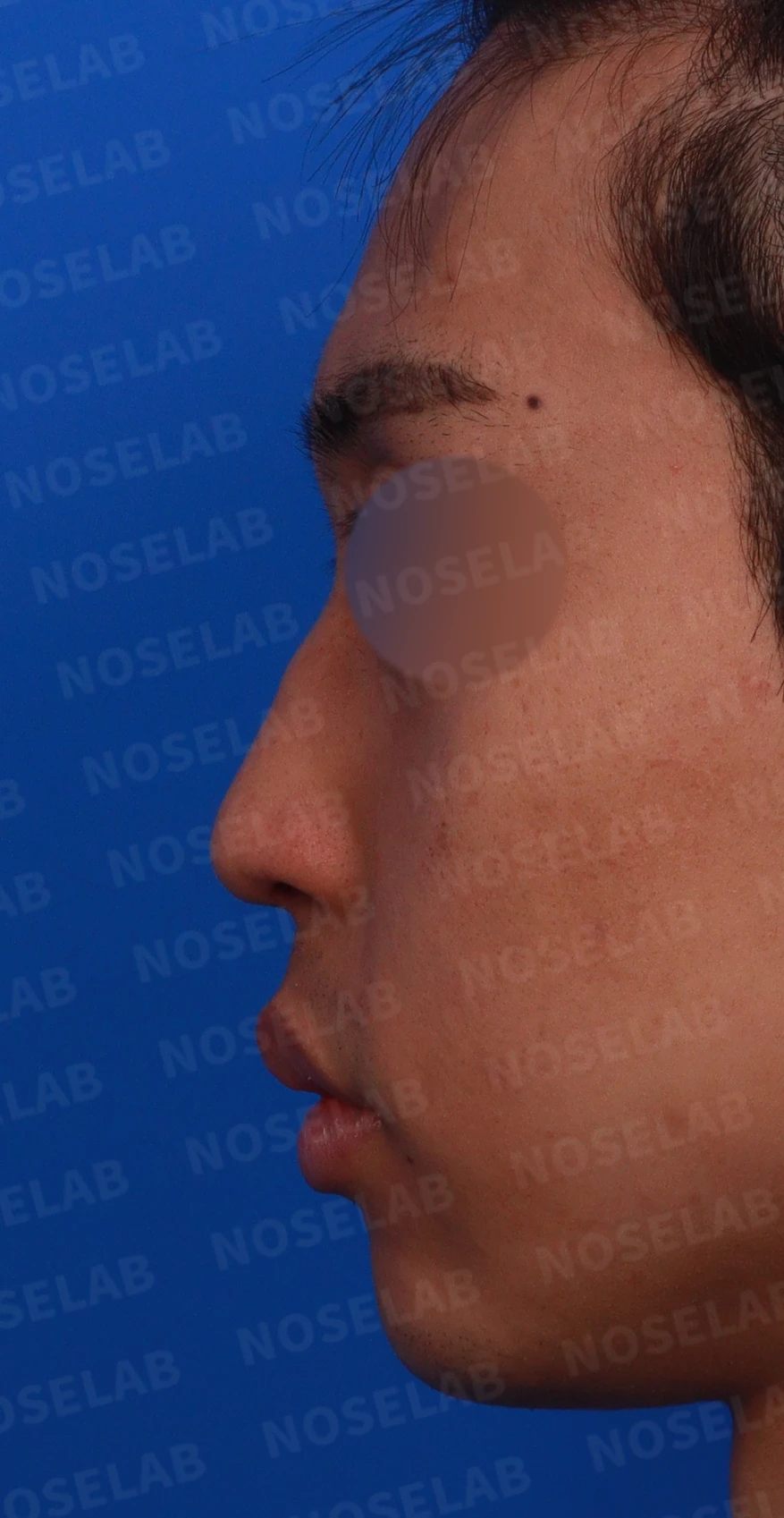
Front, left profile, and oblique views during design consultation
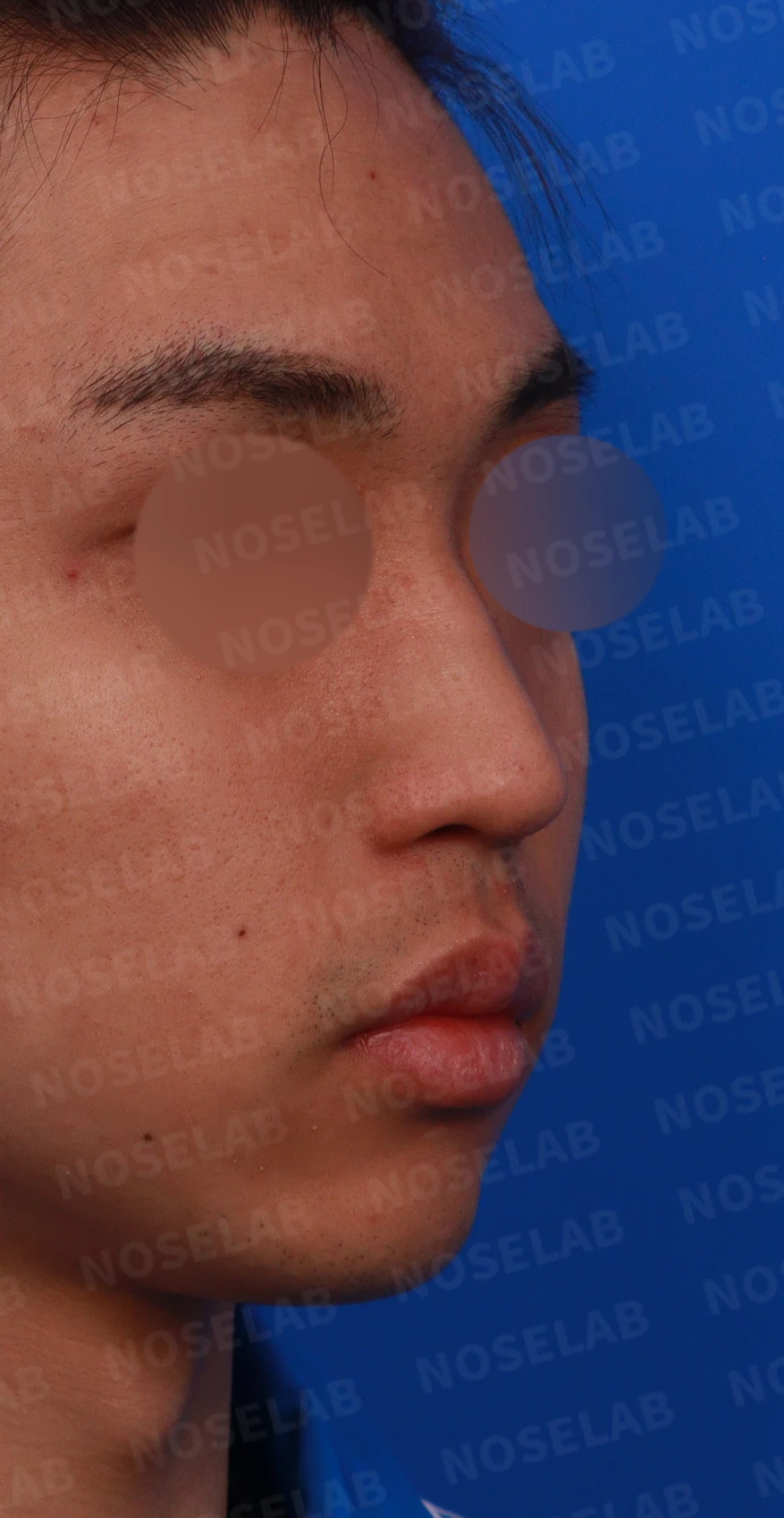
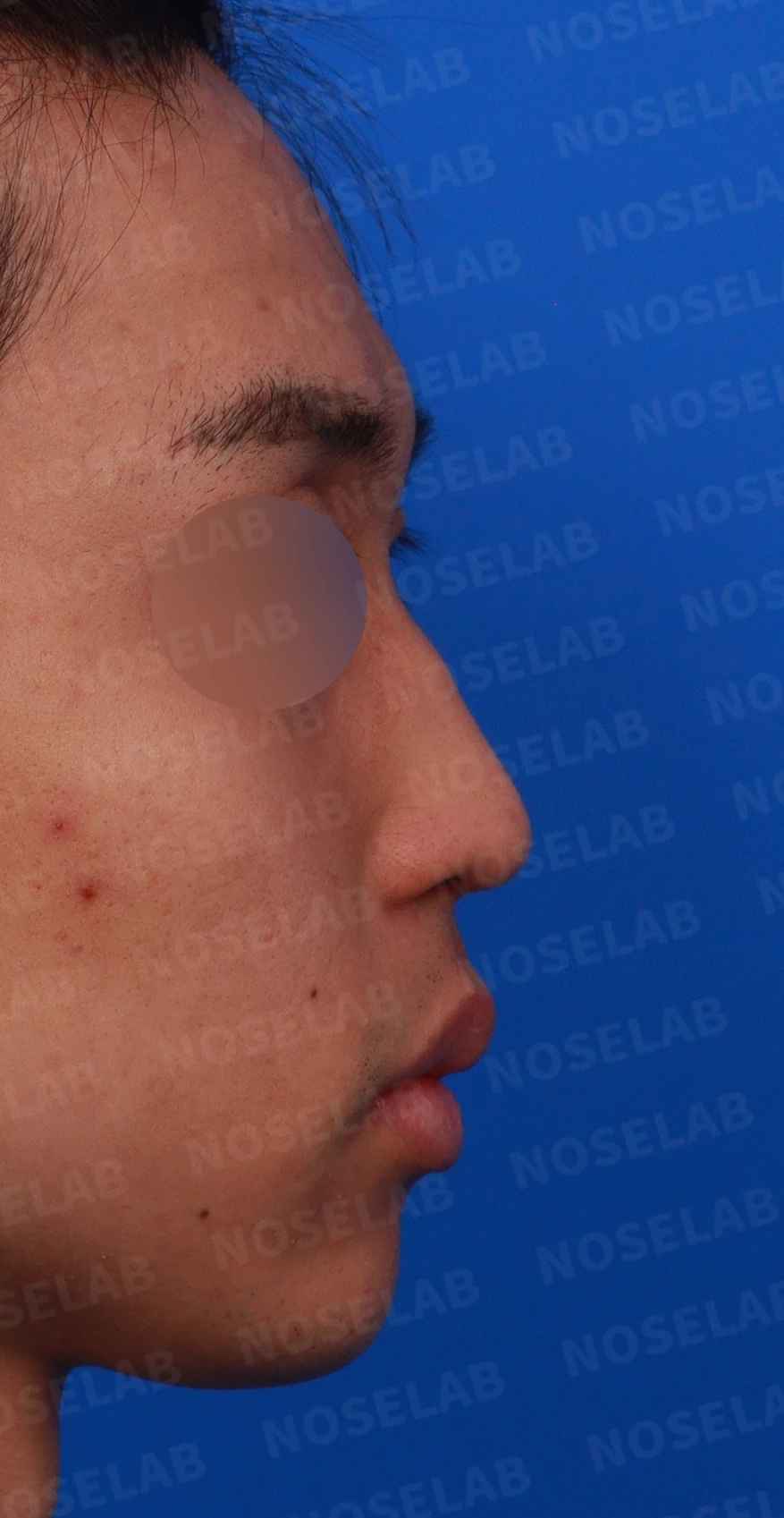
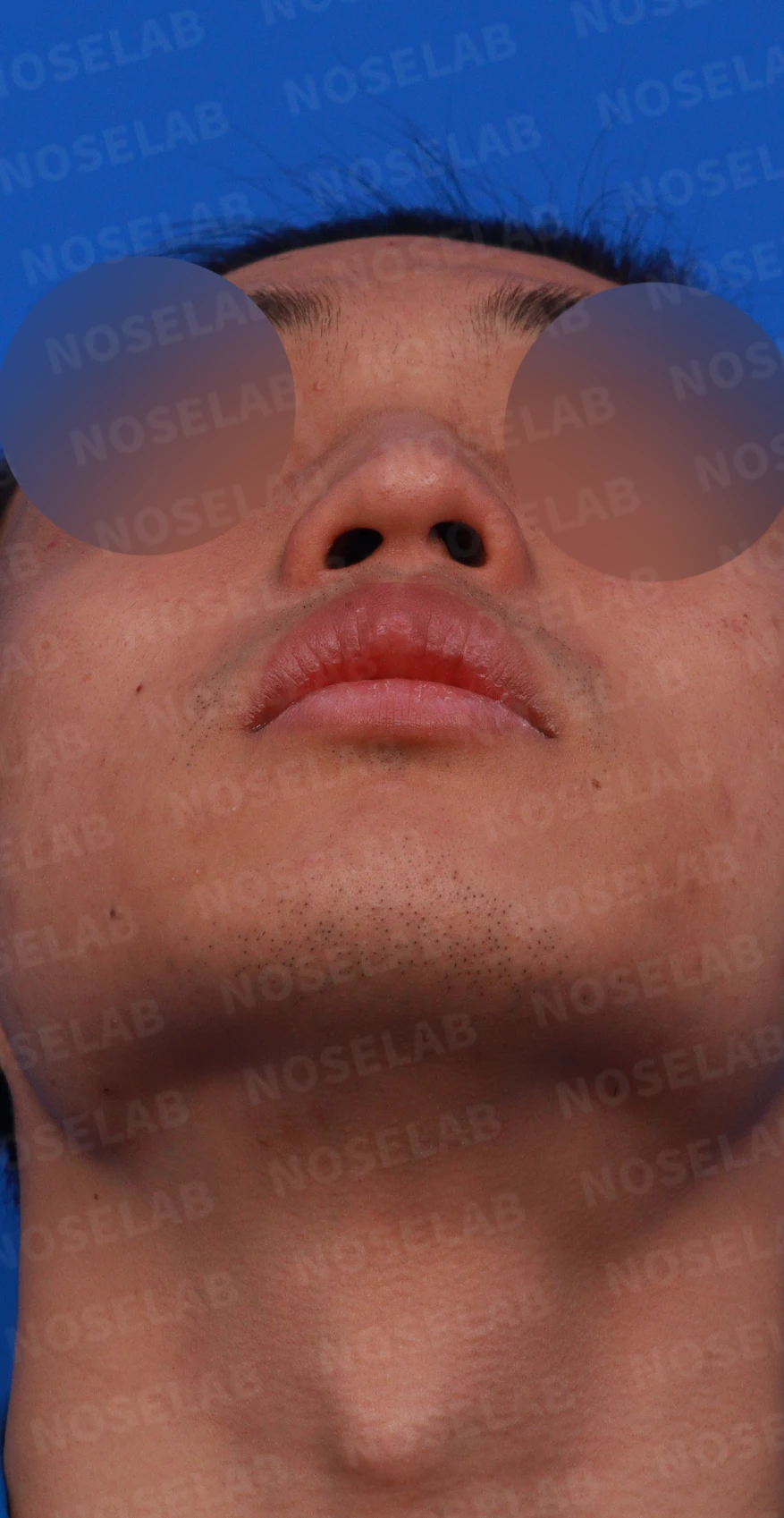
Design consultation: right oblique, profile, and basal (nostril) views
📍 Surgical history
A few years ago: Surgery for rhinitis and deviated septum
🔎 Initial consultation findings
Front view
Deviated nose
Flared nasal shape
Nostril asymmetry
2. Profile view
Small dorsal hump
Drooping tip
Nose small relative to the face
Protruding mouth findings
3. Nostrils
Nostril asymmetry
Columella tilted to the left
4. Nasal endoscopy findings
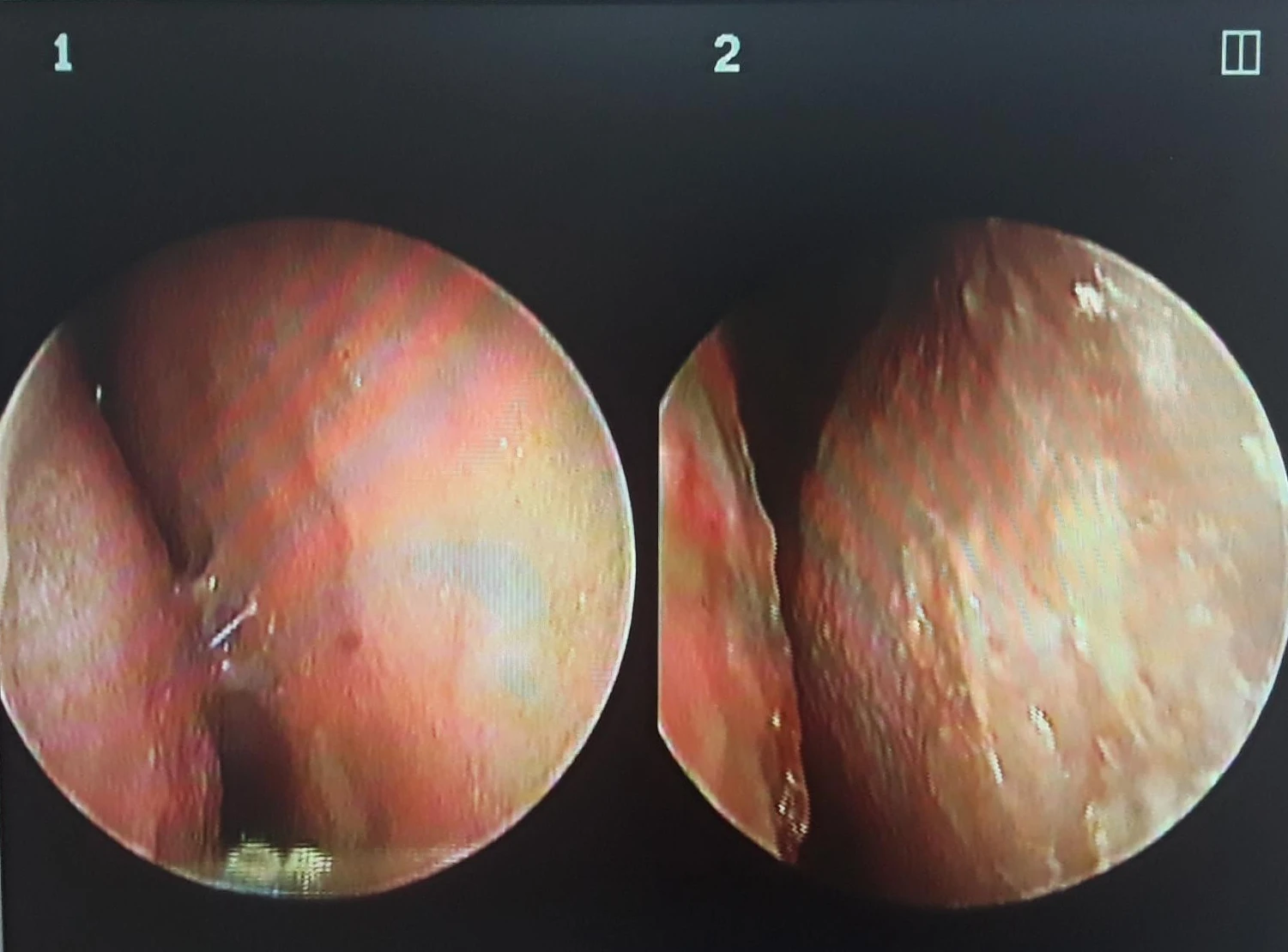
Nasal endoscopy photos
Deviated septum
Mucosal adhesion (synechia) between the right inferior turbinate and the nasal septum
Bilateral inferior turbinate hypertrophy
✨ Patient's requests
Natural yet distinct refinement
Balanced nasal shape
Relief of rhinitis
💉 Surgical procedure details
Functional improvement
Septoplasty
Radiofrequency submucosal resection of the inferior turbinates
Mucosal adhesiolysis
2. Structural improvement
Correction of the crooked nose with lateral osteotomy of the nasal bones
Septal extension using autologous rib cartilage
Correction of nostril asymmetry
3. Shape improvement
Correction of the nasolabial angle
Balance between distinct definition and natural contours
Adjusting the size in proportion to facial balance
✅ Surgical results
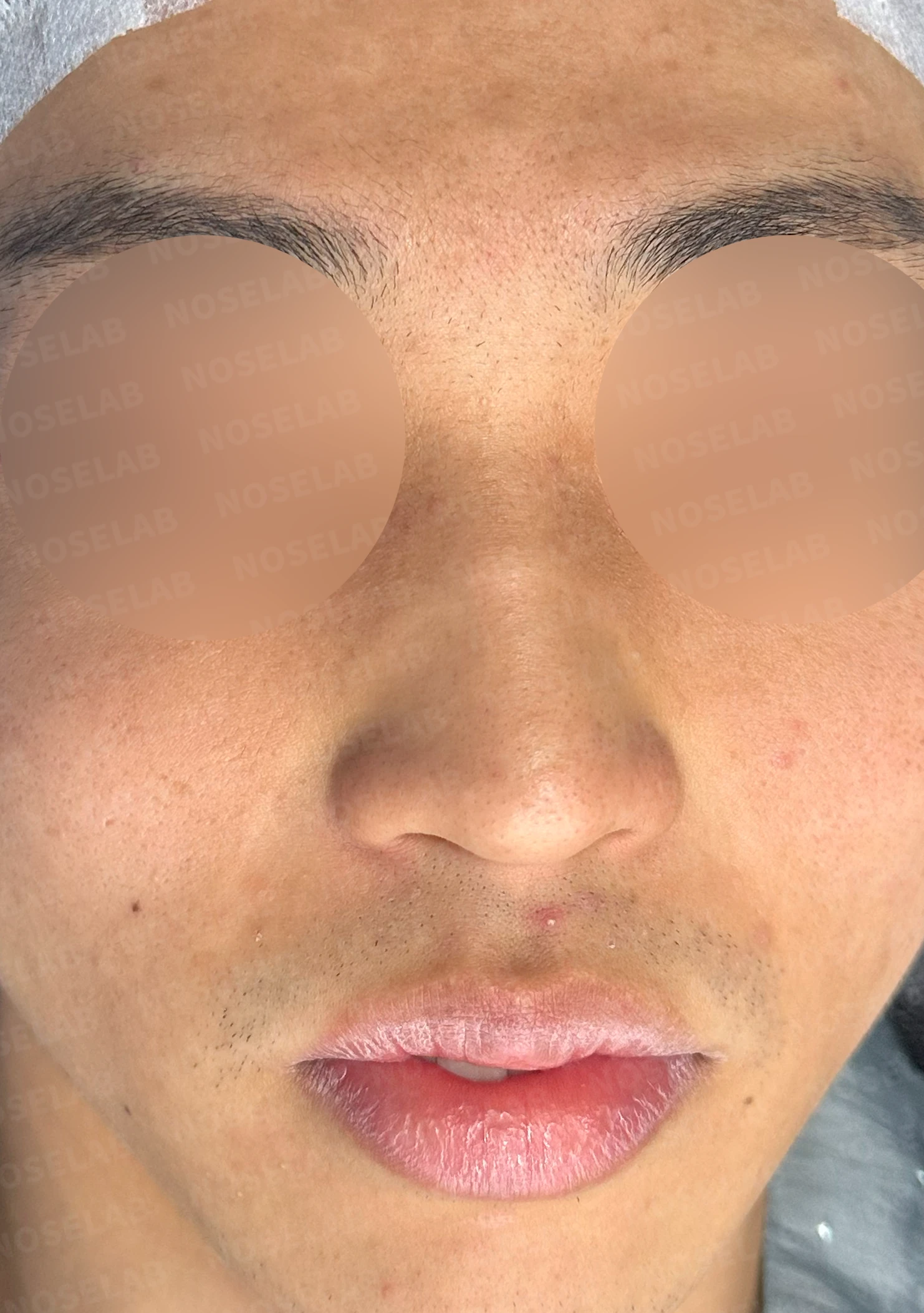
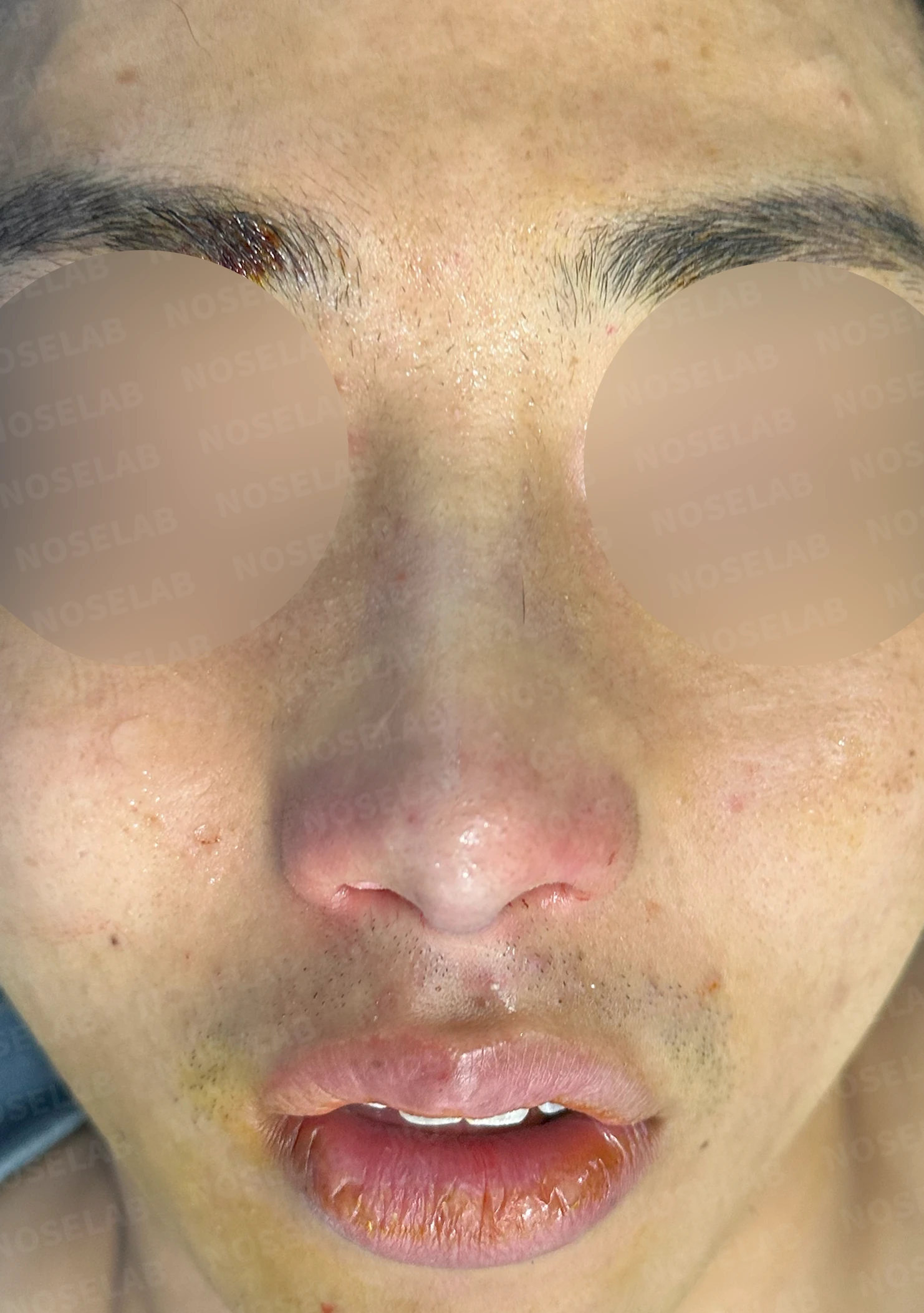
Before surgery / Day 0 immediately after surgery Photos taken immediately after surgery show swelling and may differ from the final result.
Front view
Straightened nasal line
Balanced width
Improved nostril symmetry
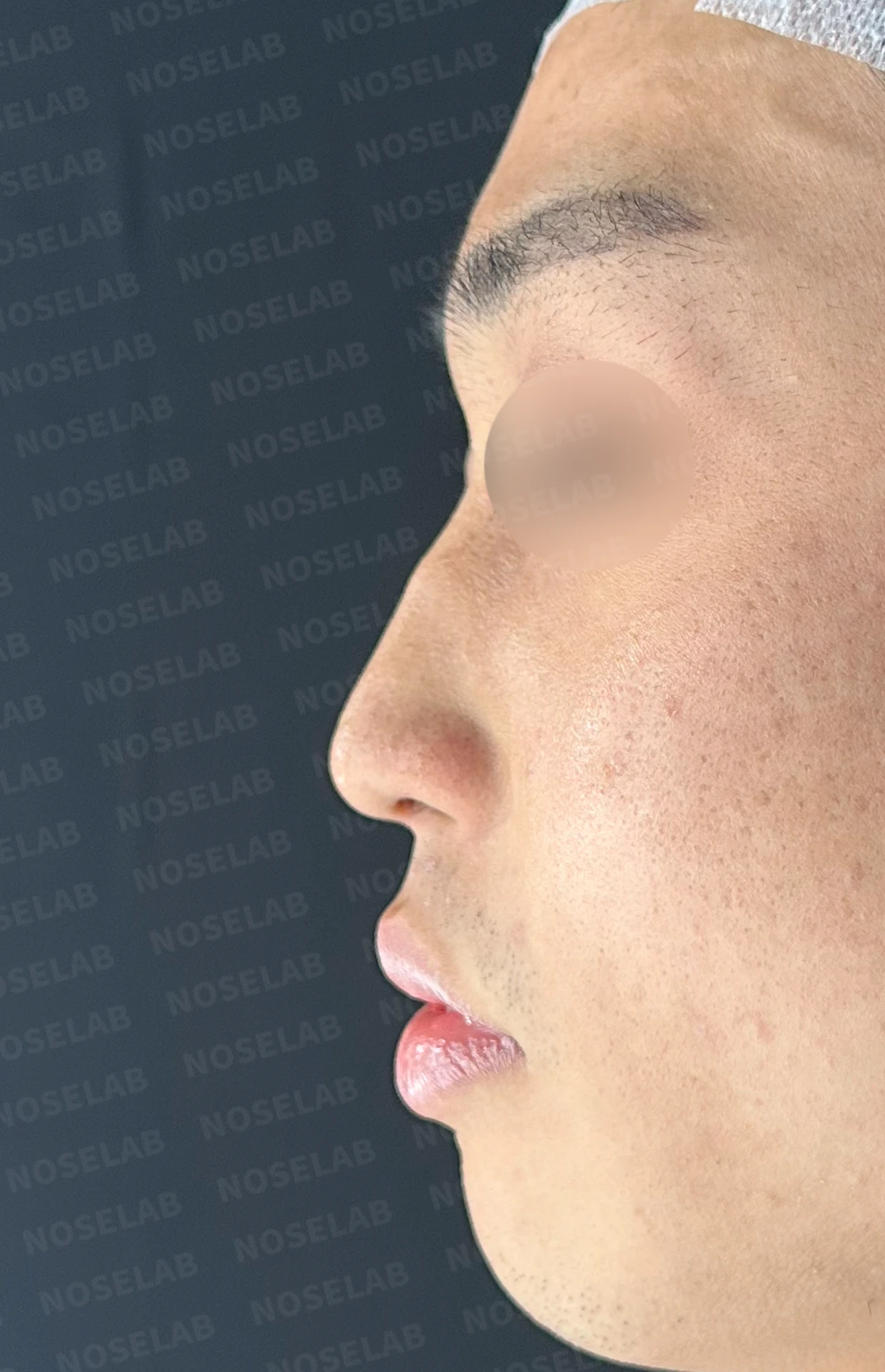
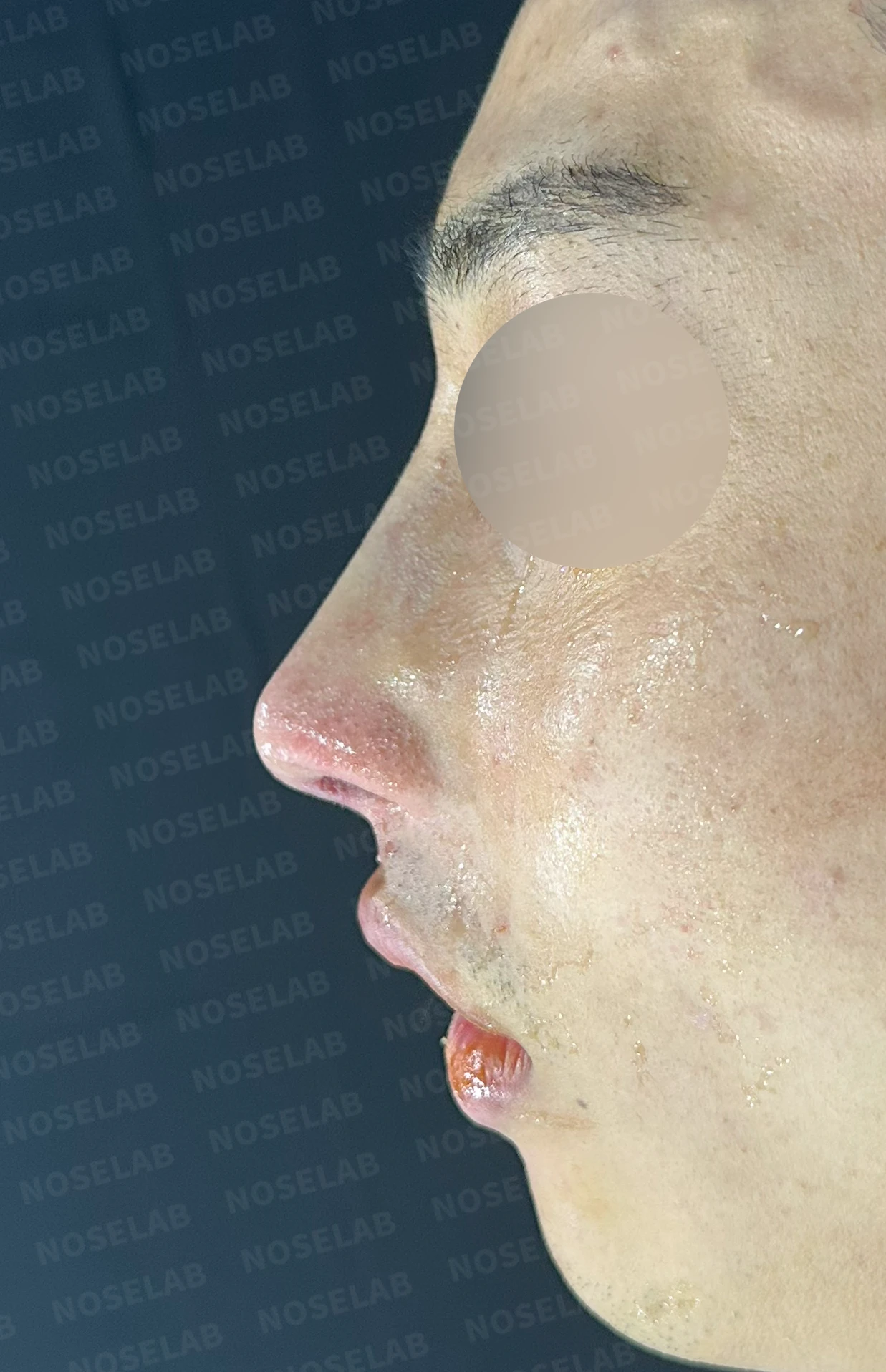
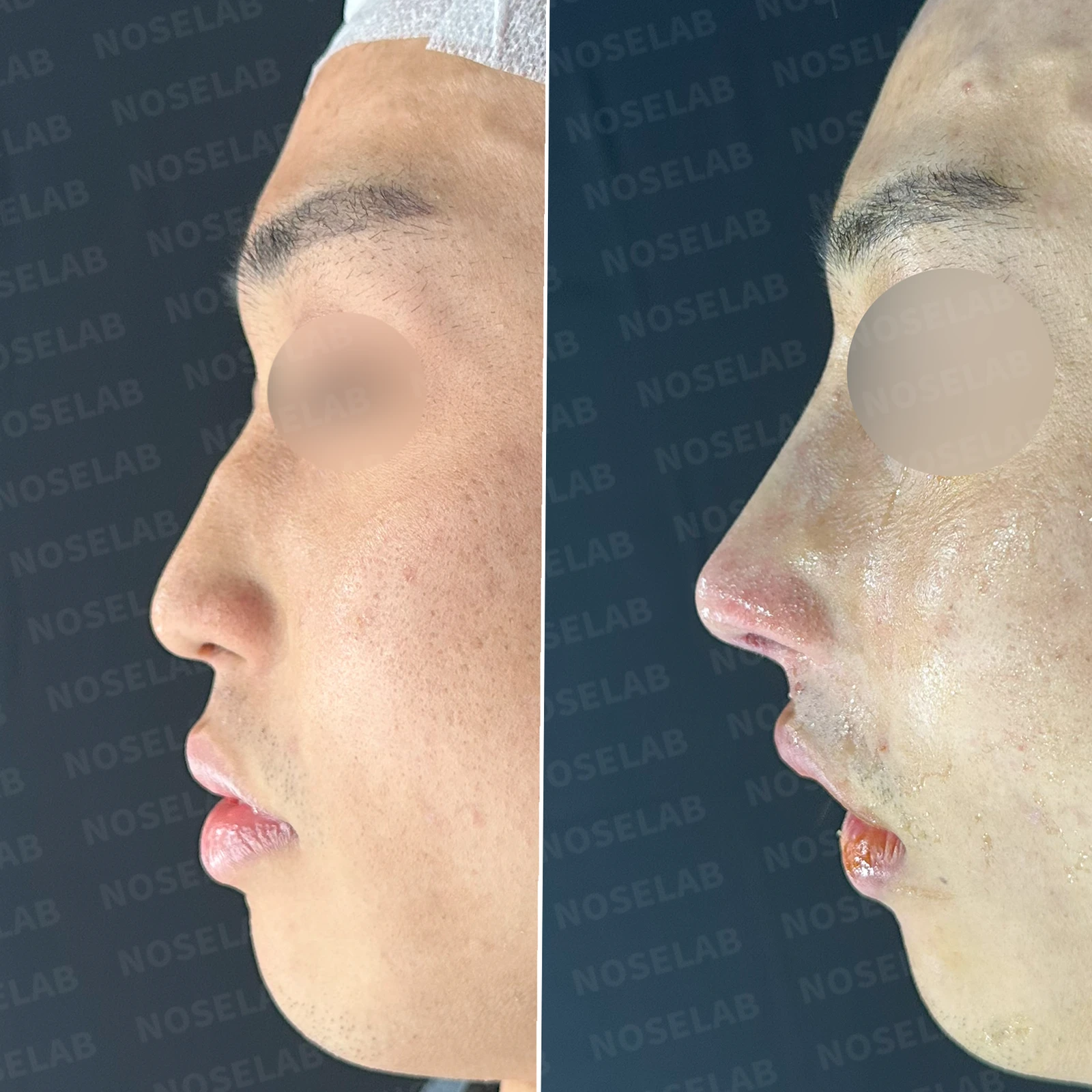
Before surgery / Day 0 immediately after surgery Photos taken immediately after surgery show swelling and may differ from the final result.
2. Profile view
A harmonious profile line over the dorsal hump
Stable tip position
Improvement of protruding mouth through nasolabial angle correction
Size tailored to facial proportions
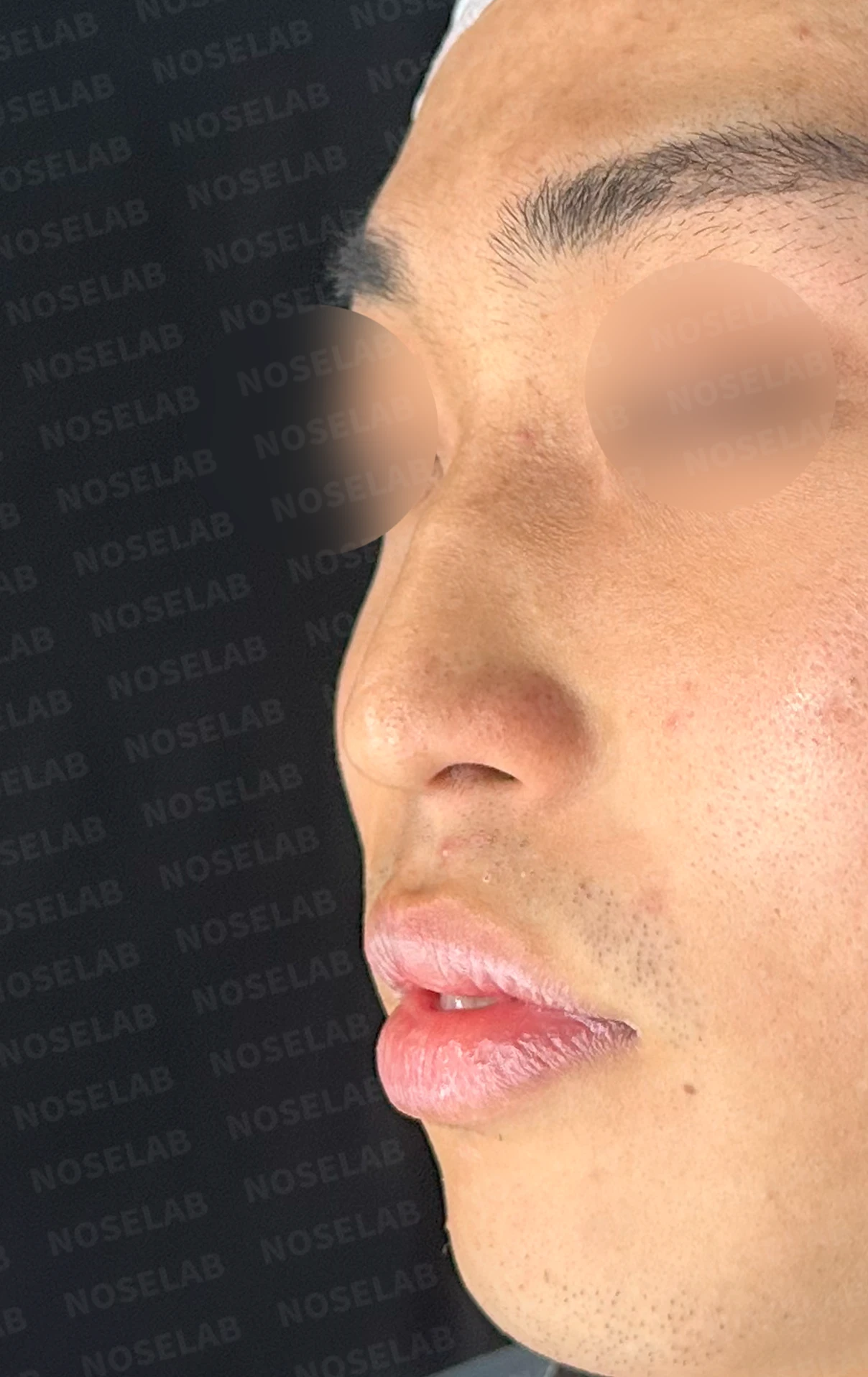
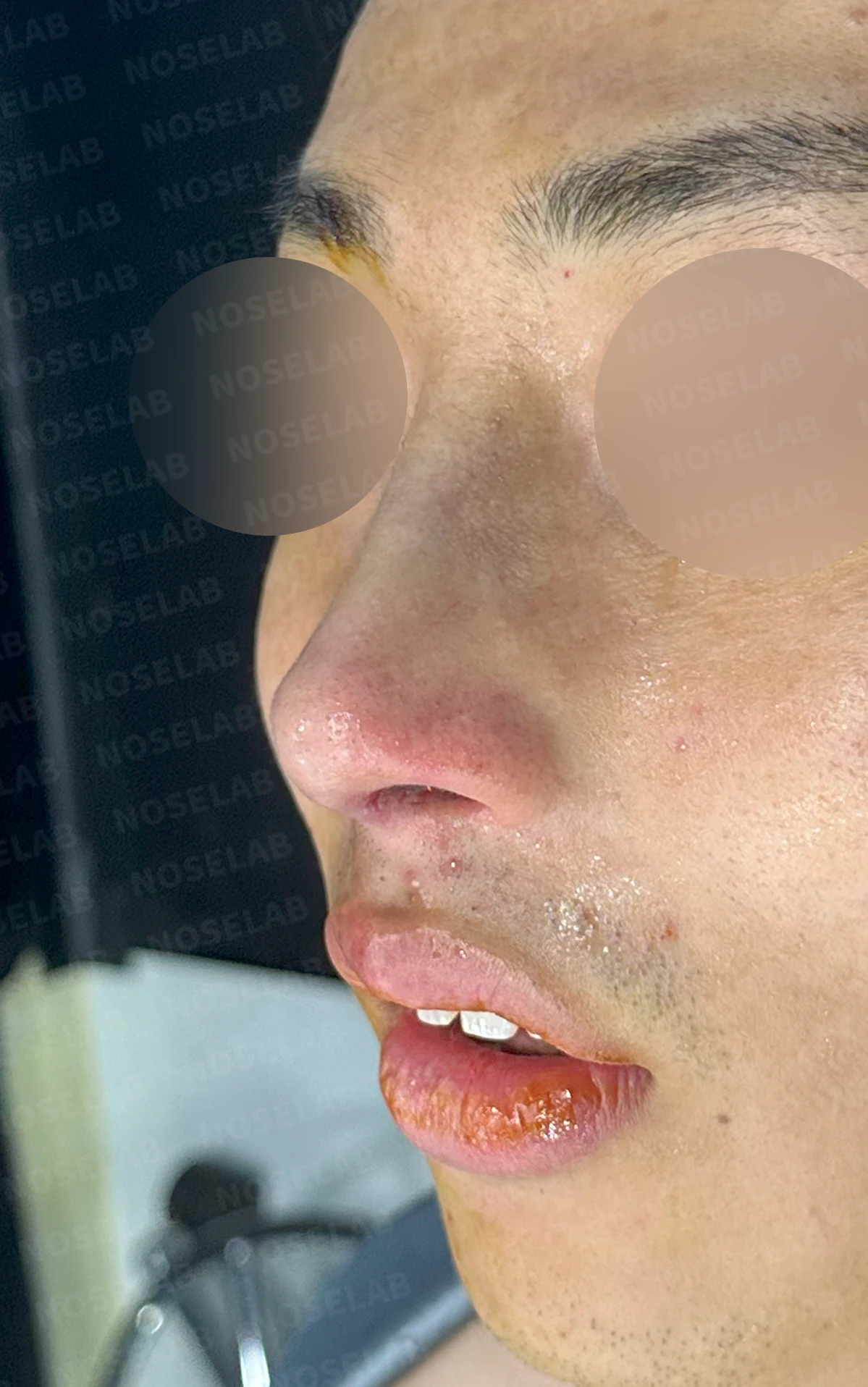
Before surgery / Day 0 immediately after surgery Photos taken immediately after surgery show swelling and may differ from the final result.
3. Function
Reduction in nasal obstruction
Lysis of mucosal adhesions
Improvement of rhinitis symptoms
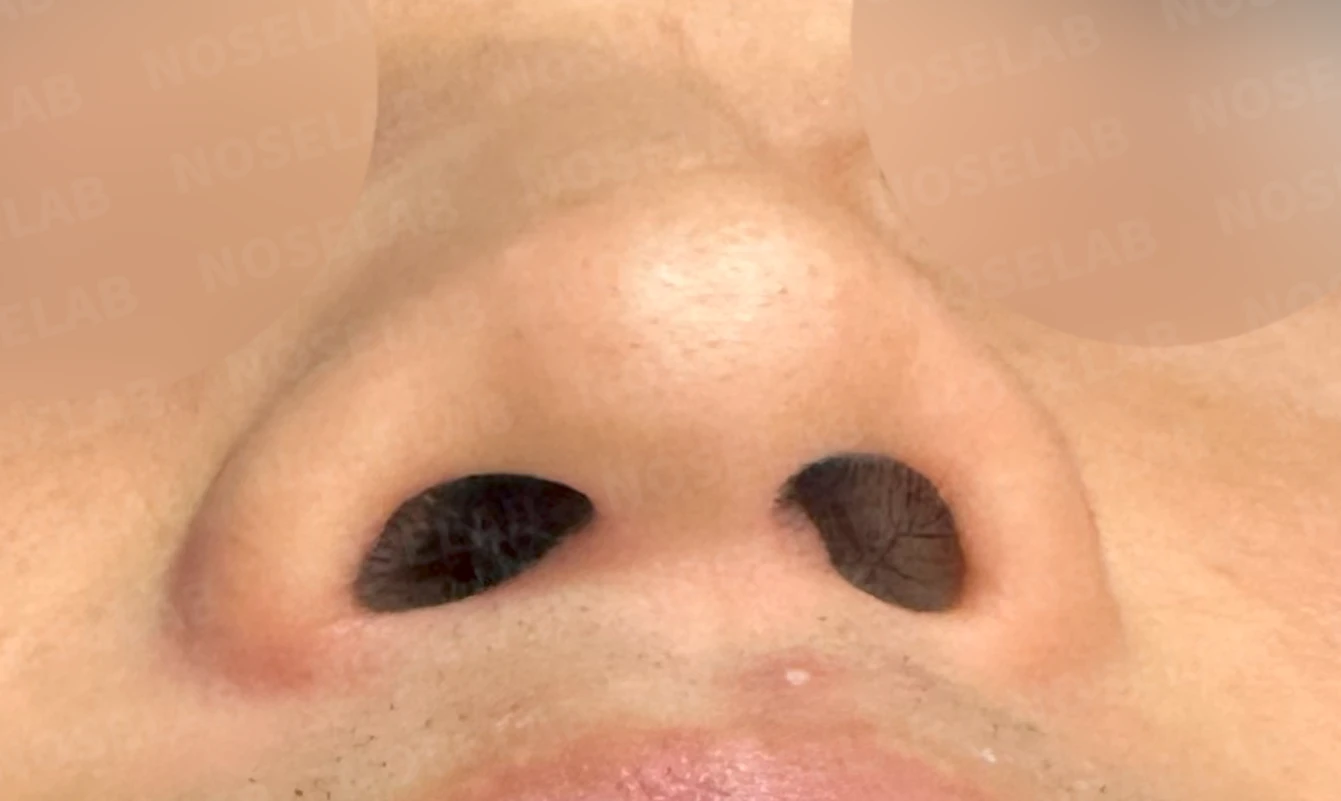
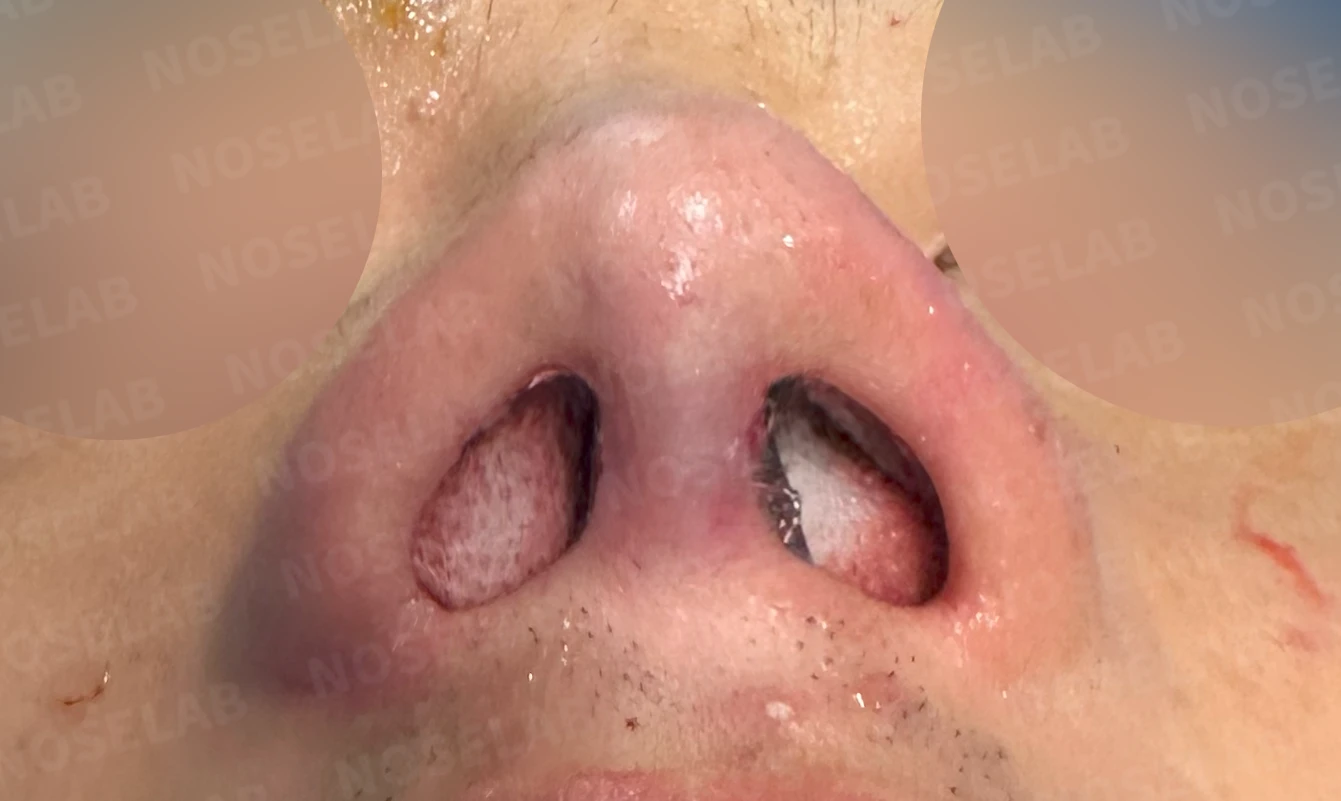
Before surgery / Day 0 immediately after surgery Photos taken immediately after surgery show swelling and may differ from the final result.
👨⚕️ Specialist's assessment
This was a complex case where, despite previous rhinitis surgery, symptoms had recurred along with a crooked nose, nostril asymmetry, and other concerns. Through septal extension with autologous rib cartilage and mucosal adhesiolysis, we achieved functional improvement while shaping a natural yet distinctly refined nose that the patient desired.
This was Dr. Peter C. Kang. Thank you.
Thank you.
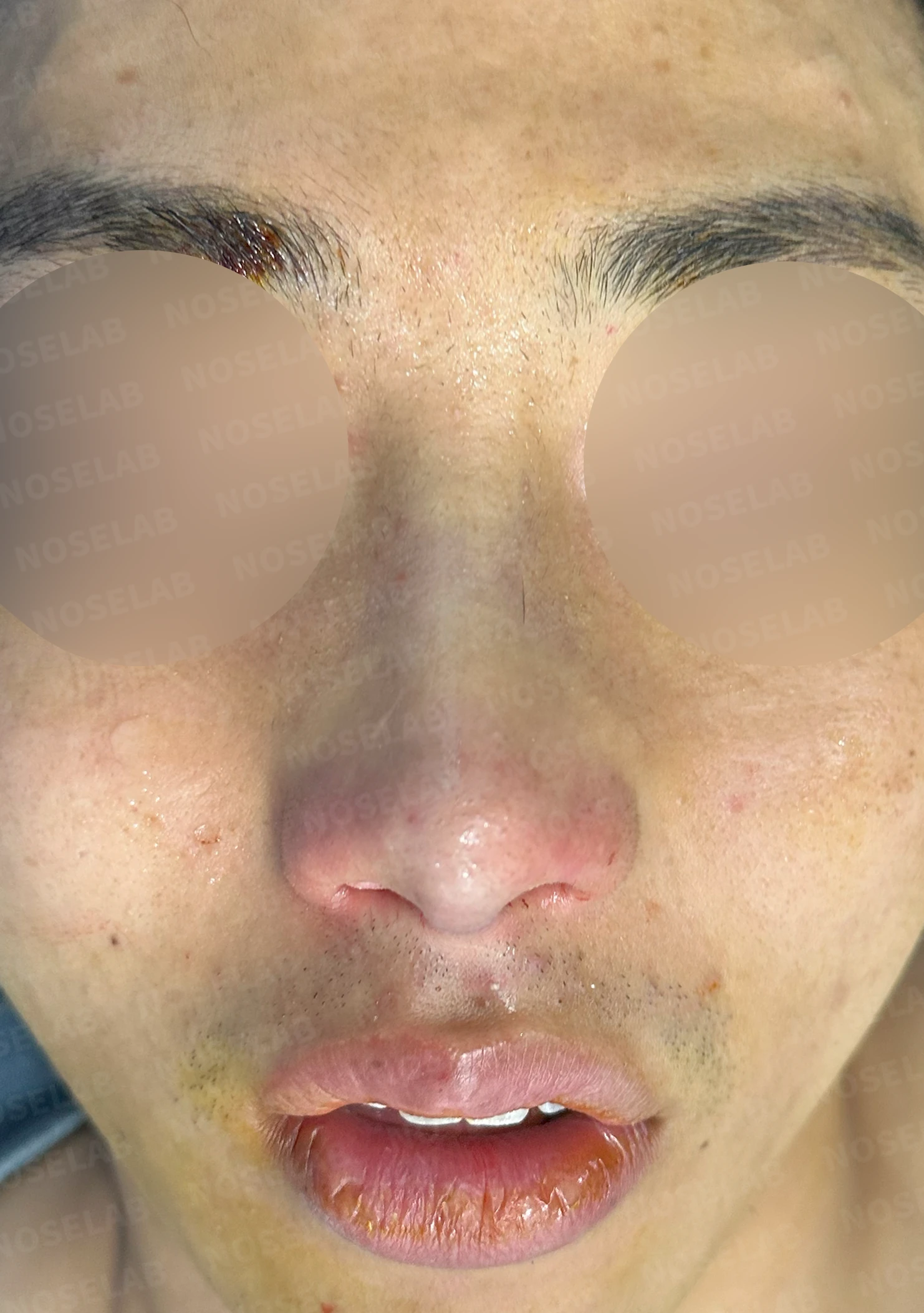
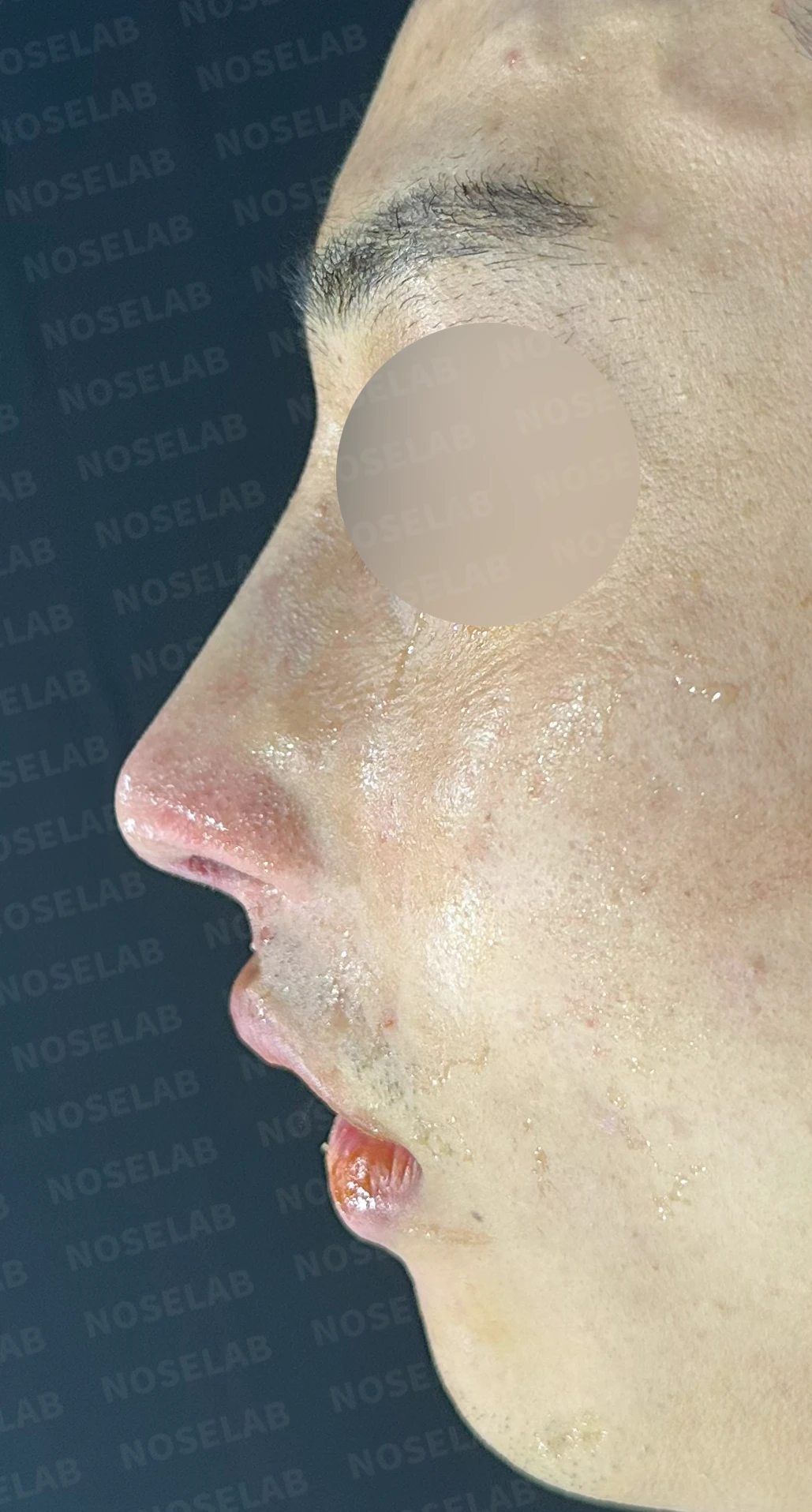
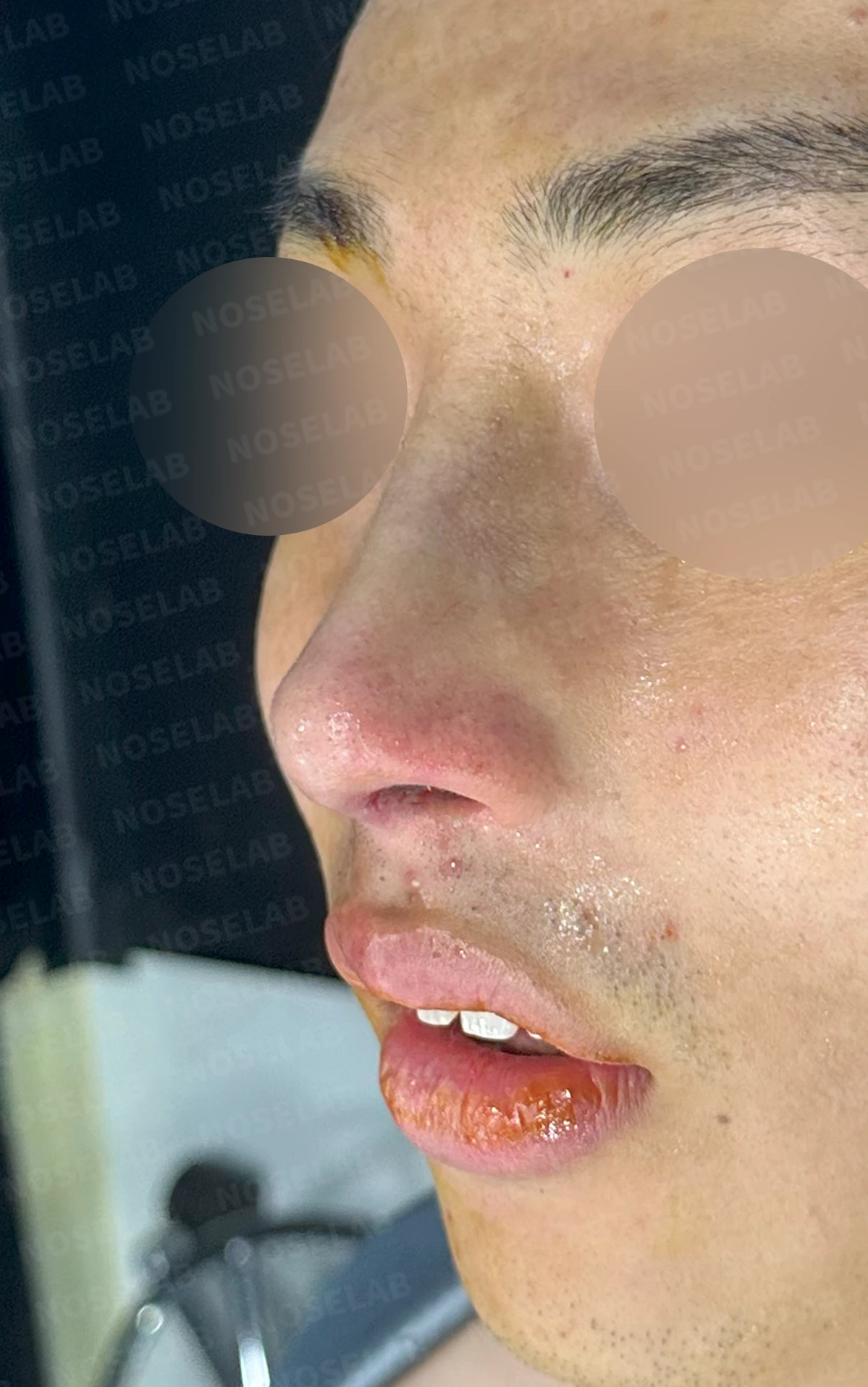
Front, profile, and oblique views immediately after surgery on day 0 Photos taken immediately after surgery show swelling and may differ from the final result.
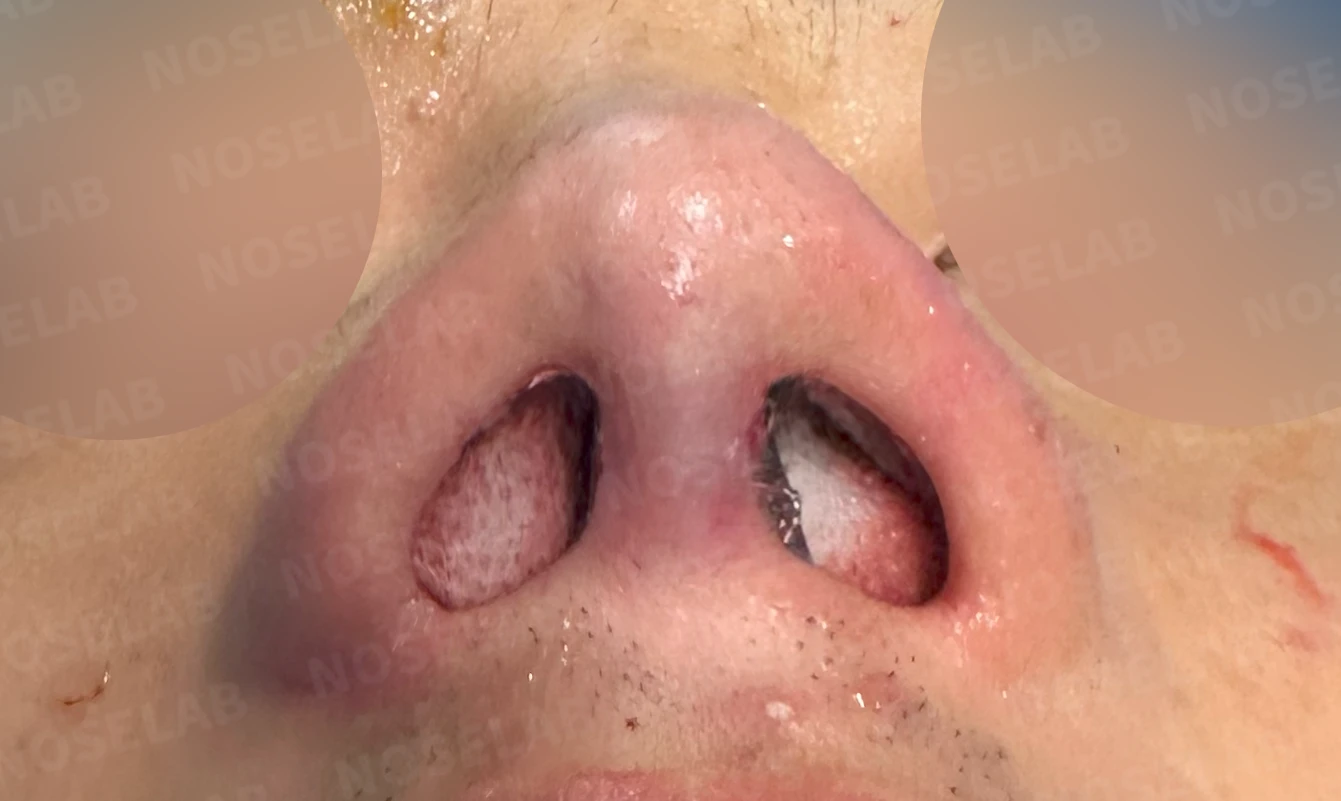
Nostril view on day 0 immediately after surgery Photos taken immediately after surgery show swelling and may differ from the final result.
#closedrhinoplasty #revisionrhinoplasty #autologousribcartilage #rhinitissurgery #customrhinoplasty

Limitations and risks
When autologous rib cartilage is used, scarring and pain may remain at the donor site on the chest, and pneumothorax (pleural injury) can occur rarely. Over time, the grafted cartilage may warp or undergo partial resorption.
When the septum is corrected at the same time, nasal obstruction may persist or recur, and in rare cases, septal perforation or changes in smell may occur.
Common potential risks include infection, bleeding, asymmetry, scarring, skin necrosis, and insufficient improvement; results vary depending on individual skin condition and previous surgical history.