Hello, I am Dr. Peter C. Kang.
Today, I would like to share a case where problems that developed after multiple rhinoplasties and excessive alar reduction were corrected.
🔍 Surgical history
10 years ago: Bulbous nose surgery using ear cartilage and a silicone implant
6 years ago: Surgery using ear cartilage, a silicone implant, and septal cartilage
3 years ago: Surgery using donor rib cartilage, a silicone implant, and alar reduction
Rhinitis surgery
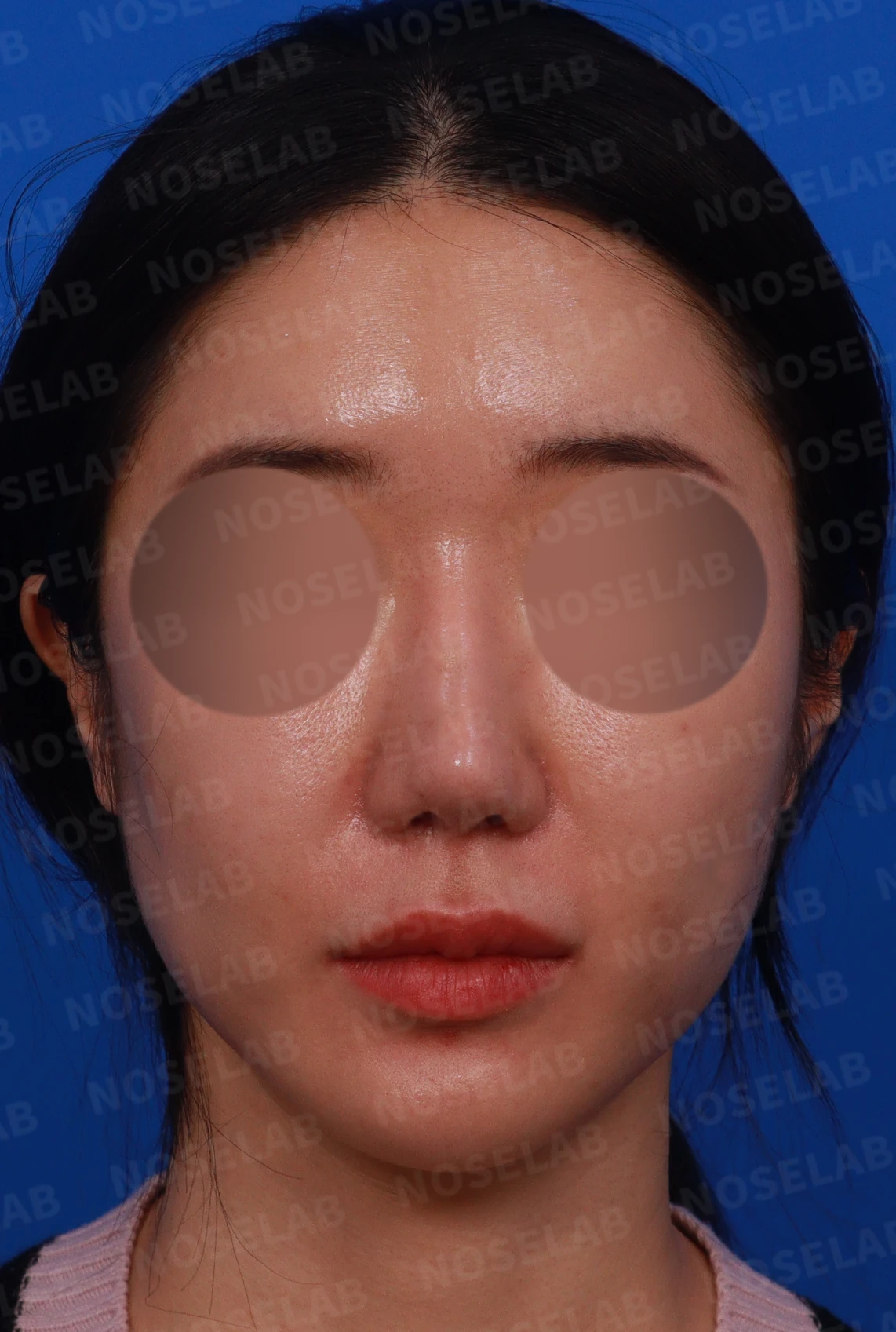
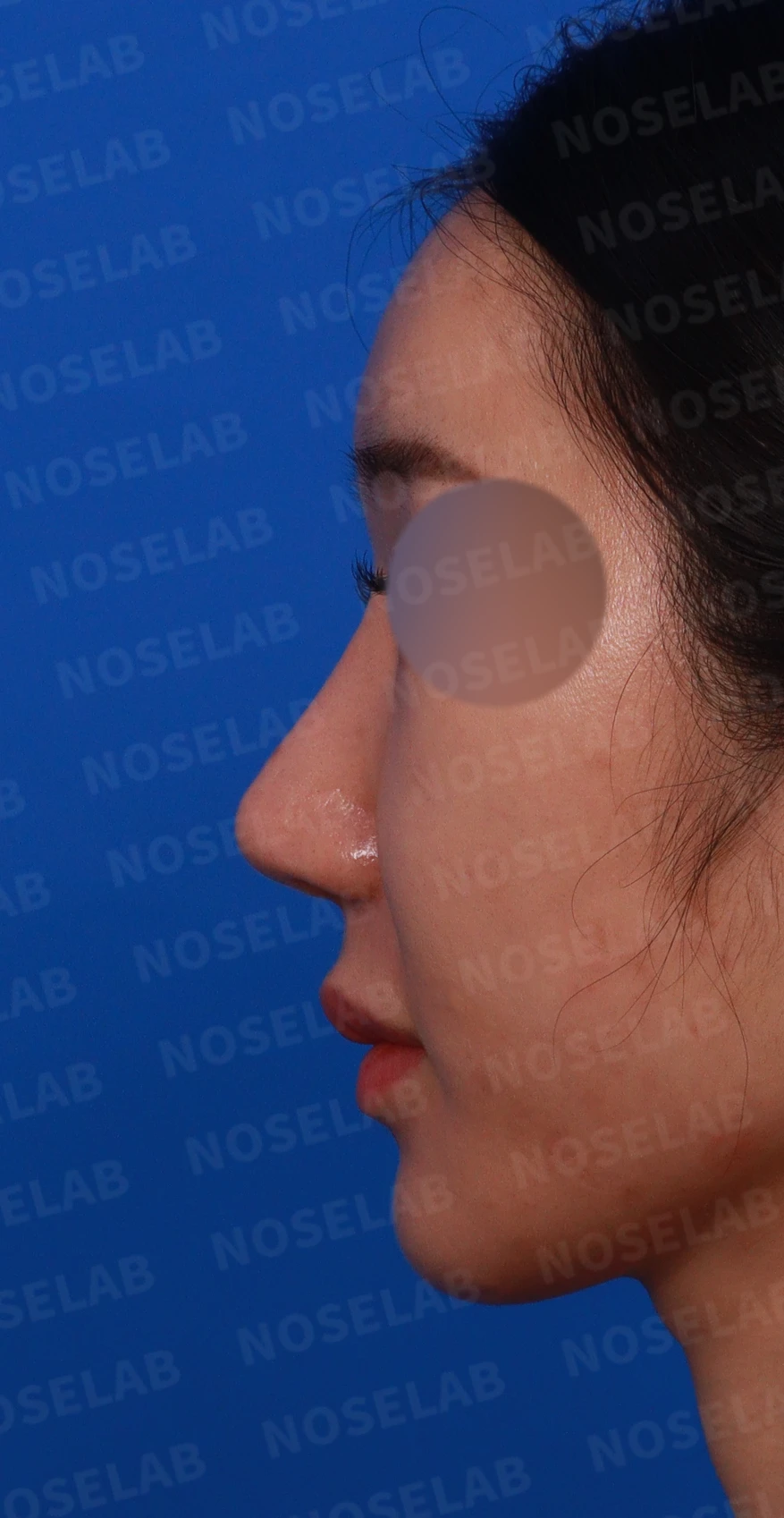
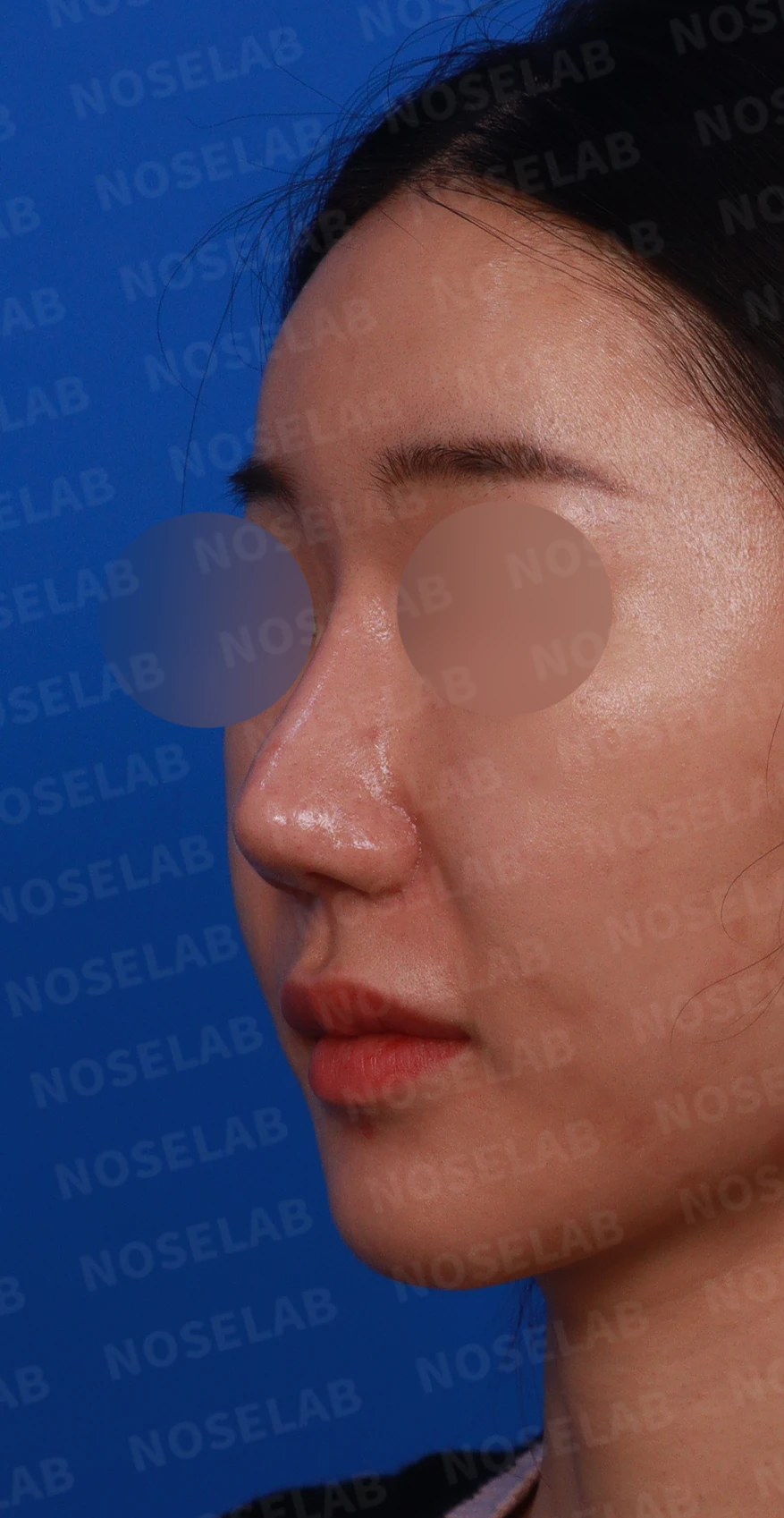
Front, left profile, and oblique views during design consultation.
💉 Primary symptoms and requests
Nasal obstruction, more severe on the left side
Lowering the radix
Nose that does not appear long
Natural nasal tip that is not pointed
Creation of a straight bridge line
Improvement of asymmetry
Lowering the columella
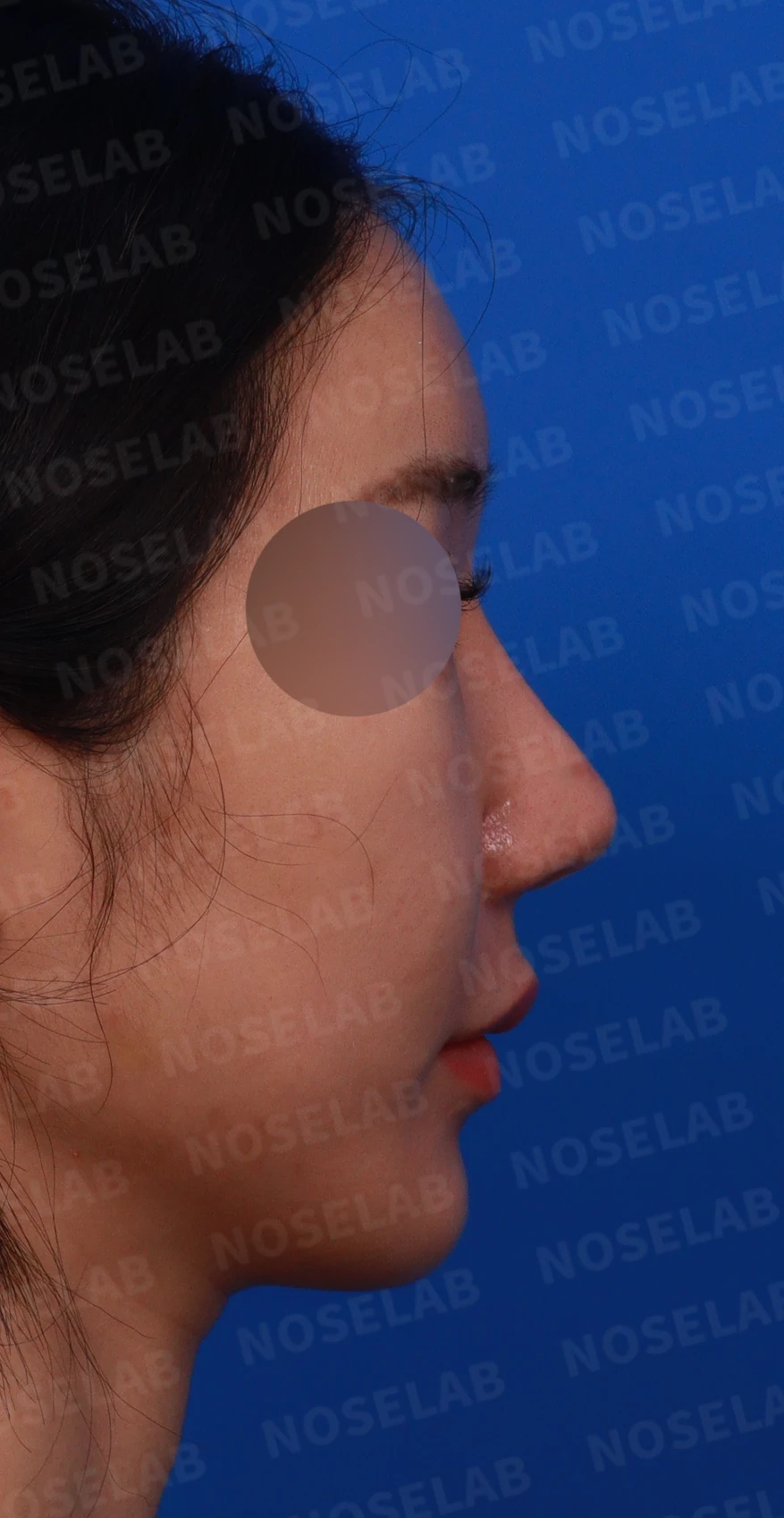
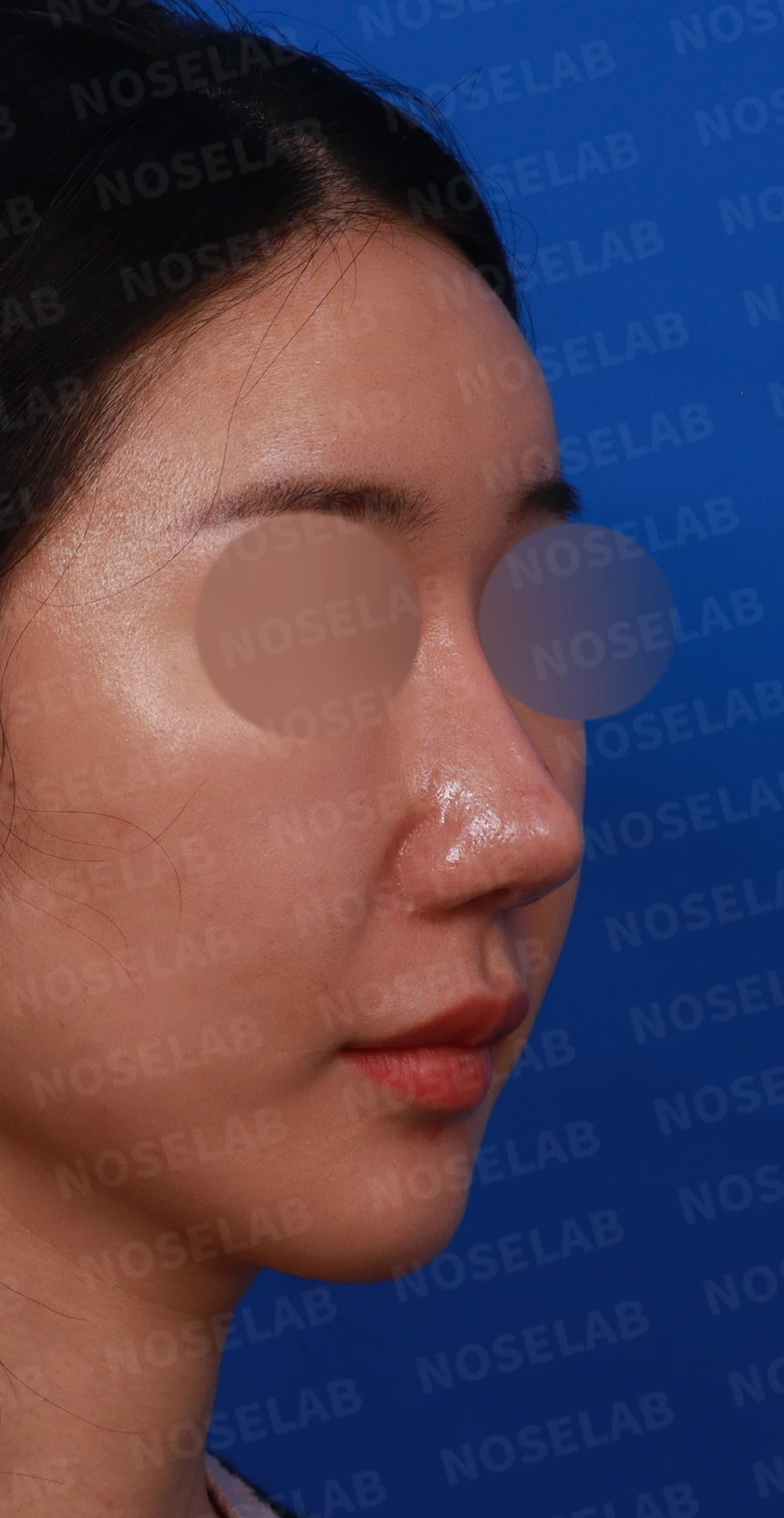
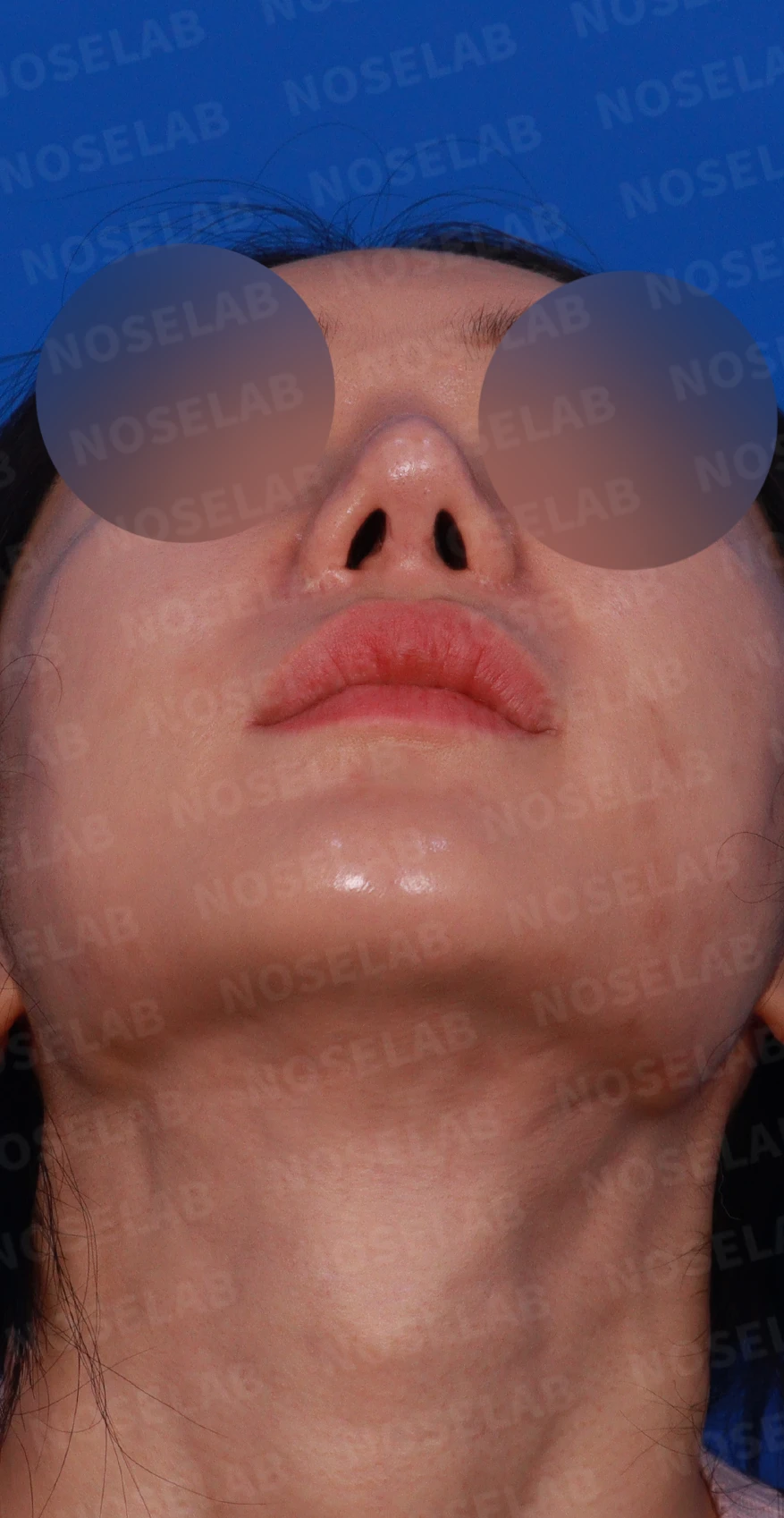
Right profile, oblique, and nostril views during design consultation.
🔧 Preoperative analysis
Front view
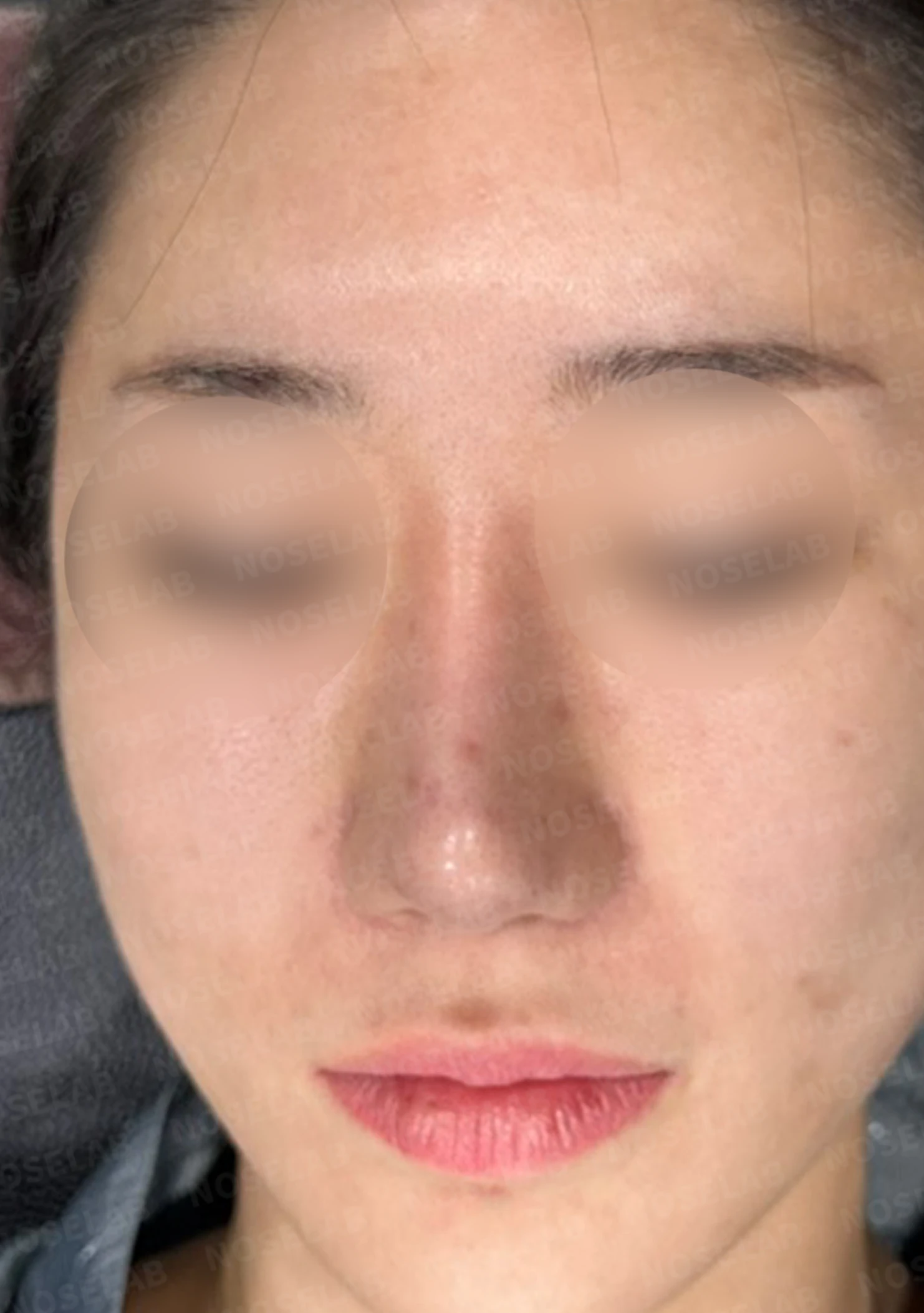
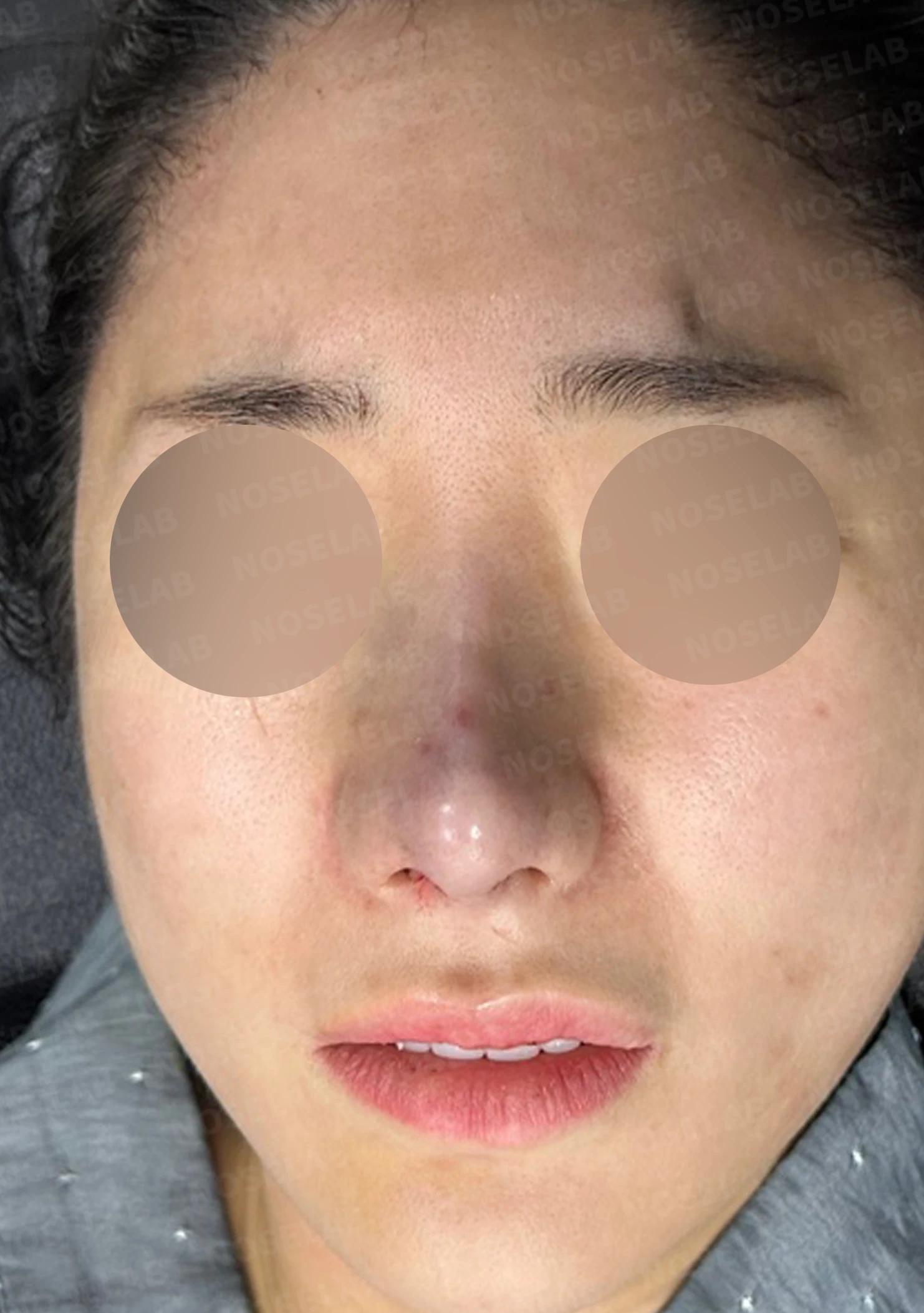
Before surgery / Day 0 immediately after surgery Photos taken immediately after surgery show swelling and may differ from the final result.
Bulbous nasal tip
Crooked nose
Poorly defined tip contour
Unnatural nasal shape
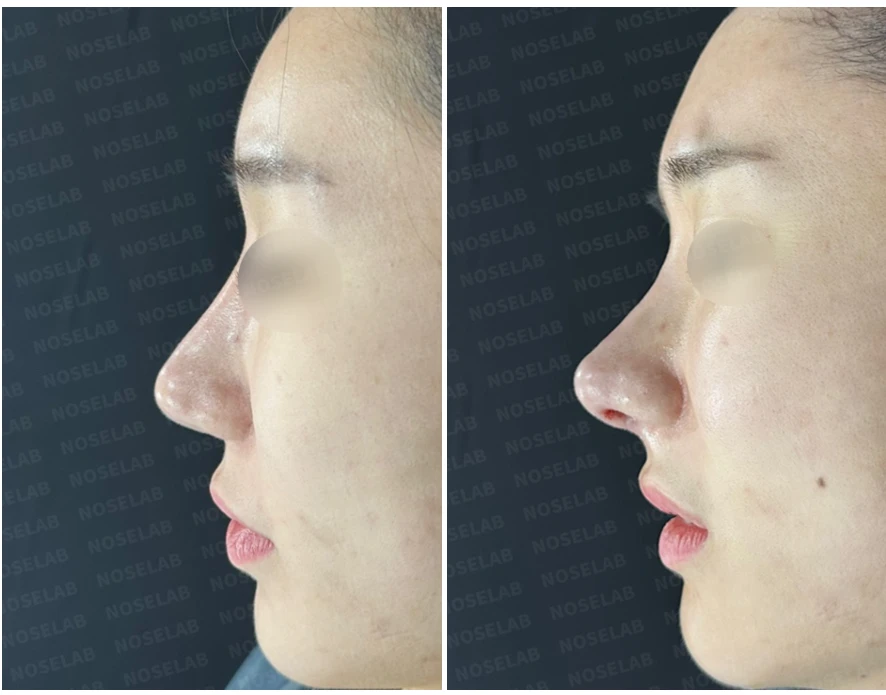
2. Profile view
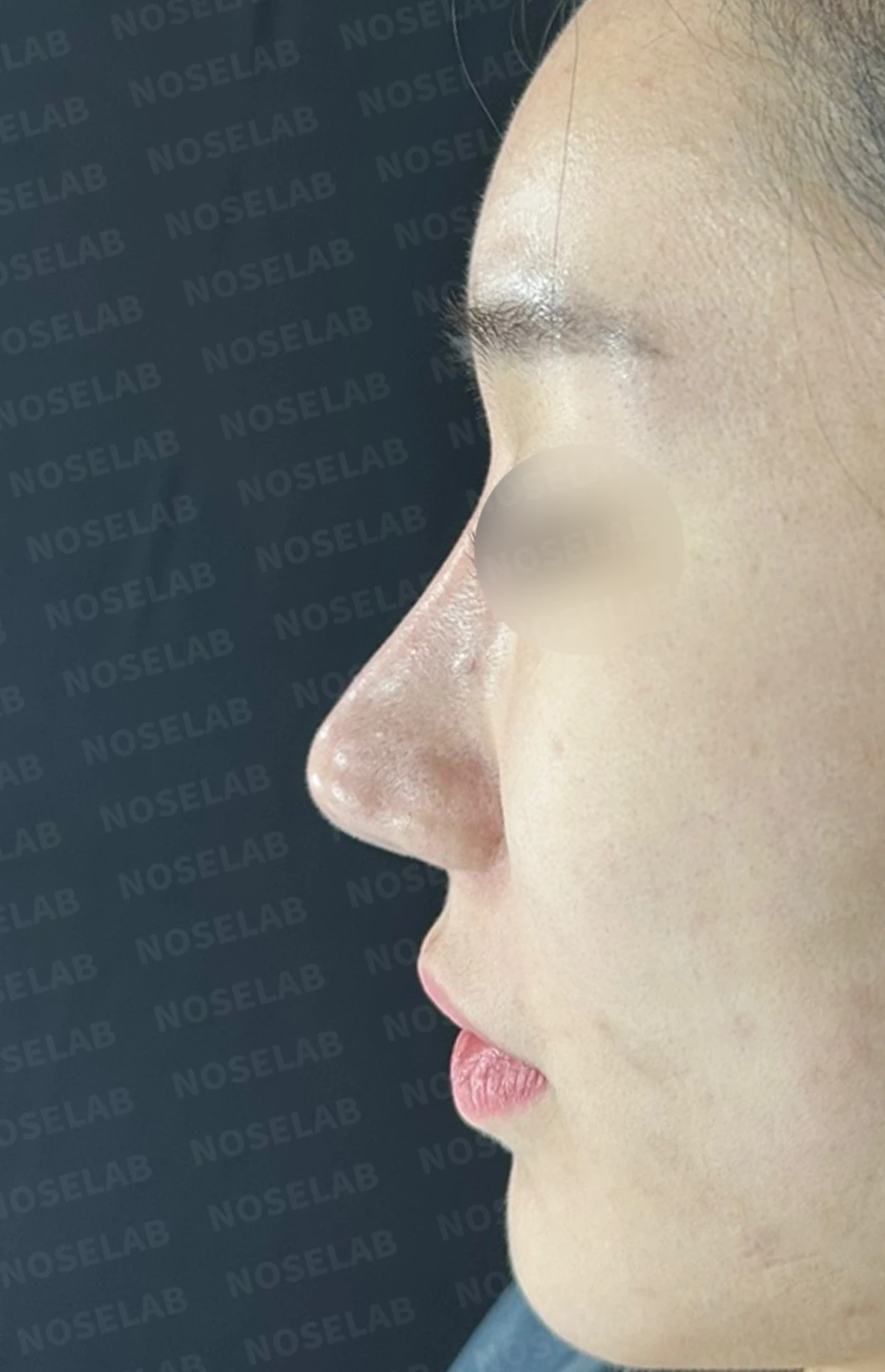
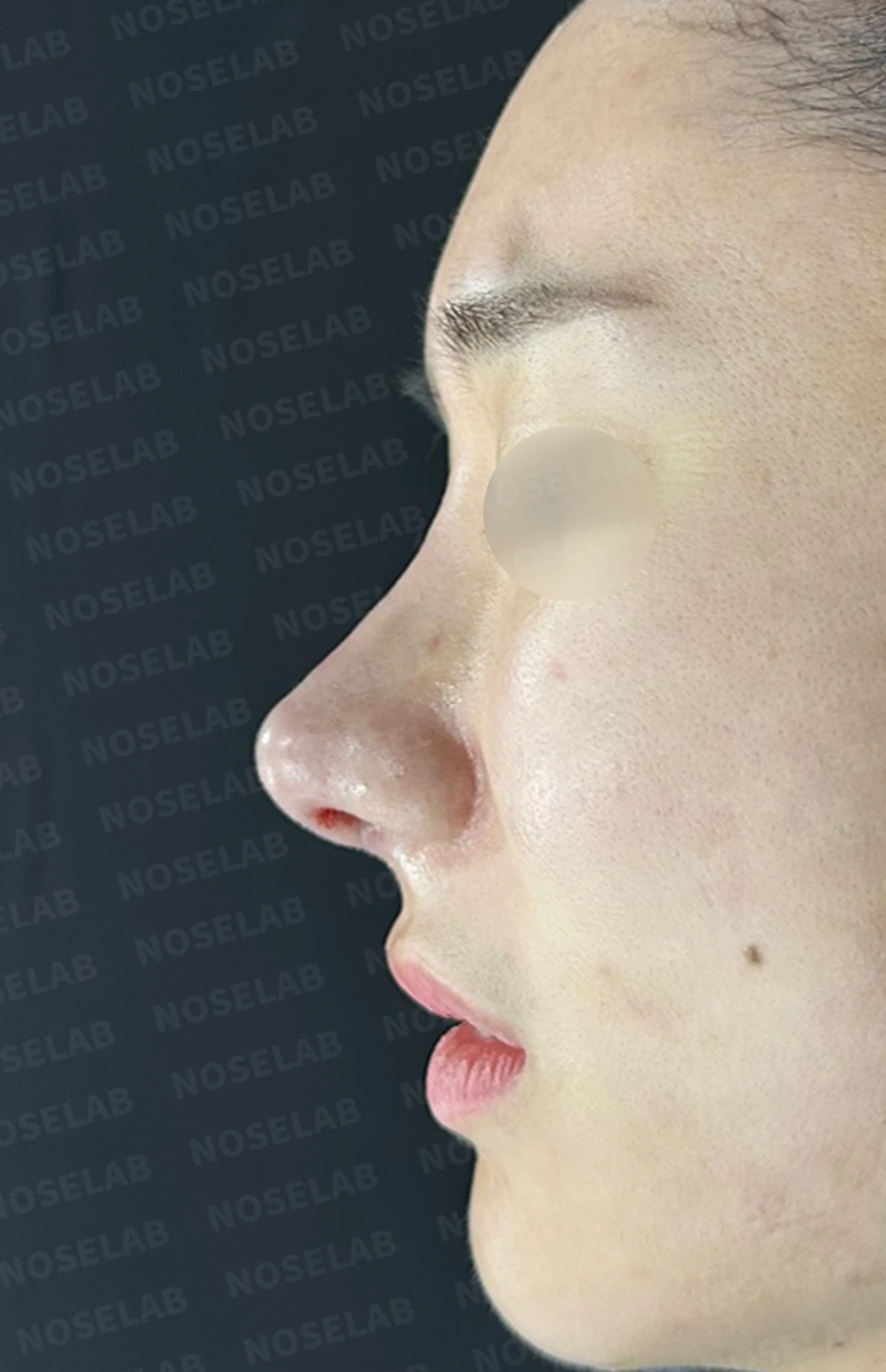
Before surgery / Day 0 immediately after surgery Photos taken immediately after surgery show swelling and may differ from the final result.
Columella not visible at all
Bulbous nasal tip
Unnatural nasal shape
3. Oblique view
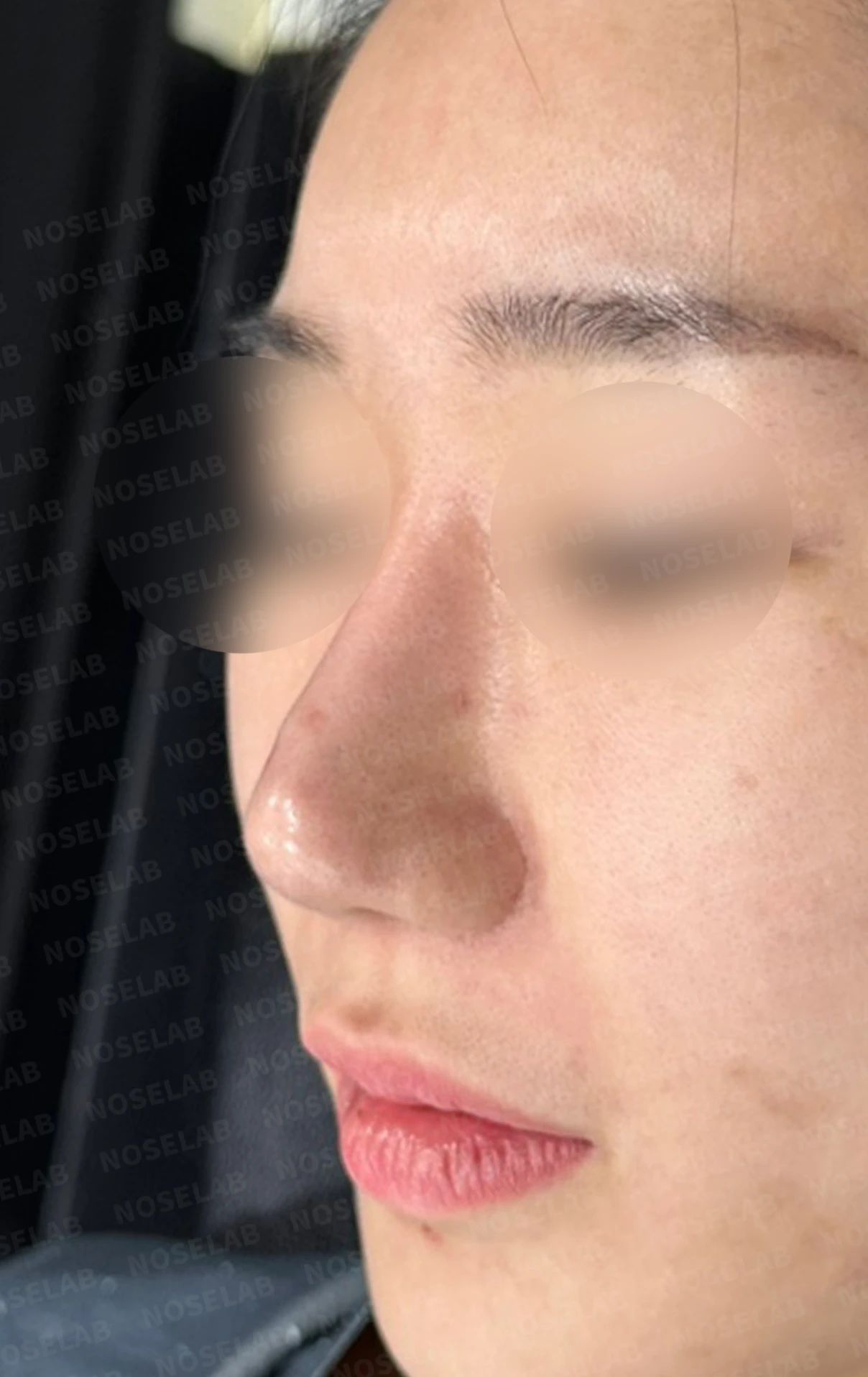
Before surgery / Day 0 immediately after surgery Photos taken immediately after surgery show swelling and may differ from the final result.
Prominent implant outline
Bulbous nasal tip
Drooping tip
4. Nostril view
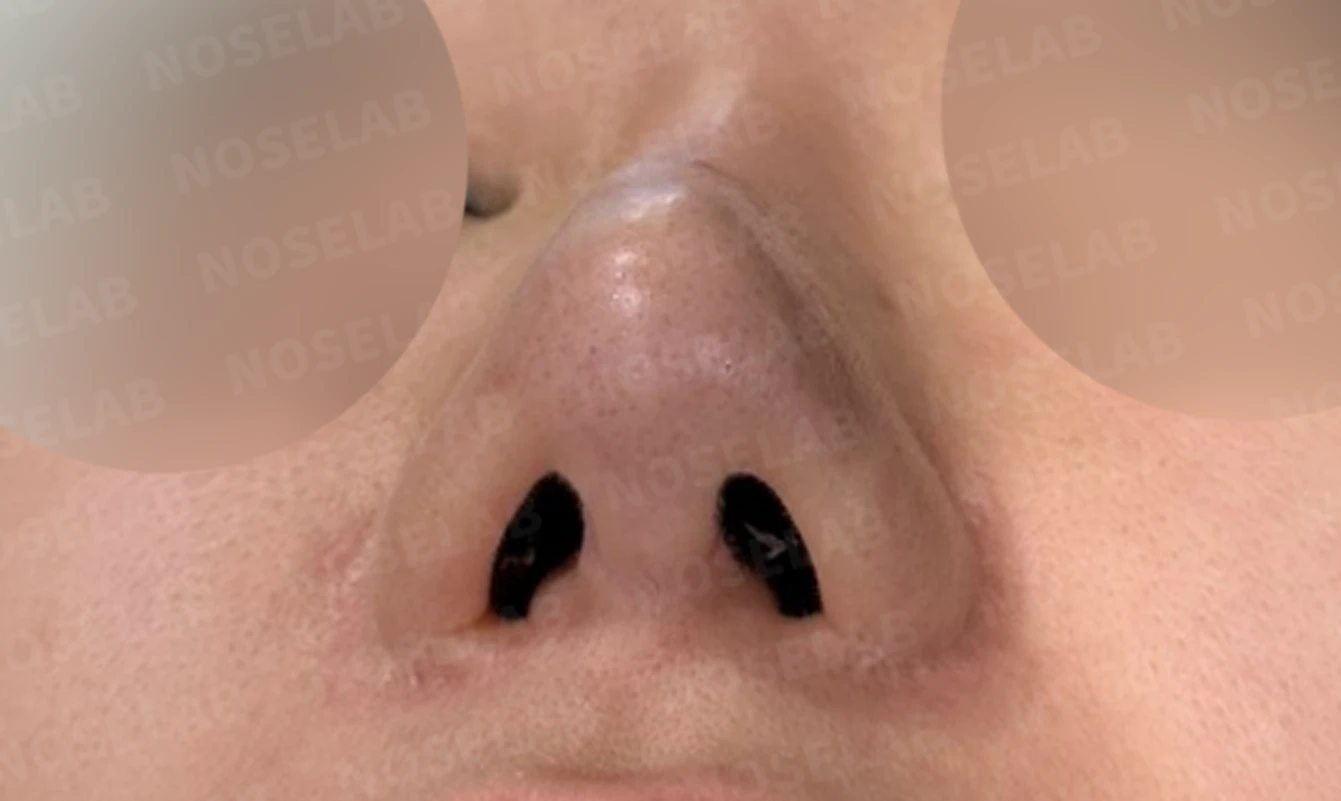
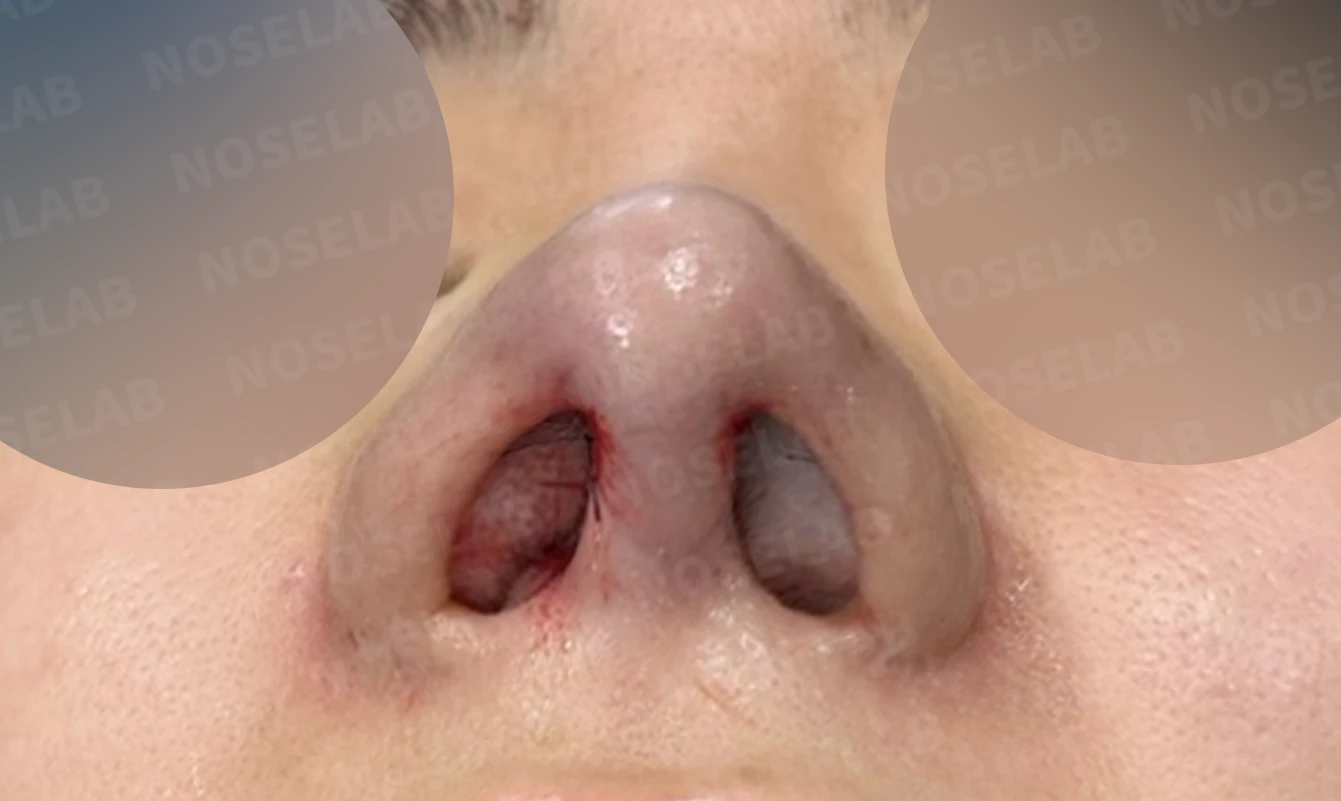
Before surgery / Day 0 immediately after surgery Photos taken immediately after surgery show swelling and may differ from the final result.
Severe scarring from alar reduction
Nostril asymmetry
Smaller nostrils
Columella tilted to the left
💉 Surgical procedure details
Septal extension using autologous rib cartilage
Correcting the nasolabial angle by lowering the columella
Partial removal of subcutaneous tissue and scar tissue from the nasal tip to correct the bulbous tip
Reconstruction of both alae to create a natural nasal tip contour
Deviated septum correction and rhinitis surgery performed to improve nasal obstruction
🌟 Surgical results
Front view improvement
More defined nasal tip contour
Natural nasal shape
2. Profile view improvement
Radix naturally lowered
Nasal tip shape improved as the columella was lowered
Improvement of protruding mouth through nasolabial angle correction
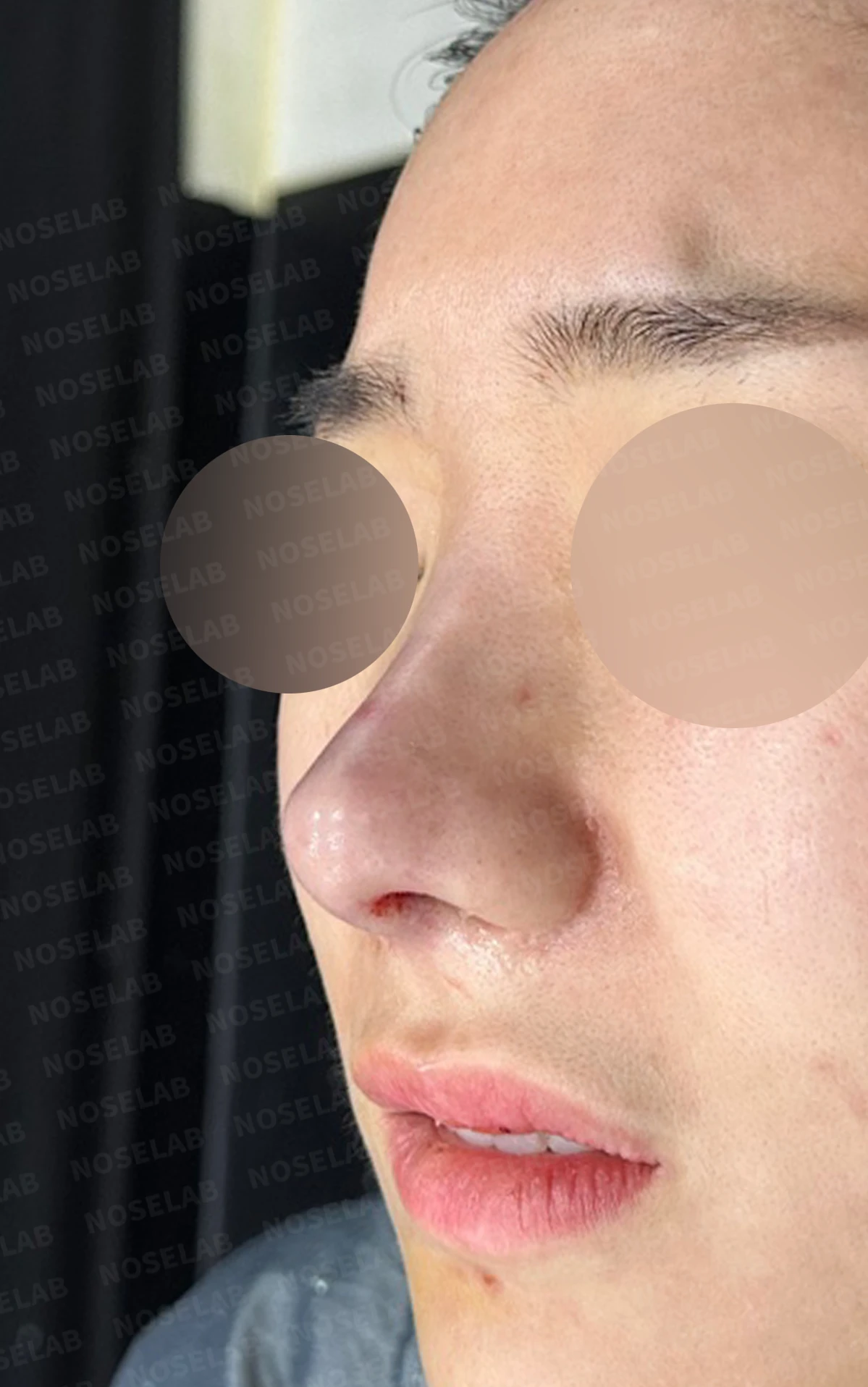
3. Oblique view
Refined straight bridge line
Natural three-dimensional definition
4. Nostril view improvement
Improved asymmetry
Tilted columella straightened
Front, profile, and oblique views immediately after surgery on day 0 Photos taken immediately after surgery show swelling and may differ from the final result.
Nostril view on day 0 immediately after surgery Photos taken immediately after surgery show swelling and may differ from the final result.
💡 Specialist opinion and concluding remarks
This case was a reconstruction performed after excessive alar reduction, and we were able to achieve the intended result despite the limited conditions. However, I want to emphasize that this was an exceptionally challenging process.
Alar reduction is a procedure that is difficult to reverse once performed. Excessive reduction permanently alters the size and shape of the nostrils, substantially limiting the possibilities for subsequent reconstruction. In particular, patients with a bulbous nose should make decisions regarding alar reduction with extreme caution.
I always emphasize this point: alar reduction is a surgery best avoided whenever possible. Even when inevitable, it should be kept to a minimal degree, with thorough consideration given to complications that may arise in the future.
I will continue to strive for the intended results even in such limited circumstances; however, I would like to emphasize once again that prevention is the most effective approach.
This was Dr. Peter C. Kang. Thank you.
Thank you.
#revisionrhinoplasty #alarreductioncomplications #nasalreconstruction #straightbridgeline #customrhinoplasty

Limitations and risks
When autologous rib cartilage is used, scarring and pain may remain at the donor site on the chest, and pneumothorax (pleural injury) can occur rarely. Over time, the grafted cartilage may warp or undergo partial resorption.
When using donor rib cartilage, long-term follow-up is necessary because the grafted cartilage may resorb or warp.
When the septum is corrected at the same time, nasal obstruction may persist or recur, and in rare cases, septal perforation or changes in smell may occur.
Common potential risks include infection, bleeding, asymmetry, scarring, skin necrosis, and insufficient improvement; results vary depending on individual skin condition and previous surgical history.