Hello, I am Dr. Peter C. Kang.
Today, I would like to introduce a corrective surgery case of a patient with complex nasal issues, including an upturned nose, dorsal hump, and bulbous nose.
This type of case is an interesting one where foreign material removal was performed concurrently, as the patient had undergone a nose filler procedure in 2017.
1. Preoperative design consultation
Let us analyze the patient's preoperative condition in detail:
Front view:
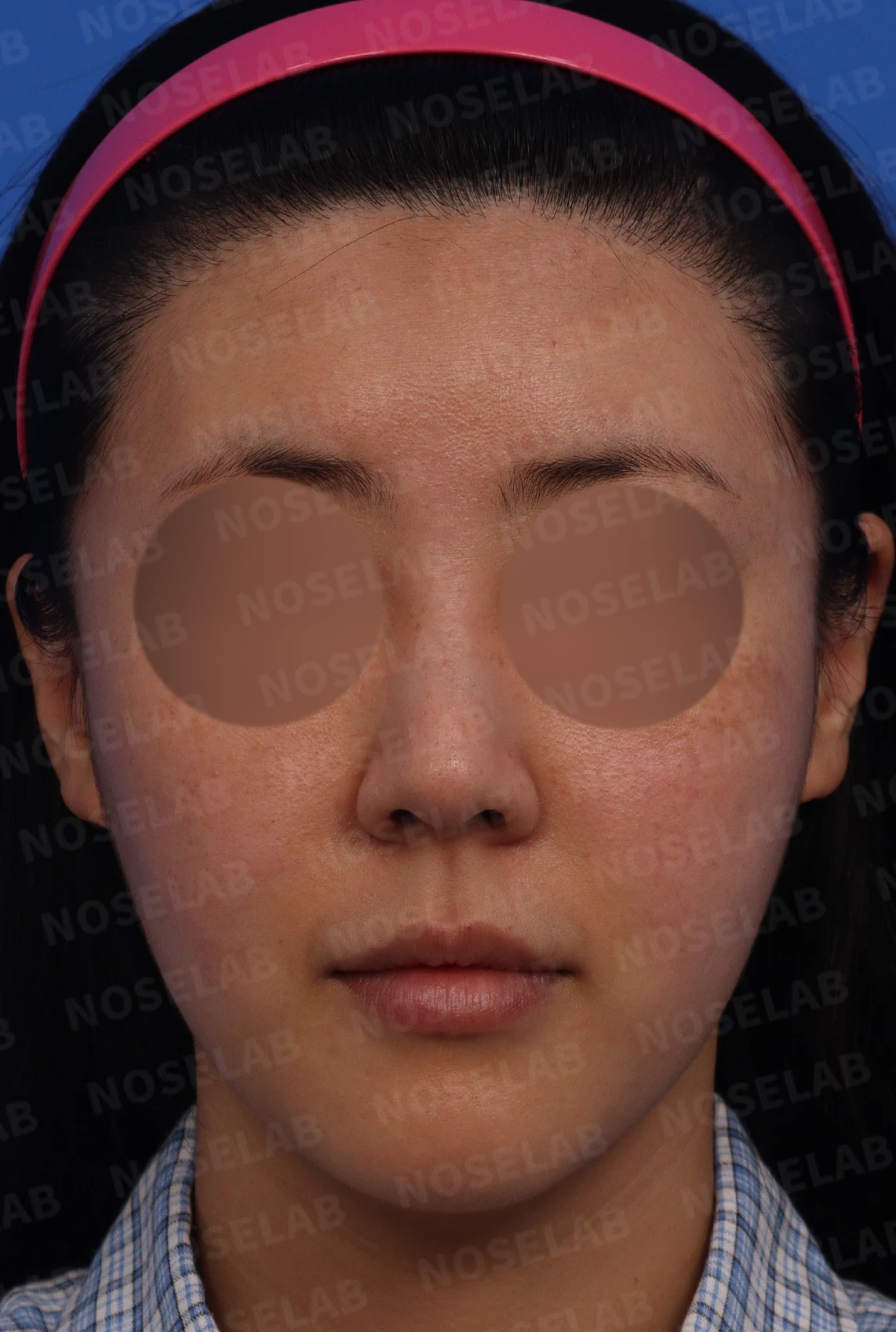
- The nose appears overall blunt and wide (bulbous nose)
- Residual filler remains in the glabella area, causing it to look spread out and the radix to appear elevated
- The nasal tip appears wide and rounded
Profile view:
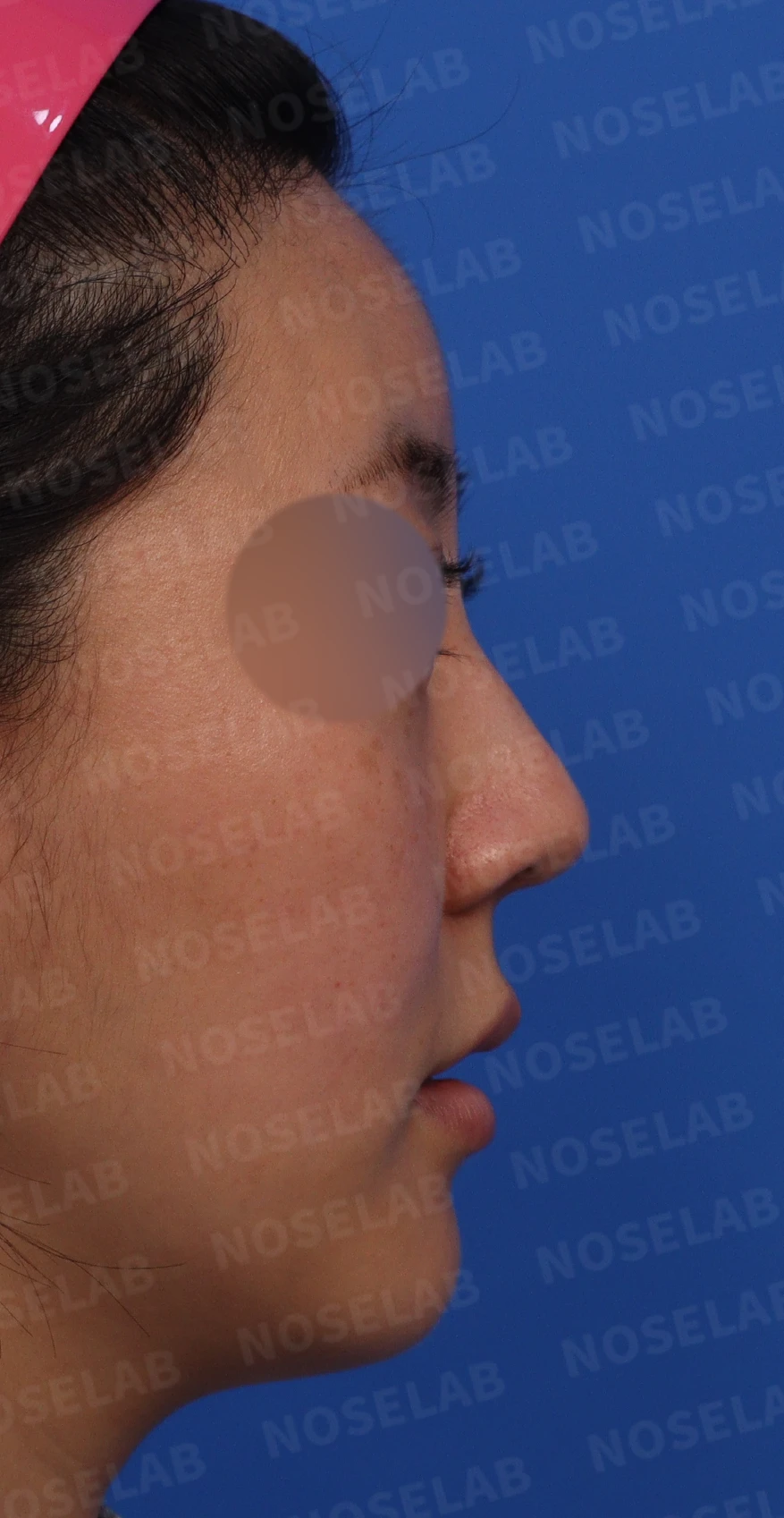
- The nasal dorsum is uneven (presumed to be due to residual filler)
- The nasal tip appears bulbous and drooping
- The radix is high
- Distinct features of a dorsal hump
Oblique view:
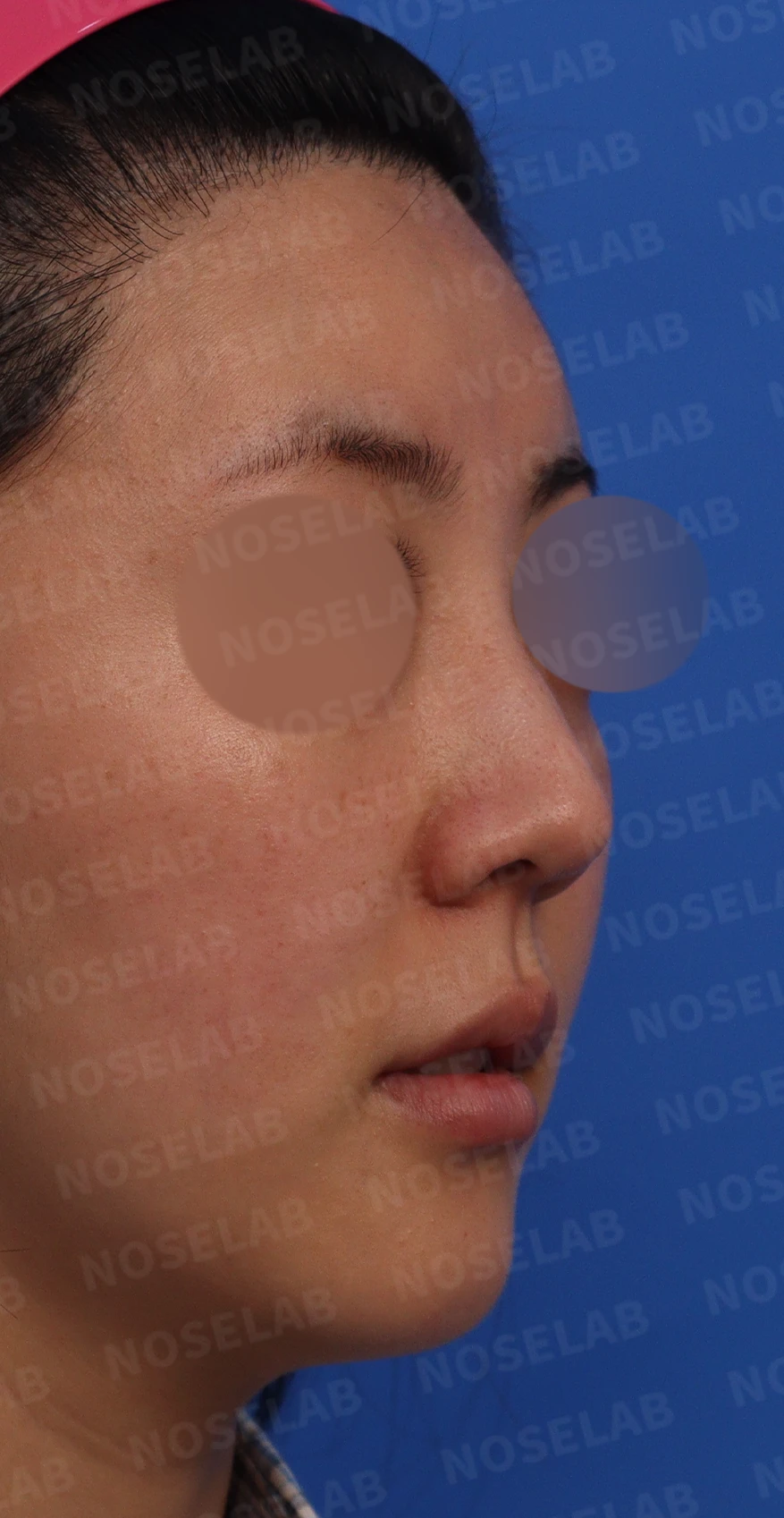
- The dorsal hump appears more prominent
- Drooping of the nasal tip is clearly visible
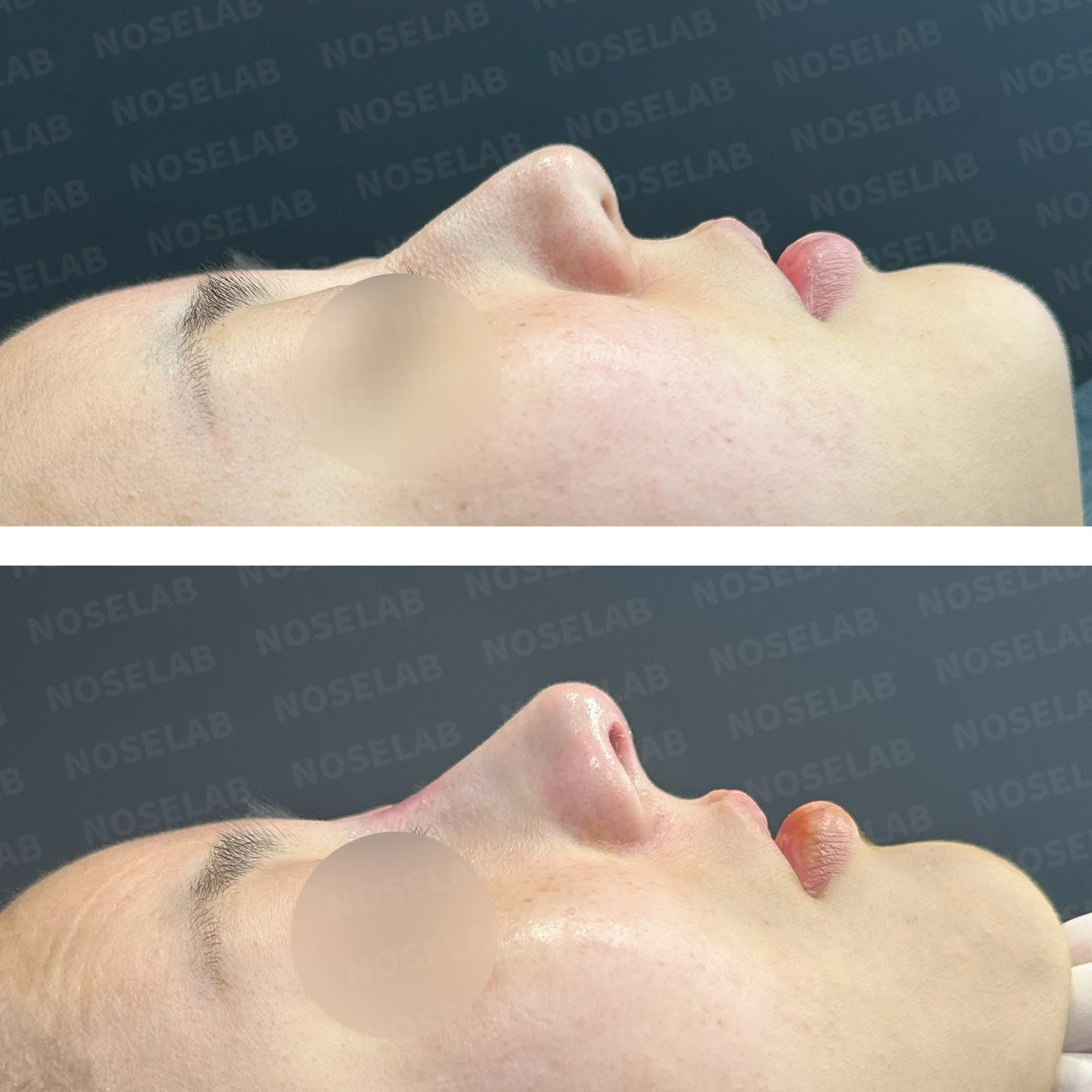
Nostrils:
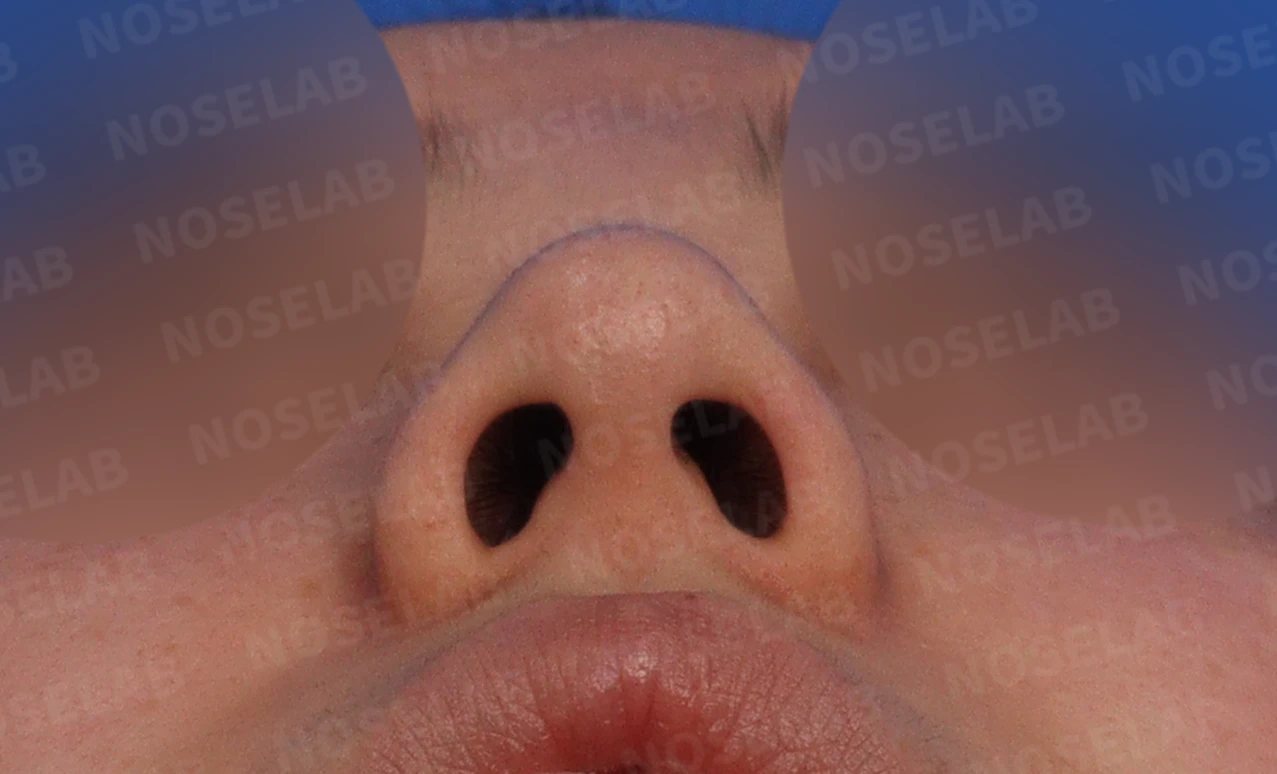
- The overall shape is natural, but the nasal tip area appears blunt and wide
2. Surgical plan
Taking into account the patient's condition and requests, the following surgical plan was established:
a) Foreign body (filler) removal
b) Septal extension using septal cartilage and donor rib cartilage
c) Bulbous tip correction
d) Dorsal hump correction
e) Improvement of the drooping nasal tip
f) Lowering the radix
3. Surgical procedure
The following procedures were performed using a closed approach:
a) Foreign material removal:
- Residual filler injected in 2017 was carefully removed.
- During this process, the uneven areas of the nasal dorsum were smoothed out.
b) Septal extension graft:
- The nasal tip was supported and extended using septal cartilage and donor rib cartilage.
- Through this, the drooping nasal tip was elevated and the overall length of the nose was adjusted.
c) Bulbous tip correction:
- To make the widened nose appear slimmer, the cartilage was repositioned and trimmed.
- The wide portion of the nasal tip was delicately adjusted to create a more refined shape.
d) Dorsal hump correction:
- The prominent area of the nasal dorsum was carefully contoured to create a smooth curve.
- During this process, close attention was paid to ensure the overall profile of the nose transitioned naturally.
e) Lowering the radix:
- The radix, which appeared high, was appropriately lowered to create a natural transition from the glabella.
f) Nasal tip reshaping:
- The nasal tip, which appeared blunt and wide, was sculpted into a more delicate and three-dimensional shape.
- An aesthetically pleasing straight-curved tip line was created.
All procedures were performed using a closed approach, completing the surgery without external scars.
4. Comparison of before-and-after photos
Comparing photos taken immediately after surgery on day 0 shows the following improvements: Photos taken immediately after surgery show swelling and may differ from the final result.
Front view:
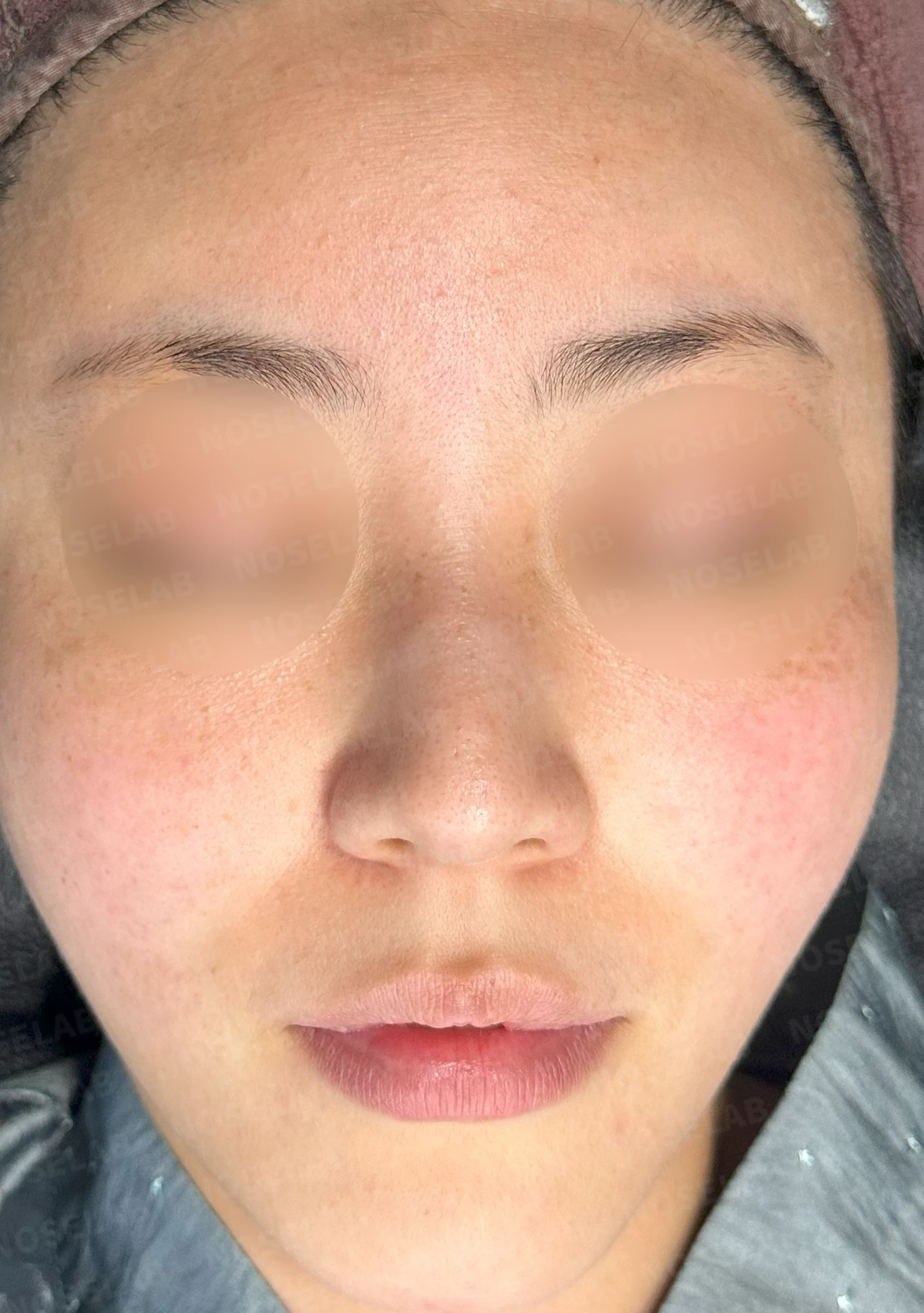
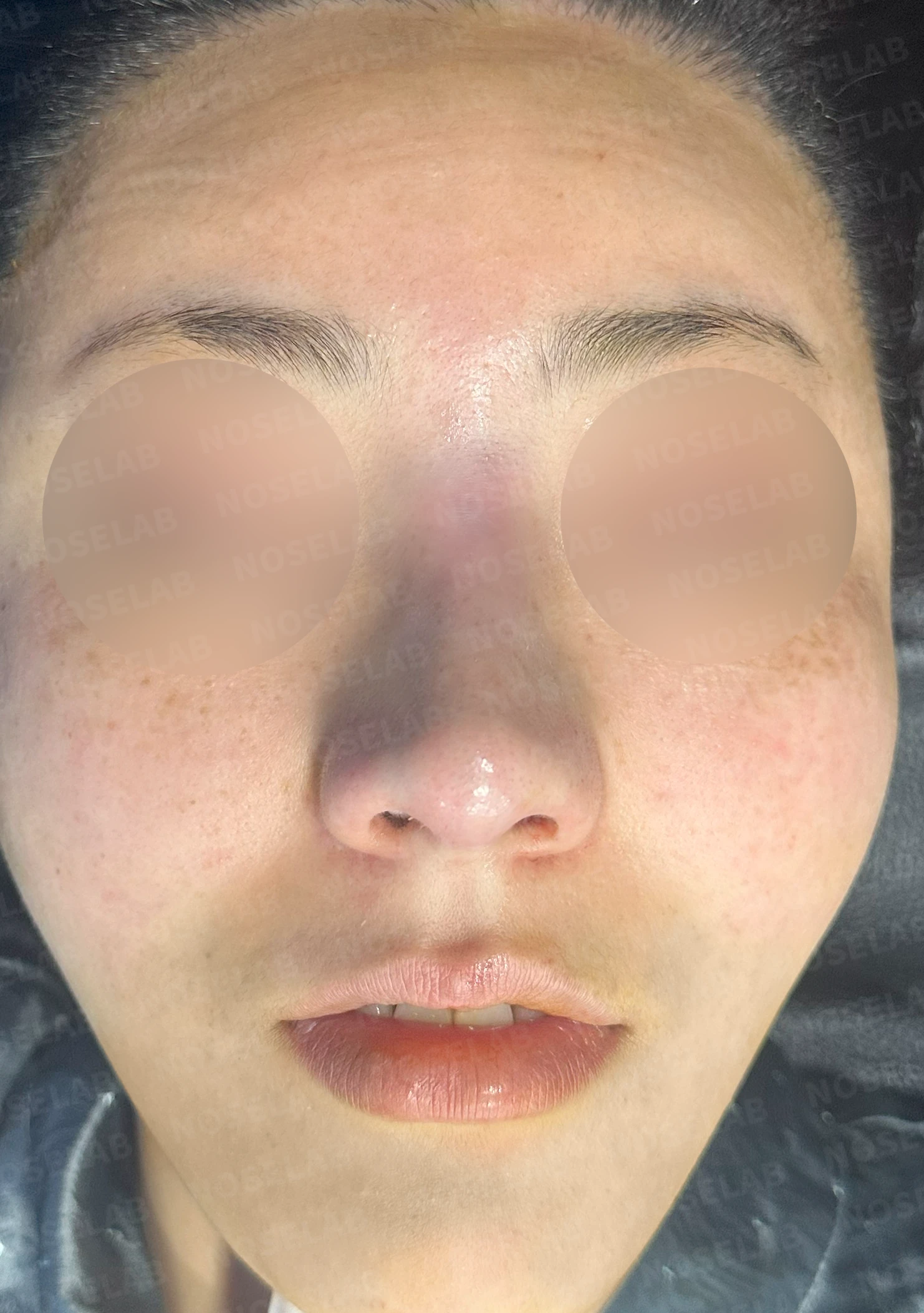
Before surgery / Day 0 immediately after surgery Photos taken immediately after surgery show swelling and may differ from the final result.
- The nose, which appeared bulbous and flared, was refined into a slimmer and more defined shape.
- The widened look in the glabella area was eliminated, and the radix became natural.
- The wide and rounded shape of the nasal tip changed to become more delicate and defined.
Profile view:
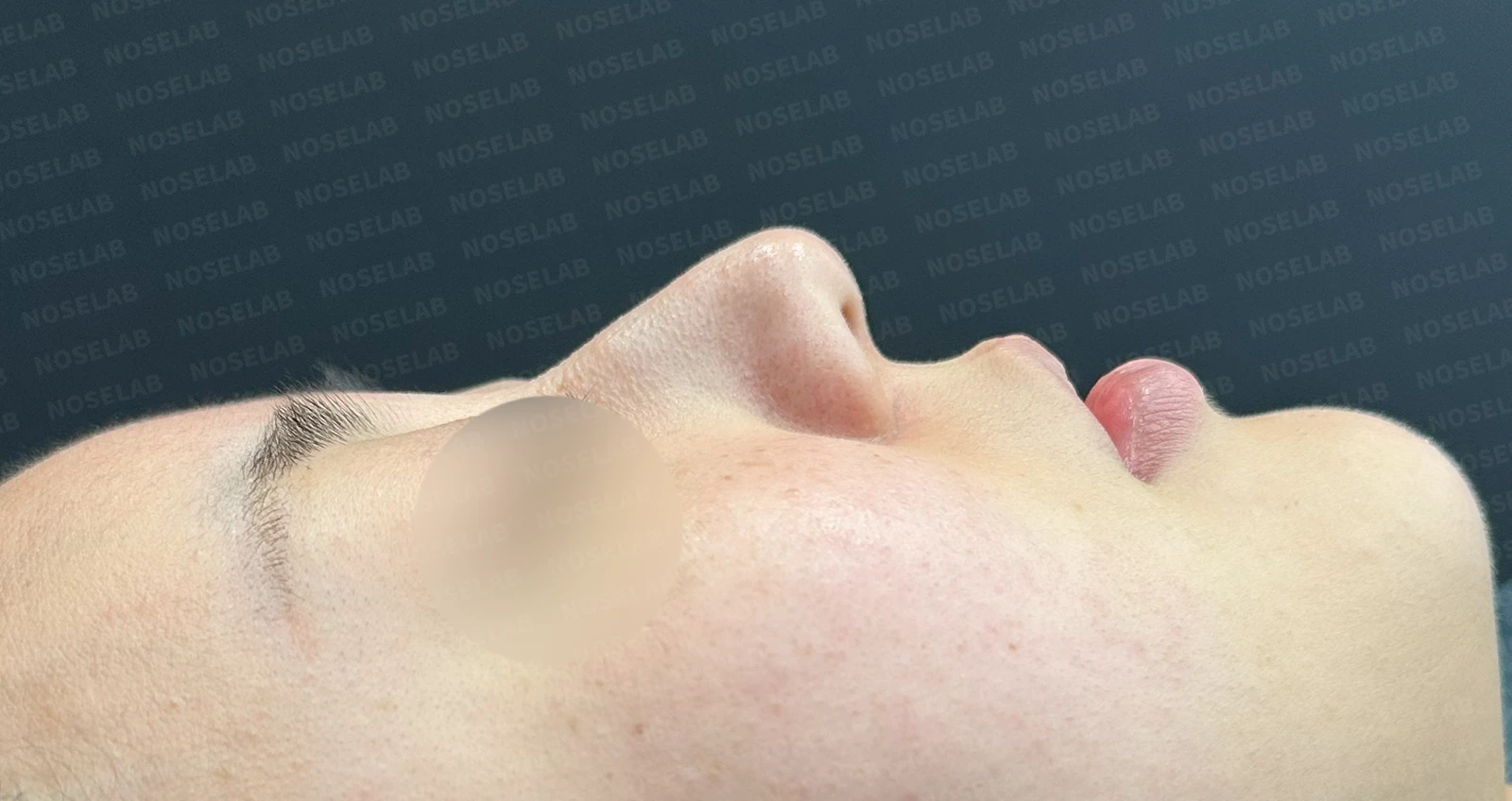
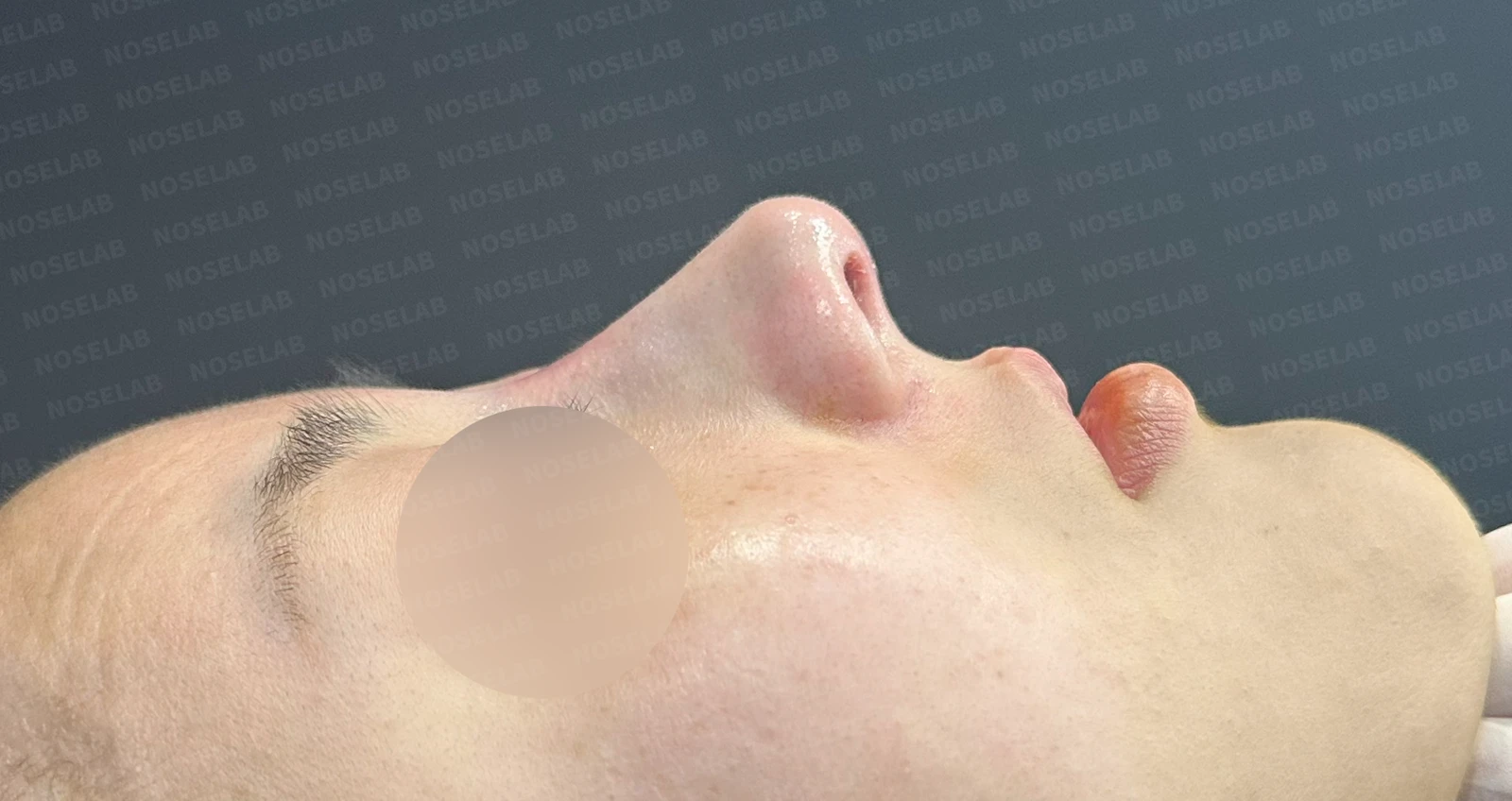
Before surgery / Day 0 immediately after surgery Photos taken immediately after surgery show swelling and may differ from the final result.
- The previously uneven nasal dorsum was improved into a smooth line.
- The dorsal hump was naturally corrected, forming a smooth curve.
- The drooping nasal tip was appropriately elevated, improving the overall balance.
- The radix was lowered, presenting a more natural straight bridge line.
Oblique view:
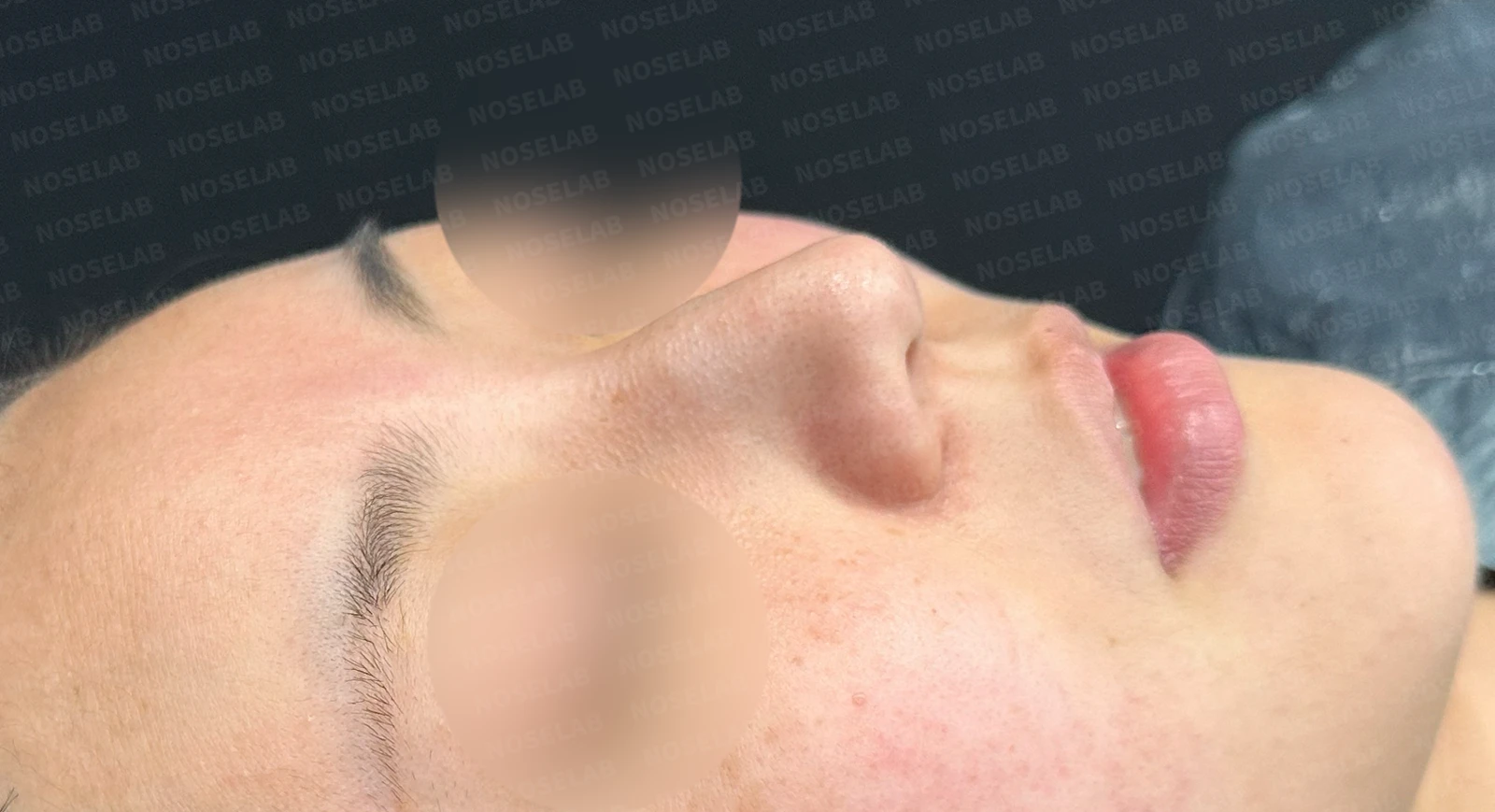
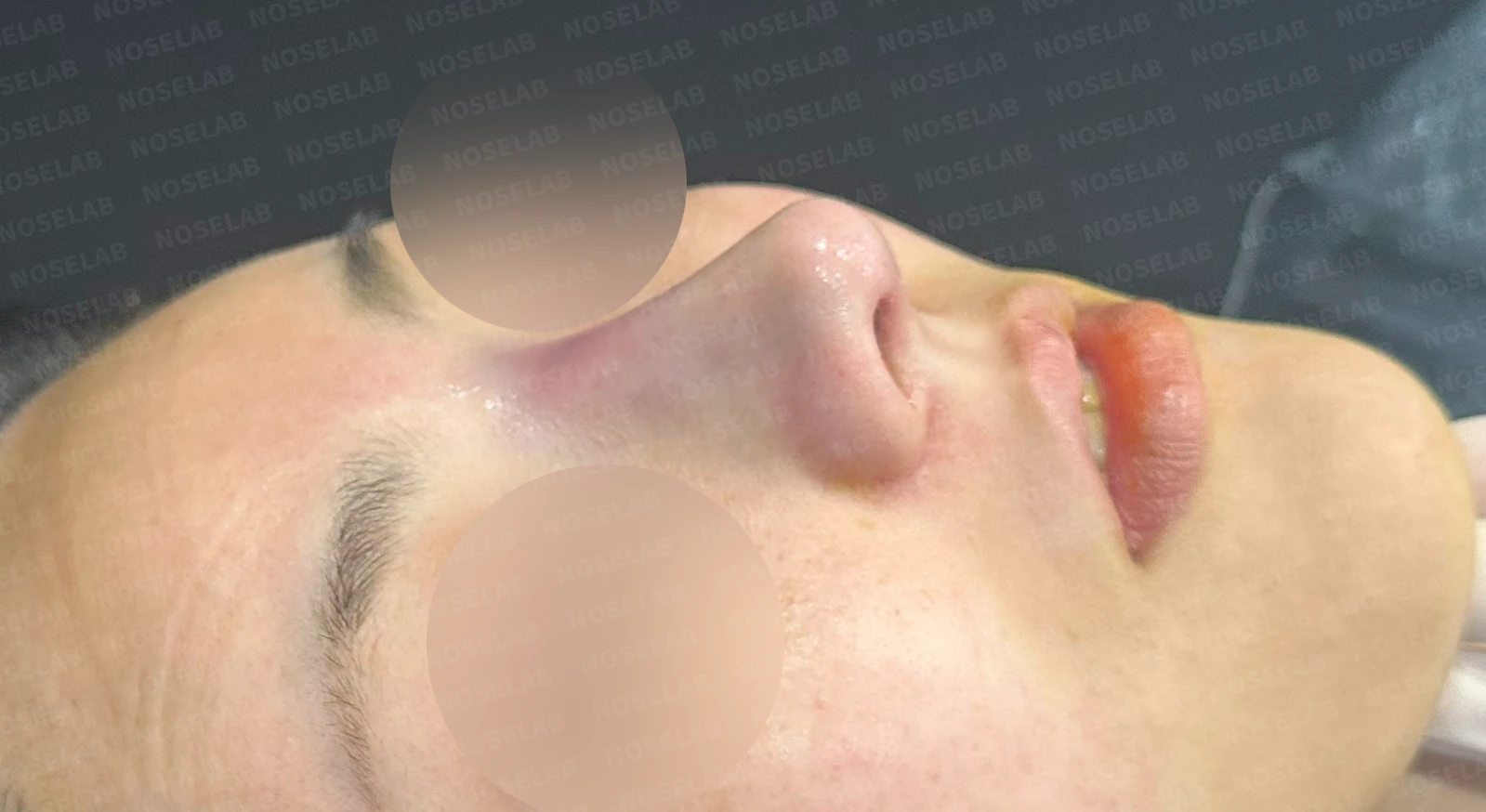
Before surgery / Day 0 immediately after surgery Photos taken immediately after surgery show swelling and may differ from the final result.
- Characteristics of the dorsal hump were improved, displaying a smooth nasal line.
- Drooping of the nasal tip was corrected, resulting in an overall balanced appearance.
Nostrils:
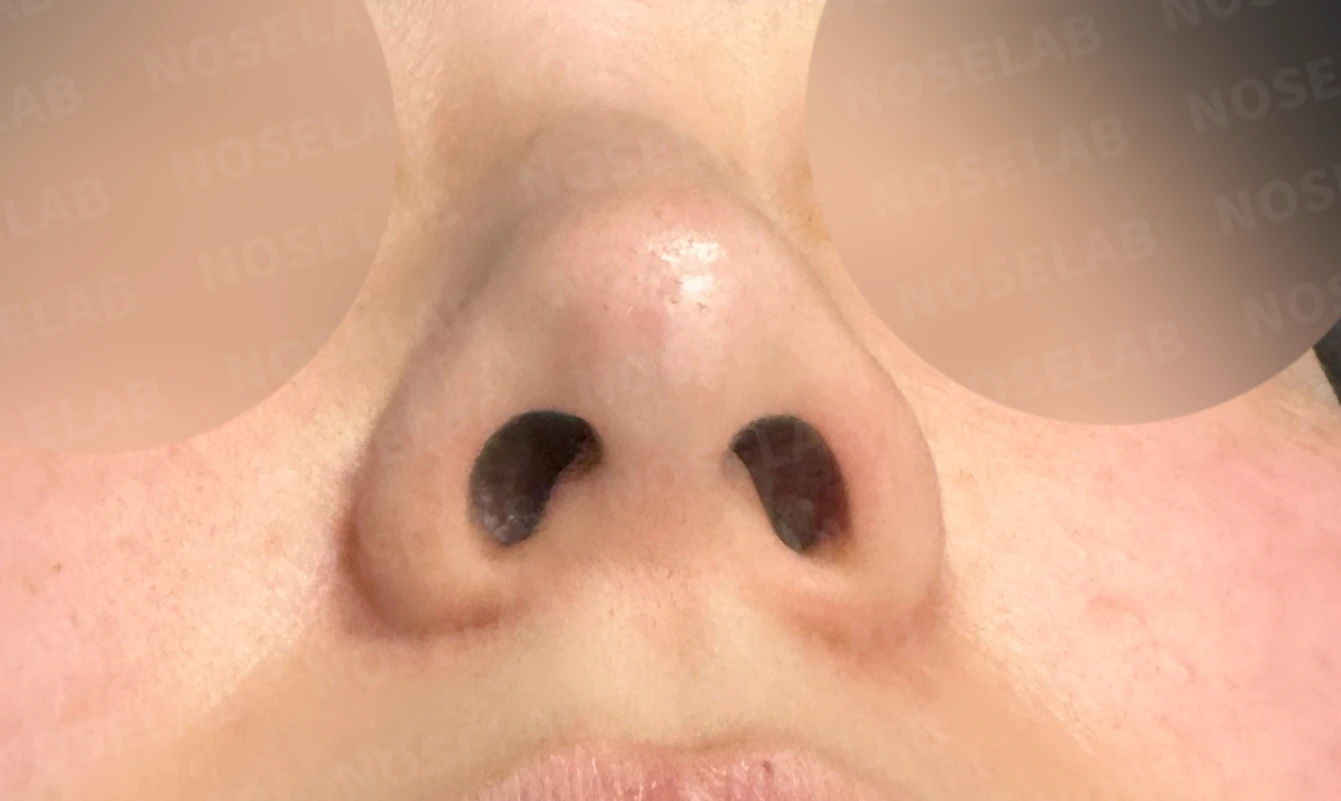
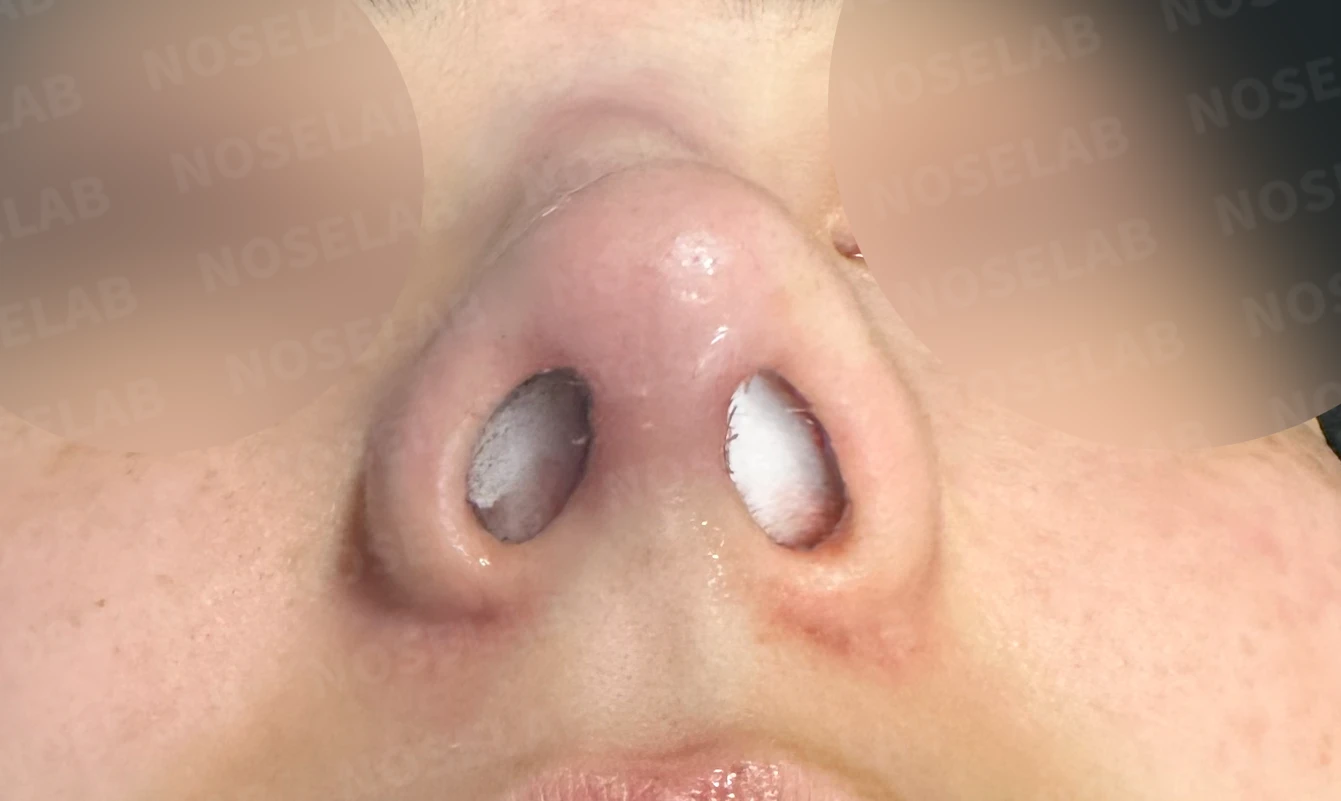
Before surgery / Day 0 immediately after surgery Photos taken immediately after surgery show swelling and may differ from the final result.
- The nasal tip area, which looked blunt and wide, was refined into a more delicate and aesthetic shape.
- The overall nostril shape appears more balanced and refined.
5. Photos immediately after surgery on day 0 Photos taken immediately after surgery show swelling and may differ from the final result.
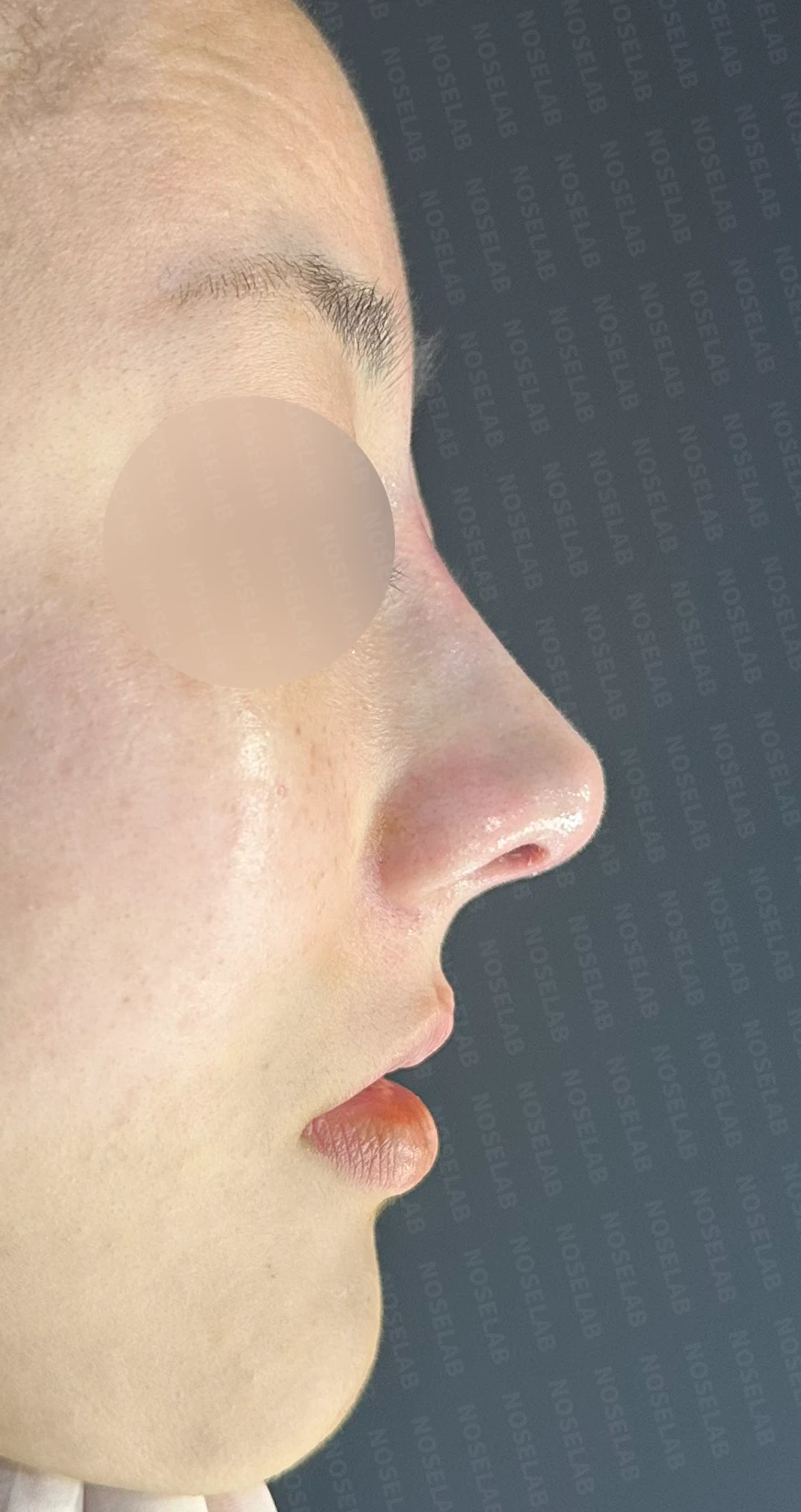
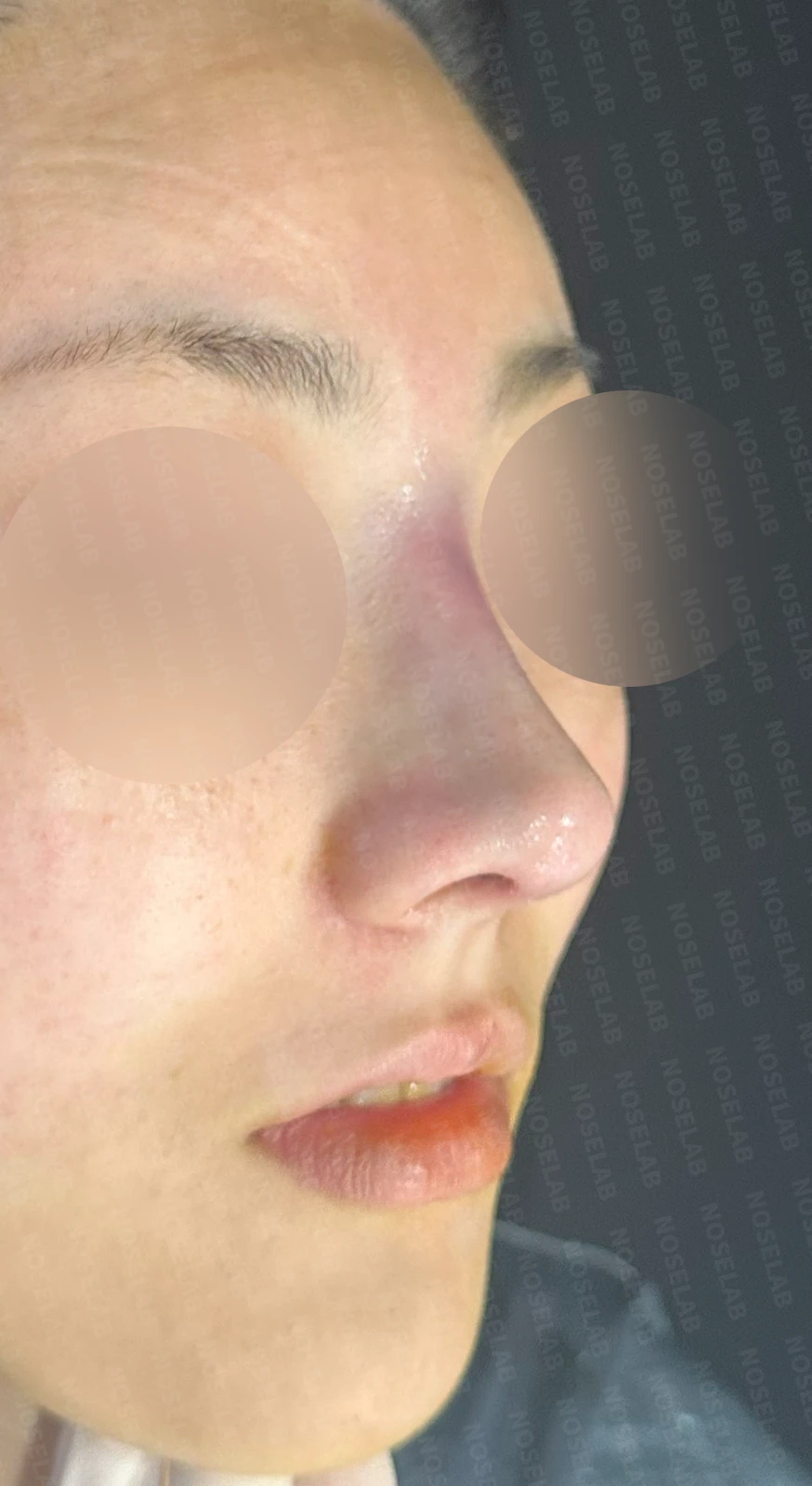
Immediately after surgery (Day 0) front, profile, and oblique viewsImmediate postoperative photos show swelling and may differ from the final result.
Basal (nostril) view immediately after surgery (Day 0)Immediate postoperative photos show swelling and may differ from the final result.
6. Overall evaluation
This case addressed multiple combined concerns simultaneously, including an upturned nose, dorsal hump, and bulbous nose. In particular, it was all the more meaningful as it involved the removal of foreign material resulting from prior filler injections.
Septal extension using septal cartilage and donor rib cartilage played a major role in correcting the drooping nasal tip and strengthening the overall nasal framework. Through this, the drooping tip was improved while simultaneously reducing the widened appearance characteristic of a bulbous nose.
Dorsal hump correction was performed meticulously so that the result would harmonize with the overall nasal profile, rather than merely shaving down the prominent area. Consequently, a gracefully contoured nasal line was achieved.
Lowering the radix and resolving the widened appearance between the eyebrows played an essential role in restoring overall facial balance. This made it possible to create a more natural and harmonious image.
In this surgery in particular, the patient's request for a "natural yet moderately defined straight-curved nose" was successfully realized. Beyond merely correcting individual concerns, this represents an outcome achieved by precisely understanding and fulfilling the patient's aesthetic goals.
Using a closed approach shortened the postoperative recovery period and allowed surgery to be completed without external scars. This contributed significantly to patient satisfaction.
7. Conclusion
I hope this case offers encouragement to those troubled by complex nasal concerns such as an upturned nose, dorsal hump, and bulbous tip. Because these individual issues are interconnected, addressing only one problem may make it difficult to achieve satisfactory improvement. Therefore, a comprehensive approach is necessary, which requires the assistance of an experienced and specialized surgeon.
Furthermore, if you have undergone previous procedures (such as filler in this case), it is critical that you inform your surgeon during the consultation. This is essential information for planning the procedure and conducting surgery with safety in mind.
Drawing on anatomical knowledge and extensive surgical experience as a board-certified otolaryngologist, I provide surgical plans tailored to each individual patient. Through a comprehensive approach that considers both functional and cosmetic improvement, I strive to create a beautiful and healthy nose.
NOSELAB is here to help you achieve a healthy, aesthetically pleasing nose. Thank you.
#rhinoplasty #dorsalhumpcorrection #upturnednosecorrection #bulbousnosecorrection #septalextension #nasalfillerremoval #closedrhinoplasty #otolaryngologistrhinoplasty #safesurgery #nasalbridgecorrection #tipplasty #straightcurvednose

Limitations and risks
When using donor rib cartilage, long-term follow-up is necessary because the grafted cartilage may resorb or warp.
When foreign materials such as injected fillers are removed and reconstructed, contracture may recur, nasal height and length may decrease, and staged surgery may be necessary depending on the skin condition.
When the septum is corrected at the same time, nasal obstruction may persist or recur, and in rare cases, septal perforation or changes in smell may occur.
Common potential risks include infection, bleeding, asymmetry, scarring, skin necrosis, and insufficient improvement; results vary depending on individual skin condition and previous surgical history.