Hello.
I am Dr. Peter C. Kang, medical director.
Today, I will discuss corrective surgery for a short and upturned nose.
Today's patient visited NOSELAB seeking improvement for an overall short and upturned nose. Because excessive nostril show was visible from the front, correcting the upturned nose was the highest priority. In addition, the nasal bridge was filled with semi-permanent filler (Artecoll), so foreign material removal was planned at the same time.
Preoperative design consultation
Let us examine the photos taken during the preoperative design consultation.
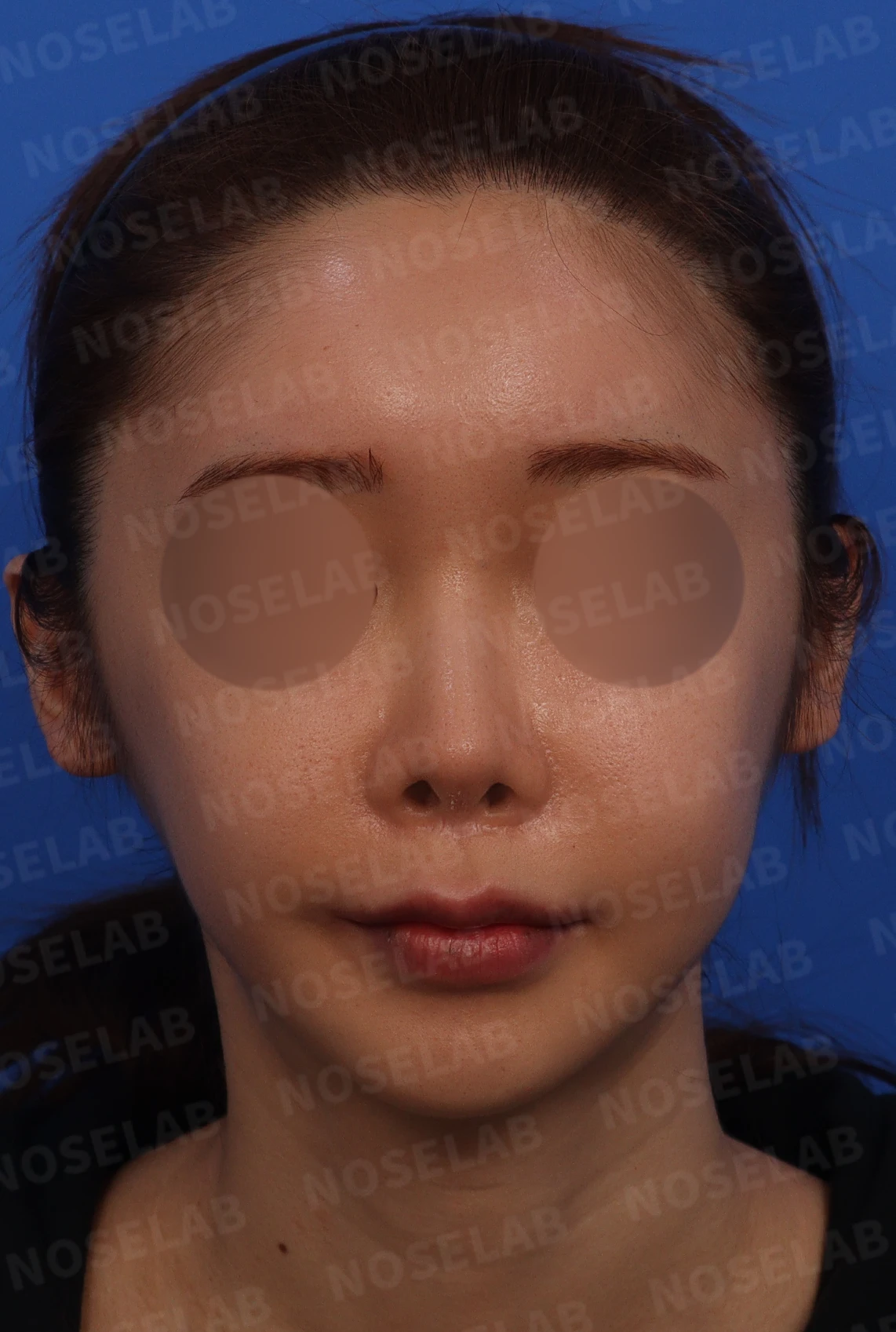
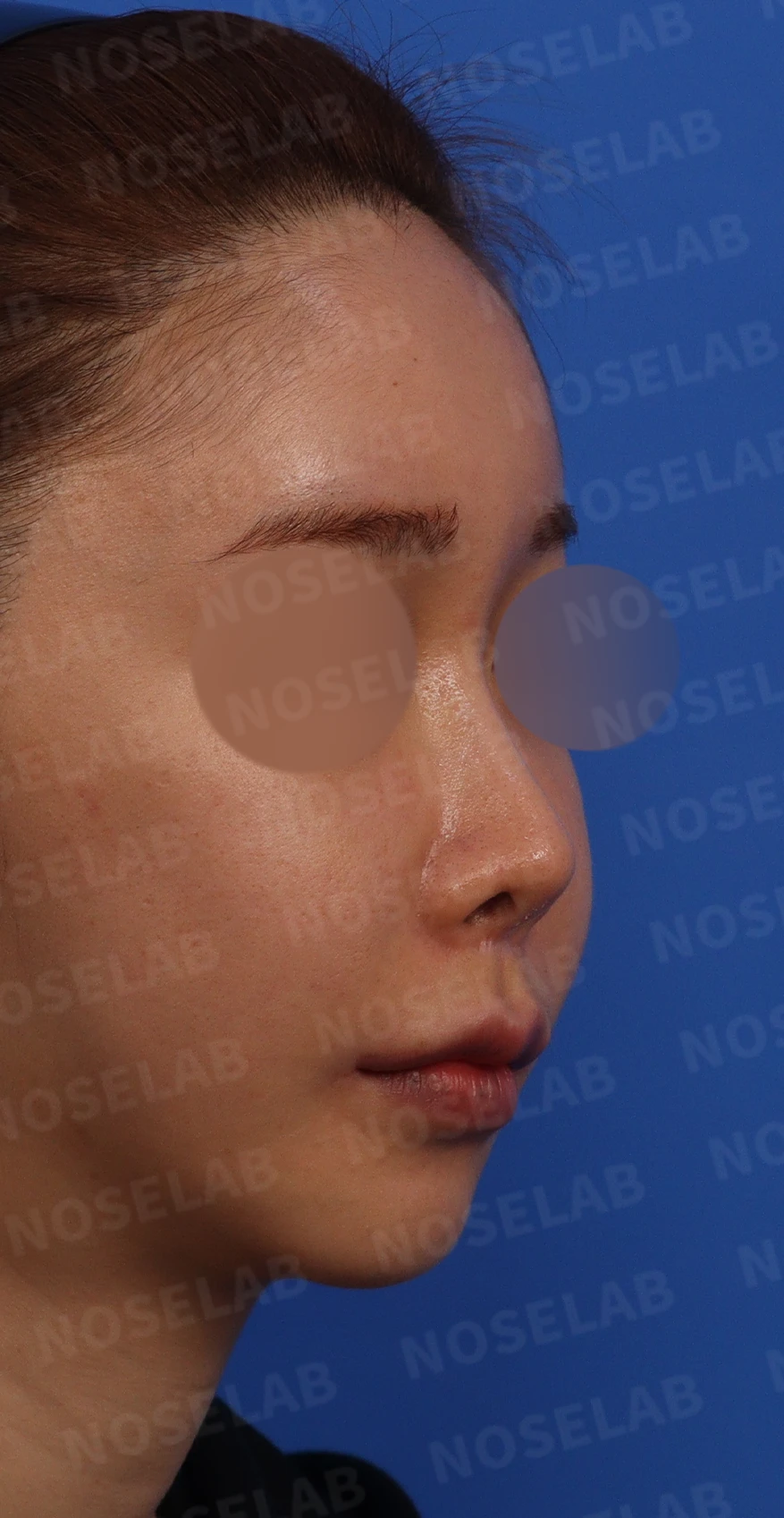
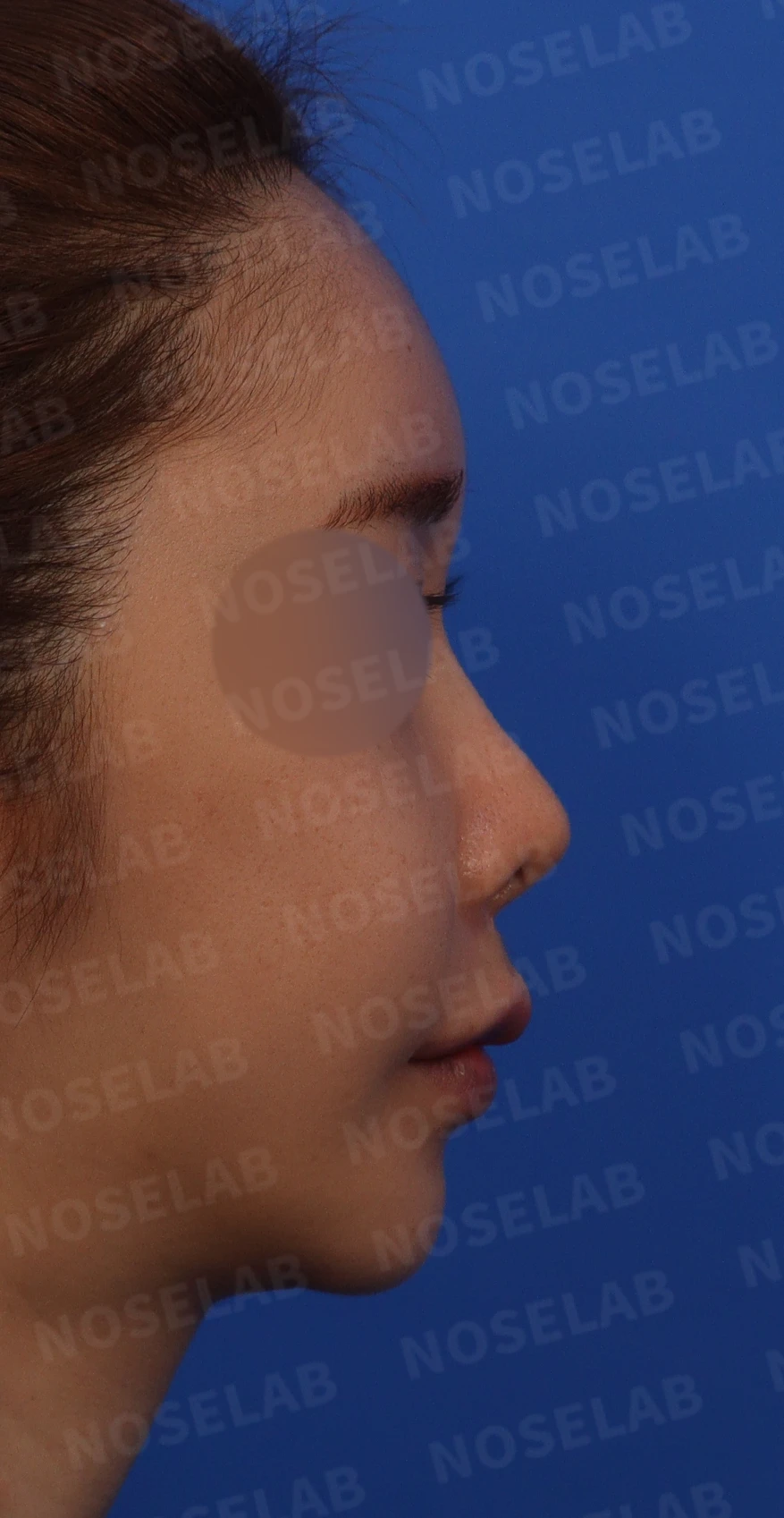
Front, oblique (45-degree), and profile (90-degree) views.
Facial asymmetry is noticeable from the front. The philtrum is slanted diagonally, and the line connecting the glabella, nasal tip, philtrum, and jawline does not pass through the facial midline. In addition, excessive nostril show is present, the nasal base is wide, and nostril asymmetry is observed. On profile view, the nose appears short and upturned.
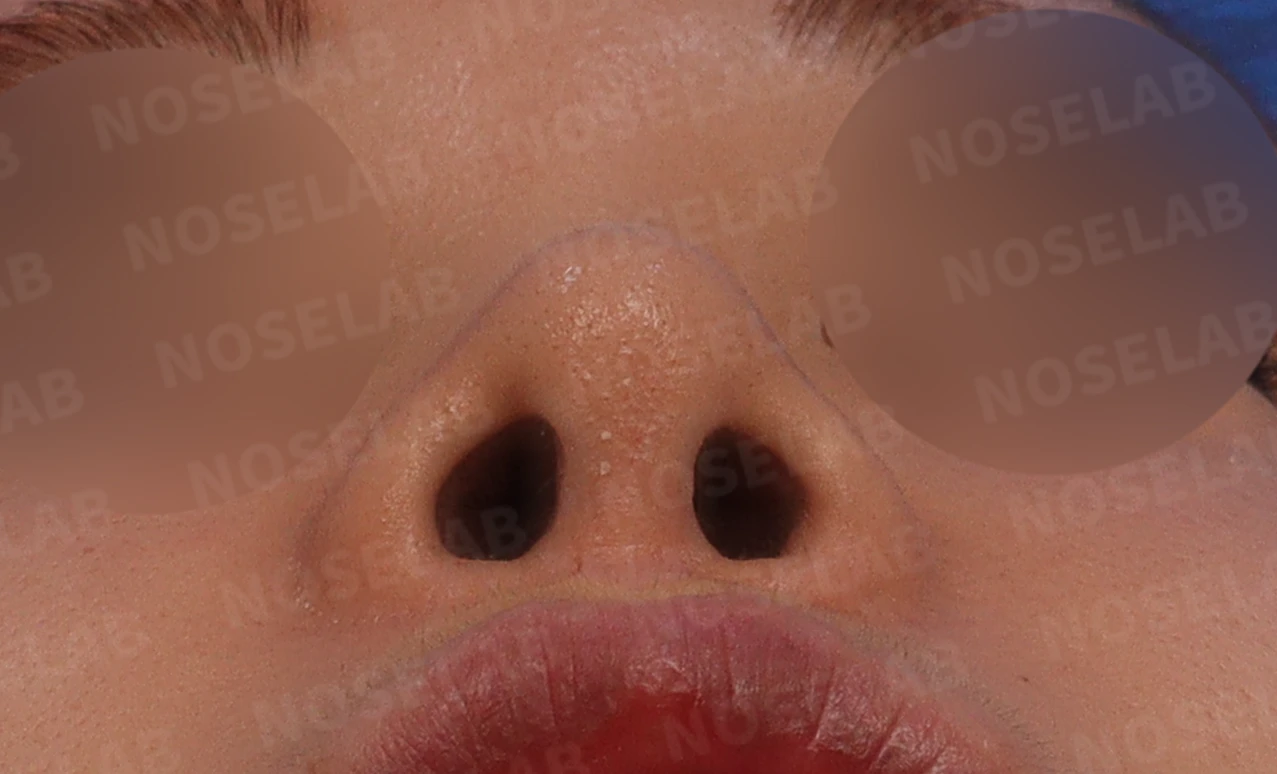
This is the basal (nostril) view.
Nostril asymmetry is observed.
Surgical plan
The surgical design needed to take overall facial proportions into account.
A lateral osteotomy is planned to correct the nasal bone asymmetry.
Given the significant facial asymmetry and the fact that the semi-permanent filler on the bridge had been masking it, I planned to remove the filler and place a bridge implant customized to the nasal bone asymmetry to achieve correction.
To improve excessive frontal nostril show, septal cartilage damage from the previous two-jaw surgery was suspected. Determining that septal reconstruction was necessary, I planned to reconstruct the septal cartilage using autologous rib cartilage.
I also planned lower lateral (alar) cartilage repositioning and reconstruction (alar rim graft/nostril lengthening).
Because the nasal base was wide, alar base reduction was planned.
Before surgery vs. immediately after surgery
Let us compare the preoperative photos with the photos immediately after surgery (Day 0).Immediate postoperative photos show swelling and may differ from the final result.
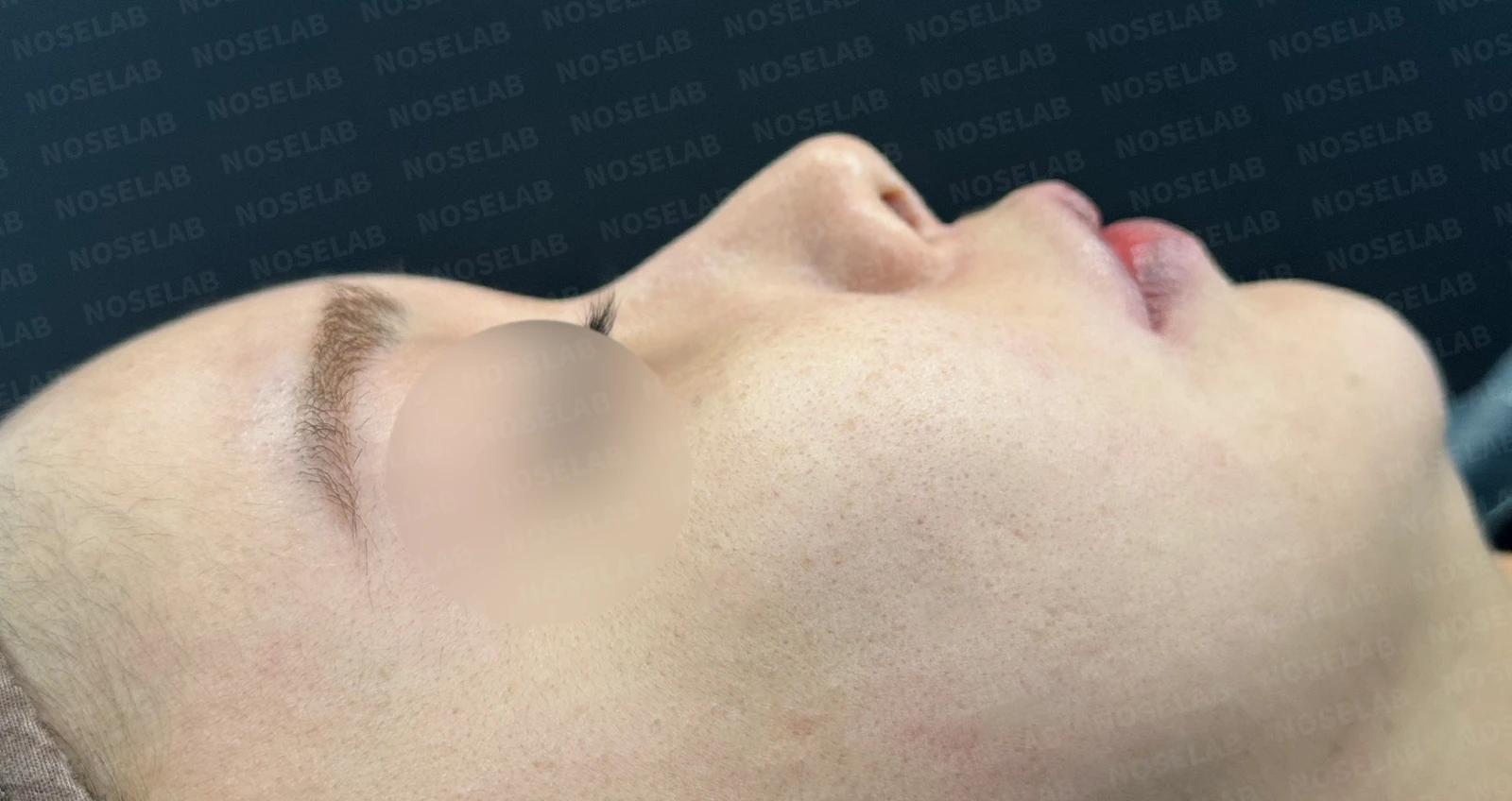
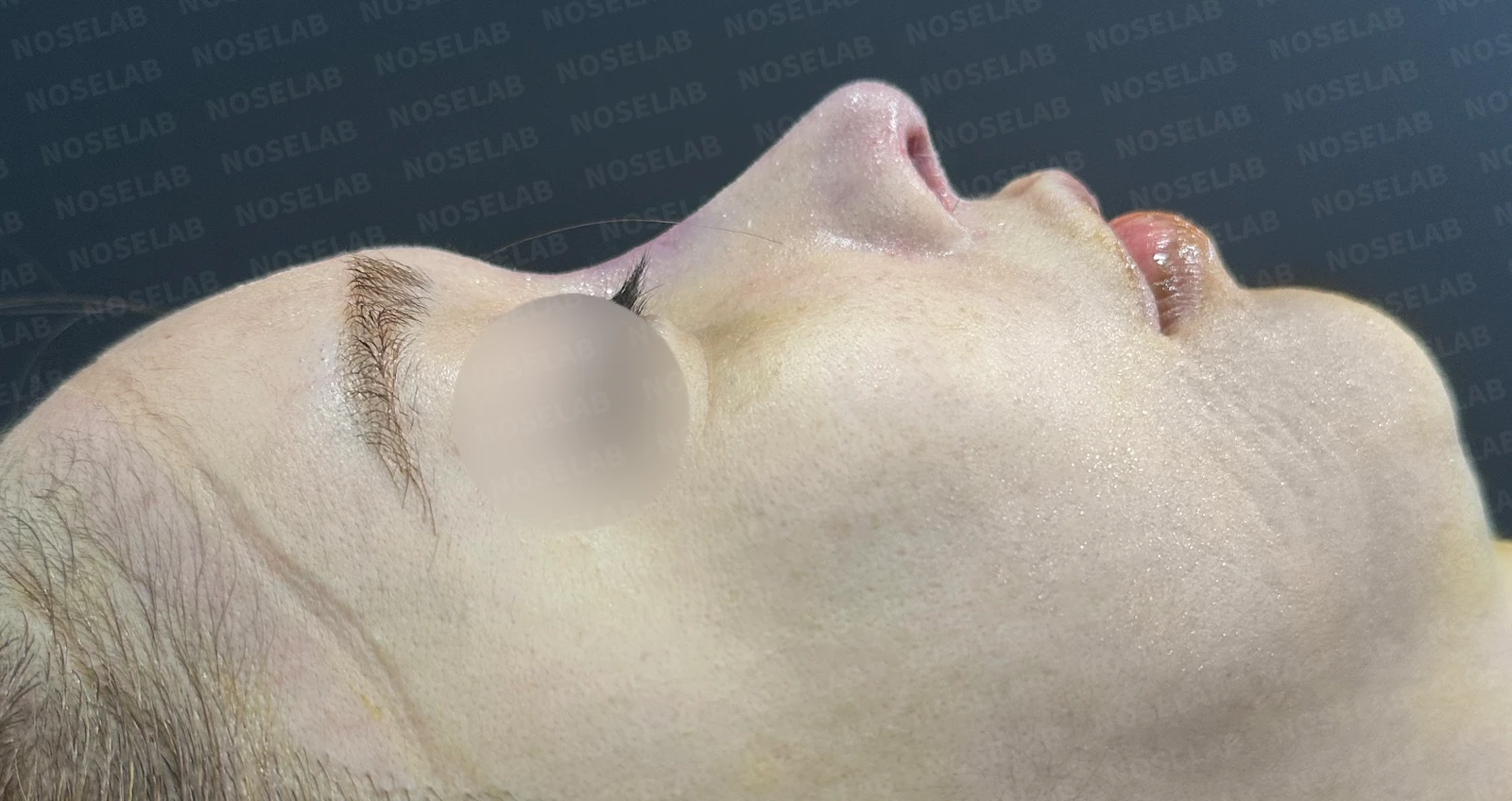
Before surgery / Day 0 immediately after surgery Photos taken immediately after surgery show swelling and may differ from the final result.
The short, upturned tip was brought down significantly and naturally, and the improved nasolabial angle also helped soften the appearance of a protruding mouth.
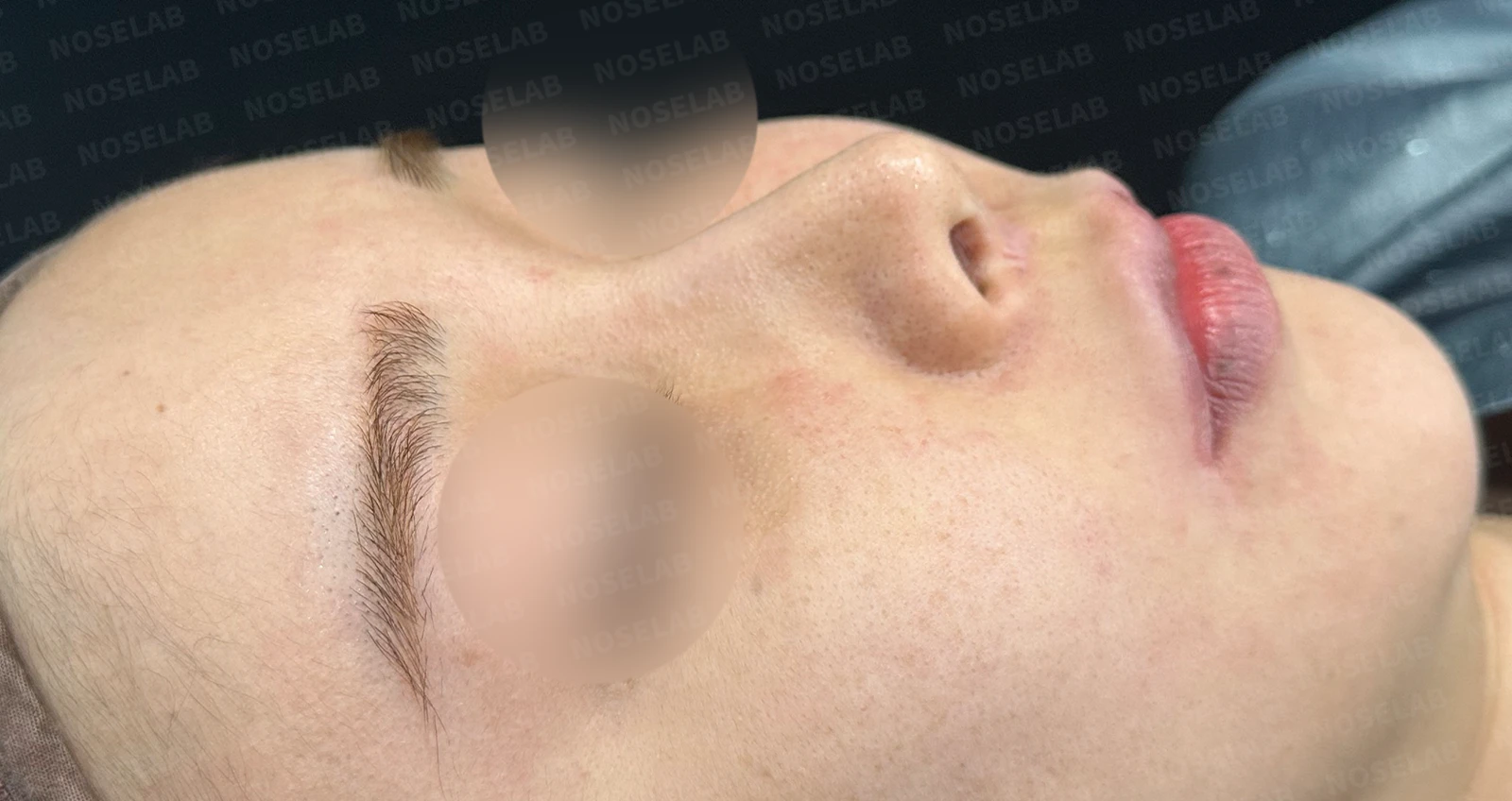
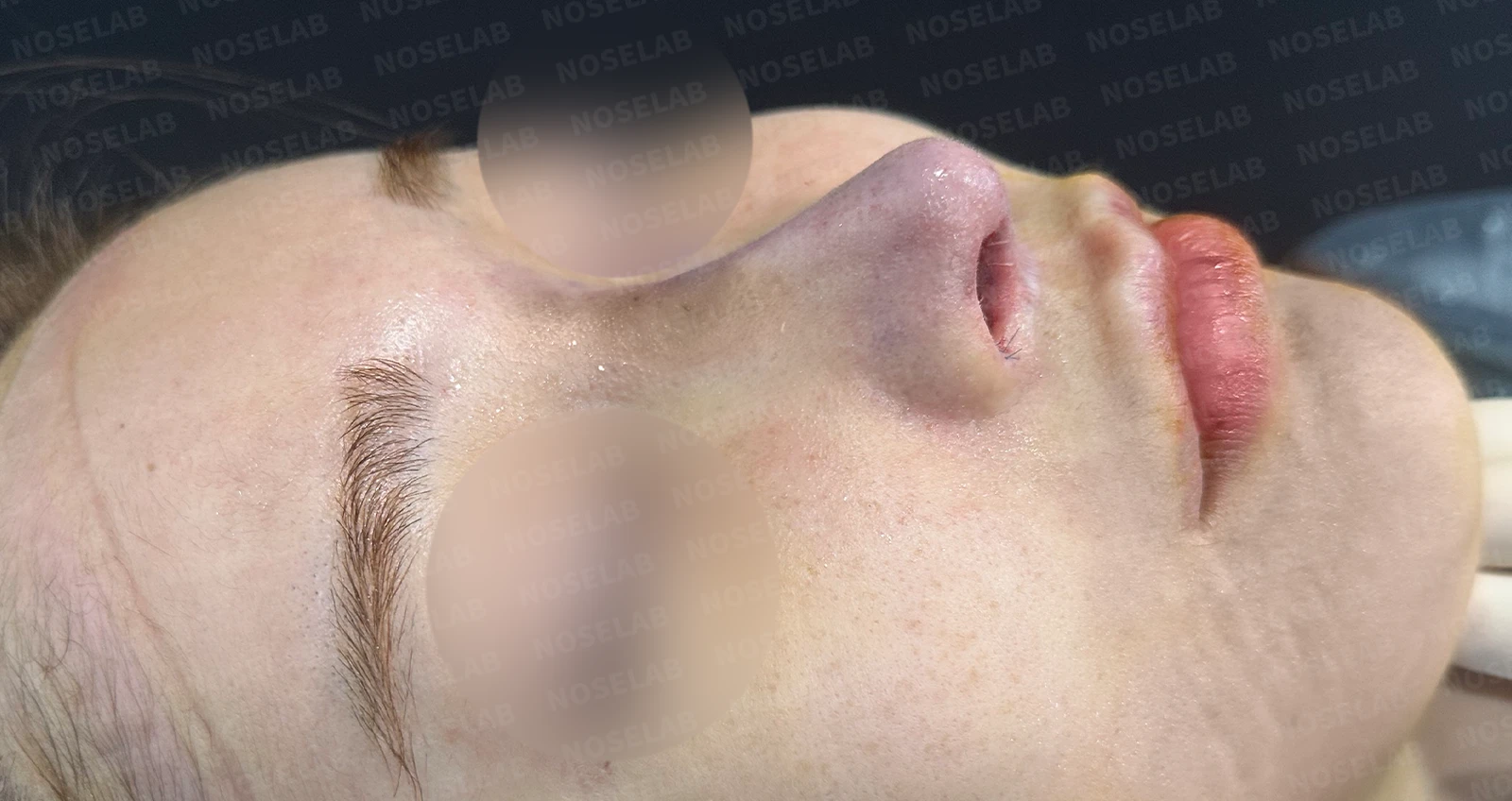
Before surgery / Day 0 immediately after surgery Photos taken immediately after surgery show swelling and may differ from the final result.
The position of the nasal tip looks much more natural, and the corrected nasolabial angle is noticeable.
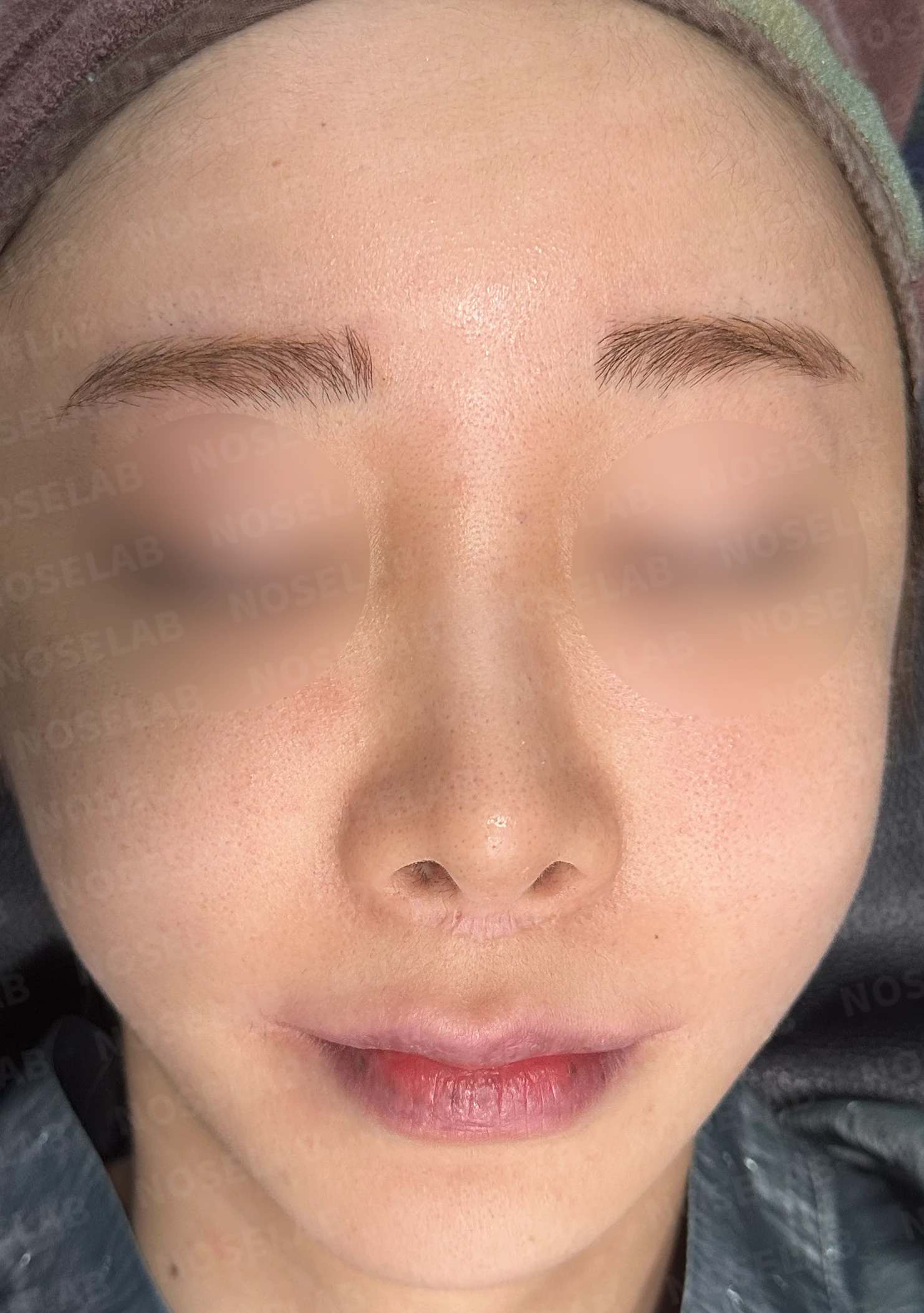
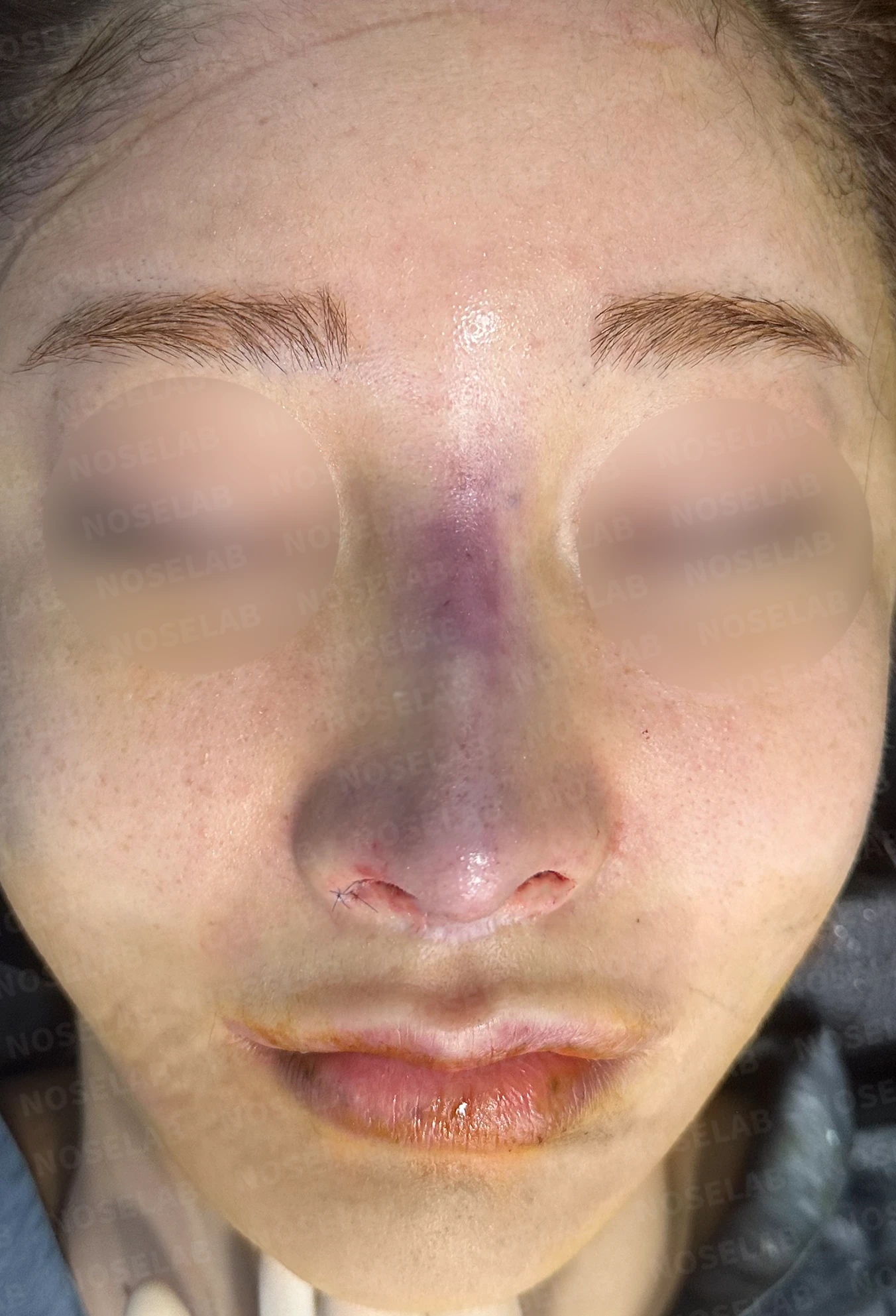
Before surgery / Day 0 immediately after surgery Photos taken immediately after surgery show swelling and may differ from the final result.
Frontal nostril show improved substantially, and the deviated appearance was also markedly corrected.
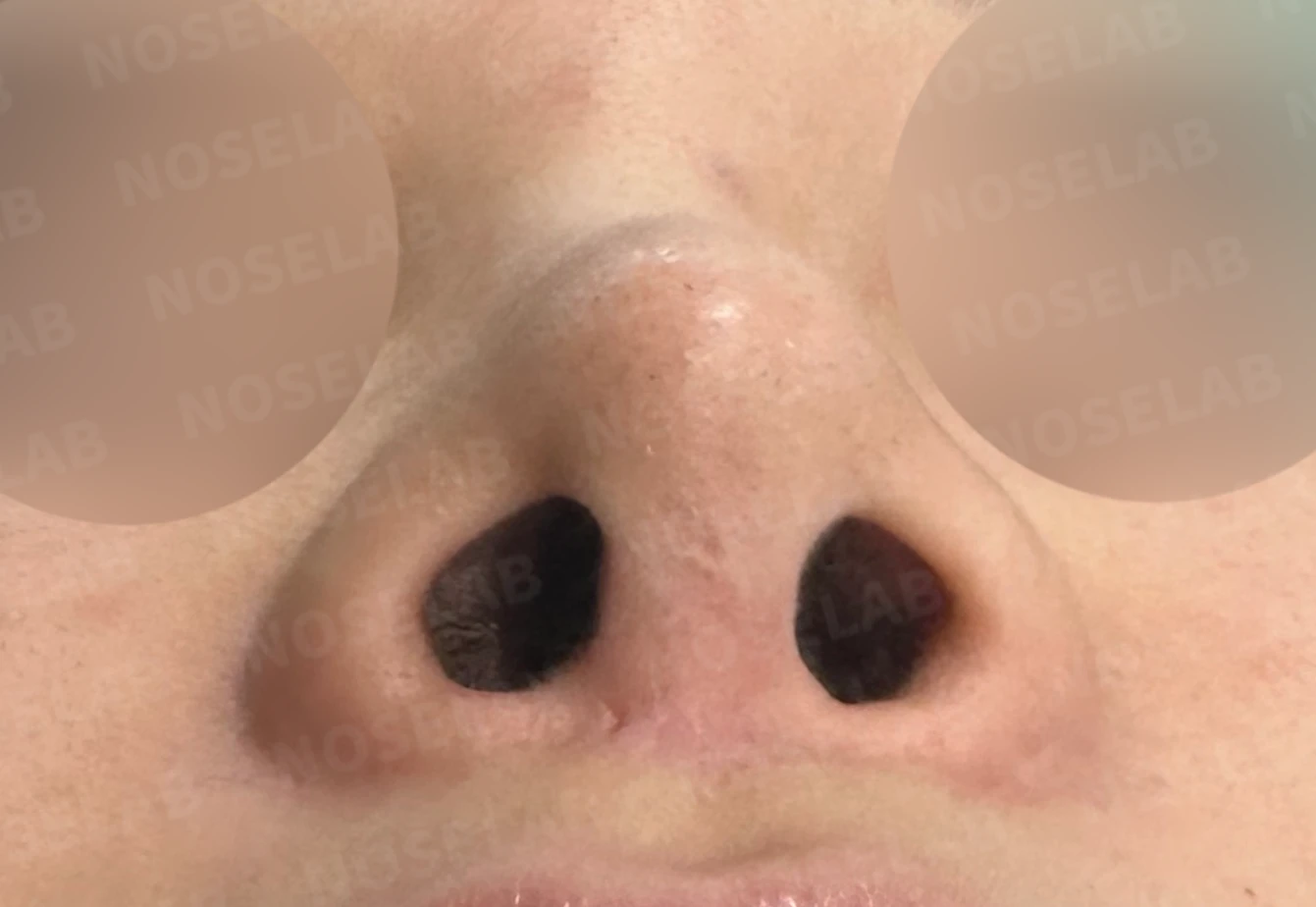
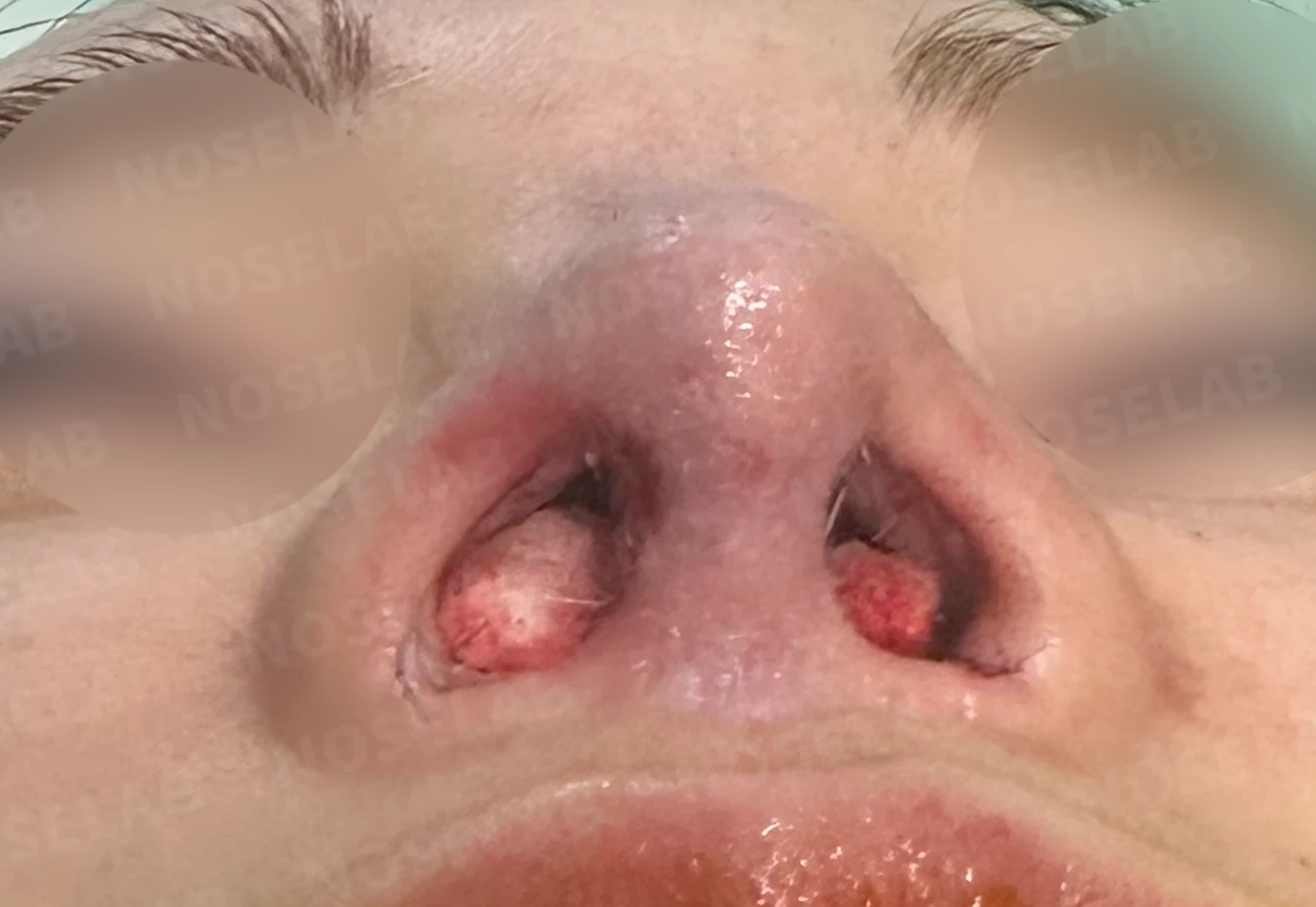
Before surgery / Day 0 immediately after surgery Photos taken immediately after surgery show swelling and may differ from the final result.
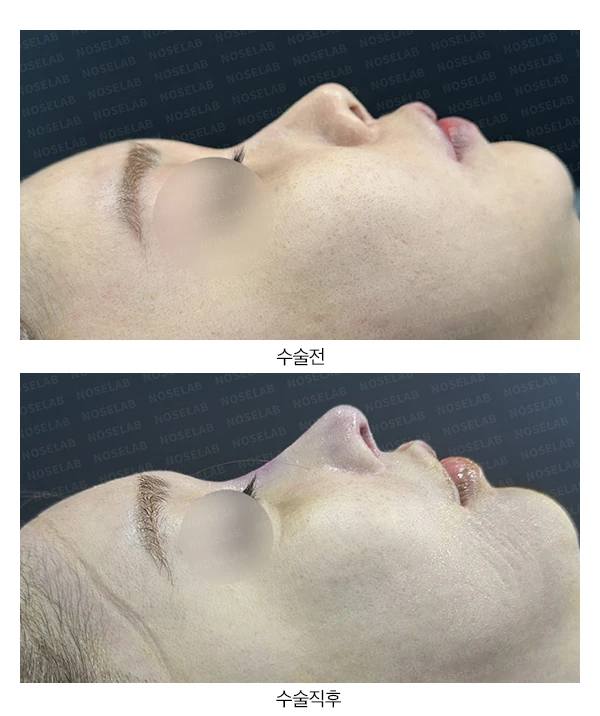
Looking at the basal view, the asymmetric nostrils are significantly corrected, and the shape of the nasal base looks much more natural.
Photos immediately after surgery
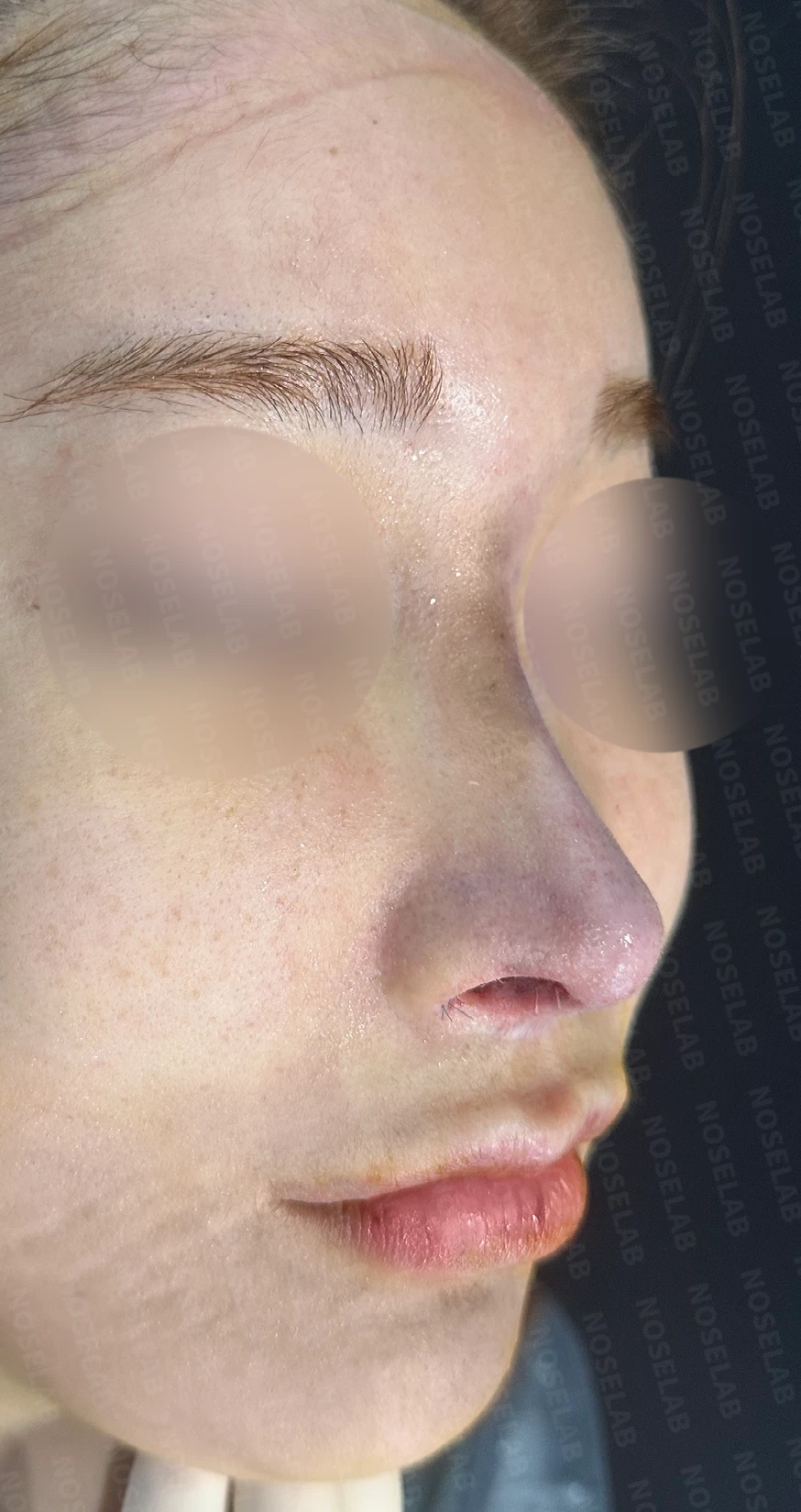
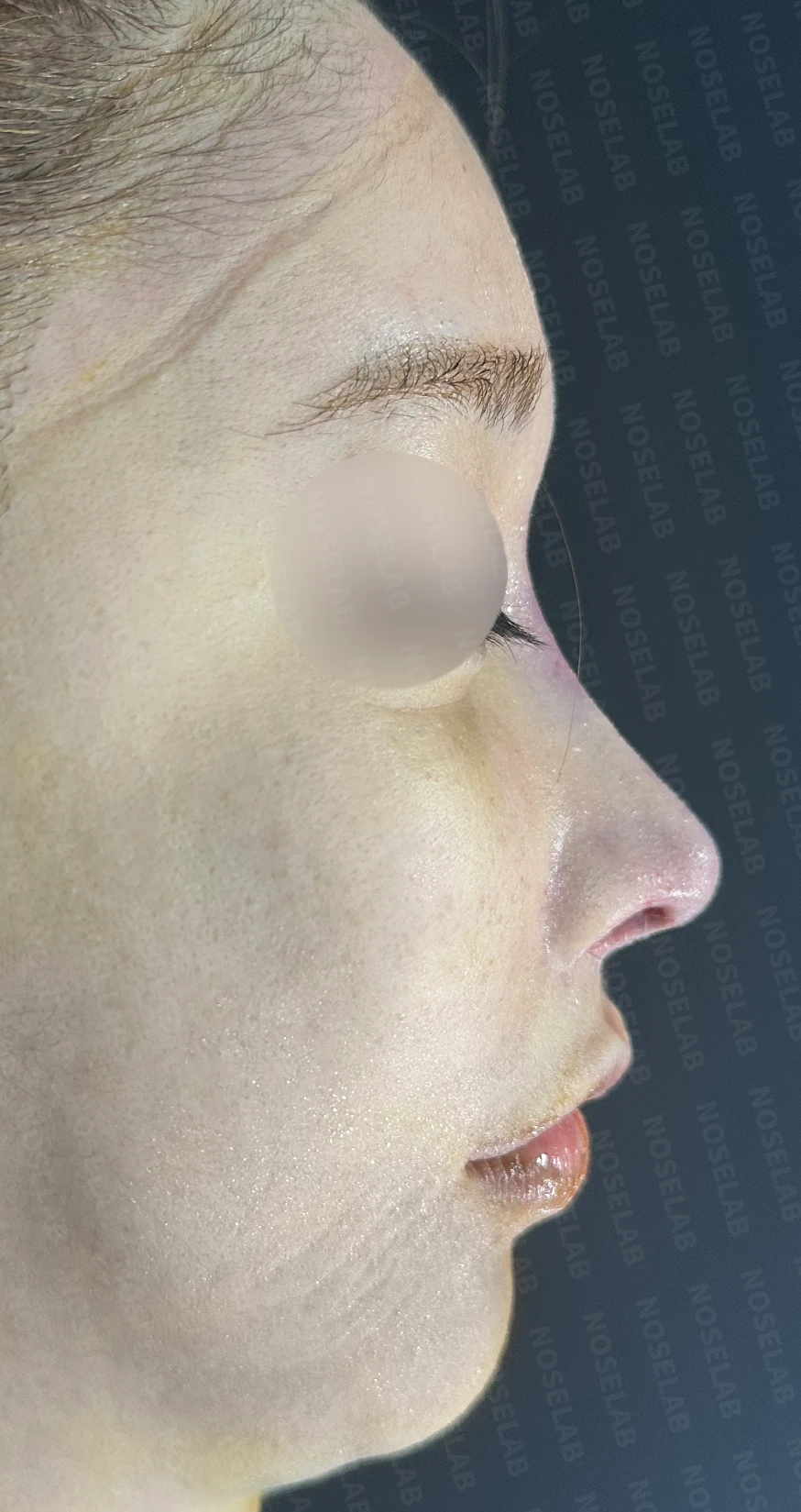
These are photos from day 0, immediately after surgery. Front, 45-degree, and 90-degree profile views. Immediate postoperative photos show swelling and may differ from the final result.
Basal (nostril) view immediately after surgery (Day 0).Immediate postoperative photos show swelling and may differ from the final result.
Conclusion
Among revision cases, correcting a nose that has become significantly shortened and upturned after two-jaw surgery is technically demanding. Today's patient presented with this exact challenge. The procedure is even more challenging when the nose was small and short prior to surgery.
Lengthening a short nose while increasing its height places a substantial amount of tension on the nasal tip. Therefore, the nasal tip must be built very strong to maintain its shape over time. A healthy septal cartilage is essential for reinforcing the tip, but because two-jaw surgery can damage the septal cartilage, septal reconstruction often becomes necessary.
For this reason, tip surgery was performed alongside septal cartilage reconstruction using autologous rib cartilage. However, one must remain cautious for up to 6 months after surgery. Even minor impacts can disrupt the reconstructed septal cartilage, so protecting the nose from trauma is critical.
Today, I discussed surgical correction for a short, upturned, and deviated nose following two-jaw surgery. I hope this case provides helpful insight for those considering similar revision procedures.
This was Dr. Peter C. Kang. Thank you.

Limitations and risks
When autologous rib cartilage is used, scarring and pain may remain at the donor site on the chest, and pneumothorax (pleural injury) can occur rarely. Over time, the grafted cartilage may warp or undergo partial resorption.
When foreign materials such as injected fillers are removed and reconstructed, contracture may recur, nasal height and length may decrease, and staged surgery may be necessary depending on the skin condition.
When the septum is corrected at the same time, nasal obstruction may persist or recur, and in rare cases, septal perforation or changes in smell may occur.
Common potential risks include infection, bleeding, asymmetry, scarring, skin necrosis, and insufficient improvement; results vary depending on individual skin condition and previous surgical history.