Hello.
I am Dr. Peter C. Kang, medical director.
Today, I will discuss rhinoplasty for a long, drooping nose with a slight dorsal hump.
Preoperative design
Overall, the nose appeared blunt and long. It also had a crooked, heavy look, giving it an unrefined, less feminine shape.
Surgical plan
Therefore, we decided to slightly elevate the nasal tip so it would not appear long, and focus on achieving the intended effect without raising it excessively given the existing size of the nose. Although a silicone implant was considered for the nasal bridge due to its uneven and deviated contour, the possibility of proceeding without an implant was not ruled out, as the nose should not look elongated or enlarged overall.
Ultimately, the plan was to refine the nasal tip, perform lateral osteotomies so the bridge would look as natural and straight as possible, and proceed without an artificial implant by partially filling the nasal bridge with cartilage.
Before surgery vs. immediately after surgery
Let us compare the photos before surgery and immediately after surgery on Day 0. Photos taken immediately after surgery show swelling and may differ from the final result.
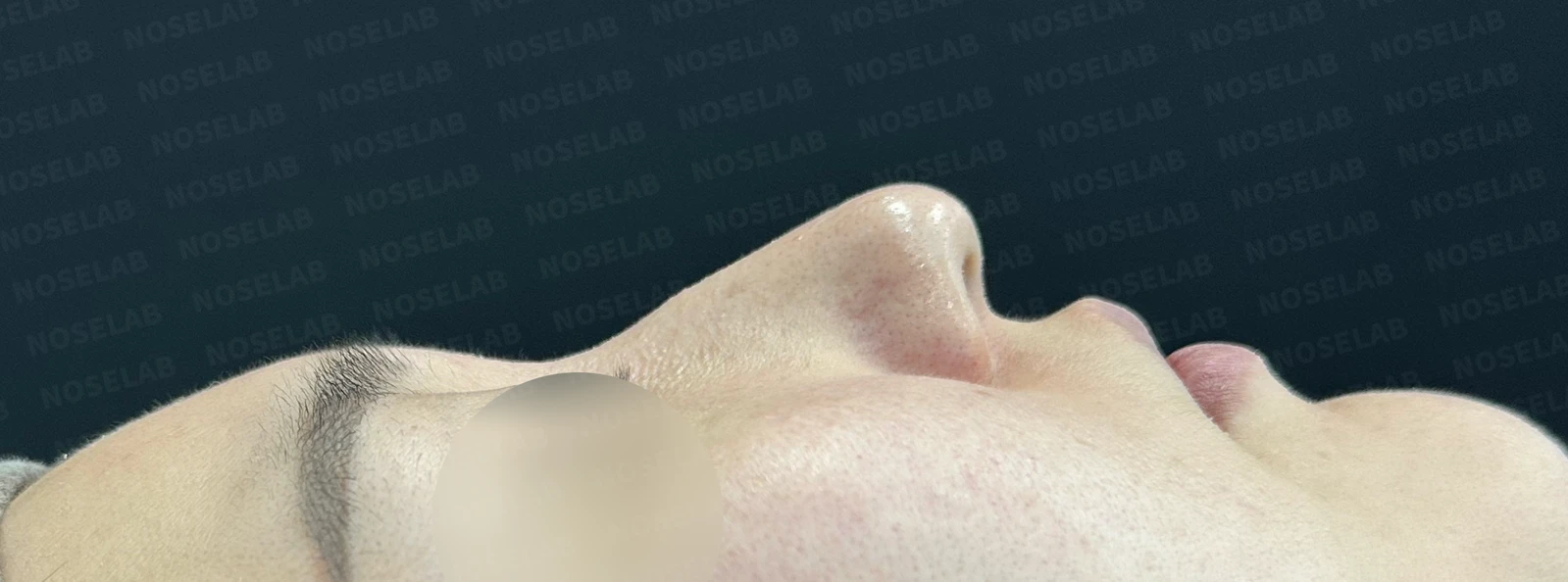
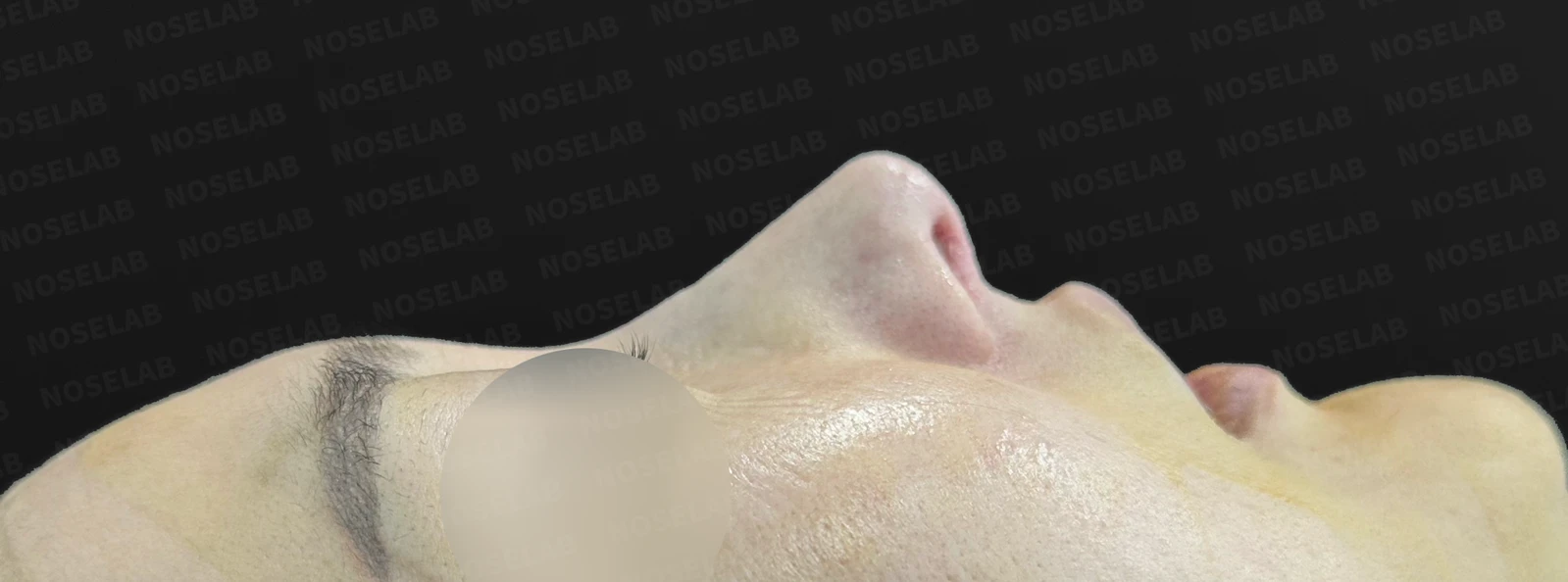
Before surgery / Day 0 immediately after surgery Photos taken immediately after surgery show swelling and may differ from the final result.
The overall profile view has changed considerably. First, the elongated appearance is gone. The nasal tip is well defined, and a natural nasolabial angle has been established. The nasal bridge was partially filled with donor rib cartilage to create a smooth contour.
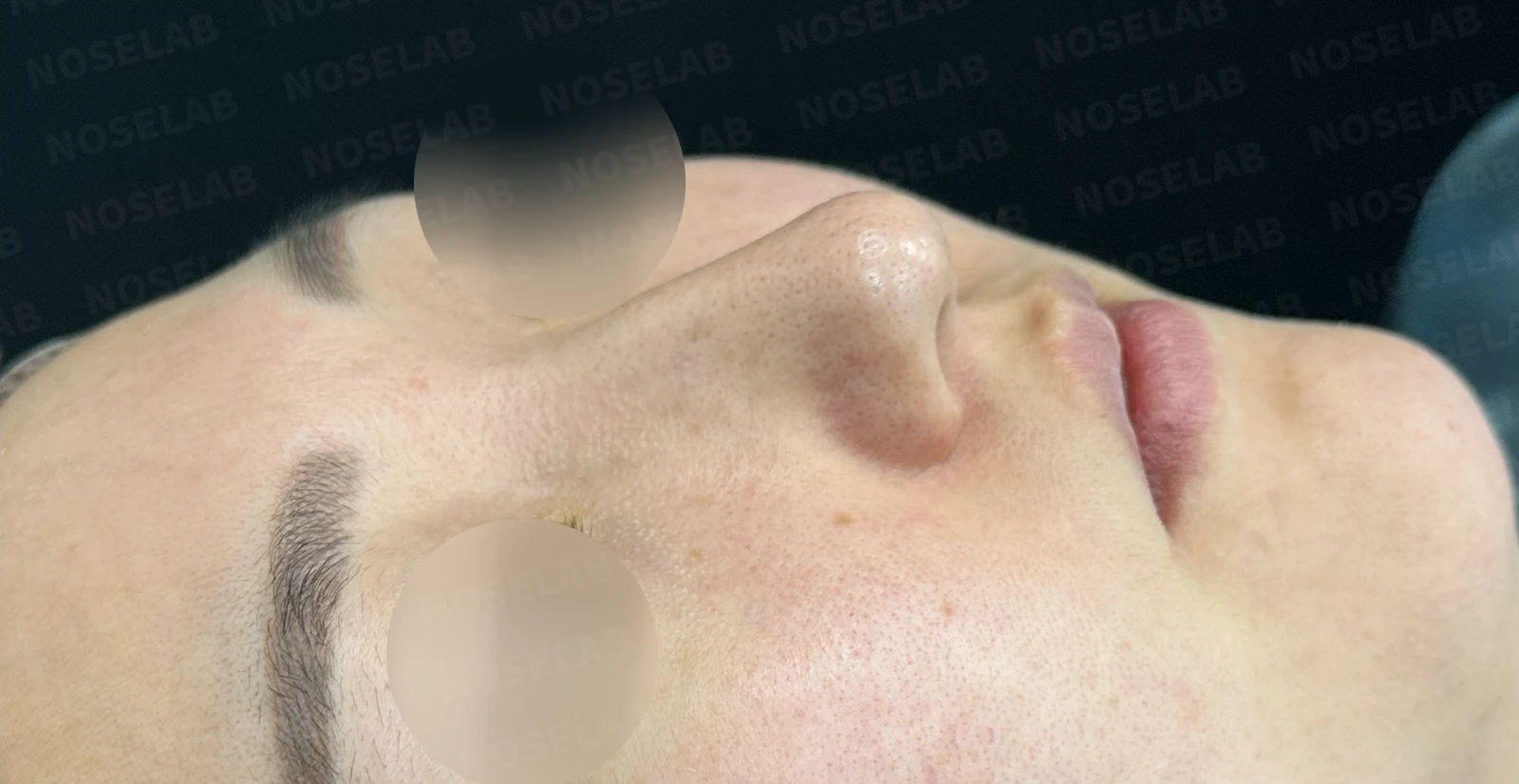
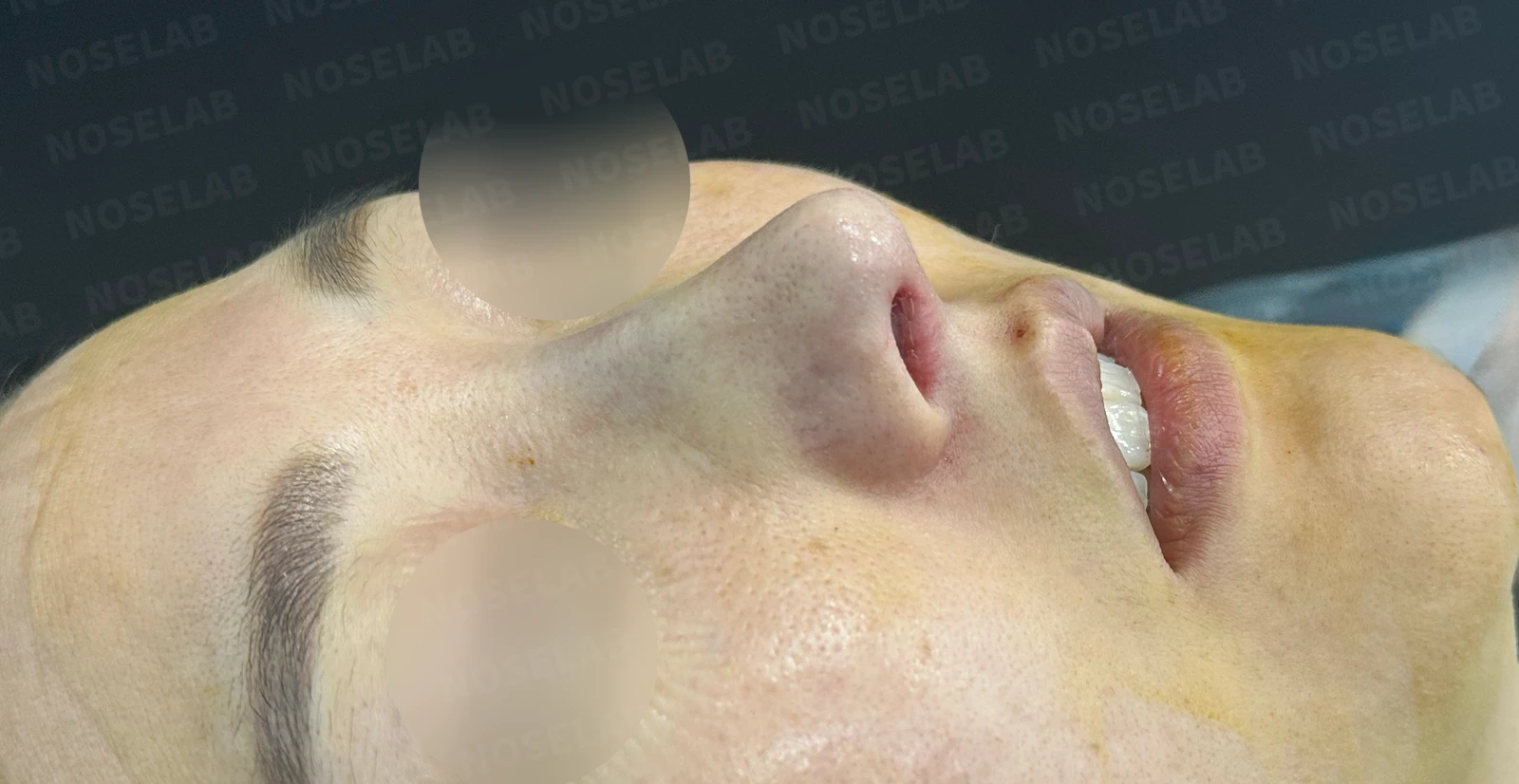
Before surgery / Day 0 immediately after surgery Photos taken immediately after surgery show swelling and may differ from the final result.
From the oblique view, you can see that the nasal tip has become noticeably shorter.
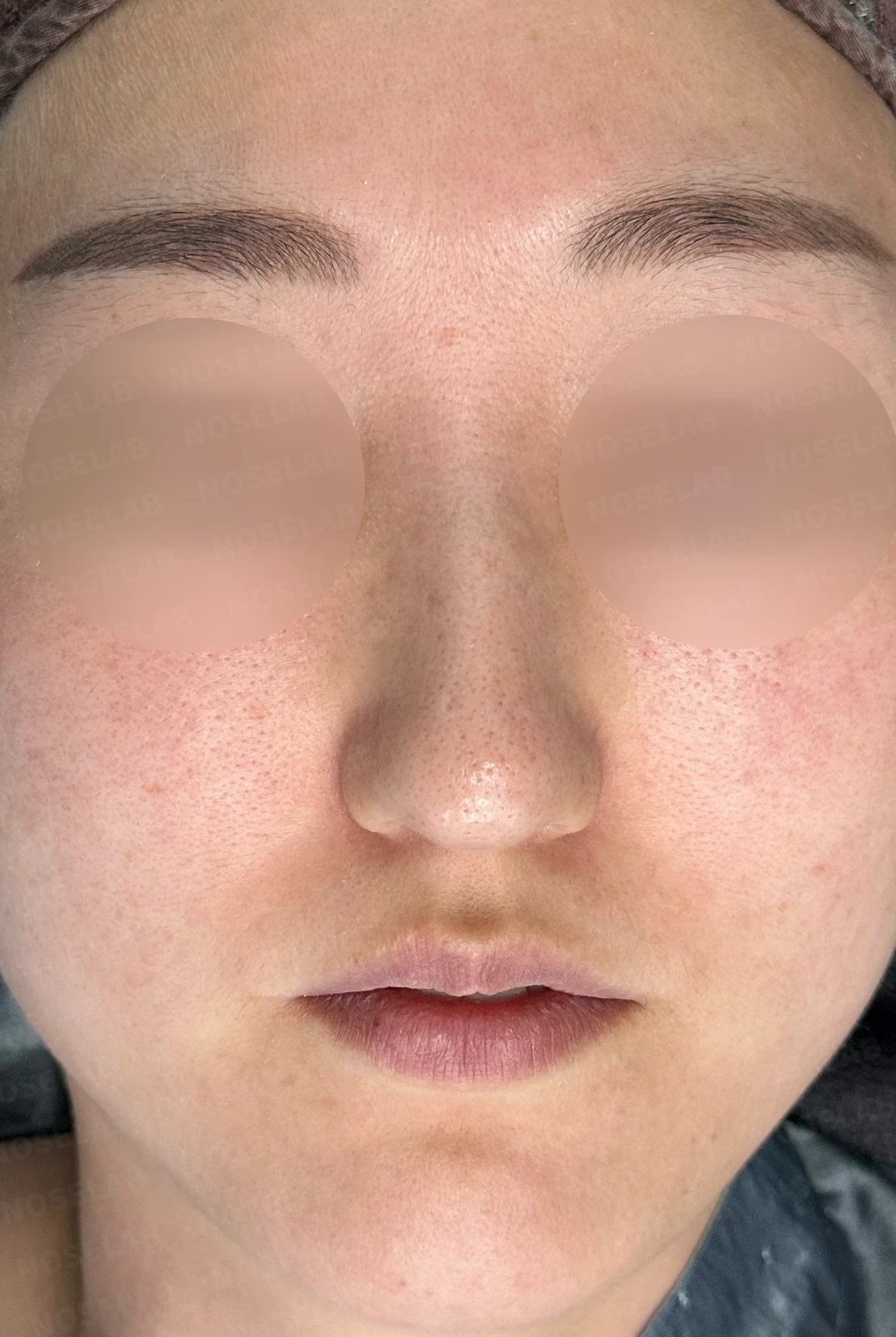
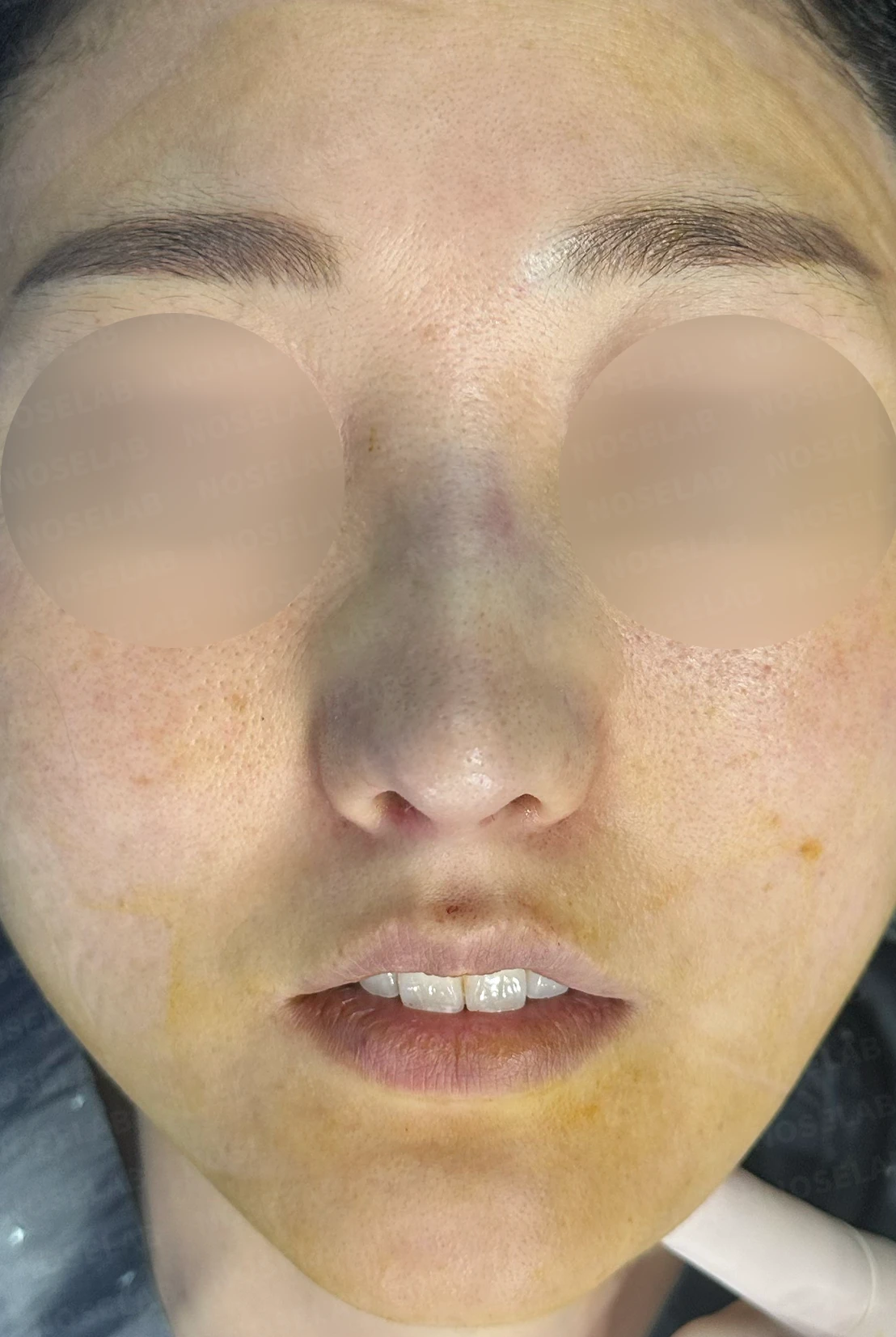
Before surgery / Day 0 immediately after surgery Photos taken immediately after surgery show swelling and may differ from the final result.
On the frontal view, the nasal tip previously looked overly spread out, and the nostrils were completely hidden, creating a heavy, constricted look. This has become much more natural. You can also see that the crooked appearance has improved significantly.
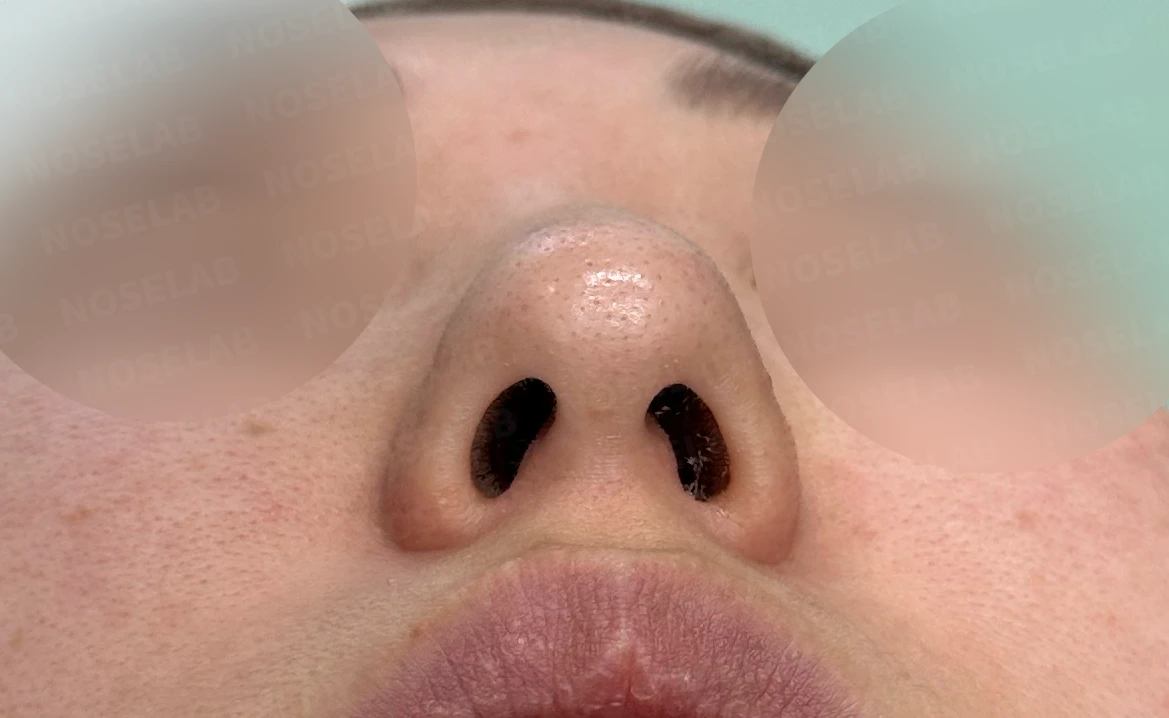
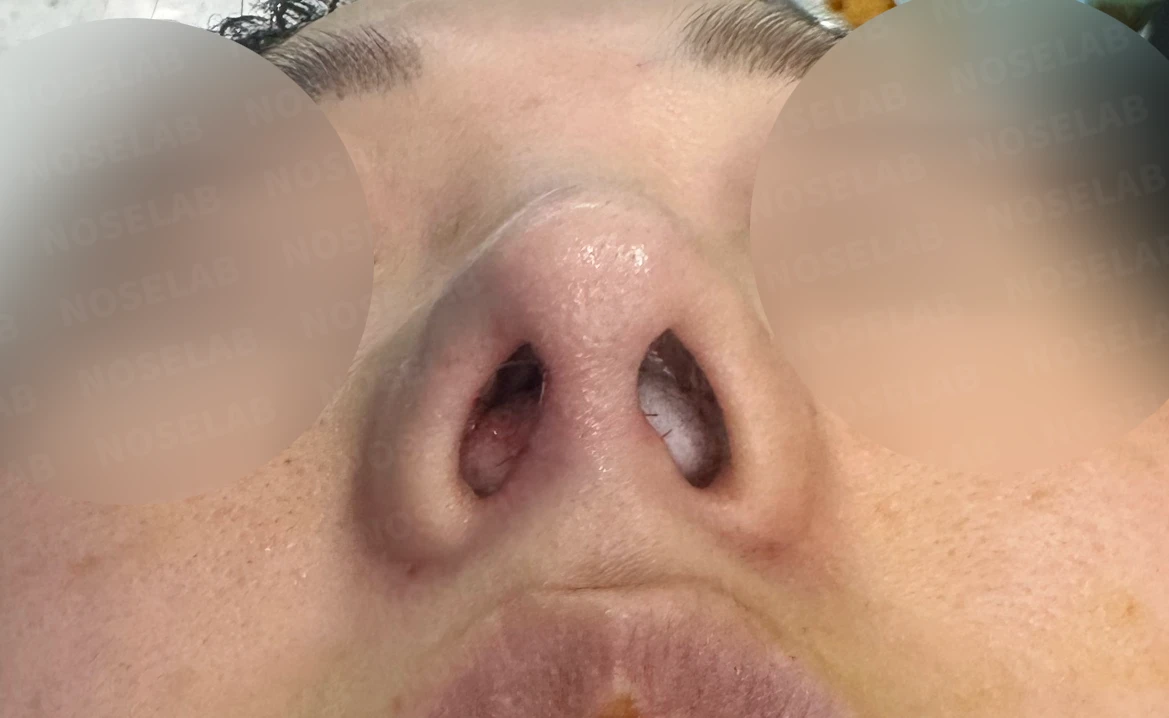
Before surgery / Day 0 immediately after surgery Photos taken immediately after surgery show swelling and may differ from the final result.
The area where the nasal tip appeared overly wide has improved substantially.
Photos immediately after surgery
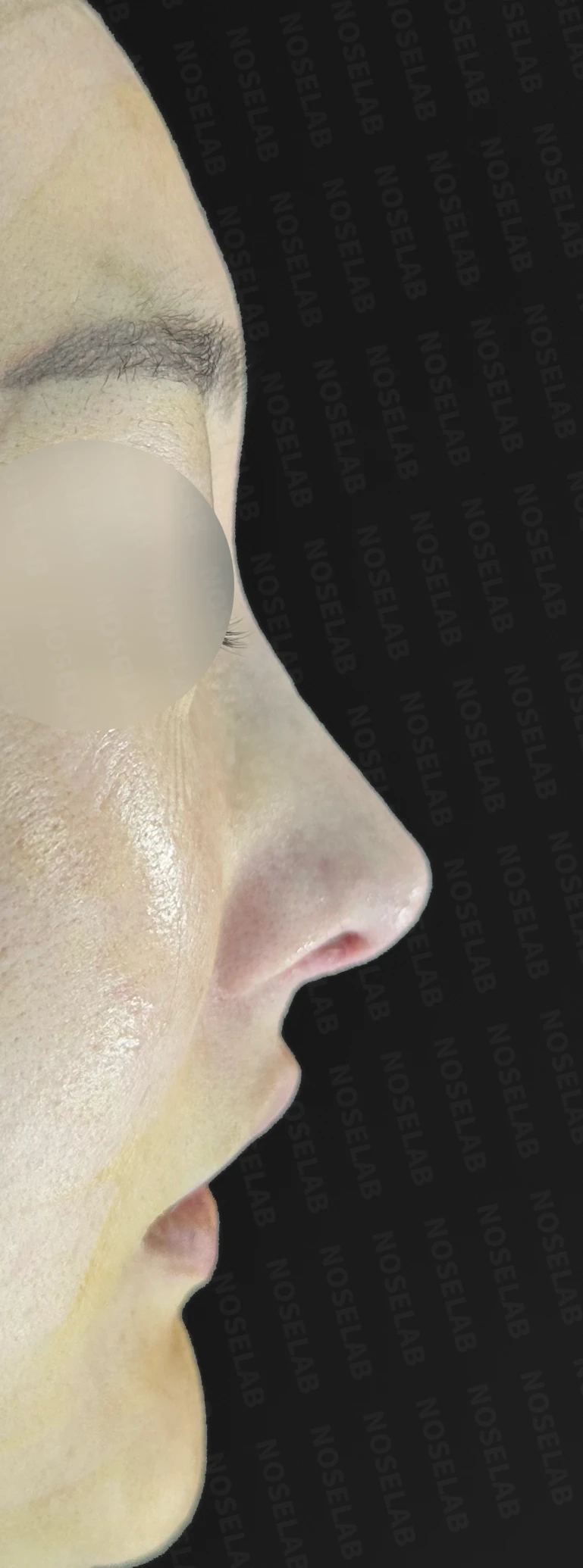
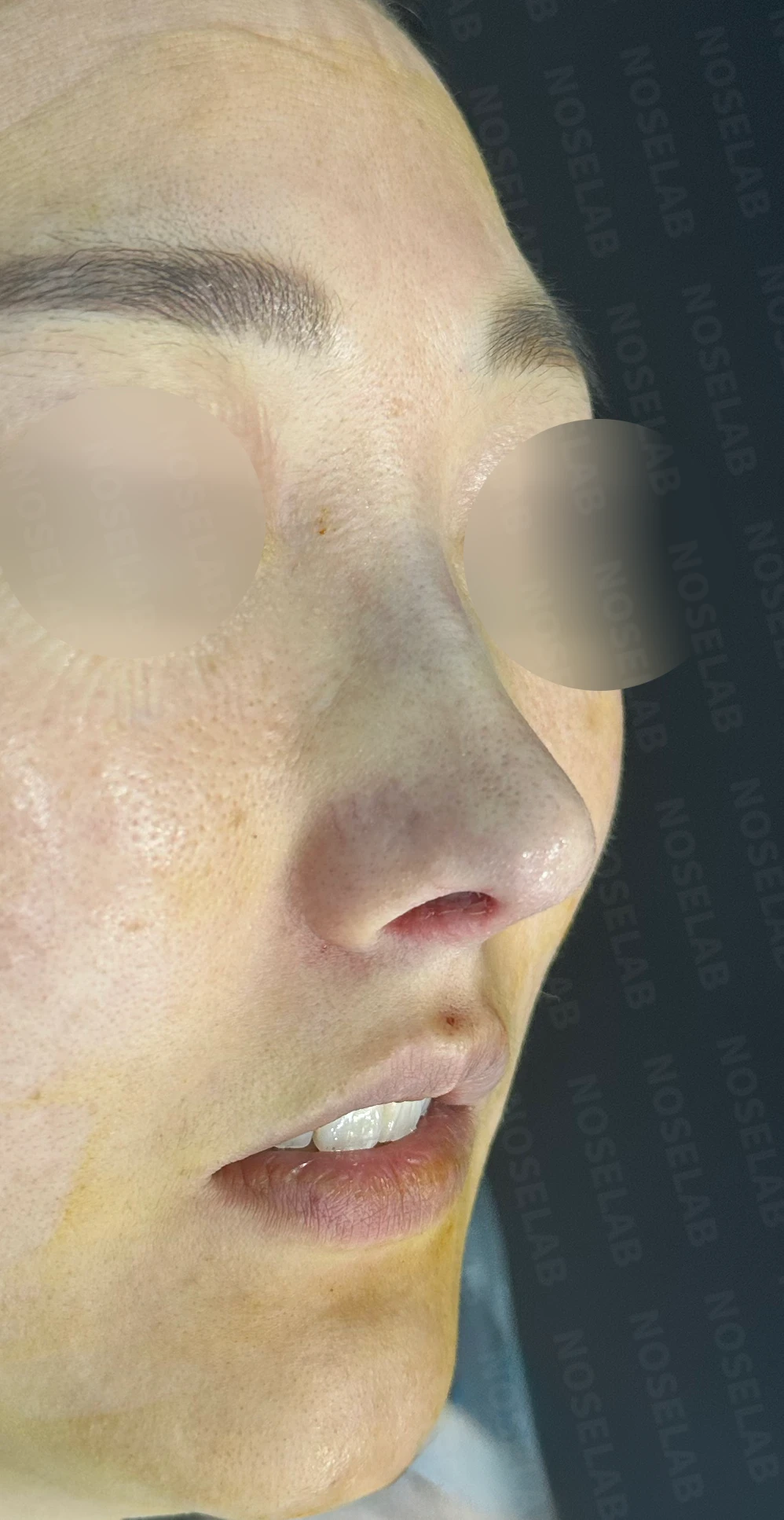
Immediately after surgery on Day 0 (90-degree, 45-degree, and frontal views). Photos taken immediately after surgery show swelling and may differ from the final result.
Basal (nostril) view immediately after surgery (Day 0)Immediate postoperative photos show swelling and may differ from the final result.
My thoughts on implant-free rhinoplasty
If you ask whether implant-free rhinoplasty is truly a good operation, my instinctive answer would be "yes," but that is not entirely accurate. That is because implant-free surgery cannot be universally applied to every patient. For an implant-free rhinoplasty to achieve a favorable result, the nasal bones must first have adequate symmetry and volume. In other words, when the nasal bridge is already well structured and only the tip is short or drooping, adjusting the tip to harmonize with the existing bridge is the ideal indication for an implant-free approach.
Conversely, if the nasal bones have severe asymmetry or are very low and small, it is difficult to expect good results with an implant-free approach. Furthermore, "implant-free" does not mean nothing is placed on the nasal bridge. Instead of an artificial implant, autologous or homologous biological tissues (such as cartilage, fascia, or dermis) are used to fill the bridge entirely or partially. When this is done, some absorption (or remodeling) occurs as the biological tissue settles, which requires a degree of overcorrection and carries the disadvantage of lower predictability regarding how stable the final shape will be.
For this reason, implant-free rhinoplasty cannot be recommended indiscriminately to every patient. In addition, an implant may or may not ultimately be placed during surgery depending on intraoperative findings. I hope this provides helpful perspective for those interested in implant-free rhinoplasty.
This was Dr. Peter C. Kang. Thank you.
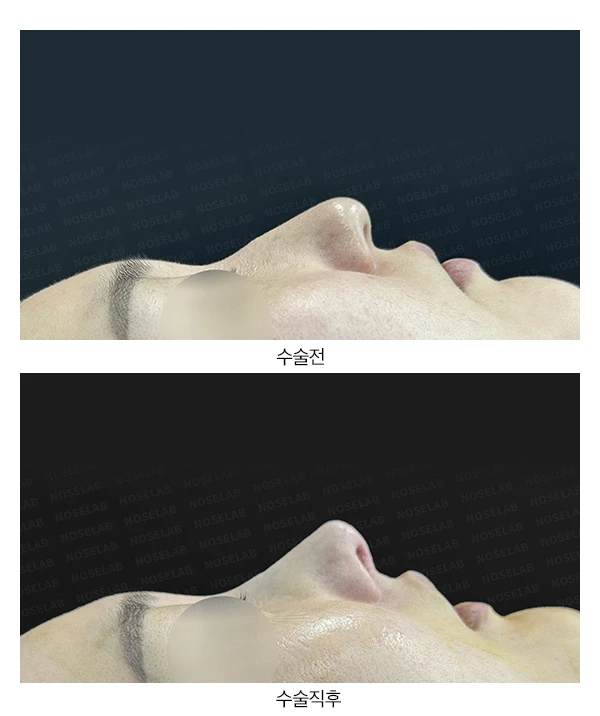

Limitations and risks
When using donor rib cartilage, long-term follow-up is necessary because the grafted cartilage may resorb or warp.
Common potential risks include infection, bleeding, asymmetry, scarring, skin necrosis, and insufficient improvement; results vary depending on individual skin condition and previous surgical history.