Hello.
I am Dr. Peter C. Kang, medical director.
It is raining today. Wednesdays have recently become our clinic's regular day off, so the clinic is quiet today.
I am writing this blog post in my office while listening to the sound of the rain.
Today, I would like to talk about a case where the patient visited our clinic after undergoing rhinoplasty about 4 to 5 times, experiencing persistent redness at the nasal tip along with contracture deformity (an upturned, collapsed nose).
Condition before surgery
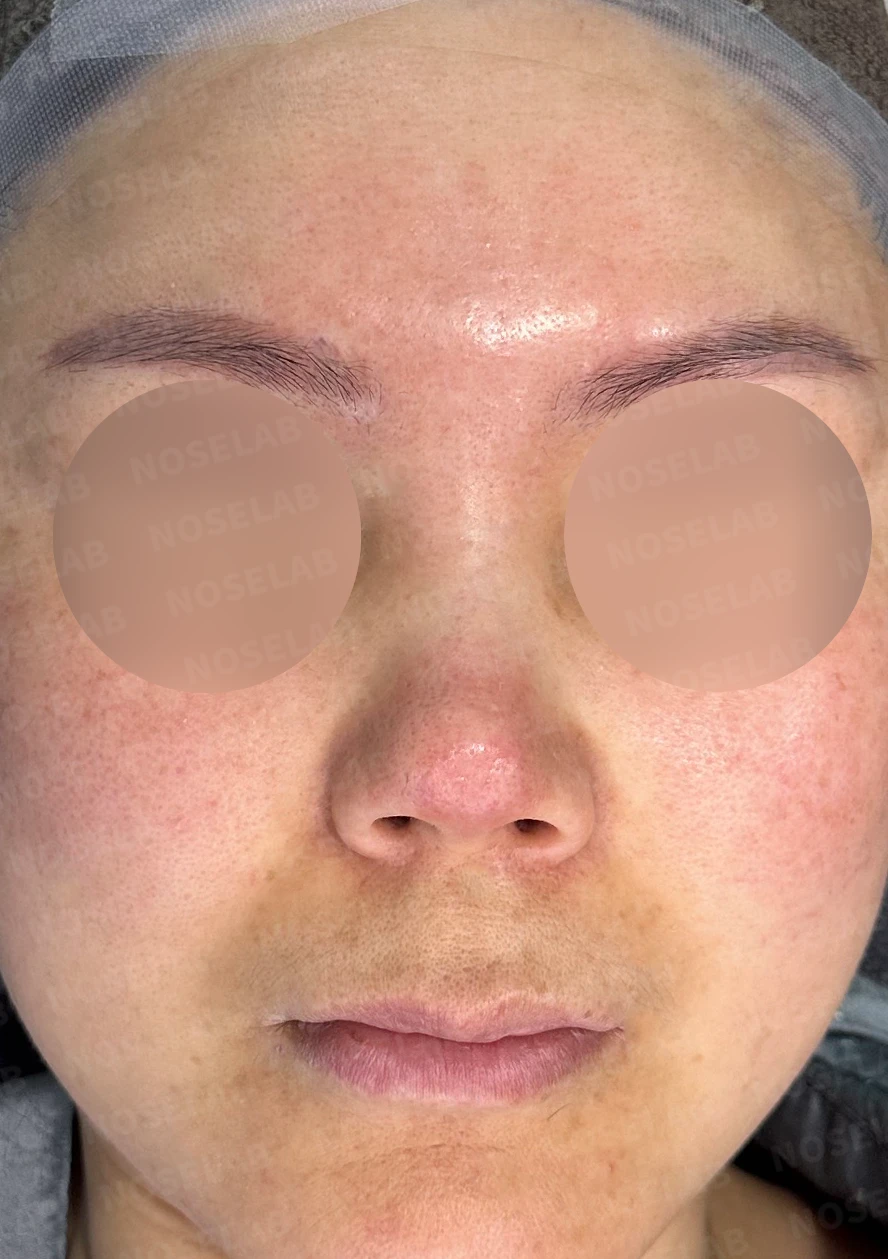
On the front view, the patient's nose appeared upturned, the nasal tip was slightly deviated to the right, and the nasal bridge looked widened and flattened. The area from the nasal dorsum to the tip was redder than the surrounding skin. On the profile view, the nasal tip appeared depressed and upturned, and nostril asymmetry was observed.
The silicone implant had already been removed at a previous clinic due to the persistent tip redness.
Surgical plan
There are several possible causes for redness at the nasal tip. We developed a surgical plan by carefully considering the factors that can be improved through surgery and those that cannot. First, to eliminate redness associated with foreign material reactions, we decided to elevate the nasal tip using only autologous rib cartilage. To prevent redness resulting from impaired blood circulation, we recommended a design with an appropriate tip height. We selected a surgical approach that minimizes damage to the blood vessels around the nasal tip and planned stem cell therapy to facilitate the regeneration of damaged tissue.
Before surgery vs. immediately after surgery
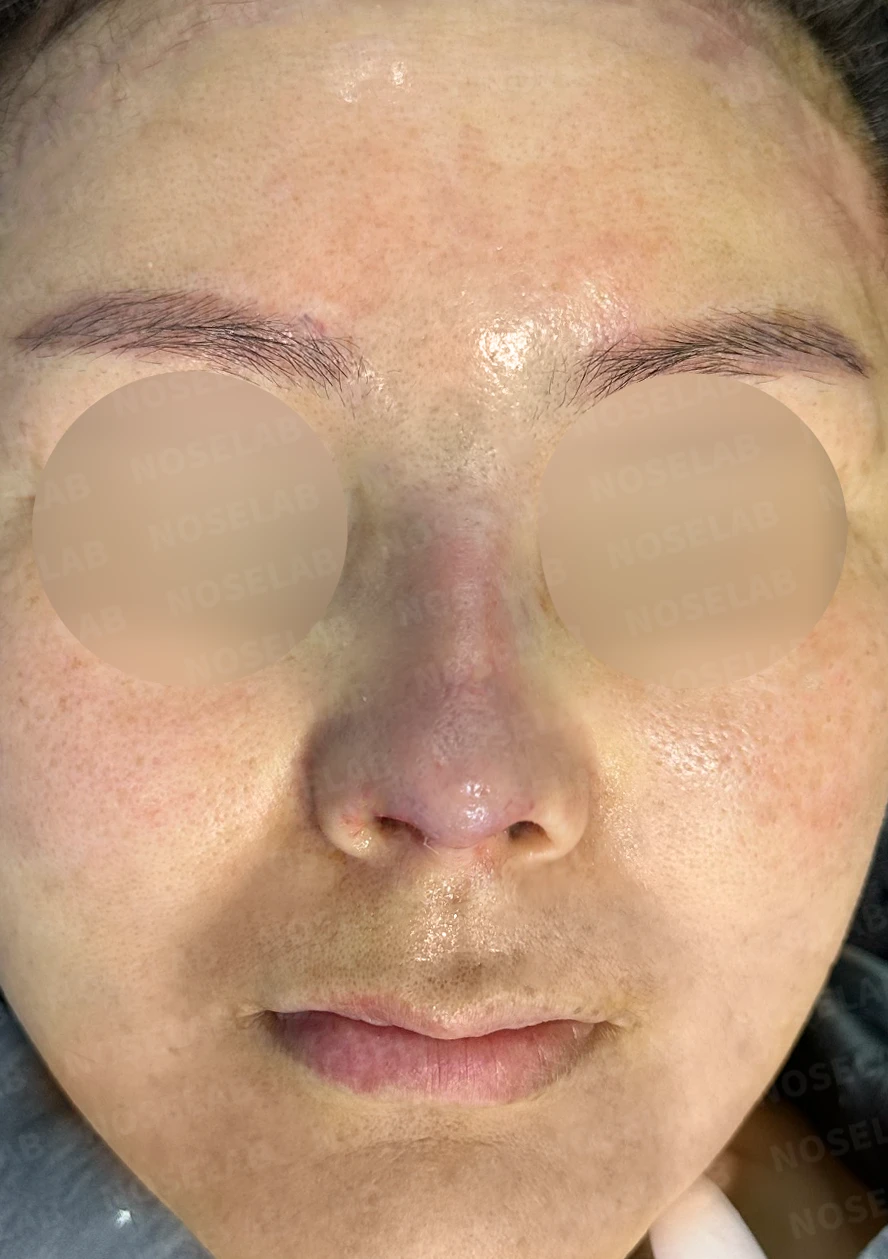
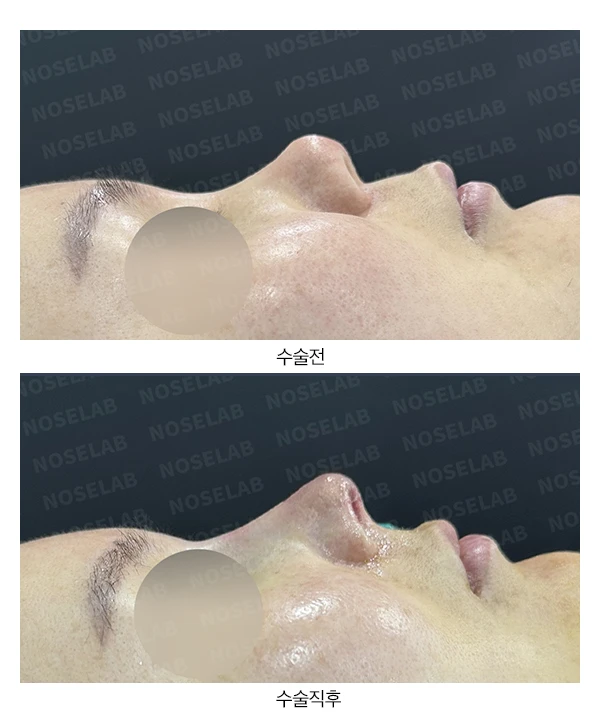
Let us compare the preoperative photos with the photos immediately after surgery (Day 0).Immediate postoperative photos show swelling and may differ from the final result.
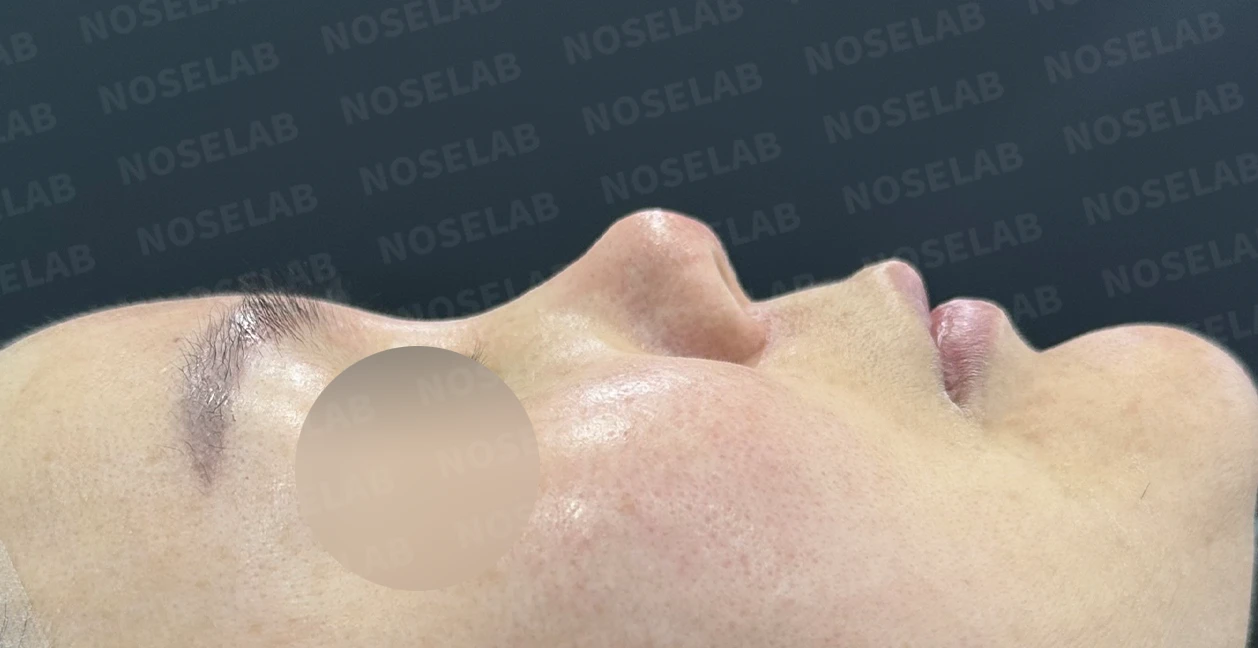
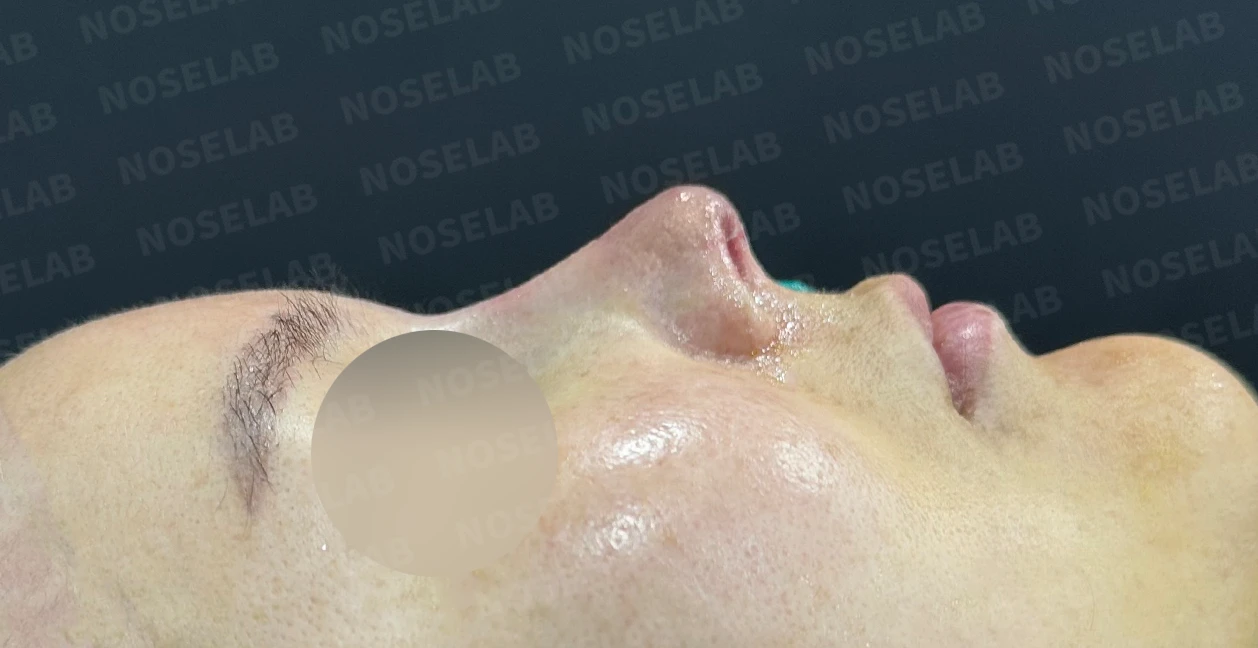
Before surgery / Day 0 immediately after surgery Photos taken immediately after surgery show swelling and may differ from the final result.
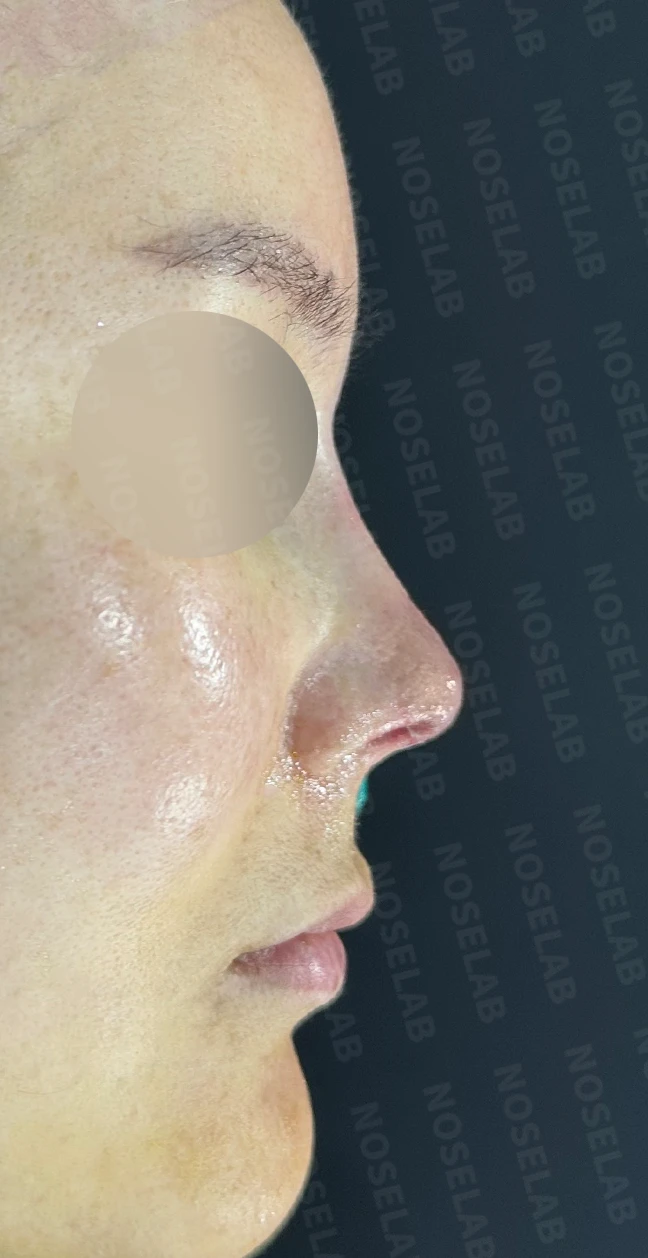
Looking at the profile photo, the depressed area at the nasal tip has improved significantly, the upturned appearance has resolved, and the columella has been slightly lowered, creating a much more natural nasolabial angle.
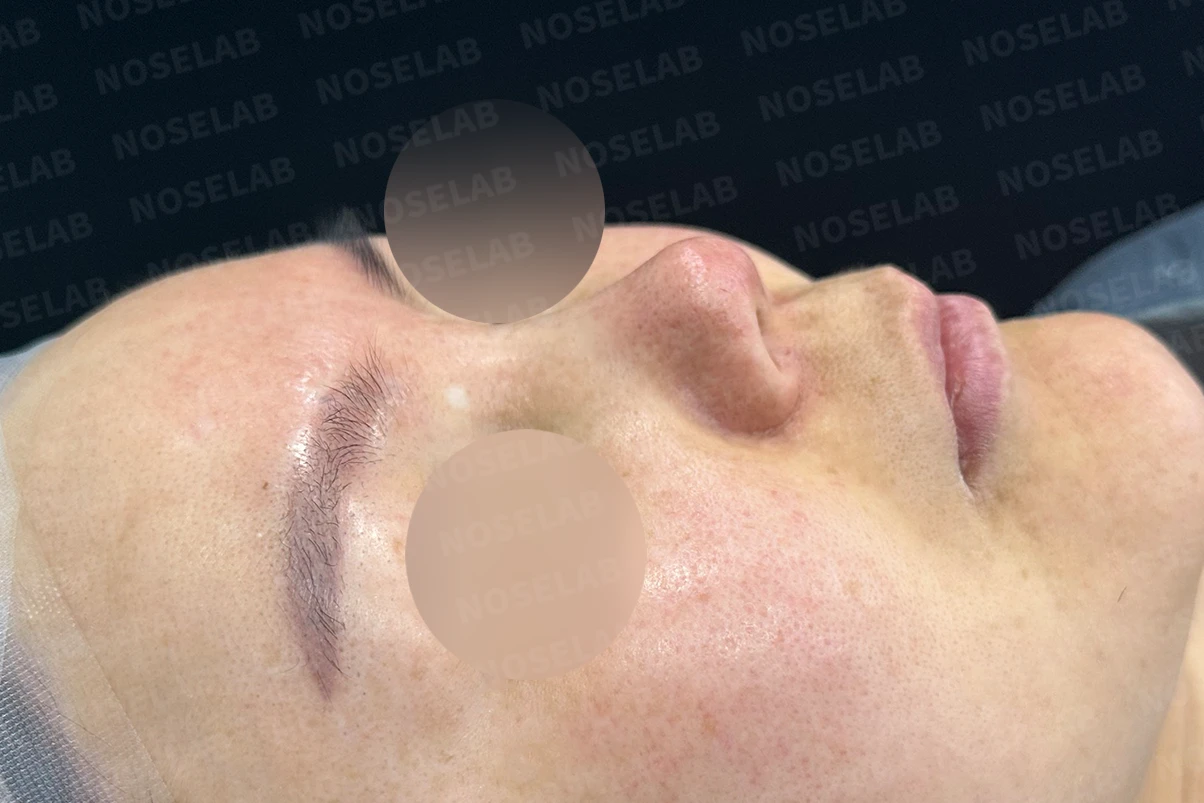
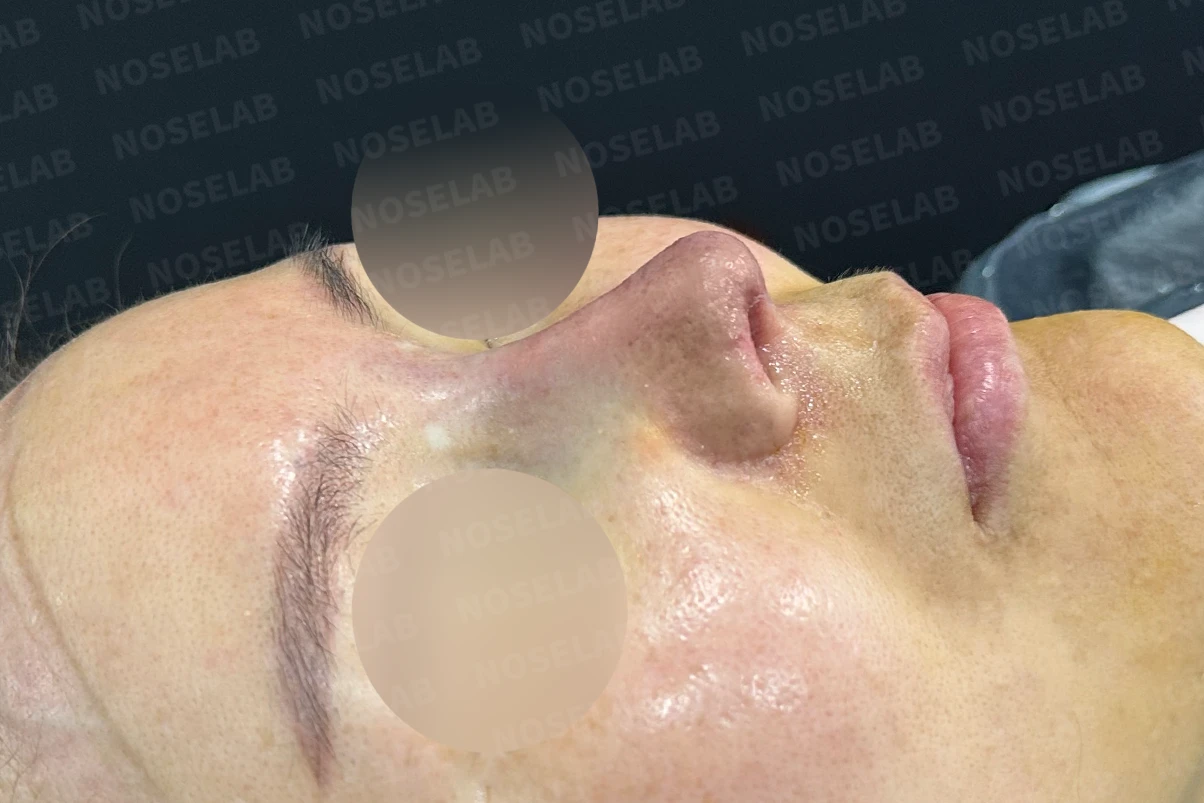
Before surgery / Day 0 immediately after surgery Photos taken immediately after surgery show swelling and may differ from the final result.
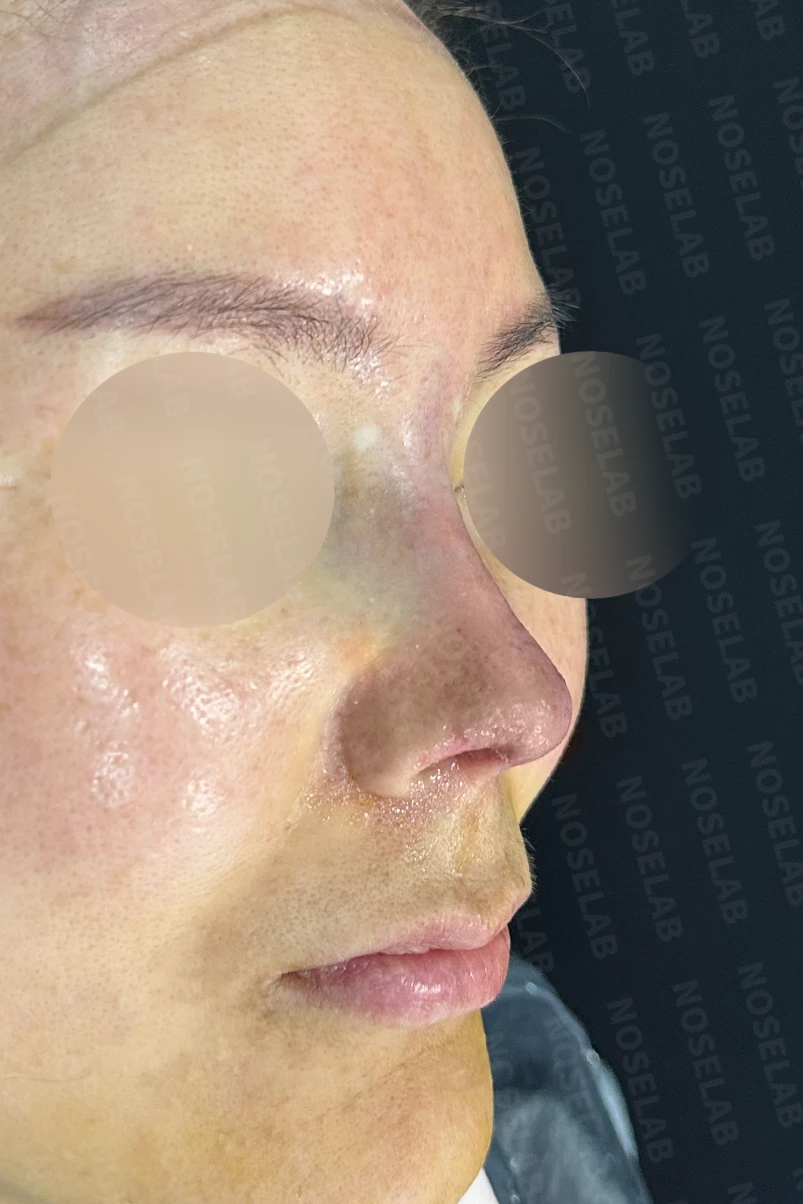
On the oblique view, the bridge line looks much more natural, and an improvement in the appearance of the protruding mouth can be observed.
Before surgery / Day 0 immediately after surgery Photos taken immediately after surgery show swelling and may differ from the final result.
On the front view as well, the depressed look of the nasal tip has been corrected, the widened dorsum has improved, and the overall deviation has notably smoothed out. In addition, the upturned appearance has been naturally refined.
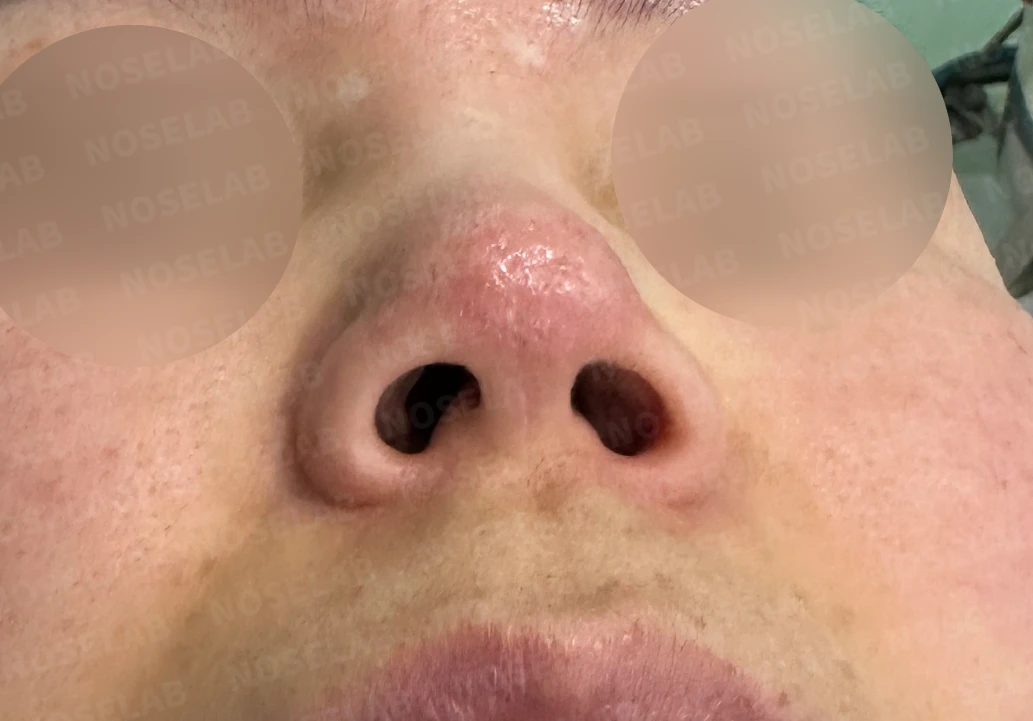
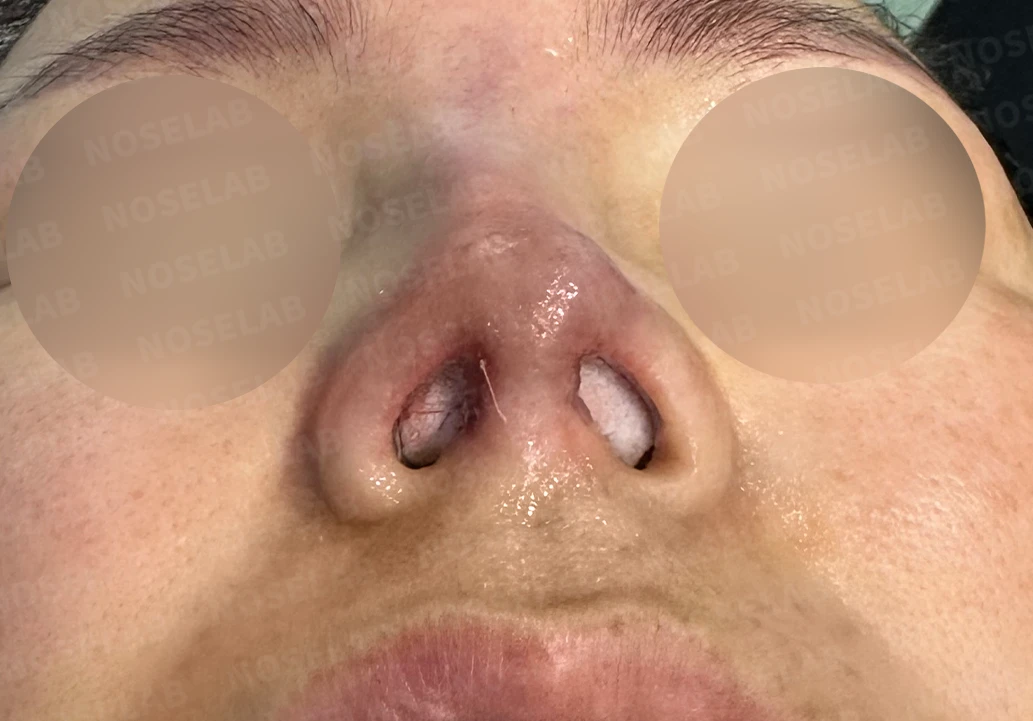
Before surgery / Day 0 immediately after surgery Photos taken immediately after surgery show swelling and may differ from the final result.
The blunt and splayed appearance of the nasal tip has greatly improved.
Photos immediately after surgery
My thoughts on nasal tip redness following rhinoplasty
This is a situation I encounter from time to time during revision rhinoplasty consultations. A red nasal tip is actually a very common symptom in the early postoperative period. Naturally, because the tip is raised higher than before, circulation can temporarily decrease. In particular, redness may persist longer while the surgical wound is not yet fully healed. Furthermore, unexplained redness during the early stages can be associated with inflammation, so it is something we monitor very closely.
However, when redness at the tip persists 6 months or even 1 year after surgery, several underlying causes should be considered. First, blood flow may be compromised because the tip was positioned too high, or local circulation may have been impaired due to vascular injury around the tip. Second, a foreign body reaction, such as an immune response to materials placed in the tip, may cause persistent redness. Lastly, excessive vascular proliferation in the skin of the nasal tip may lead to chronic flushing, leaving the area persistently red.
The first two scenarios can be partially improved through surgical intervention and stem cell therapy. However, the last scenario may require conservative management, such as dermatological vascular laser treatments or medication. In cases involving facial flushing in particular, it is common for redness to appear not only at the nasal tip but also across both cheek areas.
When performing surgery to address a reddened nose, I explain to patients that about a 50% improvement may be expected depending on the underlying cause. Some patients experience substantial improvement, while for others, the difference may be minimal. In such situations, I refer them for dermatological treatment.
Today, we looked at nasal tip redness that occurs after rhinoplasty. I hope this information is helpful to those dealing with similar concerns.
This was Dr. Peter C. Kang. Thank you.

Limitations and risks
When autologous rib cartilage is used, scarring and pain may remain at the donor site on the chest, and pneumothorax (pleural injury) can occur rarely. Over time, the grafted cartilage may warp or undergo partial resorption.
When revising after implant removal, contracture may progress again after removal, the nasal height and length may decrease, and staged surgery may be necessary depending on the skin condition.
Common potential risks include infection, bleeding, asymmetry, scarring, skin necrosis, and insufficient improvement; results vary depending on individual skin condition and previous surgical history.