Hello.
I am Dr. Peter C. Kang.
Today, I would like to share the story of a patient whose nasal tip was severely deformed by contracture, who underwent an initial surgery using autologous rib cartilage, followed by a refined second surgery to achieve a more pleasing shape.
Preoperative design
After the first contracture surgery, the collapsed, indented appearance of the nasal tip improved, but the tip looked slightly drooping and the radix height was somewhat lacking. Therefore, we planned a procedure to elevate the nasal tip and smooth the bridge line.
Surgical plan
The plan was to reinforce the nasal tip cartilage to restore projection and slightly lower the columella to naturally correct the nasolabial angle. Because the patient had previously undergone multiple open rhinoplasties, there was substantial scar tissue and stiffness in the columella, leading us to expect insufficient skin to lower it. Therefore, a composite skin-dermis graft was planned to address the tissue deficiency. In addition, the use of a thin silicone implant on the nasal bridge was actively considered.
Before surgery vs. immediately after surgery
In the profile view, you can see that the nasal tip has clearly gained projection and the columella appears much more natural.
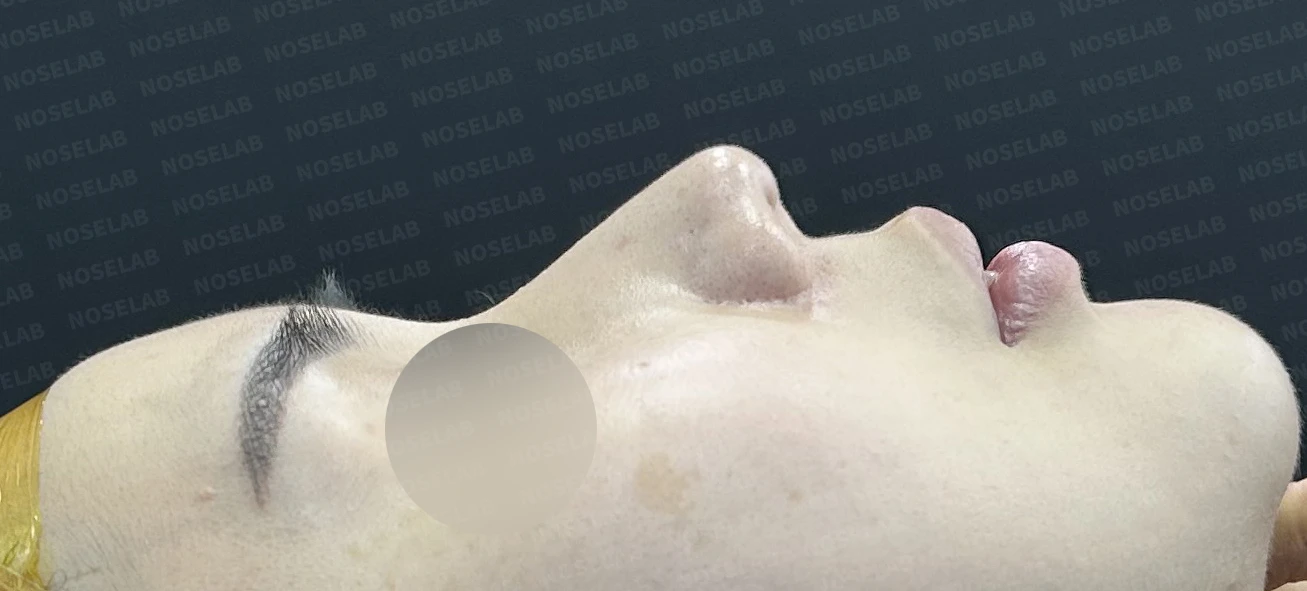
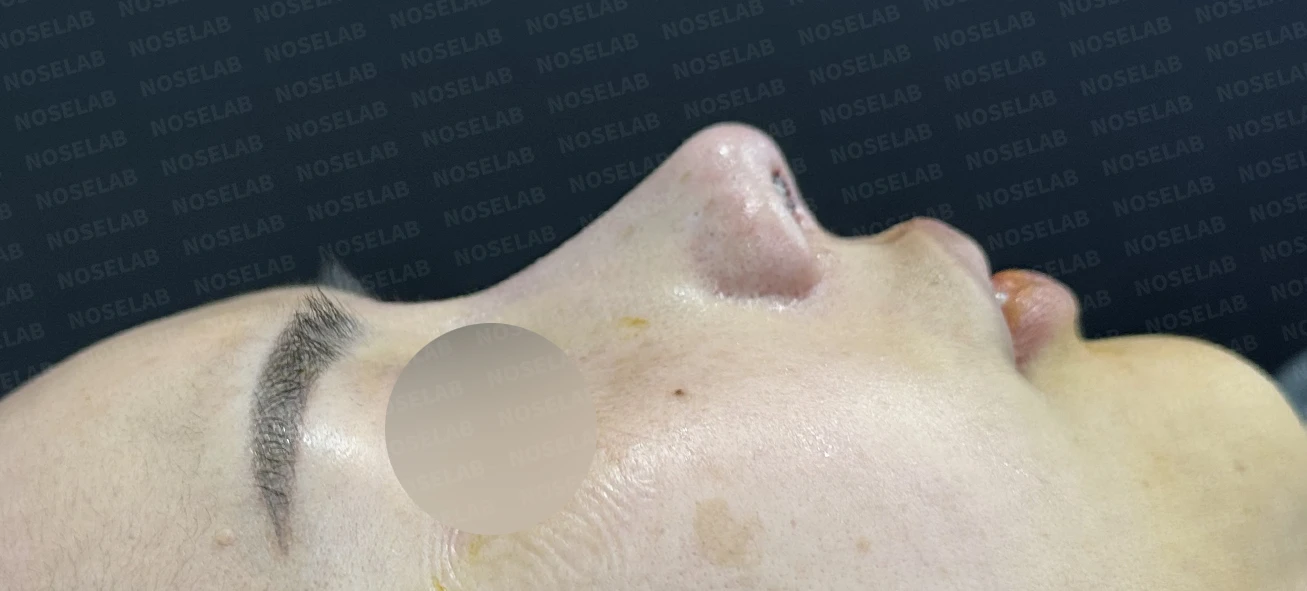
Before surgery / Day 0 immediately after surgery Photos taken immediately after surgery show swelling and may differ from the final result.
On the 45-degree oblique view, the line connecting the nasal bridge to the tip has transitioned into a much softer, more feminine contour.
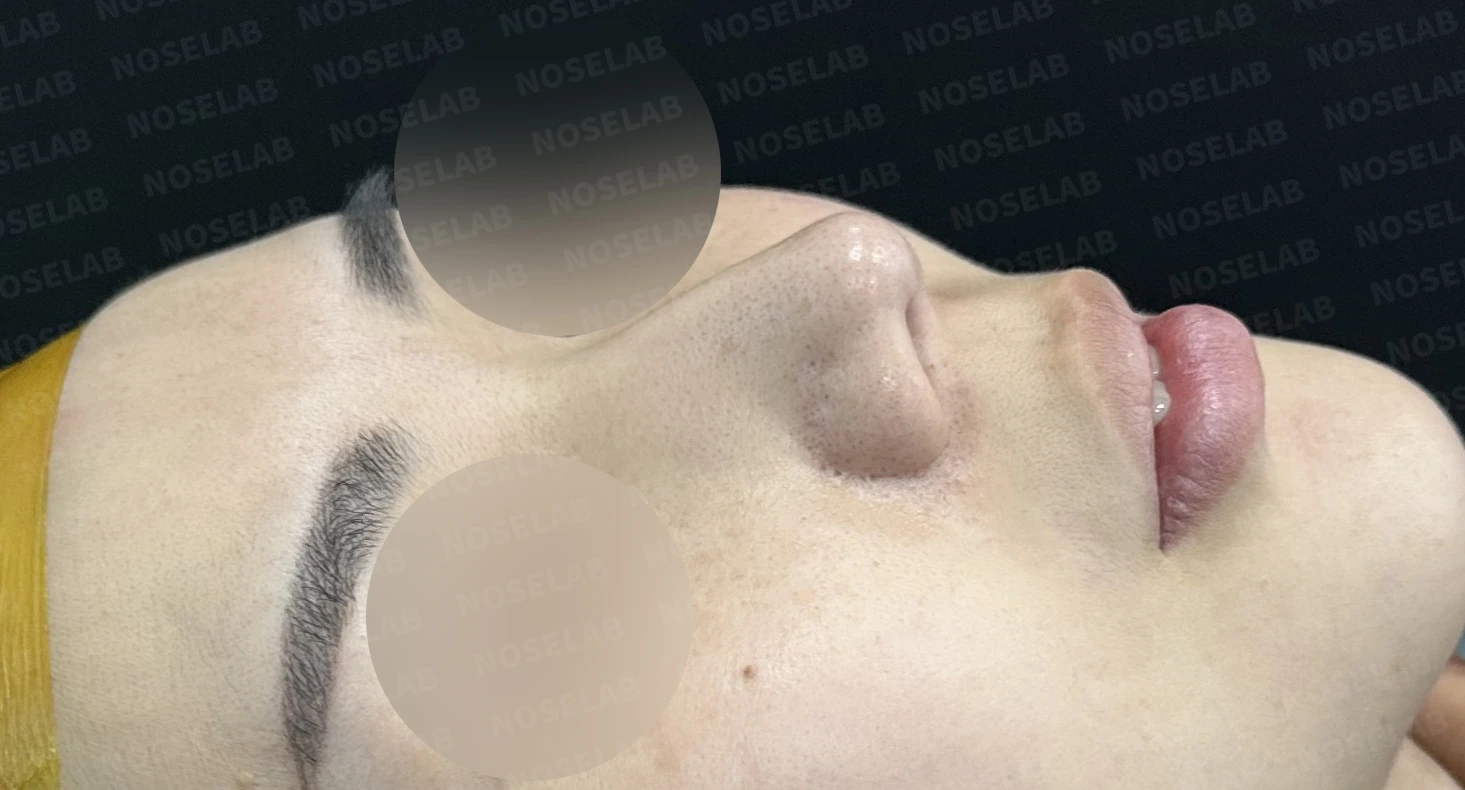
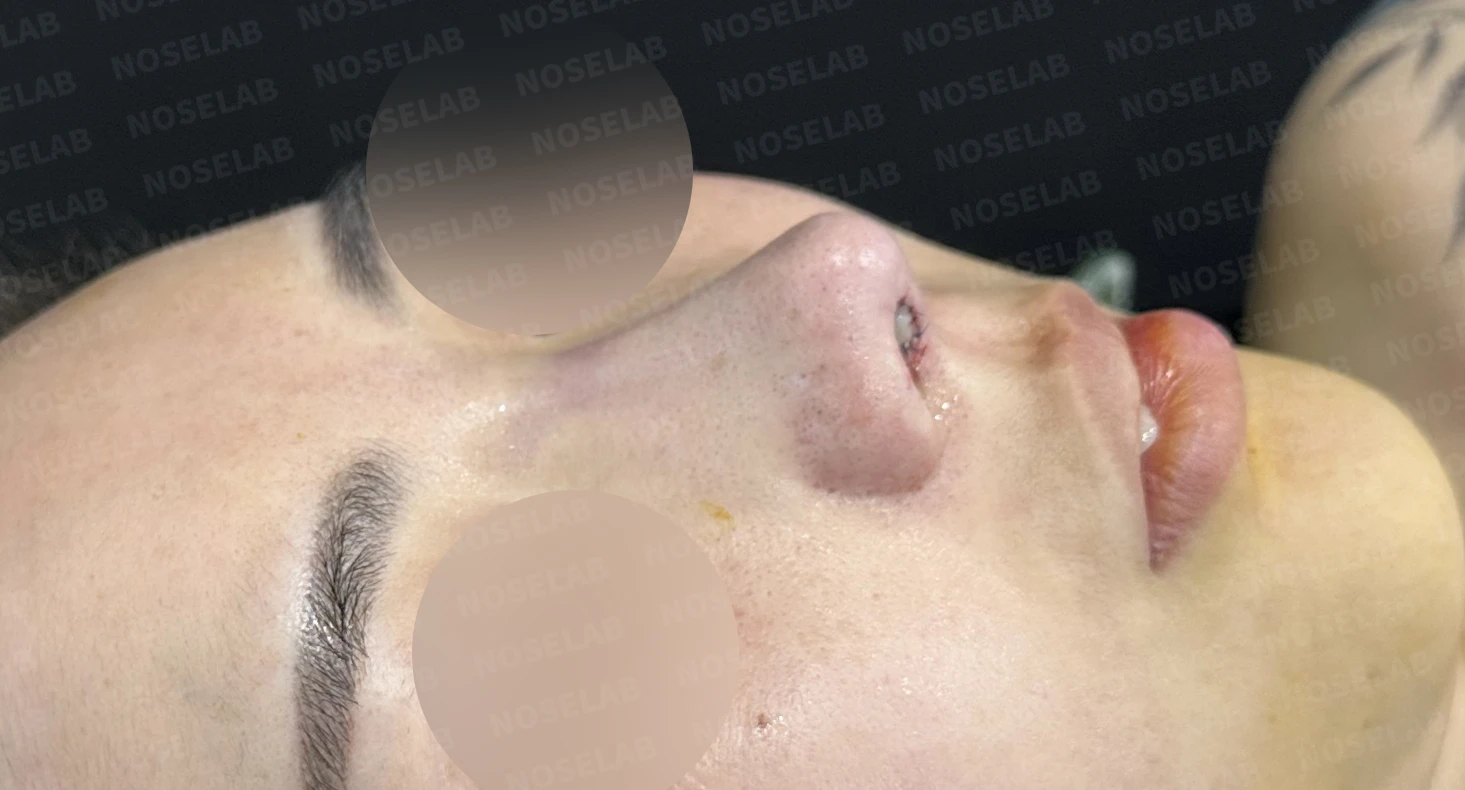
Before surgery / Day 0 immediately after surgery Photos taken immediately after surgery show swelling and may differ from the final result.
In the front view, the columella, which had retracted higher than the alae, has been brought down to align naturally with the alar line.
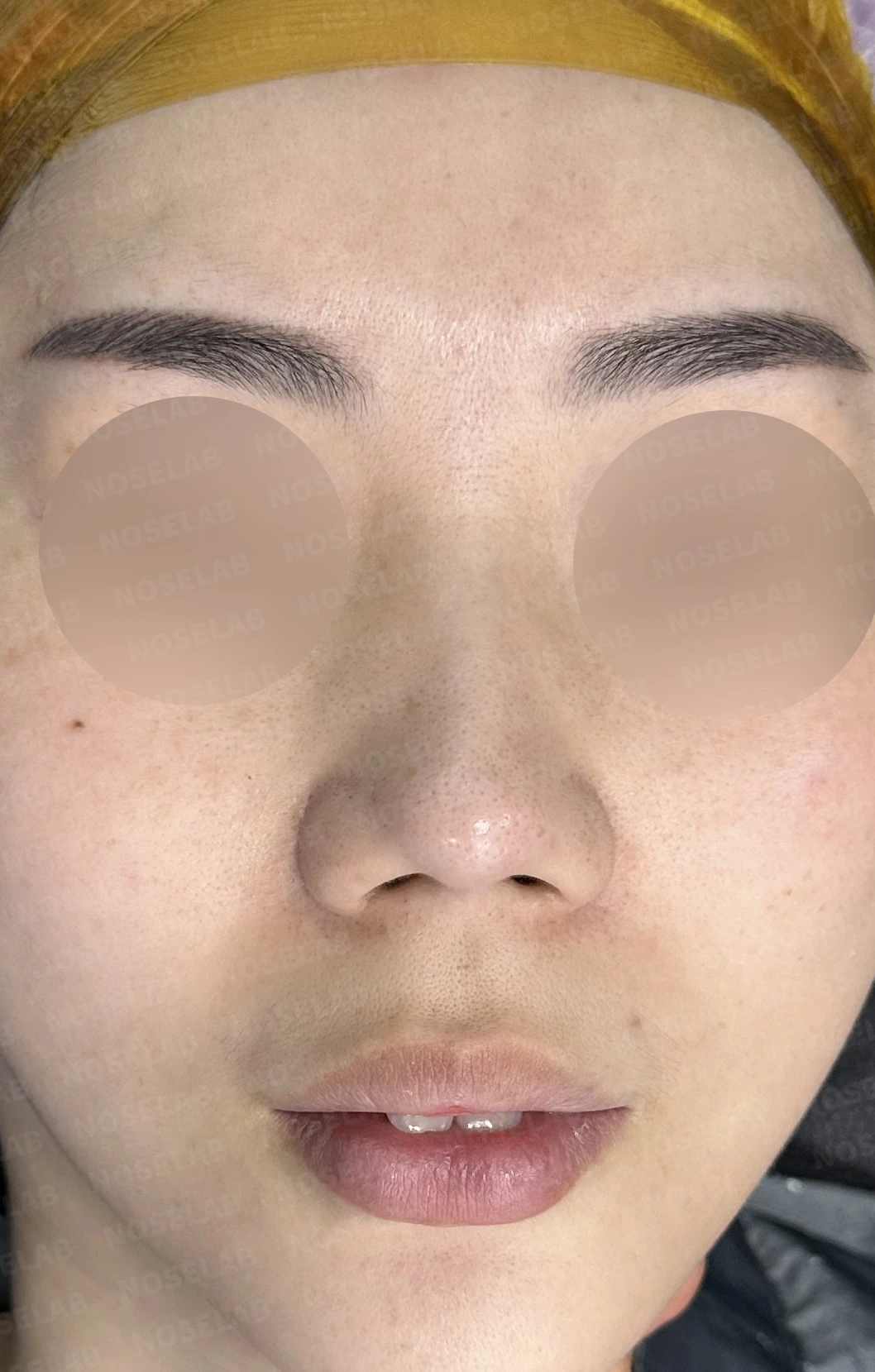
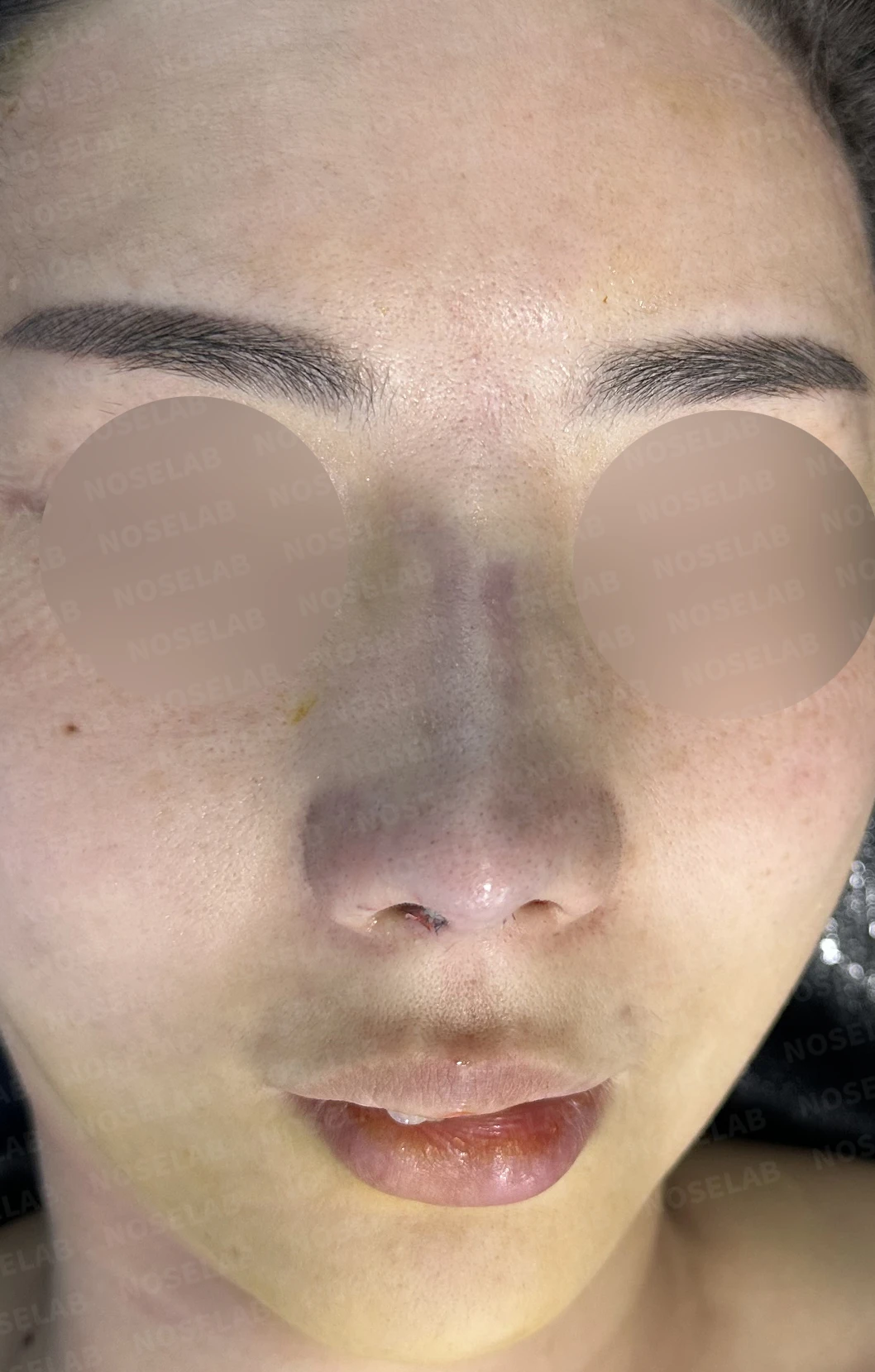
Before surgery / Day 0 immediately after surgery Photos taken immediately after surgery show swelling and may differ from the final result.
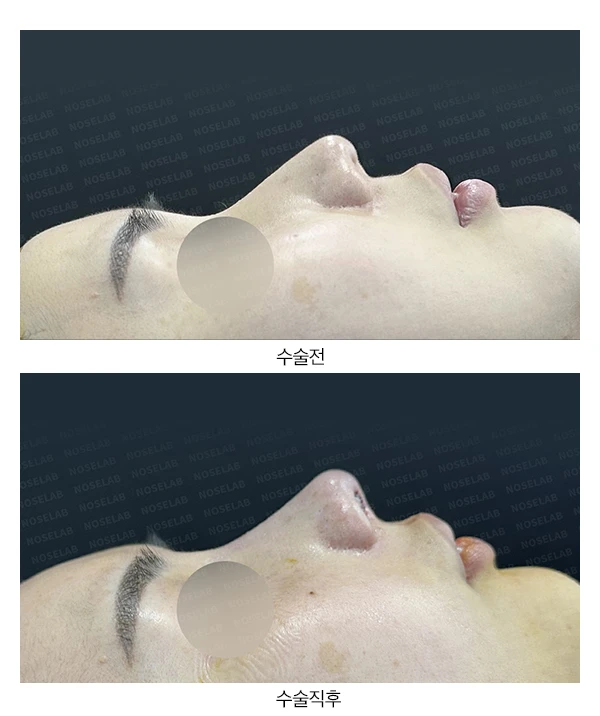
In the basal (nostril) view, the depressed columellar scar from previous open surgeries has softened considerably following the skin graft.
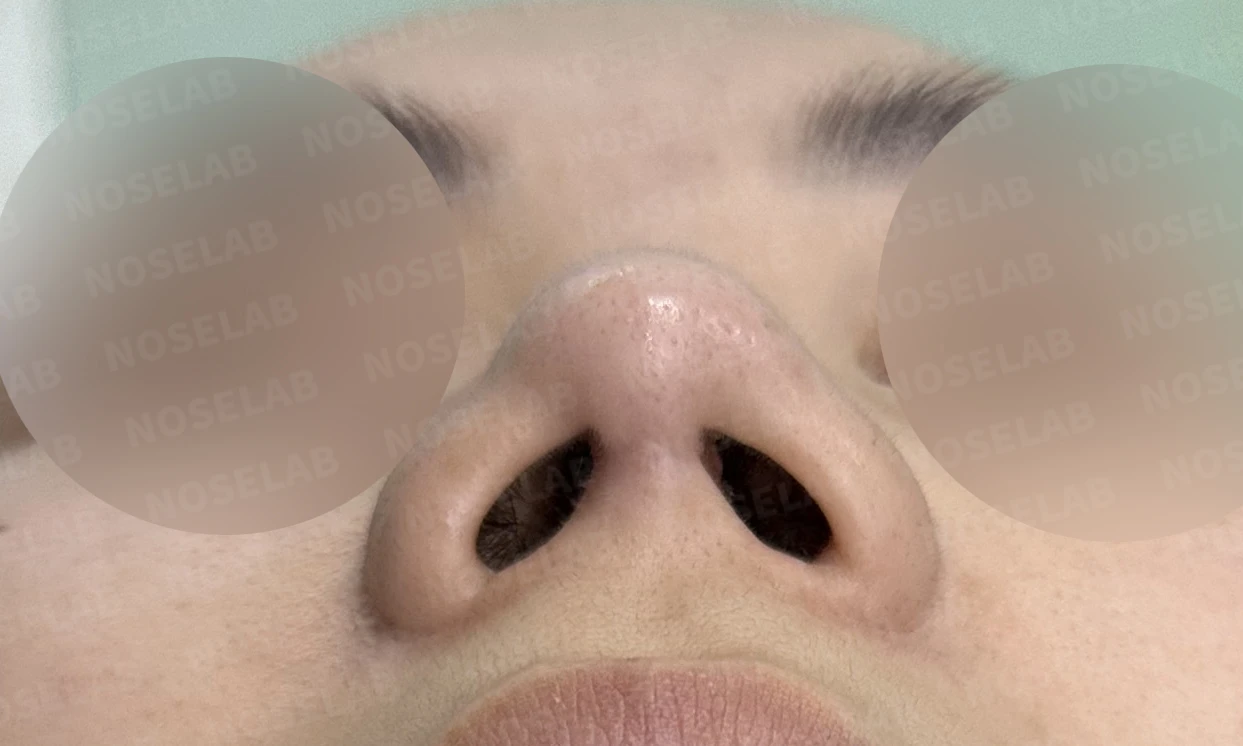
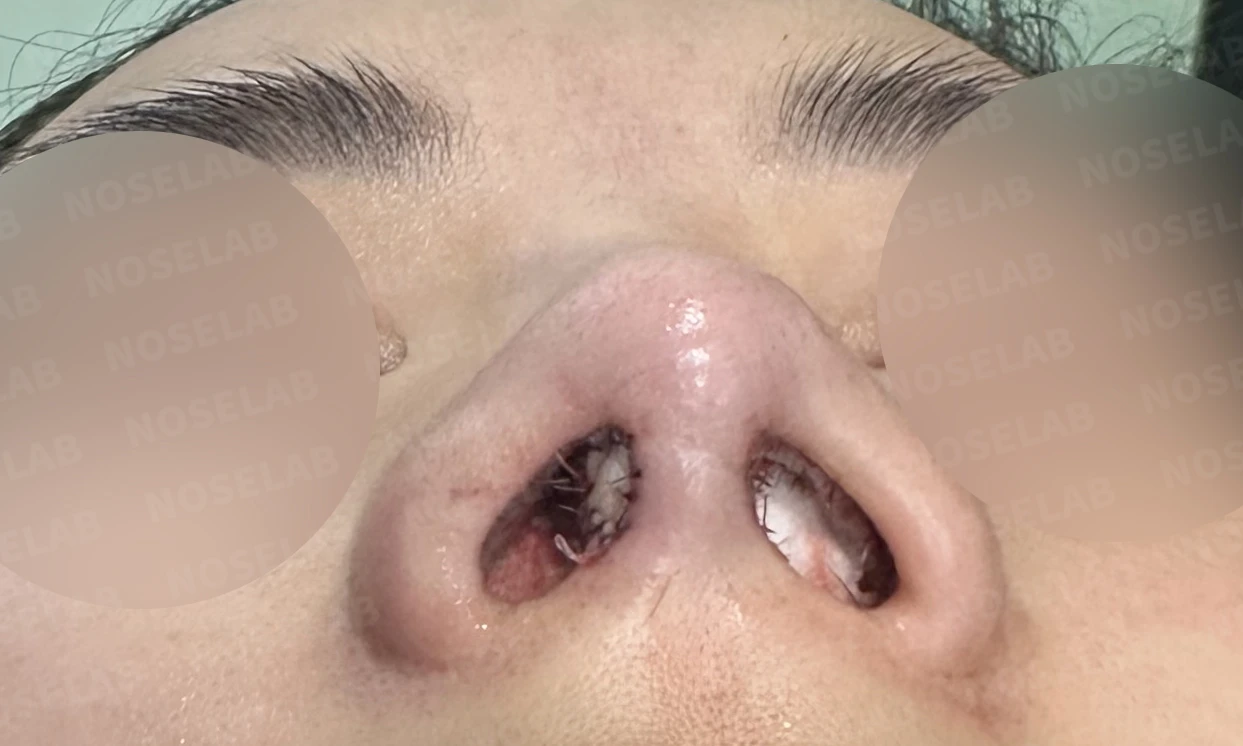
Before surgery / Day 0 immediately after surgery Photos taken immediately after surgery show swelling and may differ from the final result.
Photos immediately after surgery
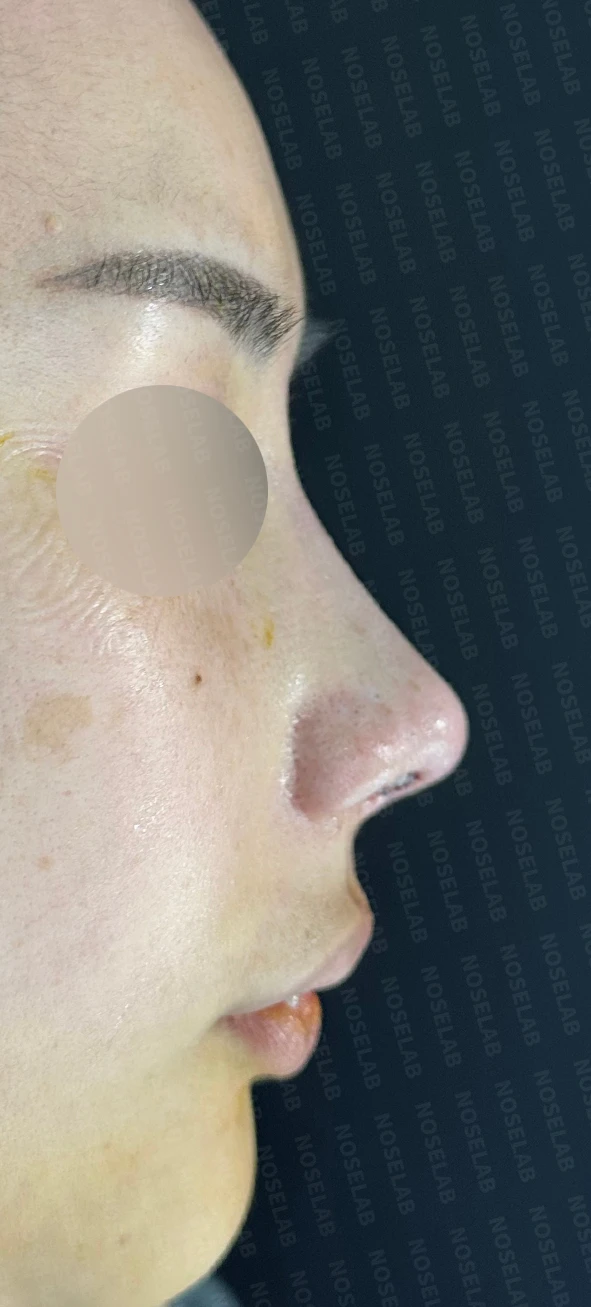
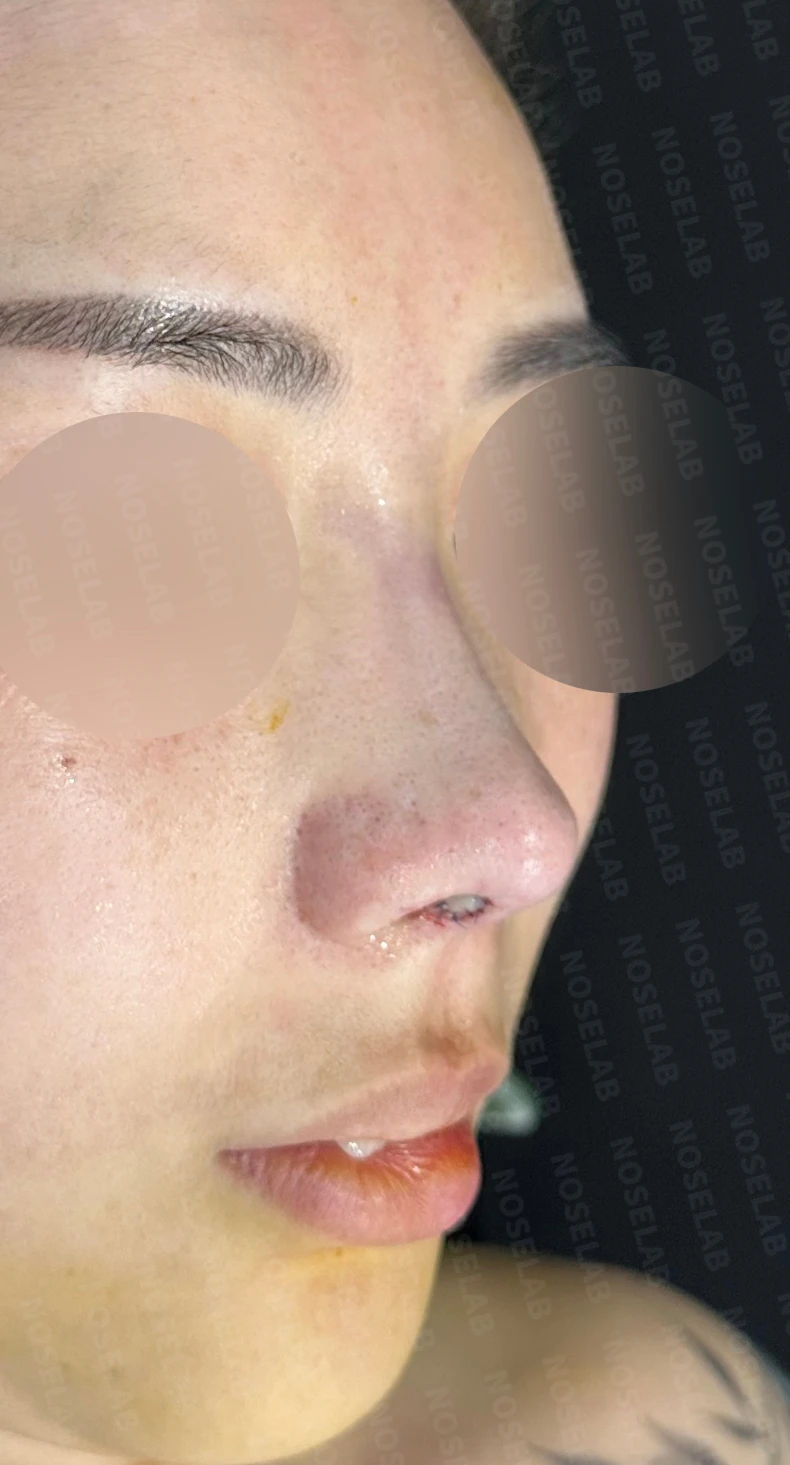
Photos immediately after surgery (Day 0): 90-degree profile, 45-degree oblique, and front view.Immediate postoperative photos show swelling and may differ from the final result.
Basal (nostril) view immediately after surgery (Day 0).Immediate postoperative photos show swelling and may differ from the final result.
My thoughts on secondary corrective surgery for contracture
The goal of any procedure is to complete treatment in a single surgery. However, there are times when one cannot achieve two goals at once. Severe contracted nose surgeries occasionally fall into this category. Instances where cartilage damage inside the nose is severe, where the skin has not adequately softened to withstand significant tension, or where acute inflammation still lingers, are cases in which a second surgery is planned.
In other words, the first surgery may focus on reconstructing severely damaged internal nasal structures (septal cartilage, lower lateral cartilages, upper lateral cartilages, and nasal bones) and laying the groundwork for a sturdy framework that can resist the contractile forces of the skin, or on resolving acute inflammation to minimize tip deformity; a cosmetic procedure is then performed 3 to 6 months later.
Alternatively, even when the first surgery is performed meticulously, subtle changes during the 6 months of settling may slightly alter the shape of the nostrils or nostril show, and a simple correction is often performed to achieve the intended final result.
This is why, for patients undergoing surgery for severe contracture deformities, I often discuss the possibility of a second surgery from the very beginning. While I always do my utmost, it is a promise that I will not overextend the surgical plan, keeping safety and better results at the forefront.
Today, I shared a case that achieved a more natural and refined appearance through a second surgery for a contracted nose. I hope this proves helpful to those who are considering revision rhinoplasty for a contracted nose.
This was Dr. Peter C. Kang. Thank you.

Limitations and risks
When autologous rib cartilage is used, scarring and pain may remain at the donor site on the chest, and pneumothorax (pleural injury) can occur rarely. Over time, the grafted cartilage may warp or undergo partial resorption.
When the septum is corrected at the same time, nasal obstruction may persist or recur, and in rare cases, septal perforation or changes in smell may occur.
Common potential risks include infection, bleeding, asymmetry, scarring, skin necrosis, and insufficient improvement; results vary depending on individual skin condition and previous surgical history.