Preoperative design
The patient visited the clinic to correct excessive nostril show from the front and the appearance of a short nasal tip. This was their fifth revision rhinoplasty at our clinic, and they had a history of undergoing revision surgery after developing inflammation from silicone implant side effects during their third surgery.
2. Surgical plan
Suspecting a mild contracture deformity, we planned to assess the extent of internal nasal cartilage damage during surgery and reconstruct the cartilage using autologous rib cartilage. We also planned to remove the Gore-Tex implant from the nasal bridge and replace it with a silicone implant.
3. Immediately after surgery (Day 0)Immediate postoperative photos show swelling and may differ from the final result.
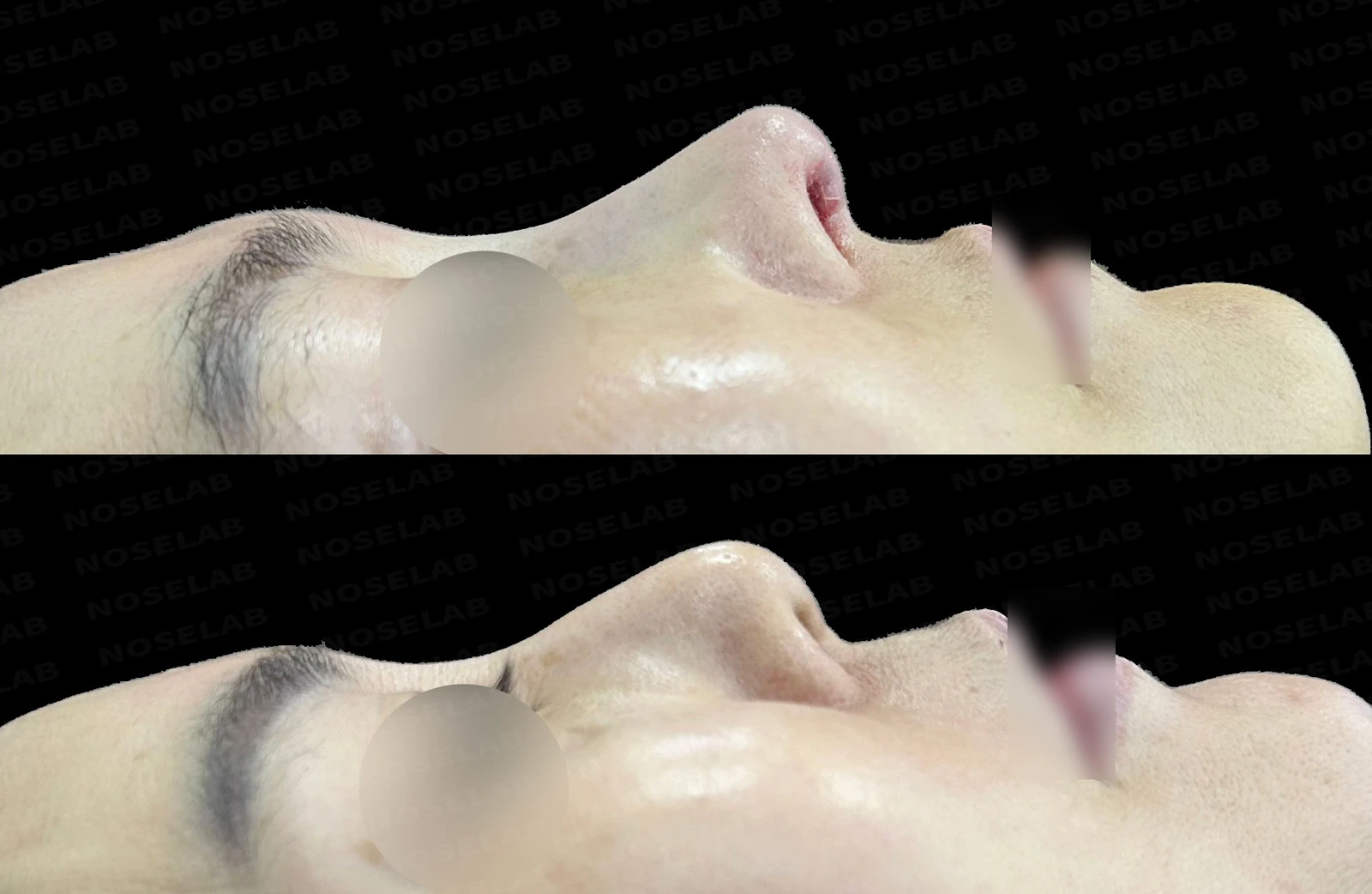
Before surgery / Day 0 immediately after surgery Photos taken immediately after surgery show swelling and may differ from the final result.
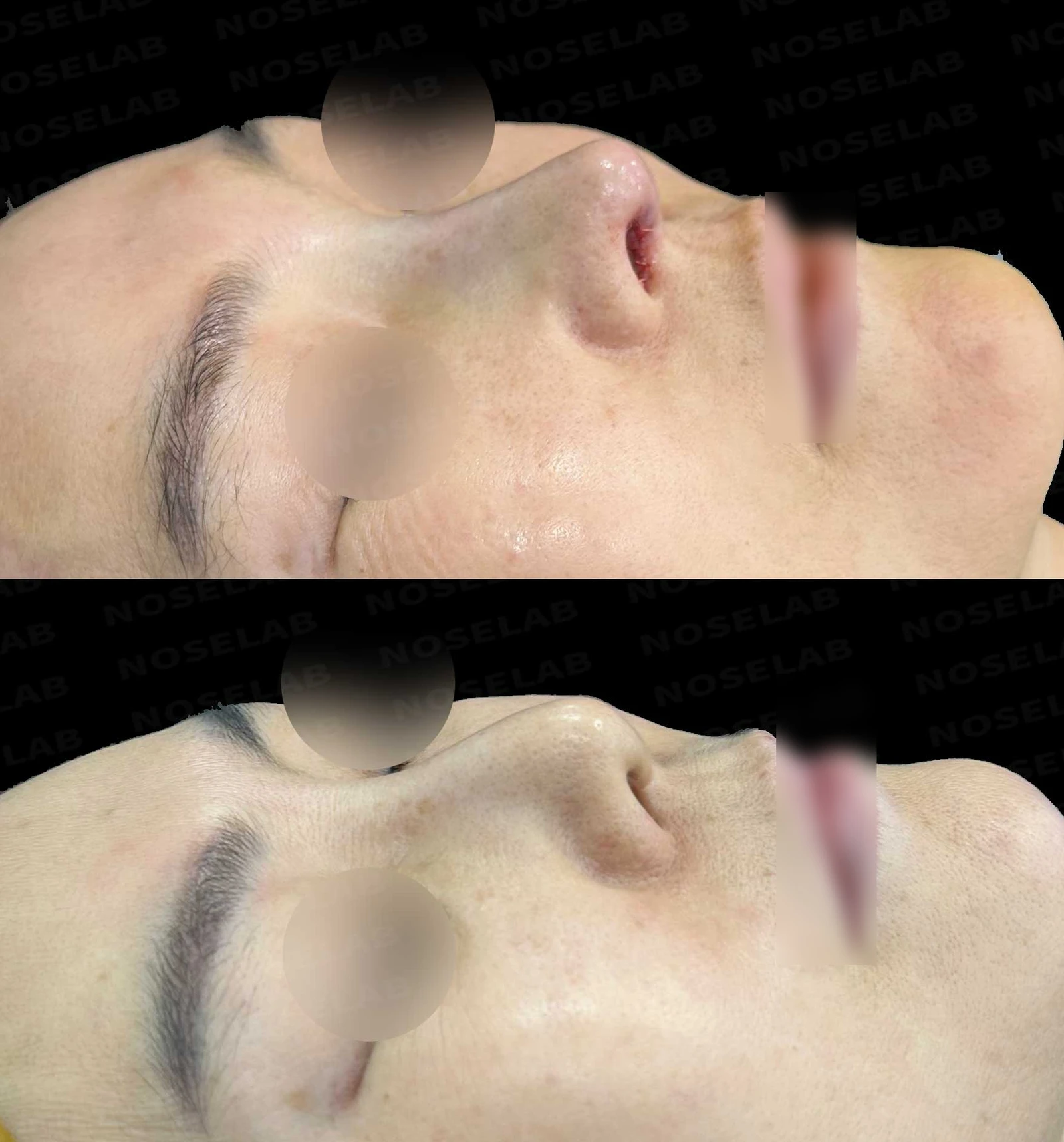
Before surgery / Day 0 immediately after surgery Photos taken immediately after surgery show swelling and may differ from the final result.
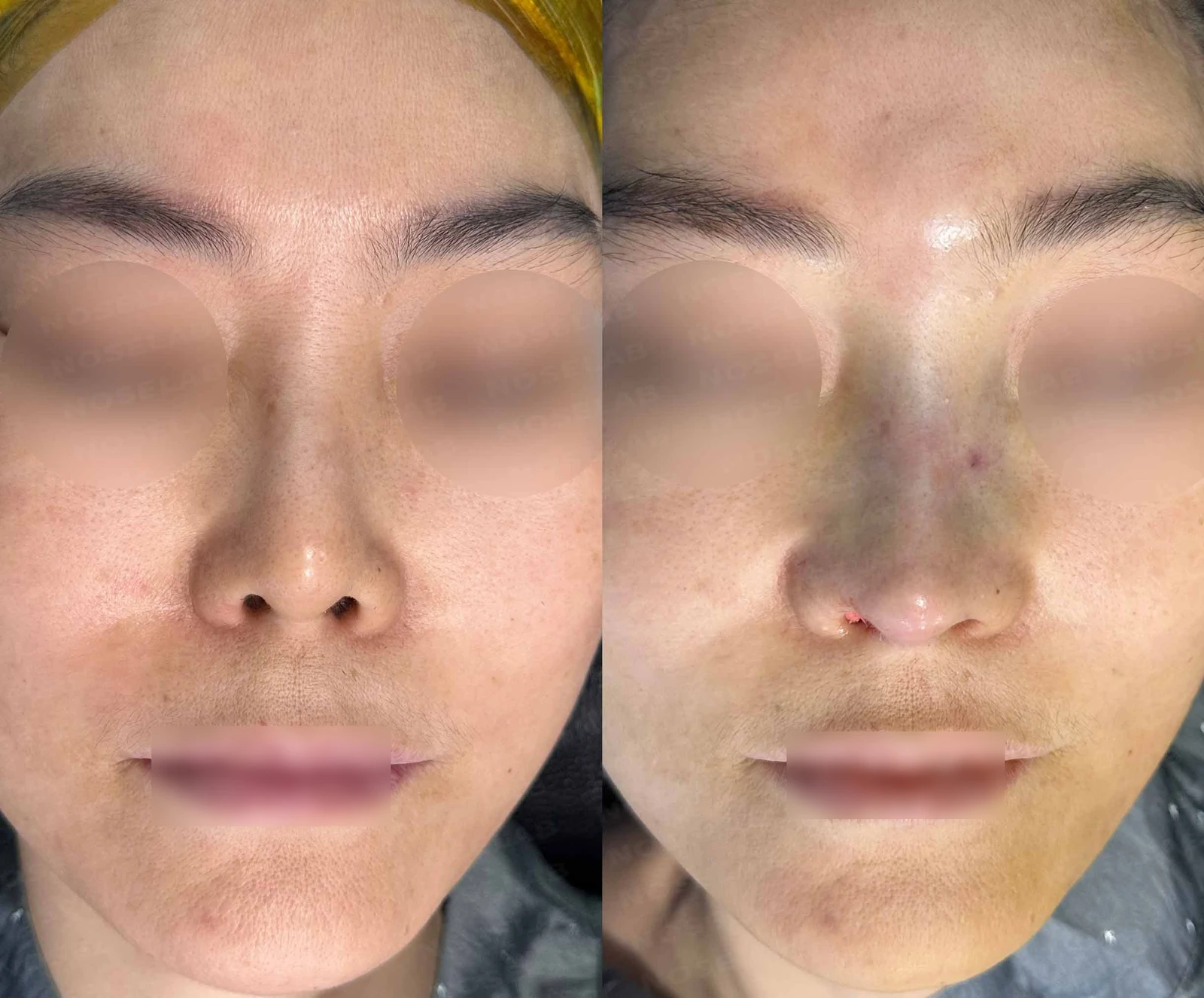
Before surgery / Day 0 immediately after surgery Photos taken immediately after surgery show swelling and may differ from the final result.
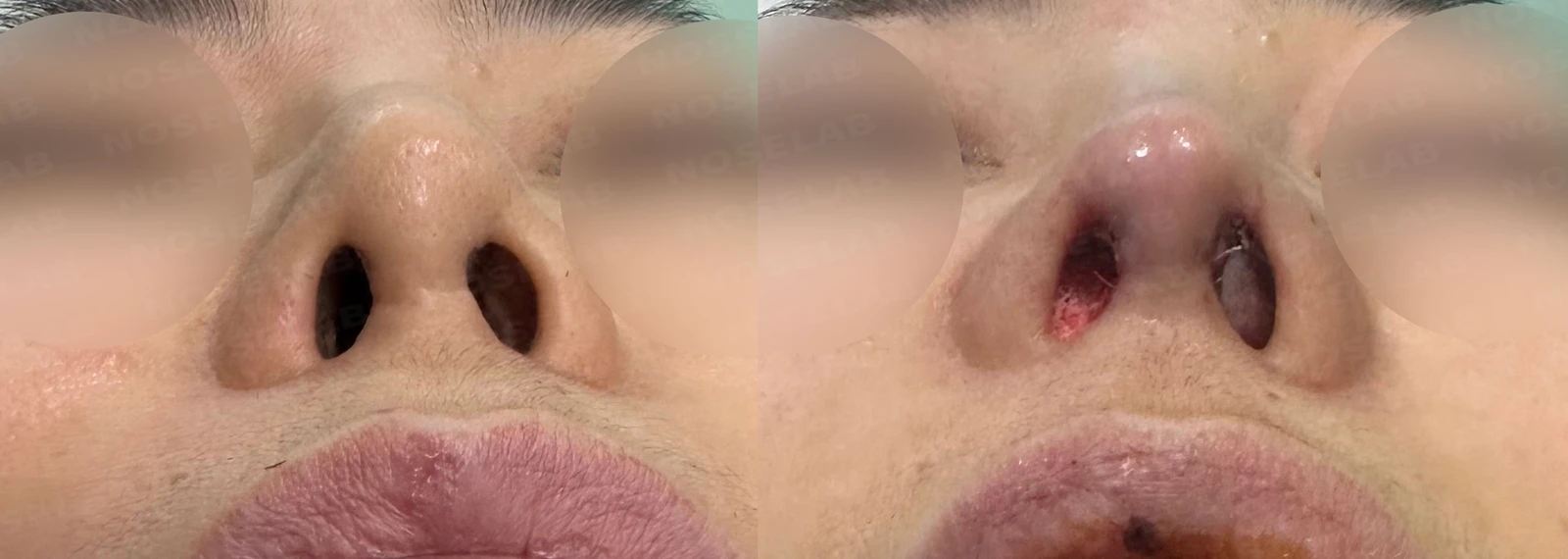
Before surgery / Day 0 immediately after surgery Photos taken immediately after surgery show swelling and may differ from the final result.
4. Conclusion
This patient had previously undergone surgery due to a silicone implant inflammation complication, resulting in a mild contracture deformity where the nasal tip shortened and turned upward alongside nostril asymmetry. A Gore-Tex implant was present in the nasal bridge, and approximately 30% of the lower lateral (alar) cartilage and septal cartilage was damaged; therefore, cartilage reconstruction was performed using autologous rib cartilage. In most cases of contracture deformity caused by inflammation, internal nasal cartilage damage is very common, and the more severe the contracture deformity, the more severe the cartilage damage. Therefore, the absolute foundation of contracted nose surgery is the reconstruction of damaged internal nasal cartilage. Up to about 6 months after surgery, there may not be a significant difference between cases with and without internal cartilage reconstruction, but as time progresses past 1 year, deformities develop if reconstruction was not performed.
Dr. Peter C. Kang
Limitations and risks
When autologous rib cartilage is used, scarring and pain may remain at the donor site on the chest, and pneumothorax (pleural injury) can occur rarely. Over time, the grafted cartilage may warp or undergo partial resorption.
When revising after implant removal, contracture may progress again after removal, the nasal height and length may decrease, and staged surgery may be necessary depending on the skin condition.
When the septum is corrected at the same time, nasal obstruction may persist or recur, and in rare cases, septal perforation or changes in smell may occur.
Common potential risks include infection, bleeding, asymmetry, scarring, skin necrosis, and insufficient improvement; results vary depending on individual skin condition and previous surgical history.