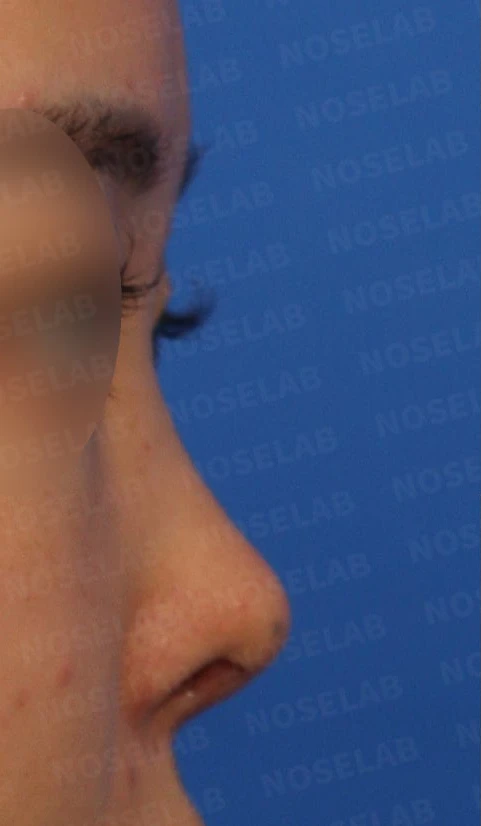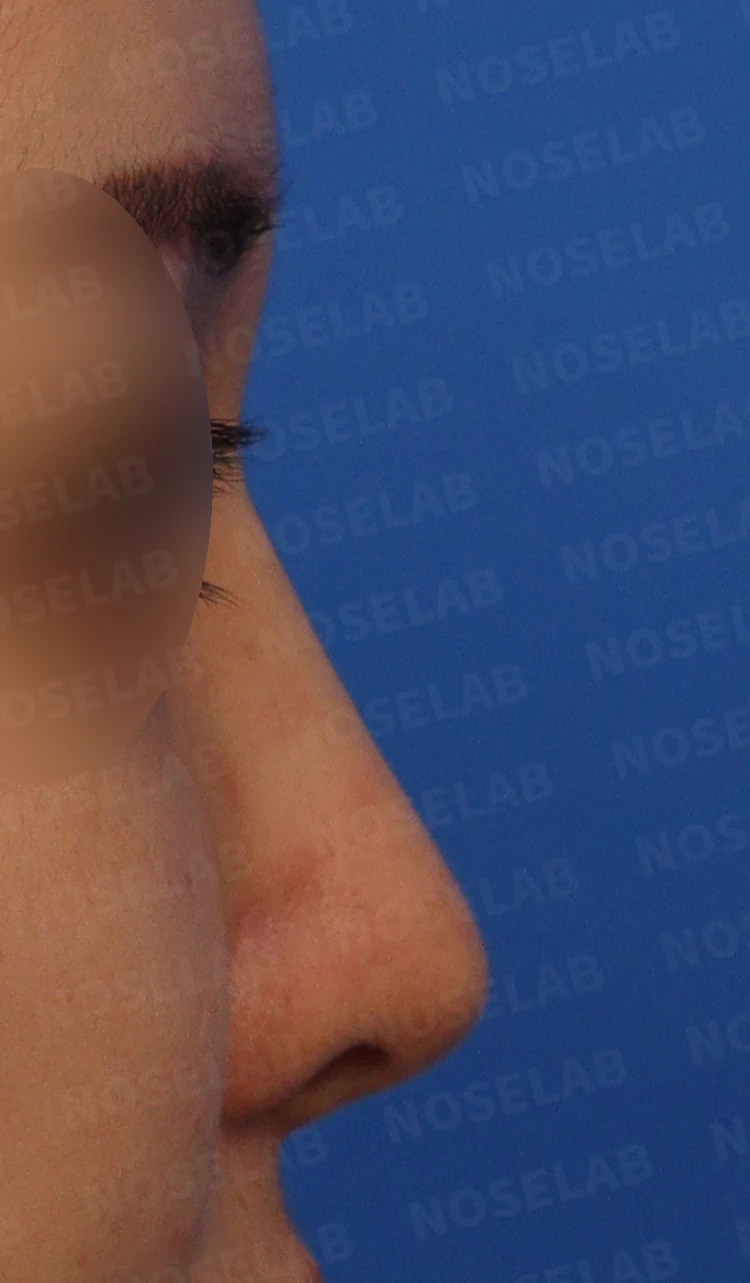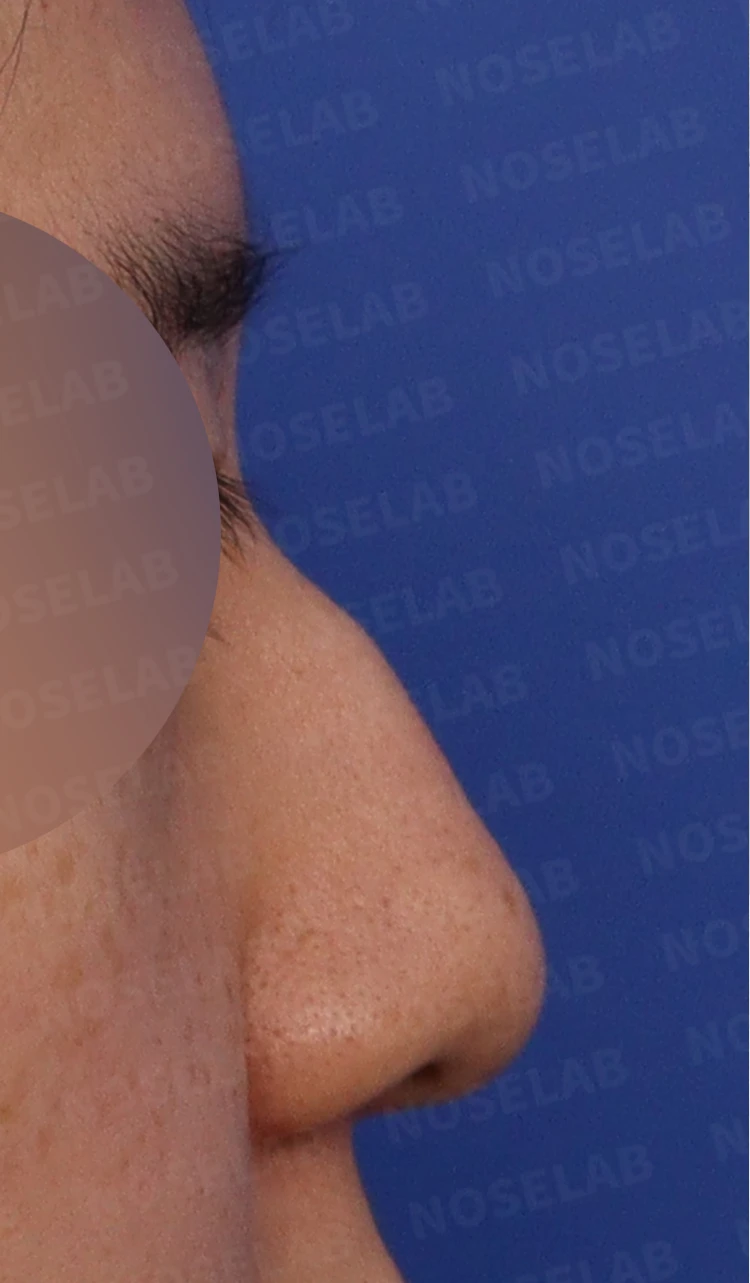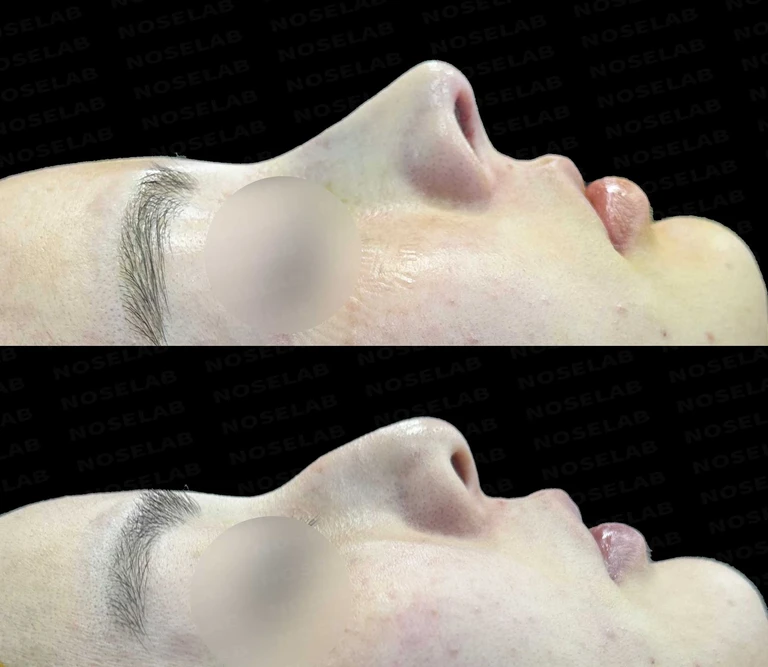
No-implant correction method for a large, wide dorsal hump and drooping tip
A congenitally large, high dorsal hump and drooping tip were corrected and smoothly connected without implants through precise nasal bone rasping and cartilage grafting.
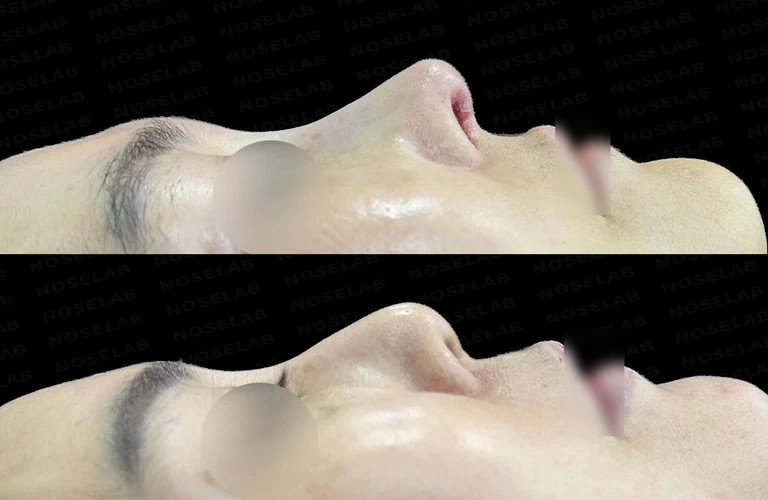
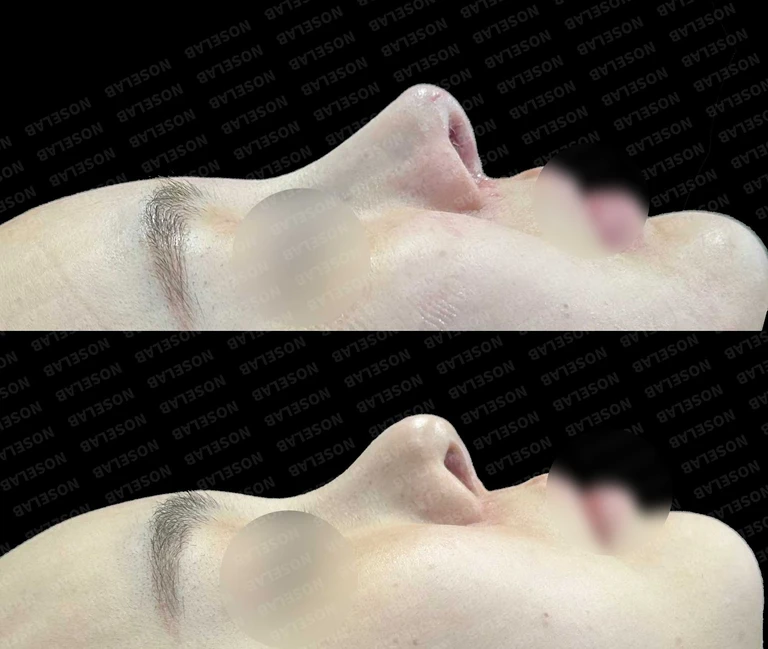
A congenitally large, high dorsal hump and drooping tip were corrected and smoothly connected without implants through precise nasal bone rasping and cartilage grafting.
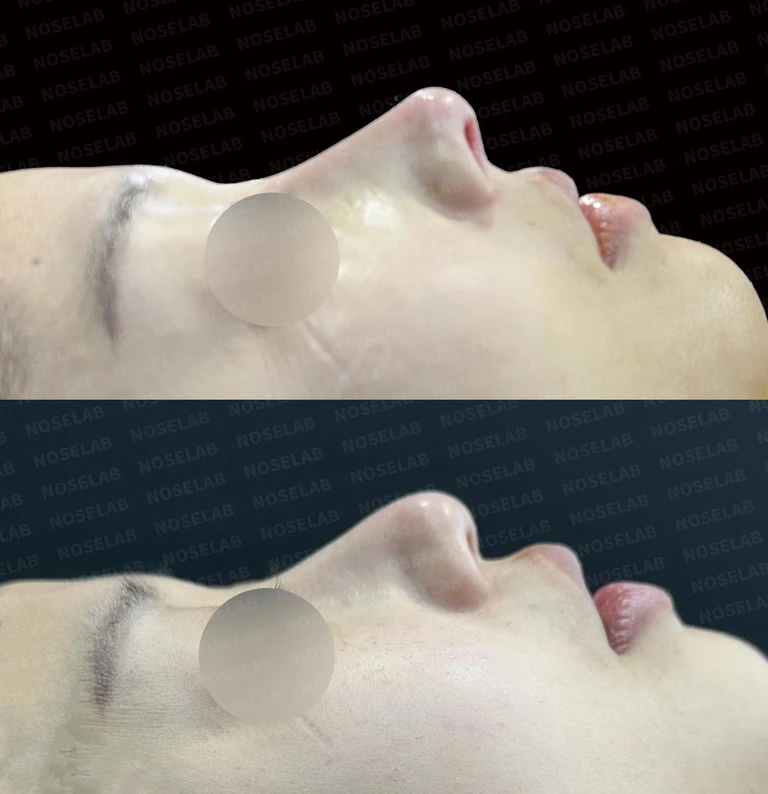
A case presenting with a short, upturned nasal tip and nostril asymmetry following a history of silicone implant inflammation. The damaged lower lateral cartilage and septum were reconstructed using autologous rib cartilage, and replacement of the Gore-Tex implant was included in the surgical plan.

This is a revision rhinoplasty case of a patient who presented with an upturned nose and a drooping tip. The damaged lower lateral cartilages and septum were partially reconstructed using autologous rib cartilage, septal extension was performed to lower the nasal tip, and nostril lowering was included in the plan.

This is a case where the silicone implant was shifted to the right, along with nasal bone asymmetry and a drooping nasal tip. Here, I document the planning process for lateral osteotomy and septal extension using donor rib cartilage, along with photos taken immediately after surgery.

To correct a progressively upturning nose, dorsal hump, nostril asymmetry, and nasal obstruction, revision rhinoplasty using autologous rib cartilage was performed alongside functional nasal surgery through a closed approach.

In a 4th revision rhinoplasty, a pinched nose, crooked nose, and drooping tip were corrected using autologous rib cartilage through a closed approach with nostril rim elongation and lowering of the columella.

To correct a dorsal hump, drooping tip, crooked nose, and nostril asymmetry, we performed osteotomy, septal correction, lower lateral cartilage repositioning, and functional nasal surgery together.
Please try searching with different keywords.
Scroll to keep reading
Read more records