Hello, I am Dr. Peter C. Kang.
Today, I would like to introduce the case of a patient who was concerned about a drooping nasal tip and an elongated look after previous rhinoplasty.
🔍 Surgical history
Approximately 6 years ago: Rhinoplasty using silicone implant (at another clinic)
History of nasal filler procedures
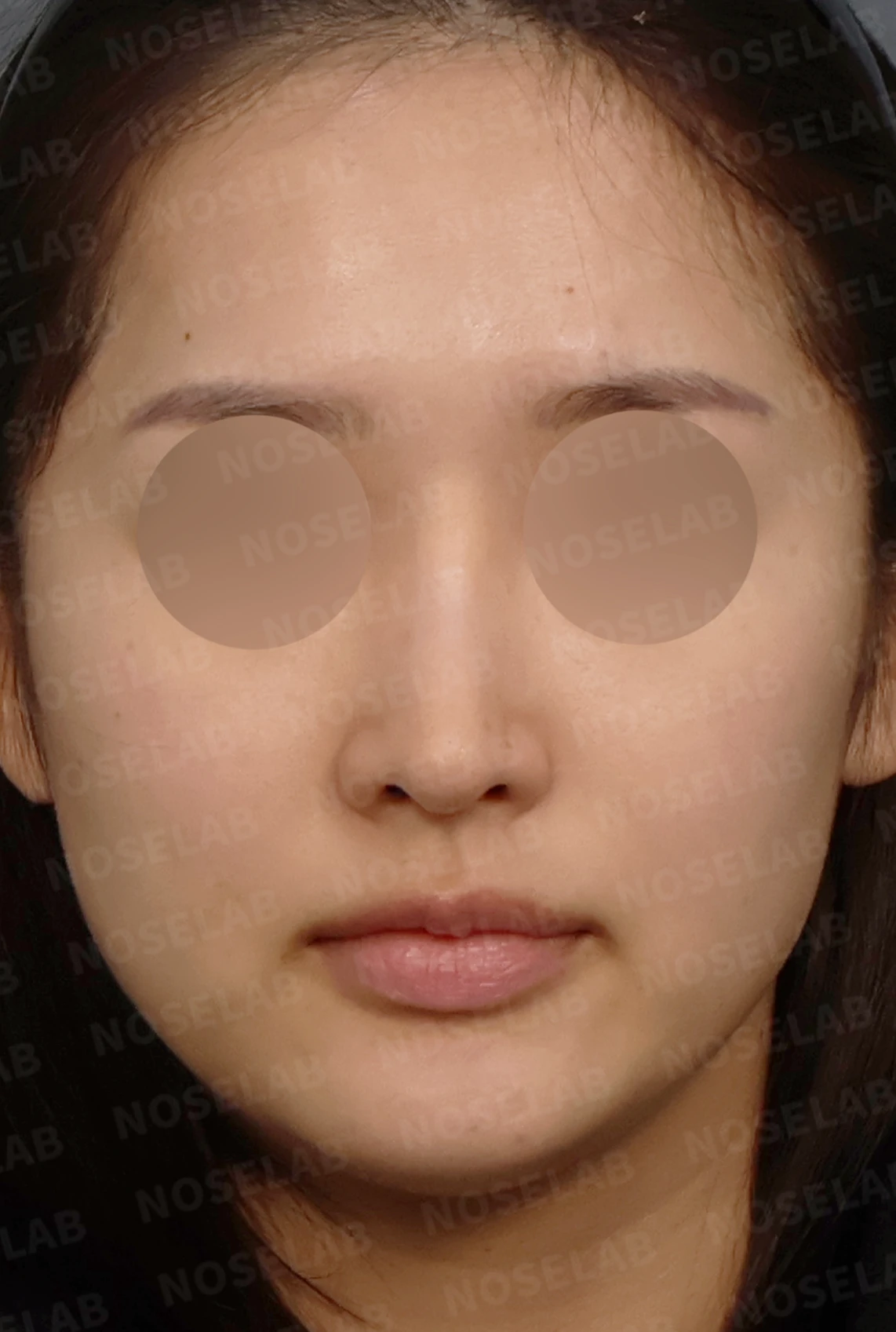
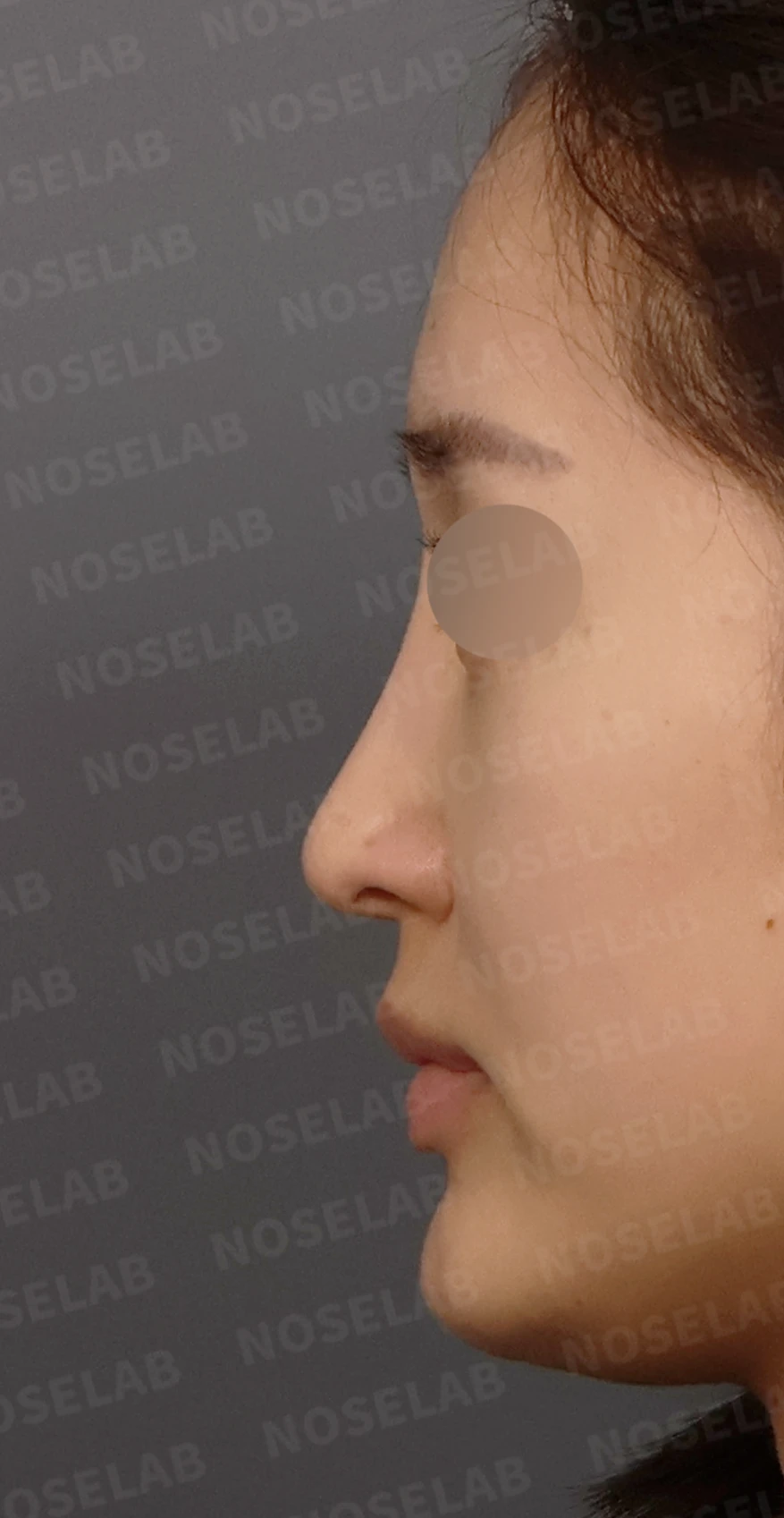
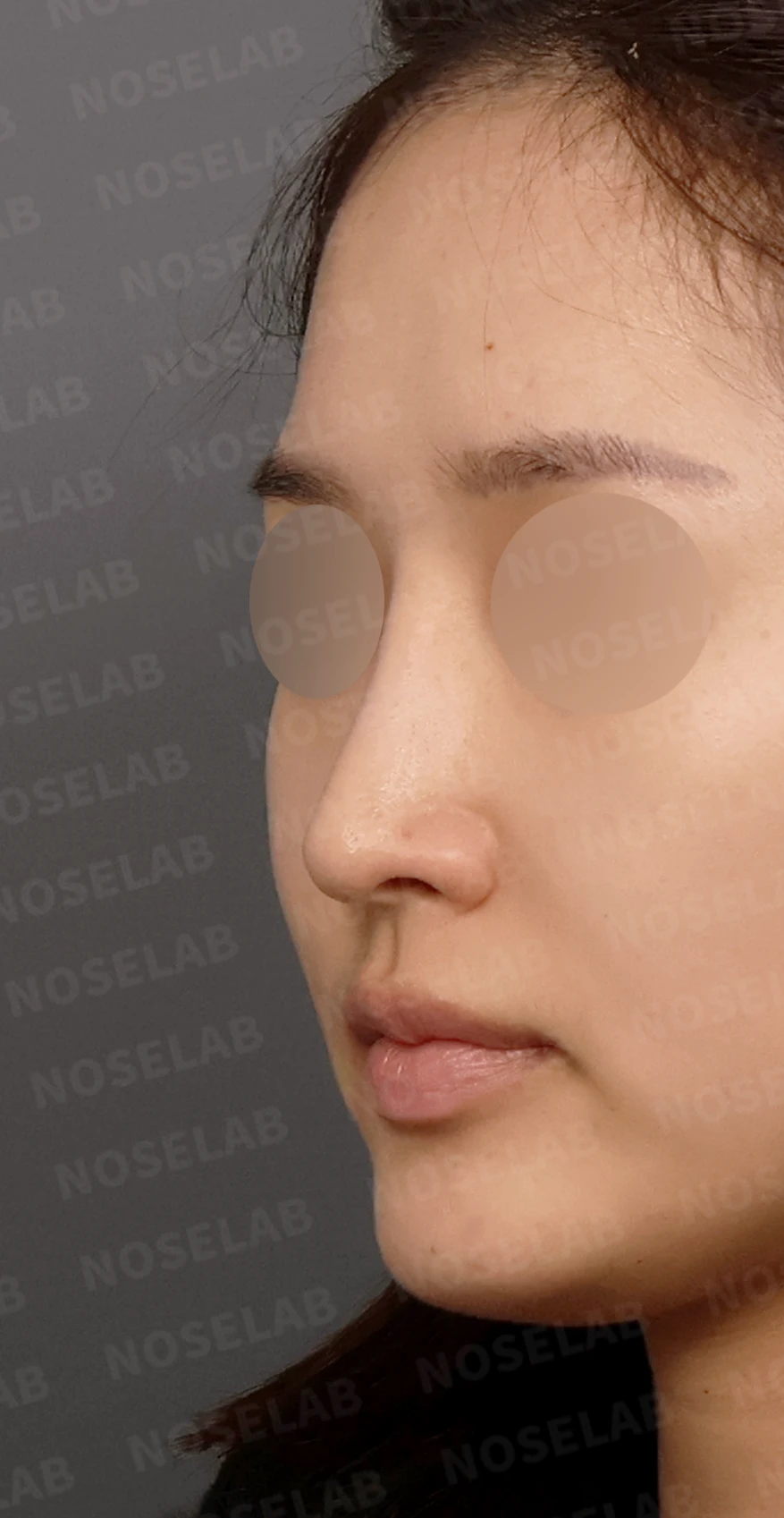
Front, left profile, and oblique views during design consultation.
💉 Patient requests
Correction of the drooping nasal tip
Desire to lower the radix (starting point of the nose)
Improvement to make the midface appear shorter
Desire for a natural nasal tip that is not overly sharp
Preference for using autologous rib cartilage
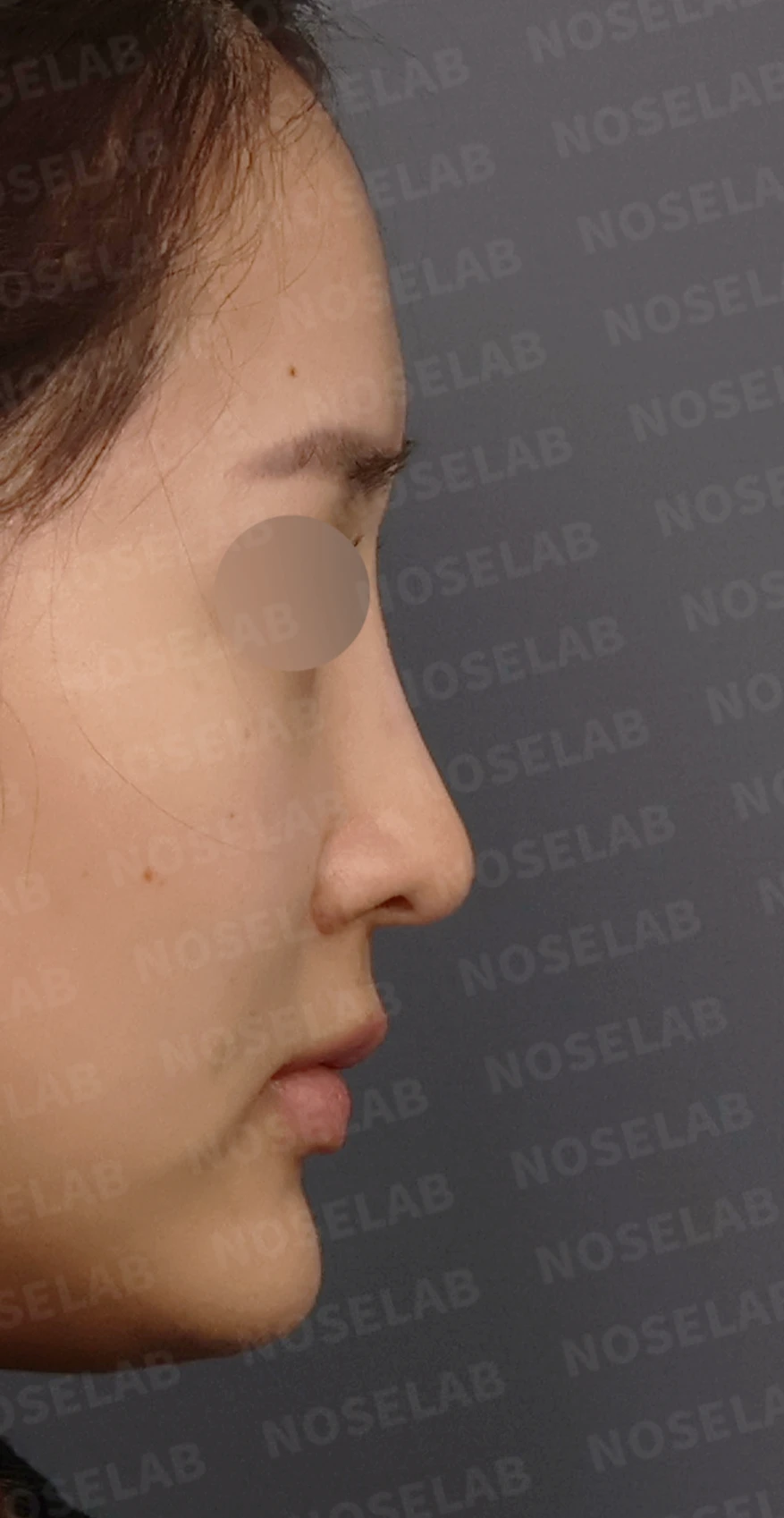
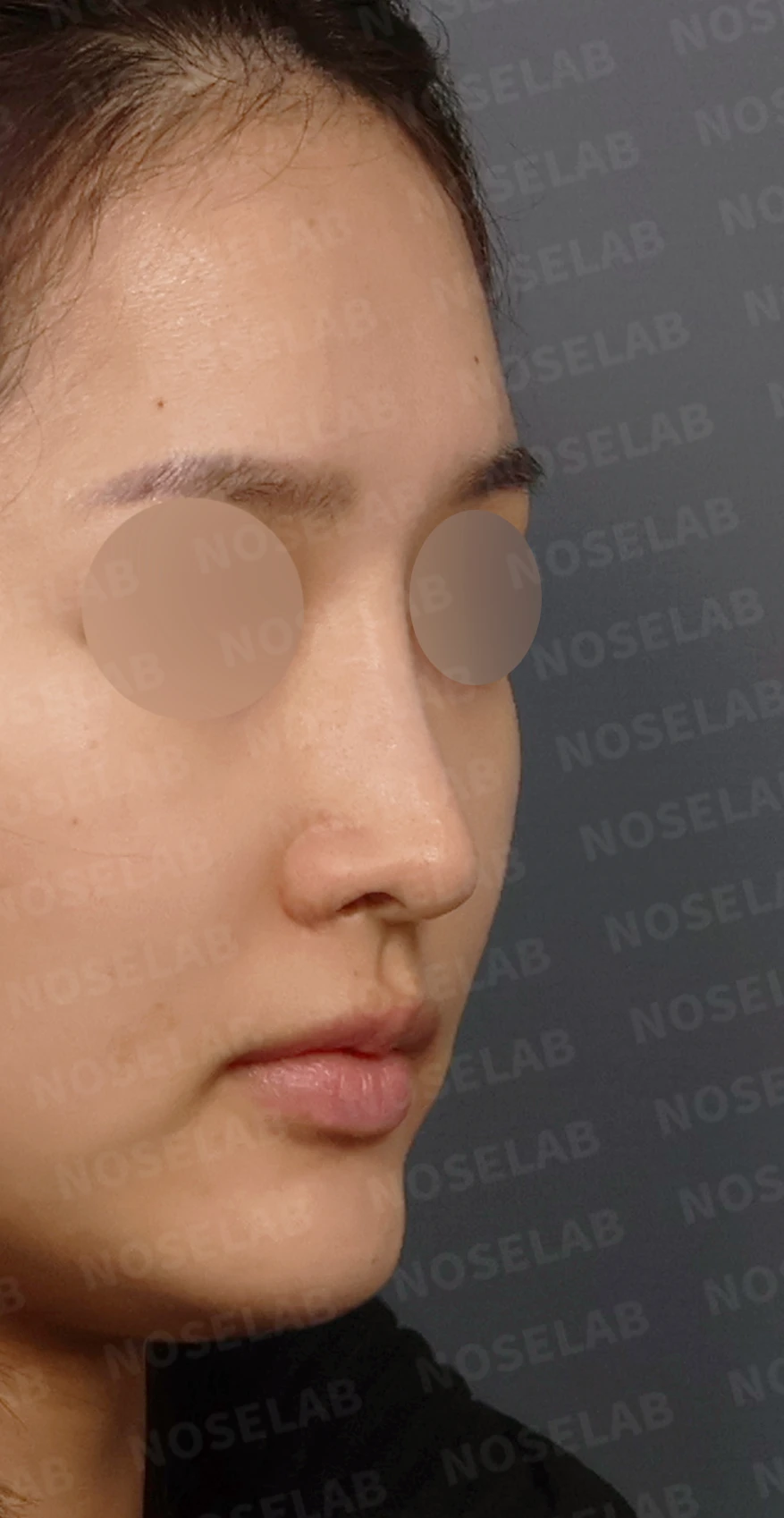
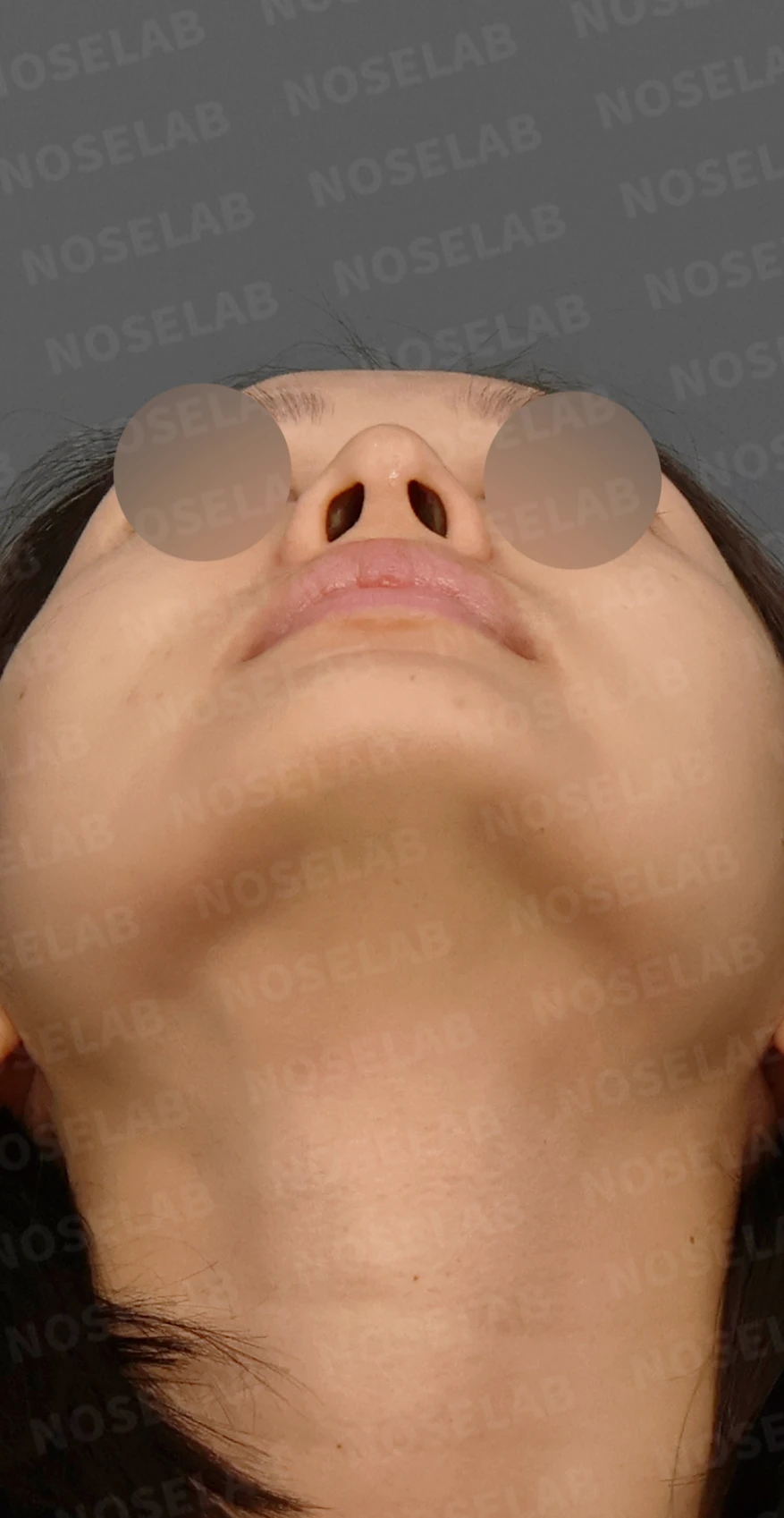
Right profile, oblique, and nostril views during design consultation.
🔧 Surgical plan and procedure
1. Removal of existing implant
Removal of silicone implant placed during previous surgery
Removal of residual nasal filler
2. Nasal tip reconstruction using autologous rib cartilage
Correction of the elongated nasal tip into a well-defined, natural shape
Reinforcement of support for the drooping tip
Creation of a refined tip shape without sharpness
3. Septal reconstruction
Evaluation of the septal cartilage followed by reinforcement with autologous rib cartilage
Securing stability of the nasal tip support framework
4. Correction of nasolabial angle
Pleasing correction of the angle between the nose and upper lip
Achieving a feminine and refined silhouette in profile
🌟 Surgical results
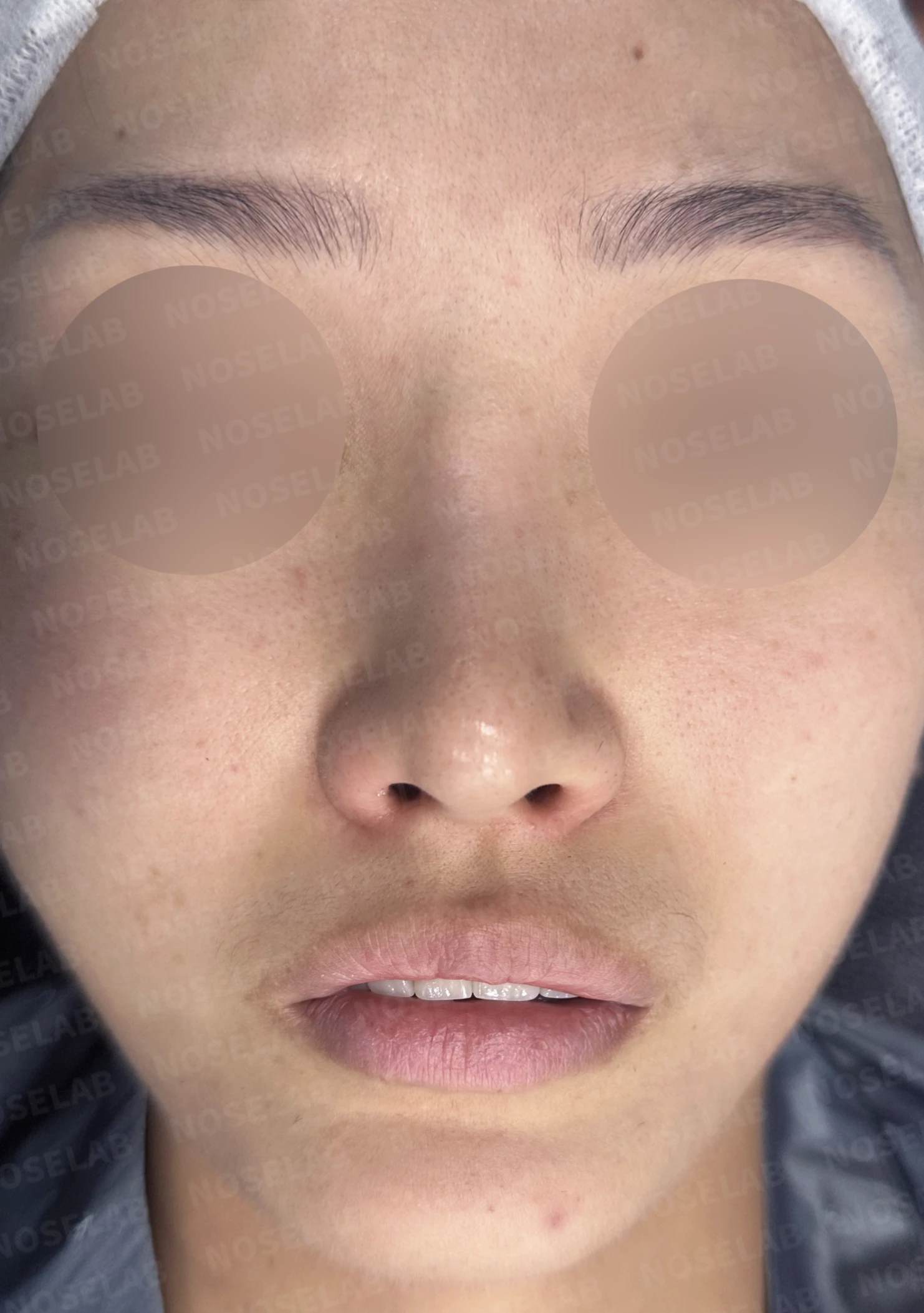
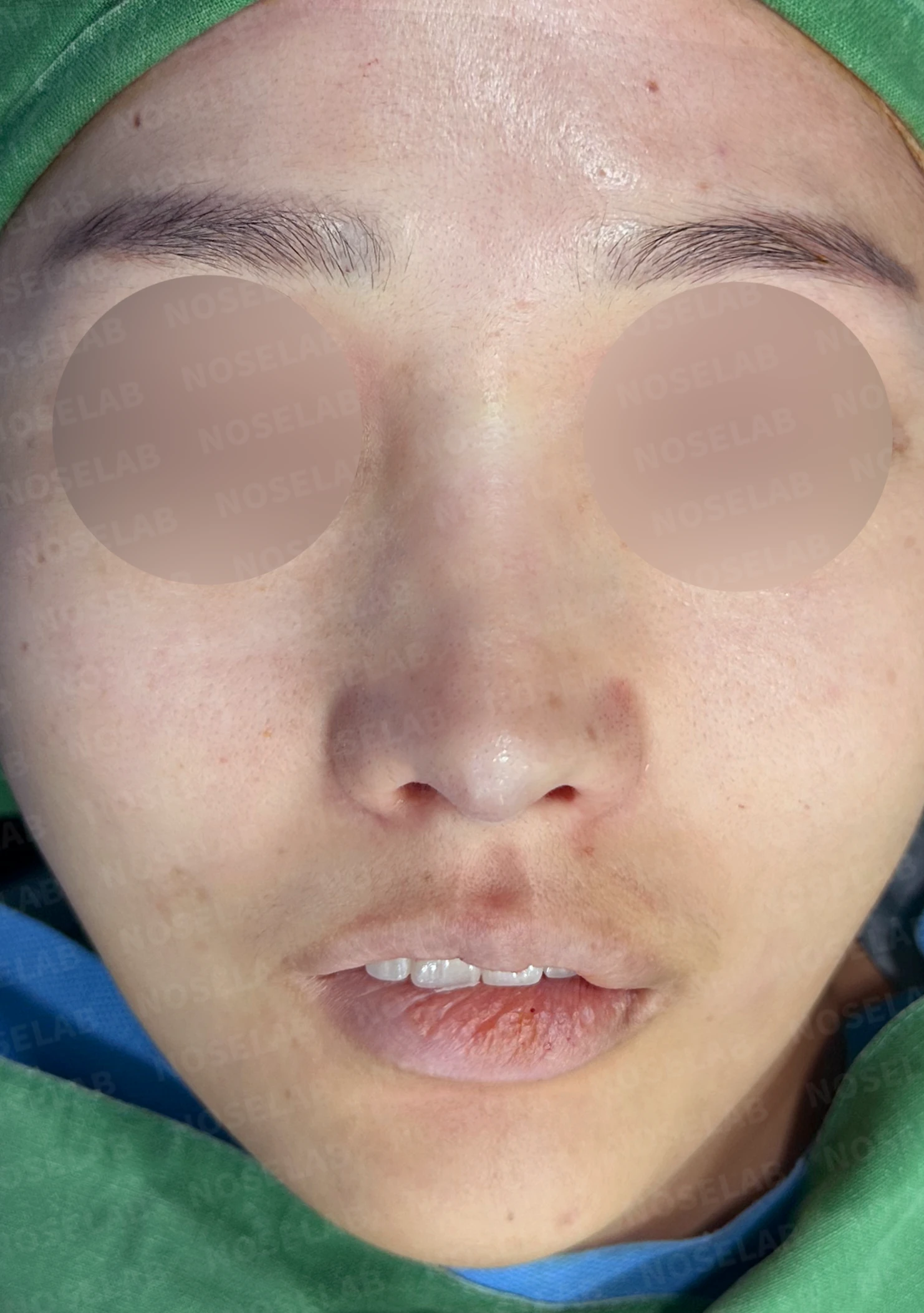
Before surgery / Day 0 immediately after surgery Photos taken immediately after surgery show swelling and may differ from the final result.
Front view changes:
The previously long-looking nose improved into natural proportions
A well-defined nasal tip that is not overly sharp
Effect of making the midface appear shorter
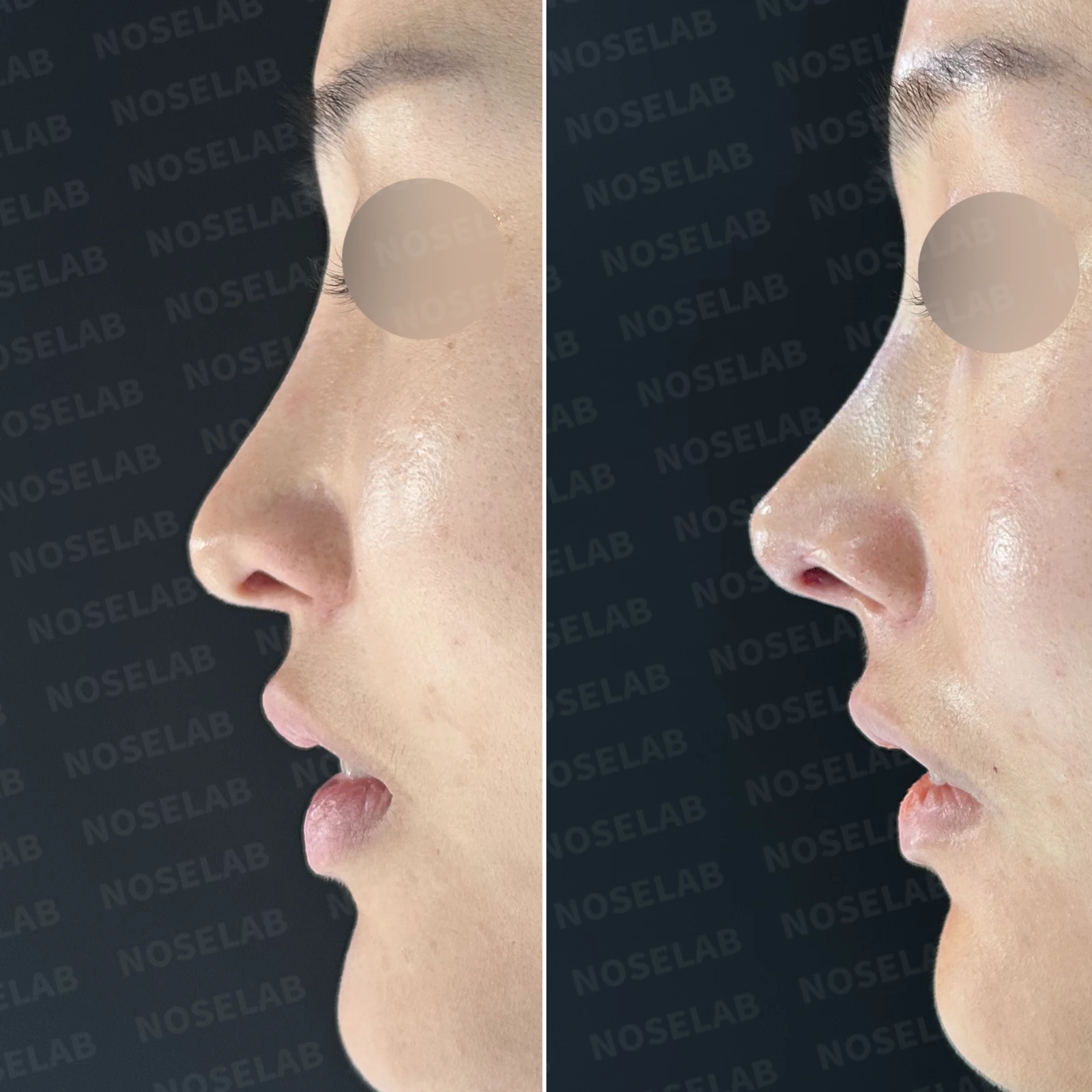
Before surgery / Day 0 immediately after surgery Photos taken immediately after surgery show swelling and may differ from the final result.
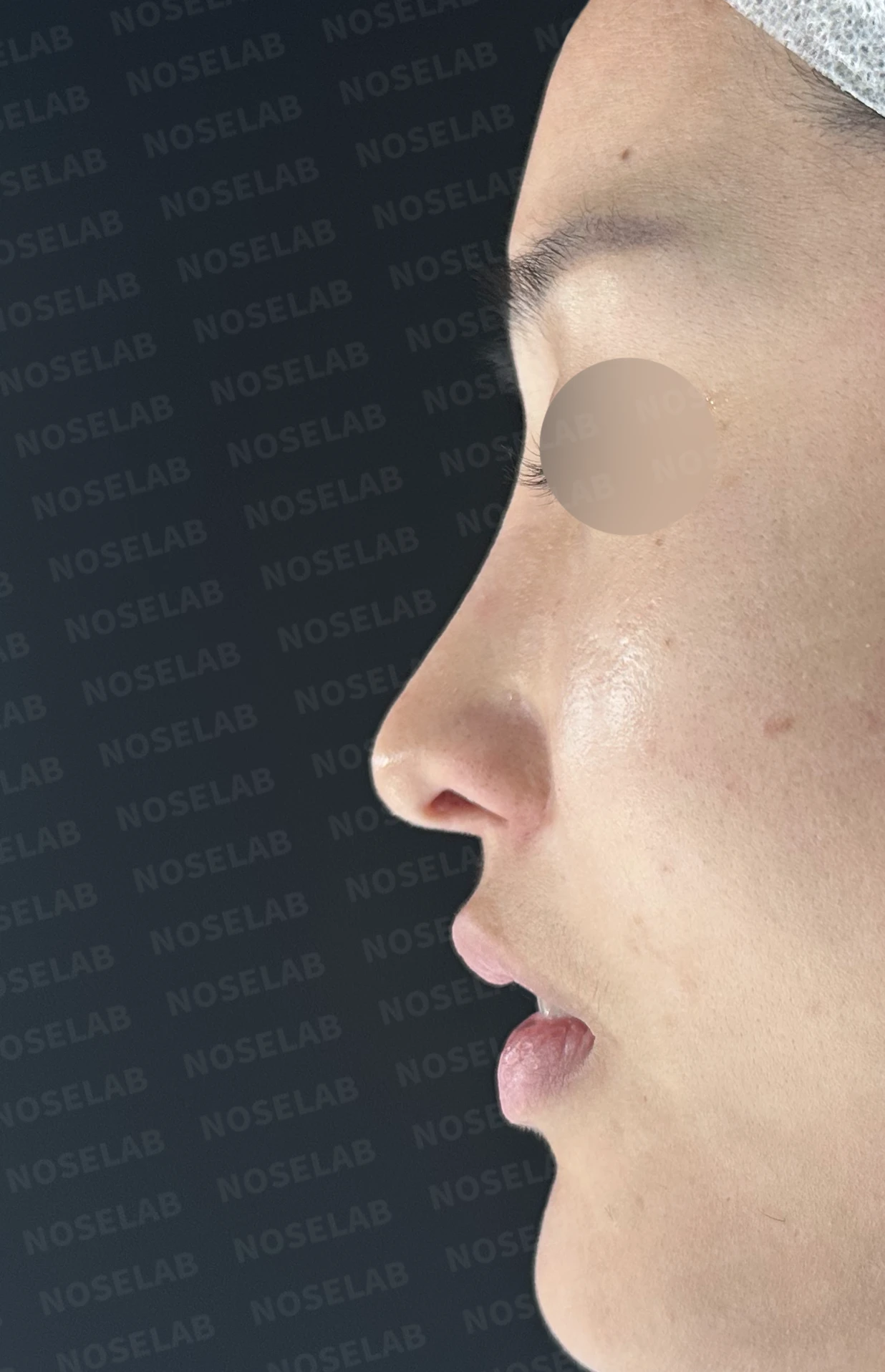
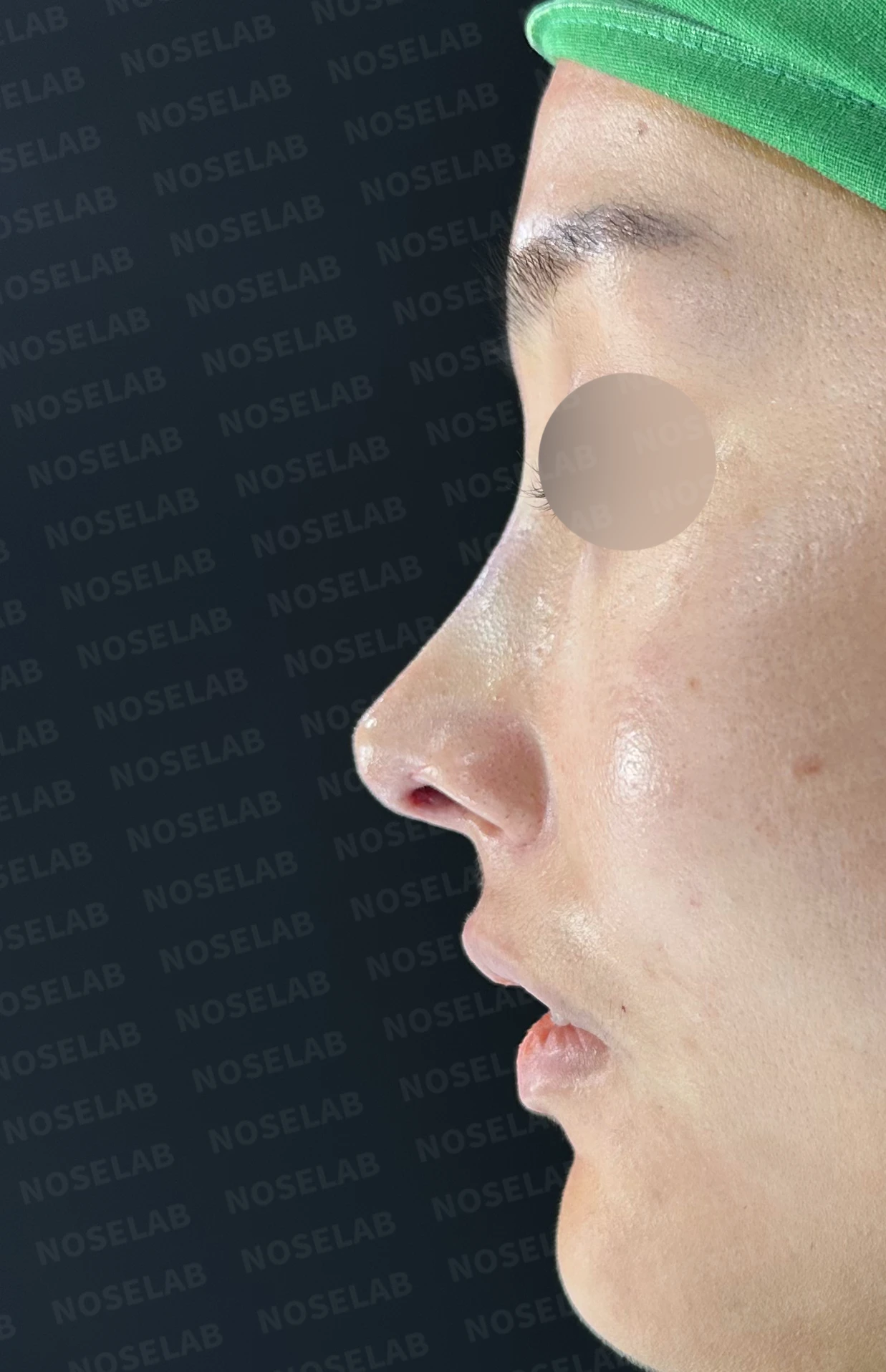
Profile view changes:
The drooping tip was naturally elevated
Feminine profile line achieved through nasolabial angle correction
Smooth curve from the radix to the nasal tip
Before surgery / Day 0 immediately after surgery Photos taken immediately after surgery show swelling and may differ from the final result.
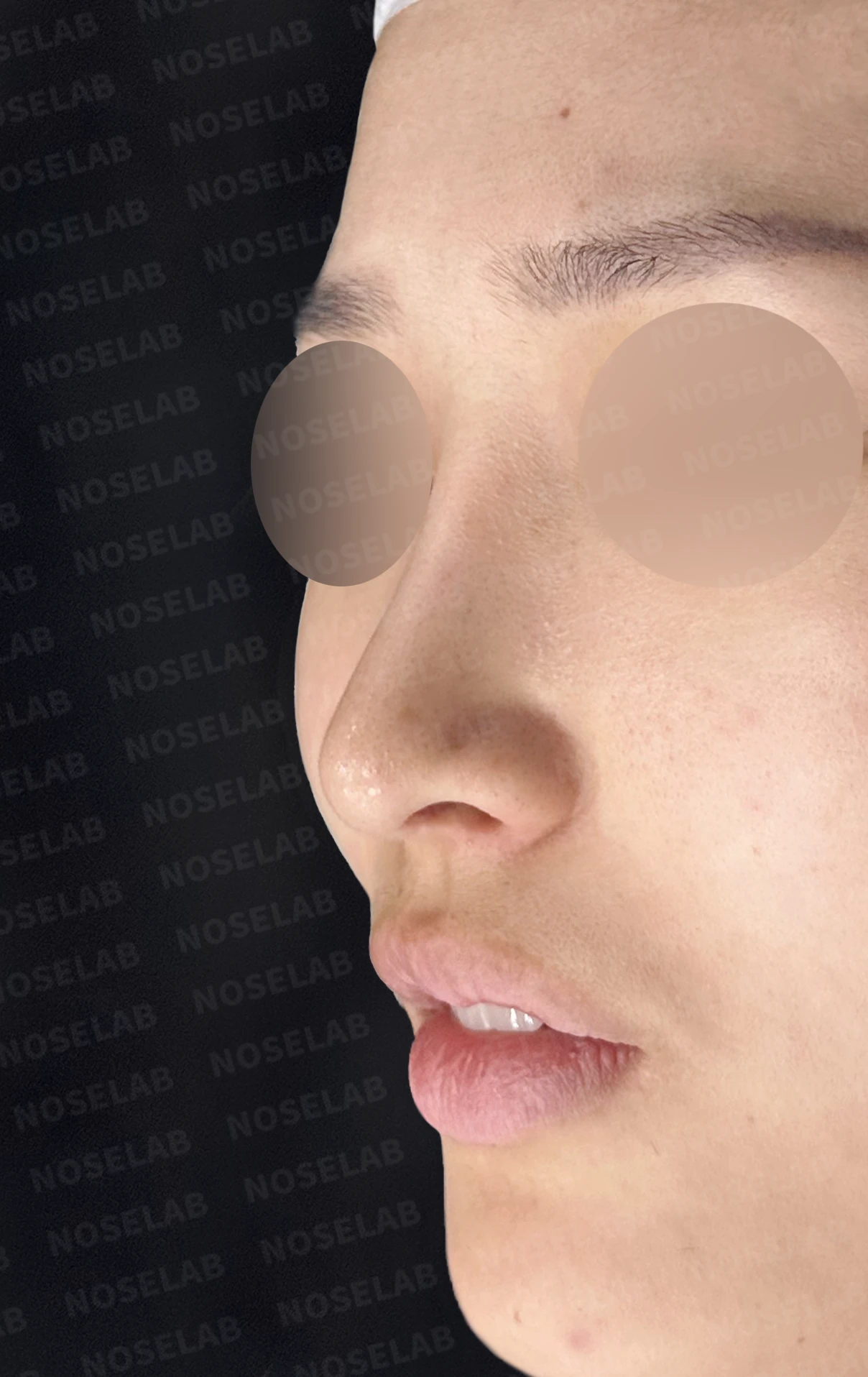
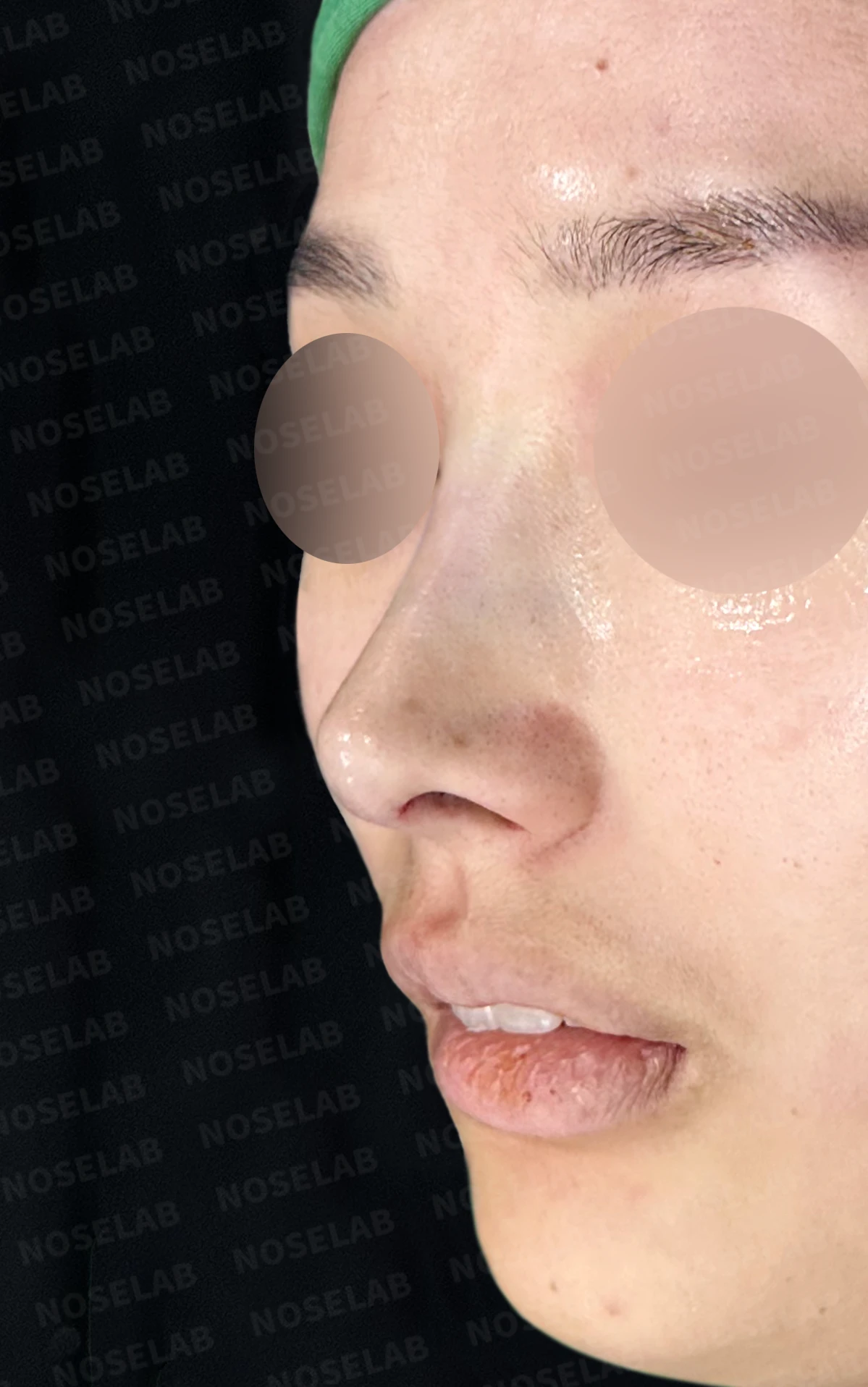
Nostril view changes:
Balanced nostril shape
Overall facial harmony achieved through nasal tip correction
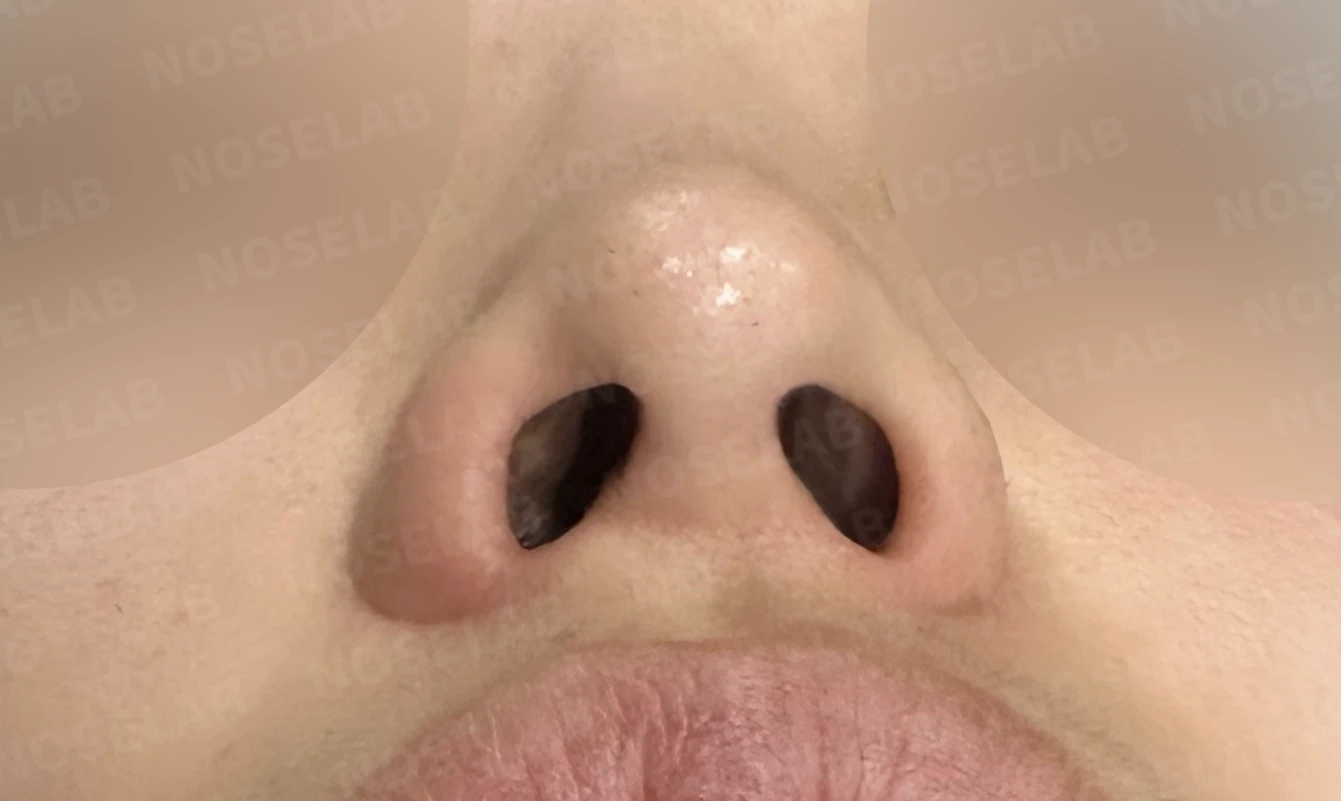
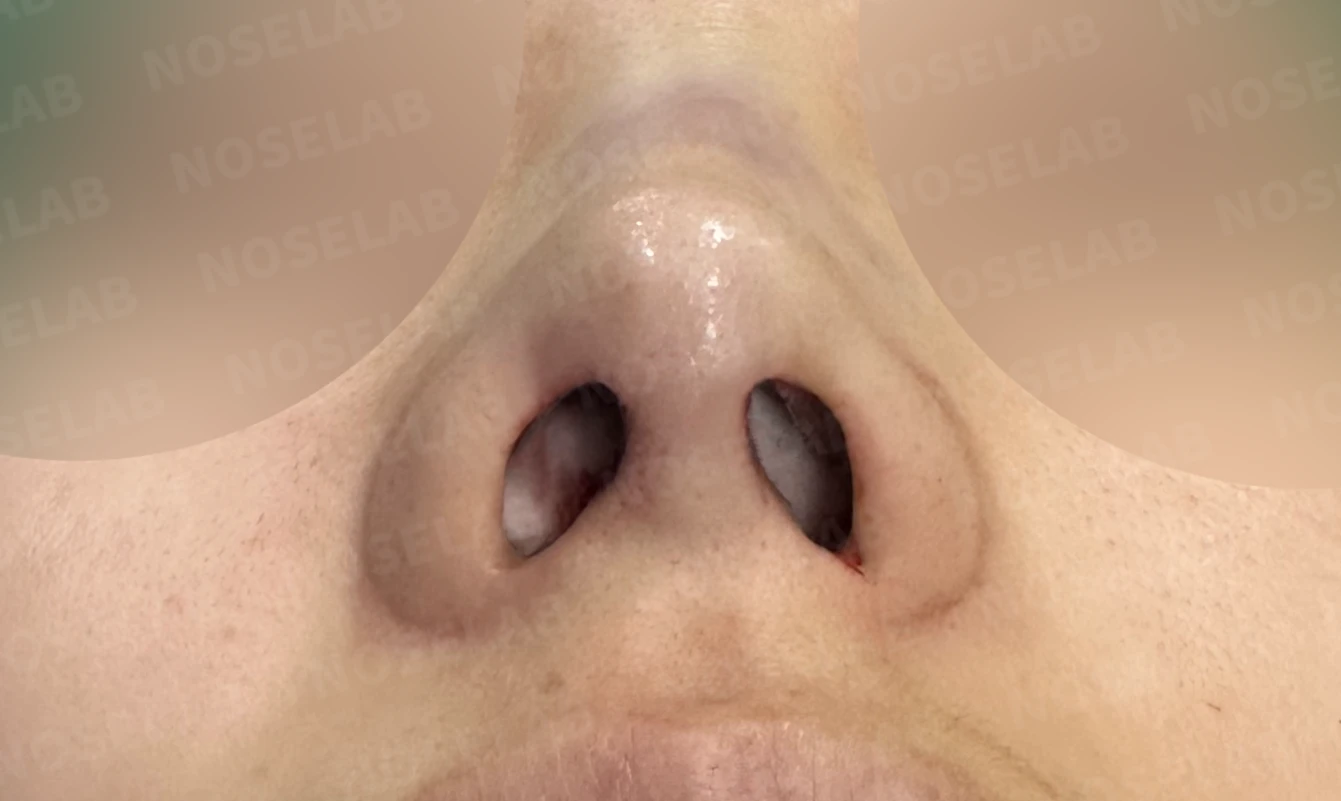
Before surgery / Day 0 immediately after surgery Photos taken immediately after surgery show swelling and may differ from the final result.
💡 Specialist opinion
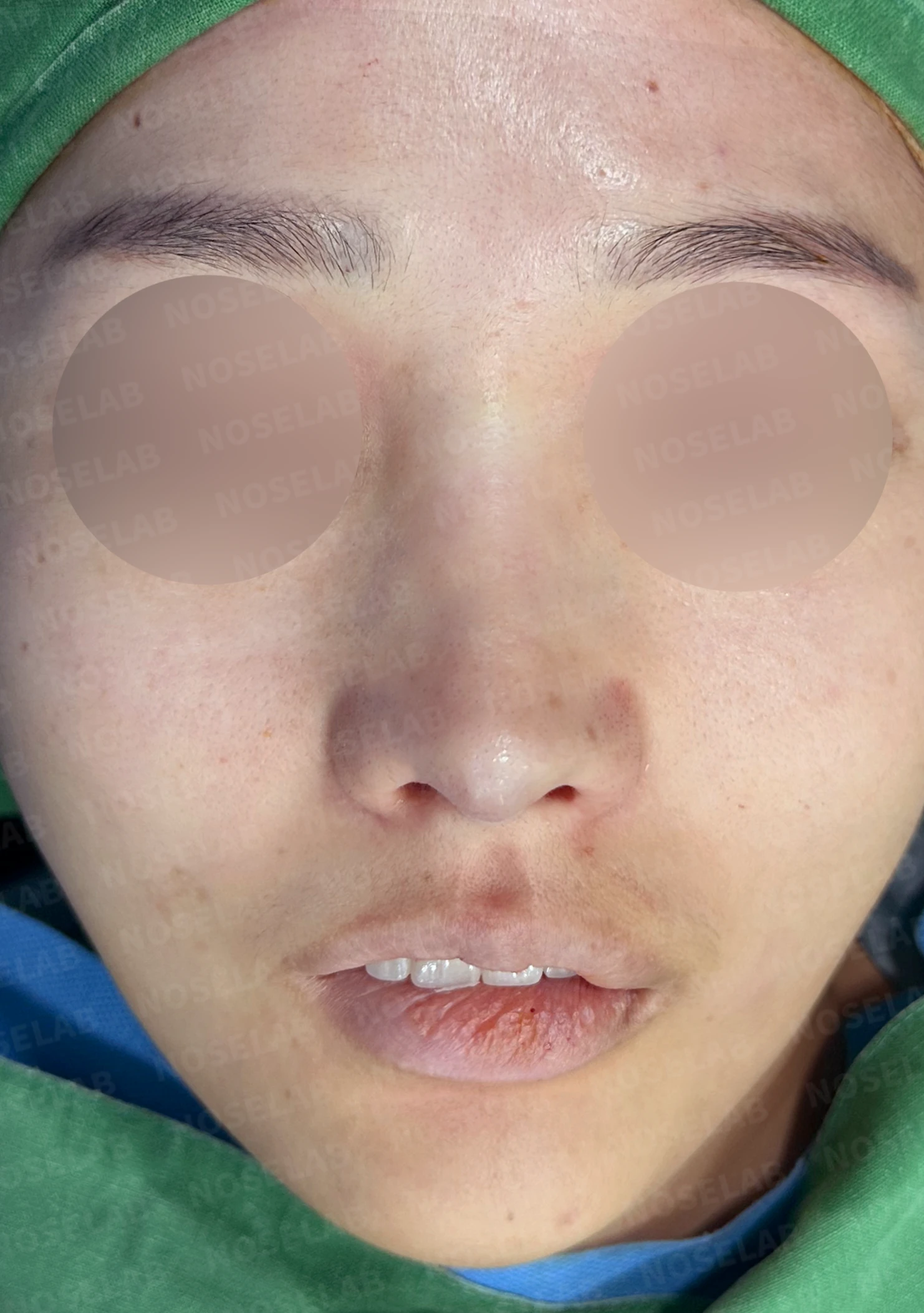
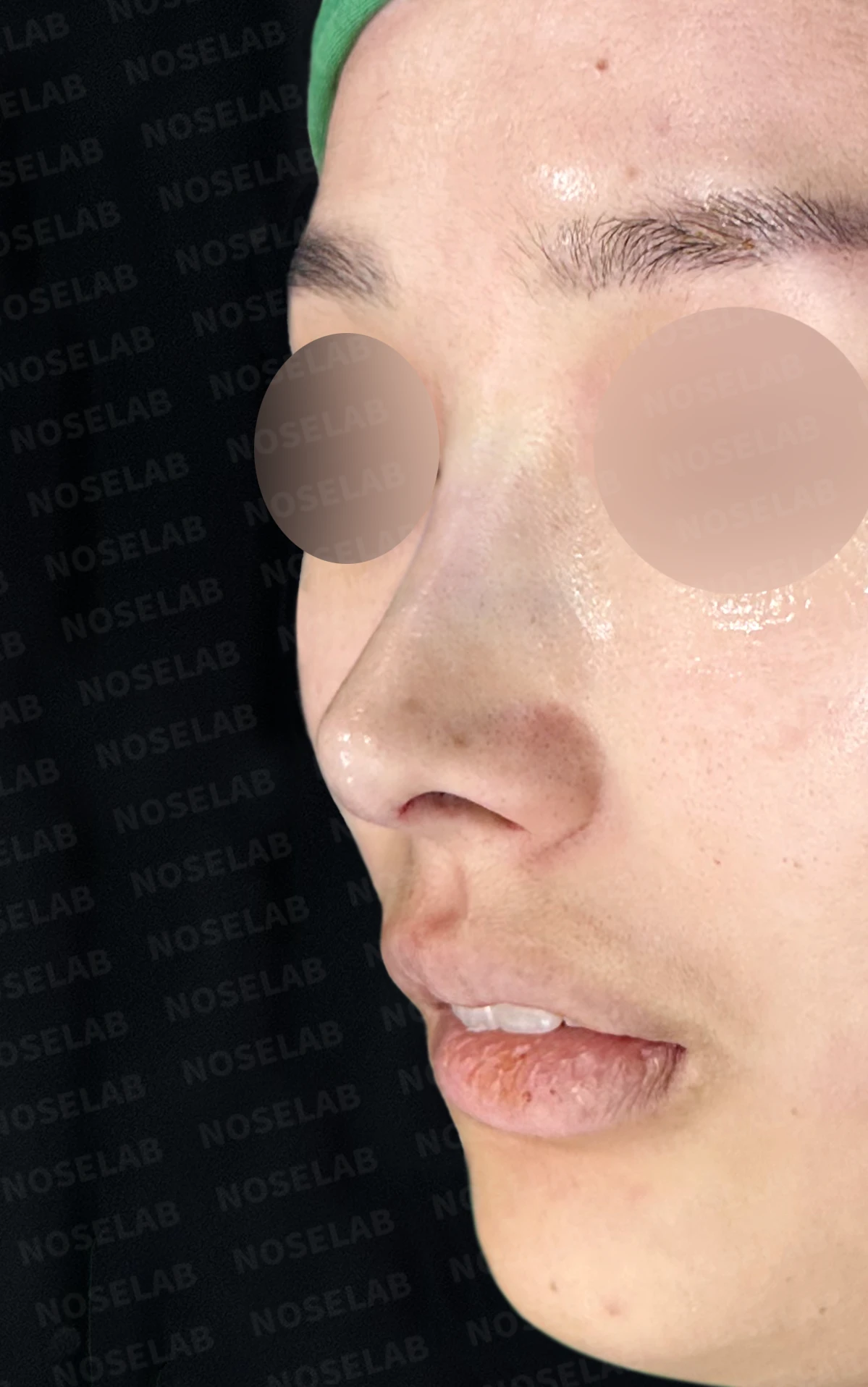
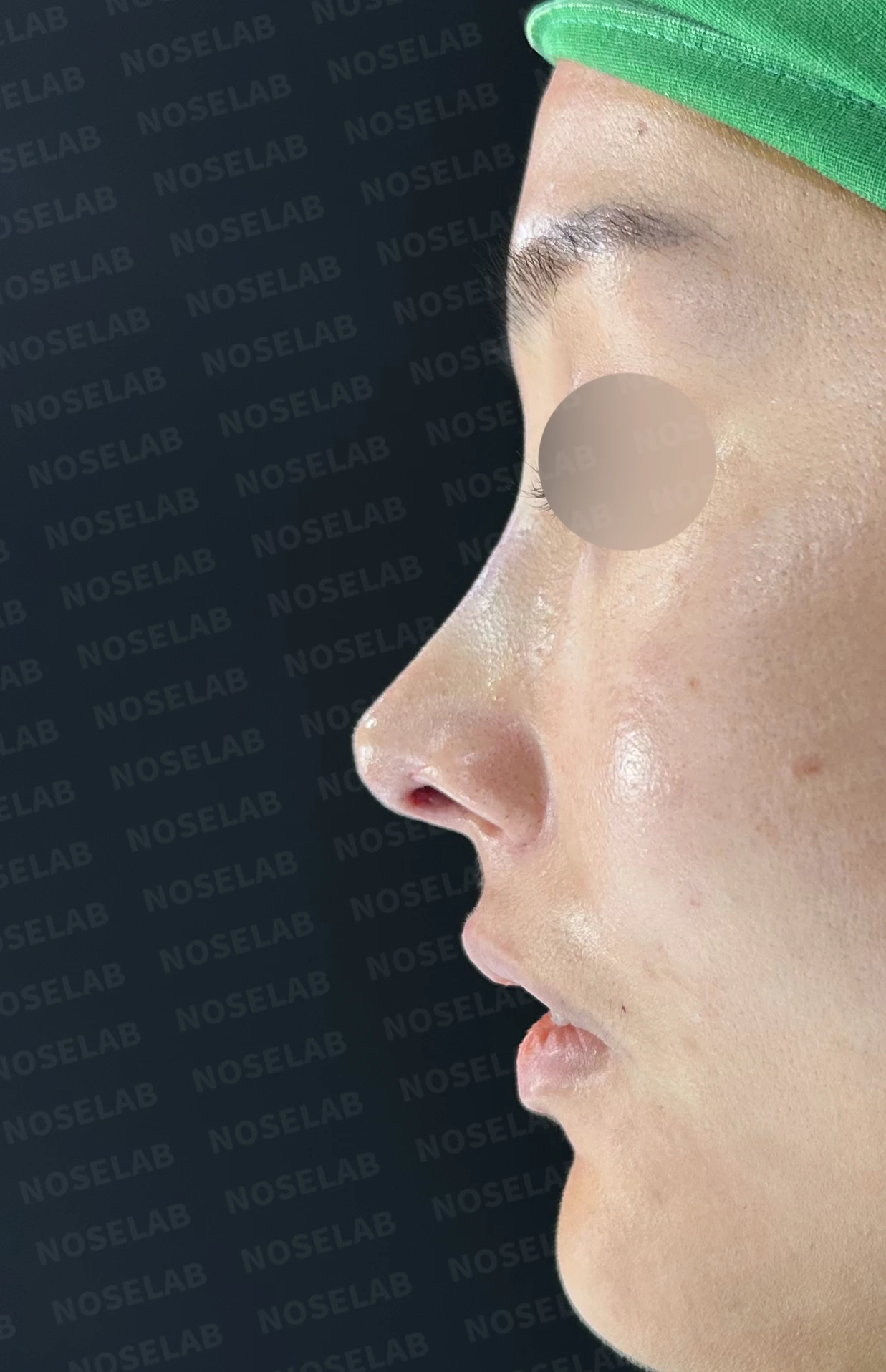
Front, oblique, and profile views on day 0 immediately after surgery. Photos taken immediately after surgery show swelling and may differ from the final result.
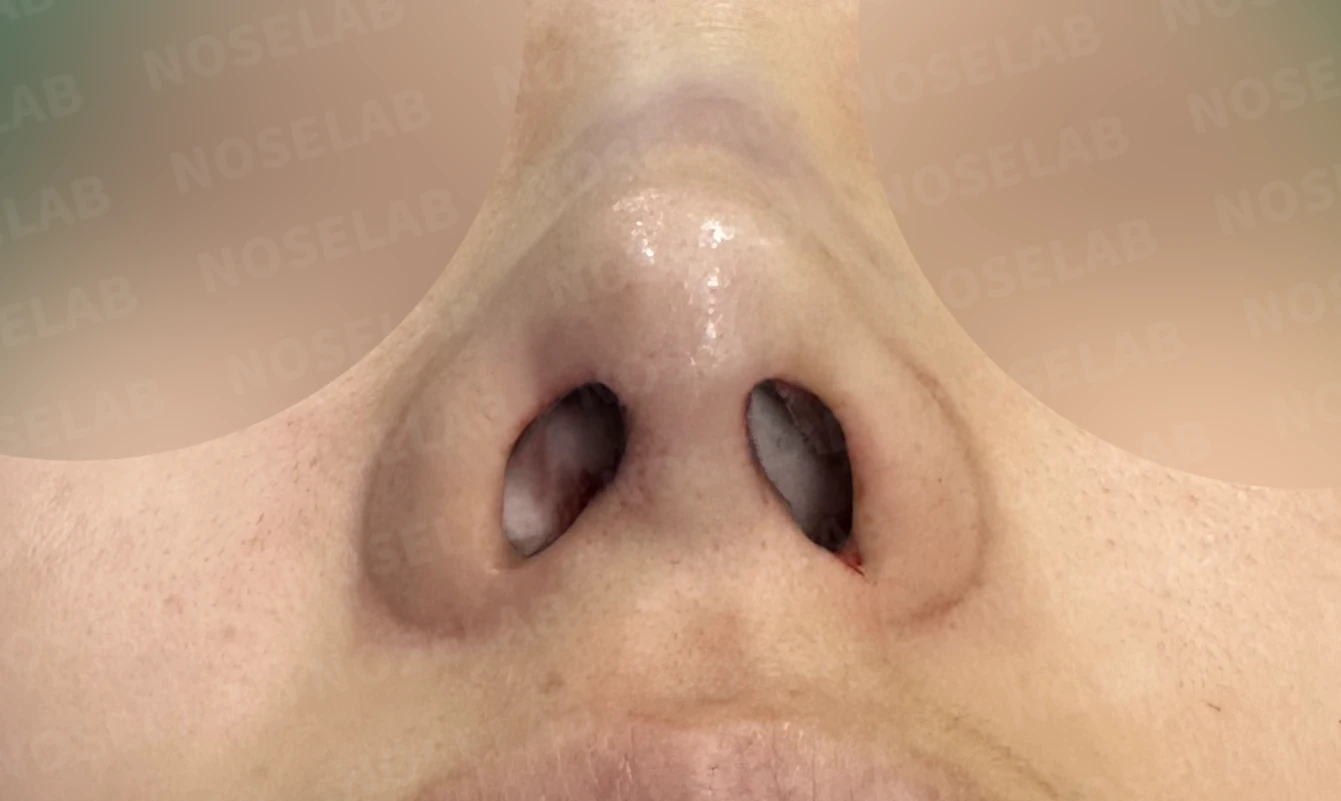
Nostril view on day 0 immediately after surgery. Photos taken immediately after surgery show swelling and may differ from the final result.
A nose that looks long becomes even more noticeable when the nasal tip is drooping or the nasolabial angle is inadequate. In this type of case, autologous rib cartilage was used to secure strong tip support while shaping the tip into a well-defined and natural contour.
In particular, because the patient did not want an excessively sharp nose, the focus was placed on creating a natural yet refined nasal tip. By properly correcting the nasolabial angle, a feminine and appealing silhouette could be achieved from the profile view.
A drooping or elongated tip is not merely an isolated problem of the nasal tip itself; it is related to the overall structural balance of the entire nose. Through a structural approach utilizing autologous rib cartilage, stable and aesthetically satisfying results were obtained.
I hope this is helpful to those with similar concerns. This has been Medical Director Dr. Peter C. Kang. Thank you.
#nasaltipcorrection #nasolabialanglecorrection #autologousribcartilage #longnosecorrection #revisionrhinoplasty #droopingtip #naturalrhinoplasty #closedrhinoplasty #closedrevisionrhinoplasty

Limitations and risks
When autologous rib cartilage is used, scarring and pain may remain at the donor site on the chest, and pneumothorax (pleural injury) can occur rarely. Over time, the grafted cartilage may warp or undergo partial resorption.
When revising after implant removal, contracture may progress again after removal, the nasal height and length may decrease, and staged surgery may be necessary depending on the skin condition.
When foreign materials such as injected fillers are removed and reconstructed, contracture may recur, nasal height and length may decrease, and staged surgery may be necessary depending on the skin condition.
When the septum is corrected at the same time, nasal obstruction may persist or recur, and in rare cases, septal perforation or changes in smell may occur.
Common potential risks include infection, bleeding, asymmetry, scarring, skin necrosis, and insufficient improvement; results vary depending on individual skin condition and previous surgical history.