Hello, I am Dr. Peter C. Kang.
Today, I would like to share the case of a patient who visited our clinic seeking a higher nose. Due to prominent brow bones, the patient wanted to balance the height of the nasal bridge and glabella, as well as correct a blunt nasal tip.
🔍 Surgical history
4 years ago: Nasal filler procedure (dissolved before surgery)
3 years and 6 months ago: Silicone implant + autologous rib cartilage surgery
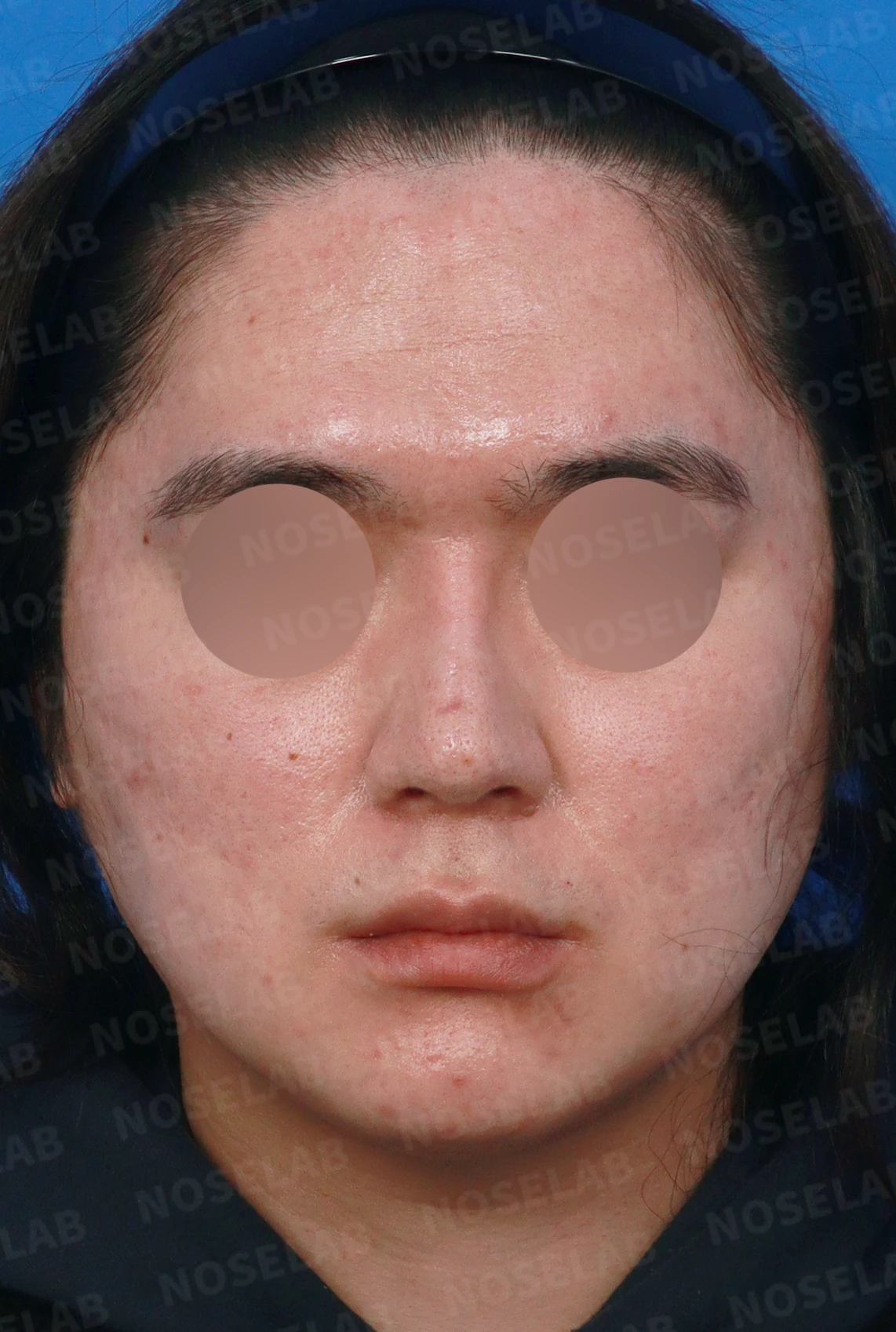
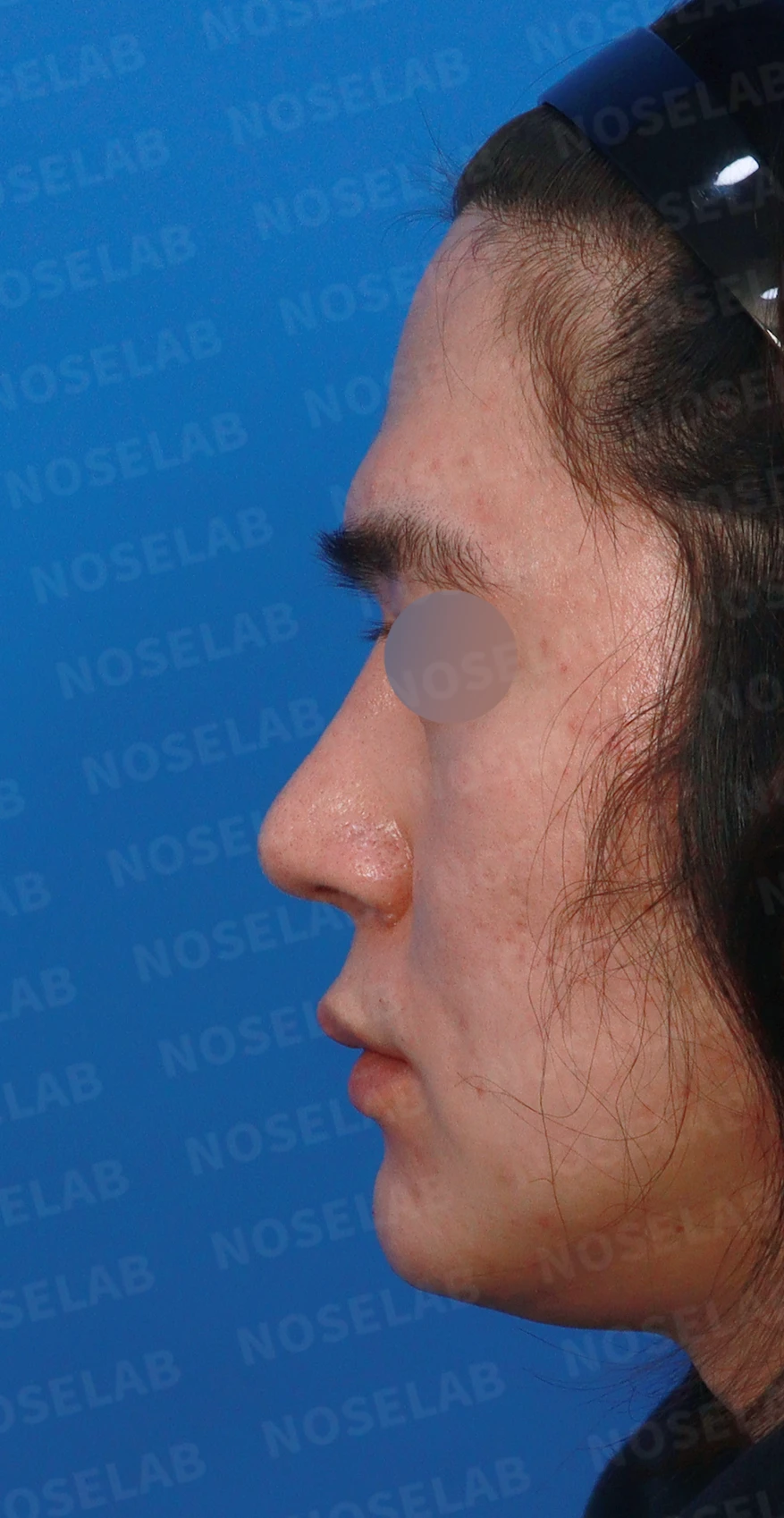
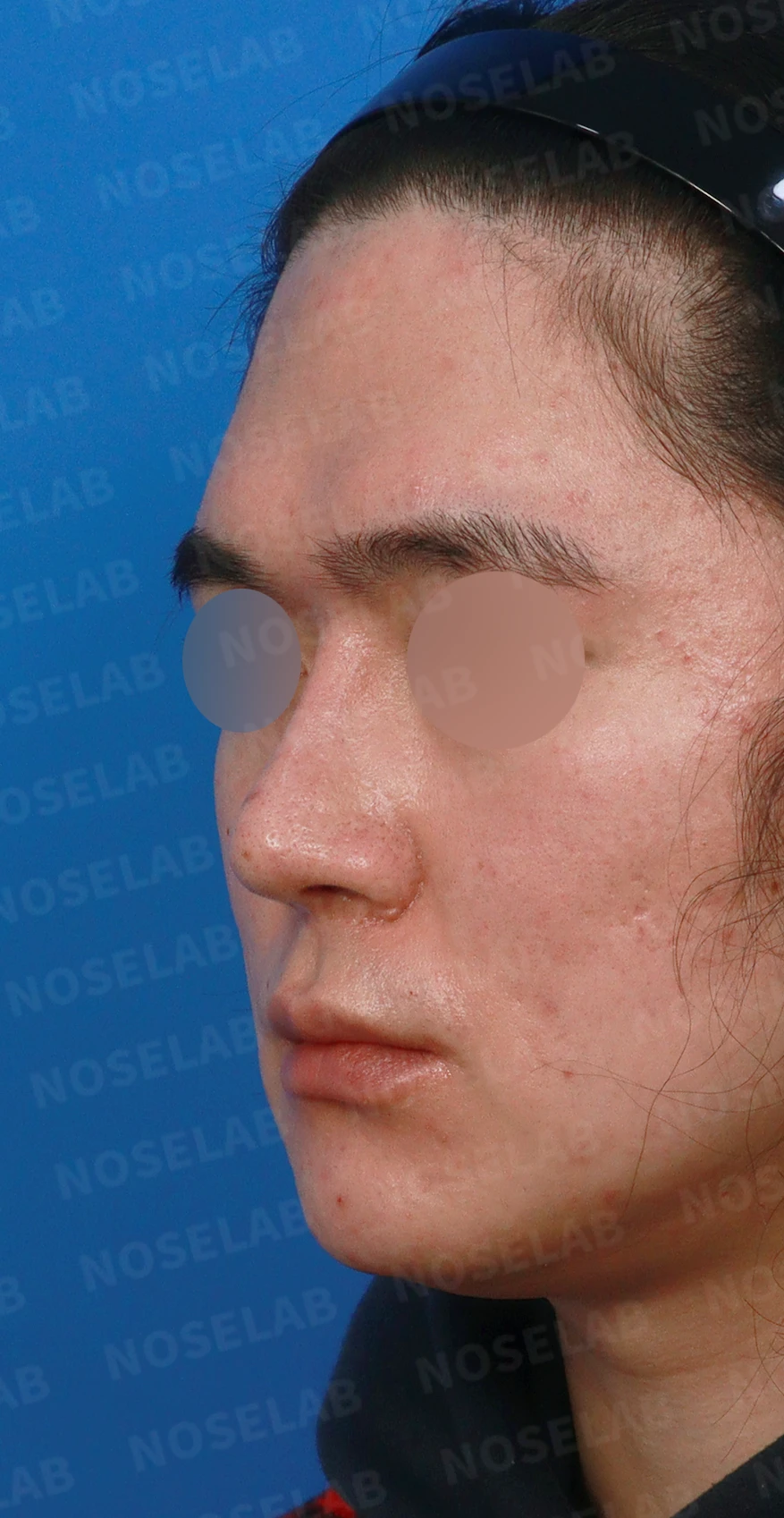
Front, left profile, and oblique views during design consultation.
💉 Patient requests
Desire for a higher nasal tip (as high as safely possible)
Correction of a blunt nasal tip appearance
Adjustment of nasal bridge and glabella height to match prominent brow bones
Correction of the nasolabial angle
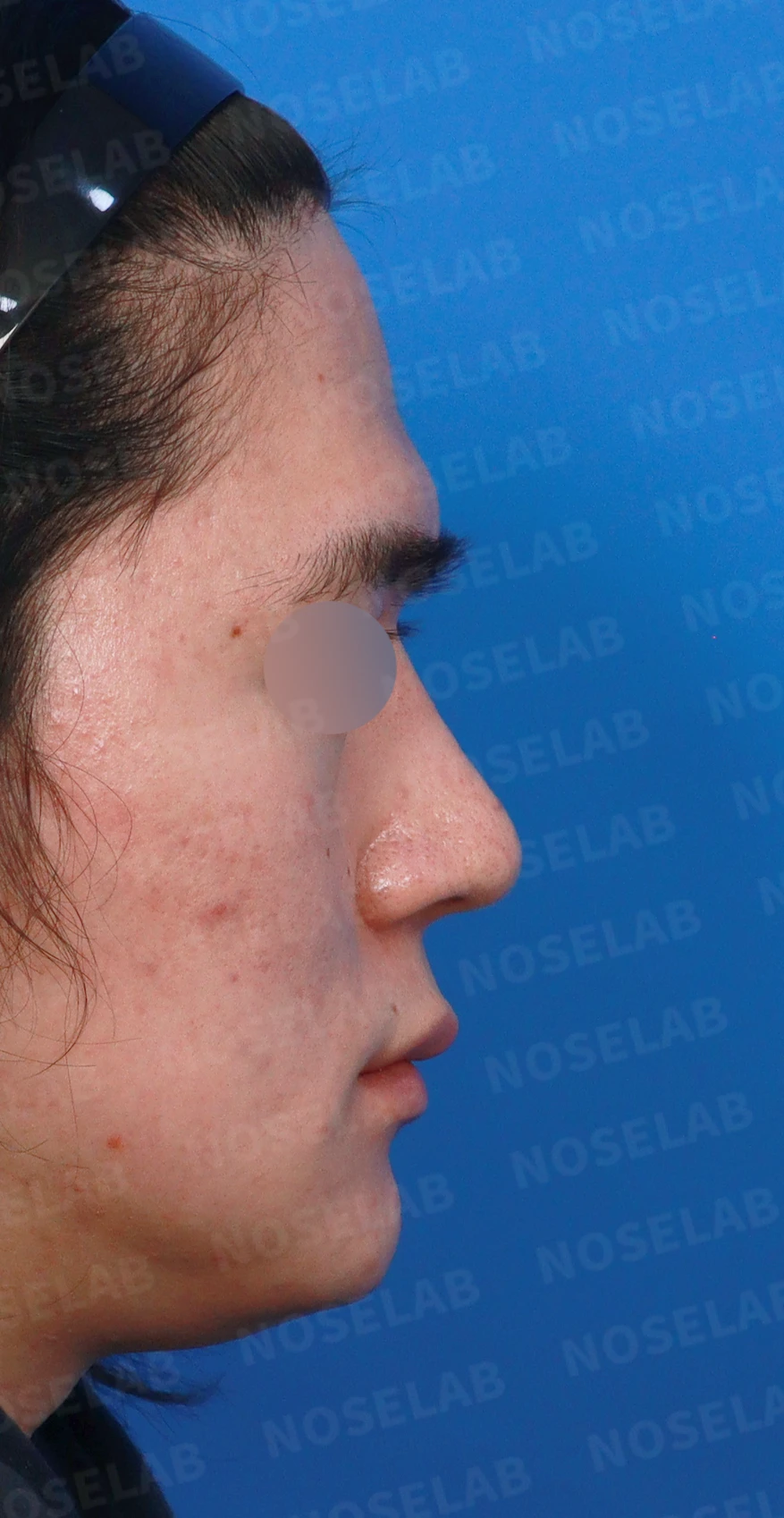
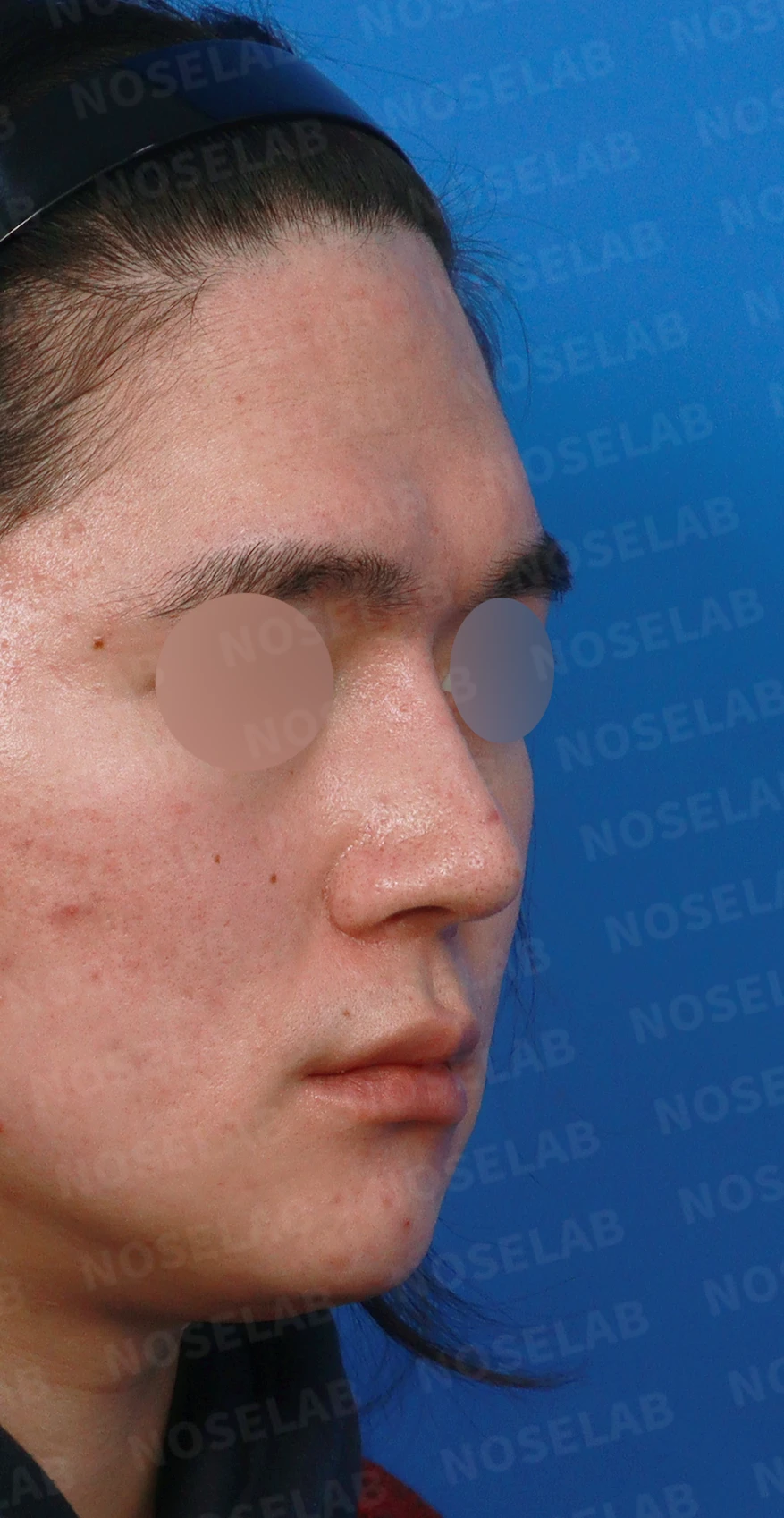
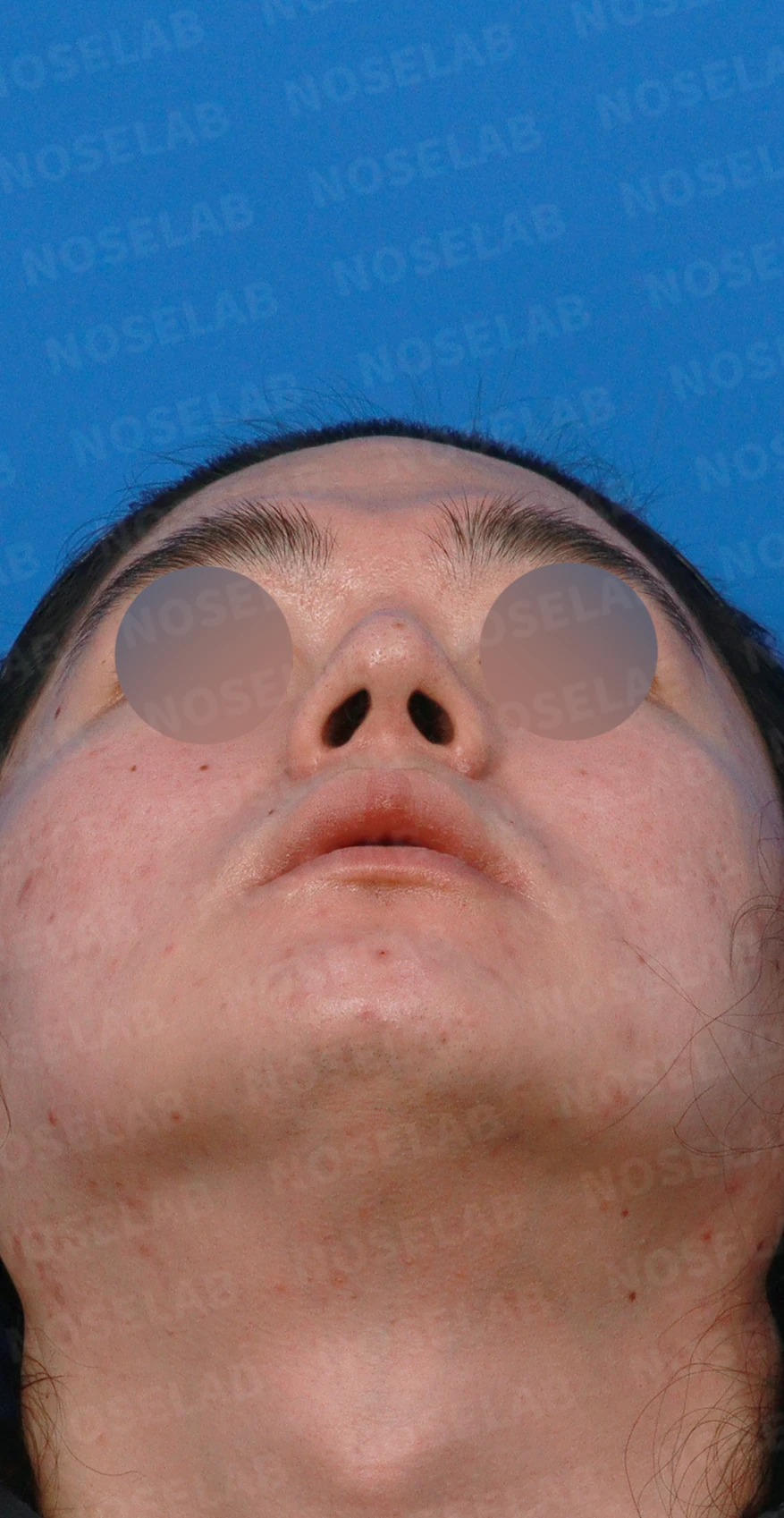
Right profile, oblique, and nostril views during design consultation.
🔧 Surgical plan and procedure
1. Nasal bridge elevation using a 3D custom implant
Customized design tailored to the patient's prominent brow bones
Creation of a natural line from the glabella to the nasal bridge
Removal of the existing implant and replacement with a new 3D implant
2. Nasal tip elevation using autologous rib cartilage
Maintenance of a high nasal tip with strong structural support
Correction of the blunt appearance
Creating a well-defined, refined nasal tip
3. Nasolabial angle correction
Improvement of the profile silhouette
Enhancing overall facial balance
🌟 Surgical results
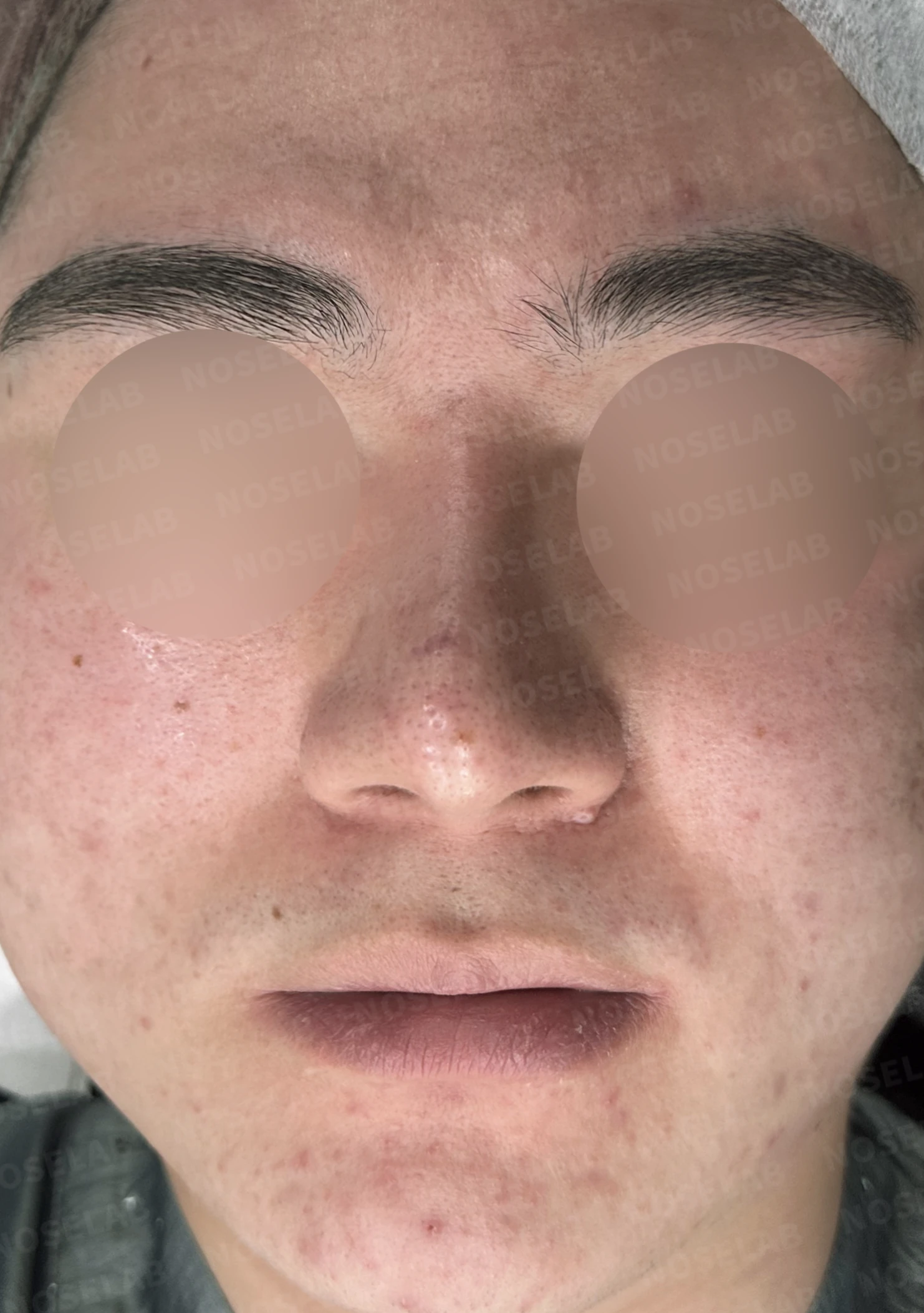
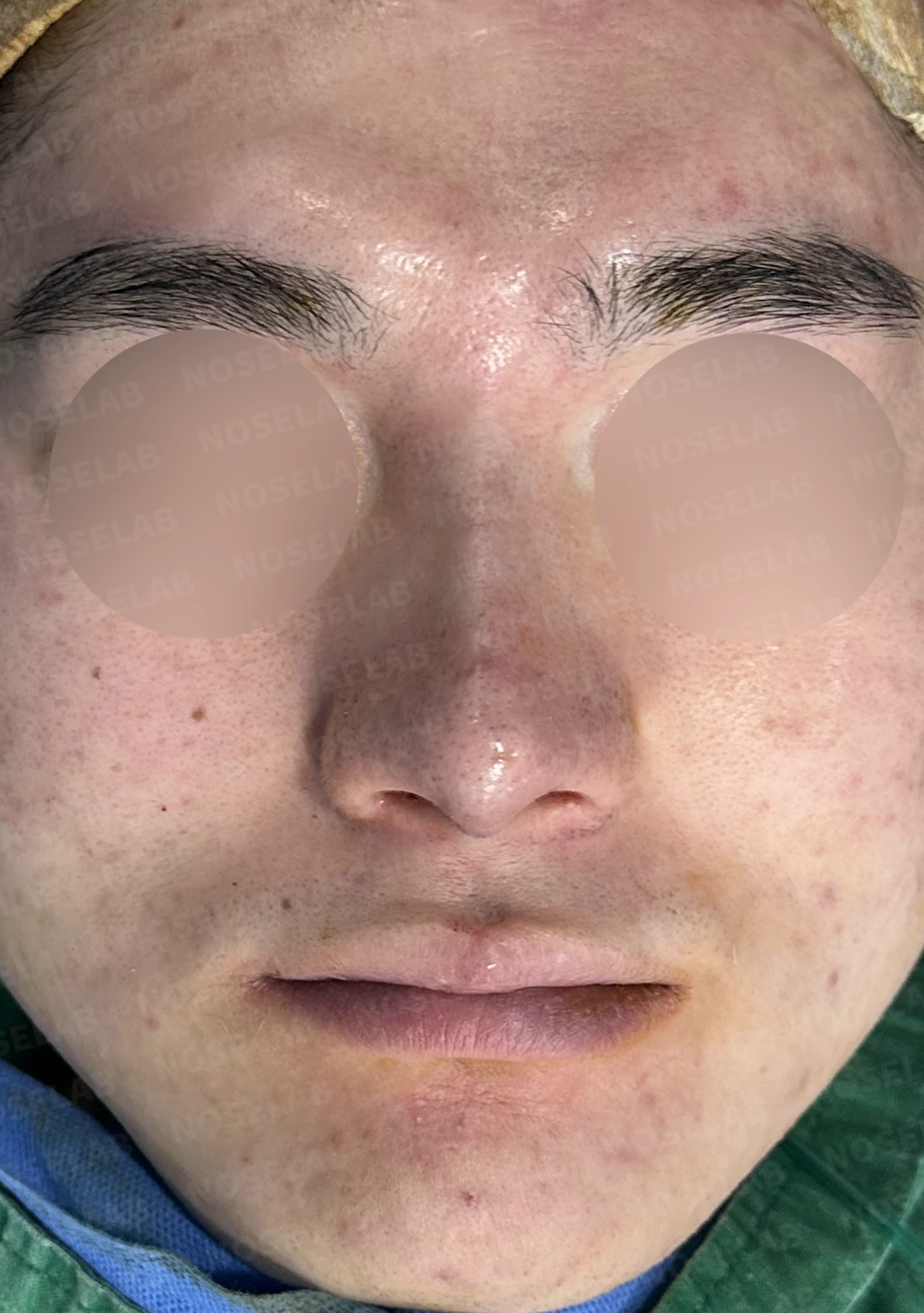
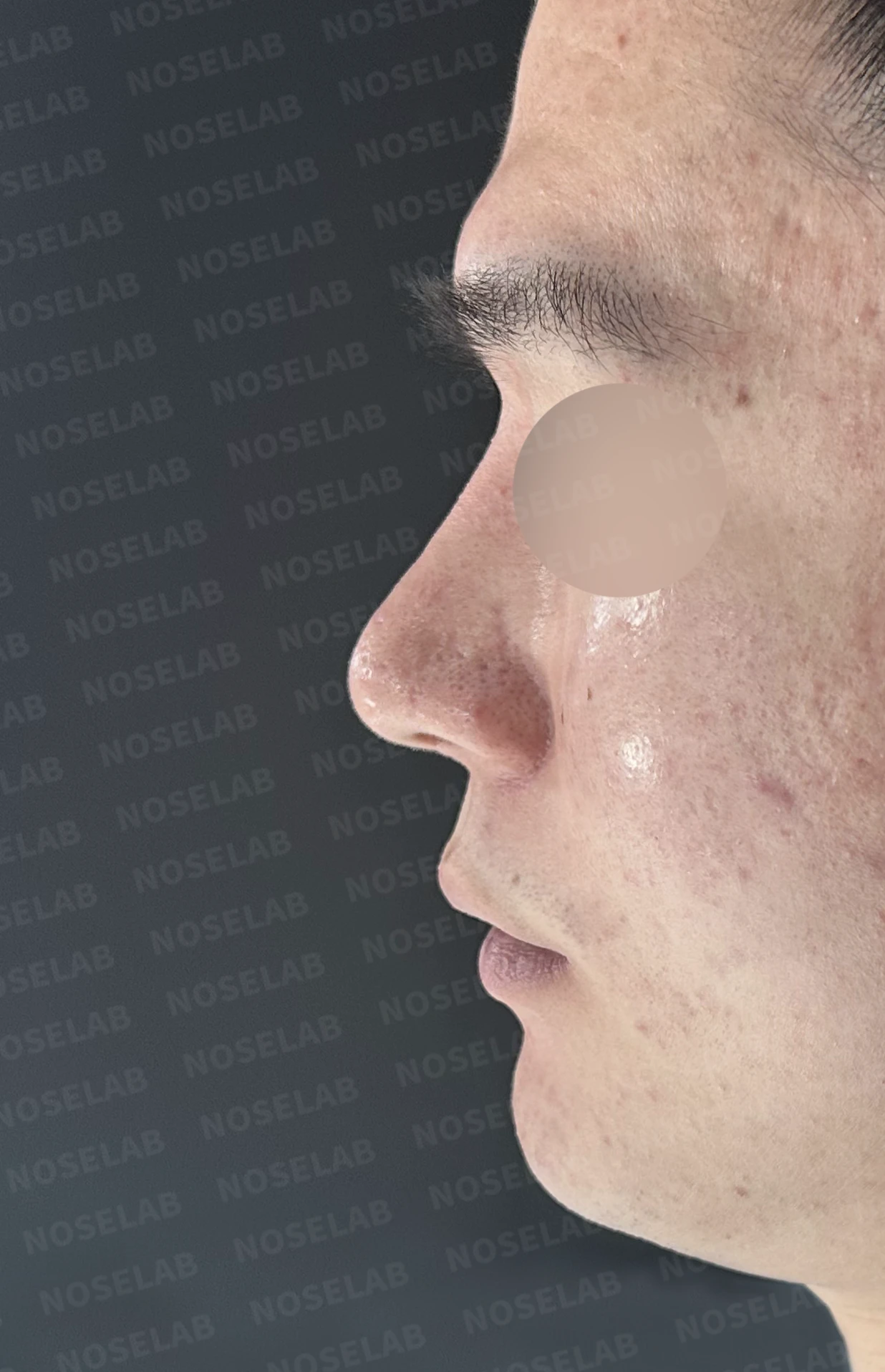
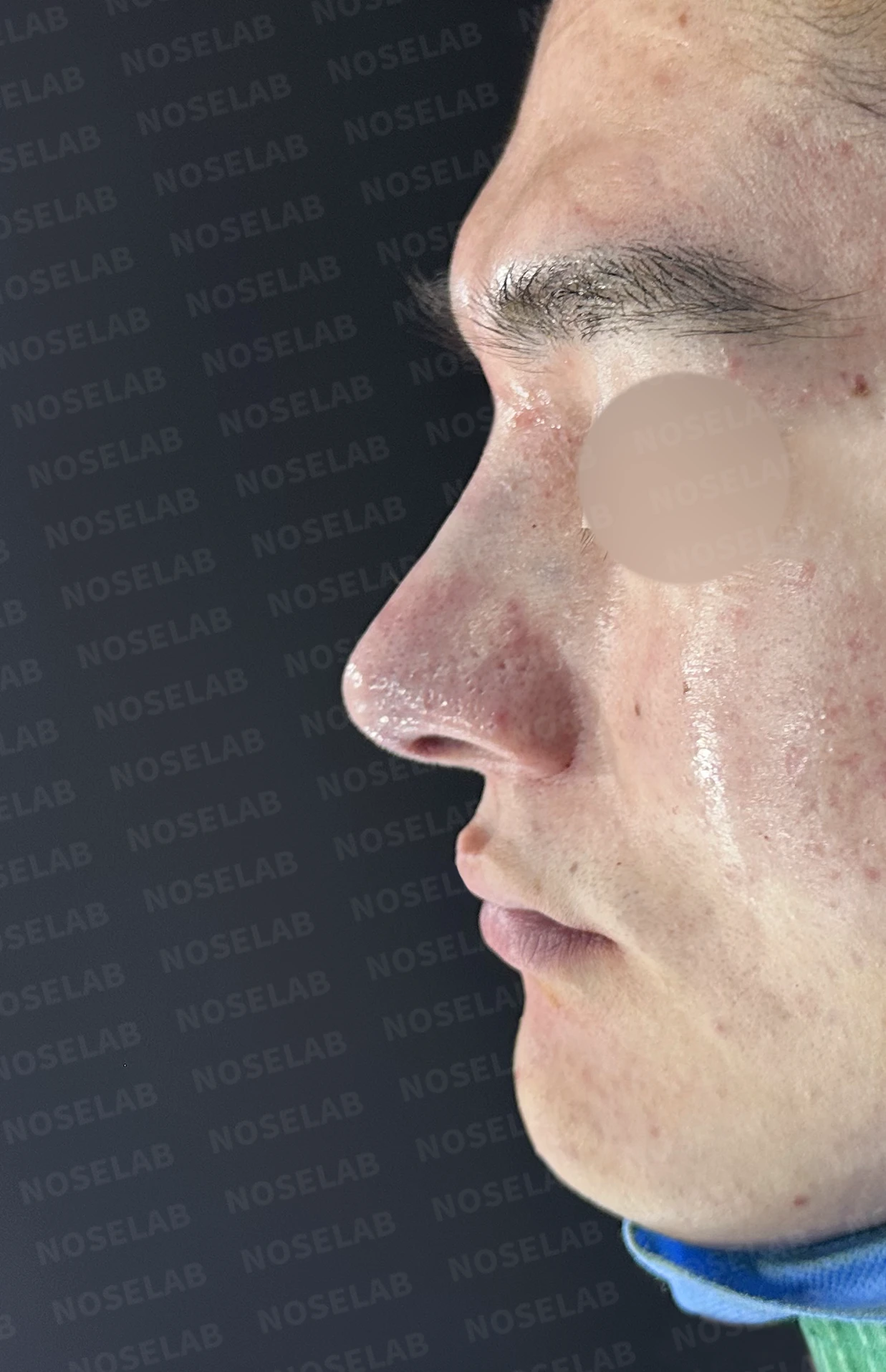
Before surgery / Day 0 immediately after surgery Photos taken immediately after surgery show swelling and may differ from the final result.
Front view changes:
As the nasal bridge was raised, the entire nose gained three-dimensional definition
The previously blunt nasal tip was refined into a sharper shape
Enhanced nasal presence along the facial midline
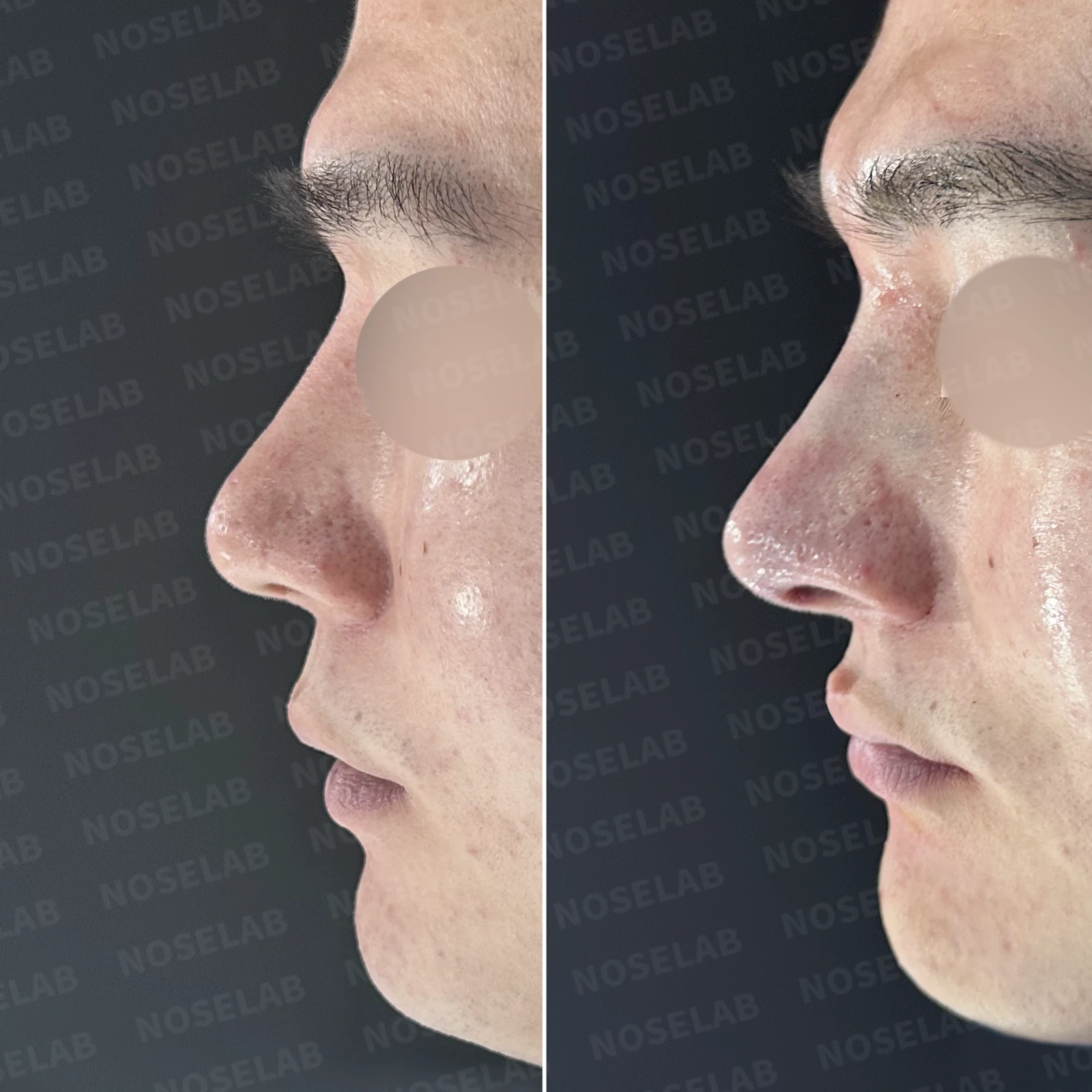
Before surgery / Day 0 immediately after surgery Photos taken immediately after surgery show swelling and may differ from the final result.
Profile view changes:
Natural glabella-to-bridge transition tailored to the brow bone line
A clear, well-defined profile line achieved through the elevated nasal bridge
A refined profile through nasolabial angle correction
Improvement in the overall nasal length proportion as the tip was elevated
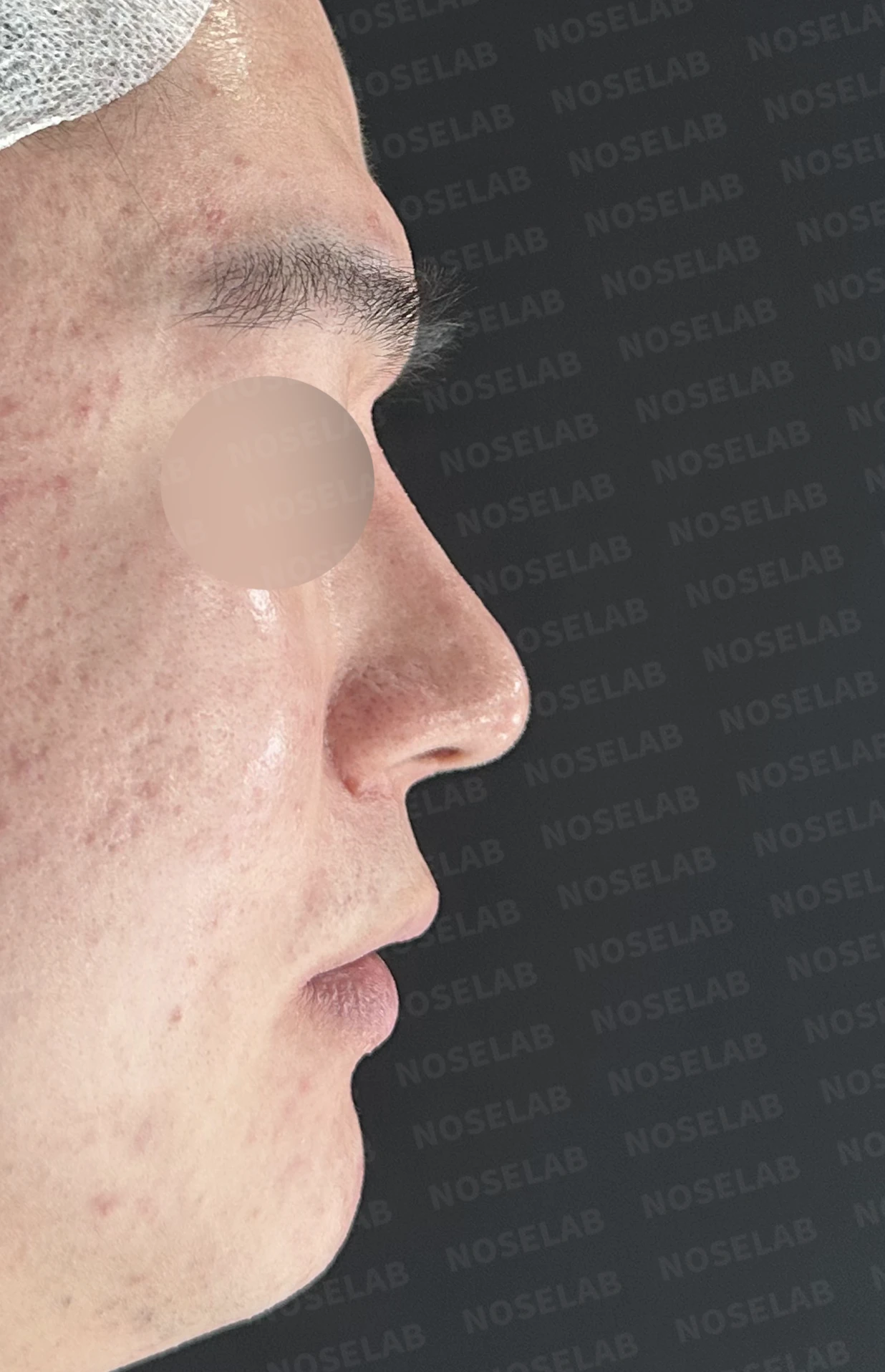
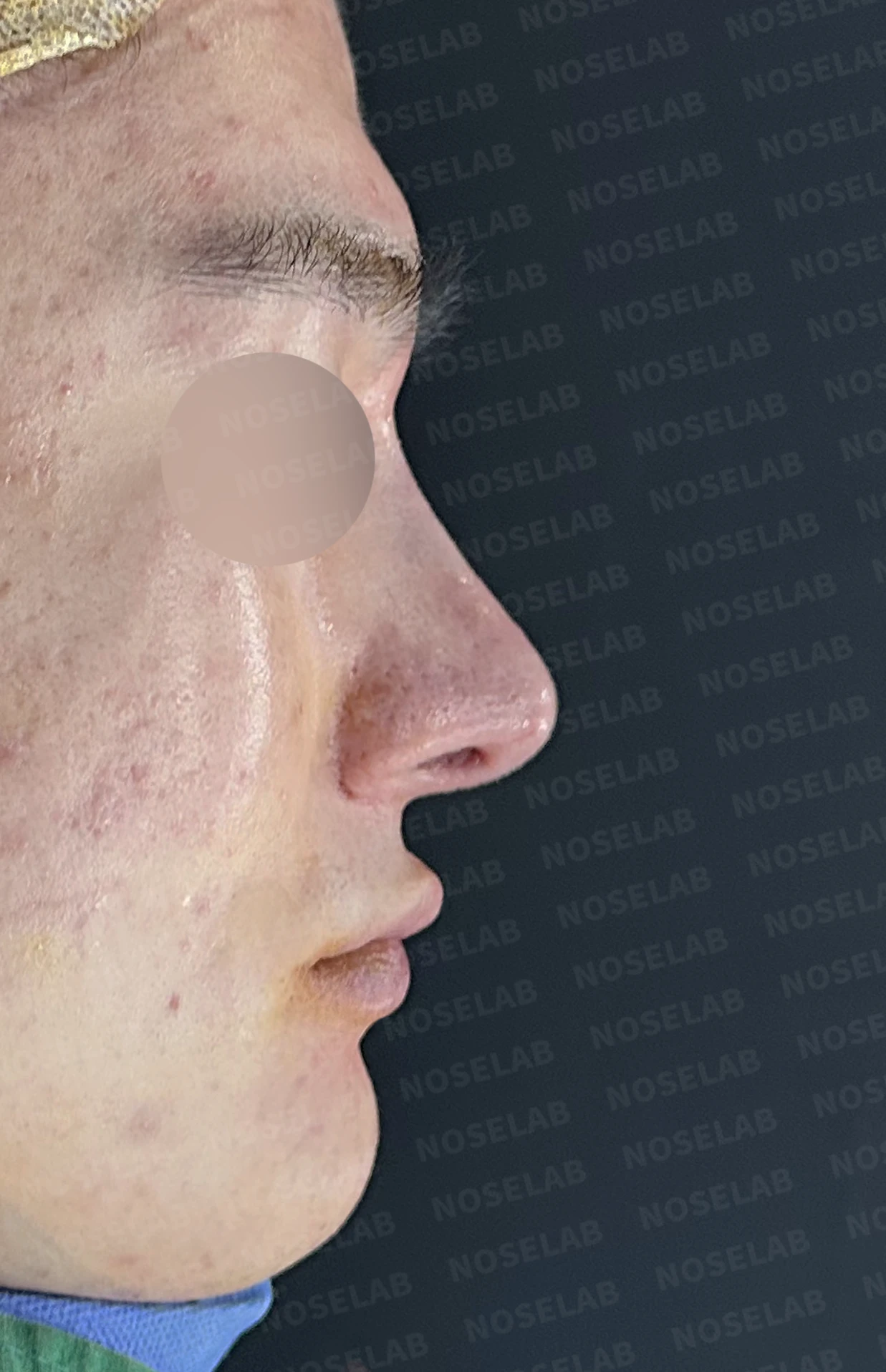
Before surgery / Day 0 immediately after surgery Photos taken immediately after surgery show swelling and may differ from the final result.
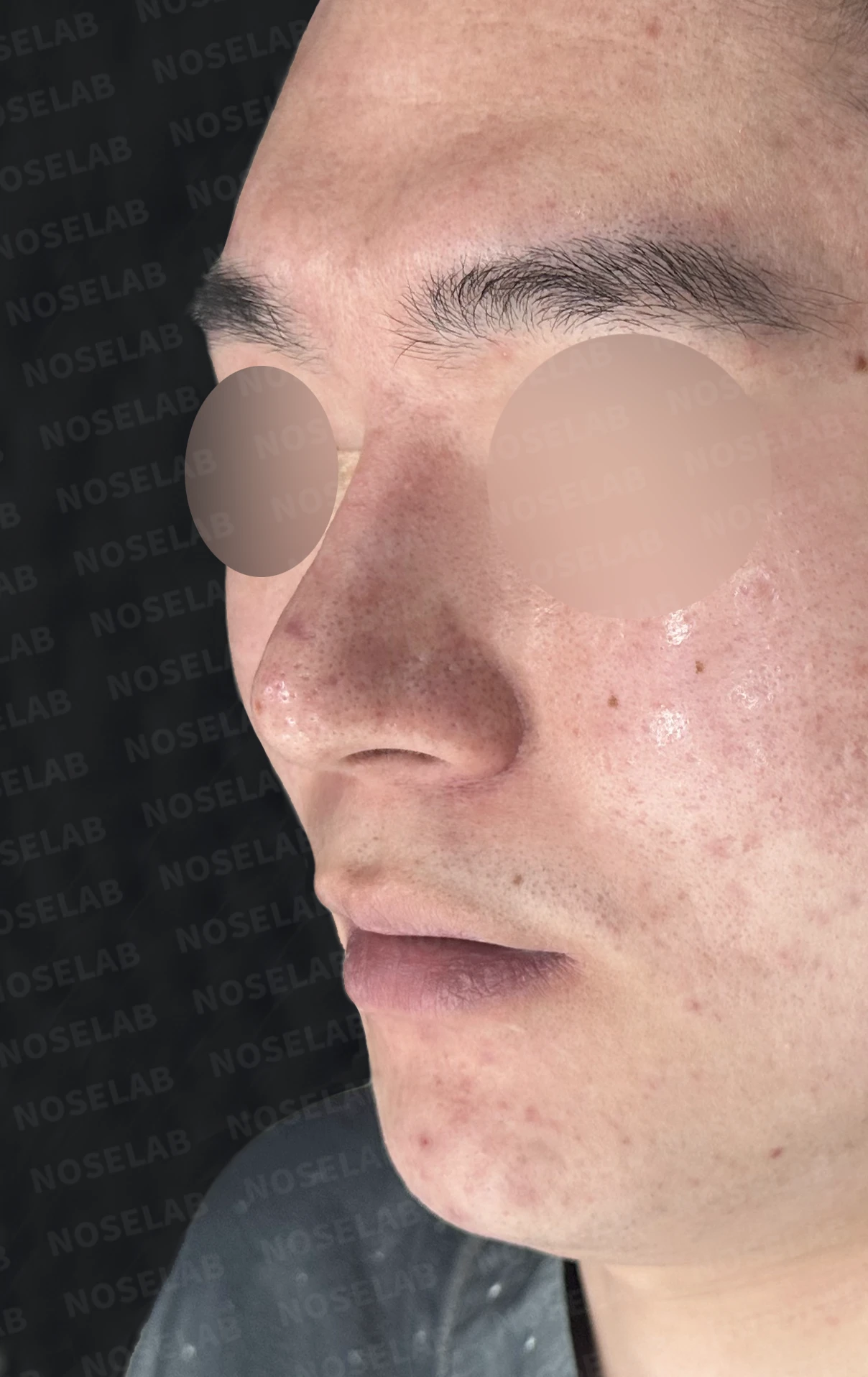
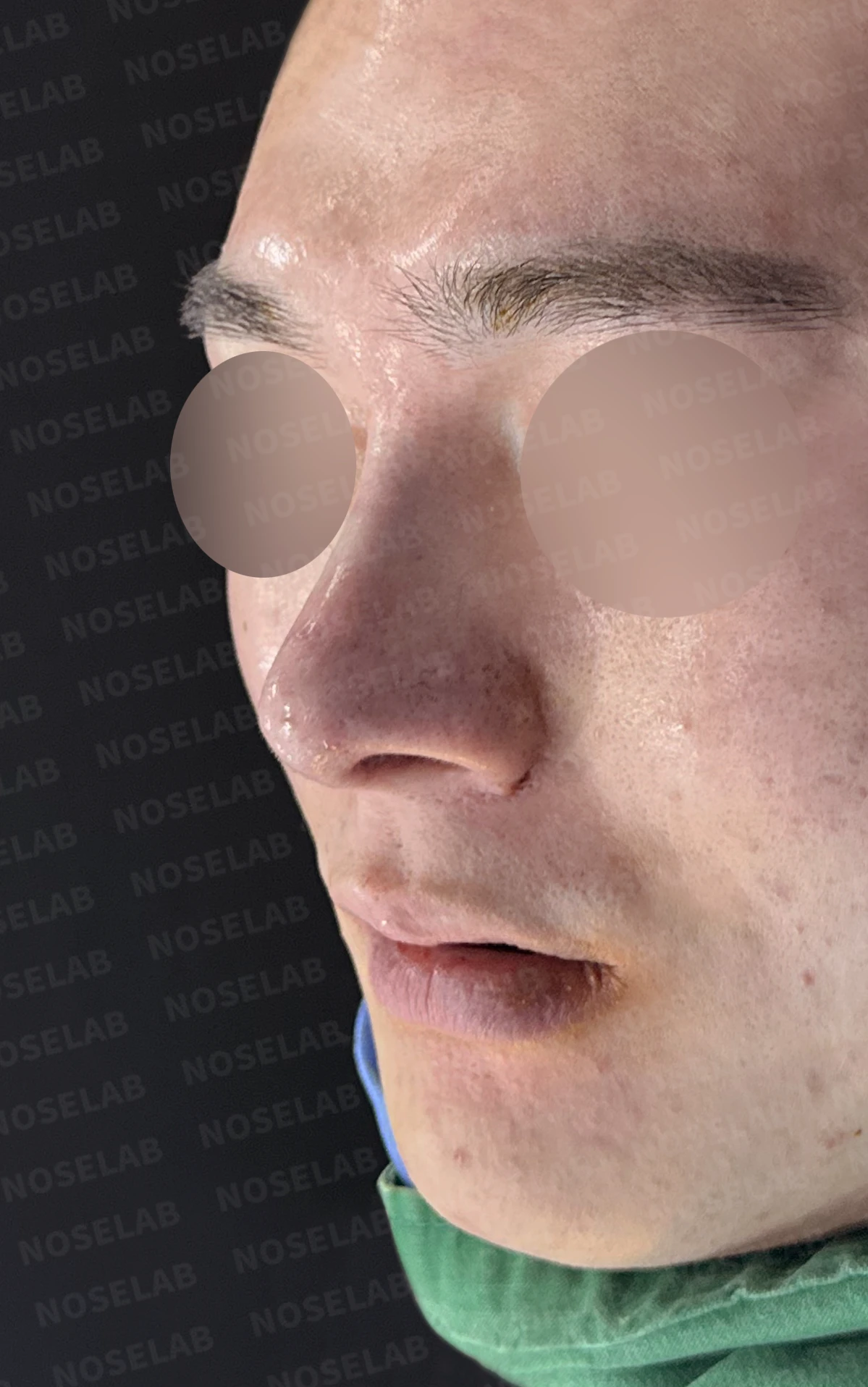
Before surgery / Day 0 immediately after surgery Photos taken immediately after surgery show swelling and may differ from the final result.
Nostril view changes:
Reduced nostril show through increased nasal tip projection
Balanced nostril shape
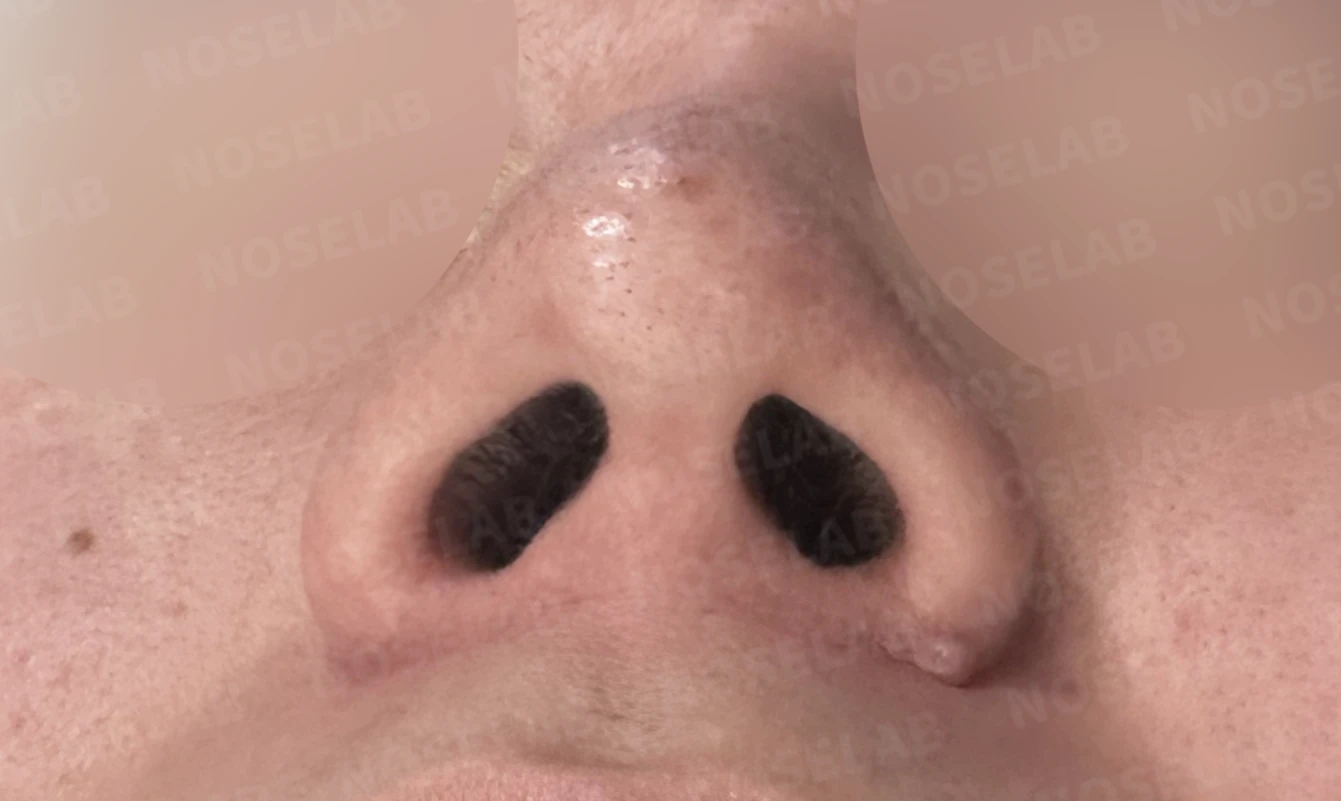
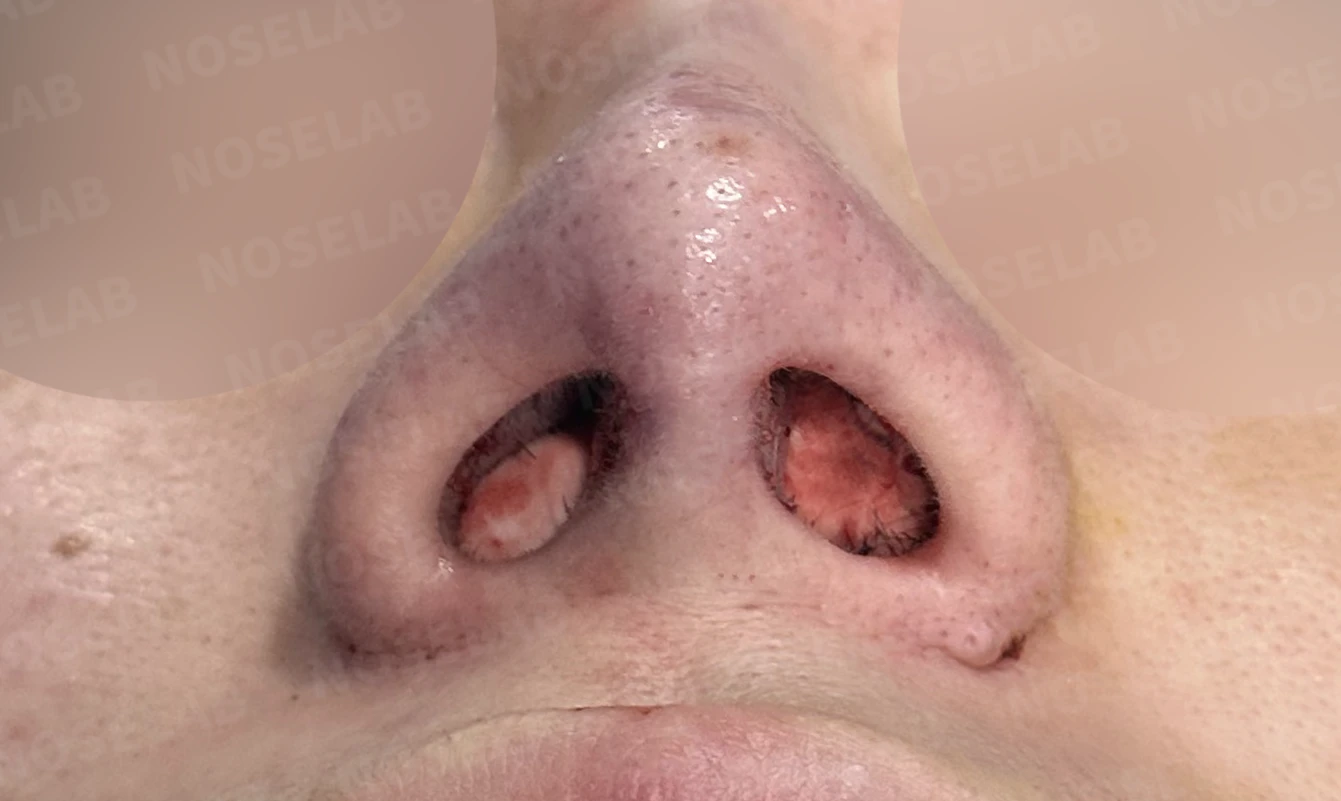
Before surgery / Day 0 immediately after surgery Photos taken immediately after surgery show swelling and may differ from the final result.
💡 Specialist opinion
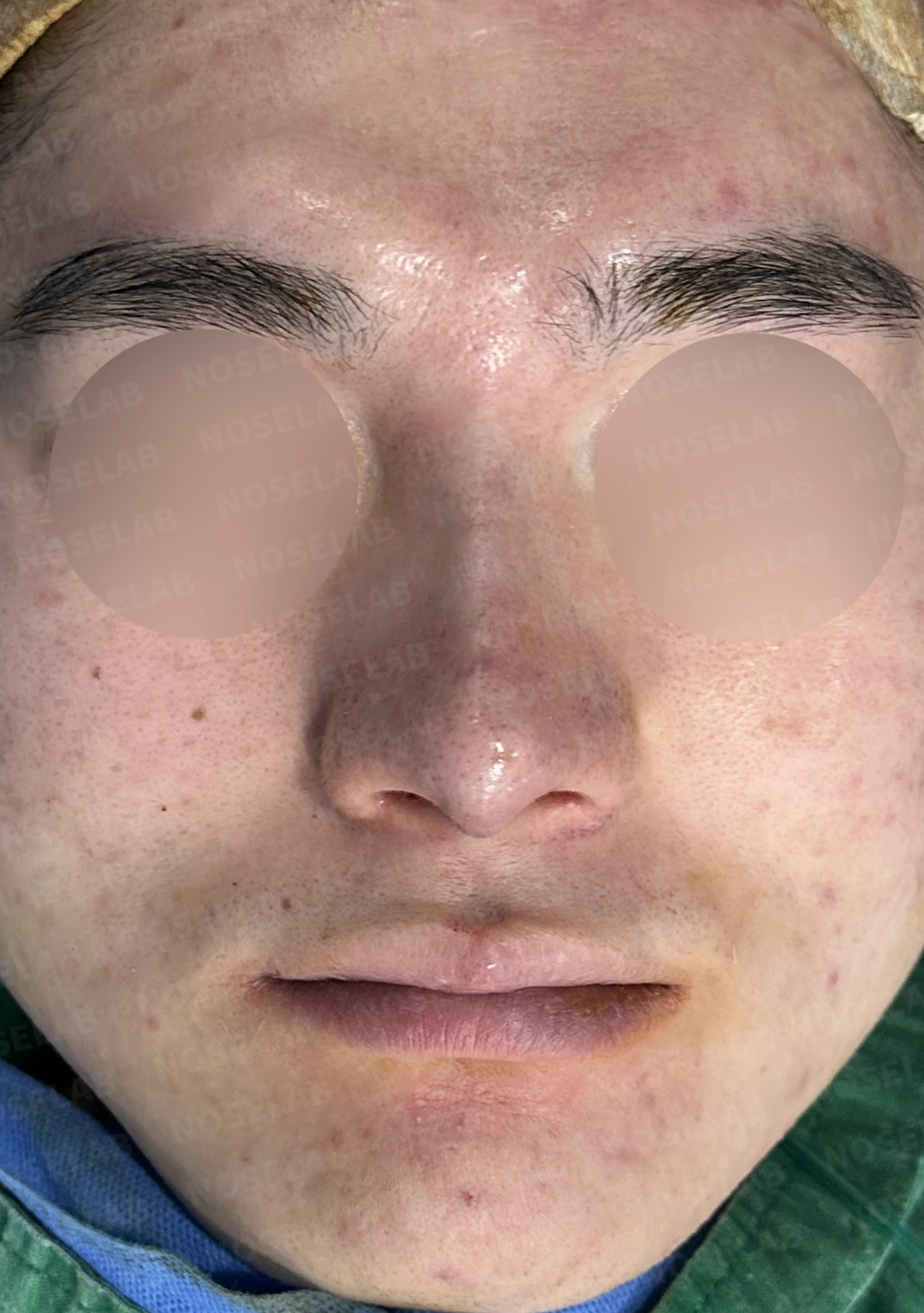
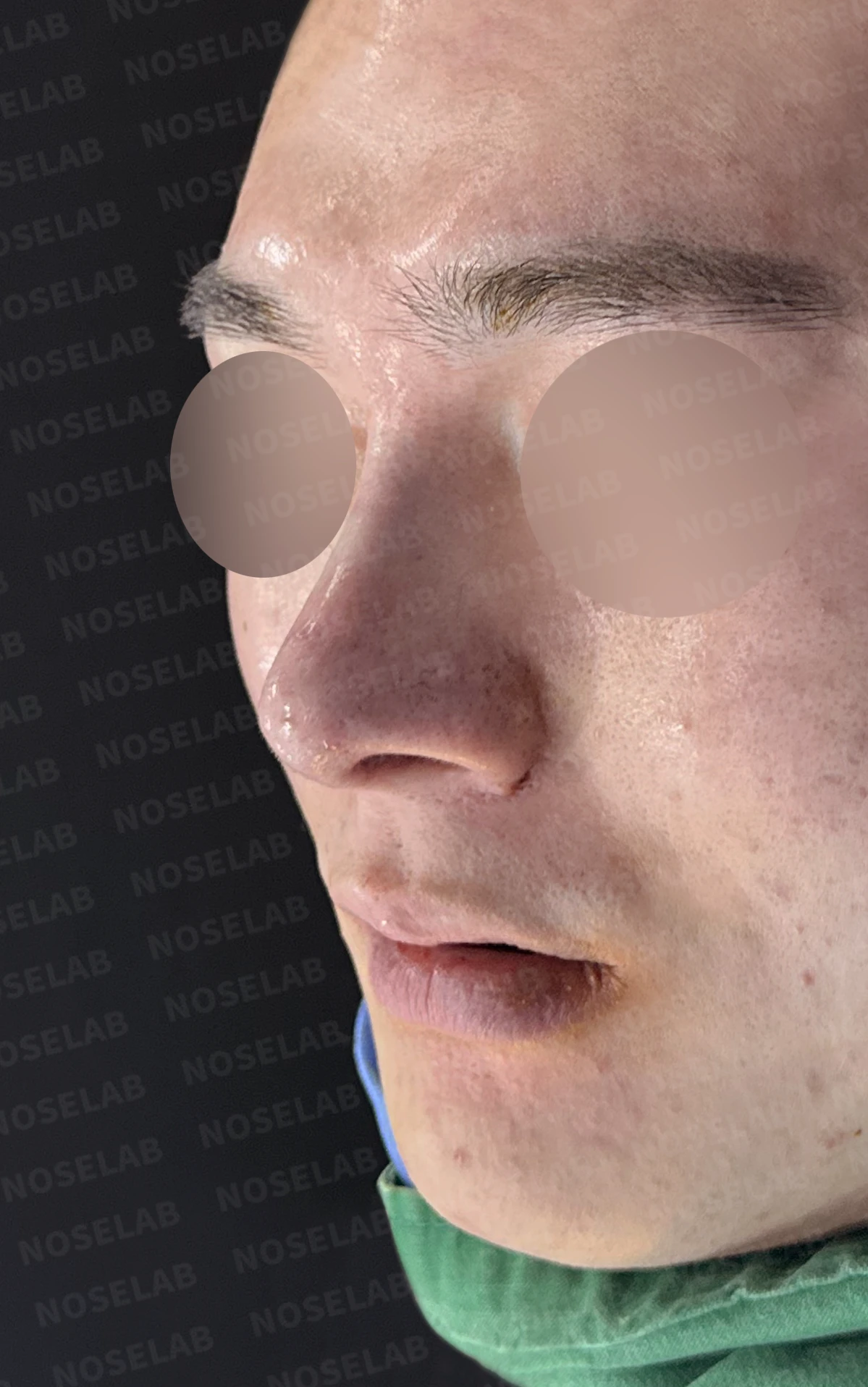
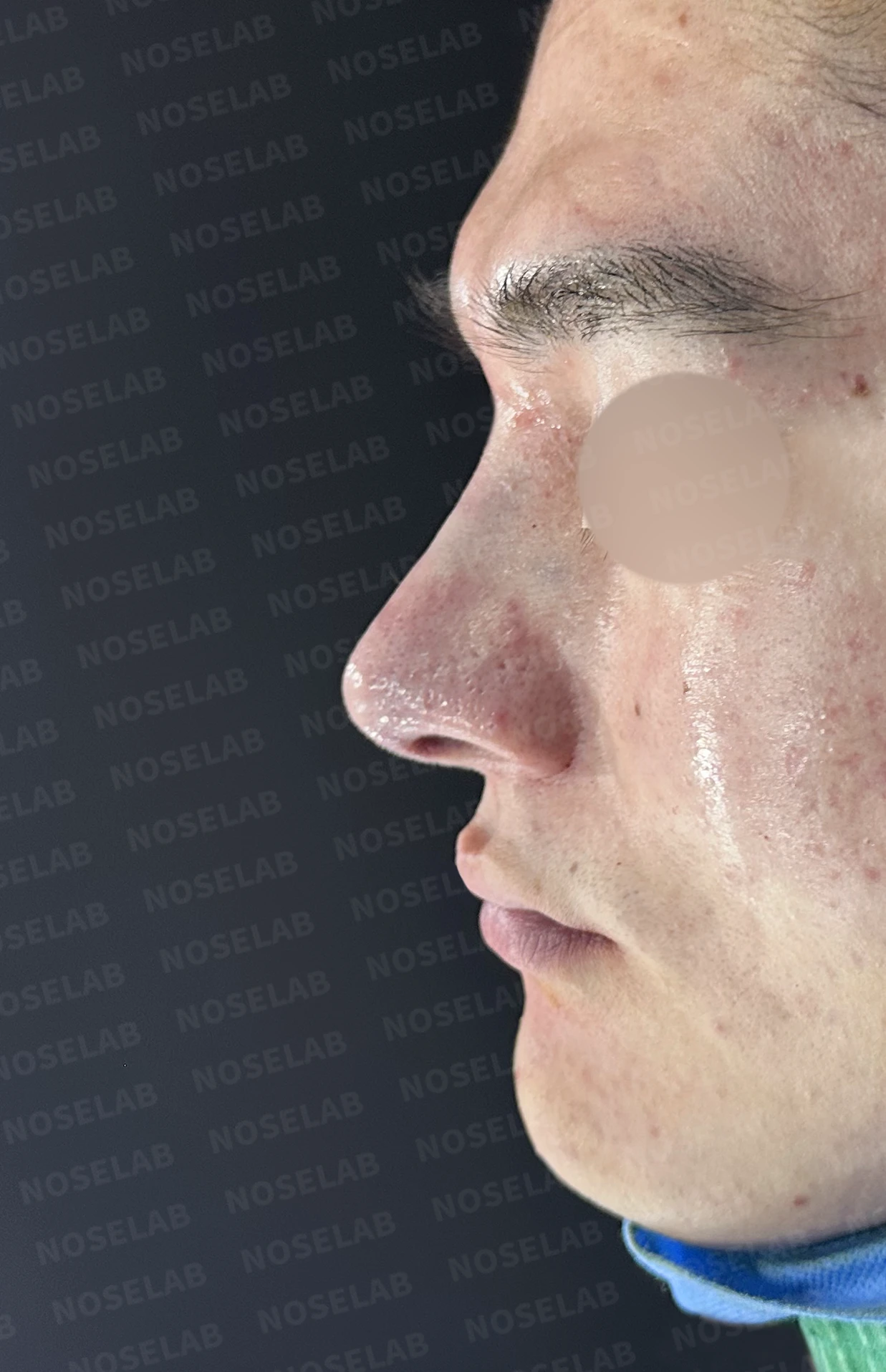
Front, oblique, and profile views on day 0 immediately after surgery. Photos taken immediately after surgery show swelling and may differ from the final result.
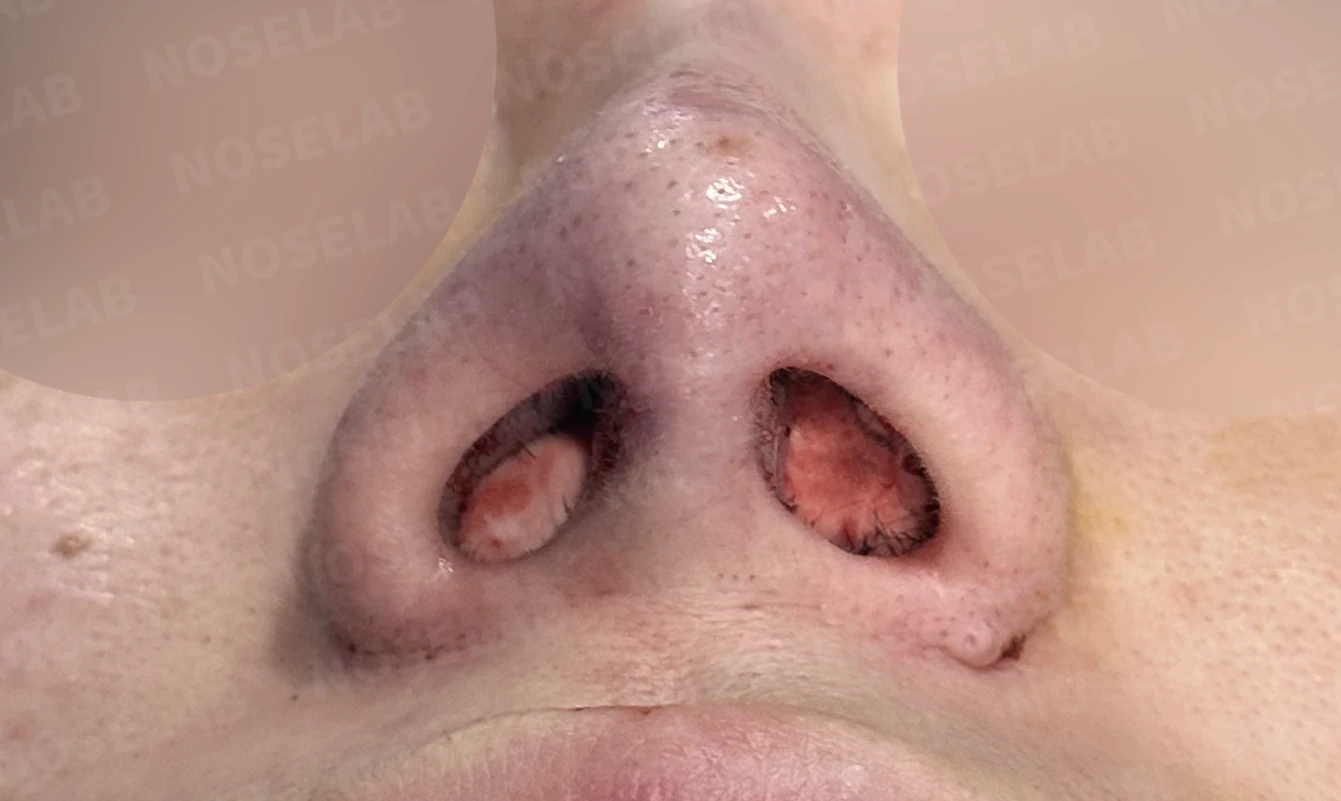
Nostril view on day 0 immediately after surgery. Photos taken immediately after surgery show swelling and may differ from the final result.
For those seeking a higher nose, the most critical factors to consider are natural appearance and structural stability. Pursuing height alone without careful planning can result in an unnatural look or place excessive strain on the skin.
In this case, the patient's prominent brow bones were utilized as an aesthetic advantage. By designing the nasal bridge to harmonize with the height of the brow bones using a 3D custom implant, we were able to create a nose that is high yet harmonizes naturally with the face.
In particular, autologous rib cartilage was used to provide firm support for the nasal tip. Adequate structural support is essential to maintain a high nasal tip over time. Combining a 3D implant with autologous rib cartilage allowed us to achieve an aesthetically pleasing and structurally stable result.
Even patients who have previously undergone surgery can achieve meaningful improvement if they desire a higher and more refined nose. However, it is essential to establish a plan only after accurately evaluating the condition of prior surgeries and surrounding tissues.
I will continue to provide customized surgical approaches tailored to the facial features and concerns of each patient. I hope this case serves as a helpful reference for those considering a higher nasal profile. This has been Dr. Peter C. Kang, Medical Director. Thank you.
#closedrhinoplasty #closedrevisionrhinoplasty #3Dimplant #customrhinoplasty #highbridge #autologousribcartilage #tiprhinoplasty #bridgeaugmentation #male rhinoplasty

Limitations and risks
When autologous rib cartilage is used, scarring and pain may remain at the donor site on the chest, and pneumothorax (pleural injury) can occur rarely. Over time, the grafted cartilage may warp or undergo partial resorption.
When revising after implant removal, contracture may progress again after removal, the nasal height and length may decrease, and staged surgery may be necessary depending on the skin condition.
Common potential risks include infection, bleeding, asymmetry, scarring, skin necrosis, and insufficient improvement; results vary depending on individual skin condition and previous surgical history.