Hello, I am Dr. Peter C. Kang.
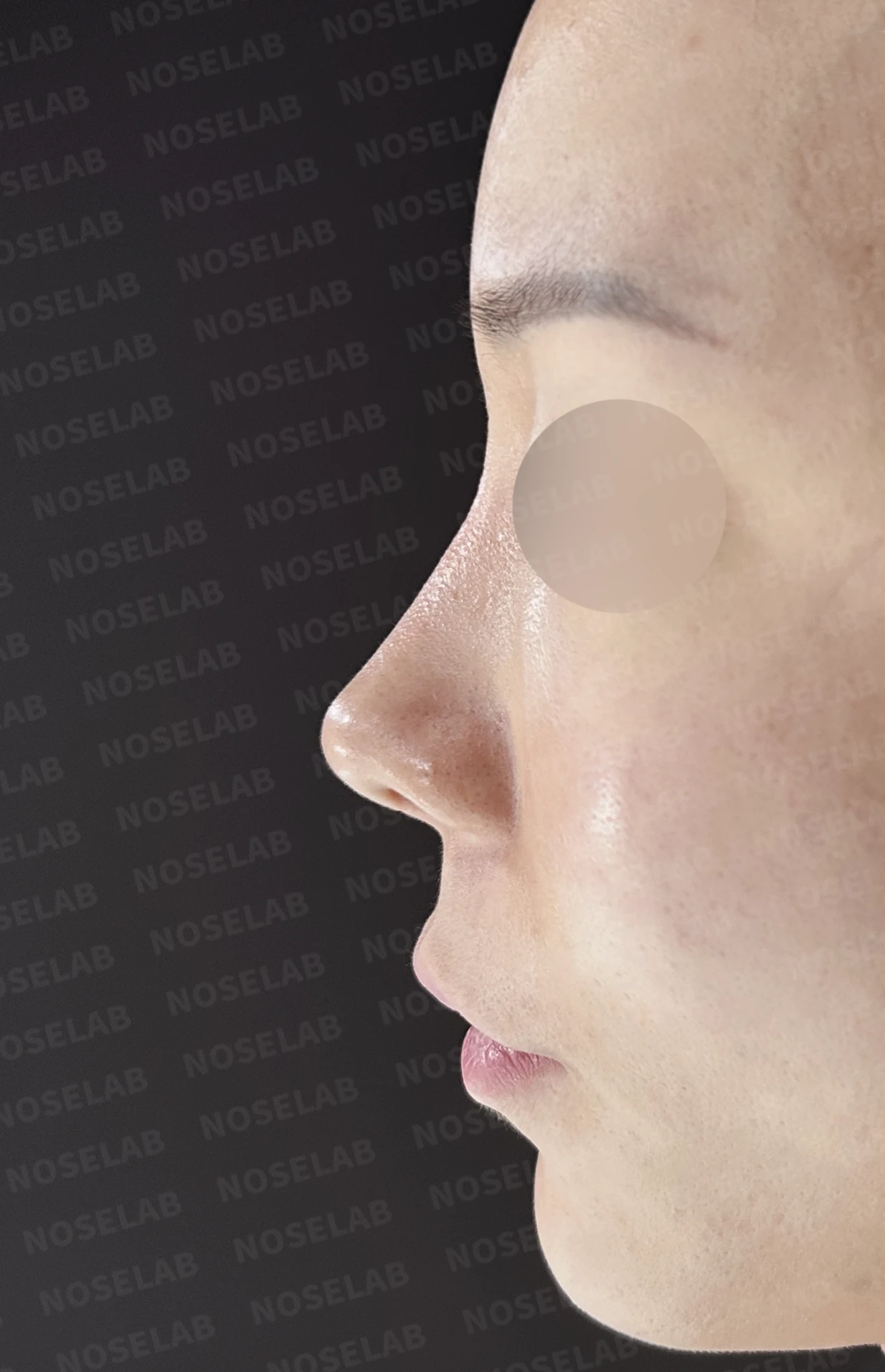
Today, I would like to share the case of a patient who visited our clinic concerned about a crooked nose and an elongated columella. She was bothered by the columella hanging down excessively in profile view and also wanted to correct the deviation throughout the entire nose.
🔍 Surgical history
5 years ago: Filler procedure (dissolved before surgery, remaining filler removed during surgery)
2 years ago: Silicone implant + ear cartilage surgery
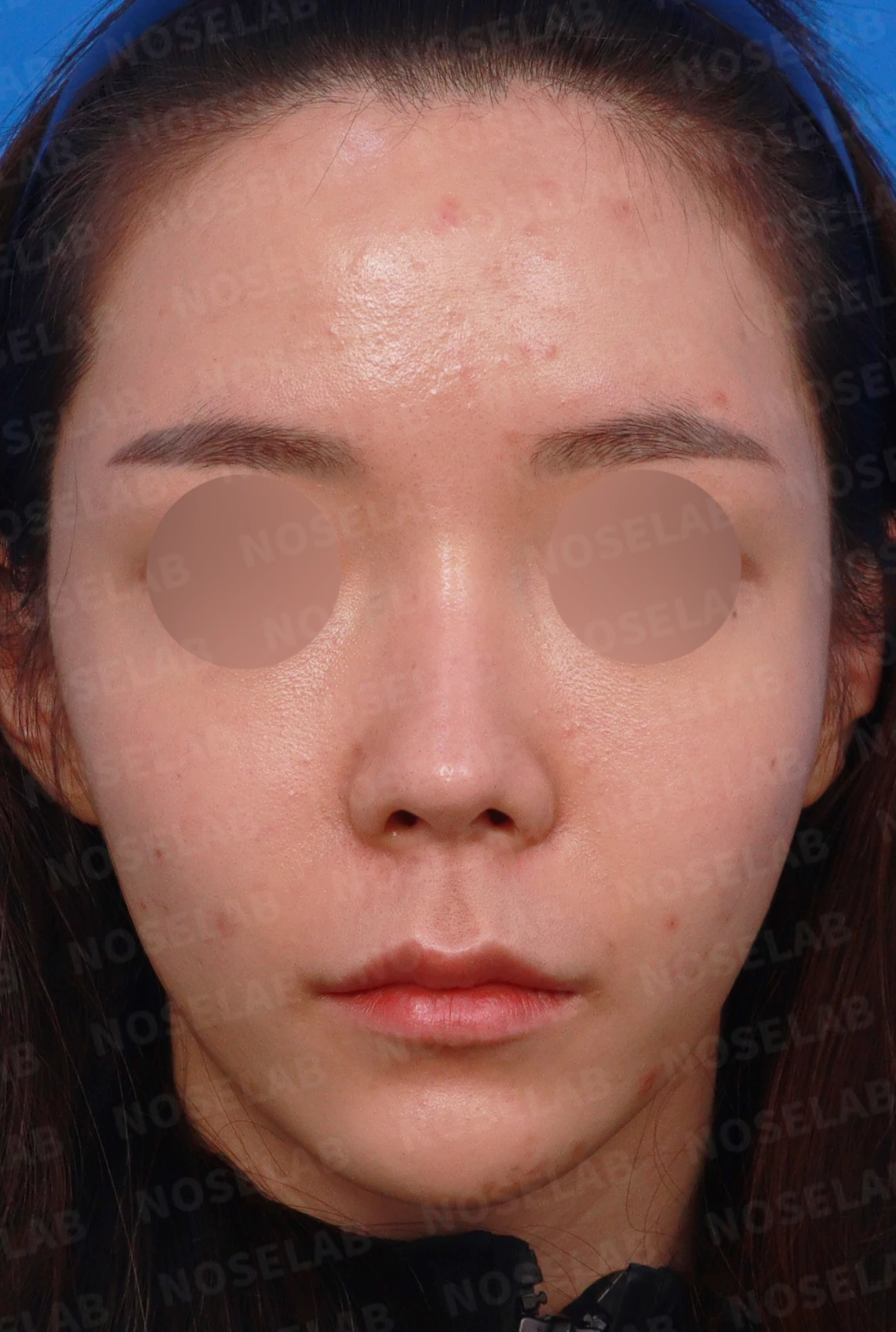
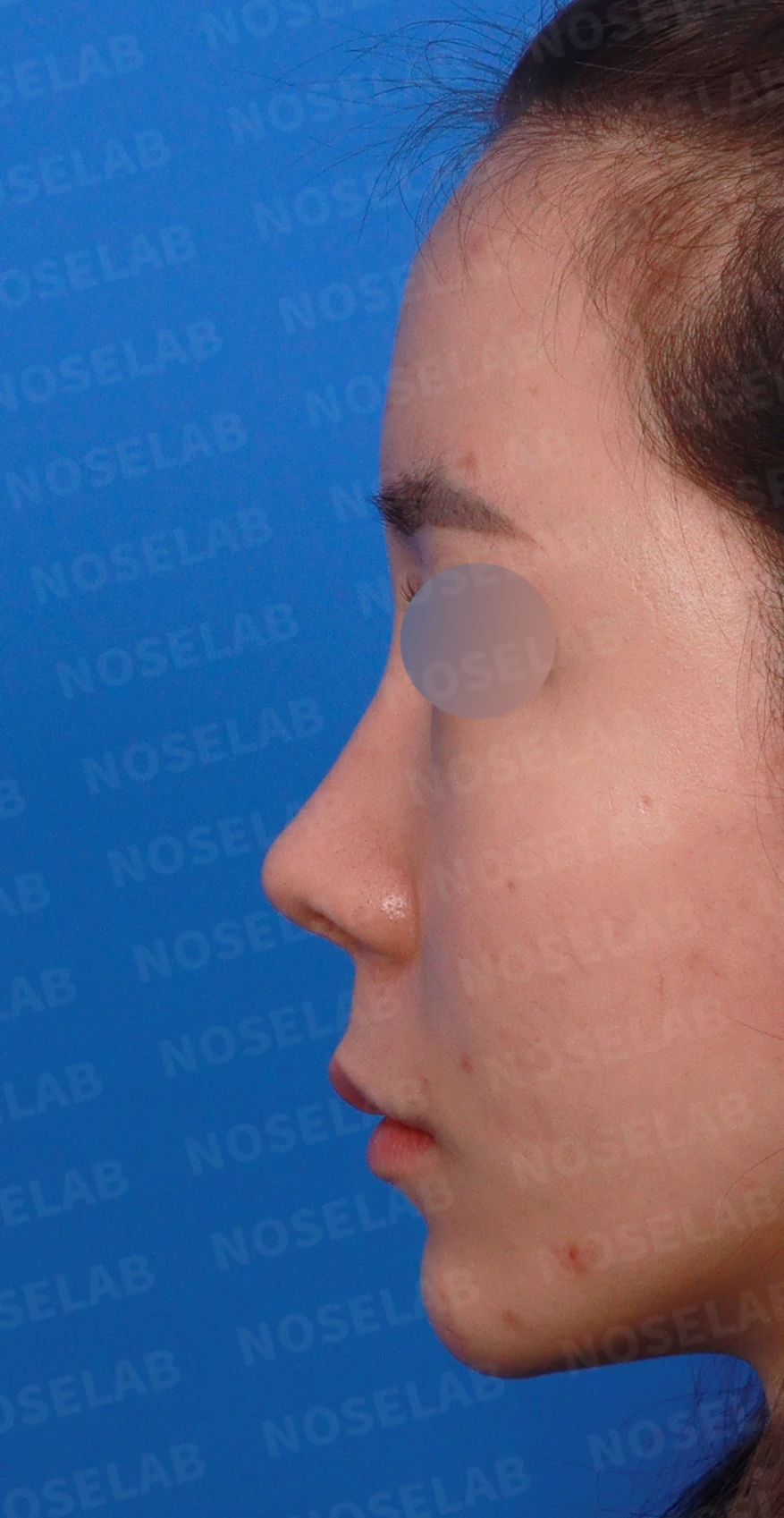
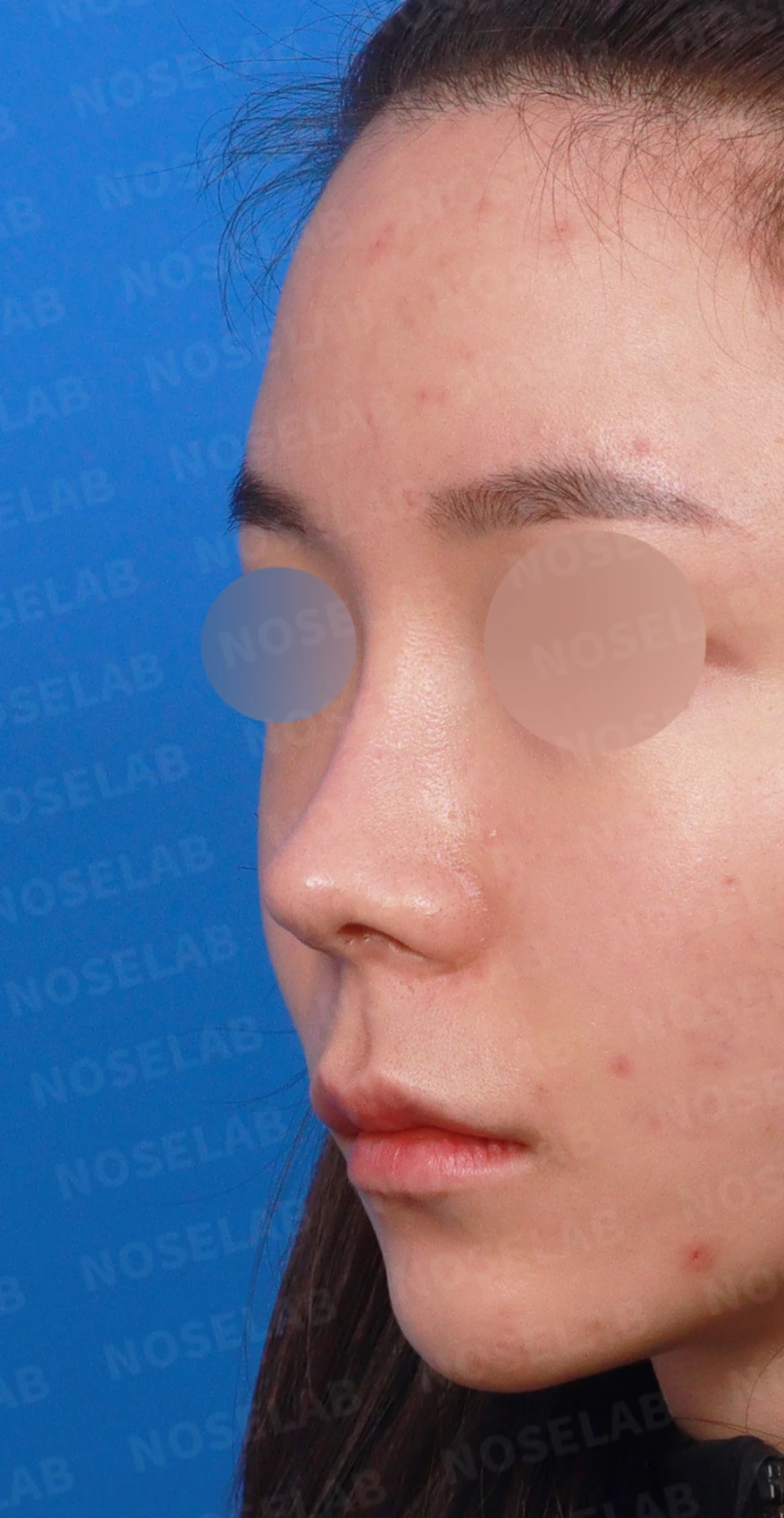
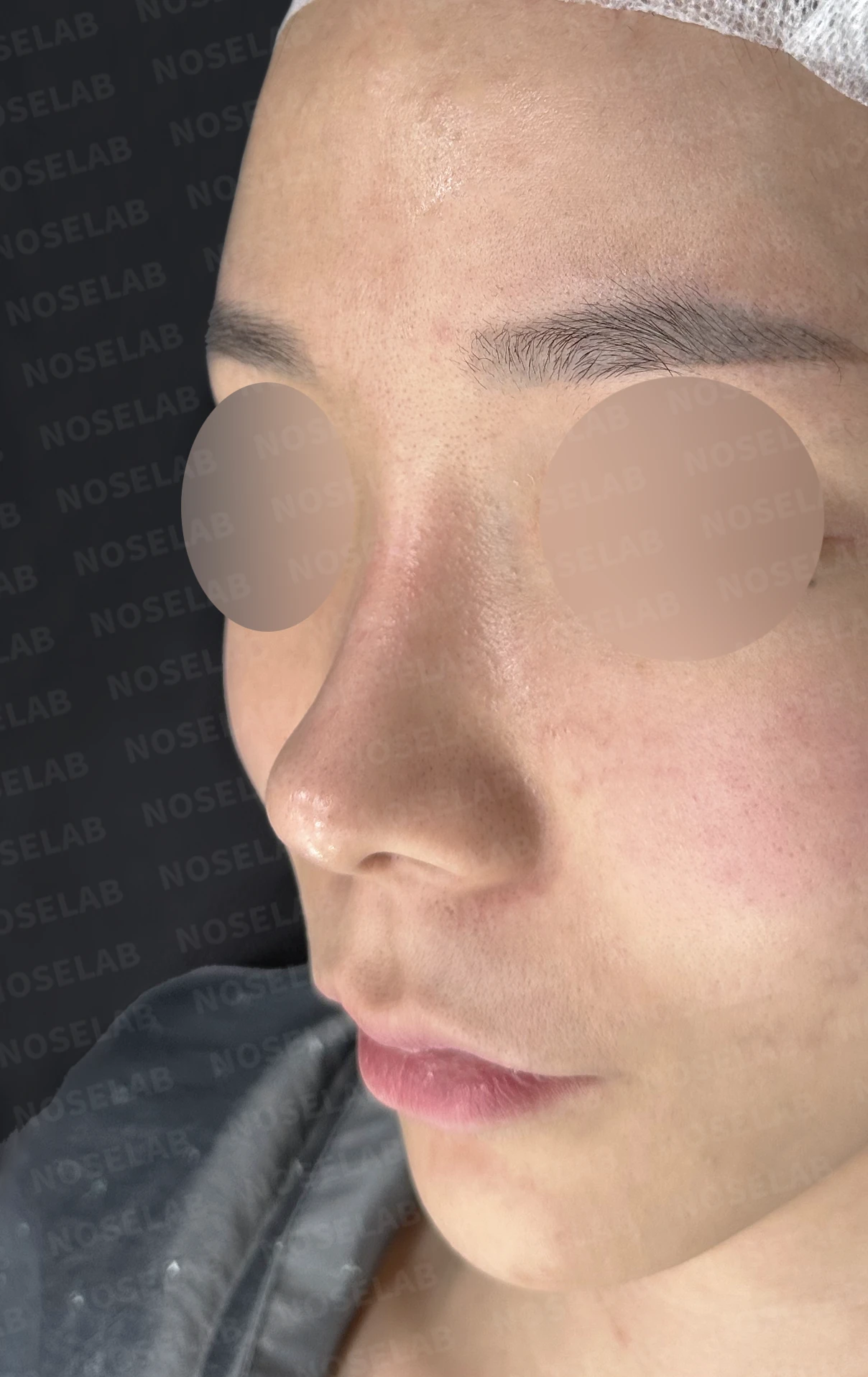
Front, left profile, and oblique views during design consultation.
💉 Patient requests
Correction of deviated nose
Goal: Reduce the columella (correct the elongated columella)
Natural profile line
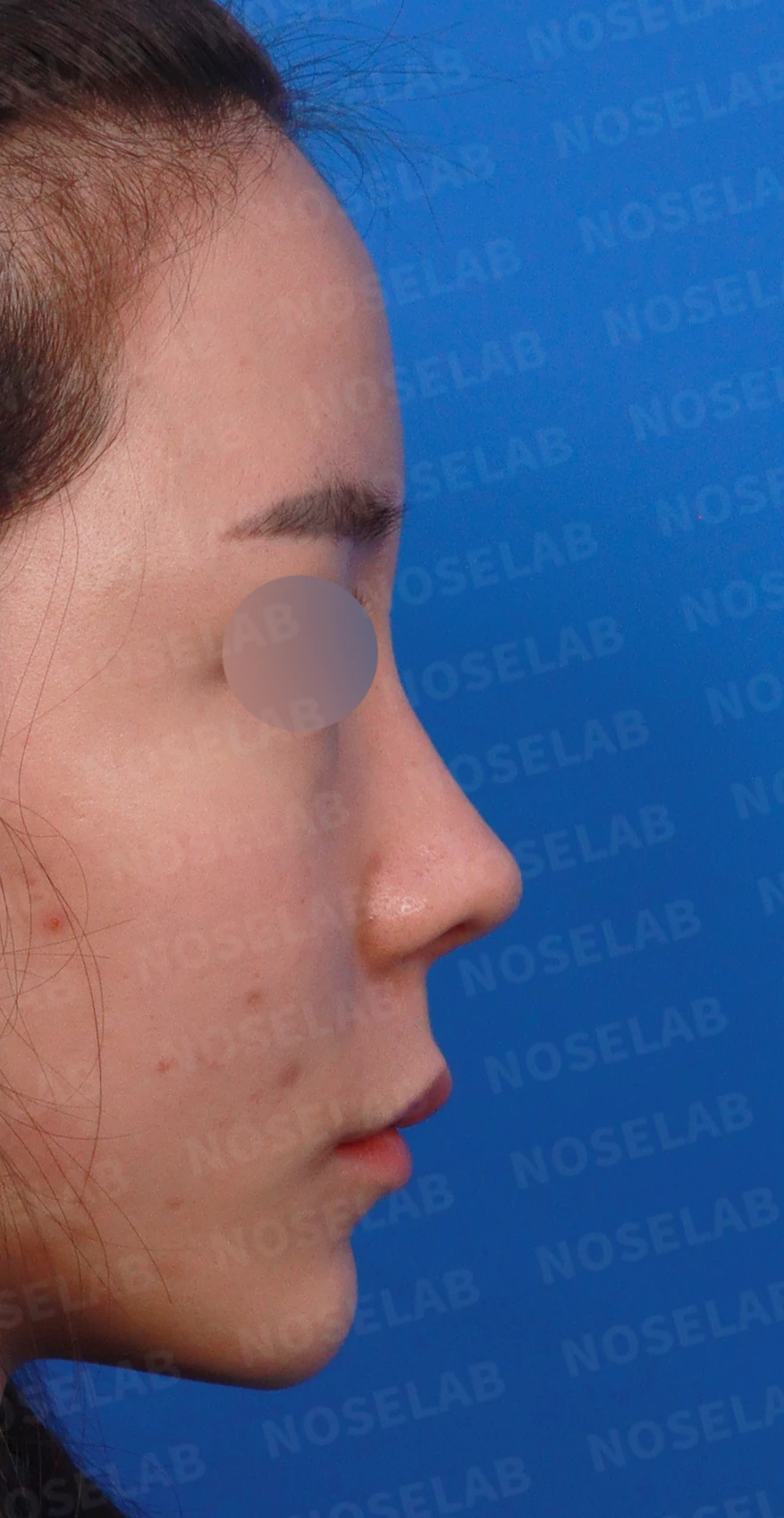
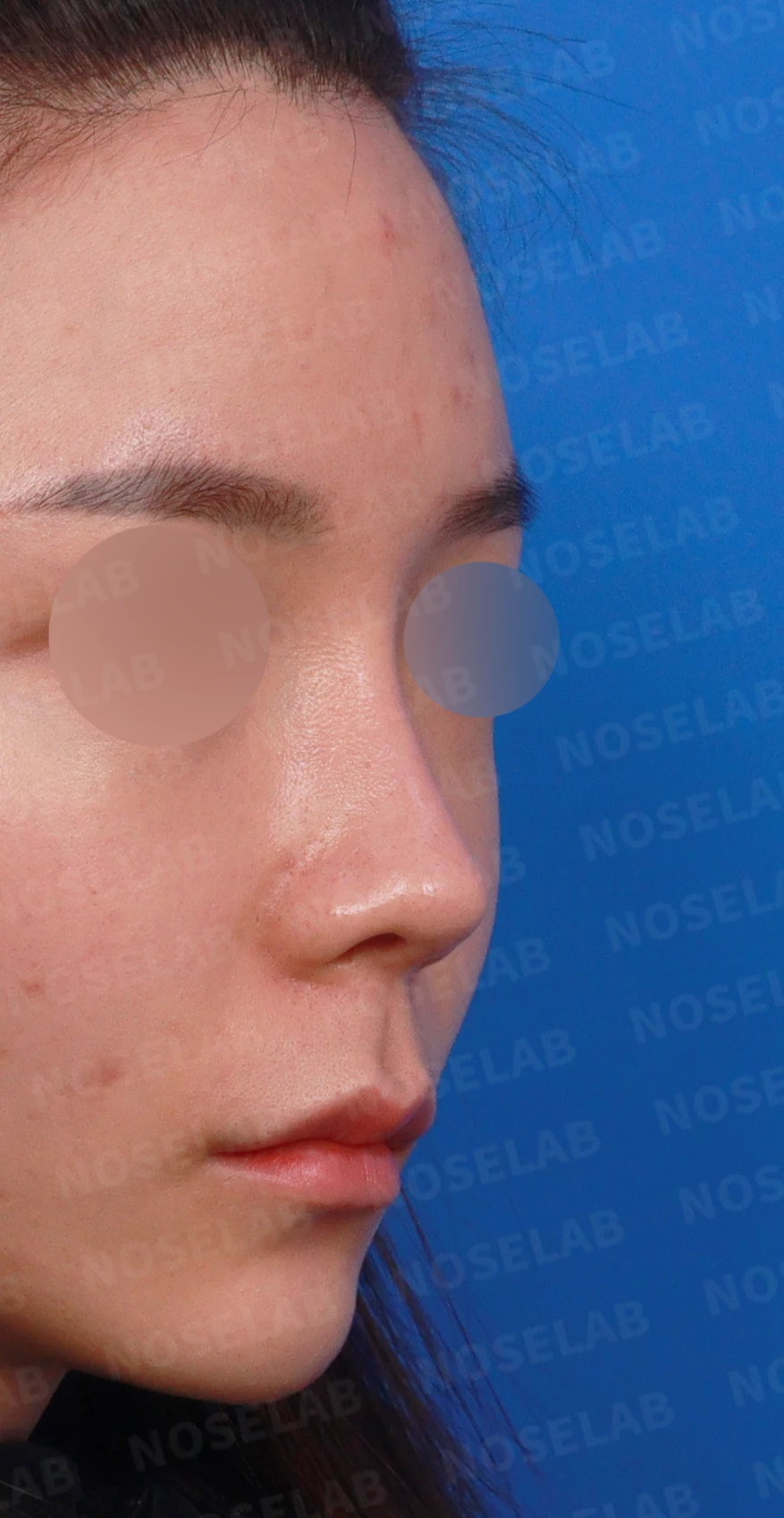
Front, left profile, and oblique views during design consultation.
Surgical plan and procedure
1. Tip cartilage repositioning using autologous rib cartilage
Removal of existing ear cartilage and replacement with autologous rib cartilage
Reinforcement of the nasal tip support framework
Adjustment of columellar length by repositioning the cartilage
2. Correction of the crooked nose
Realignment of the central nasal axis through septal correction
Securing symmetry along the nasal bridge line
3. Nasolabial angle correction
Angle adjustment that naturally elevates the columella
Reduction of columellar show in profile view
Establishment of a balanced relationship between the nose and lips
🌟 Surgical results
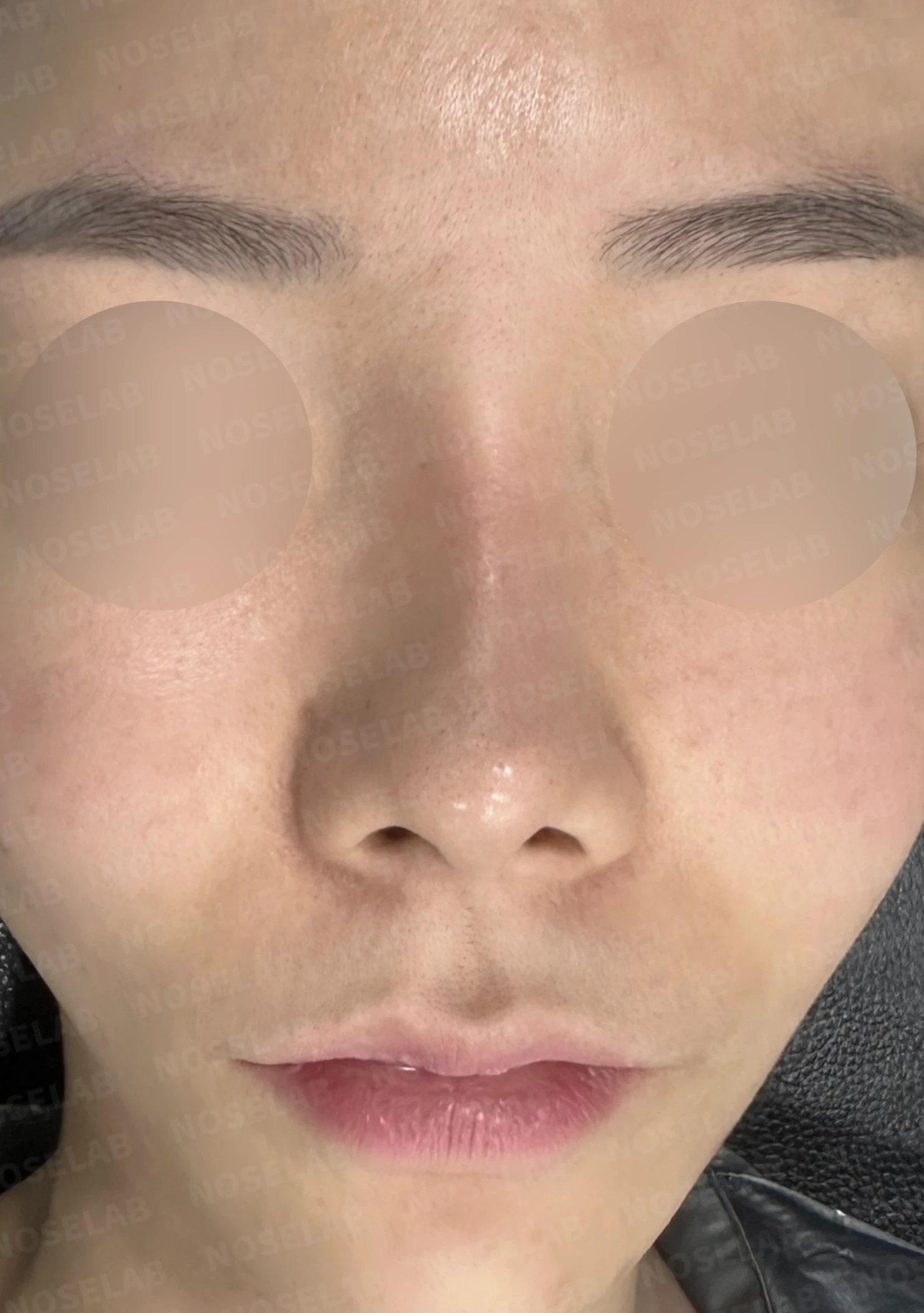
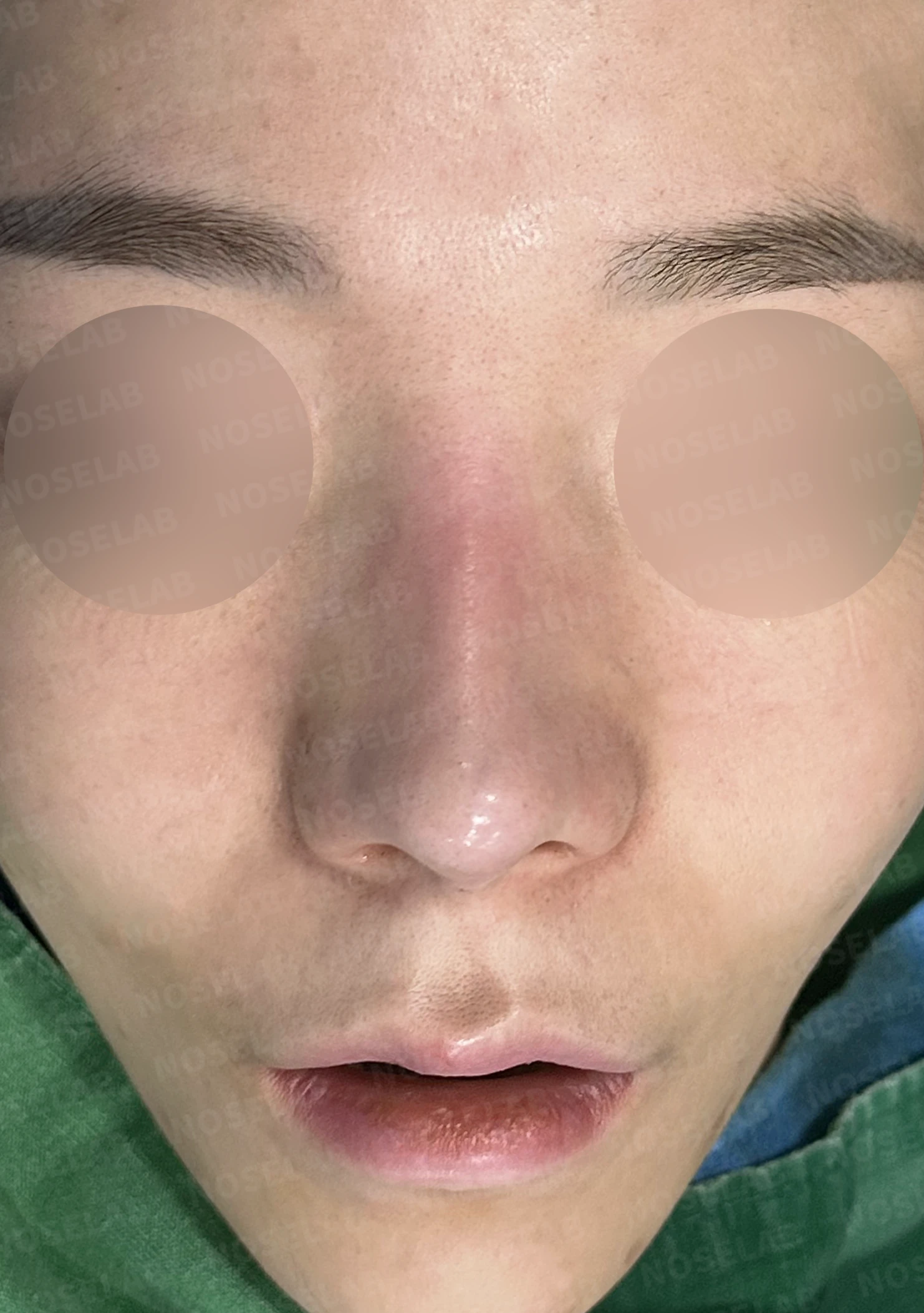
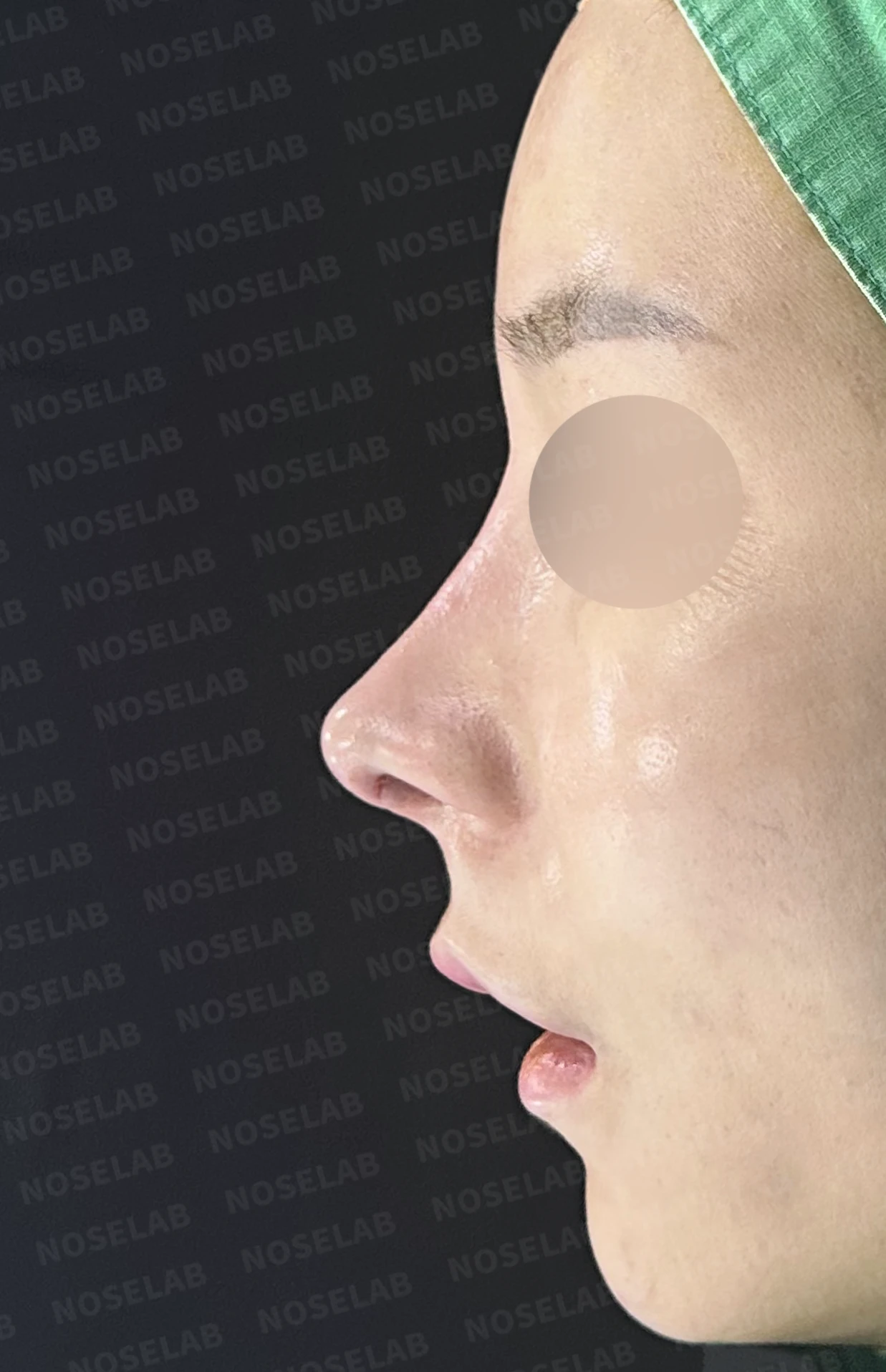
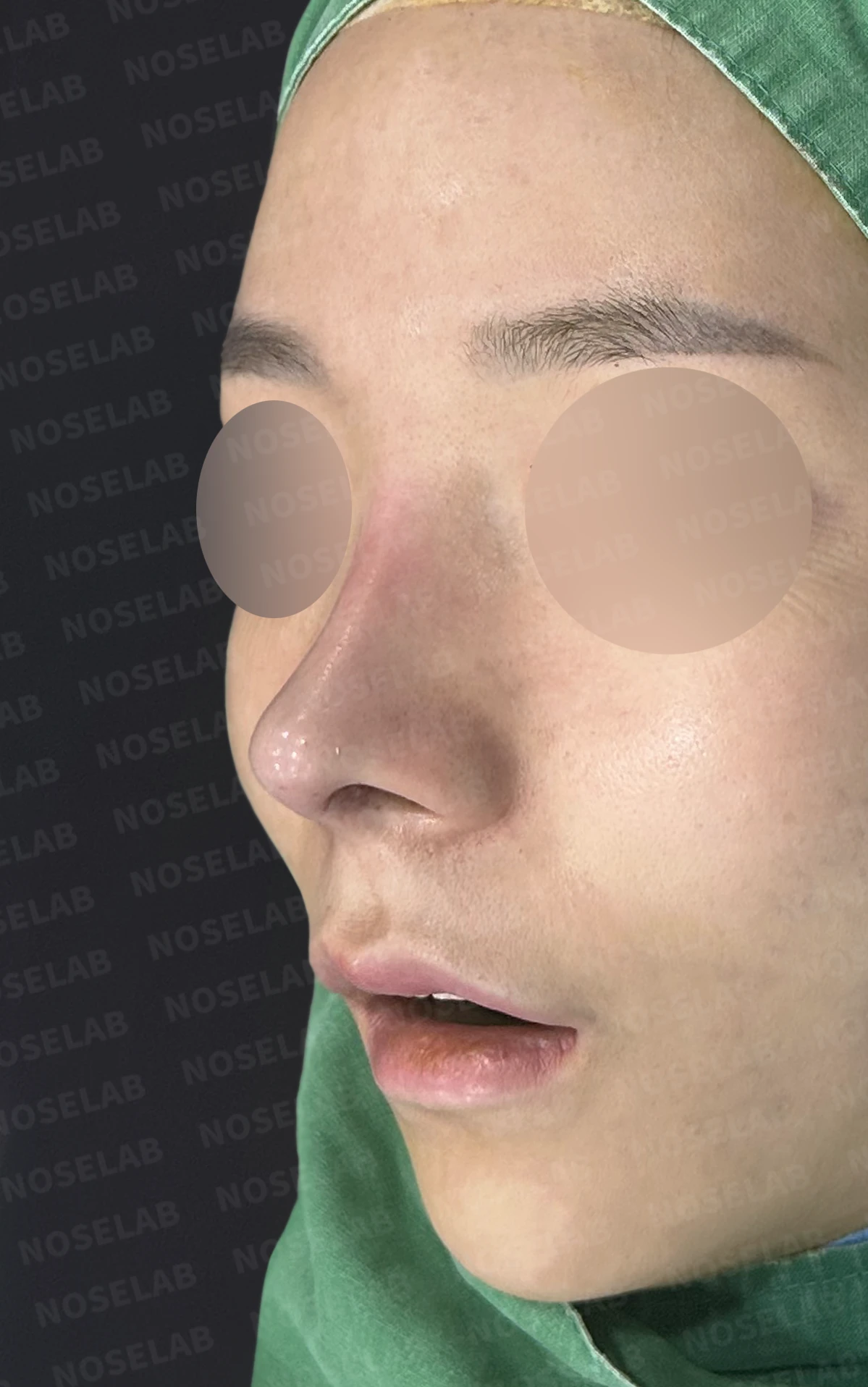
Before surgery / Day 0 immediately after surgery Photos taken immediately after surgery show swelling and may differ from the final result.
1. Frontal changes
The crooked nose was aligned along the midline
Improvement toward a more defined and refined nasal tip
Improved overall nasal symmetry
Before surgery / Day 0 immediately after surgery Photos taken immediately after surgery show swelling and may differ from the final result.
2. Profile changes
Naturally shortened appearance of the previously elongated columella
A refined profile line through nasolabial angle correction
Improved balance between the nasal tip and the lips
An overall soft and feminine profile
Before surgery / Day 0 immediately after surgery Photos taken immediately after surgery show swelling and may differ from the final result.
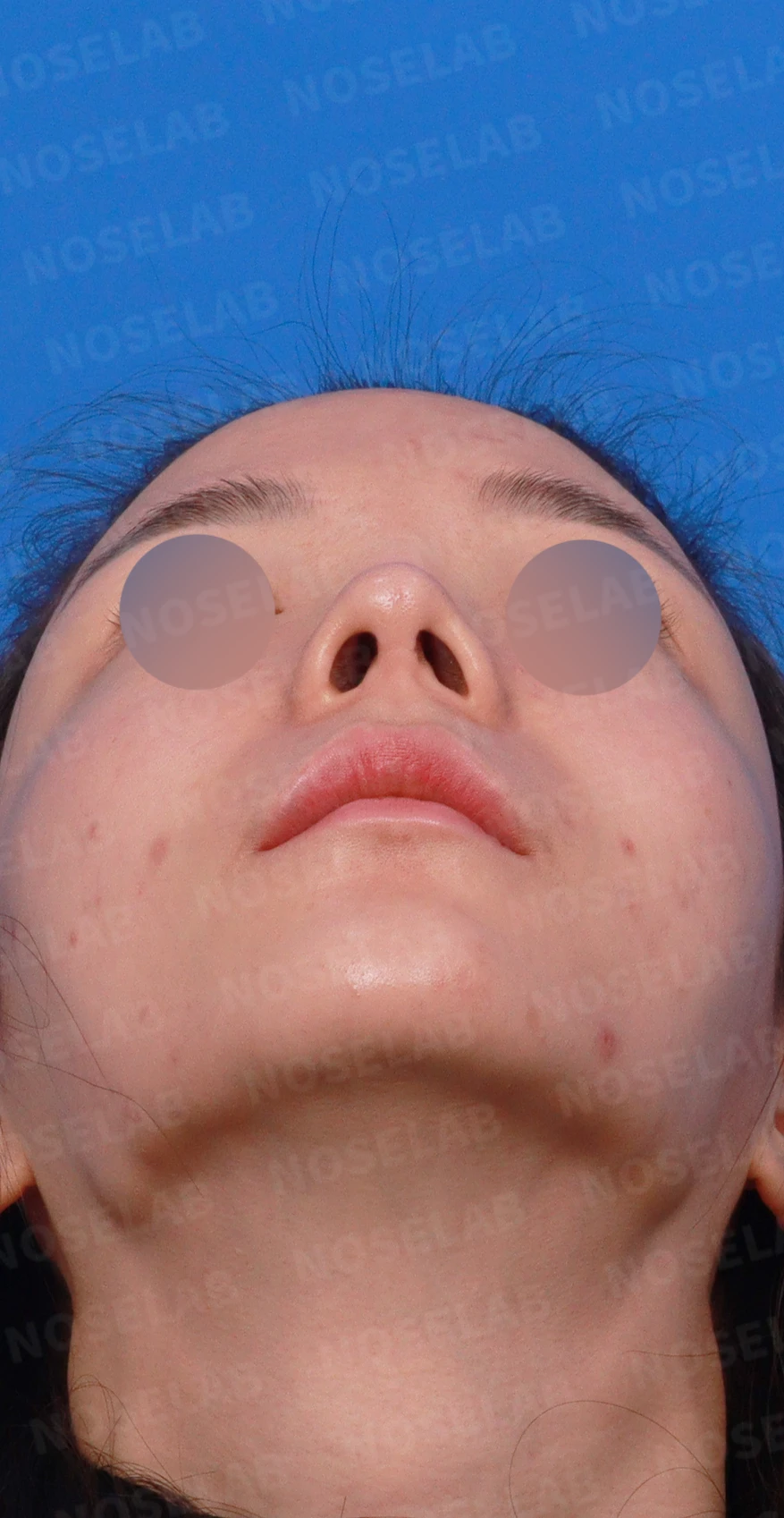
3. Nostril changes
Improvement in nostril shape through adjustment of columellar length
A more balanced appearance viewed from below
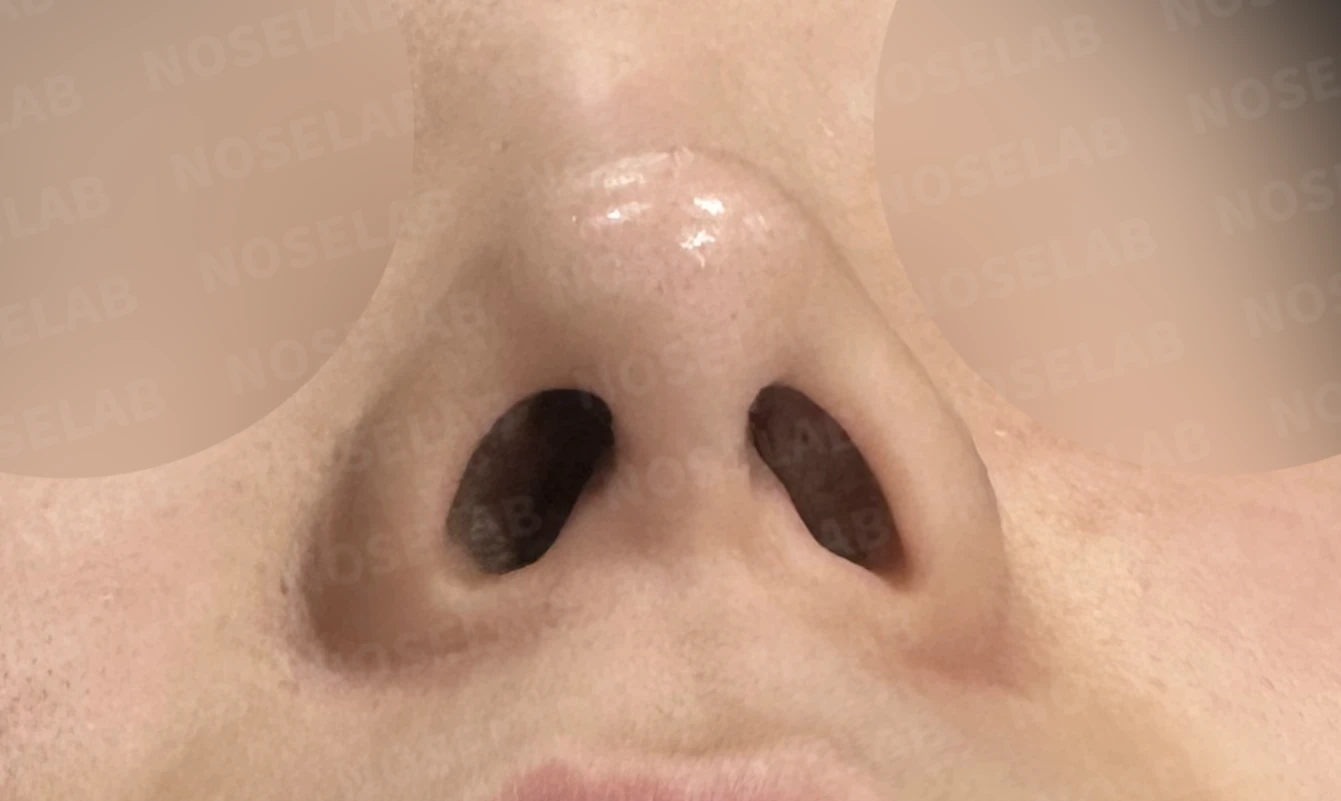
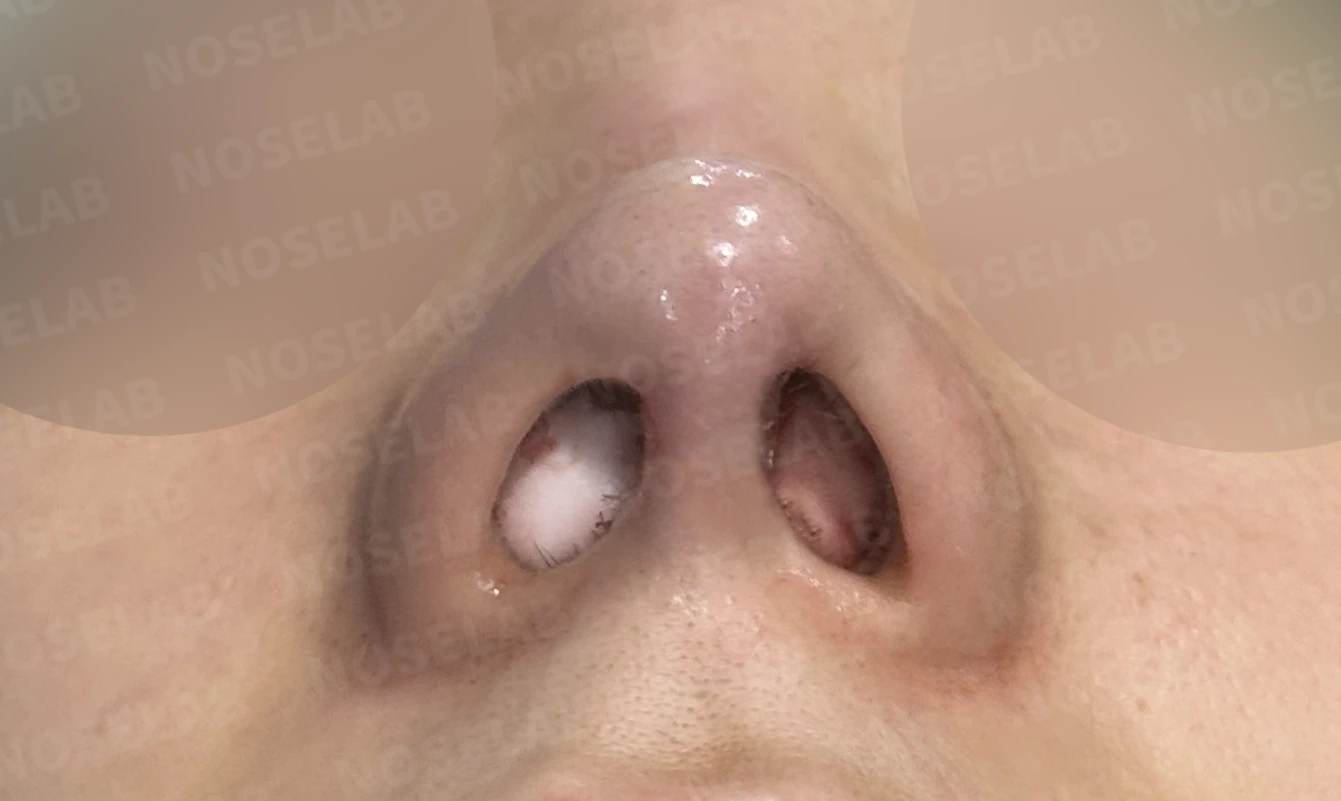
Before surgery / Day 0 immediately after surgery Photos taken immediately after surgery show swelling and may differ from the final result.
💡 Specialist opinion
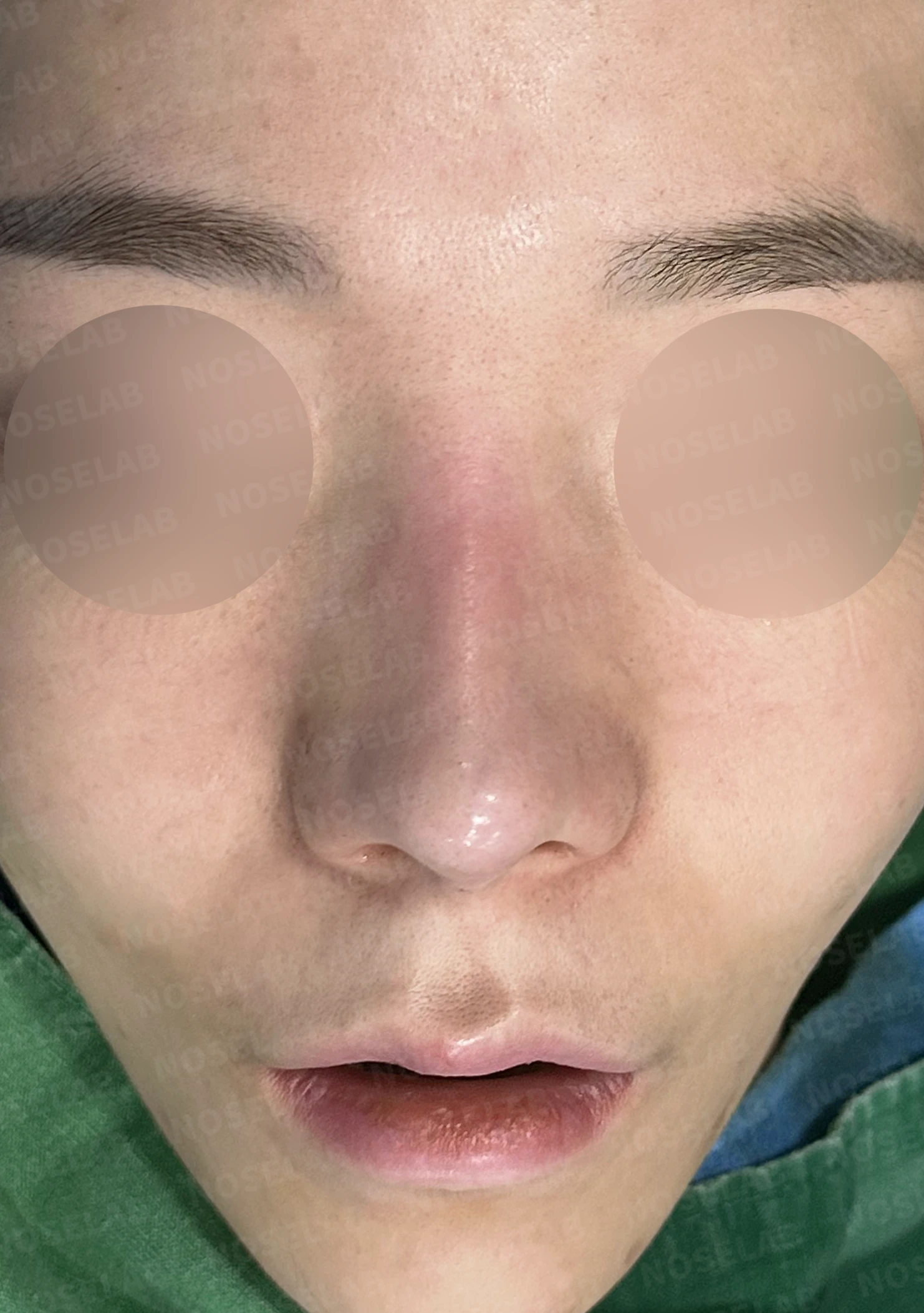
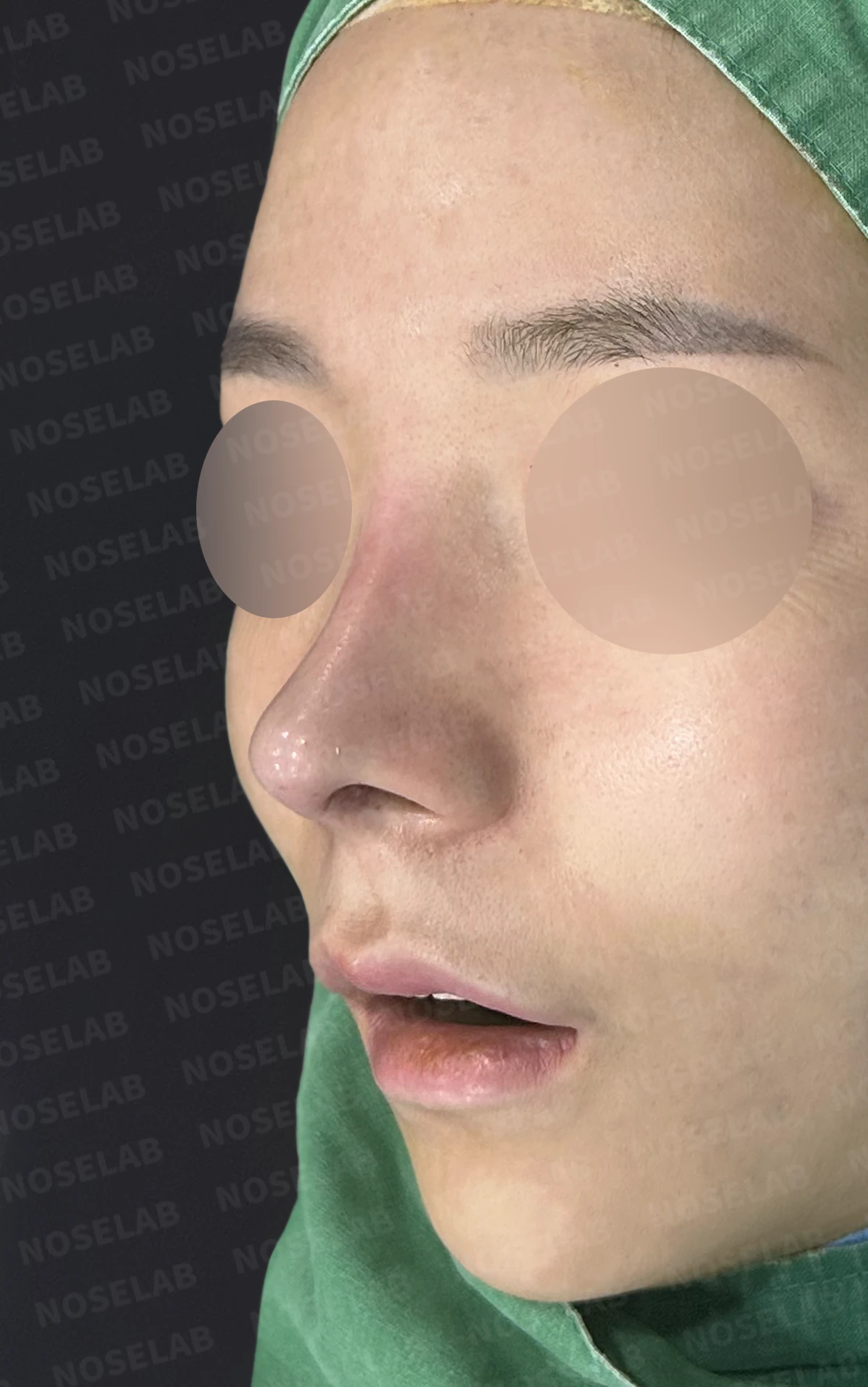
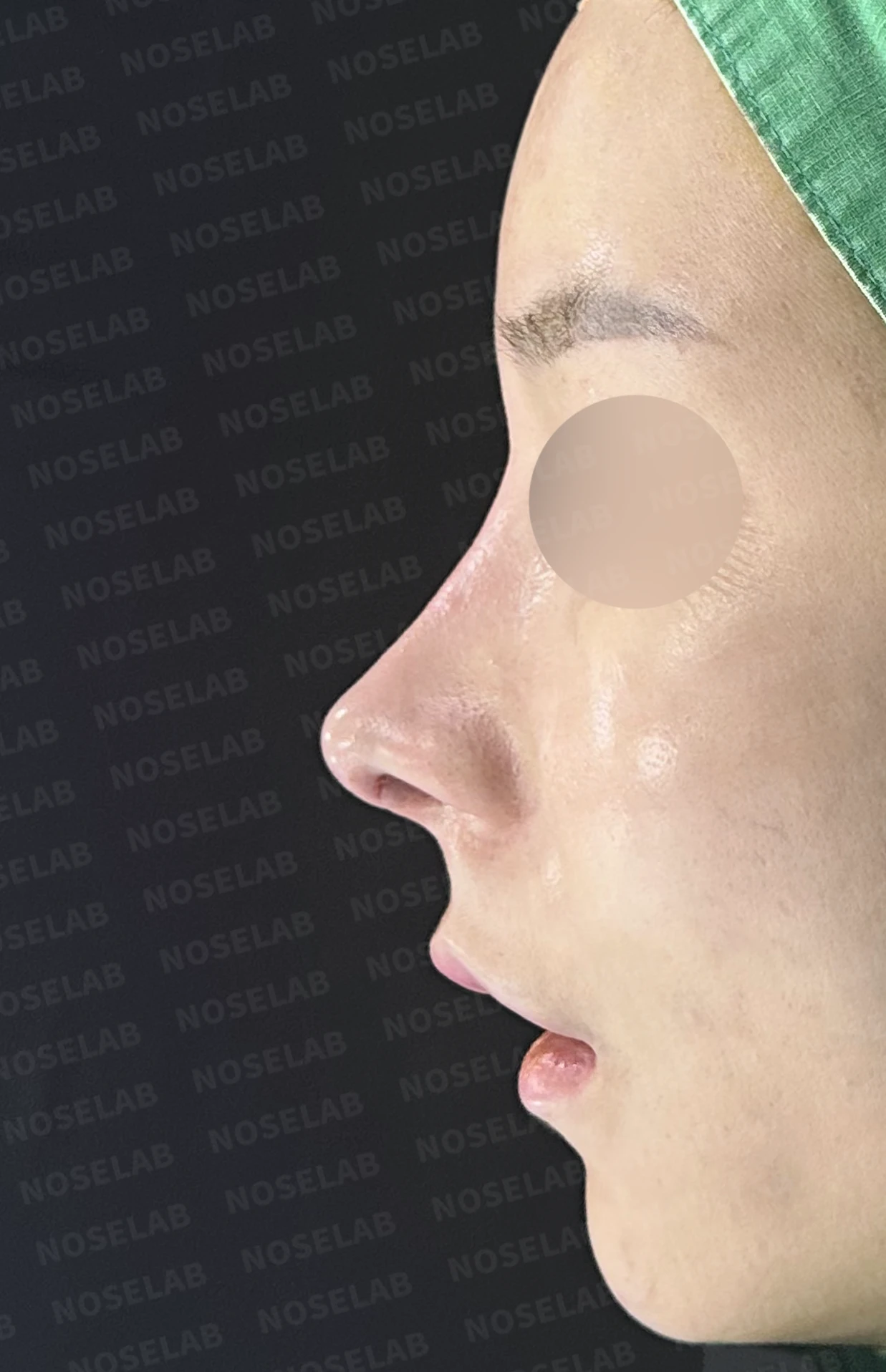
Day 0 immediately after surgery: front, oblique, and profile viewsPhotos taken immediately after surgery show swelling and may differ from the final result.
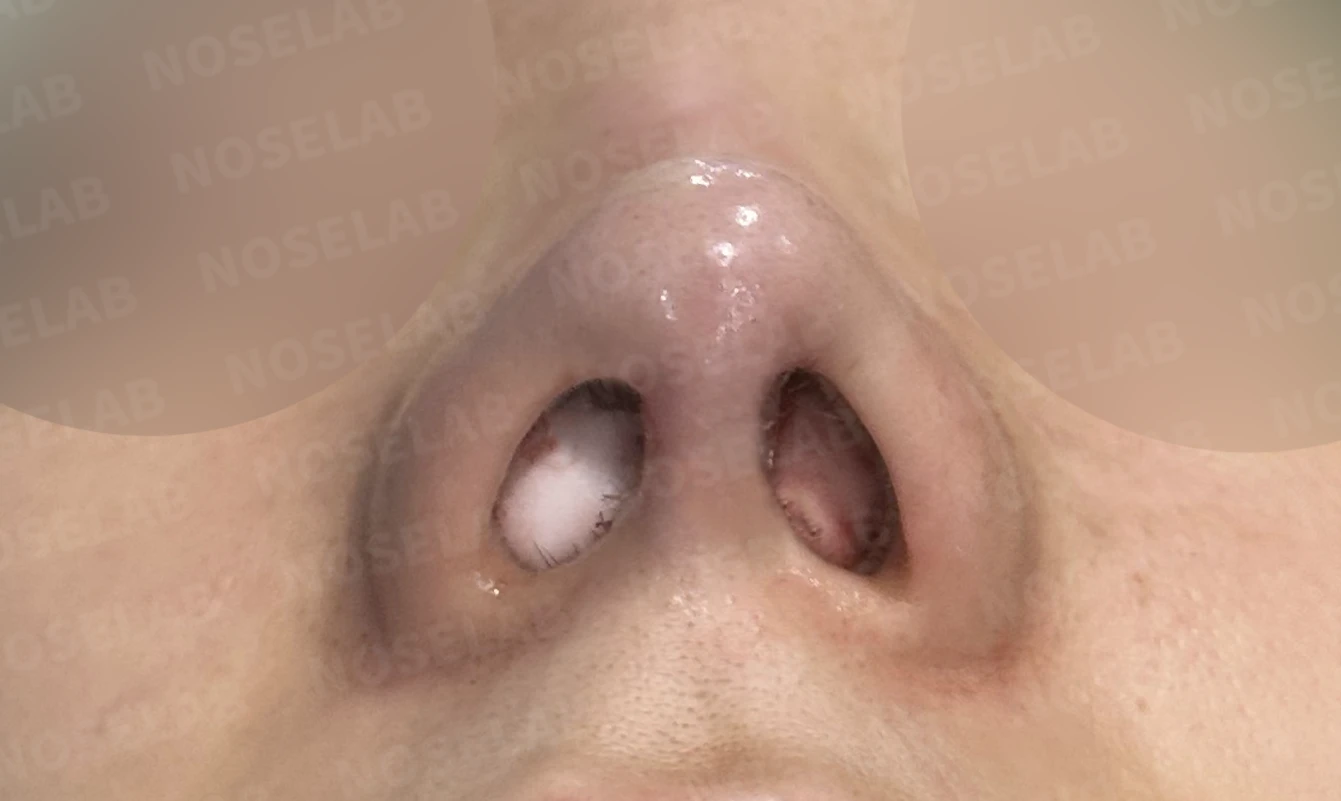
Day 0 immediately after surgery: nostril viewPhotos taken immediately after surgery show swelling and may differ from the final result.
An elongated columella is a concern shared by many patients. When the columella hangs down excessively in profile view, the nose can look drooping or resemble an arrow nose, which frequently causes dissatisfaction.
In this type of case, we naturally adjusted the length of the columella by repositioning the nasal tip cartilage using autologous rib cartilage. Rather than simply trimming the columella, we repositioned the tip cartilage and readjusted its angle to correct the nasolabial angle, achieving a natural and balanced result.
In particular, replacing the previously used ear cartilage with autologous rib cartilage reinforced the support of the nasal tip. This plays an important role in maintaining the effect of the nasolabial angle correction over time. By simultaneously correcting the crooked nose, symmetry was also improved on the front view. This is a good example of addressing multiple concerns in a single surgery. I hope this case is helpful to anyone concerned about an elongated columella or looking to correct a crooked nose.
This was Dr. Peter C. Kang. Thank you.
#closedrhinoplasty #closedrevisionrhinoplasty #crookednosecorrection #nasolabialanglecorrection #columellacorrection #autologousribcartilage #tiprhinoplasty #female rhinoplasty

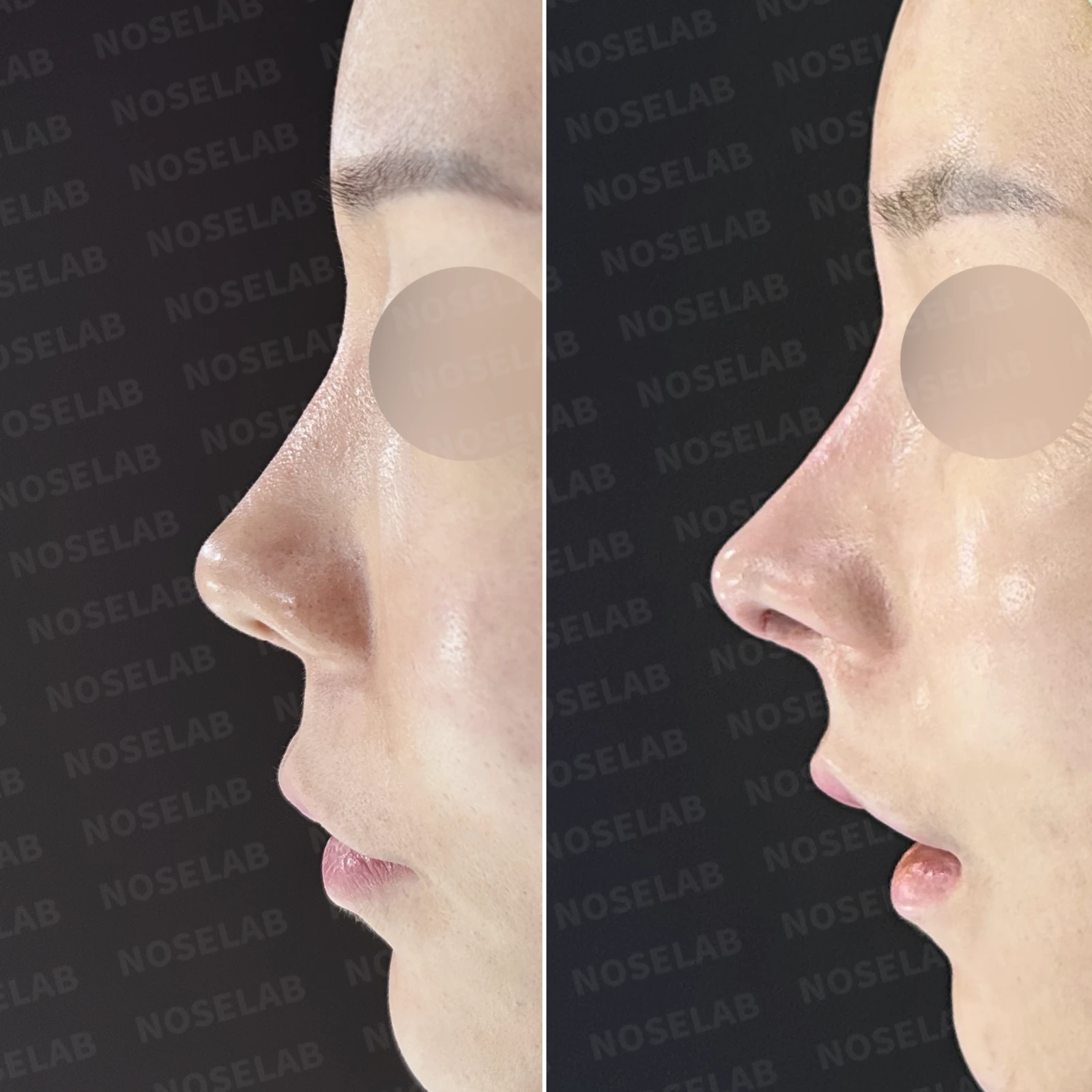
Limitations and risks
When autologous rib cartilage is used, scarring and pain may remain at the donor site on the chest, and pneumothorax (pleural injury) can occur rarely. Over time, the grafted cartilage may warp or undergo partial resorption.
When foreign materials such as injected fillers are removed and reconstructed, contracture may recur, nasal height and length may decrease, and staged surgery may be necessary depending on the skin condition.
When the septum is corrected at the same time, nasal obstruction may persist or recur, and in rare cases, septal perforation or changes in smell may occur.
Common potential risks include infection, bleeding, asymmetry, scarring, skin necrosis, and insufficient improvement; results vary depending on individual skin condition and previous surgical history.