Hello, I am Dr. Peter C. Kang.
Today, I would like to share a case of a patient who suffered from severe nasal obstruction due to nostril stenosis that occurred after a third rhinoplasty.
Through this case, let us take a detailed look at correcting nostril stenosis, straightening a crooked nose, and relieving nasal obstruction.
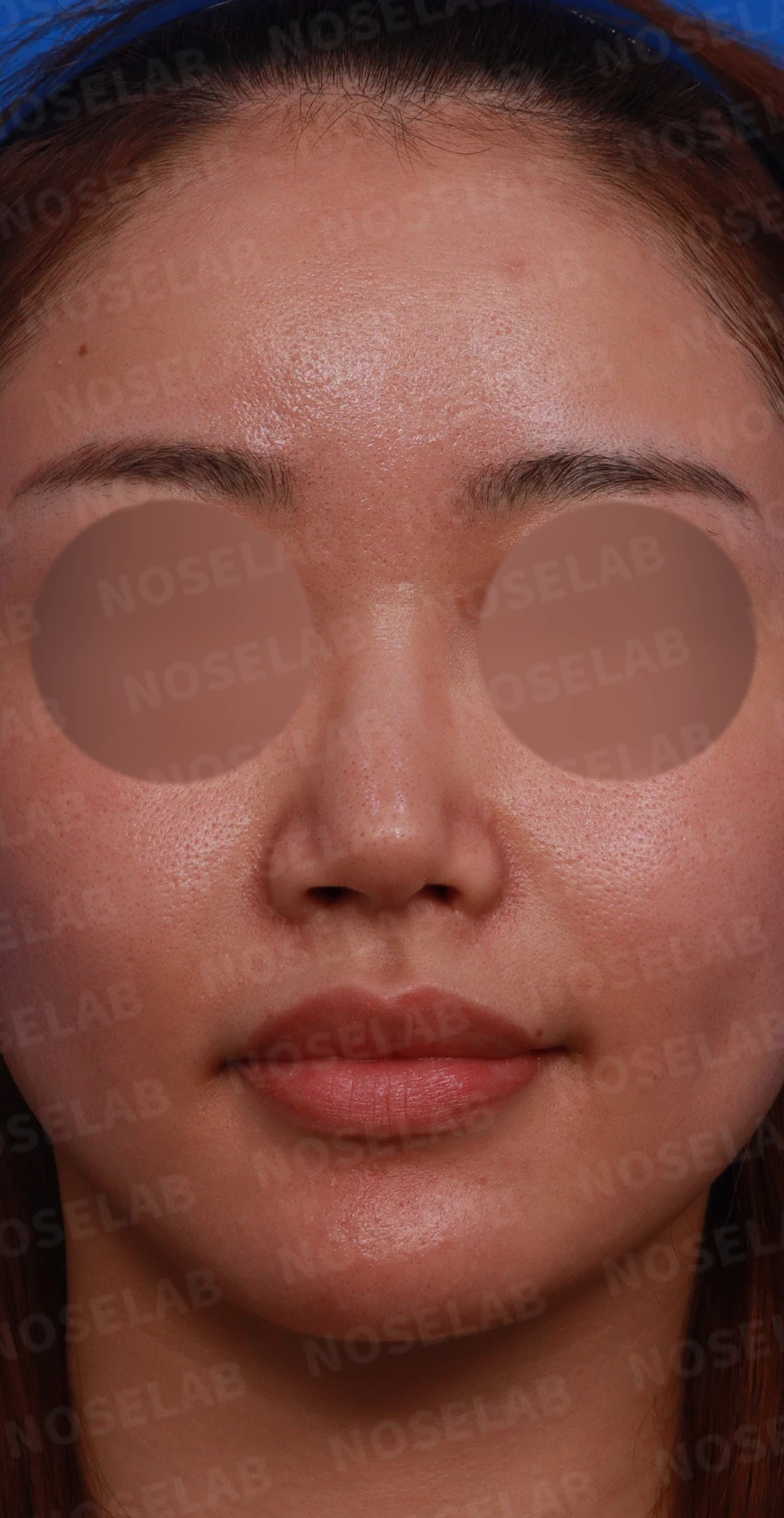
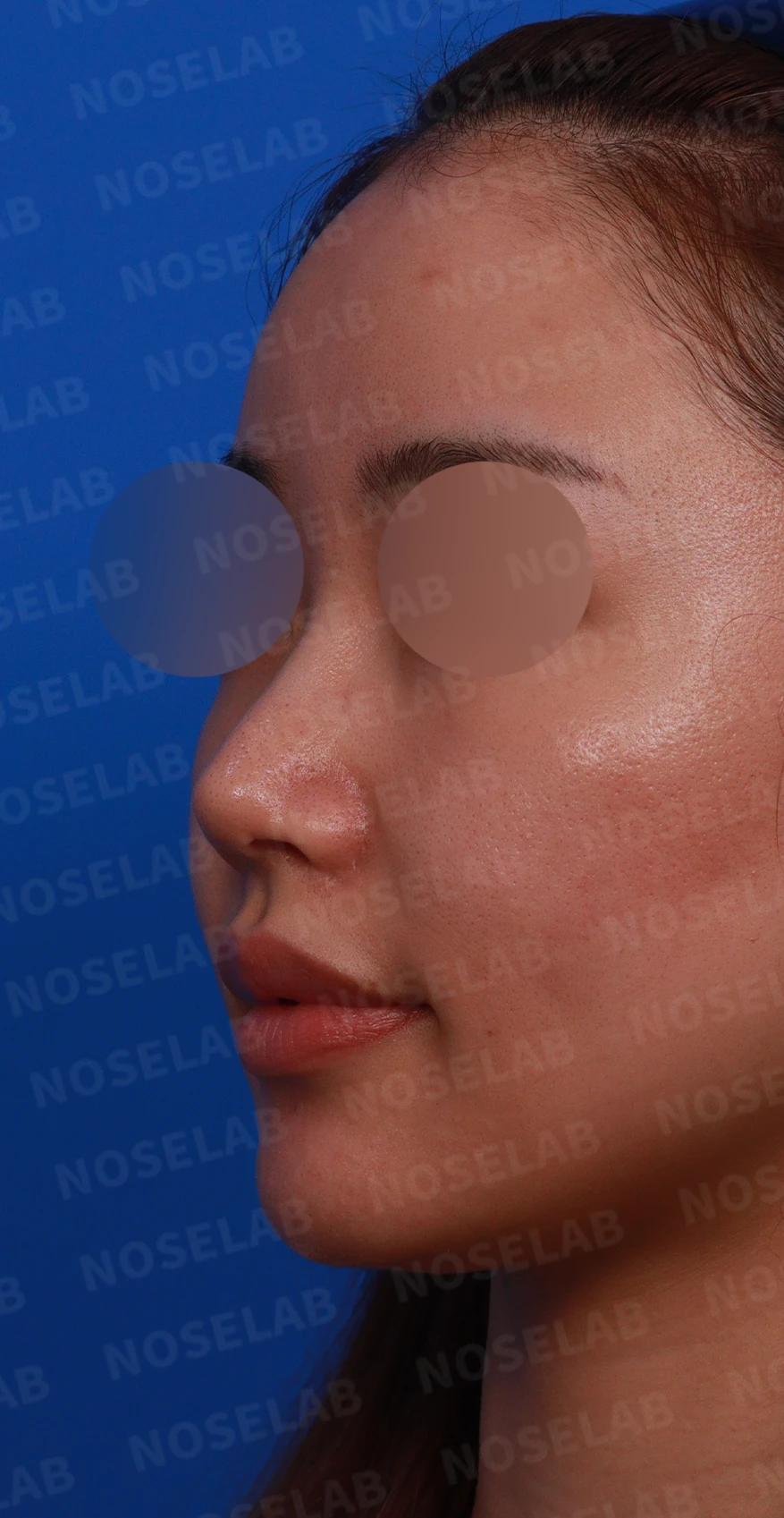
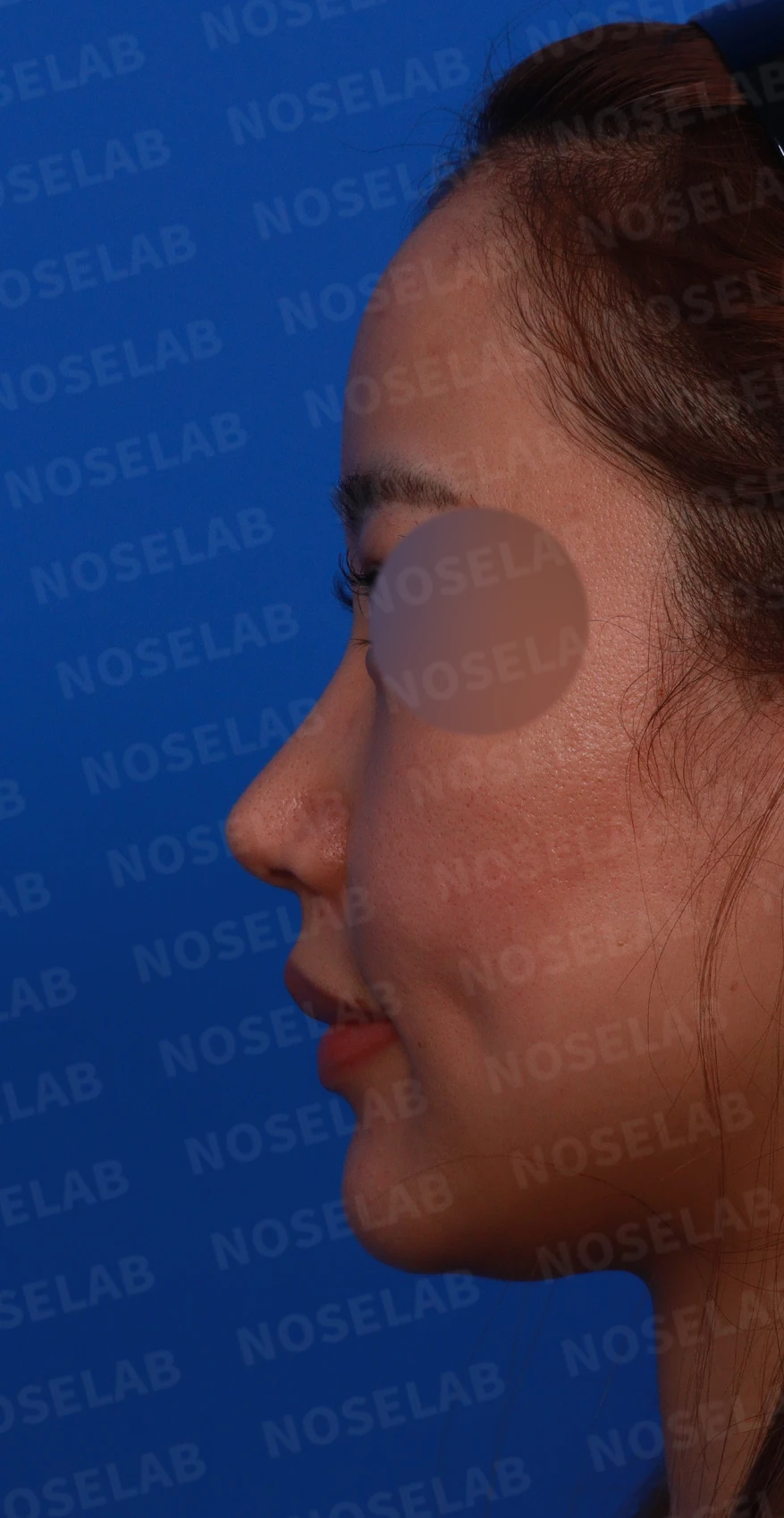
Design consultation: front, left oblique, and profile views
🔍 Patient information and surgical history
- 2020: Alar reduction
- 2022: Nostril lowering
- 2023: Ear cartilage + septal cartilage + nostril lowering + alar reduction
📊 Patient goals
1. Correction of nostril asymmetry
2. Correction of the crooked nose
3. Relief of nasal obstruction
💉 Preoperative analysis
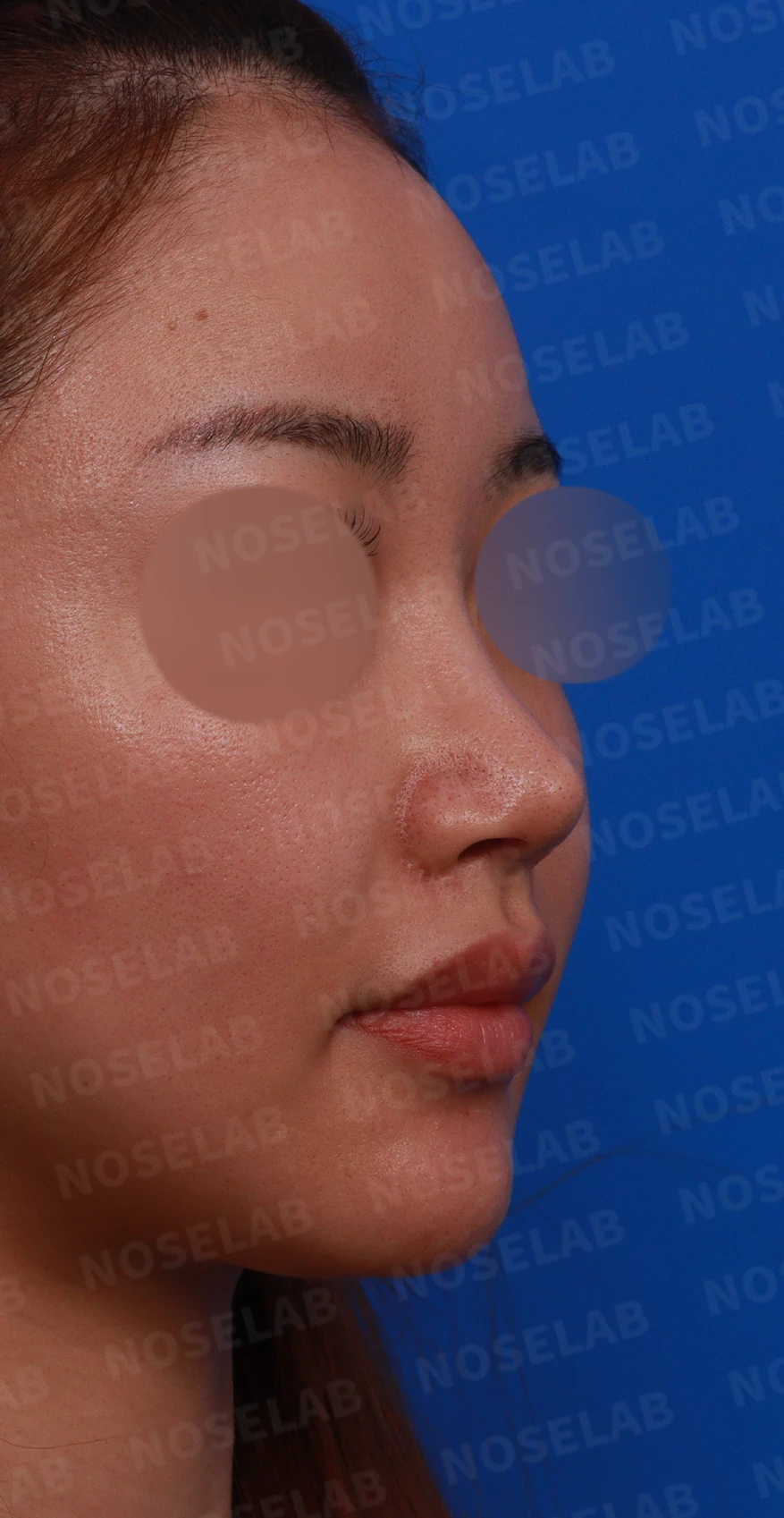
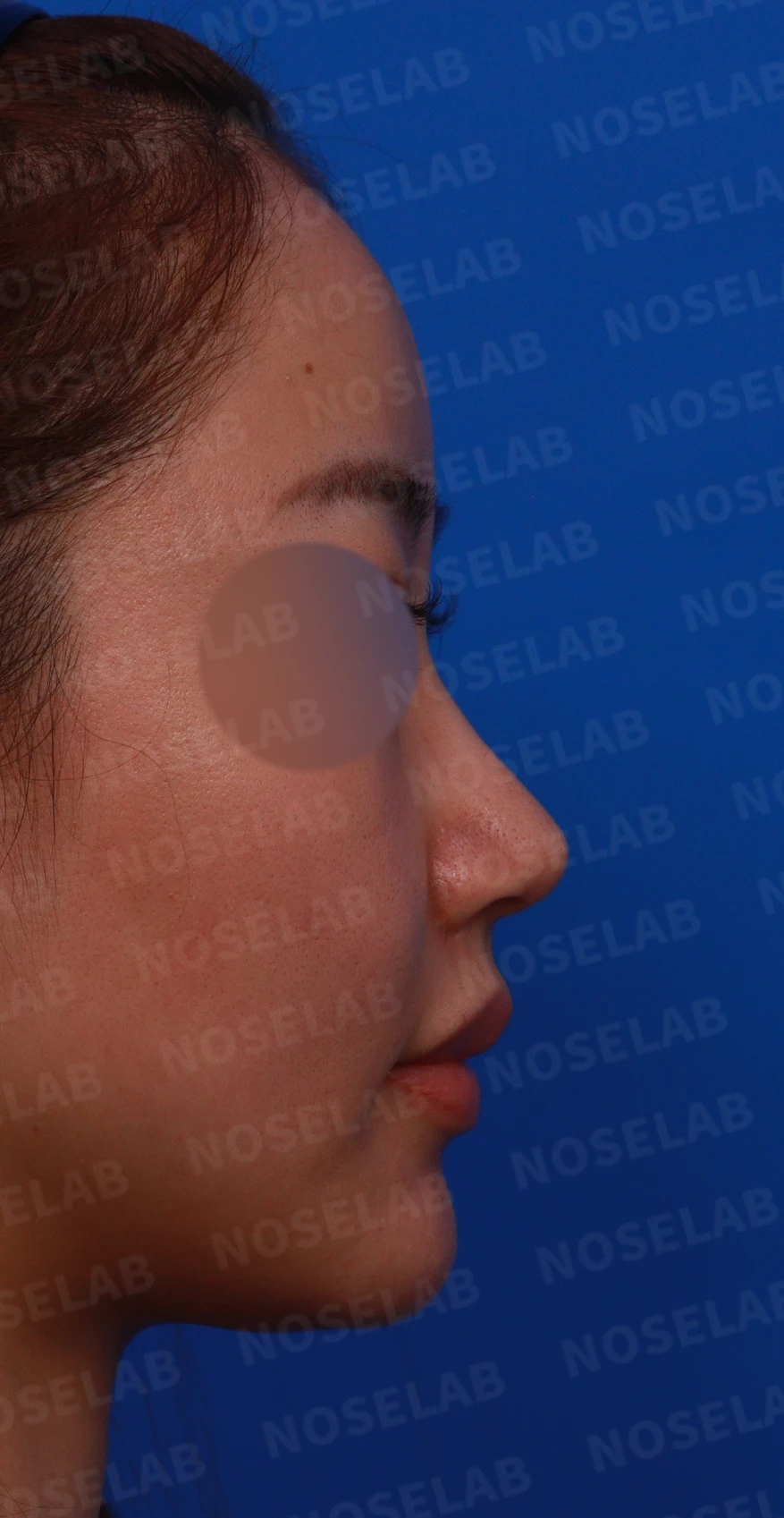
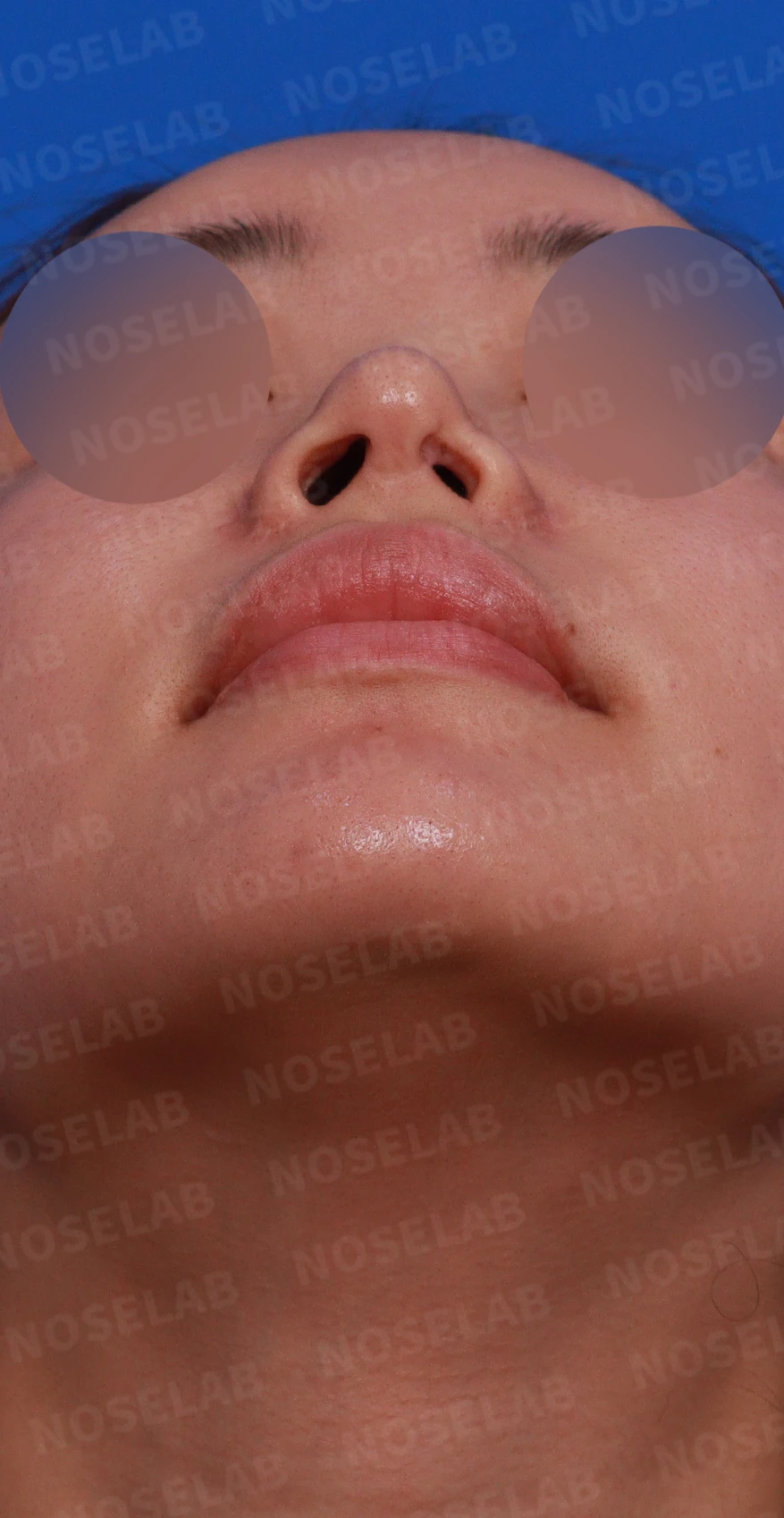
Design consultation: right oblique, profile, and basal (nostril) views
1. Front view: The nose appears crooked, and nostril asymmetry is observed
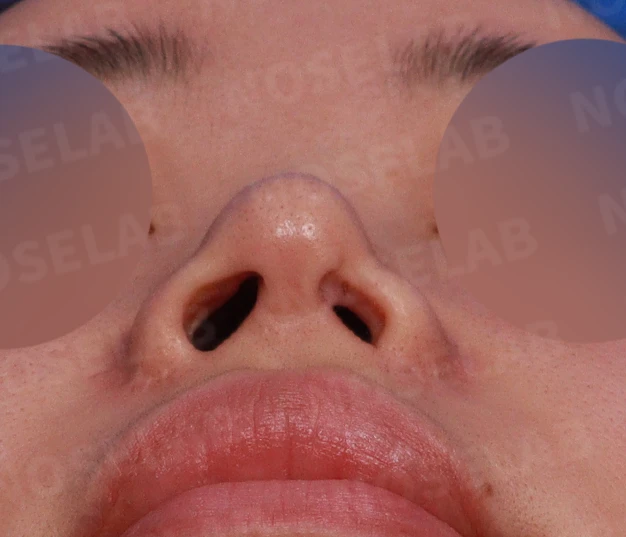
2. Nostril view: The columella tilts to the left, with findings of left nostril stenosis
🔧 Surgical plan and procedure
1. Lateral osteotomy performed to correct the crooked nose
2. Shifting the septum to the right to improve nostril asymmetry: Septal extension and reconstruction using autologous rib cartilage
3. Correction of left nostril stenosis:
- Scar tissue removal
- Skin graft from behind the ear
- Z-plasty performed
4. Correction of deviated septum
5. Submucosal resection of the inferior turbinates using radiofrequency laser
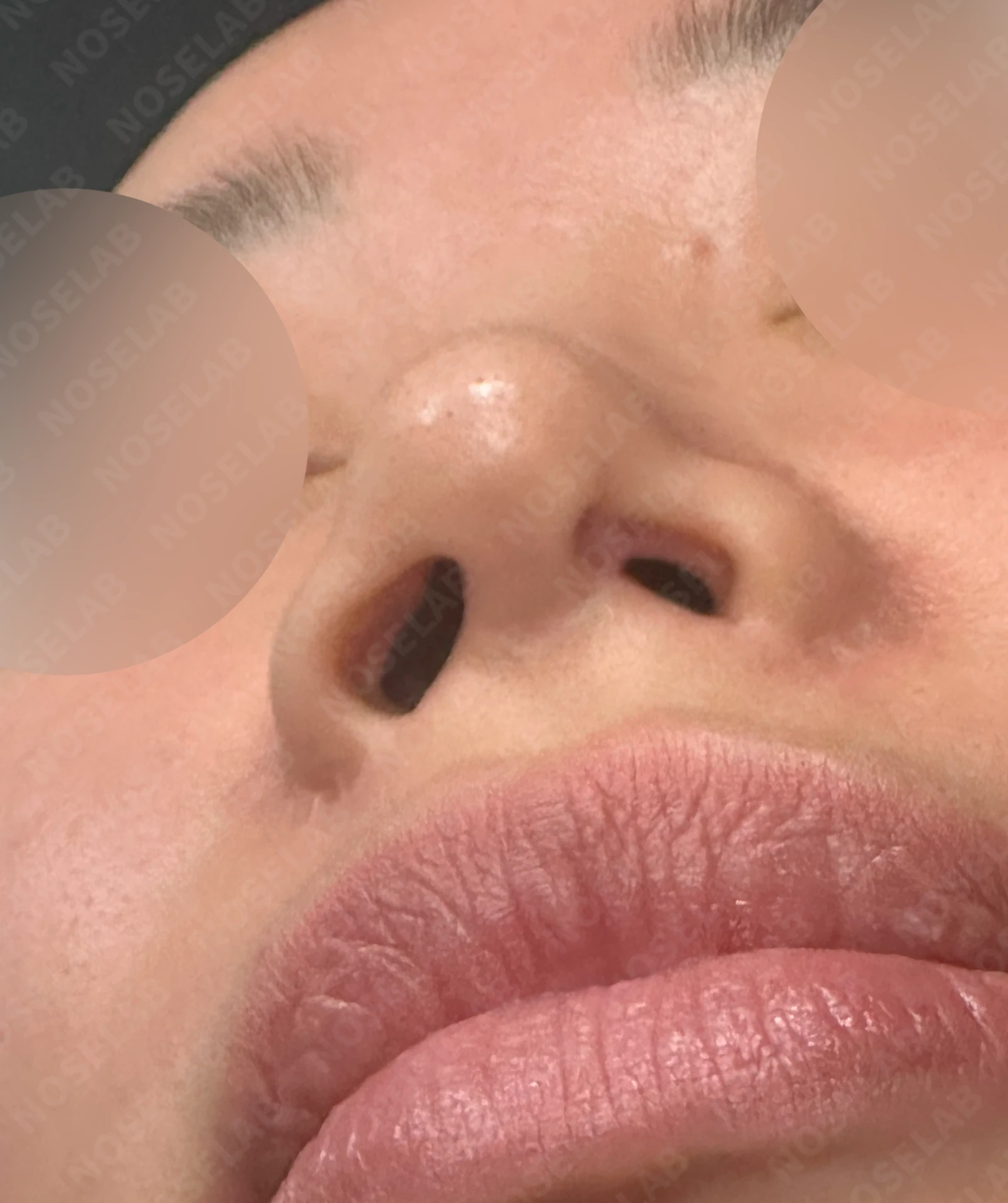
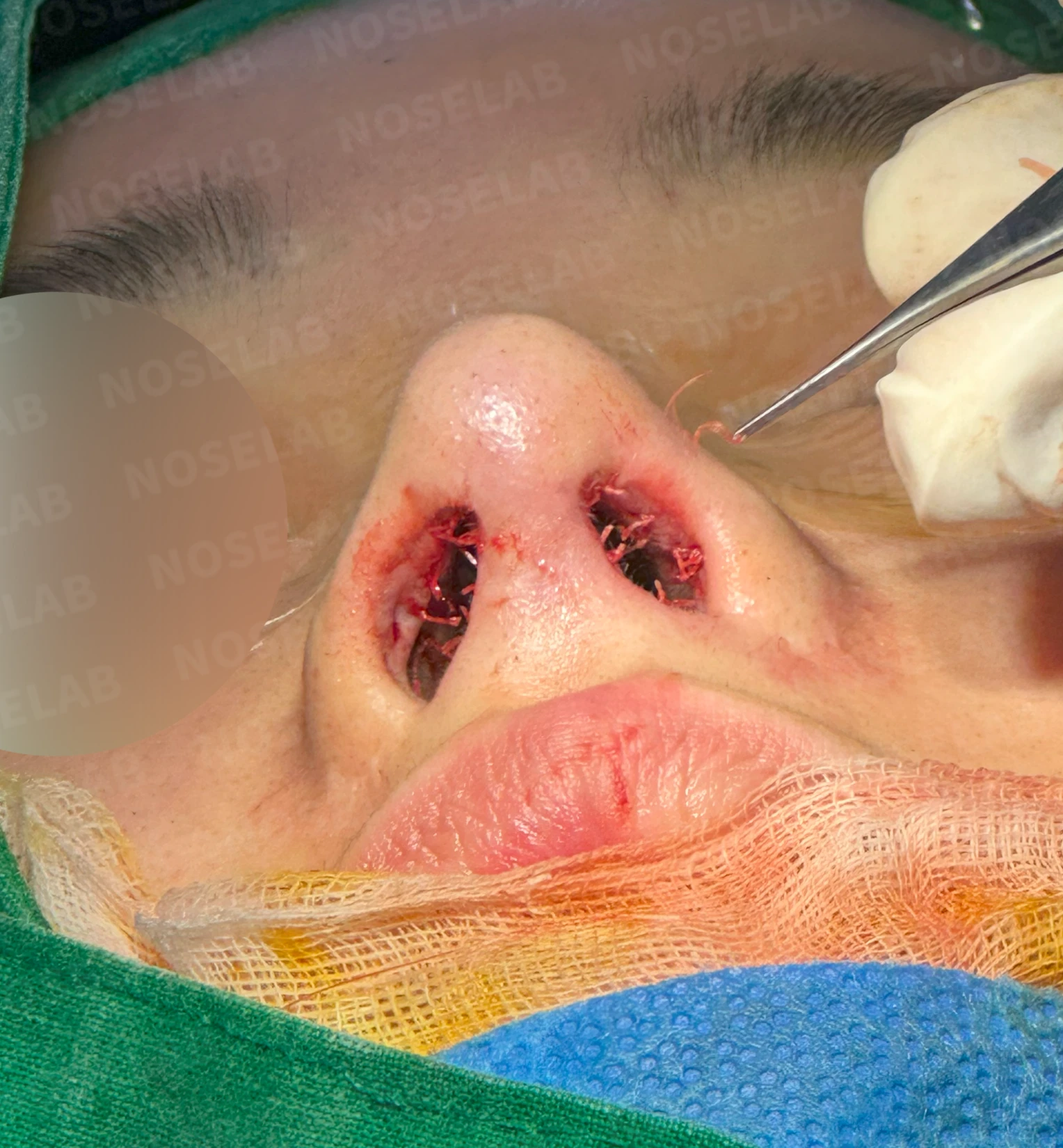
Nostril shape before surgery and a photo of the nostrils taken during suturing intraoperatively.
🌟 Surgical results
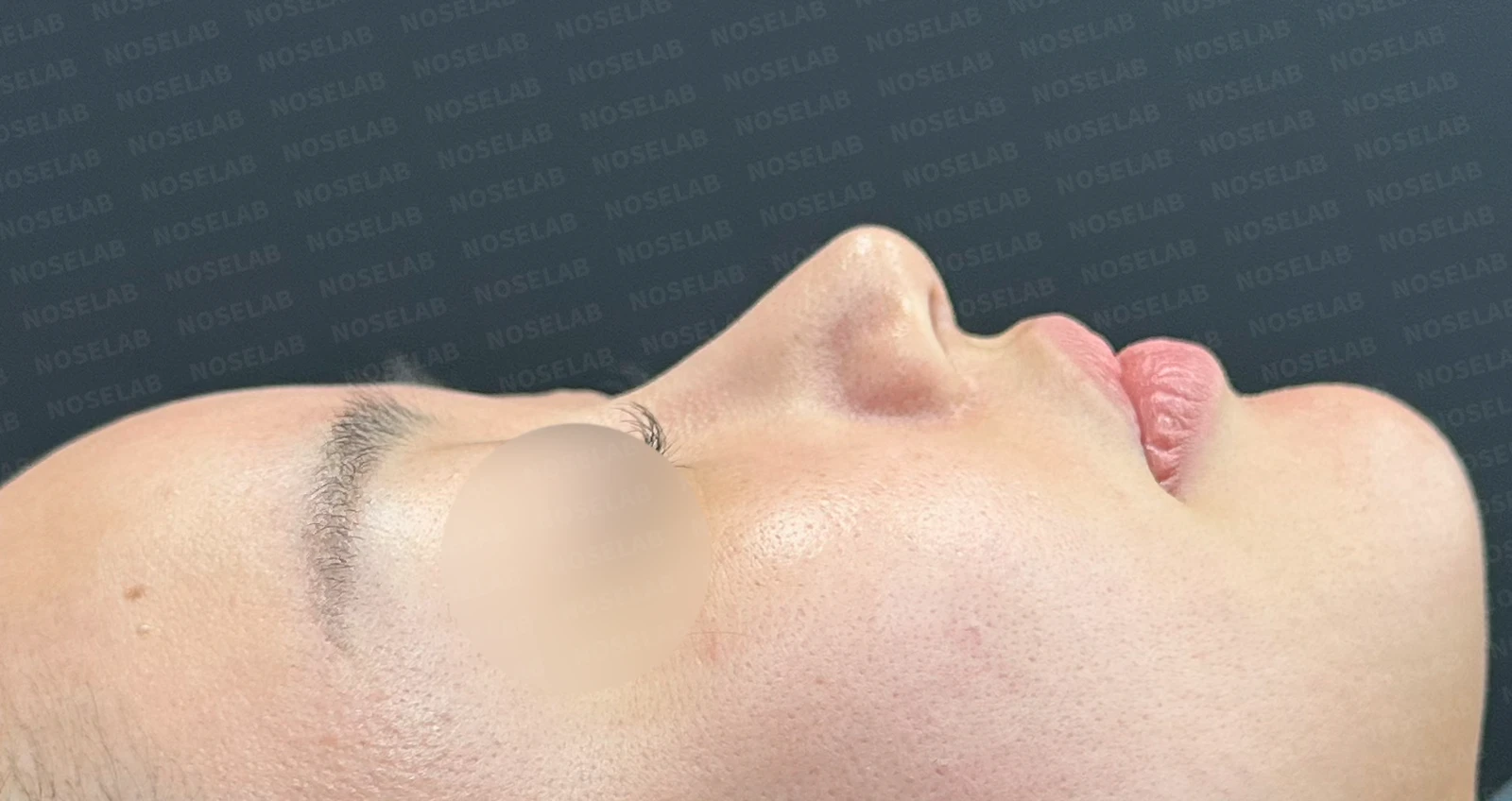
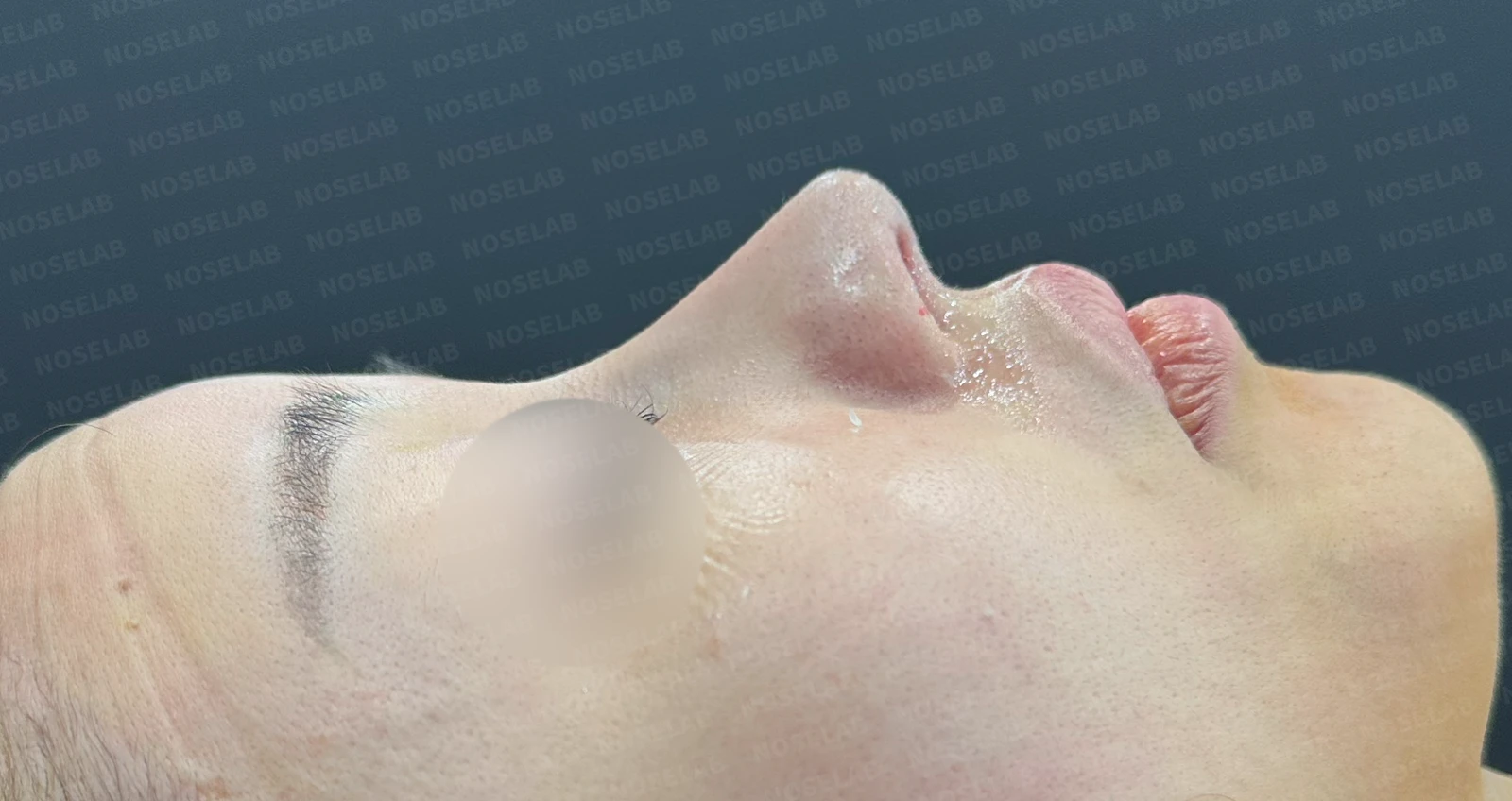
Before surgery / Day 0 immediately after surgery Photos taken immediately after surgery show swelling and may differ from the final result.
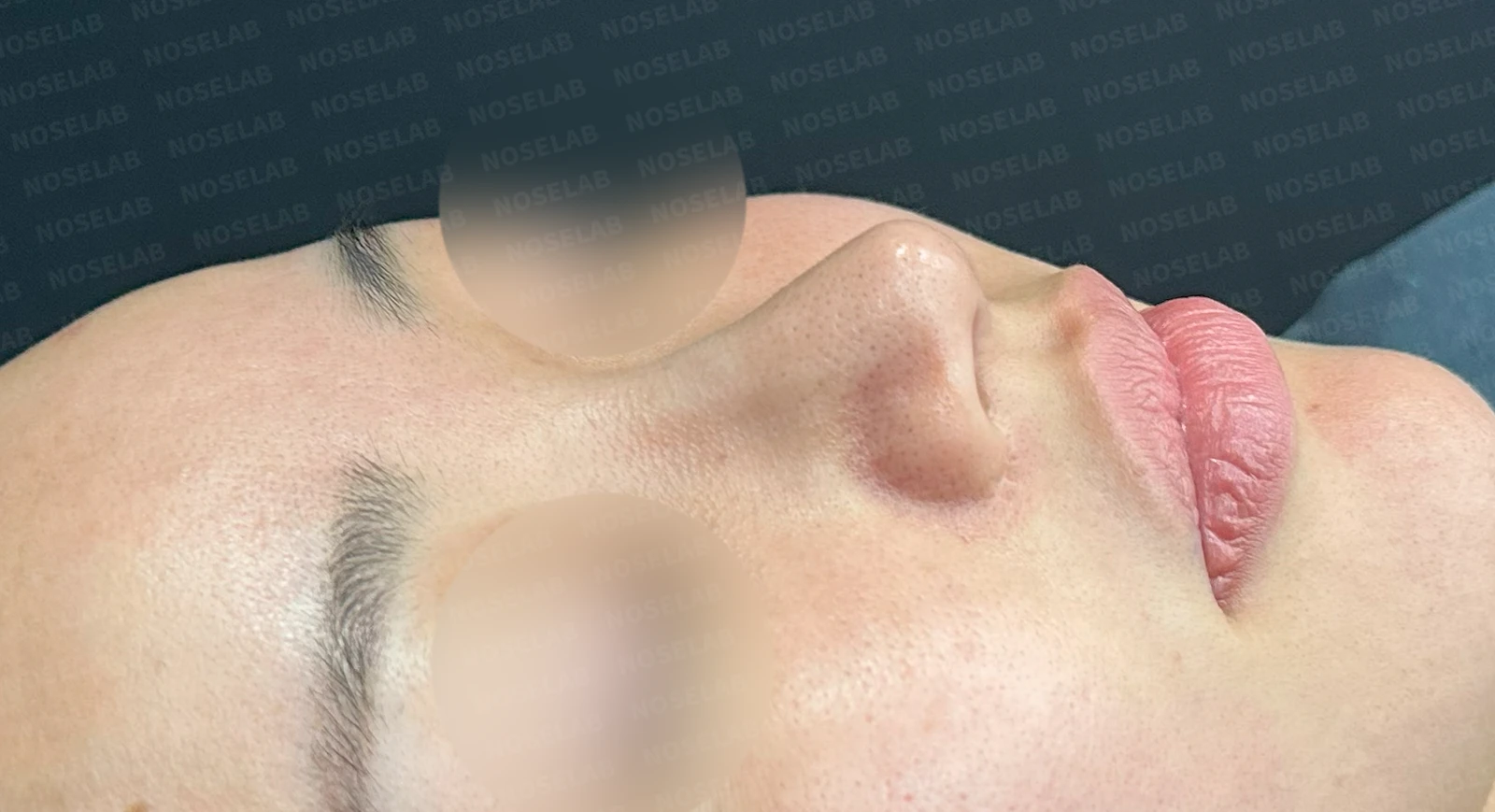
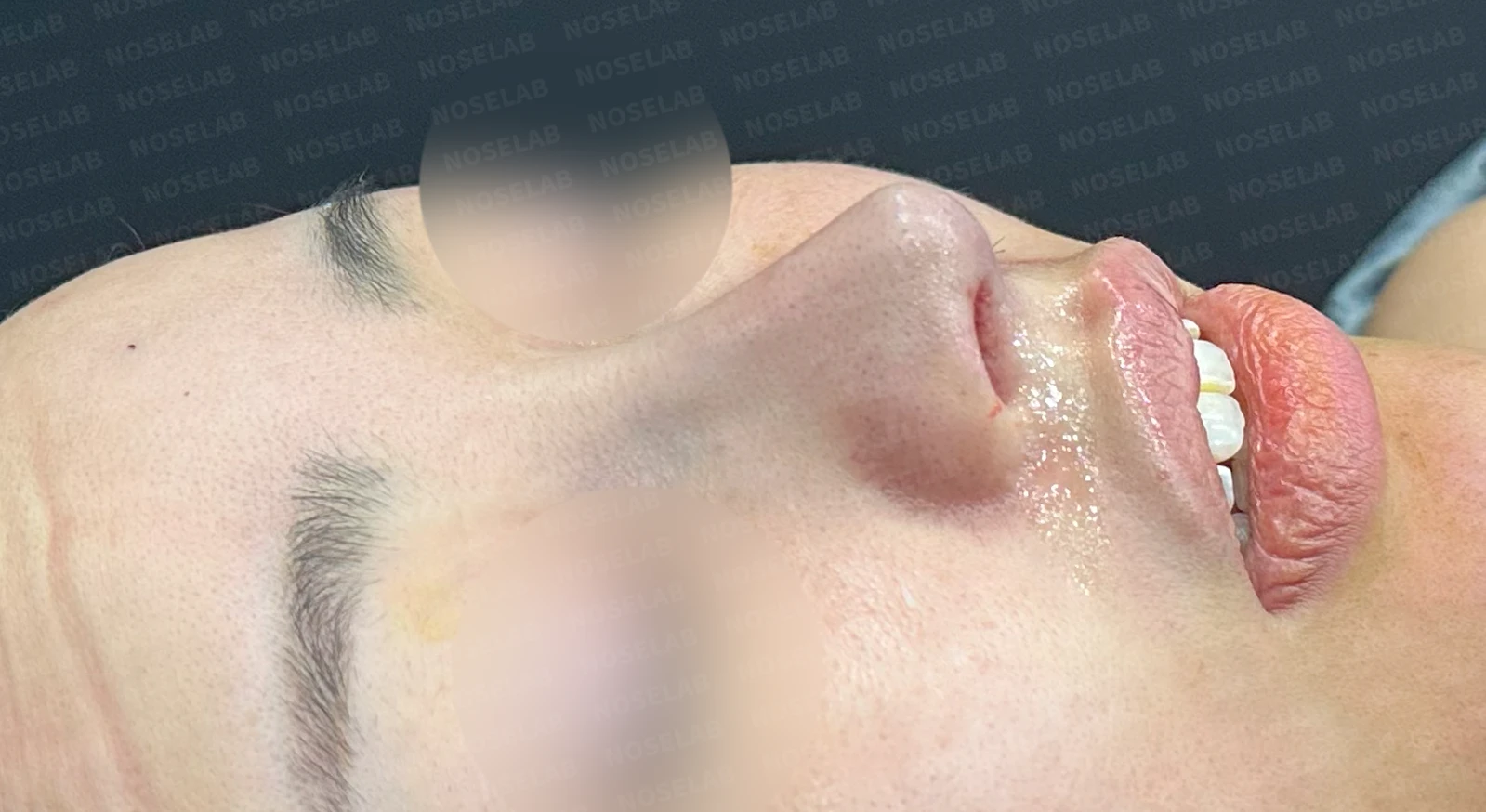
Before surgery / Day 0 immediately after surgery Photos taken immediately after surgery show swelling and may differ from the final result.
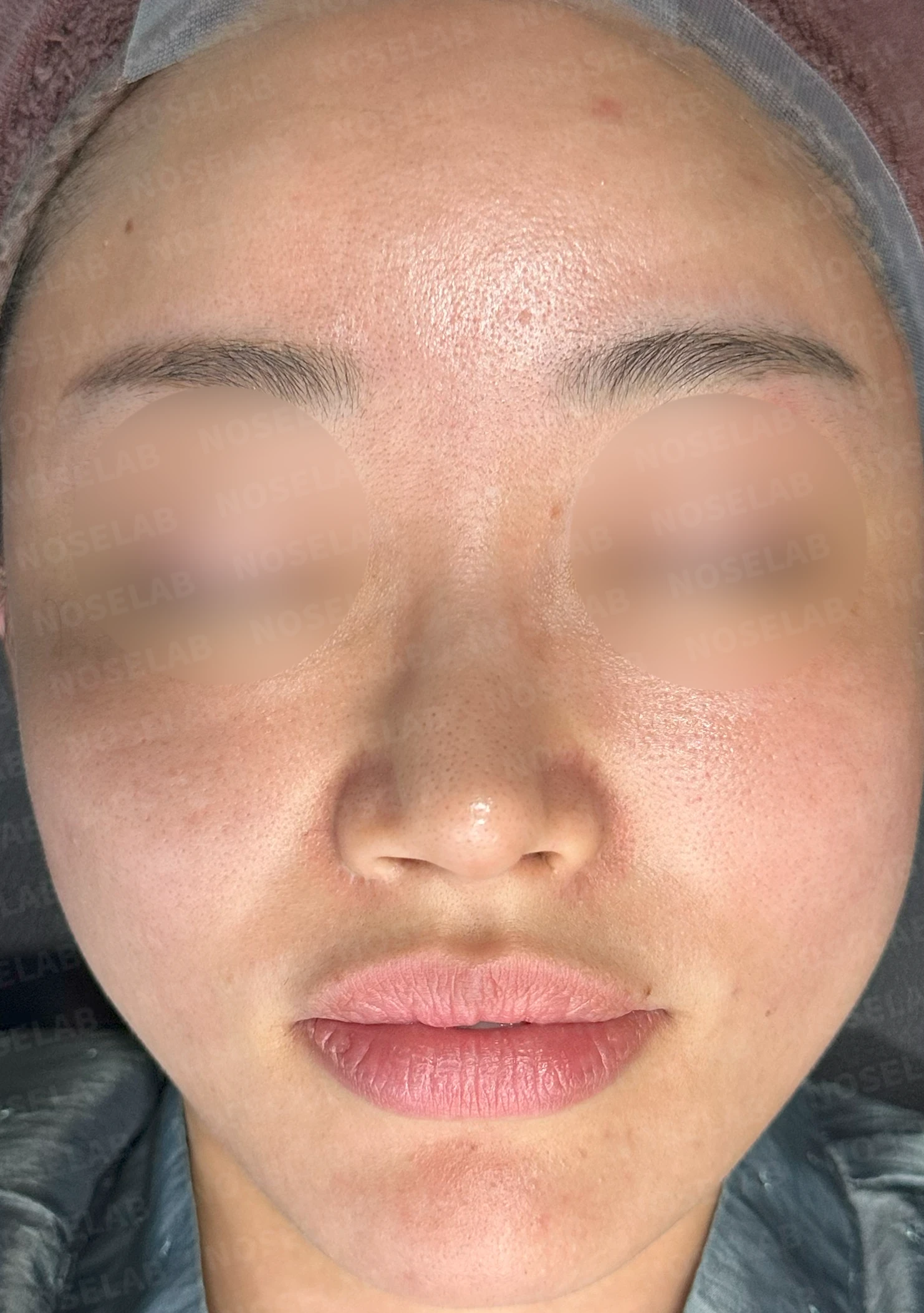
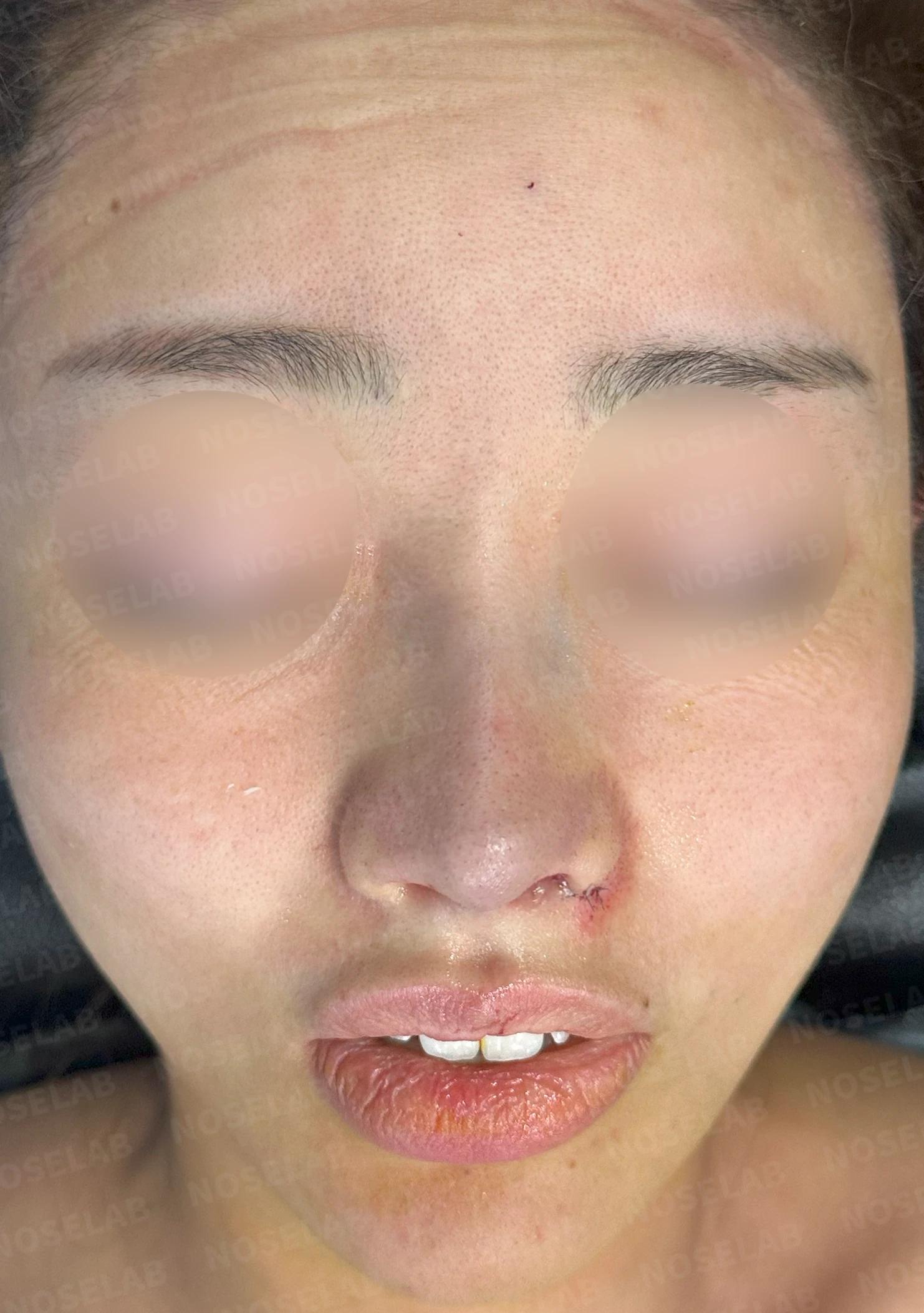
Before surgery / Day 0 immediately after surgery Photos taken immediately after surgery show swelling and may differ from the final result.
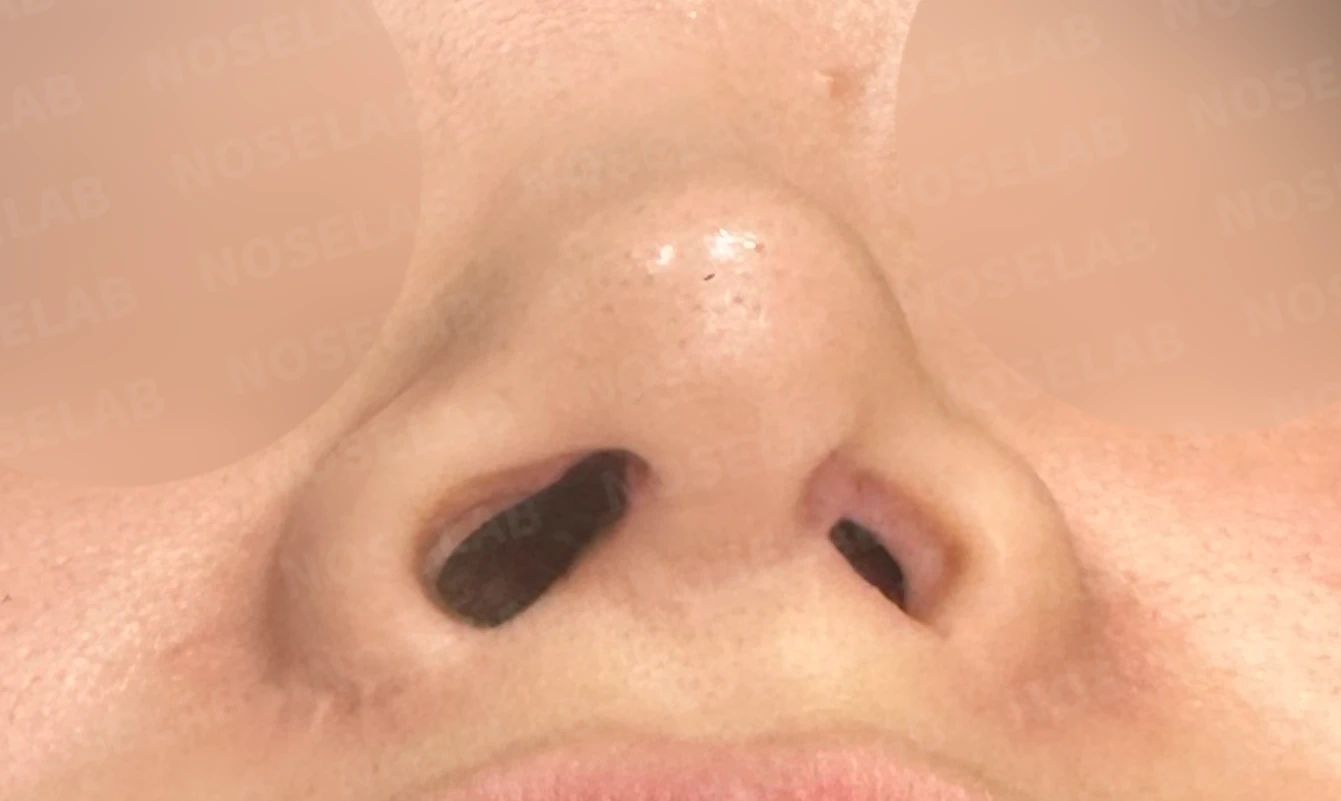
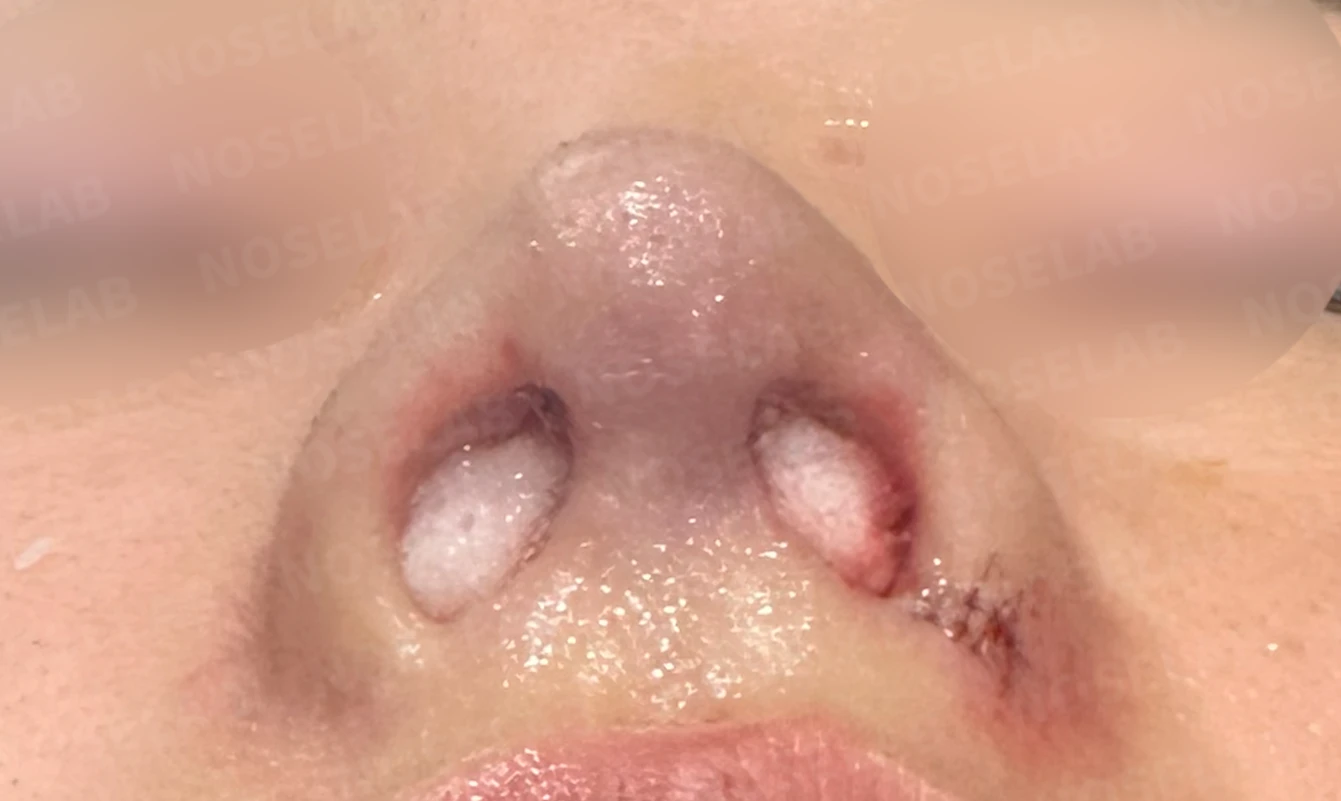
Before surgery / Day 0 immediately after surgery Photos taken immediately after surgery show swelling and may differ from the final result.
1. Front view: Improvement in the previously crooked-looking nose
2. Profile view: Slight elevation of the nasal tip height, forming a natural straight-subtle curve line
3. Nostril view: Significant improvement in left nostril stenosis, resolving overall asymmetry
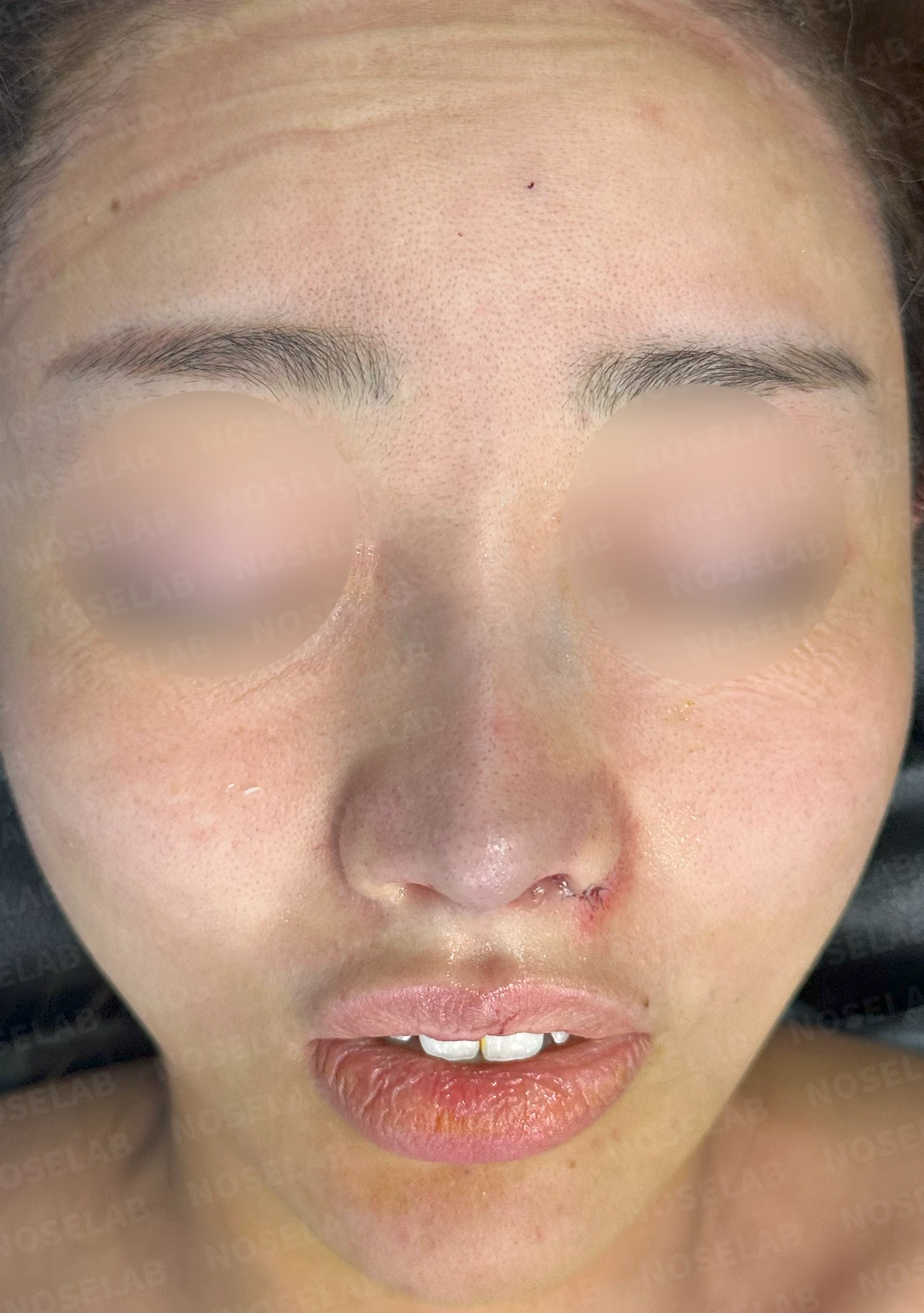
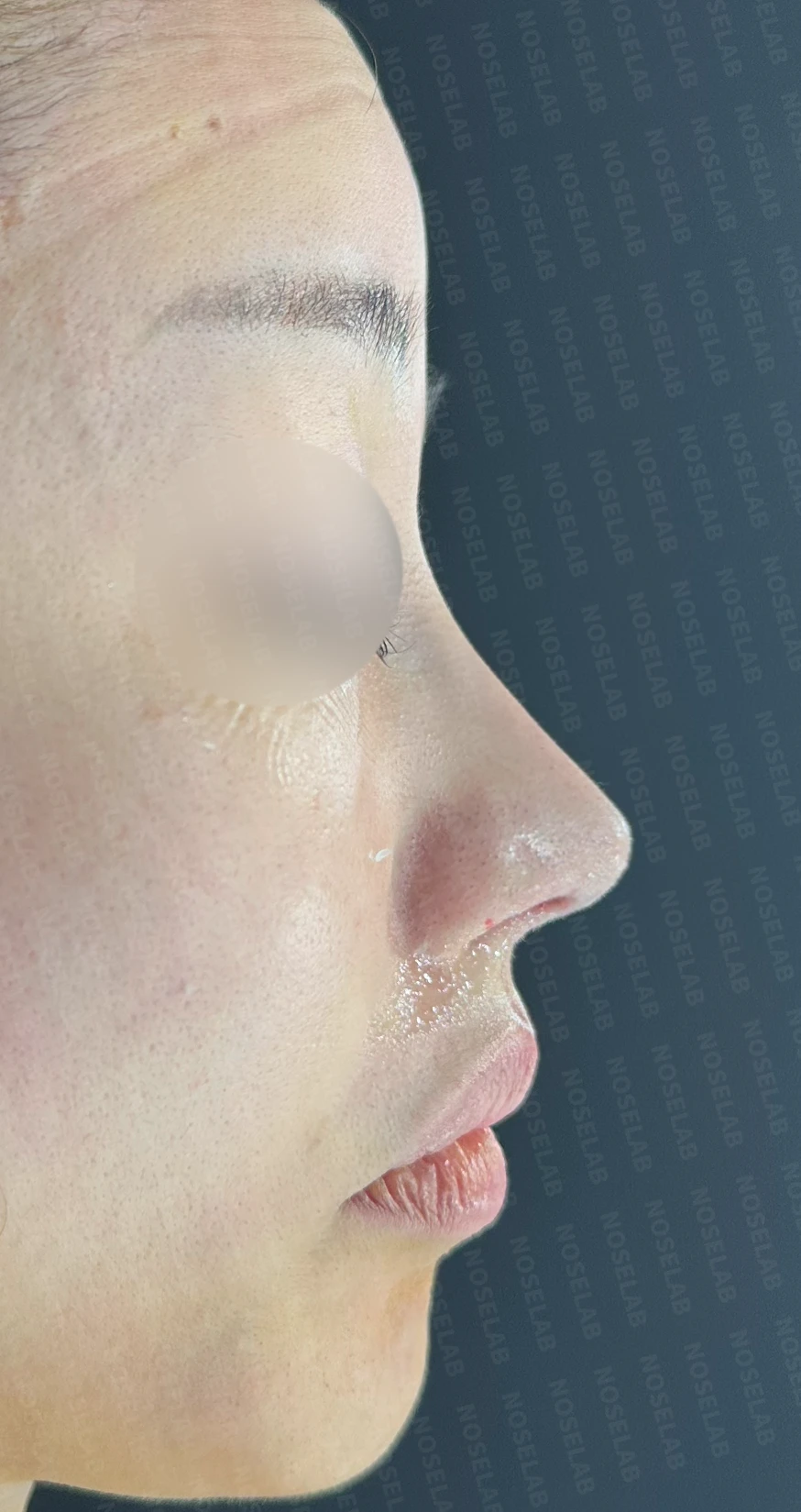
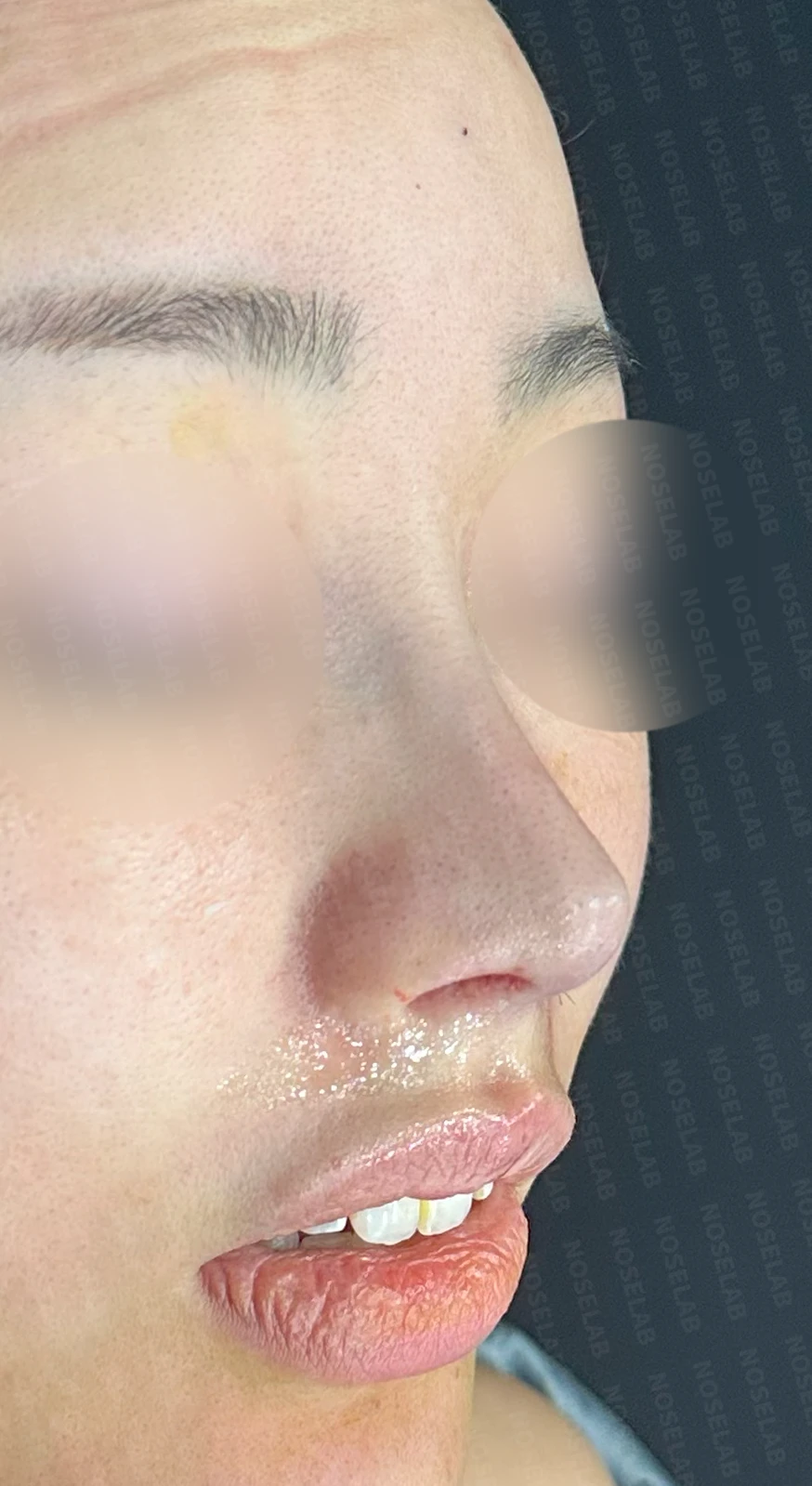
Immediately after surgery (Day 0) front, profile, and oblique viewsImmediate postoperative photos show swelling and may differ from the final result.
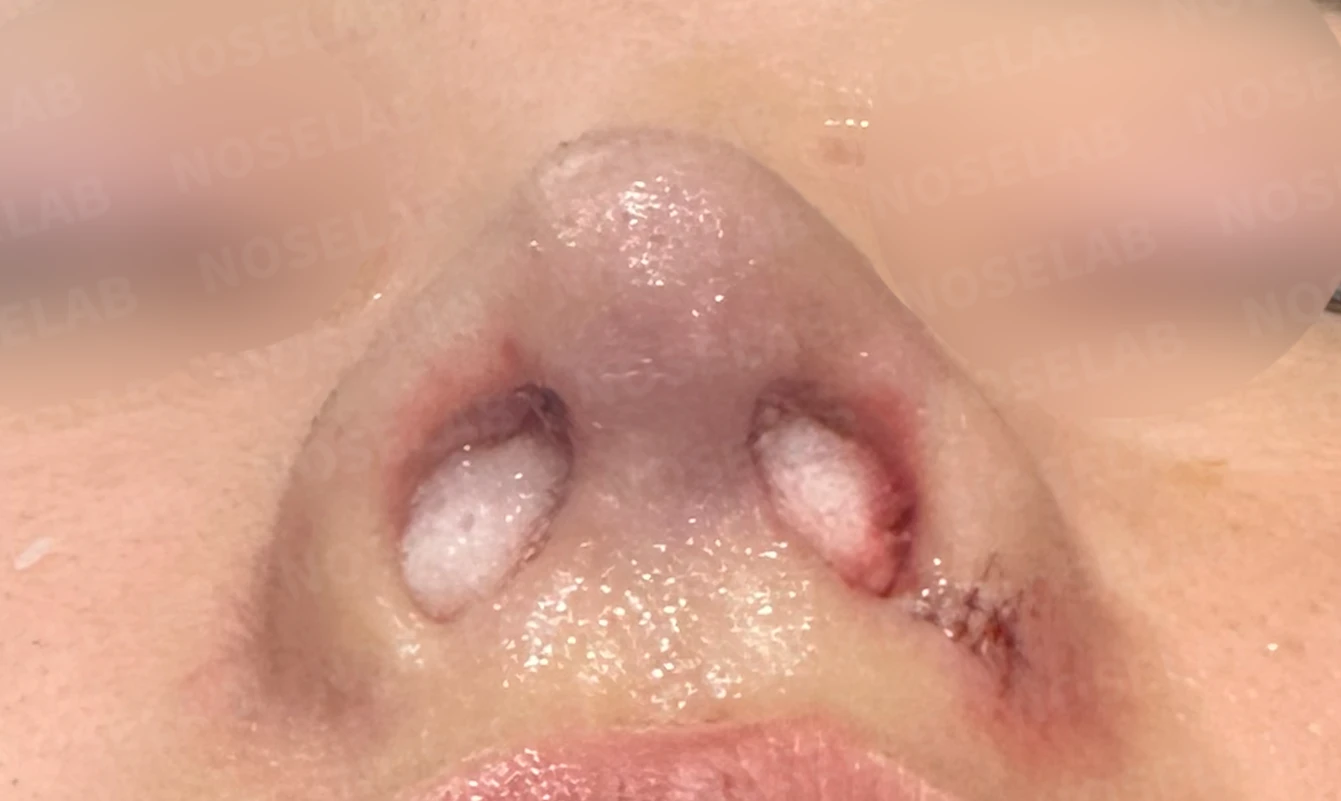
Base view (nostril) photo.
Key points
When nostrils become narrowed, surgical correction is extremely demanding. However, in this case, because nasal obstruction due to external nasal valve (nostril) stenosis was severe, nostril widening surgery was essential for functional improvement.
※ Closing remarks
Although the intrinsic size of the nostrils had been reduced by excessive alar reduction, the stenosis was corrected as much as possible through scar tissue removal, Z-plasty, and skin grafting. This is expected to provide substantial help not only for aesthetic improvement but also for respiratory function.
I hope this serves as helpful information for those facing similar concerns. If you are suffering from severe nasal obstruction due to nostril stenosis, consulting with a board-certified otolaryngologist (ENT specialist) can help you find suitable ways to address it.
I will always do my best to support your health and natural aesthetic harmony.
For those considering rhinoplasty or revision rhinoplasty, please ensure you undergo thorough consultation and examination to select the method most appropriate for you.
If you have any questions, please feel free to leave a comment. I will answer with care.
This was Dr. Peter C. Kang. Thank you.
Thank you.
#revisionrhinoplasty #nostrilstenosiscorrection #crookednosecorrection #nasalobstructionrelief #nostrilwidening #deviatedseptum #inferiorturbinatesurgery #closedrhinoplasty #alarreductionsideeffects #naturalnose #externalnasalvalvestenosis

Limitations and risks
When autologous rib cartilage is used, scarring and pain may remain at the donor site on the chest, and pneumothorax (pleural injury) can occur rarely. Over time, the grafted cartilage may warp or undergo partial resorption.
When the septum is corrected at the same time, nasal obstruction may persist or recur, and in rare cases, septal perforation or changes in smell may occur.
Common potential risks include infection, bleeding, asymmetry, scarring, skin necrosis, and insufficient improvement; results vary depending on individual skin condition and previous surgical history.