Hello, I am Dr. Peter C. Kang.
Today, I would like to share a case where an upturned and artificial-looking nose
was corrected to achieve a natural appearance.
In cases of this type, the patient had previously undergone a first surgery using an L-shaped silicone implant,
and a second rhinoplasty using a silicone implant and ear cartilage.
1. Preoperative design consultation
Patient's requests:
- Correction of the artificial appearance
- Preference for a straight bridge line
- Lowering the radix
- Desire to lower the columella
- Desire to avoid lengthening the overall nose
Analysis of preoperative condition:
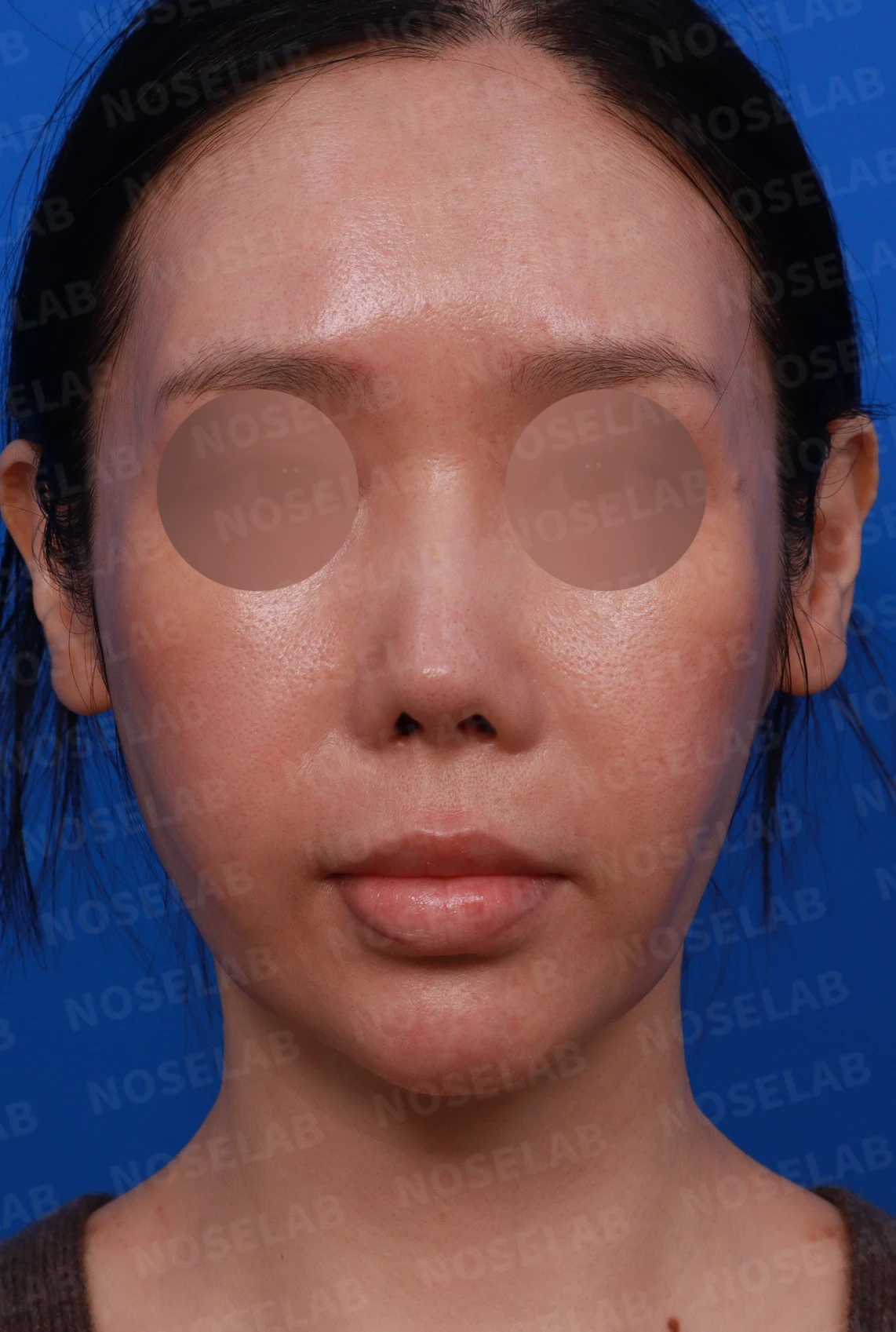
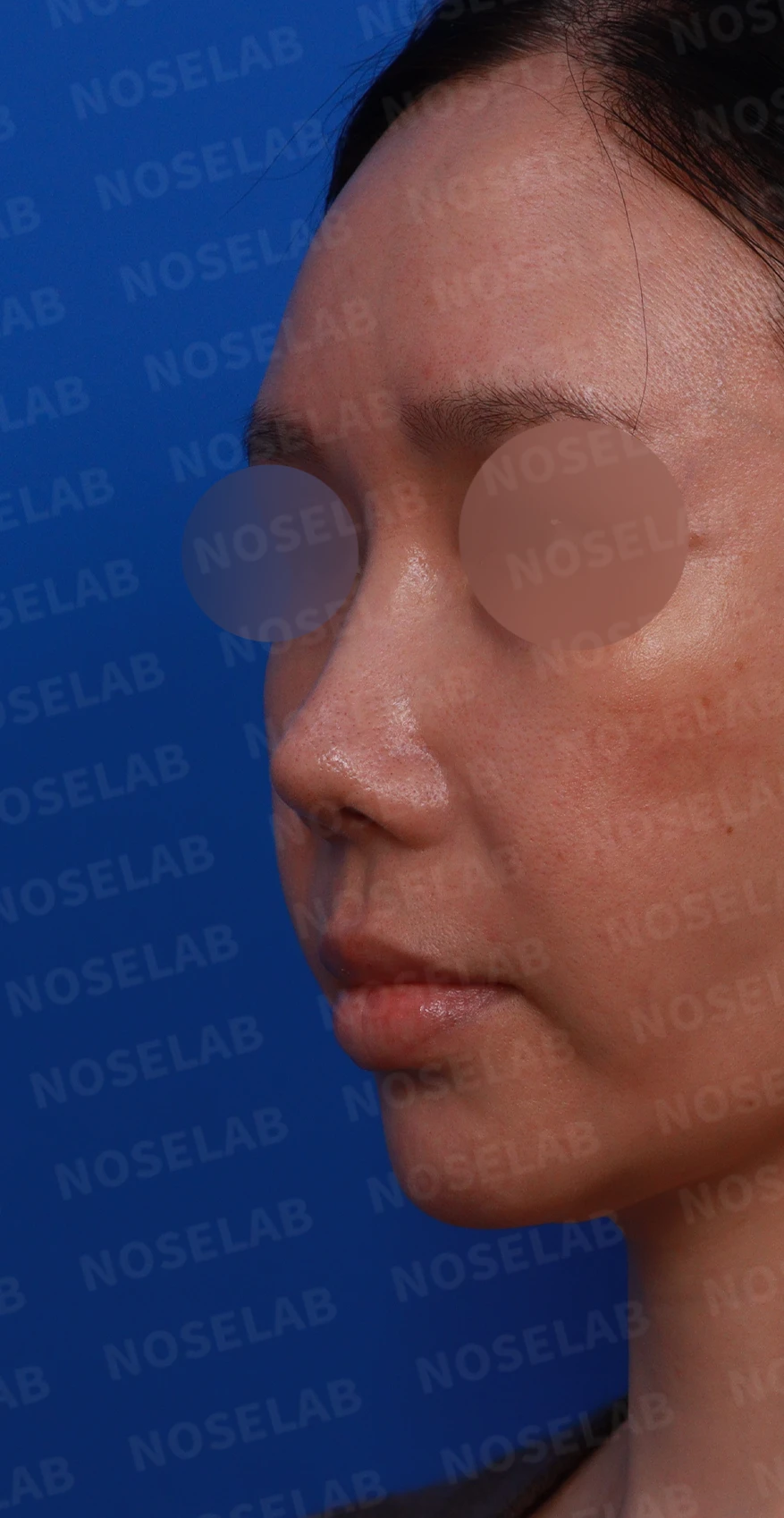
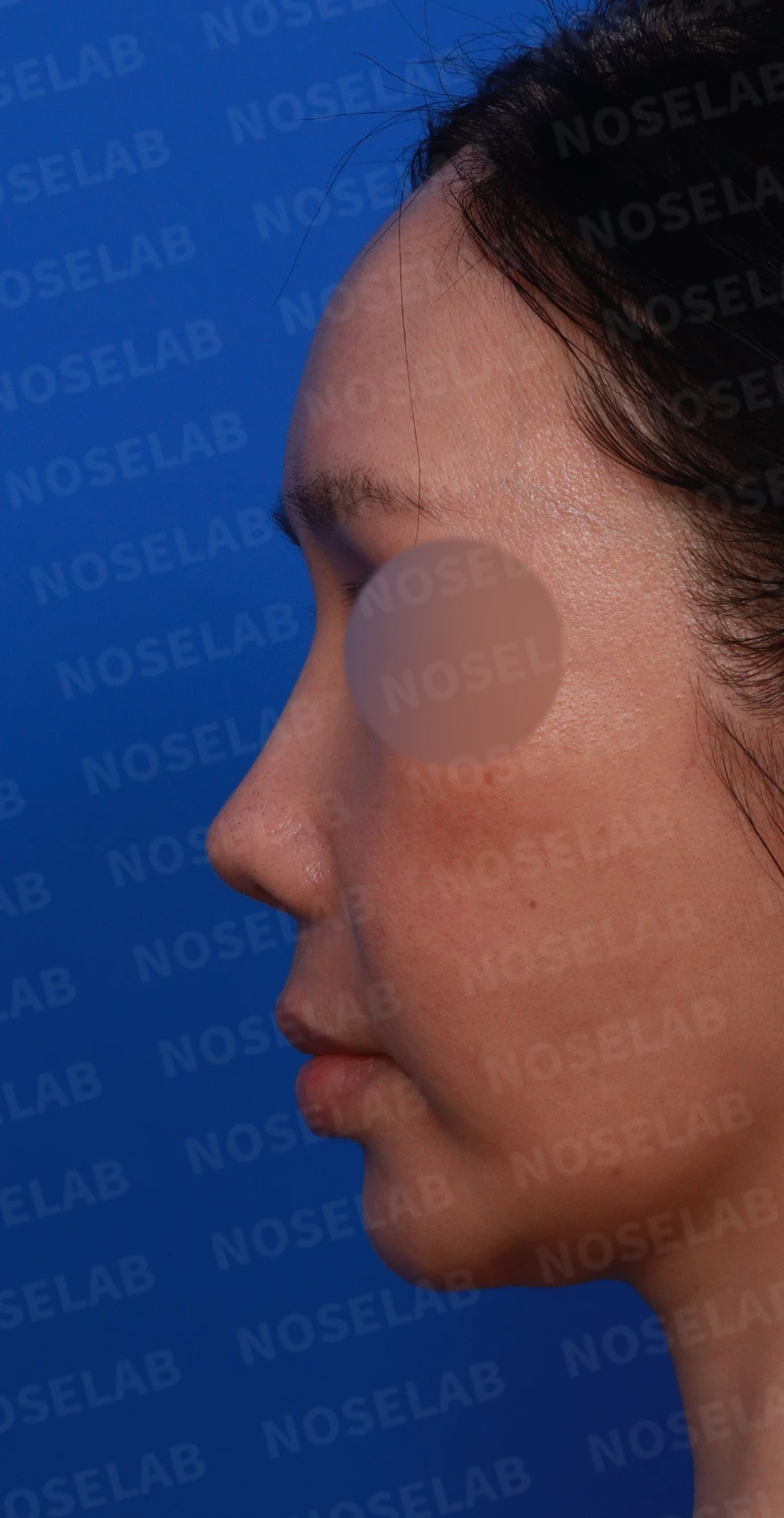
Preoperative design consultation: front, left oblique, and profile views.
Front view:
- The nasal bridge appears crooked
- Excessive nostril show and asymmetry were observed
Oblique view:
- A curved ski-slope shape created an artificial appearance
- The nasal tip appears upturned
Profile view:
- The radix is high
- The nasal tip is upturned
- Protruding mouth was observed
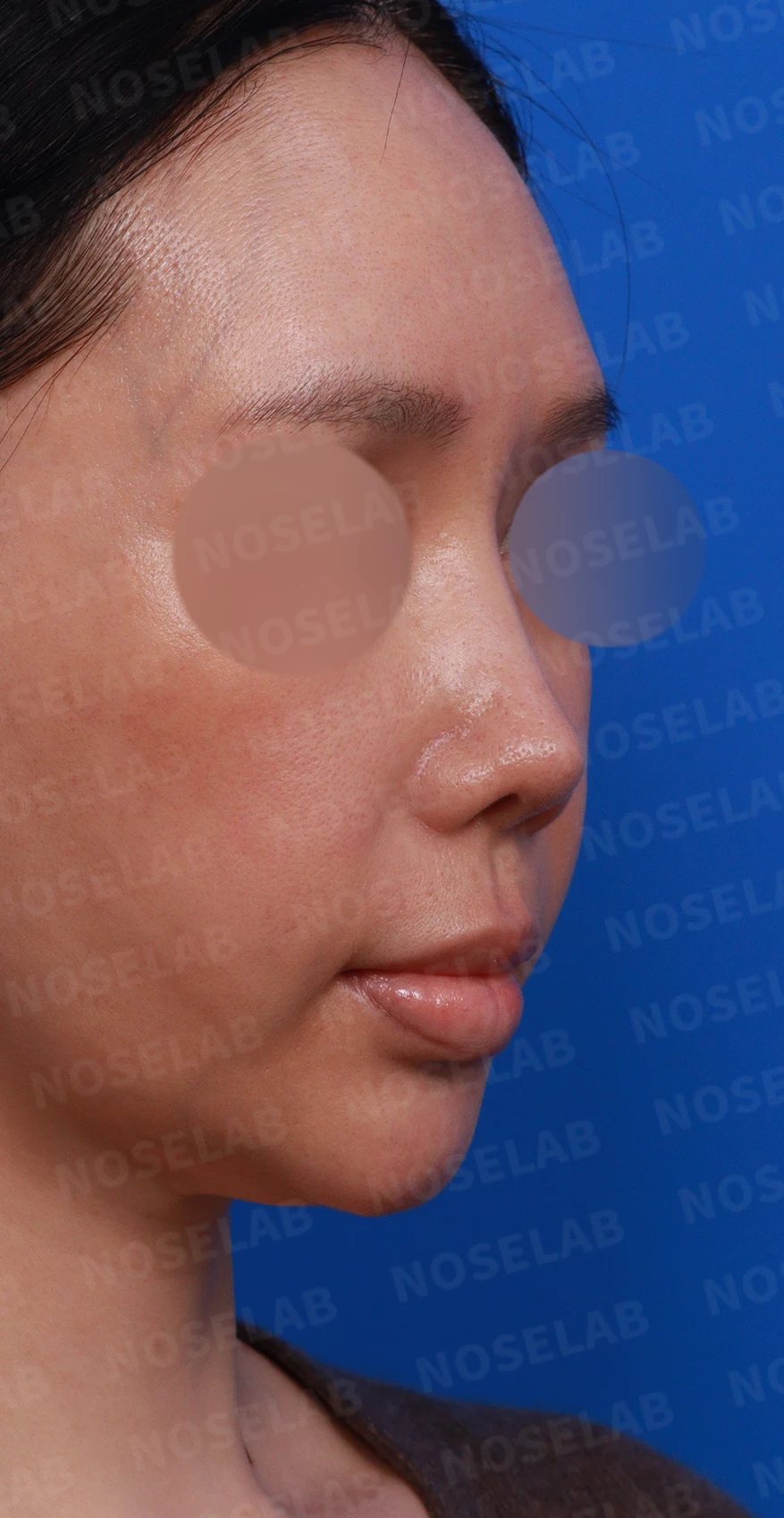
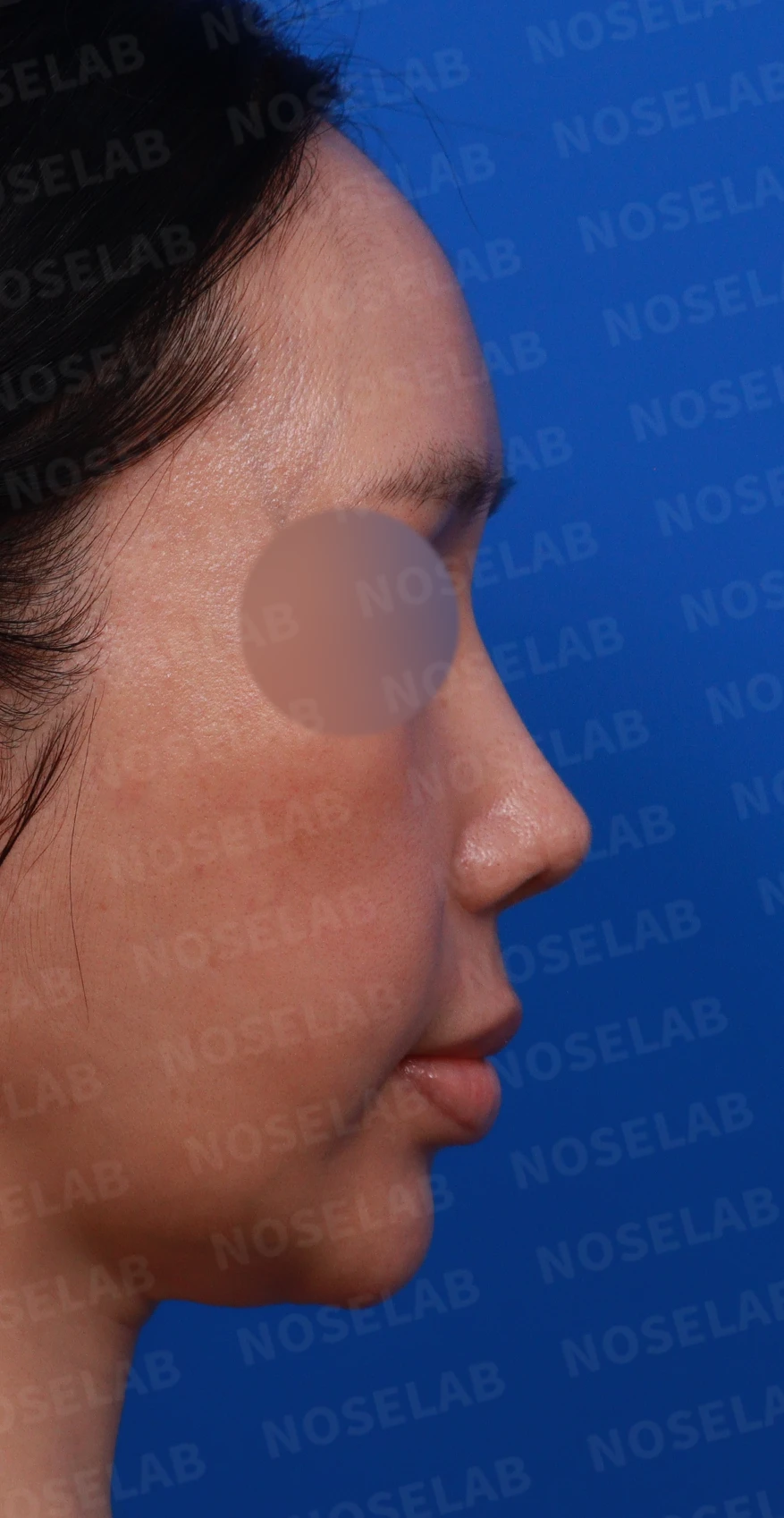
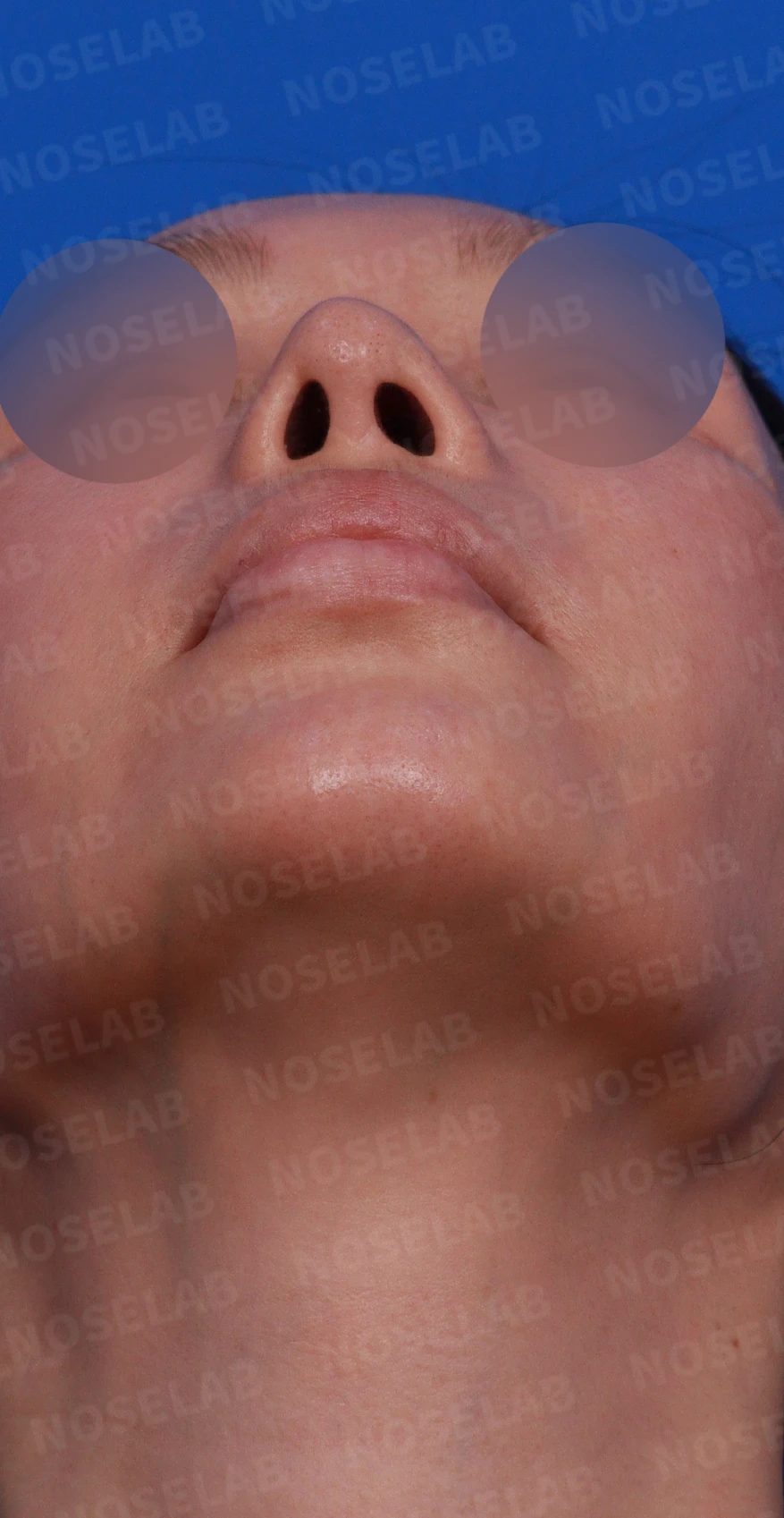
These are the pre-operative design consultation photos: right oblique view, profile view, and base view.
Nostrils:
- The nasal tip was deviated to the right
- Nostril asymmetry was observed
2. Surgical plan
1) Septal extension using autologous rib cartilage
- Improvement of the upturned tip
- Correction of nostril asymmetry
2) Silicone implant replacement
- Removal of pre-existing implant
- Insertion of a shorter, lower, and wider new implant with a lowered radix
3) Lowering the columella and correcting the nasolabial angle
- Improvement of the elongated appearance of the philtrum
- Expected improvement in protruding mouth appearance
4) Functional improvement
- Correction of deviated septum
- Submucosal resection of the inferior turbinate using high-frequency radiofrequency (treatment for hypertrophic rhinitis)
3. Surgical procedure
According to the surgical plan, the following procedures were performed using a closed approach:
1) Autologous rib cartilage harvest and septal extension graft
2) Removal of the existing silicone implant and insertion of a new implant
3) Lowering the columella and correcting the nasolabial angle
4) Correction of the deviated septum
5) Submucosal resection of the inferior turbinate
4. Comparison of before-and-after photos
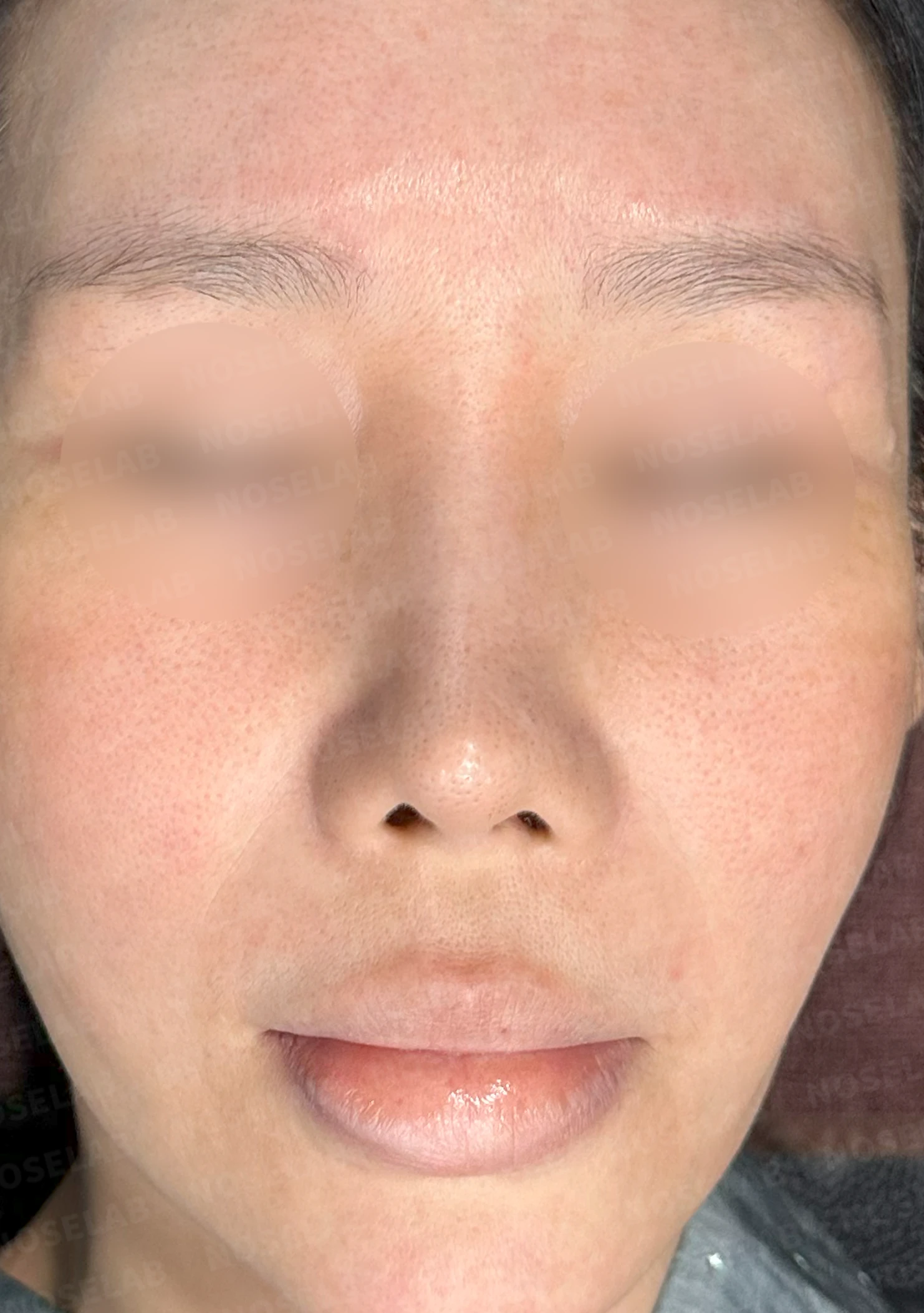
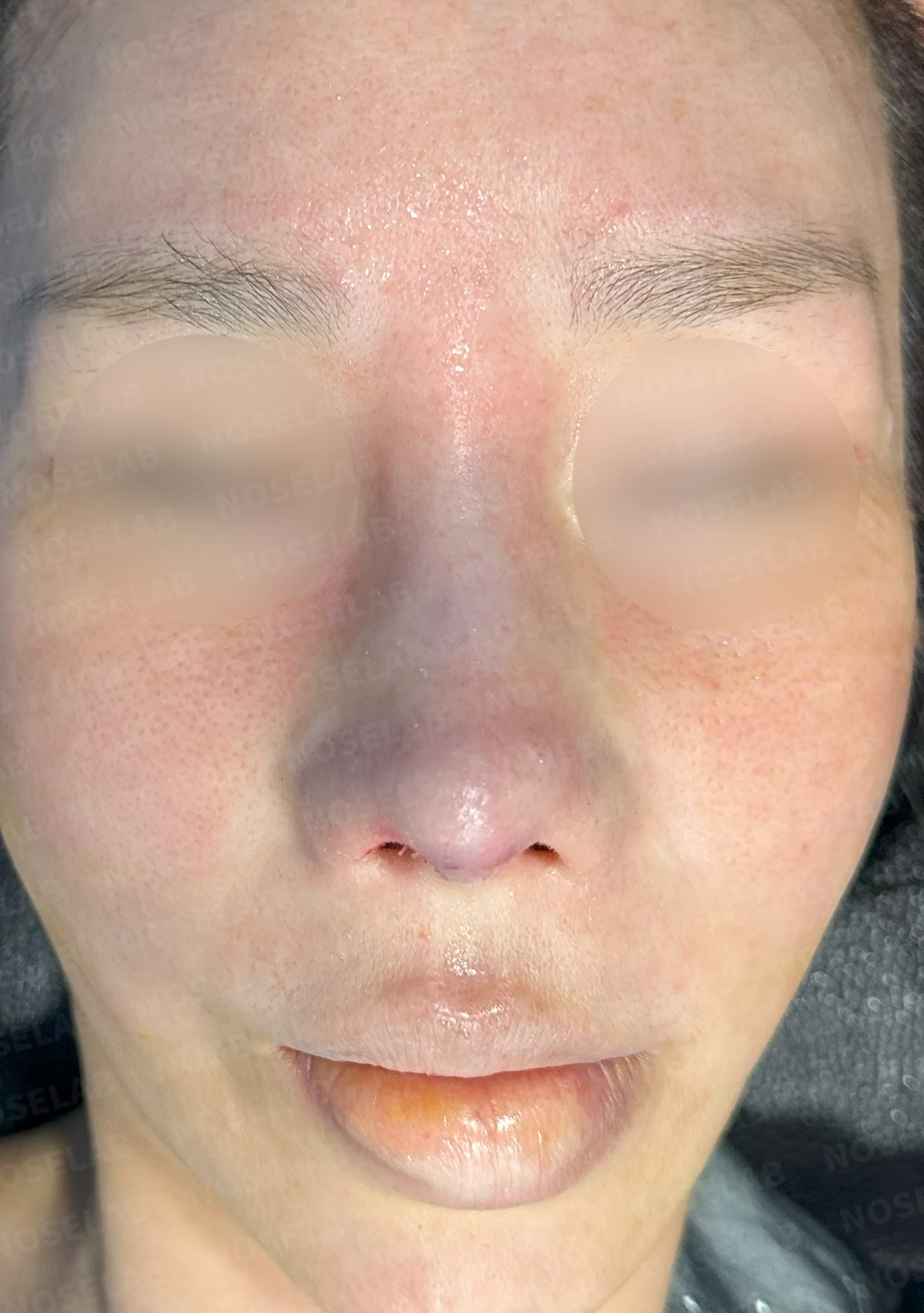
Before surgery / Day 0 immediately after surgery Photos taken immediately after surgery show swelling and may differ from the final result.
Front view:
- The previously deviated nasal bridge was straightened
- The previously upturned nasal tip was naturally lowered
- Nostril show and asymmetry were improved
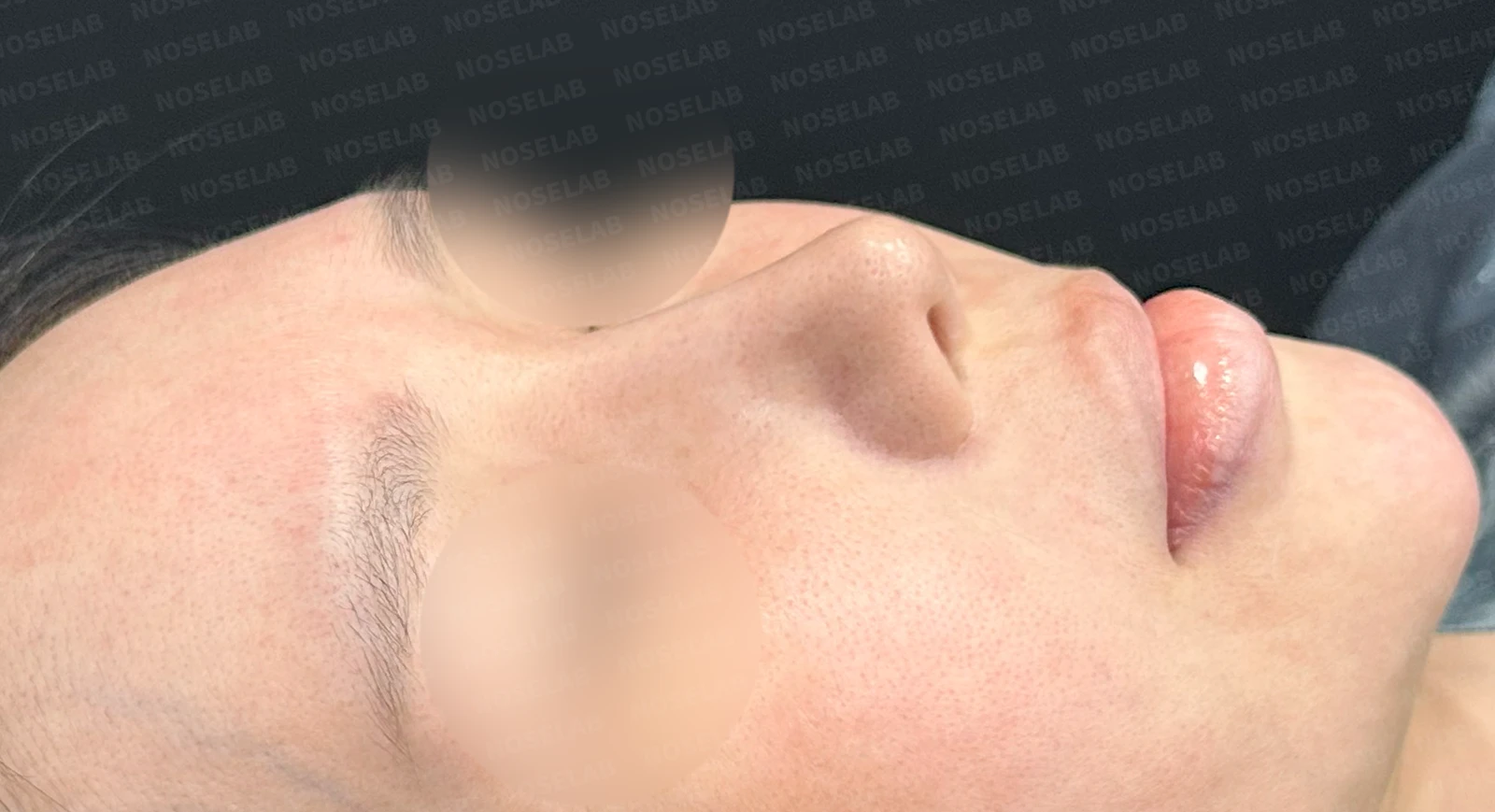
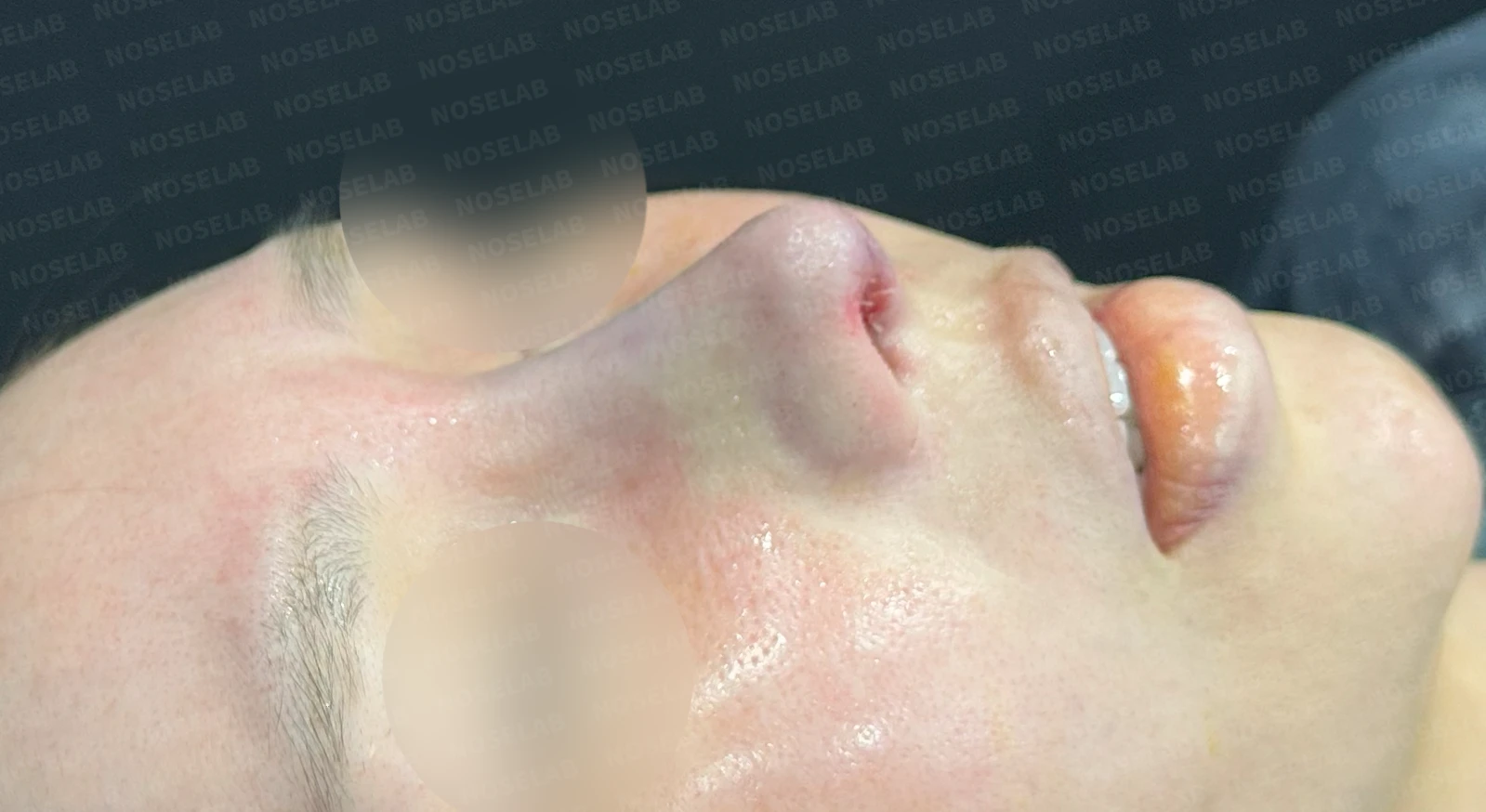
Before surgery / Day 0 immediately after surgery Photos taken immediately after surgery show swelling and may differ from the final result.
Oblique view:
- The artificial curved ski-slope profile was changed to a natural straight bridge line
- The thin, artificial appearance of the bridge and tip was improved to a soft, natural contour
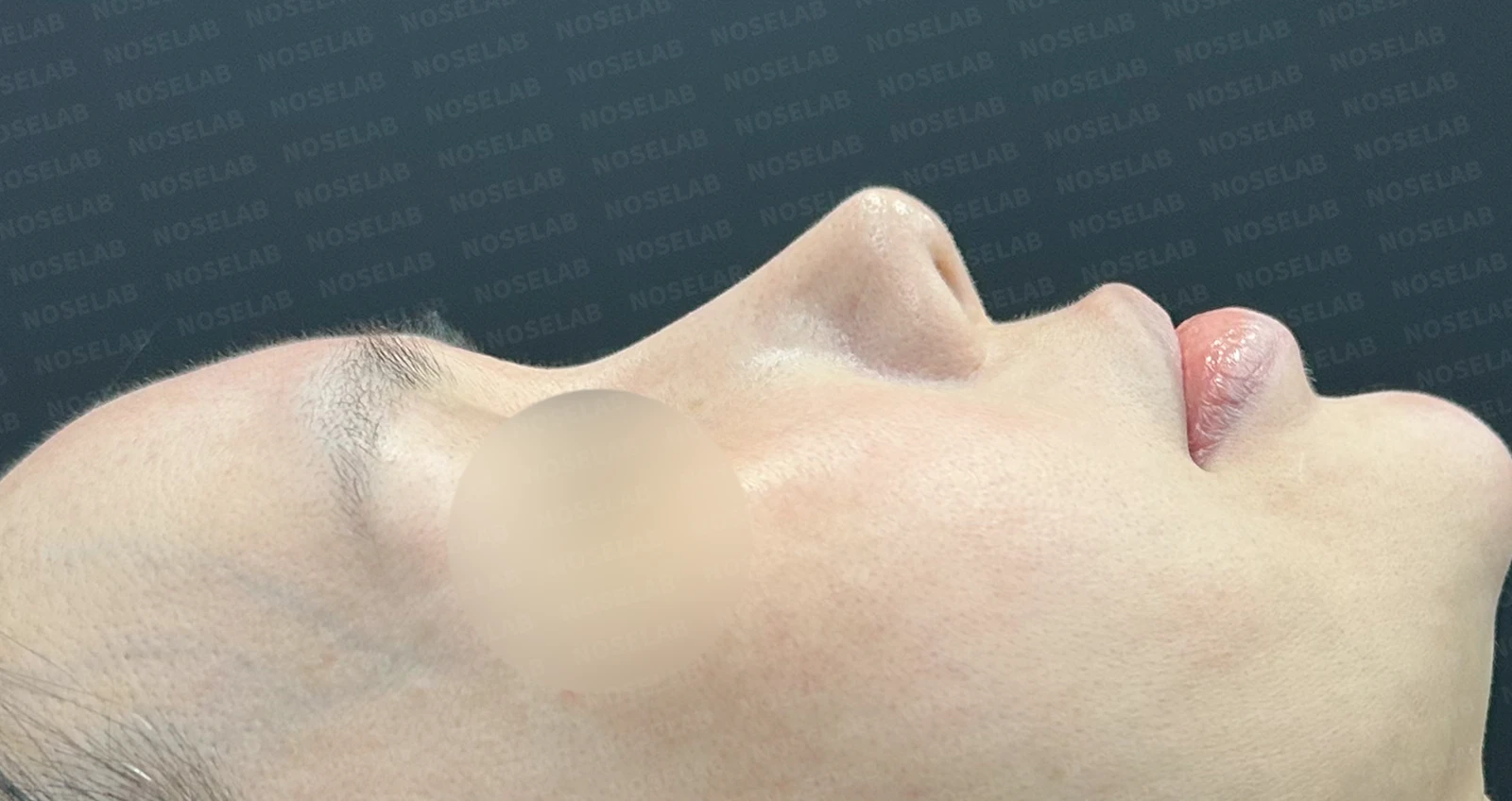
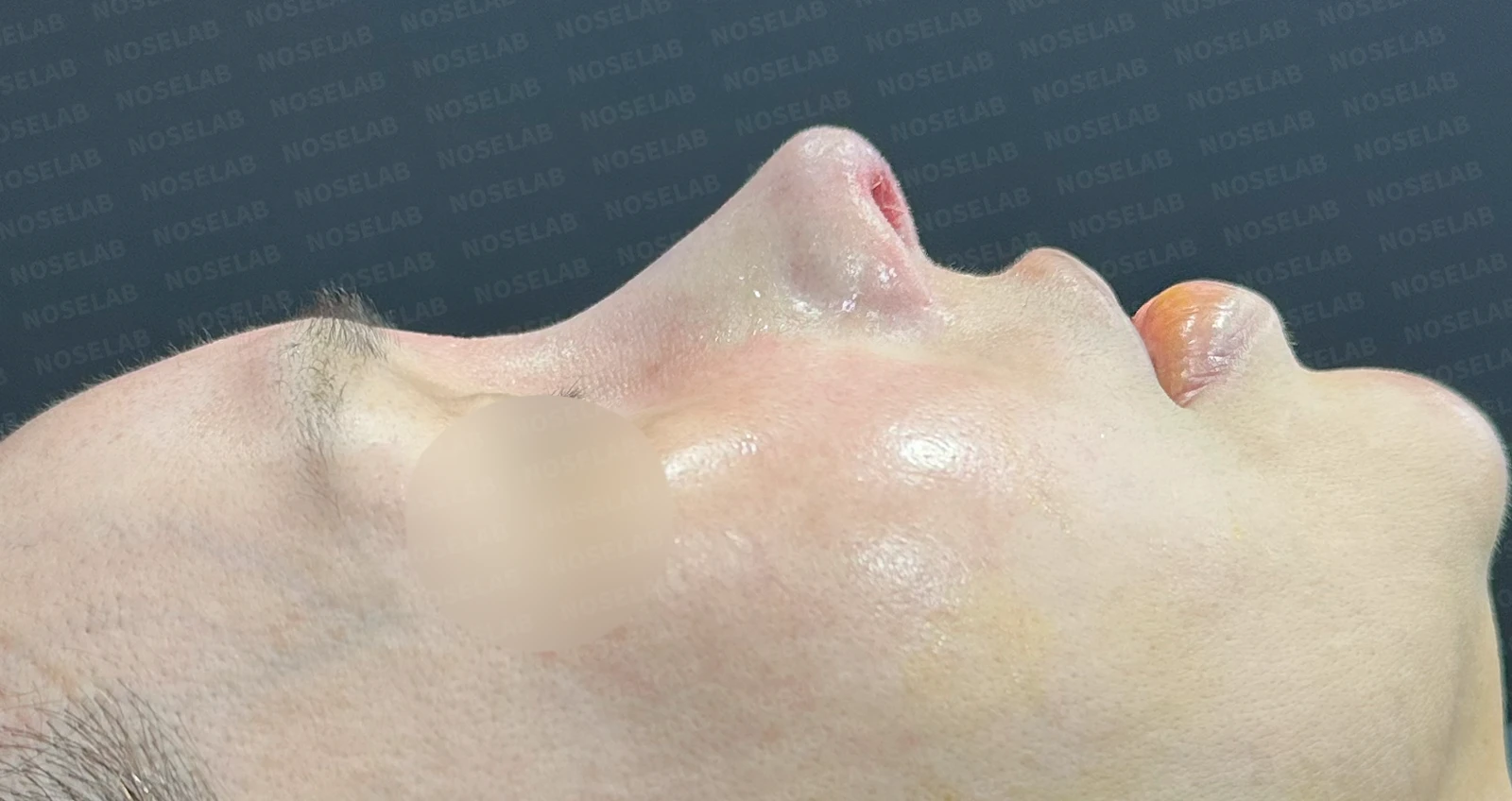
Before surgery / Day 0 immediately after surgery Photos taken immediately after surgery show swelling and may differ from the final result.
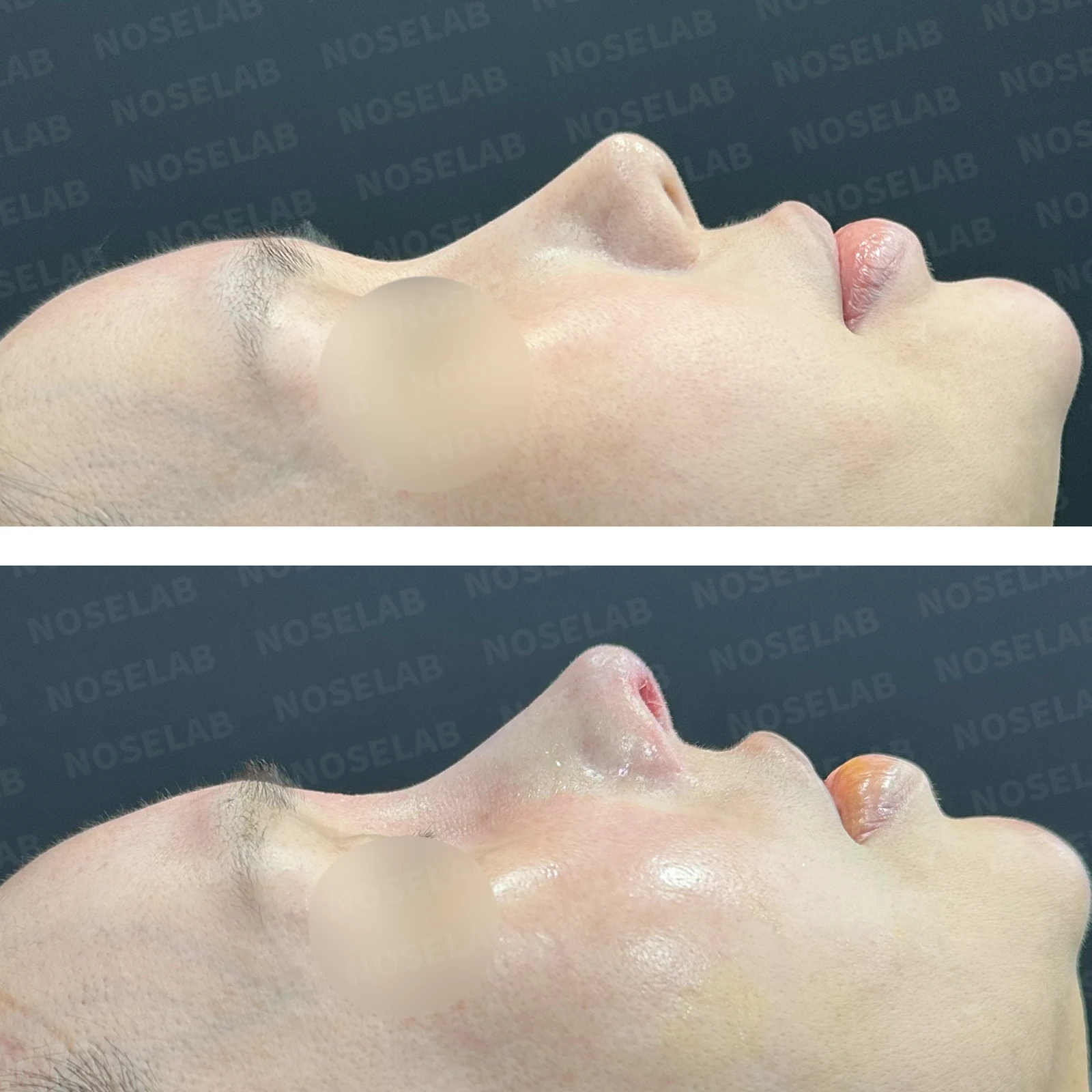
Profile view:
- The radix was lowered
- The previously upturned nasal tip was naturally lowered
- The columella was lowered, correcting the nasolabial angle
- Visible improvement in protruding mouth appearance
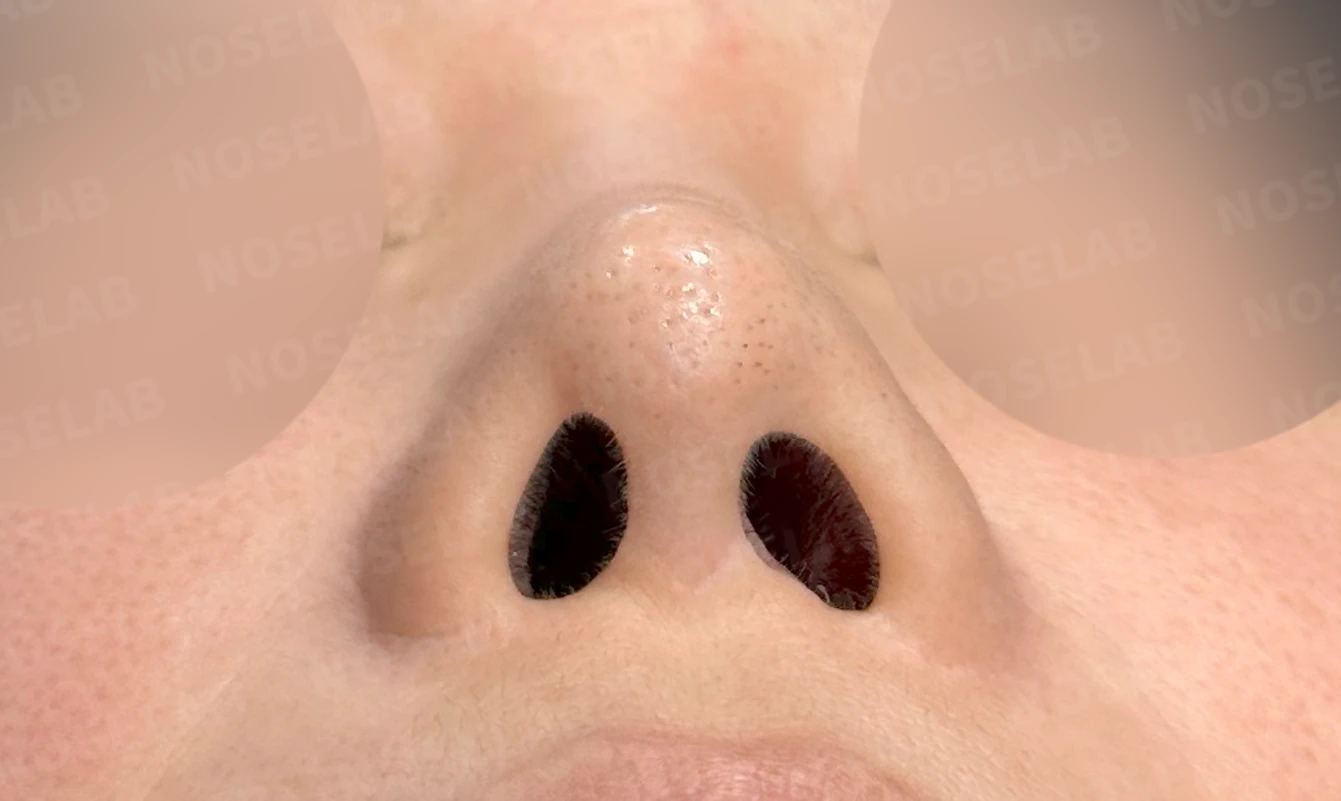
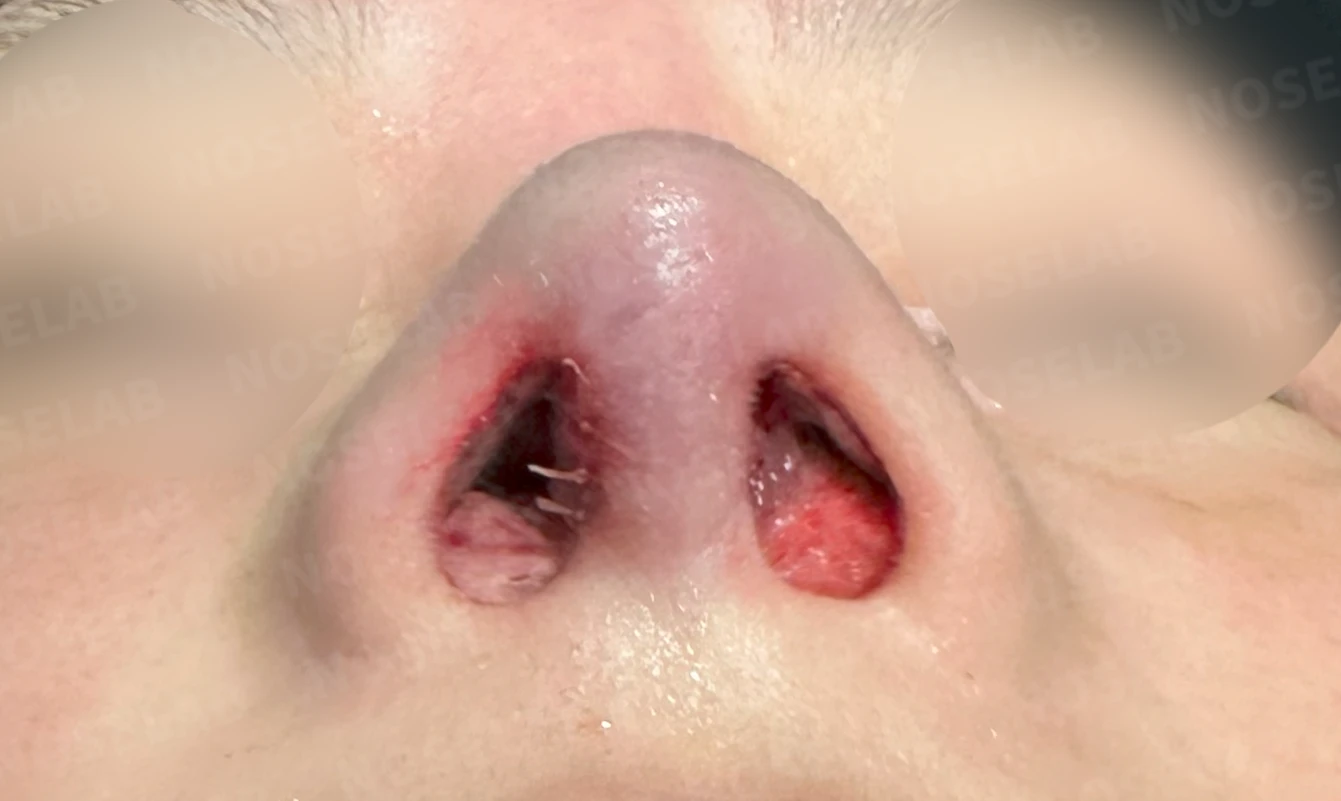
Before surgery / Day 0 immediately after surgery Photos taken immediately after surgery show swelling and may differ from the final result.
Nostrils:
- The deviation of the nasal tip was corrected
- Nostril asymmetry was significantly improved
5. Photos immediately after surgery on day 0 Photos taken immediately after surgery show swelling and may differ from the final result.
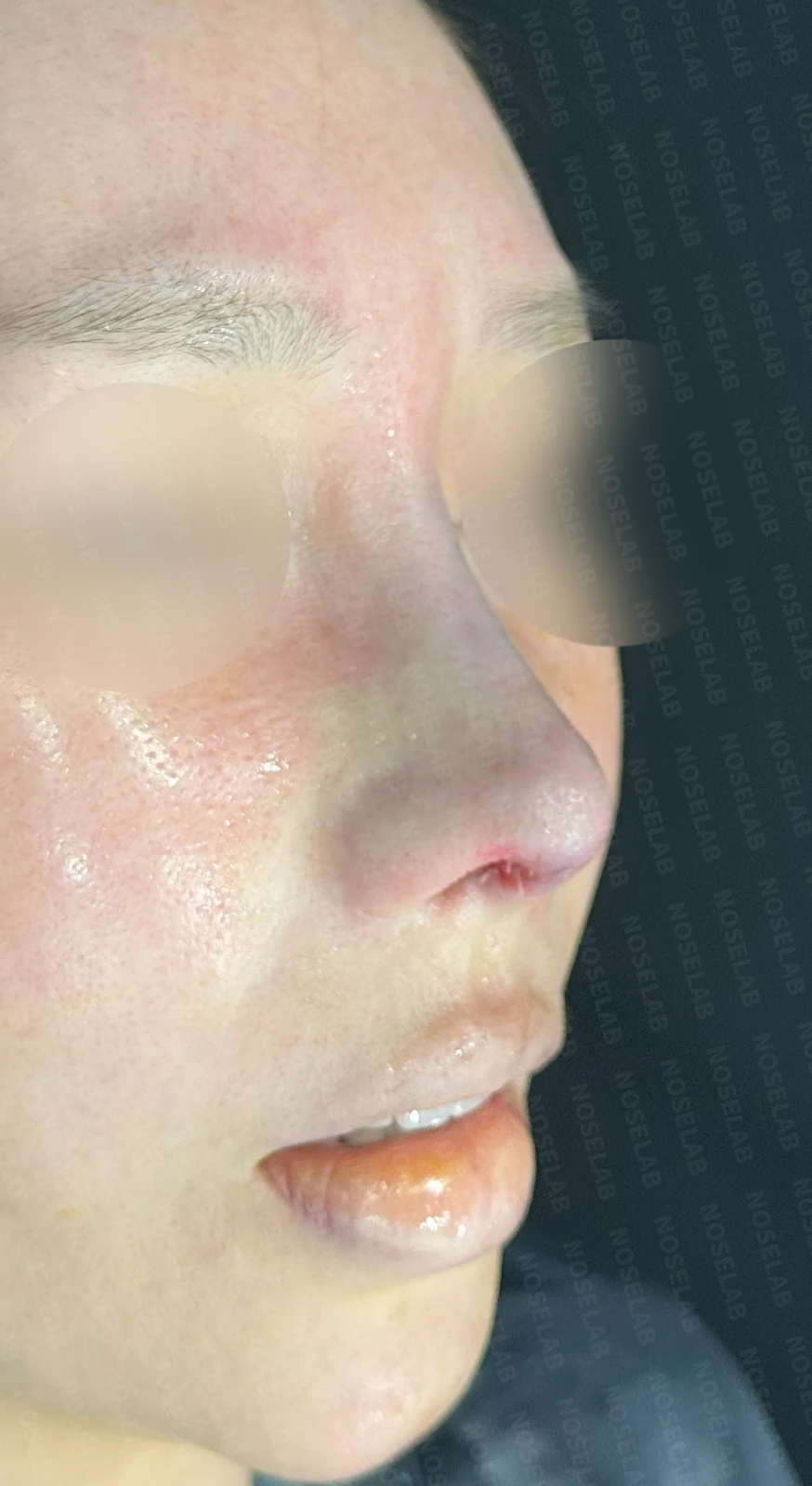
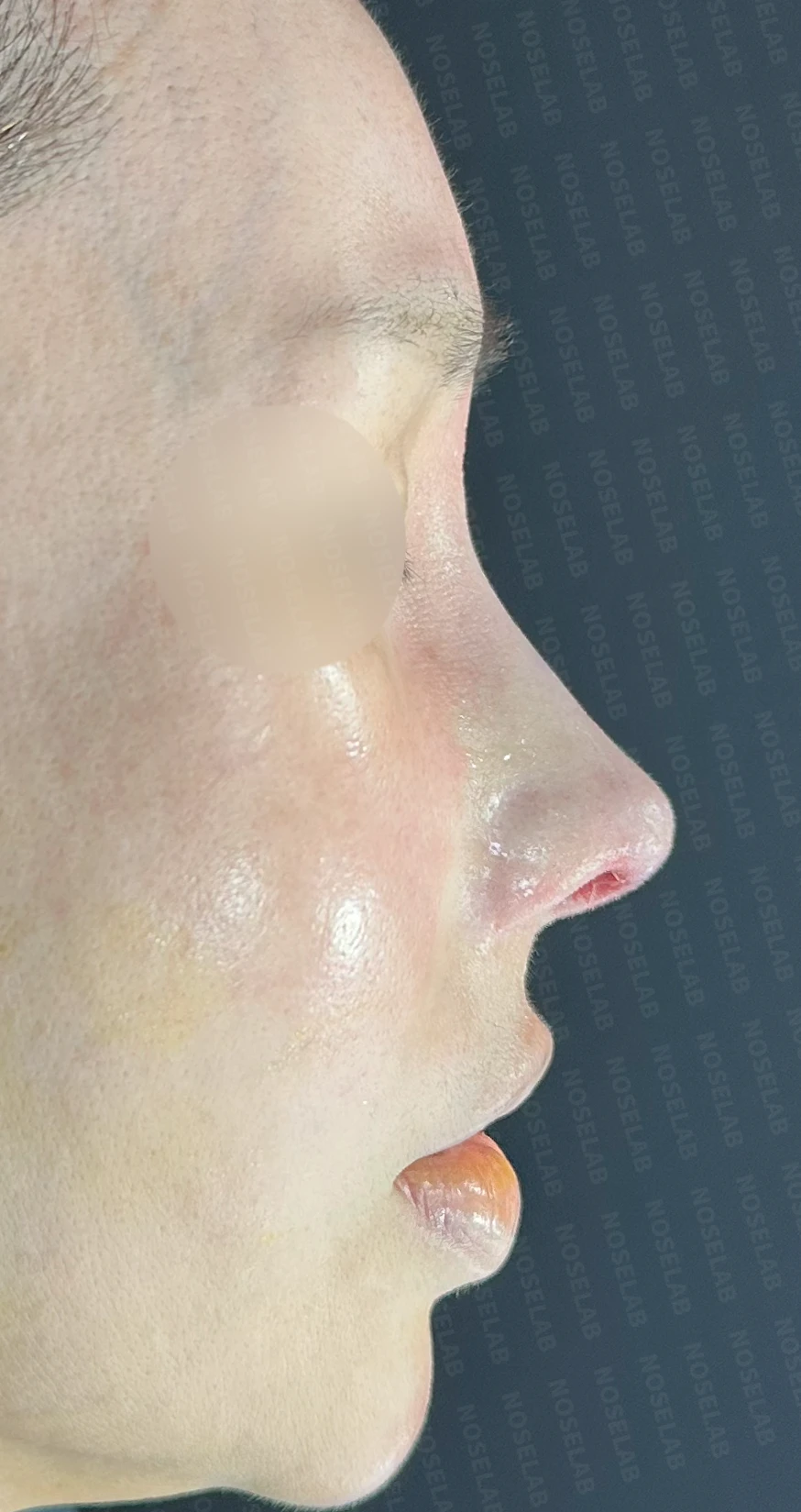
Front, oblique, and profile views on day 0 immediately after surgery. Photos taken immediately after surgery show swelling and may differ from the final result.
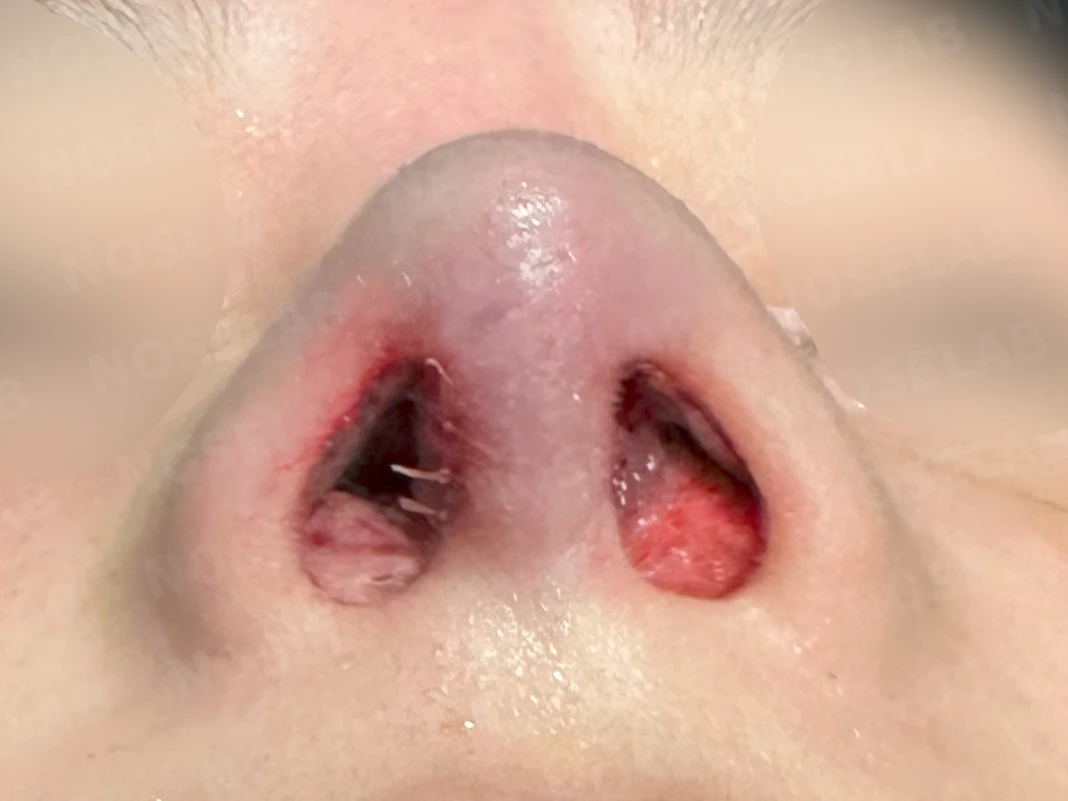
Basal (nostril) view immediately after surgery (Day 0).Immediate postoperative photos show swelling and may differ from the final result.
6. Overall evaluation
This case is a good example of transforming an artificial-looking nose into a natural contour.
In particular, changing the previous curved ski-slope profile to a straight bridge line
and naturally lowering the upturned tip improved the unnatural look.
Lowering the radix and the columella also improved the overall facial proportions.
Importantly, beyond aesthetic refinement, treating the deviated septum and hypertrophic rhinitis
achieved functional improvement at the same time.
This reflects the specialized expertise of a board-certified otolaryngologist.
7. Conclusion
While enhancing aesthetic appearance is essential in plastic surgery, if the beauty looks artificial,
one must keep in mind that such results do not remain satisfying over time.
From the initial design phase, natural harmony must always come first.
As demonstrated in this case, carefully considering each patient's facial anatomy and goals
is key to achieving a natural and aesthetically pleasing outcome.
I always prioritize the long-term satisfaction of patients
and pursue natural aesthetic balance.
If you are considering rhinoplasty, I encourage you to consult with a specialist
to find the most suitable and natural design for your features.
I will always strive to support the aesthetic and functional health of your nose.
This was Dr. Peter C. Kang. Thank you.
Thank you.
#rhinoplasty #upturnednosecorrection #crookednosecorrection #loweringradix #longphiltrumcorrection #nostrilasymmetrycorrection #closedrhinoplasty #naturalnose #entrhinoplasty #functionalrhinoplasty #deviatedseptum #hypertrophicrhinitistreatment

Limitations and risks
When autologous rib cartilage is used, scarring and pain may remain at the donor site on the chest, and pneumothorax (pleural injury) can occur rarely. Over time, the grafted cartilage may warp or undergo partial resorption.
When revising after implant removal, contracture may progress again after removal, the nasal height and length may decrease, and staged surgery may be necessary depending on the skin condition.
When the septum is corrected at the same time, nasal obstruction may persist or recur, and in rare cases, septal perforation or changes in smell may occur.
Common potential risks include infection, bleeding, asymmetry, scarring, skin necrosis, and insufficient improvement; results vary depending on individual skin condition and previous surgical history.