Hello, I am Dr. Peter C. Kang.
Today, I would like to introduce a successful closed rhinoplasty case of a patient who was concerned about a small, low nose.
With this presentation, the patient had concerns that the nose appeared small relative to the face due to a short, blunt nasal tip and a low glabella.
1. Preoperative analysis
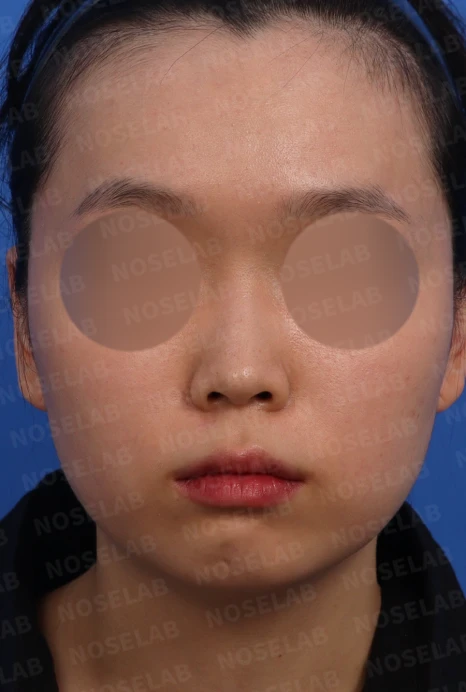
Preoperative design consultation front view.
Front view:
- Overall low nasal bridge
- Sunken glabella appearance caused by a prominent brow bone
- A nose that looks small relative to the face
- Blunt and broad nasal tip
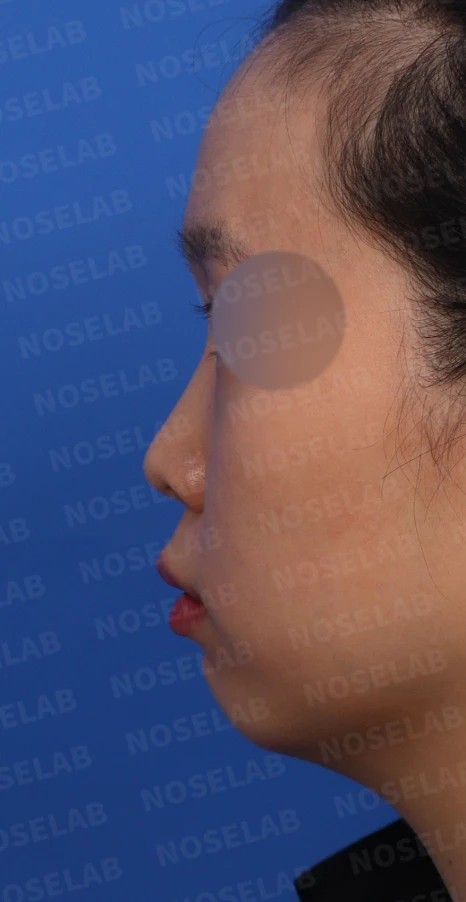
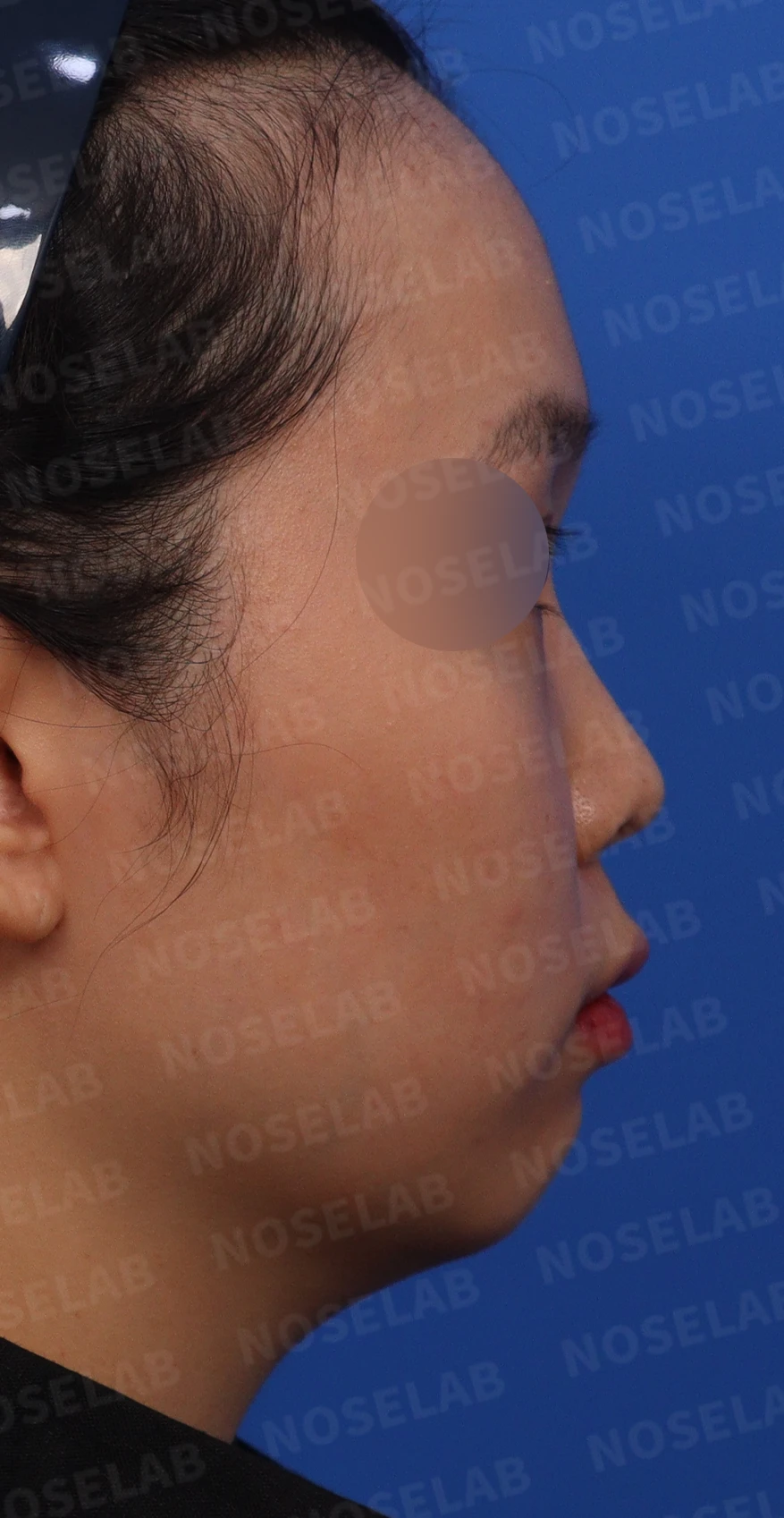
Preoperative design consultation profile view.
Profile view:
- Prominent brow bone
- Depressed, low glabella
- Short, small nasal tip
- Low nasal projection
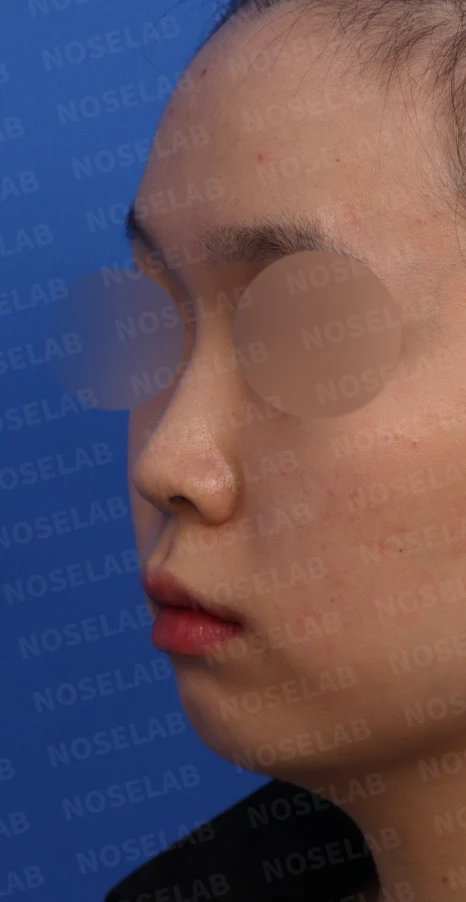
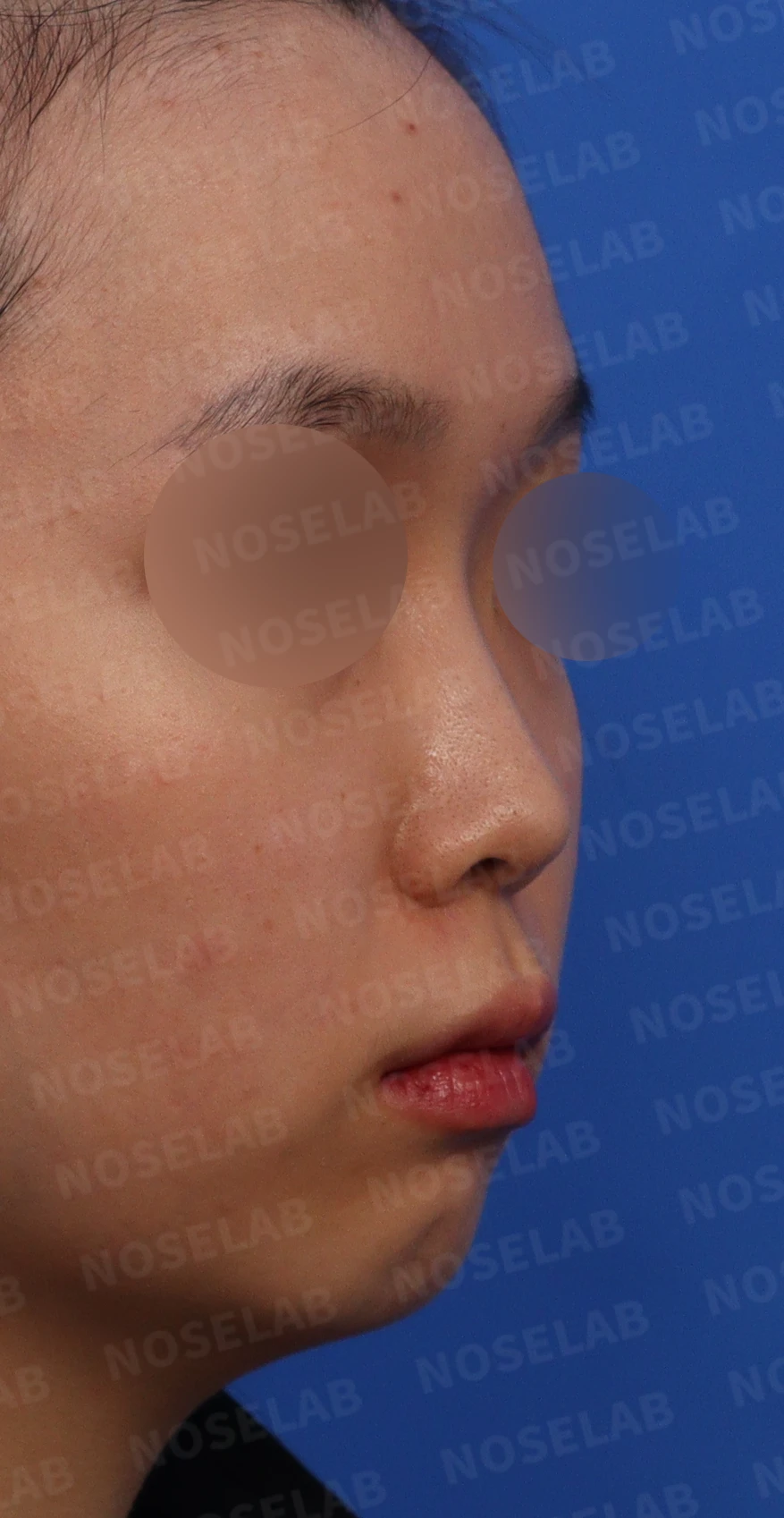
Preoperative design consultation photo in oblique view.
Oblique view:
- Noticeable glabellar depression
- Distinctly low height and short length
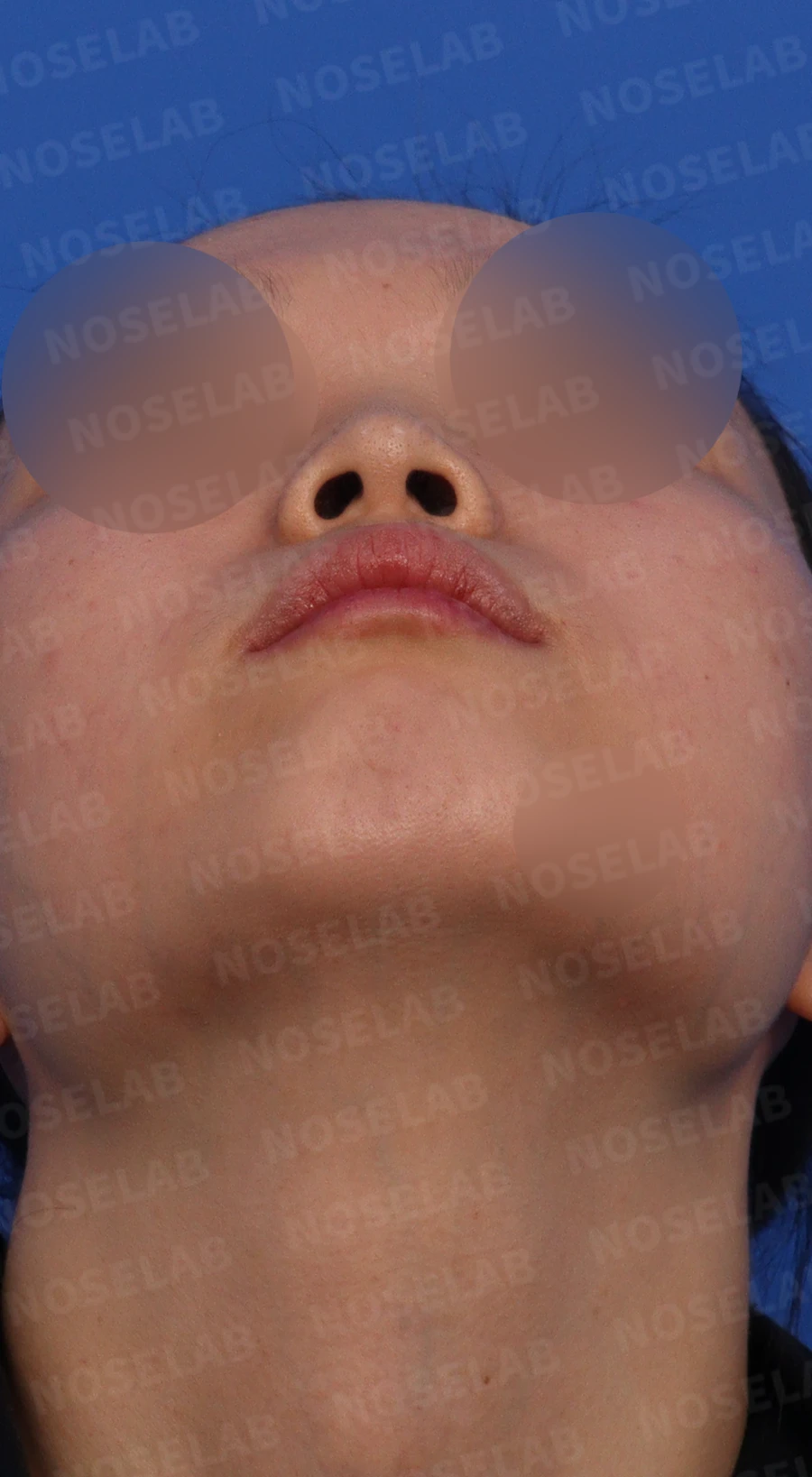
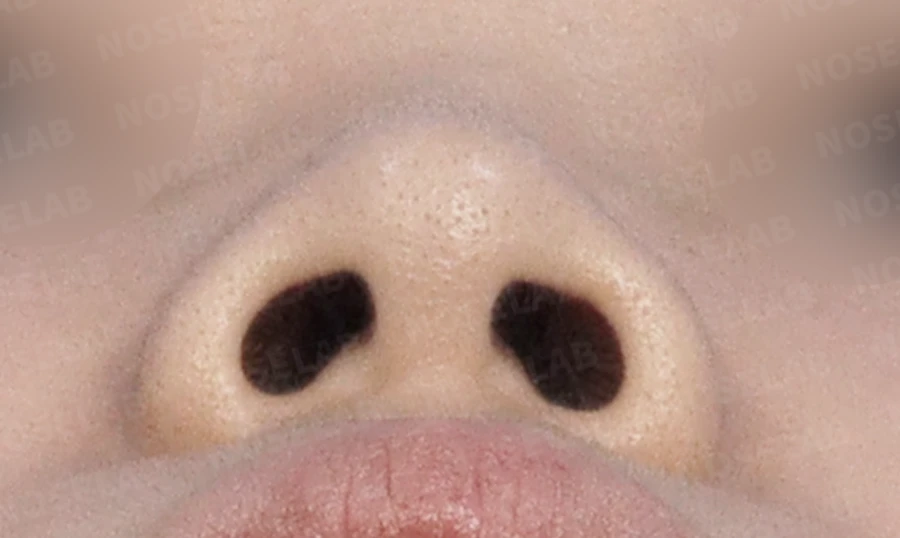
Preoperative design consultation basal (nostril) view.
Nostrils:
- Asymmetric and wide shape
2. Surgical plan
- Septal extension using autologous rib cartilage
- Glabellar augmentation using a silicone implant
- Nasal tip correction and elevation
- Adjustment of the bridge line to create a straight bridge line
3. Surgical procedure
Using a closed approach, the surgery was performed as follows:
a) Autologous rib cartilage harvest and septal extension
b) Glabellar augmentation using a silicone implant
c) Nasal tip correction and elevation using autologous rib cartilage
d) Adjustment of the bridge line to form a natural straight bridge line
4. Surgical results
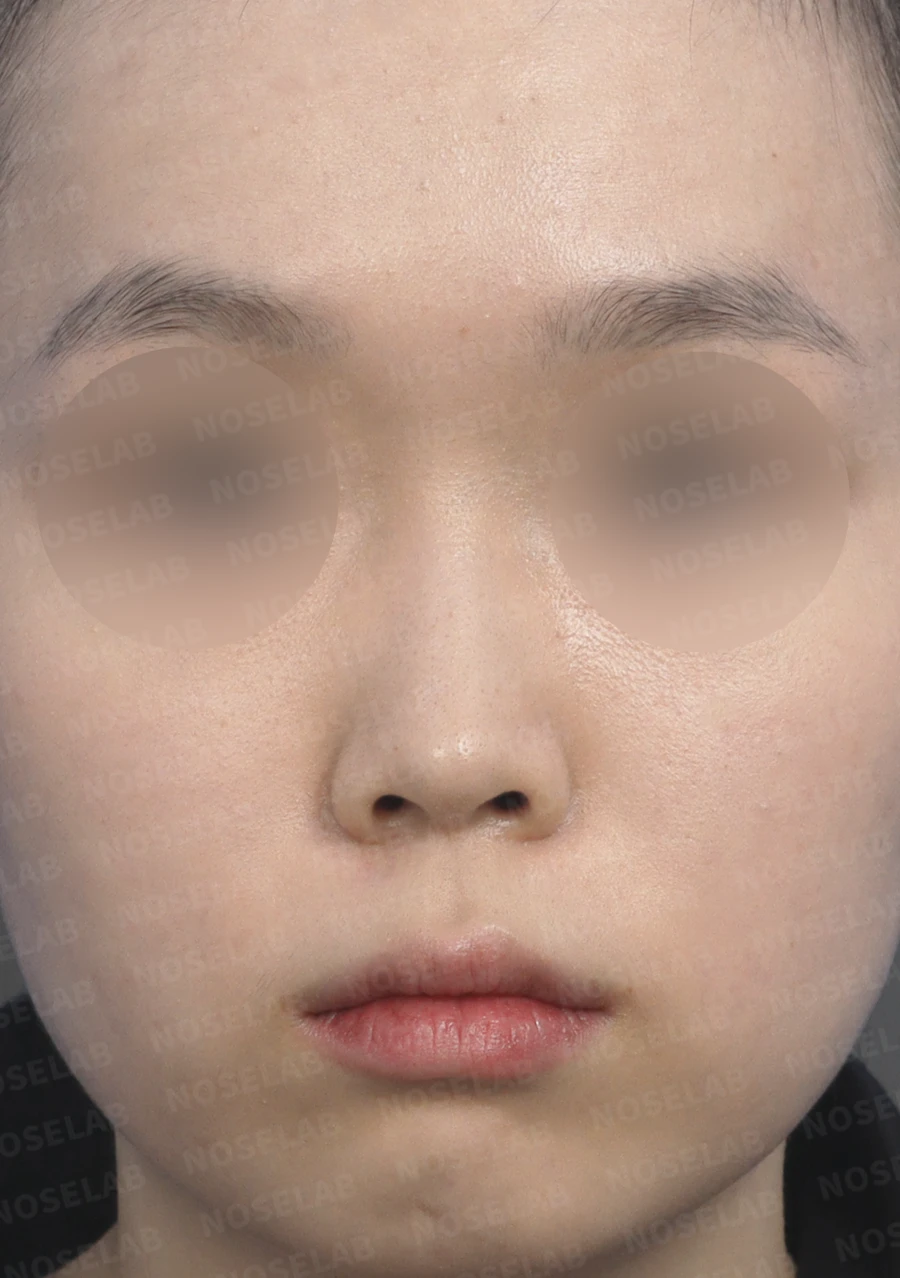
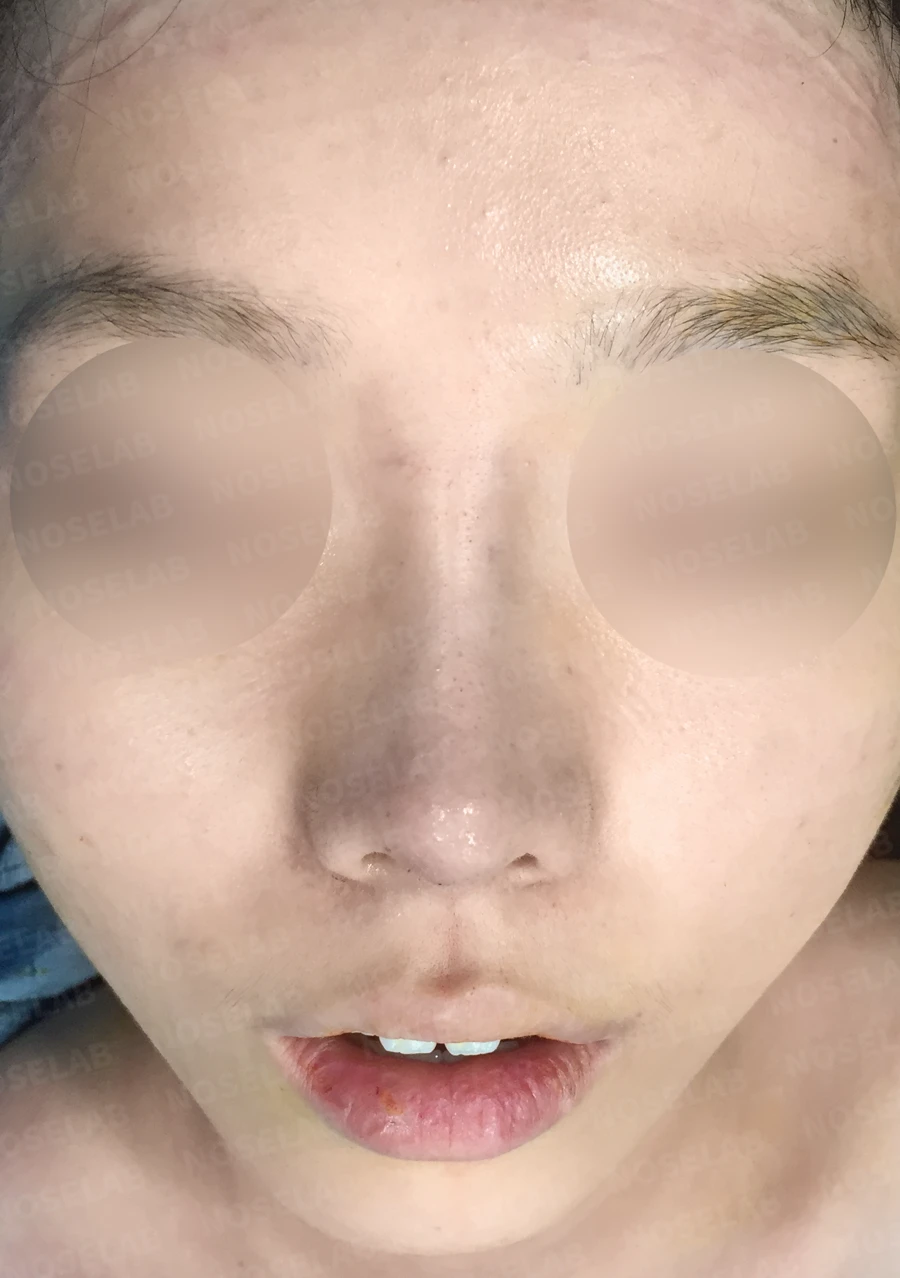
Before surgery / Day 0 immediately after surgery Photos taken immediately after surgery show swelling and may differ from the final result.
Front view:
- Naturally elevated nasal bridge
- Improved facial balance with an augmented glabella
- Nasal size and proportions in harmony with the face
- Refined and natural tip shape
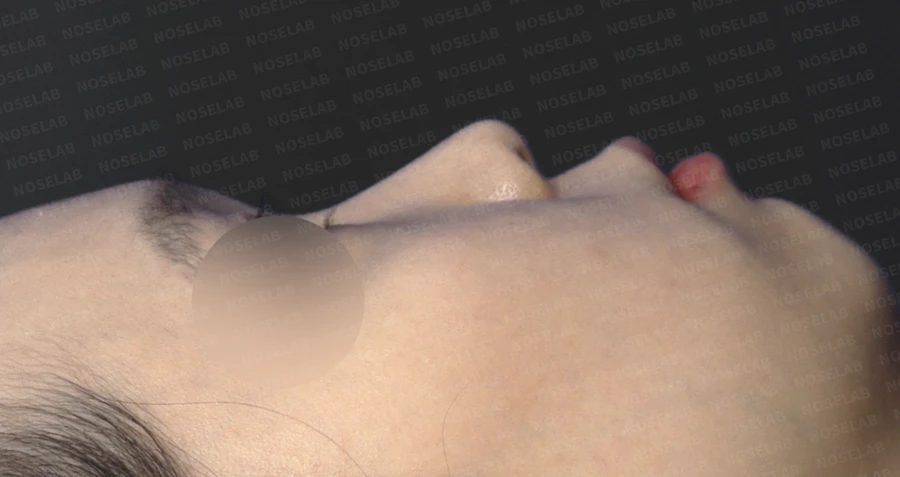
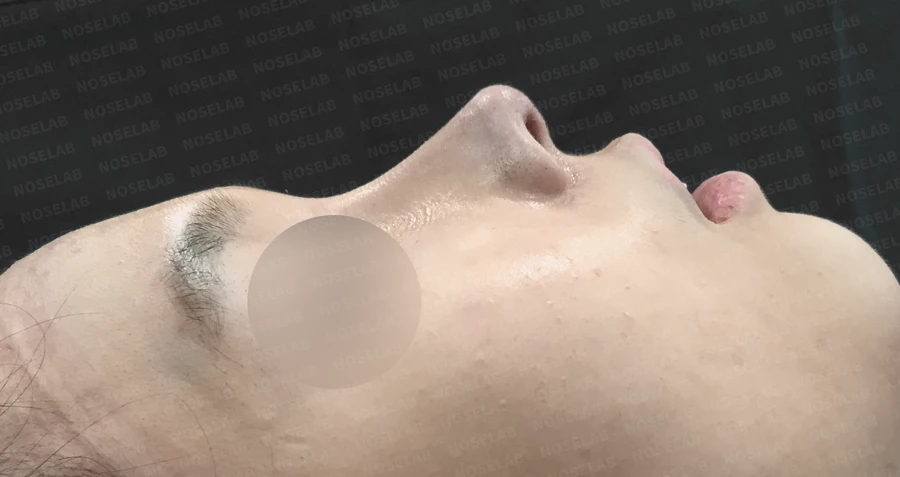
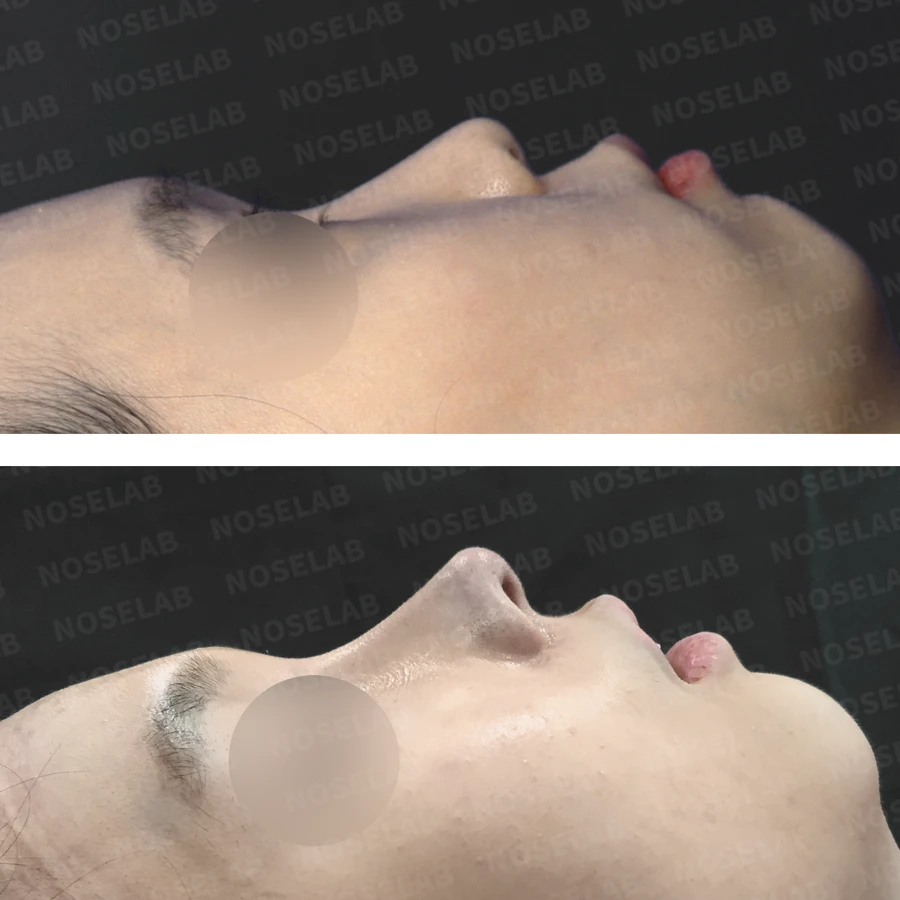
Before surgery / Day 0 immediately after surgery Photos taken immediately after surgery show swelling and may differ from the final result.
Profile view:
- Softened appearance of brow bone prominence
- Naturally raised glabella
- Well-balanced tip height and length
- Increased nasal projection and three-dimensional definition
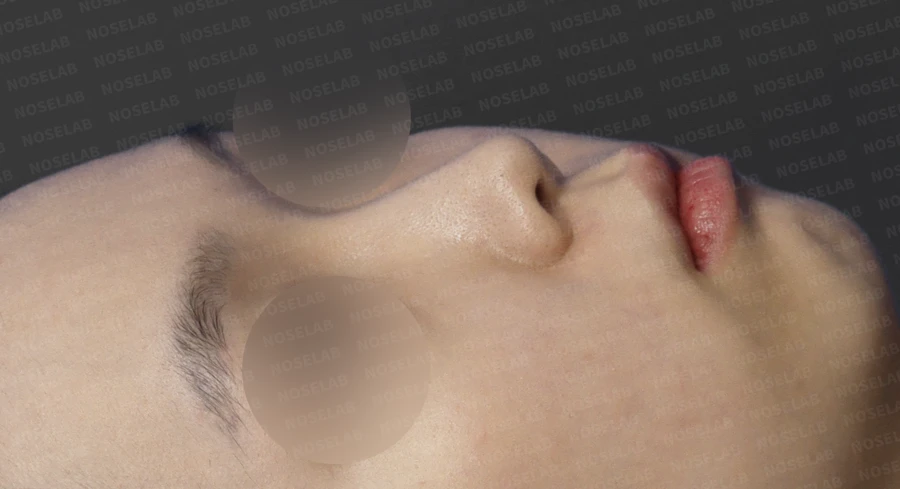
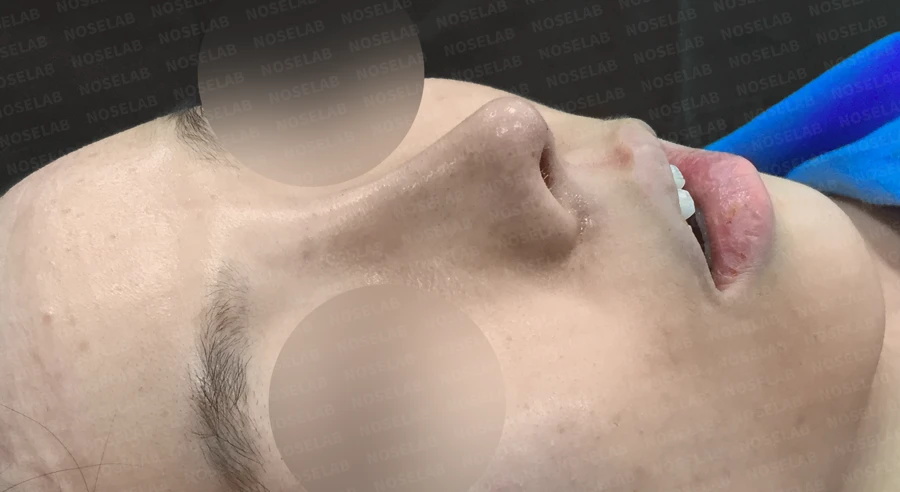
Before surgery / Day 0 immediately after surgery Photos taken immediately after surgery show swelling and may differ from the final result.
Oblique view:
- Natural transition line from the forehead to the nose
- Improved facial proportions with enhanced height and length
- A straight bridge line imparting a refined impression
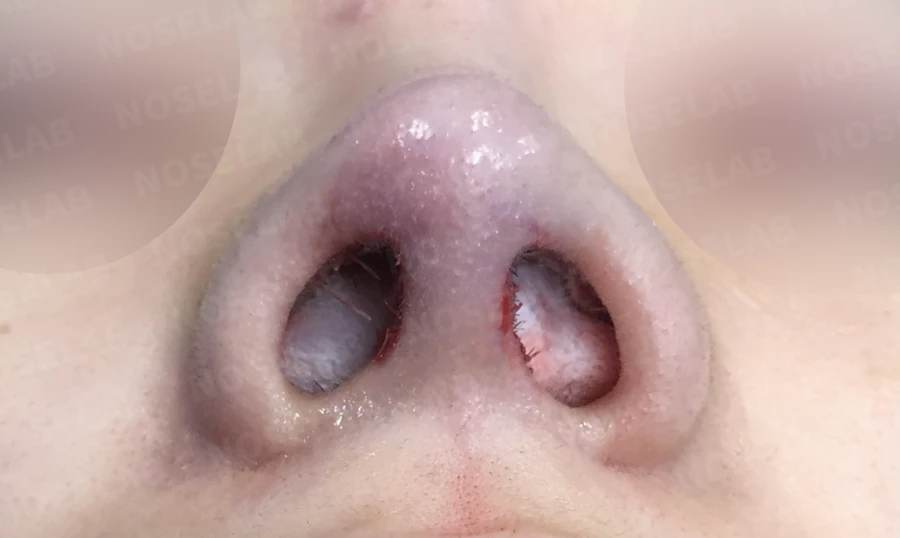
Before surgery / Day 0 immediately after surgery Photos taken immediately after surgery show swelling and may differ from the final result.
Nostrils:
- Improved symmetry
- Balanced and refined shape
5. Photos immediately after surgery on day 0 Photos taken immediately after surgery show swelling and may differ from the final result.
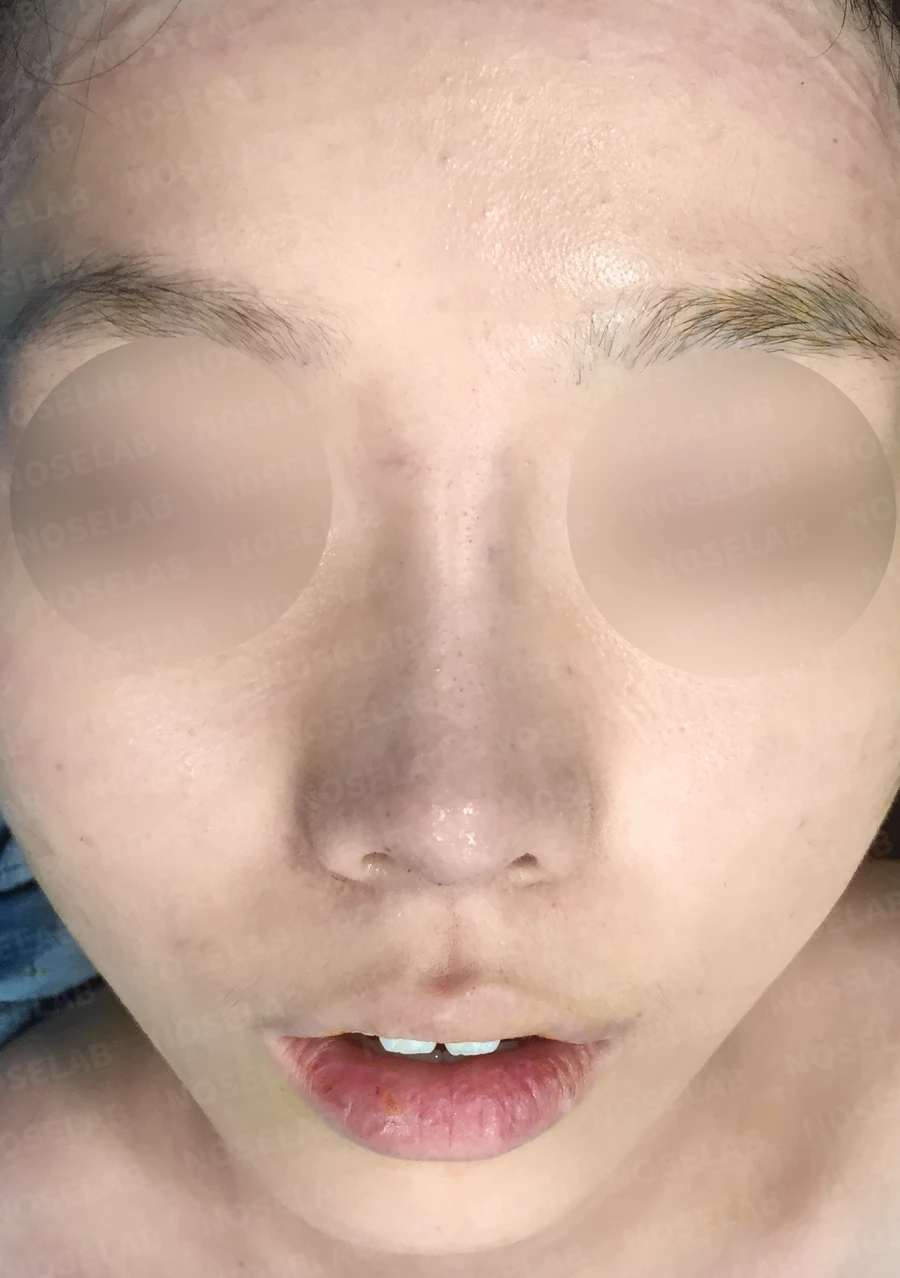
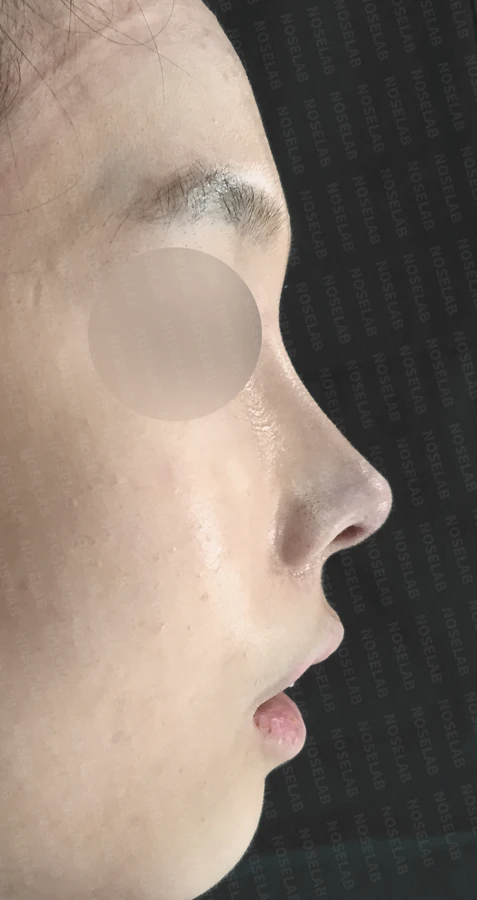
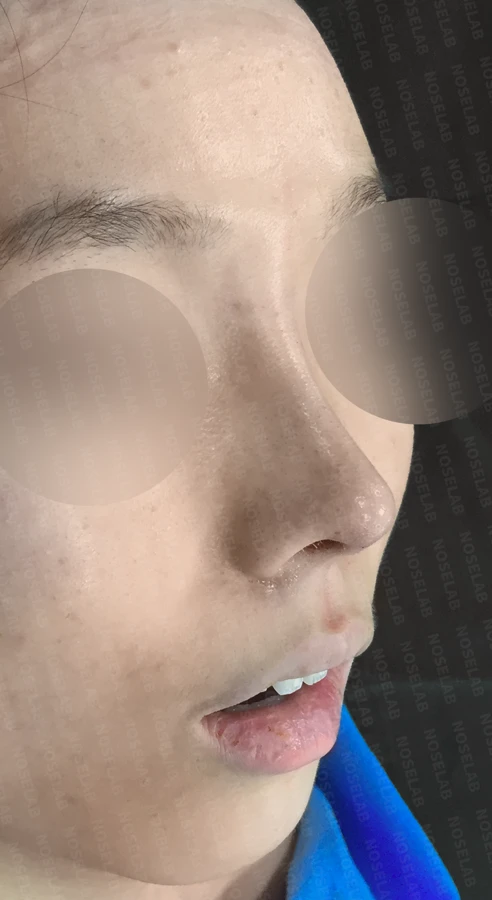
Front, profile, and oblique views taken immediately after surgery (day 0).Immediate postoperative photos show swelling and may differ from the final result.
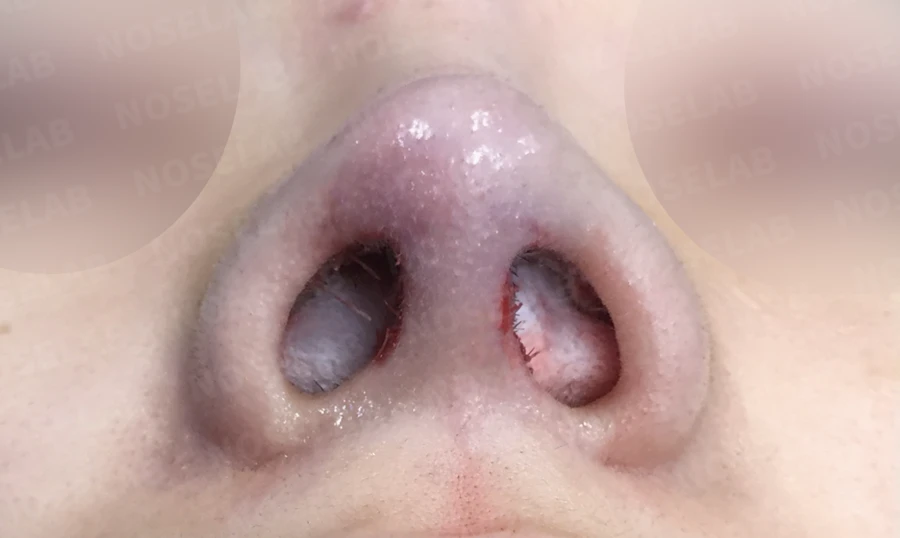
Basal (nostril) view immediately after surgery (Day 0).Immediate postoperative photos show swelling and may differ from the final result.
6. Overall evaluation
Notable aspects of this case type:
1) Use of autologous rib cartilage: results planned with safety and natural appearance in mind
2) Glabellar augmentation: improvement of overall facial balance
3) Closed approach: minimal scarring and rapid recovery
4) Natural results: a meticulous approach considering overall facial harmony
7. Conclusion
I hope this case is helpful to those concerned about a small, low nose. Rhinoplasty is a complex process that must consider the harmony of the entire face. NOSELAB delivers intended results based on our expertise and extensive experience as a board-certified otolaryngologist.
If you are considering rhinoplasty, I recommend consulting with a specialist to find the approach best suited to you. NOSELAB will always do our utmost for your beautiful and healthy nose.
This was Dr. Peter C. Kang. Thank you.
Thank you.
#rhinoplasty #shortnosecorrection #smallnosecorrection #upturnednose #lownosecorrection #glabellaraugmentation #closedrhinoplasty #autologousribgraft #tiprhinoplasty #boardcertifiedENTsurgeonrhinoplasty #naturalnose #bridgerhinoplasty #glabellaraugmentation #straightbridgeline

Limitations and risks
When autologous rib cartilage is used, scarring and pain may remain at the donor site on the chest, and pneumothorax (pleural injury) can occur rarely. Over time, the grafted cartilage may warp or undergo partial resorption.
When the septum is corrected at the same time, nasal obstruction may persist or recur, and in rare cases, septal perforation or changes in smell may occur.
Common potential risks include infection, bleeding, asymmetry, scarring, skin necrosis, and insufficient improvement; results vary depending on individual skin condition and previous surgical history.