Hello, I am Dr. Peter C. Kang.
Today, I would like to share a case of closed rhinoplasty performed at our clinic.
The patient visited because they disliked the appearance of their mouth protruding forward and wanted an overall refined, sophisticated look.
Many patients wonder if rhinoplasty can improve the appearance of a protruding mouth, and significant improvement can indeed be achieved depending on the relative positions of the nose and lips.
Through this case, I will explain in detail how rhinoplasty can improve a protruding mouth.
Preoperative consultation: design and analysis
First, during the preoperative consultation, we thoroughly analyzed the structure of the patient's face and nose.
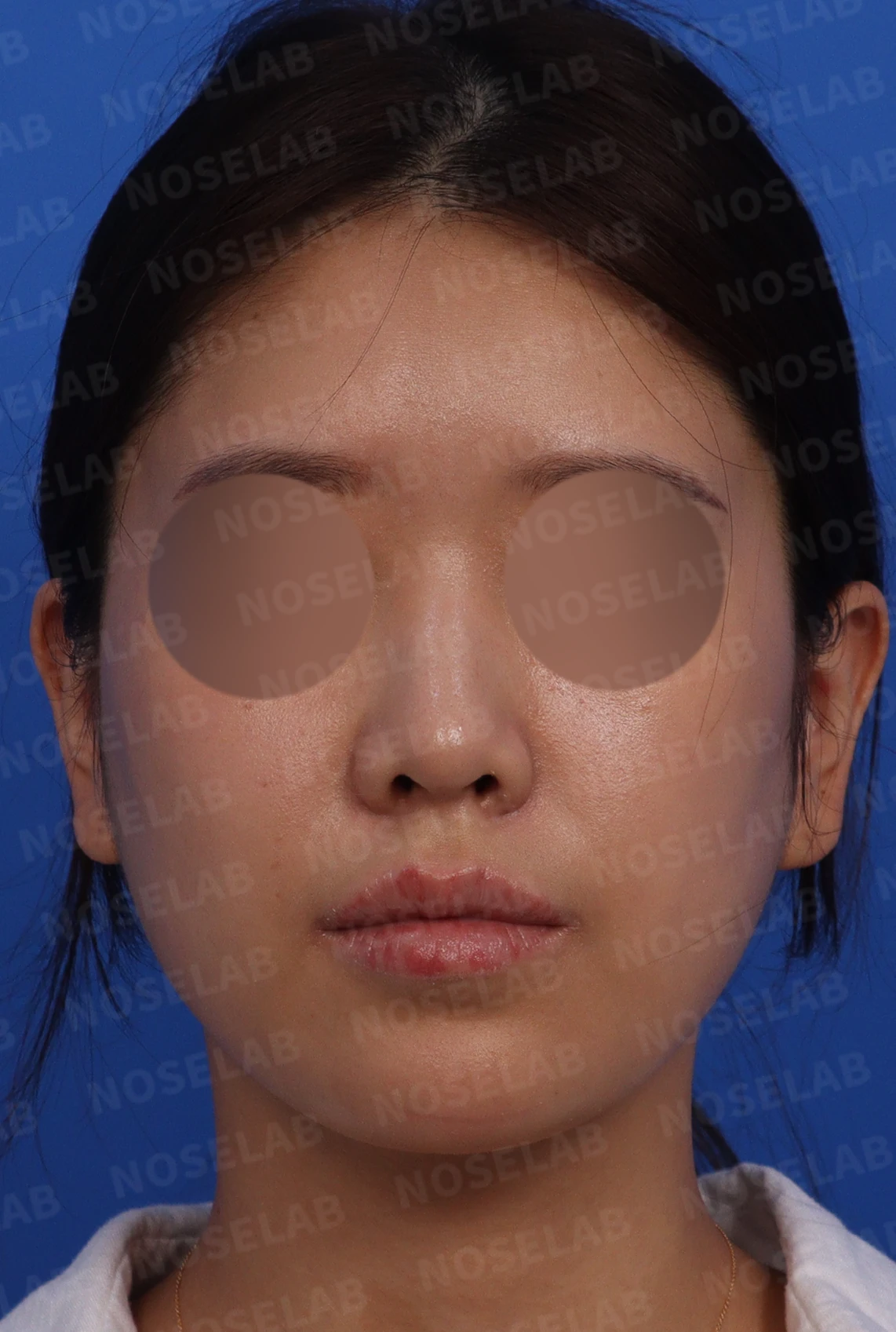
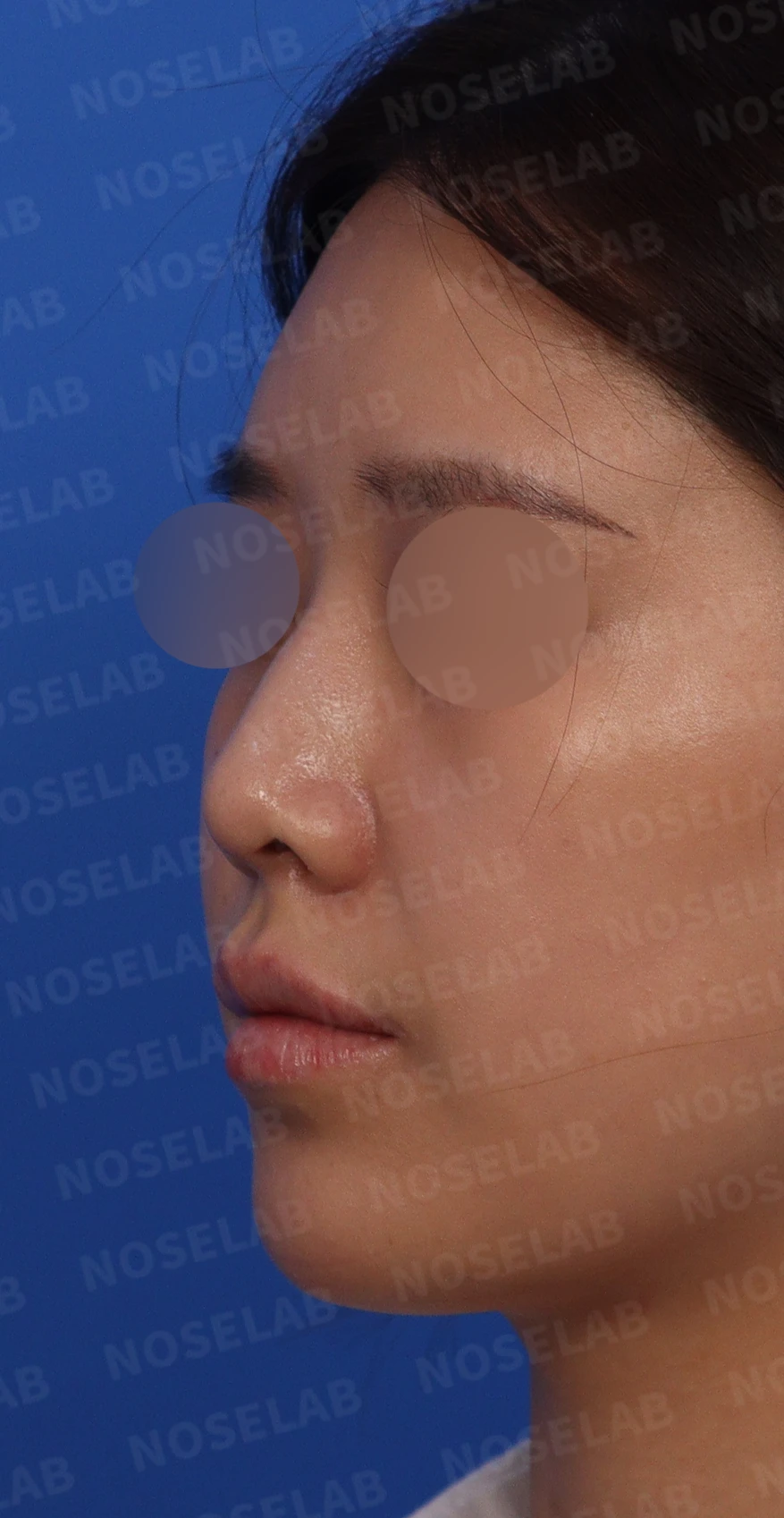
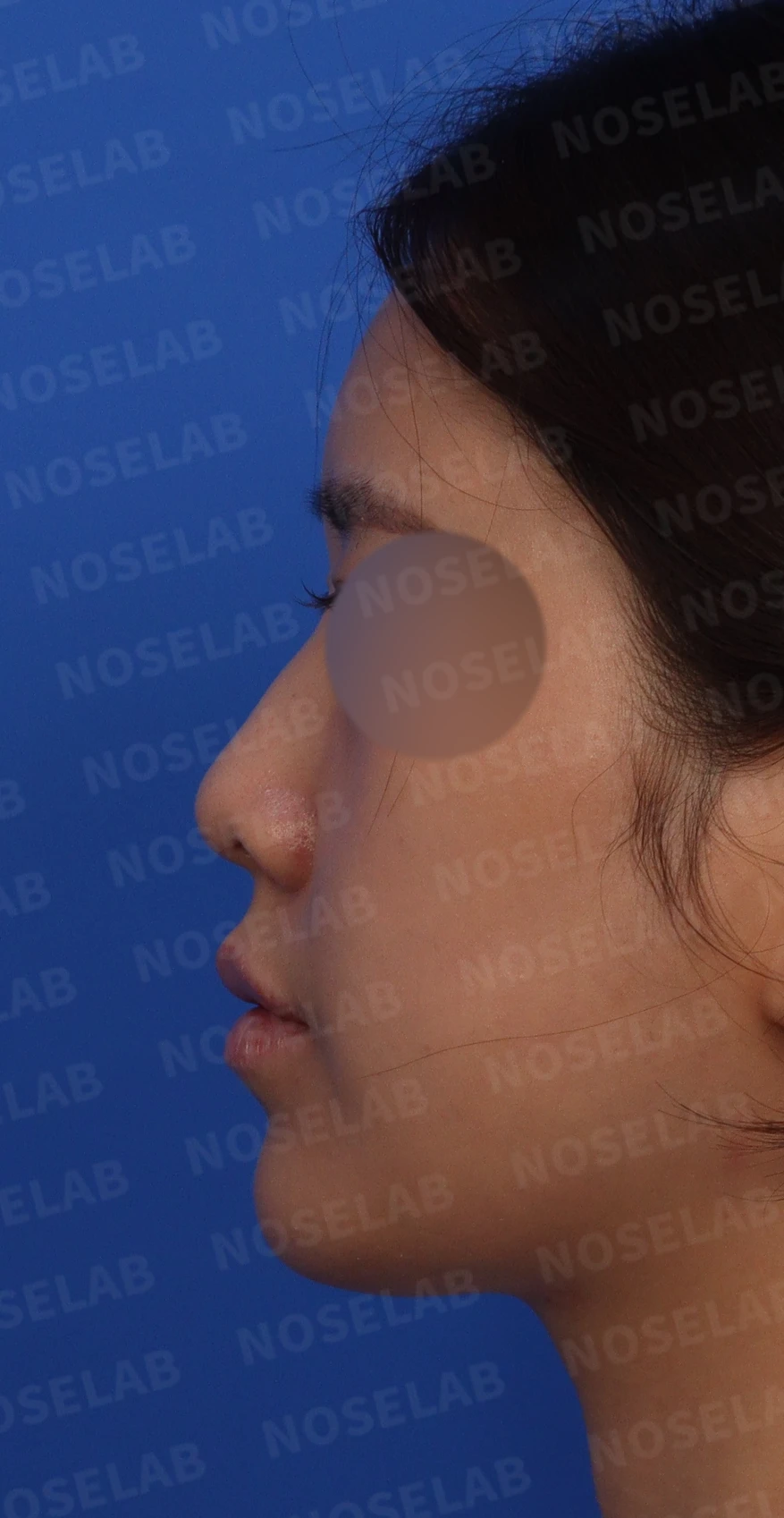
Preoperative design consultation: front, left oblique, and profile views.
In the front view, the nasal tip was bulbous and upturned, and the nasal bridge showed deviation.
In particular, the profile view clearly revealed the appearance of a protruding mouth. There was a small dorsal hump on the bridge, making the dorsum look uneven.
In addition, because the glabella was low and the columella was retracted, the nasolabial angle was acute, which strongly accentuated the appearance of a protruding mouth.
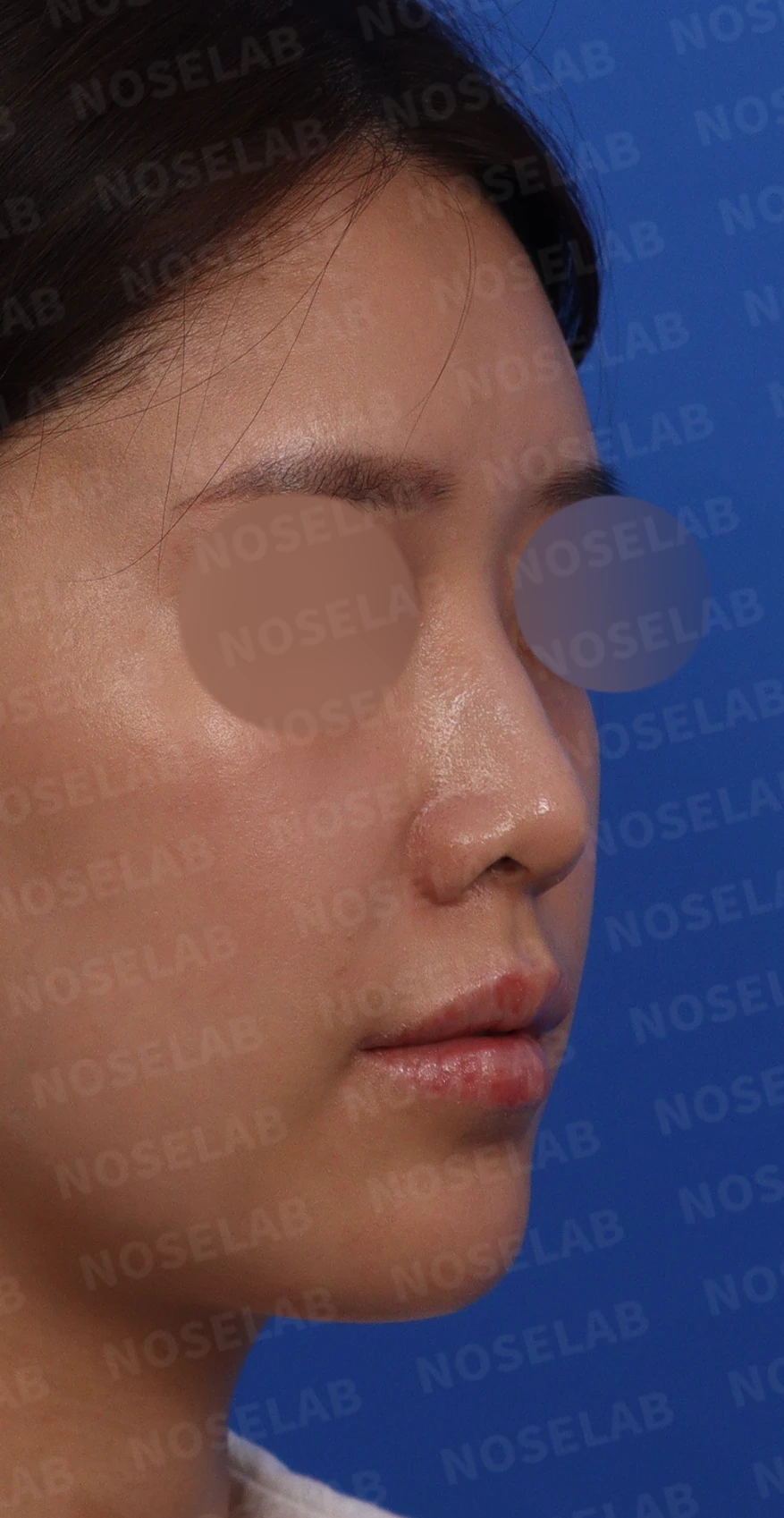
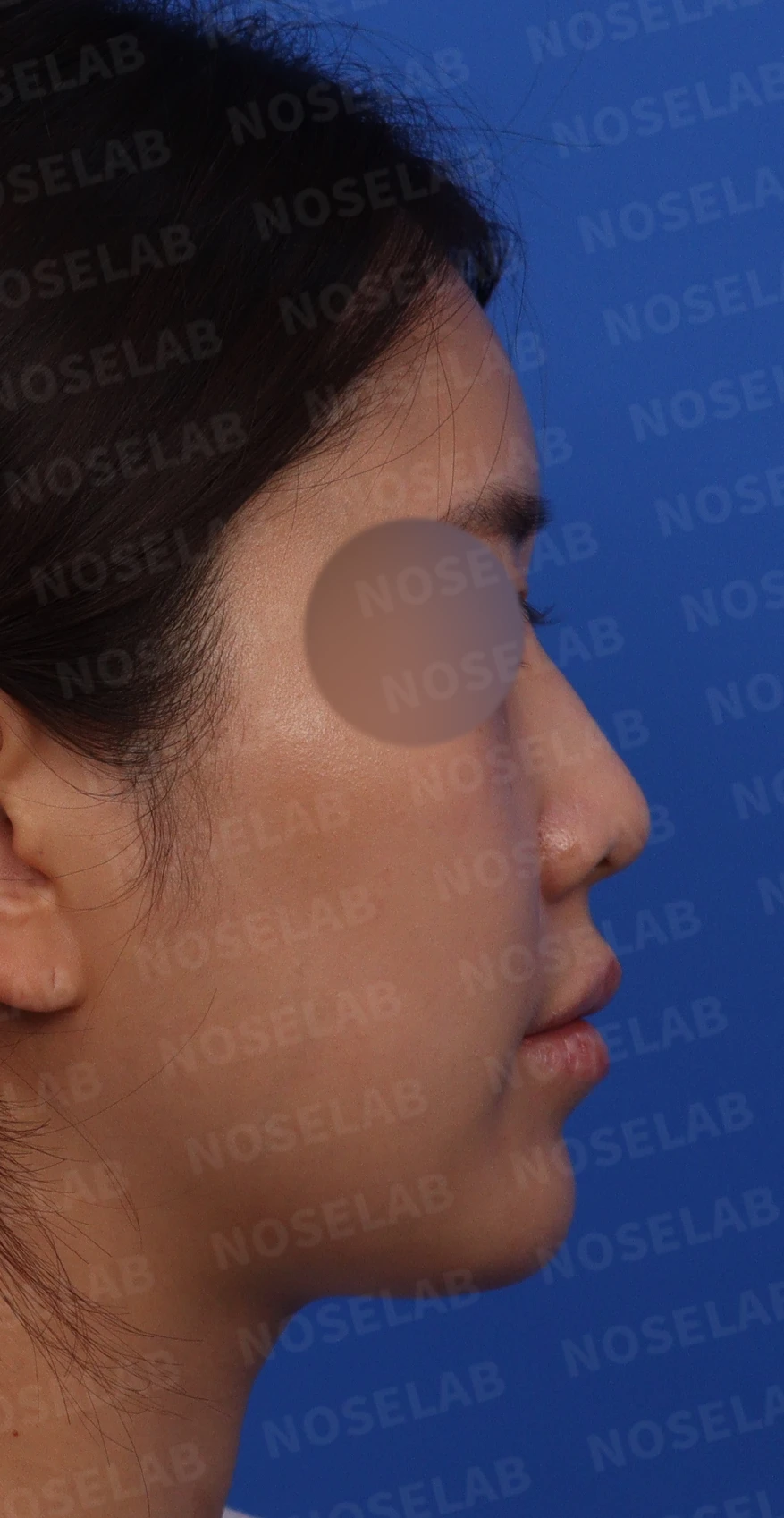
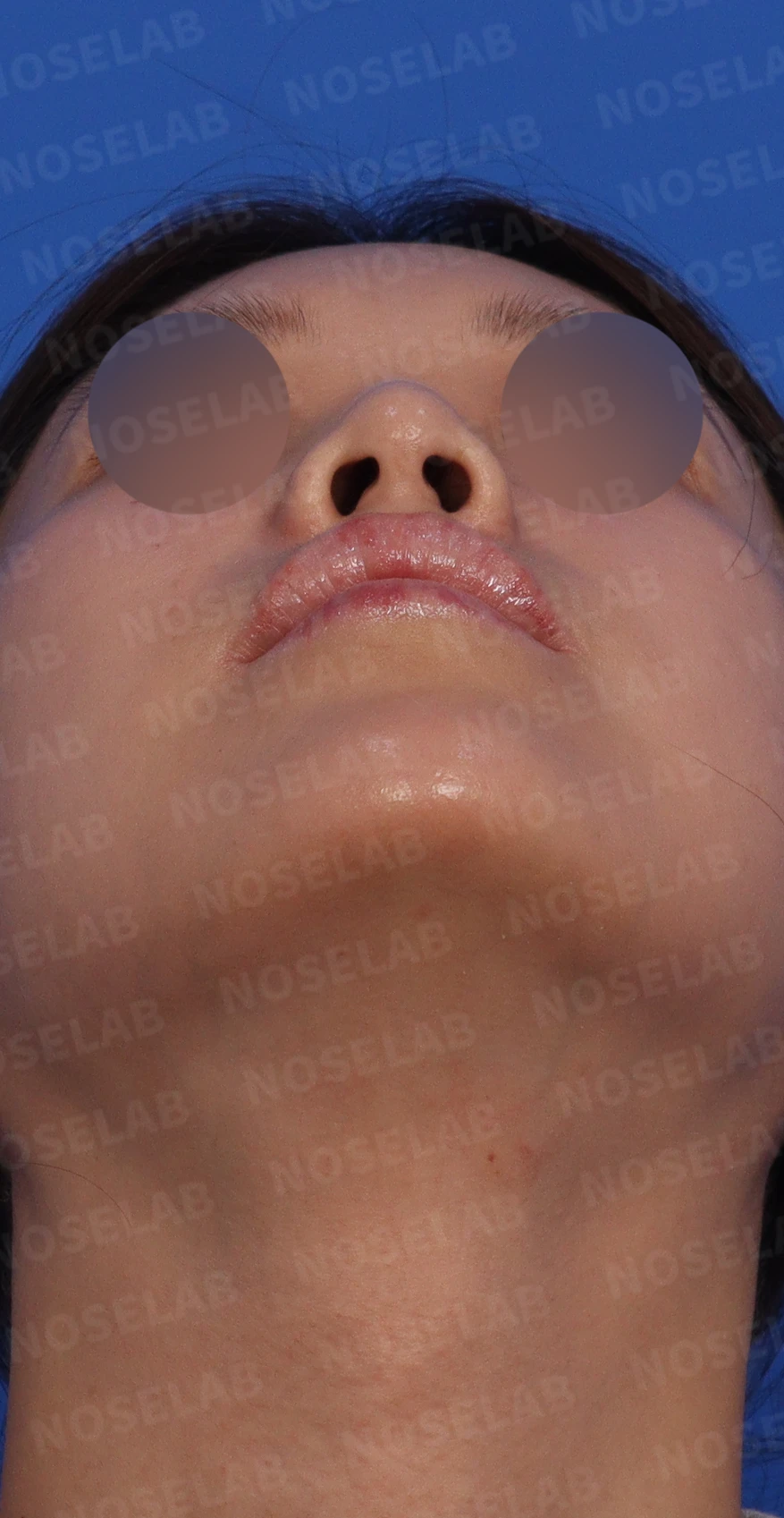
Right profile, right oblique, and basal (nostril) views from the preoperative design consultation.
In the oblique view, the nasal dorsum looked uneven and the nasal tip appeared bulbous.
The basal view of the nostrils also showed that the nostrils appeared flared.
Surgical plan: a meticulous approach with closed rhinoplasty
The surgical plan was customized by taking into comprehensive account the patient's nasal anatomy and the protruding mouth.
Through septal extension using septal cartilage and donor rib cartilage, we planned to lengthen the nasal tip and correct the nasolabial angle to improve the protruding mouth.
We also planned to smooth the small dorsal hump and refine the uneven nasal bridge using lateral osteotomy of the nasal bones.
By adjusting the nasolabial angle with cartilage, the nasal tip was brought down naturally. This balanced the relative positions of the nose and lips, improving the appearance of the protruding mouth.
Postoperative changes: visible results on day 0 immediately after surgeryPhotos taken immediately after surgery show swelling and may differ from the final result.
After surgery, the patient's face showed immediate changes.
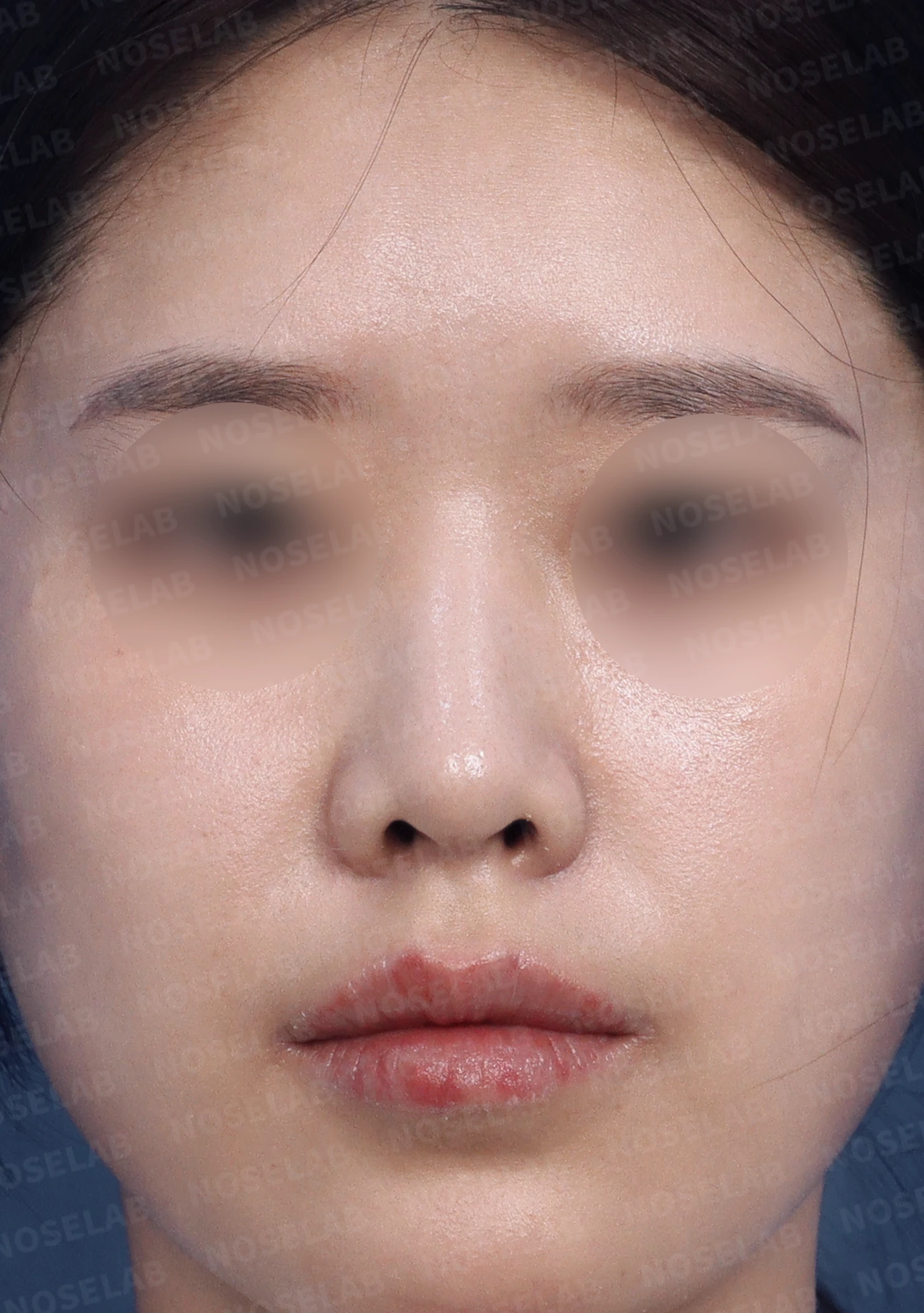
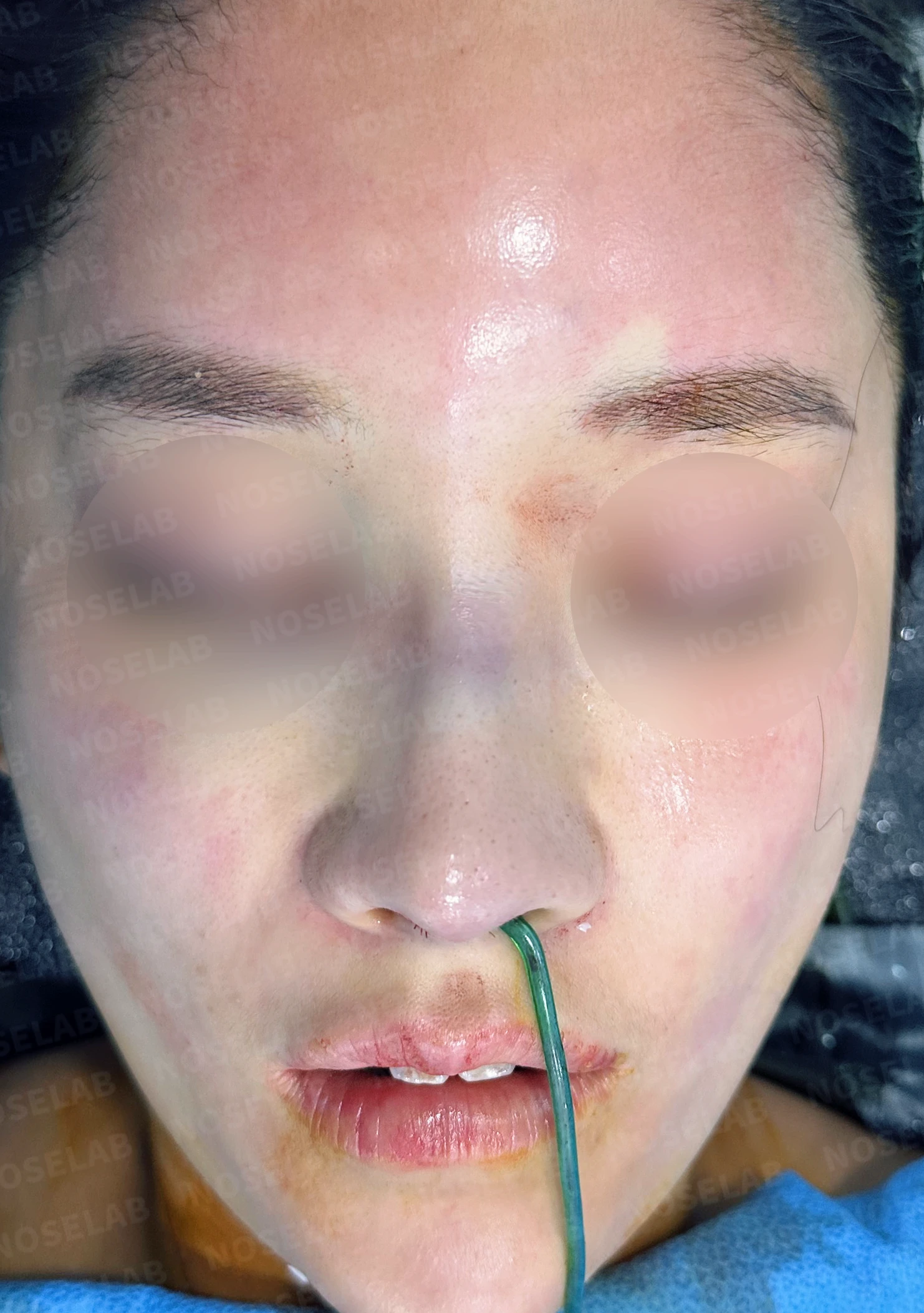
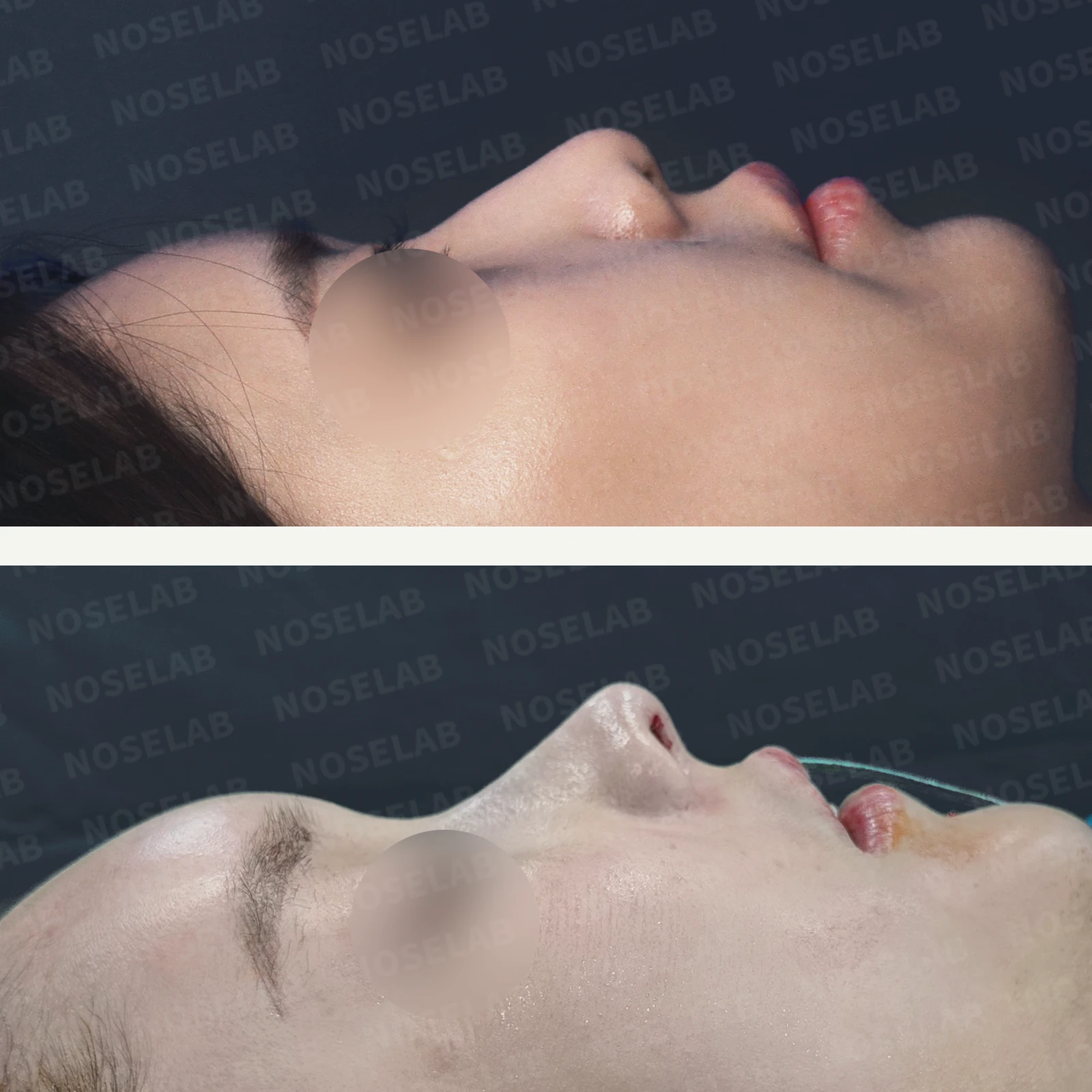
Before surgery / Day 0 immediately after surgery Photos taken immediately after surgery show swelling and may differ from the final result.
In the front view, the previously bulbous nasal tip looked much more natural and defined, and the upturned look of the nose was improved. The nasal tip was gathered together, giving the overall facial appearance a more sophisticated impression.
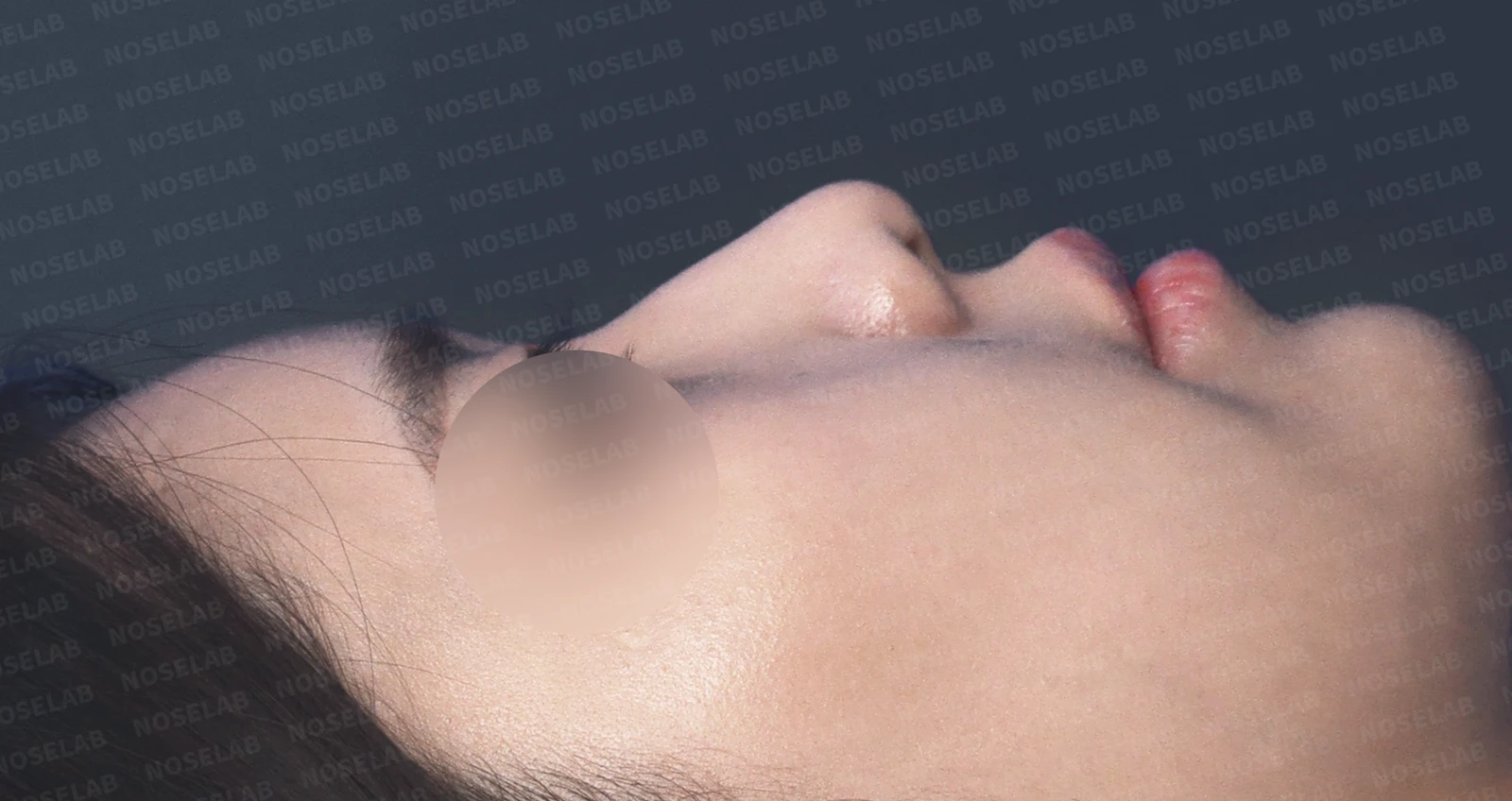
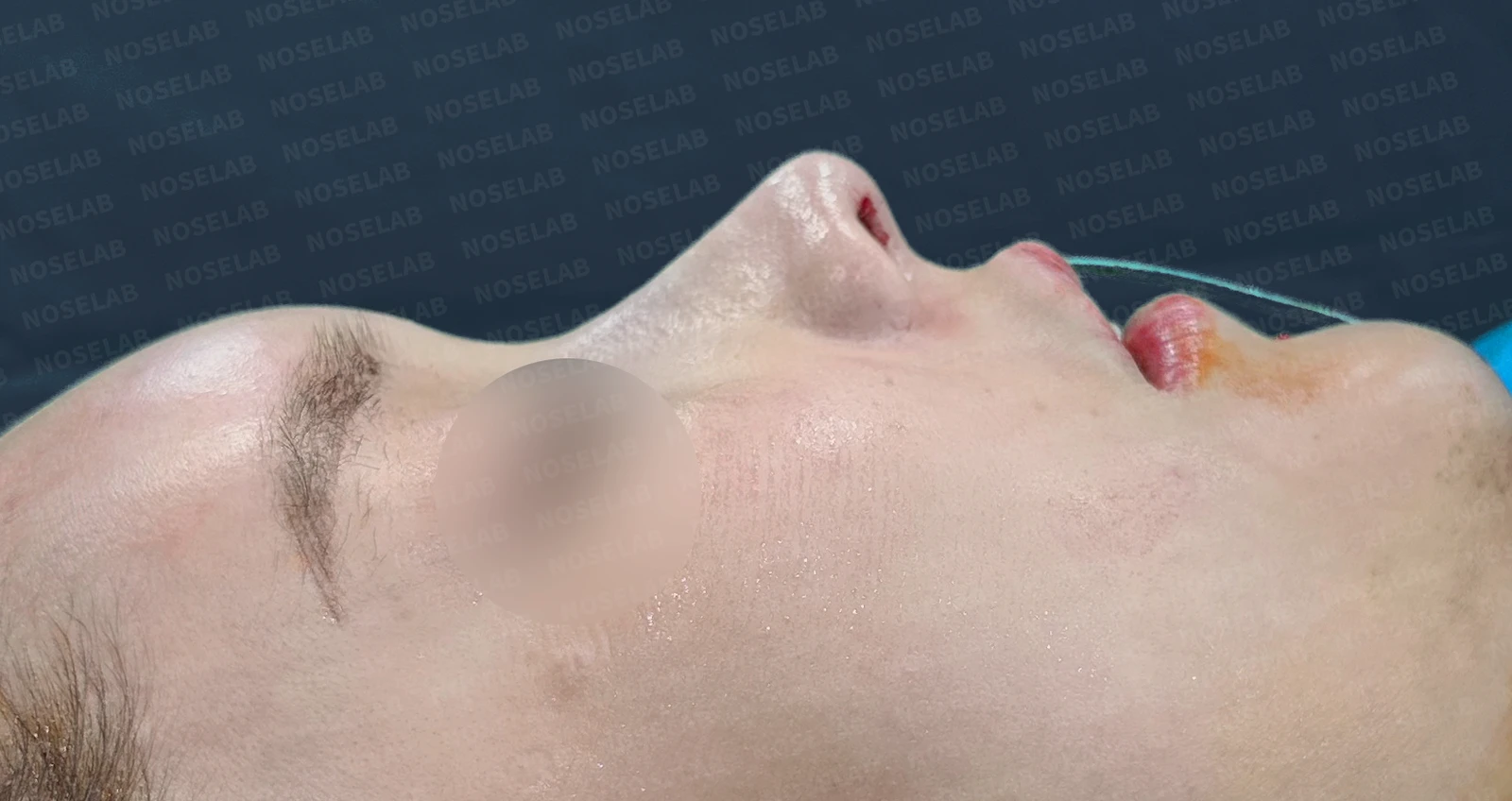
Before surgery / Day 0 immediately after surgery Photos taken immediately after surgery show swelling and may differ from the final result.
In the profile view, the uneven nasal bridge was transformed into a smooth, straight line, and the protruding mouth was improved through correction of the nasolabial angle.
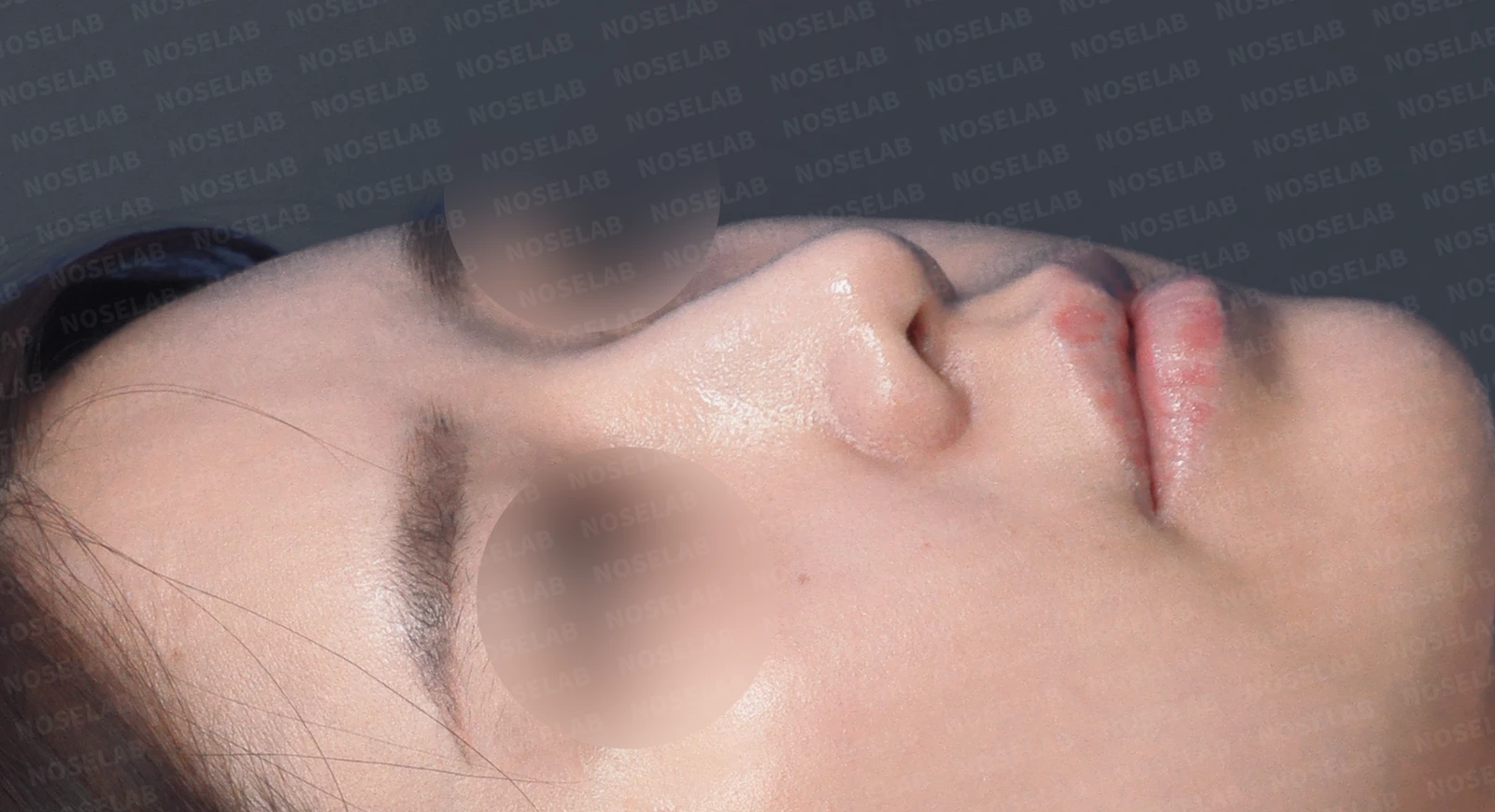
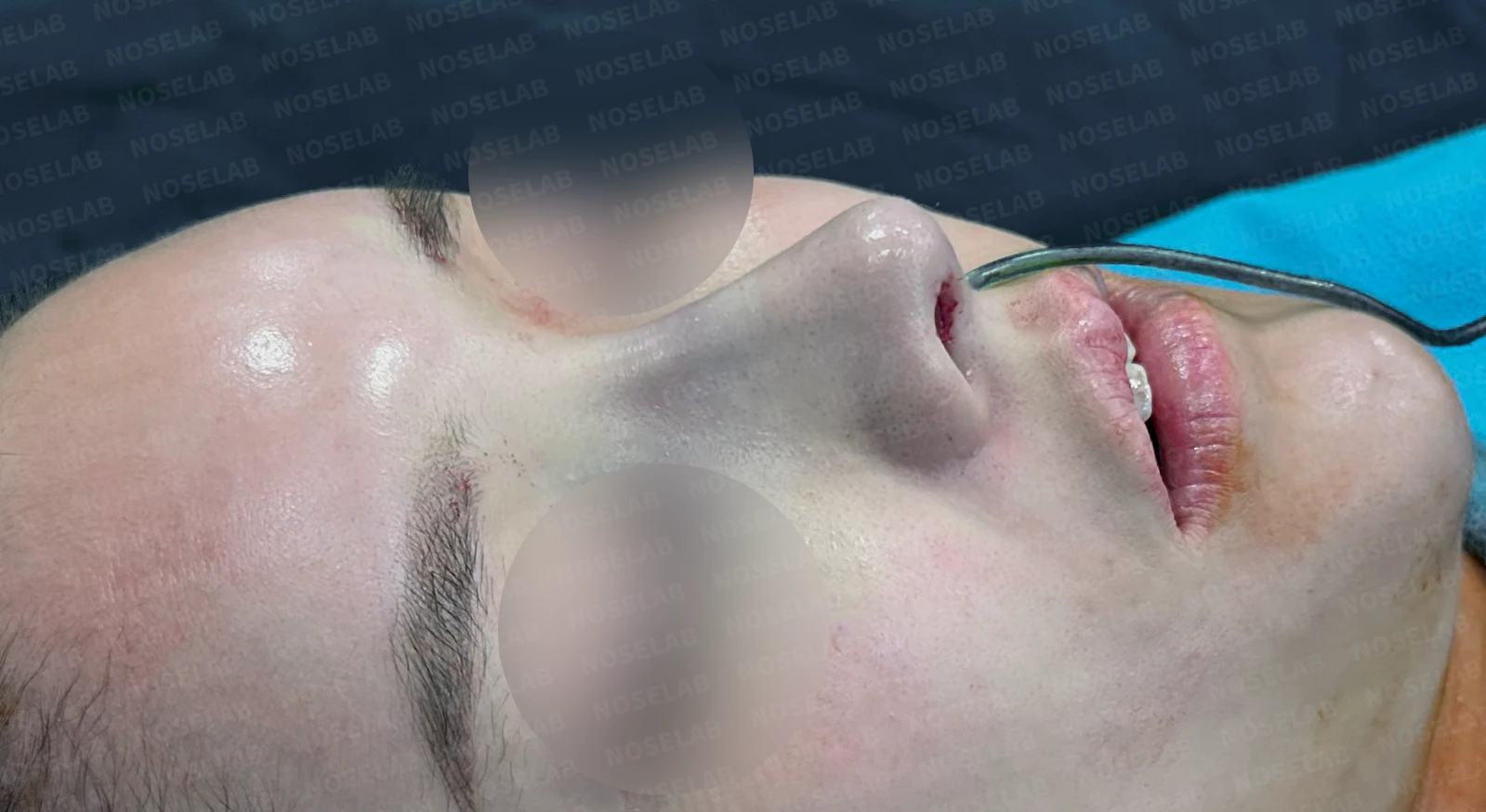
Before surgery / Day 0 immediately after surgery Photos taken immediately after surgery show swelling and may differ from the final result.
In the oblique view, one could also see that the bulbous and irregular shape had changed into a natural, smooth line.
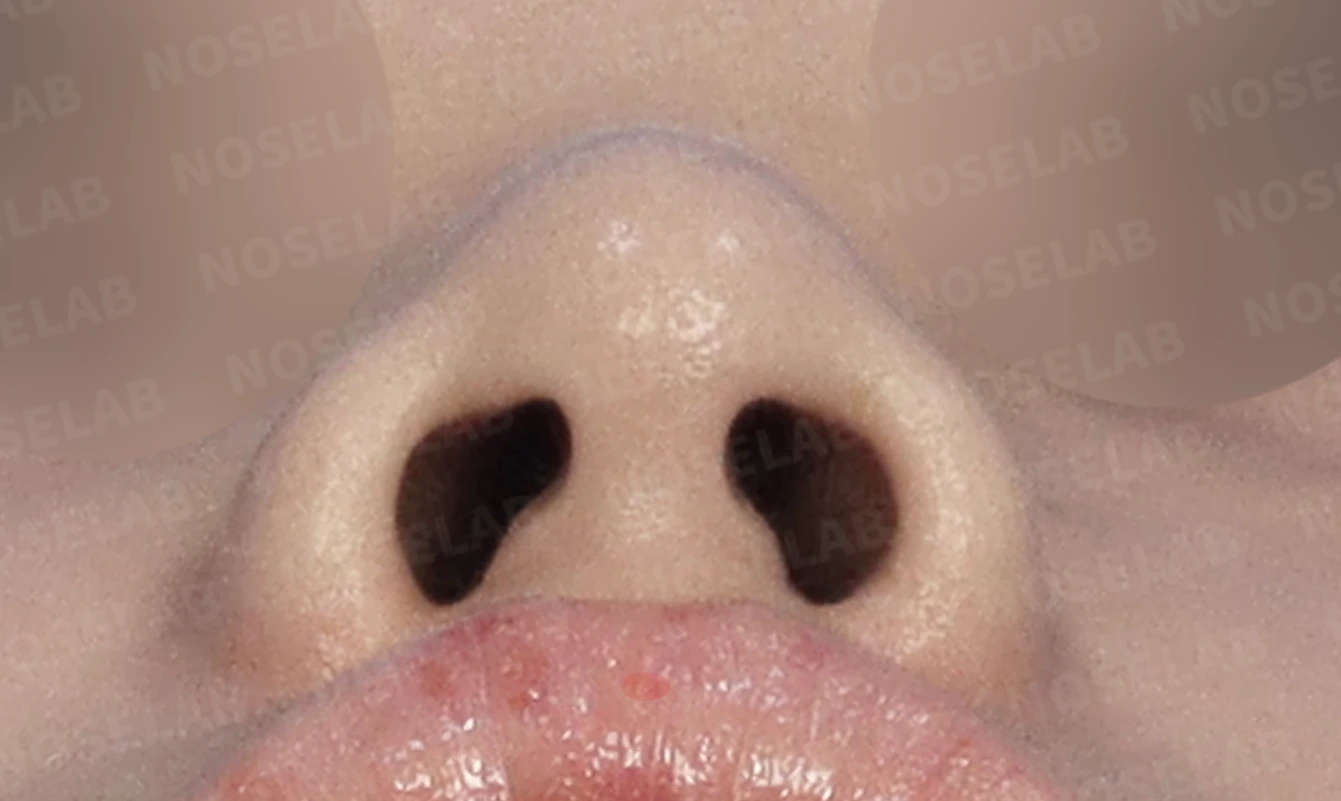
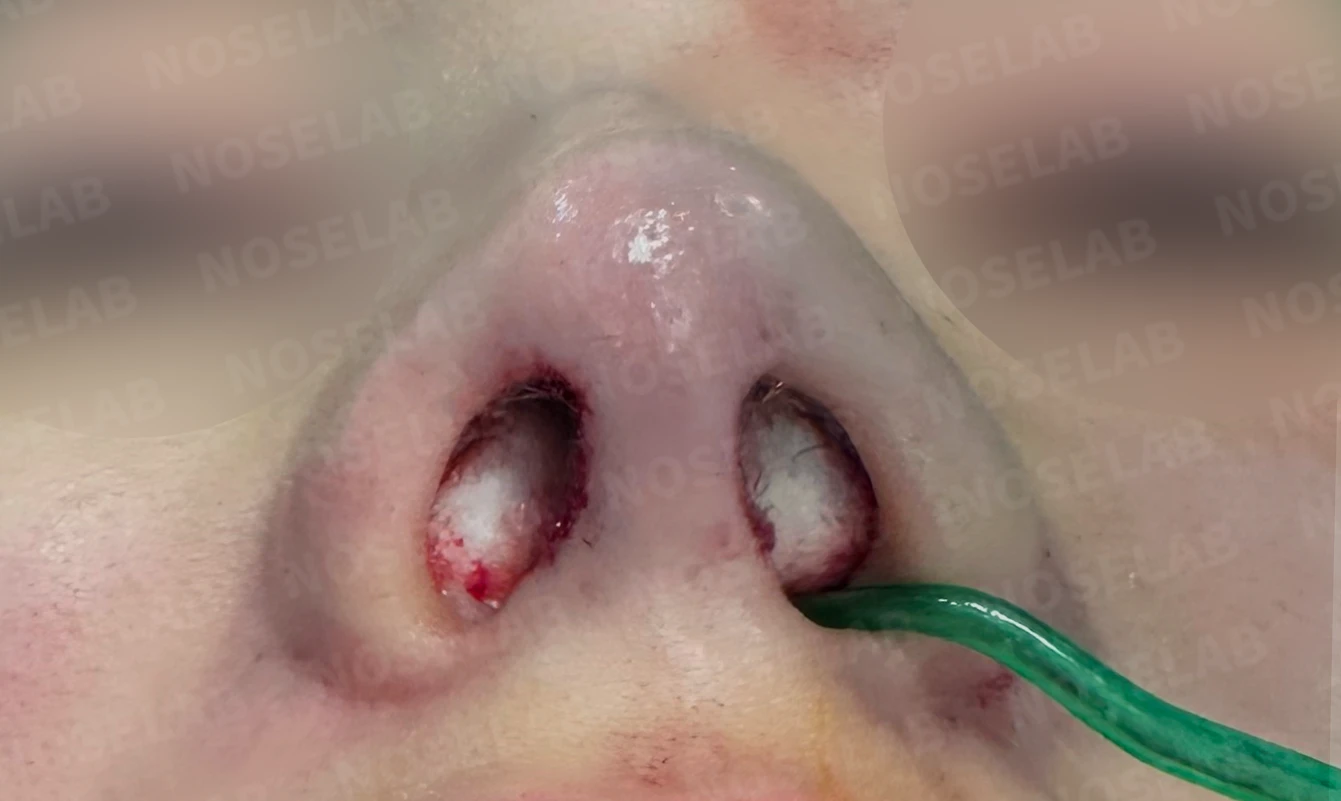
Before surgery / Day 0 immediately after surgery Photos taken immediately after surgery show swelling and may differ from the final result.
In the basal view of the nostrils, it was noticeable that the nostrils, which previously appeared flared and wide, were corrected to look smaller and more natural.
The key to improving a protruding mouth: the nasolabial angle
The nasolabial angle is a very important element in rhinoplasty.
The nasolabial angle is the angle formed between the nasal tip and the upper lip; adjusting this angle can improve the appearance of a protruding mouth.
An ideal nasolabial angle typically looks natural at about 90 degrees for men and about 95 degrees for women.
Simply optimizing this angle can create the visual effect of setting a protruding mouth back.
Day 0 photos immediately after surgery and overall evaluationPhotos taken immediately after surgery show swelling and may differ from the final result.
The patient achieved very satisfying results after surgery.
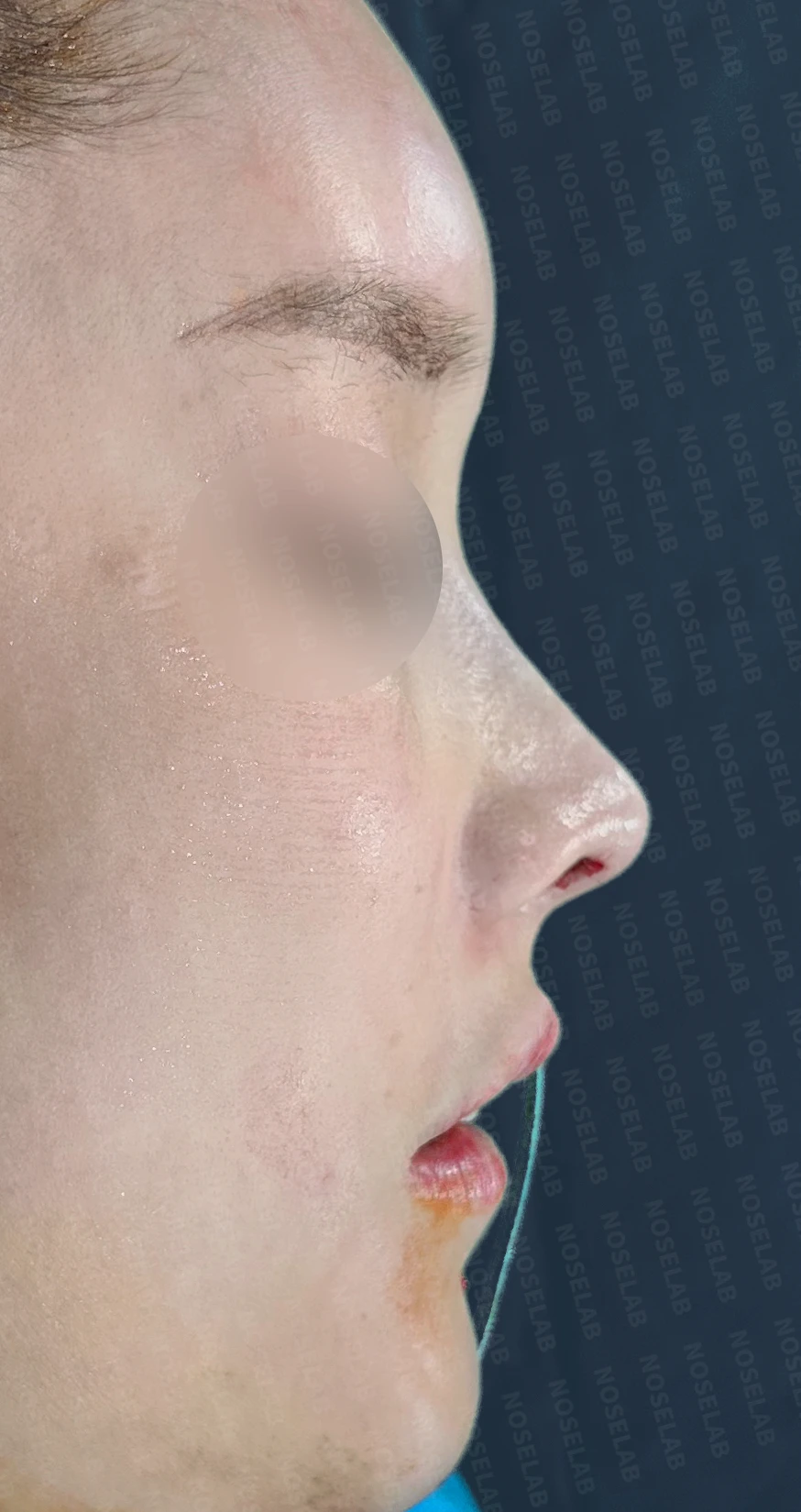
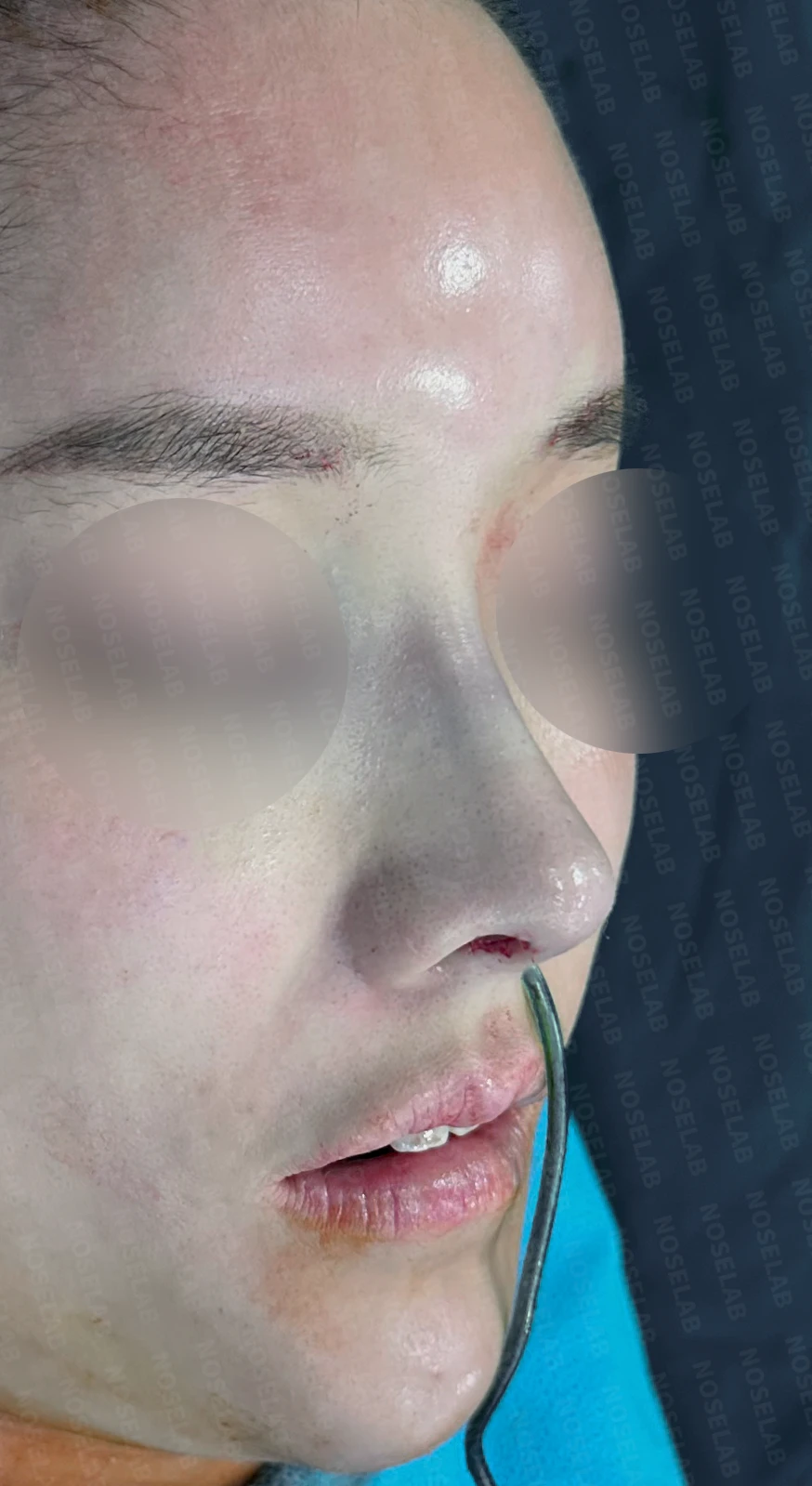
Front, profile, and oblique views taken immediately after surgery (day 0).Immediate postoperative photos show swelling and may differ from the final result.
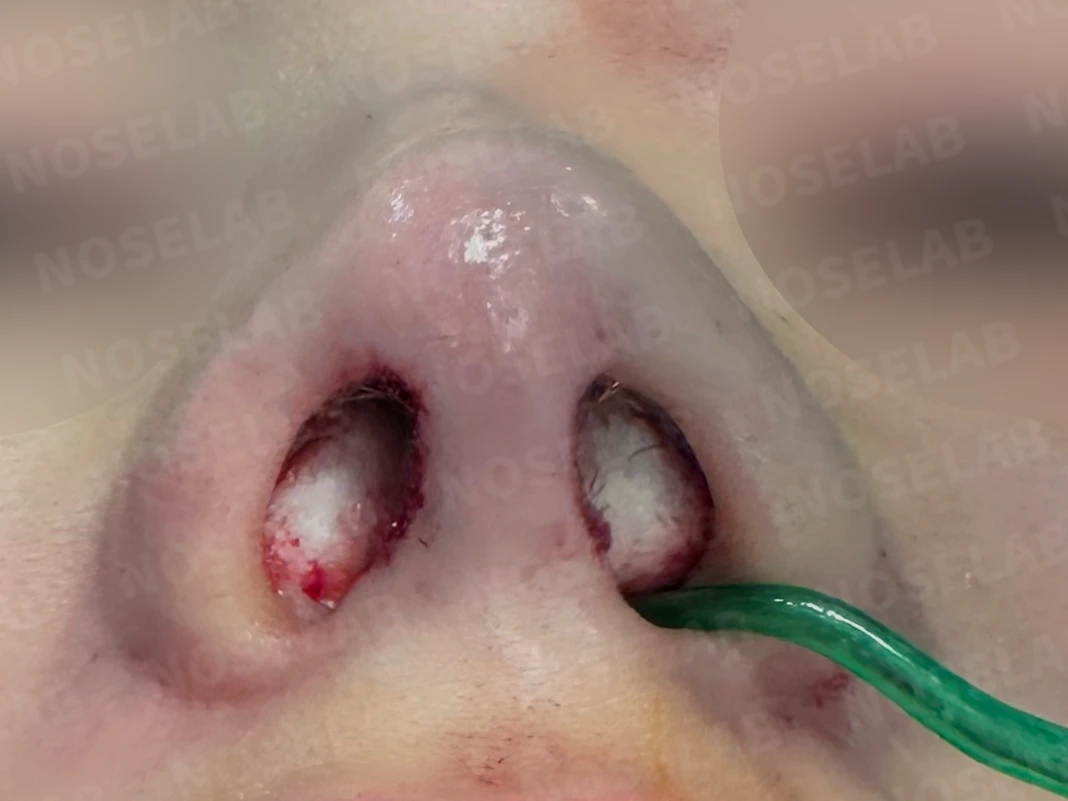
Basal (nostril) view immediately after surgery (Day 0).Immediate postoperative photos show swelling and may differ from the final result.
As the proportion between the nose and lips was aligned at an ideal angle, the appearance of the protruding mouth improved significantly.
With the nasal tip brought down and the balance between the nose and the rest of the face improved, the overall image transformed into a refined appearance.
If you share similar concerns, I encourage you to seek a consultation to explore potential solutions.
Rhinoplasty does not merely alter the shape of the nose; it is an important surgery that balances the entire face, requiring a meticulous approach.
This was Dr. Peter C. Kang. Thank you.
Thank you.
#protrudingmouth #shortnose #upturnednose #dorsalhump #rhinoplasty #closedrhinoplasty #rhinoplastycase #nasolabialanglecorrection

Limitations and risks
When using donor rib cartilage, long-term follow-up is necessary because the grafted cartilage may resorb or warp.
When the septum is corrected at the same time, nasal obstruction may persist or recur, and in rare cases, septal perforation or changes in smell may occur.
Common potential risks include infection, bleeding, asymmetry, scarring, skin necrosis, and insufficient improvement; results vary depending on individual skin condition and previous surgical history.