Hello, I am Dr. Peter C. Kang.
Today, I would like to introduce a case of a patient with a bulbous nose, dragon nose, and retracted columella.
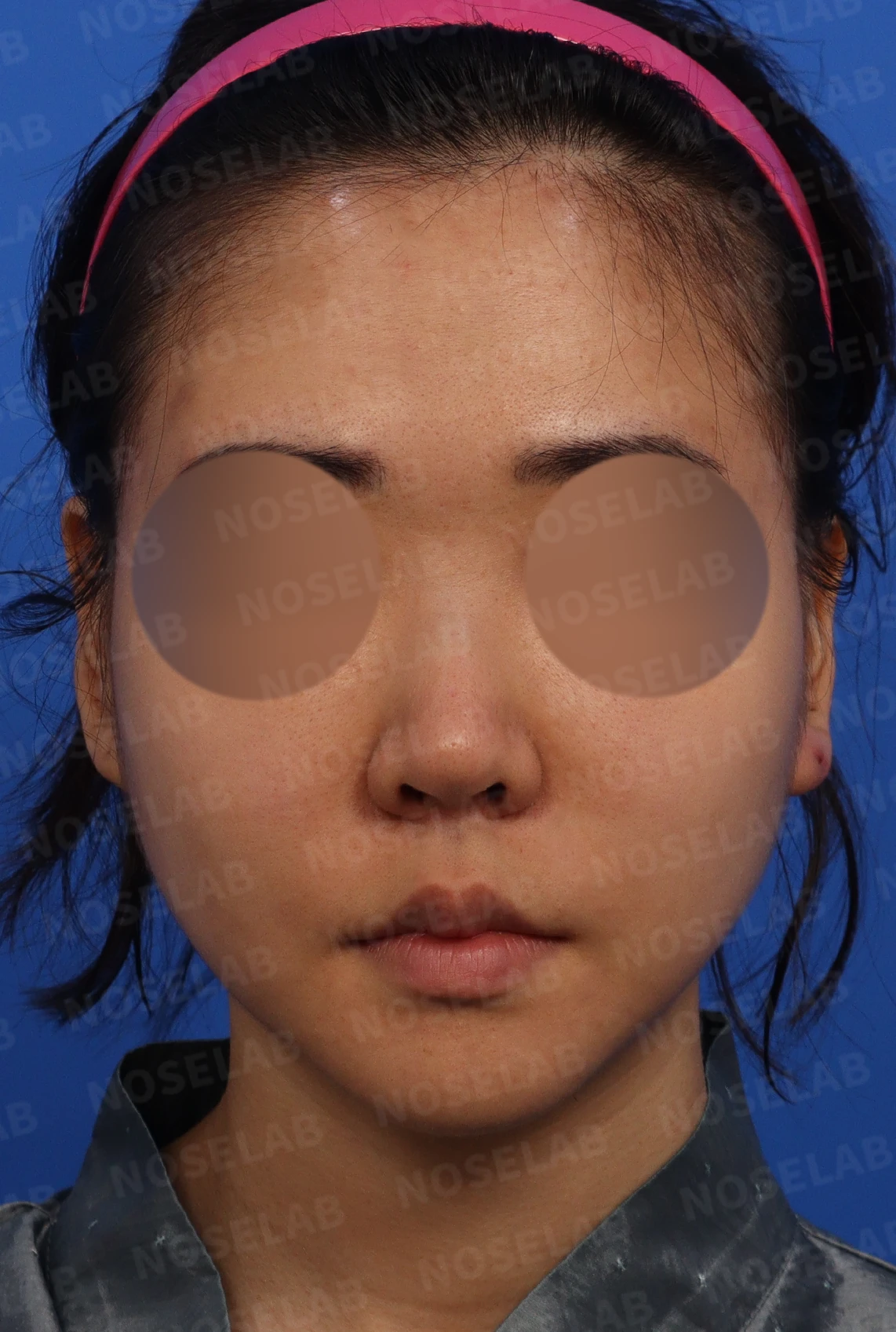
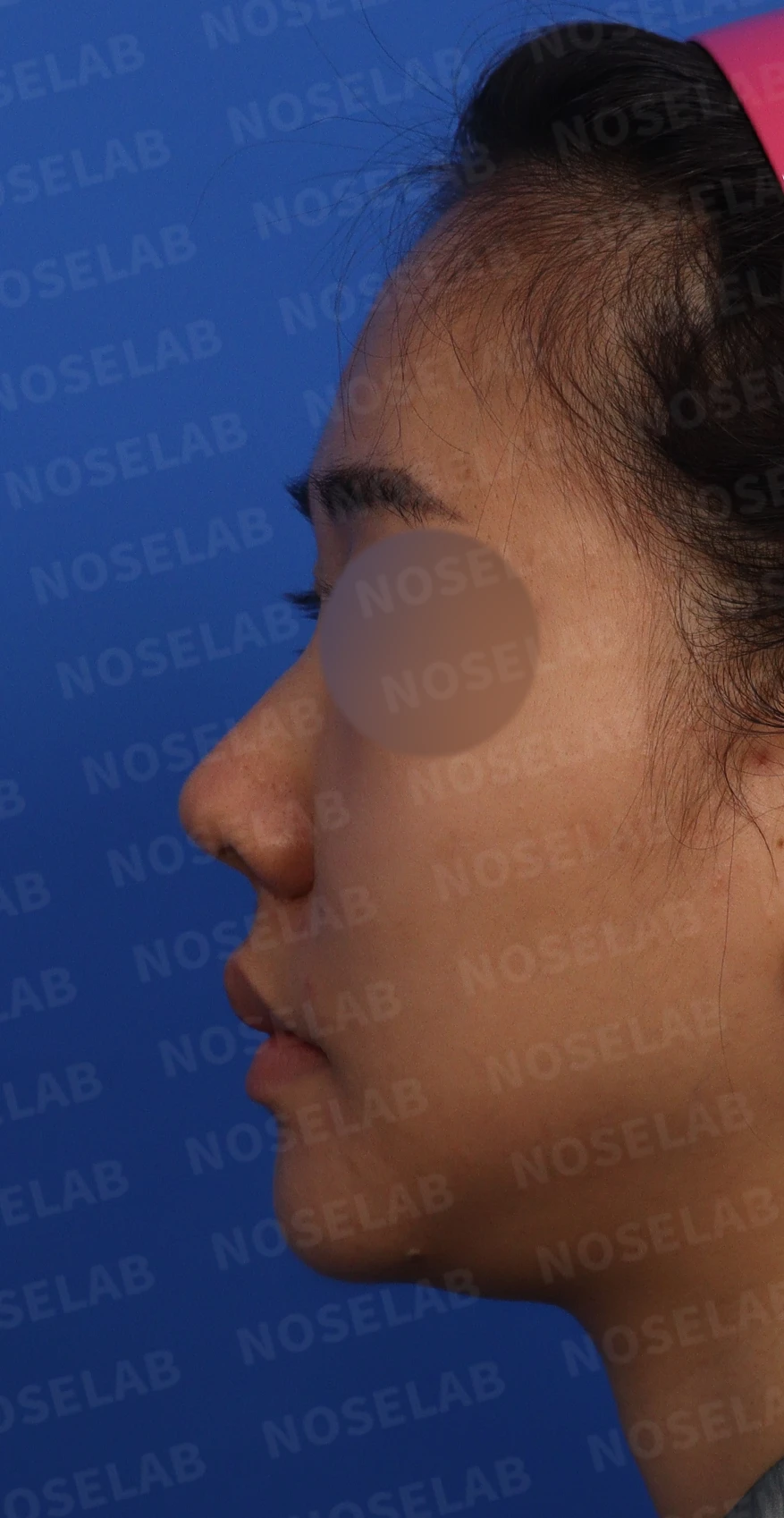
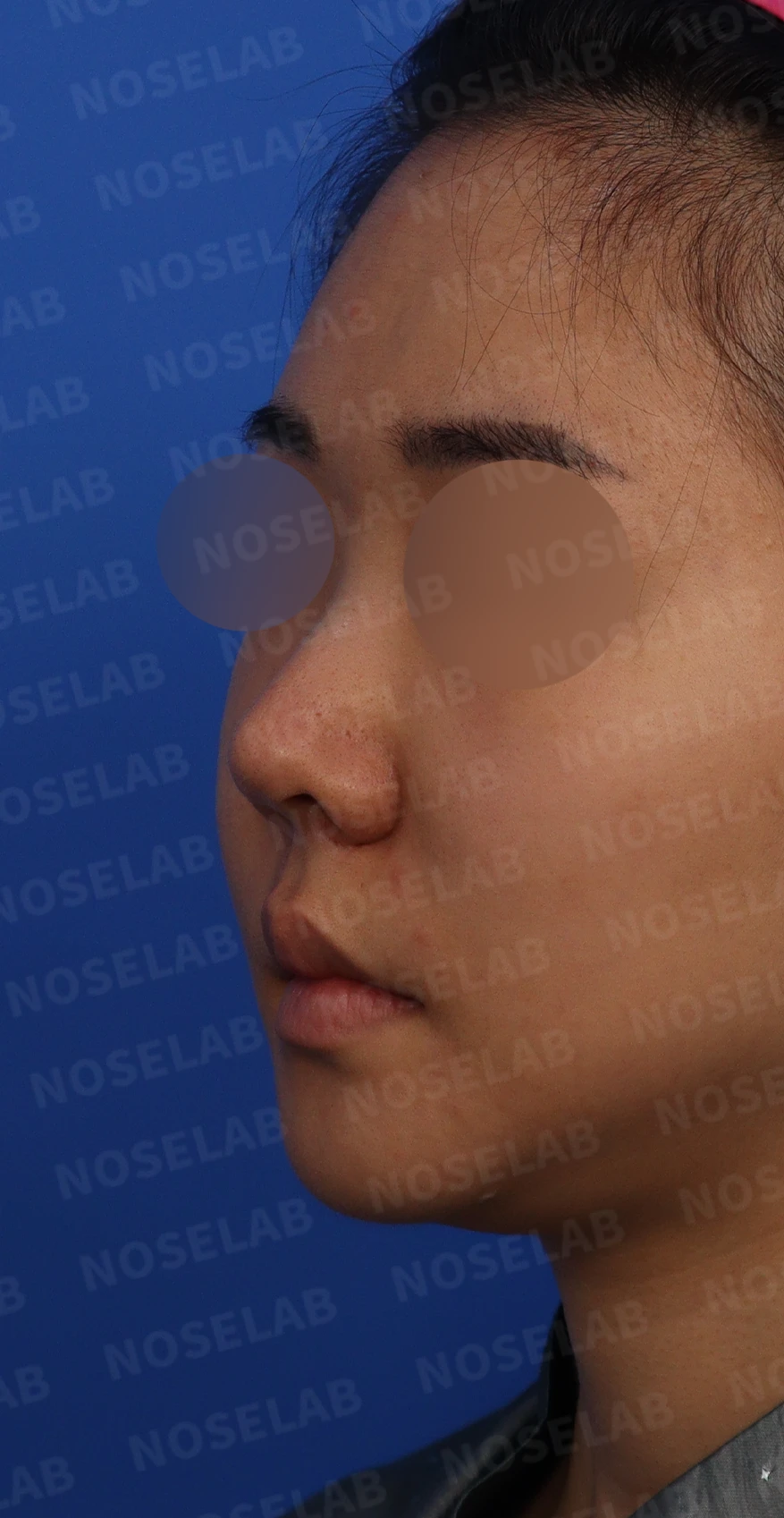
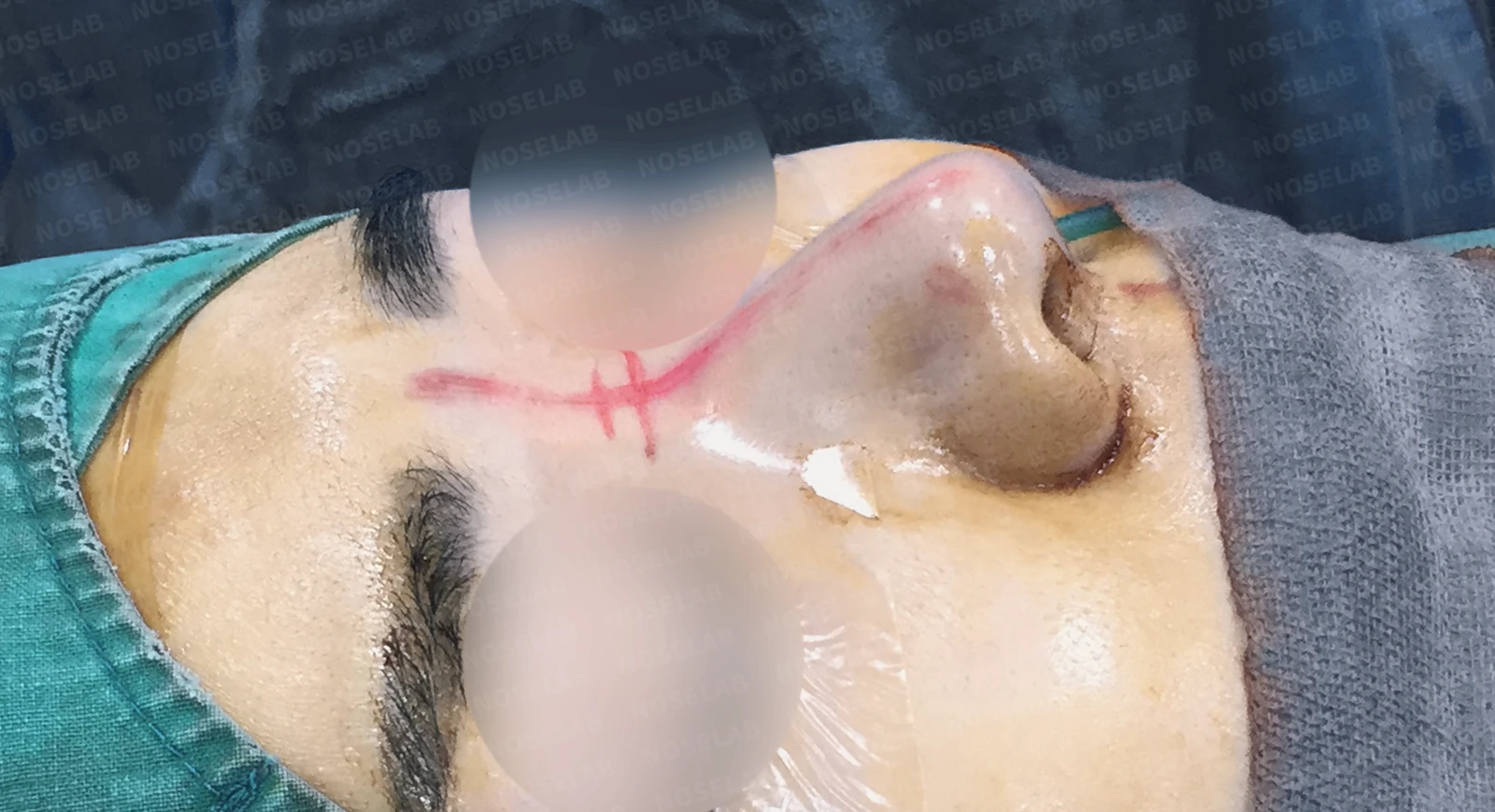
Preoperative design consultation: front, left profile, and oblique views.
The patient's surgical and procedural history:
3 years ago: Nasal bridge filler 2 to 3 times (1-year type + 5-year type)
8 months ago: Philtrum reduction surgery
Desired improvements:
Correction of dragon nose, bulbous nose, and retracted columella
Analysis of preoperative condition:
Front view: The nasal tip is blunt and wide, a dragon nose is present, the glabella is low, and the bridge appears crooked
Profile view: The glabella is low, the columella is retracted, and findings of a protruding mouth are visible.
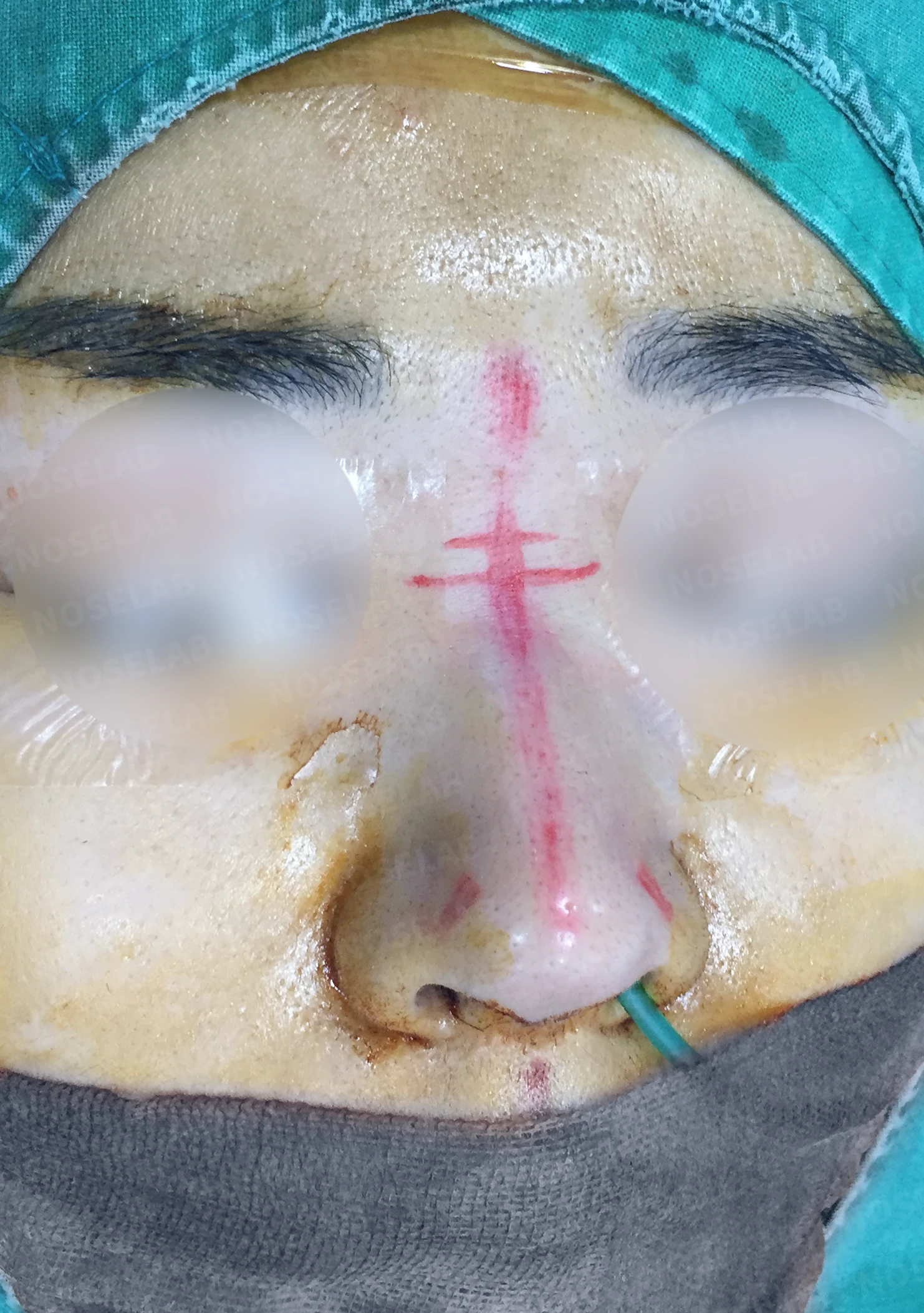
Nostrils: Asymmetry is observed.
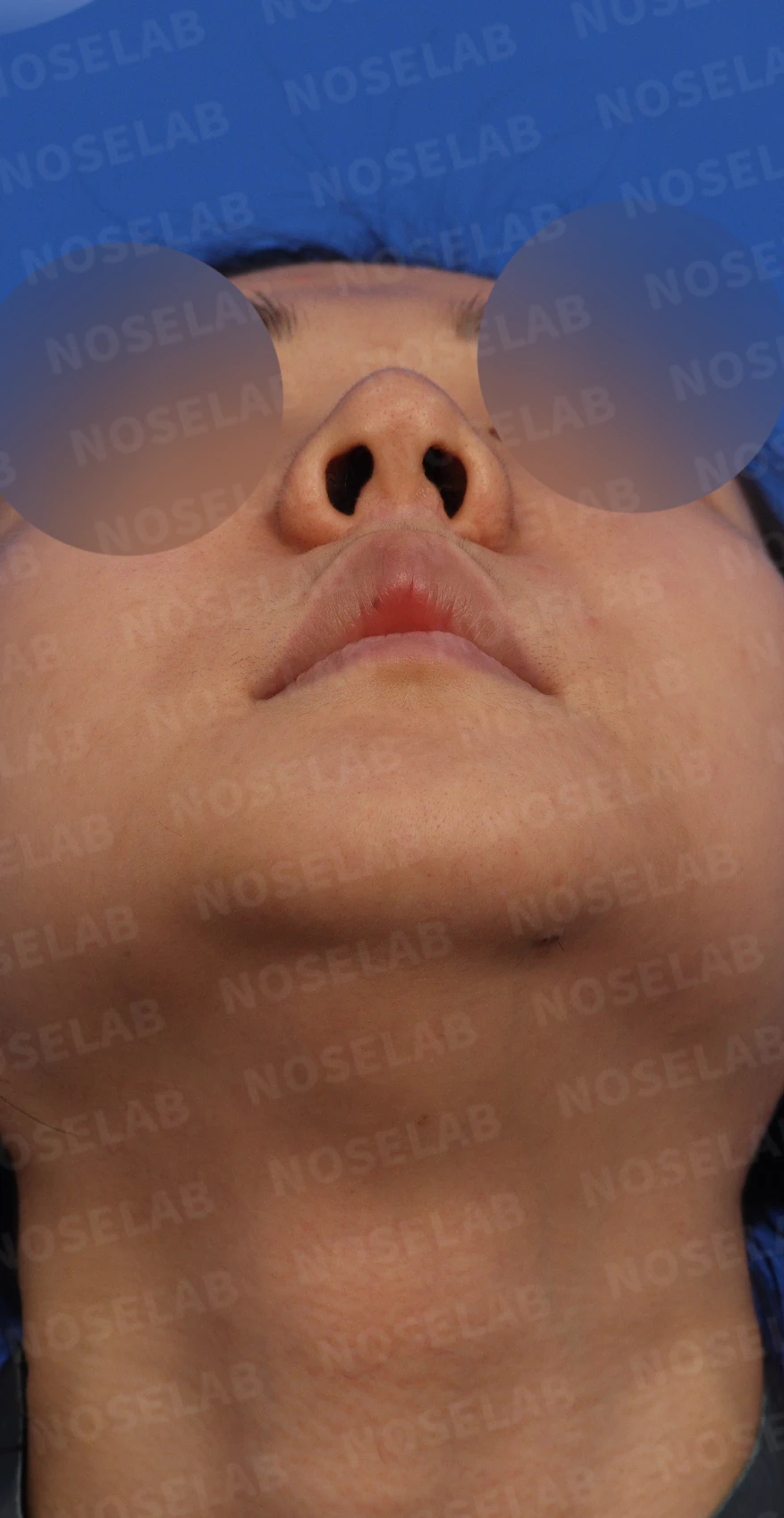
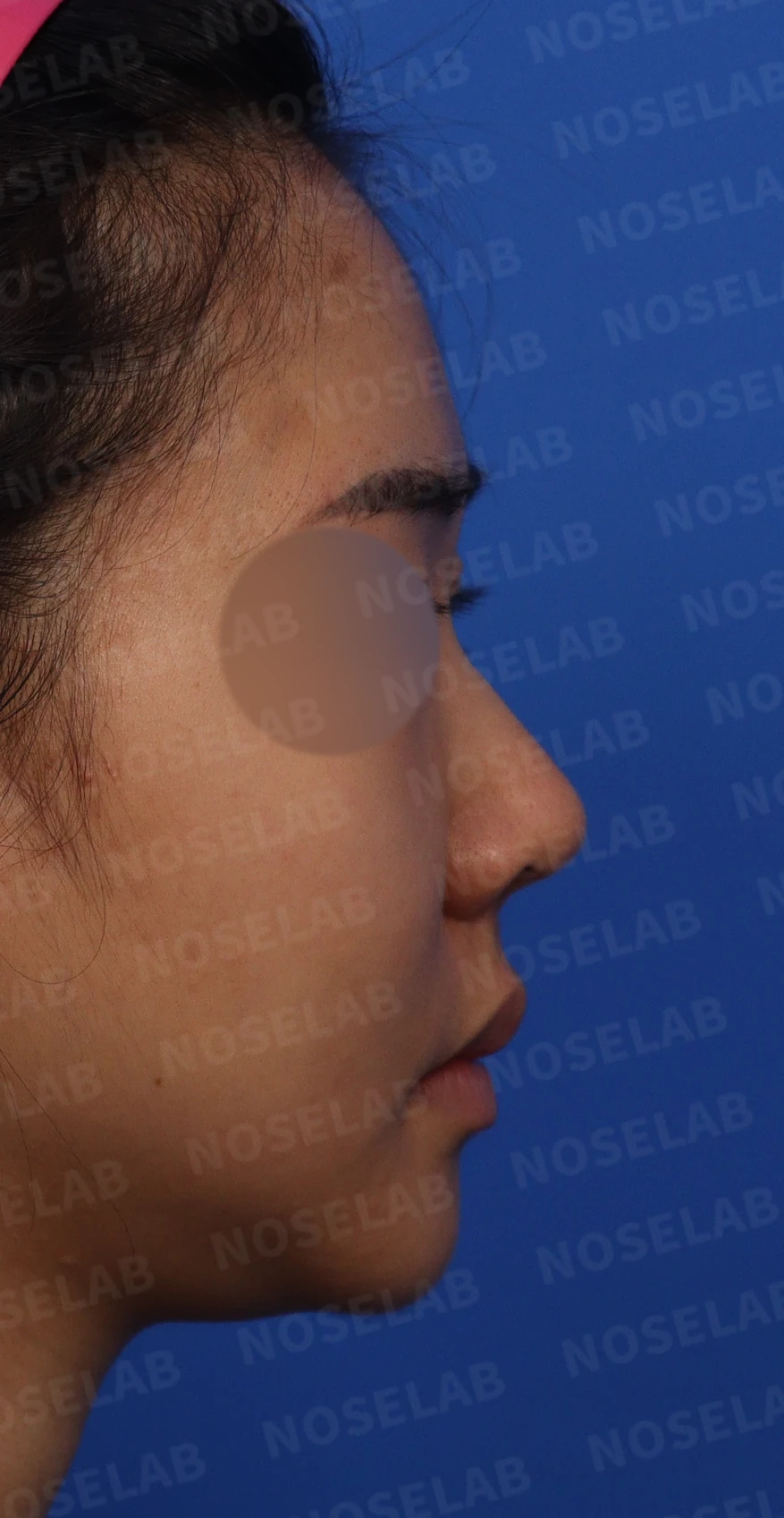
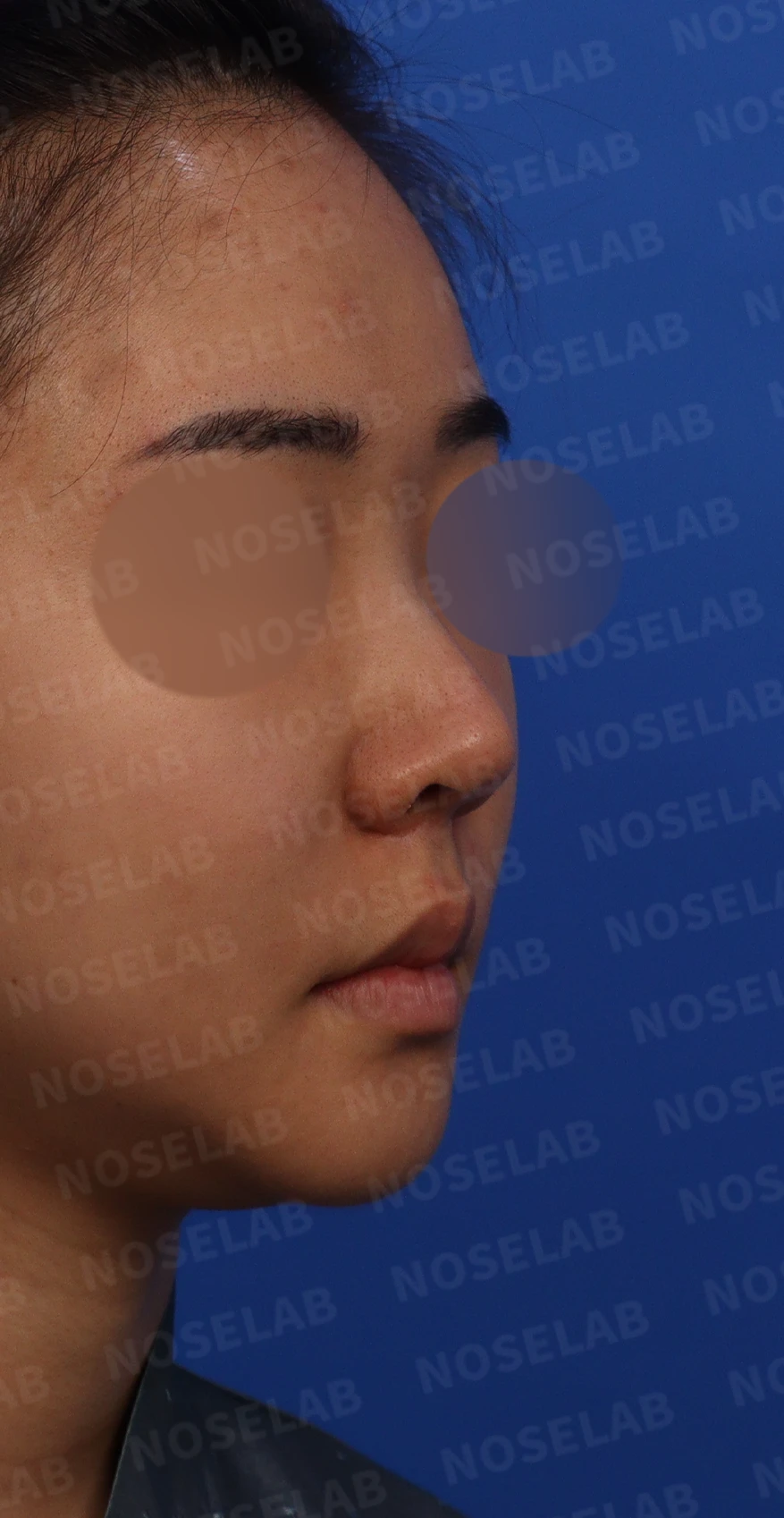
Preoperative design consultation: basal (nostril), right profile, and oblique views.
Surgical plan:
Bulbous nose correction surgery
Septal extension graft
Partial removal of subcutaneous tissue
Lower lateral cartilage repositioning and suturing
2. Dragon nose correction
Repositioning of lower lateral cartilage
Nostril lowering: Grafting septal cartilage onto the lower lateral cartilage
3. Raising the nasal tip
Septal extension using septal cartilage and donor rib cartilage
4. Nasal bridge correction
Foreign material (filler) removal
Silicone implant insertion
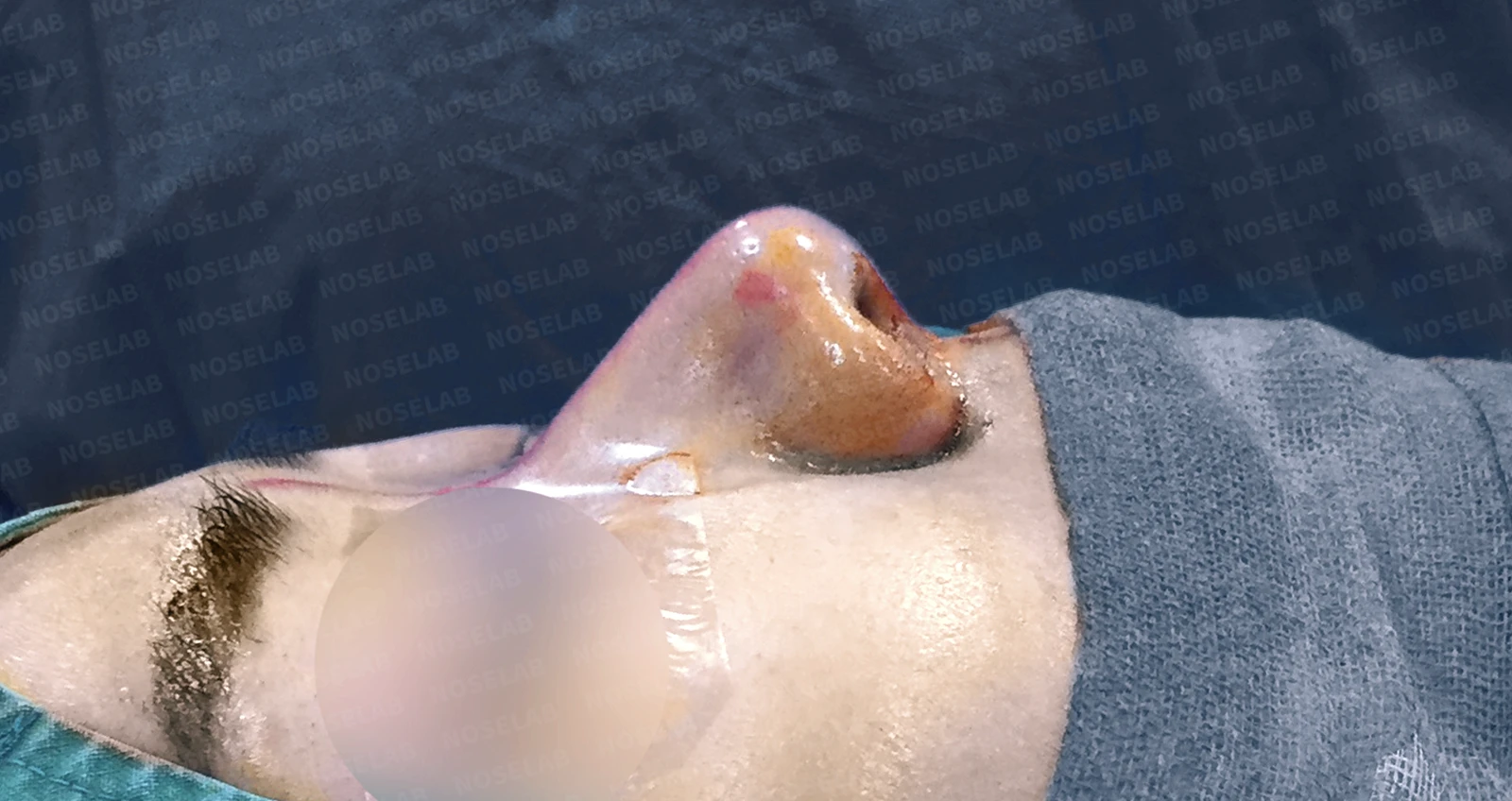
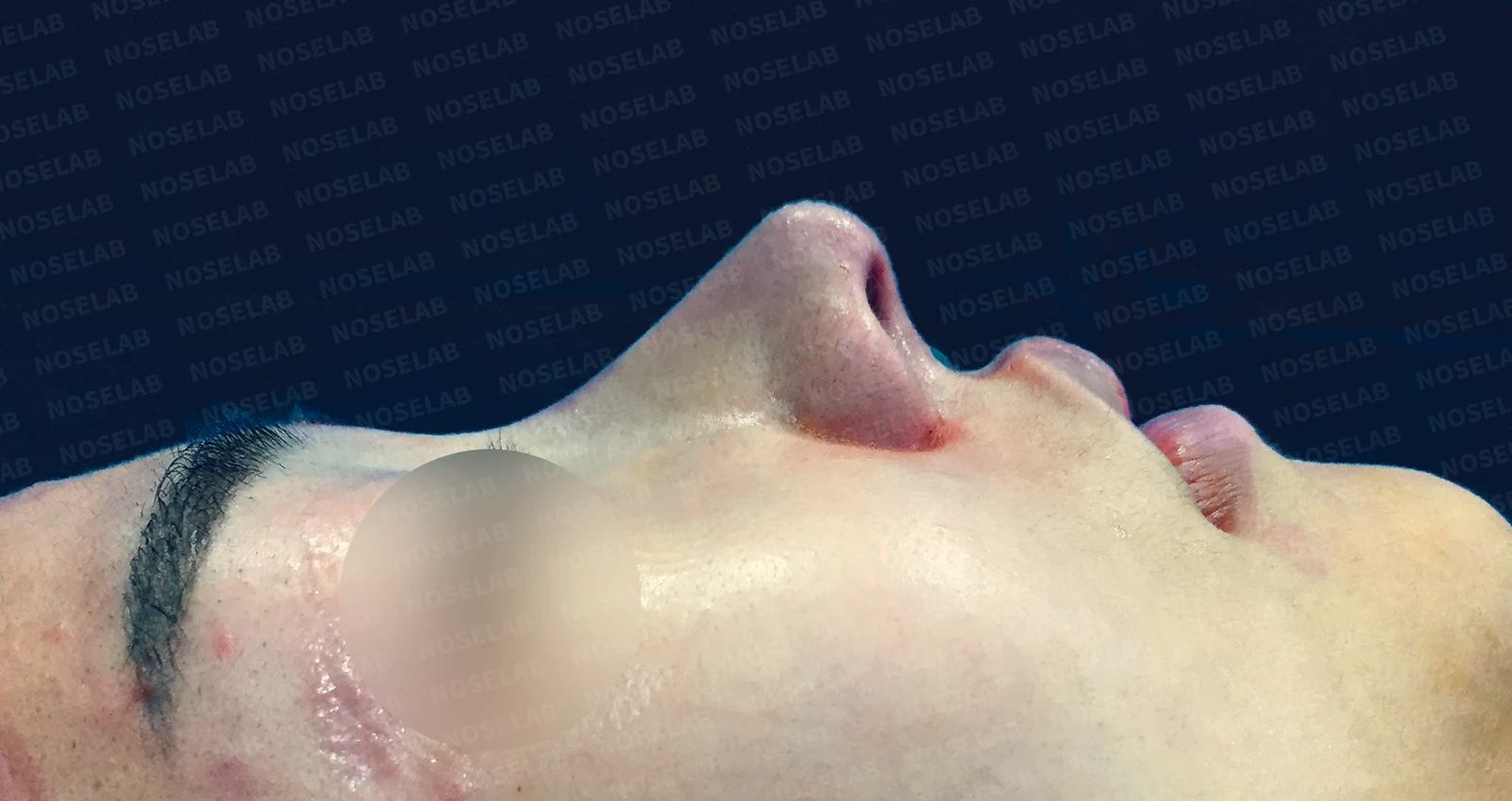
Before surgery / Day 0 immediately after surgery Photos taken immediately after surgery show swelling and may differ from the final result.
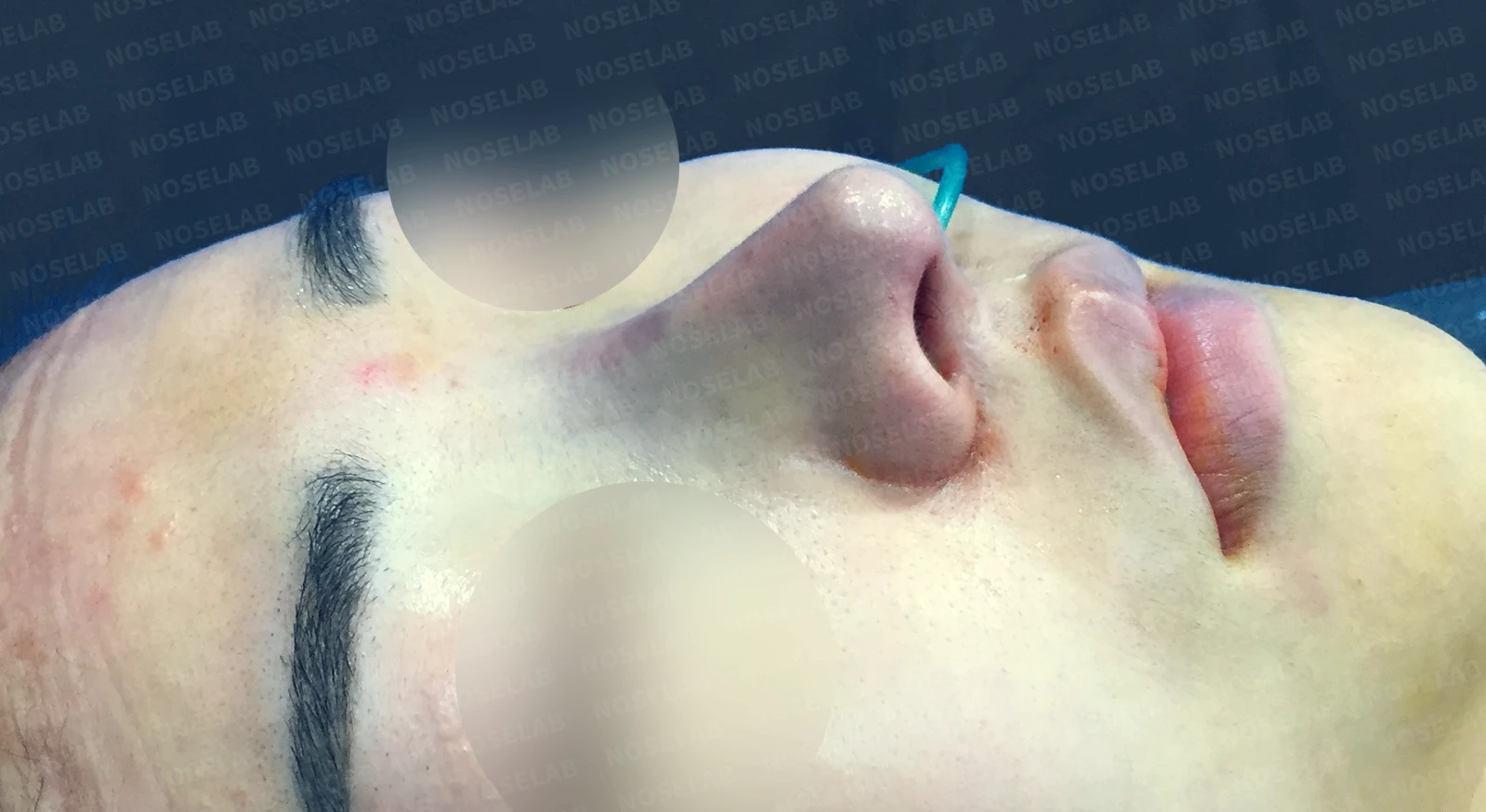
Before surgery / Day 0 immediately after surgery Photos taken immediately after surgery show swelling and may differ from the final result.
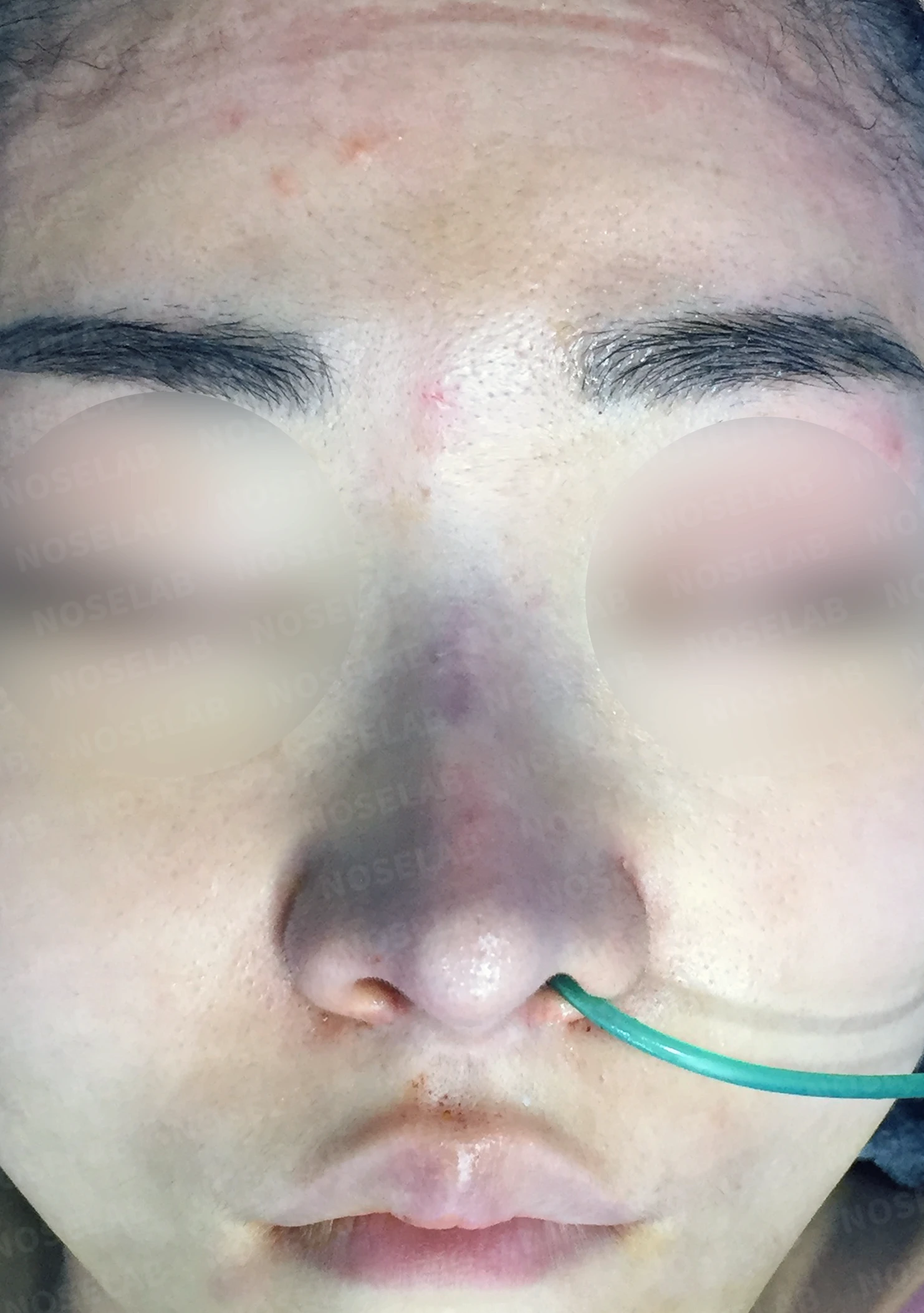
Before surgery / Day 0 immediately after surgery Photos taken immediately after surgery show swelling and may differ from the final result.
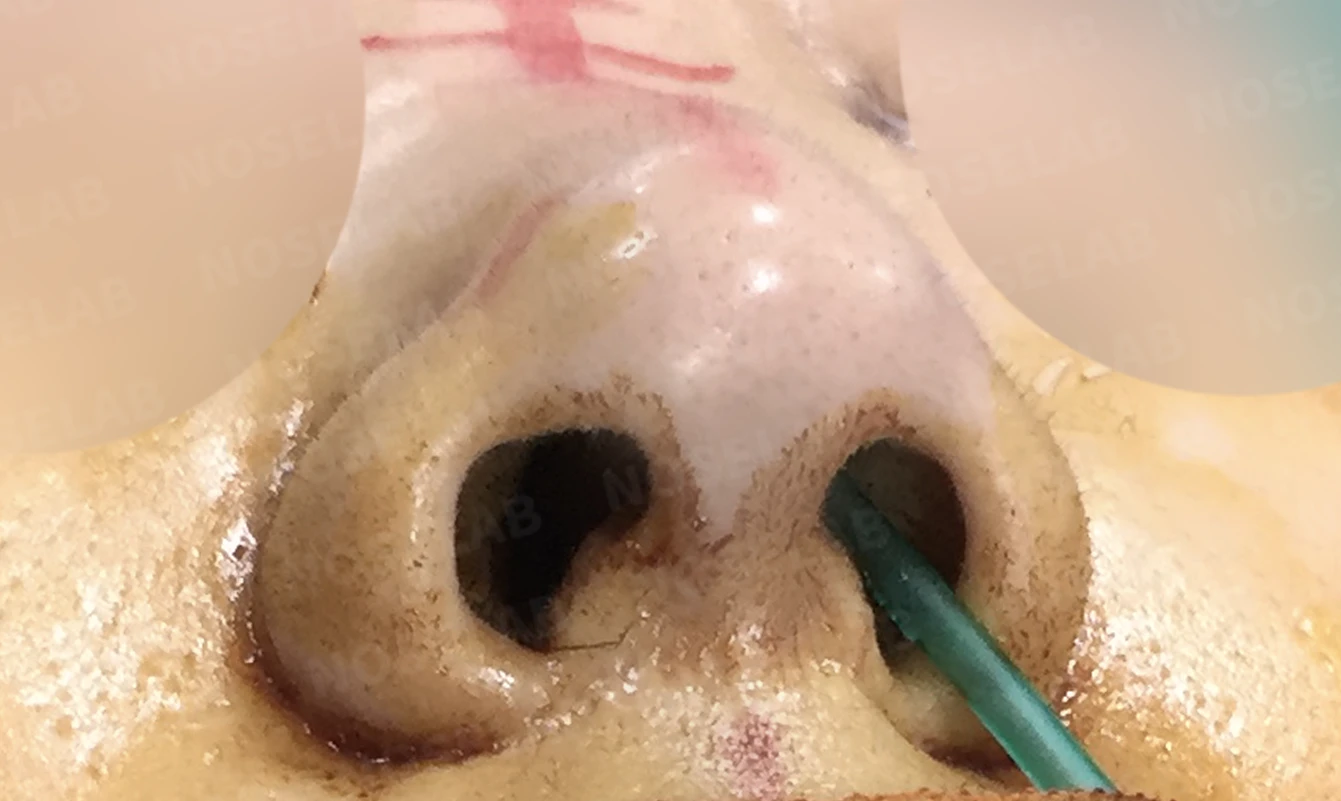
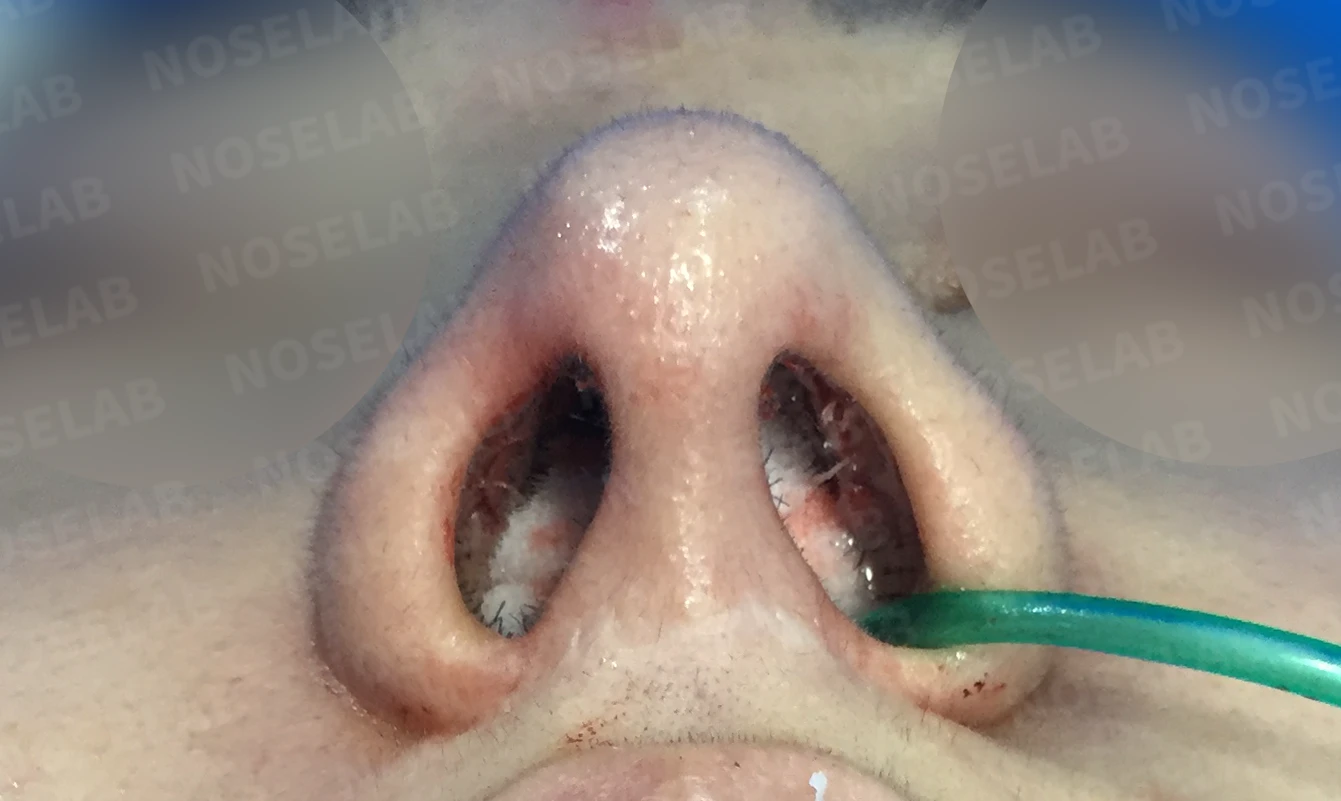
Before surgery / Day 0 immediately after surgery Photos taken immediately after surgery show swelling and may differ from the final result.
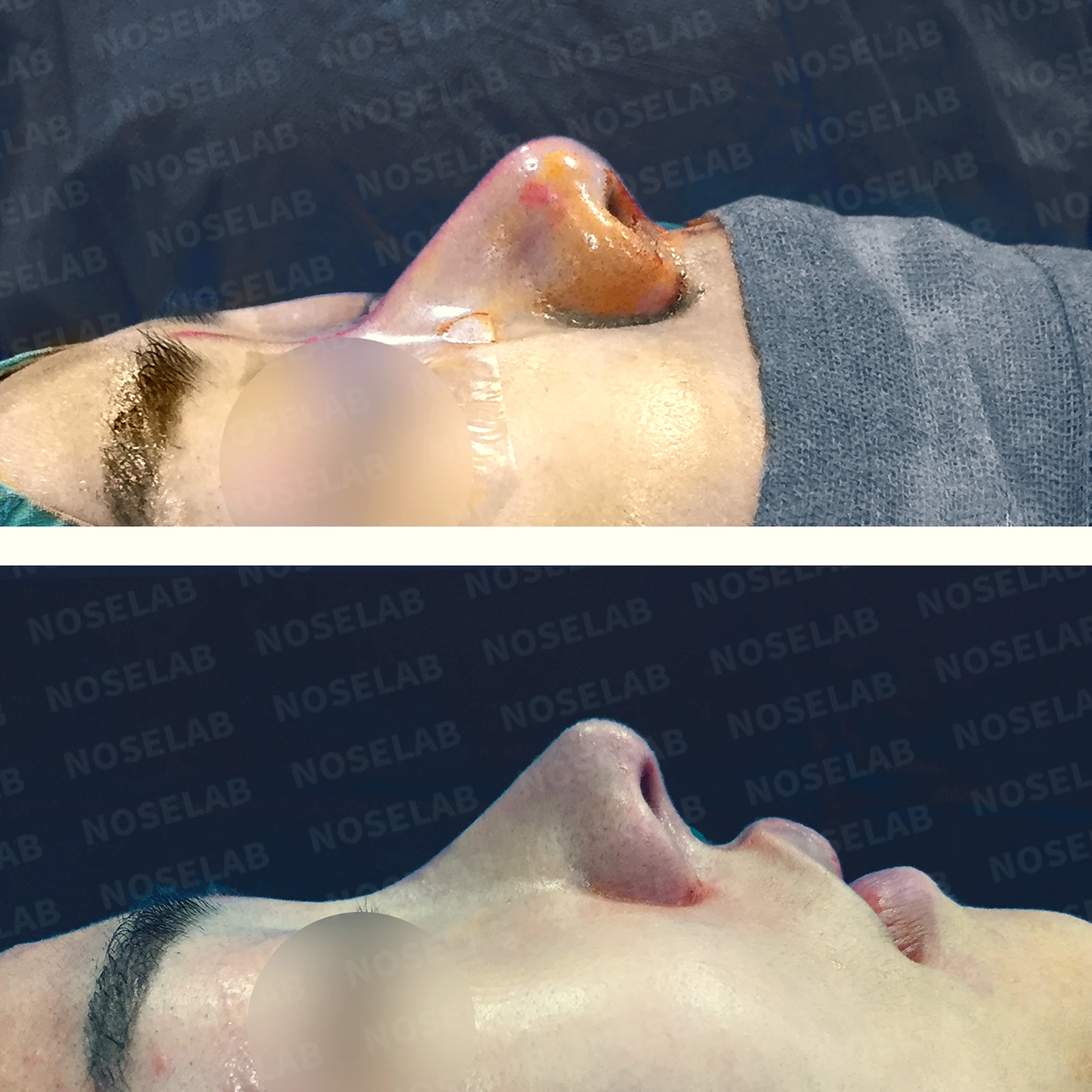
Analysis of results immediately after surgery (Day 0): Photos taken immediately after surgery show swelling and may differ from the final result.
1. The shape of the nose, which previously appeared blunt and crooked, has been improved
2. The columella descends naturally, correcting the nasolabial angle
3. The glabella is raised, improving the overall proportions of the nose
4. Nostril asymmetry is improved and the shape appears more natural
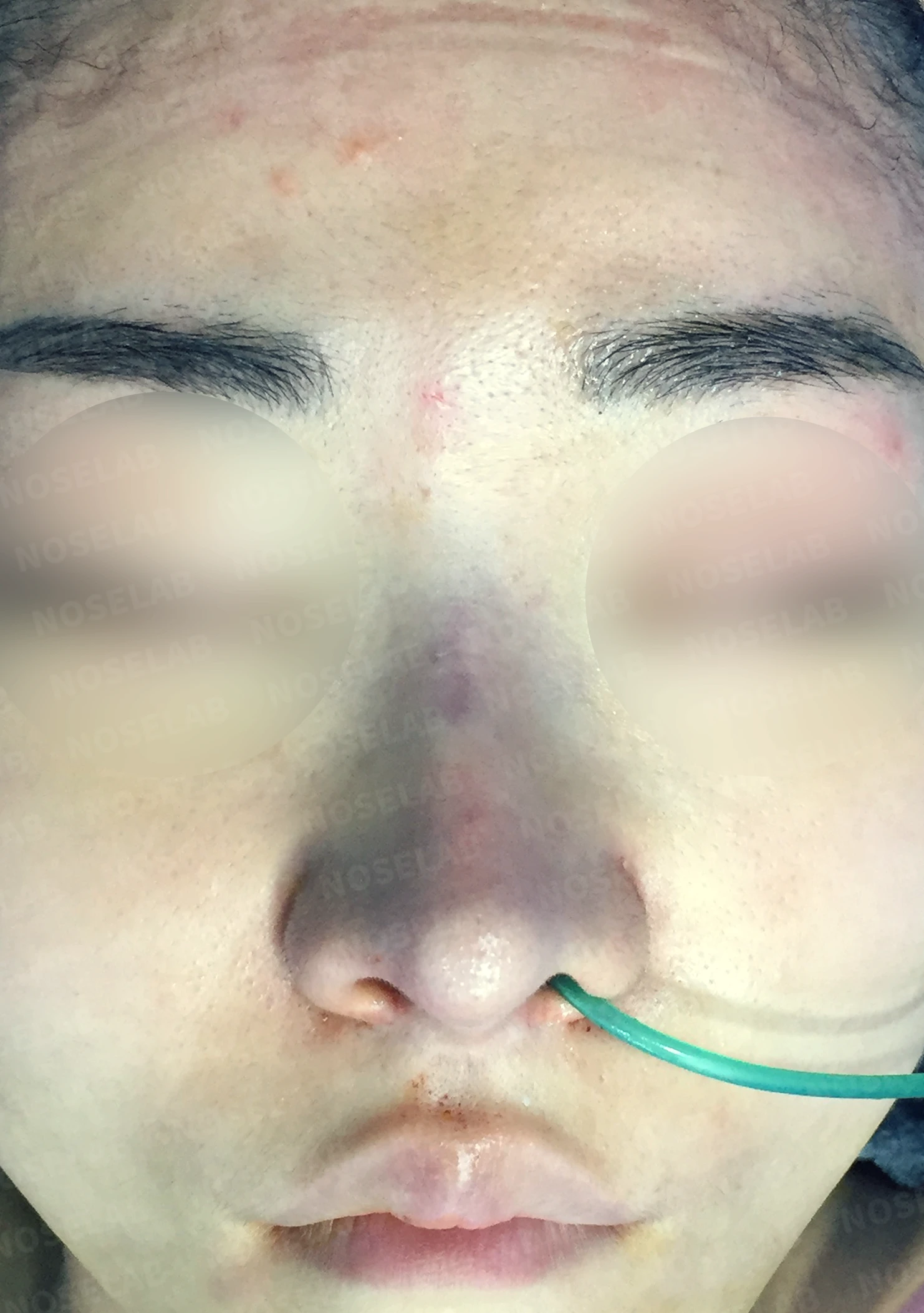
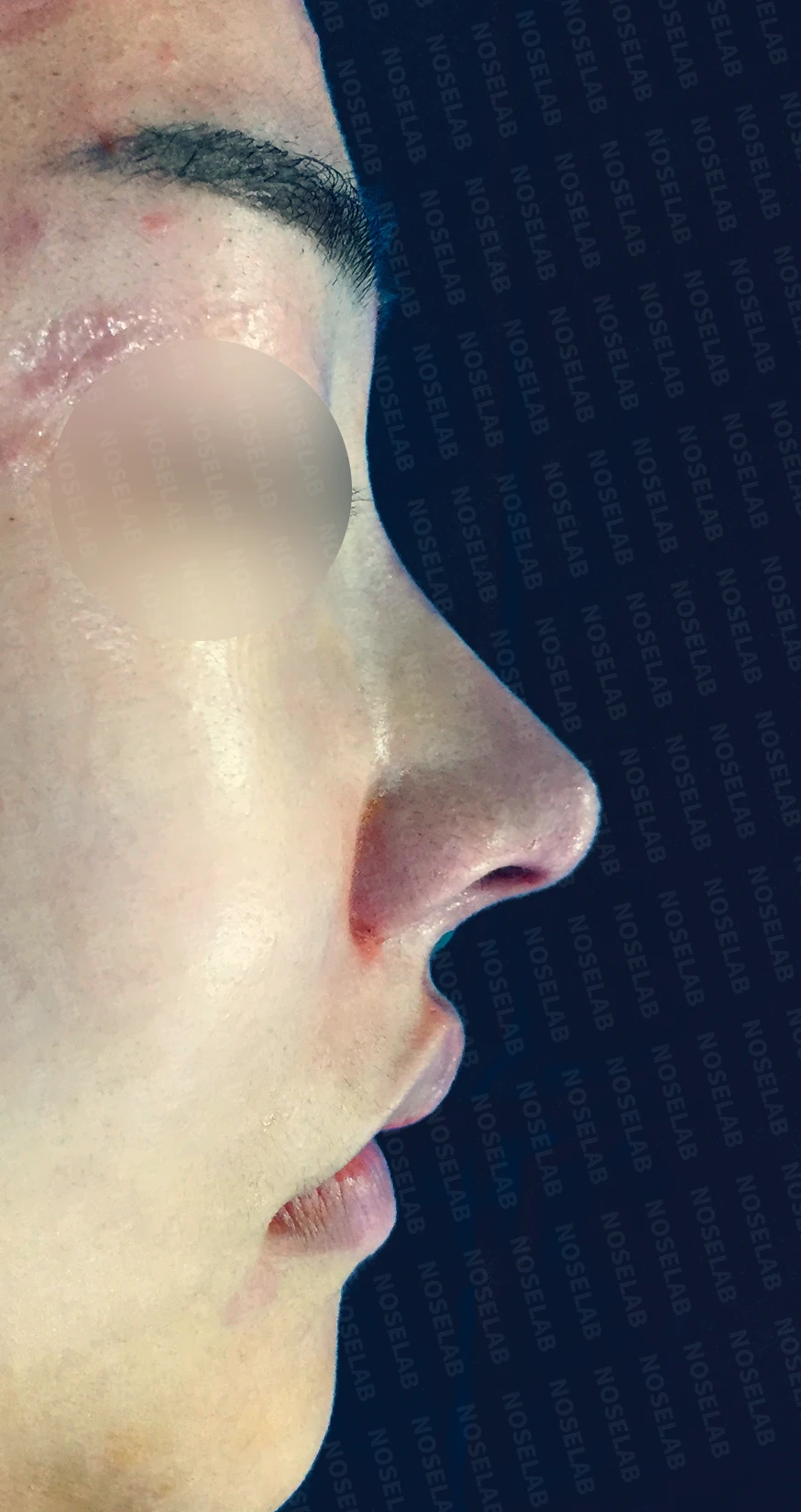
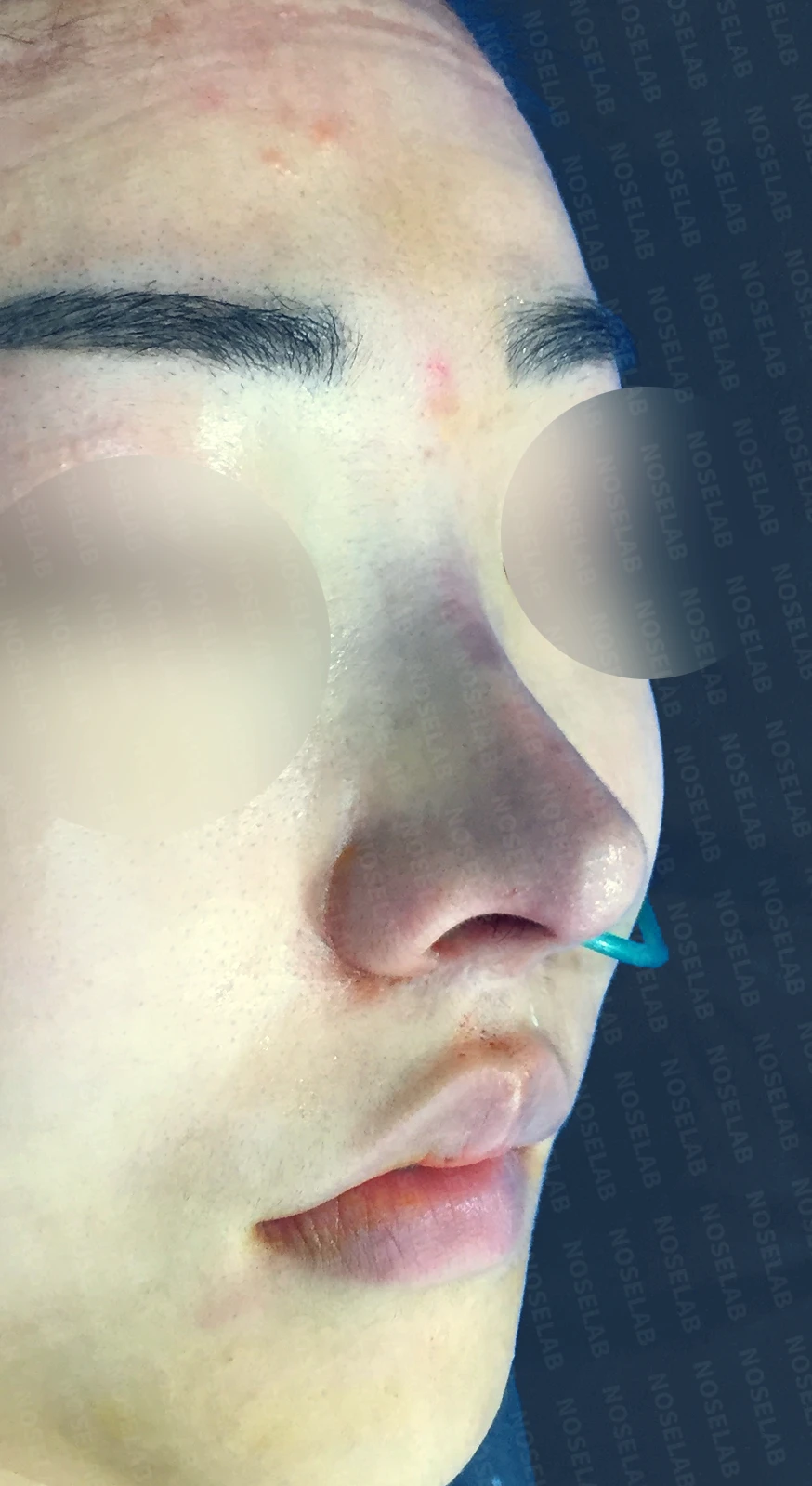
Front, profile, and oblique views taken immediately after surgery (day 0).Immediate postoperative photos show swelling and may differ from the final result.
Basal (nostril) view
Key points regarding bulbous nose correction surgery:
The goal is not simply to make a blunt nose thin, but to make it look natural.
Controlling skin thickness is important, but increasing nasal tip projection to provide three-dimensional definition is even more important.
Cartilage suturing and cartilage repositioning help the nasal tip appear slimmer.
Caution is required when removing subcutaneous tissue. Excessive removal can lead to skin necrosis or scar tissue formation, which may worsen bulbous appearance; therefore, an evaluation by a specialist is essential.
Correcting a bulbous nose and dragon nose is a complex procedure requiring varied approaches depending on individual nasal anatomy. At NOSELAB, we carefully analyze each patient's condition to formulate an appropriate surgical plan. If you desire a natural and refined nasal contour, we recommend consulting with a specialist to determine the surgical technique suited to your needs.
This was Dr. Peter C. Kang. Thank you.
Thank you.
#closedrhinoplasty #closedrevisionrhinoplasty #dragonnose #bulbousnose #crookednose #rhinoplasty #nasalsurgery #septalextension #tiprhinoplasty

Limitations and risks
When using donor rib cartilage, long-term follow-up is necessary because the grafted cartilage may resorb or warp.
When foreign materials such as injected fillers are removed and reconstructed, contracture may recur, nasal height and length may decrease, and staged surgery may be necessary depending on the skin condition.
When the septum is corrected at the same time, nasal obstruction may persist or recur, and in rare cases, septal perforation or changes in smell may occur.
Common potential risks include infection, bleeding, asymmetry, scarring, skin necrosis, and insufficient improvement; results vary depending on individual skin condition and previous surgical history.