Hello, I am Dr. Peter C. Kang.
Today, I would like to introduce a rhinoplasty case of a patient who was concerned about a bulbous and upturned nose.
This patient wanted a natural nasal shape, and we performed a customized surgery that took into account both the patient's requests and structural stability.
1. Preoperative design consultation
Patient's requests:
- Well-defined nasal tip
- Straight bridge line
- A nasal tip that is not overly sharp
- A natural result that does not appear noticeably operated on
- Avoiding the use of rib cartilage if possible
Let us analyze the patient's preoperative condition in detail:
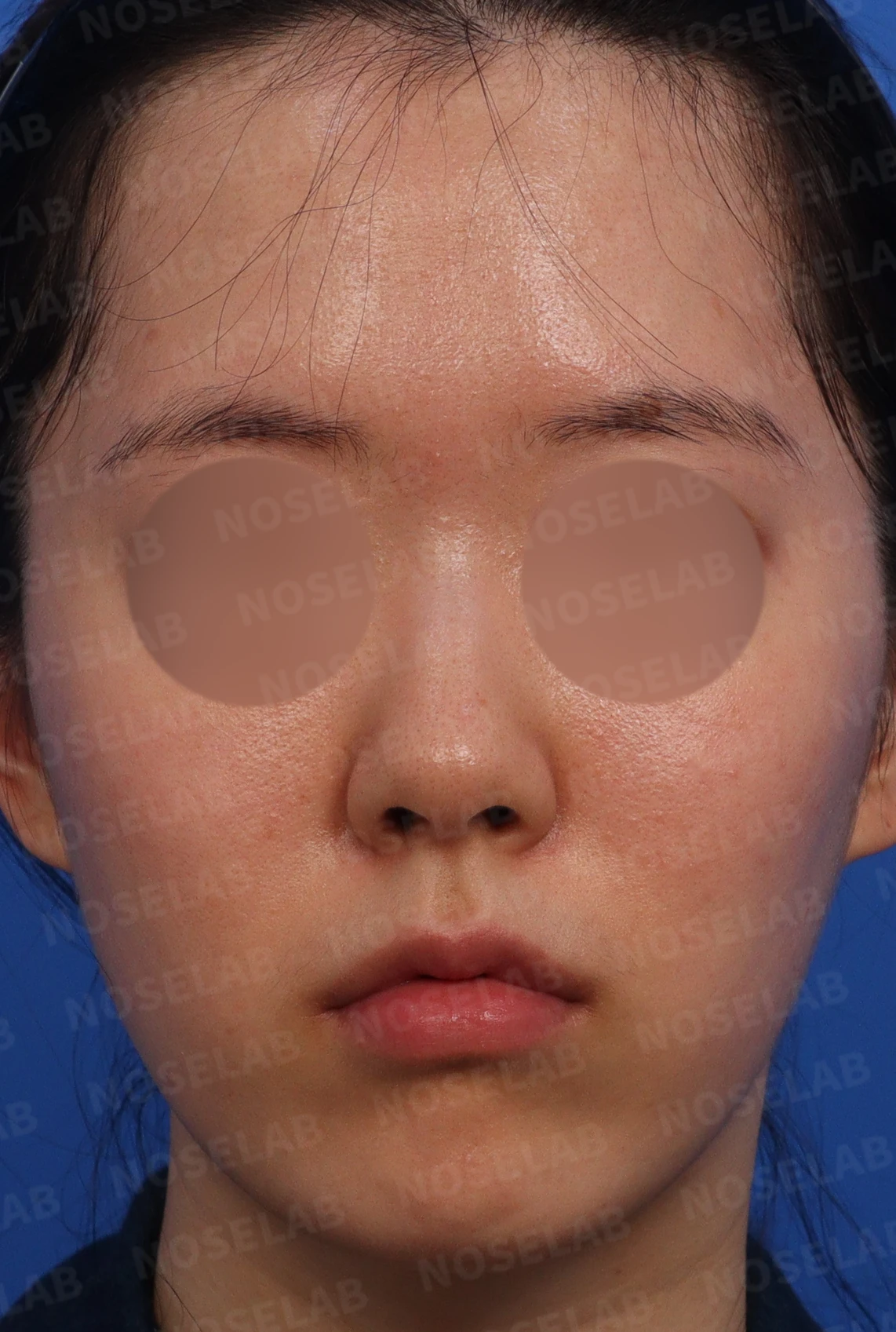
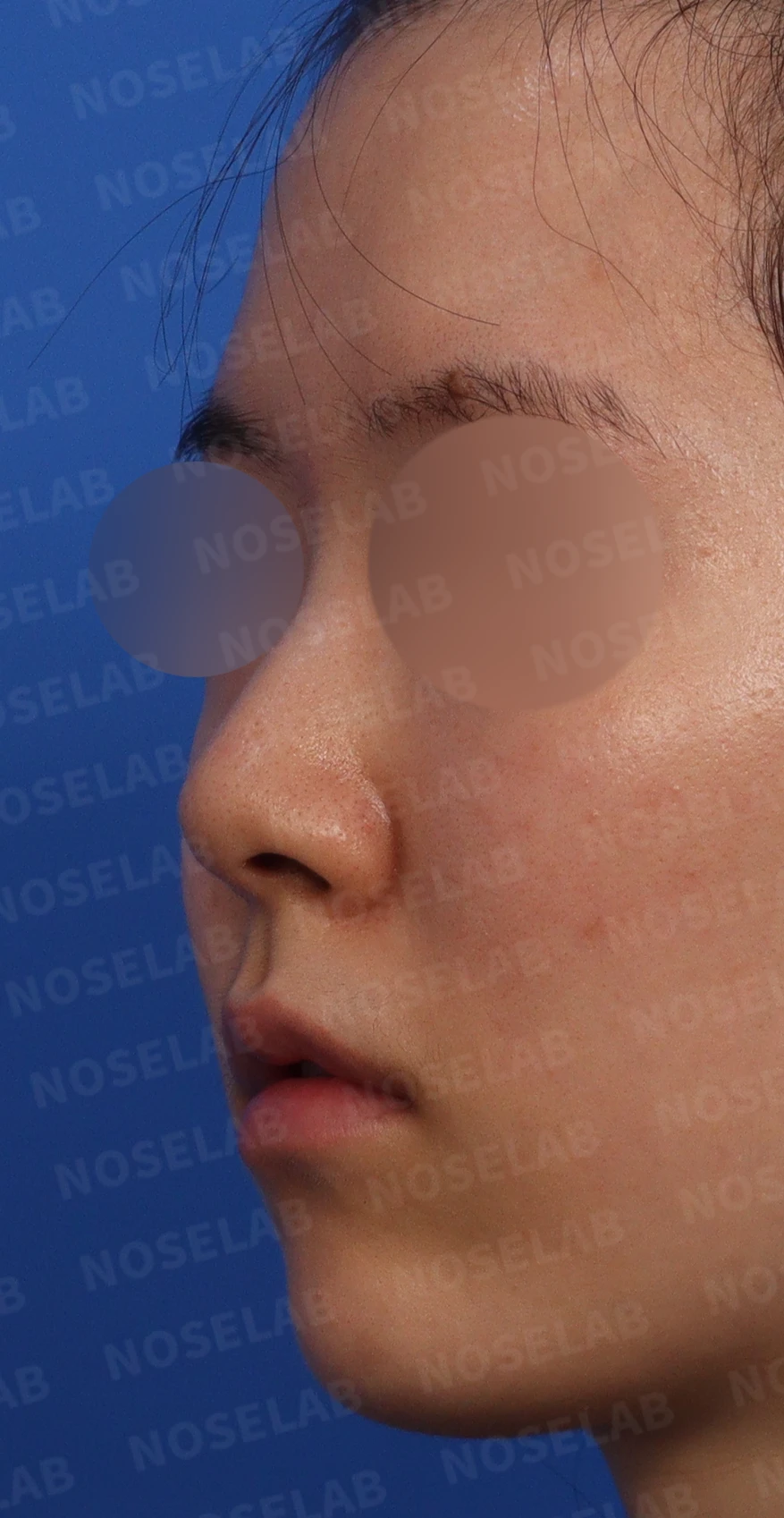
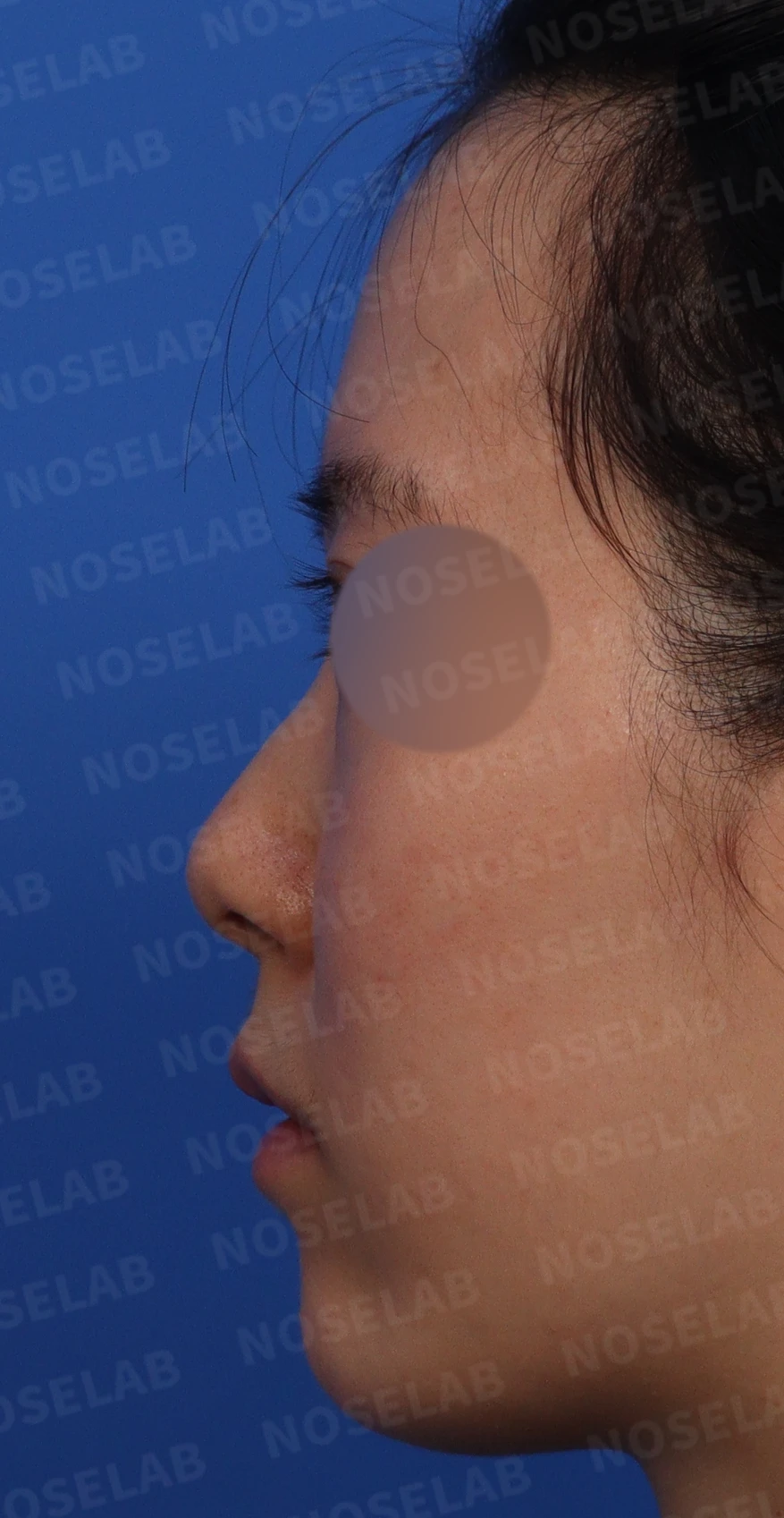
Front, left oblique, and profile views from the preoperative design.
Front view:
- Excessive nostril show
- The nose appears bulbous and upturned
- A flat appearance due to a low glabella
Profile view:
- The nasal tip is upturned
- The nose appears short
- The glabella appears considerably low
Oblique view:
- The nose appears short
- A slight dorsal hump is visible
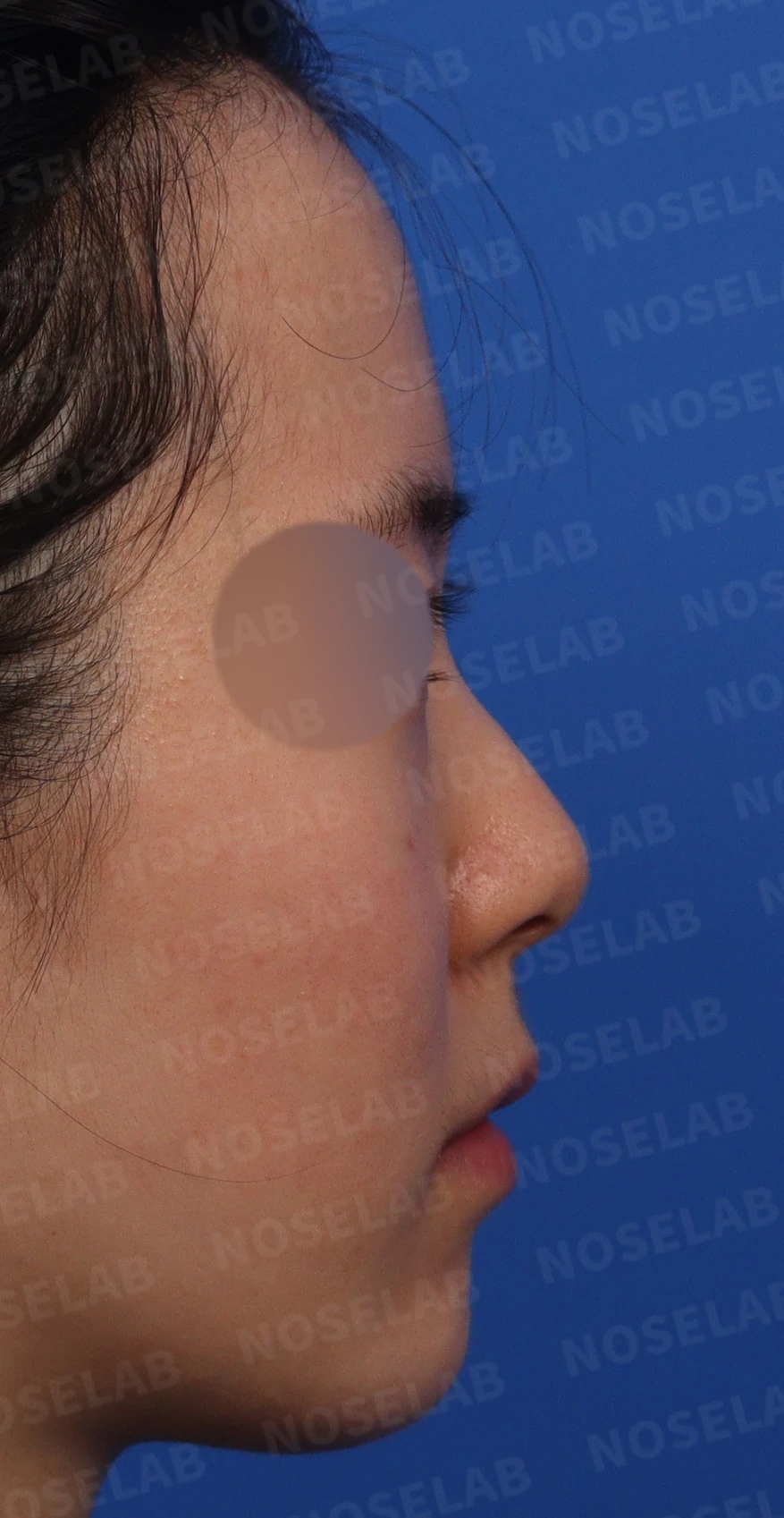
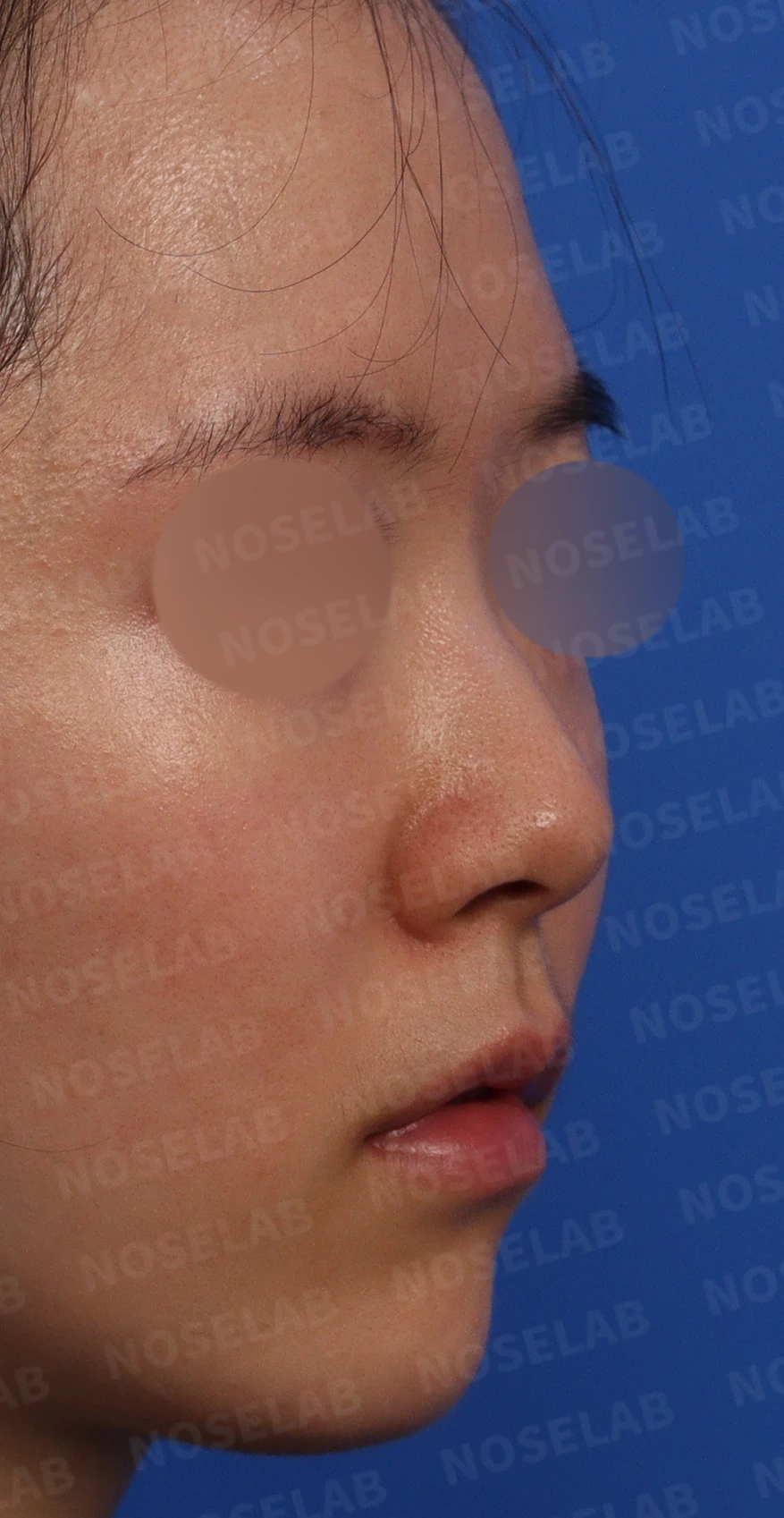
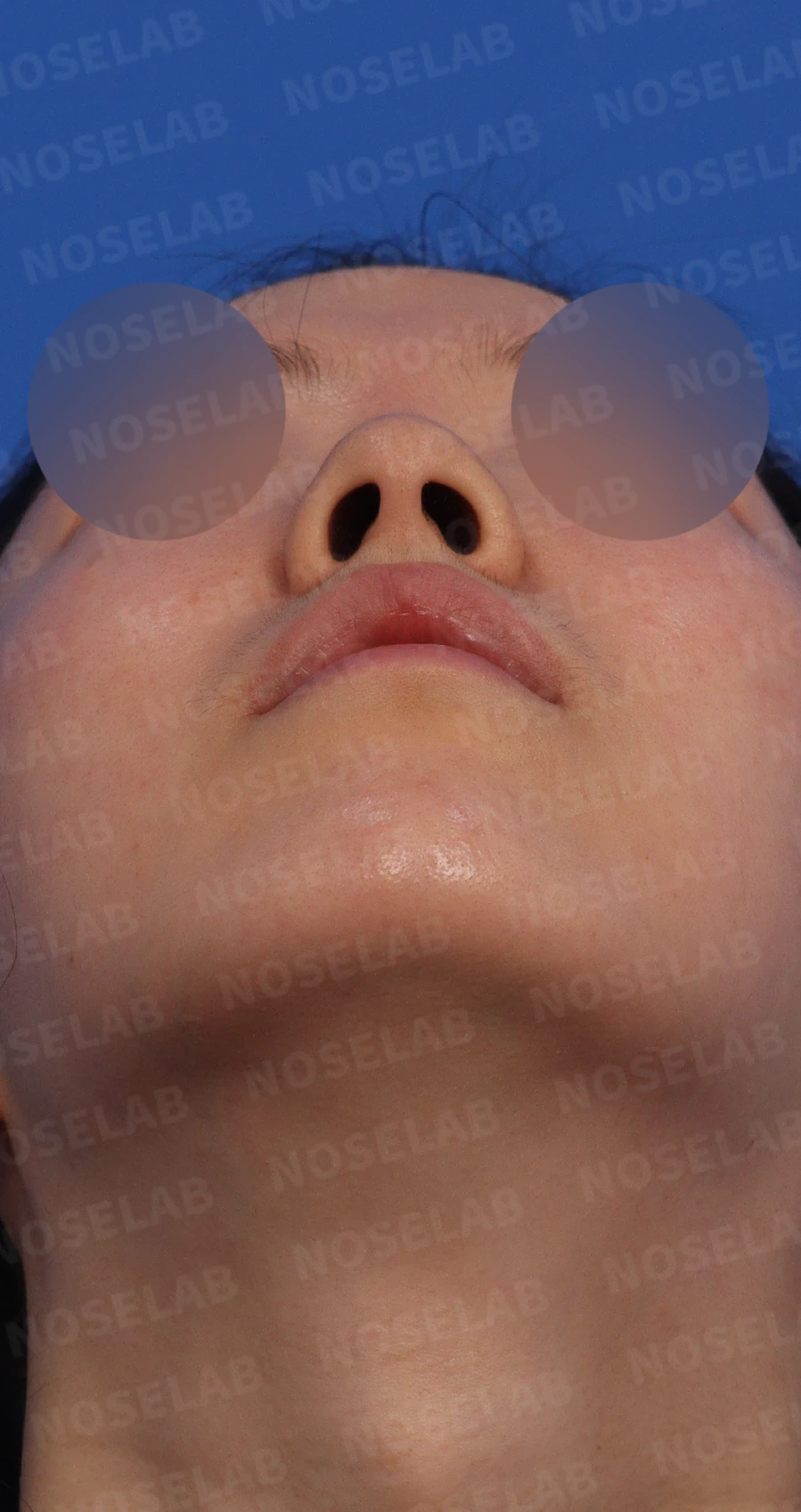
Right profile, right oblique, and basal (nostril) views from the preoperative design consultation.
Nostrils:
- Slight nostril asymmetry is visible
- The nasal tip appears wide and spread out overall
2. Surgical plan
Taking into account the patient's condition and requests, the following surgical plan was established:
a) Use septal cartilage (considering the possibility of additional ear cartilage if necessary)
b) Smooth the uneven areas of the nasal bridge
c) Nasal bridge correction using a silicone implant
d) Nasal shape improvement within a safe and stable range
Because the patient preferred not to use rib cartilage, we decided to use septal cartilage as the primary material. However, I explained to the patient that septal cartilage varies in size, shape, and thickness among individuals, making its exact condition difficult to determine before surgery. I also explained that because its shape-retaining strength is lower than that of rib cartilage, there are limits to creating a very high nose, and there is a possibility of postoperative tip deformation over time.
Considering these limitations, I recommended the most stable and natural design and proceeded with the surgery.
3. Surgical procedure
The following procedures were performed using a closed approach:
a) Septal cartilage harvest:
- Because the septal cartilage was not large, a portion of the posterior bone was harvested together to ensure stability
- Septal extension performed
b) Nasal tip correction:
- The upturned nasal tip was naturally lowered using the septal cartilage
- Because the septum lacked sufficient strength, there was a limit to increasing the tip height, and ear cartilage was not used
c) Nasal bridge correction:
- Smoothed the uneven nasal bridge
- Improved the bridge line using a silicone implant
d) Nostril and overall nasal contour improvement:
- Reduced the bulbous appearance
- Correction of nostril asymmetry
- Eliminated the dorsal hump appearance
All procedures were performed using a closed approach, completing the surgery without external scars.
4. Comparison of before-and-after photos
Comparing photos taken immediately after surgery on day 0 shows the following improvements: Photos taken immediately after surgery show swelling and may differ from the final result.
Front view:
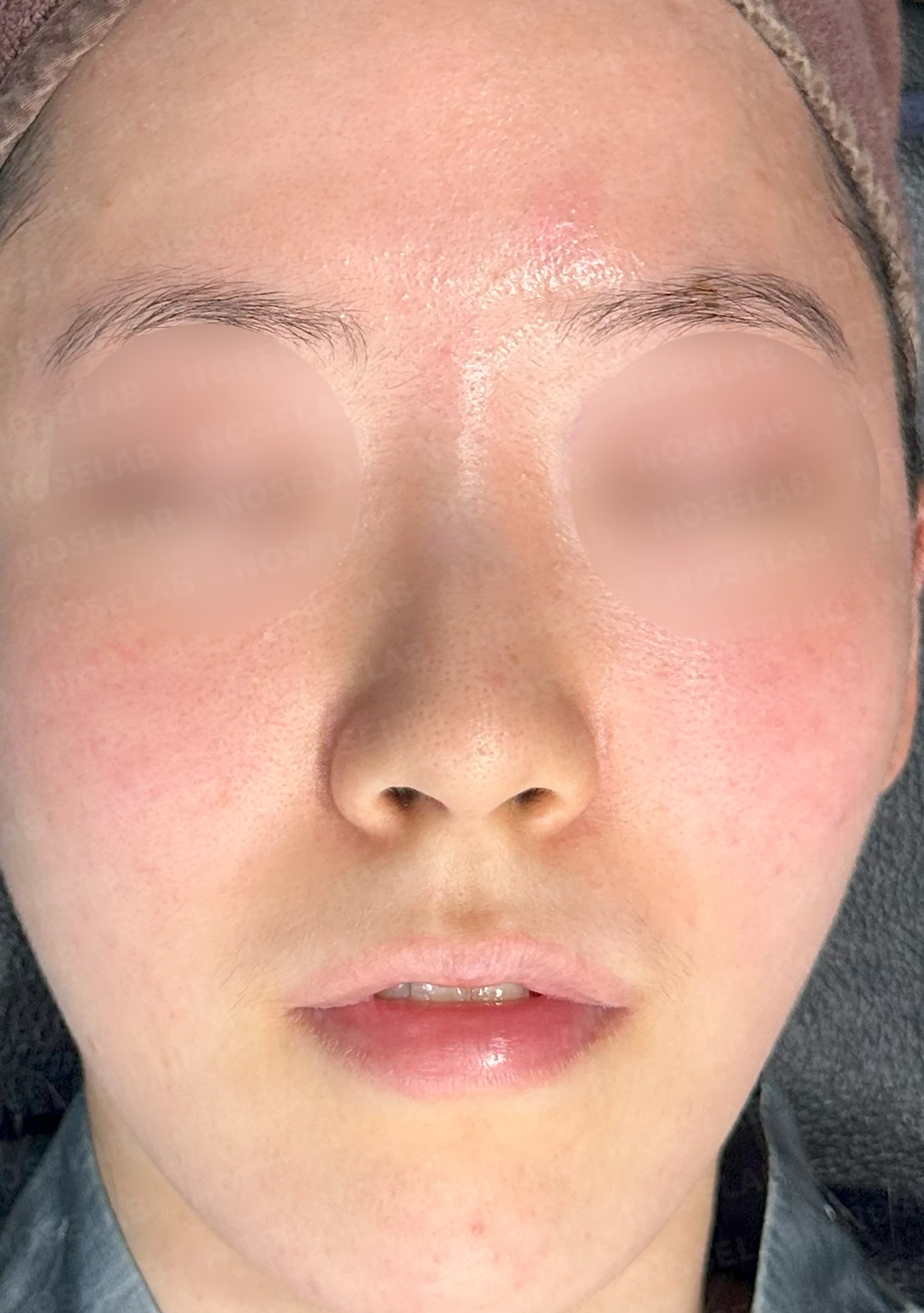
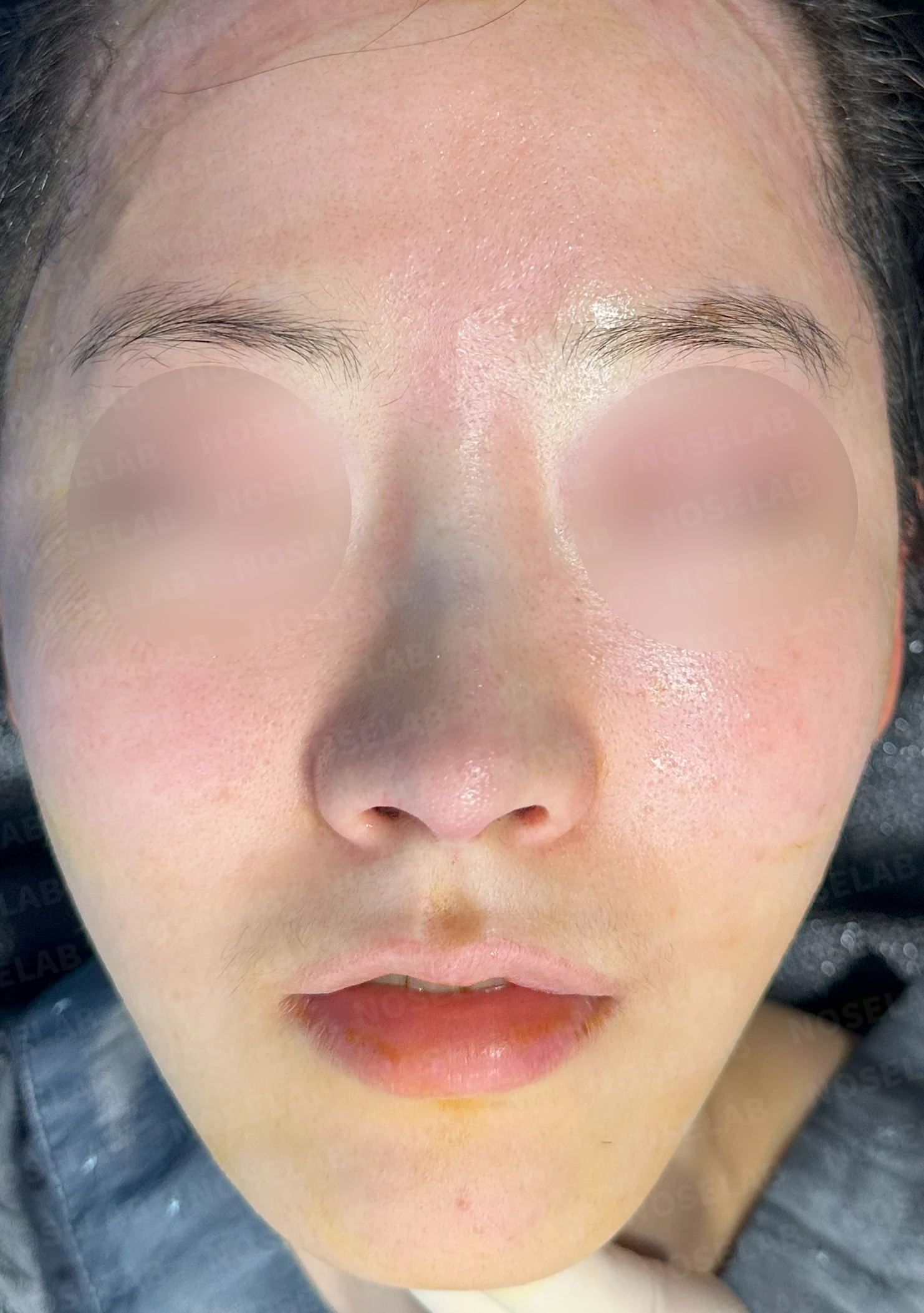
Before surgery / Day 0 immediately after surgery Photos taken immediately after surgery show swelling and may differ from the final result.
- The upturned nasal tip was naturally lowered, reducing nostril show.
- The bulbous nasal shape was improved, giving a more refined impression.
- The low appearance of the glabella was improved, creating three-dimensional depth overall.
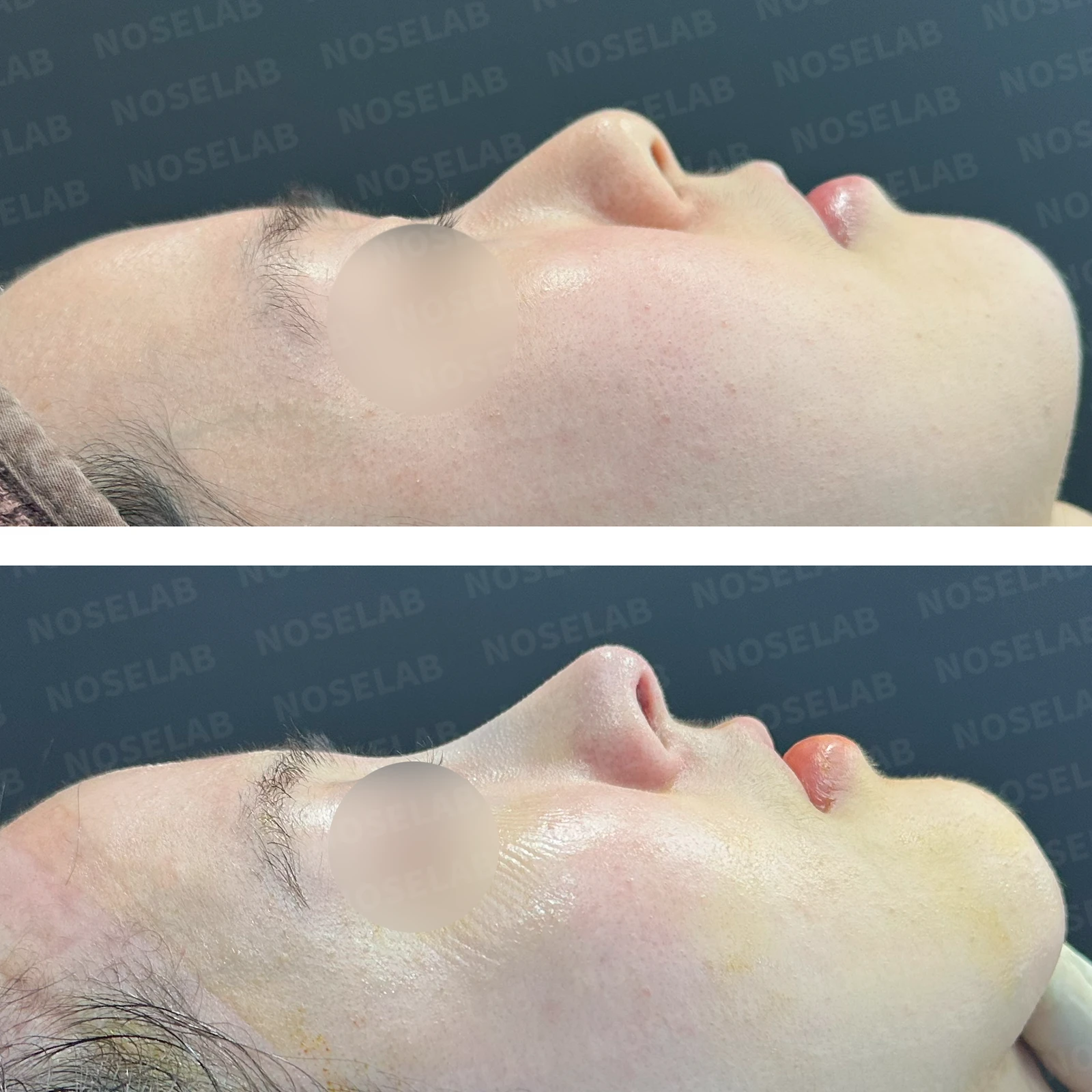
Profile view:
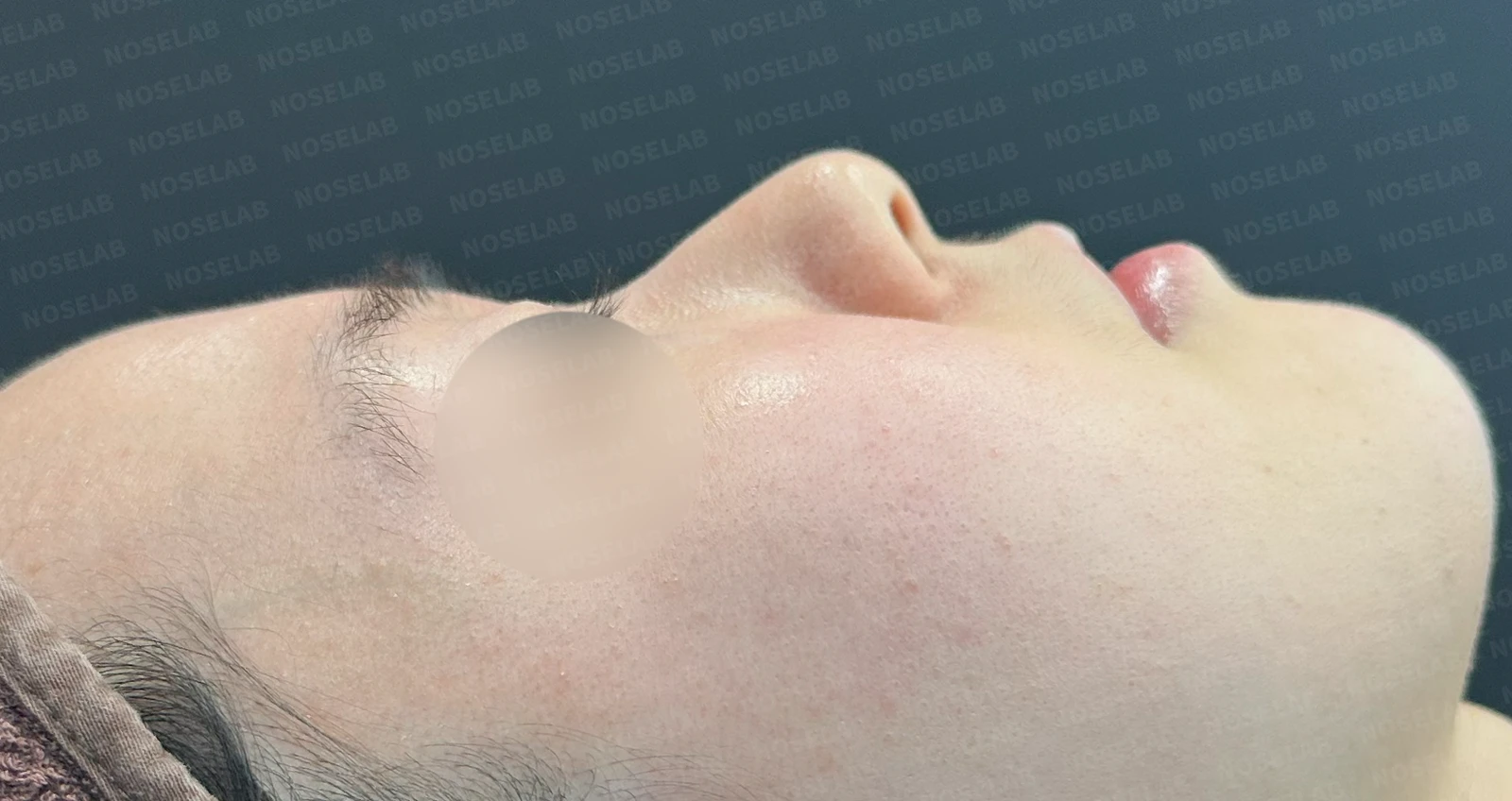
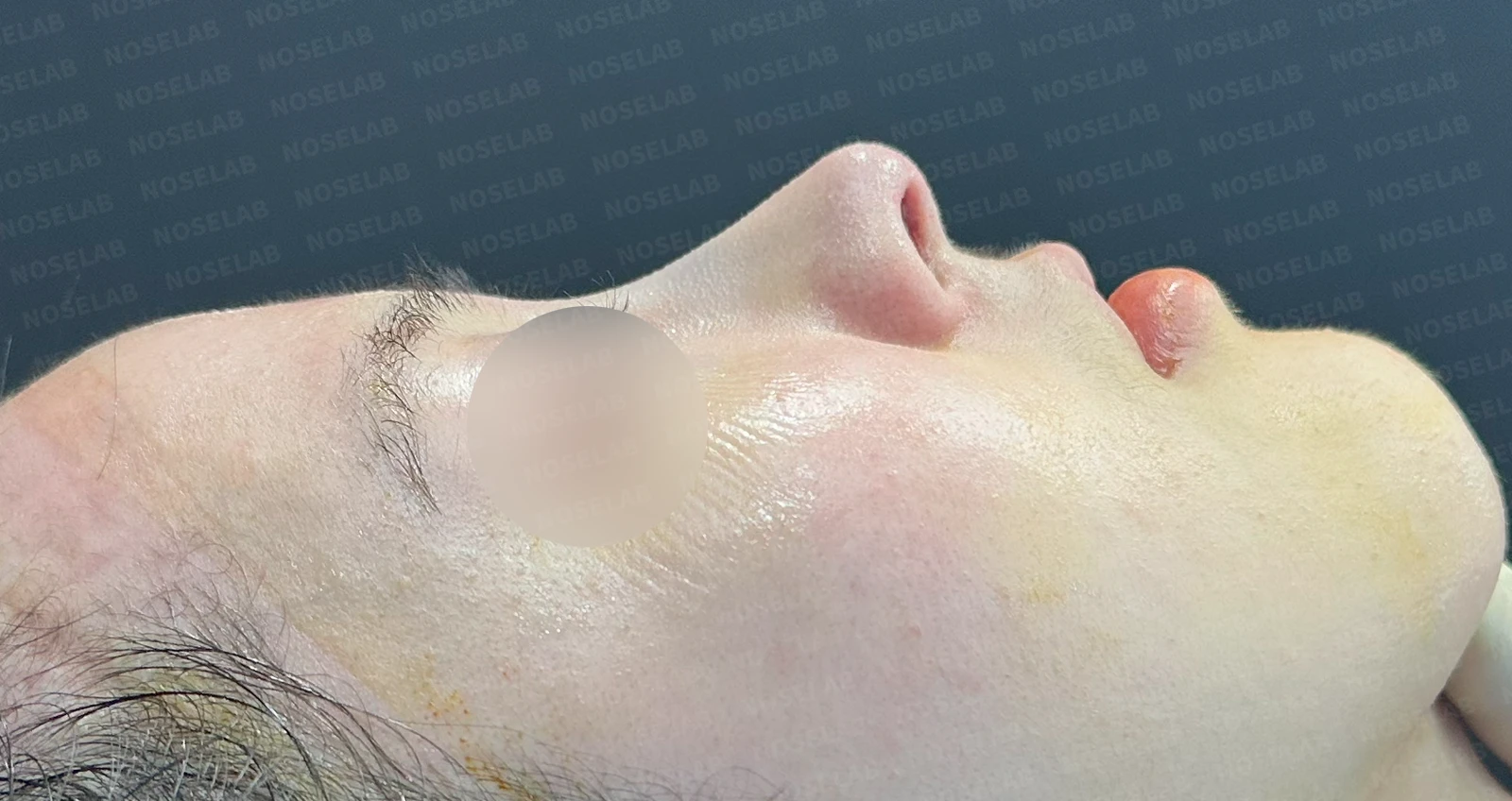
Before surgery / Day 0 immediately after surgery Photos taken immediately after surgery show swelling and may differ from the final result.
- The upturned nasal tip was properly lowered, improving the overall balance.
- The previously short-looking nose was improved to natural proportions.
- A smooth line was established from the glabella to the nasal tip.
Oblique view:
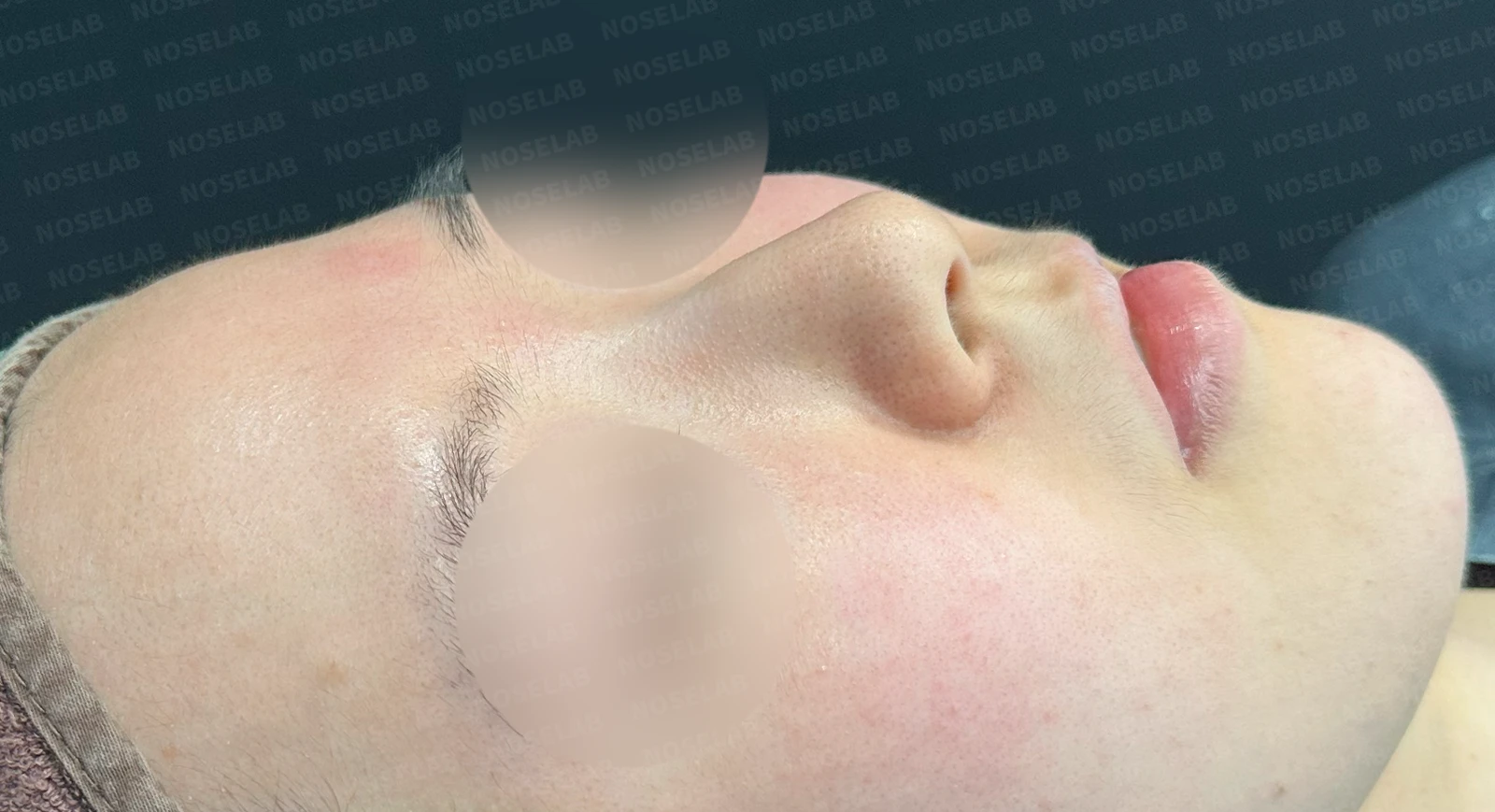
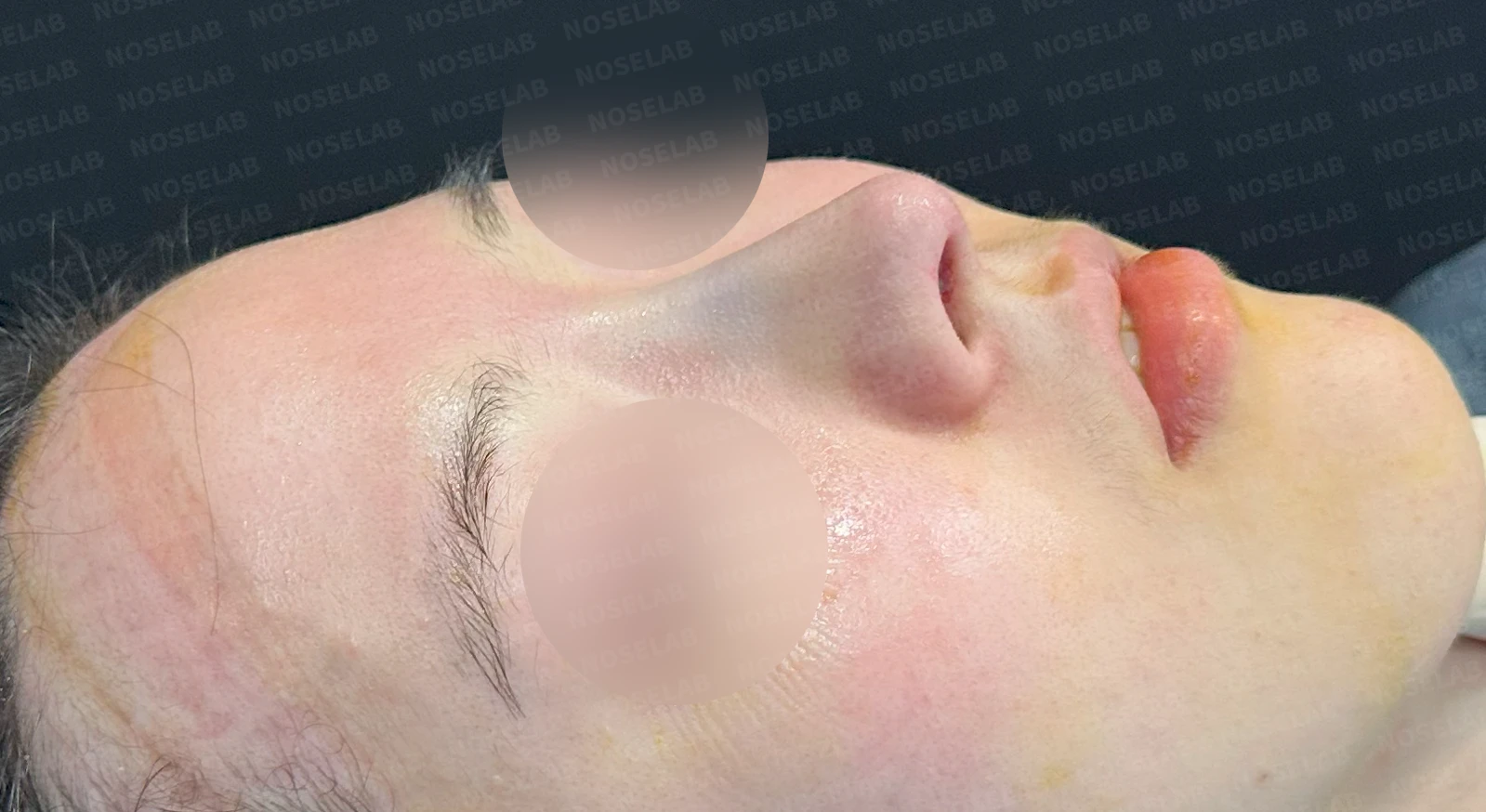
Before surgery / Day 0 immediately after surgery Photos taken immediately after surgery show swelling and may differ from the final result.
- The length of the short-looking nose was improved.
- The slight dorsal hump appearance was cleanly resolved.
- An overall natural, straight bridge line was established.
Nostrils:
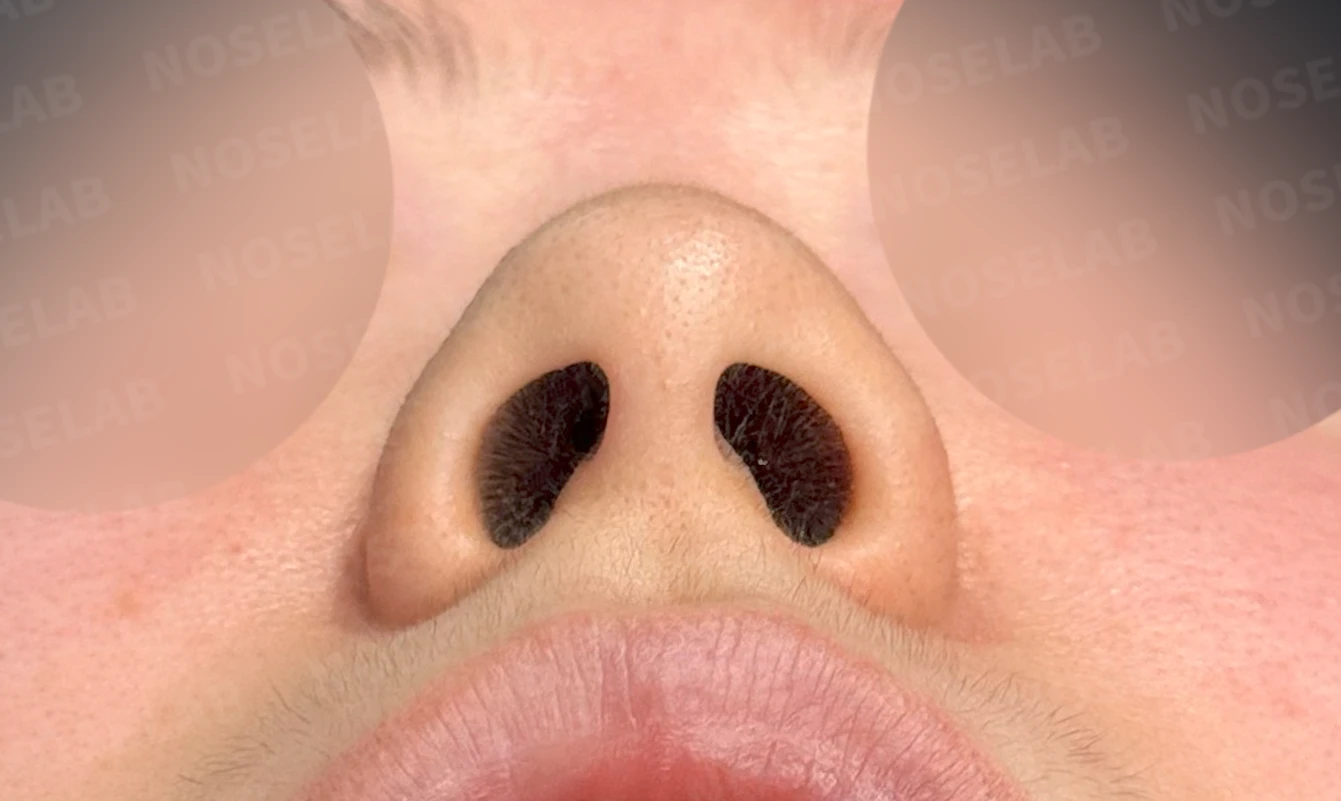
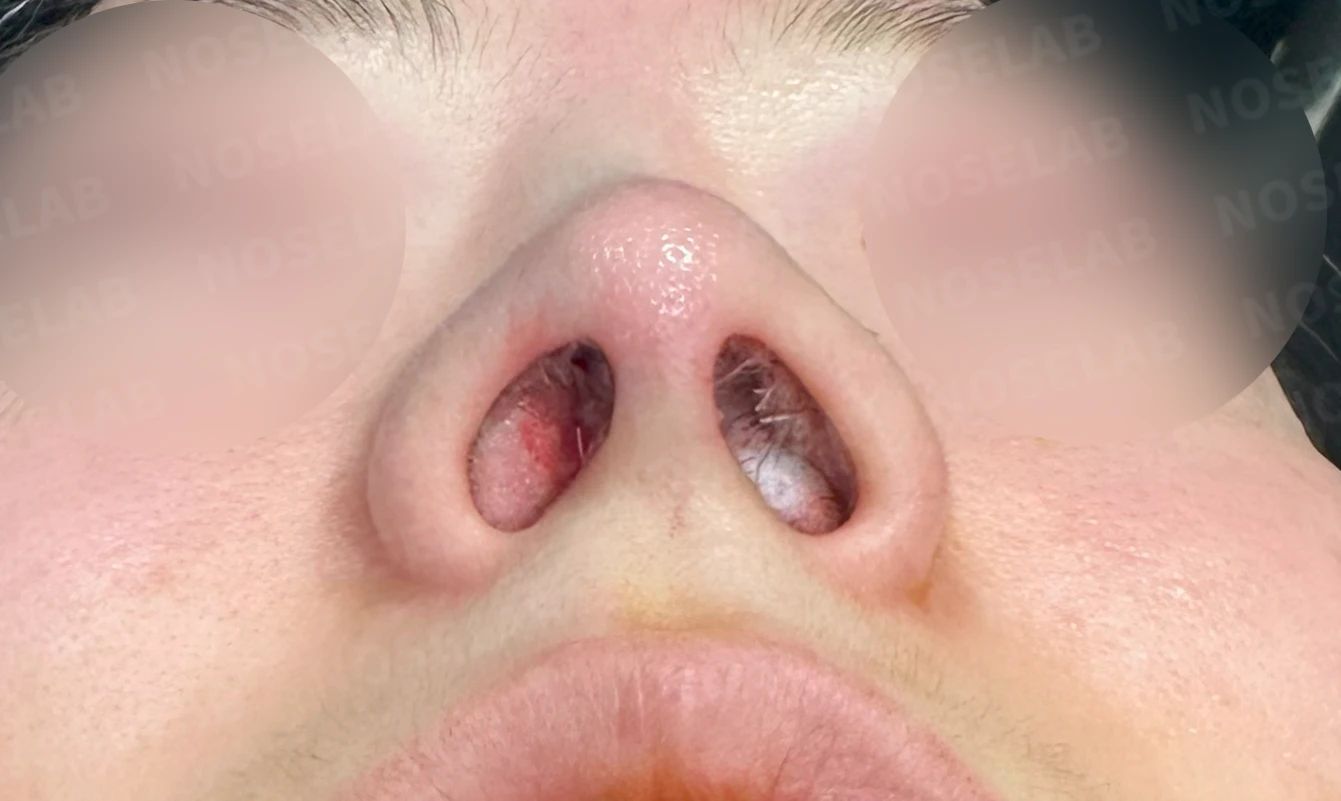
Before surgery / Day 0 immediately after surgery Photos taken immediately after surgery show swelling and may differ from the final result.
- Nostril asymmetry improved.
- The wide nasal tip was naturally gathered, presenting a more refined appearance.
5. Photos immediately after surgery on day 0 Photos taken immediately after surgery show swelling and may differ from the final result.
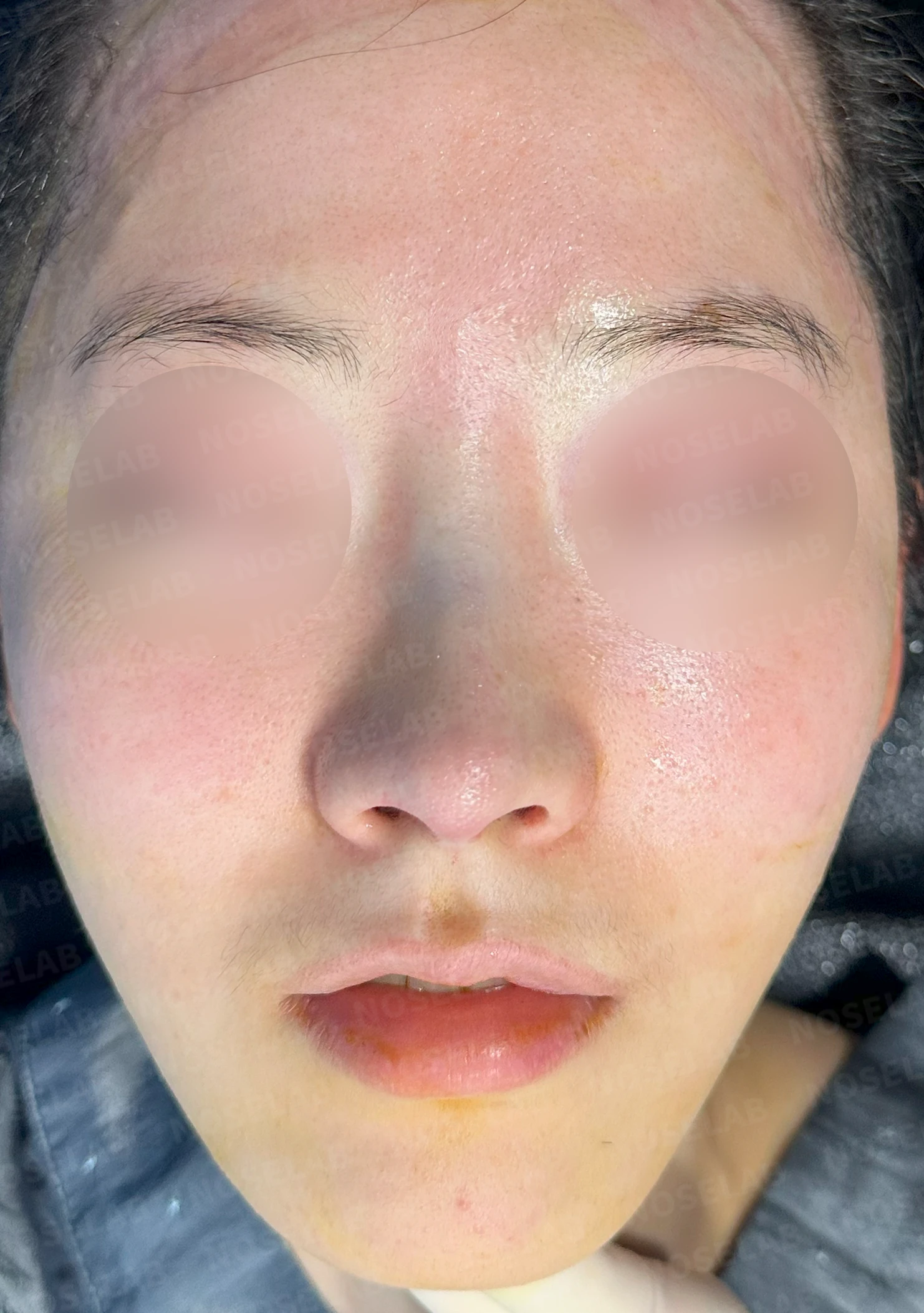
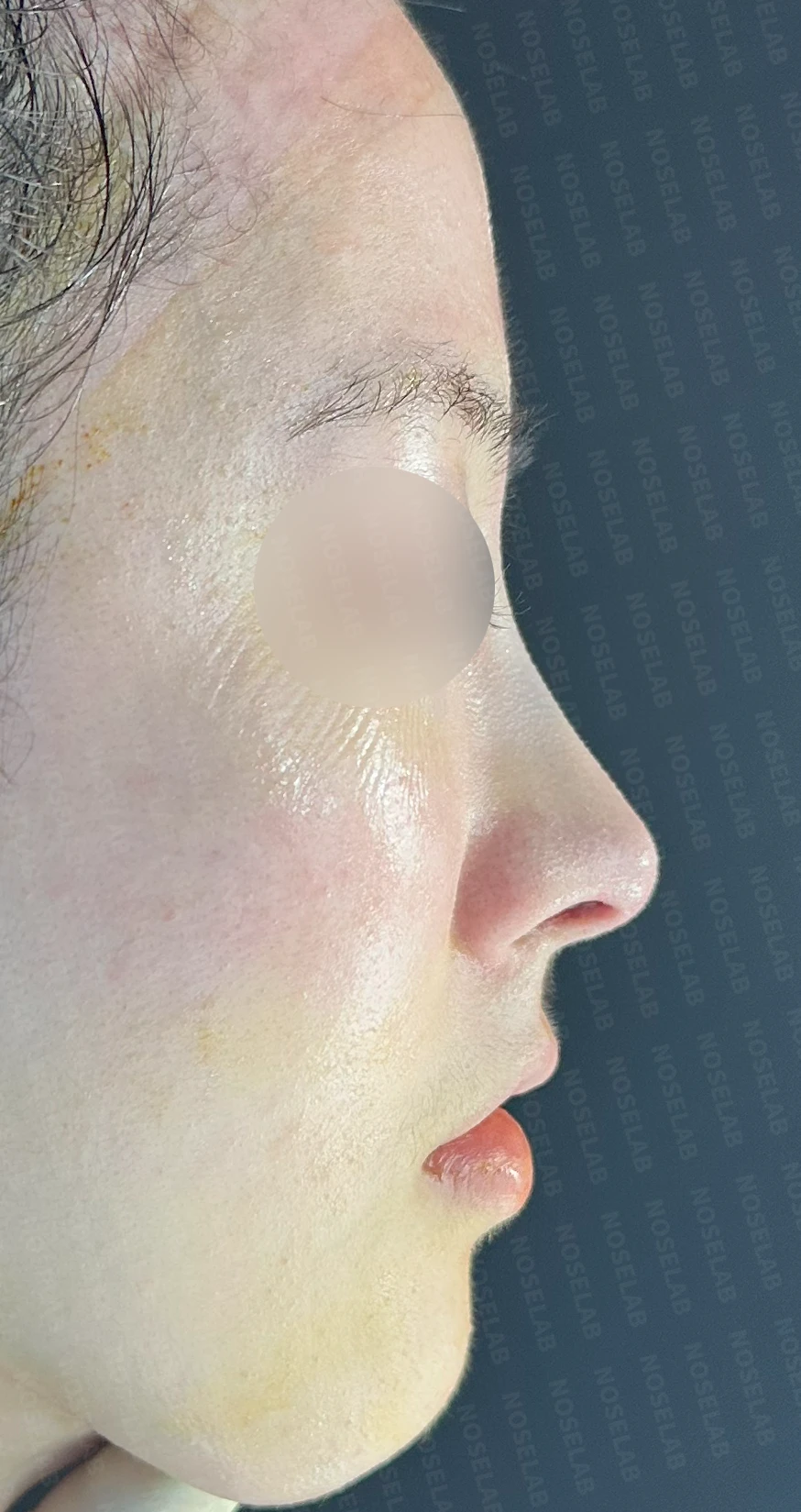
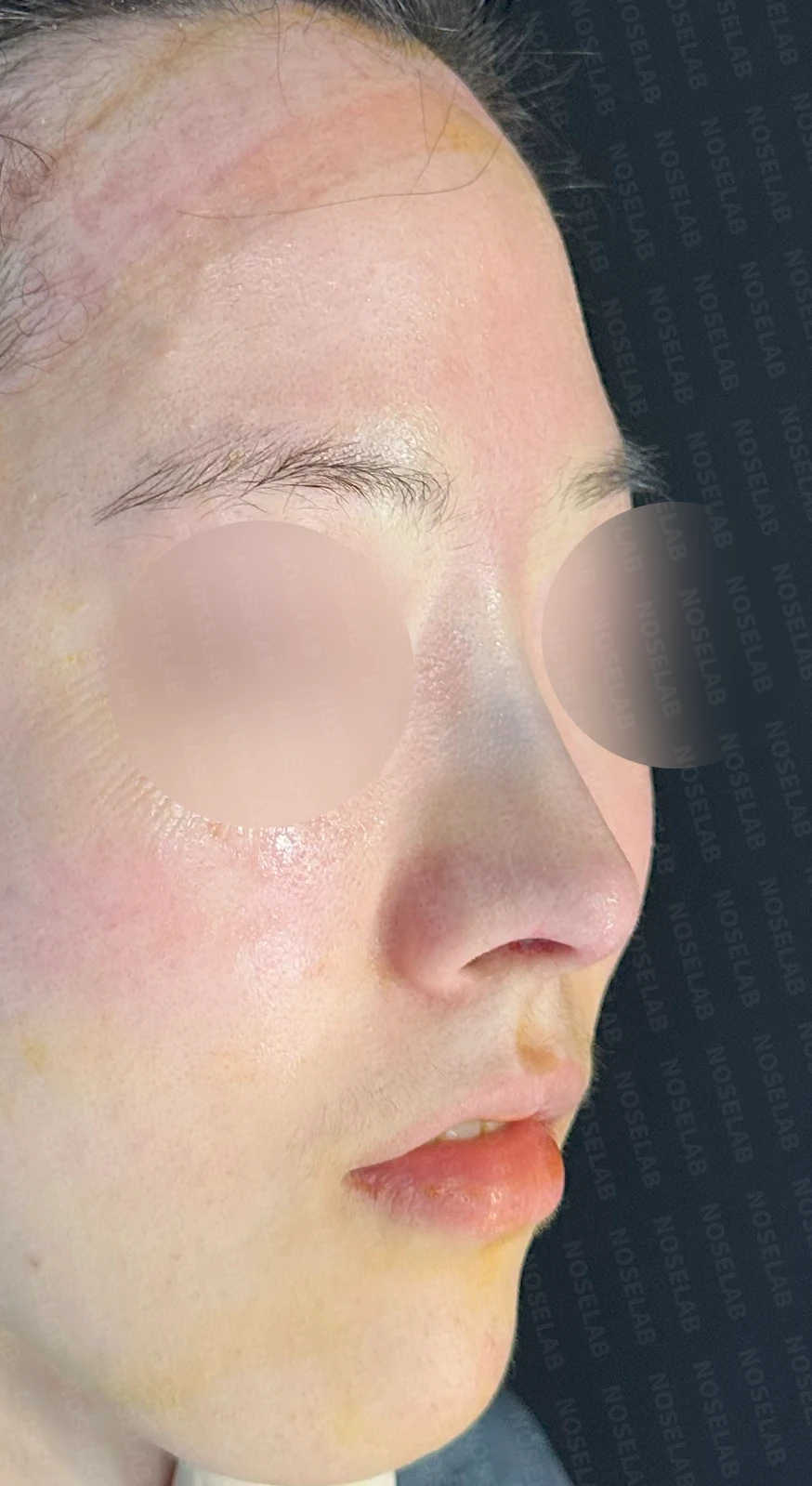
Front, profile, and oblique views taken immediately after surgery (day 0).Immediate postoperative photos show swelling and may differ from the final result.
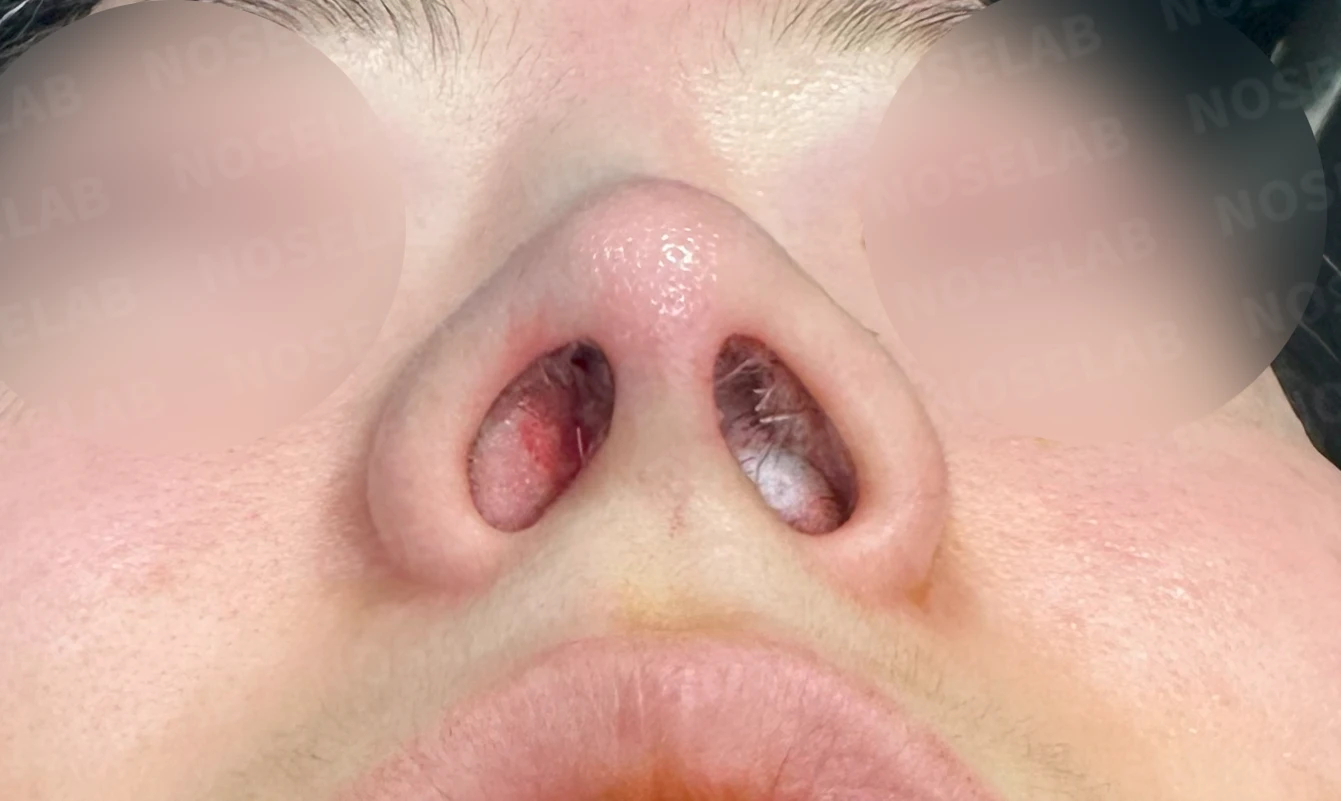
This is the basal (nostril) view.
6. Overall evaluation
This case is a good example of customized rhinoplasty that considers both the patient's requests and safety. Respecting the patient's preference not to use rib cartilage, the surgery was carried out carefully to achieve the desired effect using only septal cartilage.
In particular, taking into account the limitations of septal cartilage, we avoided an excessively ambitious design and focused on achieving a stable yet natural result. Consequently, the upturned nasal tip was naturally lowered, the bulbous tip shape was refined, and an overall well-balanced nasal contour was established.
Notable aspects of this surgery include:
1. Respecting the patient's requests: We honored the patient's preference to avoid rib cartilage.
2. Structural safety considerations: We recognized the limitations of septal cartilage and avoided an overextended design.
3. Natural result: We achieved a natural appearance that does not look obviously operated on.
4. Resolving complex concerns: We addressed multiple concerns simultaneously, including an upturned tip, bulbous nose, and short nose.
7. Conclusion
Rhinoplasty—especially a primary procedure—requires a very cautious and definitive approach. To prevent the need for revision rhinoplasty, please keep the following points in mind:
1. Communicate your desired design clearly to your surgeon.
2. Establish a realistic, reasonable design during your consultation based on structural feasibility.
3. Give thorough consideration to your surgeon's opinion when selecting the materials required to achieve the design.
4. Avoid an excessively forced or unnatural design.
In performing many revision rhinoplasties at NOSELAB, the most unfortunate situations are when there is nothing structurally wrong with the surgery and the shape is acceptable, yet the patient decides on revision due to personal dissatisfaction. In most of these cases, revision surgery could have been avoided with a thorough initial design consultation.
For those considering rhinoplasty, I encourage you to find the most suitable surgical approach through careful deliberation and thorough consultations. At NOSELAB, we prioritize patient safety and satisfaction, striving to provide tailored surgical care for each individual.
I will be with you every step of the way to achieve a beautiful and healthy nose.
This was Dr. Peter C. Kang. Thank you.
Thank you.
#rhinoplasty #upturnednosecorrection #bulbousnosecorrection #shortnosecorrection #bulboustipcorrection #closedrhinoplasty #naturalrhinoplasty #ENTspecialistrhinoplasty #safelyplannedrhinoplasty #customrhinoplasty #nasalbridgecorrection #nasaltipsurgery

Limitations and risks
When the septum is corrected at the same time, nasal obstruction may persist or recur, and in rare cases, septal perforation or changes in smell may occur.
Common potential risks include infection, bleeding, asymmetry, scarring, skin necrosis, and insufficient improvement; results vary depending on individual skin condition and previous surgical history.